Category Archives: Arts, Culture & Entertainment

Laham Mandi tickles city palate

Hyderabad :

The traditional Hyderabadi dastarkhwan has a new entrant: Laham Mandi.

From the exotic desert peninsula, the simple dish of rice and tender mutton has taken the city by storm. And nothing could explain the success that it has found as it enjoys a place alongside zafrani biryani, a delicacy Hyderabadis swear by.

But how did Laham Mandi make inroads into the Hyderabadi dastarkhwan that denizens are so fiercely protective of? Experts point out that it is the Hyderabadi diaspora, spread across Arabian countries, which has imported Mandi and its variants to the city.

“There was an import of culture as soon as Indians set foot in the Middle East. Though shawarma came to India before Laham Mandi, the latter became a huge hit with the youngsters. They want something different. The trend, particularly with wedding feasts is about two years old,” says Chef Taha Mohammed Quadri from Feast Express, a company that specialises in Arabian cuisine. “Now, bridegrooms are insisting that Mandi be on the dulhe ka dastar along with biryani,” he adds.

Ask Mohammed Abdul Rasheed, an engineer who recently tied the knot, why Mandi was on the menu and pat comes the reply, “All my friends love gorging on Mandi. Also, it is something different from the tried and tested affair.”

Traditional bawarchis say that the dish itself is simple to make. The meat is boiled in water till the time it is succulent and the rice is cooked separately. However, others, like seasoned chef Mir Asif Ali Khan from Arabian Nights argue that Laham Mandi is a madfoon dish, meaning that it is cooked in a cavity in the earth. He has lost count of the number of Hyderabadi weddings in which he has served Laham Mandi, he claims. While listing the traditional Hyderabadi fare on a dastarkhwan, he says, “The traditional dastarkhwan cannot go without lukhmi, qubani ka meetha, double ka meetha and of course, biryani. The introduction of Mandi is a fad.”

Khan explains that affordability and its large portions have led to its popularity. “The quantity of rice per person is huge, so much so that as many as three people can share it. Not just that, the average quantity of meat per portion is around 300 grams, for just Rs 240. What else would a youngster want,” he asks.

Others like Mohammed Moinuddin from Moghal Caterers says that for those who are not too keen on having Laham Mandi at weddings, the dish has found its place in pre-wedding parties. “Sanchak and Mehendi rituals are examples,” he says.

Experts say that restaurants in Toli Chowki like Four Seasons were one of the first to introduce the dish in the city about a decade ago. But, it was around three years ago that it started to gain popularity -courtesy the Arab tribals residing in Barkas, an Old City suburb. According to sources, of the 50-odd restaurants and cafes in the area, almost a third of them serve Mandi.

“The Yemeni tribes in Barkas used it to their advantage. They exploited their exotic lineage, made Mandi affordable and experimented with it by offering chicken and fish Mandi,” says Waseem Khan, a Mandi lover. The ambience in these restaurants is exotic, he adds. “You sit cross legged on the floor and people eat from the same large plate. Portraits of Arab rulers hang from the walls and there is calligraphy. All this adds to the exoticism,” he explains. Restaurants in Toli Chowki with Arabic names have mushroomed. Others like Spice 6 and All Seasons have made Laham Mandi a fine dining experience, he adds.

source: http://www.timesofindia.indiatimes.com / The Times of India / News Home> City> Hyderabad / TNN / September 28th, 2015
SP committed to honour Social Heroes

Chief Minister Akhilesh Yadav said that one needs to search his role model from the society he comes from as they can be the guiding light for the generation to come and the government on its part should honor those personalities.

“Samajwadi Party (SP) government is committed for honoring these personalities because a small encouragement could send a positive signal among the masses,” Yadav said in a function held at his official residence where different personalities who contributed for the betterment of society were honoured.

Yadav said that, he expects that people will draw inspiration from these people. “The SP government is committed to provide an opportunity to these people and the youths of state, who have the will to struggle and work for the society,” he said.

“We always try to find fault among others. We never try to see goodness among the people around us. There are many who are struggling to make both ends meet. Their success story could be inspiring for the next generation,” he said.

The Chief Minister provided a monetary cheque to many of these ranging from Rs 1 lakh to Rs 5 lakh, including the 13-years-old Harendra Singh of Noida, 15-year-old girl Sushma of Lucknow and an elderly typist of Lucknow, Krishna Kumar whose typewriter was broken by a policeman during an anti-encroachment drive.

The 13-year-old boy Harendra Singh has drawn global attention for his commitment towards his studies. He studies in the morning in a school and at night earns livelihood at Noida Metro station. His commitment has gone viral in the social media. CM gave him a  cheque of Rs 5 lakh.

Earlier, Yadav had honoured eight personalities that includes photo journalist Ashutosh Tripathi, whose photo of police beating up typist Krishna Kumar became viral in the social  media.

Other awardees were Ramjit Yadav of Mirzapur who recently saved 10 children from drowning in Ganga and was given Rs 10 lakh. Rajkumar, Sanjay and Pintu Sahani of Ballia were awarded Rs 1 each for saving public from crocodile.

CM also honoured noted urdu shayar Wasim Bareilvi, who was present on the occasion.

Parliamentary Affairs Minister Rajendra Chaudhry and ICDS Minister Kailesh Chaurasi were also present in the meeting.

source: http://www.dailypioneer.com / The Pioneer / Home> State editions> Lucknow / PNS, Lucknow / Monday – September 28th, 2015

Resounding culture of Lucknow, through letters

A scientist and a teacher came together recently to narrate select letters written to and from Lucknow, over a period of nearly 150 years, by both the famous and the commoner, to depict the resounding, and changing, cultural ethos of the city of Nawabs.

“Lucknow in Letters: endeavours, achievements and tragedies”, presented here recently by Saman Habib and Sanjay Muttoo, is a multilingual reading of letters from and to Lucknow in the 1850s.

The letters, collected from private sources and museums, newspaper reports and essays provide a glimpse of the living experience of the city since the ‘Ghadar of 1857’.

The letters, which were accompanied by rare manuscripts, original letters and pictures of those who wrote them, came together to provide a life-like narrative of the events in Lucknow of a long-gone era – from the mutiny to the subsequent rebuilding of the city, the plague of 1903 to 1936 floods, the freedom movement and the pain of Partition.

The presentation, hosted by National Centre for the Arts (INGCA), is a heart-rending glimpse of what shaped the city over the course of time and includes mails by everyday people living life while some of them also had their senders in important personalities like Mahatma Gandhi, Jawaharlal Nehru, Mirza Ghalib and Rabindranath Tagore – all accounting their connections to Shahar-e-Awadh.

The concept, says Saman, was conceived by her in February last year when she was writing letters to her relatives in Pakistan, who had migrated there during Partition, while the first staging took place after three months – in May.

“There are families in Lucknow which have preserved the letters from older times. In older days, letters happened to be a huge event in families, when all members of the family would read a letter that would reach to them from far-off places. But that is a gone era now… So we thought that explaining that whole concept to people it would be a good idea to collect letters and make a narrative out of it,” Saman, a senior scientist at the Central Drug Research institute in Lucknow, told PTI.

“The idea was that we not only read it but also come up with pictures – of the letters, the people writing them, buildings of that time, etc. So as to understand the city, to know it more and relive the whole experience. Its not a history lesson, listening to letters and watching visuals is an experience.

“Letters are firstly an authentic documentation of all occurring of the time. Plus, it depicts the ‘zabaan’, the language of the city as used by people. And as we transcend the era sifting through letters we can notice a palpable change in the language and customs too. Then, the social class and language. Who is writing and in what language… I think many things come out with that,” she says.

source: http://www.business-standard.com / Business Standard / Home> PTI Stories> National> News / Press Trust of India, New Delhi – September 27th, 2015

South Indian Classical Dance Festival Begins

Eluru : ANDHRA PRADESH

The South Indian Classical Dance Festival began in the city on Saturday under the aegis of Southern Cultural Centre (Tanjavore), cultural councils of Central and state governments, and Young Men’s Hindu Association (YMHA).

Andhra Pradesh Assembly speaker K Siva Prasada Rao lit the lamp and inaugurated the festival. He emphasised upon the need to encourage the classical art forms in the state and pointed out that Tamil Nadu encourages art forms in a big way. He assured to set up Government Music and Dance College in the city with the help of public representatives.

Southern Region Cultural Centre director EN Sajith, city mayor Sheikh Noorjahan, YMHA Trust Board general secretary KV Satyanarayana and working committee president Ch Gopi also participated.  Later the speaker felicitated the dance artists.

On the occasion, the Aiswarya Warrior team of Baroda performed Mohiniyttam (‘Shakti’ dance play let), while Kuchipudi artiste Amaranth Ghosh from Chennai performed ‘Jayadeva Ashtapadi’ and ‘Shivasthakam’.  The Ghosh team also performed ‘Ganapathi Kowtham’, ‘Govardhan Giridhari’ and ‘Marakata Manimaya’, which enthralled the audience.

source: http://www.newindianexpress.com / The New Indian Express / Home> States> Andhra Pradesh / by  Express News Service / September 27th, 2015

Interaction with author of ‘Talat Mahmood – The Velvet Voice’

It will be held at 4.30 p.m. on Saturday

The Manipal University Press will hold the ‘Author Meets Readers’ event ‘From the Horse’s Mouth’ with Manek Premchand — author of the book ‘Talat Mahmood – The Velvet Voice’ — at the AC Seminar Hall on the MIT campus here at 4.30 p.m. on Saturday.

According to a press release issued by Manipal University here on Thursday, Mr. Premchand will share his thoughts and feelings in a conversation with Manipal Centre for Philosophy and Humanities faculty member Gayathri Prabhu.

A film will be screened and that will be followed by a music programme with Premchand and a few others singing Talat Mahmood’s songs.

source: http://www.thehindu.com / The Hindu / Home> National> Karnataka / by Special Correspondent / Manipal – September 25th, 2015

How I survived Haj stampede in 2006

Mysuru, KARNATAKA / NEW DELHI :

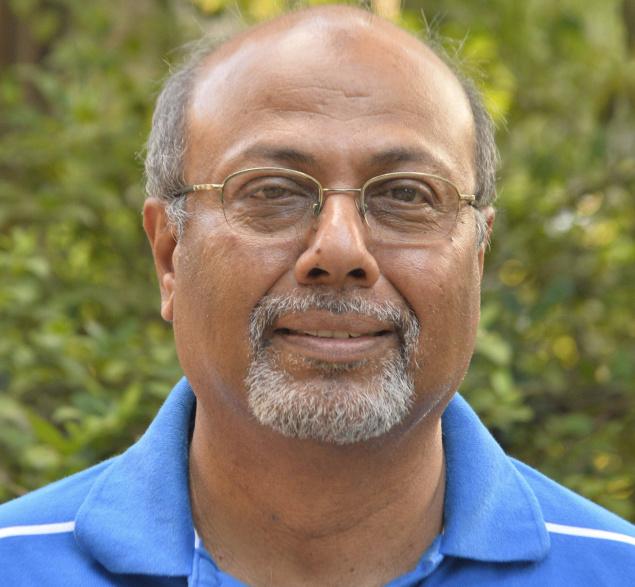
A.K. Pasha
A.K. Pasha

People usually hurry to reach Mina creating tremendous risk for themselves and others. It’s during this ritual that chaos is triggered.

I went for Haj pilgrimage with my wife in December-January 2006. During the journey, we noticed that the Gulf region was unstable owing to the trial of the deposed Iraqi dictator Saddam Hussein in Baghdad and emotions were running high among the Arabs. The political fever in the region also spread among Haj pilgrims. Emotions and arguments add to the atmospherics of Haj. One can imagine the energy and excitement of a pilgrimage in which millions of people from diverse linguistic, ethnic and racial backgrounds are united by religion.

Our delegation was special as we were being accompanied by former Chief Justice of India A.M. Ahmadi and other dignitaries from different parts of India. But from the beginning of the journey, I saw that arrangements on the ground were not quite right. The Saudi officials gave out instructions only in Arabic, though most of the pilgrims were unfamiliar with the language.

Countries that send the largest number of pilgrims are from South and Southeast Asia like Indonesia, Pakistan, Bangladesh, Afghanistan and India. People from this region speak many languages. Special attention is needed for the elderly, many of whom undertake foreign travel for the first time and, therefore, are quite disoriented and find it difficult to adjust to sudden orders yelled out in Arabic by policemen.

Also, the Saudi rules aim at segregation of men and women which creates a lot of problems for first-time travellers from our region. Often families which are separated by the Saudi police have to endure hardship, which is multiplied because neither the pilgrims nor the police can understand each other.

The process of Haj starts from Mina where one has to begin early after a prayer, followed by the circumambulation of the holy mosque Kaaba. The pilgrimage ends at Mina following the ritual of ‘Stoning the Shaitan.’ This last ritual at Mina needs to be completed before sunset and people usually hurry to reach Mina creating tremendous risk for themselves and others. It’s during this ritual that chaos is triggered.

On January 12, as we were returning to Mina for the last ritual of Haj, we saw the big stampede from a distance as waves of people collided. Dust and fear enveloped us. Our group stopped midway out of fear and went back to Mecca.

Next morning, we started early at 3 a.m. for the dash to Mina. On the way, we saw huge piles of shoes, clothes, and water bottles left behind by the stampede victims being loaded onto the trucks by the police. Officials informed us that around 350 people had died in the stampede and hundreds more were injured. The possessions of the pilgrims left behind made me suspicious of the official account.

The road to Mina which is where the stampedes often happen is very risky as it’s the only one for the journey to Mina and for returning to Mecca. I am told that the Saudi government has created an alternative route for the pilgrims returning to Mecca but that route is longer and many pilgrims continue to return by the old, shorter and narrow route which puts them at risk.

Year after year, stampedes have taken place on the same route near Mina, yet the Saudi authorities have failed to do anything to reduce the risk.

The occasion of Haj brings more than three million pilgrims to Mecca. A number of factors can trigger a crisis and a stampede on the ground where the crowd is united by religion and divided by political sentiments of the Arab countries. Sabotage is often suspected when such tragedies take place.

The Saudi government should also be open to learning from other countries where a large number of pilgrims congregate, for example in India’s Kumbh Melas and in the Vatican where authorities take care of the linguistic differences while managing people. There is no harm in learning from others.

Prof. Pasha teaches West Asian politics in JNU.

(As told to Kallol Bhattacherjee)

source: http://www.thehindu.com / The Hindu / Home> National / by Prof. A.K. Pasha / September 26th, 2015

CM Office directs to craft plaque

With an aim to add sheen to its Heritage zone scheme the Uttar Pradesh Government is all set to put up plaques on the buildings of Lucknow where once historical personalities lived in bygone era.

The Chief Minister’s office has asked the Tourism Department to prepare a plaque that could match the flavour and history of Awadh and identify the houses once inhabited by historical personality – may be artist literature or even freedom fighter..

“This is a small gesture that will help people to identify the buildings where say once Premchand lived or where Mir Taqi Mir wrote his gazals. People might have passed through these buildings without knowing the historical importance of those structures,” a senior official in CM’s office told The Pioneer here recently.

The idea to have plaque at important buildings has been borrowed from London’s Blue Plaque. This plaues, which are in blue in colour, are put up on the buildings where famous people had lived and worked. It celebrates the architecture of London’s streets and the diversity and achievements of its past residents. London’s blue plaques scheme, founded in 1866, is believed to be the oldest of its kind in the world.

The official said that the scheme is aimed at to celebrate the link between people and buildings. “The buildings carrying plaques will invoke interest of the people about the person and the building where he lived. This will not only add to the historical importance of the city but also help the Tourism department to give added tinge to its Heritage zone scheme,” the officer said.

The Chief Minister’s office has asked the Tourism Department to prepare a detail proposal including the design of the proposed plaque. It has been asked to rope in historians like Yogesh Pravin to identify the buildings of city where the celebrities of olden era once lived.

There are over 50 litterateurs, artists, freedom fighters and people associated with films were either born or worked in Lucknow. From Mir Taqi Mir to Begum Akhtar, from Prem Chand to Sri Lal Shukla and from Pahari Sanyal to K.P. Saxena all have their share of association with Lucknow. Then there are people like Amrit Nagar, Kaifi Azmi, Bhagwati Charan Verma, Mirza Hadi Ruswa, Josh Malihabadi, Jan Nisar Akhtar and this list is endless. This scheme only aims at identifying the buildings where they lived.

“The buildings tell a lot about the character of the person who lived or worked there. Some of them may be dilapidated but they are rich in history,” he said. “The Plaque will not offer any kind of special protection to buildings, but will raise awareness of their historical significance. This in turn can assist in their preservation,” he said.

source: http://www.dailypioneer.com / The Pioneer / Home> State edition> Lucknow / by Biswajeet Banerjee, Lucknow / Saturday – July 25th, 2015

IC emphasis to maintain communal peace

Information Commissioner, Hafiz Usman stressed need of maintaining communal harmony and claimed that every human being in creation of God and all other classification on basis of caste, religion, rich or poor, strong or weak etc are man made.

Speaking at inauguration of Urs Festival at Syed Salar Sahu Gazi mazar in Bara Banki on Tuesday night, Usman, who was also chief guest said that every family had some one elder or younger but only when both lived jointly that family prosper otherwise inner conflict over who is bigger ruin them. Similarly irrespective of who is bigger or who is smaller, if every one live and cared for each other, only than the society would prosper. He said that the message of every saint is similar i.e to maintain brotherhood and communal harmony.

Usman said that even the constitution of India gave similar message i.e every citizen of the country had equal rights and there is no discrimination on basis of caste, religion, rich or poor etc. He called the members of his community to contribute their best in maintaining communal harmony and social fabric of this country.

source: http://www.dailypioneer.com / The Pioneer / Home> State edition> Lucknow / Pioneer News Service, Lucknow /  Thursday  – August 13th, 2015

Bangla director lifted father’s story: Mustafa Siraj’s son

Kolkata :

Syed Mustafa Siraj’s elder son Abhijit Siraj has alleged that a Bangaldeshi director has made a film based on his father’s story without acknowledging the renowned writer.

Murad Parvez, director of ‘Brihonnola’, has rubbished the allegations.

The allegation of lifting comes close on the heels of an “inspiration” controversy regarding a short story of Mustafa.

Speaking about the controversy, Abhijit said, “I have not watched the movie yet. A person from Bangladesh drew my attention to the similarity between the film and Baba’s story titled ‘Gaachta Bolechhilo’. That’s when I came to know about the overlaps.”

Murad, Abhijit pointed out, is not unknown to the Siraj family. Earlier, he had directed a movie titled ‘Chandragrahon’ which was based on Mustafa’s story ‘Ranir Ghater Brittanto’. Director Anjan Das had made his Bengali film ‘Faltu’ in 2006 based on the same story.

“My father was alive then and Murad had officially taken the rights of the story from him to make ‘Chandragrahon’. I don’t know the exact figure but I am sure that the rights must have been sold for a few lakhs of rupees. Baba died in 2012. Thereafter, I feel he (Murad) never felt the need to ask for rights and made this film without crediting my father,” Abhijit alleged.

Siraj’s ‘Gaachta Bolechhilo’, which was later translated in English as ‘Die, said the Tree’, is the story of some myths surrounding a tree in a village.

The tree, which is believed to be gifted with strange powers, becomes the pivotal metaphor in the story that explores the psyche of villagers plagued by superstition.

‘Brihonnola’ is a tale of the goodness inherent in human nature prevailing over religious prejudice and racial dogmatism. The film, starring Ferdous Ahmed, Sohana Saba, Azad Abul Kalam and Jhuna Choudhury, is set in a village where everything goes well for ages till an ancient banyan tree becomes the focal point of dispute between the two sections of the village community.

Siraj’s younger son, Amitabh Siraj, had spoken to a fan of his father in Bangladesh who has watched the film and read the story as well.

“According to that person, this film is a very skillful and careful adaptation of my father’s story. The germ of the film is from there. Subsequently, a lot of other subplots have been added to give the film a new dimension. Some cinematic characters seem to bear a lot of resemblance with the characters in baba’s story. I wish Murad had acknowledged baba’s story somewhere in his credit line,” Amitabh said.

However, Murad insists that giving credit is out of question since he has not even read ‘Gaachta Bolechhilo’.

“My film was based on a self-written story titled ‘The Poisoning Sap’. I was inspired by the Babri Masjid incident while writing it. I had read Siraj’s ‘Ranir Ghater Brittanto’ in 1998 and bought its rights in 2007. ‘Brihannola’ has also bagged the Best Actress and Best Original Screenplay awards at the Jaipur International Film Festival,” Murad said.

Abhijit countered Murad saying, “The core of the film is undeniably my father’s story. In order to give a contemporary relevance to the screenplay, I’m guessing that Murad has added some political and religious dimensions. But, baba’s story transcended all these issues to reach another level.”

It’s not just plays and movies. Even publishers happily violate copyright norms, say Mustafa’s sons. Abhijit pointed out, “At the last book fair, we were zapped to find that a new publisher had mentioned his name as the copyright holder of ‘Payer Shobdo’! We don’t want mud-slinging. Expecting credit is just part of decent behaviour.”

source: http://www.timesofindia.indiatimes.com / The Times of India / News Home> City> Kolkata / by Priyanka Dasgupta, TNN / September 04th, 2015

TOI gets 3 honours at scribe awards

Kolkata :

Journalist Uday Banerjee received the Lifetime Achievement Award at the 6th edition of the Journalism Awards on Sunday. Banerjee, who covered government and administration for four decades, is known for his honesty and is revered in the fraternity. Tripura governor Tathagata Roy presented him with the trophy and citation.

Consumer affairs minister Sadhan Pande presented the ‘Hall of Fame Award’ to sports journalist Debashish Dutta at the same ceremony.

Of the 18 other categories of awards, the Times of India group bagged five. Out of the total 10 journalists from TOI and 12 from Ei Samay shortlisted as finalists, three each from TOI and Ei Samay won the honours. Two TOI scribes shared the Best Journalist News (English) award while another won the Best Journalist Lifestyle & Cinema (English) award. Ei Samay picked up Best Journalist Lifestyle & Cinema (Bengali), Best Journalist Sports (Bengali) and Best Journalist Features (Bengali).

Judges included Abhijit Dasgupta, retired station director of Doordarshan and secretary of Kolkata Sukriti Foundation, Dilip Banerjee, former photo editor of Mail Today, Tapas Ganguly, former chief of bureau of The Week, Manik Banerjee, former chief of bureau of UNI, Pradipta Sankar Sen, vice-president of Calcutta Film Society and ex-resident editor of Hindustan Times, Shyam Afif Siddiqui, visiting faculty at Management Development Institute, Murshidabad.

source: http://www.timesofindia.indiatimes.com / The Times of India / News Home> City> Kolkata / TNN / August 11th, 2015