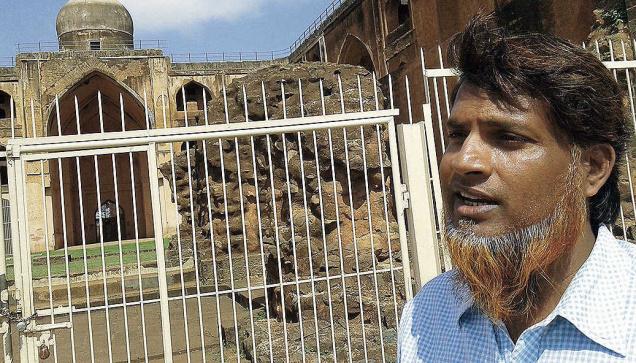
Religion is irrelevant to the study of these structures and heritage, says Abdul Aziz Rajput Bijapuri, a researcher from Vijayapura.— Photo: Gopichand T.
Abdul Aziz Rajput Bijapuri has travelled extensively in the Deccan and visited every Jain historical place ‘at least twice in the last 10 years’
It is not often that one comes across a book on Jain iconography written by a scholar of Islamic art. Abdul Aziz Rajput Bijapuri, a researcher from Vijayapura, has just completed the book on Jain icons and sculptures of the Deccan, with special reference to Vijayapura, Kalaburagi and Bidar.
He is planning another book on the monuments relating to the Jain period in Karnataka. In Bidar to study Sri Parshwanatha temple at Kamthana village, he spoke to The Hindu on how Jain iconography fascinated him.
“The Kamthana temple was built by the Rattarasa kings in the 10th century. It served as a gurukul or school for several hundred years. However, it fell into disuse till it was renovated in 1987,” Mr. Bijapuri explains.
He has travelled extensively in the Deccan and visited every Jain historical place “at least twice in the last 10 years”. He has compiled history, architecture and present condition of the monuments, along with the statues, art plates and stucco and other craft in the buildings.
He has also documented Hindu temples in the Deccan and written treatises about their art and architecture. He has written 12 books, on monuments and religious places of Hinduism, Islam and Jainism.
“Religion is irrelevant to the study of these structures and heritage,” he said. He recalled how scholar late M.M. Kalburgi praised him during a seminar in Dharwad for focusing on his area of research, without bothering about criticism from some quarters about his religious affiliation. “Kalburgi had told me we need more people who study the heritage of religions other than their own,” he recalled.
Mr. Bijapuri has translated books between Arabic, Persian, Urdu, English, Kannada, Marathi and Hindi. He has also set up an NGO, Deccan Studies and Historical Research, that organises seminars, heritage walks and publishes books and brochures in Vijayapura.
source: http://www.thehindu.com / The Hindu / Home> National> Karnataka / by Rishikesh Bahadur Desai / Bidar – September 13th, 2015
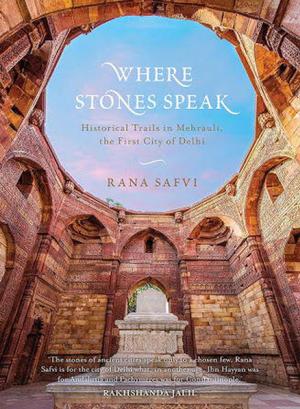
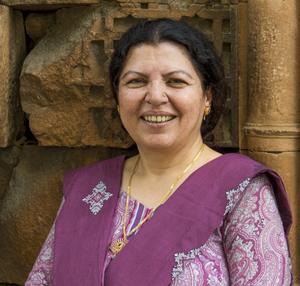
Historian and writer Rana Safvi’s blog, ‘Hazrat-e-Dilli’, is a little corner of the Internet dedicated entirely to the Capital — its new and old architecture, the dizzying variety of food, age-old traditions and much more. Her new book, “Where Stones Speak”, is another tribute to Delhi, and arguably its first city, Mehrauli. Safvi traces Mehrauli’s history through simple words and haunting couplets, takes us through its diverse monuments and weaves facts with storytelling in a way that paints a picture achingly beautiful in its richness and depth.
Excerpts from an interview:
What brought about the idea?
Delhi for us was just a transit point for changing trains to Lucknow or Nainital. Except for a visit to Red Fort and Qutub Minar with a university group I had never visited any of its beautiful monuments. It is only in the past few years when my daughter shifted here that I spent time in Delhi. I started going out for heritage walks with various groups. It was during these that I realised though there was a lot of material it was scattered and quite a lot of it was in Urdu so inaccessible to many. I wanted to write a book on the lines of Hearn’s “Seven Cities of Delhi” but when I reached Mehrauli the first city I realised that it had enough treasures to form a full book on its own. This book happened – I had set out to write something else. I feel it was blessed and willed by Mehrauli’s guardian saint Qutub Sahab.
It’s an ambitious book, one that would require you to go through reams of material. What kind of initial research did you do?
The first thing I did was to shift from Dubai to Delhi NCR as I accessed books for research. I did not want to rely on online resources only. I went through bibliographies of ASI (Archaeological Survey of India) and books written on Delhi. I went to the Urdu Bazaar. Then I bought the books. I feel I became Flipkart’s biggest customer, with books pouring in every week. I have built quite a library now and it’s ongoing. ASI itself has many books on Delhi especially on the Qutub Complex which I went through. Their library and photo section are treasure houses and I got a lot of help from them. There are many Urdu books available. A 1919 book by Bashiruddin Ahmed called ‘Waqi’at-Dar-ul-Hukumat Dehli’ is full of stories and anecdotes.
How difficult was it to find preserved records and materials for the book?
ASI publications are the best source for records and materials. Records of excavations and research done from the time of Sir Alexander Cunningham in Delhi in the latter part of 19th Century are all available with them. Carr Stephen’s 1876 book “Archaeology and Monumental Remains of Delhi” was also invaluable. Many British officers of ASI have written books on Delhi in late 19th and early 20th Century. Maulvi Zafar Hasan’s book, ‘Monuments of Delhi’, published in 1916 for the ASI details all the monuments of Delhi. Many of these are lost to us now. For contemporary history I relied on ‘The History of India, as told by Its Own Historians’ Henry Miers Elliot and John Dowson. Some of the books are now out of print or badly reprinted. I got these from the U.S. where there were second hand sellers.
Delhi’s history is a curious mix of facts and folklore. What kind of balance were you looking to provide in this book?
I have taught history in middle and senior school for many years. I know how bored people get if we just keep presenting fact after fact. I tried to use the same technique I used for my students: tell the story as accurately as I could and make it interesting. I have used anecdotes I found in my reference books as well as a few recounted to me. Wherever they are unsubstantiated by records I have mentioned that too. I have tried to enliven it by using Urdu verses which describe the stunning photographs taken by Syed Mohammad Qasim better than I ever could with my prose. It also embellishes the prose and breaks the monotony of facts. This is a style not used by any other English book on history (at least I haven’t come across it). It has been used in Urdu books though not to this extent.
What is the legacy of this past, and how you think it defines contemporary Delhi and its people?
In 1947, when India was partitioned, many of the old inhabitants of Mehrauli and Shahjahanabad left for Pakistan. The refugees who came here were shell-shocked by the trauma of being torn away from their native lands and having to start anew. For them it was survival that mattered the most. These old buildings held no meaning for them. There was a lot of encroachment those days. Those who didn’t migrate had different problems to cope with. Thankfully, the interest in heritage and our cultural legacy has once again been awakened. The younger generation is identifying with it and showing interest in preserving it. This can be seen in the wealth of books and programmes on our historical and cultural legacy.
Delhi is a juxtaposition of age old monuments and modern architecture. Do you think even by themselves these structures carry an impact?
For me every stone has a story to tell. It is up to us to tell those stories in such a way that these monuments speak to everyone. This can’t be done only through dry facts. It’s only when factual stories are associated with it that people will remember and talk of them fondly. For instance the feedback I get is that Sultan Razia’s story has made them look at Quwwatul ul Islam Mosque with new perspective. It is no longer a pile of stones but a place where a great historical event took place. Structures carry impact when we associate something which we found interesting with it. I don’t know how far I have succeeded but that has been my attempt.
source: http://www.m.thehindu.com / The Hindu / Home> MetroPlus / by Swati Daftuar / September 12th, 2015
The Kannada-Telugu film choreographer and director on living the cinematic life
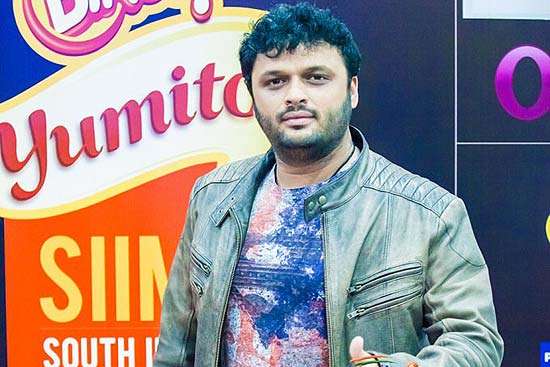
Stuti Agarwal interviews Imran Sardhariya
Why choreography?
I landed in choreography by chance. In school, people thought I was cute and put me up on stage in front of dancing girls. Before I knew it I was dancing.
Was getting into films easy?
No, but I have been lucky. I was introduced to the industry by Ramesh Arvind, whose daughter I taught in my dance academy. My third song, Stylo Stylo, won me great acclaim.
You are solely choreographing the SIIMA Awards 2015.
Over three years of SIIMA, I was bothered by its mediocrity. This year they asked me to choreograph it all.
It seems to have become a trend—from choreography to direction….
For me, the leap came after a friend pushed me in that direction saying it was the obvious next step.
Your first directorial debut, Endhendhigu, wasn’t a hit.
It does not deter me, but only spurs me to do better. I’ve seen this happen to many.
Like your movie, your life is a romantic filmi tale.
I guess that is where I get my love for romance. We moved to Bangalore after my dad passed away and it was there that I met my future wife. She was training at the studio where I was assisting; facing parental opposition, we had to elope!
Choreography or direction?
My first love is choreography. But film-making is also a passion.
You say cinema has taught you diplomacy.
I am straightforward and that landed me in trouble often. Over the years I have learnt to listen to people before I give my opinion.
What’s next?
Producing.
Any plans of getting into Bollywood?
Who doesn’t want to get into Bollywood!
source: http://www.outlookindia.com / Outlook / Home> Arts & Entertainment / Inteview – 10 Questions / by Stuti Agarwal / Magazine – September 21st, 2015
Justice T. Raja, judge, Madras High Court, releases a book on former President A.P.J. Abdul Kalam and Kalam’s scientific adviser K. Ponraj receives the first copy as Additional Advocate General K. Chellapandian (right) looks on. Photo: G. Moorthy
Former President A.P.J. Abdul Kalam’s ancestors were wealthy merchants involved in trading of groceries between Rameswaram and Sri Lanka. They also owned several boats to ferry people from the mainland to the island and back. But their fortunes dwindled after the construction of Pamban Bridge in 1914, said Justice T. Raja, judge, Madras High Court, on Thursday.
Addressing a group of lawyers after releasing a book ‘A complete Indian’ penned by Additional Government Pleader T.S. Mohamed Mohideen on the ideals of former President, the judge said that Kalam’s rise from Rameswaram to the Rashtrapati Bhavan and then into the hearts of 1.28 billion citizens of the country was a great journey that could inspire millions of youngsters to tread his path.
Kalam’s former scientific advisor K. Ponraj, who received the first copy of the book, said that the former President was the only individual to have addressed 2.5 crore students and motivated them towards Vision 2020. “He considered the post of President ceremonial and concentrated more on disseminating his agenda of national development besides performing his ceremonial duties,” he added.
Mr. Ponraj also said that Kalam holds the distinction of making a Powerpoint presentation even to the then President of United States George W. Bush on how India would become an energy independent nation by 2030. “He had invited our Members of Parliament too for breakfast at Rashtrapati Bhavan and made a presentation on the role expected to be played by Parliamentarians in achieving Vision 2020,” he said. Justice S. Nagamuthu, Additional Advocate General K. Chellapandian, Madurai Bench of Madras High Court Bar Association (MMBA) president M. Subash Babu and others took part in the event.
source: http://www.thehindu.com / The Hindu / Home> News> Cities> Madurai / by Special Correspondent / Madurai – August 21st, 2015
The buffet offered at the Madras Pavilion recreates the cuisine of the Nawabs of Arcot
At Madras Pavilion in ITC Grand Chola, what overwhelms you first is the waft of spices. The occasion is the celebration of the cuisine of the Nawabs of Arcot, recreating their recipes. “The family is 200 years old, and the recipes have been passed down. The food, however, has evolved with time, based on taste and the availability of ingredients. You’ll see a lot of Hyderabadi, Kannada and local influences in the cuisine,” says Ajit Bangera, Senior Executive Chef, ITC Grand Chola.
The chef, who has been privy to the food served at the Nawab’s royal palace, Amir Mahal, and the hospitality extended by their family, wondered, why not recreate it for the public. So the restaurant has decided to revisit the royal past. “Without knowing the past, it is difficult for the future to evolve,” says Bangera. “The table of the Nawabs is usually laden with meat. So for the vegetarian dishes, we’ve taken basic concepts and worked with it.”
In addition to the usual dinner buffet comprising North Indian, South Indian, Chinese and Continental selections, there’s now also an array of dishes from the Nawab’s table, including spicy kebabs, steaming biryani and ghee-laden desserts. Members of the Nawab’s family, and their friends, can often be seen dining at the restaurant, owing to the promotion.
The dhood ka sherbet opens our meal. A saccharine concoction made of ground spices, almonds, rose petals and khus, it is mildly addictive, and we ask for refills throughout our meal. Also served is the gulab sherbet, which has the overpowering flavour of rose. We sip on the sherbets while sampling kebabs — the kolsa murgh kabab offers a strong surge of spices, while the mushroom chilgoze is a mushy, spicy piece of cutlet, with finely chopped mushroom and pine nuts adding diversity to the texture. The fiery goolare kabab, made of ground lamb and stuffed with fig, stands out, owing to the contrasting taste and texture offered by the figs. The shahi mangodi kebab, made of pounded lentils, however, fails to leave a mark.
Soup is Gosht shalgam shorba, a peppery broth that smells invitingly of lamb and lentils, which can be topped with fried shallots, fresh mint and coriander.
Main course commences with rich, meaty haleem, which we pair with a thick and buttery kali mirch aur lasoon ki roti. We then try the paneer haldi, which offers tender chunks of paneer with a sour edge that grows on me, before we move on to the disappointing macchi kofta that is heavy on salt. We finally dig into moist javahi biryani, which is the only dish that makes me go back for seconds. I pair it with tangy chugur gosht, made of succulent pieces of mutton, and a delightfully creamy raita.
The spread is heavy on meat and rich in spices. And also, rich in general. However, no one dish leaves an indelible impression, even though nothing on the menu fails either. After working our way through the special cuisine, there is very little space for much else. We take a breather before we venture towards the dessert spread; the chef even recommends we take a walk around the resplendent restaurant to recover our appetites.
The winning stroke for the evening is double ka meetha — rice bread cooked in sugar syrup and finished with reduced milk — which proves to be as delicious as it sounds. The grainy moong dal halwa, however, doesn’t match up in comparison. Also available is an inviting array of Indian and continental desserts, including cherry cheese cake, zucchini mint cake, condi caramel rice pudding, badami nazakat and mango chum chum.
The cuisine of the Nawabs of Arcot is available for dinner till September 14. The buffet is priced at Rs.1950, plus taxes. Call 22200000.
source: http://www.thehindu.com / The Hindu / Home> Features> MetroPlus> Food / by Raveena Joseph / September 10th, 2015
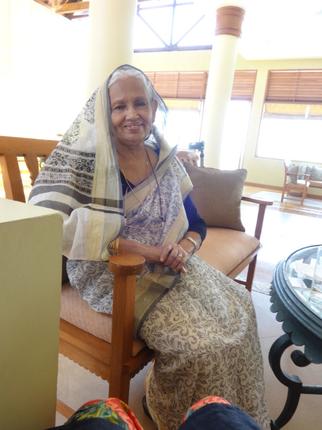
Ummi Abdulla Photo: Saraswathy Nagarajan / The Hindu
Ummi Abdulla is the matriarch of Moplah cuisine
She has written six cookbooks, uploaded YouTube videos on cookery and travelled the world to showcase the best of Moplah cuisine and teach chefs the intricacies of pathiri and mutta surka. Ummi Abdulla, the queen of Moplah cuisine, has done all that and more but the octogenarian does not want to put up her feet and take a break from the kitchen. She is raring to and prove that anyone, even you and me, can make unnakaya and mutta mala if you know how to go about it.
“Bananas and eggs are combined in different ways to make a platter full of delicacies. It is one of the hallmarks of our cuisine. We also use garam masala, perum jeerkam (fennel) and coconut in many of our dishes,” says Ummi, who lives in Kozhikode.
Fragrant with the spices of the Malabar coast and enriched with memories of her grandmother’s kitchen, Ummi’s delicacies have made her a household name among foodies. “I cook every day, something I began doing from the time I got married at the age of 14. Now, I find it difficult to stand for long hours. So I have a help who works under my direction. I am still experimenting and learning and trying to reproduce the flavours of my Ummumma (grandmother’s) kitchen,” says the octogenarian with a smile.
Growing up in a join family with 10 siblings meant that her mother hardly got any time in the kitchen. But Ummi’s grandmother ruled over the kitchen and it was she decided the menu and cooked the special dishes to be served on festive occasions. “She was a terrific cook but she hated anyone watching her cook and was not too keen on teaching anyone either. She insisted that if someone watched her making mutta mala, for instance, it would all break and get spoilt. She would not even permit the servants to be around. So she would close the door when she was cooking,” recalls Ummi, laughing at the memories.
But little Ummi was allowed to watch her grandmother create the intricacies of Moplah cuisine like mutta mala, adukku pathiri, panchara patta, and so on.
Years later, after Ummi married and began her own home, her husband, a foodie, would request her to cook fish biriyani and the other delicacies of the Malabar coast and that is when Ummi began trying to recreate the flavours of her grandmother’s kitchen.
Eventually she became such an expert that chefs came knocking at her door to help them infuse the aroma of ethnic cuisine into their menus. So from catering for the stars and making pickles for la-di-dah restaurants in Chennai, Ummi began travelling to teach chefs the fine points of Moplah cuisine.
“All of them want me to teach them how to make pathiri, prawn biriyani and unnakaya. I also teach them mutta mala because it is such an important item in our cuisine. But not everyone will like it because it has a very strong ‘eggy’ taste. Otherwise you must have it pinjanathappam, a kind of steamed pathiri,” she says.
Her favourite, she says, is the humble ari unda. “I love it and so do my two daughters. Even now, when I crave for some, I make it and store it,” she says.
Now Ummi has come up with her own takes on the age-old recipes. Since Moplah cuisine is so full of non-vegetarian delicacies, many of the chefs have requested her for vegetarian recipes for their customers.
“That is how I came up with ulli ada, my own take on the kozhi ada. Instead of chicken, ulli ada has onion and coconut. I think of a name and then I invent my own recipe. I keep experimenting till I come up with a winner,” she says.
According to her, one of the most difficult eats to make is panchara patta, a delicacy that has to be made two days in advance before it can be served. “Rice flour and egg are whipped till bubbles are formed. The bubbles are removed with a ladle and poured into hot oil. The deep fried bubbles look like a honeycomb. In the same way, the entire mixture is fried. The layers of panchara patta are kept in a colander to drain because it is very oily. After two days, it is crumbled, sugar is sprinkled on it and it is eaten with banana, like puttu,” she explains patiently.
Ummi wonders why youngsters don’t want to try out the regional goodies that India has instead of gorging on pizzas and burgers. So proud is she of her culinary heritage that she does not miss any opportunity to showcase it. “Recently a relative of mine got married into a family from Hyderabad. When they came to our house, I made our biriyani that is made with tiny khaima rice, the smaller the better. I know that Hyderabadis favour the long grained rice to make biriyani but I thought since they were travelling to Kerala, they should get an opportunity to taste our biriyani. As expected, they told me that they enjoyed the biriyani but found the rice used to be very different,” she narrates.
She says she prefers to stick to the ingredients that were used in the recipes traditionally. “So I have used only coconut oil for dishes that have fish. Somehow it tastes better. But for other recipes, I now use refined oil too.”
Ummi is now gearing up for a coffee table cookbook that her granddaughter Nazneen is compiling. “She spent a couple of weeks with me, photographing the dishes and getting the recipes. In addition, she kept asking me for stories for the recipes,” she says with a fond smile.
The stories and the food keep coming.
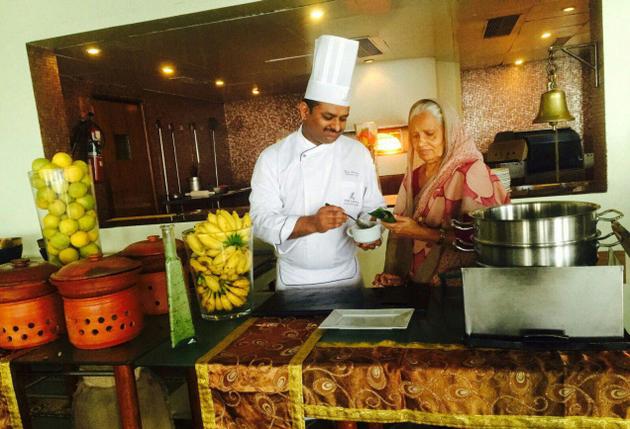
Ummi Abdulla with Roy Satheesan, Executive Chef, The Leela, Kovalam / Photo: Special Arrangement / The Hindu
Taste of tradition
Ummi was at The Leela, Kovalam to teach the chefs the best of Moplah cuisine. “Over the last two days, she has been teaching us a wide variety of her specials like unnakaya, biriyanis, mutta mala, pathiri and so on. We will be including some of the dishes in the buffet that we serve for lunch and dinner,” says executive chef Roy Satheesan.
Ummi’s top seven
Biriyani
Made of kaima rice, the biriyani could be made of chicken, mutton, fish or prawns. Generous amounts of ghee and spices that are native to the Malabar coast are used to make it.
Unnakaya
Ripe banana (nendra pazham of the right consistency) is steamed, mashed, shaped into oval-shaped nuggets and filled with sweetened coconut, egg and raisins. Then it is deep fried. Ummi says this has been enjoyed in all the places she has served it.
Pathiri
Made with rice flour, it is cooked on a tava and served with chicken, mutton or fish curry. There are several varieties of pathiri.
Kaya ada
This was a speciality of her grandmother. Rice flour, jaggery and banana, are mixed and filled into banana leaves shaped into cones. Then it was steamed. Healthy and tasty.
Mutta mala
It is made of egg yolk poached in sugar syrup.
Kadukka / Photo: S. Ramesh Kurup / The Hindu
Kadukka
Mussels, stuffed and deep fried.
Aleesa
This used to be a must for all Moplah weddings. Made with husked wheat, mutton or chicken, and lightly spiced, it is like a porridge. It was served first for the wedding feast. Then mutta mala was served and last of all came the biriyani.
source: http://www.thehindu.com / The Hindu / Home> Features> MetroPlus> Food / by Saraswathy Nagarajan / Thiruvananthapuram – September 09th, 2015
Talented beauty Sana Amin Sheikh is on cloud nine these days, after her recent engagement to director Aijaz Shaikh.
Well, her new personal life development does not hold her back from bagging her next big project.
Well, the Million Dollar girl will now be the new female lead in Zee TV’s Satrangi Sasural(24 Frames).
It was a Tellychakkar.com exclusive report about actress Mugdha Chaphekar getting out of the show after an untimely demise of her character Aarushi.
And with the show headed for a five years leap, Sana will be seen as the new girl in Vihaan’s (Ravish Desai) life!!
As per a reliable source, “The channel and maker have locked Sana for the lead role. She will be shown marrying Vihaan as the story would progress.”
We tried calling Sana, but she remained unavailable.
Our efforts to reach Producers Bhairavi Raichura and Nandita Mehra were in vain. We also sent a text message to the channel spokesperson, but did not get a revert.
Watch this space for more exclusive updates. And remember you read this piece of news first onTellychakkar.com.
source: http://www.tellychakkar.com / TellyChakkar.com / Home> TV News> News / by Srividya Rajesh / September 09th, 2015
TV actress Nigaar Z Khan got married on July 23 with boyfriend Khayyam Sheikh in Dubai. It was a low-key affair with just family and a few close friends.
Khayyam is a Pakistani businessman, who is based in Abu Dhabi. Pictures of the actress’ wedding were posted by some friends online. While Nigaar remained unavailable for comment, her sister Gauahar Khan said, “Nigaar wants to keep this a private affair. We have a small wedding reception in Mumbai next week. She will move to Abu Dhabi after that.
source: http://www.timesofindia.indiatimes.com / The Times of India / News Home> TV> News> Hindi / by Tanvi Trivedi, TNN / July 28th, 2015
A Dubai-based Indian painter who gifted Prime Minister Narendra Modi a series of paintings during his recent visit here has begun painting a new series to honour the martyrs of the United Arab Emirates (UAE) in the Yemen conflict.
In his latest work titled “A Tribute to the Brave Soldiers”, professional illustrator Akbar Saheb painted a helmet of a soldier atop a rifle, next to a UAE flag in a landscape scarred by war, Khaleej Times reported on Thursday.
“When I heard 45 soldiers were killed and there was a mourning period, I thought that I must show respect to them,” Saheb was quoted as saying.
“At first I wanted to paint each of the 45 faces, but I have been unable to find enough information about each of them,” added the 50-year-old artist who hails from Karnataka.
Saheb has been living in the country for 21 years now and said he feels that the UAE is his home.
“Many years ago, I came here alone. Now my family is here. My children have grown up here,” he said, adding “The UAE is my home. Whatever I do here, I do it for this country.”
“I have already done 38 paintings of Sheikh Zayed — the principal driving force behind the formation of the UAE. For 2020 I would have done a 10 feet by 6 feet gigantic painting of Shaikh Mohammed — the vice president and Prime Minister of the UAE,” he said.
source: http://www.timesofindia.indiatimes.com / The Times of India / News Home> NRI> Middle East News / IANS / September 11th, 2015
Muslim Cosmopolitanism in the Age of Empire Seema Alavi Harvard University Press, 2015, 504 pp, Rs 1495
Muslim Cosmopolitanism in the Age of Empire is an exhilarating book encompassing broad swaths of trans-imperial history, religio-cultural geography and a stunning breadth of vision. Seema Alavi’s credentials as a historian of substance are well-established. Starting with a book on India’s military history and the Sepoys of the Company that came out of her doctoral research work in Cambridge with C A. Bayly, she later forayed into the history of indigenous medicine, producing the gem of a book, Islam and Healing with another book thrown in between—The Eighteenth Century in India. The current tome has a distinguishing feature that sets her apart from the ordinary run of historians – her multilingual scholarship, her willingness and ability to access source materials in several languages and her skill in marshalling arguments from different perspectives combined with insights drawn from literary sources to give a comprehensive, almost definitive, view of the phenomenon under discussion.
The seed of Muslim cosmopolitanism was, perhaps, sown when the Prophet had exhorted his disciples to undertake even the hazardous journey to China in quest of knowledge. Unlike some cultures, where travel across seas and mountains were proscribed for fear of losing purity/caste, Islam always put a premium on travel and trade, the Prophet himself being the best exemplar of both. When one travels one gets exposed to multiple cultures, belief systems and world-views, thus shedding one’s parochialism and embracing traits of cosmopolitanism. Baghdad (of Baitul Hikmah fame), Constantinople (current Istanbul, the seat of Ottoman empire), Cairo, Cordoba, Damascus, Bukhara, and Delhi were all Muslim cosmopolitan cities at different historical moments where scholars, statesmen, adventurers from all over the world congregated and conducted dialogue in a spirit of openness and catholicity. In the current times, when Muslims, for a variety of reasons, have become victims of insularity and ghettoisation, Alavi’s book is a potent antidote to the widespread but ill-informed media narrative about Muslim resistance to forces of modernity and globalisation.
Extraordinary journeys
Alavi’s articulation of Muslim cosmopolitanism in the 19th century is chronicled through the extraordinary biographies of five Islamic scholars from India – Sayyid Fadl, Maulvi Rahmatullah Kairanwi, Maulvi Imdadullah Makki, Siddiq Hasan Khan, and Maulvi Jafer Thanesri – who transcended their limited identity as British subjects and charted careers at the interstices of imperial borders. Taking advantage of imperial knowledge, strategies and rivalries between two great empires of the day, British and Ottoman, “they carved out a spiritual and civilisational space between the [these] Empires and projected it as their cosmopolis.”
The chapter on Sayyid Fadl brings alive the phenomenon of the ‘Indian Arab’ who hailed mostly from Hadramawt, Yemen, and whose presence was marked in Delhi, Gujarat, Deccan and Malabar. Starting his Indian career in the Malabar district of modern day Kerala, he was branded as a “fanatic” and an “outlaw” by the British government because of his alleged involvement in the anti-British Moplah uprising. But he fled from British India and then used the British and Ottoman tension and his trans-imperial connections to put himself up as the ruler of Dhofar – a semi-independent region in the southwest of Arabia . “Sayyid Fadl’s remarkable journey – born and brought up in a Malabar Sufi family of Arab descent and rising to become an independent ruler of an Arabian principality, a leader who commanded respect in both Meccan and Istanbul high society – was enabled by the connections he forged early on between British and Ottoman societies. And he established these connections using imperial networks as well as his religious and kinship ties.”
Amadeo Preziosi’s Entrance to the Golden Horn, painted c.1840-1880. Credit: Seema Alavi
Nawab Siddiq Hasan, who had a prominent position in the state of Bhopal, exerted great influence through his agents in Hijaz and Istanbul and fully exploited the potentialities of print culture to propagate a version of Islam at odds with the political interest of the British rulers in India. But the British resident in Bhopal could do little to prevent him from propagating his anti-British views. Exploiting British-Ottoman rivalries allowed him to publish his books and journals from Bhopal, Calcutta, Mecca, Madina, Istanbul and Cairo. His agents also bought books pertaining to a similar ideology and had them printed from Bhopal. “Imperial assemblages were also empires of print”, and Hasan fully exploited the possibilities of the moment to propagate his version of the Muslim cosmopolis making forays through porous imperial borders.
For the other three religious thinkers, the 1857 war of independence provided the backdrop for their political careers. They became suspects in the eyes of the British because of their alleged roles in the uprisings. Rahmatullah was one of the rebel leaders of Kairana who escaped the British noose by fleeing to Mecca, and his extensive family estate was confiscated by the colonial administration. He established the Madrasah Saulatiya in Mecca which became a hub of Muslim cosmopolitanism and produced scholars who spread out in different parts of the world, establishing similar seminaries and spreading the same message of consensus and unity among Muslims. Kairanwi wrote in Arabic, Persian and Urdu, addressing the Muslim umma across the empires, adhering largely to the Salafi intellectual tradition. Imdadullah followed Rahmatullah to Mecca and taught in his Madrasah Saulatiya. Both met Muslims from all over the world who came for hajj and discussed with them the challenges of anti-British struggles being waged in their own countries.
Challenge to colonialism
The pedagogical model evolved in Saulatiya and their ideological underpinnings shaped the broad curricular structure at the Deoband seminary in India. Thanseri who couldn’t escape was sent to the Andamans. However, he was one of those convicts who was co-opted in the colonial administration. “Unlike Kairanwi and Imdadullah Makki, he did not manage to escape to the Ottoman territories. But this did not stop him from envisaging a Muslim cosmopolis stretched across empires, and via his writings he envisaged an embracive civilisational space that spilled out of British India and challenged the colonial regime through its call for Muslim unity across the imperial assemblage.” (P. 333)
Alavi is prescient in her analysis of how print capitalism, the telegraph and the increasing ease of travel that fuelled resentment in colonised societies by upsetting the social order were also the means that helped build Muslim solidarities across a vast geographical divide. She is equally prescient in her debunking of the British paranoia of ‘Wahabism’ which the nervous officials saw everywhere. The British fear of Muslims was exacerbated by 1857 and William Hunter’s meretricious book Indian Musalman predisposed them to see the spectre of Wahabism even in innocuous reformist movements among Muslims and equate what Alavi defines as Muslim cosmopolitanism with territorial loyalty. The study reminds the reader of how intensely nationalist these Indians were even while they were trying to bring about a broad consensus among Muslims of different countries regarding contentious issues that divided them along ideological faultlines. Through her book Alavi has retrieved a segment of our national history that had been all but erased from public memory.
M Asaduddin, an award-winning author and translator, is currently Dean, Faculty of Humanities and Languages, Jamia Millia Islamia
source: http://www.thewire.in / The Wire / Home> Books / by M. Asaduddin / September 06th, 2015