20 craftsmen took three years to create the 900-kg sculpture
by S. Kenneth Shishir
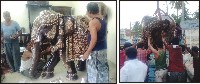
City artisans, who are also recipients of State Awards, have sculpted a five feet tall elephant from a single block of rosewood.
Artisans Khalil ur Rahman Khan alias Parveez Khan, Fazlur Rahman Khan alias Touseef Khan, Hafeez ur Rahman Khan alias Tanveer Khan and Habeeb ur Rahman alias Asif Khan, sons of late A. Majeed Khan, a recipient of Karnataka State Award in 1985 and National Award in 1991, have sculpted this wooden elephant at their workplace Majeed Fine Arts on Anegundi Road in Mandi Mohalla in city.
Khalil ur Rahman, the eldest among the four brothers, speaking to SOM, said that Mysuru is the birth place for inlay work and is famous for rosewood inlay craft all over the world.
He said that to promote rosewood inlay work and to keep the tradition alive, his father late A. Majeed Khan, established Majeed Fine Arts in city in the year 1972 and since then many artisans have been trained in the inlay work by his father, who have made big names now.
Khalil further said that the Karnataka Government recognising the outstanding and excellent inlay works made by his late father awarded him with a State Award in 1985 and a National Award in 1991.
He said that his brother Fazlur Rahman Khan is a recipient of Karnataka State Award in 1995 and a National Award in 1997 while another brother Hafeez ur Rahman is a recipient of Karnataka State Award in 2003.
Khalil said that his younger brother Habeeb ur Rahman is also a recipient of the State Award in the year 2003 with himself being a recipient of the State Award for the year 2004-05.
When asked why did he and his brothers choose to sculpt an elephant when they could have sculpted anything, Khalil said that getting a single piece of rosewood was very rare and added that he procured the rosewood at an auction in Kushalnagar about three years ago. He further said that he and his brothers decided to sculpt a big elephant from the single piece of rosewood as Mysuru is famous for the world famous Dasara in which elephants play an important role especially during the Jumboo Savari.
When asked whether it was he and his brothers alone sculpted the elephant? Khalil said that they took the help of 20 craftsmen to complete their dream project and sculpted the elephant from a single solid block of rosewood.
He said that to decorate the sculpture they used inlay work. While 60% of the inlay work has been done using ‘Mother of Pearls,’ the remaining 40% work was done using natural wood colours for further decoration of the wooden elephant.
He said that to represent Karnataka, we have used the logo of the State along with our National Emblem on the side and a Gandaberunda on the forehead of the elephant besides birds, animals, flowers, etc.
When asked about the procedure of sculpting the elephant, Khalil said that as the first step, we made a design and drew an outline image and patterns on the solid rosewood block. Then the rosewood was carved into proper shape and cut into three parts (Head, body and tail) to give proper shape. The motifs that had to be inlaid were hand-cut and the area where the motifs had to be inlaid were carefully scooped out and the motifs were inlaid and fixed, he said and added that the sculpture was then smoothened using sandpaper and polished to give a bright look and joined together.
Khalil said that after the elephant was sculpted, it was 5 ft. tall, 3 ft. wide, 6.6 ft. in length and weighed about 900 kgs. The wooden sculpture has been shifted to Cauvery Emporium on Sayyaji Rao Road where it is kept on display now.
source: http://www.starofmysore.com / Star of Mysore /Home> Feature Articles / Wednesday – September 09th, 2015
Renowned Sarod maestro Ustad Amjad Ali Khan was today conferred with Kerala Goverment’s prestigious music award, ‘Swathi Sangeetha Puraskaram’ for his outstanding contribution to Indian music.
The award, instituted in memory of legendary music composer Maharaja Swathi Thirunal, carries a cash prize of Rs one lakh, citation and a medal, and was presented to the maestro by Chief Minister Oommen Chandy, at a function at the Durbar hall of the Secretariat here.
Chandy said the state government had identified a two- acre land at nearby Veli for setting up the proposed music academy of the maestro.
“Government has launched some proceedings. We have identified two acre land at Veli and are planning to give this land for the academy.”
“Conferring the award on Amjad Ali Khan is a proud moment for the state,” he said.
Khan said, “it is a great honour and privilege to receive the award.”
Remembering great musicians like Muthuswamy Dikshitar, Tyagaraja and Swathi Thirunal, he said their contributions helped Indian music flourish. “It is due to their commitment, our Indian music exists.”
Referring to music, he said the sound of sitar, sarod and tabla connects to God. But language does create ‘barriers’.
“Because we do not deal with language, we communciate with sound. Other kind of music is based on texts and krithis.”
“Language does create barriers and can be manipulated. But I thank god, I belong to sound (community),” he said.
Profusely thanking the chief minister and state government for the award, he said he felt at home in Kerala and knew that he would get all support from the state.
He also said it would a take year for the academy to become a reality. “We have identified a place,” he said, adding, the plan was to take ‘only committed’ students. “It is not for entertainment.”
The citation described Amjad Ali Khan as the “most distinguished sarod maestro who has rendered meritorius services to preserve and promote the tradition of Indian classical music in general and Senia Bangash Gharana in particular.
source: http://www.business-standard.com / Business Standard / Home> PTI Stories> National> News / by Press Trust of India / Thiruvananthapuram – September 09th, 2015
Hyderabad’s ‘real heroes’ were honoured by 92.7 Big FM
It is not easy to initiate a change. But, the best way to bring a change is by paving a new path. While most of us complain at the way society turns a blind eye to the problems and situations, there are a few who do not complain, instead take things in their hands and set an example. To felicitate their efforts and set them as role models to society, 92.7 Big FM invited these heroes as part of their ‘Big Real Hero Awards’ campaign.
As we celebrate the 69th year of independence the change makers of our society become the real heroes to fight for various forms of independence in our independent society. These heroes are silent and are making a difference without talking about it.
As part of their campaign, Big FM in their breakfast show asked people to share the names of heroes they have seen working for society. After an overwhelming response some of them were even featured in their breakfast show ‘Salaam Telangana’ hosted by RJ Shekar and Swapna.
In an event on Friday, the channel felicitated the six heroes namely—Bal Gangadhar Tilak, Sharif, Rajeshwra Rao, Bhagya Lakshmi, Yadigiri and M. Vijay Ram Kumar. The awardees come from different walks of life and serve society in different ways and means. They, in their own right have been working for a change. Bal Gangadhar, a retired railways employee has used his pension to fill more than 1100 potholes in the city. He took the initiative when he witnessed several incidents caused by the bad state of roads. In Bal Gangadhar’s absence his brother Bhimesh Shankar was present. He established shramadaan.org
Sharif is the founder of Friends2support.org. F2S is a group founded by five friends to help people meet the emergency blood requirement for free. F2S claims to be India’s largest blood donor database. The organisation has won several national and international awards. Rajeshwar Rao is the founder of Satya Harishchandra foundation. They cremate unclaimed and unidentified dead bodies. Bhagya Lakshmi from ‘Manchi Pustakam’ is a small initiative taken to publish, encourage and promote Telugu books. Yadigiri is a chef and he donates food from his restaurant—Ulavacharu to orphans everyday and M. Vijay Ram Kumar of Emerald sweets has been working for a green society. The awards were given away by Somesh Kumar, Commissioner GHMC and actor Manchu Lakshmi.
source: http://www.thehindu.com / The Hindu / Home> Features> MetroPlus / by Prabalika M. Borah / Hyderabad – August 14th, 2015
Author Anwar defies many myths about writers. He could only write in his mother tongue, but has carved a niche for himself in Telugu poetry and short story genres.
He is widely known for his acclaimed short stories – ‘Bakri, ‘Pichidhi’, ‘Maa tuje salaam’ and his anthologies of poetry titled ‘Talavanchani Aranyam’ and ‘Mutti’ among others.
He went on producing remarkable works in the past ten years and is popularly known among people of Telangana for his laborious work ‘Atma Balidaanalu’ – a compilation of details of all those who sacrificed their lives for the cause of statehood in the recent movement.
Sporting a bag, carrying a camera, pen and a note book, he went from street to street, village to village talking to parents and relatives of youths who jumped before speeding trains, hanged themselves, immolated themselves aspiring for separate statehood to the region.
Speaking to The Hindu, Mr. Anwar says that the book demanded much from him, including his personal life. “I am happy to be part of the separate Telangana struggle. My work required more silence and hard work. It gave me immense pleasure in bringing to light the sacrifices of over 170 youths and it helped the families get financial assistance promised by the TRS government,” he says.
Powerful poetry
Committed to making a name in Telugu contemporary literature, he writes sparingly but powerful poetry and prose unlike others who churn out pages and pages. He edited scores of poetry books such as `Nayina,’ ‘Ajaah’ and is soon coming out with his short story book.
Mr. Anwar works as health educator in the Medical Department and is an active social activist striving to reach out to the poor and the needy.
source: http://www.thehindu.com / The Hindu / Home> National / by Gollapudi Srinivasa Rao / Warangal – September 06th, 2015
(Death Anniversary on May 6, 2006)
In the late 1930s, Naushad Ali came to Bombay to be a success as a musician. But he had to struggle to make it to the top. Initially he faced rebuffs, and had to endure periods of utter deprivation. Naushad even spent nights sleeping on footpaths before he finally secured a job as a pianist in composer Mushtaq Hussain ‘s orchestra. Composer Khemchand Prakash took him on as his assistant and taught him, an act for which he remained extremely grateful throughout his life. Soon, Naushad got his break with the film Prem Nagar (1940), but it was only with Sharda (1942) that he got attention. The film Ratan (1944) took him right to the top, and from then on he could produce blockbuster songs for appropriately smash hit films, most notably films made by either Abdul Rashid Kardar or Mehboob Khan.
Naushad’s style was renowned for his ability to incorporate classical rhythms into his symphonies. He based his music upon the “ragas” that formed a basis in Indian classical music, and thus his music took on complex formations and . His taste for classical music was legendary – in the Mughal musical Baiju Bawra (1952), he used actual classical singers to sing his ghazals. In spite of his classical tendencies, he could also keep up with the times and adapt Western techniques and instruments into his music, as heard in the films Jadoo (1951) and Mere Mehboob (1963). Naushad was also among the first to use the techniques of sound mixing, of separate recording of vocal and music tracks in playback singing, and using background scores to enhance characters’ moods and dialogues through music.
Naushad’s career continued at a steady peak throughout the 1950s and 1960s, with some of his melodies being featured in now-perennial classics like the Mughal period films Baiju Bawra (1952) and Mughal-E-Azam (1960) and the epic Mother India (1957). Unfortunately and to his distaste the times were changing and demanded more fast-paced, peppier tunes, and Naushad had to struggle to keep his music pure and classical. In fact for Saathi (1968), he was persuaded, against his will, to re-record two of his songs to pep up their pace and their appeal. It was due to this uncompromising attitude towards his music that he would only compose less than a hundred films in his lifetime.
Music
“Zalim Zamana Mujhko Tumse” by Naushad, Suraiya & Shyam ()
K. Asif (14 June 1922 – 9 March 1971) was a film director, film producer and screenwriter who was famous for his work on the Hindi epic motion picture, Mughal-e-Azam (1960).
Information On India..This Page Try’s to help You to give Information on “RARE INDIA”
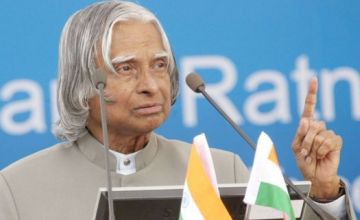
Filmmaker Nila Madhab Panda, who is planning to make a biopic on APJ Abdul Kalam, says he needs good amount of time to direct the movie on the former Indian President.
The I Am Kalam director said he had even discussed the idea of making the film with Kalam.
“When you think of making a film on such a personality, you have to take a hiatus for at least three years. It is not a film which can be made in six-seven months.
“I would love to make a film on him because I have spent ample amount of time with him. But I don’t know when I will start making it. I had few discussions with Kalam sir too about his biopic when he was alive,” Nila said.
When the entire country was mourning the death of the former Indian president, who died in Shillong in July, the filmmaker was happy to see how every channel was showing “I am Kalam” to keep his spirit alive.
“Every channel was showing I Am Kalam after his death.
Though it was not a film on his life, it is a film which will keep his spirit and teachings alive.”
I Am Kalam, a 2011 film, revolved around a poor Rajasthani boy whose life changes forever after he takes a cue from a speech delivered by the former President.
Nila’s latest satirical drama Kaun Kitne Paani Mein hit theatres recently. The film talked about the water scarcity in a village in Odisha.
source: http://www.thestatesman.com / The Statesman / Home> Interview / Press Trust of India, New Delhi / September 07th, 2015
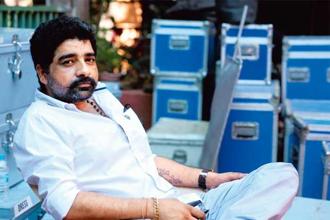
Wasiq Khan, the production designer of ‘Goliyon Ki Rasleela Ram-Leela’, on creating magic and realism
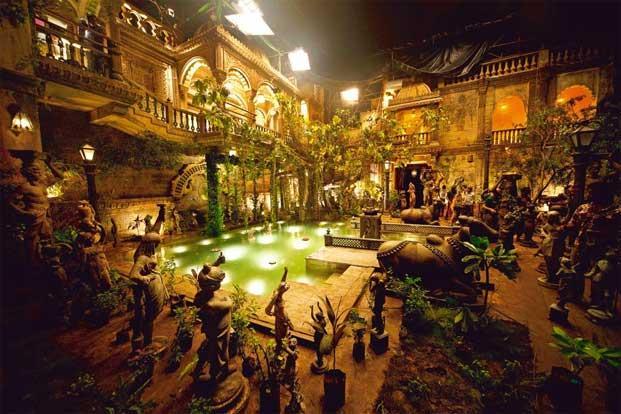
The sets of the film ‘Goliyon Ki Rasleela Ram-Leela’
It was Dhankor’s first scene in the movie, and a debate was raging about the curtains.
Should they be ornate like the apparel and jewellery in which the fearsome matriarch of the Saneda clan in Sanjay Leela Bhansali’s Goliyon Ki Rasleela Ram-Leela is swathed, or should they provide a dash of simplicity?
There were close to 200 samples from which to choose. Production designer Wasiq Khan asked an assistant to put up a roughly textured jute curtain on the wall. Bhansali loved it. The curtain stayed in the scene.
Bhansali’s superbly choreographed treatment of William Shakespeare’s Romeo And Juliet is also his lightest work till date. Here, as in his previous productions, are the epic sets that create a cosmos of impossible beauty, the decorative touches for ordinary objects, the perfectly coiffured men and women. But here is also a grungy underside to the flourishes, playful backdrops, and the co-existence of grandeur and rusticity. Bhansali’s choice of Khan, who has for years created the illusion of reality in modestly budgeted productions, has resulted in a gypsy opera that is more tethered to verisimilitude than previous ventures like Devdas, Black, Saawariya and Guzaarish
Wasiq Khan. Photo: Devendra Parab/Mint
Ram-Leela might be a mild departure for Bhansali but it has set Khan firmly on the road to bigger things. An acolyte of renowned production designer Samir Chanda, Khan has worked closely with film-maker Anurag Khashyap as well as designed such films as Dabangg, Rowdy Rathore andBesharam. He is among the people who create Hindi cinema’s newfound love for lived-in texture, and the go-to man for a level of detailing that seems utterly natural despite being utterly manufactured.
“My school is the Samir Chanda school, which is more realistic and rustic,” Khan says. “In the old days, production designers were called art directors but many of them were glorified carpenters. All rooms had that painting of Arjun and Krishna from the Mahabharat and two sunmica tables. The villain’s den had to have a stuffed tiger. Nobody bothered talking to the art director about costumes.” Greater attention is being paid to costumes, sets and locations than ever before, he says. “Audiences do care for realism, and you can’t take them for granted any more.”
Khan cut his teeth on such Kashyap films as Black Friday, set in the middle-class neighbourhoods and slums of Mumbai, That Girl in Yellow Boots, which unfolds in the city’s grungy parts, and Gangs of Wasseypur, shot at over 300 locations in Uttar Pradesh and Bihar. “I did my first commercial film because there was gadbad (trouble) in my kitchen,” he says. “Even when I did Dabangg, I maintained a sepia tint and a rustic feel. But on a film like Ram-Leela, you can open your mind and imagine things, let the artist inside you wake up even as you try to maintain the realism.”
Bhansali came calling because of Rowdy Rathore, which the filmmaker co-produced. He wanted to keep the Baroque style for which he is known but also wanted to create a parallel universe that would be believable, Khan says.
The merry mix of magic and realism is what makes Ram-Leela so special. Everything is decorated, from tattooed bodies to encrusted guns and bandhini-patterned cellphone covers. There are nods to Baz Luhrmann’s anachronisms and V. Shantaram’s invocation of temple art and architecture. The porn movie parlour run by Ram, the movie’s Romeo, is designer seedy, with neon-lit cut-outs and lurid poster art. In the weapon- storage room, guns peek out of straw baskets and from inside shimmering back-lit glass cases as though they were diamonds. The love story’s Juliet, Leela, exchanges naughty SMSes with Ram in a chamber that has Raja Ravi Varma paintings and diaphanous curtains. Glasswork patches liven up rough-hued walls, not unlike homes in the Kutch region whose craft traditions and folk culture have influenced Ram-Leela’s design and narrative.
“We worked primarily with two colours, black and burgundy, and tried to give a rustic feel in every set,” Khan says. (Bhansali didn’t respond to interview requests.)
The extended and expensive production schedule—over 200 days—was very different from what Khan is used to. He is something of a heartland specialist in his ability to conjure up a “gareeb (poor)” aesthetic, as he says. “Whenever people don’t have budgets but want to make their films look good, they think of me.”
Khan learnt his craft from the man whom he calls Dada. Chanda, who died in 2011, followed in the tradition of celebrated realism specialists Bansi Chandragupta, Satyajit Ray’s long-time collaborator, and Sudhendu Roy, the leading art director for Hindi films from the 1960s to the 1990s. Chanda recommended Khan to Kashyap for Last Train to Mahakali, his contribution to the fictional drama series, Star Bestsellers, that aired on Star TV in 1999. “Dada introduced me to Anurag as his best product, and told him that he should take me away and not send me back,” says Khan.
A still from ‘That Girl in Yellow Boots’
He had meagre resources to work with on Last Train to Mahakali, as well as for Kashyap’s unreleased debut feature,Paanch, made in 2003. The resourcefulness born out of need combined with the belief, drilled into him by Chanda, that sets would be convincing only when they looked lived in. “There are sets and then there are sets that indicate that somebody has lived there,” Khan says. “A place must have soul and feeling.”
Khan has been integral to Kashyap’s noir-influenced cinema right from the beginning. “We didn’t have a lot of money for Paanch, but we wanted to make the scenes look rich,” Kashyap says about his debut, in which members of a music band commit murder to fund their dreams. “There is a red room in Paanch that was Wasiq’s brainchild,” Kashyap adds. “I told him about my hostel room, with graffiti on the wall. He said, give me the graffiti and I will figure out how to do it, and he did. His ability to transform something from ordinary to extraordinary and make it look real and never lose character is why we work together.”
However, the two did not collaborate on Dev.D or Kashyap’s forthcoming Bombay Velvet. “We didn’t work on Dev.Dbecause both of us were in different zones, but we missed him a lot,” Kashyap says. “He is tremendous at turning minimal into maximum.”
Khan studied at the faculty of fine arts at the Jamia Millia Islamia university in Delhi. His family was far removed from the tinsel trade, and Khan was expected to follow in his father’s footsteps and become an engineer. He met Chanda while he was a student, on the sets of Ketan Mehta’s Sardar. He got chatting with Chanda, who handed him a business card.
After his graduation in 1996, Khan arrived in Mumbai with Chanda’s business card in his pocket. He dialled the landline number listed on the card, only to discover that the line had been disconnected. He worked his Jamia contacts and got a job at the Kamalistan studio, painting backdrops for art director Ratnakar Phadke. Khan finally met Chanda a few months later, who recruited him as an assistant for Mani Ratnam’s period Tamil film Iruvar. Over the years, Chanda became a surrogate parent for Khan. “He was like my father, we would talk every few days,” Khan says.
He also picked up from Chanda the ability to improvise at short notice. When a shoot for Rahul Dholakia’s political drama Lamhaa in 2010 had to be shifted abruptly from Kashmir to Mumbai because of security concerns, Khan created a set with “truckloads of chinar leaves” that were brought in from the state. “People started calling me from Kashmir and asked me where we had shot the sequence—when you create realism, people do notice.
Chanda’s advice remains a lodestar for the 38-year-old production designer. “I still try and maintain the rules and standards Dada gave me,” he says. “He told me to never stop thinking that the job is done. I don’t do too many films—he used to tell me that money tends to come all of a sudden.” Yet, Khan has been unable to resist the demand for his services. He is now working on the Bhoothnath sequel, a biopic on the political prisoner Sarabjit Singh, a remake of the Tamil film Ramana, and 21 Topon ki Salaami, about P.N. Joshi, a put-upon government employee whose sons try to honour him with a 21-gun salute at his funeral.
Joshi’s chawl abode is a good example of Khan’s adeptness at mimicking reality. Packed into the tiny space are a stainless steel vessel rack, a goddess-themed calendar, a mezzanine storage loft and the ice-cream spoon holder with fake purple flowers that is a common sight in middle-class homes. “You can’t pinpoint it when you watch a movie, but you can feel it,” Khan says about the art of creating the invisible, yet visible, backdrop. “Everything should not be perfect, since life isn’t perfect.”
source: http://www.livemint.com / Live Mint / Home> Leisure / by Nandini Ramnath / Saturday – November 20th, 2013
Weavers of Erode paid homage to former president Dr A P J Abdul Kalam by weaving a window curtain with the ‘missile man’s’ face. They plan to hand over their specially made curtain to Kalam’s family soon.
Talking to TOI, designer of Chentex (The Chennimalai Weavers Cooperative Production and Sale society Limited), K Appusamy, said that this is the first time he has designed a curtain for such an occasion. “I have made several curtains stamped with eminent personalities. I am happy to have this opportunity to design a curtain as a tribute to Dr. Kalam.
It’s a jacquard weave he has used to make the curtain. The face is first designed on the computer. After work on the computer was completed, he handed over the jacquard pattern to weavers Baby and her husband Subramanian.
“It took me a day to complete the design work. It took another whole day for the weavers to complete their work. The entire curtain has been made by hand,” he said.
This is the second time Appusamy designed Kalam’s face. On the first occasion, he had made a wall hanging when Dr Kalam became the President of the country. He has also made a wall hanging for Sachin Tendulkar, when he hit a double century in a one-day match for the first time.
He also did some design work for the Semmozhi function held during the DMK regime. When the Thanjavur temple turned 1,000 years old, he created a design of the temple. He got global recognition for his bed spread sprinkled with Tamil vowels.
The members of Chentex plan to present this special window curtain to Kalam’s family in Rameswaram, after all the formalities are completed.
They plan to sell specially made wall hangings through Co-optex outlets across the state.
source: http://www.timesofindia.indiatimes.com / The Times of India / News Home> City> Coimbatore / by V. Senthil Kumaran, TNN / July 30th, 2015
Assam Chief Minister Tarun Gogoi today voted for Nahid Afrin, the young singing sensation from Assam, for the “Indian Idol Junior” Season II.
Tarun Gogoi said the young promising singer from Assam has been regaling the audience and viewers with her mellifluous voice and bringing laurels to the state.
Assam Chief Minister Tarun Gogoi today voted for Nahid Afrin, the young singing sensation from Assam, for the “Indian Idol Junior” Season II.
In a statement here, Gogoi said the young promising singer from Assam has been regaling the audience and viewers with her mellifluous voice and bringing laurels to the state.
The Chief Minister appealed to the people of the state to vote for Nahid, who hails from Sonitpur district, to enable her to win the coveted singing reality show.
Impressed by the singing of the 13-year old Visharad, a Part 2 student of classical music under the Bhatkhande Kala Kendra, the Indian Idol Junior Season 2 judges said she might get offers for playback singing by the end of this season.
Intense campaigning is on in Assam, particularly in her home town Biswanath Chariali, for Nahid’s victory in the singing reality show.
source: http://www.indianexpress.com / The Indian Express / Home> Entertainment> Television / by PTI / Guwahati – August 22nd, 2015