Category Archives: Arts, Culture & Entertainment

Mukhtiyar Ali (India) & Mathias Duplessy (France)

All about Mukhtiyar Ali (India) & Mathias Duplessy (France)

Artists
  • Main Artists : Mukhtiyar Ali, Mathias Duplessy

Mathias Duplessy & Mukhtiyar Ali: From Asian deserts to Andalusia

Collaborations between the east and west such as Zakir and McLaughlin, Ravi Shankar and Yehudi Menuhin, have resulted in some of the finest music over the decades. Mathias Duplessy from France started working with the Sufi Indian singer Mir Mukhtiyar Ali six years ago and soon realised they had a common language in music. They evolved a style of their own, which was inspired by Rajasthani folk, flamenco, blues, reggae, African, Japanese and Mongolian music. In 2011, they recorded an album in Paris called “Jeena Jeena” and have been performing since with the great Bastien Charlery, accordion player from the Bulgarian gypsy style. The famous sarangi player Sabir Khan who works with them on film scores will also join the stage for an exceptional evening!

Mathias Duplessy

Difficult to label him, he plays dozens of instruments and loves the strings. Mathias Duplessy belongs to the generation of musicians who do not like borders; and approaches world music without any complex. From a song to a solo guitar suite or strings adagio, his music conveys the big spaces and the time passing.
Between flamenco, oriental, classical music or gypsy jazz, his style is unique and full of energy. Joyful, generous, Mathias has a lot of projects following his music encounters and composes music for films in France, Morocco and India (Peepli Live, Finding Fanny).

Mukhtiyar Ali

He comes from the semi-nomadic community called Mirasi from the Thar desert. He lives in Pugal, a village at the border of Pakistan and Rajasthan. He belongs to the 26th generation of this community which has successfully kept alive the oral tradition Sufiana Qalam.
Mukhtiyar Ali has a voice which can only be experienced. He has preserved the ideology of Sufiana music which impels divine communion with an ecstasy created in total detachment. He pervades this very essence of Sufiana Qalam with his involvement not just in the music but also in its poetry.
Today, while singing Sufi poetry all over the country with his original compositions, he’s also regularly called in to Bombay to work on film background scores and tours abroad with his Jeena Jeena team.

source: http://www.bluefrog.co.in / Events / February 15th 2015 – Mumbai /
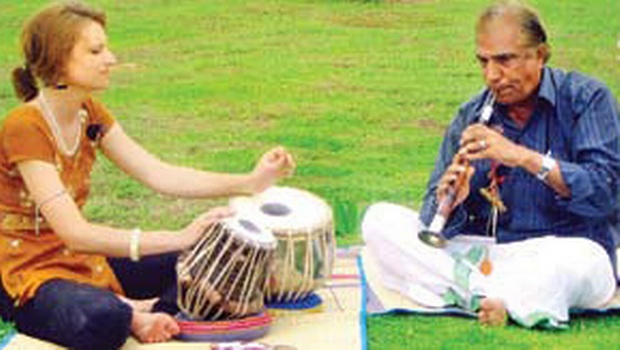
From his Shehnai Flows Notes of Despair

Ustad Hassan Bhai plays shehnai as Lara, a French music student, accompanies him on tabla at Bekal in this 2011 photo

Kasargod :

Around noon, Ustad Hassan Bhai returns dejected from the post office. The double-reed mouthpieces have still not arrived from Varanasi.  “I am running out of reeds. Mouthpieces from other places do not produce impeccable notes,” said Hassan Bhai, one of the disciples of the legendary shehnai maestro Ustad Bismillah Khan.

At 72, he keeps the legacy of the maestro who often played at temples, intact. It was only a day ago that he performed at a Vishnu temple in Kannur district. “It was a two-and-half-hour shehnai concert and went late into the night,” he said.  The music that comes out of Usthad’s shehnai, gifted by the maestro himself, is sonorous, but has hardly helped him alleviate life’s sufferings. Dependent on his meagre earnings, mostly from teaching music, are his bed-ridden wife, a son and daughter and three grand children borne of another daughter, who is no more.

The family of seven live in a rented apartment, but this status is now poised for a change. The government has agreed to provide five cents of land in Thekkil village, and Chemnad panchayat will construct a house for him. Ustad, who won this year’s Gurupuja Award, says he always played music for the love of it and never tried to make money out of it.

Poverty is a recent phenomenon in Usthad’s life. Born to a Muslim Keyi couple — Adam and Bibi — in Thalassery on August 15, 1943, Hassan Kutty had a comfortable life.

He inherited music from his mother, Adam Bibi, a trained vocalist. “Under my mother, I used have long hours of riyaaz,” says Usthad, who plays 30 wind and string instruments.

On turning 18, his mother sent him to Mysore to learn Hindustani music. After a couple of years, like most of Keyi youngsters, Hassan Bhai landed a job with a merchant ship and set to sail around the world.  Once when the ship docked at Los Angeles, he found his way to a Catholic church and played piano for a Sunday mass.

“The members liked me so much that I was part of the church choir for the next three years,” says Hassan Bhai. He returned only when he got a notice from the embassy for overstaying. Back in India, he started frequenting Mumbai, then Bombay, to play tabala in an orchestra. “Bombay made Hassan Kutty, Hassan Bhai,” he says. In one such programme in 1975, he met Bismillah Khan and conveyed the desire to learn shehnai under him. “He immediately agreed and asked me to come to Banaras,” recalls Hassan Bhai.

And so started 10 long years of riyaaz on the banks of Ganga under the maestro.  Hassan Bhai says he enjoyed playing raag Bhairavi on the banks of the Ganga, sitting across Kashi Vishwanath temple. “Though Kasargod has so many rivers, I never experienced the same feeling,” he says

source: http://www.newindianexpress.com / The New Indian Express / Home> States> Kerala / by George Poikayil / February 13th, 2015

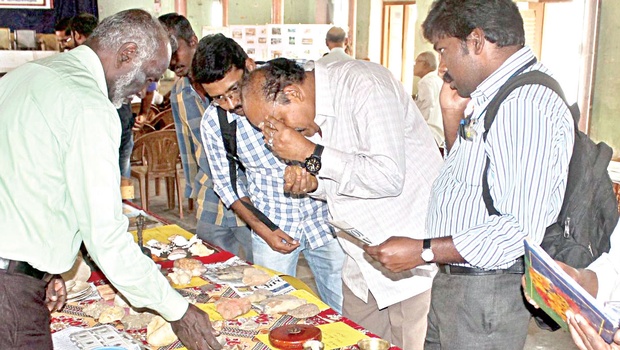
Return to By-gone Era, Thanks to Display of Rare Stamps and Coins

Visitors streaming through artefacts, coins and stamps at the three-day expo in Vellore on Friday | EXPRESS

Vellore :

A three-day expo on stamps and coins, organised by the Numismatic and Philately Association of Vellore Fort, has evoked good response from both the general public and school students. The expo was inaugurated at the Town hall on Friday.

“Over 20 coin and stamp collectors from across the district have displayed their collection, and around 25 stalls have been put up by vendors from various States for the sale of stamps, coins and other artefacts,” said CMA Tamilvanan, secretary of the association.

For his part, Tamilvanan has displayed a rare collection of coins released by the British Empire for the Madras Presidency during 1807 and 1808. He said the East India Company had released three different coins -kaasu, dabbu, and panam – for the Tamil, Telugu and Kannada population, which is also displayed.

Vijayakumar, who has been collecting stamps for over 18 years, has displayed over 150 stamps on Gandhi released from 1948 and a huge collection of stamps on cricket since 1973. “I spend 25 per cent of my income on collecting stamps,” he said.

Ranipet based school student S Ambai, the youngest member of the association, has displayed a good collection of commemorative coins of Republic India between 1964 and 2012. She evinced interest in this hobby from her elder sister Abhitha, who has been collecting coins and stamps for over 15 years. “I started to save money for this hobby and I learn a lot of history and knowledge from generations,’ she noted. Ashraf Ali, president of the association, who is an avid collector of artefacts, has displayed a rare sword dating back to 1917 used by British soldiers.

source: http://www.newindianexpress.com / The New Indian Express / Home> States> Tamil Nadu / by V. NarayanaMurthi / February 14th, 2015

Mirasis threatened by obsolescence

Lucknow :

The predicament of the Mirasi community comprising Awadhi folk singers since ages is pathetic and they are bordering on extinction. Using the cultural platform at the on-going Lucknow Literary Festival, a group of five Mirasan’s hailing from Bada Gaon of Barabanki district who were invited to perform their local folkfare moaned that the government has never taken any concrete measures to save the traditional folklore of Awadh.

The musicians who were once considered an integral part of Awadh, invited to auspicious occasions like weddings, baby-shower, as well as during the mourning period of Muharram to recite soz, salam and nauhas (dirge) find no patrons in this day and age.

At present there are only around 15 mirasans left in Uttar Pradesh who despite all odds still practice the ancestral art of singing on different occasions when invited. Like every ethnic group Mirasis are a mix of Sunni and Shia sects and have their unique characteristics and social roles. They share common values as they are interrelated through marriages.

Rafia Khatoon, part of a group including four other females, said, “Our ancestors were pampered with sufficient clothing, food, residential facilities from the royal families of Awadh so the need for a permanent house was never felt but today we are struggling for survival and expect state government to recognize our talent and make arrangements for some kind of social security.”

She added that with no fixed allowance, housing or medical insurance or any kind of support from the government the community and the art may not sustain for long.

Blaming rapid advancement of technology in the field of entertainment and music industry marring the traditional roles played by Mirasans in nearly every house of Awadh, including both Muslim and Hindu families, another mirasan Firoza said, “It is difficult to generate income from our ancestral profession as now nobody invites us and our children have no option but to switch over to different professions.”

source: http://www.timesofindia.indiatimes.com / The Times of India / Home> City> Lucknow / by Uzma Talha, TNN / February 15th, 2015

Akhilesh honours 56 achievers with Yash Bharti

Lucknow  :

Classical singer Shubha Mudgal, Bollywood playback singers Rekha Bhardwaj and Kailash Kher, journalist Vinod Mehta, theatre artists Urmil Kumar Thapiyal, poet Khushbir Singh ‘Shaad’, kathak exponent Kum Kum Dhar, as well as actors Jimmy Shergill and Nawazuddin Siddiqui were among 56 achievers who on Monday received the Yash Bharti Award for 2013-14 & 2014-15 at a grand ceremony held at Ram Manohar Lohia Park.

The award, given by chief minister Akhilesh Yadav, carried a cash prize of Rs 11 lakh, a citation and a shawl. The Yash Bharti Award is one of the highest state-level awards conferred for excellence in literature, fine arts, classical music, folk music and sports. The awards were instituted in 1994 by Mulayam Singh Yadav to honor achievers in different fields. Addressing the awardees, Akhilesh said, “As these awards are given to generate social awareness in the society, I consider each of the recipients ‘real’ ambassadors of Uttar Pradesh, representing the state across the globe.”

Among the awardees, bhajan maestro Anoop Jalota donated his award to a city-based trust to promote Bhagwad Gita through spiritual concert ‘Ram Bhi Rahim Bhi’. Actor Nawazuddin Siddiqui said his joy of receiving the award doubled as he also got a chance to visit the city which taught him the basics of acting and theatre at Bhartendu Natya Akademi

Kathak exponent Kumkum Dhar, said, “It certainly feels great when the government and people of your own state not only recognize your work but applaud you in such a grand way.” “Besides the support of my family, it is actually the blessings of my guru Lacchhu Maharaj that helped me sail through these 40 years of my career with such ease,” she added.

Renowned poet Khushbir Singh ‘Shaad’, who is currently settled in Punjab, expressed joy over receiving the award and said, “It is certainly a matter of pride for me that Lucknow still remembers me with the same love and affection.”

The other list of awardees include classical singer Rajan Saajan Mishra and Rita Ganguly, music composer Ravindra Jain, international level judo referee Munawar Anzar, educationist Jagdish Gandhi, Abhishek Yadav for special commando training, wrestler Aka Tomar, ghazal singer Rita Ganguly, lyricist Sameer, poet Bekal Utsahi, writer Maata Prasad Tripathi and Devi Prasad Pandey.

Along with these, two bravery awards were also conferred. While Resham Fatima was awarded Maharani Ahiliyabai Holkar Award, Seema Tiwari was given the Rani Laxmi Bai award.

source: http://www.timesofindia.indiatimes.com / The Times of India / Home> City> Lucknow / TNN / February 10th, 2015

A gift to the olfactory sense, and more

The smell lingers:N. Fakhruddin Attarwala’s shop is perhaps one of the few places in the city where you can still get perfumes in their raw form — without alcohol or gas —Photo: K. Pichumani

When you walk out of a tiny shop — where the shelves are lined with dainty glass vials — on Mannady Road, you smell like a flower bouquet.

And when the shop is run by a veteran perfumer, who loves to please his customers, the blend is unimaginable.

N. Fakhruddin Attarwala’s shop is perhaps one of the few places in the city where you can still get perfumes in their raw form — without alcohol or gas. “It is quite rare to see such perfumes being sold these days. Earlier, people would sell tiny bottles of perfumes with gold-coloured caps at fairs and marketplaces, enticing people with the aromas. They were not just sellers but perfumers who learnt the trade with great difficulty,” recalls D.V. Sainath Guptha, a perfumer himself, who prepares scents only for self consumption.

Several old areas, including Periamet, Royapettah and Triplicane, have such perfume shops but the number of patrons seems to be thinning with most people preferring branded products.

Though one connect such shops with traditional fragrances like  attar ,  marikolundhu  and  javvaadhu,the variety available is surprising. Mr. Attarwala, who has created some 50 fragrances in his 45 years as a perfumer, says some fragrances require up to 200 ingredients.

“The foodie note is the in-thing now, with melons, strawberry and lime vying for favour. One fragrance can contain 40-60 ingredients and take at least two years to perfect. It is a laborious process. No doubt perfumery requires knowledge of chemistry but it should be in your heart. It is only recently chemicals are being used in perfumes. Previously, it used to be just natural oils,” says Mr. Attarwala, whose home is where he creates his magic.

Whatever perfume is made, sandalwood is the basic requirement along with ylang ylang oil and musk oil. These perfumes must be diluted with four parts of water each time they are used.

“The cost of the perfume depends on its quality and not quantity. You can get the same quantity of jasmine perfume for Rs. 30 and Rs. 500,” he explains, as his customers patiently wait their turn to let their olfactory senses decide what they shou ld buy.

Gone are the days of tiny vials of scented natural oils withgold-coloured caps

source: http://www.thehindu.com / The Hindu / Home> News> National> Tamil Nadu / by Deepa H. Ramakrishnan / February 11th, 2015

Book explores the history of Nagore dargah

Chennai :

When the Tanjore king Achuthappa Naik (1560-1614) was bedridden after he suffered a paralytic stroke, many believed it was due to some black magic. The matter was informed to a visiting saint who eventually restored the king to health. Whether one believes in miracles or not, Nagore still thrives on it.

“Nagore is known for its religious harmony for more than 500 years. It is all because of the saint Qadir Wali who is enshrined there in a place widely known as Nagore dargah to which people of all religions throng with faith and problems. The miracle has been happening since 16th century and it still continues,” said A S Mohamed Rafee, author of the recently released book, “The Ocean of Miracles: Life of Qadir Wali”.

Qadir Wali travelled to many parts of the world and stayed in Mecca, Medina, Turkey and Palestine for many years before he came to Nagore where he lived for 28 years. “At a time when the world is facing serious threats in the name of religion, it’s remarkable that Nagore still survives on harmony, a reason why more sandal smeared heads are seen in the Sufi dargah. Wali served the people of all religions with his miraculous powers,” said Rafee, who is associate professor at the Mazharul Uloom College, Ambur.

Qadir Wali was born in 1504 in Manikkappur, a town established by Firoz Sha Tughluq in Uttar Pradesh, some 60 km from today’s Ayodhya. His parents, Hasan Guddus and Fatima, were descendants in the lineage of Prophet Muhammad and Abdul Qadir of Jilan, a great saint of the 12th century in Iraq.

Nagore dargah was built on land donated by king Achuthappa Naik. Many important parts of the dargah were built by the generous donation of non-Muslims, a reason cited why it’s a symbol of religious harmony. “The dargah has five minarets and the tallest one is called Periya Minar. It is 131 feet high with ten storeys. It was built by king Pratap Sing of Tanjore (1739-17633) after his wish for a son was fulfilled by praying to Wali 200 years after his passing away. The Peer Mandapam was built by the Dutch.

source: http://www.timesofindia.indiatimes.com / The Times of Ibdia / Home> City> Chennai / by M T Saju, TNN / February 09th, 2015

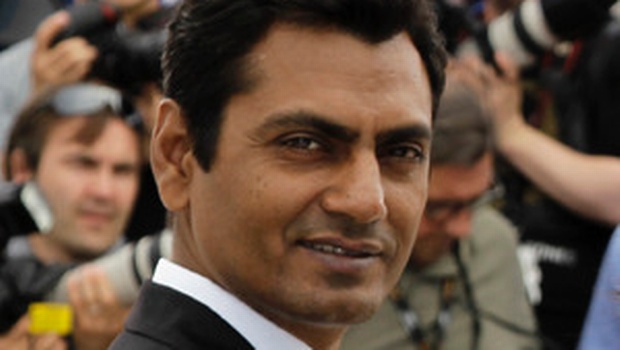
Nawazuddin Siddiqui, Kailash Kher Get Yash Bharti Award

Nawazuddin Siddiqui | AP photo

Lucknow :

Actor Nawazuddin Siddiqui and singer Kailash Kher received the Yash Bharti Award by Uttar Pradesh Chief Minister Akhilesh Yadav here Monday.

Kher, whose musical notes echo originality and calmness, took to micro-blogging site Twitter to share the news and thanked the state government for the recognition.

“@achlendra: CM @yadavakhilesh honours singer @Kailashkher #YashBhartiAward function in Lucknow on Monday. Thank u,” he wrote.

Nawazuddin, who has garnered appreciation from all quarters with his critical performances in “The Lunchbox”, “Miss Lovely”, “Kahaani” and “Gangs of Wasseypur”, was also lauded for his contribution to Indian cinema.

“Today we received #YashBharti Award by UP CM @yadavakhilesh. My old friend @Nawazuddin_S also got one. Thank u all,” Kher tweeted.

The “Teri deewani” hitmaker also shared photographs of the ceremony.

The Yash Bharti Award is conferred by the Uttar Pradesh government for excellence in literature, fine arts, folk music, classical music, cinema and sports.

source: http://www.newindianexpress.com / The New Indian Express / Home> Entertainment> Hindi / by IANS / February 09th, 2015

Flavours of the Lesser Known

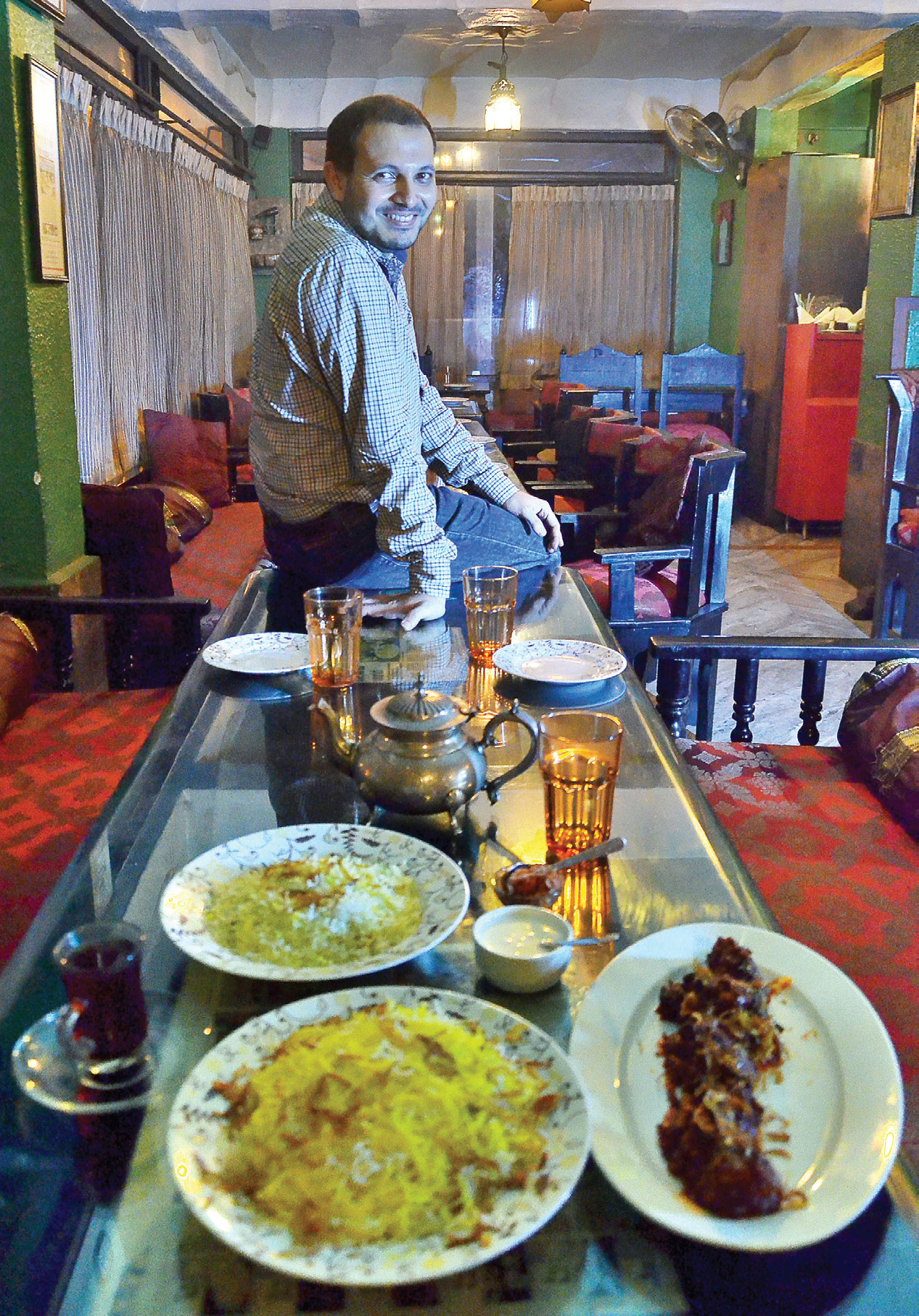
Shaad Hassan Damudi
Shaad Hassan Damudi

Ali Baba, a small cosy eating place in Frazer Town, Bengaluru, is where you get some Persian and Arabian food at reasonable prices. But what its USP is that its young and handsome owner, Shaad Hassan Damudi, is a Bhatkali Muslim and serves up some authentic Bhatkali food. Bhatkal is a small town in Southern Karwar district of Karnataka and has a rich and relatively unknown cultural and culinary history. The Muslims there are called Navayaths or new people. The Navayaths speak a dialect called Navayathi which is a fusion of Sanskrit, Persian, Arabic, Marathi, Hindustani with Konkani as its base.

Traders from the Persian Gulf—namely Yemen, Iran and Iraq—who traded mainly in horses, textiles, timber, gemstones and spices, eventually settled on the Konkan coast and contributed to the cuisine that is a ménage of Indian, Persian and Arabic cultures.

The most famous dish has got to be the delightful Bhatkali Biryani, half-cooked in steam. Damudi uses Sella basmati rice which is an aged rice and is exported to the Middle East and hence not available in India. “We use a lot of browned onions and tomatoes, and a red chilli paste which add colour. Our food is moderately spicy and whole garam masala is added to biryani which is layered with rice and then the onion, tomato, ginger garlic and garam masala mixture,” says Damudi.

Popular TV foodies—Rocky and Mayur of Highway on my Plate fame—recently visited Ali Baba and gorged on the Bhatkali food and featured it on one of their shows.

The kadang fry is a must-try for vegetarians, its sweet potatoes with the ubiquitous red chilli paste, an interesting blend of sweet and spicy flavours. The boneless chicken tikka cooked on a barbeque does remind me of tandoori chicken but the red chilli paste gives it that distinctly Bhatkali flavour. The people here use vinegar made from sugarcane which is used in salads as well as in finely cut onions as an accompaniment. The predominant flavour of the Chicken Khurma at Ali Baba is sweet.

True to its Indo-Persian origins, this dish is creamy and smooth, thickened and enriched with cashew nut paste. However, the addition of one quintessentially coastal south Indian ingredient—coconut milk—not only sweetens it, but also stamps it as a Navayathi.

Gawa Shaiyo was a pleasant surprise. It is wheat vermicelli with mutton in it. The mutton is amazingly tender, delicately spiced, and enhanced by the nutty flavour of fried wheat vermicelli. For those who thought vermicelli was used only in vegetarian dishes and to make kheer, this should come as a delicious revelation.

The piece de resistance is the vermicelli chicken biryani which is simply mouth-watering, surprisingly light and does not need any accompanying gravy or burhani or raita. “This biryani is best when made with chicken and not mutton,” says Damudi. The prawn fry is pretty crunchy being deep fried with a bit of cornflour added, along with the red chilli paste. Surprisingly, hardly any coconut is used in Bhatkali cuisine.

Tausha sherbat is made with grated cucumbers to which a wee bit of sugar is added. The cucumber releases its own water and this delightfully and refreshing simple drink is ideal on a hot summer’s day. All you need is a spoon to dig into it.

The desserts are pretty exotic. One made from, hold your breath, dill leaves with condensed milk and eggs reminds one of good old caramel custard. It is steamed and very tasty, except for its light green colour!

The ambience is exotic with doors and other accessories from old homes in Bhatkal innovatively used as table tops and decorative pieces. Pricing is reasonable and portions pretty generous.

source: http://www.newindianexpress.com / The New Indian Express / Home> LifeStyle> Food / by Sangeeta Cavale Radhakrishna / February 07th, 2015

Evergreen at 80

Noted Kannada poet Prof. KS Nissar Ahmed. / The Hindu

Bhagavatharu has organised ‘Nityotsava Kavige’ on February 8 to mark the 80 birthday of Prof. K.S. Nissar Ahmed. The event will begin with ‘Nissar Ahmadara geethegalu’ at 10 a.m. and go on till 8 p.m at Nayana auditorium, Bangalore. Dr. Prabhushankar, writer, will preside over the inauguration ceremony.

The event will feature seminars on Nissar Ahmed’s writings, a book release, a musical performance and poetry reading. Nissar Ahmed will be felicitated at 6 p.m. ‘Bhavanubhava Samyoga’, authored by P.V.Narayana, will be released by Prof. Baragooru Ramachandrappa, culture critic.

source: http: //www.thehindu.com / The Hindu / Home> Features> Friday Review / February 05th, 2015