Category Archives: Arts, Culture & Entertainment

Man who lived dangerously

Panipat, PUNJAB / Mumbai, MAHARASHTRA :

This commemorative volume is a timely and necessary reminder of the greatness of an extraordinary writer, film-maker and social commentator.

FL19 BK ABBAS 1

KHWAJA Ahmad Abbas wore many hats and distinguished himself in each of the roles he chose. As a pioneer of progressive cinema, a consummate writer of short stories and novels that depicted the human condition and a committed journalist whose Last Page column acquired legendary status, he blazed new trails and fashioned his own path.

Abbas was an important figure from a critical past. His body of work deserves to be studied and his life remembered by millennials and generations to come.

This commemorative volume, a celebration of the man on the occasion of his 100th birth anniversary, arrives as a reminder of the humanism that characterised his life and work. Lavishly produced and deftly edited by Iffat Fatima, an independent filmmaker from Kashmir, and Syeda Saiyidain Hameed, the social and women’s rights activist, educationist and writer, this book from the Khwaja Ahmad Abbas Memorial Trust provides invaluable insights into his mind and personality.

A man of many talents 

Despite his many talents, or likely because of them, Abbas could never be boxed into any creative category. And he was well aware of it. As Syeda Saiyidain Hameed informs the readers in her marvellous introduction to the compendium, Abbas himself would often ask his readers: “Who am I? Writers say I am a journalist; journalists say I am a film-maker; film-makers say I write short stories.” The editors of this volume, who recognised that the only way to appreciate Abbas fully is to study him in totality, have paid a perfect tribute to his oeuvre by dividing the volume into 10 sections that feature selections from his writings, focus on his cinema through his interviews and conversations, talk about his beginnings and early life and adventures, and reveal the man behind the mighty pen through reminiscences and tributes by actors and associates.

The nature of the public adulation of Abbas also kept changing over the decades during which he was active. For one generation he was the man who collaborated with Raj Kapoor to unveil some of the finest examples of high-quality mainstream Indian cinema, such as Awara and Shree 420 , while another celebrated him as the writer of powerful and poignant stories such as Sardarji , a lamentation of the violence and mayhem the country witnessed in the wake of Partition. And much before Independence, his was a significant voice writing about the marginalised sections of society. Abbas slipped in and out of the many roles he had chosen to play with a rare finesse, much like a thespian.

Abbas was fortunate to have inherited a long tradition of intellectualism and reformist ideals from both sides of the family. His mother’s grandfather, Maulana Altaf Husain Hali, was a poet who used verse as a tool against social evils and as an instrument of reform within the Muslim community. Abbas began carrying forward the torch early on, even as a college student, when he published Aligarh Opinion , a handwritten weekly newspaper that he personally peddled on a bicycle.

This was the start of his life in journalism which would eventually see him pen one of the longest-running columns in the history of news in Blitz , a weekly tabloid founded by R.K. Karanjia.

Reading the compendium is like taking a train journey back in time, to a world far removed from the present. Be it Abbas’ harrowing first-person account of what he saw in Calcutta (now Kolkata) during the Bengal Famine—which inspired him to make the groundbreaking film Dharti ke Lal (1945)—or his active involvement with the Indian People’s Theatre Association (IPTA), his cinematic endeavours or his first meeting with Jawaharlal Nehru, the reader is taken on a walk-through of events, institutions and happenings that are now the staple of history textbooks.

A particularly striking example is his narration of the celebratory procession of people in Bombay (now Mumbai) on August 15, 1947, where he was one among the hundreds of thousands rejoicing in their new-found status as citizens of a free country.

“It was an inspiring sight to see a famous poet like Josh Malihabadi, a film celebrity like Prithviraj Kapoor with his film star son Raj, a dancer of international fame like Zohra Sehgal, and a front-rank writer like Krishan Chander, singing and dancing in the streets to celebrate this happy occasion….Today, they had come in the midst of the people, as singers of their songs, not to sing about the people, but to sing with the people; not to dance a symbolic representation of life on the stage, but to dance the dance of freedom with the people in the streets.”

The collection also offers a peek into his personal life; his own accounts of life as a newly married man and the banter between him and his wife Mujji (Mujtabai Khatoon) are straight out of the myriad Muslim socials that Bollywood was famous for a long time ago. The scenes from his marriage tragically culminate in the death of his wife.

Describing the day his wife died in an elegiac memorial, elegant yet heart-breaking, Abbas says: “It looked like her—but it was not her. For that life that was always bubbling with intelligence and compassion was no longer in her. I collapsed near the bed where she lay inert. It was not her—but something resembling her—like the lifeless photograph of a beloved person. When I returned after burying her I walked alone and knew that henceforth I would have to get used to walking alone.”

Pathbreaking cinematic efforts 

Although acclaimed for his association with Raj Kapoor and, of course, for introducing Amitabh Bachchan to the silver screen in Saat Hindustani , Abbas deserves a special chapter in the history of Indian cinema for his breathtaking corpus of work that saw him don the mantles of producer, director and screenwriter at once and also established him as a pioneer whose films broke new ground. He took on challenging issues and translated his thoughts on to the screen, with varying degrees of success.

Only a man ahead of his times could make a film like Hamara Ghar (1964), a film about a group of children marooned on an island where the protagonist is a motherless Dalit boy.

As Ahmer Nadeem Anwer, who played the lead role of Sonu at the age of 10, says in an essay on the film: “It is this boy who embodies the defiance of those who shall not accept their exclusion from education, work, self-respect—or even recreation and pleasure.” The film, along with several others, is testimony to Abbas’ willingness to take risks and make the cinema that he wanted to make.

Collaboration with Raj Kapoor 

Abbas liked to describe himself as a communicator. “I want to communicate my ideas, my impulses, my ideologies to other people. That is my basic interest in writing, in films and in drama.”

It is a moot point which vehicle of communication served his purpose best, but one could not make a better choice than his cinematic collaborations with Raj Kapoor, especially from the early days of the showman’s career, such as his directorial debut, Awara , Shree 420 and Jagte Raho .

These films manifest the distilled brilliance of a mind that displays an unparalleled skill in weaving riveting stories for the big screen. His phenomenal grasp of the medium and Raj Kapoor’s showmanship resulted in timeless classics.

Abbas himself considered Awara to be the best of his collaborations with Raj Kapoor.

It is another story that the two would later go on to make Mera Naam Joker , which Raj Kapoor considered his magnum opus but viewers thought otherwise.

The monumental failure of the film devastated him, driving him into debt and depression, and it was Abbas who helped him bounce back by writing the iconic teenage romance called Bobby , which turned out to be Raj Kapoor’s biggest blockbuster.

Nehru: A love story 

It was love at first sight, as Abbas confesses, recollecting the first time he saw Jawaharlal Nehru, at the Aligarh railway station. The essay about the entire episode is a fascinating recollection of an awestruck student meeting his idol in flesh and blood and the resulting conversation, which culminates in Nehru signing his autograph book with the message: “Live dangerously.” Abbas certainly seemed to have taken it to heart, as his life demonstrated. He lived dangerously all his life, always true to himself and never wavering from his convictions, never hesitating to helm a project even at the risk of grave financial loss.

He firmly stood up for what he thought was right and did not shy away from opposing what he felt was wrong, irrespective of ideology.

His ability to introspect and accept criticism separated him from other giants of the screen or the world of letters of his time.

In his tribute, Amitabh Bachchan writes: “Mamu Jaan’s [Abbas] socialism was not just restrained to the books or columns he read, believed and wrote about. He practised it too in the way he lived and conducted his life, and in the way he made his films. I was a newcomer in the illustrious star cast of Saat Hindustani , but his treatment to all was universal. In his eyes we were all equals, and we were treated with the sameness that he followed and believed in.”

source: http://www.frontline.thehindu.com / Frontline / Home> Books / February 03rd, 2016

The Dreams of a Mappila Girl

KERALA :

In the preface to her memoir, the author B. M. Zuhara writes, “I grew up at a time when Muslim girls did not even have the freedom to dream.” The Dreams of a Mappila Girl is set at the time when independent India was embracing its new identity as a free nation. It offers a rare portrait of women in Muslim households in North Kerala through the lens of a woman writer. Zuhara showcases how women, bound as they were by the rules of society, still managed to hold key positions in their family and had an important voice in the discussions concerning their lives, contrary to popular perception. 

The following piece is an excerpt from Fehmida Zakeer’s translation of the book, soon to be out from Yoda Press.

****

During the holidays, the hall upstairs turned into a playground for the children, who were allowed to play outdoors only in the evenings. Lined by long windows without grills, and furnished only with Uppa’s charukasera and writing table, the hall was an expansive place for us to jump and run and skip and play. Below the glass windows was a cement slab broad enough to be used as a seat, running the length of the hall. If you sat on it and looked out of the window, you could see paddy fields and coconut groves and people out on the road in front of the house.

One evening, I was playing with Achu, the elder brother nearest me in age. Though his name was Assoo, I called him Achu. We were racing cars, or rather matchboxes converted by our imaginations into pretend cars. Since both Achu and I were recovering from a fever, we did not have permission to go out and play with the others, and so we were playing in the hall upstairs. Suddenly I heard the sound of Umma’s medhiyadi on the staircase leading from the women’s section of the house.

In those days, people used wooden footwear indoors. Climbing stairs in a medhiyadi, gripping the peg in the middle with the big toe and the second toe, was a feat in itself. Valippa’s medhiyadi, which he wore when he went out, had leather straps. Uppa preferred to wear shoes when he stepped out of the house. Once a year, Chandu Aashari, the family carpenter, made medhiyadi for the whole family. Achu once broke the small medhiyadi made for me by Chandu Aashari, and how I wept!

Umma did not normally come upstairs in the evenings. I looked enquiringly at Achu when we heard the sound of her footsteps.

‘Umma is going to Kozhikode tomorrow morning. She knows that you will cry and insist on going with her. That’s why she didn’t tell you.’

Even though I knew Achu was trying to provoke me, my eyes started filling with tears. I was five years old at that time, and in class one at school. I missed school frequently because I used to accompany my mother wherever she went. This continued in class two. At the end of each year, Uppa would visit the school and meet the teacher, and I would be promoted to the next class. This was the usual practice.

I closed my brimming eyes and stood there thinking.

Achu spoke again. ‘Umma must have come upstairs to pack her clothes for the trip. You’d better go quickly.’

‘Don’t take my matchboxes. I’ll be right back,’ I called out as I ran to Umma’s room.

‘I told you about Umma’s trip, so now the matchboxes are mine,’ I heard Achu shouting after me, but I decided to ignore his words for now.

When I entered the room I saw the doors of the meshalmarah opened wide. The scent of kaithapoo filled the room. How it lingers, the fragrance of screwpine! The meshalmarah doubled as a table and a cupboard, and was actually a long table with drawers on both sides with space to store things below. Umma called the meshalmarah her clothes cupboard. Umma stored her clothes on one side and the children’s on the other side. In those times, children usually had only one or two sets of clothes, made from lengths of cotton. Trousers and shirts for the boys and chelakuppayam, or frocks, for me.

‘You are packing to go to Kozhikode without me?’ I whimpered.

Umma turned to look at me. ‘The crybaby has arrived!’ she said.

At that, I wailed even more loudly.

I had three nicknames as a child. Karachapetti, Tarkakozhi and Ummakutty. Karachapetti because I cried a lot; I did not know the meaning of Tarkakozhi but when someone called me that, I would put on a sullen look; I actually liked my third nickname of Ummakutty, ‘mother’s darling’. When someone called me by that name, a shy smile would tug at my lips. I liked to sing the lullaby Umma often sang to me. ‘Umma’s little girl Soorakutty, darling little daughter of mine.

But at that moment, I was not thinking about the nicknames or Umma’s special song for me.

‘If you go without taking me with you, by God, by the Prophet, I will not go to school till you come back.’

‘Moideen will tie your hands and legs and take you to school,’ Umma said as she placed her clothes in a cloth bag fitted with wooden handles.

Moideen was the caretaker of our house, and all the children were scared of him. But even though he put on a stern face when any of us misbehaved, he really liked us. Whenever I cried and created a fuss, he would arrive and take me to the pond at the back of our house. He would get into the pond and pluck a lotus for me or teach me how to make toys with lotus leaves.

‘If I complain about a stomach ache, Ummama will not send me to school,’ I said, pouting.

‘This is too much. Don’t you want to learn to read and write? If you follow me around all the time, how will you learn your lessons?’

‘I don’t want to,’ I said resolutely.

‘Don’t imagine I’ll take you this time, Soora. If you hide inside the car, I will drag you out.’

Usually when it became clear that Umma would not take me with her on a trip, I would hide between the seats in the car without even having changed into an appropriate outfit. It did not occur to me that my grandfather, seated in the charukasera on the verandah, the driver, and the servants busy in their tasks would all notice my presence. I thought I was fooling Umma by hiding in the car. When Umma came out of the house and went up to the car, Valippa would jokingly call out, ‘Mariya, be careful, there is a cockroach in the car.’

Umma would understand immediately. She would get into the car and pinch my ear and say, ‘Don’t get smart with me. Get out of the car.’

I would hug the seat and wail loudly.

Valippa would say then, ‘Take her with you. She’s a baby after all.’

‘Baby indeed, she’s over five years old. You are all spoiling her.’

And I would get to accompany Umma to Kozhikode once again. Umma’s younger sister lived in Kozhikode and, to us children, her house was a source of wonder. Umma had to see the doctor in Kozhikode every three months and she would drop in at her sister’s house when she made the trip.

Now Umma ignored my wails and placed the bag filled with her clothes on the table. Then she went downstairs. Sobbing loudly, I followed her.

‘Why is the baby crying?’ Ummama called out from below the stairs.

‘If she complains of a stomach ache tomorrow morning, don’t allow her to take the day off from school, Elama.’

When Umma was fifteen years old, her thirty-year-old mother, nine months pregnant, died. Later, Valippa married again. Our present Ummama was his second wife. I understood all this only later. Even though my mother and her siblings called their stepmother Elama, Ummama treated them as if they were her own children.

Ummama intervened on my behalf now. ‘Take her with you, Mariyu. If you leave her here, she will raise the roof with her crying.’

By then we had climbed down the stairs.

Umma ignored me and asked Ummama, ‘Is Uppa sitting on the verandah?’

‘He was asking for you. He just sent Assan to look for you.’ Assan, the handyman, was Moidyaka’s son.

Every evening Umma and Ummama went to the verandah to keep Valippa company. This was the only time they were allowed on the verandah.

‘Aren’t you coming?’ Umma asked as she made her way outside.

‘You go on. I’ll come soon,’ Ummama said, walking towards the eastern side of the house where the bathrooms were located.

As Umma made her way to the front of the house, I followed close behind, sniffling and crying.

‘Soora, don’t irritate me. If you don’t stop I’ll lock you up in the kunhiara. I’m warning you.’

Kunhiara. As soon as I heard that word, my wails dwindled to a whimper. Kunhiara was the small room where the sparingly used big and heavy copper and brass utensils were stored. The room was dark even during the daytime and was a haven for cockroaches, moths and rats. I was not really scared of the cockroaches, the moths, the rats. What terrified me was the tomcat installed in our house to catch the rats. Its glowing eyes struck terror in my heart. To me, spending time there was like being in hell, and once locked inside I would remain there until the servants came to rescue me. I was still sobbing when we reached the verandah.

‘Chu, why are you laughing?’ asked Valippa.

My grandfather called me Chu.

‘Your darling Chu cries all the time,’ Umma said crossly.

‘Don’t say that, Mariya. Look at her smiling now. She looks so beautiful.’

On hearing this, in spite of the tears streaming from my eyes, I attempted a smile.

‘That’s my brave girl. Come here.’ Valippa beckoned to me. ‘If you massage my legs, I’ll give you a mukkal.’

Forgetting about the trip to Kozhikode, I walked towards the charukasera where my grandfather sat with his legs hoisted over its elongated armrests. I massaged his legs one by one with my small hands.

‘I want the coin with the hole.’

In those times, one pice coins came with a hole and without.  I preferred the ones with the hole. I dropped all the coins I got from Valippa into a powder tin which had its top cut open with a knife.

By then, Ummama had reached the verandah. Ummama would sit on the bench and Umma would stand by the door as they talked about the events of the day with my grandfather. I listened to them talking as I pressed Valippa’s feet, directing smug looks at my mother and feeling like the valiant Unniarcha.* Absorbed in conversation, Umma too seemed to have forgotten the whole episode.

***

* Unniarcha is a mythological warrior woman celebrated for her fearlessness, immortalised in the vadakkan paatu, the ballads of the region.


Translator’s Bio

Fehmida Zakeer is an Independent writer with bylines in several publications including, The Bangalore Review, The Hindu, Al Jazeera, Reader’s Digest, National Geographic, Whetstone Magazine, NPR. Her fiction has appeared in publications such as The Indian Quarterly, Out of Print Magazine, Quarterly Literary Review Singapore, Asian Cha, among others. A story of hers was placed first in the Himal South-Asian short story competition 2013, and another was chosen by the National Library Board of Singapore for the 2013 edition of their annual READ Singapore anthology.

___________________________________________

B. M. Zuhara

BM Zuhara has written novels and short stories and is the first Muslim woman writer from Kerala. She won the Kerala Sahitya Akademi Award for her contribution to Malayalam literature in 2008 and has received awards such as Lalithambika Antharjanam Memorial Special Award, Unnimoy Memorial Award and the K. Balakrishnan Smaraka Award. Her novels, Iruttu (Darkness), Nilavu (Moonlight) and Mozhi (Divorce), have been translated into Arabic while the English translation of Nilavu was published by the Oxford University Press in an anthology titled, Five Novellas. She translated Tayeb Salih’s Wedding of Zein and Naguib Mahfouz’s Palace Walk into Malayalam.

______________________

source: http://www.bangalorereview.com / The Bangalore Reviews / Home> Non-Fiction / by B M Zuhera / July 2022

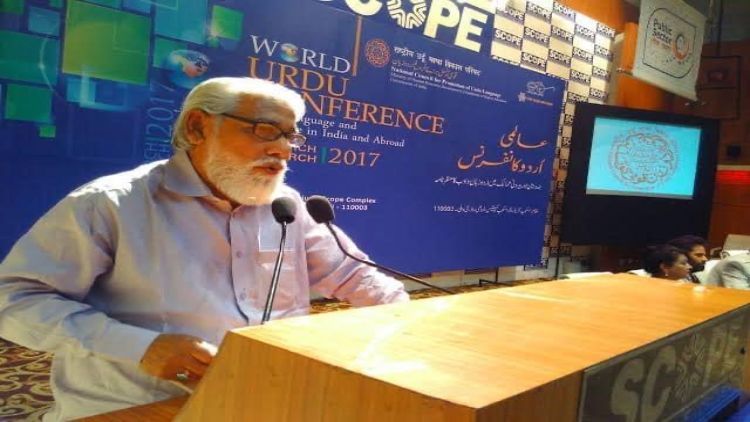
UDO TN and Karnataka to Celebrate World Urdu Day in Chennai on November 9

Chennai, TAMIL NADU :

Chennai:

The Urdu Development Organisation (UDO), Tamil Nadu and Karnataka Chapter, held a meeting here today under the chairmanship of Dr. Mohammed Obaidullah Baig, Chairman of UDO for Tamil Nadu and Karnataka, to finalise preparations for the upcoming World Urdu Day celebrations on November 9. During this meeting, prominent personalities were selected for this year’s World Urdu Day Awards in recognition of their contributions to Urdu literature, education, journalism, and poetry.

The committee decided to honour Dr. Amanullah M.B., Head of the Urdu Department at University of Madras, with the ‘Allama Iqbal World Urdu Day Award for Urdu Literature.’ V.M. Habib Rehman, Block Education Officer (BEO) from Chennai, will receive the ‘Maulana Abul Kalam Azad World Urdu Day Award for Promotion of Education and Training.’

Other distinguished recipients include Hafeez Mohammad Hameedullah Baig for promoting the Urdu language, Azam Shahid from Bengaluru for journalism, and Dr. Ijaz Hussain and Anwar Jaleelpuri for their contributions to Urdu poetry.

Additional honourees include Shahid Madrasi, Kaatib Hanif, Asan Ghani Mushtaq Rafiqui, and Akbar Zahid, with awards recognising their contributions to Urdu literature, poetry, and journalism. Educators such as Dr. Hayat Iftikhar, Dr. Nikhat Naz from Queen Mary College, Saira Naseem, M. Karamatullah, Siraj-un-Nisa, and several others from Tamil Nadu will be recognised with World Urdu Day Awards for their dedication to teaching and promoting Urdu in schools and colleges.

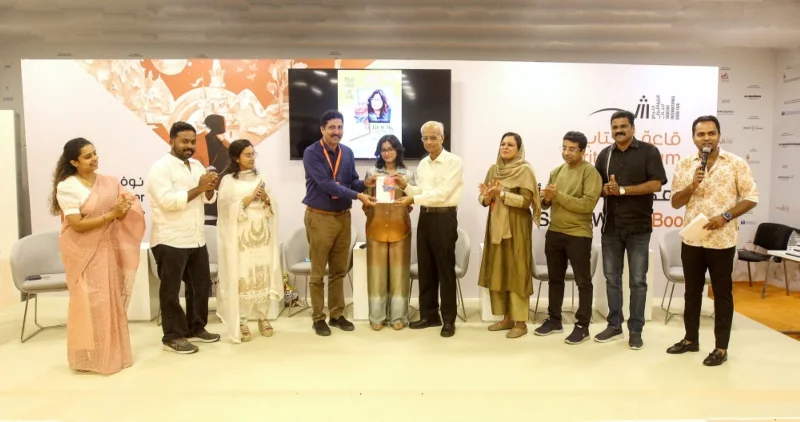
A special highlight of the celebration will be the launch of two books by Dr. Amanullah M.B. of the University of Madras, titled Thirukkural in Urdu and Challenges and Opportunities in Urdu Essay Writing.

Dr. Md. Ubaidullah Baig, Chairman of the World Urdu Day Organising Committee (Tamil Nadu and Karnataka), and Dr. Syed Ahmad Khan, Convener of the World Urdu Day Organising Committee (New Delhi), extended their congratulations to all awardees. They expressed hope that these awards would further support the growth and recognition of the Urdu language and literature. The award ceremony is expected to spotlight the cultural and literary significance of Urdu, reinforcing its value across various fields.

source: http://www.radiancenews.com / Radiance News / Home> Awards> Focus> Pride of the Nation / by Radiance News Bureau / November 06th, 2024

11 marriages in just Rs 11! Rajasthan hosts one-of-a-kind wedding ceremony

Jodhpur, RAJASHTHAN :

In Jodhpur, 11 Muslim couples were married for just Rs 1 each. The Marwar Sheikh, Sayed Mughal, and Pathan Vikas Samiti organized the event to curb extravagant wedding expenses.

The newlyweds also received essential household items through community contributions.

Jaipur :

Rajasthan is known for lavish, expensive weddings. But now, weddings are taking place where there’s no dowry or excessive spending. One such event recently saw 11 couples married for just Rs 1 each.

11 couples wed for Rs 1 each

Eleven Muslim couples exchanged vows for a mere Rs 1. Their aim was to curb wasteful spending and make marriage accessible to everyone. The Marwar Sheikh, Sayed Mughal, and Pathan Vikas Samiti organized the event in Jodhpur. This was their tenth such event, with 11 couples participating.

Newlyweds receive essential items

Committee president Sikandar Khan said the event aimed to make marriage easier and more accessible. Donations provided the newlyweds with essential items like cupboards and utensils. They aim to arrange weddings for 51 couples next year.

Rs 5 million raised through community contributions

Sikandar explained that the committee has organized nine mass weddings in the past nine years, spending over Rs 5 million, all through public contributions. He highlighted the significant expenses associated with weddings and the need for affordable alternatives for those with limited resources.

source: http://www.newsable.asianetnews.com / Asianet Newsable / Home> English News> India News / by Ajay Joseph / October 22nd, 2024

Poetry in a new light

Kakorvi / Lucknow, UTTAR PRADESH :

In “Neela Chand”, Sohail Kakorvi creates an interesting poetic exposition through an interplay of proverbs and idioms

A deeply felt experience can not be poignantly recorded in individual words and its intriguing and tantalising communication call for a new narrative. Proverbs far from being arbitrary, predictable and dead metaphors create a pulsating rhetoric that ignites a myriad of images for capturing universal truths and takes us on a new terrain of cultural space, if one is ready to occupy it. Proverbs and idioms subvert the logic of composition which simply means that whole should be constructed from the meaning of the part. These commonly articulated expressions are certainly more than playful word puzzles and this is what eminent Urdu poet Sohail Kakorvi’s new astutely composed long poem “Neela Chand” articulates.

Urdu poets do use one or two proverbs in a ghazal but no one has attempted to compose an exceptionally long ghazal carrying more than nearly 300 aashar (couplets) revolving around proverbs. For Sohail proverb is an essential template to create a fusion of thoughts that also produces an interface between world of desire and the contemporary digital world. Proverbs are invested with the tremendous possibility of capturing moments of epiphany and diffidence with equal vehemence. Relationship between proverb and its meaning is expressed in terms of motivation with remarkable ease. Live by one’s wit (Harf Ka Bana Hona) and unable to move because of mehndi put around feet (Paun mein mehndi lagana) are the two most frequently used proverbs and Sohail explores an eerie relationship between them.

“Wo Harfon Ka Bana Hai Uski Bato Par No Tum Jana

Sune Jao Ki Usne Pau Mein Mehdi Lagai Hai”

(Never believe the who lives by his wit. Keep on listening that she applied paste of mehndi around her. The poet is fully aware of deceit but he is quite eager to go by it.)

In three languages

The long poem titled “Neela Chand” is composed in three languages – Urdu, Hindi and English and a sher (couplet) and its translation in Hindi and English form one page of the book. The collection reveals Sohail’s penchant for translating the untranslatable – proverb and idioms – they are essentially embedded in the culture of a particular language representing different cultures and they can not be made intangible in other languages. Still there are several proverbs that betray close similarity both at literal and metaphorical levels. A well-known Urdu proverb “Ulte Bans Bareilly Ko” has an identical idiom in English “Carry Coal to New Castle” but Sohail does not look for such easily available similar expressions, he searches for commonalities of human existence expressed through language instead

At a time when frequent use of proverbs is considered as a down right decadent practice, the poet makes it a point to explore the creative potential that lie inside the proverb. Sohail tries to create gleaming cultural iconography through varied verbal images that unfailingly pops up and add on often forgotten dimension of a common place experience:

“Udhar Usne Kahe Tairah Liye Hain Nau Naqad Maine/Munasib Faisla Mera Tha, Masti Uspe Chhai Hai” (She preferred two in bush I choose one bird in hand/ Mine was appropriate decision that left her excited)

The name of the book, compiled by Ashar Alig, seems quite suggestive. The title ‘Neela Chand’ instantly reminds us about English expression “Blue Moon” but here it does not refer to something that occurs rarely and for poet Neela Chand stands for trust, intelligence and confidence. Sohail adds colour blue to moon to make it a metaphor of human dignity and the loss of individual identity which is both tantalising and exasperating.

Seldom does one came across with such an excellent poetic exposition of proverbs and it is a good read for all those enjoy poetry even at a time when violence and hatred has out balanced us completely.

source: http://www.thehindu.com / The Hindu / Home> Books> Going Native / by Shafey Kidwai / March 04th, 2017

Bhojpuri actress Sahar Afsha quits showbiz for Islam, announces her decision in Instagram note

Bengaluru, KARNATAKA :

“I have decided to renounce my showbiz lifestyle, repent before Allah, and seek his forgiveness”, wrote Sahar Afsha in her Instagram note.

Sahar Afsha/Instagram

Popular Bhojpuri actress Sahar Afsha recently announced that she has decided to quit the showbiz industry to follow the religious path of Islam. She isn’t the first actress to take such a step as Lock Upp contestant Sana Khan and Dangal star Zaira Wasim also decided to leave the entertainment industry for Islam.

Taking to her Instagram on September 22, Sahar penned a long note that read, “Dear Brothers and Sisters, in the Name of Allah, the Most Beneficent, the Most Merciful, I want to let you know that I have chosen to leave Showbiz and will no longer be involved. I want to live my future life in accordance with Islamic teachings and with Allah’s blessings.”

She continued, “I’m grateful to my fans for bestowing upon me many blessings, including fame, honor, and fortune. I had not even pictured this life in my childhood. I stumbled into this industry just by chance and kept on growing. But now I have decided to renounce my Showbiz lifestyle, repent before Allah, and seek His forgiveness. I intend to live my next life according to the commands and preachings of Allah.”

Concluding her note, the actress wrote, “Hence, I request everyone to pray that Allah accepts my repentance, blesses me with the strength to live in line with my resolve to spend my life upholding the laws of my Creator and serving mankind, and gives me the perseverance to do so. And I hope that I will be remembered not for my past life but for the life to come.”

Sana Khan also reacted to her note and commented, “MashAllah my sister so happy for you. May Allah give u isteqamah in every step of your life. May you inspire everyone around you and become zariya e khair for mankind.”

source: http://www.dnaindia.com / DNA / Home> English> Entertainment / by DNA Web Team / edited by Aman Wadhwa / October 08th, 2022

Rashid un-Nisa: India’s First Woman Urdu Novelist and a Pioneer of Education

Patna, BIHAR :

Rashid un-Nisa’s life and work continue to inspire, reminding us of the importance of education and the courage to advocate for change in the face of resistance.

Representative image of girl students. Photo: Wikimedia Commons

Rashid un-Nisa, India’s first female Urdu novelist, wrote Islah-un-Nisa, advocating for women’s education and reform. Born in 1855 in Patna, she was also a champion of girls’ education, founding Bihar’s first girls’ school. Her novel, published in 1894, addressed social issues and encouraged women to seek education. Rashid un-Nisa’s pioneering efforts in literature and education have left a lasting legacy, inspiring generations of women and contributing significantly to India’s literary and social history.

The premise of Islah-un-Nisa is something like this: “I am aware of the fact that there are many problems in our Muslim families. I also want to remove these problems. But instead of giving any sermons for this, I have chosen an interesting way to do this work the way of writing a novel.”

Early life and family background

Rashid un-Nisa, also known as Rashidatun Nisa or Raseedan Bibi, was born in 1855 in Patna, Bihar, into a scholarly family. Her father, Shamsul Ulama Syed Waheeduddin Khan Bahadur, was a prominent Islamic scholar. Growing up in a rich intellectual environment, Rashid un-Nisa received her education at home through private tutoring. Though formal schooling for girls was rare, her intellectual curiosity was nurtured in this setting.

Her marriage to Maulvi Mohammad Yahya, a lawyer, introduced her to progressive literature, particularly Mirat-ul-Uroos by deputy Nazir Ahmad, which deeply influenced her views on women’s education and reform. 

Islah-un-Nisa: Breaking new ground

Rashid un-Nisa began writing her most famous work, Islah-un-Nisa, around 1868, though it took over a decade to publish due to challenges as a female writer in a male-dominated field. With the help of her nephew, Mohammad Suleman, the novel was finally published in 1881. Its significance as the first Urdu novel written by an Indian woman cannot be overstated.

The novel advocates for women’s self-improvement through education and moral upliftment, tackling issues such as superstitions, societal constraints, and regressive customs. It promoted the empowerment of women and their active participation in social reform, much like the themes Rashid un-Nisa had encountered in Mirat-ul-Uroos.

Jamia Millia Islamia’s research scholar, Dr. Uzma Azhar, comments on the novel, stating, “Islah un Nisa is the first novel in Urdu literature authored by a woman (1881). Rashid un Nisa came from an educated family of Azeemabad (now Patna, in Bihar) and later started a girls’ school as well.

Titled “Islah” meaning “to rectify/reform”, and “un Nisa” of women, it conveys ways through which a woman could improve herself.  She has advised women on broad mindedness, importance of education against ignorance and has also tried to talk about the lives of literate women of that era through her story. 

The main story of Bismillah is followed by further similar short stories. She has given delightfully detailed descriptions of the various traditions around marriage, pregnancy, birth of a child in simplified common language interspersed with local regional songs, making this book an interesting historical document.”

The novel’s appeal stretched beyond its time, with later editions being released in 1968, 2001, and 2006, highlighting its enduring influence in India and Pakistan.

Social reformer: Championing girls’ education in Bihar

Rashid un-Nisa didn’t limit her reformist spirit to literature; she founded the first girls’ school in Bihar, a revolutionary step at a time when educating girls was controversial. The colonial administration even recognised her efforts, with Lady Stephenson, wife of the lieutenant governor, personally praising her work during a school visit.

Her educational philosophy was grounded in the belief that women’s education could transform not only their own lives but also the wider society. By ensuring access to education, Rashid un-Nisa opened new avenues for countless women, many of whom went on to contribute significantly to education and reform.

Educational Philosophy and Social Impact

Rashid un-Nisa’s educational vision was deeply embedded in her literary work. Islah-un-Nisa reflects her belief that intellectual and moral growth were essential for women. Her protagonist, Bismillah, navigates societal challenges, embodying the values of enlightenment and self-improvement. Through conversations between her characters, Rashid un-Nisa critiques harmful customs and superstitions, urging women to rise above them.

Senior journalist and well-known historian Shams Ur Rehman Alavi notes, “Islah un Nisa, gave message to women to shun regressive cultural practices that were a burden on them, and instead, aim at achieving excellence in all fields.

Through conversation of characters, she emphasised that it’s not just about ability to read and write, but learning and expertise in all spheres, which was the need of the hour for women. It must be remembered that it was a period, when all the social reformers were not so enthusiastic about women’s rights and adequate priority was not given to women’s higher education, as some of them still felt that basic literacy was enough, so that a woman could communicate through letters with husband in case he is away or be able teach own children a bit.

Sample this from a paragraph in the novel: Mir Waaez’ wife says, ‘Beti is mein bhalaa kya buraai hai [What’s wrong with this]’ and Karim-un-Nisa replies, ‘Aap badi hain, aap ki baaton ka jawab dena be-adabi hai magar….be-adabi maauf ho….ye rasm buri hai...[You are elder and it is disrespectful for me to speak but I need to say that this custom is bad’.

The writer shows her disgust towards superstitions also that are continued in the name of ‘tradition’ and disses fake healers as well as those who are obsessed with spreading fear about apparitions and paranormal. On one hand, language and Urdu idioms heard in households of the era, keep the reader fixated, the unique description of the rituals that brought financial burden on households and forced families into debt, was clearly aimed at discouraging the practice of going to money-lenders and falling in this trap, which affected the families.“

The novel blends traditional and progressive values, challenging superstitions while depicting modern aspirations. It offers a vivid portrayal of customs like marriage and childbirth, making it not only a piece of literature but also a historical document of women’s lives at the time.

Legacy

Rashid un-Nisa passed away in 1929, but her contributions to literature and social reform endure. She is remembered not only as the first Urdu woman novelist but also as a pioneer of women’s education in India. Her novel Islah-un-Nisa remains a powerful reminder of the struggle for women’s rights and education during an era resistant to change.

Her school continues to inspire generations, and her work has been reprinted several times, testifying to her lasting influence. As Dr. Uzma Azhar reflects, “Islah-un-Nisa offers delightfully detailed descriptions of the various traditions around marriage and other social practices, making it an interesting historical document.”

Rashid un-Nisa’s life and work continue to inspire, reminding us of the importance of education and the courage to advocate for change in the face of resistance.

Sahil Razvi is an author and research scholar specialising in Sufism and history. He is an alumnus of Jamia Millia Islamia. For inquiries, you can email him at [email protected].

source: http://www/thewire.in / The Wire / Home> Culture / by Sahil Rizvi / October 13th, 2024

Book on Hadith and More: The Other Side of Actor Kader Khan

Mumbai, MAHARASHTRA / CANADA :

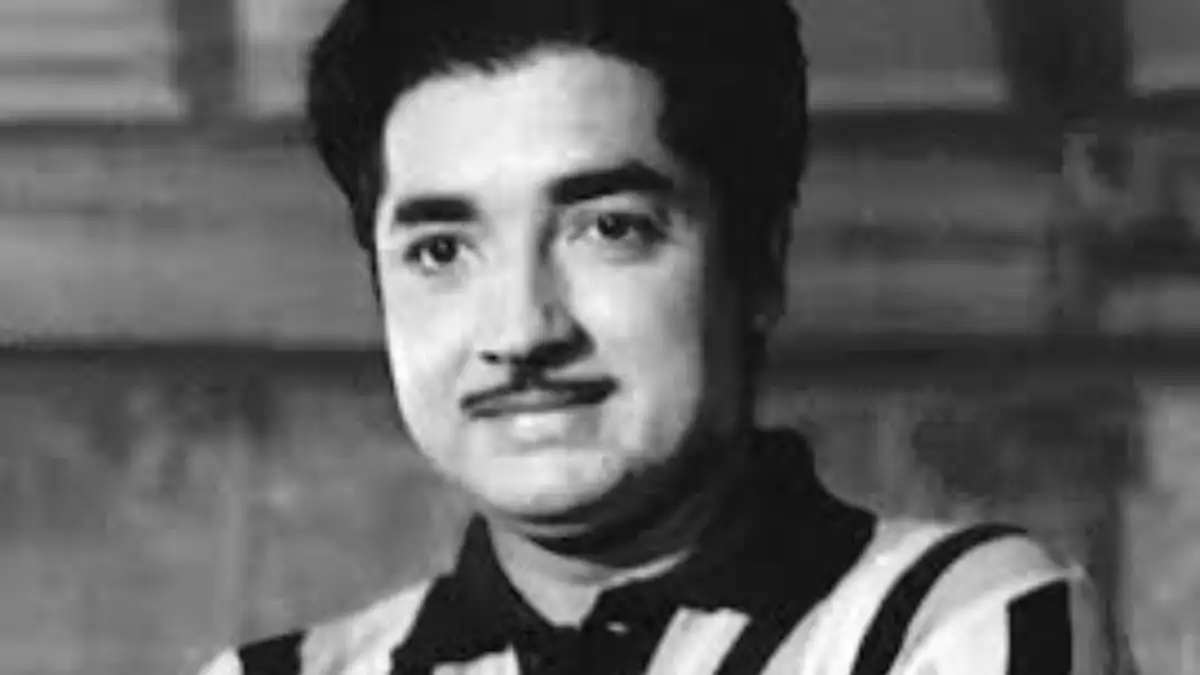
Actor Kader Khan, known for his comedy roles, dialogues, scripts in Bollywood, died a man regretting his association with the film industry, and urging Muslims to acquire and understand the true teachings of Islam, for which purpose he himself wrote a book on Prophet Muhammad’s Hadith.

[Sheikh Mustafa Bashir Madni (L) with Kader Khan’s unpublished book on Hadith. The veteran actor with his sons, Shahnawaz and Sarfaraz in Makkah for Hajj.]

Actor Kader Khan, known for his comedy roles, dialogues, scripts in Bollywood, died a man regretting his association with the film industry, and urging Muslims to acquire and understand the true teachings of Islam, for which purpose he himself wrote a book on Prophet Muhammad’s Hadith.

“Kader Khan so strongly wanted Muslims to acquire the knowledge and true teachings of Islam that he himself wrote a book on Prophet Muhammad’s Aha’dith”, Sheikh Mustafa Bashir Madni said while talking to ummid.com.

Mustafa Bashir Madni had met Kader Khan in Madinah when he travelled to Saudi Arabia for Hajj in 2014. Sheikh Mustafa at that time was a student of Jamia Islamia Madinah Munawwarah, the Islamic University of Madinah popularly known as Madinah University.

The two developed a relation, and when Sheikh Mustafa met him in Mumbai in 2015 while he was on vacation in India, Kader Khan handed him his book.

“Mukhtasar Istilahat E Hadees”

Kader Khan had titled his book “Mukhtasar Istilahat E Hadees” and he wanted Sheikh Mustafa Bashir Madni to take a review before it is sent for printing.

Mukhtasar” – used in Arabic and Urdu languages both, means “short” whereas “Istilahat E Hadees” is a term related to the study of Ahadith.

“Kader Khan’s work on Hadith is a two volume book. It beautifully explains in Arabic and Urdu different types of Ahadith, terminologies used and their classification”, Sheikh Mustafa said.

Aha’dith is the plural of the Arabic word Hadith – the records of traditions, narrations, words, actions, and approvals of Prophet Muhammad (Peace be upon him).

Watch Video

Ahadith have been categorised in different types based on their authenticity, reliability and the number of companions they have been narrated by. The Ahadith of Prophet Muhammad (peace be upon him) have been preserved since last more than 1,450 years because of Isna’d – the chains, that connect and directly reach to the Prophet from one narrator to the other.

“Kader Khan’s book is not the only or unique work as renowned scholars before and after him have volumes of work on the subject. But, it shows his affection for Islam and love for Prophet Muhammad (peace be upon him”, Sheikh Mustafa said.

A Changed Man

Recalling the series of conversations he had with Kader Khan in Madinah, Sheikh Mustafa said the famous actor was a changed man, a reformed person, rather.

“He would pray in Masjid E Nabawi for hours. On his Hajj journey, he was accompanied with his two sons, Sahahnawaz and Sarfaraz, and his daughter in law. But, he preferred praying alone”, Sheikh Mustafa said.

“I had seen him multiple times profusely crying, his hands raised and tears rolling down his cheeks”, he said.

“One day he asked me if I would be pardoned by Allah, The Almighty. I tried to comfort him saying Allah is Al Gafoor (The Ever-Forgiving), Ar-Raheem (Most Merciful), and he should be optimistic, I told him”, Sheikh Mustafa Bashir said.

“He however was not convinced and asked me to take him to some senior scholar. I therefore took him to Sheikh (Dr) Abdul Mohsen Al Qasim – one of the Imams of the Prophet’s mosque, Masjid Nabawi. In a lengthy conversation with Kader Khan, Dr Mohsen consoled him, shared with him glad tidings of Allah, the Almighty, and also advised him few things to do”, Sheikh Mustafa said.

“Aur mein gumrah ho gaya”

During his conversations with Sheikh Mustafa, Kader Khan also shared with him the memories of his early days, about how, when and why he left Afghanistan, his days as a Teacher at Saboo Siddik College in Mumbai and the circumstances under which he joined the film industry – with added details though most of which are already in public domain.

“I had written a play for Sabooo Siddik College students which was staged during the annual gathering. A director who was among the audience was so impressed after watching the play that he immediately called me. After a brief conversation, he handed me a “heavy envelope” and asked me to write dialogues for his film”, Kader Khan told Sheikh Mustafa.

“My salary at that time was around INR 300. The amount in the envelope was multiple times more….. Aur mein gumrah ho gaya… (And hence I went astray)”, Kader Khan said.

“After the success of my first film, another director met me. He handed me an envelope which was heavier than the first one. I could not restrain myself and then there was no looking back”, he added.

“Poor financial condition made me astray and dragged me away from my religion. Will Allah forgive me?” Sheikh Mustafa recalled Kader Khan crying and repeatedly asking while sitting in Masjid Nabawi.

Kader Khan’s dream projects

Besides writing his own book “Mukhtasar Istilahat E Hadees”, Kader Khan had also established a centre – first in Pune and then in Aurangabad, Maharashtra where a team of scholars was hired to translate the books of Ahadith in Urdu.

“He used to say that the translation of Quran in various languages, including Urdu, is already available. He however worried that Kutub e Ahadith are still beyond the reach of common Muslims, and was of the view that Urdu translation of Ahadith should be done and spread to the masses”, Sheikh Mustafa recalled.

A post-graduate in Arabic, the veteran actor had also dreamt of establishing a chain of schools in Mumbai, Dubai and Toronto to teach Arabic, Urdu and Hindi.

He had in fact spent quite a long time in the United Arab Emirates (UAE) during his last leg of life to establish ” K.K. Institute of Arabic Language and Islamic Culture” at Knowledge City in Dubai.

The project however could not see the light of the day in his life time. How and when his sons would convert Kader Khan’s dream project into a reality is unclear. His centres in Pune and Aurangabad, for which Kader Khan spent a huge amount of money, were closed when he was still alive.

Sheikh Mustafa Bashir however has vowed to review the book Kader Khan had handed him and get it printed.

“I am in talk with Sarfaraz, Kader Khan’s son who is currently in Canada. We have decided to print this book as soon as possible. It will inshallah be Sadaqah Jariyah – Charity Ever Flowing, for Kader Khan along with the other charity work he had done”, Sheikh Mustafa Bashir Madni said.

[The writer, Aleem Faizee, is Founder Editor ummid.com. He can be reached at aleem.faizee@gmail.com.]

source: http://www.ummid.com / Ummid.com / Home> Life & Style / by Aleem Faizee, ummid.com / November 04th, 2024

Masroor Jahan: The Eucalyptus That Was Uprooted

Lucknow, UTTAR PRADESH :

Remembering the prolific Urdu writer from Lucknow whose novels and short stories were full of insights about the lives and concerns of women.

Photo: Mehru Jafar/WFS

The prolific Urdu writer, Begum Masroor Jahan, quietly slipped into literary immortality in her beloved Lucknow on September 22 at the age of 81. Though she left behind an astonishing legacy of some 65 best-selling novels and more than 500 short-stories, the news of the passing of this titan did not even make it to the leading Urdu publications of India, what to speak of English and other languages. 

Masroor Jahan belonged to that remarkable generation of Urdu women writers, born between 1925 and 1940, which includes novelists Nisar Aziz Butt, Altaf Fatima, Jilani Bano and Khalida Husain; and the short story writer Wajida Tabassum. With her passing, only two living representatives of that generation remain – Butt from Pakistan and Bano from India.

Born on July 8, 1938 in an educated and literary household in Lucknow, Masroor Jahan’s father, Sheikh Hussein Khayal Lakhnavi, was considered a good poet. Her paternal grandfather, Sheikh Mehdi Hasan Nasiri Lakhnavi, also had a collection of poems to his credit and was the author and translator of many books. Masroor Jahan had a passion for reading stories from an early age.

Her first short-story ‘Woh Kon Thi?’ (Who Was She?) was published in the Qaumi Aavaaz from Lucknow in 1960. Just two years later, she published her first novel Faisla (Decision). She began writing under the pen-name of Masroor Khayal – among others – which she later changed to Masroor Jahan at the advice of her publisher. 

From her paternal side, her milieu was feudal, while her father was a teacher and the domestic atmosphere was middle-class. She was married at the tender age of 16 to Syed Murtaza Ali Khan, a nawab. Due to this background, her short-stories portray the minds and matters of all these three classes.

She claimed that whatever she wrote was given to her by her personal experience and observation, and was not fictitious. In a few instances, she even mentioned the real names of people living with her in her novels and when asked about this, pat came the response that she did not fear those folks ever going to court.

Her writings were popular with not only older homemakers but also students. Her stories published in the Urdu journals Beesveen Sadddi and Hareem had a seminal role in the upbringing of Lucknow’s middle-class young women. One of the standards of literary success is also that they be read and liked by every class of society. In that respect, many of her novels went into multiple editions. 

Though Masroor Jahan’s forte was the novel, she turned her attention to short stories in the later years of her life and it can be said that the real form of her art is manifested in these tales. The simplicity of her story, the popular manner of writing and easy imagination were the qualities that distinguished her from her contemporaries, including her fellow-Lakhnavi, Naiyer Masud, who passed away in 2017, and Altaf Fatima, who hailed from Lucknow and died in Lahore last year.

Masroor Jahan belongs to the pantheon of female writers like Rashid Jahan, Ismat Chughtai, Quratulain Hyder, Hajra Masroor, Khadija Mastoor, Razia Sajjad Zaheer, Sarla Devi, Saleha Abid Hussain, Bano Qudsia, Jamila Hashmi, Zaheda Hina and Jilani Bano who drew attention to the woman who is present somewhere in society in some form through their short-stories and novels. She witnessed the era of the Progressive Movement as well as that of modernism, post-modernism and other trends in literature, but did not attach herself to any movement or trend. 

But while presenting them, she did not adopt the conservative manner  particular to some female fiction writers; neither did she adopt the kind of boldness which tramples upon cultural values in the heat of realism.

Whether her topics consist of middle-class or lower-class women, or the Anjuman Aras being nourished in high palaces, or the educated woman of the new society, she always maintained a cautious manner in the presentation of these matters and problems, especially when it came to sexual and psychological tension. She was acutely aware of how the decline of feudalism – when the life of Muslim households of northern India scattered owing to economic and moral decline – made women the ‘altar’ of the false honour of men. She created her stories by making women the subject through small incidents and characters.

Boorha Eucalyptus. Photo: Rekha

Masroor Jahan also wrote romantic stories like the classic Boorha Eucalyptus (The Aged Eucalyptus) from her eponymous collection published in 1982, as well as stories where a helpless woman is hung on the cross of relationships. Then there are women who are the epitome of love and loyalty at one place, but at other places, create problems in others’ lives.

Many novels and short-stories have been written on the debauchery of nawabs and landlords. Wajida Tabassum had become famous at one time for writing such stories. Masroor Jahan too wrote many stories on this topic. But where she made the sexual waywardness of the nawabs her theme, she also presented the positive traits of their character.

In the character of begums too she tried to present every aspect of their life. These stories of a particular milieu express the solitudes and splendours of this culture, whose traces have themselves now become legend. 

‘Kunji’ is a classic story of this milieu. Kunji was an extremely beautiful young dancer. Audiences were enthralled by his performances in the nautankis where he presented his dance. People of the highest rank were devoted to his coquetry and beauty. Nawab Zeeshan lost his heart to Kunji. He arranged for the whole nautanki troupe to stay near his harem and gave a beautifully decorated room attached to his bed-chamber to Kunji. In his love for the male dancer, he even forgot the beauty of his begum Anjuman Ara. 

Anjuman Ara was amazed at what had happened to the nawab. She was also embarrassed thinking that her rival was not some woman, but a man. Indeed, she herself liked Kunji’s dance; but found her husband’s attachment to him obnoxious. One day when the nawab was off visiting the nearby village, she went to Kunji’s room. The dancer was bewildered by the unexpected sight of a beautiful woman in front of him. ‘I am Anjuman Ara, the begum of Nawab Zeeshan’, she says.

She looks around the room, which had feminine dresses and other articles of feminine adornment everywhere. But the beautiful youth sitting in front of her bore no relation to femininity. His long black hair appeared artificial. She tells him with great gravity that she liked his dance. Despite this praise, Kunji begins to consider himself inferior in front of her. He is also embarrassed listening to praise from her mouth; and he did not have the courage too to look towards her. Firstly, it was the awe of beauty and then that aspect of ridicule in her praise of him which he felt. Despite primping and preening for several hours, he could not compete with this beauty and femininity. People kept encouraging his coquetry now but real beauty was present before him. For the first time in his life, Kunji’s heart beat in a different manner.

He looked at Anjuman Ara with eager eyes. She too was looking in his direction. Their eyes met and lowered. Anjuman Ara’s beauty and femininity had brought to life a man whom the praise and admiration of others had patted to sleep. Anjuman Ara was stupefied reading the message of yearning in his eyes; and worried too. She  immediately got up to leave. Kunji too regained consciousness, and said slowly, ‘You’re leaving so soon.’ Anjuman Ara replied, ‘Yes. The nawab will be here soon and then you too will have to change your appearance.’ When Nawab Zeeshan stepped into Kunji’s room upon his return, he saw that instead of the preening dancer he sought, a man was sitting there; and there was a heap of hair before him. 

At the point where Masroor Jahan ends the story, looking at Anjuman Ara and Kunji one by one, the reader feels that he has seen with his own eyes how one beauty gives birth to another. Had she wanted, she could have presented Kunji like Ismat Chughtai’s ‘Lihaaf’ (indeed she cited Ismat Chughtai as an early influence and had attempted to make her female characters bolder after the latter’s advice). The nawab of Lihaaf too was happier with boys and left his Begun Jan. But Masroor Jahan did not let Anjuman Ara become Begum Jan. For her, homosexuality was not the refuge Chughtai hinted at for her protagonist. 

Unlike ‘Lihaaf’, with which the former was often compared to, Kunji was based on a real-life character. In an interview conducted just five months before her death, Masroor Jahan named Kunji as her favourite real-life character from her stories.

The short-stories of Masroor Jahan with their absent and present realities are those milestones of her creative journey which will not be easily forgotten. About her own stories, she used to say, ‘Actually life is not unidirectional, it has a thousand aspects; and every aspect is a complete world in itself. The fiction writer is a pulse-reader of life. It is her duty to present every aspect of life in its proper context.’       

Among the 65 novels she wrote, the social realist Nai Basti (New Colony) is of special interest. Published in 1982, this was topically different from all her novels. Indeed, to my knowledge, this is the first Urdu novel where the problems of nameless city settlements – which are called ‘illegal’ – have been narrated. Premchand had made the rural poor the subject of his novels, but in this novel are the urban disadvantaged, who have their own problems and life – and values that are being trampled on.

I got acquainted with Masroor Jahan barely a month ago when I read Shafey Kidwai’s lucid review of her two recent collections of short-stories namely Naql-e- Makaani (Migration) and ‘Khuvaab der Khuvaab Safar (A Journey Dream After Dream) in the Friday Review of The Hindu.

From there, I sought out the January/February issue of the monthly Chahaar-Su, issued from Rawalpindi, which was dedicated to Masroor Jahan and consists of an excellent and quite revealing interview of the writer with the editor Gulzar Javed. These readings also sent me down memory lane to my maiden visit to Lucknow back in 2014 when I was invited to the Lucknow Literature Festival.

It was there too that I made the acquaintance of the lovely and erudite Saira Mujtaba; I sadly do not recall any conversations we might have had with regard to her late grandmother, Masroor Jahan. Now when I think about that visit, I am disconsolate because I know I should have been spending time with the living monuments of Lucknow like Begum Masroor Jahan and Naiyer Masud, rather than admiring the dead buildings of that city. That regret will always be mine!

Masroor Jahan’s quintessential short-story The Aged Eucalyptus talks about the eponymous tree which is a witness to the eras, revolutions, stories and secrets of the haveli where it had stood so proudly for decades in addition to being the recipient of the imprinted affections of the doomed love affair of the two main protagonists, Maliha and Ahmer.

Later on, the aged eucalyptus would provide solace to Maliha as she held it to console herself in her lover’s absence. The story ends with the uprooting of the aged eucalyptus in a storm overnight.

I would like to think that the aged, kind, empathetic eucalyptus was not only a metaphor for the doomed love affair in the story itself but for Masroor Jahan’s own life, patiently accumulating the various sorrows of her life, in which she had to contend with the early deaths of her brother and her son, as well as another brother who went missing in 1973 but never returned (her 1980 novel Shahvar is dedicated to him), and which she never spoke of.

The aged eucalyptus for me also reflects not the physical passing on of Masroor Jahan, but the uprooting of a whole way of life and a system of thinking and feeling which was Lakhnavi culture.

It is now up to her younger successors like Anees Ashfaq and indeed Saira Mujtaba (to whom Masroor Jahan’s last volume of stories Khuvaab Dar Khuvaab Safar is co-dedicated and who is currently translating a collection of her grandmother’s short stories into English) to pen the dirge of Lucknow in our own time.

Raza Naeem is a Pakistani social scientist, book critic and award-winning translator and dramatic reader currently based in Lahore, where he is also the President of the Progressive Writers Association. He can be reached at: (email protected).

source: http://www.thewire.in / The Wire / Home> Books / by Raza Naeem / October 07th, 2019

A curious amalgam of genres

Lucknow, UTTAR PRADESH :

Anees Ashfaq’s ‘Khawab Sarrab’ is destined to blaze a new trail in fiction writing in Urdu.

Presenting a new Avatar – Anees Ashfaq

Truth is not what it appears at first glance. It lurks behind popular narrative and often reveals itself through a text that remained obscure for years.It is a pulsating narrative trajectory to retell an old story that is aptly adopted by an eminent Urdu author Anees Ashfaq in his latest novel Khawab Saraab (Dream, Mirage). The inspired story telling adds a strong sense of dreaminess to the old themes of love grief and cultural isolation. The narrative a sort of transgressional fiction leaps backwards and forward in time and throws light on the powerlessness that people feel in a fragmented world.

The protagonist of the novel desperately looks for an unpublished but widely discussed manuscript of the famous Urdu novel Umrao Jaan rendered into film by Muzaffar Ali. Undeterred by the popular pare down script, the narrator looks for the script that had not seen the light of the day.

Revelatory prose

Anees Ashfaq’s revelatory prose articulates how an old story can be presented as an awe-inspiring cultural force that we need to explore. The story betrays a renewed rendezvous with the literary and cultural history of 20th century Lucknow that was hardly told by the colonial historians and novelists.

A prolific writer, Ashfaq picks up different but equally fascinating narrative threads to weave a story that goes well beyond the mourning nostalgia. It is a story that skilfully blends connection between texts. The plot of Khawab Saraab does not harp on the notion of an absolute truth that is shared by various characters, but zeroes in on multiple and individual truths. It is a world where no master narrative with a definite moral exists. The first edition of Mirza Hadi Ruswa’s famous novel Umrao Jaan carried a concluding line which says that the author prepared another copy of the script. It was widely believed that the author tried to narrate the story with multiple focalisation about a city that was ravaged with the decay and decline. In one of the versions of the story, Umrao Jan was presented more than a dancing girl, she was a mother as well. It is what the narrator of the Anees Ashfaq’s trail blazing novel tries to explore.

Characters with culture

With remarkable narrative skill, the author produces a text that does not draw on the dazzling presence of mass media, consumerism, globalism and corporate world and his characters have not put aside their cultural concerns and values and they are not driven by greed. The protagonist’s painstaking efforts to find out the script that disappeared brings forth a tantalising tale of life that seems real but actually it is not really real. For Anees Ashfaq, reality is what we construct through language and he builds his narrative by referring to the celebrated writer Ruswa time and again. His insistence on the lost script makes his novel closely resemble with “histographic metafiction” It is a text that pins point the historicity of several heritage buildings and cultural practices of Lucknow. The author reveals that famous safed Baradari of Lucknow was the Qasrul Aza (place of mourning) constructed by Wajid Ali Shah and the building which houses Bhatkhande Music College was his ‘parikhana’.

Seldom does one come across with a text bursting with different genres, autobiography, memoirs, anecdotes, romance and some what detective fiction and Anees Ashfaq’s creative dexterity produced such a nuanced and multi-sensory narrative of metafiction .

source: http://www.thehindu.com / The Hindu / Home> Books> Going Native / by Shafey Kidwai / October 27th, 2017