The measure of a man is worth his memories after his death.
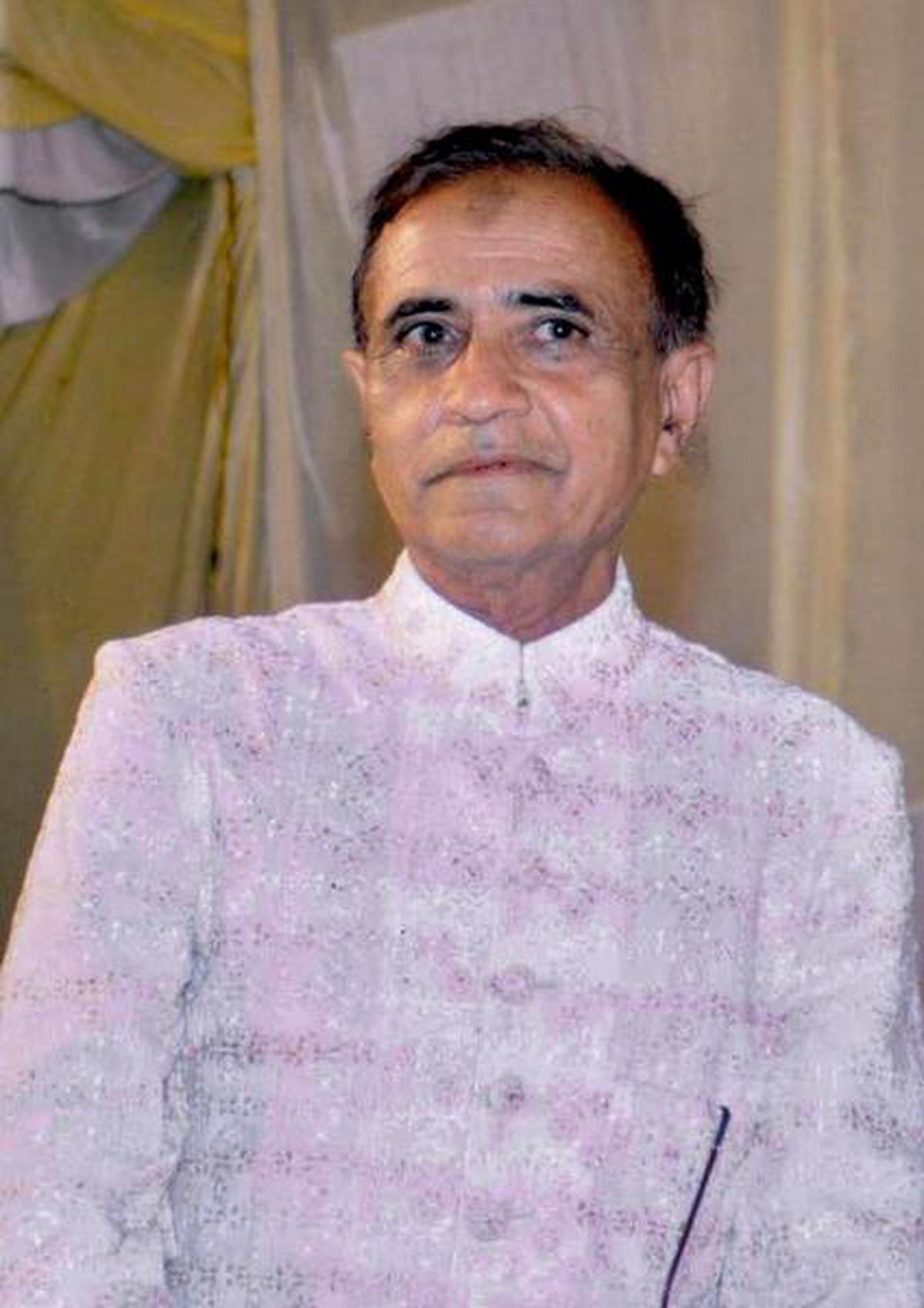
This is towards a particular reference to Mirza Javed Murtuza, who despite having been born in a Lucknow elitist family, with roots from Faizabad, took for him a road less travelled. His contrast was his campaign, which he undertook, with his utmost commitment, to educate masses and classes, to seek from the Almighty God, on their own, and not through any intermediary. This was his avowed stand against the institutional clergy, which ironically, had always been ‘in consonance’ with the ruling dispensation.
Lucknow had been a seat of power, for centuries, a La Feudal state, which continued to flourish, even after Britishers had taken over. Even after the ouster of the last king of Avadh, Wajid Ali Shah ‘Akhter’, and the subsequent ‘silencing’ of the mutiny or the first war for independence of 1857, there was a ‘virtual or a real’ silence in Lucknow, for the next 90 years. Until came the dawn of independence. India, became a throbbing democracy, but the elite of Lucknow fell into a morass of decadence, in terms of social, economic, educational standards etc, and to make it worse, were the ‘debates and discussions’ over religious denomination’s considered ‘superiorities over each other’. Thus, was enamored on Lucknow’s landscape.
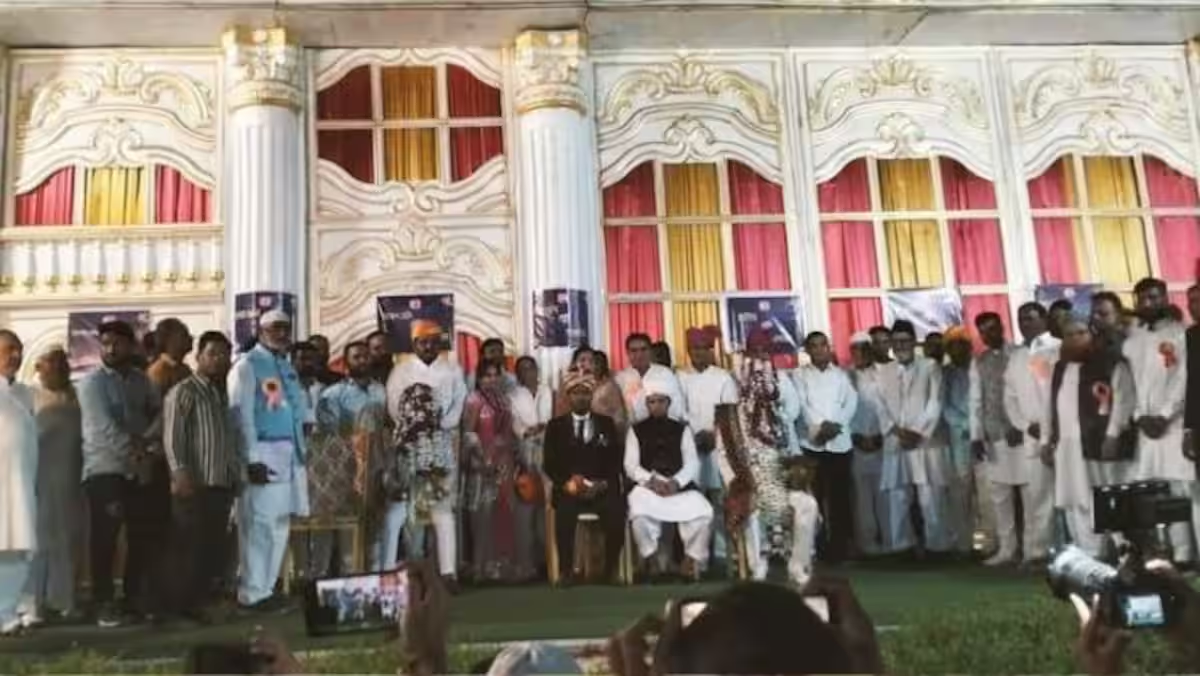
Rubina J Murtuza at the release of Hayat-e-Javed (2010) / Photo Courtesy: Twocircles.Net
After the post-1977 Emergency government, Iranian revolution of 1979, Muradabad riots of 1980, Javed Murtuza took to the stage, of Ali Congress as its Patron, as he could see and also foresee that the clergy, their pageboys and footmen, were all too incapable to relate to the arising situations. Babri Masjid locks were also opened in 1986. He was an advocate and started championing the cause of Muslim rights, articulated the ‘reasoning and argumentation’ not only for self emancipation but also for seeking a place in social-hierarchy in terms of getting a place in government jobs, awareness towards reservation enshrined through Constitution etc.
The issues confronting the community were with a crystal ball clarity to him. He was ahead, to clergy by a goodly margin, which was too involved, and wants to remain still, like a caged mouse on a wheel. Unable to augment any forward path! He was never an extremist showboat, but had earned a personal flak , from administration, when he had printed Ram Aur Islam, extracting excerpts from Dr. BR Ambedkar book, Riddles of Hinduism, that small booklet was a rage, in those days, after Babri Masjid had been demolished. There were reportedly raids to confiscate its copies. He even had organized a function, in the memory of martyrs of Babri Masjid, for those who had been killed in the aftermath of the demolition.
He became the proverbial deacon of a church! Without having attended any conventional religious seminary! Out of his sheer grit, as onlookers still remember him, he would drive his scooter, memorizing Quranic verses to verbalize the gospel. He had arrested the attention of the youth. There was an ever growing numbers to his followers. Young boys with their beards primed, thronged the altar of his speeches. He had to incur the wrath, and was therefore, subjected to a murderous assault, during an auspicious Ramzan night, but only the next day, he would sit, his head, hands and face ‘bruised and bandaged’, soliciting his next homily. Yours truly was present when the assault had taken place.
His avowal that community had to search for its lost self-esteem, was perhaps, his only and long standing forte. He would pass on a road with utmost humility. Always so unassuming. A true picture of keeping a low profile yet exuding high intensity. The campaign spearheaded to safeguard the Auqafs, may perhaps, has lost its steam, but he was much farsighted in his approach, as finally, the government today, is contemplating to bring all Auqafs under its thumb. Had an ear was lent to his call then, perhaps, this situation might never have occurred. But, this is how community, can share its long time complacency towards the gems of its yore.
His persona still resonates around those who sought from his brilliance. He was an engineer by profession. Edited and published Payam-e-Nau (The New Message) in both Urdu and Hindi scripts, and editorialized his vision, which was a true reflection of his time and beyond.
His father and younger brother retired as Justice from High Courts.
His daughter wrote Hayat-e-Javed (The immortal Life) in Urdu language as an ode to the long standing memories of her father. His 15th death anniversary fell on November 9.
***
The writer is a former UP State Information Commissioner.
source: http://www.muslimmirror.com / Muslim Mirror / Home> Indian Muslim> Personality / by Haider Abbas / November 15th, 2024
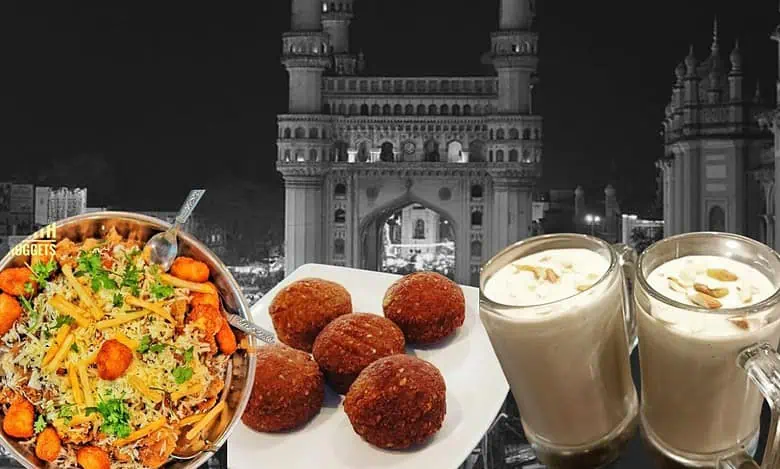
Sudanese and Somalians in Hyderabad have created a home away from home through their unique restaurants
Image Source: Tafosha Cafe
Every time you zoom past the gate of Paramount Colony, you’re instantly transported to a world that feels far from Hyderabad. Shops line the streets, offering camel milk, Sudanese bukhoor, flowing jilbabs, Somalian qahwe, and a host of other treasures from East Africa.
As you stroll through, people can be seen relaxing on plastic chairs, gathered around qahwa carts, sipping steaming cups of coffee and tea. The soft murmur of conversation creates a sense of community in this area of Tolichowki, which has come to be known as ‘Mini Somalia’ or ‘Somali Land’.
What further sets this neighborhood apart is, of course, its culinary scene. Where everyone in Hyderabad crazes over the famed biryani and haleem, the Sudanese and Somalians in this area have created a home away from home through their unique restaurants.
A taste of Africa in Hyderabad
There are several restaurants peppered around Paramount Colony that offer a slice of East African culture through its rich culinary traditions. One such gem is Tafosha Cafe run by Mohammed Shakil.
While Shakil hails from Mumbai, his 20 years in Yemen have contributed to his strong hold on the Arabic language and knowledge of African cuisine. These experiences have made his cafe a popular destination for the Somalian and Sudanese communities in Hyderabad.
“This cafe was originally started by a Sudanese owner in 2021, which contributes to its authenticity. When I took over in July, I ensured that we remained true to the traditional flavors of Somalia and Sudan, which is why our chef is also Sudanese,” he explains.
Although Tafosha welcomes Hyderabadi locals, Shakil’s primary focus remains on serving these two communities. This dedication to preserving the culinary experience of these cultures is reflected in the unique menu that is curated specially for each day of the week.
Savoring authentic dishes
One glance through the menu and you can see names unknown to any average Hyderabadi.
“For someone who is a beginner to East African cuisine, I would suggest foul which is made of creamy fava beans, seasoned with special Somalian or Sudanese spices. There are four variations in foul based on their origins: foul hummus, foul musallah, foul with liver, and fattah foul musallah,” Shakil tells Siasat.com.
Other dishes that seem to stand out are the Fahita Chicken, Agashi Chicken (barbeque chicken), Zigny (lamb stew), Aseeda Naiemia Tagiya, Regla (Kulfa with lamb), Bamia (Okra with lamb), and Salat Aswad (Eggplant salad).
Notably, there is one similarity between Hyderabadi and African cuisine- Paaya, or kawaree, which features cow’s trotters. However, this dish distinguishes itself from Hyderabadi paaya in several ways. The spices used in kawaree create a unique flavor profile and are characterized by a thicker, more robust broth, which enhances its hearty appeal. The dish is traditionally made using very tender meat, lending it a texture that sets it apart from its Hyderabadi counterpart.
Another unique aspect of this cuisine is that rice is not a staple in daily Sudanese meals due to several factors, including war, drought, and flooding in the region. “Since the café was originally started by a Sudanese, I decided to maintain that authenticity by not introducing rice in the menu,” he says.
In addition, Somali cuisine features a unique practice of pairing bananas with nearly every meal. This tradition arises from Somalia’s rich agricultural landscape, where bananas are abundant and easily accessible.
Shakil also points out that peanuts are a key ingredient in approximately 50% of the dishes served and spices are often used sparingly because the hot climate in many African countries affects the way flavors are developed. The richness of peanuts enhances the dishes, providing depth and creaminess without the need for an abundance of spices. This culinary approach allows the natural flavors of the ingredients to shine, reflecting the simplicity of African cooking.
Distinct from Middle Eastern cuisine
Hyderabad has long been celebrated for its love of Arab cuisine, with dishes like shawarma, mandi, and kebabs dominating the food scene. But in this melting pot of cultures, African cuisine is often mistaken for Arab food. While they share some spices and ingredients, Somalian and Sudanese dishes have their own rich, distinctive flavors.
According to Shakil, chefs in Sudan and Somalia typically avoid using olive oil, opting for sesame oil instead. Additionally, East African dishes tend to be milder than Middle Eastern dishes. They often feature only one or two types of spices, resulting in a culinary experience that highlights the natural flavors of the ingredients.
Moreover, Somali and Sudanese cooks often combine vegetables like okra, kulfa, eggplant, and potatoes with meat, creating hearty, balanced meals. This practice contrasts with some Middle Eastern dishes that may focus more heavily on meat alone.
As patrons indulge in these distinctive dishes, they not only satisfy their appetites but also gain an appreciation for the traditions and stories behind each meal. In a city where diverse cultures intersect, this hidden gem serves as a reminder of the beauty found in culinary diversity, inviting everyone to embrace and celebrate the flavors of Africa right in the heart of Hyderabad.
source: http://www.siasat.com / The Siasat Daily / Home> Lifestyle / by Bushra Khan / October 18th, 2024
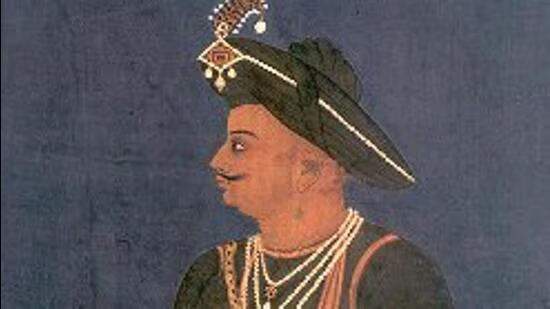
On November 10, the 274th (or 273rd) birthday of Tipu Sultan was celebrated peacefully in his erstwhile capital, Srirangapatna, amid heavy security.
The date of his birth is disputed – there is little agreement on whether it is November 10, November 20, or December 1, or whether that event happened in 1750 or 1751. (File photo)
This past Sunday, November 10, the 274th (or 273rd) birthday of Tipu Sultan was celebrated peacefully in his erstwhile capital, Srirangapatna, amid heavy security. The security was necessary because Tipu has become, in recent years, a polarizing and politicised figure, with successive state governments casting him alternately as monster and Messiah. Even the date of his birth is disputed – there is little agreement on whether it is November 10, November 20, or December 1, or whether that event happened in 1750 or 1751.
Be that as it may, one well-documented fact about Tipu is that he commissioned, around 1795, the famous Tipu’s Tiger, a mechanical automaton built by local craftsmen using local materials, possibly with inputs from French engineers. It featured a painted wooden tiger mauling a man who, judging from his costume, was decidedly European. The hollow toy housed various mechanisms that were worked by the turning of a crank handle. Each time it was turned, one of the man’s arms moved up, seemingly in a (futile) bid for self-defence, while the bellows inside pushed air out of the man’s throat and several openings in the tiger’s head, producing what sounded like a wail of distress from the man alongside a growl from the tiger. Symbolic of the self-styled Tiger of Mysore, the tiger was as large as life; the hapless European just a little smaller.
Tipu’s Tiger may well have been a product of Tipu’s fancy, meant to inspire him after his defeat in the Third Anglo-Mysore War in 1792, following which he not only lost half his kingdom but was obliged to give up two of his sons as hostages to Lord Cornwallis. But there is a popular theory that the visual of the tiger attacking the soldier was based on a real incident that happened later the same year.
On 21 December 1792, so the story goes, the goodly ship Shaw Ardaseer, bound for Madras, stopped to take on cargo at Sagar Island, situated at the mouth of the Hooghly in Calcutta, at the point where the Ganga meets the Bay of Bengal. On the ship was 17-year-old Hector Sutherland Munro, a ‘cadet for Madras’ who had only arrived in India on the 8th of November. Along with his fellow cadets, young Hector went ashore to try his luck at hunting deer, but was unsuccessful. The party had just sat down at the edge of the jungle to eat a meal when they heard, in the words of eyewitness Capt Henry Conran, ‘a roar like thunder,’ and saw ‘an immense royal tiger spring on the unfortunate Munro.’ In a moment, continues Conran, Munro’s head ‘was in the beast’s mouth,’ and it had raced into the jungle, carrying Munro with it. Conran and the others shot at the tiger and killed it, but Munro could not be saved.
Conran’s sensational prose, and the fact that young Munro was the son of the celebrated General Sir Hector Munro, the hero of the Battle of Buxar (1764) and the capture of Pondicherry (1778), and one of the main players in the Second Anglo-Mysore War (1780) against Tipu‘s father Hyder Ali, ensured that the story went viral in England, perhaps even inspiring William Blake’s famous 1793 poem ‘The Tyger.’ Given that his sons were being held in Calcutta at the time, the story almost certainly also reached Tipu. In the aftermath of the Fourth Anglo-Mysore War, in which Tipu was killed, Tipu’s Tiger, which had little intrinsic but much emblematic value, was carried back to England in triumph, and installed, in July 1808, in East India House on Leadenhall Street.
Today, Tipu’s Tiger sits behind glass at the Victoria & Albert Museum (V&A) in London, where it has long been, according to the museum’s website, ‘one of the V&A’s most popular exhibits.’
(Roopa Pai is a writer who has carried on a longtime love affair with her hometown Bengaluru)
source: http://www.hindustantimes.com / Hindustan Times / Home / by Roopa Pai / November 12th, 2024
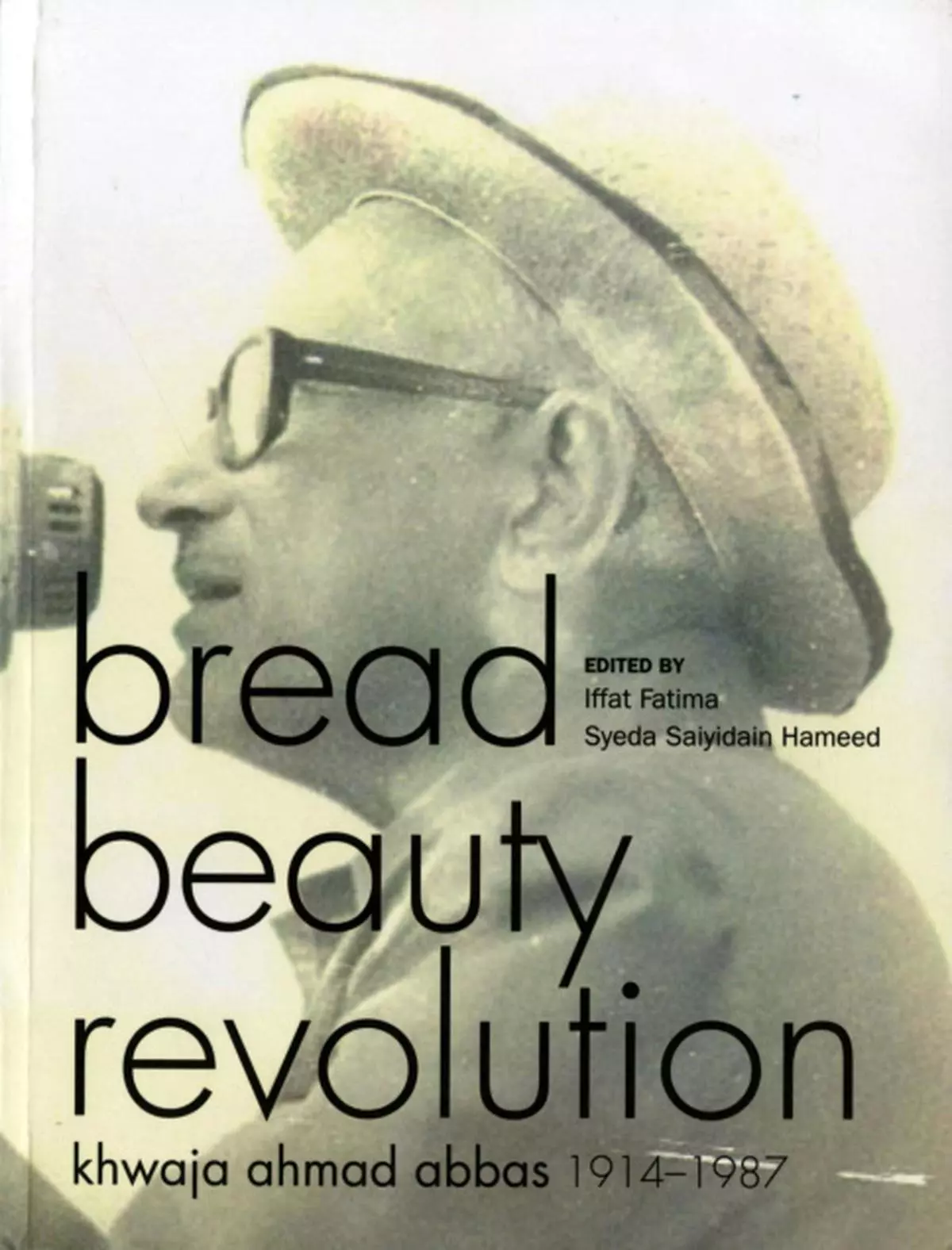
This commemorative volume is a timely and necessary reminder of the greatness of an extraordinary writer, film-maker and social commentator.
FL19 BK ABBAS 1
KHWAJA Ahmad Abbas wore many hats and distinguished himself in each of the roles he chose. As a pioneer of progressive cinema, a consummate writer of short stories and novels that depicted the human condition and a committed journalist whose Last Page column acquired legendary status, he blazed new trails and fashioned his own path.
Abbas was an important figure from a critical past. His body of work deserves to be studied and his life remembered by millennials and generations to come.
This commemorative volume, a celebration of the man on the occasion of his 100th birth anniversary, arrives as a reminder of the humanism that characterised his life and work. Lavishly produced and deftly edited by Iffat Fatima, an independent filmmaker from Kashmir, and Syeda Saiyidain Hameed, the social and women’s rights activist, educationist and writer, this book from the Khwaja Ahmad Abbas Memorial Trust provides invaluable insights into his mind and personality.
A man of many talents
Despite his many talents, or likely because of them, Abbas could never be boxed into any creative category. And he was well aware of it. As Syeda Saiyidain Hameed informs the readers in her marvellous introduction to the compendium, Abbas himself would often ask his readers: “Who am I? Writers say I am a journalist; journalists say I am a film-maker; film-makers say I write short stories.” The editors of this volume, who recognised that the only way to appreciate Abbas fully is to study him in totality, have paid a perfect tribute to his oeuvre by dividing the volume into 10 sections that feature selections from his writings, focus on his cinema through his interviews and conversations, talk about his beginnings and early life and adventures, and reveal the man behind the mighty pen through reminiscences and tributes by actors and associates.
The nature of the public adulation of Abbas also kept changing over the decades during which he was active. For one generation he was the man who collaborated with Raj Kapoor to unveil some of the finest examples of high-quality mainstream Indian cinema, such as Awara and Shree 420 , while another celebrated him as the writer of powerful and poignant stories such as Sardarji , a lamentation of the violence and mayhem the country witnessed in the wake of Partition. And much before Independence, his was a significant voice writing about the marginalised sections of society. Abbas slipped in and out of the many roles he had chosen to play with a rare finesse, much like a thespian.
Abbas was fortunate to have inherited a long tradition of intellectualism and reformist ideals from both sides of the family. His mother’s grandfather, Maulana Altaf Husain Hali, was a poet who used verse as a tool against social evils and as an instrument of reform within the Muslim community. Abbas began carrying forward the torch early on, even as a college student, when he published Aligarh Opinion , a handwritten weekly newspaper that he personally peddled on a bicycle.
This was the start of his life in journalism which would eventually see him pen one of the longest-running columns in the history of news in Blitz , a weekly tabloid founded by R.K. Karanjia.
Reading the compendium is like taking a train journey back in time, to a world far removed from the present. Be it Abbas’ harrowing first-person account of what he saw in Calcutta (now Kolkata) during the Bengal Famine—which inspired him to make the groundbreaking film Dharti ke Lal (1945)—or his active involvement with the Indian People’s Theatre Association (IPTA), his cinematic endeavours or his first meeting with Jawaharlal Nehru, the reader is taken on a walk-through of events, institutions and happenings that are now the staple of history textbooks.
A particularly striking example is his narration of the celebratory procession of people in Bombay (now Mumbai) on August 15, 1947, where he was one among the hundreds of thousands rejoicing in their new-found status as citizens of a free country.
“It was an inspiring sight to see a famous poet like Josh Malihabadi, a film celebrity like Prithviraj Kapoor with his film star son Raj, a dancer of international fame like Zohra Sehgal, and a front-rank writer like Krishan Chander, singing and dancing in the streets to celebrate this happy occasion….Today, they had come in the midst of the people, as singers of their songs, not to sing about the people, but to sing with the people; not to dance a symbolic representation of life on the stage, but to dance the dance of freedom with the people in the streets.”
The collection also offers a peek into his personal life; his own accounts of life as a newly married man and the banter between him and his wife Mujji (Mujtabai Khatoon) are straight out of the myriad Muslim socials that Bollywood was famous for a long time ago. The scenes from his marriage tragically culminate in the death of his wife.
Describing the day his wife died in an elegiac memorial, elegant yet heart-breaking, Abbas says: “It looked like her—but it was not her. For that life that was always bubbling with intelligence and compassion was no longer in her. I collapsed near the bed where she lay inert. It was not her—but something resembling her—like the lifeless photograph of a beloved person. When I returned after burying her I walked alone and knew that henceforth I would have to get used to walking alone.”
Pathbreaking cinematic efforts
Although acclaimed for his association with Raj Kapoor and, of course, for introducing Amitabh Bachchan to the silver screen in Saat Hindustani , Abbas deserves a special chapter in the history of Indian cinema for his breathtaking corpus of work that saw him don the mantles of producer, director and screenwriter at once and also established him as a pioneer whose films broke new ground. He took on challenging issues and translated his thoughts on to the screen, with varying degrees of success.
Only a man ahead of his times could make a film like Hamara Ghar (1964), a film about a group of children marooned on an island where the protagonist is a motherless Dalit boy.
As Ahmer Nadeem Anwer, who played the lead role of Sonu at the age of 10, says in an essay on the film: “It is this boy who embodies the defiance of those who shall not accept their exclusion from education, work, self-respect—or even recreation and pleasure.” The film, along with several others, is testimony to Abbas’ willingness to take risks and make the cinema that he wanted to make.
Collaboration with Raj Kapoor
Abbas liked to describe himself as a communicator. “I want to communicate my ideas, my impulses, my ideologies to other people. That is my basic interest in writing, in films and in drama.”
It is a moot point which vehicle of communication served his purpose best, but one could not make a better choice than his cinematic collaborations with Raj Kapoor, especially from the early days of the showman’s career, such as his directorial debut, Awara , Shree 420 and Jagte Raho .
These films manifest the distilled brilliance of a mind that displays an unparalleled skill in weaving riveting stories for the big screen. His phenomenal grasp of the medium and Raj Kapoor’s showmanship resulted in timeless classics.
Abbas himself considered Awara to be the best of his collaborations with Raj Kapoor.
It is another story that the two would later go on to make Mera Naam Joker , which Raj Kapoor considered his magnum opus but viewers thought otherwise.
The monumental failure of the film devastated him, driving him into debt and depression, and it was Abbas who helped him bounce back by writing the iconic teenage romance called Bobby , which turned out to be Raj Kapoor’s biggest blockbuster.
Nehru: A love story
It was love at first sight, as Abbas confesses, recollecting the first time he saw Jawaharlal Nehru, at the Aligarh railway station. The essay about the entire episode is a fascinating recollection of an awestruck student meeting his idol in flesh and blood and the resulting conversation, which culminates in Nehru signing his autograph book with the message: “Live dangerously.” Abbas certainly seemed to have taken it to heart, as his life demonstrated. He lived dangerously all his life, always true to himself and never wavering from his convictions, never hesitating to helm a project even at the risk of grave financial loss.
He firmly stood up for what he thought was right and did not shy away from opposing what he felt was wrong, irrespective of ideology.
His ability to introspect and accept criticism separated him from other giants of the screen or the world of letters of his time.
In his tribute, Amitabh Bachchan writes: “Mamu Jaan’s [Abbas] socialism was not just restrained to the books or columns he read, believed and wrote about. He practised it too in the way he lived and conducted his life, and in the way he made his films. I was a newcomer in the illustrious star cast of Saat Hindustani , but his treatment to all was universal. In his eyes we were all equals, and we were treated with the sameness that he followed and believed in.”
In the preface to her memoir, the author B. M. Zuhara writes, “I grew up at a time when Muslim girls did not even have the freedom to dream.” The Dreams of a Mappila Girl is set at the time when independent India was embracing its new identity as a free nation. It offers a rare portrait of women in Muslim households in North Kerala through the lens of a woman writer. Zuhara showcases how women, bound as they were by the rules of society, still managed to hold key positions in their family and had an important voice in the discussions concerning their lives, contrary to popular perception.
The following piece is an excerpt from Fehmida Zakeer’s translation of the book, soon to be out from Yoda Press.
****
During the holidays, the hall upstairs turned into a playground for the children, who were allowed to play outdoors only in the evenings. Lined by long windows without grills, and furnished only with Uppa’s charukasera and writing table, the hall was an expansive place for us to jump and run and skip and play. Below the glass windows was a cement slab broad enough to be used as a seat, running the length of the hall. If you sat on it and looked out of the window, you could see paddy fields and coconut groves and people out on the road in front of the house.
One evening, I was playing with Achu, the elder brother nearest me in age. Though his name was Assoo, I called him Achu. We were racing cars, or rather matchboxes converted by our imaginations into pretend cars. Since both Achu and I were recovering from a fever, we did not have permission to go out and play with the others, and so we were playing in the hall upstairs. Suddenly I heard the sound of Umma’s medhiyadi on the staircase leading from the women’s section of the house.
In those days, people used wooden footwear indoors. Climbing stairs in a medhiyadi, gripping the peg in the middle with the big toe and the second toe, was a feat in itself. Valippa’s medhiyadi, which he wore when he went out, had leather straps. Uppa preferred to wear shoes when he stepped out of the house. Once a year, Chandu Aashari, the family carpenter, made medhiyadi for the whole family. Achu once broke the small medhiyadi made for me by Chandu Aashari, and how I wept!
Umma did not normally come upstairs in the evenings. I looked enquiringly at Achu when we heard the sound of her footsteps.
‘Umma is going to Kozhikode tomorrow morning. She knows that you will cry and insist on going with her. That’s why she didn’t tell you.’
Even though I knew Achu was trying to provoke me, my eyes started filling with tears. I was five years old at that time, and in class one at school. I missed school frequently because I used to accompany my mother wherever she went. This continued in class two. At the end of each year, Uppa would visit the school and meet the teacher, and I would be promoted to the next class. This was the usual practice.
I closed my brimming eyes and stood there thinking.
Achu spoke again. ‘Umma must have come upstairs to pack her clothes for the trip. You’d better go quickly.’
‘Don’t take my matchboxes. I’ll be right back,’ I called out as I ran to Umma’s room.
‘I told you about Umma’s trip, so now the matchboxes are mine,’ I heard Achu shouting after me, but I decided to ignore his words for now.
When I entered the room I saw the doors of the meshalmarah opened wide. The scent of kaithapoo filled the room. How it lingers, the fragrance of screwpine! The meshalmarah doubled as a table and a cupboard, and was actually a long table with drawers on both sides with space to store things below. Umma called the meshalmarah her clothes cupboard. Umma stored her clothes on one side and the children’s on the other side. In those times, children usually had only one or two sets of clothes, made from lengths of cotton. Trousers and shirts for the boys and chelakuppayam, or frocks, for me.
‘You are packing to go to Kozhikode without me?’ I whimpered.
Umma turned to look at me. ‘The crybaby has arrived!’ she said.
At that, I wailed even more loudly.
I had three nicknames as a child. Karachapetti, Tarkakozhi and Ummakutty. Karachapetti because I cried a lot; I did not know the meaning of Tarkakozhi but when someone called me that, I would put on a sullen look; I actually liked my third nickname of Ummakutty, ‘mother’s darling’. When someone called me by that name, a shy smile would tug at my lips. I liked to sing the lullaby Umma often sang to me. ‘Umma’s little girl Soorakutty, darling little daughter of mine.’
But at that moment, I was not thinking about the nicknames or Umma’s special song for me.
‘If you go without taking me with you, by God, by the Prophet, I will not go to school till you come back.’
‘Moideen will tie your hands and legs and take you to school,’ Umma said as she placed her clothes in a cloth bag fitted with wooden handles.
Moideen was the caretaker of our house, and all the children were scared of him. But even though he put on a stern face when any of us misbehaved, he really liked us. Whenever I cried and created a fuss, he would arrive and take me to the pond at the back of our house. He would get into the pond and pluck a lotus for me or teach me how to make toys with lotus leaves.
‘If I complain about a stomach ache, Ummama will not send me to school,’ I said, pouting.
‘This is too much. Don’t you want to learn to read and write? If you follow me around all the time, how will you learn your lessons?’
‘I don’t want to,’ I said resolutely.
‘Don’t imagine I’ll take you this time, Soora. If you hide inside the car, I will drag you out.’
Usually when it became clear that Umma would not take me with her on a trip, I would hide between the seats in the car without even having changed into an appropriate outfit. It did not occur to me that my grandfather, seated in the charukasera on the verandah, the driver, and the servants busy in their tasks would all notice my presence. I thought I was fooling Umma by hiding in the car. When Umma came out of the house and went up to the car, Valippa would jokingly call out, ‘Mariya, be careful, there is a cockroach in the car.’
Umma would understand immediately. She would get into the car and pinch my ear and say, ‘Don’t get smart with me. Get out of the car.’
I would hug the seat and wail loudly.
Valippa would say then, ‘Take her with you. She’s a baby after all.’
‘Baby indeed, she’s over five years old. You are all spoiling her.’
And I would get to accompany Umma to Kozhikode once again. Umma’s younger sister lived in Kozhikode and, to us children, her house was a source of wonder. Umma had to see the doctor in Kozhikode every three months and she would drop in at her sister’s house when she made the trip.
Now Umma ignored my wails and placed the bag filled with her clothes on the table. Then she went downstairs. Sobbing loudly, I followed her.
‘Why is the baby crying?’ Ummama called out from below the stairs.
‘If she complains of a stomach ache tomorrow morning, don’t allow her to take the day off from school, Elama.’
When Umma was fifteen years old, her thirty-year-old mother, nine months pregnant, died. Later, Valippa married again. Our present Ummama was his second wife. I understood all this only later. Even though my mother and her siblings called their stepmother Elama, Ummama treated them as if they were her own children.
Ummama intervened on my behalf now. ‘Take her with you, Mariyu. If you leave her here, she will raise the roof with her crying.’
By then we had climbed down the stairs.
Umma ignored me and asked Ummama, ‘Is Uppa sitting on the verandah?’
‘He was asking for you. He just sent Assan to look for you.’ Assan, the handyman, was Moidyaka’s son.
Every evening Umma and Ummama went to the verandah to keep Valippa company. This was the only time they were allowed on the verandah.
‘Aren’t you coming?’ Umma asked as she made her way outside.
‘You go on. I’ll come soon,’ Ummama said, walking towards the eastern side of the house where the bathrooms were located.
As Umma made her way to the front of the house, I followed close behind, sniffling and crying.
‘Soora, don’t irritate me. If you don’t stop I’ll lock you up in the kunhiara. I’m warning you.’
Kunhiara. As soon as I heard that word, my wails dwindled to a whimper. Kunhiara was the small room where the sparingly used big and heavy copper and brass utensils were stored. The room was dark even during the daytime and was a haven for cockroaches, moths and rats. I was not really scared of the cockroaches, the moths, the rats. What terrified me was the tomcat installed in our house to catch the rats. Its glowing eyes struck terror in my heart. To me, spending time there was like being in hell, and once locked inside I would remain there until the servants came to rescue me. I was still sobbing when we reached the verandah.
‘Chu, why are you laughing?’ asked Valippa.
My grandfather called me Chu.
‘Your darling Chu cries all the time,’ Umma said crossly.
‘Don’t say that, Mariya. Look at her smiling now. She looks so beautiful.’
On hearing this, in spite of the tears streaming from my eyes, I attempted a smile.
‘That’s my brave girl. Come here.’ Valippa beckoned to me. ‘If you massage my legs, I’ll give you a mukkal.’
Forgetting about the trip to Kozhikode, I walked towards the charukasera where my grandfather sat with his legs hoisted over its elongated armrests. I massaged his legs one by one with my small hands.
‘I want the coin with the hole.’
In those times, one pice coins came with a hole and without. I preferred the ones with the hole. I dropped all the coins I got from Valippa into a powder tin which had its top cut open with a knife.
By then, Ummama had reached the verandah. Ummama would sit on the bench and Umma would stand by the door as they talked about the events of the day with my grandfather. I listened to them talking as I pressed Valippa’s feet, directing smug looks at my mother and feeling like the valiant Unniarcha.* Absorbed in conversation, Umma too seemed to have forgotten the whole episode.
***
* Unniarcha is a mythological warrior woman celebrated for her fearlessness, immortalised in the vadakkan paatu, the ballads of the region.
Translator’s Bio
Fehmida Zakeer is an Independent writer with bylines in several publications including, The Bangalore Review, The Hindu, Al Jazeera, Reader’s Digest, National Geographic, Whetstone Magazine, NPR. Her fiction has appeared in publications such as The Indian Quarterly, Out of Print Magazine, Quarterly Literary Review Singapore, Asian Cha, among others. A story of hers was placed first in the Himal South-Asian short story competition 2013, and another was chosen by the National Library Board of Singapore for the 2013 edition of their annual READ Singapore anthology.
___________________________________________
B. M. Zuhara
BM Zuhara has written novels and short stories and is the first Muslim woman writer from Kerala. She won the Kerala Sahitya Akademi Award for her contribution to Malayalam literature in 2008 and has received awards such as Lalithambika Antharjanam Memorial Special Award, Unnimoy Memorial Award and the K. Balakrishnan Smaraka Award. Her novels, Iruttu (Darkness), Nilavu (Moonlight) and Mozhi (Divorce), have been translated into Arabic while the English translation of Nilavu was published by the Oxford University Press in an anthology titled, Five Novellas. She translated Tayeb Salih’s Wedding of Zein and Naguib Mahfouz’s Palace Walk into Malayalam.
______________________
source: http://www.bangalorereview.com / The Bangalore Reviews / Home> Non-Fiction / by B M Zuhera / July 2022
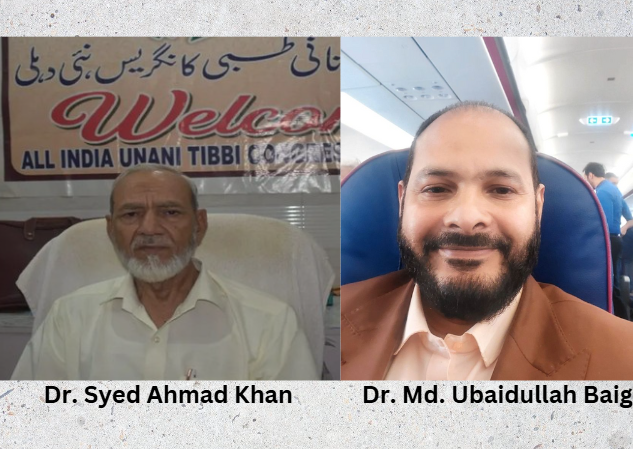
The Urdu Development Organisation (UDO), Tamil Nadu and Karnataka Chapter, held a meeting here today under the chairmanship of Dr. Mohammed Obaidullah Baig, Chairman of UDO for Tamil Nadu and Karnataka, to finalise preparations for the upcoming World Urdu Day celebrations on November 9. During this meeting, prominent personalities were selected for this year’s World Urdu Day Awards in recognition of their contributions to Urdu literature, education, journalism, and poetry.
The committee decided to honour Dr. Amanullah M.B., Head of the Urdu Department at University of Madras, with the ‘Allama Iqbal World Urdu Day Award for Urdu Literature.’ V.M. Habib Rehman, Block Education Officer (BEO) from Chennai, will receive the ‘Maulana Abul Kalam Azad World Urdu Day Award for Promotion of Education and Training.’
Other distinguished recipients include Hafeez Mohammad Hameedullah Baig for promoting the Urdu language, Azam Shahid from Bengaluru for journalism, and Dr. Ijaz Hussain and Anwar Jaleelpuri for their contributions to Urdu poetry.
Additional honourees include Shahid Madrasi, Kaatib Hanif, Asan Ghani Mushtaq Rafiqui, and Akbar Zahid, with awards recognising their contributions to Urdu literature, poetry, and journalism. Educators such as Dr. Hayat Iftikhar, Dr. Nikhat Naz from Queen Mary College, Saira Naseem, M. Karamatullah, Siraj-un-Nisa, and several others from Tamil Nadu will be recognised with World Urdu Day Awards for their dedication to teaching and promoting Urdu in schools and colleges.
A special highlight of the celebration will be the launch of two books by Dr. Amanullah M.B. of the University of Madras, titled Thirukkural in Urdu and Challenges and Opportunities in Urdu Essay Writing.
Dr. Md. Ubaidullah Baig, Chairman of the World Urdu Day Organising Committee (Tamil Nadu and Karnataka), and Dr. Syed Ahmad Khan, Convener of the World Urdu Day Organising Committee (New Delhi), extended their congratulations to all awardees. They expressed hope that these awards would further support the growth and recognition of the Urdu language and literature. The award ceremony is expected to spotlight the cultural and literary significance of Urdu, reinforcing its value across various fields.
source: http://www.radiancenews.com / Radiance News / Home> Awards> Focus> Pride of the Nation / by Radiance News Bureau / November 06th, 2024
In Jodhpur, 11 Muslim couples were married for just Rs 1 each. The Marwar Sheikh, Sayed Mughal, and Pathan Vikas Samiti organized the event to curb extravagant wedding expenses.
The newlyweds also received essential household items through community contributions.
Jaipur :
Rajasthan is known for lavish, expensive weddings. But now, weddings are taking place where there’s no dowry or excessive spending. One such event recently saw 11 couples married for just Rs 1 each.
11 couples wed for Rs 1 each
Eleven Muslim couples exchanged vows for a mere Rs 1. Their aim was to curb wasteful spending and make marriage accessible to everyone. The Marwar Sheikh, Sayed Mughal, and Pathan Vikas Samiti organized the event in Jodhpur. This was their tenth such event, with 11 couples participating.
Newlyweds receive essential items
Committee president Sikandar Khan said the event aimed to make marriage easier and more accessible. Donations provided the newlyweds with essential items like cupboards and utensils. They aim to arrange weddings for 51 couples next year.
Rs 5 million raised through community contributions
Sikandar explained that the committee has organized nine mass weddings in the past nine years, spending over Rs 5 million, all through public contributions. He highlighted the significant expenses associated with weddings and the need for affordable alternatives for those with limited resources.
source: http://www.newsable.asianetnews.com / Asianet Newsable / Home> English News> India News / by Ajay Joseph / October 22nd, 2024
In “Neela Chand”, Sohail Kakorvi creates an interesting poetic exposition through an interplay of proverbs and idioms
A deeply felt experience can not be poignantly recorded in individual words and its intriguing and tantalising communication call for a new narrative. Proverbs far from being arbitrary, predictable and dead metaphors create a pulsating rhetoric that ignites a myriad of images for capturing universal truths and takes us on a new terrain of cultural space, if one is ready to occupy it. Proverbs and idioms subvert the logic of composition which simply means that whole should be constructed from the meaning of the part. These commonly articulated expressions are certainly more than playful word puzzles and this is what eminent Urdu poet Sohail Kakorvi’s new astutely composed long poem “Neela Chand” articulates.
Urdu poets do use one or two proverbs in a ghazal but no one has attempted to compose an exceptionally long ghazal carrying more than nearly 300 aashar (couplets) revolving around proverbs. For Sohail proverb is an essential template to create a fusion of thoughts that also produces an interface between world of desire and the contemporary digital world. Proverbs are invested with the tremendous possibility of capturing moments of epiphany and diffidence with equal vehemence. Relationship between proverb and its meaning is expressed in terms of motivation with remarkable ease. Live by one’s wit (Harf Ka Bana Hona) and unable to move because of mehndi put around feet (Paun mein mehndi lagana) are the two most frequently used proverbs and Sohail explores an eerie relationship between them.
“Wo Harfon Ka Bana Hai Uski Bato Par No Tum Jana
Sune Jao Ki Usne Pau Mein Mehdi Lagai Hai”
(Never believe the who lives by his wit. Keep on listening that she applied paste of mehndi around her. The poet is fully aware of deceit but he is quite eager to go by it.)
In three languages
The long poem titled “Neela Chand” is composed in three languages – Urdu, Hindi and English and a sher (couplet) and its translation in Hindi and English form one page of the book. The collection reveals Sohail’s penchant for translating the untranslatable – proverb and idioms – they are essentially embedded in the culture of a particular language representing different cultures and they can not be made intangible in other languages. Still there are several proverbs that betray close similarity both at literal and metaphorical levels. A well-known Urdu proverb “Ulte Bans Bareilly Ko” has an identical idiom in English “Carry Coal to New Castle” but Sohail does not look for such easily available similar expressions, he searches for commonalities of human existence expressed through language instead
At a time when frequent use of proverbs is considered as a down right decadent practice, the poet makes it a point to explore the creative potential that lie inside the proverb. Sohail tries to create gleaming cultural iconography through varied verbal images that unfailingly pops up and add on often forgotten dimension of a common place experience:
“Udhar Usne Kahe Tairah Liye Hain Nau Naqad Maine/Munasib Faisla Mera Tha, Masti Uspe Chhai Hai” (She preferred two in bush I choose one bird in hand/ Mine was appropriate decision that left her excited)
The name of the book, compiled by Ashar Alig, seems quite suggestive. The title ‘Neela Chand’ instantly reminds us about English expression “Blue Moon” but here it does not refer to something that occurs rarely and for poet Neela Chand stands for trust, intelligence and confidence. Sohail adds colour blue to moon to make it a metaphor of human dignity and the loss of individual identity which is both tantalising and exasperating.
Seldom does one came across with such an excellent poetic exposition of proverbs and it is a good read for all those enjoy poetry even at a time when violence and hatred has out balanced us completely.
source: http://www.thehindu.com / The Hindu / Home> Books> Going Native / by Shafey Kidwai / March 04th, 2017
“I have decided to renounce my showbiz lifestyle, repent before Allah, and seek his forgiveness”, wrote Sahar Afsha in her Instagram note.
Sahar Afsha/Instagram
Popular Bhojpuri actress Sahar Afsha recently announced that she has decided to quit the showbiz industry to follow the religious path of Islam. She isn’t the first actress to take such a step as Lock Upp contestant Sana Khan and Dangal star Zaira Wasim also decided to leave the entertainment industry for Islam.
Taking to her Instagram on September 22, Sahar penned a long note that read, “Dear Brothers and Sisters, in the Name of Allah, the Most Beneficent, the Most Merciful, I want to let you know that I have chosen to leave Showbiz and will no longer be involved. I want to live my future life in accordance with Islamic teachings and with Allah’s blessings.”
She continued, “I’m grateful to my fans for bestowing upon me many blessings, including fame, honor, and fortune. I had not even pictured this life in my childhood. I stumbled into this industry just by chance and kept on growing. But now I have decided to renounce my Showbiz lifestyle, repent before Allah, and seek His forgiveness. I intend to live my next life according to the commands and preachings of Allah.”
Concluding her note, the actress wrote, “Hence, I request everyone to pray that Allah accepts my repentance, blesses me with the strength to live in line with my resolve to spend my life upholding the laws of my Creator and serving mankind, and gives me the perseverance to do so. And I hope that I will be remembered not for my past life but for the life to come.”
Sana Khan also reacted to her note and commented, “MashAllah my sister so happy for you. May Allah give u isteqamah in every step of your life. May you inspire everyone around you and become zariya e khair for mankind.”
source: http://www.dnaindia.com / DNA / Home> English> Entertainment / by DNA Web Team / edited by Aman Wadhwa / October 08th, 2022
Rashid un-Nisa’s life and work continue to inspire, reminding us of the importance of education and the courage to advocate for change in the face of resistance.
Representative image of girl students. Photo: Wikimedia Commons
Rashid un-Nisa, India’s first female Urdu novelist, wrote Islah-un-Nisa, advocating for women’s education and reform. Born in 1855 in Patna, she was also a champion of girls’ education, founding Bihar’s first girls’ school. Her novel, published in 1894, addressed social issues and encouraged women to seek education. Rashid un-Nisa’s pioneering efforts in literature and education have left a lasting legacy, inspiring generations of women and contributing significantly to India’s literary and social history.
The premise of Islah-un-Nisa is something like this: “I am aware of the fact that there are many problems in our Muslim families. I also want to remove these problems. But instead of giving any sermons for this, I have chosen an interesting way to do this work the way of writing a novel.”
Early life and family background
Rashid un-Nisa, also known as Rashidatun Nisa or Raseedan Bibi, was born in 1855 in Patna, Bihar, into a scholarly family. Her father, Shamsul Ulama Syed Waheeduddin Khan Bahadur, was a prominent Islamic scholar. Growing up in a rich intellectual environment, Rashid un-Nisa received her education at home through private tutoring. Though formal schooling for girls was rare, her intellectual curiosity was nurtured in this setting.
Her marriage to Maulvi Mohammad Yahya, a lawyer, introduced her to progressive literature, particularly Mirat-ul-Uroos by deputy Nazir Ahmad, which deeply influenced her views on women’s education and reform.
Islah-un-Nisa: Breaking new ground
Rashid un-Nisa began writing her most famous work, Islah-un-Nisa, around 1868, though it took over a decade to publish due to challenges as a female writer in a male-dominated field. With the help of her nephew, Mohammad Suleman, the novel was finally published in 1881. Its significance as the first Urdu novel written by an Indian woman cannot be overstated.
The novel advocates for women’s self-improvement through education and moral upliftment, tackling issues such as superstitions, societal constraints, and regressive customs. It promoted the empowerment of women and their active participation in social reform, much like the themes Rashid un-Nisa had encountered in Mirat-ul-Uroos.
Jamia Millia Islamia’s research scholar, Dr. Uzma Azhar, comments on the novel, stating, “Islah un Nisa is the first novel in Urdu literature authored by a woman (1881). Rashid un Nisa came from an educated family of Azeemabad (now Patna, in Bihar) and later started a girls’ school as well.
Titled “Islah” meaning “to rectify/reform”, and “un Nisa” of women, it conveys ways through which a woman could improve herself. She has advised women on broad mindedness, importance of education against ignorance and has also tried to talk about the lives of literate women of that era through her story.
The main story of Bismillah is followed by further similar short stories. She has given delightfully detailed descriptions of the various traditions around marriage, pregnancy, birth of a child in simplified common language interspersed with local regional songs, making this book an interesting historical document.”
The novel’s appeal stretched beyond its time, with later editions being released in 1968, 2001, and 2006, highlighting its enduring influence in India and Pakistan.
Social reformer: Championing girls’ education in Bihar
Rashid un-Nisa didn’t limit her reformist spirit to literature; she founded the first girls’ school in Bihar, a revolutionary step at a time when educating girls was controversial. The colonial administration even recognised her efforts, with Lady Stephenson, wife of the lieutenant governor, personally praising her work during a school visit.
Her educational philosophy was grounded in the belief that women’s education could transform not only their own lives but also the wider society. By ensuring access to education, Rashid un-Nisa opened new avenues for countless women, many of whom went on to contribute significantly to education and reform.
Educational Philosophy and Social Impact
Rashid un-Nisa’s educational vision was deeply embedded in her literary work. Islah-un-Nisa reflects her belief that intellectual and moral growth were essential for women. Her protagonist, Bismillah, navigates societal challenges, embodying the values of enlightenment and self-improvement. Through conversations between her characters, Rashid un-Nisa critiques harmful customs and superstitions, urging women to rise above them.
Senior journalist and well-known historian Shams Ur Rehman Alavi notes, “Islah un Nisa, gave message to women to shun regressive cultural practices that were a burden on them, and instead, aim at achieving excellence in all fields.
Through conversation of characters, she emphasised that it’s not just about ability to read and write, but learning and expertise in all spheres, which was the need of the hour for women. It must be remembered that it was a period, when all the social reformers were not so enthusiastic about women’s rights and adequate priority was not given to women’s higher education, as some of them still felt that basic literacy was enough, so that a woman could communicate through letters with husband in case he is away or be able teach own children a bit.
Sample this from a paragraph in the novel: Mir Waaez’ wife says, ‘Beti is mein bhalaa kya buraai hai [What’s wrong with this]’ and Karim-un-Nisa replies, ‘Aap badi hain, aap ki baaton ka jawab dena be-adabi hai magar….be-adabi maauf ho….ye rasm buri hai...[You are elder and it is disrespectful for me to speak but I need to say that this custom is bad’.
The writer shows her disgust towards superstitions also that are continued in the name of ‘tradition’ and disses fake healers as well as those who are obsessed with spreading fear about apparitions and paranormal. On one hand, language and Urdu idioms heard in households of the era, keep the reader fixated, the unique description of the rituals that brought financial burden on households and forced families into debt, was clearly aimed at discouraging the practice of going to money-lenders and falling in this trap, which affected the families.“
The novel blends traditional and progressive values, challenging superstitions while depicting modern aspirations. It offers a vivid portrayal of customs like marriage and childbirth, making it not only a piece of literature but also a historical document of women’s lives at the time.
Legacy
Rashid un-Nisa passed away in 1929, but her contributions to literature and social reform endure. She is remembered not only as the first Urdu woman novelist but also as a pioneer of women’s education in India. Her novel Islah-un-Nisa remains a powerful reminder of the struggle for women’s rights and education during an era resistant to change.
Her school continues to inspire generations, and her work has been reprinted several times, testifying to her lasting influence. As Dr. Uzma Azhar reflects, “Islah-un-Nisa offers delightfully detailed descriptions of the various traditions around marriage and other social practices, making it an interesting historical document.”
Rashid un-Nisa’s life and work continue to inspire, reminding us of the importance of education and the courage to advocate for change in the face of resistance.
Sahil Razvi is an author and research scholar specialising in Sufism and history. He is an alumnus of Jamia Millia Islamia. For inquiries, you can email him at [email protected].
source: http://www/thewire.in / The Wire / Home> Culture / by Sahil Rizvi / October 13th, 2024