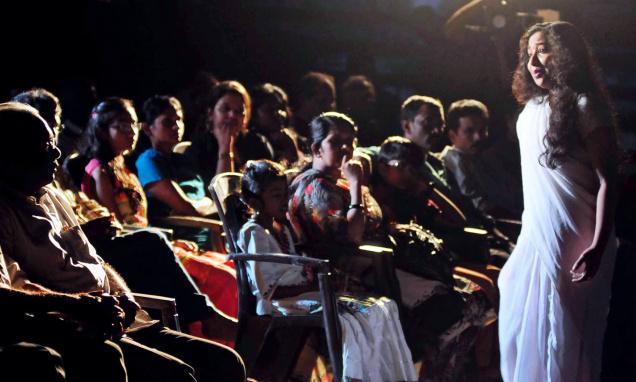
A scene from the solo docudrama ‘Soja Rajakumari,’ featuring 10 female characters from Vaikom Mohammed Basheer’s novels, staged at the Vyloppilly Samskrithi Bhavan in the city on Saturday. / Photo:S. Gopakumar / The Hindu
They were all living their sometimes magical, sometimes sad, and, at other times, quirky lives inside the pages of different books.
That was until Saturday evening, when ten of Vaikom Mohammed Basheer’s memorable female characters came together at the koothambalam inside Vyloppilly Samskrithi Bhavan to commemorate 20 years of the Beypore Sultan’s passing.
Soja Rajakumari, a solo docudrama directed by P.C. Hareesh, took back viewers to the time when they read each of those classics.
The first to arrive was Sainaba from Mucheetukalikkarante Makal, who engaged the audience in some friendly banter, at times touching upon even the rising prices.
The drama was so structured that the audience was very much a part all through, although things could have livened up a bit more had there been a glimmer of a response when the characters tried to involve them.
Bhargavikutti from Neelavelicham arrived in typical ghostly fashion, appearing first on a swing outside the koothambalam. If not for the posse of photographers around her, that would have been a bit more eerie. This being the 50th anniversary year of Bhargavi Nilayam, much of the drama’s time was put aside for Bhargavi, in sequences interspersed with songs and dialogues from the film.
Then there was a sequence between Suhara from Balyakalasakhi and Kunjipathumma fromNtuppuppakkoraanandarunnu. Kunjipathumma’s mother Kunjithachumma too peeked in for a minute. Pathumma from Pathummayude Aadu played out one of the famous conversations with her brother, the author himself, asking him to buy her ornaments.
Jameela Beevi from Poovanpazham took audience interaction to another level by actually distributing plantain to members of the crowd as she was exiting the stage.
Saramma from Pranayalekhanam remembered the classic love letter from Keshavan Nair while Devi from Kamukante Diary laid claim for being the writer’s true love.
The drama ended by reminding us of the pain of Narayani from Mathilukal.
Pooja K.Nair, a ninth grade student of Guruvayur Little Flower Convent High School, switched seamlessly from one character to the other and garnered the crowd’s applause.
The docudrama was staged by the Nataka Padana Kendram, Kozhikode.
source: http://www.thehindu.com / The Hindu / Home> News> Cities> Thiruvananthapuram / by S. R. Parveen / Thiruvananthapuram – July 06th, 2014
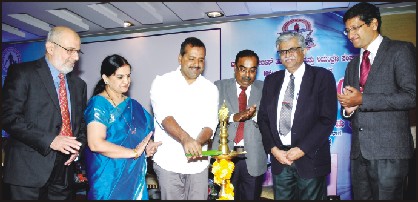
Health Minister U.T. Khader is seen inaugurating APCRICON 2014 in city this morning. Others seen are (from left) Dr. Abdul Rehman, President of APCRI, Dr. Pushpa Sarkar, Director, Mandya Institute of Medical Sciences, Dr. B.J. Mahendra, Organising Chairman, Dr. M.K. Sudarshan, Founder President of APCRI and Dr. M. Vinay, Organising Secretary.
Mysore :
“Rabies, like the malaria and polio diseases, must be made a notified disease by the Central Government in order to adopt preventive measures against rabies, which is highly infectious and severe, affecting domestic animals, wildlife conservation, public health and livestock economies),” said Health and Family Welfare Minister U.T. Khader.
Speaking at APCRICON 2014, the 16th National Conference of Association of Prevention and Control of Rabies in India (APCRI) at Fortune JP Palace in city this morning, he said that the State Government will appeal to the Centre to make Rabies a notified disease and opined that other States too must follow suit.
“In case of the occurrence of such diseases, we blame the animals. But we humans are to be blamed because we need to keep our environment clean and healthy,” said the Minister and called for prevention rather than cure by spreading awareness in schools.
This conference, organised by the Department of Community Medicine, Mandya Institute of Medical Sciences, Mandya, brings together experts from various fields dedicated to rabies research from across the country and world, providing a forum to learn and share valuable experiences of world renowned authorities on rabies.
The inaugural of the conference was presided over by Dr. Abdul Rehman, President of APCRI. Dr. Pushpa Sarkar, Director, Mandya Institute of Medical Sciences was the guest of honour.
Dr. B.J. Mahendra, Organising Chairman, Dr. M. Vinay, Organising Secretary, Dr. M.K. Sudarshan, Founder President of APCRI and Dr. Amlan Goswami, Secretary General of APCRI were present.
Minister U.T. Khader released a souvenir while the APCRI journal was released by Dr. Pushpa Sarkar. Dr. Bankim Patnaik, a physician and former Vice President of APCRI, was felicitated on the occasion and presented with Lifetime Achievement award for his research work in pathology and rabies.
What is a notified disease?
A notifiable disease is any disease that is required by law to be reported to government authorities. The collation of information allows the authorities to monitor the disease, and provides early warning of possible outbreaks. In the case of livestock diseases, there may also be the legal requirement to destroy the infected livestock upon notification. Many governments have enacted regulations for reporting of both human and animal (generally livestock) diseases. This usually happens during pandemics.
If rabies is notifiable in a country, surveillance data can be collected. Better estimates of the number of cases can therefore be made, ensuring a more accurate evaluation of the rabies burden in an area. Rabies needs to be reported so that infected animals can be swiftly identified, isolated and removed reducing the risk of animals and humans across the country contracting the disease. Surveillance data will also provide public health professionals with critical information to make informed decisions about saving human lives. For instance, in a number of countries notification is used by health authorities to investigate possible exposures and organise post-exposure prophylaxis, quarantine and other disease containment measures.
source: http://www.starofmysore.om / Star of Mysore / Home> General News / July 05th, 2014
On Tuesday afternoon A Saleem is getting ready to collect the body of a septuagenarian man he has never met before, from the GH mortuary. He is working on getting the vehicle ready to perform his last rites at a burial ground nearby.
The 29-year-old is no priest, under-taker or mortuary van driver. He just believes that every dead person has the right to rest in peace and While most people probably believe the same, Saleem goes the extra mile to get ensures that dead people get a decent funeral. Saleem, through his organisation Jeevan Shanthy Trust, performs last rites for many unclaimed and unidentified bodies in the city every year. They have buried 154 bodies in the last 10 months.
About five to 10 people from the trust, formed seven years ago but registered two years ago, are at GH every day to collect bodies that are released after postmortems. “We always carry incense stick, candles and camphor, so that we can perform rights according to Hindu, Muslim and Christian customs before burying them,” says Saleem.
The bodies are usually buried at the Aathupaalam burial ground on Podanur Road. Saleem and the other members from the trust pool in money. for a garland and a white cloth to wrap the body.
“It is difficult to identify the religion of an unclaimed body, so unless there is some identification, we go with our instincts,” says another trust member.
The trust started this service seven years ago, when Saleem and his friends realised that bodies of relatives often become a burden for people from the economically weaker sections.
“There were so many people who would have come from Trichy, Tirupur, Pollachi, Erode and other places who could not afford to pay for final rites, A mortuary van would charge a daily wage labourer a rent of 10,000 which is not affordable, ” says Saleem. “Then at crematoriums and burial grounds too, people would demand money for every little thing,” he says. “It was painful to see poor people, who are also emotionally devastated, being fleeced,” he adds. “We also realised that a lot bodies rot in the mortuary for days with no one coming to claim them,” he said.
The trust now has 50 members which primarily s of Saleem’s college mates and friends. They do not raise funds from the public or any NGOs. “We pool in money for everything right from the vehicle, to the fuel for the vehicles, to cloth, garlands, candles and incense sticks,” says Saleem.
The trust has managed to buy two vehicles — a maruti van and an ambulance, to run their service.
The trust also transports a body from GH to their houses or villages km away, allowing the family to perform the last rites. “We initially pooled in money to buy a Maruti van to transport unidentified and unclaimed dead bodies to the burial ground,” says Saleem. “But we also use the vehicle to transport a poor man’s body to his village even if it is 500 km away, so his family can perform the last rites,” he adds. “Around six of us pool in 500 each, fill fuel for 3,000 and take the body,” he says.
They rescue destitute people from the streets and pavements and admit them to the hospital. “Many are abandoned by their families after they tested positive for HIV. So we admit them to the GH, get the necessary tests done, collect and administer their medication. We also provide them with clothesWe also give them a bath and a plate to collect their food,” says Saleem.
Their services are so well-known that 108 ambulance drivers and the police notify them in cases of unidentified bodies or destitute people they rescue.
“We help them by filing FIRs for unclaimed bodies so that it makes their job easier. We have also seen them adopt many abandoned and destitute people from the street and admit them to the hospital,” said a police constable posted at GH.
source: http://www.timesofindia.indiatimes.com / The Times of India / Home> City> Coimbatore / by Pratiksha Ramkumar, TNN / July 07th, 2014
I remembered Sir Mirza Ismail, the renowned Dewan of Mysore, about whom I had written in my column [Down The Memory Lane’ in Nov. 2010] while reading KBG’s Abracadabra in SOM dated July 2 and thought it is worth reproducing a para as to how much Mirza liked his Mysore, describing it in a Radio Broadcast in 1938:
“… Wash themselves with Mysore soap, Dry themselves with Mysore towels (product of KR Mills), Clothe themselves in Mysore Silks, Ride Mysore horses, Eat the abundant Mysore food, Drink Mysore coffee with Mysore sugar, Build their houses with Mysore cement, Mysore timber, Mysore steal, Furnish their houses with Mysore lamps and Write letters on Mysore paper.”
To add to this, a senior personnel from State Bank of Mysore, who met me to collect some material with photos for their Bank’s Centenary Souvenir, remarked, “Sir, we would like to end this with ‘bank’ with Mysore Bank and publish Mirza’s speech in our souvenir.” This made me add one more to the Mysore list: Study in Mysore University.
If Star of Mysore and Mysooru Mithra were being published during his time, Sir Mirza would have added them to his list of Mysore products.
Yes, “Mysore was breathed by Sir Mirza Ismail,” the title I had given to my column.
—K. Vijayakumar, Former Jt. Director of Information & Publicity
V V Mohalla
3.7.2014
source: Voice of the Reader Section / source: http://www.starofmysore.com / Star of Mysore / Home> Voice of the Reader / July 04th, 2014
This is in response to the story. See Post of July 07th, 2014 in www.mpositive.com
While pondering over the absence of ‘Mirza Ismail Road’ in Mysore (Abracadabra, SOM dated July 2), what spontaneously springs to one’s mind is the much-prized ‘Ali Askar Road’ (off Cunningham Road) in downtown Bangalore.
This road is named after Sir Mirza’s grand-father Ali Askar, who was a prominent trader in Arabian horses and Persian carpets, and an influential public figure, with close links to Mummadi Krishnaraja Wadiyar as well as Sir Mark Cubbon. Ali Askar was originally from Persia and found asylum in the court of Mummadi Krishnaraja Wadiyar as a trainer of cavalry and supplier of horses, after fleeing from persecution under Sultan Ahmad Shah of Iran in 1824.
Apart from Sir Mirza, many of Ali Askar’s descendants became well-known figures in business and administration and it is possible that ‘Agha Abbas Ali Road’ and ‘Agha Abdullah Street’ in Bangalore are named after some of these descendants.
While feeling proud on seeing a premier road in Jaipur named after Sir Mirza (it is popularly recognised as M.I. Road, just like M.G. Road in Bangalore), Mysoreans feel proud also of the munificence of the rulers of Mysore in giving the name of a visiting king — Sayyaji Rao Gaekwad III — to a trunk road in their own legendary city.
— S. G. Seetharam
Gita Road, Mysore
8.7.2014
source: Voice of the Reader Section / source: http://www.starofmysore.com / Star of Mysore / Home> Voice of the Reader / July 13th, 2014
This is in response to the story. See Post of July 07th, 2014 in www.mpositive.com
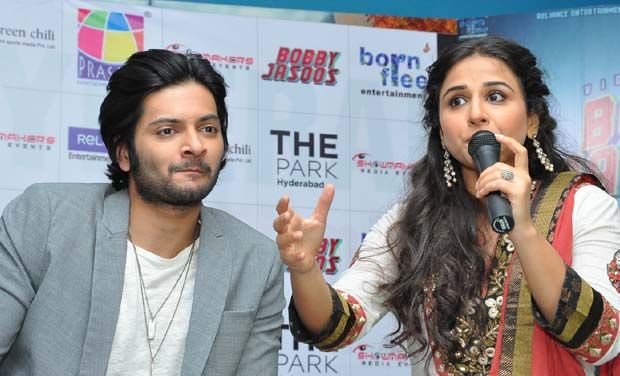
The recently released Bobby Jasoos boasts of Vidya Balan as the female protagonist. However, it is Ali Fazal’s performance in the film that is being praised by many.
In Bobby Jasoos, Ali plays the role of Tasawur, a TV anchor who dreams of escaping the bylanes of old Hyderabad. Ali admits that he was quite unsure before taking up the film. “Since Vidya’s was the central character in this film. I read the script thoroughly to make sure my role was significant,” he says.
He insists that the love story brewing between his character Tasawur, and Bilkis Ahmed, aka Bobby, is rather unusual. He says, “That’s because Tasawur is actually one of Bobby’s cases… she helps him get rid of marriage proposals. And what starts off as a professional relationship slowly develops into a friendship and beyond.” The actor also feels that when it comes to Bollywood films, Hyderabad as a location remains quite untapped. “I haven’t seen a movie based in Hyderabad for the longest time, and we had a lot of fun shooting in the city.” Ali Fazal also stars in the seventh installment of Hollywood hit franchise Fast and Furious, for which he finished shooting recently.
He says, “It was a different experience altogether. I shot with them last September, the whole gang Paul Walker, Vin Diesel, Kurt Russel, and Ludacris. As Paul Walker passed away and the script had to be redone, I had to go back for the shoot. I completed shooting for the film just two months back.”
source: http://www.deccanchronicle.com / Deccan Chronicle / Home> Entertainment> Bollywood / by Amrita Paul / July 06th, 2014
Arif Ali, 39, i s the younger brother of the romantic filmmaker Imtiaz Ali. He is curious, experimental and secure. He believes in family and human beings and is not in a hurry to do things.
To him, quality of life is more important than material things. Over an hour-long conversation ahead of his upcoming romantic film Lekar Hum Deewana Dil, he talks to Bombay Times about his beautiful mother, his insightful brother Imtiaz Ali and his dream of re-uniting with his wife and children.
Excerpts:
You have debuted as a director at 39. How did you become a director?
We come from Jamshedpur where there are really no good colleges, so you have to move out after Class XII. Imtiaz had already moved to Delhi and by the time I finished school, he had come to Mumbai and was studying at XIC (Xavier Institute of Communications) and then was working at Zee. My parents were happy to send me as Imtiaz was already here and I did my Eco Honours at St. Xavier’s College.
My friend’s dad Shridhar Kshirsagar was making this television serial called Khandaan and needed Hindi writers who could translate from English. Since my Hindi was good, he called me to Bangalore for a couple of months while I was still in first year of college. He gave me my first air ticket to go to Bangalore. Prior to that, I had travelled only second class, and many a times even ticketless, from Jamshedpur to Mumbai and back. Invariably, we would be too many boys and just a few girls so even if we got a berth, we would give it to the girls. Ultimately, during the three years that I was in St Xavier’s College, I travelled only without a berth.
We would spread newspapers on the floor and sleep on it. All the chaiwallas in the train had become my friends and knew my taste. Travelling in AC was neither affordable nor considered macho. So you can imagine how I would have felt travelling by air first time, staying in a nice hotel, that too in a city like Bangalore that was considered so cool.
Imtiaz is mentally older than I am, but I am more responsible
Imtiaz had been working as the `1,500 flunkey, who would deliver tapes in Zee TV. He was always in the office 24×7 surviving on his tea and a packet of Bourbon biscuits. But by the time I was in second year of college, he had left and I took up the flunkey job at Zee alongside studying. Post completing my graduation, I took up a job at Cinevista, where I wrote for a detective show and then wrote Sanjivani, after which I started independently producing and directing TV shows. I then joined UTV full-time as creative director for about five years, where I did a gamut of stuff before I left them in 2009 to pursue making my own film. To sustain my family, I needed to keep writing for TV. Imtiaz and I had decided that he would not help me and I thank him for that. Being an elder brother, there is a natural tendency to help, but he had learnt by swimming in the water himself and he allowed me to do that.
When I was doing TV at UTV, Vikas Bahl (Director of Queen) was in the films division and he used to like my writing a lot. He asked me to write a film for him and while that film did not happen, I later wrote Lekar Hum Deewana Dil and the first person I sent it to was Vikas. He loved it and said, ‘I think you should direct this film.’ Vikas quit UTV and I continued doing TV till I met Dinoo Vijan, whom I knew due to Imtiaz doing Love Aaj Kal. Dinoo loved the script and decided to produce it.
Your relationship with your older brother Imtiaz Ali ?
I call him bhaiya. We are best friends and grew up together. He has broken my head twice and I got stitches when we were younger. I would try to hit him back but physically, he would overpower me. He was very popular in Jamshedpur. Our schools were next to each other and in a small town like Jamshedpur, everyone knows everybody. He was good at everything, be it studies, sports, speaking and drama. He was very agile and could jump over the fence at once. He would not practise, but would still walk out with medals in sports. And on top of that, he was good-looking.
In my school, there were girls only in Class XI and XII and even though they were my seniors, they would come to me and be nice to me. And I would feel kicked till one day when I realised that all that attention was because they wanted to be introduced to my brother. I was envious of him. But when he moved to Delhi, I realised the void in my life and really missed him. That is when we became best friends. He is very intelligent, aware and insightful about people. He has always taken himself seriously and that is a good thing as it’s a sign of confidence. He is more self-absorbed than I am and unlike him, I am a bit of a fool and a tubelight in a way. But meri tubelight jalti hai ultimately, and woh bhi brightly.
He has always been giving relationship advice to everyone from the time he was 18. There would be his friends queuing outside his house to take his advice and there was this joke that anyone who took advice from him would land up in a broken relationship and yet everyone wanted it. He would tell me also, ‘You are a duffer and should do this.’ Fortunately, I didn’t listen to him. I love him the way he is and we can talk about everything. The only thing I would like to change about him is that at times he can be obstinate and headstrong and he may even regret it later. But that’s him. Even though I am most attached to my mother, she is most attached to Imtiaz. She is beautiful and he has got his looks from her.
Why did you choose to make a youth love story?
I vibe with 20-year-olds very well. Even my tastes in life are that of a 20-year-old. For instance, the colour of my car is electric blue, I listen to their kind of music. As against fine dining, I like eating out at canteens, I like using trains abroad and will go everywhere with my backpack. I love sports and whenever I can play, I do that. I feel I am still 20 mentally.
How different are Imtiaz and you?
We both love our kids and our parents. Our parents are conventional but have given us a lot of freedom and encouragement. We are both extremely loyal. He is very grounded. He lives frugally and does not have a fancy car or apartment and is interested only in making films. Imtiaz is sufi and has always done his own thing and is a little aloof. I have always been the most dependable guy in the family who a relative will call if they come to Mumbai. With Imtiaz, either they will not call him or he will find a way to put them on to me. The only thing my mother likes me more for, over Imtiaz, is that she knows I will take her calls and, if busy, return her call immediately. With Imtiaz he may not call her back even in a week and may totally forget about it also. I am much more responsible than him, take fewer risks and feel that I have to work harder than him to achieve the same thing as he has a natural flair and intelligence. I do things slowly but surely. Imtiaz is mentally much older than I am though I have a stronger sense of responsibility.
Which was the toughest part of your journey?
I was 30 when I got married to Atiya Hussain who I have known from Jamshedpur since we were kids. She is an economist and a journalist and for the past one year is working in Geneva with the World Trade Centre where she lives with my two kids Nafisa (7) and Zafar (5) along with her parents who live there. She had to take up this job as, after the film happened, it took a financial toll as you don’t really get paid for your first film.
In the last one year, while making this film, I came close to breaking down as after my family left, I once went to the bank and realised that after paying off my EMIs, I was left with only `400 and had no cash to withdraw. I had no idea where I would pay my driver from. I came close to selling my car and actually put it out on sale. I cut down my expenses drastically wherever possible. I saw my kids after 11 months, two months back. On the flight, I was overtaken by the anxiety as to how they would react to me and wondered what if we don’t feel connected to each other. I reached there, changed quickly and went to their school that was a five-minute walk. They were playing. Usually, I would spot my child immediately but it took me some time, but I managed to spot Zafar. He came forward, hugged me and spoke to his friends in French and I said, ‘Wow.’ They didn’t come and stick to me though they acknowledged me, but then slowly they kept coming back again and again and finally we had a really amazing time. Atiya may need to work there for another one year, but eventually I am looking forward for them to return to India. A lot depends on how my first film is accepted. It just takes one film to change your life. Inshallah! I hope so.
source: http://www.timeofindia.indiatimes.com / The Times of India / Home> Entertainment> Hindi> Bollywood / by Priya Gupta, TNN / July 03rd, 2014
Director and Screenwriter Anusha Rizvi. / Photo: R.V. Moorthy / The Hindu
Anusha Rizvi is a director and screenwriter, whose debut was the the critically acclaimed movie “Peepli Live”. The film was selected as the Indian nomination in the Best Foreign film category.
It won the Best First Film award at Durban film festival. The former journalist was in the Capital recently to give a talk on “The portrayal of women in Hindi cinema”.
During an interactive session at ANHAD on depiction of women in cinema, she spoke to Friday Review about the changing focus of roles offered to women, as well as her upcoming projects.
Excerpts:
What made you switch from being a journalist to a filmmaker?
While working as a journalist, I was starting to get a little weary. An idea came to me and I realized that I wanted to do something else other than news. I wanted to deal with images and tell stories. So, that’s when I made this transition.
In the last couple of years, the audience has seen strong roles for women on screen. Have things also changed for women working behind the screen?
I do feel things have changed. With more women professionals joining the industry, not just as actors, the scenario is gradually improving. Being a director, I am already in a position of power, but I don’t know how things are for women who are working below me. Although, I have crossed that barrier and there are a lot of women who need to do that too. This can only happen when there are more women on the sets.
Why do filmmakers resort to incorporating of songs that sometimes tend to objectify women?
I think this is a question which should be asked to the audience. With them listening to such songs, and the filmmakers giving the audience what they want to listen to, this has now become a vicious cycle.
After “Peepli Live” you announced your next project “Opium”. How is it coming along?
At the moment the first draft of the script is ready, we’re just waiting for things to fall in place, in terms of finance. Now, I am in the middle of writing another script. It is not based on anything, it is my original work.
There exists this classification bifurcation of a movie as either being a commercial hit or receiving critical acclaim. How can movie makers strike a balance between the two? Also do you think movies have an impact?
Filmmakers have to strike a balance according to the stories they are attracted to. If I am attracted to a certain kind of story then I can only tell that story. No matter how hard I try to tell another one, it won’t come out well. It depends on the individual, I believe in doing stories that come from my own conviction.
I think films have a great impact. There are certain films that stay with you for life. Movies like “Junoon”, “Mirch Masala” and “Pather Panchali” which I saw in my childhood have given me a great deal of substance.
source: http://www.thehindu.com / The Hindu / Home> Features> Cinema Plus / by Padmaja Venkataraman / July 03rd, 2014
It’s a constant struggle for actors to hone their talent, work with integrity and retain the love for the art. But this is an interesting challenge for Irrfan Khan, who recently visited the City to promote the men’s platinum jewellery range by Abaran.
The actor, who has earned accolades for his role in films like Paan Singh Tomar,
Maqbool, ‘D-Day’, and more recently ‘The Lunchbox’, says that the films he chooses to work on relate to his mindset at the time.
“Sometimes you do one story and then look for its antidote because you want to experience something completely different from it. Different experiences are what this profession provides you.
Sometimes there are parts that attract you because you want to be in that space for some time and at others, the part itself is interesting but the space is very hard. But you make a choice, choose that part and go through with it. That’s when a beautiful
story comes out,” he says.
Irrfan’s resume also boasts of Hollywood films like ‘Life of Pi’ and ‘The Amazing Spider-Man’ and the upcoming ‘Jurassic World’, the fourth part of the ‘Jurassic Park’ series.
Speaking about the film, he says, “I have a pivotal role in the film. (Steven) Spielberg is involved and the director (Colin Trevorrow) is fantastic. It’s an immense production and the story is beautiful. I’ve finished one schedule and am going in July to do the rest.”
The actor is also excited about working on Shoojit Sircar’s Piku, which also
features Deepika Padukone and Amitabh Bachchan. “I’m really looking forward to it. It’s a beautifully written script by Juhi (Trivedi) and Shoojit is a director I respect because he has talent and integrity as a storyteller,” he states.
But does he regret doing films like Hisss and The Xpose that not only flopped but were very uncharacteristic of Irrfan? “I did The Xpose for money,” he admits. “I don’t usually do films like that and charged a bomb for a day.
I had to do it as I hadn’t done a film for a long time. I hope I don’t have to face such
days again and am working only on films that I am convinced about,” he elaborates.
Irrfan adds that he has always had a tendency of criticising himself and his system.
“I’m very harsh on myself and I don’t mind that. I like being ruthless with
criticism and this isn’t something that I’ve acquired but given by god. When I was a small kid, the first thing I learnt to say was ‘I’m shit. Just throw me out of the window’. It was a burden for me till a point that I understood what was going on. Once you get clarity, you enjoy seeing things more critically. I’m critical about Bollywood and Hollywood for instance. But the way Bollywood is changing and the way the audience is forcing that change and evolving makes it a great time for the industry,” he says.
A fan of Bangalore, Irrfan says that he would love to stay here. “I wish I could live here. I’ve seen parts of Bangalore that are changing haphazardly without any design like a disease. But the City still has beautiful weather and there’s something very romantic about it,” he signs off.
source: http://www.deccanherald.com / Deccan Herald / Home> Supplements> MetroLife / by Rohini Kejriwal / DHNS – July 01st, 2014
Guess why people didn’t want Mirza to play tennis growing up? Ans: Tan
Sania Mirza. Photo: Chris Hyde/Getty Images
Babyjaan’s dear friend got into the car and they began their typical chatter.
I’m wearing pink tights, even I’m wearing pink tights; my T-shirt is nice it has Dora. My T-shirt is also nice it has a picture of a rainbow. You like my shoes? Do you like my shoes? They’re shiny. You washed your shoes? Even I washed my shoes.
And then, bam, without warning, her beautiful friend, always a calming, extremely sensible influence on my rowdy livewire of a daughter, held up her arm to Babyjaan’s and said: My skin is lighter than yours.
I always knew I would have to give Babyjaan the Dark is Beautiful pep talk. Our obsession with skin colour is so pervasive and so predictable it almost makes me yawn. Babyjaan’s faced it on the playground forever, except she doesn’t know it yet. Example: Your daughter’s so pretty (compliment to fair girl). Your daughter has beautiful hair (compliment to Babyjaan).
I’m not worried. I’ll just add it to the list of monsters she needs to know she will encounter in The Indian Girl’s Battle to Grow Up Sane. Note to self: Figure out a way to link it to Maleficent, her current favourite bad girl.
Thankfully, Babyjaan gets comebacks. At 3 I had coached her to respond to idiotic children who say “Your mama’s got funny hair”, referring to my uncoloured, more salt less pepper, more frizz less curls, with traces of gold. My well-trained bot simply replies: “Her hair is interesting. It’s cool, not boring (like your mama’s).” Ok, strike the brackets.
In fact, I had already planned a couple of rejoinders for this dark skin thing. She could say: “That’s because I have more melanin than you, go look it up.” And “Colourism is racism, surely you know that? Or hasn’t your vocabulary gone past four-letter words like dark and fair?”
But I must confess that every Girl Boss who talks about this issue gives me some measure of relief, and revives the belief that we are all in this battle together and that we will eventually wrest back our Right to Colour from the uppity fair and lovelies.
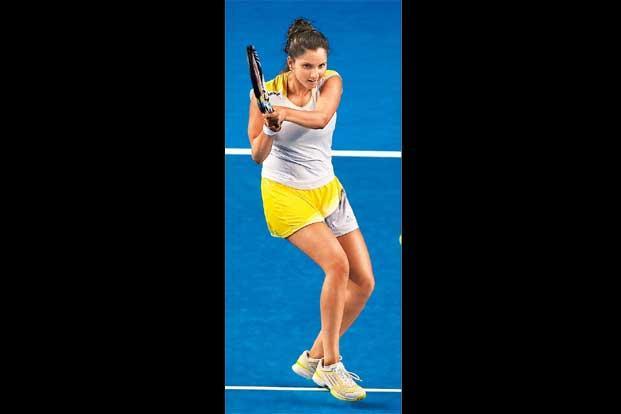
This week’s hero was Sania Mirza for me and Babyjaan (though she doesn’t yet know it). Mirza told reporters that one of the earliest obstacles she faced on her journey to become an international tennis champ was colour prejudice. So many people advised Mirza’s parents not to enrol her in tennis classes because she would __ (that three-letter word most feared and dreaded among parents of girls in India. Ans: Tan). This in turn would affect Mirza’s marriage prospects, never mind that she was then only a couple of years older than Babyjaan.
The international media obliged by retelling stories about India’s disgusting skin colour hang-ups; the national media buried the news on the sports page (even sports fans don’t read the sports pages these days, they are too busy watching Wimbledon and the World Cup). A woman talking about prejudice is hardly newsworthy here, right?
But don’t mind that you didn’t make it to page 1 Sania Mirza. Keep sharing and thank you so much. I think it’s time to introduce Babyjaan and her friend to your growing-up battles.
source: http://www.livemint.com / Live Mint & The Wall Street Journal / Home> Leisure> First Cut / by Priya Ramani / Saturday – July 05th, 2014
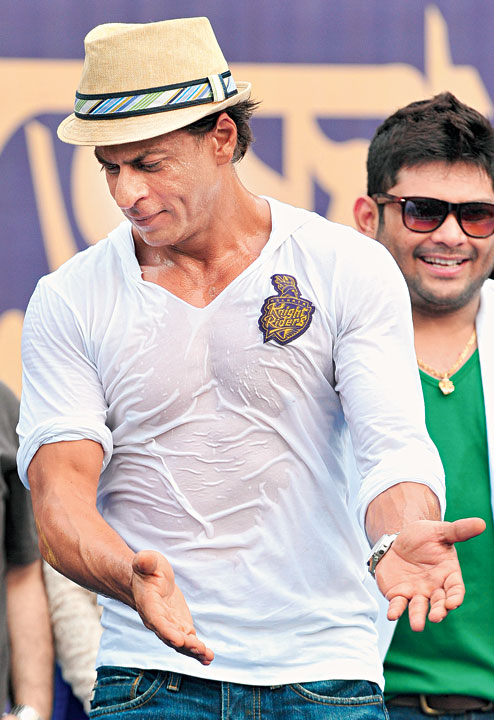
Shah Rukh Khan, his KKR shirt dripping with sweat on a sultry Tuesday afternoon, dances on stage during the IPL victory celebration at the Eden Gardens. / Picture by Anindya Shankar Ray
Der aaye durust aaye (Better late than never)
So said Shah Rukh Khan a week ago after keeping his fans waiting for four IPL matches this season to make an appearance at the Kolkata Knight Riders’ home ground.
On Tuesday, he kept a 50,000-strong crowd at the Eden Gardens waiting for two extra hours before turning up at 4.04pm to rock the house with a 60-minute blitz that overshadowed everything that had taken place before.
The SRK…KR show saw King Khan dance, cheer, climb and woo the packed Eden like only he can. Metro gives a ringside view of Shah Rukh’s IPL victory celebration.
The felicitation
“Aaj Kolkata ko entertain karna hai (I have to entertain Calcutta today),” SRK declared on arrival.
Mamata Banerjee was busy managing the gifts and Manvinder Bisla was in the middle of receiving a tray of mangoes when SRK made his much-awaited appearance to deafening cheers.
“Shah Rukh has arrived and our prize distribution ceremony will now start. Our heroes and heroines from Tolly and telly-wood will be handing over the gifts,” chief minister Mamata said as SRK asked Juhi Chawla and Jay Mehta to step out from the crowd of players and stand next to him.
“But first we will cut the cake,” Mamata added.
A knife was brought as SRK asked Mamata to come close to the table along with skipper Gautam Gambhir. SRK and Mamata jointly cut the specially made Sandesh Cake, the first bite of which he had before putting a piece into Didi’s mouth.
Next came the trophy that the state government had got made — a gold-plated stand with a cricket ball on top — for SRK and his Knights. On the base of the trophy were the words: “Congratulations KKR. Mamata Banerjee.”
As Mamata handed over the prize to Shah Rukh, he bent down to touch her feet. He then held her hand as she patted his head. All the players received a small trophy each along with a casket.
The victory lap
At 4.15pm, Shah Rukh tied the uttariya around his waist and put on his hat. “Jara maathey aachen, aapnara boshey porun. (Those on the field, please sit down),” Mamata exhorted, as if on cue.
“Police-er theke kintu aami bhalo bhir shamlate paari (I can control the crowd better than the police),” added the chief minister in jest.
King Khan gestured to Robin Uthappa to lead the walk with the trophy in hand and joined in alongside Juhi and husband Jay. The victory lap started from the clubhouse at 4.20pm and moved clockwise from Block L to B and so on. Click-click went the cameras, accompanied by deafening cheers and Korbo, Lorbo, Jeetbo Re in the background.
The trademark SRK wave, clap, bow and climb atop the police post were the five primary elements of the lap that were generously distributed among all 12 blocks at Eden.
As he walked past blocks L and K, Shah Rukh stopped, lifted his hands and bent down to touch his knees in a show of gratitude. The crowd screamed. A few steps ahead near Block J, he spotted a police watchtower. SRK paused, loosened his T-shirt dripping with sweat and climbed the flight of iron steps to reach the top. A shower of coloured confetti followed.
As SRK waved from atop the 15-foot post, Mamata asked the police commissioner: “Majboot achhe toh (Is it strong enough)?”
The stage show
King Khan took the stage at 4.38 pm, his six-pack peeping through the drenched white T-shirt, to shake a leg to 1,2,3,4… Get on the Dance Floor with actress June.
Mamata asked the crowd to settle down for the KKR team owner to say a few words. Shah Rukh pulled Juhi, seated on the right side of the stage, to the forefront before he began his speech.
“Sar jhukake saare team ke taraf se main aapka dhanyawaad karta hoon, thank you (Head bowed, I thank you on behalf of the entire team),” said SRK, bowing to the crowd. “Humko aapki taaliyan bhi pasand hain humko aapki gaaliyan bhi pasand hain (We love your bouquets as well as your brickbats).”
The ultimate tribute came next. “I don’t think any other state in any other country in the world has this kind of support for its sporting heroes.”
Later, as the national anthem was played, SRK sang along, eyes shut. A selfie with June and a picture with singer Soumitra Roy later, he was off the stage.
“Thank you very much for your support and kindness,” SRK told police commissioner Surajit Kar Purkayastha as he was leaving. “Hope to see you again soon,” the police chief replied.
source: http://www.telegraphindia.com / The Telegraph, Calcutta-India / Front Page> Calcutta> Story / by Sushovan Sircar, Kinsuk Basu and Zeeshan Ahmed / Wednesday – June 04th, 2014