Category Archives: Arts, Culture & Entertainment

Book Review | The Last King In India

Twenty decadent facts from the life and times of India’s last ‘nawab’
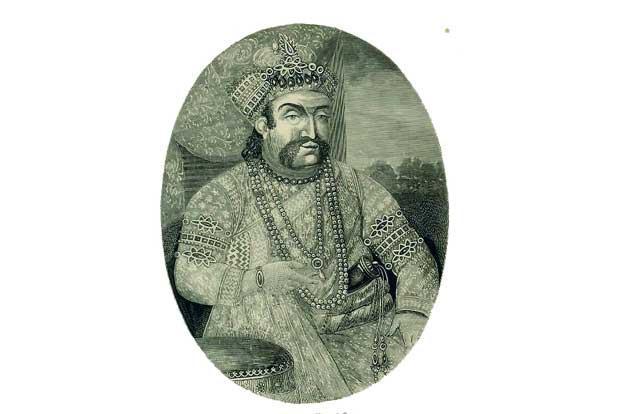
A portrait of Wajid Ali Shah. Photo: Wikimedia Commons.

The poet-ruler Wajid Ali Shah (1822-87) was the last nawab of the north Indian state of Oudh. Deposed by the British, he spent the last 30 years of his life in a riverside mansion near Calcutta (now Kolkata), where he languished in a mock-kingdom with 6,000 subjects. It was a make-believe world. Many of the exiled king’s high-ranking officials held on to their old titles. To the extent that it was possible, Wajid Ali Shah, whose actual reign lasted only nine years, continued the customs of the court.

In The Last King In India: Wajid Ali Shah, British historian Rosie Llewellyn-Jones resurrects the nawab with all his tasteful eccentricities. “Holed up in his new palaces, dreaming of love, music and drama,” Llewellyn-Jones writes, “his lack of enterprise only increased the distance between the bubble-like atmosphere of the Court and the reality of peasant life outside the city.”

Days after finishing the book, I mostly remember the following aspects of its hero:

1.  Wajid Ali Shah’s famous portrait (at the Hussainabad Picture Gallery in Lucknow) shows him as a well-fed man wearing a lavishly embroidered tunic. His sash has four rows of large pearls. His left breast and nipple are artistically exposed between the gold borders of his dress.

2.  He married (approximately) 375 women.

3.  At 15, he was married, for the first time, to Khas Mahal, the granddaughter of an Anglo-Indian woman called Sally Begam. Like her husband, Khas Mahal was a poet.

4.  He had three kinds of wives—the mahals, who gave birth to his children and were veiled; the begams, who did not give birth and went unveiled; and the khilawatis, who performed menial household jobs.
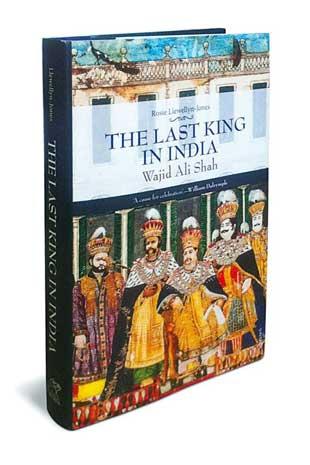
The Last King in India—Wajid Ali Shah: Random House, 314 pages, Rs 599

5.  His autobiography was dreamily titled Pari Khana (House Of Fairies).

6.  His poetic pen name was Akhtar, meaning “star” in Persian.

7.  At 22, he wrote the play Radha Kanhaiya Ka Qissa—a rare instance of a would-be Muslim king creatively engaging with Hinduism.

8.  He had a soft corner for dark-skinned women. One of his brides, Yasmin Mahal, “is clearly of African origin with her short curly hair and un-Indian features”.

9.  His personal bodyguards consisted of female African soldiers dressed in red jackets and tight-fitting, rose-coloured silk trousers.

10.  His mother Janab-i Aliyyah, who died during a visit to Europe, lies buried in Père Lachaise, the largest cemetery in Paris, which is also the resting ground of musician Jim Morrison and author Oscar Wilde.

11.  He ascended the throne in 1847; by then he was fairly notorious. Two years earlier, John Shakespear, an East India Company bureaucrat (he was recently described as the great-great-great- great grandfather of British Prime Minister David Cameron), complained to the governor general that “The Heir Apparent’s character holds out no promise of good. By all accounts his temper is capricious and fickle, his days and nights are passed in the female apartments and he appears to have resigned himself to debauchery, dissipation and low pursuits”.

12.  By the time he became king, he had written two lengthy romantic narrative poems—Darya-i-Ta’ashshuq (The River Of Love) and Bahr-e ‘Ishq (The Ocean Of Affection)

13.  Wajid Ali Shah marked the beginning of his reign by building Qaisarbagh Palace—it happened to be Lucknow’s last palace. One of the structures was given the poetic name of Jalpari Darwaza, or The Mermaid Gate, which no longer exists. The palace also had a spiral staircase that led nowhere. In 1955, British architecture critic John Terry saw in the palace “the full horror of the impact of stucco and European baroque”.

14.  After being compelled to move from Lucknow to Bengal in 1856, the deposed nawab was settled by the British in Garden Reach, an area south-west of Calcutta that had opulent villas along the Hooghly river.

15. The Garden Reach estate comprised three buildings. One of them was Azud Manzil. It was the royal menagerie and had 20,000 birds, beasts, snakes and “every conceivable variety of freshwater fish that can live in a hot climate”. The pigeons, of every variety and colour, numbered 18,000 . There was also a collection of cobras. One morning in 1879, a tigress escaped, severely wounding a German man and an Indian lance corporal (it also killed two cows before being shot dead by the Howrah magistrate).

16.  The nawab’s evenings during his years in exile were chiefly spent in the company of musicians and dancing girls.

17.  In his later life, he was carried all over on a sedan chair. He is said to have been afflicted with an anal fistula that forced him to spend many agonizing hours in the toilet.

18.  On his death, the nawab’s survivors—his wives, children and their servers—numbered about a thousand.

19.  At his funeral procession, a military band played Dead March from Saul, the oratorio by German composer George Frederic Handel that was also performed in the funerals of US president Abraham Lincoln and British prime minister Winston Churchill.

20.  Throughout his life, Wajid Ali Shah remained a teetotaller.

source: http://www.livemint.com / Live Mint & The Wall Street Journal / Home> Lounge> Business of Life> Indulge – Leisure / Book Review / by Mayank Austen Soofi / Saturday – July 19th, 2014
Marking Time

SyedanwarMPOs19jul2014

Grey clouds hover over Russell Square. They growl menacingly and then spit out fat raindrops. I take cover at the newspaper stall next to Luna Sweets.

A group of men sit on wooden benches outside a chai shop, sipping hot tea. They complain that Shivajinagar is definitely dirtier and more crowded than before. Prasad, the news stall owner tells me that it affects business.”  It was not like this in earlier times” recollects a grey haired Syed Anwar.

“The Shivajinagar Bus Terminus used to be a football field called the Chota Maidan in the late 40’s.  At the corner of the Square opposite St.Mary’s Basilica was a petrol bunk and in the middle was a large public toilet and well.” They begin to swap stories and I am included in the reminiscences.

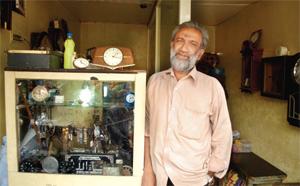
“When my father moved his business here in 1957, military officers and Europeans from the Cantonment came to get watches fixed.” says a bespectacled Syed Mahmood. I peek into his shop; the Paris Watch Company.

It is filled with timepieces; grandfather clocks hang on the wall and squat little brass vintage alarm clocks tick merrily inside a tiny work cabin. “Our earlier shop, the Pearl Watch Company (present Mota Chambers) was on Brigade Road. Business was good there.” The shop shifted to Shivajinagar in 1957.

“My family was originally from Chikmagalur where my grandfather had a circus. He was good with animals but it ran at a loss so he shifted to fixing watches.” My eyes widen. I have unexpectedly come across astory on this rainy evening in Bangalore.Perhaps the city speaks only when we stop to listen.

Syed Mahmood’s father, Syed Jaffer,was a respected horologist, well known amongst vintage watch collectors in the city.  “One day in the late 70’s, Dr. Ajaz Ahmad, a Unani specialist from Mysore called him about a very important job.

Watchmakers across the country and beyond had failed at it since the three missing parts were irreplaceable. My father manufactured the parts,re-assembled the clock in 30 days and took it to Delhi where he presented the working Mantel Clock to its owner, the Prime Minister, Mrs. Indira Gandhi. He charged only `3000 for the job” says Syed Mahmood “but Mrs.Gandhi gave him `10,000.”

Syed Jaffer refused to teach his son the craft through books. “I learnt how to repair and assemble watches standing beside him all day.” His eyes grow moist. “He was a very fine man.”

Syed Jaffer was returning from weekly prayers at a mosque in Kumbarpet when he was unknowingly caught in police firing on MG Road in December 1986, duringa protest over a fictional story in a local newspaper. The stray bullet damaged his voice and his vocation. His shaking hands never fixed a watch again till his demise two years later.

The shop fills with sadness. Syed Mahmood wipes his eyes.
The clouds pass and the stories end. The men discuss world events. Paris Watch Company goes back to work. Syed Mahmood hunches over a dial and scrutinises it carefully.He fixes all kinds of clocks and watches including new ones, but the vintage French mantel clocks are a personal favourite. “Like the English clocks, they are almost impossible to replicate.”

Customers arrive to pick up their resurrected Omega or Rolex watches. They tell me that his skill and dedication too, are equally irreplaceable.The shop’s reputation remains unaltered by time.

The writer is a cultural documentarian and blogs at aturquoisecloud.wordpress.com
source: http://www.bangaloremirror.com / Bangalore Mirror / Home> Columns> Others / by Bangalore Mirror Bureau /July 14th, 2014

Tipu armoury will not be affected

Mysore :

Railway Minister Sadananda Gowda, yesterday, said that his Ministry has worked out a plan to lay a second track in the Mysore-Bangalore sector without disturbing the 225-year-old Tipu armoury near Srirangapatna Station.

Refusing to disclose details of the plan, he said that Railway Engineers had chalked out a plan and the track-doubling work would be completed by March, 2015 and maintained “If I disclose the plans now, there will be unnecessary hurdles as this is a sensitive issue and there is no dearth of people who want to rake up controversies.”

The work had hit a road block as the track was expected to pass through Tipu’s armoury. A proposal to relocate the armoury was met with opposition which resulted in the delay, he added.

Funds

Speaking about the funds for other projects in the State, the Railway Minister said that Rs.1,543 crore had been allotted for works that are underway in Karnataka and declared that there was no question of shelving any project initiated by his predecessorMallikarjuna Kharge.

source: http://www.starofmysore.com / Star of Mysore / Home> General News  / July 14th, 2014

Tomb tribute to Begum Akhtar

– no hitch in grave renovation despite faizabad clashes

BegumLucknow19Jul2014

Lucknow :

Call it the power of music. Death has struck twice in this spiral of violence but hasn’t been able to cast its shadow on a tomb being “rescued”.

Admirers of Begum Akhtar are gearing to rediscover her legacy by restoring her grave in Lucknow at a time Faizabad, where the ghazal singer was born nearly a hundred years ago, is simmering under curfew even three days after riots left two persons dead and hundreds injured.

The violence broke out last week following a clash over an immersion procession.

Inspector-general (Lucknow range) Subhas Chandra said jawans were marching through the streets of Faizabad to restore law and order in the Uttar Pradesh town barely 10km from Ayodhya, the flashpoint of the 1992 Babri riots.

No such tinderbox emotions raged in Lucknow, 125km away, where followers of the ghazal and thumri singer prepared to mark her 38th death anniversary with a series of events starting tomorrow.

The events will culminate next month with her grave being rededicated to the city, where the “queen of melodies” came to live later in life.

BegumAkhtarLUCKNOW19jul2014

The grave is located in a squalid, congested area in old Lucknow where shanties have sprung up. “The singer’s grave needs to be rescued from obscurity and squalor and put on the historical map of Lucknow,” said Salim Kidwai, a Lucknow-based writer who is working on a book on Akhtar.

“Begum Akhtar’s ghazals are suddenly being played by her admirers everywhere,” said a member of Lucknow’s former royal family.

Work on renovating the grave began two months back when artisans from Agra applied their expertise to restore its Pietra dura design — an Italian technique through which semi-precious stones are embedded in monuments. The resetting is complete and a green ring has been constructed around the grave.

Delhi-based architect Ashish Thapar, who volunteered for the project, has been supervising the renovation.

“The Government of India’s culture department has released a grant for the project,” said Madhvi Kukreja, director of Sanatkada, an NGO in Lucknow, which is working on the renovation. “We have approached the state government for funds for maintenance.”

Begum Akhtari Faizabadi, later renamed Begum Akhtar, was born in 1914 in Baradarwaja in Faizabad. Trained under Ustad Imdad Khan, a sarengi exponent in Calcutta, and later by classical singers like Abdul Wahid Khan in Lahore, she first performed at the age of 15.

In 1945, already famous as a singer of national repute, she married a Lucknow-based barrister, Ishtiak Ahmed Abbasi.

She received the Sangeet Natak Akademi Award and was awarded the Padma Shri and the Padma Bhushan (posthumously) by the Indian government and also bestowed the title “Mallika-e-Ghazal” (queen of melodies). She died on October 30, 1974.

3rdBegumAkhtarLUCKNOW19jul2014

“It is my good fortune that I am involved in strengthening the legacy of my dear Ammi, who is still my guru,” said Shanti Hiranand, a septuagenarian ghazal singer who not only learnt singing from Begum Akhtar but also wrote a book on her, Story of my Ammi”.

Hiranand, herself a Padma awardee, would lead a concert on November 7, after which the new-look mazar would be opened to the public. A documentary, Hai Akhtari, by art critic S. Kalidas, will also be shown that day.

In Lucknow, a number of workshops have been organised in Begum Akhtar’s memory in various parts of the city.

Some 125km away, people in Faizabad were still seething in anger over the destruction of dozens of shops and vehicles in the violence that broke out on October 26.

Police officer Subhas Chandra said the administration had taken measures to check the movement of criminal elements.

source: http://www.telegraphindia.com / The Telegraph, Calcutta / Front Page> Nation> Story / by Tapas Chakraborty / Lucknow, Tuesday – October 30th, 2012

Nuzvid veena maker bags best artisan award

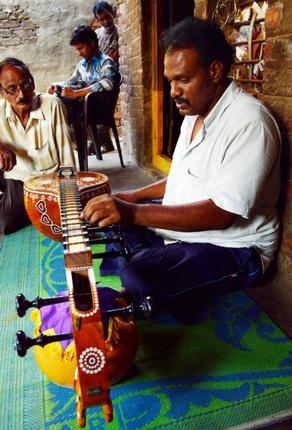
Nuzvid Veena maker Sheik Mabu Saheb training youths at his residence in Nuzvid in Krishna district. Photo: T. Appala Naidu / The Hindu

Sheik Mabu Saheb, a renowned Nuzvid veena maker of Krishna district, has received the Best Artisan Award-2013 from the Andhra Pradesh Handicrafts Development Corporation Limited for his work – Veena with peacock design.

He bagged the award in the category of Veena Making in which artisans from Bobbili were also in the competition. Mr. Saheb had stolen the hearts of the jury members with his small size veena that produces vibrations and sound like any other professional-size veena. “The award is recognition to the art rather than an individual artiste. Despite having a great demand for veena from the world of Indian classical music, shortage of veena makers is still creating problems for the industry’s growth,” Mr. Saheb told The Hindu.

Nuzvid Veena maker Sheik Mabu Saheb training youths at his residence in Nuzvid in Krishna district. Photo: T. Appala Naidu / The Hindu

Handicrafts Department Assistant Director K.N. Murali Krishna said plans were afoot to use the services of Mr. Saheb in training youth in veena making and designing. In a guru-shishya parampara, Mr. Saheb learnt that art from his father Sheik Meera Saheb, one of the first generation veena makers alive. According to Mr. Mabu Saheb, there were only nine veena makers engaged in the profession, spreading the art.

source: http://www.thehindu.com / The Hindu / Home> News> Cities> Vijayawada / by T. Appala Naida / Nuzvid – July 10th, 2014

Shabana Azmi launches website to honour father

Shabana Azmi. Photo: DC File photo.

Mumbai:

Veteran actress Shabana Azmi haslaunched a website dedicated to her poet father Kaifi Azmi. The audio-visual website hosts videos, poems, songs and gives an insight into the life of the late poet.

“Please check out official updated website of Kaifi Azmi,” Shabana posted on Twitter along with the link. Entitled as ‘Kaifi Azmi : A Rebellious Poet’, the website is divided into five sections — the legend, collection, tributes, Mijwan and press.

The legend section talks about the poet’s early life, achievements, his contribution to films and connection with Hyderabad.

The collection segment has the audio and video of all the famous ghazals, nazms and poems of him. ‘Mijwan’ throws light on Kaifi’s contribution to the tiny village in Azamgarh. It also shares many rare pictures of Shabana and her father.

source: http://www.deccanchronicle.com / Deccan Chronicle / Home> Entertainment> Bollywood / PTI / July 16th, 2014

Urdu writer Sulekha Hussain dead

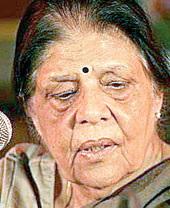
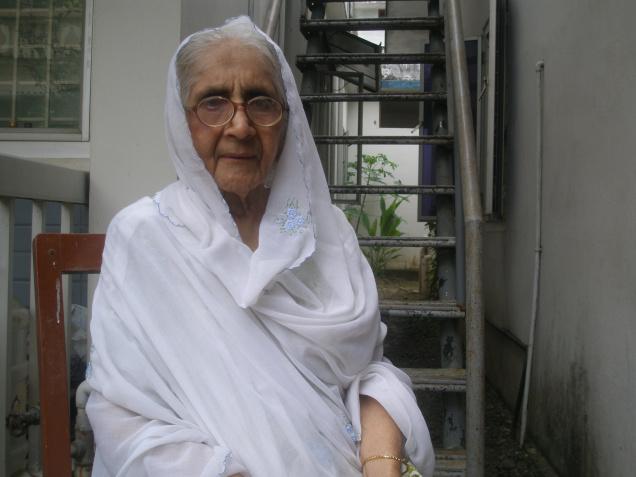
Urdu novelist Sulekha Hussain

South Indian Urdu novelist Sulekha Hussain passed away at her residence at Vaduthala, near here, on Tuesday. She was 85. She is survived by a daughter.

Born in an affluent Katchi Memon family at Mattancherry in 1930, she lost her parents at a very young age and was brought up by her grandfather, Jani Sait, an Urdu poet. She did her primary education at the Mattancherry Asia Bahi madrasa and studied Urdu and Arabic.

It was with her husband’s patronage that she began writing. Sulekha penned 27 novels and many short stories, all in Urdu. Some of her novels, Rah AkeliDishvar Huva JeenaEk Khyab Hakhikhath, andMarla he Kali were widely read in several North Indian cities such as Lucknow, Allahabad, New Delhi and Pakistan. Her most famous novel, Tharikhion Ke Baad, was translated into Malayalam by K. Ravi Varma in the 1980s.

Considering her contributions to Urdu literature, she was nominated to the committee awarding fellowships in Urdu language by the Union Cultural Affairs Ministry in 2012. Her son, Faraqu, passed away in 2010.

source: http://www.thehindu.com / The Hindu / Home> News> Cities> Thiruvananthapuram / by Staff Reporter / Kochi – July 16th, 2014

Workshop on Architectural Solutions

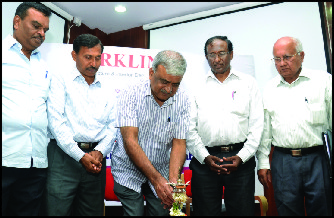
SJCE Principal Dr. Shakeeb-Ur-Rehman is seen inaugurating the workshop at SJCE premises this morning as architects M.P. Nagaraju, Chandrashekar, Shashi Kumar look on.

Mysore :

Arklines Architecture and Interior Design Studio, Kuvempunagar, in association with Sri Jayachamarajendra College of Engineering (SJCE) had organised a day-long workshop on architectural solutions for eco-habitat system at SJCE premises here today.

The workshop was attended by over 100 architects, designers and students.

Inaugurating the workshop, SJCE Principal Dr. Shakeeb-Ur-Rehman said that a serious thought should be given to check environmental pollution. He suggested to make use of the solar and wind power to its best, to tide over energy crisis. He added that the common man should be made aware of environmental protection and energy conservation. Arklines President and Architect S. Shashi Kumar, Architect Chandrashekar and others were present.

source: http://www.starofmysore.com / Star of Mysore / Home> Sports General News  / July 10th, 2014

Two city boys for Homeless World Cup!

Simarpreet Singh and Tariq Ahmed from Hyderabad who have been selected to represent India in the World Cup football for Homeless to be played in Chile this October. PHOTO: V. V. Subrahmanyam / The Hindu

Soccer fever is reaching a climax in Brazil. But for two young footballers, Tariq and Simarpreet Singh from the city, it might just be the beginning of a journey to recognition. The two boys have been selected to represent India in the Homeless World Cup (for those who come from slums) in Chile in October.

“A World Cup is a World Cup. We are on cloud nine,” the delighted duo exclaimed. They are products of ‘Sports Coaching Foundation’ football camp where Hyderabad Sporting Club chief coach Mohd Saleh trains.

“This is a dream come true and we will try our best to make an impact in this event,” say the soccer duo. Nineteen-year-old Tariq is an engineering graduate from Hussaini Alam and Simarpreet is a commerce graduate from Zaranagar locality of Mehdipatnam. “This is nowhere near the real World Cup soccer but this is a sport that is played with great passion,” the duo says.

“These boys would not have made it to Chile but for the initiative of Kaarmic Education Services’ Dantu Kartik and Adithya Sanjay of Awakening Foundation who spotted talent and started grooming them. I am glad that Tariq and Simarpreet are from the SCF where they have been training under lights,” says a proud K. Sai Baba, general secretary of SCF.

SCF felicitated the duo.

source: http://www.thehindu.com / The Hindu / Home> News> Cities> Hyderabad / by V. V. Subrahmanyam / Hyderabad – July 12th, 2014

Seven, Including Five-yr-old,Selected for Bravery Awards

Abhaykrishnan, Akhil Biju, Girikrishna, Muneer Mohammed, Shalef Shaji, Subin Mathew and Yadukrishnan

Thiruvananthapuram :

Seven boys, including a five-year-old who rescued his younger sister from drowning and a sixth standard student whose presence of mind saved the life of his ten-month-old brother, have been selected for the bravery awards instituted by the Kerala State Council for Child Welfare for the year 2013.

The winners are Muneer Mohammed, 14, of Manippuzha, Kottayam; Shalef Shaji, 9, of Panambukad, Ernakulam; Akhil Biju, 9, Subin Mathew, 10, and Yadukrishnan V S, 13 of Erumeli, Kottayam; Girikrishna, 5, of Kumarakom, Kottayam; and Abhaykrishnan, 11, of Kowdiar in Thiruvananthapuram. Social Justice Minister M K Muneer announced the winners here on Thursday.

Muneer Mohammed won the award for saving the life of Immanuel aka Appu, 72, who was grievously injured in a road accident on the Sabarimala route. When motorists ignored the accident victim, Muneer had run to the middle of the road, waved down a vehicle and rushed Immanuel to hospital. This tenth standard student of St Thomas High School, Erumeli, is the son of Mohammed and Aseena of Venkurinji Keecheri Purayidom, Manippuzha.

Shalef Shaji, a fourth standard student, was selected for the award for saving the life of Alna, the four-year-old daughter of Antony, Panambukad Veliyil, who fell into the backwater while playing with her friends. Shalef had jumped in and holding on to the ropes of a stake net, swum up to Alna and rescued her.

Abhaykrishnan, Akhil Biju, Girikrishna, Muneer Mohammed, Shalef Shaji, Subin Mathew and Yadukrishnan

Shalef is a student of the St Joseph’s LP School, Panambukad.

Akhil Biju, Subin Mathew and Yadukrishnan V S saved Kalimuthu, 39, who got trapped in an eddy while bathing in the river.  Ten-year-old Akhil jumped in first, but he couldn’t get a hold on Kalimuthu. Yadu dived in next and they managed to reach the drowning man. Subin threw them a towel, and grabbing it, the boys managed a miraculous rescue. All three are sons of daily-wage labourers.

Akhil is the son of Biju and Lekha of Kannimala Puthuvelil and is a sixth standard student of St James UP School, Kannimala, Erumeli. Subin, who is his schoolmate, is the son of Mathew and Sheeba of Kattupurachakal House, Kannimala.  Yadukrishnan is the younger son of Sasidharan Nair and Sajini of Vattaparmbil House, and is a ninth standard student of St Joseph’s High School, Kannimala. He is also a recipient of the President’s award for bravery in 2013.

Girikrishna, aged 5, won the award for saving his four-year-old sister Gowri from drowning in a canal near their home. Although he could not swim, he jumped in and dragged young Gowri to the bank. Girikrishna is the son of Satheesh and Babitha of Peedikachira, Kumarakom. He is a first standard student of SKM Public School.

Abhaykrishnan of Kowdiar, Thiruvananthapuram, won the award for saving the life of his ten-month-old brother Adidev.

A huge tree had fallen on to their home in the heavy rain, and their mother, seeing the roof crashing down, tried to shield them with her body. But she collapsed, hit on the head by falling tiles and wood. Abhaykrishnan frantically dragged Adidev and sought cover under a cot.

All three were dragged out of the debris by the neighbours. Abhaykrishnan is the son of Sreenivasan, who is personal assistant to the Chief Secretary, and Sunanda. The award carries Rs 10,000 in cash, a plaque and certificate.

source: http://www.newindianexpress.com / The New Indian Express / Home> Cities> Thiruvananthapuram / by Express News Service / July 11th, 2014