Category Archives: Arts, Culture & Entertainment

UK Remarkable Lives Stamps Includes Muslim Woman

by   Farrukh  I. Younus  ,  Freelance Writer – United Kingdom

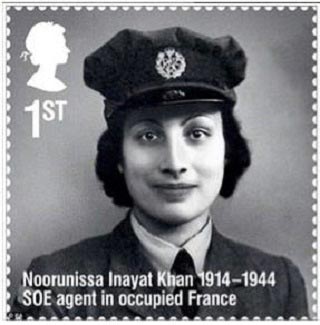
 In line with commemorating the centenary year for the start of World War I, the UK’s Royal Mail has announced the release of ten stamps, each of which recognizes the accomplishments of seven men and three women born in 1914.

The ‘Remarkable Lives’ stamp series includes Dylan Thomas, the famous Welsh poet, Roy Plomley, the BBC radio broadcaster who created Desert Island Discs, and Barbara Ward, an economist who urged governments to share their wealth with the poor.
NoorInayatMPOs23may2014

An Obscure Muslim Heroine

Also in this new set of stamps is a lesser-known personality: Noor Inayat Khan. Khan is the only Muslim included in the list. She was born in Moscow to an American mother and an Indian father.

A descendant of Indian royalty, her family fist moved to England and then to Paris. They returned to London when the city was occupied in 1940. Here she joined the Women’s Auxiliary Air Force and was then recruited in 1942 to the Special Operations Executive (SOE), an elite spy squad.

Initially known as Nora Baker Khan, Noor was given the code name Madeleine and in 1943, she was the first female radio operator to be flown secretly into Nazi-occupied Paris; this despite an SOE report stating she was “unsuited to work in her field.”From Paris, she transmitted numerous messages back to London saving many lives. For a period of time, she was the only link between the UK and the French Resistance.

Aged just 30, Khan managed to evade capture for three months but was eventually betrayed by French collaborators and arrested. She tried to escape twice while in Paris and, being considered too difficult, was eventually moved to Germany.

Despite being tortured, Khan revealed nothing of her mission or even of her real name. She was eventually executed in 1944 by the German Gestapo in the Dachau concentration camp. Before her execution by a shot in the back of her head, her last word was, “Liberté!”Britain awarded Khan the George Cross and France awarded her the Croix de Guerre.

Commemorating Noor Inayat Khan

Author Shrabani Basu wrote a book about Khan entitled, “Spy Princess: The Life of Noor Inayat Khan”. Basu campaigned for a memorial in honor of Khan’s efforts, unveiled by Princess Anne in London’s Gordon Square Gardens in November 2012.

It is said that Khan’s decision to be involved in the war efforts was not specifically due to a love of Britain (though this was a part of it). Her involvement was largely on account of the values of religious tolerance and non-violence that she was taught as a child by her father who was a musician and a Sufi teacher. As her biographer Basu said, she “couldn’t bear to see an occupied country.”

The National Archives reveal that Khan had studied both medicine and music. She was also an accomplished writer with a collection of traditional Indian children’s stories published in the French newspaper, Le Figaro.

Unity Productions Foundation has produced a documentary on the life of Khan. The world premiere of the documentary, “Enemy of the Reich”, was held on February 15, 2014 at the prestigious Warner Theater in Washington DC. It was attended by a full house of more than 1400 people.

Khan’s example demonstrates how an individual, particularly an empowered Muslim woman, can support her country. At a time when Muslim women in general suffer the image of being weak and uninvolved in society, Khan demonstrates that a person can be at ease with their faith, gender, heritage and culture without questioning their identity.

I recently returned from a World War I and II memorial tour in Belgium where I visited the resting places of soldiers. The one that stood out most to me was the Ploeg steert Memorial to the Missing. We owe a great debt of gratitude to the men and women who fought for the freedoms that we enjoy today.

Each of the ten people featured in the Royal Mail ‘Remarkable Lives’ stamp set contributed in their own way to the benefit of society. As a British-born Muslim of Pakistani heritage, I am encouraged to find a British-Indian Muslim woman recognized in our stamps and to know that all who contribute to our betterment will be recognized, irrespective of faith or gender.

source: http://www.onislam.net / On Islam / Home> Culture / Sunday – March 30th, 2014

Abbas returns to Sandalwood

AbbasMPOs23may2014

South actor Abbas, who was last seen in Appu Pappu in 2010, is returning to Sandalwood with Savaari 2. Ask him what took him so long to do a Kannada film and Abbas, who started his modelling career in Bangalore, says, “It’s not a comeback film. I have never left the industry. I do films as and when I like a script.”

Savaari 2, which is a sequel to Jacob Varghese’s directorial debut Savaari, stars Srinagara Kitty, Sruthi Hariharan, Karan Rao and Girish Karnad, among others. In the movie, Abbas plays the role of a person who has got everything, but is in search of deeper meaning in life.
“It’s an interesting role. I have completed about 80% of shoot,” Abbas says. Apart from Savaari 2, Abbas is currently working in the English-Tamil bilingual Ramanujan and in a Telugu flick called Chori.

source: http://www.timesofindia.indiatimes.com / The Times of India / Home> Entertainment> Kannada> Movies / by Maitreyee Boruah, TNN / April 09th, 2014

Riding into the sunset

This executive director unwinds on horseback, and admits to being emotionally connected to his horse

Faiz Rezwan (34) Executive Director, Procurement and Contracts, Prestige Group

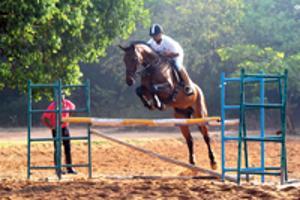
As a 14-year-old child, Faiz Rezwan would watch his father and uncle ride their house — Matador, around their Hennur farm. Sometimes, his indulgent father would hoist him up too. That boyhood experience has translated into him owning two horses–Dragon Lady, a warm blood German mare bred for jumping, and Mr Bean, a thoroughbred ex-race horse that Rezwan has given to the Embassy Riding School to help children learn how to ride.

Despite a back problem, nothing stops Rezwan from riding at 5.30 am, at least five times a week. “I have to ride no matter what,” he says. “It’s important to stay in touch with the horse every day.” His beloved pets also get five-star treatment — a few years ago, at the stable at Equestrian Centre for Excellence, he flew down a saddlemaker from France, and around a year and a half ago, a vet was flown down from Germany to work on the acupressure points of the horses. Dragon-Lady is also given regular supplements for her joints, and her horse-shoes are changed every two weeks.

A rather expensive hobby, this. But his “investments” have also paid dividends. Five years ago, Rezwan, who also handles award-winning golf development Prestige Golfshire, got into show jumping. He even competes in the Equestrian Premier League at Embassy International Riding School every year, and took part in the Delhi Horse Show two years ago. “My passion is show jumping,” he says, hoping to make it to the Asian Games some day and even shows in Europe.

Being with Dragon-Lady keeps Rezwan fit and “is a stress buster,” he says. The animal-lover also owns a cat, two dogs, half a dozen birds, and fresh water and marine fish at home. But “Dragon-Lady is my star,” he says. “I’d never want to sell her and get another horse. Starting my day with her sets me up for the day,” he says, admitting to being emotionally connected to her. Rezwan recently bought another horse from Ireland, a Belgian-born warmblood called Valentino.

“If there was no work, I’d be riding all day,” he says. The dream life.

source: http://www.bangaloremirror.com / Bangalore Mirror / Home> Columns> Work /  by Khushali P. Madhwani, Bangalore Mirror Bureau / May 19th, 2014

MELANGE : A mouthful of goodness

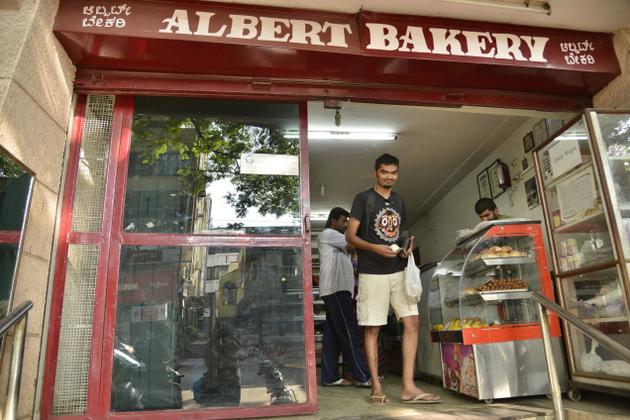
Tradition rules at Albert Bakery./  Photo Murali Kumar K. / The Hindu
Tradition rules at Albert Bakery./ Photo Murali Kumar K. / The Hindu

Come one, come all to Albert Bakery and indulge in an array of nostalgic slices of confectionaries that are a rich part of Bangalore’s culinary heritage

Nestled in the heart of Frazer Town on the famous Mosque Road is a slice of the city’s history so unassumingly located that you would miss it entirely if you were walking or driving fast enough. And yet, Albert Bakery is one spot you would always want to stop by and taste their array of confectionaries. Bangalore is famous not only for its music and climate but also, over the years, for its food and Albert Bakery has been a major player in the city foodscape forever. The 112-year-old bakery is easily the city’s oldest and has been upholding a gastronomical tradition over the decades.

A thriving hotspot, the bakery is open only from 3 p.m. to 9 p.m. and is sometimes so packed that there are traffic snarls on Mosque Road.

And for those who frequent the street during the festive season of Ramzan, if you haven’t stopped at Albert Bakery to grab a bite of their goodies, then everyone will tell you that you haven’t lived life to the fullest.

Mohammad Sabir Faizan, the son of the proprietor Nawab Jan, says they strive to uphold the traditional baking practises. “We have always opened from 3 to 9 p.m. because we make the confectionaries fresh in the morning. Other bakeries may belong to a chain of supplies so they add preservatives and improvers which we never do. We make batches that are sufficient for each day.”

Established in 1902 by Sabir’s great grandfather Mohammad Yacoob, the bakery was initially a godown in Sangam lane off Kamaraj Road. “We used to deliver only buns and bread. That used to be the usual catering back then. We cycled down the roads with baskets of bread and buns delivering it to people in the locality. We shifted to Mosque Road in 1921 and since then we have stayed here,” recalls Sabir.

When my grandfather Mohammad Ibrahim was around, they had bread, biscuits, rusks, tea biscuits and other regular items. “It was only after my father Nawab took over that he introduced the kova naans, coconut cherry cookies, mini cocktail samosas and other specialities.”

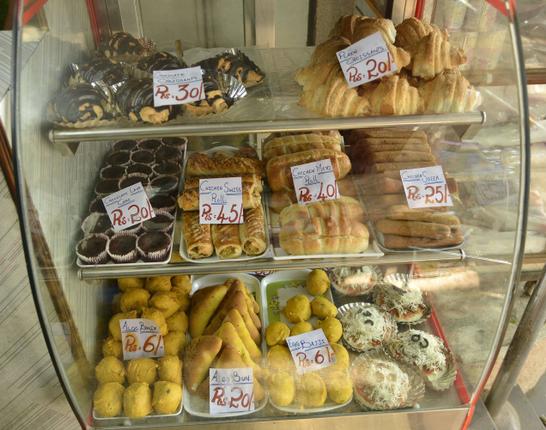
From delicious hot kova and keema naans and mini cocktail samosas to butter salt biscuits and coconut cherry cookies, Albert Bakery boasts of a variety of foodstuffs that make mouths water at the mention of the bakeries name.

The spread available at Albert Bakery / Photo Murali Kumar K. / The Hindu

On the name, Sabir says back in the early 1900s, “My great grandfather felt it would appeal to everyone if it had an English name. There is a common misconception that the shop was started by some foreigner called Albert. We had a lot of Britishers as customers so a common name like Albert would make it easy to relate to and the name stuck.”

Being the fourth generation in this line, Sabir hopes to carry this legacy forward. “We may launch an outlet elsewhere but all the production will always be here. We don’t want to expand much because of the freshness factor. We will never compromise on quality.”

A bakery like Albert in a city like Bangalore is a blessing, says Sabir. “There were no shops in this area when we started. Now there is a huge boom in development. The city has helped us come up. We also have a lot of competition so that helps us strive to be more creative and innovative. We are proud to be part of Bangalore’s rich cultural and culinary heritage.” The bakery’s other specialties are the hot cross buns on Good Friday, marzipan Easter eggs on Easter Sunday, non-alcoholic plum cakes for Christmas and brain puff for Ramzan.

They also have daily specialties like the chocolate lava cake, chicken Swiss and mayo rolls, tarts, quiches, banana and grape muffins, chocolate croissants and donuts and pizzas.

source: http://www.thehindu.com / The Hindu / Home> Features> MetroPlus> Food / by Allan Moses Rodricks / Bangalore – May 16th, 2014

KSOU: Gold medal, Cash prize winners


 Gold medallists (from left) Chalapathi Rao Kasarabada, V. Kiran Ayyar, Shaista Begum, T.R. Sunitha and A.S. Vijayabharathi are seen displaying their medals at the 14th Convocation of KSOU.
Gold medallists (from left) Chalapathi Rao Kasarabada, V. Kiran Ayyar, Shaista Begum, T.R. Sunitha and A.S. Vijayabharathi are seen displaying their medals at the 14th Convocation of KSOU.

Mysore :

The 14th convocation of KSOU saw over 40 students from all ages and from all walks of life bagging gold medals/cash prizes. The gold medal/cash prize winners include: A.S. Vijayabharathi, who bagged 3 gold medals and one cash prize in M.A. Kannada; Sudeshma Nag one gold medal and a cash prize in M.A. English; Shaista Begum A. Bijapur, 2 gold medals in M.A. Urdu; Padma Seshadri, one gold medal and a cash prize in M.A. Sanskrit; 72-year-old Chalapathi Rao Kasarabada, one cash prize in M.A. Sanskrit; K.Sowmya, 2 gold medals and 2 cash prizes in M.A. Economics and V. Kiran Ayyar, 2 gold medals in M.A. Hindi.

The Ph.D awardees are: M.N. Pushpalatha in Sanskrit, N. Srimadhavi in History, V.N. Nagashetty in Sociology, Basavaraju in Management and Vasudev Shetti in Hindi.

M.Phil degrees were awarded to 3: Muthigi Srinivas in Kannada, H.L. Ravindra in Political Science and K.C. Dhanaraja in Sociology.

Love for subject: 72-year-old Chalapathi Rao Kasarabada who bagged a cash prize in MA Sanskrit said that he had studied Sanskrit as a subject while doing his B.Sc degree, which he got in 1962. He pursed his studies in Sanskrit out of sheer love for the subject. He was delighted at getting the prize and added that he holds a Ph.D. degree from an American University.

A.S. Vijayabharathi who bagged 3 gold medals and a cash prize in Kannada said that after securing her BSc., degree in 1981, she served the postal department for 25 years before taking voluntary retirement. As she was in the habit of reading books from her early age, she developed interest in doing MA Kannada. She studied the subject without wasting time, even while looking after her family comprising her husband, a son doing his Engineering degree and a daughter pursuing her M.Tech.

K. Sowmya, who bagged 2 gold and 2 cash prizes in MA Economics said although she had hoped for a medal, felt surprised when she got 2 gold. Stating that she had bagged third rank in MBA earlier, Sowmya said she was currently serving as a guest lecturer at Adichunchanagiri college in Channarayapatna and Government first grade college at H.N Pura. She has enrolled for M.Com degree at KSOU and hoped to pass out with flying colours.

V. Kiran Ayyar, who bagged 2 gold in Hindi said he is an M.Sc holder in Physics and currently working as a lecturer at Vidyavardhaka PU College in Mysore. As he had keen interest in Hindi since his young days, he pursued MA in Hindi. He was extremely delighted over winning 2 medals.

Shaista Begum, who bagged 2 gold in MA Urdu said she is currently working as a Urdu teacher at a Government high school in Haveri. She felt very happy upon receiving the medals, she remarked and added that she was interested in pursuing Ph.D degree in the same subject.

source: http://www.starofmysore.com / Star of Mysore / Home> General News / May 11th, 2014

Whiff of an Arabian spread


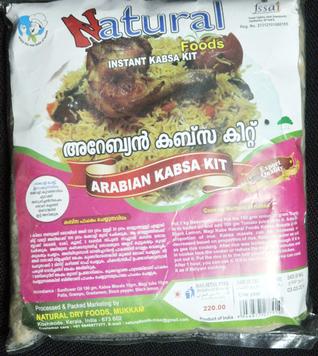
‘Instant’ kabsah kits are in much demand in Kozhikode. / The Hindu

Shawarma, Shawaya, and Khubuz came to Kerala crossing the Arabian seas several years ago. They were served in wayside eateries and fast-food outlets, initially started by the Gulf-returned cafeteria employees.

These dishes, however, did not make their way to the Malayali kitchen even in the Malabar region, where most of the households have at least one member employed in the Middle East.

Of late, a few Arabian dishes such as Mandi, Kabsah, and Majboos, which figure on the main course menu of Arabian countries have become popular in Malabar. These rice-meat combination dishes are not only cooked in the kitchens of the region, but are also served as “prestige” dishes on occasions such as weddings.

Some places like Koduvally, with a huge expatriate population, also have exclusive Mandi and Kabsah eateries. “I know many who come from the city just to eat these dishes,” says P. Abid, a native of Koduvally.

Author and sociologist Hafiz Mohammed says this is only a continuation of the culinary influence Arabia has cast on Kerala for the past 30 years. “The close socio-cultural association between the two countries has paved the way for these dishes’ smooth entry into our society,” says Dr. Mohammed. Ready-to-cook kits of these dishes, including Majboos, the regional variant of Kabsah, are available in shops and supermarkets here now. Dealers of these kits also provide cooking instructions in regional languages on their cover. “I prepare them at home quite often,” says A.K. Ali, who returned from Saudi Arabia a few years ago and is settled at Kalanthode in Kozhikode.

The dishes are much in demand for weddings and parties in the region. Local chefs, with some experience in eateries in the Gulf, have started advertising their skills here, says Mr. Ali.

Dr. Mohammed sees ‘status symbol’ in play here. “Many affluent families in Malabar serve these Arabian dishes during wedding parties for this reason,” he says.

The trend is here to stay for some time at least. “My father, who was in the Gulf for several years, prepared Kabsah at home a couple of years ago during his vacation. All of us liked it. Now I too can prepare the dish,” says Sayed Junaid, from Ayencheri near Vadakara in Kozhikode.

source: http://www.thehindu.com /  The Hindu / Home> News> Cities> Kozhikode / by Jabir Mushthari / Kozhikode – May 10th, 2014

World’s largest diamond, Mughal necklace in Geneva auction

A staff member poses with 'The Blue' diamond during an auction preview for Christie's in Geneva. (Reuters photo)
A staff member poses with ‘The Blue’ diamond during an auction preview for Christie’s in Geneva. (Reuters photo)

New Delhi :

A rare necklace, engraved with names of Mughal emperors Akbar and Jahangir goes under the hammer in Geneva tomorrow by Christie’s, which is also auctioning the world’s largest flawless blue diamond, in a sale expected to total $80 million.

Dating 17th century, the seven Mughal engraved spinel bead necklace is estimated to fetch between $1,500,00 to $2,000,000 at ‘Magnificent Jewels’ sale, auctioneers said.

Mughal emperors were known for their love of precious stones. The tradition of engraving titles and names on stones began with the Timurids, who were the ancestors of Mughals. They did their engraving on diamonds, emeralds and other outstanding quality stones with large spinel beads considered to be their favourites.

As much as these gems were a symbol of the opulence and dignity of the empire, they were also treasured as protective talismans.

The Museum of Islamic Art in Qatar exhibits an important necklace with eleven Mughal spinel beads with a total weight of 877.23 carats. Three of them engraved with names of Emperor Jahangir and one with that of Emperor Shah Jahan.

Leading the ‘Magnificent Jewels’ sale is world’s largest flawless vivid blue diamond ‘The Blue’ estimated to fetch between $21,000,000- $25,000,000.

The diamond leads the 250 lot strong sale, estimated to mop up a total in the region of $80 million, Christie’s said.

Six months earlier, Christie’s Geneva sold ‘The Orange’ the largest fancy vivid orange diamond in the world for $35.5 million, a global record for an orange diamond and a world auction record price per carat for any diamond at $2.4 million.

The sale will also feature many important coloured and colourless diamonds such as the 5.50 carat ‘The Ocean Dream’, the largest fancy vivid blue-green diamond in the world to come to auction, with an estimate of $7,500,00- $9,500,000.

‘The Rajah Diamond’ a 26.14 carat old-mine brilliant-cut diamond of is among 14 jewels that are being auctioned under ‘A Passion for Jewels: Collection of an European Gentleman’. The diamond is estimated to go for $3,000,00-5,000,000.

Another section of the sale ‘Noble Jewels’ features a natural pearl and diamond necklace estimated at $550,000-700,000 and was orginally in the personal jewellery casket of Queen Elizabeth of Prussia.

source: http://www.timesofindia.indiatimes.com / The Times of India / Home> India / PTI / May 13th, 2014

Salman Khan’s protege Zarine Khan makes her debut in Punjabi cinema with ‘Jatt James Bond’

ZarineKhanMPOs14may2014

Salman Khan’s discovery Zarine Khan is all set to make her debut in the Punjabi film industry with Jatt James Bond.

The second poster of the film is out and actress plays the role of a Punjabi girl in the film.

The actress, who made her Bollywood debut opposite Salman in Veer, will be paired with Gippy Grewal in the film.

Despite Zarine’s dream debut and a mentor like Salman, the actress did not have a very successful run in Bollywood. After Veer bombed at the box office, Salman gave Zarine another shot at fame with the item song Character Dheela in Ready. While the film did a good business, Zarine did not get enough adulation for her sexy act in the song.

The actress’ next film Housefull 2 did a decent business, but her co-stars Asin and Jacqueline Fernandez stole the limelight.

And given Salman’s penchant for spotting new talent and mentoring them, Zarine had no other option than looking for help somewhere else to keep her filmi dreams afloat.

Directed by Rohit Jugraj, the film also stars Vindu Dara Singh, Mukesh Rishi, Avtar Gill and stand-up comedian Gurpreet Guggi.

The film, produced by Fortune House Productions, will hit the screens on  April 14.

source: http://www.dnaindia.com / DNA / Home> Entertainment> Place:Mumbai, Agency: DNA Web Team / Thursday – January 02nd, 2014

The last of Delhi’s calligraphy brigade?

With the arrival of technology, calligraphic fonts are on computer keyboards now, pushing more and more the likes of Yakub to scurry harder for work. / Photo: Sangeeta Barooah Pisharoty / The Hindu

With calligraphic writing now computerised, the katibs of Old Delhi’s Urdu Bazaar, once a vibrant community, have shrunk to a mere three

More he waits for work, more he fears it shall stop coming to him. Altogether.

When 62-year-old Mohammad Yakub, a katib or traditional calligrapher in Old Delhi’s Urdu Bazaar, breaks into a near monologue on a hot May day after some prodding, the fear of losing a job that he knows best — that too at an age when he “just can’t think of doing anything else” — is pretty blatant. “I have been without work for the last two days. Who knows, you might bring me good luck,” he says with a half-smile. Two teacups with the hot brew arrive from a nearby teashop, indication enough that he is in a mood to talk now.

Yakub’s story turns out to be one of standing against the tide and not calling it quits. Not yet. Every day, at 9 in the morning, he steps out of his house in Okhla to board Bus No. 403 to bring him to Jama Masjid. A short walk from near the Mughal era masjid to Urdu Bazaar brings him to his designated seat in a shop that sells Urdu books. A shop he has been employed with for the last 28 years, a shop with blue paint peeling off at places, its lone copying machine standing at a cobwebbed corner, unused, discoloured with age. The books kept in glass showcases make you wonder which of them is older, their yellowing pages or the showcases with stains on the glasses.

“The last time I sold a book here was a month ago,” he plaits it in to the conversation to help you understand that his state of near joblessness is linked to a drastic drop in the sale of books published in Urdu these days, which in turn, is increasingly leading shopkeepers at the Bazaar to replace their bookshops with those of readymade garments and eateries.

It is also linked to where the art of calligraphy is heading. With the arrival of technology, calligraphic fonts are on computer keyboards now, pushing more and more the likes of Yakub to scurry harder for work. No wonder then, besides Yakub, Urdu Bazaar — once a vibrant hub of katibs — is now left with just three of this ilk.

Katibs Mohammad Yaqub at work in Urdu Bazaar /  Photo: Sangeeta Barooah  / Pisharoty / The Hindu
Katibs Mohammad Yaqub at work in Urdu Bazaar / Photo: Sangeeta Barooah / Pisharoty / The Hindu

Yakub can do calligraphy in Urdu, Arabic and Persian. “But what I usually end up doing now is to write in Urdu the names of various offices and departments required to make stamps since Urdu is also an official language of the Delhi Government,” states Yakub. Out of the Rs.100 that he gets per stamp, Rs. 40 goes to the shop owner. “Most times, it doesn’t pay for my day’s trip from home and back,” he points out before startling you by suddenly breaking into a Mughal-e-Azam song. Even as you recover from the shock, he asks you, “Do you think I can end up as a singer at this age?” In his ensuing laughter, the fear of the foreseeable doesn’t quite get lost. No wonder his daughter, a trained calligrapher, is joining as a teacher in a school

Taking leave of Yakub, you walk along the Bazaar. A few shops away from him sits Mohammad Ghalib, one of the last of the brigade. In his early 50s, Ghalib seems the only one among the three to be getting regular work. “I can’t say that what I am earning is sufficient but I have been able to run my kitchen with it so far. I think it is God’s grace,” he says raising his head from writing a graduation ceremony poster in Urdu for a madrasa in the Okhla area. The colourful poster will thereafter go for printing a dozen copies of it. “Look at these fonts, the unevenness of them, the colour play I do here. No computer can do this because everything in it is of certain size and shape. You can’t play with those fonts, like you can do with a handwritten calligraphic work,” he stops his work to explain the finer point to you.

Like Yakub, Ghalib too picked his skills from Darul Uloom in Deoband years ago. “They still teach it but I ask, what for? Things can change only when the Government does something concrete to keep going the skill of people like us,” he minces no words here.

You enquire about the third katib of Urdu Bazar. Ghalib says he sits just opposite the road. “He has not been coming to work for some days now. He is unwell. Also, there is a wedding in the family,” he says. What Ghalib doesn’t say is said by a bookseller who gives the katib space to operate from, “He doesn’t get much work anyway.”

Riding on a rickshaw to the Chawri Bazasr Metro Station to return home, you only hope that you have turned lucky for Yakub. Because he just can’t sing!

source: http://www.thehindu.com / The Hindu / Home> Features> MetroPlus> Society / by Sangeetha Barooah Pisharoty / New Delhi – May 11th, 2014

DOWN MEMORY LANE : Quaint reminders of 1857

Revisiting the half-forgotten episodes of 1857 when we almost embraced freedom

Today is May 12, the day in 1867 when the British fugitives from Delhi were hurrying on their way to Karnal or some other nearby town. “The four children of Captain William Wallace were spirited away by a faithful khansama and found their way to Meerut. The merchant James Morley, whose family had been killed in his house in the Kashmiri Bazaar, put on a petticoat and veil belonging to the wife of his old dhobi, and following the dhobi, as he drove a bullock laden with old clothes through one of the city gates, managed to reach Kurnaul road,” says Christopher Hibbert in his book “The Great Mutiny of 1857”. A lady, said a fellow-survivor, put on a pagri and, dressed as a villager, with a small hookah in hand, made her way out of town but was recognised by her ex-cook who wanted to make the amply-built memsahib his second wife. But she gave him the slip at night and somehow reached Flagstaff Tower on the Ridge. A girl, who had been disguised as a rustic boy was kidnapped on her way to Sonepat by a group of eunuchs who planned to sell the youngster to a gay zamindar. When the man discovered that the “boy” was actually a girl, he told his sister to take care of her until such time as he could secure ransom for her release. All this happened 157 years ago but still comes to mind as one wanders over Delhi to piece together quaint events of which the nikaah of a sepoy with the wife of a “sahib” he had killed is an amazing one, indeed. The cannonading marks on the walls of the Kashmere Gate and the fierce attack on Mori Gate, where the Maulvi of Faizabad, Ahmedullah Shah stayed before the outbreak on his arrival from Agra, are vivid memories. It is said that the tall, gaunt long-bearded Maulvi “with coarse hair falling on his naked shoulders” and the same hypnotic gaze as that of the latter-day Mehdi of Sudan, however, did not stay here for long and moved to the denser locality of Bara Hindu Rao and finally the Jama Masjid where, according to old-timers, he was seen in the evenings; vehemently trying to convince namazis to throw off the British yoke.

In Ballimaran the haveli of Hakim Ahsanullah Khan can still be seen with its old ambience preserved. The hakim was not only the personal doctor of Bahadur Shah Zafar but also his closest adviser. Some distance away at Lal Kuan is the Zeenat Mahal, ancestral home of the emperor’s youngest wife now turned into a school, and not far from it Mubarak Masjid built by the Bibi of Gen Ochterlony. An ex-dancing girl she later married a Mughal soldier, Wilayat Khan and took active part in the First War of Independence.

In Karol Bagh, Rao Tula Ram School is a reminder of the brave ruler of Rewari whose ancestor, Rao Tej Singh sided with Scindia at the Battle of Patparganj in 1803, which Lord Lake won for the British. After Tula Ram’s defeat at the battle of Narnaul in November 1857, the gallant ruler joined Tantya Tope and in 1862 escaped to Russia. Another hero of the Revolt was Raja Nahar Singh of Ballabgarh who blocked the road to Delhi. This “Barrier of Delhi”, admitted Sir John Lawrance to the Governor-General Lord Canning, was very difficult to break unless “we receive reinforcements from China or England”.

According to Purushottam Salvi’s book, “A Long Drawn War of Freedom”, Nahar Singh tried to persuade Bahadur Shah to take refuge in Ballabhgarh but the emperor refused and was captured at Humayun’s tomb. However, Nahar Singh avenged the death of Zafar’s sons and grandson at the hands of Hodson by killing a large number of firangi soldiers. Eventually Nahar Singh was captured and hanged on his 35th birthday, September 21, 1858.

One prince who escaped the vengeful British was Feroz Shah, who had been away on Haj when the Revolt broke out. On his way to Delhi on August 26, 1857, the troops in Gwalior pleaded with him to lead them. The prince agreed and captured Dhar but was later defeated and, after joining Tope, managed to escape to Nepal. His not so fortunate younger brother was Mirza Nasir-ul-Mulk who became a cripple and was reduced to begging. Besides the more famous events of 1857, these remain half-forgotten episodes of those tumultuous times when Independence was almost achieved by the rebel sepoys.

source: http://www.thehindu.com / The Hindu / Home> Features> MetroPlus> Society / by R. V. Smith / New Delhi – May 11th, 2014