Category Archives: Arts, Culture & Entertainment

Book Review | An Indian with an Arab’s inner reserves

INDIA :

Cover page of Ebrahim Alkazi: Holding Time Captive

Ebrahim Alkazi’s father Hamed Alkazi was an immigrant businessman in India. He came from Nejd in Saudi Arabia as a young man to Calcutta and then to Bombay. Through hard work and honesty, he established himself in the export business. He raised his family in India. The children stayed back in India when he left the country in 1948 after Gandhi’s assassination, first for Karachi, then London, and to Beirut. Hamed while providing for their Western education in Poona saw to it that they were taught Arabic and also the Quran. Ebrahim and his siblings retained their parents’ values of etiquette and social conservatism.

Ebrahim grabbed the opportunities his education provided him of plunging into literature, music, art of times that India was exposed to during the colonial period. The politics of the period had a different impact on Hamed and Ebrahim. The father was apprehensive of the political volatility, but the son was electrified.

Amal Allana, the daughter, theatre personality in her own right and biographer, captures the magical moment of Ebrahim’s indirect baptism. He is pulled into the Congress session of August 8, 1942, when the Quit India movement was announced. Ebrahim was on his way to Sophia College for a debate at 9 am and reach St Xavier’s for an audition for the college drama at 2 pm. The streets were crowded and people were rushing in one direction. He goes to the meeting and he is mesmerised by Gandhi’s simple words. Amal recounts the episode intertwining it with that of his elder brother Ali going off to join the army even before Ebrahim came to Bombay.

If business was what engaged Hamed Alkazi, it was the arts, especially theatre, that absorbed the full attention of Ebrahim. His burning passion was to do something in the theatre and Bombay provided the door to enter upon his lifelong vocation. He had ready entry to a group of young men led by Sultan Padamsee, known to the social group as Bobby, who belonged to a well-off Khoja family, and the upper social circle of Bombay. Ebrahim became a natural member of the group. It was here that he met Roshen Padamsee, whom he will marry when he barely 21. But before that Bobby commits suicide. Amal handles his sexuality issue in the most natural manner, which any other biographer would have made into a major talking point of the 1940s Bombay.

Ebrahim, like many young men and women of the time in urban India, was consumed by the passion for radical modernism that was unfolding all over Europe in the arts and in literature. It was this mission that drove Ebrahim to go to England, and he sought his father for financial help, to pursue first painting and then theatre at the Royal Academy of Dramatic Art (RADA) in London. Despite his hunger for all that is modern, Ebrahim was not a bohemian. He remained an Arab at heart, simple, reserved and taciturn. He had studied deeply the issues of theatre but he was not loquacious. He could explain his point of view emphatically, and this is what carries the day for him when he attends the theatre seminar in Delhi to which he is invited in the early 1950s, and which leads to the government appointing him the director of the National School of Drama in Delhi in the early 1960s.

At one level, Ebrahim’s and Roshen’s life is a swirl of celebrities in the art circle of Bombay, and later in Delhi. But the relations between Ebrahim and Roshen were strained. At one point, Ebrahim was drawn to Uma, the first wife of Chetan Anand, and after her divorce from Chetan, she was keen to be with Ebrahim. But Ebrahim decides to hold back. The Arab sense of duty remains ingrained in him. When he is facing an internal crisis, he returns to his family, to the Arab lands, to recover his sense of balance. Here is the strange case for today’s India, which is turning ominously xenophobic. Ebrahim, the Arab at heart, was passionately devoted to create a vibrant contemporary, modern theatre in independent India, and he showed how to do it when he turned from the production of plays in English in Bombay to producing Mohan Rakesh’s Aashaadh ka Ek Din and Dharamvir Bharati’s Andha Yug in Hindi. He was an Indian with an Arab’s inner reserves. It is something that will beat the understanding of many in today’s India.

Ebrahim Alkazi: Holding Time Captive

Amal Allana / Penguin Vintage / pp. 647; Rs 1,299

source: http://www.deccanchronicle.com / Deccan Chronicle / Home> Lifestyle> Books and Art / by Parsa Venkateshwar Rao Jr / May 25th, 2024

Banglori Dakhni: How a language associated with Hyderabad thrives in Bengaluru too

Bengaluru, KARNATAKA :

Dakhni is not central to local identity in Bengaluru the way it is in Hyderabad, but it is still a fixture of everyday life in the city’s linguistic landscape.

Banglori Dakhni: How a language associated with Hyderabad thrives in Bengaluru too

Dakhni, a non-literary Indo Aryan language usually seen as “Southern Urdu”, is spoken across the entire Deccan and beyond, and is primarily associated with the city of Hyderabad. However, the language is widely spoken across Namma Bengaluru as well, even if it isn’t necessarily part of most portrayals or depictions of the city, or even popular local consciousness.

While around half of what can roughly be called Hyderabad’s core city (i.e. Hyderabad district) speaks Dakhni natively as per Census data (at 43.5%), non-native speakers use the language as a lingua franca as well, forming a cornerstone of local Hyderabadi identity.

In highlighting the language’s ties to Hyderabad, however, there is a tendency to view Dakhni as having a unique base in the city. In doing so, Dakhni’s other major urban varieties, varieties with their own urban presence, history, and patterns of usage, are overlooked.

Dakhni’s urban presence in Bengaluru

Hundreds of kilometres from Hyderabad lies the Deccan’s largest urban centre – Bengaluru, the capital of Karnataka. 12% of the city identified as Urdu speaking in the 2011 Census, and the Urdu most speak is a local variety of Dakhni, often called Banglori Urdu.

Banglori Urdu differs significantly from the variant popularised through Hyderabadi media and pop culture. Dakhni is not central to local identity in Bengaluru the way it is in Hyderabad, nor does it serve the role of lingua franca throughout the city, but it is still a fixture of everyday life and has a prominent place in the city’s linguistic landscape.

Bengaluru’s Cantonment, originally a military township established by the British in 1806, has an especially large concentration of Dakhni speakers, a presence that dates back to the early days of the Cantonment itself. In fact, the township was long referred to by its own name in local Dakhni – lashker, or “army camp”, a literal translation of the word “cantonment”, a name still used by many older speakers. Both Dakhni and Tamil are the most common languages spoken in the Cantonment, with Dakhni especially prominent in the Cantonment’s many bazaars. The “Hindi” many local Tamil speakers know and use is often essentially the Dakhni of their neighbours, picked up just from living in the Cantonment.

Dakhni is also spoken in South Bengaluru, by communities who live alongside Kannada speakers. In this part of the city, the language is primarily only used by its native speakers, since Kannada functions as a lingua franca. Many of these families trace their roots back to across erstwhile Mysore State, from Chikmagalur to Davangere, and their speech is influenced by Kannada. Dakhni’s demographic presence here is quite limited in comparison to in the Cantonment. Famous Kannada poet KS Nissar Ahmed, RJ Danish Sait, and singer Lucky Ali are some well-known speakers of Bengaluru Dakhni. Sait’s popular series of prank calls features many sketches in what is essentially thick Bengaluru Dakhni.

Image credit: Professor Walter Hakala of SUNY Buffalo

Interestingly, Bengaluru’s urban landscape also features a handful of Urdu inscriptions, some with a noticeably Dakhni touch. The 19th century Tawakkal Mastan dargah in Chickpet, for example, one of the city’s oldest dargahs, features a slab with an Urdu inscription recording the death of one Murad Bibi. The inscription features the word form ku instead of Standard Urdu ko, a distinctively Dakhni trait found in both Dakhni classical poetry as well as the speech of modern speakers.

Some features of Banglori Dakhni

Varieties of Dakhni maintain a high level of mutual intelligibility across the wide geographic distribution of the language, and this applies to basic vocabulary, grammar, prosody, pronunciation, and more. Distinctively Dakhni features – ones that set it apart from north Indian Urdu – are generally common across these varieties too: function words like ku, the –ān plural marker, the usage of nako for negation, framing reported speech with kate, the pronunciation of Arabic and Persian as kh, and more, feature across the Deccan. That said, regional dialects can be quite distinct.

A characteristic feature of Banglori Dakhni is the high frequency of the word particle so, used at the end of sentences. The word is meaningless by itself and is primarily used to add emphasis. Another feature, this one clearly an influence from local languages, is the usage of mā and bā as an expression of familiarity which can also intensify a command or question. The dialect also features distinctive word forms like manje corresponding to Standard Urdu mujhe, as well as tumnā and āpe corresponding to Standard Urdu tumko and āp.

Dakhni’s linguistic diversity is, to a large extent, influenced by the different languages its speakers are surrounded by, languages part of their daily social environment. In Bengaluru, these languages are, as we’ve seen, Tamil in the Cantonment, Kannada elsewhere. These languages have also influenced the prosody of local Dakhni, lending it a certain rhythm and cadence. This adds a fascinating extra layer to Dakhni’s existing linguistic variation, as exploring its dialects necessarily involves looking deeper into each speaker community’s own language contact dynamics with its neighbours.

Dakhni’s prestige in Bengaluru

All Dakhni speaking communities across the Deccan are characterised by their usage of Standard Urdu, based on north Indian literary varieties, as their written and formal language. This binds them to the larger Urdu literary sphere and its developments, centered firmly in far off north India. In addition to not being a lingua franca in the city, Dakhni in Bengaluru also lacks the prestige it does in Hyderabad, something that has a direct, conspicuous effect on the way Dakhni speakers choose to use their language in public.

Urdu was a key element in the formation of Hyderabad’s urban culture and Dakhni became central to the city’s very identity; the language never played play a similar role in Bengaluru’s own development. Speakers in Bengaluru often choose to moderate the “thickness” of their Dakhni, adapting it to a form closer to Standard Urdu while interacting with people from other communities, often subconsciously. This is especially pronounced in commercial interactions with north Indian speakers of Hindi, where Dakhni speakers accommodate their speech variety to be more intelligible.

In many ways, this serves to further reduce the presence of Dakhni in the city, diminishing its visibility while reinforcing the common assumption that Dakhni is “just broken Urdu”. This is in stark contrast to the situation in Hyderabad, where Dakhni is used freely in public, even among non-native speakers; Standard Urdu is only resorted to when the other party doesn’t understand uniquely Dakhni word forms and sentence patterns.

In the Cantonment however, with its distinct settlement history and demographics, Dakhni can be widely heard in public communication, and the language enjoys a higher level of prestige. Speakers in the Cantonment do not see as much need to adapt to Standard Urdu in public communication as elsewhere in the city, and Dakhni, even its thicker versions, can easily be heard.

Unfortunately, speakers of Banglori Urdu are often ridiculed by speakers of Hyderabadi Urdu for the many characteristically Bangalori features of their Dakhni, a good example of how linguistic hierarchies of prestige can – and do – exist even within non-literary languages.

Institutional support for Dakhni in Bengaluru

In addition to its presence in the city, Dakhni also enjoys support from various local institutions. While admittedly, most of them primarily focus on the growth and study of Standard Urdu, they also do their part for Dakhni. One institution is the Karnataka Urdu Academy, whose mandate includes the promotion of Dakhni Urdu. The Academy gives cultural events featuring Dakhni some backing.

The Academy also publishes Standard Urdu and Kannada editions of classical Dakhni literature to bring these works to a wider audience. Notable among these is the Kannada translation of Ibrahim Adil Shah II of Bijapur’s Dakhni masterpiece, Kitāb-e-Nauras.

Another important institution is Bangalore University. Its Department of Urdu has been carrying out important research on Dakhni, most notably under its former Head of Department Professor MN Sayeed, a prominent scholar of Dakhni who personally initiated many students – many of whom are now professors of Urdu specialising in Dakhni in their own right – into the field of Dakhni research. Classical Dakhni literature is even taught in the University’s MA Urdu course. Prof Sayeed, now retired, also runs his own dedicated centre for Dakhni research, the Centre for Daccani Studies. Even now, at the age of 79, he continues to do important research on classical Dakhni poetry.

In associating Dakhni with Hyderabad, a lot of the valuable work and research being done on the language in Bengaluru at these institutions and more, particularly relating to developments in Karnataka, is overlooked.

Dakhni as part of Bengaluru’s urban fabric

It’s easy to forget that south India’s cultural diversity – and by extension, its linguistic diversity – applies to its urban centres as well. Most residents of Bengaluru know of the city’s multilingualism, as a city with a shared Kannada, Tamil, Telugu, and Urdu heritage; Bengaluru’s multilingualism is an integral part of their lived experience in the city. However, in defining local Dakhni in relation to Standard Urdu, the unique features that make the Bengaluru dialect what it is as well, as its own history, are ignored. This is even if they know of Hyderabadi Urdu and acknowledge it as distinct from Standard Urdu.

Appreciating Bengaluru’s variant of Dakhni for its place in the city’s urban fabric, for its history in the city, and its patterns of usage, can offer Bengalureans deeper insights into their own city’s rich diversity, how the city – especially the Cantonment – developed over the centuries, and how different communities navigate communication in Bengaluru. Doing so can also help Bengalureans develop a broader awareness of their own city and the various facets of its very identity. Plus, as translation efforts have shown us, understanding modern Dakhni can serve as a link to understanding the courtly Dakhni poetic tradition of the Deccan Sultanates better.

Karthik Malli is a Bengaluru-based communications professional with a keen interest in language, history, and travel. He tweets at @SandalBurn, and posts on Indian languages at @TianChengWen.

source: http://www.thenewsminute.com / The News Minute / Home> Karnataka / by Karthik Malli / September 13th, 2019

The political implications of a renewed interest in the Dakhni language

INDIA :

A still from the music video of Pasha Bhai, a song written and sung by Bengaluru-based artist Mohammad Affan Pasha. It is in Dakhni, a language of home and hearth, the one Pasha speaks on the streets and with his friends and family. COURTESY PASHA BHAI

The official video of Pasha Bhai, a new hip-hop song written and sung by Bengaluru-based artist Mohammad Affan Pasha has over 30,000 views on YouTube. In it he is rapping on the streets, not in any upmarket part of the IT city, but in its underbelly on Bazaar Road, surrounded by other young men of the neighbourhood. They are grooving to a catchy tune in the vocabulary of their locale—not Kannada, nor Urdu or English. The song is in a language of home and hearth—Dakhni.

Often called proto-Urdu or Qadim-Urdu which means old Urdu, the Dakhni language is having a contemporary moment with songs, dances, appearances on Instagram reels, and plenty of comedy. Dakhni literally means “of the Deccan” and is spoken in large parts of Telangana, Andhra Pradesh, Karnataka and Maharashtra. The dialect sounds like an amalgamation of Hindustani, Telugu, Marathi. Those not familiar with its sound outside the region would recognise it instantly as how the actor Mehmood Ali often spoke in Bollywood films or most recently, what artist Danish Sait uses for his satirical videos.

Dakhni is an Indo-Aryan language that dates back to the 14th century. There were many waves in which Dakhni is said to have evolved, but its key origin is dated to Mohammad bin Tughlaq’s migration of the capital of the Delhi Sultanate from Delhi to Daulatabad, carrying townspeople thousands of kilometres into the Vindhyas. Gradually, the language they spoke in the north developed into a local version with many inputs from the south.

The language is sometimes mistakenly seen as limited to Hyderabad, and Hyderabadi Urdu. “Dakhni died as a written language, but remained a spoken language, even till today,” Yunus Lasania, a journalist and history enthusiast, told me, as he read a couplet off his iPad. “The creation of Dakhni in the 14th or 15th centuries resulted in Dakhni, Urdu and also some Persian and Arabic words entering vocabularies of regional languages like Telugu.” Lasania pointed to the word roju which means day in Telugu and comes from the word roz with the same meaning in Persian. “Today, in Hyderabad and the Deccan, we speak in Dakhni, but read and write in the standardised modern Urdu, which we mostly don’t speak in.” 

Pasha told me of the time when he would write in “straight Urdu” but the lines sounded flat and left him cold. It was only when he began expressing himself in his own language—the one he spoke on the streets and to his friends and family—that it lit up the studio. The enthusiastic response he got when recording on the streets or from fans has completely surprised him. “They say north Indian languages are assertive and can convey aggression better,” he said. “Sure, Dakhni is not aggressive, but it is vibrant, playful and informal. Our idiom is personal and it has a twist which these other languages do not have. It is energetic, sounds rooted and the metaphors we use come straight from our everyday lives.”

In the current moment, Dakhni is seeing a sort of resurgence, an awareness of it not witnessed in popular culture since actor Ali livened up the Hindustani and straight-Urdu speaking Bombay cine-world with his sprinkling of nakko, hallu, jaatu, kaiko in films like Padosan. It was so entwined with comedy in his rendition that few realised that the language has the evolution and history of India embedded within it. The renewed interest in Dakhni today stands as a counter to the political casting of Urdu as a “foreign” language and the insistence on the supremacy of Hindi as the only truly Indian tongue. Dakhni, a coalescence of many linguistic strands and a blend of cultures, stands a bulwark against this singular political narrative.

Rida Tharana is a Bengaluru-based Instagram influencer, who presently makes content in Dakhni and has 600,000 followers. She told me that she makes it a point to write a caption, or a few lines under the Dakhni content that talk about the language itself. “I am keen that my followers love the language like I do,” she said. Tharana’s series of Mom reels are popular on Instagram, riffing on mothers and expectations of their children. The language the mother-daughter characters speak in is Dakhni. Both Pasha and Tharana told me that Dakhni speakers have often experienced a degree of shame while conversing in Dakhni, hesitant that they may be mocked for it. Slowly, they have ventured to wear it on their sleeves. They told me that radio jockeys in Bengaluru, artists like Danish Sait and even popular jockeys in Chennai like Zoha Sanofar make it a point to use the language and deliver the punch in their lines in Dakhni.

Zoe Woodbury High is a doctoral scholar at the University of Chicago, researching culture during the reign of Ibrahim Adil Shah II, part of Bijapur’s Adil Shahi dynasty. She reckons that with its unique place on the Indian map, Bijapur can be termed the centre of present-day Dakhni. The city in northern Karnataka has infused the language with Urdu, Hindi, Marathi, Kannada and Telugu. She told me that what she finds fascinating is how Dakhni transcends the linguistic boundaries of the states. “It travels far and its map can be placed right above the boundaries meant to demarcate Marathi-speaking, Kannada-speaking and Telugu-speaking people,” she said. “It creates its own zone of usage, defying the political boundaries of states.”

At present, Dakhni is a language that has no script associated with it and no codified dictionary or grammar. It is seen as informal and provides a classic instance of what the writer and critic UR Ananthamurthy called a language of the backyard, languages used extensively in homes or by women to communicate with family, children or others they needed to interact with. These languages were evocative and intimate. But it was something people did not write in or use in formal interactions with the world. The languages of the front yard were ones in which official business was conducted and in which you interacted with the state when you needed to. “Women played a big role in keeping Dakhni alive for hundreds of years,” Sajjad Shahid, a visiting professor at the University of Hyderabad, told me. “It was not the language of officials and scholars who would straighten up and use the more formal Persian, Urdu or later Telugu.”

Dakhni is not recorded as a language by the Indian Census and several Dakhni speakers record Urdu as their mother tongue. The 2011 Census recorded 5,07,72,631 Urdu speakers in India, which is a drop of 1.5 percent since 2001. Other than Konkani, Urdu is the only other scheduled language to show a drop. Interestingly, the number of Urdu speakers in the south—that is Telangana and Karnataka—have risen and they outnumber their northern counterparts. At a time when Urdu is under a concerted political attack, more so in northern states, with it being labelled as a language of Muslim invaders, Dakhni opens a new frontier in this debate. Dakhni may have been the petri dish that allowed Urdu, as we know of it now, to have blossomed.

The founder of Hyderabad, Mohammad Quli Qutb Shah, wrote in Dakhni and was a great contributor to Dakhni literature. However, Dakhni suffered after the 18th century, when, due to the Mughal conquests of the Deccan and the creation of modern Urdu, poets started shifting to Urdu for patronage. The nizams came as Mughal-appointed governors of the Deccan in 1724 and made Persian and then Urdu, official languages in the region.

Over the years, as patronage to Persian and Urdu was stepped up and literary work stopped in Dakhni, the importance of Dakhni shrank and it was reduced to being seen as a mongrel language. It found itself reduced to a dialect just like Braj Bhasha or Awadhi in the north. “This change-over was complete by the middle of the 18th century when Dakhni-Urdu ceased to be a literary medium except in the far off Karnatak and Mysore regions,” the historian HK Sherwani wrote.

“The tragedy is that with the advent of so much entertainment on television flooding homes for nearly 30 years now, a certain kind of language has been uniformly spread across the country,” Shahid said. “This may have had some advantages, but the downside is the disappearance of so many words, variety, vocabulary and idiom of many minor languages and Dakhni too. That is a big loss.” Lasania is not so gloomy. In the new and young and spirited Dakhni music and popular usage, he sees a new route for a revival of the language. “Dakhni is not pure or hung up about being straight,” he said. “It has elements of Kannada, Marathi, Telugu, Hindi, Urdu and has seen so many ebbs and flows.”

When an ill-informed debate on Urdu being “foreign” is conducted routinely in an attempt to brand it as an outsider tongue, the vintage of Dakhni acts as a counter to this disinformation. It is Dakhni which is the precursor of what we now know as Urdu. To appreciate how it developed in the bazars of the Deccan centuries ago, continuing to retain its links with a host of other Indian languages is not just cultural trivia, but a fact with political implications. The Bharatiya Janata Party government’s thrust in the cultural sphere is on characterising the past as homogenous and Hindi and Hindu alone as truly native. Dakhni, in which we find Urdu, Sanskrit, Telugu, Hindi, Kannada and Marathi blended in one language, is a counter symbol reminding us that so many diverse cultures that constitute India are equally indigenous, old, and born of confluence and not exclusion.

Dakhni’s greatest quality is that it is a capacious bowl of words, similes and styles, borrowing from multiple languages and always being open to absorbing new influences. This will ensure it thrives, as it has over centuries. With more artists curious about it and choosing to perform in Dakhni, its afterlife is significant, especially in today’s political context. Dakhni’s re-emergence and its spirited and assertive embrace by younger speakers, may well be a metaphor of the impossibility of one singular narrative dominating and being imposed on the country. India’s pluralism is rooted in its many backyards. Ask any of the Dakhni rappers. They are singing it loud on the streets.


SEEMA CHISHTI is a writer and journalist based in Delhi. She was formerly the Delhi editor for BBC India and a deputy editor at the Indian Express. She is the co-author of Note by Note, The India Story (1947-2017) and the author of Anees and Sumitra, Tales & Recipes from a Khichdi Family.

source: http://www.caravanmagazine.in / The Caravan / Home> Culture> Commentary / by Seema Chishti / October 18th, 2022

Architect Imran Abbas Shaikh: The visionary behind India’s finest Mosques

Pune, MAHARASHTRA :

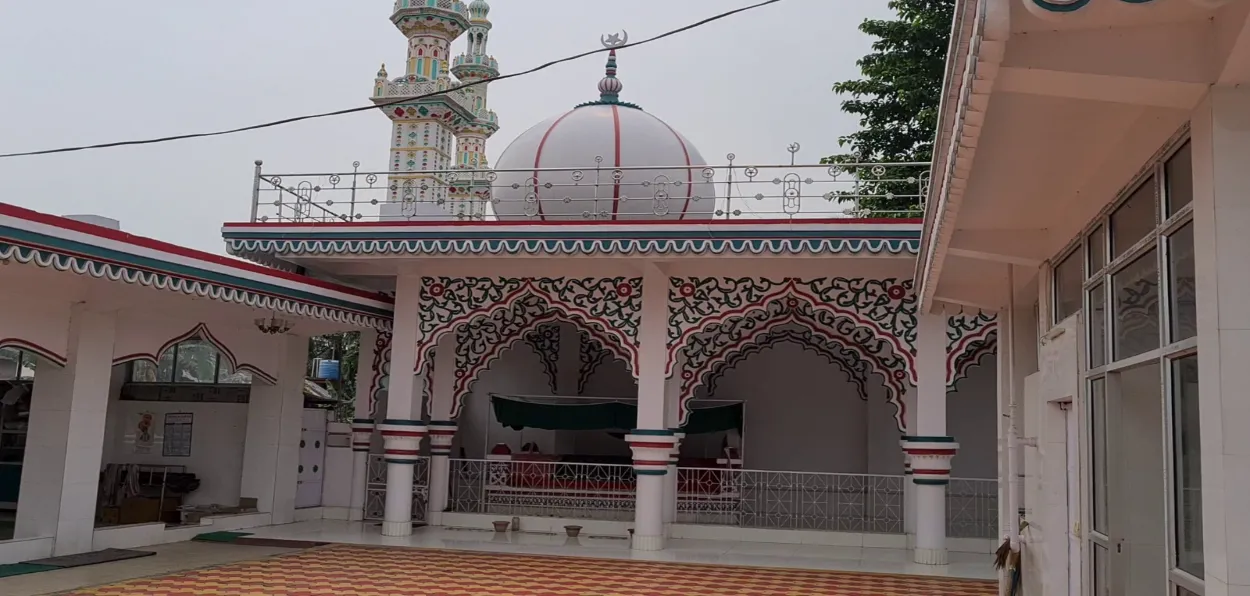
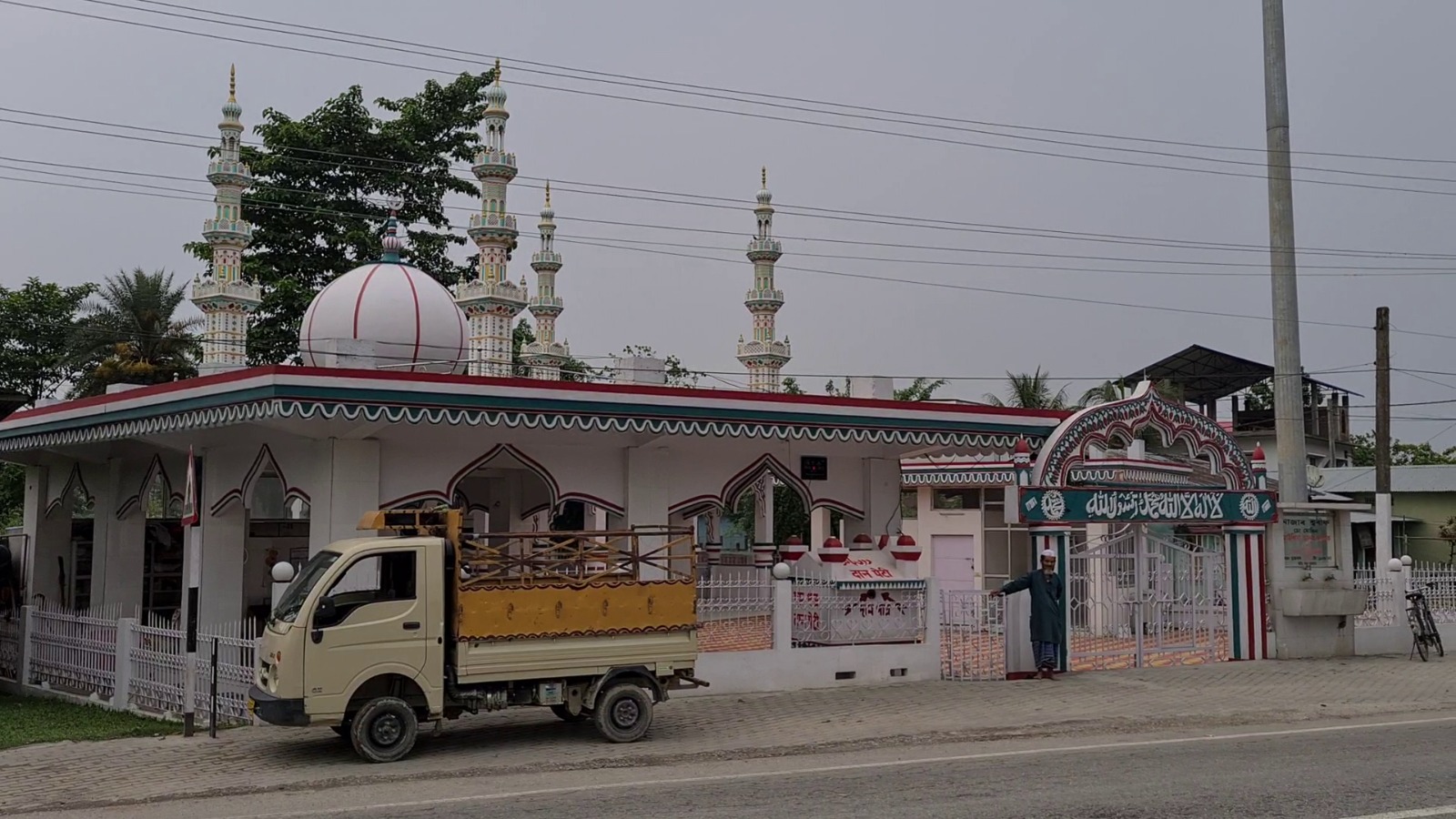
Architect Imran Abbas Shaikh and some of the mosques he designed.

Architect Imran Abbas Shaikh, a visionary based in Pune, Maharashtra, exemplifies the transformative power of architecture. With a passion for blending modern design with cultural heritage, Imran has developed a diverse portfolio ranging from innovative urban projects to iconic cultural landmarks. Renowned for his distinctive approach, he has redefined architectural design, particularly in the creation of mosques. His designs for these sacred spaces often include facilities like hospitals, museums, libraries, and community kitchens, showcasing his dedication to empowering the community. Through his work, Imran Abbas Shaikh has set a new standard for integrating functionality with tradition, earning widespread acclaim for his contributions to architecture.

Muhammad Bin Abdullah Mosque’ in Dhannipur, Ayodhya district, Uttar Pradesh.

The Early Years

Mr. Mohammad Imran Abbas Shaikh, hailing from Pune, Maharashtra, has traversed an extraordinary journey from his roots to emerge as one of the most prominent architects of our time.

His architectural firm, Cubix Architects, situated in his hometown, reflects his deep-rooted connection to the place that nurtured his talents. Growing up, Imran was distinguished by his unique approach and a penchant for creative thinking, qualities that would later define his illustrious career as a visionary architect. However, it was the unwavering support and belief of his father that truly ignited Imran’s passion. His father instilled in him the notion that architecture was not merely about envisioning structures, but about crafting an unwavering future that could bring about positive change. This paternal guidance became the driving force behind Mr. Mohammad Imran Abbas Shaikh’s relentless pursuit of architectural excellence.

Islamic School and Institutional Campus, Phaltan, Maharashtra.

Educational Background 

Imran Shaikh’s educational journey was marked by a pursuit of excellence from the outset. Beginning with his early schooling split between SSPM and Children’s Academy in Shivaji Nagar, Pune, he demonstrated a thirst for knowledge and innovation. His high school years at Poona College laid the groundwork for his academic prowess, setting the stage for his subsequent achievements.

Imran’s passion for architecture led him to Bharati Vidyapeeth, where he honed his skills and emerged as a consistent topper throughout his degree. Even after completing his formal education, Imran’s dedication to his field remained unwavering. He continues to share his expertise and insights by delivering lectures and guiding Ph.D. aspirants, leaving an indelible mark as an inspirational figure for aspiring architects and youngsters alike. His contributions as a guest lecturer have not only enriched the minds of his students but have also sparked a newfound enthusiasm for architecture among many.

Islamic Spiritual Centre of Maulana Sajjad Nomani – Neral, Maharashtra

Inspiration Behind Choosing Architecture as Career 

Imran Shaikh always had a keen interest in travelling, exploring, and various forms of art. After high school, he decided to pursue architecture as a career, a field that had always intrigued him. Imran often spoke about how his father was his biggest motivator, playing a significant role in his journey to becoming a successful architect. During Imran’s college years, his father would proudly share his accomplishments with everyone. Imran’s fondness for art and his unique, abstract perspective on things have been evident throughout his career. Each of his projects bears a distinctive touch, showcasing his artistic vision and innovative approach.

“Modern technologies have made the youth increasingly dependent, resulting in a lack of motivation and original ideas. To foster change, it is essential to reduce dependency on readymade materials and encourage wholehearted engagement in learning, exploration, and hands-on activities. As long as a person is away from mental pollution, they can do wonders”

How Does Imran Shaikh See Architecture 

Imran Shaikh states that architecture is a profession that has existed since the dawn of mankind, tracing its origins back to Adam (AS). Since the beginning, people have sought shelter, making architecture an integral part of human existence. This concept is not limited to humans; some of the best architectural forms can be seen in birds and animals. According to him, architecture starts with a dot, which evolves into a line, then a triangle, and gradually forms complex shapes and designs. The journey beginning with a simple dot encapsulates the essence of architecture.

His favourite works

The ‘Muhammad Bin Abdullah Mosque’ in Dhannipur, Ayodhya district, Uttar Pradesh, is under construction and spans 4,500 square metres.

Dar e Arqam

This mosque will include various facilities such as a hospital, community kitchen, library, and research centre.

Remarkably, it will be the first mosque in India to feature five minarets, symbolising the five pillars of Islam: profession of faith (shahada), prayer (namaz), almsgiving (zakat), fasting (roza), and pilgrimage (hajj). The mosque will be pentagon-shaped, further reflecting the significance of the five pillars. Additionally, it will boast a water and light show and house the world’s largest Quran, measuring 21 feet in height and 36 feet in width.

Architect Imran Abbas Shaikh

Some of architect Imran’s finest works include:

1-KAUSAR BAUGH MASJID – PUNE, MAHARASHTRA

2-ISLAMIC SPIRITUAL CENTRE OF MAULANA SAJJAD NOMANI – NERAL, MAHARASHTRA

3-ISLAMIC SCHOOL AND INSTITUTIONAL CAMPUS – PHALTAN, MAHARASHTRA

4-ISLAMIC SCHOOL AND INSTITUTIONAL CAMPUS – NEPAL

5-MASJID MUHAMMAD BIN ABDULLAH INDO ISLAMIC CULTURAL – BABRI MASJID, UP AYODHYA

5-ISLAMIC SCHOOL AND INSTITUTIONAL CAMPUS – BANGLADESH

Building a Better Society

Apart from his architectural achievements, Imran Shaikh is actively involved in education through his nonprofit ‘Human Embrace Foundation’, based in Pune. This foundation is dedicated to educating children from financially disadvantaged backgrounds, ensuring they have access to quality education and opportunities. Imran’s commitment to this cause has made a significant impact, inspiring many young people. His dedication and success serve as a powerful role model for youth, encouraging them to strive for excellence and make a positive difference in their communities. Through both his architectural work and his educational initiatives, Imran Shaikh exemplifies the values of innovation, compassion, and community empowerment.

source: http://www.muslimmirror.com / Muslim Mirror / Home> Indian Muslim> Positive Story / by Fiza Memon / May 25th, 2024

Rummana Hussain and the ghost of female Muslim heroes

Bengaluru, KARNATAKA / New York, U.S.A / Mumbai, MAHARASHTRA :

Rummana Hussain’s conceptual artistic imprint on the state of India is relevant now more than ever. Dealing in the currency of feminist expression, postcolonial thought and perennial ideas, Rummana’s India is both doubly colourful and doubly dark.

In an inaugural show in its new West Village location, New York’s Institute of Arab and Islamic Art presents The Tomb of Begum Hazrat Mahal an exhibition encapsulating Rummana Hussain’s artistic ruminations about the space our bodies occupy in present and past through one of India’s most prominent Muslim woman.

Bangalore-born Rummana Hussain (1952-1999) was a pioneer in conceptual and performance-based political art in India during the 1980s and 1990s.

She was part of the Sahmat collective, a platform for liberal, secular engagés multidisciplinary artists including Safdar Hashmi, Bharti Kher, and Manjeet Bawa among others.

In this recreation of The Tomb of Begum Hazrat Mahal (1997), the respectful visitor enters a one-room shrine.

“In seeing The Tomb of Begum Hazrat Mahal today, I remembered Hussain’s bold feminist reclamation of her Muslim body through the reincarnated aura of Begum Hazrat Mahal to question monolithic identity, national narratives, and systemic marginalisation”

Various objects signify a site of lamentation, pride, and remembrance.

On the floor, occupying a central location, 12 votive-like papaya halves sit atop a mattress of uncooked rice, evoking both an altar to womanhood and fertility, and a symbolic funerary pyre.

In front of them stands an installation of offerings comprising amulets, dried roses, shells, and incense sticks, tied in a rope.  

Against the three other walls is a calligraphic sculpture from rusty metal that reminds of a sacred spell and the embodiment of time, and an image frieze of detailed black and white triumphant photographs showing a woman’s arms, wrists, and hands.

In one of these frames, a woman raises her fist up as if calling others to join in. In another, she holds an ominous knife. Images of flames are interjected between the simulacra of archives.

Rummana Hussain, Tomb of Begum Hazrat Mahal (Detail) 1997 © Estate of Rummana Hussain. Image Courtesy Talwar Gallery

The room is devoted to a woman, an invisible physical body which radiates from each of the static objects. Begum Hazrat Mahal (1820-1879), née Muhammadi Khanum, was born into a poor family.

She was sold and entered the royal harem of art-loving Wajid Ali Shah, the last king of Awadh, a kingdom that occupied the area of the present-day northern Indian state of Uttar Pradesh. Trained as a harem attendant, she would eventually rise to become the king’s concubine – one of his favourites. Beyond her charms, Begum Hazrat Mahal owes her entrance on the historical stage foremost to her political prowess and courage.

The British-owned East India Company operated in Awadh since the early 19th century. The Company increased its grip in 1856, when it directly seized control of Awadh, citing poor governance and the need to uphold the rule of law to justify their annexation (an excuse known as the “Doctrine of Lapse”).

A Chief Commissioner was rapidly appointed. This caused the king to leave Lucknow and seek refuge in Calcutta. The Queen Mother of Awadh petitioned Queen Victoria in person for her son’s rights, in vain. Wives, including Begum Hazrat Mahal were left behind in occupied Lucknow.

Rummana Hussain, Tomb of Begum Hazrat Mahal (Detail) 1997 © Estate of Rummana Hussain. Image Courtesy Talwar Gallery

After this brutal annexation, discontent grew in several parts of India against the British and the interference of the Company, culminating in a mutiny and revolt in May 1857. Rebels looked to Awadh’s Crown Prince as a successor to his absent father when they captured Lucknow.

But Birjis Qadr, the son of Begum Hazrat Mahal and Wajid Ali Shah, was still a child then, too young to assume power. In his stead, Begum Hazrat Mahal took over Awadh’s revolutionary affairs, actively leading the armed revolt during her regency, towards the reinstatement of Indian rule over Awadh in July 1857.

She continued resisting British rule well after the retaking of Awadh by the occupying troops in 1858, as she refused various offers of collaboration. She died in exile in Kathmandu, Nepal, as an unwavering freedom fighter. Today, a humble stele near Kathmandu’s Jama Masjid marks her tomb.

Rummana Hussain, Living on the Margins, 1995, performance at the National Centre for Performing Arts, Mumbai

When Rummana Hussain first showed The Tomb of Begum Hazrat Mahal to the public in 1997, it was during a period marked by the tragic aftermath of inter-communal violence.

During the 1980s, radical Hindu nationalists campaigned to build a temple on the site believed to be the birthplace of Rama, where a mosque had been erected since the 16th century.

They took to the streets of Ayodhya, Uttar Pradesh, en masse in 1992. Security lost control of the crowd which eventually stormed into the site, demolishing the mosque.

This ignited weeks of violent clashes between Hindu and Muslim communities, causing the deaths of thousands. A later investigation on the destruction of Babri Masjid in Ayodhya pointed out the responsibility of leaders and supporters of the right-wing Bharatiya Janata Party (BJP), the political party of India’s incumbent Prime Minister, Narendra Modi.

Babri Masjid launched a turning point in Hussain’s artistic journey towards a more intimate, politically-conscious form of expression. In Dissected Projection (1993), she explored the multilayered meaning of ruins and dislocation through an allegorical work that exposes a fracture, a shattered piece of terracotta.

In her show Multiples and Fragments (1994), Hussain engaged with historical and domestic oppression in an installation of pigmented pieces of fabric on a clothesline, to denounce the colonial extraction of indigo in India and unpaid housework traditionally performed by women and girls. Labour is always physical and violence first hurts the most vulnerable.

In her 1995 performance Living on the Margins, Hussain screamed while holding papaya halves, shapes that represent a universal vessel and the female anatomy.

Her works have been exhibited in the India Pavilion of the Venice Biennale in 2019, and in multiple institutions across India, Canada, Australia, Mexico, the United Kingdom and the United States during her lifetime and posthumously.

In seeing The Tomb of Begum Hazrat Mahal today, I remembered Hussain’s bold feminist reclamation of her Muslim body through the reincarnated aura of Begum Hazrat Mahal to question monolithic identity, national narratives, and systemic marginalisation. She wanted to say, we can turn the hate in love, we can turn the oppressed, the victims, into heroes they will one day celebrate. We can tell our own stories. They matter.

Outside, scores of brunch-goers live, love, laugh. If it’s dissonance we are meant to acknowledge, I acknowledge it. I closed my eyes in the silent white cube of the Institute of Arab and Islamic Art and saw images of the relentless violence and bullying Muslim women continue to face in Narendra Modi’s India.

In this reconstituted tomb, it’s hard to feel alone. Around me swarmed many other ghosts, of ordinary Muslim women – from Afghanistan to Iran and beyond – crushed and slain in their contemporary defence of freedom and justice against oppressors. Many have been killed in their fight.

A shrine calls for a quiet prayer, I realised.

Farah Abdessamad is a New York City-based essayist/critic, from France and Tunisia.

Follow her on Twitter: @farahstlouis

source: http://www.newarab.com / The New Arab / Home> Features>Culture / by Farah Abdessamad / December 08th, 2022

Vartha Bharati reporter Ismail Kandakare gets prestigious PaGo award 2024

Karavali, KARNATAKA :

Vartha Bharati reporter Ismail Kandakare

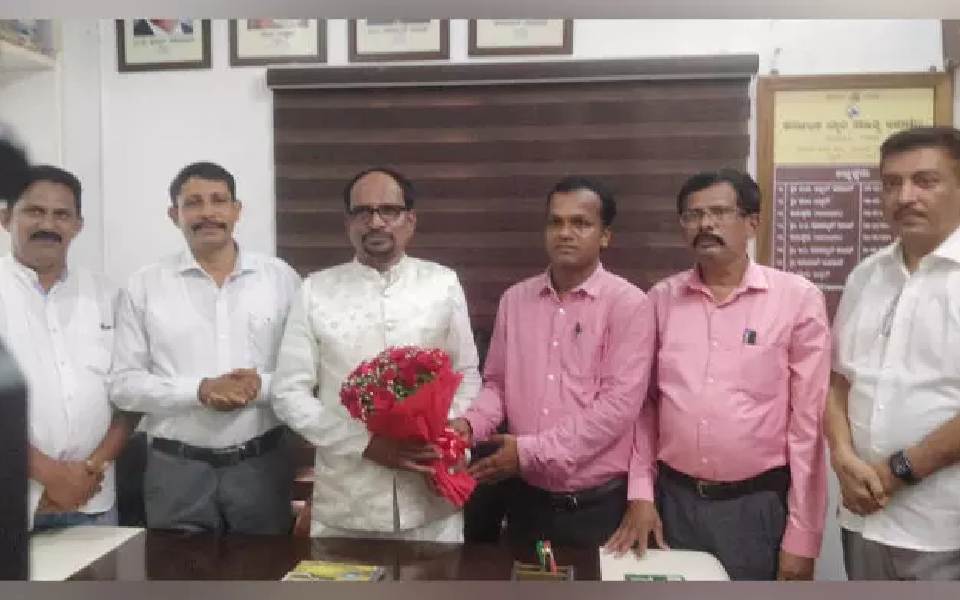
Vartha Bharati Kodagu District Special Correspondent K.M. Ismail Kandakare has been selected as the recipient of the prestigious PaGo award by the Dakshina Kannada District Working Journalists Association this year. The award-winning report, titled ‘Give way or give way to death,’ was published in the ‘Vartabharati’ newspaper on April 6, 2023.

The selection committee, comprising Senior Journalist Keshav Kunder and Journalism Lecturer Guruprasad T.N., chose Kandakare’s report for its quality and impact. The award includes a cash prize of Rs. 10,001 along with a souvenir.

Kandakare, who holds a certificate course in Diploma in Journalism from Karnataka Open University, has previously been recognized for his journalistic contributions. He has received the Best Sports Reporting Award from both the Kodagu District Working Journalist Association and the Kushalanagar Taluk Working Journalist Association. Additionally, Kandakare’s debut work, ‘Mariam,’ was published in 2021.

Apart from his journalistic endeavors, Kandakare is also involved in football, serving as both a player and coach. He currently works as a referee for the Karnataka State Football Association.

The award ceremony is scheduled to take place on May 9 at 11 AM at the Mangalore Press Club. Mangalore University Vice-Chancellor Prof. P L Dharma will present the award, while senior journalist Chidambara Baikampadi will deliver a speech as the guest speaker. The event will be presided over by Srinivas Naik Indaje, the president of DK District Working Journalists’ Association, with Jitendra Kundeshwar, the general secretary of the association, coordinating the proceedings.

source: http://www.english.varthabharati.in / Vartha Bharati / Home> Karavali / by Vartha Bharati / May 04th, 2024

Chikmagalur | A Muslim student Fatima Samiha chose first language Sanskrit Scored 590 marks in SSLC

Chikmagalur, KARNATAKA:

The 2023-24 ESL results have been unveiled, showcasing Fatima Samiha’s remarkable achievement. Hailing from Chikkamagalur district, Fatima, a student of Sri Sadguru Vidyamandir in Basarikatte, chose Sanskrit as her primary language and achieved a perfect score of 125 out of 125 marks in the subject.

Her exceptional performance extends across other subjects as well, with scores of 99 in Kannada, 94 in English, 83 in Mathematics, 69 in Science, and 100 in Social Science, resulting in an impressive overall score of 590 out of 625 marks, equivalent to 94.4%.

Fatima is the daughter of Muhammad Rafiq from Chikkamagaluru and Selikhat Begum from Panemangalore.

source: http://www.thehindustangazette.com / The Hindustan Gazette / Home> News> Latest News / by The Hindustan Gazette / May 12th, 2024

Indian Muslim cultural heritage is indelible

INDIA :

Like it or not, modern Indian culture is still heavily indebted to the legacy of the Mughals and the nawabs.

Stamps of both tangible and intangible heritage of India’s prosperous Muslim reign are still vivid, despite more than two centuries of indifference, ingratitude and insolence that followed.

From language and art to cuisine and architecture, every aspect of Indian cultural landscape has strong traces of Muslim sounds, flavours and colours that continue to trickle down from an era that drew the world to India.

Like it or not, modern Indian culture is still heavily indebted to the legacy of the Mughals and the nawabs. The Persianate culture that was dominant well into the decline of the Muslim dynasties, continues to influence our customs and traditions.

Intangible heritage
Whether we call it Hindi or Hindustani, the language that is spoken by most Indians, especially in North India, took shape in the hallowed halls of the Mughal Delhi and Nawabi Lucknow.

Though, it’s been nearly two centuries since the sun set upon the fortunes of the Mughals, their cuisine is still in the ascendancy and gaining in popularity everyday. Can a party be complete without the biryani and kebabs?

Urdu may not be a particularly favoured language of our times, but no Urdu basher could be averse from the influence of its sweet melody. Despite some serious attempts at its erasure from the public consciousness, Bollywood or Hindi Cinema still has some strong strands of Urdu in its rapidly morphing personality.

The indelible Urdu legacy lies at the very heart of ‘Hindi’ cinema’s golden era, with some of the best dialogues and songs that most of us swoon over being still its biggest treasure trove.

As much as its intangible legacy, the tangible legacy of the Muslim architects still remains the biggest tourist attractions in India. Not just the Taj Mahal and the Jama Masjid of Delhi, Muslim architects have left towering symbols of aesthetic excellence in architectural marvels such as the Qutub Minar and the Charminar.

Besides Delhi, Agra and Lucknow, cities such as Ahmedabad, Hyderabad, Aurangabad and Bijapur wouldn’t have existed without their Muslim patrons. Their Muslim character is hard to miss despite consistent attempts at altering their nature.

The magnificent monuments, among the greatest landmarks of the tangible human heritage, are so deeply etched on the landscape and the psyche of India, that they have become synonymous to the grandeur of the Muslim ascendancy in India.

Artisanal legacy
But, more than the glowing architecture, it is the enterprising artisanal traditions that continue to have the greatest traces of Muslim influence. Importantly, Muslims continue to preserve this legacy against all odds.

From the Pashmina Shawls and Banarasi Sarees to the Rogan Art and Bidriware, some of India’s best known handmade traditions are painstakingly preserved by Muslim artisans, maintaining a living heritage that can be traced to the patronage of the Great Mughals, the Bahamanis, the Adil Shahis, the Nizams and others.

It is no secret that the Mughals were the great patrons of art, craft and industry, with creativity, innovation and industry flourishing during their rule, making India the most prosperous country in the world.

Their generous patronage and facilitation meant artisans from different parts of the world made a beeline to India, adding new forms of craft to a landscape that was already full of life.

From muslin and brocade to diamonds and jewellery, the artisans of India produced some exquisite handmade goods that drew traders from all over the world to India.

Mughal India – World’s biggest economy

During the peak of the Mughal rule in India, when Aurangzeb Alamgir was at the helm, India accounted for 27 per cent of the world’s economy, greater than the GDP of the entire Europe combined.

Until the mid-18th century, when British started gaining greater control over some parts of the country, India was the biggest exporter of manufactured goods across the world.

Despite the unparalleled rapacity and depravity of the colonial administration that had led to the near extinction of the Indian craft traditions a century ago, Indian handicrafts survived largely through the resilience and industry of the artisans.

Though, the policy of erasure continued even after the British left India and continues till this day, Indian artisanal communities have shown remarkable resilience against the onslaught of monopoly, ruthlessly cruel economic policies and unfavourable terms and conditions.

Many craft clusters have also faced communal apathy, discrimination and prejudice.

Under such extreme conditions, it is nothing short of a miracle that ancient handmade craft traditions survive in India.

Story of Bidriware
The tale of the Bidriware, primarily practised by Muslims, is one such story of skill, struggle and survival.

Bidriware is poetry crafted in metal

Cast in an alloy of copper and zinc, with silver and gold wires or sheets inlaid or overlaid, a Bidriware artefact is so graceful in its appearance that an indulgent heart longs to feel and touch it, if not wear it!

For more than five centuries, Bidriware objects have been must have pieces of adornment among the royalties and nobilities such as Mughal emperors, Rajput kings and Nawabs of Bengal to Bahmani, Adil Shahi and Vijayanagara Sultans (yes, the Vijayanagara kings loved to call themselves sultans!).

In the pre-modern era, the Nizams of Hyderabad have been the biggest patrons of this magical craft, not only collecting the artefacts such as hookahs (sheesha), vases, vanity boxes, ewers and pitchers, but also relocating several artisans to Hyderabad.

However, despite the early 20th century migration of artisans and losing patronage, Karnataka’s northern town of Bidar continues to remain a hub of Bidriware.

With all of the kingdoms and fiefdoms gone, ancient Bidriware items along with other surviving royal antique pieces are a collector’s treasure now, gracing the leading museums across the world.

The Origin
Though, the Bidri metal craft has its origins in medieval Persia, Bidriware in its distinct Indian form blossomed in the capital of the early 15th century Bahmani Empire.

The tale of Bidriware, primarily practised by Muslims, is a story of skill, struggle and survival

The Bahmanis were renowned for their exquisite sensibilities for art and architecture, hence it is no surprise that a complex and intricate enterprise such as the Bidri metal craft originated in their royal atelier.

This, perhaps, is among the last few influences that the medieval Bahamanis continue to have on modern India.

Reinvention
Despite the spell Bidriware has on art aficionados and connoisseurs of craft, the enterprise has seen a steady decline over the last few decades, with only a few masters working their magic.

Currently, the city of Bidar has around 150 registered artisans, but only a handful of artisans in the town have the depth of knowledge and the deftness of skills required to be called a master.

MA Rauf Siddiqui is a national-award winning master craftsman who is reinventing Bidriware, catering to the modern aesthetic sensibilities

Among the few masters is the national award-winning artisan MA Rauf Siddiqui.

Even as the overall scene of the Bidriware tradition is not particularly encouraging, the Shilpi Guru-winner is quietly reinventing the traditions, ably-assisted by his young and enterprising children.

Modernising the techniques, motifs and methods, the family has several generations involved in the craft, adopting latest softwares to come up with new patterns and using social media to reach new frontiers.

However, the traditional expression of the art-form continues to find patrons, even as the newer expressions in wearable forms give the craft a new lease of life.

Empowering the community
Many Muslim communities in India sit on a huge treasure trove of craft traditions that have been part of the country’s cultural, economic and political legacy for centuries.

Many of these traditions are withering away due to multiple factors, including lack of upgrade or inability to adapt to the changing landscape, little government support and poor marketing.

With necessary attention and support we can not just preserve this precious legacy of India and Indian Muslims, but can also make hundreds of these craft clusters economically independent and sustainable.

source: http://www.radiancenews.com / Radiance News / Home> Arts & Culture> Forces / by Shafaat Shahbadari / Radiance News Bureau / September 26th, 2023

Academia and Aroma: PhD Holder’s Dhaba at JNU Offers a Poetic Huddle

BIHAR / NEW DELHI:

Dr. Shahzad Ibrahimi’s Maamu Dhaba has captivated patrons with tea and Urdu poetry for about two decades.

New Delhi:

In the bustling corridors of Jawaharlal Nehru University (JNU) in Delhi, a distinctive aroma of tea mingles with the resonant verses of Urdu poetry. This unique sensory experience is courtesy of Maamu Dhaba, a cherished and venerated institution on the campus, nurtured by the academic prowess and entrepreneurial spirit of its owner, Dr. Shahzad Ibrahimi.

Hailing from Bihar and armed with a PhD in Urdu language, Dr. Shahzad’s journey from academia to entrepreneurship is as fascinating as it is inspiring. Twenty years ago, fresh after completing his doctoral thesis, Dr. Shahzad made a pivotal decision to establish Maamu Dhaba within the precincts of his alma mater. Adjacent to the university library, the dhaba swiftly became a sanctuary for students and professors alike, offering not just tea but also a refuge for scholarly discussions and intellectual pursuits late into the night.

Dr. Shahzad reflected on his unconventional career trajectory: “After obtaining my PhD, I briefly explored opportunities outside academia, including a stint at a TV station. However, I soon realised that my true calling lay elsewhere.” With the unwavering support of his wife, Dr. Shahzad embarked on the journey of dhaba ownership, a decision that would shape the cultural landscape of JNU for years to come.

Maamu Dhaba, christened after their shared vision and dedication, stands out amidst the plethora of dhabas in JNU not only for its aromatic tea but also for its unique blend of academia and culture. Dr. Shahzad’s commitment to his craft surpasses even his dedication to his doctoral thesis, as he divulges, “Running this dhaba demands more time and effort than my PhD ever did.”

Beyond serving tea, Maamu Dhaba serves as a platform for fostering a love for the Urdu language and poetry. Dr. Shahzad, with his profound affection for Urdu literature, regales patrons with verses from renowned poets such as Ghalib, Mir, and Momin. “I consider it my duty to share the beauty of Urdu poetry with all who visit, regardless of their familiarity with the language,” he asserts, underscoring his dedication to preserving and promoting Urdu culture.

source: http://www.clarionindia.net / Clarion India / Home> Clarion Special> Editor’s Pick> India / by Mohammad Alamullah, Clarion India / May 07th, 2024

Hospital for poor is top priority of Pune’s 77-year activist Ashraf Mulla

Pune, MAHARASHTRA :

Ashraf Adam Mulla

Ashraf Adam Mulla, the founder of the Muslim Samaj Parbodhan Sanstha which runs an orphanage and several schools for poor children in and around Pune, Maharashtra, is finalizing the building plan for a charitable hospital. The 77-year-old social worker had felt the need for a hospital where the poor could be treated free of cost during the Covid-19 pandemic.

Feisty Mulla Madam, as she is called, said her plans for starting the construction of the hospital got delayed because of an accident in which she was injured. Due to this, she had to stay home for six days and could no longer move freely on her two-wheeler.

“Although I have returned to work, I can no longer drive a two-wheeler,” she says. The two-wheeler-borne Mulla Madam was famous for running around and never missing an appointment or her scheduled work. “Never mind, I will continue to work tirelessly for the hospital”’ she says with a smile.

An award distribution function at one of Ashraf Adam Mulla’s schools

Mulla has been running Muslim Samaj Prabodhan Sanstha for 39 years. Besides setting up schools where children of poor from all religions can study, she runs Samina Iqbal Ashiyana, an orphanage for Muslim girls which has 32 inmates presently as against its capacity for 65.

She says her Sanstha has been trying to equip the backward and extremely poor people with modern and quality education. 

However, for three years, she has been focused on building a charitable hospital. “I am about to turn 78. I have no time to waste. There is still a lot of work to be done. For younger people, it can be said that their enthusiasm is still fresh but I have no time to waste,” she says while showing me around the place – a vast ground – where the hospital’s foundation stone will be laid this month.

Mulla Madam is all praise for her late husband Adam Mulla who worked as a chemical engineer and passed away in 2015. “He did his responsibility and work. Due to his nature, he could not support me in social work, but he always supported me financially,” he said.

“I started my work with my husband’s money.” 

Morning Assembly in one of the schools run by Ashraf Adam Mulla’s trust

Ashraf Adam Mulla Madam retired as a teacher from Chanta Mani Vidya Mandir, Thevar, a Marathi medium school. With her three sons married and settled with their families, Ashraf Mulla is full-time into her projects that have the potential to change lives.

When she was working as a teacher, she recalls that about 1200 children were studying in her school but there were just two or three Muslim children. Although there was a Muslim settlement near the school, the enrolment of Muslims was poor.

When she started her primary school under a tin shed at Tan Patre in Syed Nagar, she also introduced a sewing class to get Muslims interested in coming to it. At Rahmani, her organization runs Urdu Balwadi which has 66 children. Shamsuddin Inamdar is an Urdu Primary School where 597 children are studying and Rahmani Urdu High School has 235 students.

Likewise, Rahmani Junior College has 191 students. Her organisation also runs Industrial Training Institute where 23 students are enrolled. Besides, special computer learning classes are conducted for students from 5th to eighth where 345 students including girls are learning.

Students in playing in one of Ashraf Mulla’s schools

Mullah Ma’am told Awaz-The Voice that the girls living in Ashyiana are attending school, skills and Islamic education. The Sanstha also takes the responsibility of finding partners for the inmates and arranging their weddings.

The girls who want to pursue higher education get support till they are 18 years old. Among the skills taught at the Ashiyana are artificial jewelry, sewing, embroidery, and ceramic paintings. 

Ashraf Mulla is disappointed that a senior college she tried to establish did not have enough students and she had to close it down while Rahmani Junior College, established in 2006, which offers arts, science, and commerce is doing well.

She says the idea of setting up the Sanstha came to her while she was trying to deal with the grief of losing her parents. “when my mother died, I was very sad. My father passed away in 1979 and my mother also left this world in 1984. I wanted to do something in memory of my mother. To ease my grief, I founded the Muslim Samaj Parbodhan Sanstha in January 1985.”

She remembers while she was studying in class 9, Pune saw a massive flood. “I was living in Andapur then. The children of our school collected money for the flood victims and it gave us a feeling of peace and security while doing that.” She says it’s that empathy with the suffering and sense of peace to being able to help the needy that stayed with her to set up the NGO.

Girls eating dinner at Ashiyana

Speaking of her failures, Mulla Ma’am says, “I wanted to work for widows, but widows were not ready to come out of the house and work.” She says, “At that time widows liked to be a burden on their families and all our efforts to convince them failed.”

However, after some years her efforts paid off. When she set up Ashiyana (orphanage), many widows and divorced women came to stay with us. I realized times have changed.”

I visited Ashiyana and realized it’s a cozy home for girls and women. The home space is sparkling clean. The Auntie running the kitchen announced that food was ready and everyone must perform prayers. The girls went to the prayer room for Zuhr Namaz.

The food was simple Dalcha-chawal, a Maharashtrian delicacy, followed by a delicious Sher Khurma desert. The girls sat on the mats and everyone had a small table in front to put their plate on it.

Mulla Madam however says she prays that no child should feel the need to come to a shelter/orphanage. “We can do everything for children but not be their parents.”

She says the women from Ashiyana who are married continue to be in touch with them.

source: http://www.awazthevoice.in / Awaz, The Voice / Home> Story / by Shah Taj Khan, Pune / May 02nd, 2024