Category Archives: Arts, Culture & Entertainment

The medieval Deccan

KARNATAKA :

A reading of three books throws light on the culture and politics of the Persianate world of the medieval Deccan.

Through fierce forays into southern India, rulers of the Delhi Sultanate like Alauddin Khilji (reign 1296-1316) extended the boundaries of their empire to its furthest extent at the end of the 13th and the beginning of the 14th centuries by dismantling the existing Yadava, Kakatiya, Hoysala and Pandya kingdoms. Khilji’s forces even reached Madurai in the deep south, where they established a base. Mohammed bin Tughlaq (reign 1325-1351), the eccentric genius of the Tughlaq dynasty that followed the Khiljis, moved the capital of his vast empire from Delhi to Devagiri or Daulatabad, located in what is now the central part of Maharashtra, in order to have his court more centrally located. The Delhi Sultans’ rule in these far-flung domains of their realm was always tenuous, and when Tughlaq’s rule, beset by internal crises and external challenges, withdrew to north India, many provincial governors rebelled, forming independent kingdoms or sultanates.

In the Deccan, an amorphous geographical region extending from the south of the Vindhya Range to the Krishna and Tungabhadra rivers, the Bahmani Sultanate was established by rebel Tughlaq nobles in 1347 with its initial base in Daulatabad. Across the Krishna, the vacuum that had set in after the Tughlaq withdrawal had led to the founding of the Vijayanagara kingdom sometime between 1336 and 1346.

The Bahmanis would shift their capital to Gulbarga (now Kalaburagi) in 1350 and in the early 15th century, to Bidar. At its height during the reign of Muhammad III (reign 1463 to 1482), when Mahmud Gavan was the prime minister, the Bahmani Empire extended from the Arabian Sea to the Bay of Bengal, helmed in by the Khandesh Sultanate in the north and the Vijayanagara empire in the south. While the Bahmani empire was a powerful state, ethnic affiliations overlaid with sectarian differences among the ruling nobility led to its implosion at the end of the 15th century. The provincial governors of Bijapur, Ahmednagar, Golconda, Bidar and Berar established their own Sultanates, snuffing out the Bahmani dynasty. Collectively referred to as the Deccan Sultanates, the 16th century would see these legatee states frequently fight with one another. The mighty Vijayanagara to their south usually sided with one or the other sultan in these conflicts.

Recognising the threat that the powerful Vijayanagarans perennially posed to them, the Deccan Sultanates came together in a temporary alliance in 1565 to defeat Vijayanagara, leaving it to totter to its eventual demise over the next century (See “Beyond the Hindu-Muslim Binary” in Frontline , January 18, 2019). This brief friendship was soon forgotten, and the Deccan Sultanates continued to fight with one another. Berar and Bidar were gobbled up by Ahmednagar and Bijapur respectively, leaving these two states, along with Golconda, as the unchallenged rulers of the Deccan for some time until their wealth attracted the attention of the Mughals. The expansionist policy of the Mughals led to the weakening and eventual subjugation of these regional powers as first Ahmednagar (1636) and then Bijapur (1686) and Golconda (1687) succumbed to Mughal might, ending the glorious epoch of the Deccan Sultans.

In popular understanding, medieval India is usually equated with the Mughal empire, but this is not to say that the Deccan was deprived of serious explorations of its medieval history. H.K. Sherwani and P.M. Joshi were early modern historians who looked at the Bahmanis and their descendants closely ( History of the Medieval Deccan: 1295-1724 , 1973). One of the books being reviewed in this essay, T.S. Devare’s A Short History of Persian Literature: At the Bahmani, the Adilshahi and the Qutbshahi Courts—Deccan (1961) is also from an earlier era. The work of these scholars has been followed by other prominent historians such as Richard Eaton and Phillip. B. Wagoner, who have closely looked at various facets of medieval Deccan. Manu Pillai ( Rebel Sultans , 2018) has attempted to tell the political history of the Deccan (for a review of this book, see “The Deccan Chronicles”, in Frontline , May 10, 2019). The architecture of the Deccan Sultanates has also been closely studied by architectural historians like George Michell and Helen Philon (the two scholars’ new book is being reviewed here). A new generation of scholars like Deborah Hutton, Marika Sardar, Pushkar Sohoni (for a review of Sohoni’s book, see “Deccan Architecture” in Frontline , August 2, 2019) and Emma J. Flatt (whose book is being reviewed in this essay) have begun to use innovative methods to explore other dimensions of the Deccan states, moving beyond political history.

Magnificent architecture

George Michell and Helen Philon are recognised scholars of the architecture of medieval Deccan. Early in his career, Michell co-founded the Vijayanagara Research Project, which continues to have a vast scope and consists of leading researchers on the history of this grand empire. Since the 1990s, Michell has moved on to study the architecture of Vijayanagara’s traditional rivals, the Bahmanis and their legatee sultanates. That makes him the only architectural historian whose expertise spans peninsular India. His many publications attest to his reputation as the foremost authority on medieval Indian architecture south of the Vindhyas. Helen Philon has published on Sultanate architecture in the past and her guidebook on Gulbarga, Bijapur and Bidar has become classic reference material for travellers to these Sultanate-era towns.

These two historical and architectural experts have combined forces with the photographer Antonio Martinelli, leading to the publication of the gorgeous coffee-table book under review. There are 290 photographs in the book capturing various monuments and their details in a fantastic display of exquisite photography. A significant number of architectural drawings adds to the value of this book.

While it excels as a coffee-table book, Islamic Architecture of Deccan India is also a handy academic work that collates existing literature on the theme in its introductory essay. This essay is a thorough summary of the medieval history of the Deccan, displays impressive historical and architectural awareness and serves as a perfect prologue to the book whose pages are otherwise filled with photographs of monuments. There are nine chapters that follow, each focussing on a Sultanate-era town. Towns gained prominence in a linear fashion in medieval Deccan and the chapters follow that development, with the photographs and captions highlighting the evolution of architecture.

Daulatabad and its neighbour, Khuldabad, attained early importance as the peninsular headquarters of the Delhi Sultanate and later as the first capital of the Bahmanis. After this, the capital of the Bahmanis was moved to Gulbarga and briefly Ferozabad (which is a necropolis now) before being shifted permanently to Bidar. The Bahmani empire eventually broke up into five separate sultanates. Ahmednagar, Bijapur and Golconda were the headquarters of these provincial kingdoms and boasted majestic architecture that saw a boost after the 1565 “Battle of Talikota” with Vijayanagara. These extensive chapter-long surveys end with Aurangabad, which was the Mughal bridgehead for conquering the Deccan. Interestingly, Michell and Helen Philon choose to include Burhanpur, the capital of the Khandesh Sultanate which separated the Deccan from “Hindustan”, in their examination of the Deccan. This is unusual, provoking the question as to what truly constitutes the Deccan.

Seeing the photographs in the book, each of which has immortalised a monument, one cannot help but recall Susan Sontag’s thoughts from her must-read book On Photography . She writes: “All photographs are memento mori. To take a photograph is to participate in another person’s (or thing’s) mortality, vulnerability, mutability. Precisely by slicing out this moment and freezing it, all photographs testify to time’s relentless melt.” Martinelli’s alluring and breathtaking photographs, accompanied by Michell’s and Helen Philon’s notes, not only make the reader aware of the magnificence of these monuments but also the relentless passage of time.

Persian in the Deccan

The second book under review is a reprint of a classic on Persian literature in medieval Deccan by T.N. Devare. A Short History of Persian Literature: At the Bahmani, the Adilshahi and the Qutbshahi Courts—Deccan was first published in 1961 and was the PhD thesis of the author, who died in 1957 when he was only 43 years old. It continues to remain relevant because it is the only book in English that exhaustively studies the vast corpus of Persian literature produced in the courts of the Bahmanis and the Deccan Sultanates. Devare’s contemporaries had made substantial progress in the study of medieval Indian Persian literature but their main focus was on the works produced under the Delhi Sultanate and the Mughals. Thus, Devare’s intention was to correct this academic anomaly and to show that great Persian literature was also produced in the Deccan.

Considering the demand in academic circles for a reprint, the author’s family took the initiative in reprinting this valuable book last year. Methods of historical and language research have changed substantially in the six decades since Devare did his research. Thus, the book’s conceptual approach and style may seem outdated if seen from the perspective of current scholarship, but its value lies in its wide scope and its ambitious attempt at collating texts and then critically discussing them. Merely locating all of these texts in the 1950s, when they were spread across several libraries and personal collections, must have been a tedious task.

By discussing the major works produced in the Deccan, Devare has also put together what could be read as an extended annotated bibliography of the literature produced at these courts, making the book both a useful primary and secondary source for historical research on Persian literature in India and the history of the Deccan Sultanates. Devare also reads all the Persian texts directly and interprets them for his readers. His work is foundational as he does not rely or build on the work of other scholars. It is rare, or almost impossible nowadays, to find a scholar with such advanced competence in medieval Persian. Devare also frequently translates passages of Persian poetry and prose, enriching the book.

Devare’s book is divided into seven chapters, not including an introductory chapter that looks at the historical connections between Persia (now Iran) and India. Reading these chapters, one becomes aware of the easy mobility of a vast number of Persian speakers who migrated to the Deccan. Five of the seven chapters have a clear focus on different kinds of personages and their contributions to Persian literature in the Deccan. In each chapter, Devare chronologically lists the writers, thematically linking them before discussing their work, devoting several pages to noteworthy contributors.

For example, in the chapter on saints of Islam and their contribution to the development of Persian literature, the longest discussion is on the literary contributions of Khwaja Bandenawaz, the Sufi saint buried in Kalaburagi, whose enduring spiritual legacy has established him as the most prominent Sufi of the Deccan. Bandenawaz wrote a number of treatises and pamphlets on religion and Sufism apart from the poetry that has been discussed by Devare.

Discussing the Persian literature produced by the rulers of the Deccan Sultanates, Devare devotes several pages to Ibrahim Adil Shah II (reign 1580-1627) of the Adil Shahi dynasty of Bijapur. Like the Mughal emperor Akbar (reign 1556-1605), his elder contemporary in northern India, Ibrahim Adil Shah II also had an eclectic spiritual curiosity that defined his world view. He was addressed as “jagat guru” because of his love for music and veneration of the goddess Saraswati. Devare’s exhaustive survey goes on to include discussions of the works of the prominent litterateurs, architects, calligraphists and other prominent nobles in the Bahmani, the Adilshahi and the Qutbshahi courts.

In the chapter on poets, the prominent poets discussed by Devare include Isami, the composer of the Futuh-us-Salatin , a masnawi (poem in rhyming couplets) on Muslim rule in India, who was at the Bahmani court, and Zuhuri, the master of ghazal writing who was employed by the Ahmednagar and Bijapur Sultanates.

In a chapter on historians, Devare discusses the craft of history writing as practised by Muslim historians before moving on to discuss the works of individual historians. He makes a rare accusation of plagiarism against Ferishta, the historian whose works provide the maximum primary material for writing the histories of those times. The last chapter of the book looks at the influence of Persian on Marathi and Dakhni languages.

A flaw, or rather, a handicap of the book is that most of the dates are mentioned in the Islamic or Hijri calendar, which makes it tedious for the reader to correlate them with the dates of the common Gregorian calendar.

Emma J. Flatt’s fabulous book adds tremendous new knowledge to the history of the medieval Deccan. Borrowing methodological tools from anthropology and seeped in a robust reading of original Persian texts, Emma Flatt’s book is a rigorously researched work that opens up the courts of the Deccan Sultanates in exquisite detail. Emma Flatt’s main intention is to investigate the “idea of courtliness in the political, social and cultural worlds of the late fifteenth- and sixteenth-century Deccan Sultanates”. The book studies a wide set of practices among the elite of the Deccan courts and will certainly become a landmark of historical research as Emma Flatt has demonstrated how a finite set of primary sources can be interrogated to wring out new kinds of knowledge and add to our understanding of a historical period. This work is also academically exciting as there are hardly any historical works that analyse South Asian “courts” as a category apart from Daud Ali’s pioneering work on courts in early medieval India ( Courtly Culture and Political Life in Early Medieval India , 2011).

Through the book, Emma Flatt reiterates the point made by the historians Richard Eaton and Phillip Wagoner in the past that it is erroneous to view the various Deccan Sultanates and the Vijayanagara Empire as having fixed geographical boundaries and that, as the movement of the courtiers showed, there was a fluidity in these boundaries. Emma Flatt writes: “During this period, individuals of different backgrounds and cultures moved from across the Persian-speaking world to take up service at the courts of the Deccan Sultanates, and between the Deccani courts with a felicity that belies modern assumptions about the fixity of political and geographical boundaries on the one hand, and the incompatibility of Indic and Islamicate religio-cultural systems on the other.”

Emma Flatt relies on three key theoretical terms—the court, ethics and the Persian Cosmopolis—to take her argument forward. By virtue of the easy movement between a variety of courts, the courtiers acquired a certain courtly disposition that was widely shared across the “Persian Cosmopolis”, a phrase that has recently acquired tremendous heft in its expression of the shared set of cosmopolitan training in Persian texts that informed the subsequent world view of the elite across a vast swathe of land from Persia to Bengal. Emma Flatt’s book looks at facets of these courtly societies and examines certain courtly skills that were necessary for courtiers in order to become part of this courtly culture.

The book is broadly divided into two parts containing three chapters each, “Courtly Society” and “Courtly Skills”. Emma Flatt argues that there was a shared cosmopolitanism that the courtiers acquired through a shared foundational education of key Persian texts whose aim was not merely the acquisition of knowledge but the development of a “specific type of disposition within each individual”. This helped them move easily across the Persianate Cosmopolis, allowing them to find employment in various Deccani courts, as evinced in the careers of two individuals discussed in the next chapter.

By examining the careers of two elite noblemen, Muhammad Nimdihi and Hajji Abarquhi, Emma Flatt demonstrates how individuals used familial, scholarly, mercantile, religious and friendly networks in order to move across the Persian Cosmopolis.

The court society of the Sultanates was heavily influenced by “…the practices, the commodities and the vocabulary of long-distance trade”. She looks at the biographies of three powerful individuals, Khalaf Hasan, Mahmud Gavan and Asad Khan Lahri, in some detail to argue this point.

In the second half of her book, Emma Flatt looks at the courtly skills that were required for “worldly success and ethical refinement”. She writes: “By disciplined repetitive practice, the participant honed his ability at a particular skill, and simultaneously refined his soul, rendering the pursuit of skills an ethical endeavour.” Emma Flatt looks at scribal, esoteric and martial skills as part of the training for worldly success and the development of a courtly disposition.

The importance of scribal skills in the development of a refined courtier is examined through the epistolatory skills of Mahmud Gavan (1411-1481), the dynamic merchant-scholar who rose to become a vizier of the Bahmani rulers.

In a fantastic chapter that looks at the esoteric skills that courtiers could acquire to rise in the eyes of the rulers, Emma Flatt does a meticulous reading of the “Nujum al-Ulum”, the esoteric text composed in the Bijapuri court of Ali Adil Shah I (reign 1558-1580). In its divergent sourcing from both Islamicate and Indic cosmologies, she sees “conceptual commensurabilities” for a courtly society made up of a people belonging to a plurality of religious and cultural beliefs.

In the last chapter, Emma Flatt looks at “…how the acquisition of martial skills was associated with an ethical ideal known as javanmardi or young-manliness, an ideal structuring the daily lives of courtly and urban men in the medieval Persianate world”.

This brief review hardly does justice to the wide scope of Emma Flatt’s work which will be valuable for anyone interested in the history of the medieval Deccan. As this review essay shows, there is a substantial amount of ongoing research in the history of the medieval Deccan, but compared with the large body of work on the Mughals, much remains to be done for historical research of the medieval Deccan.

source: http://www.frontline.thehindu.com / Frontline / Home>Books / by Vikhar Ahmed Sayeed / December 04th, 2019

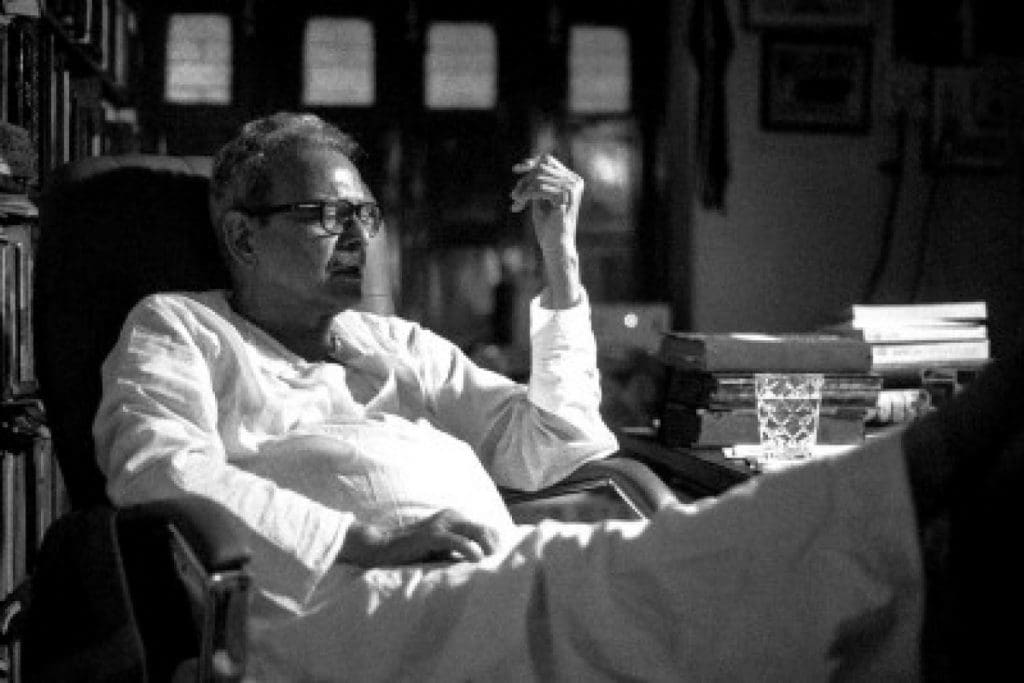
Shamsur Rahman Faruqi, My Awe-Inspiring Friend and Father

Prayagraj (formerly Allahabad), UTTAR PRADESH / NEW DELHI :

Shamsur Rahman Faruqi with Baran Farooqi. Photos courtesy: Baran Farooqi

Abba was the magician who introduced me to the wide and varied wonders of the world, taught me everything about life and its customs and kept me enamoured of his extraordinary personality. I was awe- struck by his learning, his cool, confident air and the way and adulation he commanded sat comfortably on his shoulders.

And may there be no sadness of farewell 

When I embark;

Alfred Lord Tennyson

Yeh meri akhiri bimari hai (this is my last illness),” spoke Abba with a wry smile on his face. He was addressing Dr Nandani Sharma, a homeopath in Shivalik, Malviya Nagar (New Delhi), whom we were all very fond of and trusted. That evening we had taken him there since he had expressed a desire to actually see her and not consult her over a video call to ask about the chances of curing the fungal infection which had invaded his eye during his stint at Fortis Escorts hospital where he had been hospitalised after having tested Covid positive. None of us had imagined that it was a matter of just a few days before he would be gone, transited peacefully and in full preparation of “seeing his pilot face to face.” Dr Nandani assured him that he still had long to live and accomplish some more as she was confident her medicines would be able to control the fungus. This conversation had taken place in her driveway as Abba was not able to walk since he had returned from hospital and so it was decided that instead of him having to go into her clinic, he would be seated on his wheelchair near the car and she would examine him. We returned upbeat from Dr Nandani’s place but it was as if Abba knew better than Dr Nandani this time. He had been sent the summons and he had answered them with acceptance and great sporting spirit. So, he laughed at our jokes in his weak strength and held out his hands or arms to embrace whenever he saw me or my sister or my daughters enter the room. He would kiss my hands and softly caress my head if he happened to be sitting, bolstered by the electrically operated bed we had arranged, half a dozen pillows and bolsters around him.

Of late, in fact, right from the time he would send voice notes from the hospital, he would often repeat, “I love you” or “know that I love you.” Of course, we had never had any doubts about this ever because Abba was the master of expression. A vocal person, he taught me how I need to say “thank you” even to my own parents if they got me something and to house helps and friends for services rendered or acts of kindness. I once overheard him reproaching my mother for never doing salam to him first when he got home from office or smilingly extending her hand of welcome. Always cheerful and smiling when he came home from office, he expected everyone else at home to be as smiling and welcoming as he was. Each time any of us would enter his room for something, he would beam aaiye aaiye (do come in) and show his pleasure. He used to call me “funny face” sometimes, which didn’t seem very amusing to me but I knew I was supposed to show a sense of humour and not sulk over little things. I finally asked him one day, “Why do you call me funny?” He answered that funny faces are those who are delightful and make him feel happy and full of mirth. Once, when I made him fill out my columns of questions like, who is your best friend, what’s your favourite colour, what are you scared of and so on, (this was a raging activity in my school those days that you took autographs of people in your autograph book for no reason and also made them fill columns which were made in a double page of a register.) I remember almost all his answers to this day but I’ll speak of only a couple, to the question, “If you had a wishing wand, what would you wish me to be?” he had answered “Queen of Sheba.” I immediately understood this is something divinely great and luminous and so on, since I didn’t really know who queen of Sheba was at that time. In the answer to the question, “what are you scared of?” he had answered “centipedes,” making me aware that he was human and vulnerable in his own way.

I have wandered far from what I was initially talking about — his illness and his demeanour during those days. After stretching out his hands and making me sit close, he told me one day that the time for him to leave this world had come and that I should allow him to go. That the ceaseless struggle that we were putting up to withhold him was futile and he was convinced about his departure. He needed to go back to his spacious and open house where his favourite pet dog Bholi and others were, and he wanted the birds to sing near his window before he ceased to breathe. On those nights when he was awake and not faint with weakness, I would sit by him and read out his WhatsApp messages to him and also make him listen to the voice notes people had sent. He chose to respond to one or two voice notes or emails and messages every day. He would speak the voice notes himself and dictate the written messages or emails. He once made me write a mail to CM Naim sahib though there wasn’t one from him that day and also to Frances Pritchett, informing them about his health. One of the voice notes that he sent to Amin Akhtar (a relative of ours who has been assisting him in his library-cum-office and miscellaneous affairs for many years) was about the local graveyard which Abba’s efforts had helped restore and put in order after his return to Allahabad after retirement. He asked Amin to go to my mother’s grave and convey his salam there. He also asked Amin to see if it was still possible if he could be laid to rest right next to her, but in case anyone objected, he reminded Amin, he had chosen a remote corner of the graveyard for himself as a second choice. Amin responded next day tearfully that he had carried out his instructions and that there was no question of anyone objecting to his burial next to his wife. He had written the ayat he would like to be written on his tombstone and given it to Amin many years back already. I felt heart-broken at these conversations but I, too, knew that they must happen and not be left unfinished, for the day of parting may come if it had to, and there was nothing anyone would be able to do about it. 

I marvel at Faruqi’s (as he would like to refer to himself, sometimes  even calling himself “saala Faruqi” or “Fraudie”), courage and foresight for the way he bore his illness. He was also very kind and forbearing towards us, always succumbing to our pleas for making him eat or drink something despite being terribly averse to both ideas. Every time he would ask when we were planning to go back to Allahabad with him, and my sister or I would give a date a week or two away, he would nod patiently and agree. Ever since Ammi passed away, Abba had been careful to hand over all that she had left behind as money or property to both of us, saying this belongs to you both as she was your mother. But when it came to caring for us and endowing us with gifts or maintaining the large house, he acted as the perfect father. Never once did he ask us to bear any financial burden of any kind, be it the property Ammi left behind — he continued to pay property tax for it — or other charities that she was used to doing at her native village. 

Unselfish by nature, and generous towards the world and its people, he once told me that he had spent his life with the aim to be of help to any number of human beings he came across in the journey of his life, particularly during his career in civil service. I have never known or seen, nor do I ever hope to see, another more good-hearted person who is also competent, capable and one of the greatest literary minds of the century. Abba loved exploring new things and enjoy them if the children so wanted. Any new joke, and we wanted to share it with him, a new piece of machinery or a gadget and he would be curious to know about it, any adventurous outing, and he would want to be a part of it. In fact, most of the interesting outings in my and my daughters’ lives were either planned by him or planned for him. It was just last winter that we all went to Kochi together to explore the backwaters of Kerala and spend some part of winter there to avoid the low temperatures up North. As he grew older, he had begun dreading the winters, as they confined him to his room and restricted his hours in the study. There were arrangements to keep his room, his study, and even his bathroom warm, but the cold got to him since he was finicky about wearing “inners” and heavy quilts bothered his frail body with their weight.

Apart from travelling to new places and exploring places of historical interest or natural beauty, Abba had a penchant for stylish and tasteful clothes and good food (which he always ate very little of, but wanted to be served in good quantity). However, he had this little thing in his head about what are supposedly “manly” dishes and which foods are meant to be consumed only by women. Consequently, I never saw him relishing anything even slightly sour. He was supremely dismissive of achar and chutneys or chaat of any kind. Even remotely foul-smelling vegetables were banned in our house, not to speak of home-made sirka or ghee being extracted from malai. I once witnessed a bitter exchange he had with my mother for having gotten mooli achar prepared in the courtyard of our house. This was even worse than cooking sabzi out of the mooli! Like any other subversive spouse, Ammi would sneak such things into the house and eat them secretly when he was in office. 

Abba was a great animal lover, too. As children, having animals and birds around us was as natural as breathing and it must never have occurred to us that in the eyes of the world, we qualified as “animal lovers.” At any given time in our lives, there were always dogs, cats, turtles, mynahs, peacock chicks or grown peacocks, pigeons, partridges, quails and finches and other singing birds. Abba would often send a tid-bit or two to his pets (I said “send” because the house was really so huge in area that things had to be delivered from one place to another) and tell the person he had chosen for the task, “greet him with my salam and say that Faruqi sahib has sent this. We knew a lot about birds, which ones could be tamed or caged and which couldn’t be bred in captivity. He also had a collection of coffee-table type books on birds and animals and some of the exciting times of my childhood were certainly made of browsing through those books. Sea creatures like starfish, octopus or dolphins intrigued me greatly and I was enamoured by pictures of the mighty ocean. I longed for a trip to a coastal town but my wish was deferred for quite some time as my parents had already been to places like Bombay and Calcutta many times and were more focussed on the hills or animal and bird sanctuaries. 

Abba played his favourite musical records of ghazals and classical ragas in the mornings which were spent enjoying three to four cups of bed tea. The tea, which would be brewed in an elegant tea pot and had a bitter aroma, would cool gradually as he read the morning papers. The music would continue to play up until he was almost ready for breakfast. Gradually though, I, too, developed a taste for singers like Farida Khanum, Iqbal Bano, Mehdi Hassan, Kishori Amonkar, and artists like Hari Prasad Chaurasiya, Ustad Bismillah Khan and other such maestros. My sister and I were also subjected to regular doses of mushairas and seminars which we had to duly attend along with our parents; I was still wearing frocks at that time. By the time I grew up, I had sat on the laps of many a great Urdu writer, poet or artist. I grew particularly familiar with Naiyer chacha (Naiyer Masud), Shamim chacha (Shamim Hanfi), Shahryar chacha and Balraj Komal uncle. The critic Khalil-ur-Rahman Azmi was someone I don’t clearly remember but I recall Abba grieving over him so much that Ammi had to chide him about moping a couple of times.

Abba was the magician who introduced me to the wide and varied wonders of the world, taught me everything about life and its customs and kept me enamoured of his extraordinary personality. I was awe- struck by his learning, his cool, confident air and the way and adulation he commanded sat comfortably on his shoulders. He lived a life of grace and élan. Once, when on one of our usual summer holiday road trips, when we were touring Uttar Pradesh and Himachal, there was an incident which impacted me for the rest of my life. It so happened that the road we were on was broken severely, blocked, you may say, so Abba decided to take a detour through another path, which was on the lower side of the road, beside the fields. It was a water-logged path but he estimated that our Ambassador car would be able to successfully wade through it. But to our chagrin, the car got stuck in the slush beneath and water began to enter the car at a high speed! The car seemed to be floating in the water, I began to bawl loudly saying, “Hum doob jayenge, hum doob jayenge, (I’m going to drown, I’m going to drown).” I got one of the most unexpected and loud scoldings of my life from him at that time, “Abey tu apne liye ro rahi hai sirf! Aur baqi tere ma baap aur behen? (Stop crying and saying such a selfish thing! Why are you worried about only yourself drowning and not your parents and your sister?)”. I wiped my eyes and looked at him, bewildered. It was a lesson I have remembered to this day — unselfishness and courage. 

So close, so friendly and participative and yet so distinguished and awe-inspiring! They don’t make men like you any longer, Abba. I conclude my piece again from the poem quoted above. Abba would sometimes teach us English poetry, too, apart from Urdu and Persian. Abba had read out the poem to me many, many years ago and explained it to me. Alfred Lord Tennyson’s “Crossing the Bar” was one of his top favourite poems of the English language. I remember his voice almost choking at the sombre grandeur and sonority of the poem:

For tho’ from out our bourne of Time and Place

The flood may bear me far,

I hope to see my Pilot face to face

When I have crost the bar.

Perhaps, the very same lines were echoing in his mind when he breathed his last, in full control of his senses, aware and courageously ready for the journey across.

source: http://www.thepunchmagazine.com / The Punch Magazine / Home> Non fiction – Essay / by Baran Farooqi / February 28th, 2021

Padshah of Urdu; People mourn death of Shemsur Rehman Faruqi

Prayagraj (formerly Allahabad), UTTAR PRADESH :

Legendary Urdu poet and critic Shamsur Rahman Faruqi passed away on Friday at his Allahabad home, a month after recovering from COVID-19.

His daughter Mehr Farooqi tweeted about her father’s demise: “We reached Allahabad and father transitioned peacefully,” she wrote.

“It’s not just the world of Urdu, I feel I’ve been orphaned again,” historian Rana Safvi sent her condolences.

Writer and historian William Dalrymple took to Twitter to mourn the demise of Faruqi, calling him “one of the last great Padshahs of the Urdu literary world.”

Sanjiv Saraf, the founder of Urdu festival Jashn-e-Rekhta, also condoled the death of “the century’s most iconic figure in the realm of Urdu literature”.

“His demise has left us bereaved as an entire generation of literature lovers mourn this loss. I extend heartfelt condolences to his family and loved ones,” Saraf said.

“Shamsur Rehman Farooqui’s demise is a big loss to the world of scholarship, and adab. His work built many bridges across India’s diverse traditions. He was immensely valuable to us in so many ways and will be sorely missed, ” said CPIM general secretary Sitaram Yechury.

“Am just gutted. Shamsur Rehman Faaroqui saheb has passed away. Innalillahi wa inna ilayhi rajeeon. May allah grant him jannat..aameen,” wrote journalist Rana Ayyub.

“His modernist style had irked the traditionalists and contemporaries in the sixties, seventies. But he wasn’t just a critic and theorist, whenever he took to fiction, he created magic. And, his Allahabad home had been the nucleus of Urdu literary world, for over half-a-century,” wrote journalist Shamsur Rehman Alavi in a condolence note.

Legendary

A profile of his on Caravan Magazine alluded to his immense and immeasurable contribution to Urdu literature.

Shemsur Rehman began writing in 1960. Initially he worked for the Indian postal service (1960–1968), and then as a chief postmaster-general and member of the Postal Services Board, New Delhi until 1994. He was also editor of his literary magazine Shabkhoon and part-time professor at the South Asia Regional Studies Center at the University of Pennsylvania.

An expert in classical prosody and ‘ilm-e bayan (the science of poetic discourse), he has contributed to modern literary discourse with a profundity rarely seen in contemporary Urdu critics. His most recent books, The Mirror of Beauty (translated into English from the Urdu Kai Chaand The Sar-e-Aasmaan in 2006), and The Sun That Rose From The Earth (Penguin India, 2014), have been highly critically acclaimed. He is the recipient of numerous honors and awards. Most recently he was awarded the prestigious Saraswati Samman for his work She`r-e Shor-Angez, a four-volume study of the eighteenth-century poet Mir Taqi Mir.

He was awarded the Saraswati Samman, an Indian literary award, in 1996. The Government of India awarded him the civilian honour of Padma Shri in 2009.

source: http://www.maktoobmedia.com / Maktoob Media / Home> India / by Maktoob Staff / September 25th, 2020

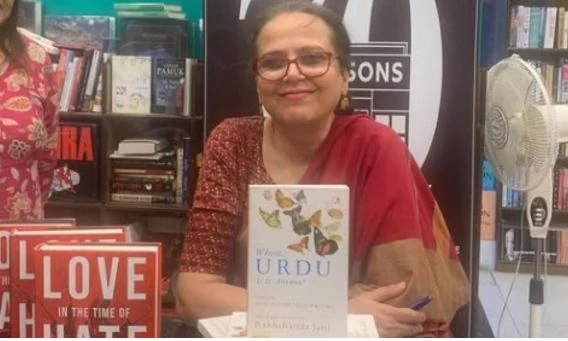
Rakhshanda Jalil Defends Urdu as a Shared Indian Heritage in her new Anthology

NEW DELHI :

New Delhi:

Literary historian Dr Rakhshanda Jalil has once again reminded Indians that Urdu is deeply rooted in the country’s soil and belongs to all communities, not only Muslims. In a detailed interview with the Indian Express about her new anthology Whose Urdu Is It Anyway?, Jalil traced the rise, decline, and contested identity of Urdu in modern India.

She explained that Urdu developed through centuries of cultural exchange, drawing from Persian, Arabic, Turkic, and local dialects, and eventually became the lingua franca of North India. From courtrooms to markets, it was a language spoken across caste and creed. Yet, political movements in the early twentieth century began to link Hindi with Hindu nationalism, sidelining Urdu and associating it exclusively with Muslims.

Jalil underlined how Partition worsened this perception. With Pakistan adopting Urdu as its national language in 1947, Urdu was treated as “enemy property” in India. This shift, she argued, accelerated the decline of Urdu and restricted its public identity. Today, while the government occasionally honours Urdu writers, stereotypes and misinformation continue to reduce Urdu to a religious marker rather than a shared cultural heritage.

Her anthology features sixteen short stories by non-Muslim Urdu writers such as Krishan Chander, Rajinder Singh Bedi, and Gulzar. The collection challenges the misconception that Urdu belongs only to Muslims. Jalil believes that Urdu is “as Indian as anybody or anything can be regarded as Indian” and insists that the language is willing to belong to anyone who values it.

Despite fears about its future, she remains optimistic. Urdu continues to thrive in poetry, Bollywood lyrics, and growing digital platforms. While fewer people read its script, its cultural resonance persists. Echoing Manto, Jalil recalled his words that no human effort can kill a language. Urdu, she said, will remain part of India’s consciousness for years to come.

Dr Rakhshanda Jalil is a noted literary historian, translator, and cultural commentator with over 25 books to her credit. She is widely recognized for her work on Urdu literature and the Progressive Writers’ Movement.

source: http://www.radiancenews.com / Radiance News / Home> Arts & Culture> Focus> Report / by Radiance News Bureau / August 29th, 2025

Writer Banu Mushtaq Inaugurates Dasara Festival In Mysuru

KARNATAKA :

BanuMushtaq was accompanied by Chief Minister Siddaramaiah, several ministers in the state cabinet, among others.

Banu Mushtaq inaugurated the Mysuru Dasara festival.

Mysuru :

The famous Mysuru Dasara festival commenced in the city and palaces on Monday with religious and traditional fervour, with International Booker Prize-winning writer Banu Mushtaq inaugurating the festivities.

Banu Mushtaq inaugurated the festivities during the auspicious “Vrushchika Lagna” by showering flowers on the idol of goddess Chamundeshwari, the presiding deity of Mysuru and its royals, amid chanting of Vedic hymns by priests, at the premises of Chamundeshwari temple atop the Chamundi Hills here.

Celebrated as ‘Nada Habba’ (state festival), the 11-day Dasara or ‘Sharan Navaratri’ festivities are expected to be a grand affair this year, showcasing Karnataka’s rich culture and traditions, coupled with reminiscence of royal pomp and glory.

In the inaugural event, Banu Mushtaq was accompanied by Chief Minister Siddaramaiah, several ministers in the state cabinet, among others.

Earlier, Banu Mushtaq, along with Chief Minister and other dignitaries, visited the Chamundeshwari temple and offered prayers to the goddess, referred to as the “Naada Devate” (state deity), ahead of the inaugural. 

(This story has not been edited by NDTV staff and is auto-generated from a syndicated feed.)

source: http://www.ndtv.com / NDTV / Home> News> India News / by Press Trust of India / September 22nd, 2025

Fikrokhabar launches Online Naat Competition 2025 for children

Bhatkal (Uttara Kannada District), KARNATAKA :

Bhatkal: 

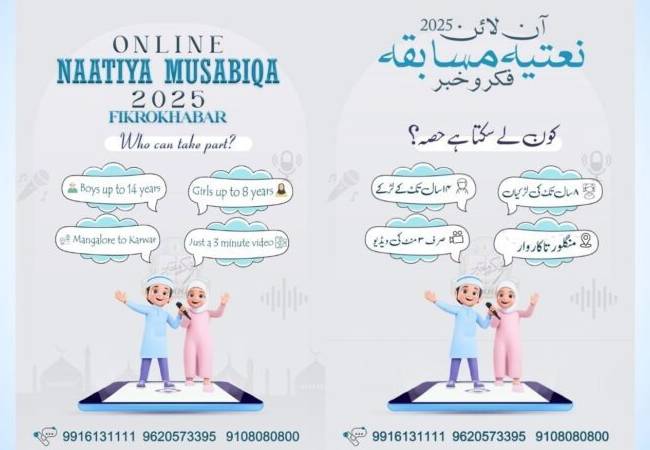
Fikrokhabar, a news portal based in Bhatkal, has announced its Online Naat Competition 2025, inviting children from coastal Karnataka to take part in the programme during the holy month of Rabi al-Awwal.

The initiative is aimed at celebrating the birth anniversary of Prophet Muhammad by encouraging children to express their devotion through Naat recitation.

According to the organisers, the contest has been designed to nurture both the spiritual and creative growth of children by giving them a platform to present Naats in a digital format. The online mode ensures easy access and wider participation across the region.

The competition is open to boys up to the age of 13 years and girls up to the age of 8 years.

Participants are required to record a video of their recital, which should not exceed three minutes, and submit it through the Google Form link shared by the organisers. 

The event has been divided into categories based on age and gender to ensure fair participation.

The organisers said that the programme is not merely a contest but also an opportunity for children to learn more about the life of the Prophet, strengthen their faith, and showcase their talent before a larger audience. It also encourages memorisation and thoughtful reflection on poetic tributes dedicated to the Prophet, fostering deeper appreciation of Islamic teachings.

Parents and guardians interested in registering their children have been asked to get in touch with the coordinators for more details regarding deadlines, judging process and prizes.

Further information can be obtained by contacting +91 9916131111, +91 9620573395 or +91 9108080800.

source: http://www.english.varthabharati.in / Vartha Bharati / Home> Karavali / by Vartha Bharati / September 05th, 2025

Calligraphy and a message deep within

Vijayapura (formerly Bijapur) / Kalaburagi (Gulbarga), KARNATAKA :

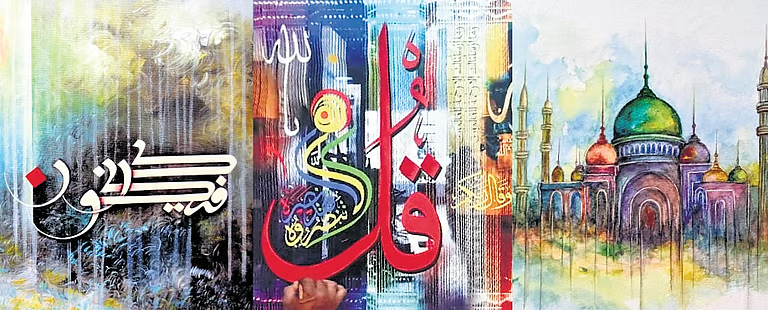
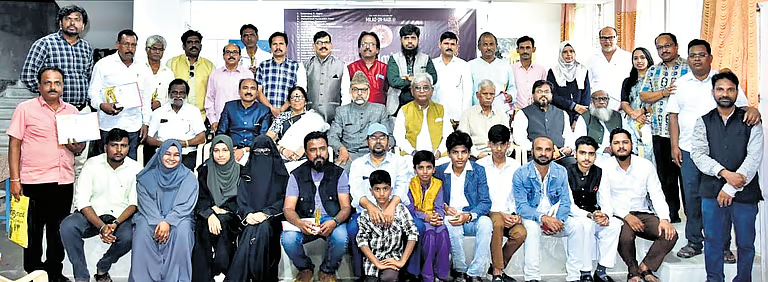
Around 40 artists from all faiths are on a campaign to preserve the Islamic art, and build communal harmony

Calligraphy paintings created by various artists

Vijayapura :

When veteran artist Dr Subbayya Neela was invited to join a campaign to spread communal harmony through the ancient but fading art of Islamic calligraphy, he could not hide his delight. For him, the idea was not merely about preserving an art form, but about exploring the potential of art to transcend barriers of faith and culture.

“I have always believed that art knows no religion or boundaries. Art has the power to touch the hearts of people across communities. That is why, when I was approached to contribute to this unique initiative, I immediately agreed. I prepared a few pieces of Arabic calligraphy that were later exhibited in different places as part of the campaign,” recalled Dr Neela.

Among his works was a calligraphic representation of the Arabic phrase ‘Allahu Akbar’, which means ‘God is Great’. “I was given the liberty to interpret the phrase through my own artistic imagination, while maintaining the sanctity of the verse. It was both a responsibility and a joy,” he said.

Dr Neela is among 40 artists from across Karnataka, both Hindus and Muslims, who have joined this movement that began in Kalaburagi in 2020. The campaign was conceived not only to preserve Islamic calligraphy, which has been steadily losing ground, but also to foster unity at a time when society is fractured along communal lines.

The group of artists who joined the campaign

The Initiative

It was the brainchild of noted artist Mohammed Ayazuddin Patel, a veteran painter from Kalaburagi and recipient of the Lalit Kala Akademi Award. “When hatred and intolerance seemed to be gaining ground in society, we felt the need to bring people together. We thought of reviving Arabic and Islamic calligraphy because it embodies both artistic beauty and deep spiritual messages. At the same time, it offered us a platform to involve artists of all faiths to work together for harmony,” he explained.

Ayazuddin was soon joined by another respected artist, Rehman Patel, and together they expanded the circle of participants. What started with around 15 artists, junior and senior, has now grown into a diverse collective of 40, half of whom are Hindus. These artists work closely with their Muslim counterparts to ensure accuracy in Arabic writing, while retaining artistic freedom.

The campaign, in many ways, draws inspiration from the history of the Deccan itself. Rehman Patel points out that after the decline of the Chalukyan dynasty, many local artisans and craftsmen found themselves unemployed. With the arrival of Muslim rulers in the region, particularly in erstwhile Bijapur and Gulbarga, these artisans were drawn into projects that fused Persian and Turkish influences with local Indian traditions.

“The architecture of that time was a collaboration. While designs came from foreign artists, the actual construction was executed by local Hindu craftsmen. The result was Indo-Persian art, a blend of Indian and Islamic architecture that still stands testament to cultural harmony,” he said. Arabic and Islamic calligraphy flourished during this period, adorning monuments and manuscripts, but over the centuries, as tastes and practices changed, the art form began to fade. “Our campaign is an attempt to not only revive this vanishing tradition but also to remind people of the harmony that once defined this land,” he added.

Preserving sacredness

A key aspect is the selection of verses from the Quran. The organizers have been deliberate in choosing verses that emphasize unity, peace and brotherhood, values that are not confined to one faith but resonate universally. “The artists are given complete freedom to use their imagination while ensuring that calligraphy remains the focal point. We guide them on the technicalities of Arabic script, but artistic interpretation is entirely theirs,” explained Ayazuddin. “This way, we safeguard the sacredness of the verses while allowing creativity to flourish.”

For many Hindu artists like Basavaraj Totad and Rajani Talwar who are involved in it, it has been a learning experience. Working with Arabic characters is not easy, and ensuring accuracy requires constant collaboration. Yet, this very collaboration has built bonds of trust and friendship. “It is heartening to see artists from different backgrounds sit together, discuss and create something so meaningful,” said Ashok Hiremath, an artist from Bidar.

To showcase their work and reach a wider audience, the collective has organized exhibitions, usually coinciding with Id-Milad, the birth anniversary of Prophet Mohammed. So far, five exhibitions have been held, each drawing large crowds from different faiths. “The response has been overwhelming,” Ayazuddin said. “We have seen people from all communities attend and appreciate the art. Many told us that such initiatives give them hope that religious harmony is still alive in our society, and voices of hate and division are not as strong as they seem.”

The exhibitions are not limited to calligraphy, but also feature paintings and photographs of ancient monuments from the Deccan region, tying the campaign to the cultural and architectural heritage of Karnataka. “This serves two purposes. It connects people with their shared history, and encourages them to protect and preserve monuments that are our national heritage,” said Rehman Patel.

Messages beyond borders

For the participating artists, the project is as much about personal conviction as it is about art. Dr Neela believes the messages of peace from saints and prophets have universal appeal. “Prophet Mohammed spread the message of peace, which can be accepted by anyone, anywhere in the world,” he said.

“If art can be used as a language of unity, it should not remain confined to one place. Art has always been a reflection of society. If society is fractured, art can heal and unite. That is what we are trying to do through this campaign,” Ayazuddin said.

source: http://www.newindianexpress.com / The New Indian Express / Home> Good News / by Firoz Rozindar / September 14th, 2025

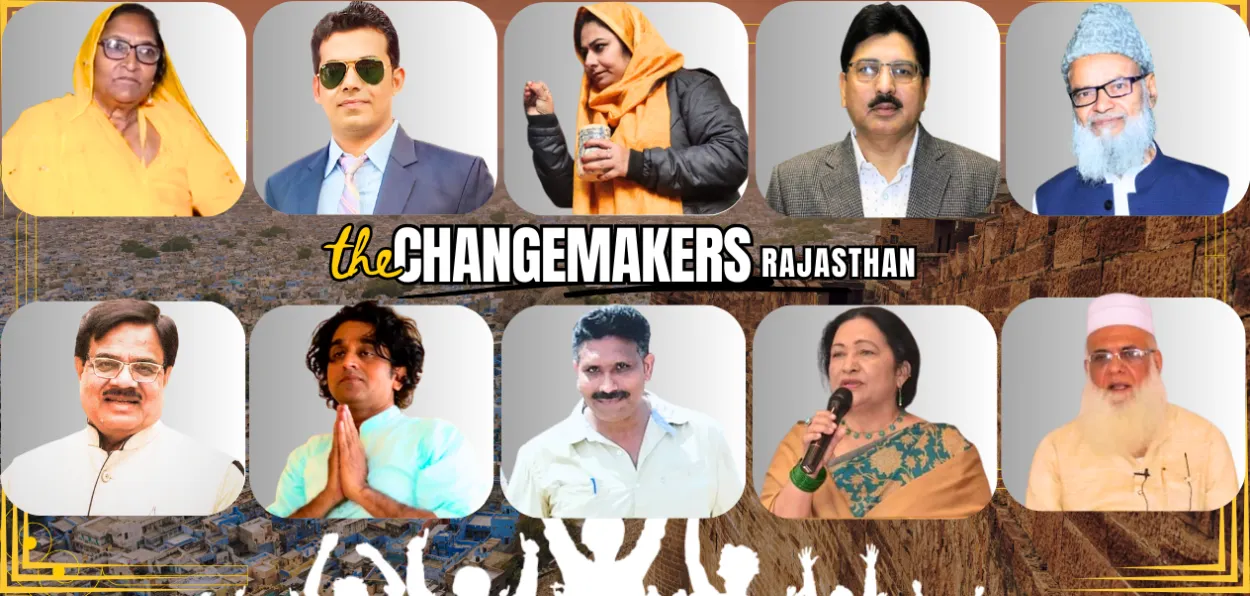
The Changemakers: 10 stars of Rajasthan who have made society proud

RAJASTHAN :

Changemakers of Rajasthan

Jaipur :

Rajasthan is known for its sandy deserts, historical monuments, especially forts, vibrant culture, and above all, its brave people, some of whom are inspiring others and changing society for the better. Under our series ‘The Changemakers’, Awaz-The Voice, brings you ten such personalities of Rajasthan, who have done extraordinary and pioneering work. Batool Begum: A living legacy of musical heritage.

Batool Begum: Woman who took traditional music to the world

One name that resonates in the streets of Jaipur is that of Batool Begum. Born in Kerap village of Nagaur district, Rajasthan, this extraordinary singer is a living legacy of Indian classical music. Batool developed a deep passion for music in her childhood. Despite facing social and economic challenges, she continued her singing.

Her melodious voice and her passion for music not only earned her recognition as an artist but also proved that talent can break all barriers. Her art is a source of inspiration for her community and the entire Rajasthan.

Abdul Salam Johar: A lac bangle maker who received global recognition

The vibrant spirit of India’s Pink City, Jaipur, doesn’t only emanate from its colours and people but also from the traditional handicrafts that are made and sold here. Bangles worth lakhs are made in these streets, which are a symbol of the traditional beauty and hard work of thousands of its people.

Abdul Salam Johar is one such artist who not only preserved the traditional art of the State but also brought about a social change in a major way. Coming from the Manihar community, Johar was born in a family with little means, but his dreams were extraordinary. Seeing the struggles of his grandfather Hafiz Mohammad Ismail and parents Haji Abdul Aziz and Hajjan Qamar Jahan, he made hard work, dedication, and social service the main mantra of his life.

He began his journey from his ancestral shop ‘Indian Kangan and Colour Store’ located in Tripolia Bazaar of Jaipur, and today his wares are being sold under brands ‘Johar Design’, ‘Johar King’ and ‘Indian Crafts’ in the global markets. He is not only a successful entrepreneur, but also a social reformer who took his community and traditional art to new heights.

Abdul Latif ‘Arco’: A confluence of business and social service

Abdul Latif, who lives in Chini ki Burj in the capital Jaipur, and is known as ‘Arko’ in Rajasthan, is one such special personality. Born in a small village of Chomu in 1946, Abdul Latif’s father, Rahmatullah, and mother, Hafijan, taught him hard work, honesty, and the passion to help people, which became the basis of his life.

His company, Abdul Razzaq & Company (ARCO), is today a big name for social service along with electric motors, fans, and coolers. Apart from this, his hotel, ARCO Palace, is a symbol of his hard work and foresight. Abdul Latif’s story is not just of a businessman, but of a person who chose to work as a changemaker by combining his business and social responsibilities.

Qazi Nishat Hussain: A new voice breaking stereotypes

The voice rising from a small office located in the narrow streets of Johri Bazaar in Jaipur, the capital of Rajasthan, is today inspiring society to change. This voice is of Nishat Hussain, Rajasthan’s first Muslim female Qazi, social worker, and a strong advocate of the rights of Muslim women.

Her life journey is an example of courage, struggle, and change, which not only made thousands of women aware but also gave them a new direction to live.

Born in Sitabari Mohalla of Karauli district, Nishat’s childhood was spent in an environment of communal harmony. His family was the only Muslim family in the neighbourhood. There were three temples in front of her house. She says, “We did not know who was a Hindu and who was a Muslim.” In a backward area like Karauli, where girls’ education was not given importance, Nishat created history. She became the first Muslim girl in the district to pass the tenth standard, that too as the only Muslim student among 1200 girls. Today, she has become a torchbearer of the rights of Muslim women.

Captain Mirza Mohtasim Baig and Ruby Khan: An Inspiring couple in social service

An inspirational couple, Captain Mirza Mohtasim Baig and his wife Ruby Khan, hail from Jaipur. Captain Mirza is the first Muslim pilot of Rajasthan and has been operating national and international flights for the last 25 years. At the same time, his wife Ruby is an active social worker and politician.

Both believe that if one wants to bring change in society, then he has to take the initiative. Together, they had organised medical camps, documentation camps, free ration distribution, and offered financial help to families in the marriage of their daughters. The couple is an epitome of change brought about by spirited people.

Dr. Arif Khan: The village scientist who created history

Thirty-four years ago, a child was born in the small village of Masani in the Hanumangarh district of Rajasthan. Today, he is Dr. Arif Khan, a scientist who has brought laurels to India. In his village, most of the people toiled in the fields. His father, Advocate Farid Khan, wanted his son to become a doctor. His mother and grandfather also had the same dream. But there were few schools in Masani, and the path to making dreams come true was difficult. Still, Arif had a passion to do something extraordinary in his life.

With his hard work and dedication, he became a bio-scientist and brought glory to his family and village. His research on milk and food products brought a wave of change. His story proves that if the intentions are strong, then even a boy from a small village can become a scientist and make the country feel proud.

Mainuna Nargis: First Shia Muslim woman in art conservation

In a vast country like India, art conservation is important since it not only preserves history but also connects future generations to our heritage.  Mainuna Nargis, the country’s first and so far the only Shia Muslim woman art conservator, does the same work. Born in Bahjoi, a small town in Moradabad district of Uttar Pradesh, Maimuna’s childhood was ordinary, but her dreams were extraordinary. Rajasthan has now become Mainuna’s second home.

Her father, a Policeman in UP, always encouraged her. After studying Fine Arts from Aligarh Muslim University (AMU), she did a diploma in Museology, which became the most decisive turning point in her life. Maimuna’s story is not just of professional success, but a story of passion, struggle, and self-confidence, which revived the broken pieces of history.

Yoga Guru Naeem Khan: Global journey from music to yoga

The life journey of Yoga Guru Naeem Khan, who rose from the streets of Jodhpur, the cultural capital of Rajasthan, to spread his spiritual aura on international platforms, is a unique example. He rose from a common man to a global yoga guru and presented yoga as a universal energy beyond religion, culture, and boundaries.

Naeem Khan was born in a family where music was in every breath. His grandfather, Ustad Umardin Khan, was the court musician of the Jodhpur royal family, while his maternal uncle was Padma Bhushan-awarded Sarod player Ustad Sultan Khan. However, with changing times, that traditional flame of music started to fade. Naeem and his brother got involved in business, but yoga gave Naeem a new direction, and he took it to a global platform.

Syed Anwar Shah: A man who introduced girls to education

Thirty years ago, a dream was born in a small room in Jaipur, which has today become the light of education for thousands of girls. This is the story of Syed Anwar Shah, whom people fondly call Master Anwar Shah. He not only dreamt of his daughter’s education, but also made it a means of progress for the daughters of society.

Today his educational institution, Al-Jamia-tul Alia, is spreading the message of knowledge and Islamic ethics not only in Jaipur, but also in the whole of India and abroad. After completing his M.A. in Public Administration from Rajasthan University in 1980, he dedicated his entire life to the welfare of society and the service of education. In 1995, when his daughter Alia was born, he decided to set up an institution for the education of girls, which would impart both worldly and divine teachings.

Today, his effort has become a boon for thousands of families.

Padma Shri Shakir Ali: Patron of Miniature Painting

It’s no exaggeration to say that Jaipur is the art capital of Rajasthan. And in the field of miniature painting, the name of Syed Shakir Ali comes to the fore spontaneously. This genre of painting is an identity of the state of Rajasthan. 

Padma Shri awardee Syed Shakir Ali is not only a great practitioner of this art, but he is also the guardian of that heritage, which is an integral part of the cultural identity of Rajasthan. Born in 1956 in Jalesar village of Uttar Pradesh, Shakir Ali’s family soon settled in Jaipur, where his art got a new direction. 

Today, he has given recognition to this traditional art of Rajasthan not only in India but also on international platforms.

source: http://www.awazthevoice.in / Awaz, The Voice / Home> The Changemakers / by Aasha Khosa, ATV / September 14th, 2025

Senior writer and thinker Prof. M. Karimuddin passes away

Ganjam Village (Srirangapatna) , KARNATAKA :

Chief Minister Siddaramaiah condoles


Mandya/Srirangapatna :

Senior writer, multilingual scholar and progressive thinker Prof. M. Karimuddin (95) passed away at his home in Ganjam, Srirangapatna on Saturday morning due to age-related illness.

Karimuddin, who was unmarried, had served as a Kannada professor and later as a principal in government degree colleges in Mysore, Mandya, Madikeri and elsewhere before retiring.

A student of Kuvempu, he had studied Kannada, English, Urdu, Persian, Arabic and Sanskrit.

He had written many works including Orphan Muslims, Sanchita Chintana, and Baalu ​​Baddu. Many of his thought-provoking speeches on All India Radio were popular. ‘Prof. Karimuddin’s Life and Literature’ was the text for students of class 9 who were studying Kannada as a second language in Urdu medium.

A good orator, Karimuddin was actively involved in farmer, Dalit, pro-Kannada, progressive, and anti-idiotic movements even in his later years. His ancestors were relatives of Tipu Sultan.

Karimuddin, who retired as a Kannada professor at Maharaja’s College, Mysore, was well-versed in Kannada grammar, Old Kannada and New Kannada literature.

He had also done a lot of research on Tipu Sultan. It is said that he had written many collected works on the history of Tipu Sultan.

His friend Prof. Nanjaraja Urs expressed his condolences, saying that his death is a huge loss to the Kannada nation.

Chief Minister’s condolences

“I am saddened to hear the news of the death of senior writer and popular professor Prof. M. Karimuddin. A simple gentleman, Prof. Karimuddin used to help educate the children of the poor. I also share in the grief of his family. I pray that God may grant peace to his soul.”

– Chief Minister Siddaramaiah

source: http://www.varthabharati.in / Vartha Bharati, Kannada / Home> News> State / by News Bharti (english translation of Kannada article) / September 02nd, 2023

Treasure trove of memories: Khaleel’s scrap museum in Malemar

Mangaluru (Dakshina Kannada District) , KARNATAKA :

Mangaluru : 

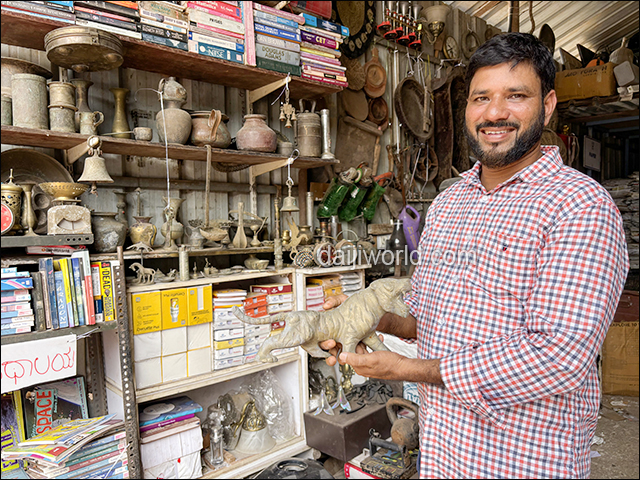
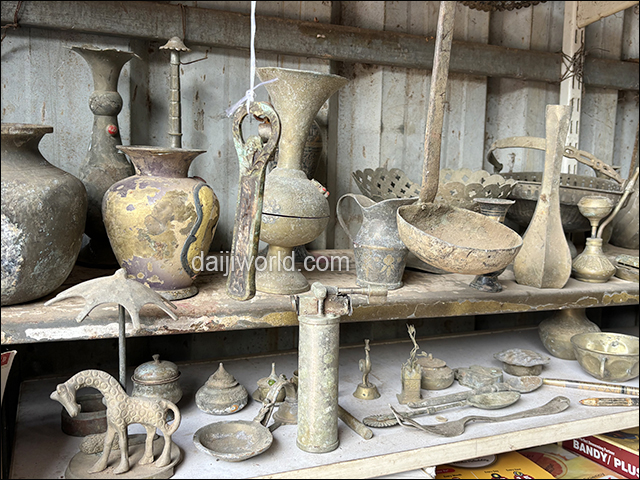
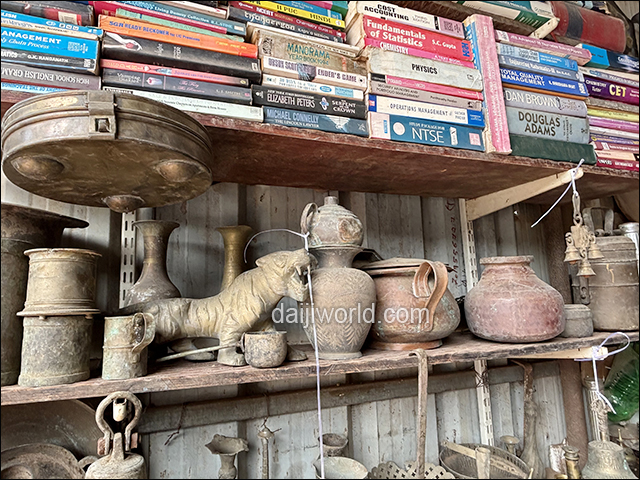
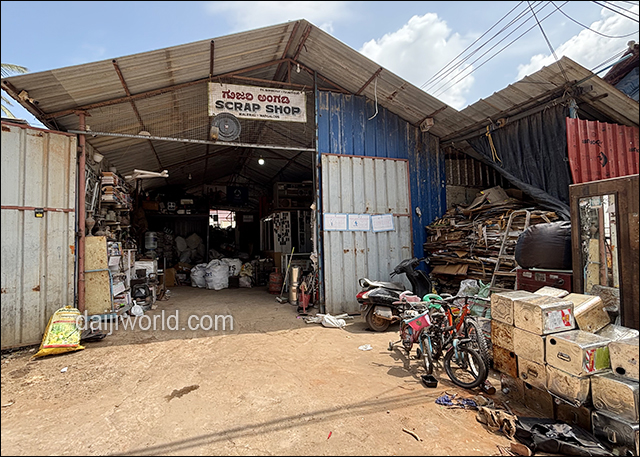
In the heart of Malemar stands a unique museum that has become a treasure trove of memories for the community. What began as a small scrap business two decades ago, and later transformed into a distinctive museum eight years ago, is today capturing the attention of visitors with its fascinating collection of vintage artefacts — all thanks to the dedication of Ibrahim Khaleel.

Originally hailing from Kulur, Khaleel developed the idea of converting his scrap shop into a museum when he noticed antique and traditional pieces entering scrap shops.

Determined to preserve them for future generations, he began collecting items not only from his own shop but also from households and other scrap dealers. Over the years, his efforts have turned discarded objects into priceless memorabilia — truly creating ‘wealth out of waste’.

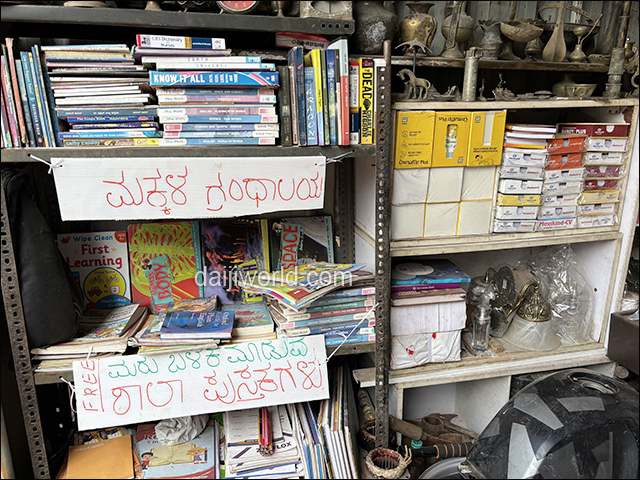
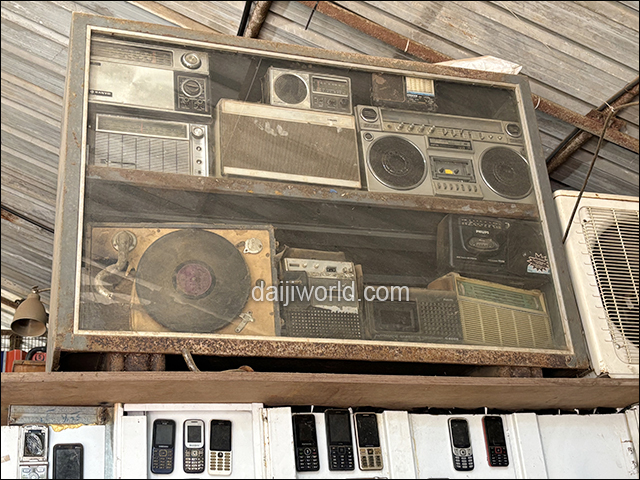
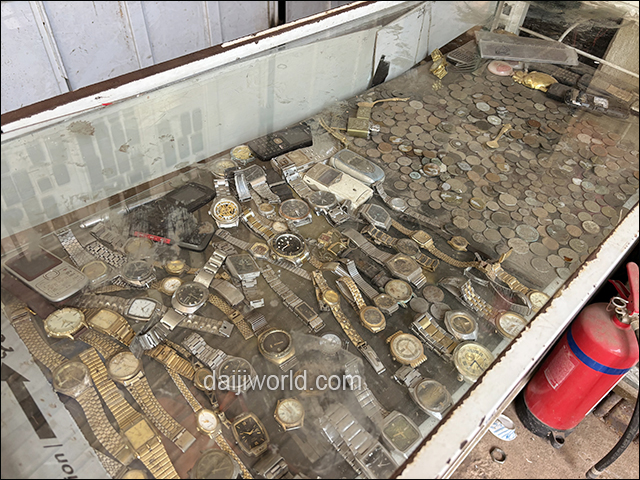
Khaleel’s museum now showcases a wide array of antiques, including coins, watches, tape recorders, gramophones, vintage telephones, lanterns, and traditional household items. He has also created a small library within the museum, where children and students can access books free of cost, making his initiative both nostalgic and educational.

His work has received valuable support from organisations such as Plastic for Change, which helped him organise the scrap shop into different sections. Khaleel has also invested in machines to shred waste paper, ensuring sensitive documents are not misused, and to separate cable wires from copper for effective recycling.

Looking ahead, Khaleel hopes to create a separate, larger space for his museum so that more people can visit, relive memories, and appreciate the craftsmanship and design of a bygone era.

Khaleel’s scrap museum is not just a collection of old objects; it is a space where history lives on, nostalgia is rekindled, and generosity flourishes. For anyone visiting Malemar, it is undoubtedly a must-see destination.

Scrap Shop Turns Museum in Mangalore | Creativity of Ibrahim Khaleel / source: youtube.com

source: http://www.daijiworld.com / Daijiworld / Home> Top Stories / by Daijiworld Media Network – Mangaluru / pics: Dayanand Kukkaje / September 11th, 2025