Tag Archives: Bhatkallys

Connecting Konkan with Arabia via Iran: The history of Nawayathi, the language of Bhatkali Muslims

Bhatkal (Uttara Kannada District / Karavali , KARNATAKA :

The Editor of Naqsh-e-Nawayath, Mohammed Abdul Aleem Qasmi

The association of Bhatkal with the Arab world goes back to over a thousand years and this coastal town in Uttara Kannada takes immense pride in it. From clothes, perfumes to streets named after Arab cities, the Arab influence is visible. But one of the most enriching experiences of this tradition is the language of Nawayathi, which is a mix of Persian, Urdu, Arabic, Marathi and Konkani. The language is almost exclusive to Bhatkal, with only a few villages outside the town speaking this language. In the sixth of the nine-part series, Amit Kumar talks about the origins, history and legacy of Nawayathi and how it seeks to survive in the modern age.

“No matter where we go, we can identify our people. All it takes is a few words of Nawayathi,” says Maulavi Abdul Aleem Qasmi, the owner and editor of Naqsh-e-Nawayath, the only Nawayathi newspaper published in India. The 73-year-old resident of Bhatkal has been running the newspaper, published fortnightly, for the past 41 years, first as the owner and then as the editor after the demise of its founding editor Syed Abdul Rahim Irshad in 1996, after which the newspaper shifted from Mumbai to Bhatkal. Now run from an old building in Dubai market in Bhatkal, the fortnightly newspaper remains an important face of the language and the efforts to safeguard it. In fact, it is with a glint in his eye that Qasmi points out that even after all these changes, the newspaper, which has 16 pages, still sells about 3,000 copies per issue. About 80% of the copies are sent via post to its readers while the remaining are bought in the city. “The numbers have remained consistent and that makes me happy. The entire paper is proofread and published by two people,” he adds.

Bhatkalis offer a number of perspectives to now Nawayathi came into being. According to Qasmi, it is an amalgamation of nine languages (naw/nav=nine, ayath=language), although he is unable to suggest all the nine languages from which the language originated. In its current form, the language is closest to Konkani. Qasmi says that when the Arab traders came to India, a number of them settled here in Bhatkal due to its favourable climate and location. The descendants of these Arabs would later be identified as Nawayath.

The office of Naqsh-e-Nawayath, the only Nawyathi newspaper of India

While the language itself owed its roots to a number of languages, from the very beginning it used the Persian script. His newspaper, which once focussed on the most important news from the region, made the shift to more feature-based items over the past decade. “With the advent of the internet and the emergence of local websites and news channels, there was little for us in the form of news. So we now focus on Islamic teaching, columns from our readers and obituaries and marriages. In fact, now the obituaries and marriages sections are the main USP of our newspaper,” he adds.

Persian, Nawayathi and Urdu: How written documents evolved in Bhatkal

According to Maulana Abdul Aziz Kaziya, an expert on Nawayathi and a member of Nawayath Mehfil, an organisation which is working to restore the glory of the language, Nawayathi was not initially used in a written form. “Up to the 17th century, almost all our records and written material remained in Persian even though Nawayathi was the spoken language. It was only around the end of 17th century that the language began to be used in written form too in the Persian script. I have seen documents, contracts and official letters written from that period in Nawayathi,” he says. But with the 20th century, a new challenge faced the Bhatkalis. “When the Anjuman Hami-e-Muslimeen was established in 1919, they were faced with a decision,” says Kaziya. “They wanted to create an education system that would help students equip themselves with the modern world while retaining the core Islamic principles. So, they chose Urdu over Nawayathi and since then Urdu has become the de facto language of education here,” he adds. While it proved to be a positive for students, it nevertheless relegated Nawayathi to the status of a “home” language, Kaziya adds. “Even today, almost all families speak Nawayathi at home and amongst each other. But it was never, and is unlikely, to be taught in schools,” he says.
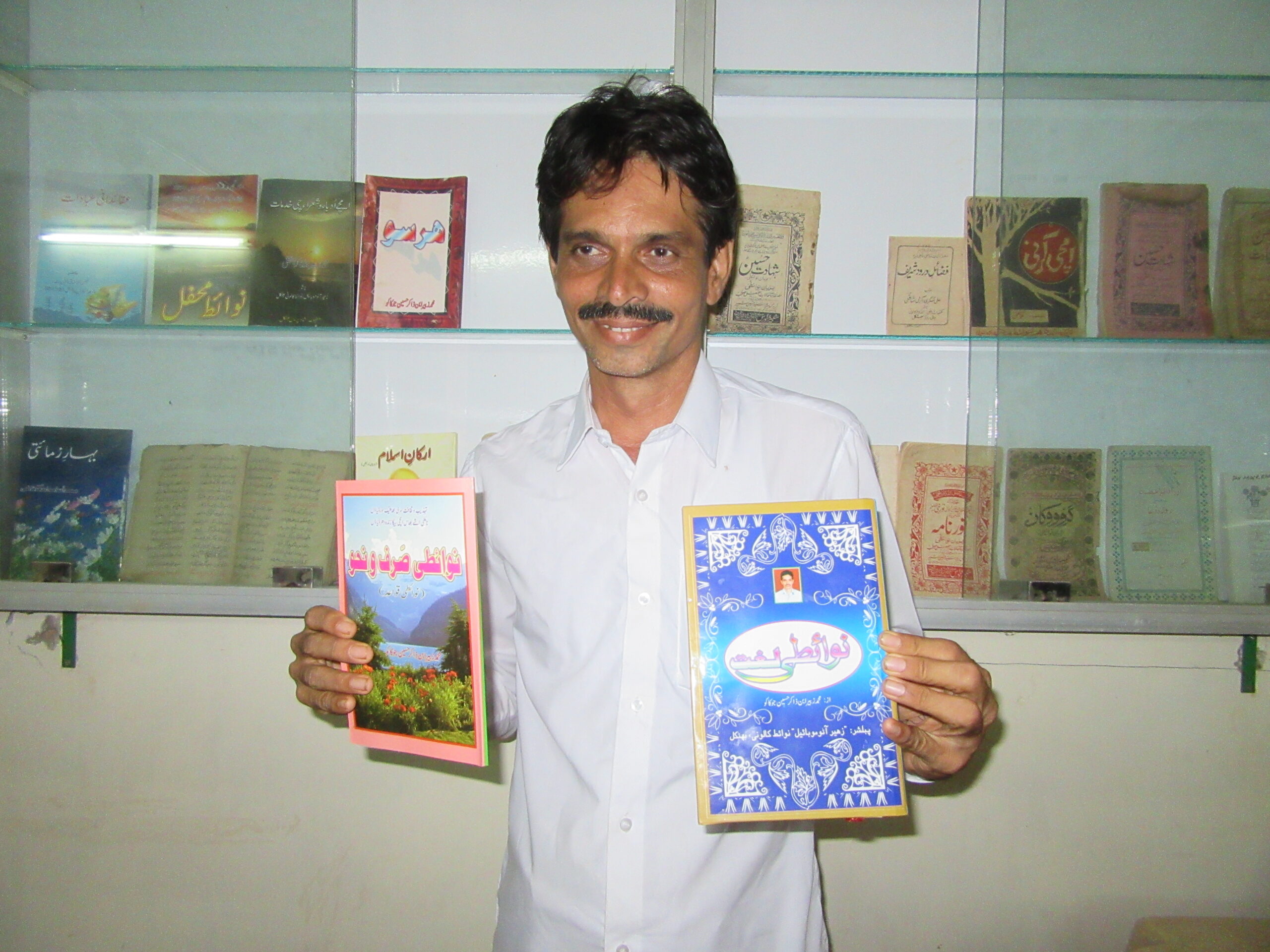
Mohammed Zubair Jukaku, who has written the first Nawayathi book on Grammar and a dictionary.

Scholars, poems and the future of the language

Aikage Sayyano-Khalabe Ismail (18th century): Nawayathi Dua

The original song has 143 verses. Here are the first ten.

Aikage Sayyano, mege sangta
Allahche Pashi, Taufiq Mangta…
Toge naito amige kiwro,
Tekage waknuk napawe Iwro
Toge postolo amchoge dhani
Teka nai zodo upawanit koni
Manat mokhat aslale to Zane
Techege mazuk na-hale pane
Izanak suzanak techege niamato
Inwa gawrwa techege sifato
Inauche gaurauche tekachge sazawar
Techege athwen inauta janawar
Mohammed nabiyacho karage wakan
Allahge rakhnit tumchige Iman
Gosacho mogyo amchege wari
Yeko zan nahi techege pari
Taikage fetaules amcher rabban
Aplege kudrat ko karuk bayan
Jibreel yawn teikage Sangile,
Qur’an ghewn teicharge diwile

Translation:
Listen, friends (female) I am going to tell you;
I am going to pray to Allah for prosperity
He is the master, we are the slaves;
Words are not sufficient to praise him.
He looks after us, he is our Lord;
None is born equal to him.
Whatever is in the mind and mouth (lips) he knows;
Without his knowledge, the leaf does not move.
His bounties are bestowed upon the small as well as the great;
His attributes are to be found in both the rich and the poor.
He is the only one fit to be praised and respected;
His praises are sung by animals.
Sing the praises of Prophet Muhammad;
Allah will safeguard your faith.
The Friend of God is unto us;
There is no one like him.
God sent him unto us;
In order to reveal to us his Power.
Gabriel came and revealed to him;
He gave the Qur’an to him.

(From The Nawayaths of Kanara: Victor D’Souza, 1955)

These lines are still taught to many children in Bhatkal as a dua (prayer). Nawayathi has been blessed with a number of eminent authors: Sairul Nisa, Maulud Nanna, Garvo Vakhan and Kaile Bayan among others, but you would struggle to find their books in Bhatkal today. The former editor of Naqsh-e-Nawayath, Syed Abdul Rahim Irshad is regarded by many as the most prominent author/contributor Nawayathi, and his book Faal-e-Sakhan is regarded as the first attempt to go beyond Islamic teachings/writings in Nawayathi and delve into the realm of imagination and poetry. However, you would be hard pressed to find a copy of even this book in Bhatkal.
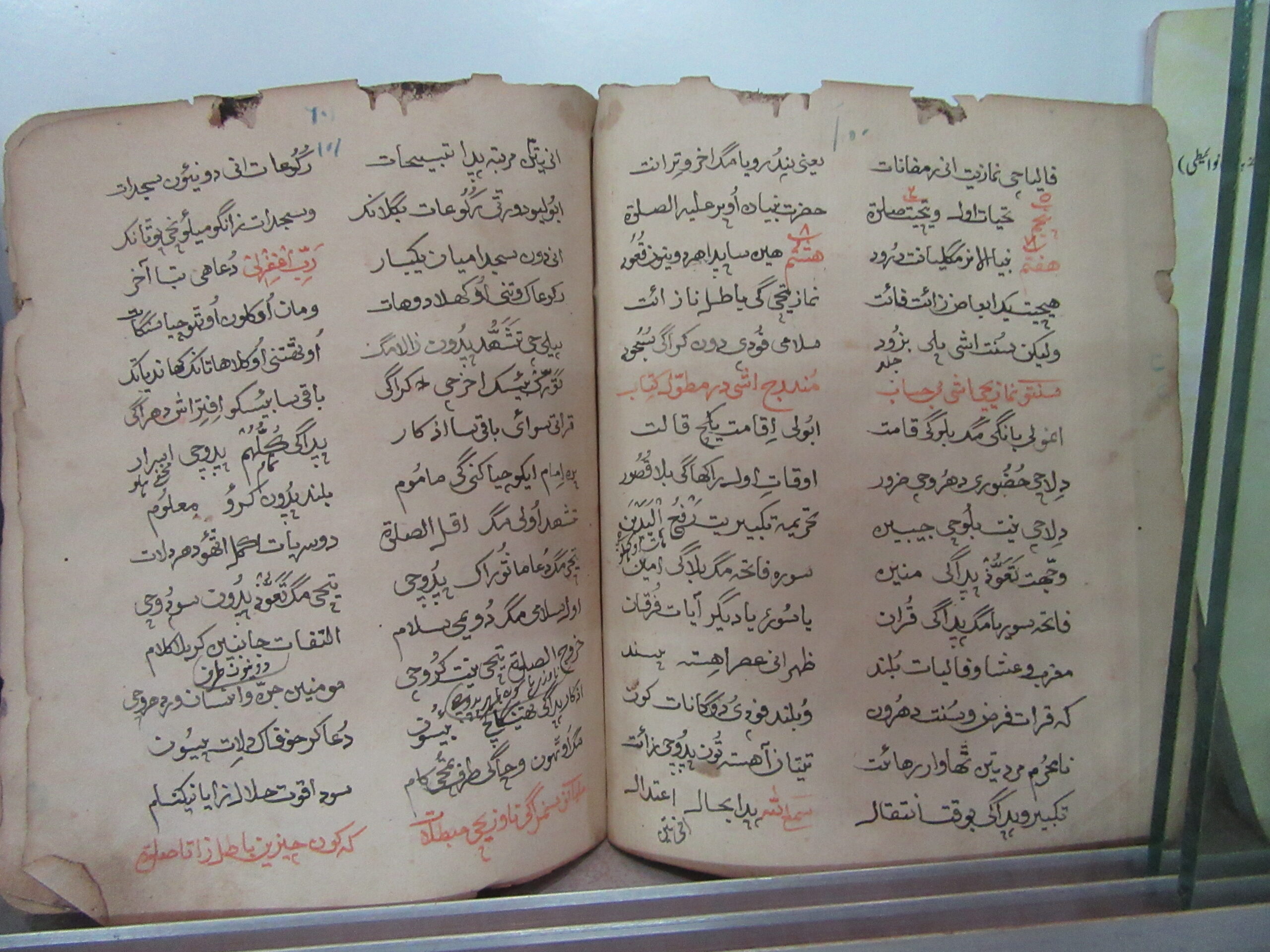
A manuscript of Nawayathi text preserved in the Nawayath Mehfil’s office.

While the language flourishes in the spoken form, it is clear that the same cannot be said of its written form and the literary works. According to Qasmi, the preference for Urdu and Arabic over Nawayathi has in some ways, negatively impacted the local language. “I doubt if the present generation has read much in Nawayathi since the local schools and madrasas give preference to Urdu, English and Kannada,” he adds.

In light of the decline in the status of Nawayathi, a committee called Nawayath Mehfil was formed about 12 years ago. Mohammed Zubair Jakaku, joint secretary of the Mehfil, has written four books in Nawayathi, including the language’s first-ever dictionary and a grammar book, says that there is an attempt to revitalise books written in Nawayathi, and that they are republishing old authors to ensure that these treasures are not lost forever.
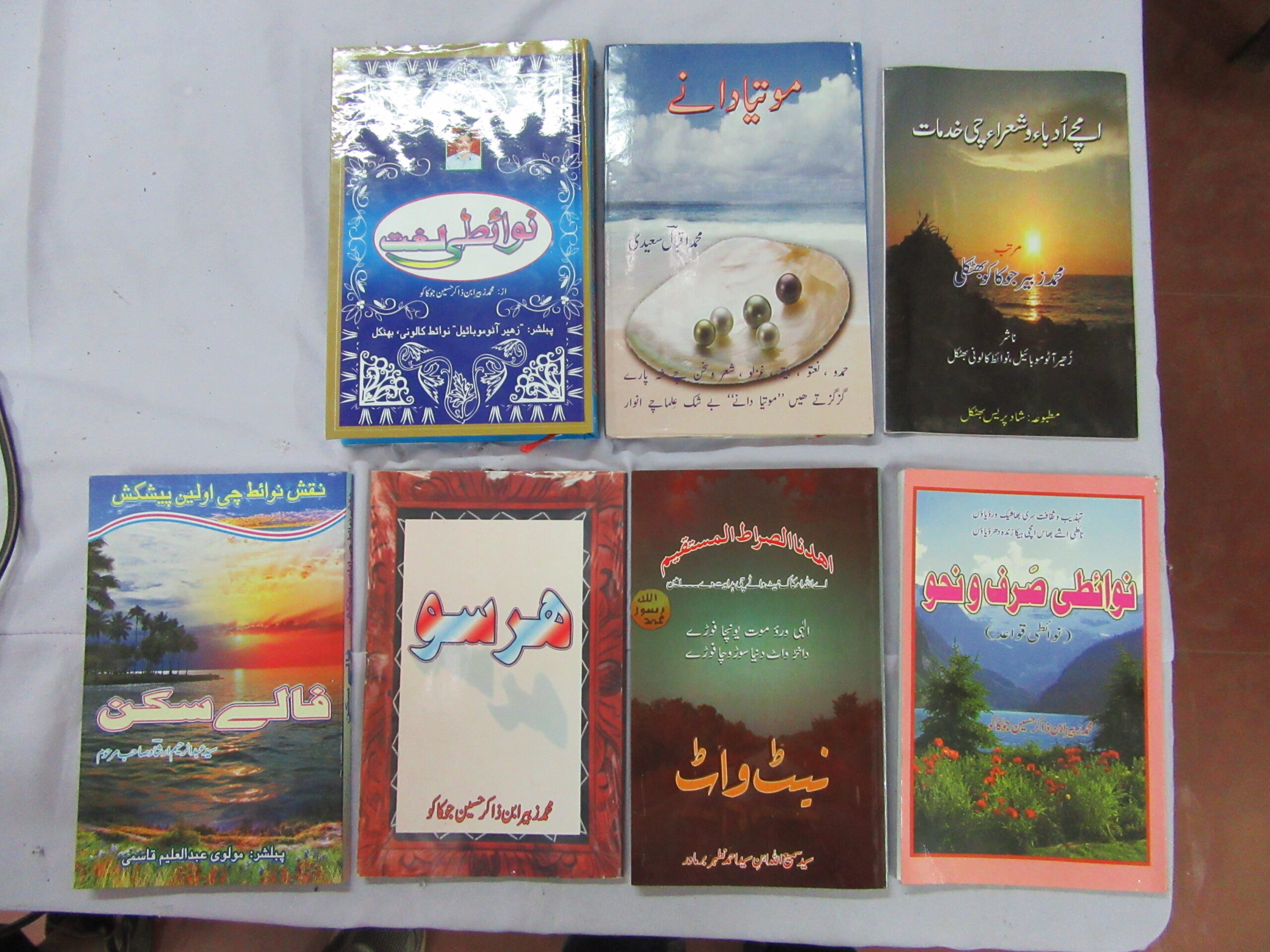
A bunch of new books published in the Nawayathi language

The committee is working on reviving old Nawayathi texts along with working on a translation of Quran to Nawayathi. “We have Quran in 55 languages in our museum and I believe that a copy of the Nawayathi Quran will be a welcome addition to the same. This language is distinctly unique and a matter of pride for us. I hope we do justice to it,” says Qasmi. For now, the language looks safe in the hands of Bhatkalis and in a city that has been given undue attention for all the wrong reasons, it acts as a glue that keeps the society together.

source: http://www.twocircles.net / TwoCircles / Home>News / by TCN staff / January 24th, 2017
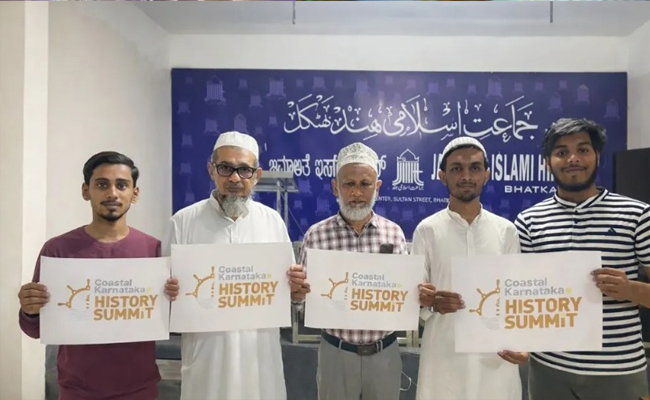
Coastal Karnataka History Summit logo unveiled in Bhatkal; call for research papers issued

Bhatkal (Uttara Kannada District / Karavali), KARNATAKA :

Bhatkal:

Preparations are under way for the upcoming Coastal Karnataka History Summit, with the official logo of the academic event unveiled at Dawat Centre by Students Islamic Organisation of India Bhatkal Unit in Bhatkal on February 22, 2026. The summit is scheduled to be held on May 5, 2026.

The initiative is being organised by the Centre for Education and Research & Analysis (CERA) with the aim of documenting and examining the historical evolution of Coastal Karnataka, including Uttara Kannada, Udupi, Dakshina Kannada and adjoining areas of Kasaragod.

At the launch event, the organisers released the official Call for Papers, inviting scholars, researchers, academicians and students to submit original and unpublished research.

Abstracts of 200 words, either in English or Kannada, must clearly mention the research question, methodology and key findings. The deadline for abstract submission is February 28, 2026. Selected participants will be informed by March 15, and full papers must be submitted by April 20.

The summit will centre around five broad themes. One section will explore the trade and economic networks of the coastal belt, including maritime routes, port towns, fisheries and commodity-based exchanges such as pepper trade. Another domain will examine social structures, caste formations and inter-community relations, along with the role of Islamic, Arab, Persian and local traditions in shaping the region’s cultural fabric.

A separate section will focus on the origin and growth of linguistic communities such as Tulu, Konkani, Beary, Moya Malayalam and Navayati.

Governance and administration under different rulers — including the Alupa dynasty, Rani Abbakka, Tipu Sultan, the Nawaith Sultans of Bhatkal and developments after Independence — will also be studied.

The fifth theme will highlight social reformers such as Narayana Guru, Syed Madani, Malik Deenar, Vakkom Moulavi, Sayyid Fazl Pasha and Kudmul Ranga Rao, and their contributions to education and social reform.

The logo launch programme was attended by senior journalist Dr. Haneef Shabab, JIH Bhatkal President Moulana Syed Zubair SM, SIO Bhatkal President Mohammed Zayan Bangali, Unit Secretary Githreef Rida Manvi and Media Secretary Mashaikh Talish.

Organisers said the summit intends to create a structured academic space for discussing the region’s layered past and bringing local histories into wider public and scholarly discourse.

For submissions and queries, researchers may contact coastalkarnatakahistorysummit@gmail.com.

source: http://www.english.varthabharati.in / Vartha Bharati / Home> Karavali / by Vartha Bharati / February 24th, 2026

Bhatkal’s Coastal Flavours Shine at Hyderabad Pop-Up

Bhatkal, KARNATAKA :

Hyderabad:

Diners at Sheraton Hyderabad were recently introduced to the rarely seen Bhatkali cuisine, thanks to home chef Fatima Riyaz. Through an exclusive pop-up, Fatima presented dishes rooted in the coastal town of Bhatkal in Karnataka, highlighting its Nawayathi heritage and centuries of cultural exchange.

Bhatkali food is known for its unique blend of spices, coconut, and rice. “Five out of six dishes have rice in some form,” Fatima explained, noting how coconut adds sweetness and depth to most preparations. Spice levels are high, but carefully balanced with caramelised onions. Signature to the cuisine is Loli, a red chilli-based spice paste slow-cooked in coconut oil and used across dishes.

The Sheraton menu included Mudkale, rice balls with prawns cooked in coconut oil, and seasonal desserts like Chibbad, a local melon served with coconut milk and lime. While seafood dominates the cuisine, Fatima also created vegetarian versions to suit diverse diners.

Her food is deeply personal, drawn from family traditions and her community’s layered history. “Our cuisine reflects Islamic influences, Jain touches, and coastal Indian roots,” she said. The language of her community, Nawayathi, similarly borrows from Marathi and Konkani, echoing cultural ties along the western coast.

Fatima began cooking professionally after the pandemic, inspired by people reviving traditional recipes. Since then, she has taken Bhatkali cuisine to cities through curated pop-ups. “I only cook this cuisine,” she noted. “It is Indian, but with a sweetness that is ours.”

Story by Deccan Chronicle

source: http://www.radiancenews.com / Radiance News / Home> Features> Latest News> Report / by Radiance News Bureau / September 20th, 2025

Fikrokhabar launches Online Naat Competition 2025 for children

Bhatkal (Uttara Kannada District), KARNATAKA :

Bhatkal: 

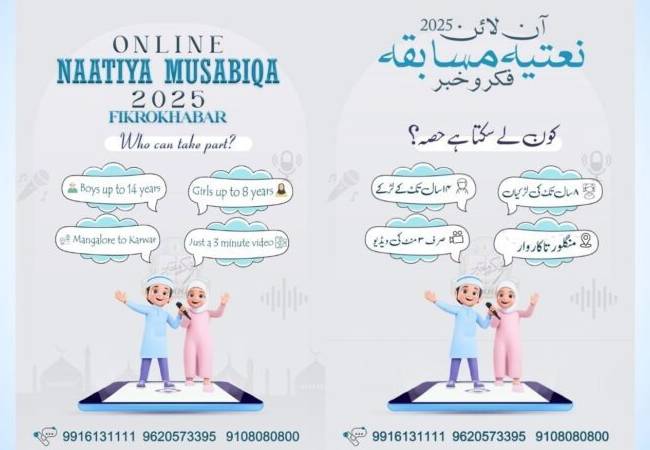
Fikrokhabar, a news portal based in Bhatkal, has announced its Online Naat Competition 2025, inviting children from coastal Karnataka to take part in the programme during the holy month of Rabi al-Awwal.

The initiative is aimed at celebrating the birth anniversary of Prophet Muhammad by encouraging children to express their devotion through Naat recitation.

According to the organisers, the contest has been designed to nurture both the spiritual and creative growth of children by giving them a platform to present Naats in a digital format. The online mode ensures easy access and wider participation across the region.

The competition is open to boys up to the age of 13 years and girls up to the age of 8 years.

Participants are required to record a video of their recital, which should not exceed three minutes, and submit it through the Google Form link shared by the organisers. 

The event has been divided into categories based on age and gender to ensure fair participation.

The organisers said that the programme is not merely a contest but also an opportunity for children to learn more about the life of the Prophet, strengthen their faith, and showcase their talent before a larger audience. It also encourages memorisation and thoughtful reflection on poetic tributes dedicated to the Prophet, fostering deeper appreciation of Islamic teachings.

Parents and guardians interested in registering their children have been asked to get in touch with the coordinators for more details regarding deadlines, judging process and prizes.

Further information can be obtained by contacting +91 9916131111, +91 9620573395 or +91 9108080800.

source: http://www.english.varthabharati.in / Vartha Bharati / Home> Karavali / by Vartha Bharati / September 05th, 2025

AITM CodeFest 2025 concludes in Bhatkal, recognises young innovators from across India

Bhatkal, KARNATAKA :

Bhatkal: 

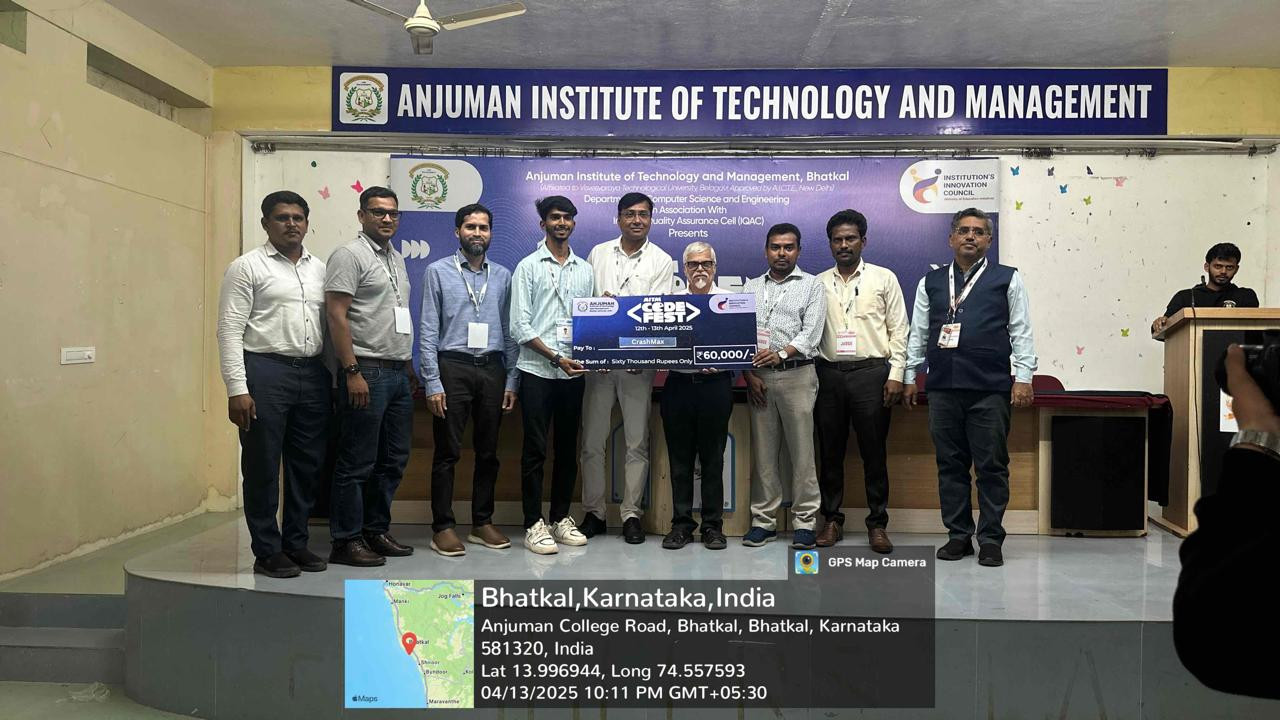
The Anjuman Institute of Technology and Management (AITM), Bhatkal, successfully hosted the AITM CodeFest 2025, a 24-hour national-level hackathon that saw participation from student teams across the country. The event, held on the AITM campus, concluded on Sunday evening with a grand valedictory function celebrating the winners and appreciating all participants for their innovative tech solutions and collaborative spirit.

A total of 30 teams participated in the overnight coding challenge, working intensively on real-world problems to develop creative and impactful solutions.

The results were announced by AITM Principal Dr. K Fazlur Rahman at the valedictory ceremony. Team CrashMax, represented by Abul Khair from Yenepoya Institute of Technology, Mangalore, won the first prize of ₹60,000.

The second prize of ₹30,000 was awarded to Team Cyphernova, comprising Hemanth C S and Mohamed Kamran from the National Institute of Engineering, Mysore.

Team Hustlers.dev, featuring Ahamed Ali Z, Syed Iyanulla, and S Tejas from GM Institute of Technology, Davanagere, secured the third prize of ₹15,000.

Apart from the top three teams, the top ten performing teams also received special cash prizes in recognition of their efforts and exceptional coding solutions.

The judging panel for the hackathon included industry professionals and AITM alumni, including Mohsin Khan, Founder of Niveus Solutions; Mubeen Jukaku, Technology Head at Emertxe Information Technologies; and Waseem Ahmed, Founder of Wynteam Global and Director at RaqMEA. They were joined by Dr. J. Anvar Shathik, Head of the Department of Computer Science and Engineering, and Dr. Daniel Francis, Professor in the same department.

The valedictory ceremony began with a welcome address by Registrar Prof. Zahid Kharuri.

Participants expressed their satisfaction with the event, highlighting the learning experience, teamwork, and mentorship they received. AITM Secretary Mohiddin Ruknaddin congratulated the students and the organizing team, while Event Coordinator Farkhalit Rida delivered the vote of thanks, marking the successful conclusion of the event.

The CodeFest was supported by several sponsors and partners. Niveus Solutions was the Title Partner, DigiScrypt Technologies was the Organizing Partner, and Mohtisham Builders, SproutXP, iTecs Solutions, Emertxe Technologies, Tahoora, and Wynteam Global were Associate Partners.

source: http://www.english.varthabharati.in / Vartha Bharati / Home> Karavali / by Vartha Bharati / April 14th, 2025

Bhatkal Anjuman students getting university rank continues; Najda Ekiri got first rank in Karnataka University Dharwad

Bhatkal (Uttara Kannada District) , KARNATAKA :

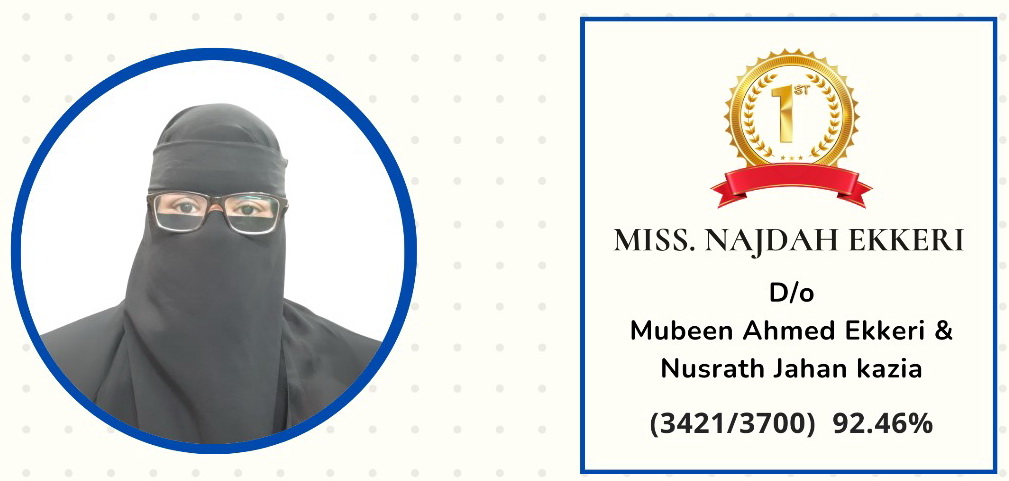
 Students of the colleges run under Anjuman Hamai Muslim Bhatkal continue to get ranks at the university level and this time Najda Ekiri, a student of Anjuman Institute of Management and Computer Applications (AIMCA). Anjuman College has made the name of Anjuman College bright in the entire state by securing first rank in Bachelor of Computer Applications (BCA) at Karnataka University, Dharwad.

 AIMCA Principal Muhammad Mohsin has said in a press release that Najda Ekiri, of Mubeen Ahmed Ekiri and Nusrat Jahan, has also achieved a remarkable feat by memorizing the Holy Quran during her three-year BCA course. According to the press release, Najda secured 3421 marks out of 3700 marks, resulting in a pass rate of 92.46%. The BCA exams were held in August-September 2023.

It has been found that while Najda, a student of Bhatkal Anjuman, secured the first rank in Dharwad University, Dekshanagappa Kharvi, a student of Bhatkal Sri Gurusdhiendra BCA College, secured the third rank at the university level, with an average success rate of 91.73%. has been done.

The university’s second rank went to Shantala Raibagh, a student of Global College of Computer Applications, Hubli, who registered a pass rate of 92.27 percent.

It should be noted that more than fifty BCA colleges are affiliated to Karnataka University, Dharwad, and among the students of all these colleges, a student of Bhatkal Anjuman getting the first rank is a great achievement. In such a situation, memorizing the Holy Quran with modern education is also a big challenge.

The management of Anjuman Hamai Muslimin, the principal and other staff of the college have congratulated Najda for this wonderful achievement and wished her all the best for her future.

source: http://www.sahilonline.net / Sahil Online / Home> Coastal News / by IG Bhatkali, SO News Agency / August 23rd, 2024