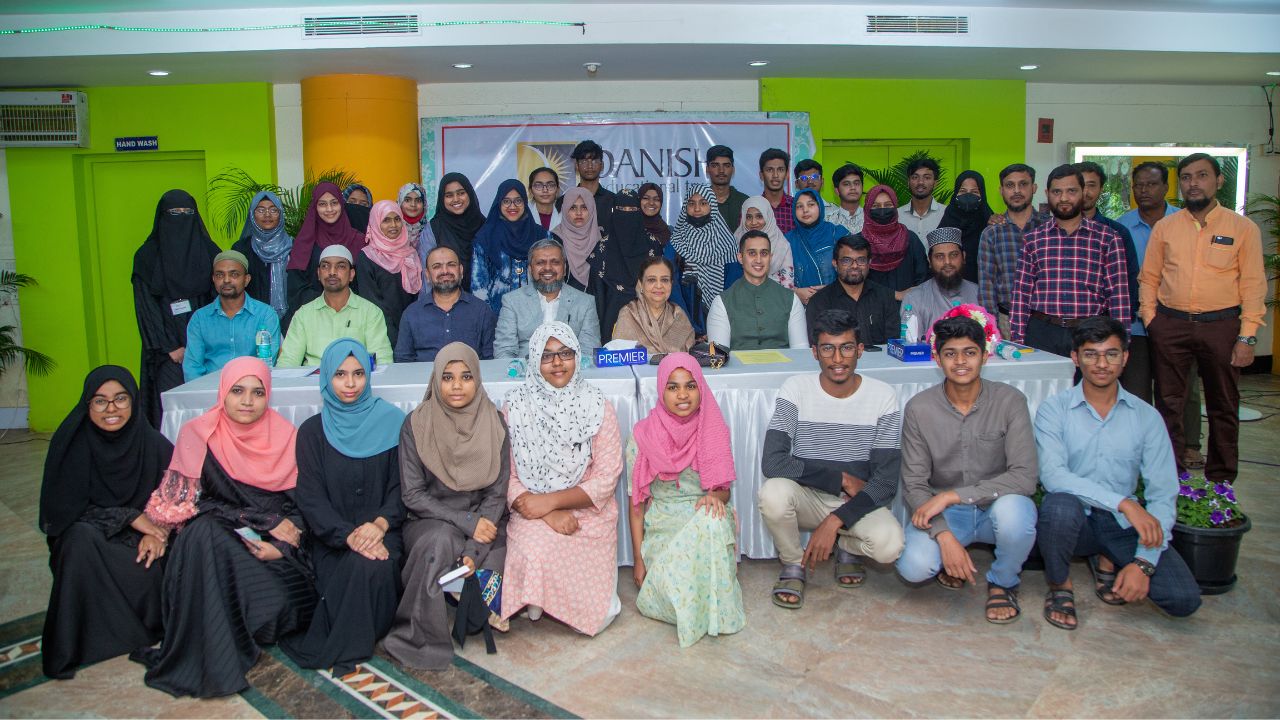
Bengaluru-based Danish Education Trust (R) awarded scholarships to 503 students pursuing professional education across Karnataka with a total scholarship amount of Rs.1,20,85,000/- for the academic year 2022-23. The Trust selected students through an online application process at www.danishtrust.in.
The scholarship recipients are pursuing various professional courses, including Engineering, MBBS, Law, Journalism, Pharmacy, BUMS, BAMS, BHMS, Veterinary Science, Agriculture, and B.Ed, and are from economically underprivileged backgrounds.
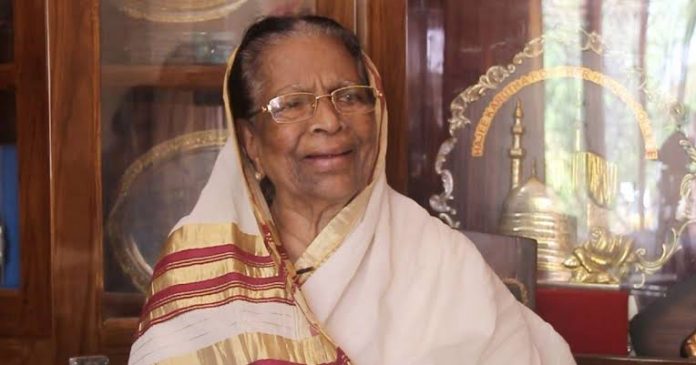
Danish Educational Trust (R) was established in March 2006 by a group of concerned citizens led by philanthropist Mrs. Husna Sheriff, with the belief that education is the seed for development and progress. Since its inception, the Trust has continued its scholarship scheme for poor and needy students pursuing higher education, including not only Engineering & Medicine but also Law, Journalism, Pharmacy, Nursing, Physiotherapy, Veterinary Sciences, Agriculture Sciences, Education (B.Ed), and Civil Services.
Over the years, the Danish Educational Trust (R) has sponsored the education of more than 3500 students, and this year’s scholarship program is another step in empowering young minds to achieve their educational dreams.
Speaking about the scholarship program, Mrs. Husna Sheriff, the founder of the Danish Educational Trust (R), said, “We believe in empowering students with the much-needed support for higher education. It is heartening to see our scholarship recipients contribute back to society by giving scholarships to more students, participating in social impact programs, volunteering for a cause, and in many other ways. Our aim is to support more students and increase the total scholarship amount to Rs.1.5 crore to help 650+ students for the academic year 2023-24.”
The scholarship program has positively impacted the lives of many students and helped them achieve their educational goals. Danish Scholars are spread across the world and are contributing to society through their professions, making the world a better place.
Danish Educational Trust (R) encourages underprivileged students to apply for the scholarship program and continue their education without financial burden. The Trust’s vision is to empower students to achieve their dreams and contribute positively to society.
source: http://www.thecognate.com / The Cognate / Home> Education / by Shaik Zakeer Hussain / March 21st, 2023
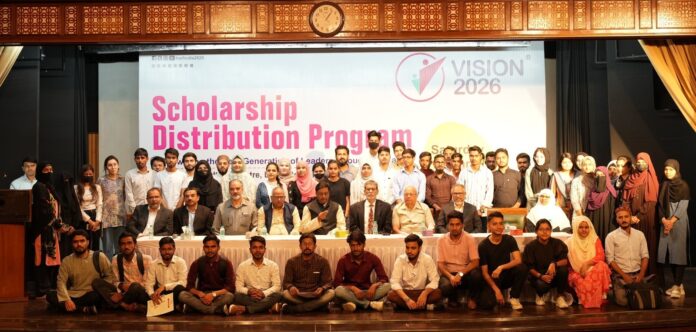
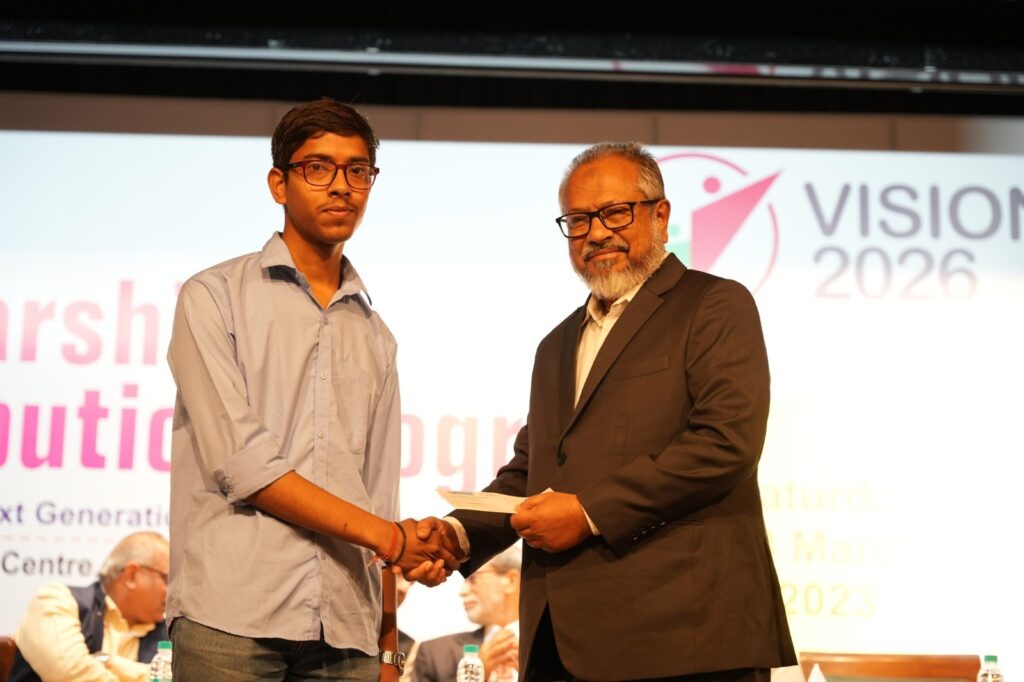
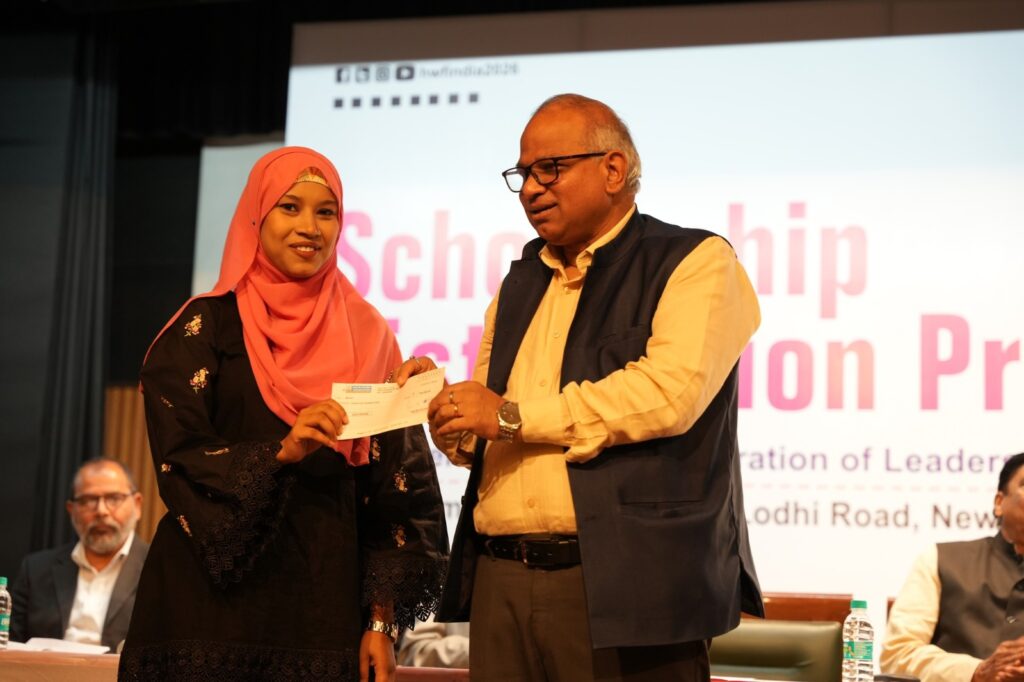
On March 19, 2023, the Human Welfare Foundation (HWF) held a scholarship distribution program at the India Islamic Cultural Centre, where 150 students from the Delhi region were awarded scholarships. The Chairman of HWF and retired IAS officer, Siraj Hussain, emphasized the importance of education and encouraged students to prioritize it by putting their goals first. He also stressed the value of reading, particularly newspapers and books, as sources of knowledge that could help students excel in any course they choose.
HWF’s scholarship program is open to students who have demonstrated academic excellence and leadership potential, and scholarships are awarded based on merit and financial need. The funds cover tuition fees, books, and other related expenses. The organization has distributed over 8200 UG, PG, and Special Scholarships, and 4500 scholarships to orphan students.
The Chief Guest at the event was Prof. (Dr.) Mohammad Ashar Alam, Vice Chancellor of Jamia Hamdard, discussed the options for higher studies offered by the university and offered support for HWF’s education empowerment activities. T. Arifali, Chairman of Vision 2026, the flagship project of HWF, delivered the inaugural address.
Dr. Syed Farooq, President of Himalaya Drug, praised HWF’s activities and emphasized the importance of taking advantage of the resources available in the present age. Senior journalist and former MP Shahid Siddiqui urged students to plan to fulfill their dreams through education and hard work, citing Sir Syed as an example of perseverance.
A. Rahamathunnisa, Chairperson of The Women Education & Empowerment Trust, encouraged students to move forward fearlessly and learn to face failures. Noted motivator and IAS Coach Sameer Ahmed Siddiqui also interacted with the awardees on higher education and career opportunities. Renowned Ortho Surgeon Dr M Farooq, PK Noufal, CEO of Human Welfare Foundation, and PR Director Dr. Rizvan Rafeequi were also present.
HWF’s scholarship program has helped many students achieve new heights in education and career, and the organization remains committed to its mission of empowering disadvantaged students through education.
source: http://www.indiatomorrow.net / India Tomorrow / Home> Education / by admin India Tomorrow / March 19th, 2023
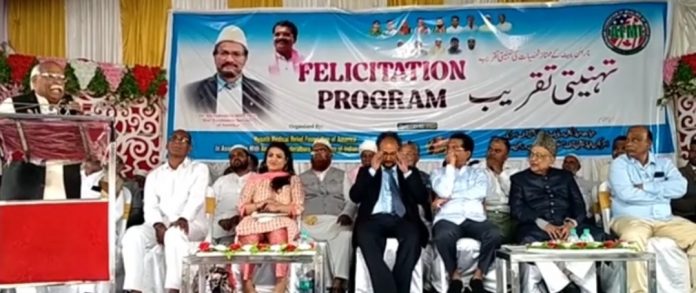
Nagu Rao Namoji senior BJP leader addressing the gatherings.
US-based philanthropist Dr Mohammad Qutubuddin held a felicitation ceremony in honour of the people who struggled to realize the dream of making Narayanpet a district, which was announced on 17th February 2017.
The ceremony, organized in collaboration with the Indian chapter of the American Federation of Muslims of Indian origin (AFMI) and Hayat Foundation USA, was held in Narayanpet district, Telangana.
Dr. Qutbuddin, who remained the key figure in organizing the event, lauded the role of politicians, regardless of their political affiliations, and common people who campaigned for making Narayanpet a district. He thanked the residents of the district for their contribution.
“I might live in the USA but my heart yearns for Narayanpet,” said Dr. Qutbuddin, expressing hope that the new district would flourish in future.
On the occasion, local MLA S. Rajender Reddy pledged to transform Narayanpet’s landscape over the next three years and take the district to new heights of prosperity.
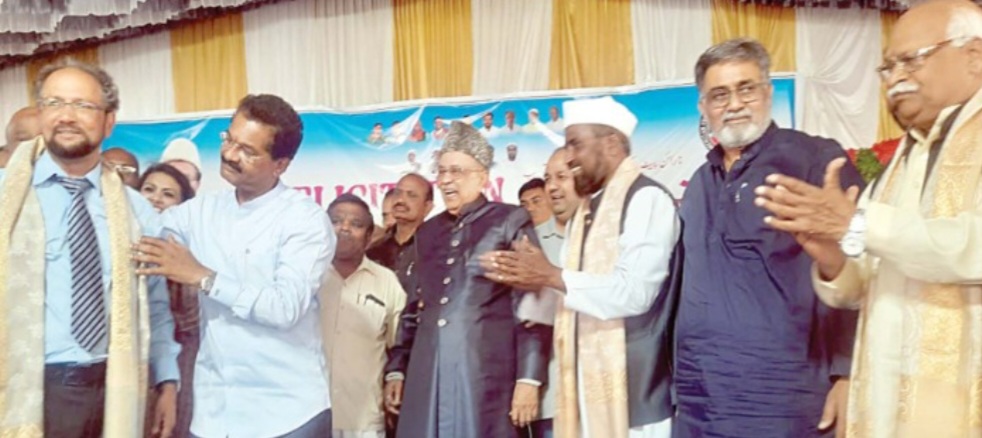
Narayanpet MLA S. Rajinder Reddy presenting Shawl to Dr Qutubuddin.
Reddy lauded Dr. Qutbuddin for his efforts and said that his “immense love for Narayanpet and his tireless efforts for the development of the district prove that he’s a visionary leader”.
Editor of noted Urdu daily Siasat, Zahid Ali Khan spoke about his family’s root in Mehboobnagar and Narayanpet. Ali, who was chief guest on the occasion, recalled that his father Abid Ali Khan was born and raised in this region.
He said that his family understands the region and the community’s intellectual, artistic, and literary endeavors as well as the sincere attitudes of its residents have always given them great heartfelt satisfaction.
Dr. Qutbuddin played a prominent role in representing the people of the region, he said while thanking the efforts he made in the development of the people’s life.
Nagu Rao Namaji, a senior state BJP leader, claimed that he has consistently been in the forefront when it comes to preserving peace and harmony in Narayanpet and vowed to maintain it in future. He pleaded with the MLA to link Narayanpet to the Railways as the Center was prepared to do so. In addition, he stressed the necessity of Reddy’s pledge to complete irrigation projects.
AFMI’s regional president, Prof. Sana Qutbuddin also addressed the gathering and said that her father Dr. Qutbuddin is passionate about his native district Narayanpet. “My father has promised that he will devote more of his time towards the development of the district in the future,” she said.
In this ceremony, Nagu Rao Namaji, K Sudarshan Reddy Principal, Muhammad Nawazi, Moosa, Abdul Saleem Adv, Ameeruddin Adv, Dr. Tabrez Hussain Taj, Mohammad Taqi Chand, Abdul Qadar Maisoori Mujahid Siddiqui, Hafiz Mohammad Taqi and others were felicitated.
The editor-in-chief of the weekly Gawaah, Fazil Hussain Pervez, prominent personality of Arungabad, Maulana Mirza Abdul Qayyum Nadvi, Journalist Sadiq Ali, Rasheed, Telugu speaker, Maulana Abdul Qavi and others participated in the event as special guests. MLA S. Rajinder Reddy was presented with the Narayanpet Seva Ratna Award in recognition of his services.
The proceeding of the event was conducted by Abdul Saleem Advocate while the program ended with a vote of thanks by Dr. Tabrez Hussain Taj.
source: http://www.muslimmirror.com / Muslim Mirror / Home> Positive Story / by Muslim Mirror Network / February 25th, 2023
A three-day multilingual calligraphy exhibition and seminar named Miraj will be held in Bangalore from March 10 to 12, 2023.
The event will be held at Falcon’s Den, Prestige Falcon Towers, Brunton Road here in the city.
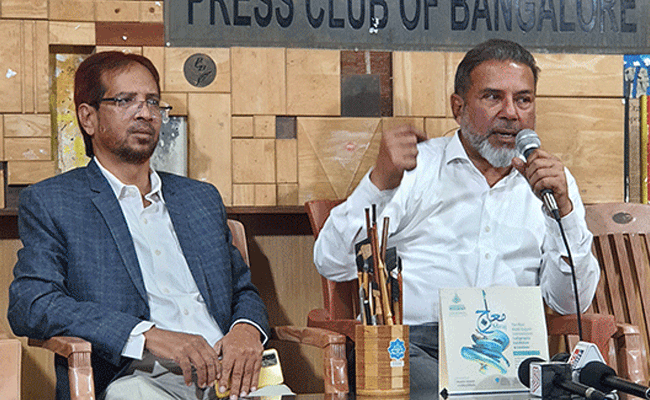
The exhibition and seminar will be first of its kind in Bengaluru, Syed Beary, Chairman of Bearys Group said in a press conference at the Press Club on Wednesday.
The event sponsored by Bearys Group is being organised by Institute of Indo Islamic Art and Culture ( IIIAC), Syed Beary who is also the Chairman and Managing Trustee of IIIAC added.
“More than 50 artists and experts from across the world will take part in this unique event. Calligraphy is a special art. It helps in maintaining balance between your mind, body and your thoughts,” he further added.
“Calligraphy finds its origin in Arabic. But Chinese and Japanese modern calligraphy are also significantly beautiful and pleasing to eyes. Even Indian regional languages have now adopted calligraphy and artists are exhibiting their skills and talents in their respective regional languages,” Syed Beary further stated.
Speaking about the exhibition, he said experts and artists from more than 10 countries including Turkey, Japan, Sudan, and Middle-East will take part in the event. Calligraphy experts in Urdu, Tamil, Malayalam, Kannada, Marathi and other regional languages will also be a part of the event.
“Seminars, Talks, and discussions on various aspects of calligraphy will also be held during this first of its kind three-day event,” he said.
Institute of Indo Islamic Art and Culture’s Principal Muqtar Ahmed also spoke at the press conference and said the exhibition will be inaugurated on March 10 at 10:30 am by Irfan Razack, Chairman and Managing Director of Prestige Group, Bangalore. The seminar will be inaugurated later at 3 pm by Maulana Mufti Sageer Ahmed, Ameer-e-Shariyat, Karnataka, snf Principal & Shaikul Hadees, Darul Uloom Sabeelur Rashad.
Zia Ulla Sharief, Chairman India Builders Corporation, Bangalore, Irfan Razack, Chairman, MD Prestige Group Bangalore, Shabeena Sultana, Consul of the Republic of Tunisia, Bangalore and Pusphamala N, Artist, Sculptor, Writer and Curator will be guests of honor during the inaugural event that will be presided over by Syed Mohamed Beary, Muqtar Ahmed said.
He also spoke about how expert calligraphers of multiple languages will grace the event and share their thoughts and experiences with the participants.
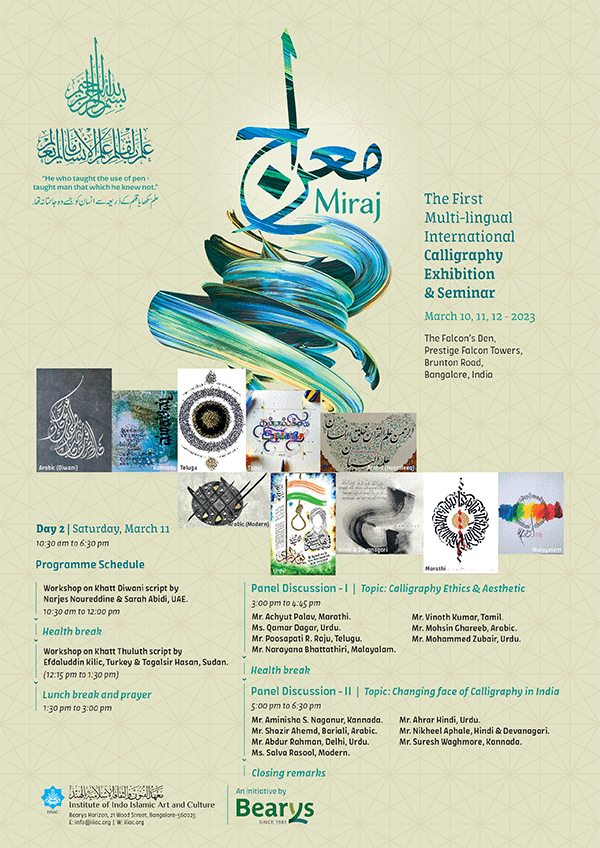
Efdaluddin Kilic, Turkey, Narjes Noureddine, UAE, Dr. Abdullah Fattini, KSA, Tagalsir Hasan, Sudan, Mohsin Ghareeb, Bahrain, Farid Abdur Rahim, Kuwait, Dr. Ali Rabbani, Iran, Yuko Takaji, Japan, Achyut Palav, Marathi, Poosapati Raju, Telugu, Narayana Bhattathiri, Malayalam, Suresh Waghmore, Kannada, Vinoth Kumar, Tamil, Nikheel Aphale, Hindi & Devanagari, Salva Rasool, Urdu are some of the experts who will hold talks on Calligraphy on the first day of the event.
The exhibition will remain open from 10:30 am to 8:00 pm on three days of the event.
The program schedule is as follows:
source: http://www.english.varthabharati.in / VarthaBharati.in / Home> Karavali / by Vartha Bharati / March 08th, 2023
A 30 minute documentary on country’s first female judge of the Supreme Court — Fathima Beevi is all set to be released on Wednesday, here.
In Malayalam titled as ‘Neethipathayile Dheera Vanitha (A brave woman on the path of justice)’ will be officially released by state Minister for Film and Culture Saji Cherian to coincide with the International Women’s Day.
Directed by senior journalist Priya Raveendran, the film has been scripted by R.Parvathy Devi, with the Creative contribution coming from Suja Susan George and popular danseuse Rajasree Warrier is the narrator.
Speaking to IANS, Raveendran said she was enamoured by the achievements of Beevi for a long, right from the time she entered journalism.
“Now I feel elated and happy that I have finally done it with the support of Parvathy and Suja. Beevi achieved all this, probably a first by any lady in the country to have sat in several crucial positions. None should forget that Beevi achieved all this at a time when women of her times were mostly relegated to their homes,” said Raveendran.
The now 95-year-old Beevi living a retired life at her home in Pathanamthitta has a number of firsts in her life which includes, the first female judge of the apex court, the first chairperson of the National Human Rights Commission, the first Muslim woman Governor (Tamil Nadu).
The film has been produced by the Kerala State Film Development Corporation.
Incidentally Beevi enrolled herself as an advocate in 1950 and began her career in the lower judiciary in Kerala.
She was appointed the Munsiff in the Kerala Subordinate Judicial Services in May, 1958.
She was promoted as the Subordinate Judge in 1968 and as the Chief Judicial Magistrate in 1972, as District & Sessions Judge in 1974.
She was further appointed the Judicial Member of the Income Tax Appellate Tribunal in January, 1980. She was then elevated to the High Court as a Judge on August 4, 1983. She became a permanent Judge of the High Court on May 14, 1984.
She retired as the Judge of the High Court on April 29, 1989, but was further elevated to the Supreme Court as a Judge on October 6, 1989 where she retired on April 29, 1992.
She later went on to become the Governor of Tamil Nadu on January 25, 1997 and she quit in 2001 following a decision of the Union Government recommending to the President to recall her. — IANS
source: http://www.muslimmirror.com / Muslim Mirror / Home / by IANS / March 08th, 2023
“Rising Beyond The Ceiling was born out of the need to change the stereotypical narrative about Muslim women in India,” said Fatehally.
(L to R) Zoya Fatehally, Margaret Alva, Farah Usmani and Aiman Ansari at the book launch
Bengaluru:
Recently, Rising Beyond the Ceiling launched their hardcover edition of Rising Beyond The Ceiling Karnataka publication, after releasing an e-book version of the same in November 2022. With 100 stereotype-shattering stories of inspiring Muslim women from Karnataka, the book is authored by Dr Farah Usmani and co-authored by Dr Zoya Fatehally and Aiman Ansari. Former Governor of Goa, Gujarat, Rajasthan and Uttarakhand, Margaret Alva was the chief guest while director Saad Khan hosted the evening’s launch party.
“Rising Beyond The Ceiling was born out of the need to change the stereotypical narrative about Muslim women in India,” said Fatehally. “The need to change the narrative behind the stereotype about Indian Muslim women not contributing to the nation much and how Muslim women are known for getting married and having a lot of kids and not working was one of the inspirations that drew to author such a book,” said Aiman Ansari, the co-author.
source: http://www.newindianexpress.com / The New Indian Express / Home> Cities> Bengaluru / by Express News Service / March 01st, 2023
For representation purposes only. Photo: India Tomorrow.
Jaipur:
A private university catering to the educationally backward Meo Muslim community residing in the Mewat region, falling in the Alwar and Bharatpur districts of Rajasthan, is coming up with the promise to impart higher and technical education. This will be the first university to be established in Mewat, which made headlines recently over the gruesome murder of two youths from Bharatpur’s Ghatmika village by the cow vigilantes in Haryana.
The university will be named after the late Barkatullah Khan, a senior Congress leader, who was the first Muslim Chief Minister of Rajasthan from July 1971 to October 1973. He died in office after serving as the Chief Minister for over two years. A private member’s Bill for the establishment of the university is likely to be tabled and passed in the ongoing budget session of the Rajasthan Assembly.
A piece of land measuring 208 hectares at Chawandi Kalan village in Alwar district’s Tijara tehsil has been allotted to the university on token money. The initiative is the brainchild of a young lawyer from Tijara’s Tapukara village, Yusuf Khan, who has been working for education among the girls belonging to the Muslim and other marginalised communities under the banner of his organisation, the Missile Man’s Vision Foundation.
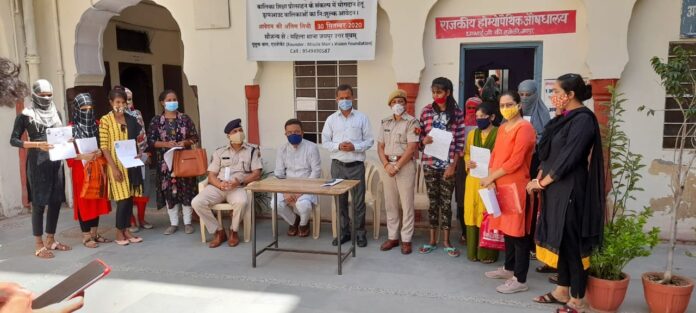
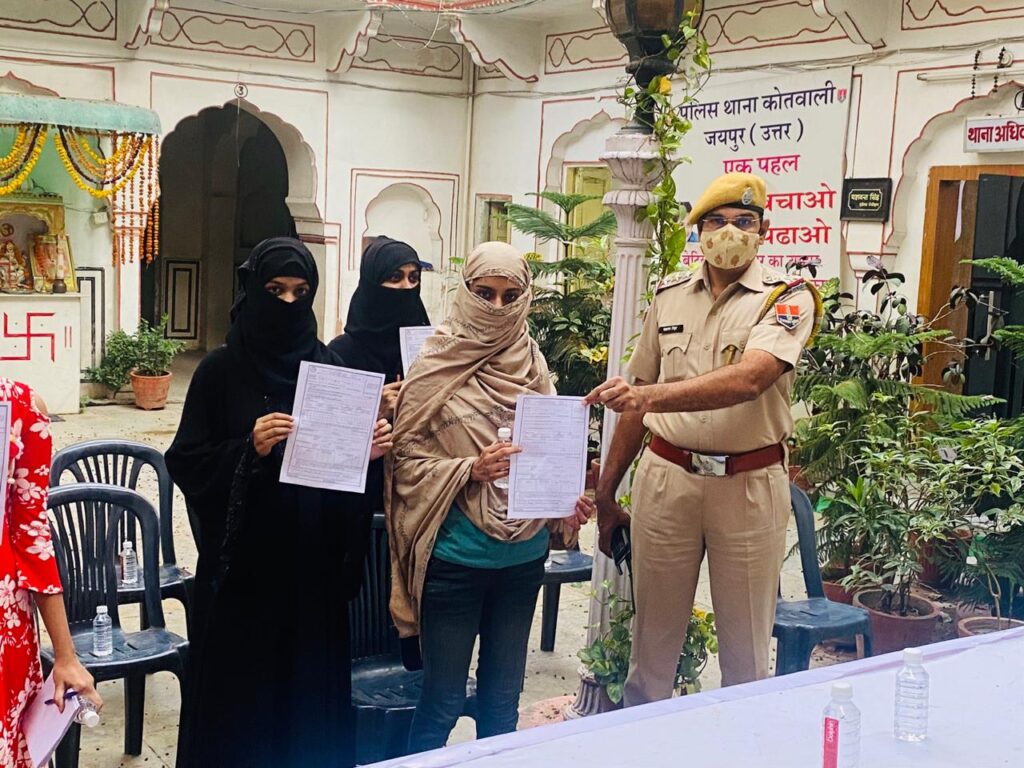
Thirty-four-year-old Khan undertook a project with the help of Jaipur police to enrol girls for distance education in the state capital’s Walled City during the COVID-19 pandemic. Khan is also a claimant for the Congress party’s ticket from the Tijara constituency in the State Assembly election due in December 2023. Incidentally, the late Barkatullah Khan was also elected to the Assembly from the Tijara seat.
A trust, named as the Missile Man’s Vision Education Trust, has been formed for running the university. While the 17-member trust comprises some prominent academicians and other professionals, the proposed university will offer courses in some new, innovative and interdisciplinary subjects such as disaster management, pharmacy, environment, climate change, sports and engineering.
Thousands of young children in over 790 villages of Rajasthan’s Mewat region fail to reach up to the secondary level in their education for a variety of reasons, while the rural areas of the two districts lack the basic facilities of infrastructure, sanitation, healthcare and connectivity. Besides the Alwar and Bharatpur districts, the Mewat region is spread across a large area in neighbouring Haryana and Uttar Pradesh as well.
Khan said that the backward condition of his native place had prompted him to launch an initiative that would benefit large sections of the population of the region. The Congress MLA from Jaipur’s Kishanpole seat, Amin Kagzi, who is also the Chairman of the Rajasthan State Haj Committee, will move the private member’s Bill for the university’s creation in the State Assembly. Chief Minister Ashok Gehlot is scheduled to lay the foundation stone in Chawandi Kalan village in May this year.
The Congress Government in the state has promised to extend all possible support for the establishment of the university and provide grants for its functioning. However, the ruling party may expect some political favours from the Meo Muslim population in return, especially in the wake of the parties such as All-India Majlis-e-Ittehadul Muslimeen (AIMIM) trying to make inroads into the region.
Khan has a track record of promoting the cause of education among Muslims. During the covid-induced lockdown, Khan helped a large number of girls in the Walled City of Jaipur, who had dropped out of schools, in resuming their studies through the State Government’s ‘Shiksha Setu’ programme, in which they were taught at home for X and XII classes through the Rajasthan State Open School. As many as 17 police stations took the responsibility to pay their fee and supply study material to them.
Khan pointed out that over 750 of these girls were continuing with their formal education and had appeared in examinations. The scheme is run by the Directorate of Women’s Empowerment through its Rs. 1,000-crore Indira Mahila Shakti Nidhi established in 2019-20. Girls in the Muslim- dominated localities, who dropped out of schools for doing household chores or taking care of younger siblings, have mainly benefited from the initiative.
The lawyer has helped in extending the scheme’s benefit through field functionaries and Anganwadi workers in the Mewat region as well during the current academic session by getting about 10,000 dropout girls enrolled in the open school. Besides, the Missile Man’s Vision Foundation, established in memory of former President A.P.J. Abdul Kalam, has covered 132 villages for the distribution of sanitary pads to adolescent girls under the flagship “Udaan” scheme.
Khan, who has been practising as a lawyer in the Rajasthan High Court for six years, said that the educational intervention would herald a new era of empowerment of both adolescent girls and boys from the Meo Muslim community. The establishment of the university will encourage children to complete their school education and join the institution of higher learning, besides prompting the State Government’s Education Department to improve the poorly equipped primary and middle schools in the region.
source: http://www.indiatomorrow.net / India Tomorrow / Home> Education / by India Tomorrow Correspondent / February 28th, 2023
Hindustan aur Kuwait (Tarīkhī, Ilmì aur Thaqafatī Rishte’ by Dr Abdul Qadir Shams launched in Delhi.
New Delhi:
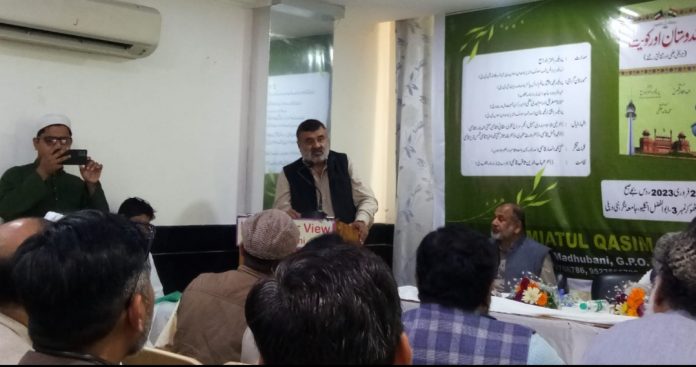
Hindustan aur Kuwait (Tarīkhī, Ilmì aur Thaqafatī Rishte) i.e. India and Kuwait: Historical, Academic and Cultural Relations in Urdu, a book crafted out of the doctoral thesis of late Dr Abdul Qadir Shams Qasmi (1972-2020) originally titled ‘Ulūm-e-Islamī ki Tahqīq-o-Isha’at mein Wazārat-e-Auqaf Kuwait ka Kirdar by Mohammad Khalid Azmi (residing in Kuwait) was launched at Hotel River View, Jamia Nagar, New Delhi on Saturday, 25 February, 2023. The launch programme witnessed a good number of participants from media, academia and other spheres.
The participatns appreciated Khalid Azmi for his timely efforts to turn the thesis into a book with helpful additions to focus on the bilateral role of India and Kuwait in the academic and cultural domains.
The event was presided over by Prof Akhtarul Wasey, Islamic scholar and former president of Maulana Azad University, Jodhpur. Academics and media persons including Dr Raziul Islam Nadwi, Professor Iqtidar Mohammad Khan, Maulana Asghar Ali Imam Mehdi Salafi, Dr Waris Mazhari, Dr Khalid Mubashshir, Dr Mohammad Ajmal, Suhail Anjum, Siraj Naqvi shared their views.
Dr Shahabuddin Saqib Qasmi, senior sub-editor, Urdu daily Inquilab, conducted the event, organised by Qari Zafar Iqbal Madni of Jamiatul Qasim Darul Uloom -il Islamia, Supaul, Bihar.
Mufti Mohammad Ansar Qasmi of Jamiatul Qasim presented vote of thanks.
It should be noted that author and senior journalist, Dr Abdul Qadir Shams Qasmi, had died of cardiac arrest on 25 August, 2020, during Covid-19.
source: http://www.muslimmirror.com / Muslim Mirror / Home> Books / by Manzar Imam / February 27th, 2023
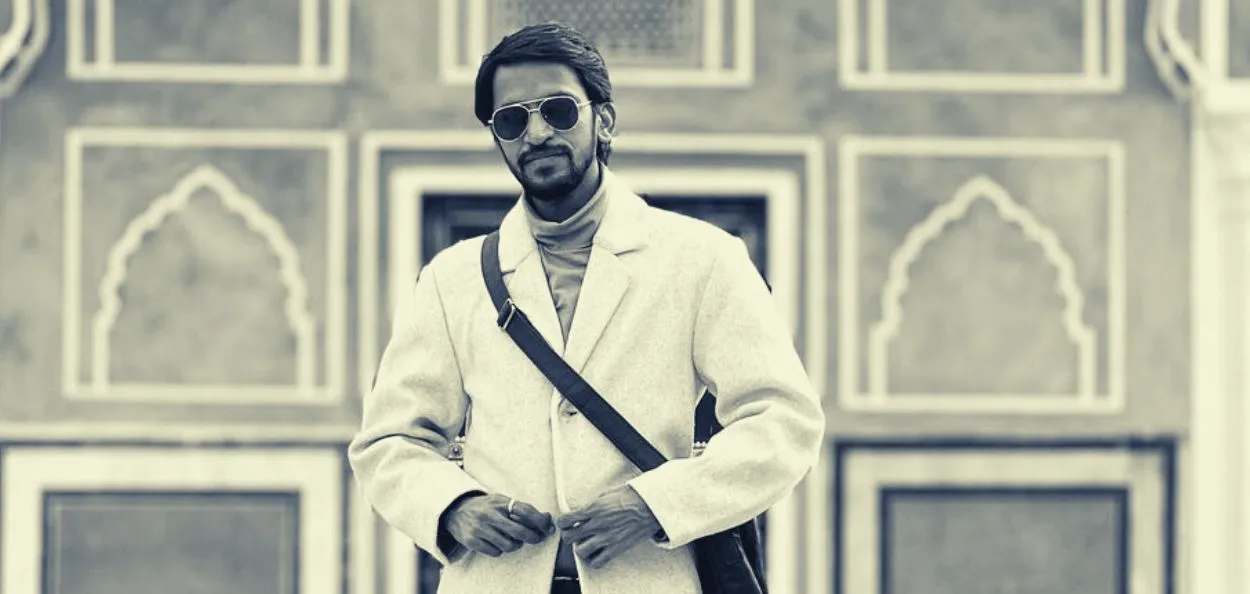
Abu Sufiyan at Jaipur Lit Festival (Source: Instagram)
Abu Sufyan was in the final year of his engineering course at a Chandigarh college when, one day, his mother called him. This call did make him realise the value of the quintessential Begmaati Zabaan (colloquial dialect) her mother used.
It changed his perspective on life and pulled him out of his mental depression. A decade later, sitting in a Café close to Jama Masjid in Old Delhi, Abu Sufiyan recalls his life-changing moment. “I hardly visited home those days, I was lying aimlessly on my hostel bed, my mother called me up to enquire about my returning home and I told her, “I am not coming.” “She started reprimanding me in her Lahja (colloquial style)… I had this habit of recording her calls as it was too much listening to all the wrongs I had done…”
When he listened to his mother’s recorded call later, he laughed out loud; “her dialogues and dialect were innocent and filled with wit, sarcasm, and humour.”, he adds. Sufiyan says, “that became my Eureka moment.”
He decided to create a page on social media to document the Begmaati Zabaan. Explaining the Begmaati Zabaan, this 31-year-old social media entrepreneur says, “in this dialect, the sarcastic remarks are never made directly. For example, if a person has to say ‘we must congratulate the family for the birth of a baby by presenting gifts’ they’ll say “500 rupaye ka money-order aa ri aaye..” and so on…”
His Purani Dilli Waloan Ki Batein page on Facebook has since turned into a Socio-Economic-Cultural community, with more than 105k followers. Sufiyan initially posted the conversations between his mother and aunts via different characters like #khabtikhala #aminkiphuppo and so on. He also took up various societal issues disguised as humour on the page. Even to his disbelieve the audience on social media liked it and he received good response
____________
“It played like nostalgia and many renowned faces soon joined the list of followers and it has grown since then. I was shocked as it became an instant hit and soon at dinner time around 9 pm the page received instant likes and comments.” Sufiyan says that he had no idea of developing the PDWKB page in a full-fledged community. “It was just for fun and to break the mental loop…”
No sooner than the hashtags #mobango #khalakhabti #tumharekhalu #winkiphuppo #tumharibaji #tumharidulhan #lafangaparinda started picking up, and these characters started becoming more defined. Sufiyan says, “I made Sadiya Saeed, Anas Faizi and others the co-admin of the page; some comments on the posts were going viral…the characters that earlier were managed solely by Sufiyan now had different managers, soon they developed into animated characters that today are known as avatars…”
Aye muhaav Te par raen.. jaldi se kapde la chhat pe se… Sab bheeg jayenge.. tujh se kehti hun teym se utaar laya kar nasoomdi.. hath se mobaail hi ni chhooTta… Paya ni kis se baatein milayi reti he sara din.. amma ko moo ni lagati.. ek ek jawab ghante bhar mein deti he.. Allah khair kare ab thand zor pakad legi… Angeethi jala ke liya aaj to dekhiyo.. Mere se uttha ni jata.. bas kya karein aulad ke rehm o karam par guzregi zindegi.. jo khila diya kha liya.. jaisa kiya usi mein sabar.. wakhat se bewakhat chai milti hai… haaye bas kuch kehne ka ijaara ni riya ab… Moo ko aate hain sab… Allah kisi ki bana ke na bigaade…
Today, Abu Sufiyan is involved in conducting heritage walks, dastan goi (Storytelling), book reading sessions, and food walks related to Old Delhi. He also runs a tech company. Sufiyan hails from an Old Delhi family with a Mughal and Sufi lineage and says that his ancestors had a haveli near Old Delhi. “During partition, times were very tough yet they stayed in the interiors as it was very safe even back then..”. soon after the partition the Haveli near Suivaran, Chandini Mahal, was bought by my grandfather…”
“Our old haveli had two floors where the first floor belonged to my maternal household and the ground floor to my paternal household. They were friends and my nana was in the income tax department and they belonged to Agra. My mother was beautiful and dad was handsome and they were compared to Reena Roy and Rakesh Roshan…” The love between the parents blossomed and soon the marriage happened after a lot of resistance from Sufyan’s would be aunts, whose impact can be seen and felt on his page PDWKB, “Both my parents were very educated but my mother was more educated in comparison to other women of her times and used to wear jeans in the 1980s…thus Daddy’s sisters were a bit skeptical but Daddy was adamant…”
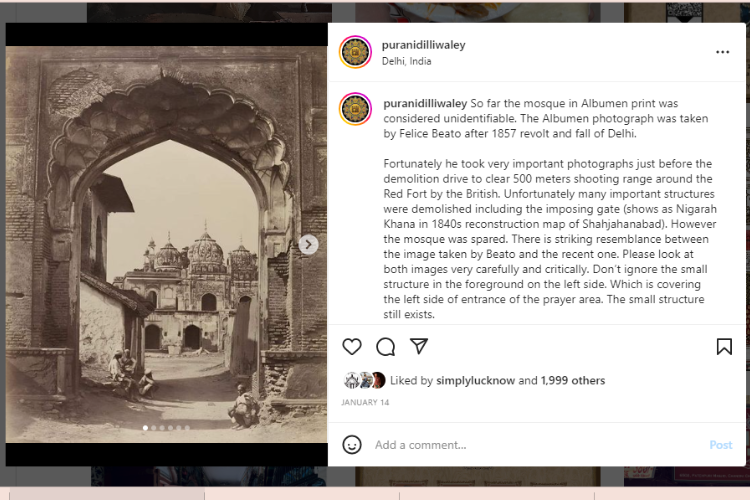
A screengrab from PDWKB’s Instagram page
Sufiyan says that his great-grandfather was a magnanimous human who welcomed many with an open heart and had rented space at his haveli. Sufiyan’s father was a technician and taught electronics to the retired army and navy officers at the Delhi engineering College and later opened a television shop in Daryaganj. Back then it was a new technology and therefore technicians like his father were much sought after, “All his students got the sets repaired by him as he was the only mechanic in Delhi…”
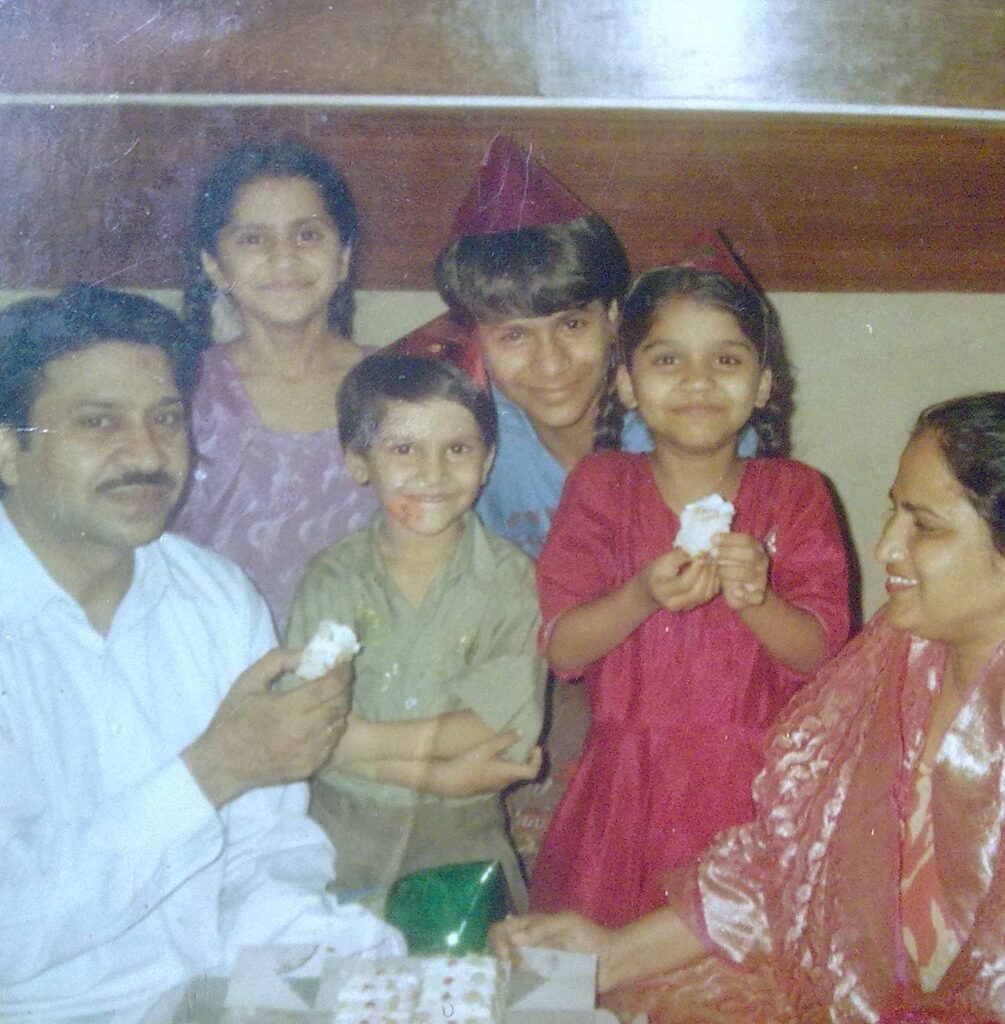
Young Sufiyan with his parents and sisters
Sufiyan says during the early ‘80s there was no driving force that emphasized education and also the families around him had no educational background but they were brought up in a protective and educational environment.
“It was my father’s wish to make his children erudite. I was just allowed to visit the coaching institute, a family from Lucknow and our English teacher Geetanjali Mam, rest the Maulana used to visit the home to teach Arabic and Urdu…” Sufiyan sat in his father’s television shop after school. “Cricket matches and television go hand in hand in sync with my interest in electronics… I used to repair TV, and remotes, and soon I was selling TV sets in my father’s absence.” Sufiyan says that it was APJ Abdu Kalam who inspired him to pursue Engineering. “when I was in the 12th standard, APJ Abdul Kalam visited our Anglo-Arabic School. My question was among the top five questions selected and I attended a one-to-one session with President Kalam.”
President Kalam later told my father, who was among the parents assembled in the school, that he should allow me to study further. After completing his engineering In 2015, Abu Sufiyan started an e-commerce company. He along with 3 more partners launched an e-commerce website Godkonnect.com, which primarily focussed on selling artefacts of all religions. The site was shut down later. He then joined Paytm as a Data Analyst and was later, got promoted to Team Lead – Revenue Assurance at Paytm Marketplace. After dabbling with firms like Cognizant and Google he gave up the 9 to 5 job and started working as a freelancer.
He says, “I was working 24 by 7 but my passion for PDWKB overruled everything else…” Three years later, he quit his job and closed down his ventures and got interested in PDWKB on a full-time basis. In August he decided to create a trust named “Tareekh, Arts and Culture Trust ” to manage PDWKB. A year later his business was getting had started getting the attention of big clients like Gaurang Shah – an award-winning designer based in Chennai, who specializes in Jamdani weaves for Sarees and outfits, Sahitya Kala Parishad, art culture and language department of the Delhi Government thus Sufiyan took the big leap and established a separate business under his proprietorship “Tech Charmers” to manage the Digital Marketing Projects, Web & App Development, and Virtual Reality Projects.
Sufiyan was visiting a monument and there by chance he participated in a heritage walk, “the guide had no idea about the importance of the place and his vision of Old Delhi was flimsy, this made me sad and I decided to take up the initiative of organizing the heritage walks…” In March 2016, the venture PDWKB organized its first heritage walk, “We wanted people to know the real culture of Shahjahanabad and feel connected to the Old Delhi, thus our very first themed cultural walk started from the Turkmen Gate to Church to Qala Masjid to Razia Sultan Mazhar to Pahadi Imli’s old library to Changezi Bazaar and finally we ended at the rooftop of Pahadi Imli…all the while we made them savour the iconic dishes of Old Delhi…”
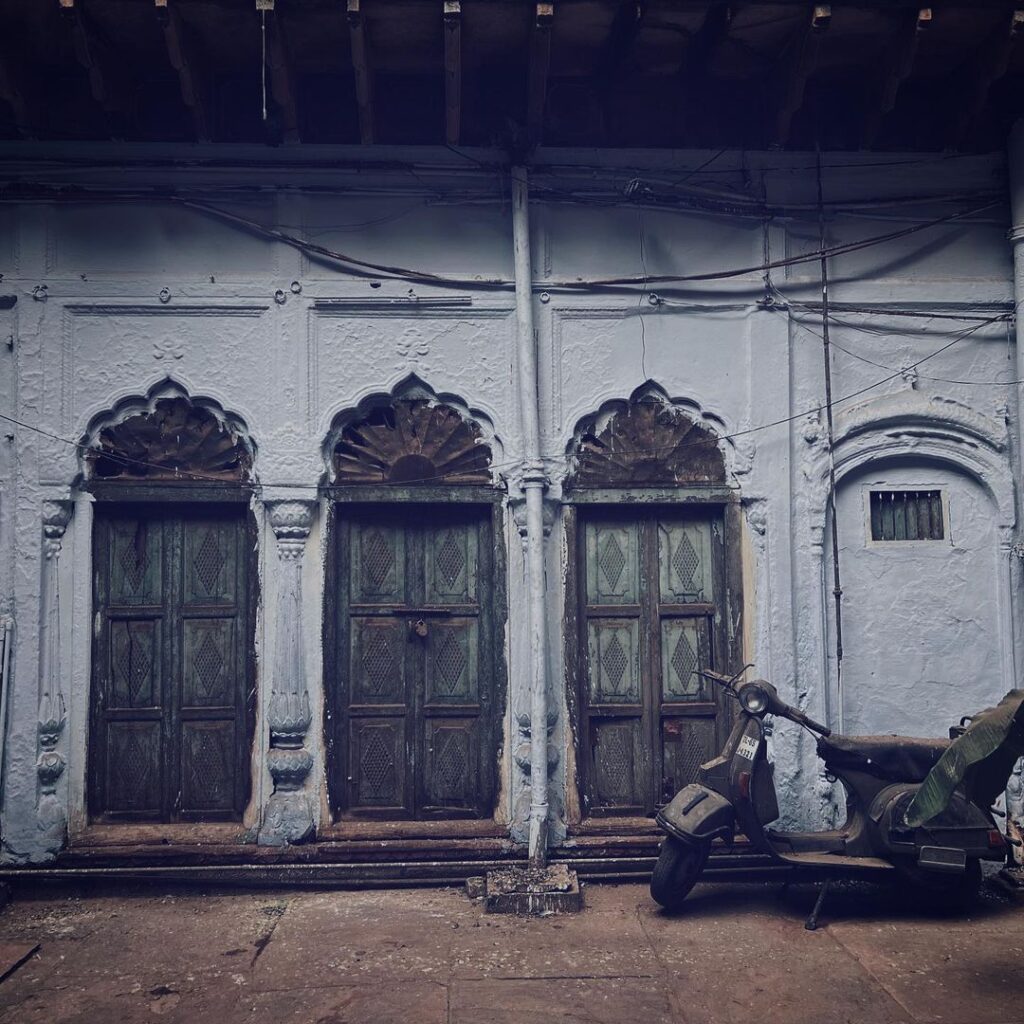
A scene as captured by the page of PDWKB
He feels that this narrative of his has helped in spreading a positive note about Old Delhi, “From Asar Ud Sanadid (narrating the events of 1857) to Twilight in Delhi (narrating 1947) to Mayank Austen Soofi’s first-hand account in the year 2001 and then PDWKB is a first-hand account of Old Delhi since 2014…”
Sufiyan feels that he has been the early technology adapter and that his initiative was one of the early pages that adapted and tested the technology in real-time, “We started the concept of storytelling through pictures in 2014, short videos and avatars were a rage even back then…”
Winding up he says, “PDWB is a socio-cultural community and the first-hand witness accounts of old Delhi mood, it isn’t influenced by anyone, it is the voice of people when people need it…” Looking forward he says, “It is a community voice and it’ll always be there and I wish to retrieve the food culture of Old Delhi like mutanjan, shab gosht, Haleem, and various kinds of Sharbats (sweet drinks), etc.”
His page played a major role in maintaining the Ganga-Jamuna tehzeeb during the 2018 temple brawl in Old Delhi, “We circulated three fact-checking videos when there was a hint of disharmony in Old Delhi and by God’s grace we were able to control the situation…such is the power of community vis-a-vis social media…” Sufiyan assisted Rana Safvi in her research for her book Shahjahanabad.
source: http://www.awazthevoice.in / Awaz, The Voice / Home / by Shaista Fatima , New Delhi / February 22nd, 2023
Achan Village (Pulwama District), JAMMU & KASHMIR:
Srinagar :
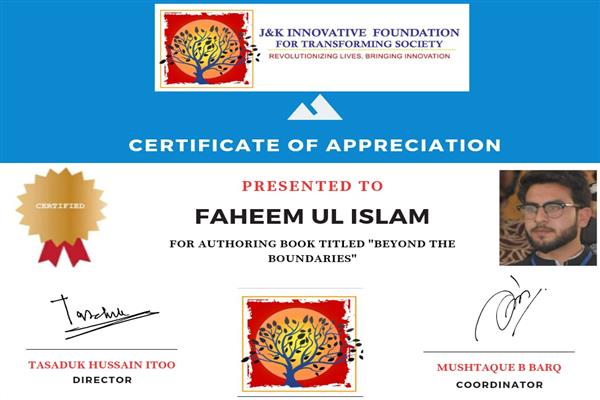
J & K Innovative Foundation for Transforming Society(JKIFTS) on Wednesday awarded a Certificate of Appreciation to Faheem Ul Islam, a young Kashmiri author for authoring book titled “Beyond The Boundaries”.
Appreciating the efforts of young author, Chairman JKIFTS Dr Tasaduk Hussain Itoo said that Faheem is an inspiration to youth and a great public speaker besides an author.
Hailing from Achan village of Pulwama district, Faheem Ul Islam is presently pursuing his bachelor’s (Hons) in political sciences at Aligarh Muslim University.
He has authored the Book “The Midnight Silence” in 2020 and for that Faheem was also awarded.
Pertinent to mention Faheem’s second book titled “Beyond The Boundries” was released recently on International Mother Languages Day in Aligarh, Uttar Pradesh in the auspicious presence of dignitaries including Padma Shri Awardee, Professor Hakim Zillur Rahman, Former Treasurer Aligarh Muslim University.
source: http://www.risingkashmir.com / Rising Kashmir / Home / February 24th, 2022