Later, he also visited Sira town in Tumakuru district and distributed Saudi Riyal 500 and other essential items to 26 pilgrims.
Congress MLA Zameer Ahmed Khan. (File Photo)
Bengaluru :
Chamarajpet Congress MLA BZ Zameer Ahmed Khan on Saturday arranged Umrah (an Islamic pilgrimage to Mecca) for 16 Accredited Social Health Activists (ASHA) workers at Jagjivan Ram Nagar ward office and distributed Saudi Riyal 500 (Rs 11,097) to each of them.
Taking to Twitter, the MLA said that a pilgrimage send-off programme was organised in his constituency during which he distributed the money and also other Umrah essentials to the workers. Later, he also visited Sira town in Tumakuru district and distributed Saudi Riyal 500 and other essential items to 26 pilgrims.
Meanwhile, the BJP hit out at the MLA saying he was indulging in such activities only to attract voters ahead of the Assembly elections. They have also demanded that the police file a suo motu case immediately and take necessary action.
K Somashekhar, state president, ASHA Workers Association, said that he was not aware of the programme organised by the Congress leader. The MLA was not available for a comment.
source: http://www.newindianexpress.com / New Indian Express / Home> States> Karnataka / by Express News Service / February 27th, 2023
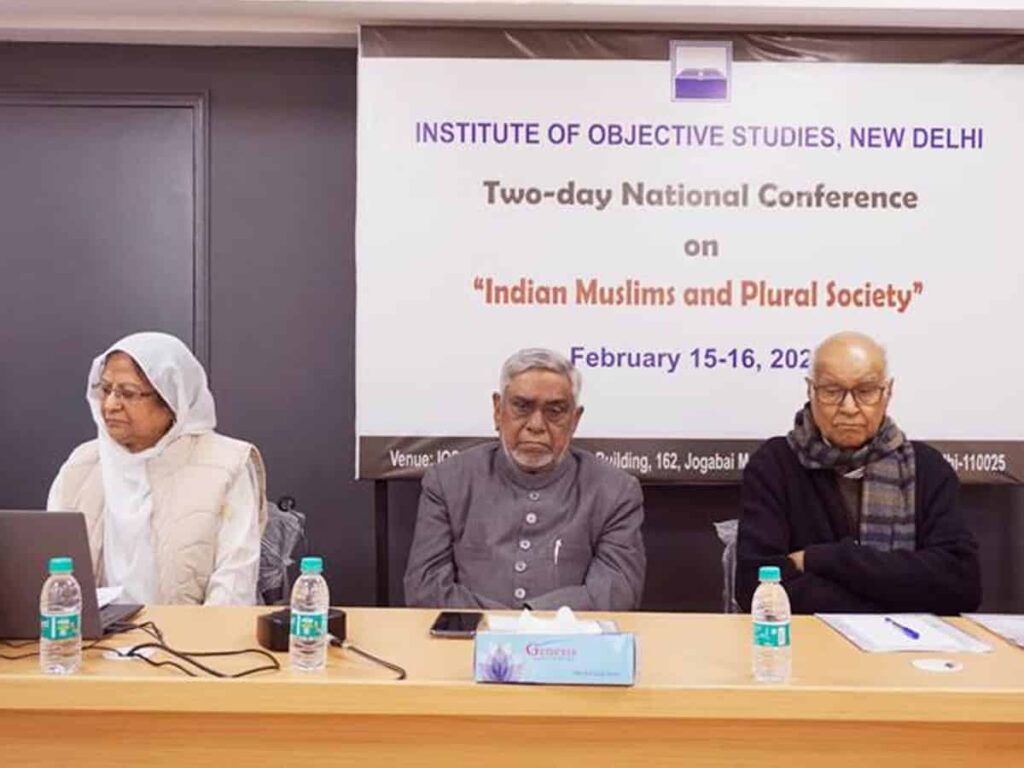
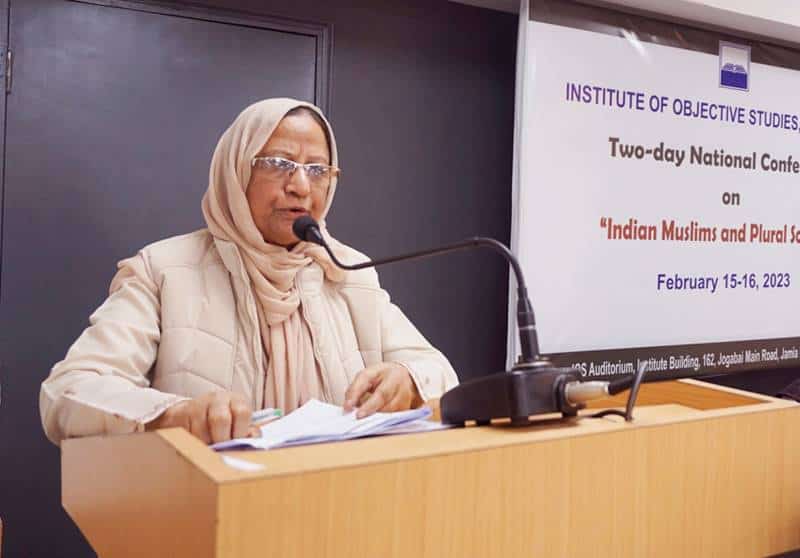
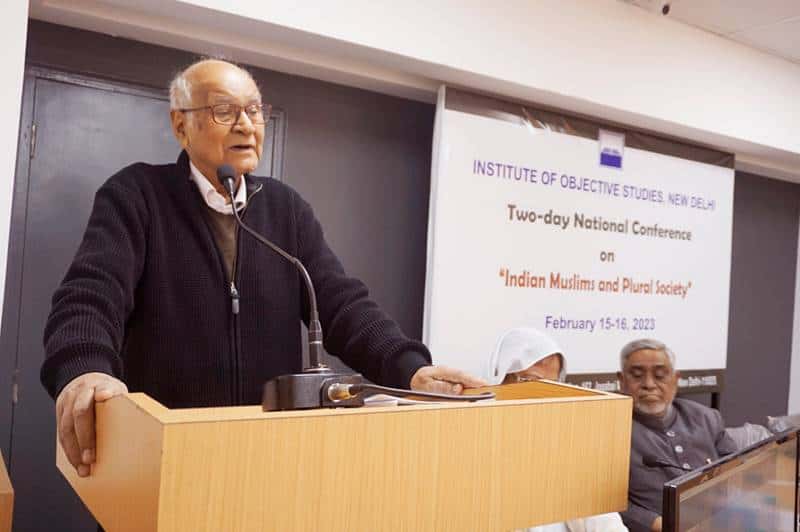
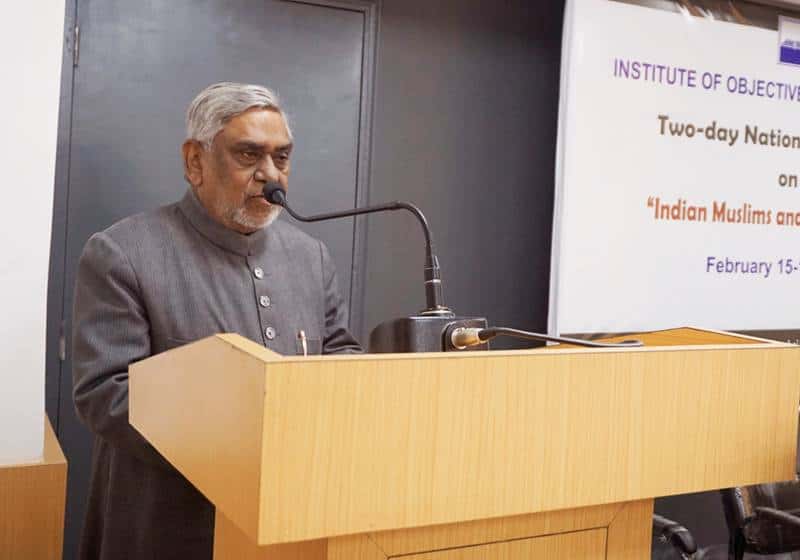
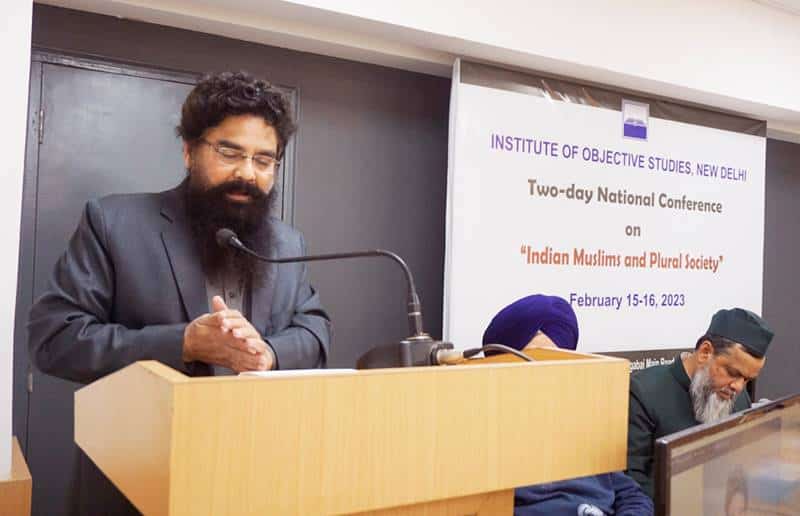
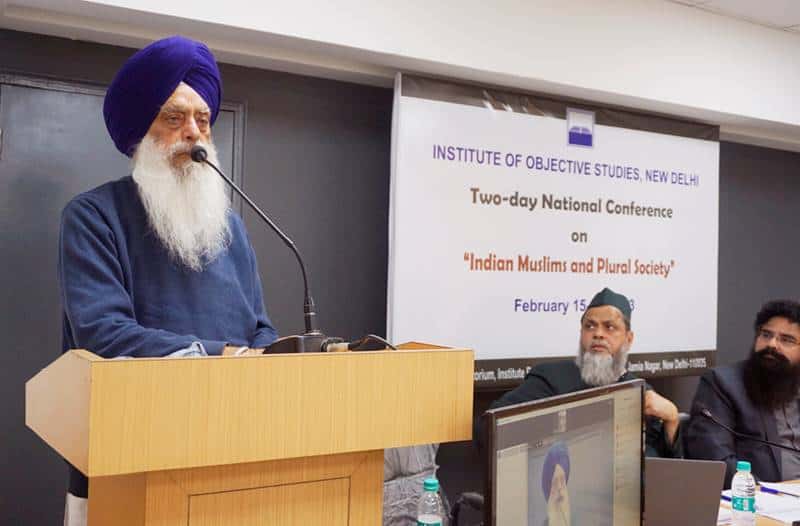
Institute of Objective Studies, New Delhi, organised a two-day National Conference on “Indian Muslims and Plural Society” in hybrid mode from February 15 – 16.
Inaugural session
The inaugural session commenced with Prof Haseena Hashia, Assistant Secretary General, IOS, welcoming the guests and participants.
Prof M.H Qureshi, an eminent Geographer, talked about India witnessing numerous migrations over the last several centuries. “We have Nordics, Mediterranean, and Mongols—people from Central Asia, Persia and even Arabs who arrived in India through its southern-western coastal region. Therefore, India has immense diversity, he said.
He said that the Arabs came to the Kerala coast and brought many traditions that became part and parcel of India.
Professor Mehrajuddin Mir, former Vice-Chancellor of the Central University of Kashmir, said that the concept of pluralism was how to live together, tolerate others’ thoughts and ideas, and even understand opponents’ miseries for solutions to live in diversity. All religions have various sects, and thus, their practices differ. The conflicts are, therefore, intra-religious, interreligious and social, he noted.
Professor Mir quoted Indian Defence Minister, Rajnath Singh, who recently spoke about how one Imam and one Pundit shaped his career to understand brotherhood and oneness.
Professor Akhtarul Wasey, former President, Maulana Azad University, Jodhpur, Rajasthan, in his presidential address, said that Muslims came to India as traders and invaders. But once they came here, they delved into the culture and traditions of India and became one who enriched the nation to encourage pluralism. Muslims have contributed to India’s prosperity.
He said that how Dr. APJ Abdul Kalam became a global personality of Indian origin—a Muslim. The country couldn’t think of its missile programme without his theoretical contributions, he said.
Technical Session I
The 1st Technical Session began with the theme, “Genesis of Pluralism in India.” Professor Arshi Khan, Department of Political Science, AMU, Aligarh, as Moderator & Chairperson.
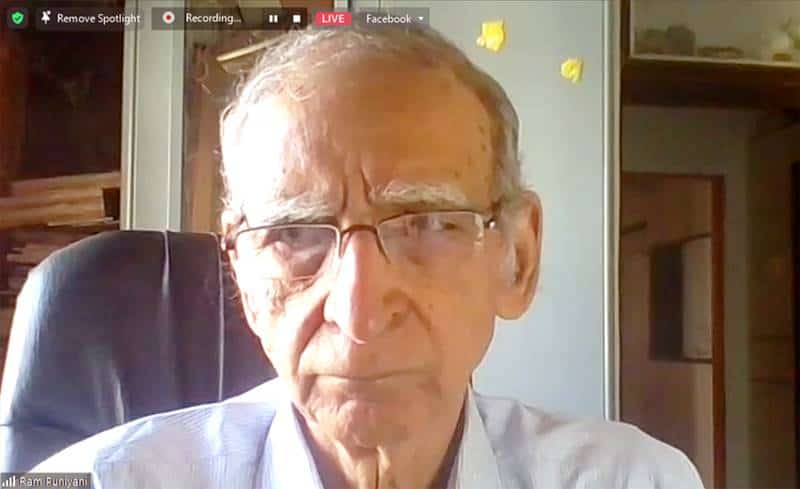
Dr. Ram Puniyani, Human Rights Activist and Writer, said, “There is a misconception in the country, especially against Muslims.” The alliance of civilizations defines plurality. Religions don’t have any nationality. They are universal. The Kings in India, whether Muslim or Hindu, ruled the nation for centuries with people of different faiths as their core governance teams. There was nothing like Muslim Kings or Hindu kings then, he explained.
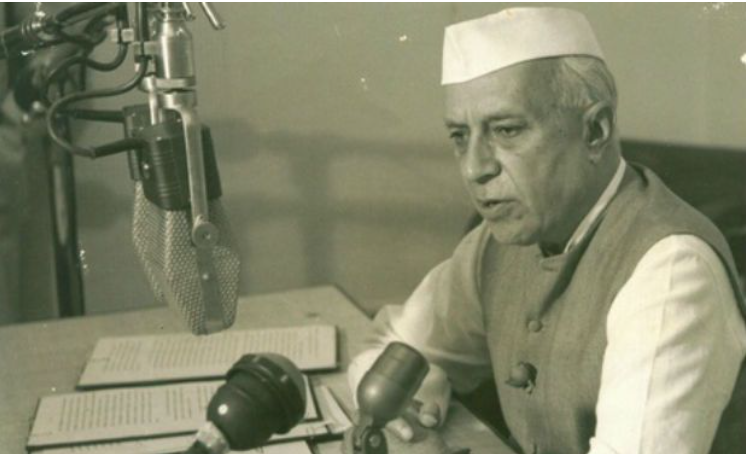
He observed that calling Indian cultures as Hindu is a bigoted idea. Leaders like Jawaharlal Nehru, Mahatma Gandhi and Maulana Abul Kalam Azad brought secular spirits into the country. We have Sufi and Bhakti traditions that describe the morality of religions and humanity in India.
Professor Mohammad Sohrab, MMA Jauhar Academy of International Studies, Jamia Millia Islamia, New Delhi, described pluralism as a definition both from a conceptual and theoretical perspective. Primarily a religious and moral philosophy, pluralism was the acceptance of diversity. It is more than tolerance of differences. The conception of ‘We’ was essential to assess pluralism through organic social bonding. Pluralism in the Islamic context of acceptance and the country’s scenario today should be understood in the context of how the nation’s spirit developed in Madinah during the time of the Prophet, he elaborated.
He said that pluralism demands that your neighbour be considered an asset, not a liability. Diversity with pluralism creates resilience, but diversity without pluralism brings disaster, he concluded.
Gurtej Singh, IAS, Chandigarh, spoke about how India’s constitutional and political federalism paved the way for the constitution. The atrocities against Sikhs and their resistance were part of history, he said. The examples of pluralism can be understood from the Guru Granth of Sikh religion.
His book Sikh and Indian Civilization sheds light on how Sikhs were projected during partition.
Sanjay K. Rai, a social activist from Lucknow, mentioned that “diversity doesn’t accept dictators.” He highlighted the importance of multicultural societies. Linguistic Pluralism was the need of the hour in today’s context. Societies with pluralism also impact by technological growth. Communities can’t be defined through one particular race or culture. He felt that there can’t be nation-building and growth without taking Muslims along who constitute 15-20% population in India. The One Nation, One Culture concept can only work in some countries. One can’t find books on Hitler in Germany today. Mussolini’s home has been destroyed in his country as people don’t want him to be remembered. It symbolizes how those going against pluralism perish from the leaflets of history, he concluded.
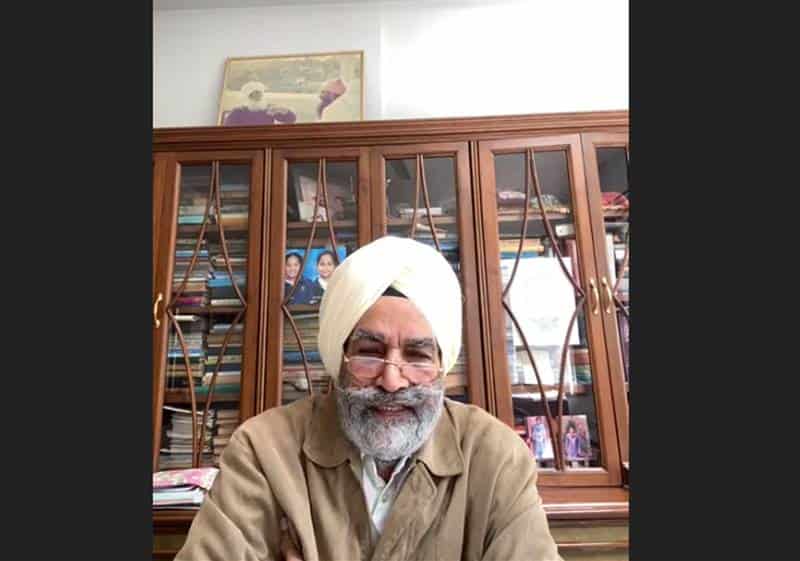
Mr. Gurdeep Singh, a Sikh leader from Bhatinda, Punjab, stressed that it was high time to focus on the future, in view of the experiences of the past and present to grow in a plural society. Mistakes could be there in the past, but remembering those only won’t solve the purpose. It will hinder progress. He warned that today’s rulers in India were breaking the very ascent of Indian culture and unity.
He said that when Kashmiri Muslims are tortured, others in the country feel their pain.
Dr. Lubna Naaz from the Department of Islamic Studies, Women’s College, AMU, spoke on “An Islamic Perspective on Peaceful Coexistence.”
Technical Session-II
Focused on the theme, Role of Islam to Strengthen Pluralism in India, the Technical Session II started under the Chairperson, Professor M. Ishaque from the Department of Islamic Studies, Jamia Millia Islamia.
Maulana Abdul Hameed Nomani, Former General Secretary, All India Muslim Majlis-e-Mushawarat, Delhi, highlighted that two things are required to be properly understood: the Creator, and the Creator’s motive. He said that Sufis always made one feel the independence to think and lead life. Islam always propagates the rights of neighbours, relatives and much more. Sufi Khwaja Moinuddin Chisti wore similar dresses like Indian Sadhus to ascertain people of his time, irrespective of their religious faiths, connected with him.
He said that Swami Dayanand and Raja Ram Mohan Roy kept Hindu philosophy out of their movements but promoted social reforms in the societies applicable to all faiths for social betterment. “Faith is vital, like Allah’s mercy, unlike social practices that change with time,” he said. India’s beauty was in its diversity of religious thoughts. In pre-Islam Arab tribes kept fighting for generations on a single issue of their forefathers, but the scenario has changed. Islam accepts variety in pluralism, from religious to traditional to social practices. Islam as a religion must not change its basic principles. It is a Sanatan religion with firm principles, he concluded.
Prof Faheem Akhtar Nadvi, Head of the Department of Islamic Studies, MANUU, Hyderabad, emphasized that the role of Islam in strengthening pluralism in India is vital. Pluralism is a society where people of all religions reside and respect each other. India is one of the best examples where pluralism has stayed for centuries. He emphasized that India will grow only when pluralism is projected in practice.
To be Continued..
source: http://www.siasat.com / The Siasat Daily / Home> Featured News / by News Desk (headline edited) / February 25th, 2023
A new book questions political wisdom about competitive communalism before and after Independence.
Former Prime Minister Jawaharlal Nehru. Image Courtesy: PTI
The prevailing political wisdom of the day is to chastise Jawaharlal Nehru, his Congress party, and their inclusive vision for the republic. Given this, one is caught in a fix if a published work subjects the Congress-Nehruvian performance to criticism. The republican and constitutional vision of India, and its plans and goals were outcomes of a prolonged anti-colonial mass agitation, which multiple ideological and identitarian political formations joined, complemented and contested.
Besides the aligned or contending forces, intellectuals and activists of various 19th and 20th-century hues also provided inputs. Privileged Muslims articulated some strands, including the exclusionary right-wing politics of communal separatism. Though represented by the Muslim League, and its sole spokesman MA Jinnah, they straddled nearly every shade of political articulation, ranging from Left to Centre, from those who advocated separatism to its vociferous opponents.
Unfortunately, the academic and popular domains popularise Muslim separatism more than their resistance to separatism. Academic studies also focus too much on Uttar Pradesh (earlier the United Provinces of Agra and Awadh). Gyanesh Kudaisya (2002) characterised this province as India’s heartland in terms of population and geographic size but also narrative-making for the Indian polity.
The former landed elites of the Muslims of this region, whom David Lelyveld (1978) called the “Kutchery Milieu”, were in the forefront and mainstay of the Muslim League. An important Muslim League leader from Lucknow, Chaudhry Khaliquzzaman (1889-1973), candidly and proudly proclaimed this in his 1961 memoir, Pathway to Pakistan. Quoting Maulana Azad, he writes, “All students of Indian politics know that it was from the U.P. that the League was reorganised. Mr Jinnah took full advantage of the situation and started an offensive which ultimately led to Pakistan.” Interestingly, in the late 1930s, Khaliquzzaman was the mayor of Lucknow and allied at least once with the Hindu Mahasabha. After Partition, it took him a long time to migrate to the other side of the border.
Against this backdrop, Aishwarya Pandit’s Claiming Citizenship and Nation: Muslim Politics and State Building in North India, 1947-1986, published by Routledge in 2021, is a critical intervention. She writes, “Given the demographic dominance of U.P. Muslims in some constituencies, the threat of revival of ‘Muslim communalism’ continued to impact their politics. In the colonial period, the United Provinces had remained central to Muslim politics around issues of representation, minority safeguards and language.”
Pandit disagrees with Kudaisya and proposes in her introductory chapter that the Uttar Pradesh Congress opposed the Centre’s move to “introduce minority and cultural safeguards after 1947”. Her book examines the intersections of law, identity and property and notes region-specific Muslim—and anti-Muslim—politics and articulations. Notably, she includes in her work the tensions that prevailed within the Muslim community over contemporary concerns.
Pandit says the new Muslim leadership that emerged after independence articulated the weaknesses of Nehruvian secularism, particularly concerning their religious, cultural and identitarian concerns. Further, from the mid-1970s onward, “Fatwa and Ulema politics acquired the centre stage”. Her study ends in 1986, a period that, according to her, “signaled the continuation of Hindu counter mobilisation, which set in the 1950s around the [Babri] Masjid-[Ram] Temple issue [of Ayodhya], the issue of minority appeasement and personal law and also coincided with the dipping fortunes of the Congress party in Uttar Pradesh”.
In her effort to discover reasons for the Congress party’s decline in Uttar Pradesh, she argues that Muslims here [and in Bihar] “made some surprising alliances including those with the Jan Sangh in the 1960s and 70s”. Pandit attempts to absolve Muslims of the responsibility for this, and “challenges the widespread view that Muslims acted as a secure and stable ‘vote-bank’ for the Congress after independence”.
This is where the book would provoke many to raise a few questions that have been left unasked or unanswered. Terminating the study in 1986—and not a few years later—may have excluded the author from raising some crucial questions. Hindu counter-mobilisation got massive support from the Shah Bano issue that raged from May 1985 to April 1986, other than the ‘nationalisation’ of the local Ayodhya dispute, which Pandit chooses not to examine. Scholars, even those not inclined to the right, often sidestep Muslim contributions to communalising narratives that fed Hindu majoritarianism, weakening India’s fragile pluralist secularism.
On 15 January 1986, at a Momin Conference session at the Siri Fort Auditorium in Delhi, then prime minister Rajiv Gandhi announced his intention to amend the law to nullify the Supreme Court’s April 1985 verdict in favour of Shah Bano. Driven out of her home in 1975, 43 years after her marriage, Bano had approached the courts seeking maintenance. Given instant triple divorce in 1978—inside a trial court in Indore—the case moved from the High Court to the Supreme Court. In May 1986, the Rajiv Gandhi-led government passed the Muslim Women (Protection of Rights on Divorce) Act following strident Muslim protests in January that year against the progressive judicial verdict that granted Shah Bano alimony. The law passed in Parliament reversed the maintenance the court had said she was entitled to.
The Urdu memoir, Karwan-e-Zindagi, published in 1988 by Maulana Abul Hasan Ali Miyan Nadvi (1914-1999), makes the conservative Muslim approach to this issue pretty clear. In Volume 3, Nadvi triumphantly writes about how he persuaded Rajiv Gandhi not to accept the proposition that many Islamic countries had reformed their personal laws. He rejoices in accomplishing his effort to stymie similar reforms in India. He says his arguments had a particular psychological impact on Rajiv Gandhi—“Woh teer apney nishaaney par baitha—My arrow hit its target”. Nadvi includes a candid confession: “Our mobilisation to protect the Shariat in 1986 complicated the Babri Masjid issue and vitiated the atmosphere in a big way—“Iss ney fiza mein ishte’aal wa izteraab paida karney mein bahut bara hissa liya,” he writes.
Nadvi admits in his memoir that he had promised to Rajiv Gandhi he would persuade the Waqf Boards to make an endowment available to maintain abandoned women. But this issue remains unaddressed until today. Aishwarya Pandit, rather than exploring the clergy politics of Lucknow’s Nadvi, jumps over to Delhi’s “Imam” Bukhari and his demagoguery and rhetoric.
Nadvi’s politics of 1985-1986 needs to be read with Nicholas Nugent, who writes in his book, Rajiv Gandhi: Son of a Dynasty, published by BBC Books in 1990, that the Congress High Command decided in early 1986 to play the Hindu card like the Muslim women’s bill played the Muslim card. Nugent writes, “Ayodhya was supposed to be a package deal…a tit for tat for the Muslim women’s bill…Rajiv played a key role in carrying out the Hindu side of the package deal by such actions as arranging that pictures of Hindus worshipping at the newly unlocked shrine be shown on television.”
On 1 February 1986, within an hour of the Faizabad district court judgment, the lock of the Babri Masjid was opened. The “deal” between the Prime Minister, the Muslim clergy and the Momin Conference’s Ziaur Rahman Ansari, who died in 1992, had been struck a month earlier. Ansari’s biography, Wings of Destiny, written by his son Fasihur Rahman and published in 2018, refers to this series of events. Yet, nagging questions remain: who wanted the locks opened and why? After all, elections were four years away, and Rajiv Gandhi did not have a direct electoral stake in the event, except for a few reverses in by-elections for the Congress party.
A sizeable section of Hindus was peeved after Nehru reformed, though more symbolically than substantively, Hindu Personal Laws in the 1950s, but left out Muslim Personal Laws. This aspect is brought out by Reba Som in February 1994, in “ Jawaharlal Nehru and the Hindu Code: A Victory of Symbol over Substance ?”
Put another way, what the votaries of Hindutva call Muslim appeasement is the State appeasing the conservative and patriarchic Muslim clergy. Quite often, liberal and left scholars and activists hold the position that reforms must emerge from within the Muslim communities. Nevertheless, competitive communalism adversely affected the Congress party in the electoral sphere. First, the ex-Socialist forces, comprising the backward classes and Dalits, replaced Congress with the Bharatiya Janata Party. Pandit disappoints on this count in her sixth chapter despite delving into primary archival sources on all issues raised in her immensely readable book.
In the third chapter, Pandit discusses Hindi-Urdu battles and blames the ruling Congress for the deficits in State support for Urdu. She misses out that the protagonists of Urdu in Uttar Pradesh also share some blame for the idioms and methods of political mobilisation they didn’t employ for the Urdu cause. Selma K. Sonntag (1996) provides a more informed comparative assessment of the Urdu politics of Bihar and Uttar Pradesh.
Besides Urdu and personal laws, another central controversy has been the minority status of the centrally-funded Aligarh Muslim University. Pandit touches upon this subject but leaves out too much. She does not concern herself with the academic performance or research at the university, which has refrained from examining Muslim concerns such as communal strife, caste among Muslims, patriarchy, and Muslim under-representation. Just a few months before his unfortunate death in 2010, Omar Khalidi candidly raised these issues. Could these deficits possibly have contributed to the disjunctions between State and society as also between India’s Muslims and the Aligarh Muslim University?
Quite often, the ruling party had to yield to pressures from Muslim conservatives and reactionaries, perhaps because despite massive funding to the university, it did not foster enough progressive Muslim opinion-makers and leaders. If true, this would limit the university’s contribution to resisting competitive communalism and can explain why the support base of the ruling Congress deserted it, eventually leading to the rise of what scholars such as Edward Anderson, Christophe Jaffrelot and Deepa Reddy call Neo-Hindutva.
Possibly because of this omission, this book does not help figure out why Uttar Pradesh Muslims could not throw up the kind of ‘Pasmanda movement’, or the short-lived Left-inspired gender movement Tehreek-e-Niswan, which emerged in adjacent Bihar in the 1990s.
Why Muslims in Uttar Pradesh failed to strengthen post-independence movements for citizenship rights and confined themselves to emotive religious, cultural and identitarian issues is a vital but unanswered question. Thus, this book ignores this pertinent question: to claim citizenship, and for the secularization of the state and society, how to strike a balance with rights for religious communities? This approach of the author doesn’t allow her to deal, even when discussing Muslim assets, with why Uttar Pradesh Muslims did not employ their wealth for capacity-building of their community, as South Indian Muslims did and still do, in the spheres of education, and health? Why did they remain highly dependent upon the State?
Notwithstanding these limitations of perspective, Pandit’s considerably well-researched book delves into untapped and under-tapped primary sources. Her analysis of a wide range of evidence and her articulation is lucid. True to its claim, it is a valuable contribution toward understanding post-independence Uttar Pradesh.
The author teaches modern and contemporary Indian History at Aligarh Muslim University. The views are personal.
source: http://www.newsclick.in / News Click / Home> India> Politics / by Mohammad Sajjad / February 20th, 2023
Those unable to access the zoom link may listen to the talk live on YouTube via link.
(Representative image)
Hyderabad:
The Muslim Girls Association has invited teachers to listen to audio lectures on topics that will help them get acquainted with best practices at school and in classrooms.
The audio sessions named ‘Teachers Talk’ will be held virtually on Zoom appliction every thursday from morning.6:30 am to 7 am.
The association located at Shanti Nagar, Hyderabad, has requested citizens intersted to click on the link for joining the session.
Meeting ID: 867 1636 8436 and Passcode talk can be used to log in to the session.
Those unable to access the zoom link may listen to the talk live on YouTube via link.
The association has further invited teachers or other people to be a speaker in the sessions by asking them to forward their details on mobile numbers- 9948909657 and 955012397.
source: http://www.siasat.com / The Siasat Daily / Home> News> Hyderabad / by News Desk, posted by Masarath Fatima / February 16th, 2023
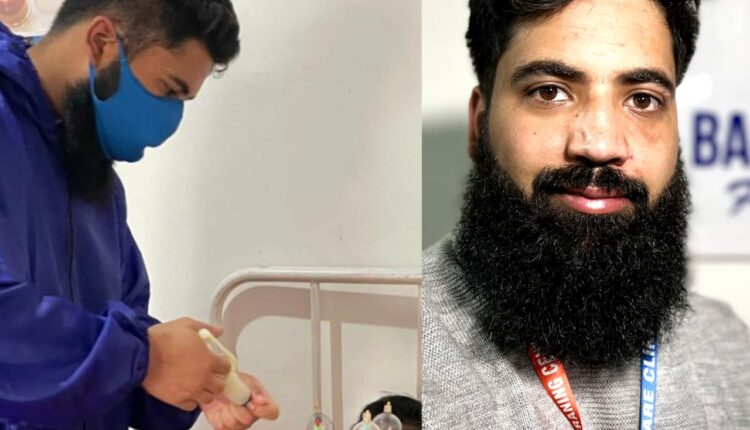
Meet Basit Bashir, Kashmir’s Own Unani Hijama Cupping Therapy Expert
Srinagar:
The rise in depression and various ailments in Kashmir can be cured by Cupping Therapy (Hijama) believes Basit Bashir who is expert in Hijama and Chiropractic.
Detailing out the nitty gritties of ‘Cupping Therapy’ (Hijama), to Kashmir Glory Basit says, in cupping therapy special cups are put on a person’s skin for a few minutes to create suction. Cupping therapy might be trendy now, but it’s not new. It dates back to ancient Egyptian, Chinese, and Middle Eastern cultures, he says.
“One of the oldest medical textbooks in the world, the Ebers Papyrus, describes how the ancient Egyptians used cupping therapy in 1,550 B.C. Cupping therapy was also introduced in Muslim world by Prophet Muhammad (SAW) who promised Hijama to be cure for all aliments expect death”, says Basit.
“Hijama is an Arabic word for cupping therapy and is widely used in Asian countries.”
People get it for many purposes, including helping with pain, inflammation, blood flow, relaxation and well-being, and as a type of deep-tissue massage, Basit says.
This therapy, he says, addresses a wide variety of issues including chronic pain and migraines, immune enhancement, disease prevention, anxiety, depression, health maintenance and various ailments.
With six years of experience in cupping therapy, Basit is one of Kashmiris foremost specialists in alternative healing.
He also specialises in acupuncture and Chiropractic. He brings with him a diverse range of experiences and has worked extensively in Kashmir.
He started his career with one of the renowned Unani hospital – (Unani and Panchkarma Hospital) – where he got expertise from Kashmir’s famous Unani and Panchkarma doctor Dr Nazir.
He received one year of cupping training from ‘Cupcare Training Institute’ Mumbai and subsequently joined Rajasthan Jodhpur in Acupressure, acupuncture and cupping therapy for two years.
Basit opened his own ISO Certified clinic at Pandach crossing outskirts Srinagar City where he is treating hundreds of patients with different aliments with other healing modalities which provides unique perspective in diagnosing and treating chronic health and wellbeing issues.
Basit has been conducting various Hijama camps and has treated many youth with depression and other problems.
As per Islamic traditions, Hijama is the sunnah of Prophet Muhammad (SAW) even as science over the time proving that Hijama can help us in treating various ailments in our body. “The aim of organizing such camps is to increase awareness among people regarding the benefits of Hijama”, says Basit.
“During my practice I came across with patients suffering from different ailments like uric acid, cholesterol, Triglyceride, thyroid, hypertension thankfully they got satisfactory results but I was not personally satisfied treating patients with ortho ailments which prompted me to opt for chiropractic training. I joined a chiropractic training center in Hyderabad and it took me one year to complete this training course,” he further adds.
Each day the clinic of young doctor witnesses a huge rush to get their treatment through traditional means.
I have done Hijama before and I felt a lot of relief and it cured me to a great extent that is why I came again,” says Tabish Ahmad, a patient suffering from fatty liver, high triglycerides and cholesterol.
Bilal Ahmad, another patient who felt relieved after receiving the Hijama therapy says “I was suffering from depression, I feel very much relieved after doing my first Hijama.”
Basit has started his own Hijama training centre in order to teach unemployed youth and create employment avenues in Kashmir.
A female patient Saima Jan hailing from Shopain says she was suffering from pimple and acne problems and had been treating it for the last seven years. “I spent a lot of money on my treatment but finally I did Hijama and Alhamdulillah, my face is fairly glowing now. I have a very strong belief in Hijama now and I’m very much thankful to Basit Sahib who cured me in just a few sessions.”
Basit has started awareness initiatives regarding Hijama wherein he has organised many free Hijama campuses.
Basit has opened his own Hijama training centre and fervently appeals youth to come forward and join his training centre to create their own employment avenues.
source: http://www.kashmirage.net / Kashmir Age / Home> Health / March 13th, 2022
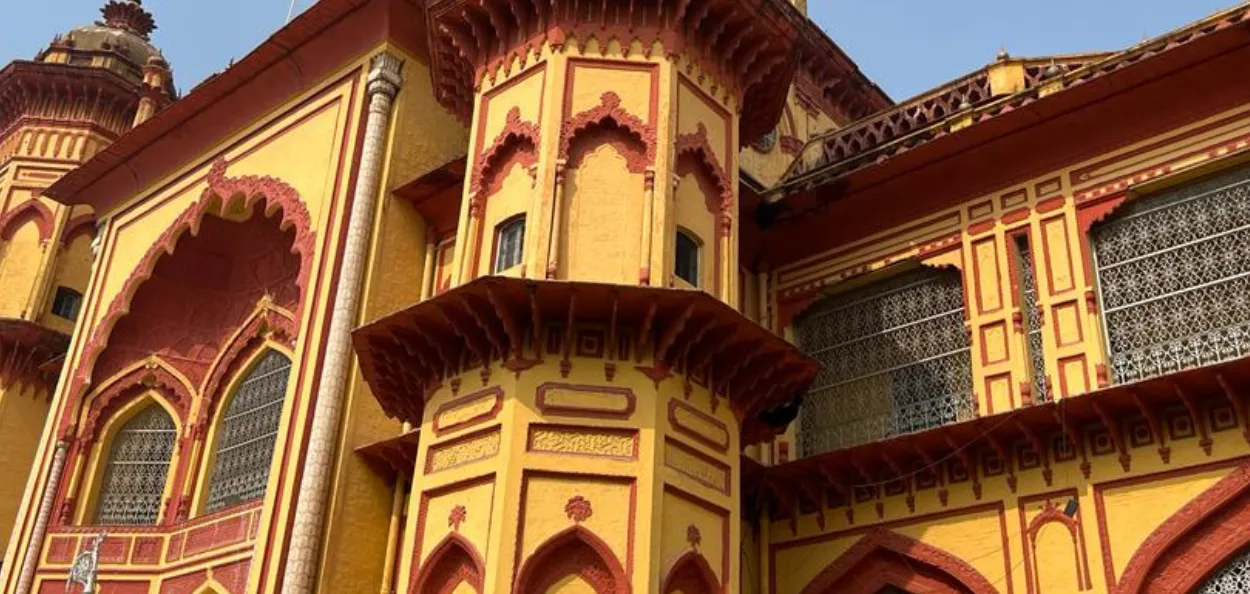
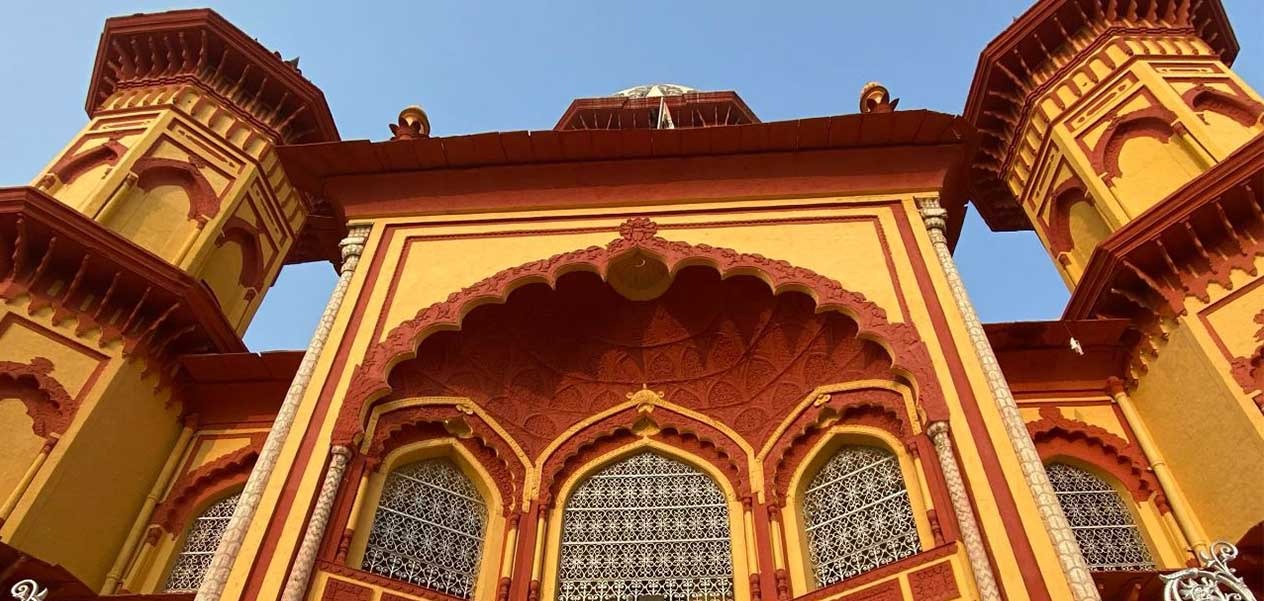
Eight minarets of Hamid Manzil, a magnificent building that houses the world’s famous Rampur Raza Library located some 200 kilometers from New Delhi, is a great symbol of pluralism in India.
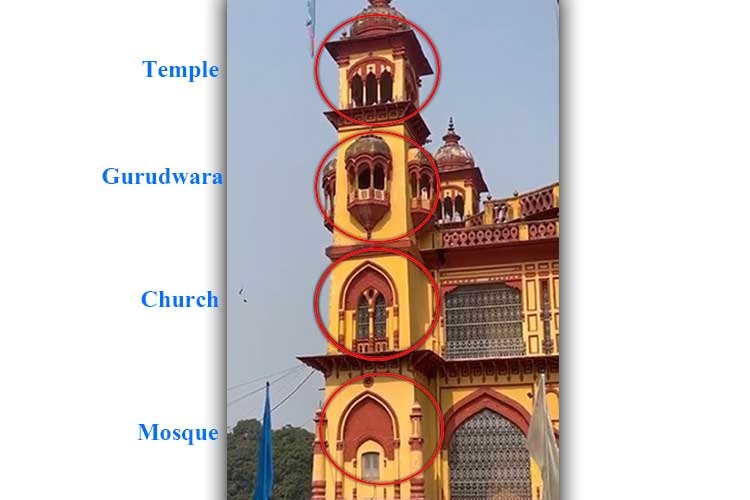
The first part of the library minaret at the bottom is built in the shape of a Mosque; the part just above this resembles a Church, the third part reflects the architectural design of a Sikh Gurudwara, and the top-most part is built in the shape of a Hindu temple.
The religious symbols
This spirit of inclusiveness promoted in the princely State early on continues to inspire the people of this Uttar Pradesh district to live in harmony.
Rampur also famous for the Rampuri Chaku (knife), is one of the few princely states in India where no major communal riots or disturbances ever took place during the British colonial era or in the years afterward.
What makes the symbolism of the building remarkable is that it was constructed between 1902-05 much before India got its Independence and the nawabs were in the power of the 15-gun salute Princely State. They consciously chose to keep the sequence of symbolism with a secular spirit.
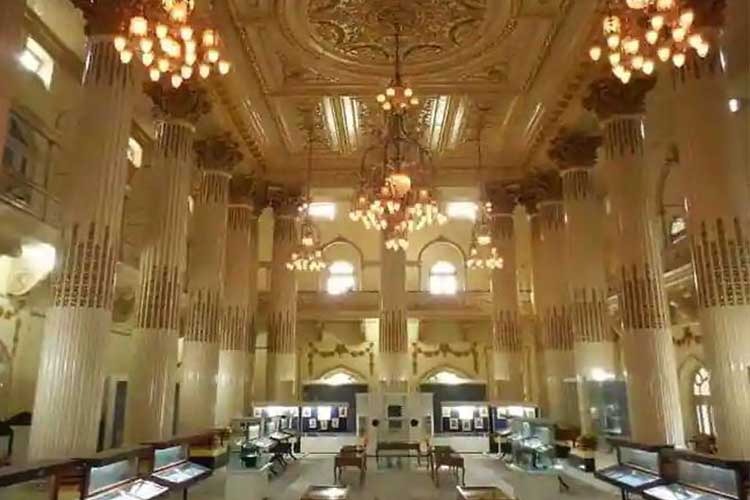
The unique architecture of the library building tells a long story about the nature and politics of the erstwhile Rampur Princely state. The interior of the building is also inspired by European architecture. The architect of the building was French architect W.C. Wright, who made the structure on the instructions given by Nawab Hamid Ali Khan.
The interiors of the library
The Nawabs of Rampur were Rohilas, who had their origin in Roh, Afghanistan, and were renowned for their secular and liberal outlook. They patronized the arts, culture, and education, and were known for their love of music, poetry, and architecture. They also promoted social and religious harmony by patronizing scholars and religious leaders from all faiths, including Hindus, Muslims, and Sikhs. Raza library continues to be one of the most important cultural institutions in India and houses a vast collection of rare manuscripts, books, and other artifacts.
The library is now managed by the Government of Uttar Pradesh but remains closely associated with the Nawab family. Its minarets capture the true soul of the syncretic traditions of India. The Rampur Raza Library collection was started by Nawab Faizullah Khan in 1774. But the building came up much later.
The library initially had the personal book collection of Nawabs of Rampur who were patrons of the arts and avid collectors of books and manuscripts. Over the decades, the library has grown to become one of the largest collections of rare books and manuscripts in the country.
The library houses a vast collection of 17,000 manuscripts, including 150 illustrated ones with 4413 illustrations and about 83,000 printed books besides 5,000 miniature paintings in albums, 3000 specimens of calligraphy, and 205 palm leaves. Many rare and valuable texts are in Arabic, Persian, Urdu, Hindi, and other languages. The collection includes works on a wide range of subjects, including history, philosophy, science, literature, and religion.
The Raza Library is also home to several rare artifacts, including miniature paintings, coins, and other objects of historical and cultural significance. The library has a conservation lab that works to preserve these artifacts and ensure that they are protected for future generations. Nawab Murad Ali Khan, the son of the last nawab Murtaza Ali Khan has been on the board of the library management. His brother Nawab Kazim Ali Khan was also involved.
He has been MLA for five straight terms from the Suar constituency. He has twice been a Minister in Samajwadi as well as the Bahujan Samaj Party Government of Uttar Pradesh. He has continued the legacy of his ancestors in furthering a tolerant and secular culture in his region. Maulana Azad was the first MP from Rampur, who also became the first education minister of independent India. The Nawabs of Rampur were particularly famous for their patronage of Urdu poetry and music.
The general view of the library
Nawab Yousuf Ali Khan learnt poetry from Mirza Ghalib, who had been employed by his court. The nawabs were avid collectors of musical instruments, and many famous musicians and singers, including Ustad Allauddin Khan and Ustad Faiyaz Khan, were associated with the Rampur court.
The Rampur-Sahaswan gharana of classical music is named after the princely state and continues to be popular among music enthusiasts in India. Even though Rampur was a predominantly Muslim state, the Nawabs encouraged the development of Hindu temples and other places of worship for non-Muslims.
They also supported interfaith marriages and were known for their efforts to bridge the gap between different communities in their state. Rampur Raza Library is today one of the biggest symbols of India’s syncretic heritage and continues to attract visitors from across the world.
source: http://www.awazthevoice.in / Awaz, The Voice / Home> Stories / by ATV / Posted by Shaista Fatima / February 22nd, 2023
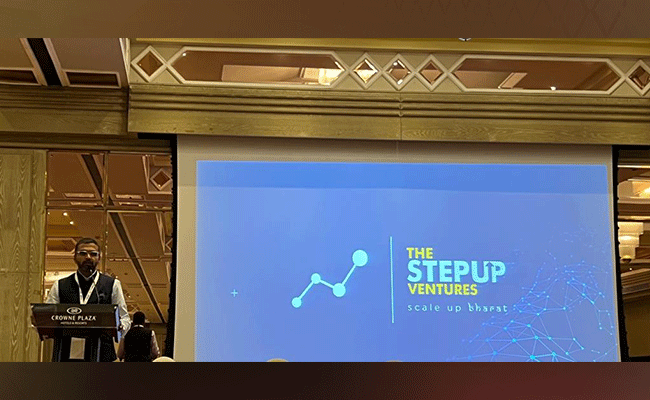
Sahebaan Business and Professionals Group (SBPG) and Sahebaan UAE conducted a Business and Professionals Meet at Al Jumairah Ballroom of Crowne Plaza Hotel, Sheikh Zayed Road, Dubai, on 5th February 2023 from 2.00 PM onwards.
The event, sponsored by the Sahebaan Business Community UAE, was a success, with Sahebaan Community delegates from UAE, GCC, and India in attendance.
The event commenced with a recitation of verses from the Holy Quran. The convenor of SBPG, Althaf M.S., welcomed the gathering and explained the purpose of this maiden initiative.
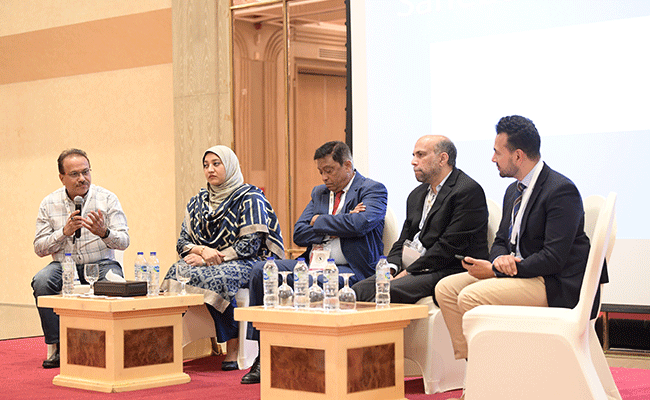
The Program thereafter commenced with a panel discussion moderated by Althaf M.S., an EPC Oil and Gas Professional. The panel consisted of Dr. Abdul Rahiman Beig, a Professor at Khalifa University Abu Dhabi; Mrs. Ambreen Sheik, a Businesswomen and also an Honorary President of the Indian Ladies Association, Abu Dhabi; Mr. Mumtaz Hussain, an established Businessman from Qatar; Dr. Waleed Ahmed, Fellow of the Royal College of Psychiatrists (UK) and a well- known consultant and Mr. Syed Siraj Ahmed, Ex banker & Risk Management Consultant.
While speaking during the event, Mr. Imran Hidayath, CEO of Hidayath Group, Dubai, dwelt on his entrepreneurial journey to success.
Mr. Suhail Kudroli, Chartered Accountant, urged all to participate in such gatherings.
While speaking at the sidelines of the meeting, UAE Sahebaan Convenor Mr. Afroz Assadi and Mr. Siraj Ahmed appreciated the initiative and urged all to lend their support.
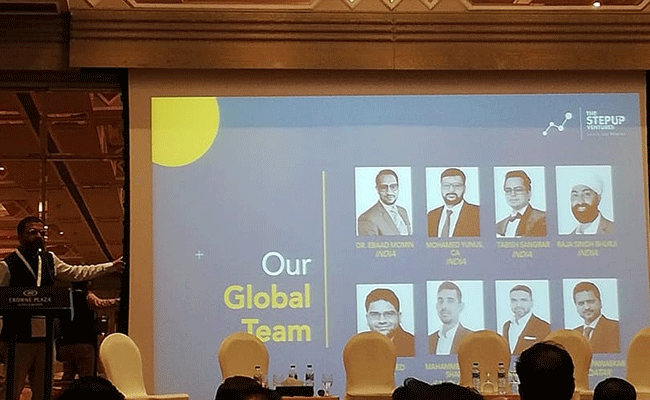
Business presentations were made subsequently by Mohd Salman on his startup business “The Stepup Ventures,” followed by Sahebaan ladies, Sahara Asif on “Life Skills Education” and Waseem Shaikh & Thanziya Khan on “Tru Choco & Nuts.”
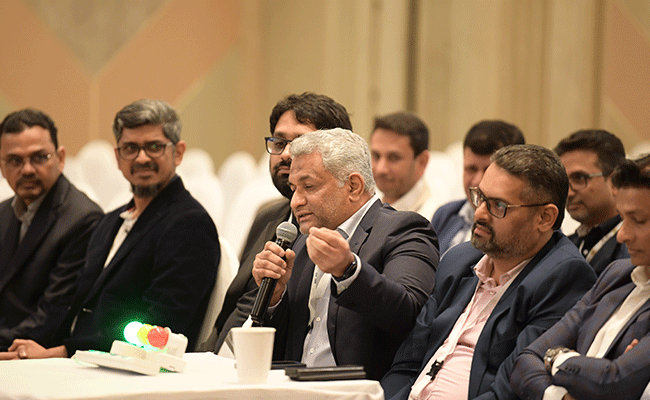
The event’s highlight was Speed Networking, which evidenced active participation by delegates and interaction on a one-to-one basis with every delegate.
The Program was managed by Althaf M.S, Mohd. Samiulla, Mohd Sufiyan, and Faizaan Khateeb and anchored by Mohd. Sufiyan.
source: http://www.english.varthabharati.in / Vartha Bharati / Home> Gulf / by Vartha Bharati / February 13th, 2023
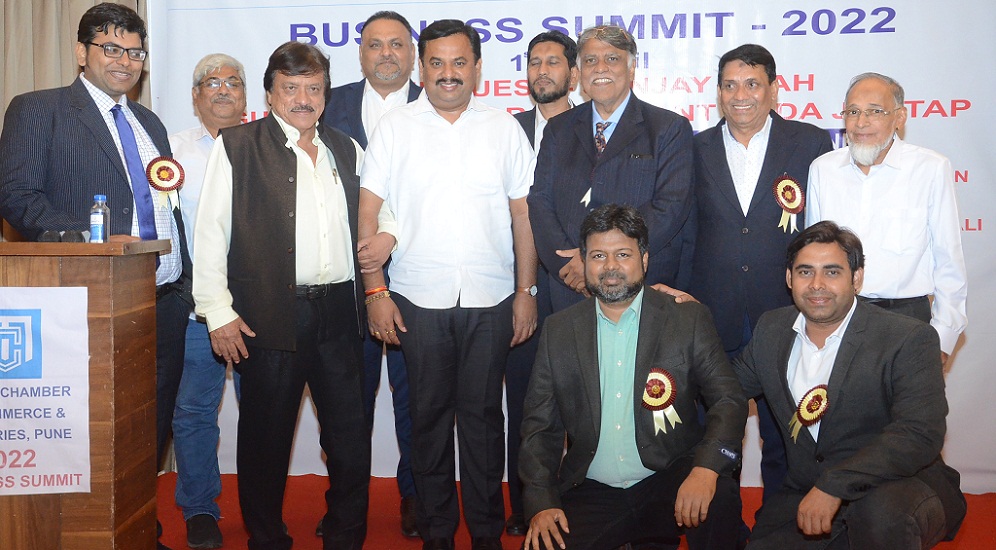
The Muslim Chamber of Commerce and Industries conducted a Business Summit on the 1st of April, 2022 at the Shantai Hotel, Rasta Peth Pune.
The Chief Guest of the program was Sanjay Shah who is the immediate Past President of Bombay Industries Association and Guest of Honor was Ex-Mayor of Pune City and Current NCP Pune President Prashant Jagtap.
The Summit was successful with more than 125 Delegates from various Industries participating, there were speakers who spoke on Digital Marketing, Startups, Government Subsidies etc.
Prashant Jagtap was felicitated by MCC&I President Nisar Sagar and MCC&I Secretary Rizwan Munir Shaikh.
source: http://www.punekarnews.in / Punekar News / Home> Business / April 04th, 2022
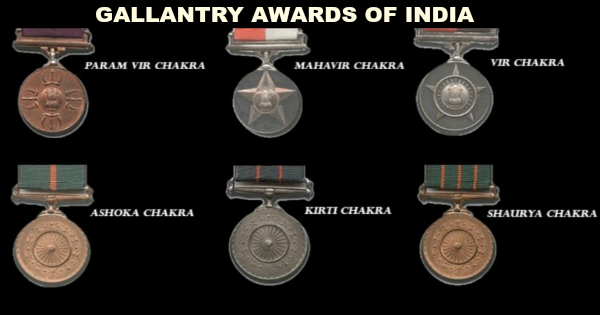
A total of 946 Police personnel have been awarded Medals on the occasion of the Republic Day, 2021.
The break-up is as under:-
Gallantry Medals
Name of the Medal
Number of Medals Awarded
President’s Police Medal for Gallantry (PPMG)
02
Police Medal for Gallantry (PMG)
205
Service Medals
Name of the Medal
Number of Medals Awarded
President’s Police Medal for Distinguished Service (PPM)
89
Police Medal for Meritorious Service (PM)
650
Among the majority of the 207 Gallantry Awards, 01 PPMG to Jharkhand (Posthumous) & 01 PPMG to CRPF (Posthumous) is being awarded, 137 personnel are being awarded for their gallant action in Jammu & Kashmir, 24 personnel for their gallant action in Left Wing Extremism affected areas and 01 personnel for their gallant action in North-East Region. Among the personnel receiving Gallantry Awards, 68 are from CRPF, 52 are from J&K Police, 20 are from BSF and 17 are from Delhi Police, 13 are from Maharashtra and 08 are from Chhattisgarh and 08 are from Uttar Pradesh and the remaining from the other States/UTs and CAPFs.
Force Wise/State Wise list of Medal awardees to the Police Personnel are as follows:
Sl.No.
Name of States/ UTsOrganization
President’s Police Medal for Gallantry (PPMG)
Police Medal for Gallantry(PMG)
President’s Police Medal (PPM) for Distinguished Service
Police Medal (PM) for Meritorious Service
1
Andhra Pradesh
0
2
1
15
2
Arunachal Pradesh
0
0
0
2
3
Assam
0
0
1
13
4
Bihar
0
5
2
11
5
Chhattisgarh
0
8
1
10
6
Delhi
0
17
3
18
7
Goa
0
0
0
2
8
Gujarat
0
0
2
17
9
Haryana
0
0
2
12
10
Himachal Pradesh
0
0
1
4
11
Jammu & Kashmir
0
52
2
17
12
Jharkhand
1
2
1
8
13
Karnataka
0
0
0
19
14
Kerala
0
0
1
9
15
Madhya Pradesh
0
2
4
17
16
Maharashtra
0
13
4
40
17
Meghalaya
0
0
1
3
18
Mizoram
0
0
1
3
19
Nagaland
0
0
0
2
20
Odisha
0
0
2
11
21
Punjab
0
3
2
16
22
Rajasthan
0
0
1
13
23
Sikkim
0
0
0
1
24
Tamil Nadu
0
0
3
17
25
Telangana
0
0
2
12
26
Tripura
0
0
0
6
27
Uttar Pradesh
0
8
7
72
28
Uttarakhand
0
0
1
5
29
West Bengal
0
0
2
20
UTs
30
Andaman & Nicobar Islands
0
0
1
1
31
Chandigarh
0
0
0
1
32
Puducherry
0
0
0
1
CAPFs/Other Organizations
33
Assam Rifles
0
1
1
13
34
BSF
0
20
5
46
35
CISF
0
0
2
24
36
CRPF
1
68
6
57
37
ITBP
0
2
3
12
38
NSG
0
0
0
4
39
SSB
0
2
2
12
40
IB (MHA)
0
0
8
26
41
CBI
0
0
7
24
42
SPG
0
0
1
4
43
BPR&D
0
0
1
2
44
NCRB
0
0
1
1
45
NIA
0
0
1
5
46
SPV NPA
0
0
0
1
47
NDRF
0
0
0
4
48
NEPA
0
0
0
1
49
NHRC
0
0
1
1
50
M/O Social Justice
0
0
1
0
51
UIDAI
0
0
1
0
52
M/o Railways (RPF)
0
0
1
15
Total
2
205
89
650
Detailed lists of Awardees are as below:
PRESIDENT’S POLICE MEDAL FOR GALLANTRY (PPMG):
Jharkhand
Sl No
Name S/Shri
Rank
Medal Awarded
1
Late Banua Oraon
ASI
PPMG (Posthumous)
CRPF
2
Late Mohan Lal
ASI
PPMG(Posthumous)
POLICE MEDAL FOR GALLANTRY (PMG)
Andhra Pradesh
Sl No
Name S/Shri
Rank
Medal Awarded
1
Gongati Girish Kumar
AAC
PMG
2
Kudupudi Hari Krishna
JC
1st BAR TO PMG
Bihar
3
Birendra Kumar Medhavi
Insp.
PMG
4
Pradeep Kumar
Insp.
PMG
5
Dhanraj Kumar
SI
1st BAR TO PMG
6
Uttam Kumar
CT
PMG
7
Dharmendra Kumar
CT
PMG
Chhattisgarh
8
Santosh Hemla
SI
1st BAR TO PMG
9
T. P Dilip
HC
PMG
10
Ajay Sonkar
Insp.
PMG
11
Abdul Sameer Khan
Insp.
3rd BAR TO PMG
12
Omprakash Sen
Company Commander
1st BAR TO PMG
13
Raman Usendi
Insp.
2nd BAR TO PMG
14
Ramesh Kumar Sori
ASI
2nd BAR TO PMG
15
Leeladhar Rathore
Insp.
PMG
Delhi
16
Sanjeev Kumar Yadav
DCP
8th BAR TO PMG
17
Prabhat Kumar Pankaj
Insp.
PMG
18
Pankaj Kumar
Insp.
PMG
19
Krishan Kumar
SI
PMG
20
Neeraj Kumar Sharma
SI
PMG
21
Girdhar Singh Gurjer
HC
PMG
22
Gurdeep Singh
CT
PMG
23
Pramod Singh Kushwah
DCP
2nd BAR TO PMG
24
Hridaya Bhushan
ACP
PMG
25
Sandesh. K
SI
PMG
26
Bhupender Kumar
ASI
PMG
27
Pramod Singh Kushwah
DCP
1st BAR TO PMG
28
Vinod Kumar
Insp.
1st BAR TO PMG
29
Dr. G.Ram Gopal Naik
DCP
PMG
30
Rajesh Kumar
ACP
PMG
31
Vinay Tyagi
Insp.
PMG
32
Kuldeep Singh
CT
PMG
Jammu & Kashmir
33
Abdul Waheed Shah
SSP
1st BAR TO PMG
34
Farooq Ahmad Malla
Follower
PMG
35
Ashish Kumar Mishra, IPS
SP
2nd BAR TO PMG
36
Farooq Ahmad Bhat
DySP
PMG
37
Sarjan Ahmad Dar
SI
PMG
38
Fayaz Ahmad Lone
ASI
1st BAR TO PMG
39
Arshid Rasool Tantray
CT
PMG
40
Tariq Mahmood
DySP
1st BAR TO PMG
41
Reyaz Ahmad Mir
SI
1st BAR TO PMG
42
Jagdish Singh
ASI
1st BAR TO PMG
43
Mohd Hussain Mir
HC
PMG
44
Sahil Sharma
DySP
PMG
45
Sageer Ahmad Pathan
ASI
1st BAR TO PMG
46
Tahair Ashraf
SP
1st BAR TO PMG
47
Javeed Ahmad Yatoo
Insp.
1st BAR TO PMG
48
Mohamad Irfan Malik
Insp.
PMG
49
Tariq Ahmad Rather
HC
PMG
50
Vidhi Kumar Birdi, IPS
DIG
2nd BAR TO PMG
51
G V Sundeep Chakravarthy, IPS
SP
1st BAR TO PMG
52
Shahjhan Choudhary
DySP
1st BAR TO PMG
53
Mohd Rafi Malik
ASI
1st BAR TO PMG
54
Mohd Suleman Choudhary, IPS
DIG
PMG
55
Reyaz Ahmad Baba
SgCT
PMG
56
Sandeep, IPS
SSP
1st BAR TO PMG
57
Firdous Ahmad Ganie
SgCT
PMG
58
Reyaz Ahmad Khan
CT
PMG
59
Arvind Kumar Badgal
DySP
PMG
60
Javid Ahmad Mir
CT
PMG
61
Mashkoor Ahmed
DySP
2nd BAR TO PMG
62
Yousuf-Ul-Umer
SI
1st BAR TO PMG
63
Ferooz Ahmad Lone
HC
2nd BAR TO PMG
64
Tahir Saleem Khan
SSP
1st BAR TO PMG
65
Zahoor Ahmad Wani
SI
1st BAR TO PMG
66
Shabir Ahmad Dar
HC
PMG
67
Rakesh Akram
DySP
1st BAR TO PMG
68
Madasar Nasser
Insp.
1st BAR TO PMG
69
Nazir Ahmad Jatal
SgCT
PMG
70
Mohd Idress Wani
DySP
1st BAR TO PMG
71
Khursheed Ahmad Malla
HC
PMG
72
Ferooz Ahmad Lone
HC
1st BAR TO PMG
73
Bilal Ahmad Shagoo
SgCT
PMG
74
Dawood Ahmad Bhat
SgCT
1st BAR TO PMG
75
Bashir Ahmad Sheikh
Follower
PMG
76
Shamshir Hussain
SSP
1st BAR TO PMG
77
Fayaz Hussain Shah
DySP
1st BAR TO PMG
78
Khushal Hussain Shah
HC
PMG
79
Reyaz Ahmad Mir
CT
PMG
80
Tariq Mahmood
DySP
2nd BAR TO PMG
81
Parveen Kumar
SI
PMG
82
Tariq Ahmad Khoja
SgCT
PMG
83
Sajad Ahmad Malik
DySP
1st BAR TO PMG
84
Ravinder Paul Singh
Insp.
1st BAR TO PMG
Jharkhand
85
Prakash Kumar Rajak
SI
PMG
86
Kunal
Addl.SP
PMG
Maharashtra
87
Raja R, IPS
Addl.SP
PMG
88
Nagnath Gurusiddha Patil
PSI
PMG
89
Mahadev Maroti Madavi
NPC
PMG
90
Kamlesh Ashok Arka
NPC
PMG
91
Hemant Korke Madavi
PC
PMG
92
Amul Shriram Jagtap
PC
PMG
93
Vella Korke Atram
PC
PMG
94
Sudhakar Malayya Mogaliwar
PC
PMG
95
Biyeshwar Vishnu Gedam
PC
PMG
96
Gajanan Dattatray Pawar
Police Insp.
PMG
97
HariBalaji N, IPS
Addl.SP
PMG
98
Girish Maroti Dhekale
NPC
PMG
99
Nilesh Maroti Dhumne
NPC
PMG
Madhya Pradesh
100
Arvind Kumar Saxena,IPS
SP
PMG
101
Dharm Vir Singh
Addl.SP
1st BAR TO PMG
Punjab
102
Bikramjit Singh Brar
DySP
2nd BAR TO PMG
103
Sukhwinder Kumar
ASI
PMG
104
Parwinder Singh
HC
PMG
Uttar Pradesh
105
Sunil Kumar
SI
PMG
106
Vinay Kumar Sharma
SI
PMG
107
Amit Kumar Teotia
CT
PMG
108
Prashant Kumar, IPS
ADG
1st BAR TO PMG
109
Sanjeev Kumar
Insp.
PMG
110
Abhishek Singh, IPS
SSP
PMG
111
Brijesh Kumar Singh
DySP
PMG
112
Rakam Singh
HC
PMG
Assam Rifles
113
Dr Shyam Sunder Shah
2-IC
PMG
BSF
114
Late Gajender Singh
AC
PMG(Posthu)
115
Late Amresh Kumar
CT
PMG(Posthu)
116
Walkunde Shantilal Devidas
SI
PMG
117
Late Abhijit Nandy
CT
PMG(Posthu)
118
Anirban Chatterjee
CT
PMG
119
Mohd Yousaf
HC
PMG
120
Mukesh Yadav
CT
PMG
121
Hari Lal
DIG
PMG
122
Surjeet Singh Guleria
DIG
PMG
123
Prateek Vashisth
AC
PMG
124
Suraj Karan Meena,
SI
PMG
125
Late Braj Kishore Yadav
ASI
PMG(Posthu)
126
Ramesan N
ASI
PMG
127
Rohit Joshi
ASI
PMG
128
Shyam Singh
HC
PMG
129
Mudit Kumar
CT
PMG
130
Rajput Jaydip Bhimsing
CT
PMG
131
Sawant Sachin Sambhaji
CT
PMG
132
Rentu Mollick
CT
PMG
133
Raman Gupta
AC
PMG
CRPF
134
Manoranjan Nath
HC
PMG
135
Reji Kumar K.G
HC
PMG
136
Ibraj Newar
CT
PMG
137
Yogesh Kumar Sharma
Insp.
PMG
138
Madhu Kumar
CT
PMG
139
Bhagat Vinit Shyamrao
CT
PMG
140
Shankar Lal Jat
AC
1st BAR TO PMG
141
Syed Shoaib Ahmad
CT
PMG
142
Keshari Kumar Singh
AC
PMG
143
Shabir Ahmad Dar
CT
PMG
144
Loukrakpam Ibomcha Singh
AC
2nd BAR TO PMG
145
Feda Hussain Dar
CT
PMG
146
Sajad Ahmad Bhat
CT
PMG
147
Prabhat Chandra Jha
DIG
PMG
148
Harinder Kumar
Comdt.
PMG
149
Jitendra KumarGupta
Comdt.
PMG
150
Rabi Narayan Swain
HC
PMG
151
Pawan Kumar
HC
PMG
152
Puncham Singh
CT
PMG
153
Rajesh Kumar
2-IC
PMG
154
Sanjeev Kumar
Insp.
PMG
155
Mahendra Kumar
HC
PMG
156
Nand Kishor
HC
PMG
157
Pankaj Kumar
CT
PMG
158
Durga Prasad Yadav
CT
PMG
159
Komal Singh
DIG
1st BAR TO PMG
160
Ambika Yadav
ASI
PMG
161
Mahesh Pillai R
CT
PMG
162
Gulam Rasool Lone
CT
PMG
163
Md Yousuf Itoo
ASI
1st BAR TO PMG
164
Shaid Hussain
CT
1st BAR TO PMG
165
Brajbhan Singh
Insp.
PMG
166
Akash Kumar Badal
SI
PMG
167
Roomi Kumar
CT
PMG
168
Mohd Shabir
CT
PMG
169
Naraganti Durgapathi
CT
PMG
170
Karthik K
AC
PMG
171
Brijanand Kumar Singh
SI
PMG
172
Sandeep Sharma
CT
PMG
173
Sonu Goutam
CT
PMG
174
Sanjeev Kumar
CT
PMG
175
Sukhjinder Singh
CT
PMG
176
Joni Kumar
CT
PMG
177
Velat Ram Dangi
AC
PMG
178
Shyam Singh Tomar
CT
PMG
179
Sorthiya Kalpesh Kumar Vallabh Bhai
CT
PMG
180
Kailash Pati Bera
CT
PMG
181
Rambol Kumar
SI
PMG
182
Vijay Singh
CT
PMG
183
Susheel Kumar
CT
PMG
184
Surya Prakash
CT
PMG
185
Sonu
CT
PMG
186
Nadeem Ahmad Samdani
Comdt.
PMG
187
Lallu Singh
CT
PMG
188
Ahsan Ahmad
CT
PMG
189
Ranjit Machahary
CT
PMG
190
Santosh Kumar
HC
PMG
191
Asim Das
CT
PMG
192
Mudasir Ahmad Shan
CT
PMG
193
Shalinder Kumar
CT
PMG
194
Krishan Kumar Yadav
AC
PMG
195
Sudhakar Kumar Gupta
SI
PMG
196
Bijay Tirkey
CT
PMG
197
Henzang
Comdt.
PMG
198
Jony Kumar
AC
PMG
199
Rameshwar
CT
PMG
200
Patil Rajendra Bhavalal
CT
PMG
201
Dod Sagar Gajanan
CT
PMG
ITBP
202
Anurag Kumar Singh
AC
1st BAR TO PMG
203
Rajesh Kumar Luthra
AC
PMG
SSB
204
Ajay Kumar
Comdt.
PMG
205
Naseer Ahmed
CT
PMG
PRESIDENT’S POLICE MEDAL FOR DISTINGUISHED SERVICE (PPM)
DR. ARCHANA SHIVAHARE, INSPECTOR GENERAL OF POLICE, COMPUTER CUM STATE CR, OFFICE OF THE IGP, SCRB, GUJARAT, 382010
SHRI JASHVANTKUMAR RAMJIBHAI MOTHALIYA, INSPECTOR GENERAL OF POLICE, BORDER RANGE, BHUJ, OFFICE OF THE IGP, BORDERRANGE, BHUJ. DISTRICT-KUTCH, GUJARAT, 370001
SHRI SANKAR GHOSH DASTIDAR, SUB INSPECTOR OF POLICE, BIDHANNAGAR POLICE COMMISSIONERATE, STADIUM GATE NO 3, SECTOR-III, SALT LAKE, WEST BENGAL, 700106
SHRI BABAR ALI, SUB INSPECTOR OF POLICE, ENFORCEMENT BRANCH, BHABANI BHAWAN, ALIPORE, KOLKATA, WEST BENGAL, 700027
SHRI SANTANU BISWAS, SUB INSPECTOR OF POLICE, DIGHA POLICE STATION, PURBA MEDINIPUR, WEST BENGAL, WEST BENGAL, 721428
SHRI TARAK MONDAL, SUB INSPECTOR OF POLICE (ARMED BRANCH), DEPUTY INSPECTOR GENERAL OF POLICE (ARMED POLICE) CELL, BARRACKPORE, NORTH 24 PGS, WEST BENGAL, 700120
SHRI TAPASH KUMAR MANDAL, POLICE DRIVER, SWAMI VIVEKANANDA STATE POLICE ACADEMY, BARRACKPORE, WEST BENGAL, 700120
SHRI SUBRATA KUMAR BERA, ASSISTANT SUB INSPECTOR OF POLICE, TITAGARH POLICE STATION, BARRACKPORE POLICE COMMISSIONERATE, WEST BENGAL, 700119
SHRI ASIT CHAKRABORTY, ASSISTANT SUB INSPECTOR OF POLICE, GOALPOKHER POLICE STATION, UTTAR DINAJPUR DISTRICT, WEST BENGAL, 733210
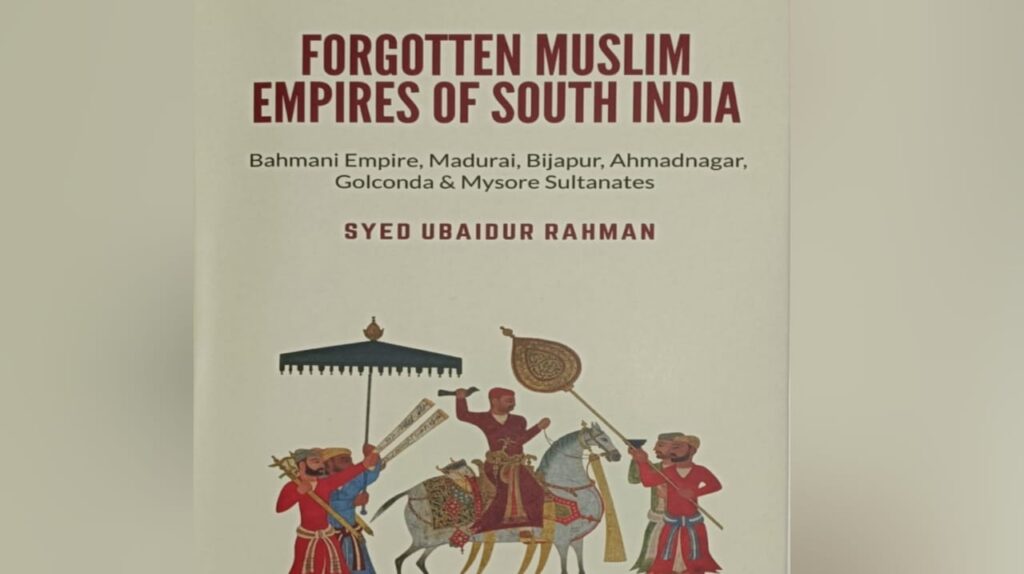
Delhi-based author Syed Ubaidur Rahman’s latest book is making waves among academics and history buffs these days. His book, ‘Forgotten Muslim Empires of South India: Bahmani Empire, Madurai, Bijapur, Ahmadnagar, Golconda and Mysore Sultanates’ that was released earlier this month has caught the imagination of a large number of people.
While the Muslim history in north India is well documented, the history of Muslims in the Deccan hasn’t caught the same attention. This is the reason that while hundreds of books have been penned on the Mughals and the Delhi Sultanate’s rule in different languages, if you try to lay your hands on the Muslim rule elsewhere, there is very little available on the ruling dynasties and their rule in other regions including South India.
Syed Ubaidur Rahman’s latest book tries to correct this mistake and bring back the Muslim sultanates of the Deccan and south India into focus. The voluminous book of 664 pages, it contains a more than three hundred fifty page chapter on the Bahmani Empire alone.
When asked as to why he wrote so much on the Bahmani Sultanate, the author says, “Bahmani Sultanate, towards the end of the 14th century was the pre-eminent power not just in South India, but across the Indian subcontinent. However, despite its resplendent and great past, there is not much literature available on the Bahmani Sultanate that was the most powerful empire from mid fourteenth century till the end of the fifteenth century. It has been relegated to the margins of history in our school syllabus and even in our history books. In this book, I have made an effort to bring it back to common imagination and make it a talking point”.
The author goes on to add that “The Bahmanis and the latter day sultanates in the region had a transformative impact over the populace, both Muslims and Hindus. Not much is written about how the Bahmani sultans spread education across the region and established schools and colleges in every major towns of their realm that not just provided free education to the pupils but took care of all their needs including food and lodging. Muhammad Shah II, during his peaceful reign of close to two decades, ensured that schools and colleges were established in almost every part of the sultanate with hostel facilities. The building of Mahmud Gawan’s university is still standing tall in Bidar, the second capital of the Bahmani empire”.
Chapters on Bijapur’s Adil Shahi Sultanate, Ahmadnagar’s Nizam Shahi Sultanate, Golconda’s Qutb Shahi Sultanate, besides Madurai and Hyder Ali and Tipu Sultan’s Mysore Sultanates are also thoroughly engaging, detailed and informative.
The book is a must read for history buffs, especially the ones who are concerned with preserving Indian Muslim history in the country.
***
Name of the book: ‘Forgotten Muslim Empire of South India’