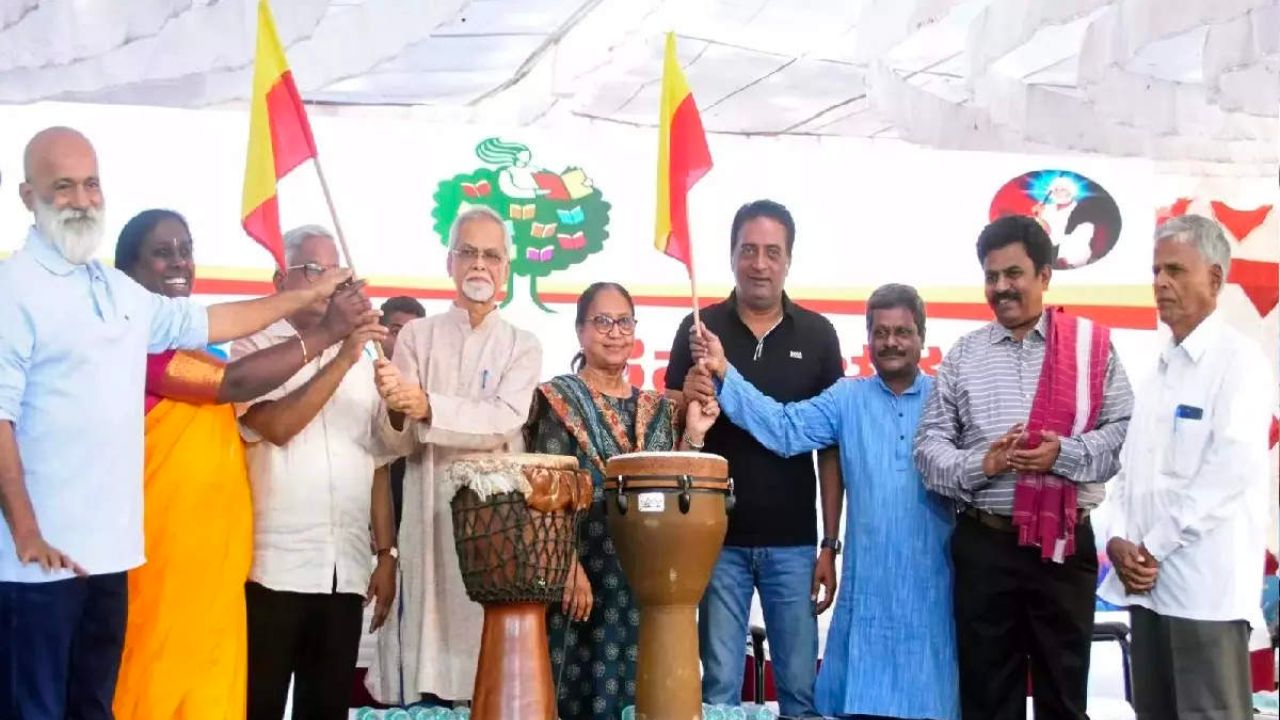
A parallel literary conference was held in Bengaluru on January 8, 2023, in response to the alleged exclusion of Muslim writers from the Kannada Sahitya Sammelana organised by the Kannada Sahitya Parishat, a non-profit organisation, funded by the Karnataka government.
Activists and writers in Karnataka expressed their disappointment at the lack of diversity at the Kannada Sahitya Sammelana, leading a group of them to organise a more inclusive event, the ‘Jana Sahitya Sammelana’. Banu Mushtaq and Dr. Mudnakudu Chinnaswamy were the chief guests at the Jana Sahitya Sammelana.
Dalit writer and Sahitya Akademi award winner Mudnakudu Chinnaswamy highlighted the threat of the imposition of Hindi on classical languages such as Tamil, Kannada, Telugu, and Odia. He also spoke about the attempts to erase Mahatma Gandhi’s legacy, and the exclusion of Muslims from every sphere of public life. “The exclusion of Muslim writers from the literary fest in Haveri was part of a wider agenda of pushing out Muslims from the mainstream,” he said.
Purushottama Bilimale, a prominent Kannada scholar, criticised Kannada writers and representative organisations for their lack of action in addressing the various crises facing the Kannada language and the state of Karnataka. Bilimale specifically mentioned the attacks on syncretic culture as a crisis that needs attention. He pointed out the lack of proper platforms for discussing these issues and expressed disappointment towards the Kannada Sahitya Sammelana for not addressing them. He suggests the organization of conventions like the Janasahitya Sammelana in various regions of the state of Karnataka to help address these issues.
The conference featured poetry, speeches, and panel discussions that focused on resistance and inclusion.
The Jana Sahitya Sammelana was put together by members of various organisations such as Samudaya, Democratic Youth Federation of India, AIDWA, Dalita Sangharsha Samiti, Ondede, Journalist Study Centre, and many others. Actors and activists like Prakash Raj and Dr. Akkai Padmashali were also present as guests and speakers at the conference. The conference was held at the Alumni Hall of the University of Visvesvaraya College of Engineering.
source: http://www.thecognate.com / The Cognate / Home> News / by The Cognate News Desk / January 12th, 2023
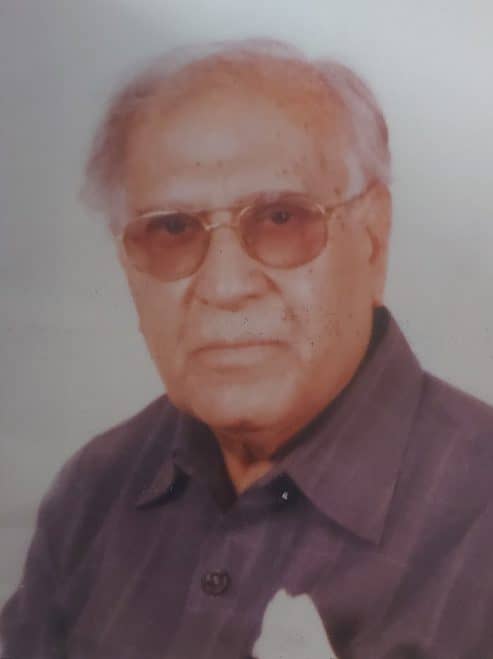
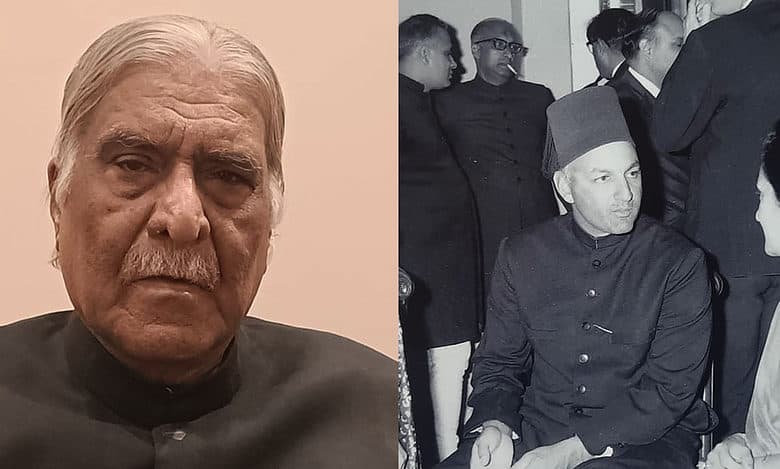
Portrait of Ismail Siddique, popularly known as Bagh Hazarika. Credit: wikipedia
Many people know about Lachit Barphukan – the Ahom general – who led the Ahom army against the invading Mughals forces and defeated them in the Battle of Saraighat in 1671.
But very few know about Ismail Siddique, popularly known as Bagh Hazarika, who fought alongside Lachit Barphukan in the famous Battle of Saraighat.
Ismail Siddique, popularly known as Bagh Hazarika, a 17th century Ahom army warrior, is believed to be instrumental in turning the tide in favour of the Ahoms in the Battle of Saraighat.
The Battle of Saraighat was a naval battle fought in 1671 between the Mughal Empire (led by Ram Singh I) and the Ahom Kingdom (led by Lachit Borphukan) on the Brahmaputra River at Saraighat, now in Guwahati, Assam.
Although weaker, the Ahom Army defeated the Mughal Army by massive army, clever diplomatic negotiations to buy time, guerrilla tactics, psychological warfare, military intelligence and by exploiting the sole weakness of the Mughal forces—its navy.
The Battle of Saraighat was the last battle in the last major attempt by the Mughals to extend their empire into Assam.
Ismail Siddique, popularly known as Bagh Hazarika, was a 17th-century warrior who fought against the Mughals for the Ahom kingdom.
He was born in an Assamese Muslim family at Dhekerigaon village near Garhgaon in Assam.
LEGEND
The legend around his origins states that there was once a tiger that had entered his village and Ismail Siddique, who was unarmed, killed the tiger barehanded.
The news of this valour reached then King of the Ahom kingdom – Chakradhwaj Singha – who then called young Ismail Siddique to his court to display his strength.
The Ahom King was impressed by the show of strength and appointed Ismail as a Hazarika, an Ahom office in charge of 1000 paiks.
This event marked the beginning of the legend of the brave Bagh (Tiger in Assamese language) Hazarika that culminated in his acts of bravery during Battle of Saraighat.
In this first conflict, the Mughal forces were well entrenched on the hills of the north bank of the Brahmaputra river with a chain of huge cannons.
Bagh Hazarika suggested a plan on how to disable the Mughal guns to Ahom General Lachit Barphukan, royal minister Atan Burhagohain and other generals.
Impressed by the plan, they entrusted Bagh Hazarika with command to lead the operation.
That night an advance party led by Bagh Hazarika along with a few soldiers crossed the Brahmaputra by boat and landed on the northern bank of the river and laid in wait for the right moment.
While the Mughal soldiers were busy saying their Fajr or dawn prayers, Bagh Hazarika and his soldiers climbed the high embankments and poured water into the Mughal cannons, rendering them useless.
Later, the Ahom army announced their advance by blowing the trumpets. In response, the Mughal soldiers rushed to their posts and tried to fire the cannons at the advancing Ahom forces.
But, the wet cannons would not work. The Ahom forces used their cannons to the full strength and the Ahom army landed safely on the north bank and attacked ferociously as the Mughal soldiers retreated helplessly.
This victory proved the courage and valour of Bagh Hazarika beyond any doubt and he was felicitated by the Ahom King.
Bagh Hazarika thus went down in the annals of Assam history as a highly skilled front ranking military officer.
RECENT CONTROVERSY SURROUNDING BAGH HAZARIKA
A controversy erupted recently in Assam surrounding legendary Ahom warrior Bagh Hazarika.
A major controversy erupted in Assam following tagging of Ismail Siddique, popularly known as Bagh Hazarika, as a “fictional character” by chief minister Himanta Biswa Sarma.
Ismail Siddique, popularly known as Bagh Hazarika, was a 17th century Ahom army warrior, who fought the Mughals alongside Lachit Barphukan in the famous Battle of Saraighat.
Ismail Siddique alias Bagh Hazarika is believed to be was the second in command to Ahom general Lachit Barphukan in the Battle of Saraighat.
Recently, Assam chief minister Himanta Biswa Sarma, while addressing a state convention of the Akhil Bharatiya Vidyarthi Parishad (ABVP) in Guwahati, said that Bagh Hazarika was a “fictional character”.
Assam chief minister Himanta Biswa Sarma had claimed that there was no authentic information about Bagh Hazarika in the history books.
“Our history teachers have never questioned this narrative,” Assam CM Himanta Biswa Sarma said while saying that a narrative had been created about him (Bagh Hazarika).
Slamming the Assam chief minister over his statement on Bagh Hazarika, several Assam Muslim intellectuals and scholars rejected the CM’s “interpretation of history”.
“We reject the chief minister’s interpretation of history about one of Assam’s illustrious sons with a communal overtone,” a statement issued by 10 Assamese Muslim intellectuals and scholars said.
“If there is any confusion about Bagh Hazarika, the government should constitute a committee of historians under a university in Assam to find out whether he existed or not,” the statement said.
The 10 include professors Abu Nasser Syed Ahmed and Poynuruddin Ahmed, former Minister Samsul Huda, political activist Mehdi Alam Bora, and Kazi Nekib Ahmed and Mushtaq Golam Osmani of the Bagh Hazarika Research Forum.
Recently, the Tai Ahom Yuva Parishad (TAYP) had warned Assam chief minister Himanta Biswa Sarma against distortion of Ahom history.
In a statement, TAYP president Vijay Rajkonwar urged the Assam chief minister to refrain from distorting the history of Ahoms.
“Avoid the thought of distorting the history of the Ahoms. This history is thousands of years old and written history. Mahavir Lachit Borphukan cannot be made a Hindu hero even if you try a thousand times,” the TAYP president said.
“Lachit Borphukan is an Ahom and Assamese hero, he is not a religious warrior. We don’t even allow it to happen,” Rajkonwar added.
In his address at the ABVP conference, Assam chief minister Himanta Biswa Sarma had said that the name of Ahom King Chakradhar Singh carries the identity of Hindus.
Reacting to the Assam chief minister’s comments that there is no authentic information in history about the presence of Bagh Hazarika, Rajkonwar said whether he was a part of the battle of Saraighat or not, Tai script will tell.
“The chief minister or anyone else cannot keep saying it,” he added.
Referring to Chief Minister’s comments about Lachit Borphukan going to Kamakhya temple to offer prayers, the TAYP president said, “Ahoms are allowed to go anywhere. They eat all types of food. There is no restriction in Ahom tradition and beliefs. The Ahoms worship nature and their ancestors.”
source: http://www.nenow.in / NorthEast Now / Home> Assam / by NE Now News / January 12th, 2023
Everything begins with an idea. But sometimes a moment of indifference could be the trigger. It was so in the case of Zulfequar Hussain, former Director of Bombay Mercantile Cooperative Bank. One day he was sitting in his office in Aurangabad and a dilapidated house collapsed right in front of his eyes in Loha Bazar, Chowk area. Those present there were touched by the tragedy which claimed the lives of two earning members and left their five children to fend for themselves. More than the misfortune, what troubled Hussain was the crass indifference of people who merely expressed sympathy and left. He was moved in a different way and wanted to do something for the bereaved children beyond lip sympathy.
Zulfequar Hussain
And the idea of Faiz-e-Aam Trust took birth. Soon poor and destitute found in it a helping hand and a shoulder to cry on. That was the year 1982. Two years later the Trust opened its branch in Hyderabad. There has been no turning back since then. As the name suggests, its ‘faiz’ (munificence) has spread far and wide to all and sundry.
As he looks back on Faiz’s journey in the last four decades, Iftekhar Husain Fida Ali, Hon. Secretary of its Hyderabad branch, is pleased with the work done and the achievements made. But he doesn’t want to rest on laurels. “I have miles to go before I sleep,” he repeats a line from a famous poem.
Iftekhar Husain, Faiz-e Aam Secretary
On Monday evening Husain will take a walk down the memory lane at the programme being organised at the Salar Jung Museum and outline the vision statement for the coming years. The Faiz teams, both in Aurangabad and Hyderabad, have their job cut out: create more opportunities for students who have the calibre to study but can’t afford the expenses, render medicare to more underprivileged persons and rehabilitate the lower strata of society by helping them set up small businesses.
If statistics are something to go by, Faiz has impressive numbers of providing succour and relief to the needy: 10,000 plus education beneficiaries and 8000 plus medical beneficiaries. The Zulfeqar Husain Memorial Hospital at Kagzipura in Aurangabad has treated 3.80 lakh patients at a cost of Rs. 1 crore. This selfless service has drawn the appreciation of one and all, including Mother Teresa, the famed nun known for her charitable work.
Unlike other welfare organisations, Faiz doesn’t believe in merely adopting a child. It goes a step ahead and ensures that other children in the family are also taken care of so that the entire family is uplifted economically. Its volunteers look out for deserving destitute in vulnerable areas who want to study but have no means to do so. Over the years it has transformed the lives of many poor children by providing assistance for education and now they are in a position to help others. Helping others grow is the secret of Faiz’s growth.
On the education front Faiz has done extremely well. It has spent a total of Rs. 8.78 crore to help 3341 students from 1982 to 2022. Of these the female beneficiaries account for 2,080. This apart, Faiz has churned out more than 3000 nurses in partnership with the Bibi Amena Hospital in Hyderabad. Each one of them was provided with financial assistance of Rs. 1000 per month. In association with other charitable trusts too, Faiz has been extending aid to families based on their needs.
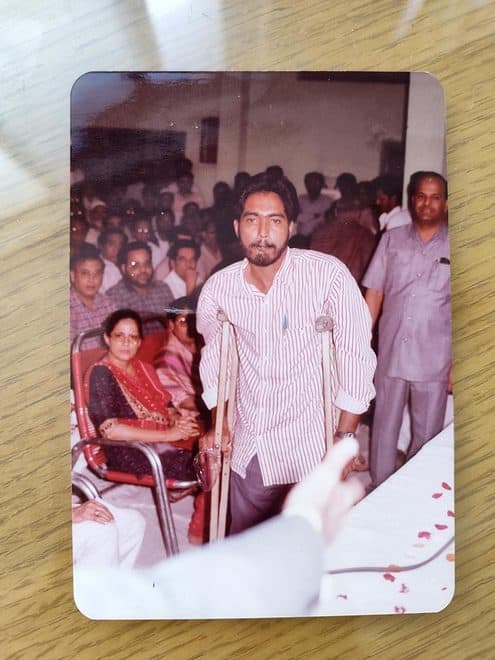
This is not all. Faiz has also helped many realise their dreams. Take the case of Mohammed Yousuf, a polio affected boy from the old city of Hyderabad. To his misfortune a pair of crutches became an inseparable part of his body. But his fortune turned for the better when he came into contact with Husain and the late Abid Ali Khan, the founder Editor of Siasat. Looking at his interest in education, they extended financial assistance. He passed B.E (Electronics and Communications) in the first division. Faiz helped him fulfil his American dream too. Yousuf landed a job in General Motors and did extremely well. Now he has set up the Equally Able Foundation in the US and helps differently able persons. In 2019 he spent more than Rs. 2.40 lakh through his Foundation on 101 students back home.
Mohd Yousuf, the polio affected boy, now helping others
Likewise, Syed Hasan of Mir Alam Tank and his sister, Saba Begum, have realised their dream of becoming doctors. Faiz adopted him right from the first standard and funded his education till he completed his MBBS. Now he is working in the Owaisi Hospital as a doctor in General Medicine. His sister too has cleared MBBS with the financial assistance of Faiz. “Now I want to do my bit for the community and guide others”, says a grateful Dr Hasan.
The case of Mohd Jameel Husain’s children is also quite interesting. Faiz adopted all his 12 children and helped them come up in life. The eldest daughter, Ayesha Jabeen, has completed MBBS and is pursuing M.D while her younger sister, Atufa Jabeen, has passed out B Pharmacy. The other siblings Adeeba Jabeen, Aafiya Jabeen, Arshiya Jabeen, Mohd Muzammil are all pursuing different courses. They couldn’t have come this far without the timely help rendered by Faiz.
In the same way, Faiz has helped the children of Mahmooda, a widow, who was struggling to raise her children through tailoring. Besides extending financial assistance towards ration, house rent and medical treatment, Faiz adopted her three children – Syeda Fayeq, Syeda Asma and Syeda Tabassum. While the first one is pursuing B.Ed, the second one has completed B.Sc and the third sibling is doing B. Pharma.
Another major thrust area of Faiz is imparting technical skills through its four Skill Development Centres in the old city. Through the Ayesha Effendi and Siasat centres computer skills are being imparted to the students.
Apart from education and medical care, Faiz has been helping out people in association with the Siasat Daily. The Kapda Bank set up by them has benefitted more than 50,000 persons. Similarly the two organisations have rendered help to Delhi riot victims and rehabilitated the affected families thanks to the generous contribution received from donors. While the COVID pandemic and the resultant lockdown left thousands of people sick, unemployed and struggling, Faiz pitched in to render relief. It fed more than 7000 families at a whopping cost of Rs. 24 lakh.
Among the many beneficiaries is also Syeda Salwa Fatima, the first woman pilot from Hyderabad. Her success shows how Faiz and Siasat Daily gave her not just the wings but also the landing gear. As its motto goes, Faiz believes in helping the helpless.
source: http://www.siasat.com / The Siasat Daily / Home> Featured News / by JS Ifthekhar / December 25th, 2022
There might be numerous people grieving the passing away of Nawab Mir Barakat Ali Khan who is popularly known as Mukarram Jah Bahadur. But I know at least one person, Shahid Husain Zuberi who is weeping inconsolably since the news of the death of Prince Mukarram Jah hit him in the early hours of Sunday.
Jah had passed away at around 10-30 pm in Istanbul on Saturday night.
Royals usually have loyal followers. They incidentally also have more turncoats that change colours according to changing times. Shahid Hussain represents the first category with élan.
He left his formal association with the Prince in 1989 after serving him for 20 long years in various capacities. People close to Hussain said that he has been living off and on in a mood of melancholy since then. He remembers Jah.
That is true because when I phoned him on Sunday he said in a choked voice, “Ayoob Ali Khan Saheb, I have become a yateem (orphan) today.”
He added, “I would do anything for Sarkar anytime he asks me. I have always said this.”
His overwhelming attachment to the Prince is spread all over the pages of the Auraq e Maazi (Pages from the Past) which he wrote in Urdu and published in 2019. The book was released at the Salar Jung Museum Hall which was overflowing with people. He has almost finished working on the English version of this book which he plans to publish soon.
Shahid Hussain was only 23 (now he is 76) when he joined the service of Jah. Over the years, Jah noticing his dedication and work, began giving him more responsibilities and finally made him his GPA or General Power of Attorney.
Perhaps Hussain is the only person who has not made any money illegally while working with Jah.
Husain met Jah in 1961 when he was only 14. That was a brief encounter but it never left his memory. He never thought that he would be joining his service formally eight years later.
The last time Hussain met Jah was at the inaugural ceremony of the Falaknuma Palace Hotel. The palace is still the property of Jah that has been given on lease to the Taj Group of Hotels.
Jah loved Hyderabad because it was Hyderabad that had given him the lineage and the status. He treated his elders like Basalat Jah Bahadur and Hashim Jah Bahadur with respect they deserved as seniors in the family. He also cared about members of his entourage with care and affection. At the same time, he never allowed anybody to take liberties with him while in his presence. He maintained a dignified distance with all. That had put everybody his The passing away of Nawab Mir Osman Ali Khan in 1967, Hyderabad turned out to be a “massive problem” for him.The government would hunt and haunt him for taxes that he had never dreamt of and bother him for small things. He had to give away a large portion of the King Kothi Palace in lieu of the reported taxes to the government.
The government is now running a ramshackle hospital from there.
Besides the government numerous cases were filed against him by the members of the Nizam’s family and few others. Soon he realized that he has lost the ability to make a difference between a foe and a well-wisher within the family.
In spite of these difficulties, he managed to get his tax slate cleaned up by 1989.
Husain believes that Jah loved Hyderabad and its people. At one time when he was in Hyderabad communal riots broke out. Following that a delegation came to him for help for the affected Muslims. He told that delegation politely that Hindus and Muslims are equal in his eyes. If they are addressing to him as the Eighth Nizam, they should seek help for both affected parties. But if they wish to seek assistance only for the Muslims they should address him as Barakat Ali Khan, not the Nizam. The delegation went away disappointed.
The Prince moved to Australia within four years of becoming the Seventh Nizam. He had bought huge track of land there and became involved in sheep farming. He met Helen Simmons in Australia. He has a son with her who is variously called Azam Jah and Alexander Jah.
“I was not present in any of his weddings,” declares Husain.
Husain said that Jah took interest in the affairs of the city and established Princess Esra Hopital, Princess Durru Shehvar Hospital. He gave the land for these hospitals and also extended financial assistance.
There is also another college in the name of his daughter Shahkyar which is run by the Anwarul Uloom Educational Society.
Jah also gave away a portion of his land for the expansion of road near Makkah Masjid and Charminar.
Finally he established Mukarram Jah School in 1987 over eight acre land in Purani Haveli, the old quarters of Hyderabad. The school campus hosts five buildings with 15-18 classrooms each.
The school is run by Mukarram Jah Trust for Education and Learning. Faiz Khan, a member of the Paigah family, is an active member of its managing committee.
Husain left his job with the Prince in 1989. Husain had some difference of the opinion with the other associates of the Prince who wished to sell his properties.
Husain expressed deep feelings about the departed soul and believed that God would be granting him place in paradise.
source: http://www.siasat.com / The Siasat Daily / Home> Featured News / by Mir Ayoob Ali Khan / January 16th, 2023
The Haji Karkala Shaikh Shabu Sahib Memorial Trust organized a mass marriage event at the Shadi Mahal in Bolar on Sunday, with 11 couples entering wedlock in a simple ceremony.
The dua was performed by AL Haj Shaikuna Twaka Ahmed Musliyar, Khazi of Dakshina Kannada, and AL Haj Mufthi Mannan Saheb, Khateeb of Jamia Masjid, Kudroli.
AL Haj K S Mohammed Masood, president of Muslim Central Committee for Dakshina Kannada and Udupi districts, chaired the event. Deputy Leader of the Opposition in the Karnataka Legislative Assembly U T Khader inaugurated the ceremony.
Chancellor of Yenepoya University Dr AL Haj Y Abdullah Kunhi and chairman of Naash Group of Companies in Dubai AL Haj K S Nisar Ahmed Karkala were the chief guests.
An introduction on the objectives of the Haji Karkala Shaikh Shabu Sahib Memorial Trust was made on the occasion by AL Haj K S Imthiyaz Ahmed Karkala.
Trust treasurer Mohammed Aseef Masood, Shadi Mahal chairperson Yousuf Khader, former legislator Moideen Bava, BCCI president S M Rashid Haji, C Mahmood Haji, Haneef Haji Bunder, Basha Saheb Kundapur, Corporator Samshuddin H B T, Lathif Kandak and former Corporator Aboobakar Kudroli were among those who attended the event on Sunday.
Maulana Zubair read the Kira-at, while Trust secretary Dr Mohammed Arif Masood welcomed the gathering.
Muslim Central Committee vice president Haji Ibrahim Kodijal was the master of ceremony.
Felicitation: AL Haj K S Mohammed Masood, AL Haj K S Nisar Ahmed Karkala and Dr Yenepoya Abdullah Kunhi were honoured on the occasion.
Whatever I have achieved as a member of society and the community is thanks to your prayers and blessings. I am happy that our Trust has organized this simple wedding event for 11 couples. I pray for your cooperation in future too. I also pray to Allah to bless me to serve the people.
– AL Haj K S Mohammed Masood, president of Muslim Central Committee
With the farsightedness of senior leader of the community, AL Haj K S Mohammed Masood, the wedding ceremony of 11 couples has been held. He has given an ideal message society with this. The new couples who entered wedlock today should take a decision to raise their children in a noble manner. Only education will help us overcome our problems. The children should be provided excellent education so that they become noble citizens.
– Deputy Leader of the Opposition in the Karnataka Legislative Assembly U T Khader
It is laudable that the Trust, which is led by senior leader of the community AL Haj K S Mohammed Masood, has undertaken a noble step towards fulfilling the dream of Shaikh Shabu Sahib. May the new couples lead a happy life.
– Dr AL Haj Y Abdullah Kunhi, Chancellor of Yenepoya University
AL Haj K S Mohammed Masood and AL Haj K S Nisar Ahmed Karkala, who are my elder brothers, have been involved in social and community service for several years. Haji Mohammed Masood has also reached great heights in the political field. My other elder brother Haji Nisar Ahmed, who is a businessman, also has always worked for the welfare of the people. My father Haji Karkala Shaikh Shabu Sahib has been an inspiration for such work. My father, who was a revenue inspector under the British government, was a disciplined worker and also a philanthropist. My brothers have developed this quality of my father and are inspiring us too.
– AL Haj K S Imthiyaz Ahmed Karkala
source: http://www.english.varthabharati.in / Vartha Bharati / Home> Karavali / by Vartha Bharati / January 15th, 2023
The Rs 15-crore, 40,000 sqft modern facility that can accommodate 300 people was opened last week.
Yusuffali M A and Punalur Somarajan bring two wheelchair-bound inmates to the prayer hall of Gandhibhavan.
Kochi:
In September 2016, after laying the foundation stone of his proposed mall in Thiruvananthapuram, Lulu Group chairman and managing director Yusuffali M A visited Gandhibhavan, a destitute home for senior citizens and children in Pathanapuram, Kollam. The sight of elderly women left orphaned by their children troubled the UAE-based businessman, who runs 255 stores and shopping malls in the Gulf and other parts of the globe.
“He could not fathom how aged mothers could be abandoned in a destitute home by their children. And this troubled him no end,” a confidant said. The next few months and years saw Yusuffali visiting the inmates of Gandhibhavan at regular intervals and supporting them with their medical, food and other requirements. In the process, he supported the home with around Rs 7.5 crore for the medical, food, and clothing needs of the inmates.
Around the same time, Yusuffali also got personally involved in setting up a three-storey elderly home for the women of Gandhibhavan. The Rs 15-crore, 40,000 sqft modern facility that can accommodate 300 people was opened last week. Gandhibhavan, founded by Dr Punalur Somarajan, a public figure who lost his mother early in his life, will be run as earlier with Yusuffali as its mentor.
Gandhibhavan building
inauguration of the new building, constructed over three years, was also unique: it was carried out by three aged mothers of the care home, and no politician was invited. The ‘griha pravesh’ (housewarming) was completed when Yusuffali and Somarajan helped two inmates in wheelchairs into their respective rooms. The billionaire has also provided adjustable side-rail beds, furniture, two lifts, a laboratory, pharmacy, library, prayer rooms, dining hall, a doctor’s consulting room, and modern waste-management facility, among others, for the elderly home.
“The responsibility of taking care of aged parents rests with their children. Only 15 women of Gandhibhavan are unwed. The remaining women had grown-up children, who had abandoned them. I built the new facility so that their sunset years will be spent at a good place and in abundance,” Yussufali said at the opening of the new home.
source: http://www.newindianexpress.com / The New Indian Express / Home> States> Kerala / by Express News Service / January 12th, 2023
During his tenure as Viceroy General of India, Charles Hardinge, the 1st Baron Hardinge of Penshurst, came in touch with many practising hakims and vaidyas while opening medical colleges in India.
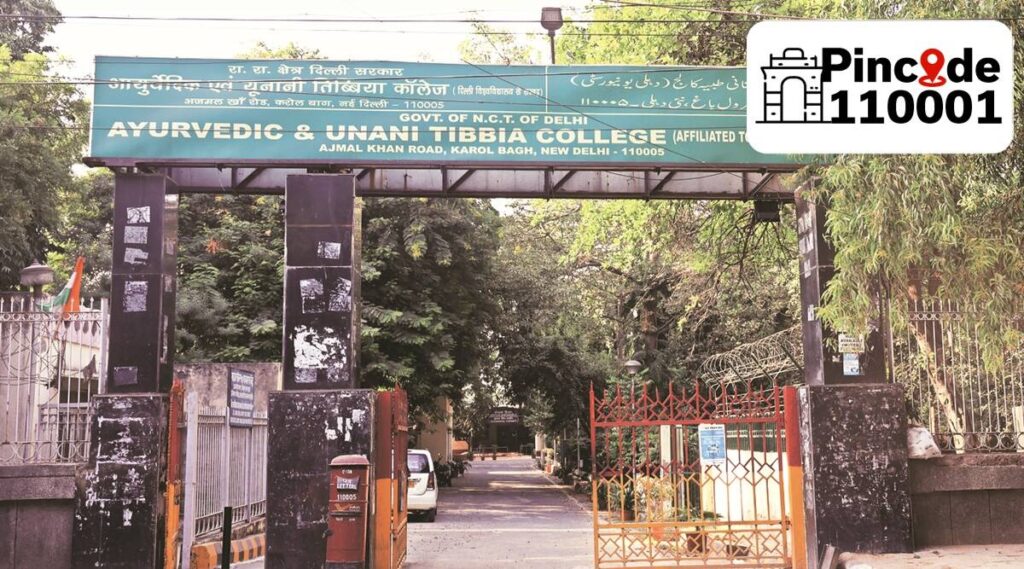
Ayurvedic and Unani Tibbia College in Karol Bagh. (Express Photo by Amit Mehra)
During the middle of the 18th Century, India had physicians from diverse backgrounds including vaidyas and hakims who practised Ayurveda and Unani respectively, and freely borrowed medicine recipes from each other. But, with the arrival of the British, both practices were sidelined.
During his tenure as Viceroy General of India, Charles Hardinge, the 1st Baron Hardinge of Penshurst, came in touch with many practising hakims and vaidyas while opening medical colleges in India. It was his friendship with Hakim Ajmal Khan, a practising Unani medical physician from the lineage of hakims of Mughal rulers, that made him lay the foundation stone of the Ayurvedic and Unani Tibbia College in 1916.
Prior to the college, currently situated in Karol Bagh, Hakim Ajmal Khan and his two elder brothers Hakim Abdul Majid Khan and Hakim Mohamed Wasal Khan worked under their father, Hakim Gulam Mehmood Khan, in their house, Sharif Manzil, in Chandni Chowk’s Ballimaran. Their father ran a small Unani school, named Unani Madrasa Tibbia, where they practised and taught Unani and Ayurvedic medicine to young scholars.
Hakim Ajmal Khan’s grandfather, Hakim Sharif Khan, was a physician to Mughal Emperor Shah Alam and had built Sharif Manzil, after which the family came to be known as “Sharifi”. Hakim Sharif Khan’s ancestors had come to India during the reign of Babar and were of imminent importance during Shah Jahan’s rule. They were then known as the aristocrats of Delhi and enjoyed a high social status.
Speaking with The Indian Express, the great grandson of Hakim Ajmal Khan, 80-year-old Masroor Ahmed Khan, said the Unani Madrasa Tibbia was opened in 1882. “We have 300 years of history and were known as royal hakims. When the Britishers came, they were bringing a new ordinance under which Allopathy medicine was going to be promoted more and Unani, Ayurveda were being sidelined. Until then, the education of Unani medicine was not institutionalised. Fearing that their practices will fade out, they started a college from Sharif Manzil,” he said.
Masroor added that he is the first in his family to not practise medicine.
He said the three brothers taught at Sharif Manzil and after the death of his two elder brothers, Hakim Ajmal Khan continued as the head of the college and raised the quality of the institution. “His popularity grew further, and he went on to become chief physician to the Nawab of Rampur. He was also a consultant for the royal families of Patiala, Jind, Gwalior, Gaikwad,” said Masroor.
The Unani Madrasa Tibbia was flourishing alongside Hakim Ajmal Khan’s popularity, and he then decided to buy land to build a new college for which a board of trustees was formed. With some influence and a promise that a wing of the hospital will be dedicated to Lady Hardinge, the trust received land from the British India government. The land in Karol Bagh was granted to the Anjuman-I-Tibbia on February 14, 1916, by the imperial Delhi Committee.
The foundation stone was laid on March 29, 1916, by Lord Hardinge after the board sent him a letter inviting him for the same.
Masroor said it was Hakim Ajmal Khan’s nationalistic approach because of which he named the college Ayurvedic and Unani Tibbia College, where 99% practitioners were of Unani medicine and only 2-3% of Ayurveda. “Hakim Ajmal Khan was also one of the founders of Jamia Millia Islamia and he was the only Muslim to chair a session of the Hindu Mahasabha. He was elected as president of the Indian National Congress from 1921-22 and also became president of the Muslim League and the All India Khilafat Committee,” said Masroor.
During his Khilafat movement days, Hakim Ajmal Khan had corresponded with Mahatma Gandhi to inaugurate the college, which the latter agreed to, and launched it on February 13, 1921.
Much before the Parliament, North and South avenues and India Gate, the college was an architectural marvel in the newly founded capital of India. The buildings represent a mix of Indian and Mughal architecture and house classrooms, laboratories, hospital pharmacies, hostels, office and staff quarters.
Hakim Ajmal Khan also helped in developing the college of more than 50 acres and also established a garden of herbs on the road across the college. The garden has now been named after him as ‘Ajmal Khan Park’ and is maintained by the MCD. The road has also been named after him – Ajmal Khan Road is now a popular shopping area of Delhi.
During the Partition, a majority of hakims of the family left for Pakistan and the college was taken over by Hakim Jamil Khan, son of Hakim Ajmal Khan, and while he was using the college as his own personal space, the then education minister Maulana Abul Kalam Azad decided to take over the college and run it as a government institution.
The matter reached the Supreme Court, which announced that the college will be a government run institution. The college is now being run by the Delhi government and admits students through the NEET exam.
According to college principal Mohammed Zubair, a total of 75 seats are through NEET. He said the college also provides courses in BUMS and BAMS and MD.
He added that post Covid, the perspective of students and patients in general has changed and a large number of students have opted for these courses. “We had students even before Covid but now a number of students who have done courses in physiotherapy and have done their BSc have come to study here.”
Not only this. Mohammed Zubair said a large number of patients too still believe in Unani and Ayurvedic medicine. “We have a footfall of 1,000 patients in our OPD. We also provide minor surgeries. The Delhi government had also established the Ayush Centre in our college where we admitted 989 Covid patients,” he said.
According to writer and historian Sohail Hashmi, there are a lot of people in smaller towns and remote places, where allopathy hasn’t reached or is not enough, who opt for traditional systems of medicines including Ayurveda, Unani and Siddha.
“Once we were colonised, it was then that our traditional systems were discarded. Colonisation colonised our minds. The Indian system of Ayurveda and Unani function on the basis of five groups of illnesses; so did Hippocrates’ four humors theory. There are a whole lot of commonalities in what Hippocrates discovered and it came to India from Greece via Iran and Arabia,” he said.
source: http://www.indianexpress.com / The Indian Express / Home> Cities> Delhi / by Ankita Upadhyay / New Delhi – November 13th, 2022
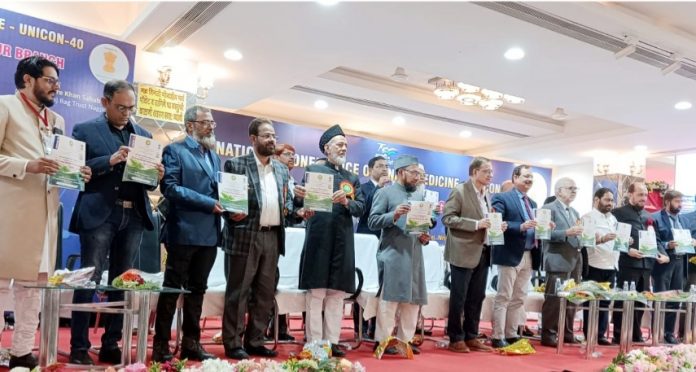
Maharashtra Chief Minister Eknath Shinde announced that Unani physicians will have a 10% reservation quota in the state’s public hospitals and primary healthcare facilities. He also said that the state needed a government-run Unani medical college. He made these commitments through a video message during the 40th National Unani Medicine Conference, which was hosted by the Nagpur branch of the All India Unani Tibbi Congress.
The Chief Minister thanked Unani physicians for their services during the deadly Covid epidemic in a brief speech. He assured the conference that every effort would be made to advance Unani medicine in the state.
Dr Wajahat Mirza, a Congress MLC and the head of the Maharashtra State Waqf Board, welcomed the Chief Minister’s decision in his speech and assured the gathering that he would exert all of his political power to see that the proposed government Unani Tibbi College would be realised. He claimed that if there had been no conflict over the city, the college would have been founded much earlier.
Former Congress minister and MLA Nitin Raut echoed his sentiments, saying that Unani medicine is a very efficient and cost-effective treatment and that it should be given every chance to flourish.
Dr Anis Ahmad, a former minister of Maharashtra, proposed building an Unani house with full facilities. He also offered to provide a plot of land to the intended centre.
AIUTC national president Professor Mushtaq Ahmad, who was presiding over the conference, praised the Maharashtra chief minister and noted that this was the first time the Maharashtra government has made a significant announcement about the development of Unani medicine. He also expressed his joy at the All India Unani Tibbi Congress Nagpur branch’s pompous arrangement of this magnificent conference, in which devoted Unani physicians from all across the country took part with great zeal.
In his keynote address Dr Syed Ahmed Khan, general secretary of AIUTC provided a snapshot of the organisation’s activities. He listed problems faced by the Unani fraternity at the national and state levels. He pointed out that Unani representation was overlooked in the new decision-making process as it was clubbed with a regional medicine of system. He called upon the Unani fraternity to make concentrated efforts for the advancement of Unani Tibb.
As far as Maharashtra is concerned, according to the conference’s organising chairman Dr Niyazuddin Siddiqui, it is a model state for Unani medicine because it enjoys the support of the state government. He claimed that there are 200 Unani doctors practising in and around Nagpur city and demanded the revival of the Unani Tibbi college, which was shut down in 20024. The college was started in 1991. He claimed Nagpur had become a hub for unani medicine.
In a similar vein, Special Guest Dr Vaidya Jayant Devpujari (Chairman, NCISM Government of India) stated in his speech that our primary goal is to standardise medical colleges. He said, “Such a conference is very important for the promotion of Unani medicine, and the role played by Unani medicine in Covid-19 is commendable. I also wish to congratulate the members of the All India Unani Tibbi Congress Nagpur for organising a very standard and grand programme which will send a strong message about Unani medicine throughout the country.
Dr Nadim Usmani, the advisor to AIUTC Maharasthra, also shed light on the activities of State Unani unit. He said Unani medicine is a bright future in the state.
The 40th Conference titled ‘Role of Unani Medicine In present Scenario’has sessions on specialised lectures on some major diseases. The experts and academics presented their papers through power-point. Professor Ahsan Farooqui presented his paper on Fasd(Venesection): Concept and Application with Demonstration. Dr Shabbir Raja’s topic was Dialysis and RenalTransplant: Myths and Facts. Cancer Management with Unani Medicine by Dr Mastan Shaikh, Pain Management in Unani Medicine by Prof Khan Mohammad Qiaser and Management of PCOS in Unani Medicine by Prof Nafees Bano.
Prof. Arif Zaidi, Dean, Faculty of Unani Medicine, Jamia Hamdard also spoke on the occasion.
The conference held on December 25 also released a souvenir highlighting the achievements of Unani Tibb in Maharashtra.
In the end, the 40th conference also passed several resolutions including the Directorate of AYUSH, Government of Maharashtra must create a post, Deputy Director – Unani, Assistant Director – Unani in the Directorate to represent the Unani System of Medicine in the State of Maharashtra.
The other resolutions are as follows:
*- Ministry of Food and Drugs Administration, Government of Maharashtra must create a post of Licensing Authority – Unani / Technical Officer- Unani / Drug Inspector – Unani in FDA to serve as an expert of Unani under provisions given in Drugs and Cosmetic Act 1940 and Rules 1945.
* Follow up to complete implementation for the establishment of Government Unani Medical College in the State of Maharashtra As per the declaration of Chief Minister of Maharashtra Shri Eknath Shinde Ji on 25th Dec 2022 at Nagpur to establish one Government Unani Medical College in the State of Maharashtra.
* Central Government and Delhi NCR must declare and approve Ayurvedic and Unani Tibbia College, karol baugh as Hakim Ajmal khan Ayurvedic and Unani Tibbia University.
* Ministry of AYUSH and NCISM, New Delhi must proposed to amend the Act NCISM 2020 to felicitate separate Unani Board under NCISM
* There are No proper representation in NCISM and its constituted authority/committee, hence a sufficient number of Unani representatives must be there.
* Strong recommendation for Empanelment of Unani System of Medicine in the Ministry of Defence / Defence Department to serve healthcare services to Defence personnel as Ayurveda is already empanelled.
source: http://www.muslimmirror.com / Muslim Mirror / Home> Health> Indian Muslim / by Abdul Bari Masoud / December 30th, 2022
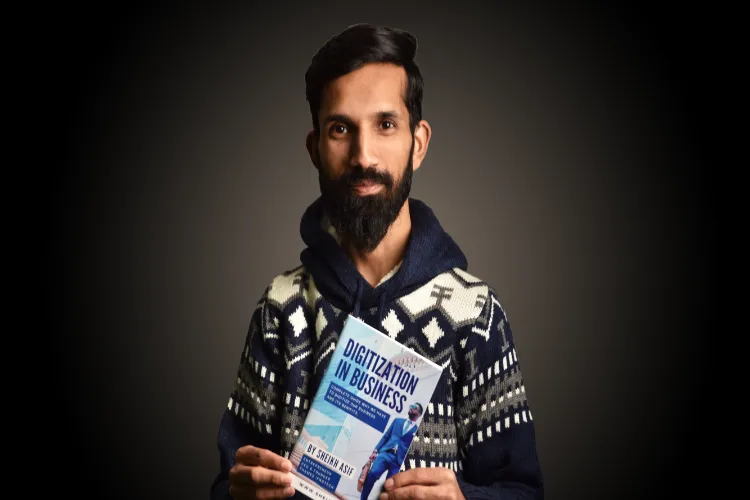
Sheikh Asif, founder, Thames Infotech, holding one of his books
Breaking the stereotype of a company chief, Srinagar’s Asif Sheikh, a school dropout, is the CEO and founder of Thames Infotech, a Manchester-based company with a turnover of Rs 5 crore! He has just turned 28.
“I believe that a person who works hard, with dedication and honesty is always successful; he can never give up even when many a time one loses the courage to carry on. There were setbacks and at the time I did seem to lose courage, but I did not give up,” Sheikh Asif told Awaz-the Voice in a telephonic interview.
Asif’s success is extraordinary given his poor educational background and reaching a position that many persons with degrees from top-end colleges aspire to.
Besides being a successful entrepreneur, Asif is also a professional web designer, developer, graphic designer, digital marketer, and writer. He also gives back to society by giving free tuition to students from all over the world.
Sheikh Asif’s work profile is interesting: he worked with a tour and travel company, sold medical equipment for a company, and with telecom companies like Airtel, Vodafone, and Aircel.
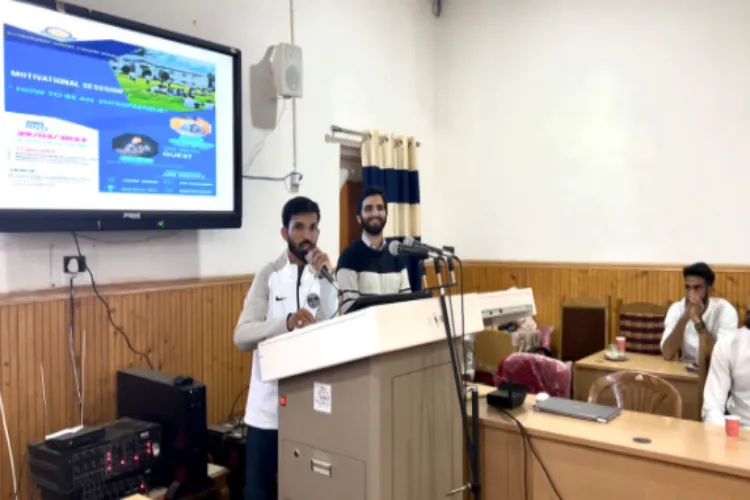
Sheikh Asif deliving a talk on business
In the year 2000, Sheikh Asif was 8 years old when his father’s health deteriorated. His father was a head constable. Due to his father’s illness, the family was reduced to penury. Sheikh Asif says that his father’s illness remains a mystery as the family consulted experts and eminent doctors but nobody could diagnose it.
Sheikh Asif told Awaz-the Voice that his mother sold most of the household assets and took loans to pay for his father’s treatment.
Recalling those days, Asif says that he can never forget one particular day when he was studying in the eighth grade and was to write his exam, but he had no pen. “I was leaving for the examination hall and was worried. My mother came to know the reason for my worry, she sold a copper dish from her kitchen to buy me a pen.”
He says that his mother often sold household goods for the family, especially to meet the needs of the children.
The conditions at home were not conducive for Sheikh Asif to continue his studies. He left school and started working to support his family.
“I went against my mother’s wishes, as she wanted me to become a doctor most parents in Kashmir do, but I gave up my studies to support my financially broke family,” said. He was 15 years old in 2008 when he started earning for his family by doing odd jobs.
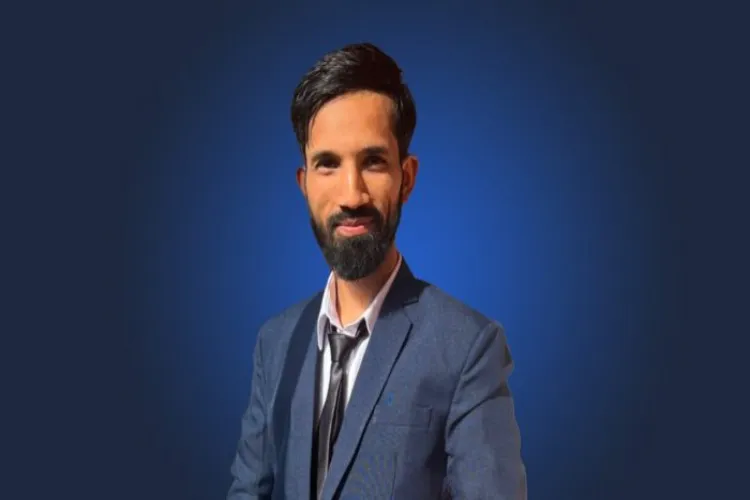
Sheikh Asif
Sheikh Asif was always fascinated by computers and spent a lot of time on them. Due to this, he got his first job as a data entry operator with a local tour and travel company at the age of 16. He earned a salary of Rs 1500.
Sheikh Asif said seeing his interest his father took a loan from a bank to buy him a computer. The turning point in his life came as he watched an interview with Microsoft founder Bill Gates on BBC.
He took full advantage of his computer and yet the challenge was the lack of a high-speed broadband facility in Kashmir. While the rest of the world was running 4G internet, in his locality only 2G internet was available.
He left his first job within two months and started working in a local shop as a salesman for four years. Here he honed his skills and learned all the basics including graphics designing, web designing, etc.
Again there was a rough patch in his life as in the 2014 Kashmir floods, his house was washed away. He used all his savings in rebuilding his house. The family had to start from scratch as all their household belonging had got damaged and washed away.
In the year 2014, he quit his job and started his business, but it turned out to be a year full of troubles for him.
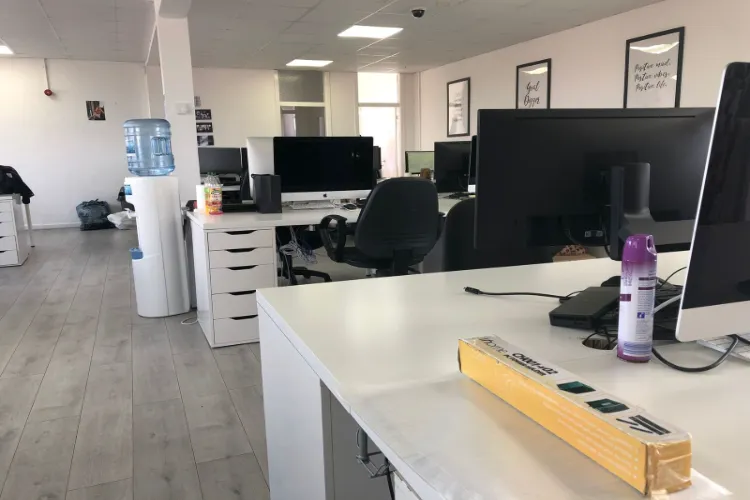
Sheikh Asif’s Srinagar office
However, fortunately, the next year Asif got an opportunity to work in Delhi, and the exposure there opened his mind to a bigger canvas.
“The 2014 flood severely damaged our house and we had to repair or renovate it periodically for four consecutive years after the flood and finally had to sell the house in 2018,” he said.
In the meantime, he worked with OLX from April 2015, and from there he was offered a job at Trimax Printing and Graphics, a UK-based company owned by Tajinder Singh. He was working for the company Hayes Harlington. The company runs an online general store and it had no element of graphic designing till then.
Sheikh Asif told Awaz-The Voice: “I worked for Chanda Trimax Printings & Graphics. Meanwhile, the killing of a militant in Kashmir saw the valley under lockdown for nearly three months. For this reason, I left for Delhi.”
When he met Tajinder Singh in Delhi, the latter was facing issues with his business. His business was suffering due to low sales. Having seen his latent, Tajinder Singh offered him a job at Hayes, Harlington, UK, where Tajinder’s brothers were already working.
Sheikh Asif says he consulted his mother before picking the UKL job. He signed an agreement to work for 18 months and an assured return flight ticket to India.
“They told me that they had changed the name of Trimax Printings & Graphics to Thames Infotech on June 6, 2016,” Asif said.
He set foot on foreign soil for the first time in the first week of November 2016. However, the business did not show positive results there either, thus Tajinder’s brother advised him to find a part-time job in the UK to meet his expenses.
“When I was looking for a part-time job, I met Rizwan, a Kashmiri man originally from Baramulla district in North Kashmir, who came to Manchester in 2000 and now runs a restaurant, Riz Spices.
Sheikh Rizwan offered him a space in his restaurant to set up a part-time business. “Two months later I met another man, Hamza Salim, a senior software engineer at Google, who asked me to build a website for his tech company, on the condition that only if he liked my work I would be paid,” he said.
After approving his website design, Hamza Salim offered him 50 percent equity in his firm.
pix05
During this time, Asif meet many people including natives and others, and kept looking for opportunities.
One such person was Rudrigo Ruiz Karvajal, who frequented the restaurant. He offered me a place that was quite conveniently located. He told me that his father had started his business from there.
“I got my first order for a logo for which I was paid 500 pounds and I was only expecting 30-40 pounds. They gave me another order to build a website for which I was paid 7000 pounds.”
“I was wondering if it’s a dream. Never expected such high remuneration. This order was from the largest food chain in London called Zabka.”
On June 9, 2016, Asif took over the Thames Infotech Manchester UK company which has a current turnover of Rs 5 crore.
It has an office at Advent Colony in Naugam, Srinagar, Kashmir. He employs 35 locals including 32 in UK and 3 in Kashmir for website designing and development, digital marketing, graphics designing, personal branding, social media handling, etc.
Sheikh Asif told Awaz-The Voice that our company is a leading web designing company and has won the 2017, 2018, 2019, and 2020 awards as the Three Best Rated UK, and Best IT Service Provider Award 2018, 2019 organized by Top Developers USA, he claims.
Sheikh Asif said that he received the first award in the year 2003, less than one year after his launching of his company.
So far, Asif has trained around 1000 students, helped 40 businesses through the Covid-19 pandemic, and has published three books – Digitization In Business, Online Business Idea, and Start a Business.
Sheikh Asif was named Entrepreneur of the year 2022 by The Fireboxx. There he was honored by Google as a Digital Marketing Expert in 2018.
To the youth, Sheikh Asif says they must never lose hope and always keep their focus on business. Secondly, they must avoid drugs. They shouldn’t waste their lives by getting immersed in romantic liaison and heartbreaks; these are temporary phases of life and not a goal. “Your personality is your work,” he says.
source: http://www.awazthevoice.in / Awaz, The Voice / Home> Youth / by Shah Imran Hasan, New Delhi / December 17th, 2022
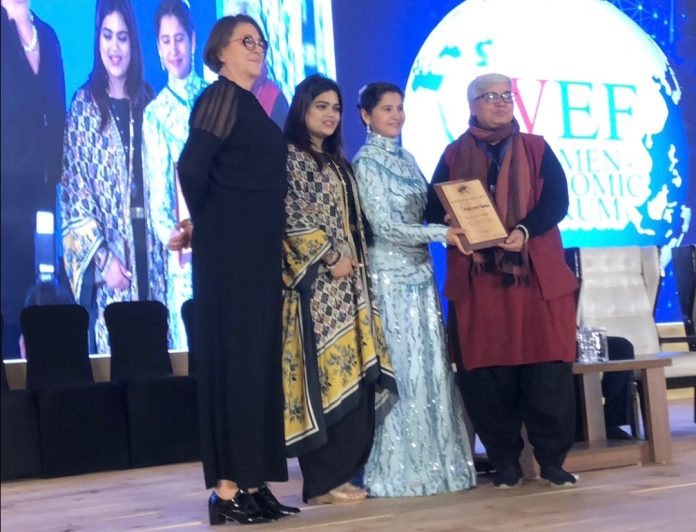
Anhad’s founder Shabnam Hashmi receiving Woman of the Decade award
84th Global Edition of Annual Women Economic Forum 2022 (WEF) – G100 Meetings in Delhi, India was inaugurated on 27th and the deliberations will continue till 31st December 2022 at JW Marriott Hotel, New Delhi Aerocity. India.
The summit coincides with the Presidency of India at the G20.
Shabnam Hashmi , a well known social activist and founder of Anhad was invited to speak in the Plenary session on the second day of the summit on human rights .
Dr. Harbeen Arora Rai, Founder & President, G100 , ALL Ladies League (ALL) | Women Economic Forum (WEF), WICCI, Women’s Indian Chamber of Commerce and Industry conferred on Shabnam Hashmi the “Woman of the Decade” award.*
The WEF together with participants hopes to influence and shape global policies in order to extend more support for women in all walks of life globally.
Presented by Women’s Indian Chamber of Commerce and Industry (WICCI), and held along with the G100 India meetings, the theme for this edition of the Women Economic Forum (WEF) is “Bridge the Gap: Agenda for G20.”
As an outcome, it will launch 100 recommendations that will be presented to the G20 leaders, UN bodies, governments and stakeholders globally to make gender equality a priority for all in this decade.
G100 is a group of influential global women leaders including Nobel Laureates and Heads of States who have come together with the purpose to make gender equality a reality in this decade and fulfil the vision of the UN SDGs by 2030. G100 is supported by the G100 Denim Club, group of leading 100 He for She champions from across the world who are supporting this epic endeavour.
The G100 is holding 100 global meetings worldwide. G100 missions have taken place in Switzerland (UN), Netherlands, Belgium, USA (UN-NY), UAE, UK, Spain, Romania, Malta, Portugal, Sweden, Malaysia, Indonesia, Singapore, Thailand and continue in 8 Balkan Countries, Ivy Leagues-USA, Turkey, France, Bangladesh, Egypt and the gala event in India.
source: http://www.muslimmirror.com / Muslim Mirror / Home> Indian Muslim> Positive Story / by Muslim Mirror Network / December 28th, 2022