Category Archives: Community Involvement / Social Issues

Muslim nursing graduates from West Bengal university get 100% job placement

WEST BENGAL:

Aliah University is a state government-run autonomous university having three campuses in New Town in West Bengal. | Picture by arrangement

The inaugural batch of the nursing course in a university in West Bengal, designed especially for women, has achieved this success. 

West Bengal:

Almost the entire batch of this year’s graduates of the B.Sc Nursing course at Aliah University have got job placements. Fifty-three out of fifty-four graduating students, mostly Muslim women have been selected as nursing staff in various medical colleges and hospitals run by the government of West Bengal. 

This is the inaugural batch of the nursing course designed especially for women. It is for the first time that almost an entire batch of a program in Aliah University has gotten placement.  

Aliah University is a state government-run autonomous university having three campuses in New Town in West Bengal. It offers undergraduate and postgraduate programs in different Engineering, Arts, Science, Management, and Nursing subjects. Previously known as Mohammedan College of Calcutta, it was elevated as a university in 2008. It is a minority institution and hence a majority of its students come from marginalized groups and communities like Muslims and lower castes.

Usha Mallick, the head of the department of nursing told TwoCircles.net, “This is an unprecedented success for the department of nursing because these are the first batch of graduates. We at Aliah University are extremely proud of our graduates who worked hard.” 

“This kind of placement will get us a great standing in the state as well as the country. This is great news also because all the girls in this department, like most students of Aliah university, come from extreme socio-economically backward families living in remote rural districts of West Bengal,” she added. 

Usha Malick is head of the department of nursing at the university. | Photo by author arrangement

“We are thankful to the Mamata Banerjee government for helping the university start the course, and to the National Medical College for providing practical training for nursing students,” she said while adding that Aliah is the only state university that runs a nursing course without its medical college and hospital facilities.

Educating kids from extremely backward districts like Murshidabad
The news brought cheers to several young women. Lutfa Khatoon is from Murshidabad, a densely Muslim populated area (67%) where the state of education is extremely poor. According to Census 2011, the literacy rate of the district is 66.60%, which is far below the national average of 74.04% and the state’s average of 77.08%. The district holds the bottommost position in the rank of literacy rates since the Census 1951.

“In Murshidabad education is not the priority in general, let alone education of girls. When I got admission to the course, people in my area said I am getting training to become a nursemaid. My placement has broken that impression,” Khatoon told TwoCircles.net. She is posted in Murshidabad medical college and hospital. 

Firoja, Lutfa’s batchmate, told TwoCircles.net that studying was not the only thing she invested hard work in. “These four years of the course people would come to my house in Murshidabad and taunt my parents that your daughter will be ruined because they gave me the freedom to move to Calcutta to study,” said Firoja who is posted at Anup Nagar primary hospital, Murshidabad.

She mentioned that she faced financial hardships but thanked the university for providing her scholarship. 

Aatika, Lutfa’s classmate told TwoCircles.net that people in the rural areas of West Bengal say that “sending girls to the city for education is like providing them with opportunities to be spoiled.” But her getting a nursing job has broken the patriarchal mindset and inspired many parents to send their daughters to study. 

“In my village, most people marry off their daughters after they pass the tenth class. I am very lucky that my family supported me. It is because of them that I got a very respectful job,” she added.

Oldest modern style educational institute in Asia
The university is one of the oldest educational institutes in Asia. Established by Warren Hastings, the British governor-general of East India Company in 1780. Calcutta Mohammedan College, as it was called by Hastings. Established in the form of a madrasa school, it is one of the oldest modern-style educational institutions in Asia and the first of its kind in India. It taught Natural Philosophy, Grammar, Logic, Arithmetic, Astronomy, Geometry, Arabic, Persian, Theology and Islamic Law, and Theory and Rhetoric. 

Good career placement not new for Aliah University
Dr Mohammad Reyaz, assistant professor of journalism at the university told TwoCircles.net that good career placements are not new to the university. 

“Earlier it used to be a Madrasa. Not many people know that it has been turned into a university which offers courses in Engineering, Electronics and Communication, Business Management and nursing among other subjects. So these kinds of placements do help break the stereotype which tries to reduce the image of this premier institution as a madrasa. Not only do the students of nursing and engineering departments get good placements but students of the Arabic department also get jobs in prestigious firms like Amazon,” said Dr Reyaz.

Sufi Parween is a fellow at SEEDS-TCN Mentorship Program. Shentweets at @sufiparween84

source: http://www.twocircles.net / TwoCircles.net / Home> Lead Story / by Sufi Parween, TwoCircles.net / August 08th, 2022

Scrap dealer creates library of over 2,000 books found in trash

Hoovakuvakallu (Belepuni Village, Bantwal ),Mangaluru, KARNATAKA :

Mangaluru : 

Ismail Kannathur (50) is the finest epitome in the society who has proven that being not educated is not a curse, but there is a scope to share knowledge.

Ismail, a scrap dealer by profession, has a collection of over 2,000 books at his residence. He runs a scrap shop at Hoovakuvakallu in Balepuni village in Bantwal. Ismail is not well-educated and studied only up to the first standard. But, he knows the importance of education and knowledge. Knowing the importance of books, Ismail has built a small library at his residence. He has been in the scrap dealing business for 25 years. When he gets good books in his business, he collects and preserves them. Initially, Ismail was a fruit vendor, but due to his helping nature, his business incurred loss. Later, he turned into a scrap dealer as per the suggestion of one of his friends. In the beginning, though he had no experience in scrap dealing, later through hard work, he gained experience.

Ismail is an active social worker. He has helped several people in distress. Whenever an accident occurs in the vicinity, Ismail has rushed several victims to the hospital. Moreover, he has helped poor girls in their marriage by raising funds.

Speaking to daijiworld.com, Ismail said, “I have collected several good books. My intention is to set up this library. I am not educated, but let others be educated by reading books. In the past, I have given over 2,000 books to several people. Some take it by paying a small amount, and though I refuse, they thrust a few currency notes into my shirt pocket. But, many take books free of cost. Some teachers and students also take books from me. As I am not well-educated, I have educated my five children.”

He also said that a person had motivated him to set up a library with the books available.

Ismail has arranged books on wooden shelves at his residence. The public can borrow them.

Ismail is also known as ‘Gandhi’ for his social service. He has been felicitated by many organizations and institutions for his active cleanliness drive. Ismail, for several years, has been involved in the cleanliness drive in the locality. He has helped several poor and downtrodden people. Ismail also actively works for various social causes including helping the police department in tracing thieves who rob offering boxes of temples and masjids.

source: http://www.daijiworld.com / DaijiWorld.com / Home> Top Stories / by Deekshith DV / by Daijiworld Media Network – Mangaluru / September 22nd, 2022

SEED-USA, Helping Hand foundation provide scholarships worth Rs 24 lakh to meritorious students in Hyderabad

Hyderabad, TELANGANA / U.S.A :

Picture by arrangement

SEED has been an active organization providing education to 15,000 students studying in 58 schools and has provided around 2 crores of scholarships to school-going students. 

Hyderabad :

Two philanthropic organizations SEED-USA and Helping Hand Foundation provided scholarships worth Rs 24 lakh to several meritorious students in Hyderabad. 

“Education is our top priority and we have spent approximately 5 crores on education this year,” said Syed Mazhar Hussaini, founder of SEED-USA. 

SEED, which stands for Support for Educational and Economic Development USA, was founded in 2009.

SEED has been an active organization providing education to 15,000 students studying in 58 schools and has provided around 2 crores of scholarships to school-going students. 

On August 14, SEED and Helping Hand Foundation held a memorial and Merit Scholarship Award for students across India at the MESCO Convention Centre, Hyderabad. Students from Hyderabad and other parts of the country attended the award function. The 57 award recipients were from different backgrounds, including 11 MBBS Students, 13 PhD Students and 33 Master’s students from different streams. 

“The services of the SEED organisation are also being extended to provide mentoring services to the widows & destitute families and provide placement assistance to vocational training graduates; around 757 widows and single mothers got support from seed recently,” Husaini said in his speech. 

The donors of the SEED include philanthropists and helping Non-Residential Indians (NRIs). These donations are dispersed through various activities conducted by Foreign Contribution Regulation Act (FCRA) permitted NGOs based in India.

SEED is working to provide modern education to poor children in slum areas of cities in India and aims to increase scholarships in states in North India. They aspire to increase vocational training in other states (other than Telangana). 

Chief guest Prof. Amirullah Khan, who is a Development and Trade Economist emphasized the need for education to build a prosperous nation. He highlighted that only a small percentage of students make it to school and even fewer numbers manage to go to college because of financial constraints. 

Mujtaba Hussain Askari, who is the founder and managing trustee of the Helping Hand Foundation, was also present at the occasion. 

source: http://www.twocircles.net / TwoCircles.net / Home> Lead Story / by TCN News / September 09th, 2022

Review of The Dreams of a Mappila Girl — A Memoir: Growing up in a Mappila joint family in Kerala of the 1950s

KERALA :

The socio-cultural landscape of Kerala is also explored in this book with references to myths and legends.

Writer B.M. Zuhara’s early years, spent in a large ancestral home at Tikkodi near Calicut, are brought alive in her evocative memoir

When the writer B.M. Zuhara was little she had three nicknames, Tarkakozhi (because she asked too many questions), Karachapetti (for bursting into tears often) and her favourite, Ummakutty (mother’s darling). She grew up in Tikkodi, near Calicut, at her ancestral home, Kizhekke Maliyakkal, which does not exist anymore. In her memoir,  The Dreams of a Mappila Girl, translated into English by Fehmida Zakeer, she provides a fascinating glimpse into the lives of Malayali Muslims in the 1950s and ’60s.

Born in an aristocratic Mappila family, Zuhara, a well-known novelist and columnist, weaves a magical narrative about her growing up years in northern Kerala. Muslims of the Malabar region of Kerala are called Mappilas. They had trading relationships with Arabs for centuries, and embraced Islam as early as the 7th century. Their unique culture is a fusion of local customs and the Islamic value system.

Ties that bind

Much of the memoir explores Zuhara’s relationship with her loving (but firm) mother and the author’s emotional attachment to her ancestral home. Being the youngest child, she was very close to her mother, and that relationship lasted till her Umma passed away. In the preface, the author declares that her life has always revolved around her Umma, who had seen her family’s wealth decline.

Her mother was deeply concerned about her children, Zuhara says. “Even though Umma was born in an aristocratic family and had lived a privileged life, she had to endure many hardships. Umma’s sadness at the reversal of the family’s fortunes often laced her words. However, she always made sure that her children had a secure and comfortable life.”

Despite having studied only up to the fourth standard, her Umma was a great reader. She managed to find the time to read and learn the  Koran and the  Hadith while raising 10 children. Umma was an excellent storyteller, and Zuhara says her mother’s enchanting tales of ordinary events inspired her to write when she grew up.

One of the reasons for her closeness to her mother was the near absence of her father in her life. Her Uppa and her maternal grandfather, Valiappa, were not on good terms. They were fighting many court cases against each other over property. Since her mother and she lived in Valiappa’s house, her Uppa visited them occasionally. Her grandfather, however, pampered her a lot as she was his favourite child’s daughter.

Beyond these familial ties, the book also chronicles the quotidian struggles and challenges of a Muslim girl in post-independent India. How the conservative mores of that time created hurdles in the way of leading a normal life for girls like Zuhara. For example, while watching her father and her brother practise  kalaripayattu, she yearned to learn this ancient martial art but couldn’t because she was a girl. Later, when she started writing and became the first Muslim woman writer in Malayalam, she faced a lot of criticism and had to be careful with her words. She took time to tell honest stories about Mappila women, their dreams and aspirations. And, finally, she carved out a niche in the world of Malayalam literature.

The socio-cultural landscape of Kerala is also explored in this book with references to myths and legends like Unniarcha, a mythological warrior woman celebrated for her fearlessness, immortalised in the  vadakkan paatu, the ballads of the region. There are descriptions of local foods, customs and traditions, some of them gone forever.

Being a successful fiction writer, Zuhara uses the literary tropes of the genre to make her memoir engaging. Memories can play tricks, but her narrative evocatively captures a lost era. Every character is dealt with sensitively, making them come alive on the pages.

The translator, Fehmida Zakeer, who also comes from the same Mappila background, has done an excellent job while rendering this memoir into English. The aroma of Kerala spices and the fragrance of screwpine waft through the pages. She effectively uses kinship terms in Malayalam giving the prose a distinct ethnic flavour. In a nutshell, the book deserves your attention.

The Dreams of a Mappila Girl: A Memoir; B.M. Zuhara, translated by Fehmida Zakeer, Sage Publications, ₹550.

The reviewer is the author of Patna Blues , which has been translated into 10 languages.

source: http://www.thehindu.com / The Hindu / Home> Books> Reviews / by Abdullah Khan / September 16th, 2022

12 NEET toppers from Shaheen Group will go for medical education, says chairman

Bidar, KARNATAKA :

Bengaluru:

Dr. Abdul Qadeer, chairman of the Shaheen Group of Institutions, Bidar, has expressed pride in the excellent performance of the Hifzul Quran course students at the Shaheen College in the NEET 2022.

Dr. Abdul Qadeer said that 12 students who had completed the Hifzul Quran Plus course at the Madrasa have gotten ranks in NEET and expect to be selected for the MBBS course in government medical colleges.

He was addressing a press meet at the Darussalam Hall of the Bangalore Islamic Foundation Trust, Queen’s Road, on Tuesday.

“The ‘Academic Intensive Care Unit (AICU)’ of the Shaheen Group provides a three-month foundation course of Mathematics and Language for students who have completed the Hifzul course through Madrasa education, without attending school, and for school dropouts. After this, a one-month bridge course is conducted in Science for the students to get admitted to Class 10. Next comes a year-long education with state syllabus or NIOC syllabus for the Madrasa-educated students to answer the Class 10 examinations. The intermediate course for two years, after this, prepares students for examinations like JEE, UPSC and NEET,” said the chairman.

He added that the Shaheen Group has been working for 12 years at getting Madrasa-educated students into the education mainstream. “With a view to ensure that all gates of education and career, including IAS, IPS, MBBS and Engineering, are opened for the Madrasa students and not restrict them to the religious field, we have started 35 AICU centres all over India. For the benefit of the Hafiz near Bengaluru, an AICU was started last year in Bannikuppe. More such centres will be opened at Darul Umar in Srirangapatna and Kanakapura. The Hafizes who have scored more than 350 marks in the NEET 2022 will be trained for free in our 12 residential complexes.”

Dr. Qadeer also said that, of the 1,800 Shaheen Group students who answered NEET this year, 450 students are expected to get free medical education seats, adding, “Of the government seats, students of our institutions expect to get 14 per cent.”

Hafiz Muhammad Ali Iqbal, who scored 680 in NEET, said that the four-year-long Hifzul course had helped him a lot. “I had quit my schooling to become a Hafiz. Studying with the Shaheen Group helped me score 68 in SSLC and 96 per cent in PU examinations,” he said and stated that he wished to become a doctor.

Jamia Ulum Shaheen Hifz Plus Academy director Syed Tanveer Ahmed, Falcon Shaheen Education Institutions director Abdul Subhan and the Madrasa students who had topped NEET were among those who attended the press meet.

Madrasa Students among NEET toppers (with marks) :

Hafiz Muhammad Ali Iqbal: 680

Hafiz Gulman Ahmad Zerdi: 646

Hafiz Mohammad Abdulla: 632

Hafiz Huzaifa: 602

Hafiz Muhammed Saifullah 577

Hafiz Sheikh Abdul Rafi: 567

Hafiz Mohammed Faiz Akeel Ahmad: 562

Hafiz Ghulam Waris: 560

Hafiz Mohammad Suhaib Sajid Hussain: 533

Hafiz Mohammad Asif: 504

Hafiz Muhammad Ishaq: 489

Hafiz Moumin Abdulla 484

Further information may be obtained from the Shaheen Group website https://shaheengroup.org/. Toll-free number 1800-121-6235 may also be contacted.

source: http://www.english.varthabharati.in / Vartha Bharati / Home> Karnataka / by Vartha Bharati / September 13th, 2022

twitter sharing button
whatsapp sharing button
linkedin sharing button
email sharing button
print sharing button

Meet Saba Haider: An Indian-Muslim woman running for DuPage county board election in US

Ghaziabad, UTTAR PRADESH / Illinois, U.S.A.:

An Indian-Muslim woman running for DuPage County board elections in the US – TwoCircles.net
pix: sabahaider.com

Saba is the only candidate of Indian origin among 19 elected members from the state of Illinois. She came to the United States in 2007 and after initially working as an employment consultant, began promoting yoga in America by training yoga teachers.

Uttar Pradesh :

Saba Haider, an Indian-Muslim woman from Ghaziabad in Uttar Pradesh, has been nominated by US president Joe Biden for the state board member election from DuPage County in Illinois and given a ticket by his Democratic party. 

Her website describes Saba as a community organizer, small business owner, a wife and a mother to a 14 and an 10-year-old. She has been running her business in the health and wellness area for over a decade. She provides wellness consulting services to corporate clients and local businesses and organizations from the Chicago-land area.

Biden appreciated Saba’s social work, especially during the worst phase of Covid-19 pandemic in the US. 

More than one million voters will vote to elect their board members in this election, which is to be held on November 6 this year. The election is an important one as this state-level board directly makes public welfare policies in the state. There are a total of 19 members on the state-level board and 11 of them are democrats.

Saba is the only candidate of Indian origin among 19 elected members from the entire state. She came to the United States in 2007. After initially working as an employment consultant, began promoting yoga in America by training yoga teachers. She continued doing this for nearly 10 years.

Saba has described the opportunity as “a very important one”. She said that she is an ordinary citizen who has been playing the role of a mother, sister, wife and small business-woman until now. “Being given this opportunity in politics is a completely new and huge responsibility,” she said. 

Saba is considered a strong candidate who is getting support from her Democratic party allies Sadia Covert and Don Dessert, who are contesting the same election from other districts. Being a Yoga trainer, she has emphasized mental health in her campaign and commended the American people for showing mental strength during the worst periods of the Covid-19 pandemic. 

If Saba wins the election, she will replace Amy Shavez, a democrat whose term ends in December. 

Family elated at her success
Her family lives in Vijay Nagar, a posh area of Ghaziabad in Uttar Pradesh. She is the eldest daughter of her family. Her father was an engineer in Uttar Pradesh Water Department and her mother runs a school in Ghaziabad.

Her two younger brothers, Abbas Haider and Zeeshan Haider are elated with their sister’s achievements.

Expressing happiness during an interview, Saba’s younger brother Abbas Haider said that “Saba has always been active in social work as she believes in helping people.” 

“In America, she has always stood with people who needed help of any kind. It didn’t matter whether the person was Indian, American or of any other country, she has always stood with others,” he said.

Abbas said that Saba was active during the Covid-19 pandemic period. “She helped people in many ways during Covid. She feels that politics is a good way to improve the society and help the people as a whole and hopefully she will win the elections,” he said. 

He called her nomination a matter of great pride for the family and the entire country

www.sabahaider.com

source: http://www.twocircles.net / TwoCircles.net / Home> Lead Story / by Aas Mohammad Kaif, TwoCircles.net / September 12th, 2022

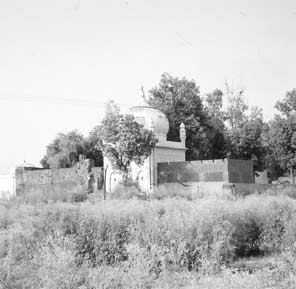
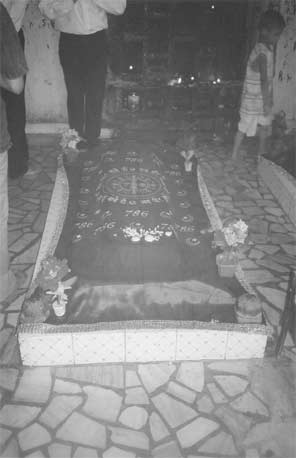
Hakim Ajmal Khans last resting place: in a forgotten corner of Delhi

NEW DELHI :

Hakim Ajmal Khan a philanthropist, freedom fighter, famous hakeem and nationalist is a well known personality.

So I was very surprised when I was told that his grave was I one corner of The Hazrat Rasool numa compound in Panchkuian Road of Delhi

Now it’s a slum

In between a whole row of beds tucked away in one forgotten corner sleeps one of the greatest leaders of our Freedom movement. Revered by Muslims and Hindus alike.

Yes it was Hakim Mohammad Ajmal Khan. I checked up his dated on the net to find they were correct.

The lady who lives there then showed me many graves of Hakeems from his family scattered around the beds and chores of daily life.

Amita Paliwal a Delhi historian and keen heritage lover informs me this is probably the famous Doctor’s lane where Bernier apprenticed to learn Unani medicine.

It may have been famous then but it’s forgotten now and I don’t know why his very rich trust( he had gifted most of his income to charity) and rich family doesn’t do something about it.

You can read more about him below I have taken it from

He was the founder of the Jamia Millia Islamia in Delhi. He is the only person to have been elected President of both the Indian National Congress and the Muslim League, as well as the All India Khilafat Committee.Hakim Ajmal Khan was born in 1863 to the illustrious Sharif Khani family of Delhi, family that traces its lineage to court physicians who served the Mughal emperor Babur, the founder of the Mughal Empire in India.

Khan studied the Qur’an and traditional Islamic knowledge including Arabic and Persian in his childhood, before studying medicine at home, under the tutelage of his relatives. All of whom were well-known physicians.

His grandfather Hakim Sharif Khan sought to promote the practice of Tibb-i-unani or Unani medicine and for this purpose, had setup the Sharif Manzil hospital-cum-college that was known throughout the subcontinent as one of the finest philanthropic Unani hospitals that charged no fees from poor patients.

Once qualified, Hakim Ajmal Khan was appointed chief physician to the Nawab of Rampur in 1892. Soon he met Syed Ahmed Khan and was further appointed a trustee of the Aligarh College, now known as the Aligarh Muslim University.

Hakim Ajmal Khan took much interest in the expansion and development of the indigenous system of medicine, Tibb-i-Yunani, or Unani. Khan’s family established the Tibbiya school in Delhi, in order to expand the research and practice of Unani.

As his family of Hakims served as doctors to the British rulers of India, in his early days Hakim Khan supported the British. He was part of a deputation of Muslims that met the Viceroy of India in Shimla in 1906 and even supported the British during World War I. In fact, the British Government awarded him the titles Haziq-ul-Mulk and Qaiser-e-Hind for his contribution to the expansion of the Unani system of medicine.

But once the British government changed its stance and sought to derecognize the practice of Indian schools of medicine such as Ayurveda and Unani, this turn of events set Hakim Ajmal Khan gathering fellow physicians on one platform to protest against the Raj.

Actually, Hakim Ajmal Khan’s political career commenced with his writing for the Urdu weekly Akmal-ul-Akhbar, which was founded in 1865-70 and run by his family.

Subsequently, when the British clamped down on the freedom movement and arrested many Muslim leaders, Hakim Ajmal Khan solicited Mahatma Gandhi’s assistance and together they joined others to start the Khilafat movement. He was elected the President of the Congress in 1921, and joined other Congress leaders to condemn the Jallianwala Bagh massacre. He was imprisoned for many months by police authorities. Hakim Khan’s pursued his political career side-by-side his medicinal and educational endeavours. Often, the interests overlapped.

Hakim Ajmal Khan resigned from his position at the AMU when he realized that its management would not endorse the Non-Cooperation Movement launched by the Indian National Congress. He envisaged a place of learning that would be free of government control. He worked towards this aim with the help of other Muslim luminaries. Together, they laid the foundations of the Jamia Millia Islamia (Islamic National University) in Aligarh in 1920, in response to Mahatma Gandhi’s call for Indians to boycott government institutions. The JMI subsequently moved to Delhi and slowly grew to be the prestigious university it is today.

Ajmal Khan served as its first Chancellor until his death. He was a key patron of the university, financially bailing it out of sticky situations throughout the rest of his life.

In fact, Hakim Ajmal Khan also established the Tibbia College for higher studies in medicine. Realizing the need for private funding, he simultaneously established a commercial venture the Hindustani Dawakhana to manufacture Unani and Ayurvedic medicines and issued a diktat that doctors practicing in the Sharif Manzil could only recommend medicines from the Dawakhana. The Dawakhana is known to have patented 84 magical herbal formulas.

Tibbia College is presently located Delhi’s Karol Bagh area. As a mark of respect to this man, Karol Bagh’s most popular part is still called Ajmal Khan Road.

Hakim Ajmal Khan died in 1927. In the ensuing years, both the Sharif Manzil and the Dawakhana have languished for want of upkeep and restoration.

Although Hakim Khan renounced his government awards during the freedom movement, Indians who appreciated his work and held him in high esteem conferred upon him the title Masih-ul-Mulk (Healer of the Nation).

Freedom fighter, educationalist and beyond doubt, the greatest contributor to Unani medicine in India in the 20th century: Hakim Ajmal Khan.

Dr. Khan died of heart problems on December 29, 1927. He was succeeded in the position of JMI Chancellor by Dr. Mukhtar Ahmed Ansari.

Rana Safvi is the author of the book “Where Stones Speak”.

source: http://www.twocircles.net / TwoCircles.net / Home> Articles / by Rana Safvi / May 08th, 2016

Dawakhana Tibbiya College launches ‘Payodent’ Unani toothpaste

Aligarh, UTTAR PRADESH :

Adding to a large fleet of its world famous and popular Unani medicines, Dawakhana Tibbiya College, Aligarh Muslim University has come up with a trustworthy toothpaste “Payodent”, which holds promises for bleeding and swollen gums and pyorrhea.

The Aligarh Muslim University Vice Chancellor, Professor Tariq Mansoor today launched the toothpaste and called this a big plunge in the field of Unani medicines hoping it to become a common household product all over the country in near future.

“In times when people are anxiously looking for Unani products for all their household needs, especially medicines and other beauty products, this toothpaste will hopefully attract the people who are in search of a remedial toothpaste for safe and dependable remedy for various dental problems”, said Professor Tariq Mansoor.

He, however, urged the Dawakhana management to focus on its reliable and countrywide marketing for maximum reach to customers.

pix: Twitter
pix: Twitter

Professor Salma Ahmad (Member Incharge, Dawakhana Tibbiya College) said that this toothpaste is a result of academia-industry interface and an outcome of a collaborative project between the Department of Saidla, Ajmal Khan Tibbiya College and the Dawakhana Tibbiya College.

“It has been patented with the concerned department and the Dawakhana Tibbiya College owns its proprietorship”, she added.

She said that the toothpaste, approved by the Directorate of Unani Services under the Ministry of Ayush, offers effective treatment for bleeding gums, swollen gums, cavity, sensitivity and bad breathing. It also provides a cure to the most common dental ailment, pyorrhea. The toothpaste comes in two packs of 50 gram and 100 gram.

Professor Mohammad Gulrez (Pro-Vice Chancellor), Professor Aejaz Masood (Registrar), Professor Mohammad Mohsin (Finance Offcer), Mr Taufeeq Ahmad (General Manager, Dawakhana Tibbiya College), Dr Azizur Rahman (Principal Investigator), Dr Qazi Zaid Ahmad and Dr Mohd Rashid (Co-investigators), Mr Mohd Sharique Azam (Assistant Manager, Marketing) and Hakim Abdullah (Assistant Manager, Production) were present on the occasion.

source: http://www.amu.ac.in / Aligarh Muslim University / Home> AMU News (headline edited ) / by AMU Public Relations Office / pics from Twitter)/ Aligarh, August 20th, 2022

Teachers’ Day 2022: Meet Islamuddin, a Delhi riot victim who teaches at school started for child victims of the February 2020 violence

Ghaziabad, UTTAR PRADESH (Delhi NCR) :

Teachers’ Day 2022: He teaches Hindi as well as Social Science and tries to help students work through their own trauma at Sunrise Public School, Ghaziabad.

Teacher’s Day 2022: The school began with the number but has now grown to 350, most from the areas hit by the riot. (Express photo by Sukrita Baruah)

Teachers’ Day 2022: 

For 24-year-old Islamuddin, a resident of Shiv Vihar, one of the worst-hit areas during the 2020 communal riots in Delhi, images of the incidents in February two years ago – his grandfather’s house being gutted by fire and his family’s motorbike being destroyed – would keep reappearing in front of him each time he heard a sudden sound or saw a group of people huddled together.

Today, he is teaching Hindi and Social Science to children affected by the riot and is trying to work through their trauma.

Islamuddin is one of 14 teachers at Sunrise Public School Loni, Ghaziabad which was started in August 2020 for children who were victims of the riot. It was started by the Miles2smile foundation, a non-profit run by Aasif Mujtaba who was then pursuing his Ph.D. at IIT-Delhi.

“In August 2020, after the violence and the national lockdown – I met some families who said they were not able to afford the education of their children because of the ‘double trouble’. Initially we thought that we could make a list of 10-15 troubled families and sponsor the children’s education. But when our volunteers went out to meet people about this, they came back with a list of 80 children,” said Mujtaba.

So the school started with 80 children, and over the last two years, the number of students has grown to 350, most of whom are from riot-affected areas, but there are also children from the school’s vicinity. According to Mujtaba, 22 students had lost their fathers during the riots.

The teachers, too, are from riot-affected areas, and seven teachers are from Shiv Vihar, including Islamuddin, who is currently doing an M.A. in Hindi Literature from IGNOU.

“I had never seen such things in front of my eyes before: petrol bombs being thrown, people shouting slogans from afar, threatening to kill. That was all a flash, but when it was over, and we tried to return to normalcy a week or two later, those scenes would not leave my eyes,” he said.

While teaching the children, he says, addressing their trauma is the most challenging part.

(Express photo)

“There are children who lost their homes and witnessed the violence, and then there are children who lost their fathers. It is still easier to explain what happened to the former. But for the latter, it was difficult to even call them to study and talk to them. In the early days, even if you mentioned the word ‘papa’ their eyes would start tearing up. We started with the older children, explaining to them that coming to school and studying is the best way to move on. We took them to a picnic, conducted competitions, told them to express themselves through writing, and gradually tried to create a sense of normalcy. We try to talk to them more about the future and what they want to do,” he said.

The school teaches children from nursery to Class 8, after which the foundation either helps to get the children enrolled in a government school or sponsors their education in a private school.

“We teach all subjects in the school but starting this session, since we are able to do physical classes fully again, we have decided to reduce the syllabus and spend more time on extra-curricular activities,” said Mujtaba.

source: http://www.indianexpress.com / The Indian Express / Home> Education / by Sukrita Baruah, News Delhi / September 04th, 2022

More than 500 students of Al-Ameen Mission clear NEET 2022

Howrah, WEST BENGAL:

More than 500 students from the Al-Ameen Mission’s 70 branches in West Bengal passed the National Eligibility-cum-Entrance Test (NEET) 2022 with flying colours.

M Noorul Islam, head of the Institution said, “I have had the biggest success this year, as the number of Al Ameen Mission students who have secured 600 and above points in the NEET is around 200.”

Last year, 510 Al Ameen coaching academy students passed the NEET and were accepted into various medical colleges.

According to Islam, the number is likely to be higher this year as his team finalises the list.

Islam said that that the majority of the students are from rural areas and come from remote villages throughout West Bengal.

Kishankur Bhumika, a non-resident student, is this year’s Al-Ameen topper. He received 686 out of 720 points in the NEET and was ranked 427 at the All India level.

Irfan Habib, son of farmer Abdul Subhan of Devcharai village in Tafanganj, Cooch Behar, has received the highest marks among the mission’s resident students. He received 685 points and is ranked 594th in the all-India list. Aside from that, many Al Amneen Mission students scored more than 650 points on the NEET.

Akhtari Parveen, a female student at Al-Ameen Mission, is among the achievers . She has been a student at Al Ameen Mission’s Khalatpur campus since Class VII. She got 653 marks in NEET with the help of Al Ameen Mission and her all-India rank is 3915.

Al-Ameen Mission, based in Howrah, has produced over 3500 doctors (MBBS & BDS) and 3000 engineers, in addition to scores of researchers, administrative officers, teachers, and professors.

Nurul Islam founded the organisation, which now operates 70 coaching institutes in 20 West Bengal districts.

The organisation educates 17,000 residential students and employs over 3000 teachers and non-teaching staff. The main campus of Al-Ameen Mission is in the West Bengal district of Howrah, at Khalatpur (Udaynarayanpur).

“We utilize Zakat and Sadaqah funds to achieve our goal and play our role in nation building. We urge the community members to support our efforts ” Islam told Muslim Mirror.

“Most of the students who have qualified NEET from Al Ameen Mission belong to very poor backgrounds and weaker sections of society. We nurture their talent, develop their intellect and provide them a good environment so that they could come out with their best,” he said.

source: http://www.muslimmirror.com /Muslim Mirror / Home> Indian Muslim> Positive Story / by Muslim Mirror / September 10th 2022