A total of 181 candidates have been selected as Medical Officer Grade –II (Paediatric) of them 19 are Muslims.
UPPSC Recruitment: As many as 27 Muslims have been selected to join as Medical Officer (Grade II Post) in Uttar Pradesh State Civil Services exam result of which was declared yesterday.
A total of 181 candidates have been selected as Medical Officer Grade –II (Paediatric) of them 19 are Muslims.
On the other hand 114 candidates will be recruited as Medical Officer Grade-Il (Anaesthetist). Of them 07 candidates are Muslims. The list of Muslims selected in the two categories is as under.
Medical Officer Grade-Il (Paediatric)
1. Fatima Afreen Ahmad 2. Mohd Abu Bakar Ansari 3. Farha Khan 4. Uzma Nadeem Siddiqui 5. Naved Akhter 6. Kamran Ahmad 7. Mohd Saleem Khan 8. Mohd Kashif Siddiqui 9. Md Naseem 10. Zakaullah
11. Abdul Quddoos 12. Mohanmad Yunus 13. Abdullah 14. Ati Ullah 15. Mohanmad Badruzzana Ansari 16. Mohanmad Aziz Khan 17. Run Siddiqui 18. Saleem Ahmad 19. Faraz Ahmad Khan
Medical Officer Grade-Il (Anaesthetist)
1. Darvish Hussain 2.Shadia Zia Usmani 3. Arif Husain 4. Mohammad Ahtesham Khan 5. Abdul Wahid 6. Zainab Parween 7. Fahad Khan 8. Nikhat Parveen
The Uttar Pradesh Public Service Commission (UPPSC) has also declared the result of Assistant Statistical Officer to work under Industries Department. Among the 38 candidates who have been selected 02 are Muslims. They are:
1. Naushad Alam 2. M Farman Ali
The Uttar Pradesh Public Service Commission (UPPSC) had conducted the personal interview to select the above candidates in two phases – Phase 1 from July 26 to 30, 2021, and Phase 2 was completed from August 2 to 4, 2021.
source: http://www.ummid.com / Ummid.com / Home> Education & Career / by ummid.com news network / August 21st, 2021
This year’s seven Wikimedian of the Year award winners were announced today at the 2021 virtual Wikimania convening .
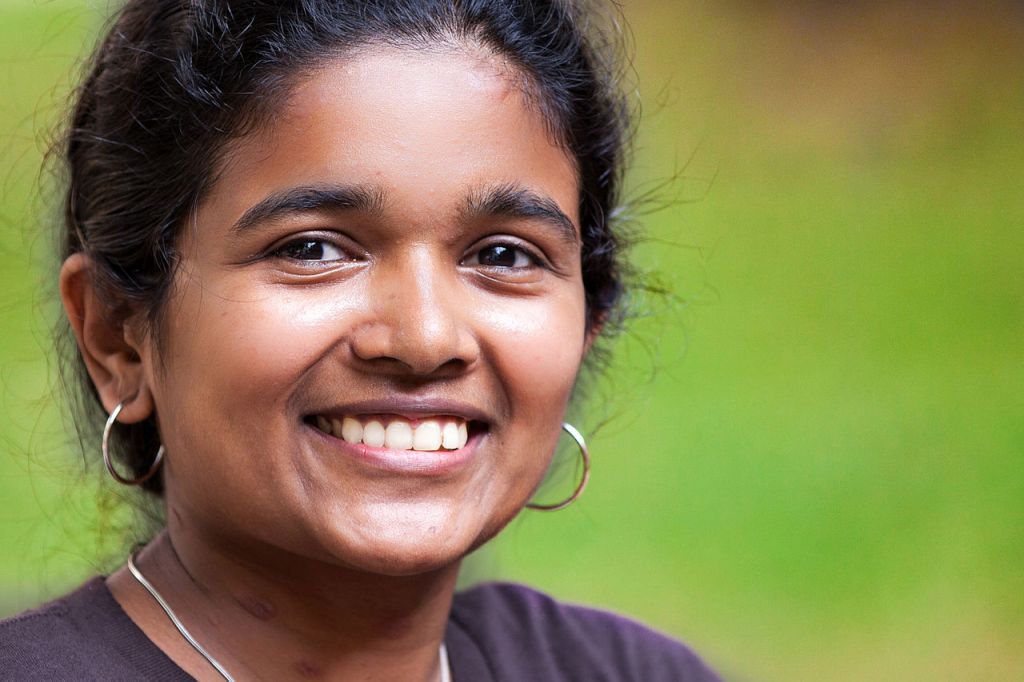
Read the interview below with Dr. Netha Hussain, recipient of the Honourable Mention Award.
Dr. Netha Hussain has been a Wikimedia volunteer for over a decade, as well as a medical doctor and researcher who has contributed to English and Malayalam languages of Wikipedia, Wikidata, Wikimedia Commons, and Meta-Wiki.
Throughout the COVID-19 pandemic, Netha wrote, updated, and translated dozens of Wikipedia articles to ensure reliable information about the pandemic is available for everyone. She also recently launched a project to improve information about vaccine safety topics on Wikipedia, helping combat misinformation. In the process, Netha has collaborated with Wikimedians around the world and inspired many others to ensure information is verifiable and reliable.
“The idea of sharing free knowledge with millions of people around the world excites me, and this serves as a motivation to keep doing more.”
Additionally, Netha has contributed to outreach and research surrounding the diversity of participation and content on Wikimedia projects, particularly of the gender gap. In 2020, she was recognized by Red Hat as a 2020 Women in Open Source Award winner.
The Wikimedian of the Year Honourable Mention award recognizes exceptional Wikimedians who already have a strong presence in the movement, as well as public exposure such as press coverage, local recognition, and national titles. pix02
This recognition is one of seven awards made this year to celebrate contributors who have made an exceptional impact on our movement. The awards were announced at this year’s virtual Wikimania celebration by Wikipedia Founder Jimmy Wales (watch the announcement!).
“Dr. Hussain is a role model in the Wikimedia movement for her staggering medical and scientific contributions to Wikipedia, contributions she balances alongside her own medical career. Throughout the COVID-19 pandemic, her work has brought increased visibility to Wikipedia’s unique role as a source for reliable public health information about the virus and the vaccines. In addition, her constant advocacy to address the gender gap and her support for Indic communities demonstrate the values of collaboration and contribution that are integral to our movement.”
– Jimmy Wales
We spoke with Netha to learn more about her experiences and perspectives on the Wikimedia movement. Here are some highlights:
Q: Can you share a favorite memory from your time contributing to Wikimedia?
“Creating my first article is a special memory that I cherish to this day. The process did take a long time because, back in 2010, I was running on a 128 kbps internet connection in a six year old desktop computer on an old version of the browser.
I wanted to create an article about an Indian cuisine called chutney in Malayalam language Wikipedia. I wasn’t sure about the rules one has to follow while editing, but I thought I will make a try anyway. I created some text and saved it as a new Wikipedia page. The next day, I was surprised to find out that other editors have improved upon that page by adding media and more content. This was the first nudge which paved the way for the rest of my Wikimedia volunteering journey.
Another memory was when I saw that a pathology image that I added to Wikimedia Commons was re-used on a prominent medical website. This made me reflect on the scarcity of good quality medical images in online sources, and prompted me to start the first of its kind GLAM [galleries, libraries, archives, and museums] collaboration with Government Medical College, Kozhikode.”
Q: What motivates you to contribute to Wikimedia projects?
“I am motivated by the satisfaction of having done a small part in making the world a better place. The idea of sharing free knowledge with millions of people around the world excites me, and this serves as a motivation to keep doing more.”
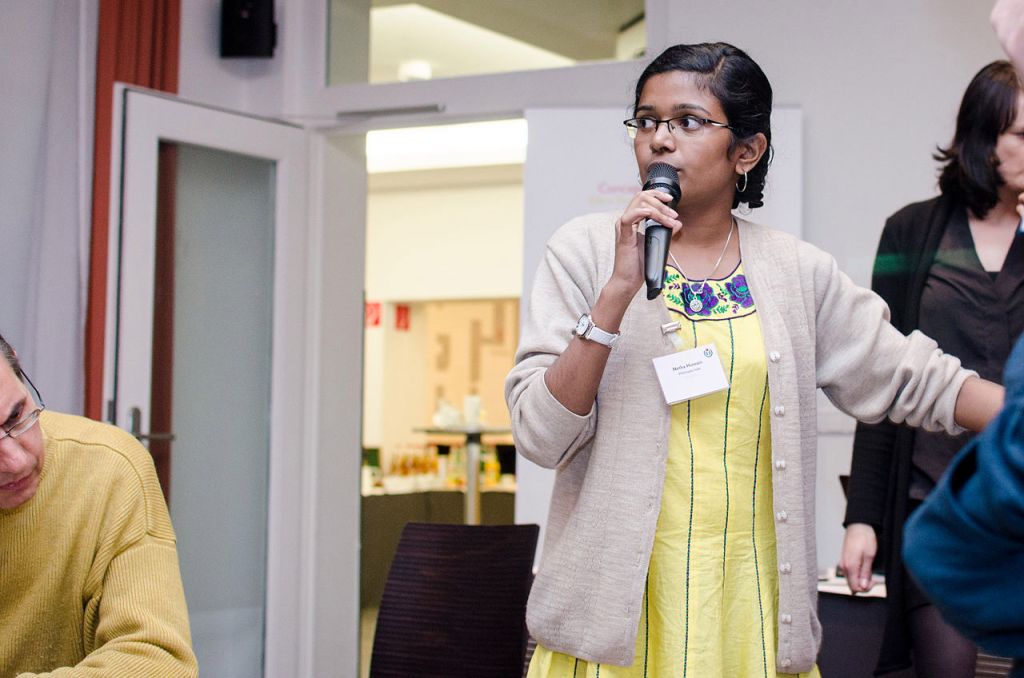
Netha Hussain presenting at the Wikimedia Diversity Conference in 2013 (Christopher Schwarzkopf (WMDE), CC BY-SA 3.0)
Q: How has Wikipedia helped tackle COVID-19 disinformation and misinformation?
“Wikimedia was able to play a large role in tackling COVID-19 disinformation because of its people, technology, and policies.
The people who make up the Wikimedia movement are experts from a wide variety of subject areas. They perform tasks such as copyediting, structuring, and adding rich media to Wikimedia pages. Wikimedia has robust policies around verifiability, neutrality, and original research, which warrants the use of sources with high credibility. The technology used in Wikimedia provides a simple interface for editing and has provisions to counter vandalism.
All these factors taken together, as well as learnings from the movement’s previous experience in responding to crisis situations helped Wikimedia tackle disinformation effectively.”
“It is hard to imagine all the ways that Wikimedia will influence the future of the ecosystem of free knowledge in medicine, but I am convinced that Wikimedia will continue to occupy a central role in the process.”
Q: How does your work on Wikipedia contribute to the future of medicine?
“I was a medical student when I started contributing to Wikimedia in 2010. At that time, I worked on concepts that I learned at medical school. Later on, I focused on building content around specific topic areas. My current focus is on creating content related to COVID-19 and vaccination. The articles created by me in English and Malayalam languages are being edited several times by other editors and are becoming richer and more comprehensive by the day. I think that these articles will continue to educate (and perhaps also entertain and enlighten) people in the future.
The text and media that I and fellow editors created will continue to be remixed, curated and magnified several times by third party sources such as search engines, websites, and virtual assistants. Additionally, the edit history of the work that we performed on Wikimedia is likely to serve as a historical documentation of how events unfolded in time and how scientific evidence changed over time.
Our discussions on talk pages would serve as a reminder for how and why we made some decisions regarding the policy or structure of Wikimedia entities. The metadata of our edits are likely to act as data points for researching about trends and patterns in editing, paving way for insightful conclusions regarding the growth and diversification of Wikimedia projects. The structured data contributed by us would serve as the database for search engine and machine learning algorithms. It is hard to imagine all the ways that Wikimedia will influence the future of the ecosystem of free knowledge in medicine, but I am convinced that Wikimedia will continue to occupy a central role in the process.”
“In the process of researching health conditions and treatment options, people…eventually to Wikimedia projects. Therefore, it is important that Wikimedians should work in the interest of public health.”
Q: What is Wikipedia’s role in public health?
“Wikipedia is the largest non-profit website in terms of pageviews. Wikipedia has become a popular source of healthcare information because of its simplicity of content, higher ranking in search results, easiness in accessibility, availability of citations, presence of photo/video illustrations, ability to edit quickly and possibility to navigate in multiple language editions.
Most often, in the process of researching health conditions and treatment options, people go online, and eventually to Wikimedia projects. Therefore, it is important that Wikimedians should work in the interest of public health and invest resources for making its medical content reliable, comprehensive and updated.”
“I wish everyone knew that they have something to contribute to the Wikimedia movement.”
Q: What is one thing you wish everyone knew about Wikimedia projects?
“I wish everyone knew that they have something to contribute to the Wikimedia movement. People usually shy away from contributing to Wikimedia because they think that the expertise they have is trivial or irrelevant for Wikimedia.
We need not only content creators and curators, but those interested in technology, outreach, fundraising, strategizing, to name a few. We need to make non-content related contributions more visible and rewarding so that everyone knows what is possible for them to do on Wikimedia projects, and enjoys doing what they love or care about.”
Congratulations, Netha!
About the 2021 Wikimedian of the Year Awards
The Wikimedian of the Year is an annual award that honours contributors to Wikimedia projects, including Wikipedia editors, to highlight major achievements within the Wikimedia movement in the previous year. The tradition dates back to 2011 and has evolved since then in dynamic ways to welcome and celebrate Wikimedians from different backgrounds and experiences. This year’s celebration is bigger and more inclusive than ever before, recognizing seven exceptional contributors to the Wikimedia movement in six categories , including Newcomer of the Year, 20th Year Honouree, Rich Media and Tech contributors, and Honourable Mentions, as well as the Wikimedian of the Year.
*This interview has been edited for clarity and length.
source: http://www.diff.wikimedia.org / Wikimedia.org / Home> Wikimania 2021 / by Wikimedia Foundation / August 15th, 2021
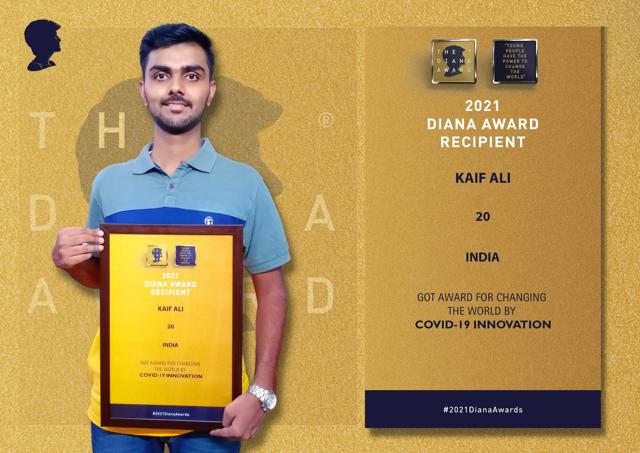
Born and brought up in New Delhi, twenty-year-old Kaif Ali is an architecture student at Faculty of Architecture & Ekistics, Jamia Millia Islamia, New Delhi. Ali was honoured with The Diana Award 2021 for his work on Covid-19 Innovation–Space era recently, which is a module for demountable and portable shelter space for Covid-19 era. This is his story.
New Delhi :
Every child has drawn their family with a house in the background and most probably made sandcastles at beaches too. However, in the grownup’s world, not everyone can have a house built like that. Twenty-year-old Kaif Ali, an undergraduate student of Jamia Millia Islamia, New Delhi after entering the world of architecture found out that homelessness is a major issue in the world and there are many without proper houses.
Born and brought up in New Delhi, twenty-year-old Kaif Ali told TwoCircles.net, “Just 200 meters away from my apartment is a settlement made above the sewage lines. In nights, the people there sleep on footpaths since snakes sneak out of sewage.”
Ali could not help noticing how unjustly the metropolitan city is majorly designed commercially for a few per cent of the population. After witnessing these inequalities, Ali wanted to take up architecture as a profession and develop a sustainable model.
Beyond survival Homeless people are of many types, which include urban poor, migrant labourers and refugees. However, the government made arrangements for these homeless people can barely be called a home. There is no privacy nor any sense of security as sought by a family since most facilities are gender-separated. Open cooking and sanitation, poor waste management, unavailability of electricity and potable water, the list go on.
Ali recollects that it was a documentary called “Cry for Syria” that sensitized him into the refugee crisis. As an attempt to address the issue, Ali went on to design shelter spaces for Syrian refugees, during his early college days.
When asked whether he is concerned about these temporary shelter spaces becoming the permanent settlement of refugees and others, as is the norm, Ali said that his concept of shelter is a home for living and not for mere survival. Therefore, along with houses, Ali also designs schools, gyms, and other recreational spaces using the same modular technology, which facilitates easy assembling and dismantling.
Quoting a few success stories of refugee assimilation with the host country, Ali believes that if refugees are housed holistically, they will not remain on the fringes. “Shelter is the start of all,” he said.
From housing to quarantining For the last two years, Ali has invested himself in designing shelter spaces for the homeless. As the Covid-19 pandemic broke out, Ali witnessed the dire demand for quarantining thousands in cramped up cities.
That is how he began working with his project last March and designed a portable intermediary quarantine facility of 2.5m x 6m, using PUF panels or shipping containers, which can be assembled with ease, have massive room for expansion, with natural ventilation and 6 layers of social distancing.
The facility can also be later used as refugee camps or disaster relief camps.
Kaif Ali was awarded the international Diana Award 2021 for the same. His design follows all Covid-19 protocols and is more efficient than home quarantine or mass quarantining facilities.
Ali’s quests stem from his immediate realities. Even his intermediary quarantine shelter came up observing the spread of the virus in enclosed spaces through the air, even before WHO confirmed the spread through the air. “That is the power of observation and study. I apprehended that Covid-19 would spread through the air from my study and by keeping this in mind, I have designed the quarantine facility,” Ali said.
Thinking architecture ‘out of the box’ Having varied interests, Ali is good at juggling different pursuits. The twenty-year-old has taken home several awards in architecture and photography. It is the introduction to various international competitions that expanded Ali’s network.
Upon winning Climate Innovation Lab conducted by Climate Technology Centre and Network, Ali has been receiving mentorship of Biplab Ketan Paul, IIT Kanpur incubation mentor and social entrepreneur.
Referring to Ali’s Covid-19 relief work, Paul said proudly, “Kaif Ali is a good samaritan.”
Soon, Ali’s design would shelter the people of Lagos in Nigeria. His project has received appreciation across the world from architects of Germany, Iran, South Africa, Turkey, the US, & Brazil. Ali has also featured in the United Nations top 11 emerging innovation start-ups solving climate action.
Twenty-year-old Ali has not shied away from approaching several state governments. After the Karnataka government appreciated him, organizations working with the Maharashtra government are willing to implement his project.
To make his designs financially viable, Ali said he uses his father’s counsel, who is in the construction business. “His advice comes in handy, especially when deciding the materials and other factors. It is the context that is my foremost priority,” Ali said, elaborating that climate and clients’ context guides his design.
Moreover, Ali aspires to make the language of architecture accessible to common people. His drawings are easily readable for policymakers and politicians alike. “Future architectures cannot limit themselves to space and cost crises alone. In times of rising refugees of climate, wars and poverty, expanding socially responsible entrepreneurial perspective in architecture is a must,” concludes Ali.
source: http://www.twocircles.net / TwoCircles.net / Home> Lead Story / by Arfa Backer, TwoCircles.net / July 30th, 2021
Ruler of Oman, Sultan Qaboos bin Said has honoured Dr. M.I.H.Farooqi, with an award of US$ 25,000 (Rs 12 lakh) in appreciation of his books Plants of the Quran and Medicinal plants in the Traditions of Prophet Mohammad.
Both the books contain scientific descriptions of plants mentioned in the Qu’ran and Sunnah .
Dr. Farooqi is a well-known Lucknow-based plant chemist with more than 125 research papers to his credit, published in Indian and foreign journals.
He is also the author of several books and more than hundred articles in English, Hindi and Urdu on science subjects of common interest like environment, modern technology, medicinal plants, economic plants, Islamic science and Prophetic Medicine.
Plants of the Quran has been translated and published in several languages including Hindi, Urdu, Persian, Kannada, Malayalam and Indonesian languages. Based on Quranic and Prophetic Plants, UNESCO has approved Multimillion Dollars Project of Quranic Botanical Gardens in the Gulf countries.
Works on the establishment of such gardens in Sharjah and Qatar have already started.
(Dr. MIH Farooqi may be contacted at mihfarooqi[@]gmail.com)
source: http://www.milligazette.com / The Milli Gazette / Home> News> Focus / by The Milli Gazette / March 26th, 2011
In the present day world, where the number of birds and animals is dwindling fast due to environmental issues and man-made calamities, a bird lover has made an attempt to provide shelter to sparrows at his home.
Salauddin, class I civil contractor of Manvi town of the district, is the Good Samaritan, who has given shelter to sparrows in his house for the past four and a half years. He has installed bamboo, tires, pots etc and feeds water and food to these birds through these equipment. In addition, he has built a small house for these birds. The birds use water and have food in this house. Salauddin is well known for his love of birds in the district like another bird lover Saleem Ali.
Salauddin’s house has become a tourist spot. Everyday hundreds of school children visit his house during school days.
Salauddin says that protecting the birds is his aim. In addition to sparrows, he also has Myna, Robin and Bulbul birds making nests in his house. His wife and children provide him full support in his noble work.
Salauddin opines that birds and animals have as much right to live on this earth as human beings. He says that everyone has to at least make arrangements to provide water to birds especially during summer.
source: http://www.daijiworld.com / Daijiworld.com / Home> Top Stories / by Daijiworld Media Network – Raichur (MS) / August 14th, 2021
As a child, Ayesha Fatima aspired to become a doctor. But all her dreams were shattered when the most trusted and loving person in her life- her father, abandoned her at a very young age. Survival became a tough battle. The responsibility of feeding the family fell on Ayesha who gave up her studies and started working as a salesgirl for a minimal salary.
Ayesha then turned to Rubina Nafees Fatima and her NGO – SAFA, for help. She joined the ITES course for training and later got placed as a data entry operator at a private company. “The course changed my life,” she says.
Since 2006, Rubina Nafees Fatima’s Hyderabad-based organisation, SAFA, has helped thousands of women and youth from marginalized, socio-economically backward communities by empowering them to earn livelihoods through education and skill training and capacity building.
Rubina is a determined woman and a passionate social worker. She was conferred with the FLO Women Achievers award by the Federation of Indian Chamber of Commerce (FICCI) towards ‘empowering women to bring about a change in society’, the Social Enterprise award for ‘social impact’ by the Deshpande Foundation and the Australia Award by the Export Council, government of Australia.
‘Proud Muslim Woman’
Rubina believes that it is the duty of every Muslim woman to contribute positively to society.
“Women need to assert themselves- within their families and also in the outside world- they need to be proud of their culture, their heritage and everything about themselves.”
“Be a proud Muslim woman,” she says.
Rubina grew up with four sisters. “My father encouraged us all to be extremely independent. I believe economic independence is a freedom that every woman should have”, she says, adding that this led her to believe that women need to have a suitable platform to utilize their potential. “To first realise their potential and then use it to the maximum.”
A Leap Of Faith
“I was generally looking around for avenues and how I can contribute my bit, I feel it’s my duty, as an educated Muslim woman,” says Rubina who has been an active volunteer in various development programs since her college days. “I wanted to be working with Muslim women, largely because I feel I know the dynamics of the community. I feel, being a part of the community, I understand the challenges of the community. I know where the roadblocks are,” she says.
Rubina had initially set up a commercial venture for training and placements in Hyderabad. “I had to shut that down because I wanted to get into SAFA full-time. This didn’t make many people happy in my network,” she recounts.
“After the initial three years, I was on the verge of a shutdown. I picked a very difficult slum in Hyderabad. The crime rate was very high over there. No NGO had worked there for decades, as they felt they would not see any results,” Rubina says while narrating how the absence of a team and funding caused her to almost give up.
“But then I took a leap of faith,” she says.
“In each phase, there have been a different set of challenges and we continue to have them. It never stops. But I feel it builds our resilience, to face the many more to come,” Rubina adds.
SAFA has been conferred with the ‘e-NGO Challenge Award’ in the Southeast Asia category by Digital Empowerment Foundation and the Manava Seva Dharma Samvardhani – Fellowship Award. It was titled the ‘Pride Of Telangana’ by Round Table India in the ‘emerging NGO category’ and the ‘Trendsetter Award’ for innovative practices in Urban livelihoods by United Way Hyderabad.
‘Women Were Not Even Allowed To Come To Our Training Centres’
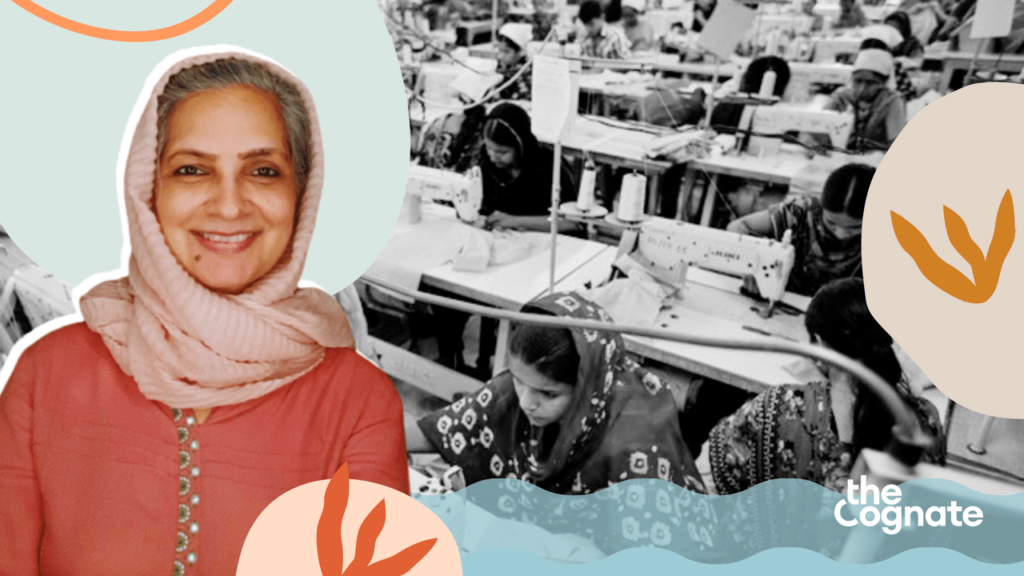
SAFA’s vision is to bring about change whilst retaining the cultural ethos of the community. Women are also given the freedom to work from home after being trained. “Our processes are designed in such a way that if the woman has a machine at home, she can work from home and give us the products,” Rubina says.
“Initially, women were not even allowed to come to our training centres,” she recounts.
“We were very open in talking to the male members of the family and addressed the concerns they had about letting the woman come in and get trained. Men could have some insecurities that stop them from encouraging women to go to training centres and NGOs, it could also be a concern for the woman’s safety, coupled with the socio-cultural context.”
Rubina stresses the need for Muslims to talk about the issues that exist in the community. “In the urban slums of Hyderabad, every second home has an alcoholic husband. Why aren’t there any detox centres for Muslim men? Why are we still sweeping our issues under the carpet,” she asks, adding that “these issues will only get worse if left unaddressed.”
SAFA’s Empowerment Initiatives
Rubina, along with her team at SAFA are currently working on 14 three-year-long projects.
SAFA sets up skill training centres for women and youth who drop out of college or have discontinued school education. They are later connected to jobs. Currently, SAFA runs seven skills training centres in Hyderabad.
However, for semi-literate and illiterate women, SAFA trains them in culinary skills and tailoring. These women are later employed at Luqma Kitchens, a packaged food and catering service run by SAFA or Artizania – a manufacturing unit for apparel and eco-friendly lifestyle products.
“The end result is that women need to be engaged in some kind of a meaningful income generation in order to make a decent living,” Rubina says.
‘Luqma’ was launched to empower underprivileged women through a commercial community kitchen. It currently functions with two kitchens in the slums of Hyderabad, catering to fresh traditional Hyderabadi food and packaged products.
“Luqma is not just about food, it’s about the empowerment and livelihood of women. Most women working here are victims of domestic violence, deserted or abandoned and from below the poverty line,” she says. These women are trained in basic culinary skills by expert chefs and can cook up to 400 meals at a time.
Right next to the kitchen, is a space that can accommodate about 20-25 people – the Luqma Studio, which Nafis Fatima says is a ‘safe space’ for Muslim women. “Activists have been telling me that Muslim women are still reclusive and it’s challenging to find ways to interact with them. So, I thought why not create an open and safe space for them?”
Women from different communities engage in discussions on social and political issues at Luqma Studio. “Largely I want to bust stereotypes of Muslim women. I feel other communities do not get a chance to know about Muslims, especially Muslim women. The moment they think of Muslim women, they start stereotyping- they are the victims of patriarchy, are an oppressed group and other such notions,” she says.
The studio works as a platform for Muslim women to unwind, engage in dialogue, network, exchange ideas, and find out about other communities.
SAFA also helps in setting up micro-enterprises for women and connects them to banks for larger loans. With capital as little as 10,000 women have started small shops, tailoring shops and grocery stores.
Many Muslim women don’t even have bank accounts, especially those who hail from poor conditions. “All our women have bank accounts, now,” she says.
SAFA also runs self-help groups across Hyderabad, largely for Muslim women. “Despite 45,000 self-help groups existing on city records. Very few of them have Muslim women,” Rubina says.
With many more women approaching SAFA, their network and impact on the social landscape of Hyderabad is increasing by the day.
NOTE: SAFA is looking to expand its social enterprise product sales in India and abroad and looking for partners. You can reach them at rubina@safaindia.org / 9866174665 or visit their website www.safaindia.org
source: http://www.thecognate.com / The Cognate / Home> People / by Rushda Fatima Khan / August 11th, 2021
The Congress on Wednesday appointed MPs Syed Naseer Hussain and Chhaya Verma as its whips in the Rajya Sabha, a party statement said.
“Chairperson Sonia Gandhi has appointed MPs Syed Naseer Hussain and Chhaya Verma as whips of Congress Parliamentary Party in Rajya Sabha,” the party statement by Congress chief whip in the Upper House Jairam Ramesh said.
The Congress has appointed Mallikarjun Kharge as leader of the Opposition and Anand Sharma as deputy leader of the Congress in the upper house and the move is seen as a measure to strengthen its floor management in the Rajya Sabha.
The party now has the same number of whips and chief whips in the upper house as in the Lok Sabha.
A non-resident Indian healthcare entrepreneur based in the United Arab Emirates on Monday announced a Rs one crore cash reward for the Indian men’s hockey team goalkeeper P R Sreejesh
P R Sreejesh, Indian men’s hockey goalkeeper
A non-resident Indian healthcare entrepreneur based in the United Arab Emirates on Monday announced a Rs one crore cash reward for the Indian men’s hockey team goalkeeper P R Sreejesh.
The announcement by Dr. Shamsheer Vayalil comes days after the Indian men’s team won the bronze medal at the recently concluded Tokyo Olympics.
Sreejesh, who belongs to Kerala, pulled off a series of stunning saves to help the country win its first Olympic medal in hockey after 41 years.
“Through his outstanding performance at the Olympics, Sreejesh has brought joy to Indians around the world. As a fellow Malayali, I take tremendous pride in his achievement,” Vayalil, Chairman and Managing Director of VPS Healthcare, was quoted as saying in a media release.
Vayalil also called Sreejesh to congratulate him for his exemplary performance.
Dr. Shamsheer has congratulated the entire team for this great achievement and offered his support to us. The announcement of the Rs. 1 crore reward caught me by surprise. A reward for winning a medal in the Olympics is delightful news and I feel very fortunate to be the recipient, said Sreejesh.
Over the last two decades, Sreejesh has carved a niche for himself in the field of hockey. Entering the junior national hockey team in the early 2000s, Sreejesh worked hard to make his way to the national team.
He also served as the captain of the national team in 2016. His quick reflexes and consistent performance have earned him the moniker The Great Wall of India’.
Sreejesh, who returns to India on Monday after the successful Tokyo campaign, will be presented with the cash prize at a special function in Kochi.
(Only the headline and picture of this report may have been reworked by the Business Standard staff; the rest of the content is auto-generated from a syndicated feed.)
source: http://www.business-standard.com / Business Standard / Home> Sports> Tokyo Olympics 2020> News / by Press Trust of India, Dubai / August 09th, 2021
OT is addition to a Primary care, dental chair, Community ophthalmology, NCD Desk it runs for the weaker sections free of cost.
The minor OT, which formally launched on Saturday in Masjid Omer-al-Shifa, located in Saif colony, Shaheenagar
Hyderabad:
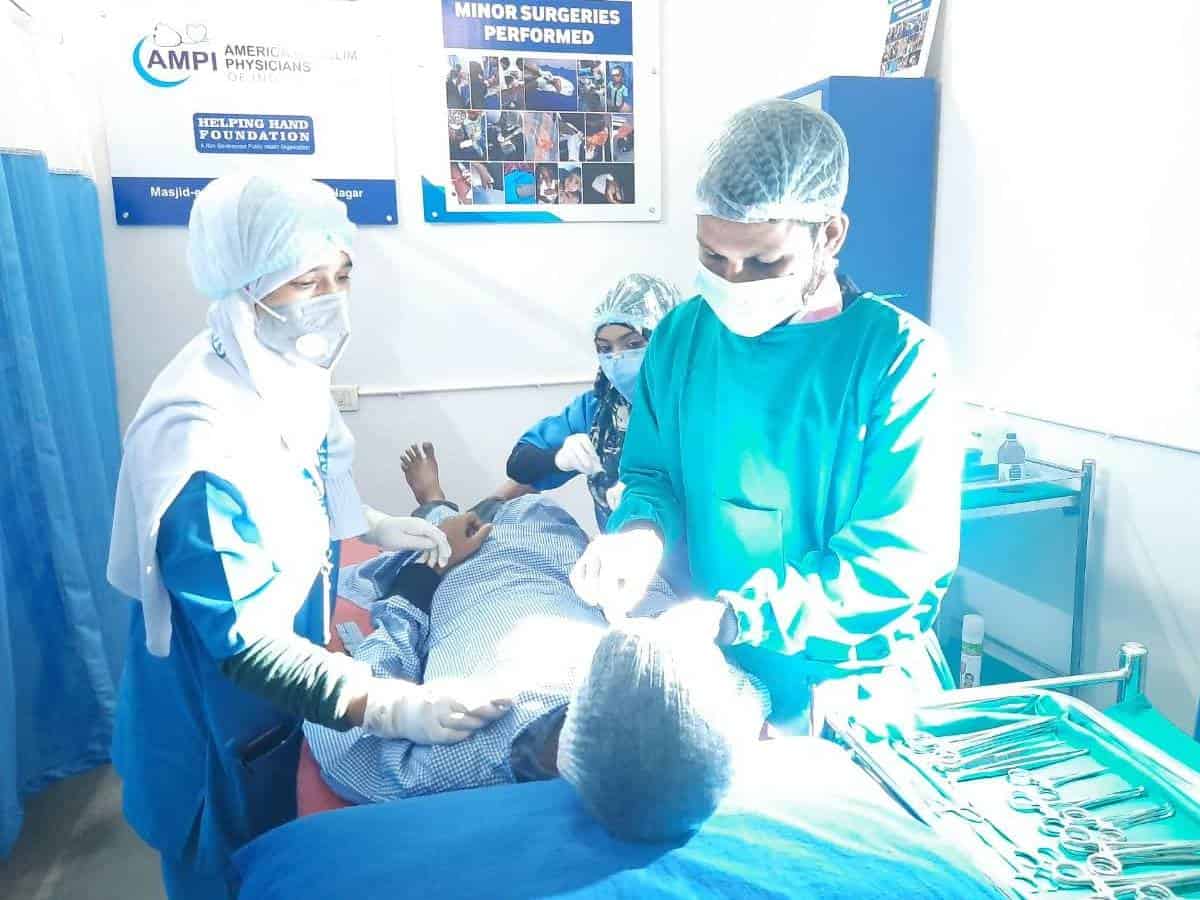
In a first of its kind initiative, a primary health care center run by a non-governmental organization (NGO), in Masjid Omer-al-Shifa, located in Saif colony, Shaheenagar has now set up a full-fledged operation theater (OT) for minor surgeries.
The minor OT, which was formally launched on Saturday will have state of the art equipment like surgery table, OT lights, advanced instrumentation, bio-waste disposal process for keeping good hygiene and sanitation for patient safety.
OT is addition to a primary care, dental chair, community ophthalmology, non-communicable disease desk it runs for the weaker sections free of cost.
The primary health care center run by the NGO Helping Hand Foundation (HHF).
All minor surgeries with pre-surgical profile and post op medicines will be given free of charge by HHF to all patients regardless of their caste or creed.
Most areas surrounding the health center have faced inundation last year October and continue to face problems of overflowing drains, nalas and flooding. Consequently, these slums are endemic to water borne and skin diseases.
The HHF in collaboration with AMPI (american muslim physicians of Indian origin), USA, is catering to the primary health care needs for over 20 urban slums since December, 2020.
With an average foot fall of seven hundred patients per day, it was observed that a significant number of patients suffering from diabetes, hypertension and other chronic diseases are having complications that require surgical procedures, which many cannot afford.
As per the survey done by the NGO, three per cent of the diabetics visiting the center had diabetic foot that very quickly translates into gangrene if untreated.
Cases of patients with Corns, Lipomas, Keloids, in growing nails, benign fibroadenomas, burning wounds, sebaceous cysts, non-healing ulcers are were also commonly seen in the center.
So far, 25 minor surgeries have been performed.
“Due to lack of awareness, poor hygiene and non-compliance to treatment many patients are landing in complications that require surgical intervention,” said Dr Arif Hussain, general surgeon at the clinic.
“Once a patient lands into complication the treatment for such conditions is prolonged and expensive and since majority of the patients are daily wagers with little saving, they tend to neglect resulting in devastating consequences,” said Mujtaba Hasan Askari, Helping Hand Foundation.
source: http://www.siasat.com / The Siasat Daily / Home> News> Hyderabad News / by Sakina Fatima / August 07th, 2021