Launch of centralized call center and formation of teams for rehabilitation for the flood victims
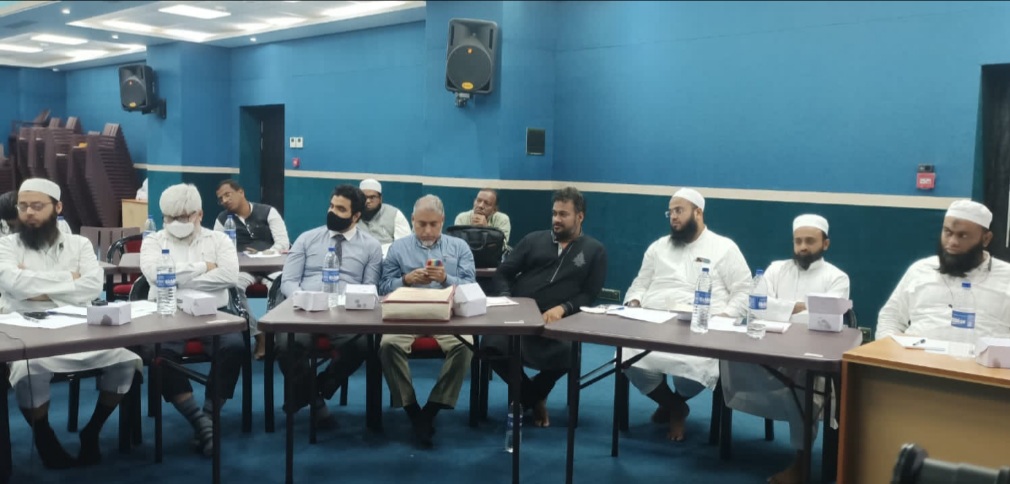
A meeting of community leaders and representative of various NGOs held in Haj House in Mumbai to support the flood victims of the Konkan region mainly Chiplun, Khed and Mahad. Notably, Mumbai has not geographical connection but also a spiritual connection with Konkan region, so the Mumbaikars’ heartbeat is a bit faster on the tragic situation of Konkan region.
Konkan flooded region is not only concerned in Mumbai and Maharashtra but also abroad countries for the relief work due to the flood damage, so the organizers made it very clear at the beginning of the meeting that the local NGOs and social workers of Mahad, Khed, and Chiplun and their associations have been working hard from day one to bring back the flood-affected areas. This meeting is aimed to make better communication and coordination between the ongoing work in the affected areas, for fruitful results, so that whatever is done on the ground with the help of Mumbaikars can be fruitful.
Among the issues came under discussion over which consensus was made:
A call center will be established through which all the working people and social organizations will be contacted to further organize the relief work in the Konkan region. wherein Information on the affected areas will also be collected in this call center. The Call center will also provide database assistance to relief and rehabilitation workers. This call center will work in collaboration with all national and social organizations. It will not be affected by any particular organization or specific party. There will be a joint liaison platform for all organizations and government agencies for Konkan relief work. To ensure this call center as soon as possible, all the participants expressed their support and a plan of action was drawn up for its immediate establishment.
During the discussion in the meeting, there were concerns over efforts to ensure the reconstruction of flood-damaged Kokni families by all possible means of rehabilitation, and a team was set up to prepare a report on the damaged houses and shops, which is very important.
Survey and panchnama team, who will start working with the following personalities: 1) Kazim Malik. 2) Ejaz Pendlikar 3) Abdul Haseeb Bhatkar 4) Mubashir Jamadar 5) Shakir Sheikh 6) Yasin Dalvi 7) Arif Malaji
For the next legal action of relief, a permanent team was selected to represent the government and non-government affairs of permanent relief and rehabilitation work.
The Legal team is as follows: 1) Saleem Alware 2) Amin Solkar 3) Shadab Kate 4) Farid Sheikh Peace Committee 5) Mushtaq Dalvi 6) Dr. Danish Lambe 7) Faqir Muhammad Thakur.
In addition, another very important and useful thing is the establishment of the Federation of Konkani NGOs, which will liaise with the presidents and secretaries of all All jamaats and organizations working in Konkan. And will work with them to move things forward.
The Relief team following dignitaries from Mumbai are currently the only ones to be named for this federation, with room for further expansion: 1) Prof. Sirajuddin Chogle, 2) Mufti Mohammad Ashfaq Qazi Jamia Masjid Mumbai 3) Mufti Abdul Ahad Falahi, Patharwali Masjid, Mohammad Ali Road, 4) Abdul Aziz Mahate 5) Shoaib Khatib Chairman Jamia Masjid Bombay 6) Dr. Wasim Phophlonkar 7) Imran Alvi 8 (Mufti Yahya Moin 9) Mufti Tahir Chauhan 10) Amin Solkar. 11) Abdul Haseeb Bhatkar
All of these people were already working hard and selflessly for the welfare of Konkan. Now all the work is being streamlined and the scope of work is being expanded to streamline government agencies. In which it is established that at the local level Chiplun, Mahad, and Khed as well as at the party level, found social and religious organizations such as, Leaders of Anjuman-e-Dardmandan, Tablighi Jamaat, Jamiat Ulema-i-Hind, and local units of Jamaat-e-Islami, Jamiat Ahle Hadith, Jamiat Ahl-e-Sunnat and Jamaat will continue to be included in them.
It will also liaise with committees and local Kokan officials and representatives of the federation who are already working there, e.g. Rafiq Purkar, Khalid Parkar, Yasin Dalvi, Maulana Sadiq Mastri Chiplun, Mufti Anwar Khan Sargroh Ratnagiri, Qazi Hussain Mahamkar Shrivardhan Mufti Umar Dhamskar Pimpli, Maulana Abdul Salam Jalal Raigarh And with other responsible gentlemen whose names are difficult to cover in this report, the work will be organized with their liaison.
Similarly, associations of different professions will be formed in the context of this federation which will make the public welfare affairs in Kokan stable and useful.
Muhammad Ali Patankar, Amin Solkar, Farid Sheikh, Shoaib Khatib, Mufti Abdul Ahad Falahi, Mufti Habib Patel, Mufti Tahir Chauhan, Abdul Aziz Mahat, Nayyar Shaaban, Kazim Malik, Abdul Haseeb Bhatkar, Mushtaq Dalvi, Dr. Wasim Phophlonkar, Dr. Sirajuddin Chogle, Dr. Danish Lambe, and other social leaders discussed valuable advice and useful suggestions and put them into practice.
The meeting began with the recitation of the Holy Quran, Mufti Yahya Moin presented the agenda, and the organizer of the meeting, Mufti Muhammad Ashfaq Qazi, concluded the proceedings of the meeting with great care and goodwill.
It is hoped that these arrangements will further benefit the victims of the Kokan Flood, whose shops have been damaged or their livelihoods have been ruined in any way. This is the teaching of Islam and the need for humanity to stand up for society. May Allah Almighty look at this gathering of Hajj House, reward the organizers, and accept the religious and human feelings of the participants. And ensure the things that are planned and enrich us all with the wealth of sincerity.
source: http://www.muslimmirror.com / Muslim Mirror / Home> Featured / by Samiullah Khan / August 07th, 2021
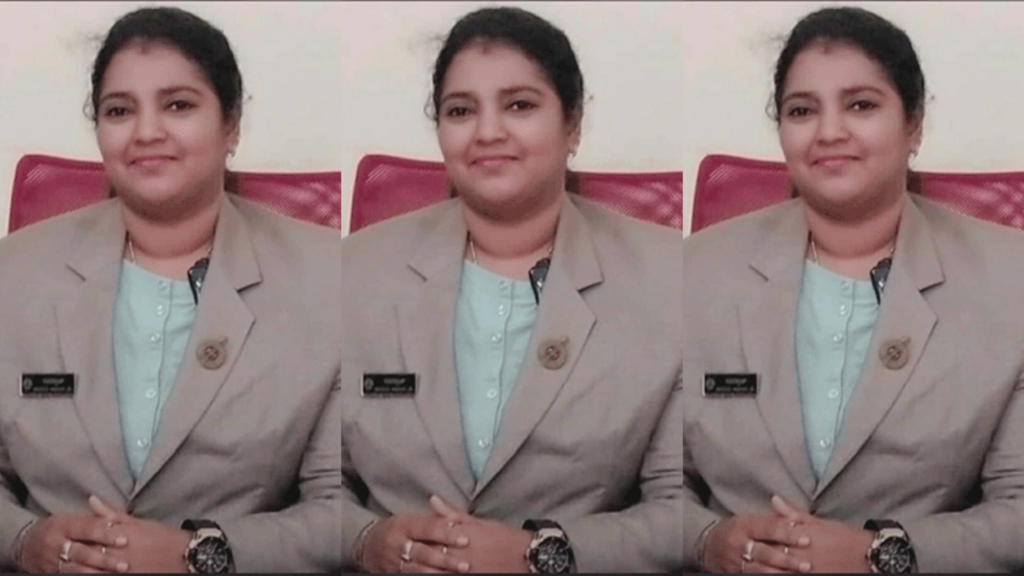
Udupi’s Assistant Director of Prosecution (ADP) Mumtaz has been appointed as the district judge, making her the first Muslim woman in Karnataka to become a district magistrate.
Mumtaz secured the first rank in the judicial exams held in Feb-March earlier this year. She is among the 12 among people who got selected to become district judges.
Mumtaz completed her LLB degree from SDM Law College in Mangaluru before moving to Mysuru for master’s degree.
Mamtaz was selected as the assistant public prosecutor in the JMFC court of Bhatkal in 2010. Later, she was shifted to Udupi JMFC. In 2018, Mamtaz got promoted as ADP to the district SP office of Udupi.
source: http://www.thecognate.com / The Cognate / Home> News / by Shaik Zakeer Hussain / August 06th, 2021
Nallur Village, Bajagoli (Karkala Taluk -Udupi District), KARNATAKA :
Karkala:
Naseera Banu, who was born in a poor Muslim family in Bajegoli near here has written the examination for the post of judge and is waiting for the appointment order.
Naseera’s father Aliabba owns a driving school and her mother Nabisa is a housewife. Naseera is the first lady, who will become a judge in their family. Naseera studied in the Kannada medium school of her village. But she realized that it is necessary to be proficient in English language, if she wanted to achieve her goal. Now she has reached the destination. Her parents also have supported her whole-heartedly.
Naseera’s achievement has made her parents proud. Her father Aliabba says, “We, who have spent the whole life with difficulties, were dreaming that our children should achieve something in their life. My daughter Naseera has realized my dream.”
The other two daughters of Aliabba and Nabisa are married. Their son is working in Qatar. Naseera completed her PUC in Bajegoli. Later she completed her LLB in 2010 from Vaikunta Baliga Law College in Udupi.
After completion of LLB, she was getting law training with advocate Vijendra Kumar in Karkala. At present she has been working as an assistant with advocate G Muralidhar Bhat where she began in 2015.
“I was involved in games and studies like any other child. But I always had an eye on my goal.” she says.
Naseera had faced her last round of interview on June 13 for the position of judge.
sourc: http://www.daijiworld.com / DaijiWorld.com / Home> Top Stories / by Daijiworld Media Network – Karkala (MS) / July 12th, 2019
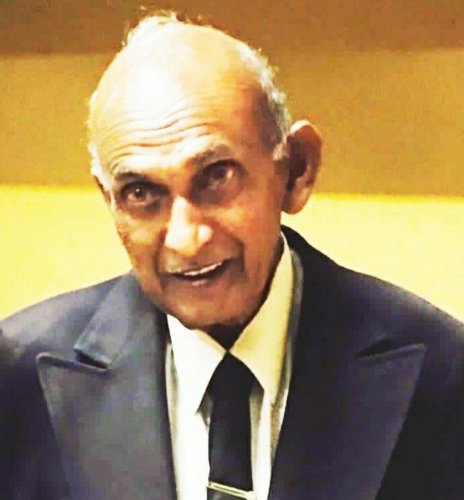
Zakariya Senior advocate P M Zakariya passed away on Monday. A condolence meeting was held at the district court in Madikeri.
Bar Association president K D Dayananda said that advocate Zakariya was friendly and used to interact with all advocates. He had vast knowledge.
District Principal and Sessions Judge Jinaralakar Bheemarao Lagamappa, Judges P S Chandrashekar, Subrahmanya, K Roopa, Manu, Smitha, Madikeri Bar Association vice president K S Ratan, secretary M K Arun Kumar and others were present.
source: http://www.deccanherald.com / Deccan Herald / Home> State> Mangaluru / by DHNS, Madikeri / July 26th, 2021
The firing at the border of the two states was unprecedented. While the versions offered by the Assam and Mizoram chief ministers differ, Amit Shah’s failure to prevent the clash raises questions about the role of the Union home ministry.
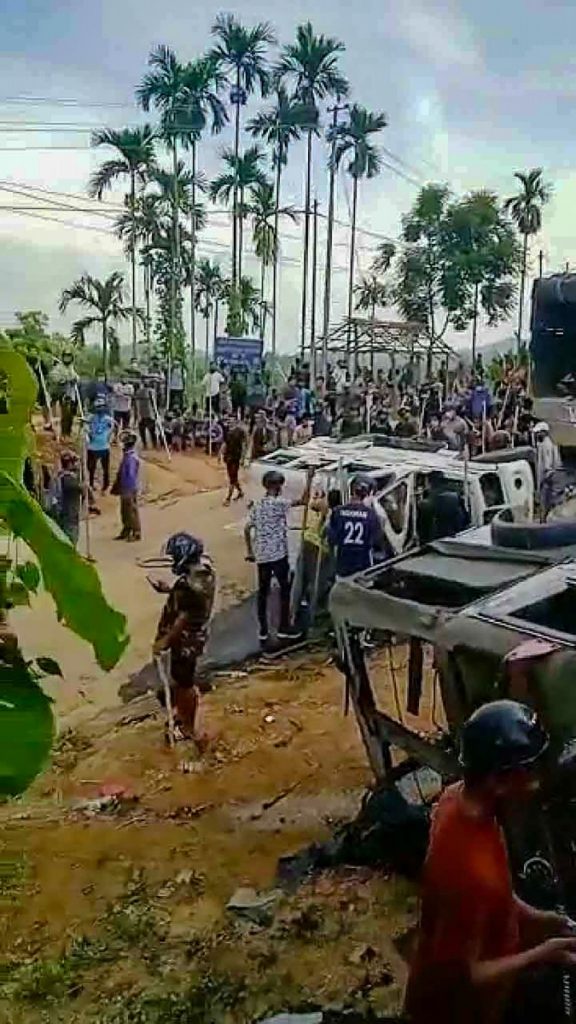
Damaged security force vehicle at the site of the Mondays clashes at Lailapur on the Assam-Mizoram border, in Cachar district, Tuesday, July 27, 2021. Photo: PTI
New Delhi:
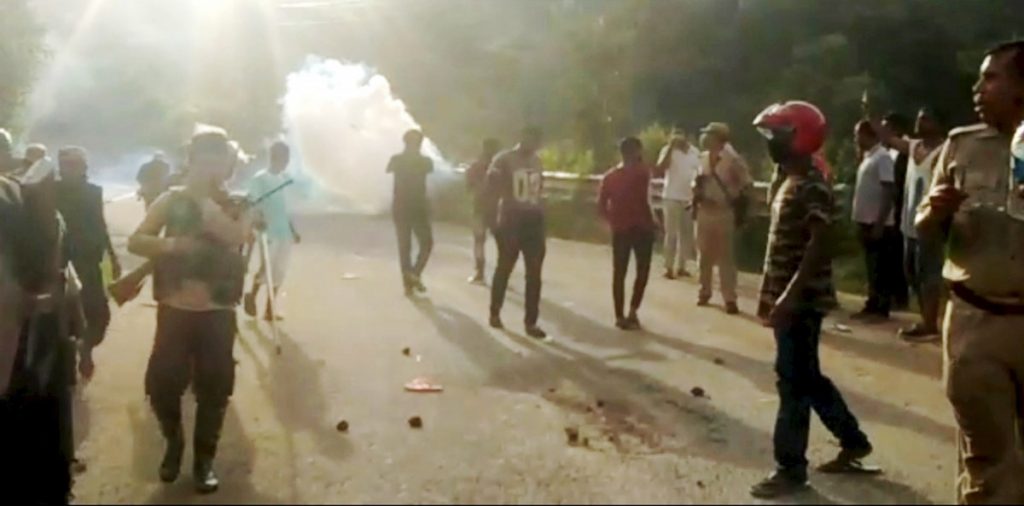
Visiting Shillong on July 24, Union home minister Amit Shah had grandly declared that the Narendra Modi government was keen to resolve all border disputes between north-eastern states. Barely 48 hours later, the Assam-Mizoram border witnessed a massive escalation of tension, ending in violence which claimed the lives of five Assam policemen. At least 42 Assam Police personnel were injured.
As violence broke out along the border town of Vairengte in Mizoram’s Kolasib district – which is adjacent to Lailapur in Assam’s Cachar district – at around 4.40 pm on July 26, so did a Twitter war of words between the chief ministers of the two states, Zoramthanga and Himanta Biswa Sarma.
Ironically both CMs, who are members of the BJP-led North East Democratic Alliance (NEDA), began tagging Shah, the Prime Minister’s Office (PMO) and Modi, as if expecting them to come to their rescue. Sarma uploaded video clips for people to “know how personnel of Mizoram police acted and escalated the issue” and purportedly showing “Mizoram Police and goons celebrating” after causing the death of Assam Police personnel.
Those who lost their lives in the skirmish were Assam Police sub-inspector Swapan Roy and constables Liton Suklabaidya, N. Hussain, Samsul ZamanBarbhuiya and M. H. Barbhuyia. Among the injured was the superintendent of police, Cachar, and the Inspector General of Police.
Sarma also accused Mizoram Police of using light machine guns (LMGs). He said the use of LMGs “speaks volumes about the intention and gravity of the situation.”
Police personnel during a clash at Assam-Mizoram border at Lailapur in Cachar district, Monday, July 26, 2021. Photo: PTI
Meeting and the border
The only problem with appealing to Shah is that the Union home minister has once again been found asleep at the wheel. For months now, North Block has received inputs of mounting tension on the Assam-Mizoram border. But Shah appears to have been oblivious to the gravity of the situation.
The fact that he met both Sarma and Zoramthanga in Shillong and yet was unable to forestall Monday’s deadly clash will reinforce the impression that Shah’s interests are primarily political and not administrative.
According to ANI, Zoramthanga, at the July 24 meeting with Shah and Sarma, had said that the areas claimed by Assam were used by Mizos for more than a 100 years. He had also alleged that Assam had started claiming those border areas because of its population growth due to a spike in the number of ‘migrants’ settling down in the Barak Valley.
Three districts of Mizoram – Kolasib, Mamit and Aizawl – share the state’s 165 km boundary with three districts of Assam’s Barak Valley – Cachar, Hailkandi and Karimganj.
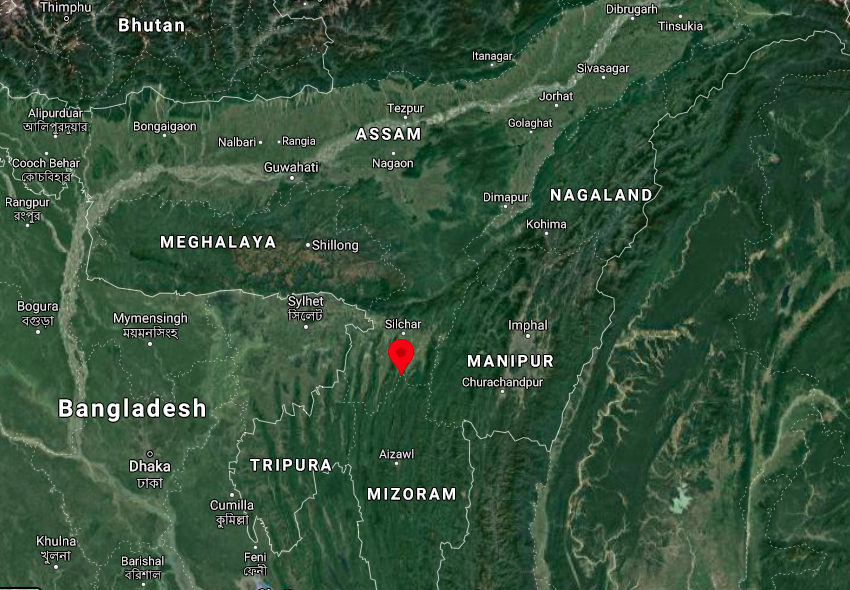
The Assam-Mizoram border. The marker is on Vairengte. Photo: Google Maps
A day after the violence, on July 27, Sarma, along with his trusted aides, minister Pijush Hazarika and MLA Ashok Singhal, along with local MLAs, visited the disturbed district of Cachar.
At a press meet in Silchar, Sarma said that for the past two months, there had been at least 12 to 13 attempts to occupy “Assam’s land in five sectors” along the inter-state border.
He said, “But I can assure people in Assam that not an inch has been ceded by Assam after May 10 (the day Sarma took over as Assam chief minister).”
“In the Shillong meeting, I had told Zoramthanga, ‘Let’s do a satellite mapping of the present border even if it is till May 10 (2021) and maintain the status quo and let the Central government decide on the permanent status,’ to which he agreed. But after the draft was readied, his government refused to sign on it.”
“I was on phone with Zoramthanga on July 26 from 11.30 am, till 4.40 pm when the firing began. I requested him to intervene and stop the violence. When the firing happened, I informed him and he said I am sorry about it. That was the last we spoke on phone.”
The Wire breaks down what led to the unprecedented firing involving the police forces of two neighbouring states on July 26.
What happened on July 26?
According to Assam chief minister Sarma, on July 25, his administration in Guwahati received input from the Silchar district forest officer about a road being constructed by Mizoram inside the inner line reserve forest on the border near Lailapur.
He said this led a delegation of Assam officials to visit the spot led by an IGP, the Cachar SP and the district commissioner on July 26. “They found that not only was a road being constructed inside the reserve forest (the road was stated to be going towards Renti Basti in Assam) by breaching the status quo and destroying the Inner Line reserve forest in the Lailapur area, but there was also a new armed outpost of the Mizoram Police.”
“The team requested that the outpost created next to the camp of a neutral force, the CRPF, be removed and status quo be maintained. While they were still in dialogue with the Mizoram police personnel, a number of civilians atop a hillock began to fire at them, leading to injuries and death of our personnel. I have video evidence with me to show that the civilians were armed. Now the question is, who gave arms to them?” he told reporters in Silchar on July 27.
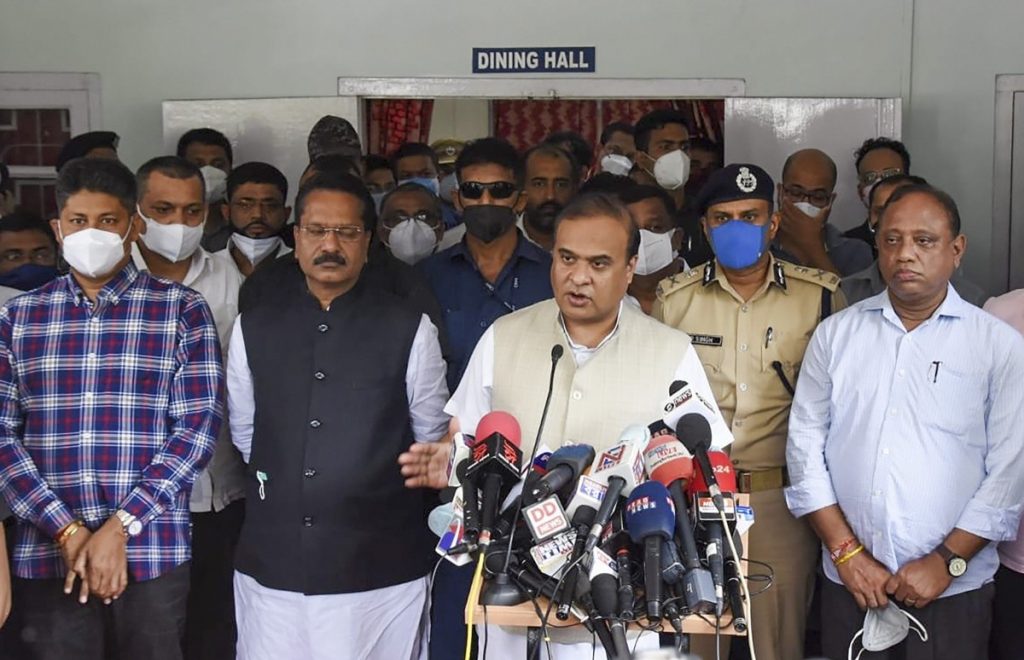
Assam Chief Minister Himanta Biswa Sarma interacts with media after visiting the police personnel injured in a clash at Assam-Mizoram border, at Silchar Medical College & Hospital. Photo: PTI/Twitter
In a statement issued on July 26, the Assam government accused Mizoram Police of supporting the civilian mob.
“The aggressive behaviour and posture of this mob along with the fact that they were brandishing weapons and wearing helmets is clearly seen in all available video footage. While the mob pelted stones on (at) the Assam officials and destroyed three vehicles including the DC’s car, the Mizoram Police simultaneously fired tea gas shells on (at) the delegation. The IGP was injured in this barrage.”
It further said, “In the afternoon, SP Kolasib along with two additional SP level officers held a discussion with the Assam delegation during which they were requested to control the mob and not let them take the law in their hands, thus disturbing peace.”
The Assam government statement said that though the Mizoram police personnel ostensibly went to speak to them, they soon said they cannot control the mob. “Horrifically, even while the SP Kolasib, was in talks with the Assam officers, the Mizoram Police opened fire on the Assam officials and civilians, who had by then gathered there (on the Assam side), from two dominating high features (hillocks) with automatic weapons including LMGs.”
However, according to a statement by Mizoram government, “around 200” Assam Police personnel led by an IGP came over to the Mizoram side (the Vairengte auto-rickshaw stand) at around 11.30 am and “forcibly crossed the duty post manned by CRPF personnel stationed there and overran a duty post manned by one section of Mizoram police personnel.”
The Mizoram statement said, “The Assam police also damaged several vehicles that were travelling along the national highway between Vairengte and Lailapur.”
Damaged security force vehicles at the site of the Mondays clashes at Lailapur on the Assam-Mizoram border, in Cachar district, Tuesday, July 27, 2021. Photo: PTI
The statement said the residents of Vairangte town assembled after the violence occurred. Though a video shared by both the chief ministers featured civilians armed with sticks, the Mizoram government’s statement called them “unarmed” and stated that they were instead “assaulted by Assam Police with lathi charging…tear gas, thereby causing injuries to several civilians”.
The Mizoram government also accused the Assam Police of not only using tear gas on the Mizoram Police but also firing at them first. On Tuesday night, the state chief minister tweeted that one policeman from the state had been injured.
The government’s statement said, “Mizoram Police responded spontaneously by firing back at Assam Police in spite of the fact that the SP, Kolasib district, was still inside the CRPF duty camp negotiating with Assam Police authorities.”
Recent developments leading to the July 26 incident
As stated by Sarma, the situation on the Assam-Mizoram border has been particularly uneasy for the last two months.
As per news reports , early this month, around 25-30 people from Mizoram attempted to encroach into land inside Assam – leading to a number of blasts which were claimed to be IED explosions by the Assam Police. Reports said the Assam Police had claimed that these blasts took place in the Cachar district, and were engineered allegedly by “miscreants from Mizoram during an eviction drive” in Khulichera area.
The last instance of violence in the Lailapur and Vairangte area can be traced back to October 2020 when civilians on both sides had engaged in clashes. Around the same time, a similar pattern of violence was reported from Assam’s Karimganj side which is adjacent to Mamit district of Mizoram.
In February 2018 too, the Mizoram-Assam border, along Hailkhandi district, witnessed violence with Assam Police reportedly baton charging supporters of the powerful student body Mizo Zirlai Paul (MZP) who had protested the removal of a shed it had constructed. The Assam Police had called it an encroachment. Several journalists were also injured in that lathicharge.
In recent times, the border clash has only intensified.
What is the dispute?
The boundary dispute of Assam with states carved out of it after Independence is not new. Among those disputes, the one with Nagaland has led to large-scale violence and deaths for considerable time and the volatility of the situation along the Golaghat district of Assam continues. There was a clash between the Assam and Nagaland police on the border dispute in the 1980s, in the Merapani area of Assam’s Golaghat district.
The Assam-Mizoram border dispute has, however, never seen such an escalation before.
The basic premise of the dispute between Mizoram and Assam has been around two notifications dating back to the British era. Mizoram, before it became a Union Territory in 1972 and a state in 1986, was the Lushai Hills District of Assam.
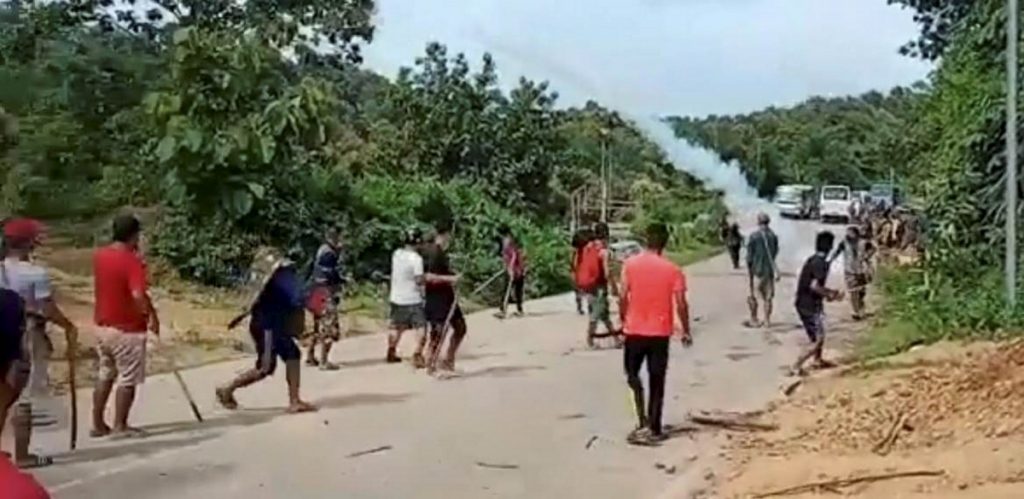
Locals during a clash with police personnel at Assam-Mizoram border at Lailapur in Cachar district, Monday, July 26, 2021. Photo: PTI
While the Mizos acknowledge the colonial era notification issued in 1875 which separated the Lushai hills from the Cachar plains, because it was done after a discussion with the tribal chiefs, Assam acknowledges yet another British era notification issued in 1933 which demarcates the boundary between the Lushai hills and Manipur. Mizoram argues that the 1933 notification was issued without consulting the Mizos, and thus calls for the 1875 notification to be accepted instead – also because it was derived from the Bengal Frontier Regulation Act, 1873, based on which a non-Mizoram resident still needs an inner line permit to enter the state.
Speaking to reporters in Cachar on July 27, Assam chief minister Sarma addressed the issue, stating, “Mizoram was carved out of Assam. Earlier it was all Assam’s land. When the Union territory of Mizoram was created, a particular area was given away as the UT. The rest remained as Assam’s land. What was there in the British era is different.”
He also said, “If tomorrow the Centre decides to give certain areas to Mizoram from Assam, I will have to let it go because it is Centre’s prerogative to decide it but till then status quo has to be maintained.”
Most of the states “carved out” would dispute Sarma’s claim that their territory was “all Assam’s land”. After all, undivided Assam and other ‘provinces’ and territories in British India were demarcated by the colonial authorities for administrative and political purposes – often at the cost of trampling on the identity of the different ethnic groups they lumped together.
What is the present state of affairs?
According to the Assam government, its police have moved away from the outpost created by the Mizoram Police as per instructions issued by the Union Ministry of Home Affairs. “Our police is stationed a hundred metres away from the CRPF camp but the Mizoram Police has not vacated it yet,” Sarma told reporters.
Meanwhile, the Assam government has announced compensation of Rs 50 lakh and a government job each to the deceased’s families. The 42 police personnel injured in the July 26 violence will be given compensation of Rs one lakh each.
Sarma announced that the Assam Police personnel who are guarding the volatile border would be paid the salary of an additional month. He also said new companies of battalions comprising a total of 3,000 police personnel will be stationed along the border aside from the CRPF. Since the incident took place on land within “Assam’s jurisdiction”, the chief minister said an FIR would be filed which would lead to an inquiry into “who armed the civilians”.
The DGPs of Assam and Mizoram have been summoned by the Ministry of Home Affairs on July 29 to sort out the matter.
source: http://www.thewire.in / The Wire / Home> Politics / by The Wire Analysis / July 27th, 2021
Over the last decade, individual Muslims have started breaking from the tradition of sacrificing animals on Bakra Eid, motivated by the thought that the considerable amount spent on buying and sacrificing animals would be put to better use for the community’s welfare, specially education.
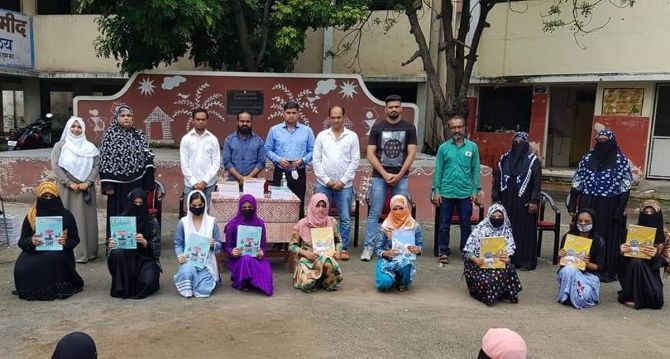
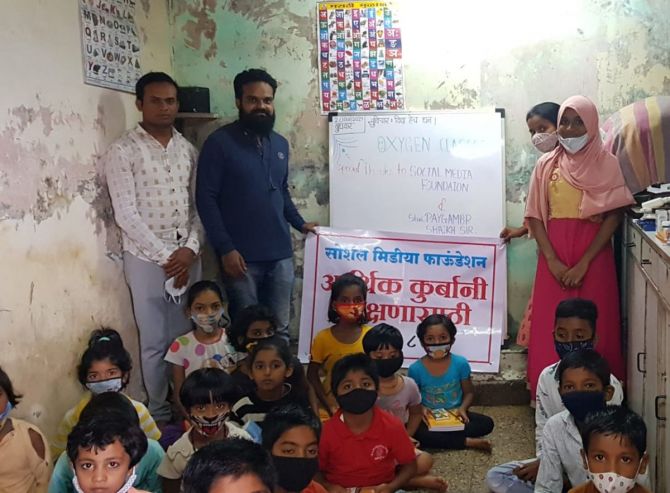
Paigambar Shaikh (with beard) flanked by Rafique Shaikh, left, and Alam Pathan with the beneficiaries of Aarthik Qurbani in 2020.
Wednesday was a busy day for Pune activists Paigambar Shaikh, Alam Pathan and Rafique Shaikh. It marked the start of the distribution of funds collected by Paigambar through his ‘Aarthik Qurbani‘ campaign.
It’s happened elsewhere, but the ‘Aarthik Qurbani‘ movement started by Pune activist Paigambar Shaikh is unique.
Over the last decade, individual Muslims have started breaking from the tradition of sacrificing animals on Bakra Eid, motivated by the thought that the considerable amount spent on buying and sacrificing animals would be put to better use for the community’s welfare, specially education.
In Bengaluru, some of these Muslims have managed to convince others to follow their example. After the 2018 Kerala floods, social media helped convince many across the country to donate the money kept for the sacrifice, or at least a part of it, for the floods, as reported in Rediff.com.
However, Paigambar Shaikh’s Aarthik Qurbani movement is different from all these, in that it is not restricted to Muslims. In fact, the campaign run by this self-employed content writer on Facebook, gets more responses from Hindus than Muslims, and the beneficiaries of the monetary sacrifice are also from all communities.
This reflects the concerns of 31-year-old Shaikh and his colleagues: All three are social activists, not just community activists.
“Not once has any Muslim who has contributed Aarthik Qurbani told us that his/her money should only go to Muslims,” Paigambar tells Rediff.com Senior Contributor Jyoti Punwani. “And we would never accept such a condition.”
The meat that is sacrificed on Bakra Eid, points out Paigambar, does not go only to Muslims. “It’s in three parts: One kept for yourself, one for those who are needy among your relatives, and the third for the poor. The poor need not be from your community only,” he explains.
“Also, the money you spend on buying animals does not go to Muslims; most of the sellers are non-Muslims,” he points out.
However, since he started his campaign in 2014, more and more Muslims have been getting drawn to it. This year, of the 117 persons who donated, 50 were Muslim.
They collected almost Rs 95,000, less than earlier years, but more than what they expected, given the financial blow dealt by the two lockdowns.
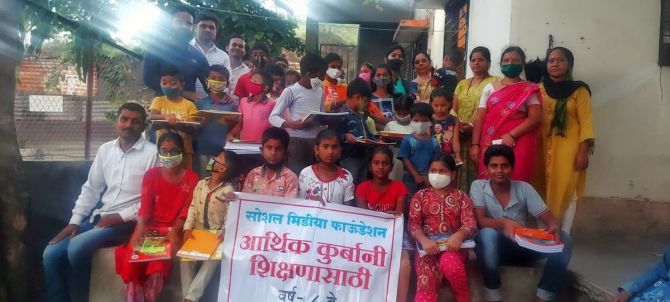
On Wednesday they kicked off their distribution by donating educational material to two women, one Hindu, the other Muslim, who teach poor children for free. Needy students are their main beneficiaries, but they have also helped flood victims in Kerala and Maharashtra.
Distribution of Aarthik Qurbani in 2021.
While orthodox Muslims oppose substituting animal sacrifice with monetary sacrifice, Paigambar reveals that it was his study of the Quran that prompted him to begin this practice.
“In the Quran it says one must sacrifice that which is dearest to our hearts. How can an animal that is purchased with the express aim of sacrificing it be the closest thing to our hearts,” he asks.
In the last two years, the Maharashtra government has insisted that because of Covid compulsions, Muslims should perform a ‘symbolic’ sacrifice. But community leaders have rejected this suggestion, saying no such concept of symbolic sacrifice exists.
However, Paigambar Shaikh maintains that the Bakra Eid sacrifice is symbolic. “Hazrat Ibrahim dreamt that Allah had asked him to sacrifice that which was dearest to him, and prepared to sacrifice his son. But at the crucial moment, Allah presented a dumba (ram) for the sacrifice. Doesn’t that show that it was a symbolic sacrifice? Our Aarthik Qurbani too is symbolic.”
Finally, what set the seal on Paigambar’s conviction were the words from the Quran: ‘Their meat will not reach Allah, nor will their blood, but what reaches Him is piety from you.’
“It’s the intention that counts,” says Paigambar.
Those who oppose the concept of substituting charity for animal sacrifice point out that Bakra Eid is the one occasion that the poor get to eat mutton which is otherwise out of their reach.
However, asks Paigambar: “What is more important — eating mutton or getting out of poverty? Those who go around distributing mutton to poor families, would be surprised to know that some of those families can’t even afford to buy the half-a-dozen notebooks needed for their children’s school. It’s not in our hands to abolish poverty, but by enabling a poor family to educate its children, we are providing them a means to come out of their poverty.”
At any rate, he adds, the prime motive for the animal sacrifice is not feeding the poor; it is pleasing God.
This year’s distribution of Aarthik Qurbani: Rafique Shaikh and Paigambar Shaikh with the recipients.
Rafique Shaikh joined Paigambar’s campaign in 2019, when Sangli, Satara and Kolhapur were hit by floods. The eldest of four brothers, this 33-year-old businessman decided that the money they’d kept aside for sacrificing goats would go for the flood hit.
“The satisfaction we got from wiping the tears of those in distress by this sacrifice was a completely different experience,” he recalls.
Alam Pathan was already performing Aarthik Qurbani since 2009. That year, Pathan’s father died a day before Bakra Eid, and the family felt it inappropriate to celebrate the festival. Instead, they donated the money they would have spent on the animal sacrifice to the poor, and have since stuck to that practice.
Opposition from the orthodox, including threatening calls, have not fazed these men.
“We don’t tell anybody to give up animal sacrifice,” points out Rafique Shaikh. “This year, I could afford to sacrifice a goat and also make an Aarthik Qurbani, so I did both. One can buy a goat for Rs 11,000 or Rs 50,000. Isn’t it wasteful to spend so much on one goat? We just suggest that instead of spending all that money on an animal, why not keep a part of it for those who need it?”
Alam Pathan has one way of dealing with opposition: Ignoring it.
Were he to heed opposition from the orthodox, this 39 year old’s life would be very different.
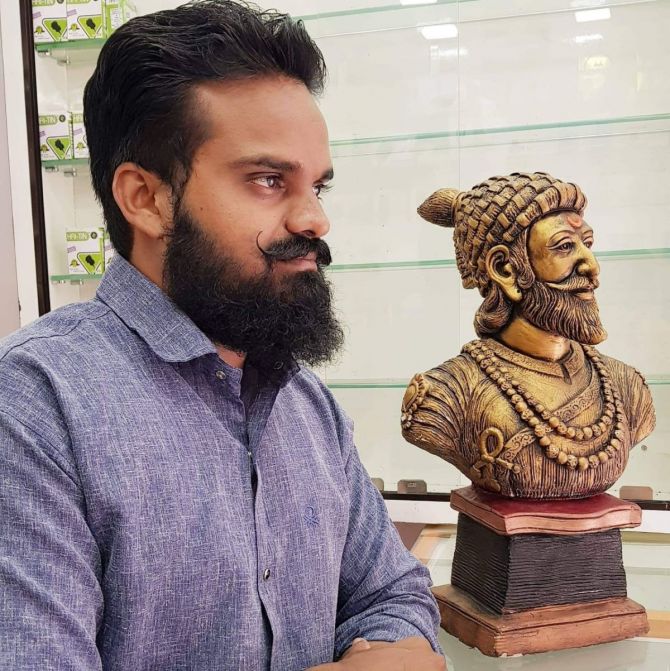
Paigambar Shaikh derives his inspiration from Prophet Mohammed and Shivaji Maharaj.
As the only Muslim family in his village, says Pathan, the palkhi carrying the padukas of Sant Tukaram taken out during the annual Pandharpur pilgrimage, would stop at his house. He would participate in all the village bhajans and keertans, and continues to do Shri Dnyaneshwari Pravachan — he lectures on the Dnyaneshwari written by the 13th century poet Sant Dnyaneshwar. He also visits the famous Tirupati Balaji temple in Andhra Pradesh every year.
“This is how my father brought us up,” says the real estate dealer.
Paigambar Shaikh has received threatening calls for his campaign. But says he, he derives inspiration from two personalities when confronted with such opposition.
First, Prophet Mohammed, who said nothing even to the woman who threw garbage on him whenever he passed by her house. The day she didn’t do so, he went to check if she was okay and tended to her.
That gesture made her accept Islam.
Paigambar’s second inspiration is Shivaji Maharaj, who never accepted defeat.
“Aarthik Qurbani is now here to stay. No one can stop us. Next year onwards, we will be spreading the movement from Pune to other districts of Maharashtra.”
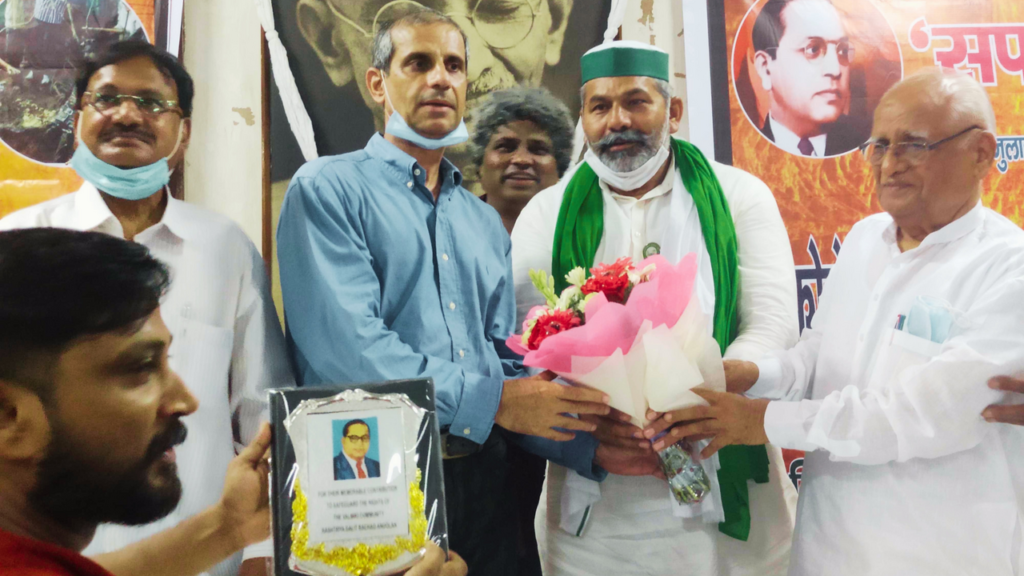
Prominent Lawyer Advocate Mehmood Pracha was honoured with the 2021 annual award at the ‘Safai Mazdoor Divas’ last week for his work in supporting the Safai Karamcharis’ demand for equal status in society.
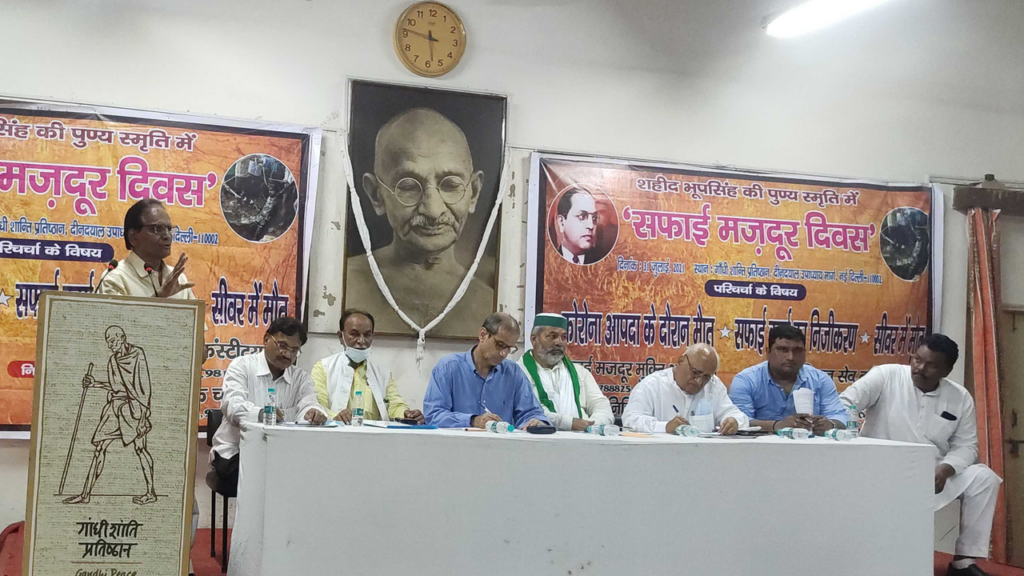
The ‘Safai Mazdoor Divas’ is commemorated every year on 31st July which is observed in the memory of a Safai Karamchari ‘Bhoop Singh’ who was shot down by Delhi Police during the strike of Safai Karamcharis on 31st July in 1957. The day is also celebrated to highlight the contribution of Swachchta Karamcharis to society despite being extremely marginalized and deprived.
Advocate Mehmood Pracha in his address said, “I have received many awards on national and international platforms till now for various activities, but I consider this award as one of the most important awards of my life and career, as this has been given by the community, who made every individual of the country self-sufficient and talked about equal rights for all”.
“Manual scavengers who carry our filth with their bare hands are the first and foremost frontline workers of the society, before and after the pandemic, because they prevent us from getting ill to diseases”.
He asserted, “They should be given equal and even more status than the doctors and army of the countries, as doctors treat our diseases but these workers prevent us from getting these diseases. Army protects us on borders but these workers protect and save us within the country”.
“Privatization of the work done by manual scavengers should not be done, if the government wants to replace the manual work with machinery, the Dalit/Valmiki community should be given the contract of the machines and not the Savarnas, who already enjoy the privilege of being the upper caste and majority”, he further said.
The award was handed over to Adv Pracha by Rakesh Tikait, farmer leader and national spokesperson of Bhartiya Kisan Union. He extended his support to Swachchta Karamcharis for their struggle in getting equal and fair status in society.
He said, “The support we have received from the Dalit community is overwhelming, we are also ready to lend our possible support to the workers in their struggle”.
Along with Mehmood Pracha, the award for the year 2018-19 was given to Bharat Kesari Birju Pehelwan (Valmiki) and for 2019-20 to Professor Dr Kaushal Pawar of Delhi University.
The event was jointly organized by Dalit organizations which include, Rashtriya Dalit Bachao Andolan, Mission Save Constitution, Valmiki Chaupal, Safai Mukti Andolan, and Delhi Municipal Worker Sangh.
The event was joined by many eminent figures, including Dr OP Shukla, President Rashtriya Dalit Bachao Andolan, a retired bureaucrat of Valmiki caste, and Justice BG Kolse Patil and moderated by Harnam Singh, former Chairman of the Delhi Commission for Safai Karamcharis.
source: http://www.thecognate.com / The Cognate / Home> News / by Ghazala Ahmad / August 02nd, 2021
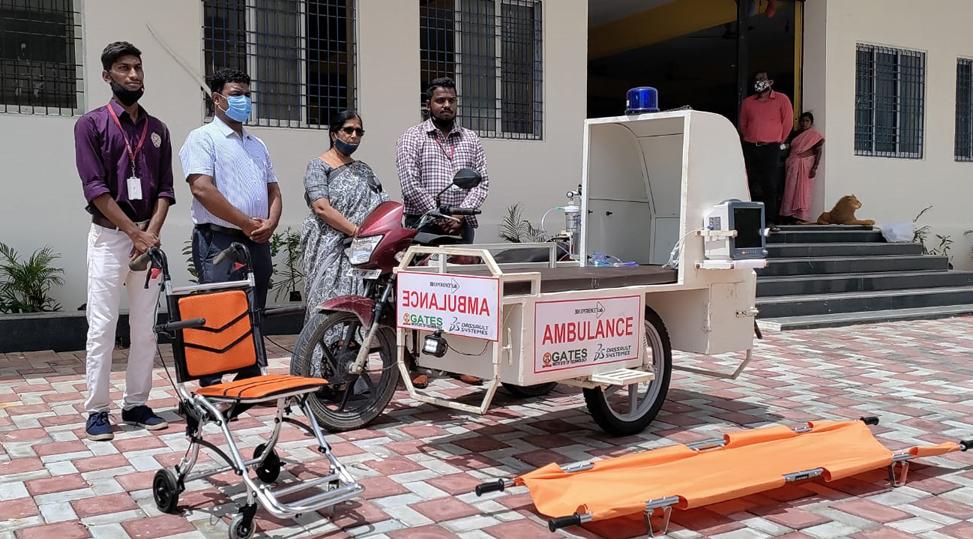
Having learnt about it, senior students joined the project and the college managing director had approached Dassault Systemes in France for help in designing the ambulance.
Anantapur :
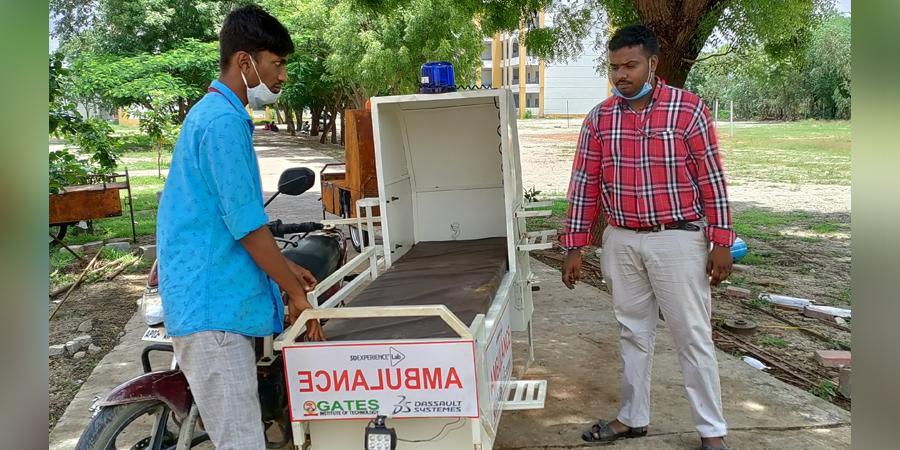
Deeply moved on seeing a report of a man carrying the body of his mother due to non-availability of ambulance during the Covid-19 pandemic, S Yashwant, a second year student of GATES Engineering College, Gooty, hit upon an idea of developing a cost-effective two-wheeler ambulance, which is easy to operate even on village roads. He immediately shared it with his friend Izaz Ahamed and both of them started giving a shape to the idea in Idea Lab of the college.
Having learnt about it, senior students joined the project and the college managing director had approached Dassault Systemes in France for help in designing the ambulance. Impressed by the idea and the objective behind it, Dassault had developed the prototype of ambulance using 3D design platform CATIA. The French company also sent its representative Suhas Preetipal to provide help to the students in the project.
Yashwant and Izaz Ahamed, under the supervision of Suhas Preetipal and college chief administrative officer V Anand, started giving a shape to their idea based on the design provided by Dassault. After 40-50 days of effort, they developed the two-wheeler ambulance, which can be attached to any 100 CC two-wheeler and it costs around Rs 50,000.
The maximum speed of the two-wheeler ambulance is limited to 35 kmph and it can be operated on any type of roads due to its sturdy structure. It is equipped with oxygen cylinder and other emergency medical equipment. It can be used not just for Covid cases, but also for any medical emergency.
Village secretariat to get first ambulance
Speaking to TNIE, Anand said the first two-wheeler ambulance designed and produced by them will be donated to the village secretariat for use in medical emergencies. “If produced in a large scale, the cost of ambulance can be brought down to Rs 25,000 to Rs 30,000.
We are not applying for a patent for it, but uploading the design of ambulance on Dassault Systemes website, so anyone can download and make it. Our objective is to ensure that it is useful to all,” he said. Expressing happiness over the success of his project, Yashwant said their efforts were made easy with the involvement of the college management and help from Dassault.
Izaz Ahamed said their objective is to make an ambulance that is immensely useful to people, especially in rural areas, during medical emergencies. “Idea Lab in our college helped us give a shape to our plans and if not for the support and encouragement from the college management, our idea might not have transformed into a reality. We designed the two-wheeler ambulance in such a manner that it is not only lightweight and economical, but also sturdy at the same time,” he said.
source: http://www.newindianexpress.com / The New Indian Express / Home> Good News / by CP Venugopal, Express News Service / August 01st, 2021
Free online Sanskrit-speaking classes by UP is an instant hit as there is a surge in excitement about learning the ‘language of gods’.
free-of-cost online Sanskrit-speaking classes of 20-day duration (one hour daily) were planned and launched in the first week of this month.
Uttar Pradesh :
Around 25 years back, Class V student Hasan Khan would spend hours with his friends at the local Hanuman temple in his Mahoba village in UP’s Bundelkhand region, listening to the Ramayan verses. He recited the ‘chaupais’ and ‘shlokas’.
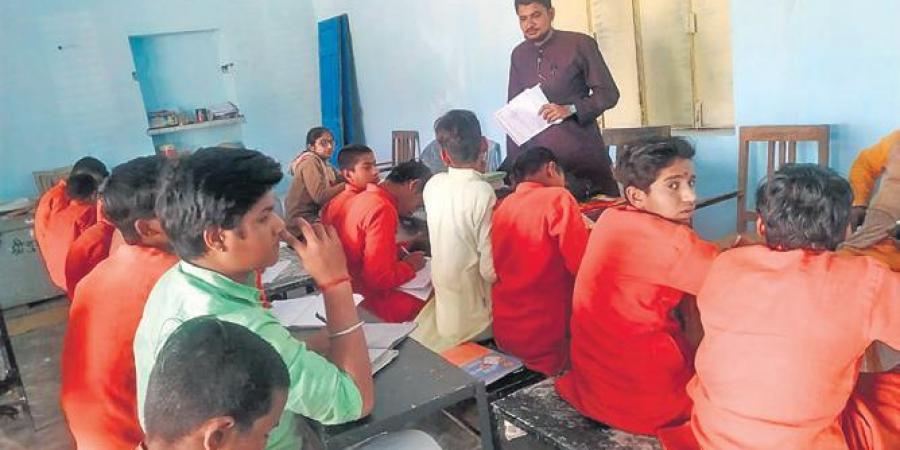
Now 35, Khan is currently on a mission to popularise Dev Bhasha (the language of gods, as Sanskrit is known) as Jan Bhasha (the language of commoners). Pursuing PhD in Sanskrit, he isn’t alone in his mission but is joined by 40 other trainers working on a dedicated project of the Uttar Pradesh Sanskrit Sansthan to break the myth of Sanskrit being a difficult, primitive and elitist language.
“Four years back, UP embarked on a dedicated mission to popularise Sanskrit, starting with government school teachers and students. Till two years back, special camps were organised across the state which enabled not only 12,000 primary teachers, but their students also to learn how to speak in Sanskrit on a daily basis. Our next plan was to establish centres in all development blocks and train at least 1,000 people in each block to speak fluently in the language,” UP Sanskrit Sansthan president Vachaspati Mishra.
The Covid pandemic came as a big obstacle. As the pandemic shows no signs of ending, the Sansthan has taken to the online medium. Free-of-cost online Sanskrit-speaking classes of 20-day duration (one hour daily) were planned and launched in the first week of this month. Aspirants were asked to give a missed call on cell-phone number 9522340003.
“We received 45,000 missed calls. All those who made the calls automatically received forms to get enrolled for our free online course being conducted in one-hour slots from morning till evening. Over 8,500 have already enrolled,” said Mishra. While 60% of those enrolled are students (from Class V students to PhD scholars), the rest are professionals, including doctors, engineers, journalists, software engineers, lawyers, teachers and even sportspersons. Among the non-students, around 30% are women, many of them housewives.
While the maximum (over 25%) of these 8,500-plus students are from UP, participants from Maharashtra are second only to UP. Madhya Pradesh, Gujarat, Karnataka, Punjab, Bihar, Delhi, Uttarakhand and Telangana too are in large numbers. Though the present duration is for only 20 days, the Sansthan is planning to follow it with virtual Sanskrit Vyakaran (Grammar) classes for those eager to delve deeper into the language. Also, the success has prompted the Sansthan to plan such courses in Pali and Prakrit languages as well.
The participants are already excited. “Since childhood, Sanskrit and not Bengali has been my third language after English and Hindi. With my father being in a transferable job, I did my schooling in Chennai where I learnt Sanskrit in Devanagiri script,” says Shantanu Ganguly, associate professor of English language at a leading college in Kolkata. “The course has given me an opportunity to refurbish my Sanskrit knowledge attained during school days. I’m eagerly waiting to pursue further courses in the Dev Bhasha and would be happy if my services are used to run similar courses in West Bengal,” he says.
Ganguly’s batchmates in the virtual classroom include Anup Singh, a national-level rifle shooter from UP. “Meditation holds the key to concentration and success in target sports such as shooting and archery. I’ve been meditating with Hindi words, but mediation with Sanskrit shlokas generates different vibes,” Singh said. “I’ve never studied Sanskrit before. The free online platform attracted me,” said Nagpur-based software engineer S R Mungatiwar.
source: http://www.newindianexpress.com / The New Indian Express / Home> The Sunday Standard / by Express News Service / August 01st, 2021
Chambers’ research on how women’s labour is devalued and underpaid lays the ground for future researchers on how women offer care and strength to each other within patriarchal settings.
In Saharanpur, Uttar Pradesh, Chambers’ research showed, job opportunities for female wood workers are still curtailed. Most women are restricted to the home, and many of those who work in factories, are concerned about sexual predators.
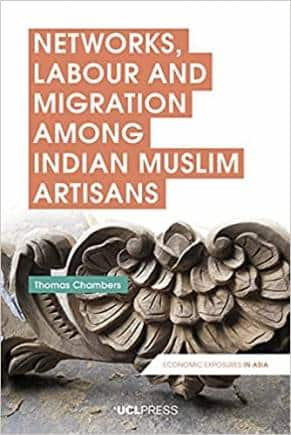
Whose stories are centred when ‘working from home’ is seen as ‘the new normal’? How does one account for the labour of women who have always worked from home because of the patriarchal structures in their lives? Thomas Chambers’ book Networks, Labour and Migration among Indian Muslim Artisans (2020) will make you think about these questions.
The author is a senior lecturer in anthropology at the Oxford Brookes University. His book is based on ethnographic fieldwork with woodworkers in Saharanpur, Uttar Pradesh.
Chambers notes that migration to the Gulf Cooperation Council (GCC) from Uttar Pradesh now exceeds that from Kerala, Andhra Pradesh and Tamil Nadu. He writes, “The state registered 191,341 emigrants to the Gulf in 2012, compared with 27,428 in 2004. Figures for 2013 and 2015 suggest that numbers exceeded 200,000 in these years.”
The book examines how local friendship groups and apprenticeship networks open up opportunities for men to migrate to the GCC whereas women’s engagement with the labour market keeps them mostly confined to the home. The book will help readers appreciate how ‘working from home’ is experienced outside corporate India, and how this experience is shaped by gender. Chambers tries to explain this using the concept of ‘chal-chalan’ in local parlance.
He writes, “The term articulates a complex assemblage of gendered moral and ethical circulations that regulate women’s sexualities, bodies and subjectivities. It was also at the forefront of women’s discourses about participation in paid labour within and beyond the home.” His book will deepen your understanding of workplace sexual harassment, a big reason for women woodworkers to prefer working from home rather than in factories.
Unlike men who are able to withdraw their labour and seek work elsewhere within India or outside, women’s mobility is restricted. They are expected to look after children, and the sick and elderly. Their economic independence is also curtailed by employers who justify low wages by insisting that their labour is unskilled, and that their income is meant to supplement the earnings of the men in the house who are supposed to be the real breadwinners.
The book shows how this reasoning is flawed. Chambers found that women with husbands who were either unemployed or alcoholic had to bear all the responsibility for running their households. Women who were divorced or widowed were also in a precarious situation. Working in factories would pay them a lot better but it would make them more vulnerable to sexual predators who saw them as easy prey as “they lack(ed) the ‘protection’ of a husband.”
Chambers writes, “My involvement with the mohallas has always been mediated in a highly gendered context. Narrating the lives, experiences and subjectivities of women is therefore one of the more challenging aspects of this book.” He adds, “Gradually, curtains fell away, and over the years I have developed many close relationships with women in the mohallas.”
Earning the trust of one’s respondents is key to producing ethical scholarship. Researchers need to care not only about their research questions but also the human beings who help them generate knowledge by sharing their time, lived experiences and personal insights.
Chambers has quoted some of the women he interviewed. One of them, named Sabra, says, “Sometimes in the factories the men are really very rude. Some men address me like a dog…I never talk to men in the factory as I know they are shameless…They say, ‘If you are pak daman, then go to your home. If you belong to a respectable family, you would not come to the factory.’ I have to bear this blame silently. If I did not, my job would be finished.”
Acknowledging the particularities of his social location as a white, non-Muslim man from the UK entering a gender-segregated environment in north India for his research, he attempts to listen and understand with sincerity. This is refreshing because the trope of white men trying to save brown women from brown men is not only patronizing but has also been overdone.
Chambers writes, “My male positionality imposed limitations that did not arise in my relationships with men. The experiences of women who labour in wood production are so distinct from those of their male counterparts that any attempt to interlace the narratives runs the risk of obscuring these distinctions.” To overcome these limitations, he draws on Ayesha Ansari’s work to contextualize Muslim women’s experiences in the Indian workforce.
It can be rewarding to read Chambers’ book alongside Devaki Jain’s recent memoir The Brass Notebook (2020). As a feminist economist, she is deeply invested in pointing out that women in households marked as being below the poverty line are neither sitting idle nor occupied exclusively with household chores and childcare. They roll bidis, sell cow dung cakes, or earn money for their family in other ways. This is economic activity, and it requires skill acquisition.
Though Chambers’ analysis is largely heteronormative, he subtly points out the relationship between homosociality and same-sex desire in Saharanpur’s gullies, expressed through the religious rhetoric of brotherhood. You might find it useful to read Gayatri Gopinath’s book Unruly Visions: The Aesthetic Practices of Queer Diaspora (2018), which suggests that the “Gulf dreams” of migrants may “extend beyond limited heteronormative framings.”
She writes, “If working-class migrants are viewed as heterogeneous, desiring subjects rather than reductively defined simply through their labour, what other longings and forms of relationality come into view in the homosocial, regional and diasporic spaces they inhabit?”
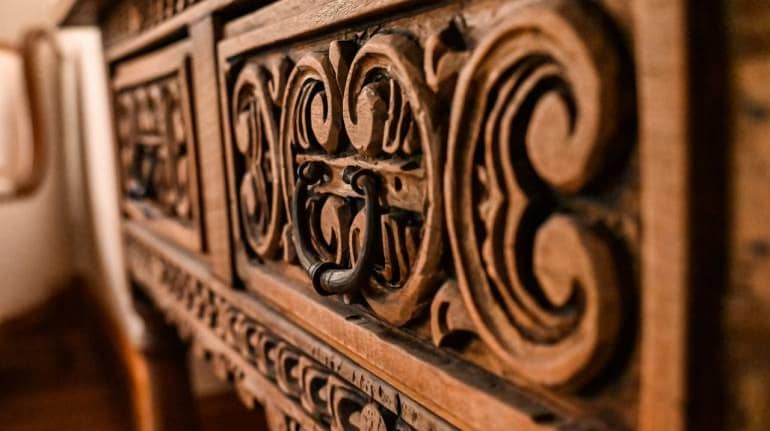
This question could also be posed in relation to the desires and aspirations of women woodworkers in Saharanpur, involved in “polishing, sanding and touching up on defects on items such as boxes, incense holders and rehals (folding stands for holding the Quran).”Are these women’s lives defined only by their income and status as woodworkers? Chambers’ limited access to them keeps him from offering insights into the friendships, solidarities and intimacies that might be forged between them. However, his research on how women’s labour is devalued and underpaid lays the ground for future researchers to explore how women offer care, joy and strength to each other within patriarchal settings.
source: http://www.moneycontrol.com / Money Control / Home> News> Trends> Features / by Chintan Girish Modi / July 24th, 2021