Category Archives: Community Involvement / Social Issues

Coimbatore-based We Little launches sleep passport booklet

Coimbatore, TAMIL NADU :

A booklet by Coimbatore-based paediatric dentistry team We Little throws light on the mouth-sleep connection
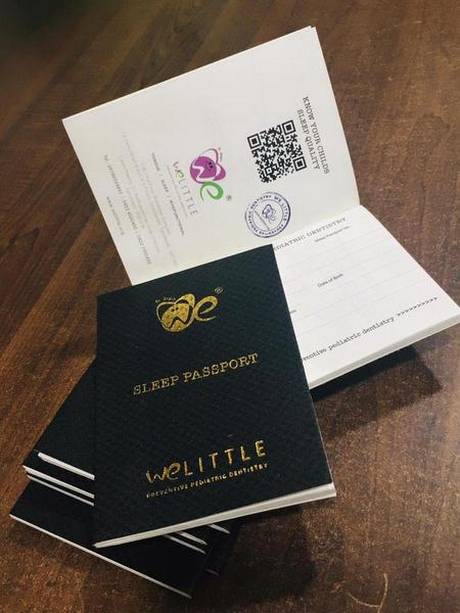
Sleep Passport   | Photo Credit: Special Arrangement

Dr Shifa Shamsudeen has been blogging about the connection between problems in the oral cavity and sleep for five years now. As a paediatric dentist, she has seen misaligned jaw lines and under-developed tongues that cause the airways to narrow. While earlier, these problems were thought to be only genetic, today, research says that a number of oral cavity problems in children are a result of poor lifestyle habits, such as bottle feeding, and infections, like recurring inflamed adenoids.

“All these can lead to narrowing of the airway. When a child is not getting enough oxygen during sleep, the tissues, including the brain are not getting rest. As a result the child becomes lethargic during the day,” says Dr Kunal Gupta, pediatric dentist at Children’s Dental Center in Gurugram. A wider airway leads to better breathing and a deeper sleep. Mouth breathing alters jaw lines causing a short chin, which leads to an asymmetrical face and issues such as speech, breathing, and gum problems.

Dr Shifa Shamsudeen   | Photo Credit: Special Arrangement

Dr Shamsudeen and her team at We Little that works on children’s teeth in Coimbatore, have brought out what they call a sleep passport — a booklet for parents and children that gives pointers on a healthy sleep routine from infancy to 18 years. It provides a pictorial description of low quality sleep, and highlights the symptoms, causes, and effects of mouth breathing and sleep disordered breathing (SDB), an upper airway dysfunction.

Her message is that many problems with the mouth that result in poor sleep can be prevented. They can also be solved early, with myofunctional therapy. “This involves breath, muscle and sleep re-training exercises,” she says. An example of this is to place the tongue behind the upper front teeth without touching the teeth for 10 seconds. There are many more in the ‘passport’.

Lifestyle choices

Malocclusion (misalignment) of teeth in children is a symptom that something is not functioning in harmony. This used to be mechanically corrected with braces when the child turned 14, but can now be tackled much earlier.

Today dentists understand that for a majority of children, narrow jaws and crowded teeth are induced by lifestyle. “Bottle feeding, the use of pacifiers and thumb sucking can make the tongue muscles weak. It narrows the nasal airway, thereby leading to mouth breathing that induces low quality of sleep,” says Dr Shamsudeen. To prevent this, it is best to breastfeed, avoid the use of pacifiers and try and break your baby’s thumb sucking habit. “Breastfeeding sets the foundation for well-defined facial and jaw growth,” says Dr Shamsudeen.

Timely medical attention

SDB is a result of an improper tongue position, causing difficulties while breathing, says Dr Uma Nagarajan, chief paediatric dentist at Pedo Planet Children’s Dental Center in Delhi. “When a child snores or wakes up with a sudden gasping sound at night or while napping during the day, it is a symptom of SDB. The tongue at rest should be positioned in a way that the tip of the tongue rests on the roof of the mouth, even during sleep.”

“SDB is caused by recurring inflamed adenoids and tonsils, an enlarged tongue, or a narrow lower jaw because of habits like thumb-sucking and mouth breathing. It can have an impact on concentration and attention in the short term and growth in the long term, both because of lack of quality sleep,” adds Dr. Gupta.

If your child is not getting good quality sleep, and psychological factors are ruled out, it’s best to check whether there is a problem with the oral cavity.

To get a copy of the sleep passport, call 97869-29892

source: http://www.thehindu.com / The Hindu / Home> Sci-Tech> Health / by K Jeshi / Coimbatore – April 17th, 2021
Now Muslim women have a place to unwind in Hyderabad

Hyderabad, TELANGANA :

The Luqma Studio started by Safa Society provides a platform for like-minded women to network and exchange ideas.

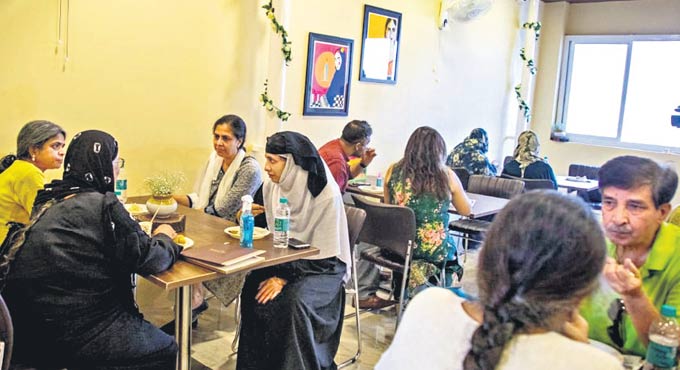
There aren’t many places for women to hang out and unwind in Hyderabad. But now, they can boast of a women-only space. Yes, Darulshifa, the heart of the old city, offers such a legroom for them. At Luqma Studio, they can let their guard down and relax — leaving their worries behind.

The unique initiative is the brainwave of Safa Society, the city-based NGO, which aims at socio-economic empowerment of women. The one-of-a-kind studio provides a much-needed platform for women to engage in dialogue, network and exchange ideas. No, Muslim women are not making a beeline to the studio as yet. That will take some time but the very idea of women-only area has gone down well with the fair sex.

Those who dropped in at the inauguration of the studio, along with the Luqma kitchen, last week were pleasantly surprised at the idea of women having a place of their own. “Don’t we need such a place in the #MeToo era,” remarked a young woman pleading anonymity.

The all-female studio is well-furnished and has room for about 25 persons. The pink-coloured walls are decked up with art portraits of women. Adjacent to the studio is the spacious Luqma kitchen, the food brand of Safa, aimed at turning ordinary women into foodpreneurs. “We want Muslim women to make use of the studio and engage in meaningful discourse. They can also showcase their talent here,” says Safa Society president, Rubina Nafees Fatima.

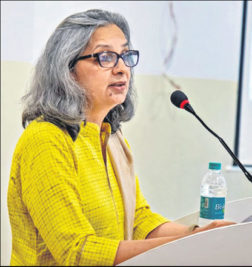
Rubina Nafees Fatima

The studio can be an oasis for women seeking rest and relaxation. They can order something sizzling from the kitchen next door and chit-chat leisurely, something the presence of men would hinder. The homely ambience only adds to the pleasure. There will be special events with prominent women from different fields addressing them on a range of subjects.

There are many myths about Muslim women. What adds to the confusion is people judging them through the prism of stereotypes. “Women from different communities can now intermingle and discover each other,” says Rubina.

With its safe and supportive environment, will Luqma Studio open up new vistas for women?

source: http://www.telanganatoday.com / Telangana Today / Home> Features> My Hyd / by J S Ifthekhar / April 04th, 2021

Muslim female entrepreneurs, achievers rule the show at first IMEN summit, Start-up showcase

Pune, MAHARASTHRA :

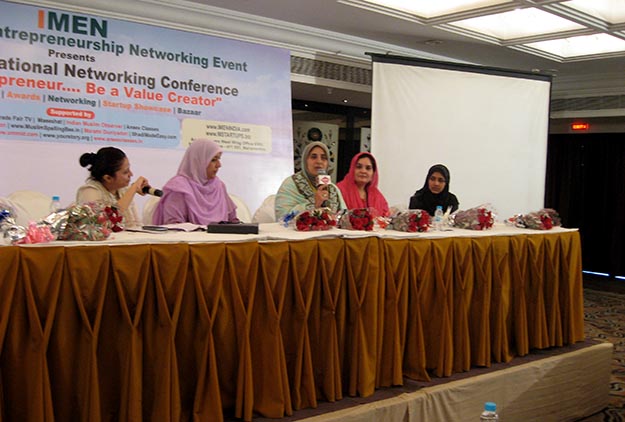
Uzma Nahid addressing the first IMEN summit and Startup Showcase held in Pune on Februray 07, 2016 (ummid.com [Uzma Nahid addressing the first IMEN summit and Startup Showcase held in Pune on Februray 07, 2016. Also seen in the photo are Architect Nafisa Kazi, Sameena Razzaq and Farah Deeba. (ummid.com photo)]photo)

Pune (Maharashtra): 

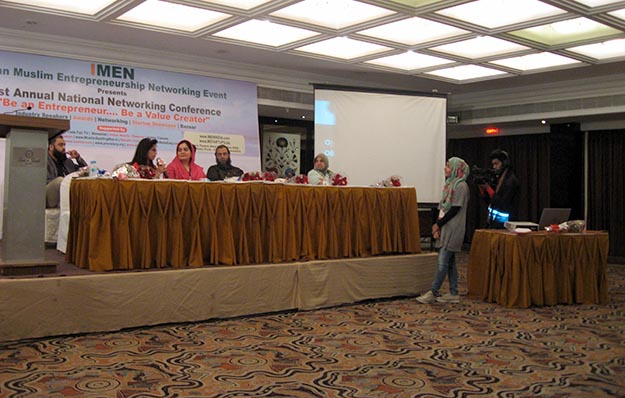
A new initiative aimed at driving Muslim involvement in India’s startup and technology economy hosted by Indian Muslim Entrepreneurs Network (IMEN) in Pune last Sunday ended in double delight when it showcased the upcoming business opportunities along with success stories of Muslim female entrepreneurs and young achievers.

The event, brainchild of Chicago based Indian American Tausif Malik, was organized in association with Pune based trainers Anees Kutty and Gaffar Asim Malik.

Started with National Anthem at about 09:00 in the morning, the event ran throughout the day before ending at 06:30pm, uncovering the inspiring stories of Muslim female entrepreneurs and achievers, and also sharing the experiences of Muslim change-makers who have dedicated them for years for the social, educational and economic empowerment of the Muslims in India.

Besides sharing their success stories, the ‘Role Models’ – as the organizers introduced them, also urged the ‘would be’ entrepreneurs to gear up and prepare to take the benefits of the ‘Start-up India Action Plan’ unveiled by Prime Minister Narendra Modi.

“This is an emergency like situation for Muslims, especially the Muslim women. In the situation when we have limited opportunities, it is high time we develop business skills in women so as to fruitfully utilize their skill and talent for the empowerment of the community”, Uzma Nahid said while participating in the panel discussion titled “Role of Women in Business & Community”.

“A huge number of Muslim men and women artisans are skilled and talented. But they are unorganized and hence are vulnerable to exploitation. We should adopt areas dominated by such people, form small groups and establish small scale and cottage industries for them”, Uzma, founder of India International Women’s Alliance (IIWA) which has more than 3000 women members, said.

The views were endorsed by Architect Nafisa Kazi, Educationist and one of the youngest Headmistress of School Farah Deeba and senior journalist Sameena Razzaq, with each one of them adding valuable inputs to the idea mooted by Uzma Nahid.

Participating in another panel discussion Managing Director of Exhicon and Executive President, Imamia Chamber Of Commerce & Industry MQ Syed appealed the young entrepreneurs to use their talent effectively to maintain quality and present innovative products of world-class quality.

“There is no discrimination if you have talent and skill, and there absolutely no challenge and competition to quality”, he said.

Highlighting the importance of business and entrepreneurship in Islam, MQ Syed said, “The Holy Quran gives 9 out of 10 marks to business and trade while discussing the livelihood. Jobs and service have the least priority for us”, Syed, who has mentored over fifty start-ups, said.

Stating that the Muslim community is wasting their energies on useless issues MQ Syed said, “We might have problems with Israel. But, instead of boycotting Pepsi to corner Israel, we should produce a product better than Pepsi.”

Mariyah Rehmani, author of e-book titled ‘The Hijab And Its Purpose: Understanding the veil’ taking the question from Maryam Asif Siddiquee, the winner of ‘Gita Champions League’. (ummid.com photo)

Detailing the key features of ‘Start-up India Action Plan’, Aleem Faizee, Chief Executive Officer (CEO) of Awaz Multimedia & Publications and Founder Secretary of Malegaon Industries & Manufacturers Association (MIMA), said if implemented properly the plan is the best suitable for Indian Muslims.

“Everyone suffered due to ‘inspector raj’, and lengthy and tiring bureaucratic procedure in India. But, Muslims were worst sufferer of this menace. The Start-up India Action Plan has many features to end this problematic and unhealthy regime”, he said while opening the Start-up showcase session.

“If implemented properly, the Start-up action plan will surely open the doors of opportunities for Muslim entrepreneurs in India”, Faizee, who is instrumental in establishing a mini Textile Park in Malegaon, said.

Irfan Pathan, founder of ‘Coffe Addict’, showcased the ‘soon to be launched’ product by giving history of coffee and elaborating on the role of Muslims in spreading the coffee drink. During the presentation, he was supported by Khan his cousin and team member.

The event was also addressed by, Managing Director of Idafa Investments Pvt. Ltd. & Rehbar, Regional Head, West India Ashraf Mohamedy, Mariyah Rehmani, teenager who authored e-book titled ‘The Hijab And Its Purpose: Understanding the veil’, Serial Entrepreneur, Mentor and Investor Altaf Rehmani and Program Facilitator UNCTAD-Empretec Program for India Nasser Mehdi.

Among the organisers, Tausif Malik, Anees Kutty and Asim Gaffar Malik detailed the objectives of the event and also shared their valuable experiences in their long careers.

At the end of the ceremony, MQ Syed was conferred ‘IMEN Businessman of the Year Award’, Mohammad Yunus, who saved more than 2000 lives during Chennai flood, was conferred ‘Shaheed Abdul Hamid Award’ and Maryam Asif Siddiquee, the winner of ‘Gita Champions League’, was conferred ‘Educational Excellence Award’.

source: http://www.ummid.com / Ummid.com / Home> Business & Economy / by Zohair Mohammad Safwan / February 13th, 2016

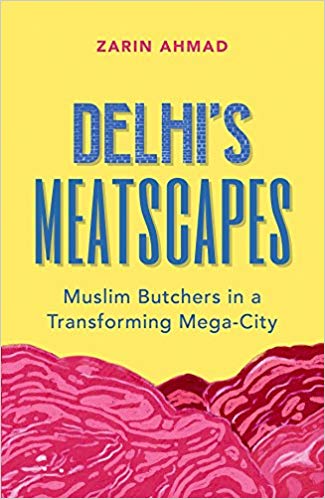
Delhi’s Meatscapes: Muslim Butchers in a Transforming Mega-city

NEW DELHI :

Tracing the journey of meat from the farm to the meat shop and other workspaces of the butcher within the multi-sited margins in Delhi, the current volume intimately follows the lives of Qureshi butchers and other meat sector workers in this transforming mega-city.

The author addresses the tensions that meat throws up in a bristling society whose stakes are now more than ever intense.

She shows how meat is also a rising sector in the Indian economy, and fetches precious foreign exchange. Qureshi butchers stand at the crossroads of class, caste, stigma, religion, market, urban ecological policies, and a never- ceasing political debate around these issues.

Delhi’s Meatscapes brings together rare archival documents, vernacular sources, and ethnographic insights gleaned from several years of immersion in the city’s meatscapes and is the first of its kind for urban anthropologists, economists, political scientists, policy planners and readers who wish to take a hard look at their own (non-) meat choices.

source: http://www.newindiafoundation.org / New India Foundation / Home / by Zarin Ahmad

Online census of Assamese Muslims launched

ASSAM :

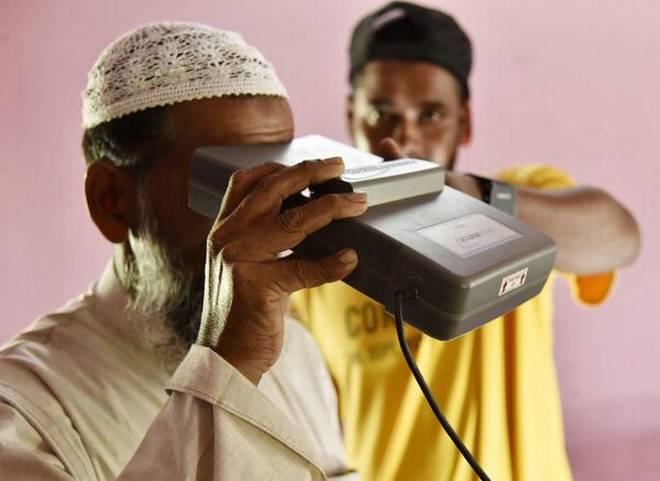
Image for representational purpose only.   | Photo Credit: AFP

The exercise, viewed as ‘mini-NRC’, aims to distinguish three categories of indigenous Muslims from their migrant Bengal-origin counterparts

The Janagosthiya Samannay Parishad, Assam (JSPA) on Thursday launched a portal for conducting the first-ever census of Assamese Muslims for distinguishing them from their migrant, Bengal-origin or Bengali-speaking counterparts.

The JSPA represents three categories of Assamese Muslims — Goriya who converted from various indigenous groups and tribes, Moriya whose ancestors were brought by the Ahom kings to make weapons and utensils and Deshi who converted specifically from the Koch-Rajbongshi community.

The three-month exercise, seen as a small-scale version of the National Register of Citizens (NRC), has a cut-off period corresponding with the British annexation of Assam in the early 1800s. The JSPA considers the pre-British rule Muslims of Assam as indigenous, which is why the Jolahas — converts from among tea plantation workers who were brought from central India by British planters — have been kept out of the census.

Released in August 2019, the NRC had excluded 19.06 lakh of 3.3 crore applicants for lack of documents establishing them as the citizens of India. The cut-off period for the NRC was March 24, 1971, as prescribed by the Assam Accord of 1985 for detecting and deporting foreigners or “illegal immigrants”.

“We launched the portal jspacensus.com portal today [April 15] to coincide with the Assamese New Year and hope to complete the exercise by the end of 2021,” JSPA’s chief convenor Syed Mominul Aowal said.

The portal has a list of documents that applicants have to upload for registration. They include voter card, Aadhaar card and PAN of each family member (non-mandatory for minors), a certified copy from village head, municipal board, town committee or any other competent authority as well as a certified copy from JSPA-empanelled organisations listing all members of an applicant’s family.

The portal also lists 17 organisations recognised or empanelled with the JSPA and their phone numbers to be contacted for any issues with registering online. These organisations include Desi Janagostiyo Manch, Assam, Axomiya Muslim Kalyan Parishad, Khilonjiya Axomiya Musolman Unnayan Parishad and Hodow Khilonjiya Muslim Oikyo Manch.

The JSPA has also provided a helpline and the phone numbers of all its affiliate organisations for guiding the indigenous Muslims in getting themselves registered.

“This exercise was necessary as some migrant Muslims have undertaken an initiative to bring all Muslims living in Assam under one umbrella. Our religion and names may be the same but the indigenous Muslims have a distinct identity, given by the Ahom and Koch kings,” Mr. Aowal said.

According to the 2011 census, Muslims account for 34.22% of Assam’s population. The JSPA claims Assam today has about 1.4 crore Muslims, of whom 40 lakh are indigenous Muslims.

source: http://www.thehindu.com / The Hindu / Home> News> National / by Special Correspondent / Guwahati – April 15th, 2021

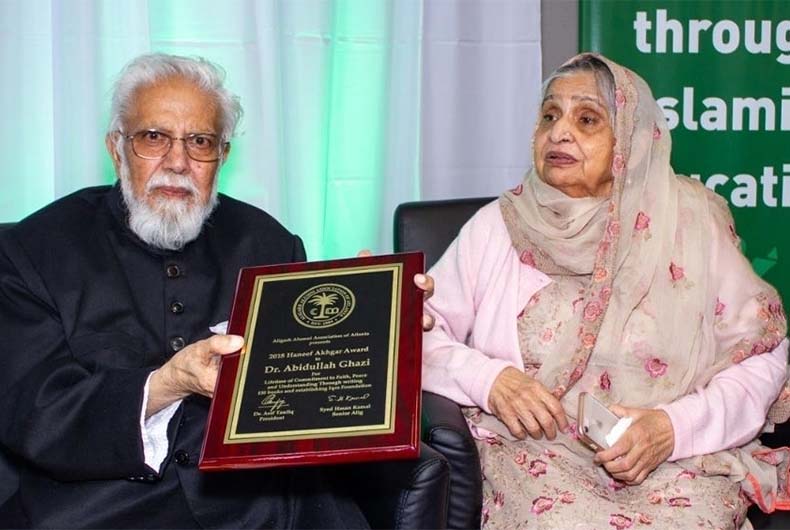
Dr Abidullah Ghazi – Founder, Author, Poet – Iqra Int’l Educational Foudation – Chicago, US – Laid to rest : April 12th, 2021

Watch Video: Dr Abidullah Ghazi laid to rest in Chicago

Ambehta (Sahranpur District),(formerly United Provinces) UTTAR PRADESH / INDIA, Chicago, U.S.A. :

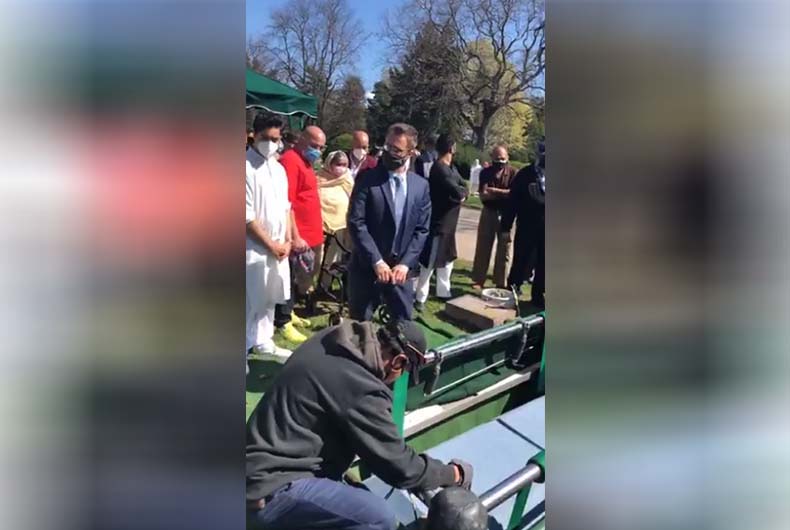
Dr Abidullah Ghazi’s wife Dr Tasneem and others at the funeral ceremony held in Chicago on Monday afternoon.

The 85-year-old founder of Iqra International Educational Foundation was ailing since last few years and died on Sunday.

Chicago: 

Dr Abidullah Ghazi – Scholar, Poet, Author, Philosopher and Activist, was laid to rest in the afternoon Monday April 12, 2021 in Chicago.

The 85-year-old founder of Iqra International Educational Foundation was ailing since last few years and under medication at a Chicago hospital-cum-rehab. He passed away in the wee hours of Sunday April 12, 2021.

He is survived by his wife, three sons and two daughters.

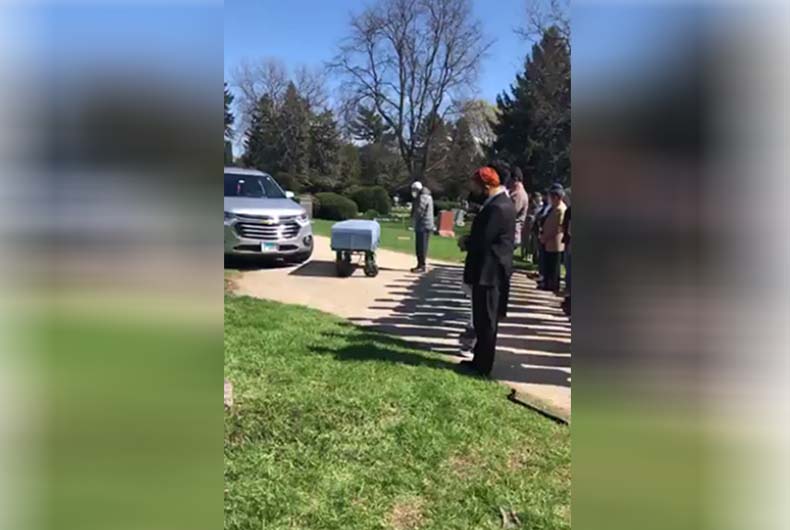
Immediate family members, including his wife Dr Tasneema Ghazi and children, were present when he was buried at Chicago cemetery on Monday.

The funeral that lasted for more than one and half hours was limited only to the immediate family members due to the Coronavirus pandemic.

Dr Abidullah Ghazi was born to Maulana Hamid Al Ansari – freedom fighter and a renowned journalist of his time, on July 6, 1936 in India. His mother had died when he was still in her early age. Under the guardianship of his grandmother, he was admitted in Jamia Millia at the age of 08.

Later he completed M A (Political Science) and BTh from Aligarh Muslim University (AMU). He went on to do M A in Economics from the London School of Economics and later wrote thesis on the revivalist views of Raja Rammohan Roy for his Ph.D. at the Ivy League, Harvard University.


Dr Ghazi also published, ‘Zikr-e-Saman Izaraan’, an anthology of Urdu poems.

After completing his education he first migrated to the United Kingdom and then to the United States where he stayed till his last breath.

Dr. Ghazi, who had also done Ph.D. in comparative religions from Harvard University, was a fixture in America’s Muslim community and a pioneer in providing quality Islamic education to our children.

Video:

https://www.facebook.com/abidullah.ghazi.7/videos/10158529719212054/?t=12

Dr Ghazi was the author and editor of over 150 text and support books on Islamic syllabus designed with his wife Dr Tasneema Ghazi especially for Muslim children living in Western countries or studying in English-medium schools.

He had established Iqra Foundation in Mumbai which is run and taken care of by his younger brother Salman Ghazi and his wife Uzma Nahid.

Dr Abidullah Ghazi was named by the Royal Islamic Strategic Studies Centre as being among the 500 Most Influential Muslims in the World. Besides, Dr. Ghazi was also the recipient of numerous awards notably the Citizen’s Award, the Ronald Regan Award, Nishan-e-Imtiaz (Order of Excellence) from Pakistan, a Certificate of Welcome from the City of Los Angeles many others.

Condolences pour in

Condolences are pouring in from different circles and by prominent people who termed the demise of Dr Abidullah Ghazi a great loss not just for the Muslims in the United States but also for those living in other parts of the world, especially India.

“Dr Ghazi, a prominent alumnus, enriched cerebral legacy of Aligarh Movement. He was among a bunch of highly motivated, adventurous persons who broke barriers and went on to distinguish themselves in their chosen fields,” AMU Vice Chancellor, Prof Tariq Mansoor said.

Extending condolences to the bereaved family of the deceased, the Vice Chancellor said:

“I shared a warm personal rapport with Dr Ghazi. The AMU fraternity will always carry Dr Ghazi’s memory in hearts.”

In his condolence message, renowned literary personality Hashmat Sohail said:

“It’s hard to believe Dr. Ghazi is no longer with us. I spent many years together. He will be remembered forever in the worldwide literary community.”

Ali Khan, President and Founder of Urdu Semaj Chicago, in his condolence message said:

“He was a legend in our community and a very genuine, Urdu lover People from Chicago will especially miss the late Dr. Abid Ghazi This is a total loss for us. He was devoted and inspirational leader for the whole community.”

http://www.iqra.org

source: http://www.ummid.com / Ummid.com / Home> India>Life & Style / by ummid.com news network / April 13th, 2021

Eminent Islamic Scholar Dr Fazlur Rahman Madani Passes Away

Balrampur District, UTTAR PRADESH / Malegaon, MAHARASHTRA :

Renowned Islamic scholar, mufti and former principal of Jamia Mohammadia Mansoora, Malegaon Dr Fazlur Rahman Madani passed away Friday due to COVID-19. He was 72.

Dr Fazlur Rahman Madani breathed his last at Iqra Hospital in Malegoan at around 2 am. According to his son, the renowned scholar was admitted in a hospital after he was tested COVID positive about a month ago. Although he was discharged last week, his health, however continued to deteriorate.

Born in Balrampur District of Uttar Pradesh, Dr Fazlur Rahman Madani obtained his PhD from the Islamic University of Madinah, with a specialisation in fiqh (Islamic jurisprudence).

Dr Fazlur Rahman was survived by his three sons and three daughters. His wife passed away three years ago.

source: http://www.thecognate.com / The Cognate / Home> News / by Shaik Zakeer Hussain / March 26th, 2021

Biography – Shaikh Dr Wasiullah Abbas

SAUDI ARABIA :

Shaikh Dr Wasiullah Abbas is a renowned Islamic scholar from India. A graduate from the Islamic University of Madinah and Umm Al Qura University in Makkah, he is a teacher of Tafsir, Principles of Tafsir, Hadith and Principles of Hadith in Umm Al Qura University, a position he has held since 1979.

He also delivers lectures on Sahih al-Bukhari and Sunan Abu Dawood in Arabic and general Islamic lectures in Masjid al-Haram in Makkah where Abdullah Ibn Abbas (RA) used to deliver his talks.

Early Life and Education

Dr Wasiullah Abbas was born in 1948 in Basti district, in a small town of Bherabhoj, renowned for producing many Islamic scholars of repute. His father’s name was Muhammad Abbas Khan, his grandfather’s name was Ahmad Khan, and his great grandfather’s name was Khushhaal Khan. Dr Wasiullah’s grandfather Ahmad Khan was the chief of his town.

Dr Wasiullah received primary education from Shaikh Muhammad Saleem, a well-known Islamic teacher who was a student of Madrasah Rahmaniyyah. He later moved to the town of Yusufpur and enrolled in Madarsa Darul Huda and did his further studies in Jamia Rahmaniyyah in Banaras.

In 1966, the Jamia Salafia, one of the largest Islamic universities was established in the city Banaras. One of the scholars, who attended the inauguration of the university was Shaikh Abd al-Aziz ibn Baz. On Shaikh ibn Baz’s direction, four students were selected from both Jamia Salafia and Jamia Rahmaniyyah to study at the Islamic University of Madinah. These four students were Dr Wasiullah Abbas, Shaikh Abdul Hameed Rahmani, Shaikh Abdus-Salam Madani and Shaikh Abdur-Rahman al-Bastawi.

Islamic University of Madinah and Umm Al Qura University

At the Islamic University of Madinah, Dr Wasiullah Abbas obtained a bachelors degree in Dawah and Ilm Usool Ad-Deen (Principles of the Religion), from the department of Tafsir and Hadith.

After successfully completing the bachelors (undergraduate) program at the Islamic University of Madinah, Dr Wasiullah Abbas travelled to Makkah for higher (post-graduate) studies.

Here, he completed his Masters and PhD (doctorate) programs in Makkah, with a specialization in Hadith. He completed his PhD (doctorate) program in the year 1981, which was the year in which Umm Al Qura University was established in Makkah. Prior to this, the structured study in Makkah – “adDirasaat al-Ulyaa” (the higher studies programs), the Faculty of Shari’ah, and the Faculty of Tarbiyyah – were under the administration of King Abdulaziz University in Jeddah.

Teaching

During his time as a PhD student, he was appointed as a teacher at the Mahad at Masjid al-Haram. He continued teaching with this position for many years, after completing his PhD. Later, he was selected as a professor in Umm Al Qura University in Makkah, where he continues to hold a teaching position in the department of “al-Kitaab (the Qur’an) and the Sunnah” in the Faculty of Da’wah and Usool-ud-Deen, lecturing on numerous subjects related to the science of Hadith.

The Shaikh also holds a teaching chair in Masjid al-Haram, with authorization attained from the “General Director of the Affairs of the Grand Mosque in Makkah and the Prophet’s Mosque in Madinah. His chair is located in the “Mataf” (the area of Tawaaf around the Kabah), between the doors of Bab al-Malik Fahad (King Fahad Gate) and Bab al-Umrah, where he continues to teach five days a week between the Maghrib and Isha prayers.

Books

Among the books Dr Wasiullah Abbas authored are as follows: “ad-Du’afaa’ wal-Matrookoon wal-Majhooloon fee Sunan an-Nasa’i” (The Weak, Abandoned, and Unknown [Narrators of the Ahadith] in Sunan an-Nasa’i). This was Shaikh’s Masters thesis.

Tahqeeq (Verification) of the book “Fadaa’il as-Sahaabah” (Virtues of the Companions [of the Prophet Muhammad (SAWS)] of al-Imaam Aboo Abdullaah Ahmad ibn Muhammad ibn Hanbal ash-Shaybaanee (RH) [d.241H]. This was Shaikh’s PhD (doctorate) thesis.

Tahqeeq of the book “al-‘Ilal wa Ma’rifatur-Rijaal” ([The Science of] Defects [in the Asaaneed of the Ahaadeeth] and [the Science] of Narrators [of the Ahaadeeth]) as narrated by al-Imaam Aboo Abdur-Rahmaan Abdullaah ibn al-Imaam Ahmad ibn Hanbal (RH).

Tahqeeq of the book “Bahrid-Dam feeman Takallama feehi al-Imaam Ahmad bi-Madh aw Dham” (The one [i.e. Narrators of Ahaadeeth] al-Imaam Ahmad [ibn Hanbal (RH)] Spoke about with Commendation or Disparagement) of al-Imaam Jamaalud-Deen Yoosuf ibn Hasan ibn Ahmad ibn Hasan ibn Abdul-Haadee as-Saalihee, well-known as Ibnul-Mibrad al-Hanbalee (RH).

Tahqeeq of the book “al-‘Ilal wa Ma’rifatur-Rijaal” ([The Science of] Defects [in the Asaaneed of the Ahaadeeth] and [the Science] of Narrators [of the Ahaadeeth]) as narrated by al-Imaam Aboo al-Fadal Saalih ibn al-Imaam Ahmad ibn Hanbal (RH).

Tahqeeq of the twelfth volume of the book “Ittihaaf al-Mahrah bil-Fawaa’id al-Mubtakarah min Atraaf al-Ashrah” of al-Imaam al-Haafidh Shihaab-ud-Deen Aboo al-Fadal Ahmad ibn Alee ibn Hajar al-Kunaanee al-Asqalaaanee (RH) [d. 852H], upon request from “Markaz Khidmatis-Sunnah was-Seerah an-Nabawiyyah”31 of Madinah, Saudi Arabia.

Tahqeeq of the fifth volume of the book “Lisaan al-Meezaan”32 of al-Imaam al-Haafidh Shihaab-ud-Deen Aboo al-Fadal Ahmad ibn Alee ibn Hajar al-Kunaanee al-Asqalaaanee (RH) [d. 852H], upon request from “Markaz Khidmatis-Sunnah was-Seerah anNabawiyyah” of Madinah, Saudi Arabia.

“al-Masjid al-Haraam: Taareekhuhu wa Ahkaamuh” (The Grand Mosque in Makkah: Its History and Its Rulings).

“Ilal al-Hadeeth wa Dawruhu fee Hifdhis-Sunnah” ([The Science of] Defects [in the Asaaneed of the Ahaadeeth] and its Role in Protecting the Sunnah).

“Tahqeeq al-Kalaam fee Wujoobil-Qiraa’ah Khalf al-Imaam” (Verification of the Speech Regarding the Obligation of Reciting [Sooratul-Faatihah] Behind the Imaam [in the Salah]) of ash-Shaykh al-Allaamah al-Muhaddith Abdur-Rahmaan al-Mubaarakpooree (RH) [d.1353H]. This book has been translated from Urdu into Arabic by the Shaykh and he has added his annotations upon it.

“Khuluq al-Muslim fee Daw’il-Kitaab was-Sunnah” (Manners of the Muslim in Light of the Qur’an and the Sunnah).

“al-Musaafahah bil-Yadil-Yumnaa” (Greeting with the Right Hand [Upon Saying Salaam]) of ash-Shaykh al-Allaamah al-Muhaddith Abdur-Rahmaan al-Mubarakpuri (RH) [d.1353H]. This book has been translated from Urdu into Arabic by the Shaikh and he has added his annotations upon it.

“Fiqh Ahlil-Hadeeth: Khasaa’isuhu wa Mumayyizaatuhu” (Jurisprudence of the People of the Hadith: Its Unique and Exclusive Aspects).

“at-Ta’reef bi-Kutub Taraajimir-Ruwaat” (The Introduction to the Books [which Contain] Biographies of the Narrators [of Ahadith]).

Family

Dr Wasiullah Abbas is married and has five sons and five daughters.

References

Biography of Allamah Dr Wasiullah Abbas by Umm-Ul-Qura Publications.

Dr Wasiullah Abbas On Social Media

source: http://www.thecognate.com / The Cognate / Home> Biography / by Shaik Zakeer Hussain / March 31st, 2021

Film on Tamil Muslims wins international award

TAMIL NADU :

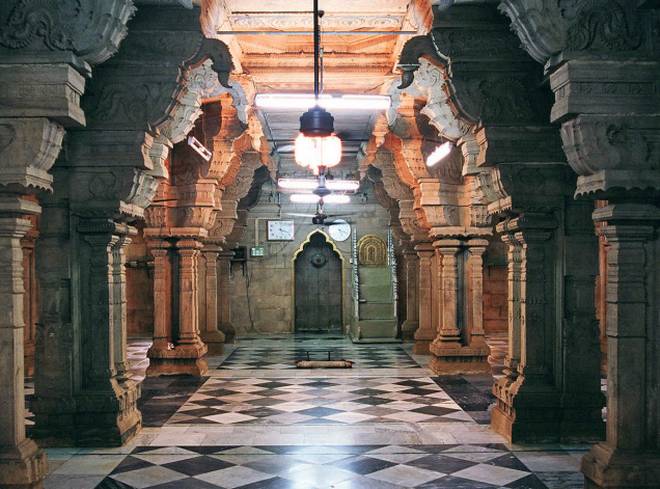
The 17th century mosque in Keezhakarai is the finest example of Dravidian-Muslim architecture.  

Yaadhum , a documentary film, tracing the history and identity of the Tamil Muslim community, has won the Bronze Remi award at the 48th WorldFest -Houston – the third longest running International Film Festival in North America.

“The film is a Tamil Muslim’s journey in search of his roots and identity,” says Kombai S. Anwar, the film-maker who won the award under the Cultural/Ethnic category. There were participants from 33 countries and more than 550 international film-makers attended the festival. The film was also screened at The Hindu Literary Festival.

Distorted history

Mr. Anwar said his objective was to set right the distorted history of Muslims constructed by Western historians.

“Contrary to the popular perception that Islam made advances through violent conquests, in Tamil Nadu the religion arrived with trade. The sculpture found in the Tirukurungudi temple explains the maritime trade with the Arabs,” he said.

Inspiration

Two incidents — late writer Sujatha’s argument that thousands of Vaishnavites were killed during the Muslim invasion and Anwar’s role in helping the local community preserve the Kallupalli (the mosque made of granites) — became the inspiration for the film.

“Muslims in Tamil Nadu adapted themselves to the local cultures and combined the elements of Dravidian architectures while constructing mosques,” he said.

Dravidian architecture

Even though there are a lot of mosques built following the Dravidian architecture, the 17thcentury mosque in Keezhakarai constructed by Seethakathi, known as Vallal Seethakathi, remains the finest example of Dravidian-Muslim architecture.

The film  covers excavations, inscriptions, old mosques built in the architectural traditions of Tamil Nadu and  Kerala, literature and interviews with well-known historians. 

It attempts to correct the distorted historical account of how the community came to the State

source: http://www.thehindu.com / The Hindu / Home> News> States> Tamil Nadu / by B. Kolappan / Chennai – May 15th, 2015

Brave woman, men receive Anna Medal for Gallantry

TAMIL NADU :

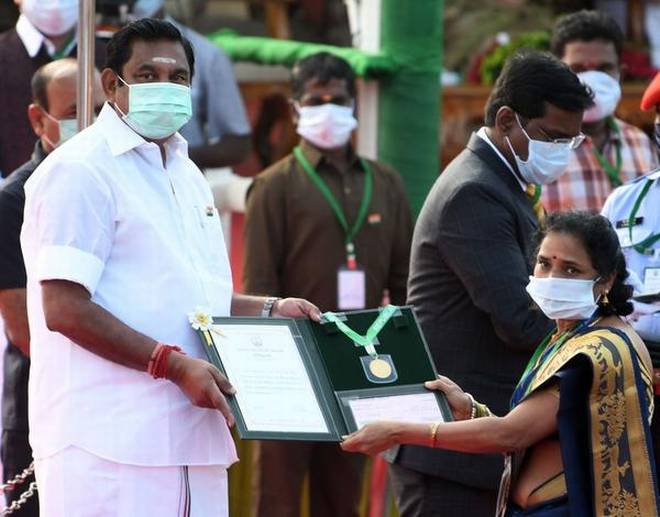
Tamil Nadu Chief Minister Edappadi K Palaniswami giving away the Anna Medal for Gallantry P. Mullai, a teacher in Pulivalam Government High School in Sholinghur in Ranipet district   | Photo Credit: Raghunathan SR

TN Chief Minister Edappadi K. Palaniswami gave away the medals at the Republic Day celebrations on Tuesday

A school teacher who risked her life to save her students from an explosion, a veterinary surgeon who rescued an elephant that plunged into a 60-feet deep well, a loco pilot who noticed boulders on railway tracks and saved his passengers and a cab driver who acted swiftly to save the life of an injured policeman were awarded the prestigious Anna Medal for Gallantry during the Republic Day celebrations on Tuesday.

Chief Minister Edappadi K. Palaniswami handed over the medals to the recipients, in the presence of Governor Banwarilal Purohit, Madras High Court Chief Justice Sanjib Banerjee and other dignitaries. The Anna Medal for Gallantry (given to government servants and general public categories) carries a cheque of ₹1 lakh, a medal worth ₹9,000 and a certificate.

On January 29, 2020, P. Mullai, a teacher in Pulivalam Government High School in Sholinghur in Ranipet district, smelled the strong odour of LPG in the neighbourhood. Disregarding her personal safety, she guided her students to safety. “But her selflessness ended in misfortune as the LPG exploded in the neighbourhood, collapsing the house wall adjacent to the school, leaving her injured,” read her citation. She saved her 26 students but had to be admitted to hospital in a highly critical stage. She has recovered eventually.

Forest Veterinary Assistant Surgeon A. Prakash was involved in the rescue of an elephant that fell into a 60-feet deep well on November 19, 2020 and was actively involved in the rescue that lasted over 18 hours. When the rescued elephant charged at the gathering of the people unexpectedly, Mr. Prakash followed the animal and gave it an anaesthetic drug with his bare hands, after realising there was no time left for loading the tranquilliser gun.

Loco Pilot J. Suresh of Vaigai Express noticed his train was approaching boulders on the tracks due to a landslide on November 18, 2020. Despite inclement weather and poor visibility, he stopped the train immediately and thereby saved the lives of over 1,500 passengers on board the train.

R. Pugazendiran of The Nilgiris district saved the life of an injured policeman after a tree fell on the latter on August 5, 2020. Mr. Pugazendiran “reached the spot quickly with his vehicle and rushed the injured police constable to the nearest hospital. The police constable was saved.”

Inspector of Police T. Magudeeswari of the Prohibition Enforcement Wing in St. Thomas Mount, Sub-Inspector of Police N. Selvaraju of the Central Investigation Unit in Salem, Head Constable S. Shunmuganathan of Srivilliputhur Taluk Police Station in Virudhunagar district and Head Constable S. Rajasekaran of Kilkodungalur Police Station in Tiruvannamalai district received the Gandhi Adigal Police Medal. The Gandhi Adigal Police Medal is awarded to personnel of the Tamil Nadu Police, who have undertaken outstanding work in curtailing illicit liquor. The Award carries a sum of ₹40,000.

The police stations in Salem Town, Tiruvannamalai Town and Kotturpuram in Chennai received the top three ranking stations across the State. Mr. K.A. Abdul Jabbar from Coimbatore district received the Kottai Ameer Communal Harmony Award for 2021.

source: http://www.thehindu.com / The Hindu / Home> News> States> Tamil Nadu / by Special Correspondent / Chennai – January 26th, 2021