Category Archives: Community Involvement / Social Issues

Ghutiari Sharif: testament to Bengal’s secular fabric

WEST BENGAL :

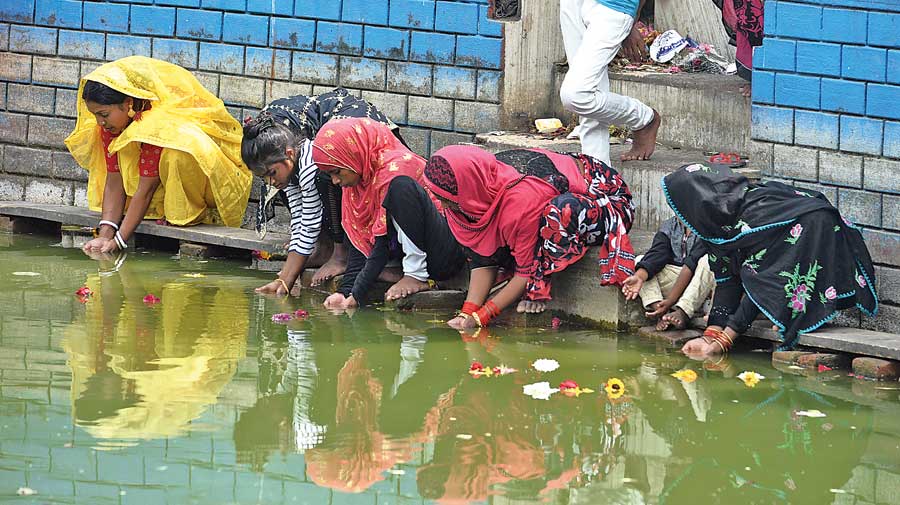
A Hindu woman (in yellow sari) prays at the pond in Ghutiari Sharif compound with Muslim women / pix: Gautam Bose

A BJP rally kept raising high-pitched “Jai Shri Ram” cries as it marched along the Baruipur-Canning Road in South 24-Parganas on Friday afternoon.

Slogans in support of the incumbent regime in Delhi were belted thick and fast and scorn was heaped on “infiltrators and termites”. It was around 12.30pm and the road was not busy. But some cars were stalled by the rally.

One of them was headed to a shrine dedicated to a Muslim saint, 35km from the heart of Calcutta and two stops before Canning, the gateway to the Sunderbans. All the occupants of the car were Hindus.
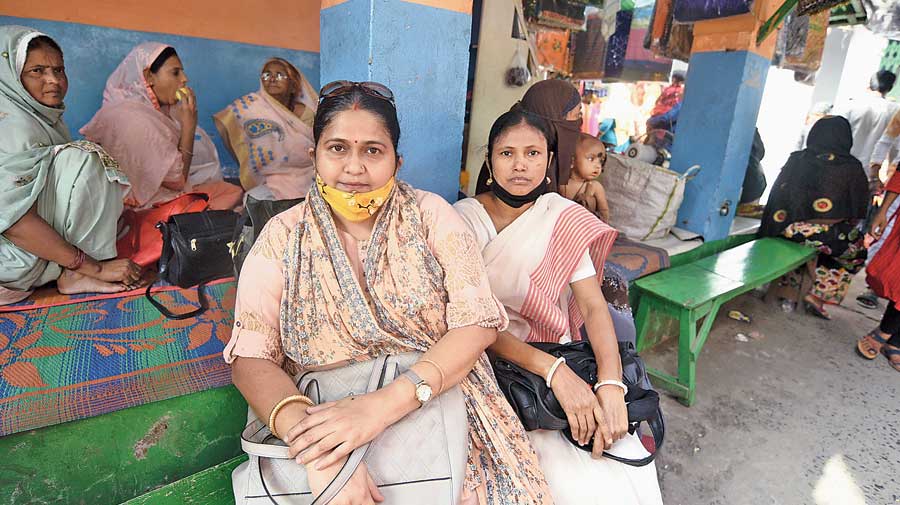
Debi Majumder (left) and Umme Habiba Laskar at the Ghutiari Sharif shrine on March 26. Majumder is a Lake Market resident . Laskar is an ayah employed by a neighbour of Majumder. The picture was taken minutes after the two dipped their palms into the pond together / pic: Gautam Bose

“I am going to Ghutiari Sharif for the first time. I have heard that if you pray sincerely, Ghazi baba answers your prayers,” said Suparna Dutta, 22, part of the group from Garia.

A suburb in South 24-Parganas, Ghutiari Sharif is known for the mazaar (resting place) of Pir Ghazi Mubarak Ali, a revered 17th century figure.

It is also a testament to the secular character of the popular devotional culture of Bengal at a time religious polarisation is the dominant narrative everywhere from political rallies to election manifestos.
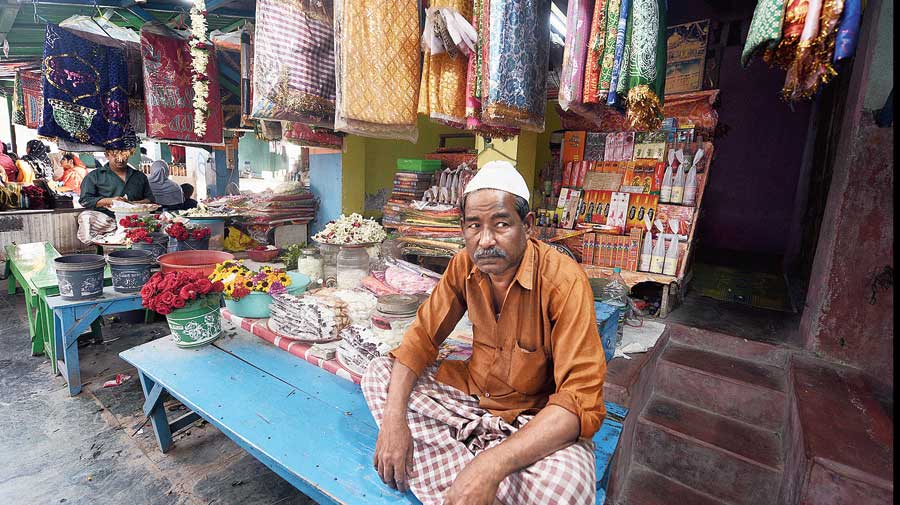
Salim Dewan, 65, who owns a store selling incense sticks, flowers, chadars and other objects offered to the Pir’s resting place / pix: Gautam Bose

Legends and folklore in Bengal are often a part of everyday life, transcending barriers of religion and caste. When this reporter visited the shrine on Friday, scores of women with sindoor-smeared foreheads were seen dipping their palms into a pond in the shrine compound, praying silently to have their wishes (manat) fulfilled.

The shrine embodied the deep-rooted syncretism in Bengal’s culture, something that social scientists said would pose a formidable challenge to any political party seeking to polarise voters.

That syncretism was perhaps best represented by an image of two women — Debi Majumder and Umme Habiba Laskar — dipping their palms together in the pond.

Majumder, a first-timer at Ghutiari Sharif, had come from her home in Lake Market. She came to know of the place from Laskar, an ayah who looks after one of Majumder’s neighbours. Laskar is a resident of Champahati, another suburb not far from Ghutiari Sharif, and has been there several times.

They had boarded a train from Ballygunge to reach the Ghutiari Sharif station on Friday. The shrine is a less than five-minute walk from the station. Around 1.30pm on Friday, the two dipped their palms into the pond together.

“I prayed at the mazaar and then made my wish at the pond. I have skipped breakfast, in keeping with the ritual,” said Majumder. Many visitors fast till they pray at the mazaar.

Suparna Naskar, who lives in Baruipur, had accompanied a Muslim friend who had come with her newborn. “She had wished for a child. Today, we have come to thank Ghazi baba for granting the wish,” said Naskar.

The shrine is a five-minute walk from the Ghutiari Sharif railway station in the Sealdah-Canning suburban section. The narrow road is dotted with shops. The resting place of the pir is at the centre of the compound. The top of the shrine has a mosaic dome with four towers.

Legend has it that the area, then part of the Sunderbans, was hit by a severe drought four centuries ago. Pir Ghazi Mubarak Ali is said to have brought rainfall to the area. He is also said to have cured a Hindu king, Madan Roy, from a severe bout of illness, after which Roy gifted him swathes of land. The mazaar stands on that land.

“Baba’s spirit still endures, taking care of this place. He did not discriminate between people. We have maintained that tradition. Around one-third of my customers are Hindus,” said Salim Dewan, 65, who owns a store selling incense sticks, flowers, chadars and other objects offered to the pir’s resting place. Dewan is a common title given to the future generations of the pir, some of whom are also part of the managing committee of the shrine.

“Many such mazaars and dargahs in Bengal are entrenched in a syncretic culture. The devotees come from all faiths, light incense sticks and offer sinni (a sweet concoction of milk, flour, bananas, raisins and other fruits, usually made during pujas in Bengali homes) and other homely food to the presiding saint,” said Epsita Halder, who teaches comparative literature at Jadavpur University and has researched on the scriptural understanding and popular devotionalism of vernacular Islam in Bengal.

“In medieval Bengal, many Islamic preachers became popular among the common people because they spoke in a simple language that everyone could connect with. They were not heavy on scriptural understanding of a religion but talked about devotion as a way of life,” Halder said.

Ghutiari Sharif falls under Canning West Assembly seat, won by Trinamul’s Shyamal Mondal in 2016. This time, the ruling party has fielded Paresh Ram Das. His main contender is Arnab Roy of the BJP.

Roy switched sides from the TMC to the saffron camp recently and his candidature has triggered protests from local BJP workers, like at so many other places of the state.

The influence of the shrine goes far beyond one constituency.

Ghutiari Sharif hosts two major fairs in a year. One is in the first week of August, commemorating the death anniversary of the pir. The other is in June, which coincides with the famous Ambubachi Mela at the Kamakhya temple in Assam. According to the local legend, King Madan Roy, a regular at the Kamakhya temple during the fair, started a similar fair near his home after being impressed by the pir.

Special trains are run during the fairs and lakhs of people, Hindus and Muslims, throng the shrine, apart from tens of thousands every week.

Those at the helm of the shrine said they kept off politics.

“We have always practised an inclusive culture and will continue doing so, irrespective of which party comes to power,” said Siraj Dewan, caretaker of the managing committee of the shrine.

Political commentator Maidul Islam said the politics of polarisation has yielded dividends in the urban middle class but suburban and rural Bengal was a different ballgame.

“The urban middle class is divided into the conservative and the liberal sections. The conservatives have already sided with the saffron brigade. There is a deep churning in a large section of the liberals. Many of them are still undecided among the Left and Trinamul. But the syncretic culture of rural and suburban Bengal is so deep-rooted that it will not be erased in the course of one election,” he said.
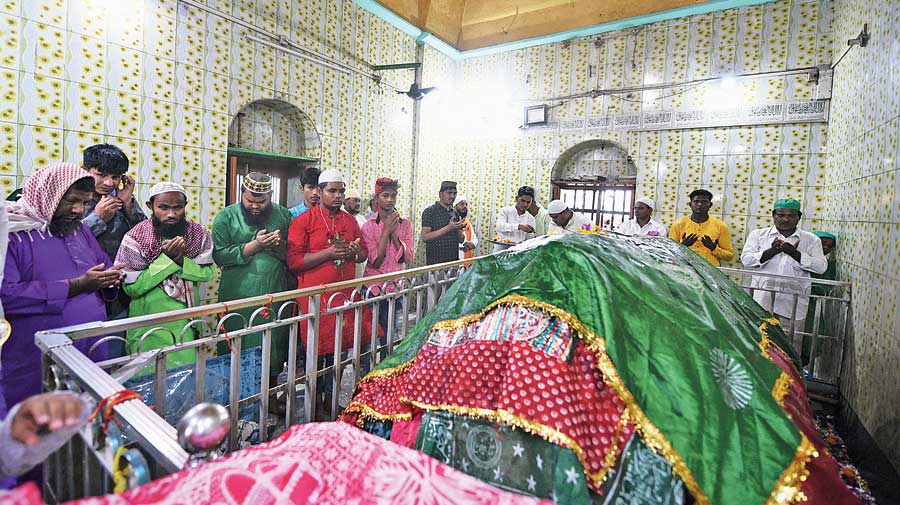
The resting place of Pir Ghazi Mubarak Ali. / pix: Gautam Bose

Ghutiari Sharif is not far for the Sunderbans, the land of another syncretic legend, Bon Bibi, the protector of humans and the forest, worshipped by Hindus and Muslims alike.

“All across the Sunderbans, rituals to Bon Bibi are performed by Hindus as well as Muslims. I think it is a wonderful kind of syncretism that you see there. In popular culture, in Bengal, it is incredibly mixed. These traditions, they are impossible to pick apart and say this is Hindu and this is Muslim. I think that’s what makes the popular culture of Bengal so vibrant and so interesting,” author Amitav Ghosh, who had introduced Bon Bibi to the world, said of the legend while speaking on the occasion of a literary meet in Calcutta in February.

source: http://www.telegraphindia.com / The Telegraph Online / Home> West Bengal> Calcutta / by Debraj Mitra, Calcutta / March 31st, 2021
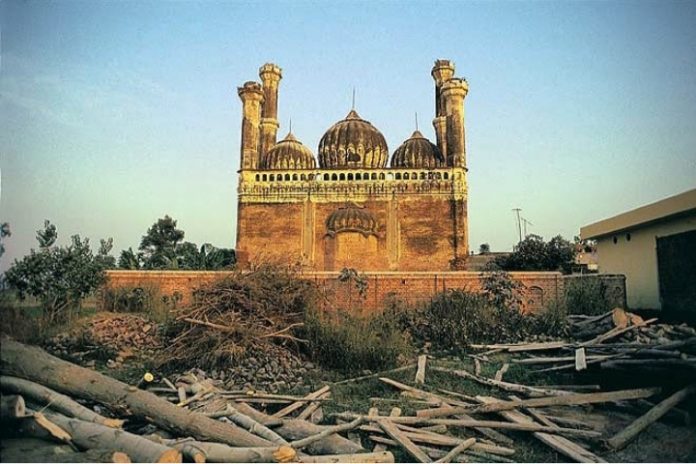
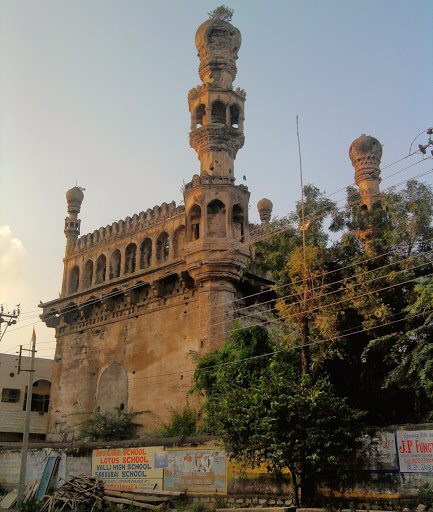
Abandoned “Mosques of India” are crying for attention, one Muslim youth is bridging the gap

INDIA :

Picture Courtesy: Outlook India

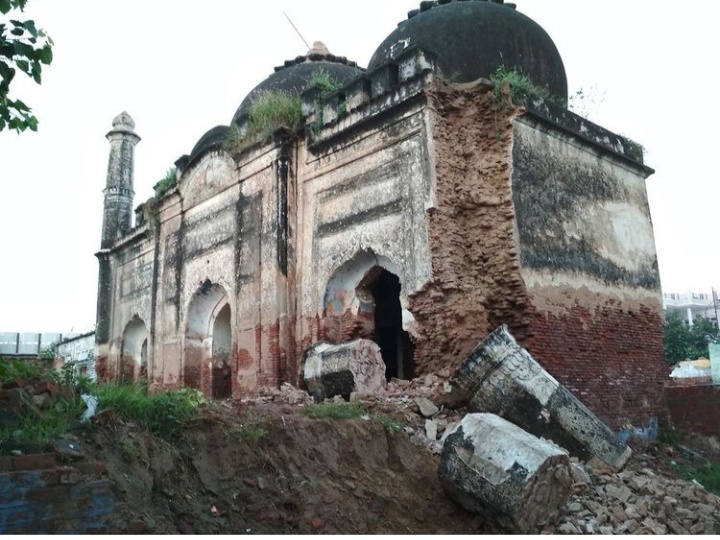
Mohammad Mirza is a travel writer and a social media executive from Hyderabad. He is currently based in the Middle East. His Instagram page “Mosques of India” is stocked with images of abandoned mosques with striking architecture that has remained elusive to the imaginations of present-day craftsmen.

Ten years ago, walking through the bustling street of Shaikpet in Hyderabad, thirty-year-old Mohammad Mirza was distraught to see the sight of a tumbledown Shaikpet mosque. Once, the Shaikpet mosque would echo with prayers, stirring the hearts of many. Seeing the plight of the mosque, Mirza started on a journey to research and write about the abandoned “Mosques of India.” 

His aim is for the Archaeological Survey of India (ASI) and Muslim Waqf Boards to recognize these mosques as state-protected monuments.

Picture Courtesy: Muslim Mirror

“I started writing about the abandoned mosques of India in lockdown. I am a history junkie and I read vastly on architecture,” Mirza told TwoCircles.net. 

“I didn’t want to post the images of the mosques alone. I wanted to create awareness about their poor and dilapidated condition. I also try to extensively research and write about the historical significance and the cultural heritages of these mosques,” he said. 

His page features an assortment of solitary mosques, which include the Palaiya Jumma Palli, one of the oldest mosques in India located at Keelakari in Tamil Nadu, which has a semblance of Dravidian Islamic Architecture and was constructed around 628 – 630 AD, the Akbari mosque in the sleepy town of Kalanaur, Punjab. The Akbari mosque is speculated to be the coronation place of Akbar the Great. Each mosque featured on the page has a unique ‘unknown’ history but are in ruins at present.

Picture Courtesy: Gurmeet Singh

“The Arabic calligraphy and inscriptions are still intact in some mosques, but most of the mosques are in a very bad condition. The minarets and domes are broken. The walls of the mosques have plants and trees growing out of their fissures, and sometimes they are just cloaked in algae,” says Mirza.

Mirza archives the heritage of these mosques by doing ‘short series’ items on these old and abandoned mosques. “The short series helps people to focus on a particular place filled with heritage,” he says. 

In his first series, he wrote about eight different “Abandoned Mosques of Haryana” (as he calls it). It featured mosques from the villages of Gondar, Fatehabad, Kahni, Turkiawas, Meham, Dujana, Urlana Kalan and Jalmana.

“Sadly today these mosques are encroached and used as residences and cowsheds. Mosques used to be a house of prayer for Muslims. There are no Muslims in these small villages to worship in these mosques as they have migrated during the partition,” he says. 

In one of his series, Mirza writes that Haryana is blessed with so many historical monuments, and “there is perhaps no other state in India where historic monuments are left to vagaries of nature like they are in Haryana.” He is talking about a forsaken mosque of Fatehabad, Haryana.

Mirza says that these mosques are the symbol of India’s pluralism and they must be preserved. “Not only mosques, I see many historical monuments in ruins too. Conserving the architectural heritage of a place depends upon the state’s recognition of its value,” he said. 

Mirza says that “we must rebuild all these mosques so that our future generation can see all of this great history of their predecessors.” 

“Hopefully, Muslims can visit and transfer these mosques hopefully,” says one of the followers on his page.

Mirza’s work is in line with Adopt a Heritage (2018) scheme, which was jointly established by the Ministry of Tourism, Ministry of Culture and Archaeological Survey of India. The project faced repercussion for its public-private partnership to sustain the monuments of cultural heritage and for selecting the sites based on tourist footfall. Activists had then sought to take into consideration the need to preserve and manage such cultural heritage before the adoption policy.

“These mosques are not just cultural heritage, they have religious significance too. The respective estates must give recognition to them and bring them under their protection,” says Mirza and adds, “I always wanted to be an armchair historian.”

source: http://www.twocircles.net / TwoCircles.net / Home> Lead Story / by Shalini S, TwoCirlces.net / March 31st, 2021

West Bengal Assembly Elections | Crucible of ISF, Bhangar reflects experiment in Muslim politics

WEST BENGAL :

Site of land conflict, the constituency on the outskirts of Kolkata will prove key to the future of the Opposition alliance.

Two of the three hawkers selling hard-boiled sweets and iced water tubes at the Indian Secular Front (ISF) rally at the Bhojerhat football ground in Bhangar on the last day of campaigning had decided on their choice for MLA — the Samyukta Morcha candidate, Naushad Siddique.

But their colleague remained undecided. A beneficiary of the Trinamool Congress’s welfare schemes for his daughters, he said, “I got ₹50,000 for my daughter under Kanyashree [a scheme of financial aid for girls who have studied till Class XII] and Rupashree [for a girl child’s marriage] but we were denied Amphan relief.”

Naushad Siddique at Bhangar on the last day of campaigning on April 8, 2021.  

Naushad Siddique, ISF chairman, is the brother of the peer of Furfura Sharif, Abbas Siddique.

A pitch for power

As the crowd at the rally swelled to hear Abbas Siddique, a few others explained, “It is not that Didi [Trinamool chief Mamata Banerjee] has not worked, but those under her are all corrupt.”

Almost an hour before the Siddique brothers took the stage, CPI(M) State committee member Tushar Ghosh arrived with slogans like “Inquilab Zindabad” and “Bhaijaan Zindabad” renting the air.

The crowd was largely young. In fact, some people seemed too young to cast their vote but they held aloft sticks with the white, blue and green ISF flag and the red CPI(M) flags tied together.

At the Bhojerhat meeting, Abbas Siddique delivered a fiery speech. “She [Ms. Banerjee] is calling me a shaitan (devil). Am I in politics to become an MP or a Minister?” he said rhetorically. Minutes later he asked the crowd who brought the BJP to West Bengal, showing an old photograph of Ms. Banerjee with former Prime Minister Atal Bihari Vajpayee at a meeting.

It was Naushad Siddique who was instrumental in sealing the ISF’s alliance with the Left and Congress for this Assembly election.

To a question on the Trinamool’s allegation that the ISF will end up helping the BJP, Naushad Siddique said, “The Trinamool leadership can say whatever it wants, but you can see the response to the ISF here. We are against both the Trinamool and the BJP.” If elected, he said, the ISF, which has fielded candidates in 28 seats, will seek a bigger role for the party.

It is from Bhangar that Abbas Siddiqui began his political foray, making a pitch for power through his popular religious jalsas (gatherings) that continued right through the lockdown. “Bhangar is the crucible from where the ISF experiment began,” said a villager at Padmapukur.

Inner party issues

Bhangar has a predominantly Muslim population and the ISF’s spirited entry has put the Trinamool, which is battling inner party squabbles, on the backfoot. In 2016, Abdur Razzak Mollah (former Land Reforms Minister in the Left Front regime) won the seat by a margin of 18,000-odd votes on a Trinamool ticket. However, the Trinamool dropped the 75-year-old veteran this time, opting for Rezaul Karim, also a former CPI(M) member who had contested the Lok Sabha election from Birbhum in 2019. Dr. Karim was preferred over Trinamool strongman Arabul Islam, which has sparked a party feud.

Just a few days earlier, while campaigning for Dr. Karim, Mr. Islam made his discontent public. “We will ensure the victory of our candidate, even if he is from Pakistan. The previous elected representative did not visit the constituency for five years after getting elected,” he said.

The BJP’s Soumi Hati has campaigned only in the Hindu pockets for the April 10 vote, and the ISF has stayed away from them, further polarising the electorate, villagers pointed out. On whether a split in the Muslim vote would help the BJP, villagers at Kamarhait and Machi Bhanga said, “Not in this constituency. But a divide in the Muslim vote here will go against the Trinamool.”

Land movement

Bhangar, a rural and poor belt on the fringes of Kolkata’s rich suburbs of Rajarhat and New Town, was in the news over a land movement that began in 2013 when the State government acquired 13 acres from villagers for a power grid project.

From 2014, the stir against the land acquisition led to tension in the area. Things came to a head on January 17, 2017 when villagers blocked roads with uprooted trees and clashed with the police. Two protesters were shot dead, but the police denied opening fire, putting the blame on “outsiders”. The State government reached an agreement with the villagers in August 2018, said Alik Chakraborty of the CPI(ML) Red Star, one of the leaders of the movement.

The CPI(ML) Red Star has fielded Mirza Hasan, a face of the land movement. He admitted that the ISF has a hold over the villagers, who tend to listen to the peerzada (religious leader).

“Bhangar is a case study of communal politics now,” said Mr. Chakraborty. “The deep polarisation that is happening here will find an echo in other constituencies,” he added.

The CPI (ML) leadership was, until a few months ago, hopeful of support from the CPI(M) but the latter forged an alliance with the ISF. In the densely populated South Parganas district, according to the 2011 Census, there is a 35.57% minority population which will influence several of the 31 seats including Bhangar, Canning, Magrahat, Sonarpur and Metiabruz. In 2016, the Trinamool had won 29 seats and the Left Front, two.

The Trinamool, which came to power in 2011 in the State riding on the land movements of Nandigram and Singur, found itself on the wrong side of the people in Bhangar. When villagers protested against heavy-handed tactics on the ground, the government moved to make amends, promising not to acquire any land by force.

The villagers hailed the “people’s victory” but three years on, Bhangar is being asked to choose between the Furfura cleric, who holds considerable influence over the region, and the Trinamool, which claimed it had nurtured the constituency with its welfare schemes.

source: http://www.thehindu.com / The Hindu / Home> Elections> West Bengal / by Shiv Sahay Singh and Sudipta Datta / Bhangore (South 24 Paragnas) / April 09th, 2021

Muslim man’s library with 3,000 copies of Bhagavad Gita torched by miscreants in Karnataka

Mysuru, KARNATAKA :

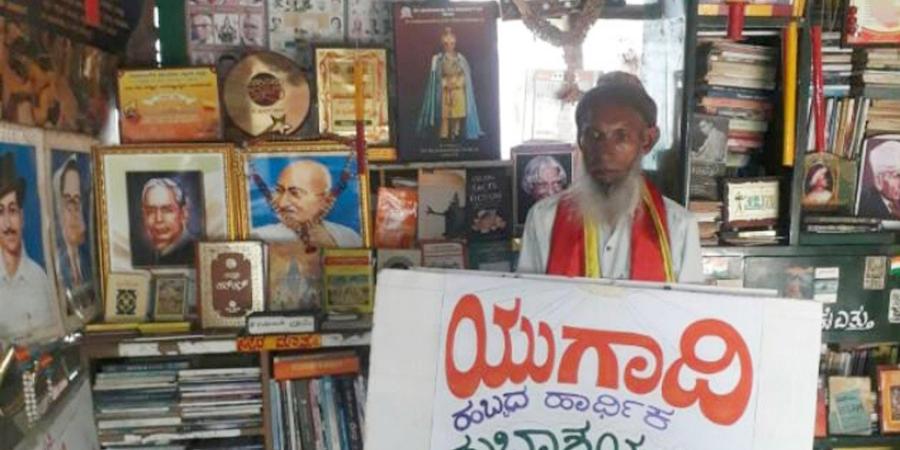
Syed Isaaq in front of a portion of the library (Photo | EPS)

Syed Issaq, a daily wage worker, had collected more than 11,000 books for his library, 85% of books were in Kannada.

Mysuru :

In a tragic incident, miscreants have allegedly set ablaze a public library run by a 62-year-old daily wage labourer that had a collection of 11,000 books including three thousand copies of Bhagavad Gita, in Mysuru on Friday.

Syed Isaaq had become a popular face among the residents of Rajiv Nagar and Shanti Nagar in the city as he took up a bold step of setting up a library giving free access to all the residents in the region for the last 10 years.

Deprived of education, Isaaq worked as a bonded labourer before turning into an Under Ground Drainage (UGD) cleaner and did odd jobs to earn a livelihood.

“At 4 am, a man residing next to the library informed me that there was a fire inside. When I rushed to the library which is just a stone’s throw away distance, I could only see them being reduced to ashes,” said Isaaq in teary eyes.

With an intent to help inculcate reading habits among the people and also encourage them to learn Kannada, Isaaq had set up this public library in a shed-like structure inside a corporation park in Rajiv Nagar second stage near Ammar Masjid. Every day, over 100-150 people would visit his library. Issaq would purchase over 17 newspapers including the ones in Kannada, English, Urdu and Tamil.

Nearly 85% of the books in his library collection were Kannada while several were English and Urdu. “The library had over 3,000 exquisite collections of Bhagavad Gita, over a 1,000 copies of Quran and Bible besides thousands of books of various genres which I sourced from donors,” he says.

Though he did not spend money from his pocket, he used to spend nearly Rs 6,000 for the maintenance of the library and on the purchase of newspapers.

Following this incident, Issaq approached the Udayagiri police station and lodged a complaint against the miscreants. Police have filed an FIR under the IPC section 436 and have launched an operation to nab the culprits.

However, the incident has not deterred Issaq. “I will not cow down. I will rebuild the library from the scratch”.

“I was deprived of education and I want to ensure that others should not face my plight. I want people to learn, read and speak Kannada and will rebuild it again,” he said.

source: http://www.newindianexpress.com / The New Indian Express / Home> States> Karnataka / by Karthik KK , Express News Service / Myuru – April 09th, 2021

Fatima Rafiq Zakaria – Journalist, Padma Shri – Dies In Maharashtra Aged 85

Mumbai, MAHARASHTRA :

Fatima Rafiq Zakaria - Journalist, Padma Shri - Dies In Maharashtra Aged 85
Fatima Rafiq Zakaria was awarded the Padma Shri in recognition of her work in education in 2006

Aurangabad, Maharashtra: 

Fatima Rafiq Zakaria, a Padma Shri awardee, renowned journalist, academician and chairman of Maulana Azad Educational Trust and Khairul Islam Trust Mumbai, passed away at the Bajaj Hospital in Maharashtra’s Aurangabad due to age-related illness on Tuesday noon. She was 85.

Besides being affiliated to the Maulana Azad Educational Trust and Maulana Azad Education Society, Ms Zakaria was also the executive vice-chairman of the Board of Governors of the Trust’s Institute of Hotel Management which is run in collaboration with the Taj Group of Hotels.

Ms Zakaria, who had played an eminent role in the field of education, was also honoured with the Sarojini Naidu Integration Award for Journalism in 1983.

She was awarded the Padma Shri in recognition of her work in education in 2006.

source: http://www.ndtv.com / NDTV / Home> All India / by ANI / April 06th, 2021

Former Vice President Of Jamaat-E-Islami Hind Prof KA Sidheeq Hassan Passes Away

Koottil, Eriyad (Thrissur District), KERALA :

Prominent Islamic scholar and former Vice President of Jamaat-e-Islami Hind Professor KA Sidheeq Hassan passed away today at the age of 75. He was the chief architect of Vision 2026, a flagship project of the Human Welfare Foundation, a public charitable trust working for the development of Muslims.

Prof Sidheeq Hassan worked as an educator in various educational institutions including University College, Thiruvananthapuram and Maharaja College, Ernakulum.

He served as the President of Jamaat-e-Islami Hind, Kerala from 1990 to 2005. Earlier he had held the positions of Chairman of Alternative Investment and Credit Limited (AICL), founding chairman of Baithuzzakath and sub-editor of Probodhanam Weekly.

Sidheeq Hassan was born in Koottil in Eriyad in the Thrissur district of Kerala and was one of the contributing founding members of Madhyamam Daily, a prominent newspaper in Kerala.

He was conferred with many prestigious awards including the Imam Haddad Excellence award, Islamic Online Star of 2010 by Islam Online and Ebrahim Sulaiman Sait Foundation Award.

He is survived by wife VK Zubaida, sons Faslurrahman, Sharafuddeen and daughter Sabira.

source: http://www.thecognate.com / The Cognate / Home> News / by Ghazala Ahmad / April 06th, 2021

Maulana Wali Rahmani: India’s torchbearer Muslim scholar who made promotion of education his mission

Patna, BIHAR :

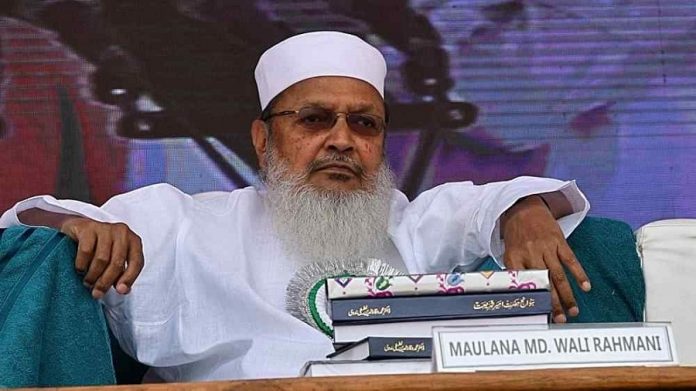
Maulana Wali Rahmani | Photo Courtesy: Clarion India

What set Maulana Wali Rahmani, an Indian Sunni Islamic Scholar, academician and founder of Rahmani30, apart was his efforts towards the promotion of education among Muslim youth. Although Rahmani was a multi-lingual man, he had evident love for the Urdu language. In February this year, he launched a campaign for education among the Muslim community and promotion of the Urdu language. 

The well-known torchbearer of India’s Muslim community, who strove to work for the promotion of education, Maulana Mohammad Wali Rahmani would have turned 78-years-old on June 5 this year. On April 3, Maulana Wali Rahmani breathed his last at a Patna hospital after a brief illness and other complications.

Such was his repute and respect among the community that he had 8.5 lakh followers who took the oath of allegiance to him as “Sajjada Nashin” of Khanqah Rahmani in Munger in the Indian state of Bihar. Rahmani became “Sajjada Nashin” of Khanqah Rahmani, Munger in 1991 after the death of his father Sayyid Minatullah Rahmani. At present, Rahmani was the Secretary-General of All India Muslim Personal Law Board (AIMPLB). He was Ameer-e-Shariat, or the head, of the renowned religious organization Imarat-e-Shariah of Bihar, Jharkhand and Odisha. However, what set him apart was his endeavour in the field of education. His organization, Rahmani30, founded in 2008, was his gift to the Muslim community of Bihar, and the country.

Had there been no Rahmani30, hundreds of students might not have heard about him and many poor Muslim students could not have realized the dream of making it to India’s top engineering institutes; the IITs or the Indian Institute of Technology.

The Rahmani30 has since then expanded to NEET or the National Eligibility cum Entrance Test for medical education. Top accountancy and Law entrance tests have also been included now.

Rahmani30 is modelled on Super30 founded by famous mathematics teacher Anand Kumar of Bihar who started selecting 30 poor students and grooms them for IITs. Super30 was a big success. So is Rahmani30. Since its inception, Rahmani30 had the services of Bihar senior police officer Abhayanand, who retired as DGP Bihar. Every year test exams are held for the selection of Rahmani30 and the selected candidates are provided with free residential coaching with food.

Maulana Wali Rahmani was a political personality. His proximity with political leaders got him brickbats too. He was elected to the Bihar Legislative Council on April 7, 1974, and continued till 1996. In 1984 and 1990 he was elected as deputy chairman of Bihar Legislative Council. He was criticized after his (in)famous Deen Bachao Desh Bachao (Save Islam, Save Country) rally at Patna in 2018. Just after the rally, one of its organizers were declared as the candidate from Nitish Kumar’s party for the Bihar Legislative Council. Maulana Rahmani was accused of compromising with Nitish for ‘a seat in Bihar council.’

He, however, was also praised for his bold statements before the top political leaders when the issues related to the Muslim community were discussed.

His birthplace Khanqah Rahmani is a well-known religious place that was founded in 1909 by his grandfather Maulana Mohammad Ali Mungeri, who was a co-founder of Nadwatul Ulema, Lucknow. Maulana Wali Rahmani’s father Maulana Minatullah Rahmani was also a renowned religious scholar who also held the post of General Secretary in All India Muslim Personal Law Board.

Maulana Rahmani got his initial education at Rahmania Urdu School, Jamia Rahmani in Munger, Bihar and then proceeded to Nadwatul Ulema and Darul Uloom Deoband. He also studied at Bhagalpur University which is now known as Tilka Manjhi Bhagalpur University in Bihar.

At the age of 22, Maulana Rahmani joined ‘Naqeeb’, a weekly published by Imarat-e-Shariah. He also served at Jamia Rahmani.

In 1991, following the demise of his father, he was made Sajjada Nashin of Khanqah Rahmani.

He was made Ameer-e-Shariat at Imarat-e-Shariah in November 2015 and held the post till his last breath. Here too, Maulana Rahmani’s focus was on education. He also worked for the better medical facility at Sajjad Memorial Hospital being run by Imarat-e-Shariah.

Although Maulana Rahmani was a multi-lingual man, he had evident love for the Urdu language. In February this year, he launched a campaign for education among the Muslim community and promotion of the Urdu language.

He also campaigned for the upliftment of the Madrasas.

His biography Hayat-e-Wali penned by Shah Imran Hasan states, “Maulana’s untiring efforts and timely steps to save the country’s Madrasas are worth mentioning. He met several dignitaries, including the then Prime Minister Atal Behari Vajpayee and presented before him the case of Madrasas in the context of their roles in the country’s freedom struggle and nation-building.”

Maulana Rahmani was a man who loved to make friends in other Muslim organizations too. He kept Maulana Rizwan Ahmad Islahi, the young Ameer-e-Halqa (Bihar chief) very close to him. Maulana Rizwan recalls that when representatives of Muslim organizations went to meet Bihar Chief Minister Nitish Kumar, everybody wanted Maulana Rahmani to talk to him but he proposed his name (Maulana Rizwan’s). “Such was his generosity,” he said.

Maulana Rahmani will be missed at many places, including at AIMPLB and Imarat-e-Shariah. However, his absence would be felt most at Rahmani30. The passing away of Rahmani poses a challenge for both Imarat-e-Shariah and Rahmani30 to take his dream further.

source: http://www.twocircles.net / TwoCircles.net / Home> Lead Story / by Sami Ahmad, TwoCircles.net / April 05th, 2021

After Wali Rahmani, Anees Chisti also left for heavenly abode

Pune, MAHARASHTRA :

Pune:

Well known educationist, intellectual, thinker and author of several books, Professor Anees Chishti has passed away in Pune at the age of 79.  He was unsung hero of the community who made tremendous contributions in the progress of the community in the country.   He will be also remembered for his dawha works as he translated Islamic literature into local Marathi language. He was a close confidant of late Maulana Abul al Hasan Nadvi who launched All India Tahreek e payam e insaaniyat with an aim to dispel misunderstandings about Islam.   Chisty was one the pillars of this movement.

According to Anees Chishti’s family, he first suffered a heart attack and then later normal infected by COVID-19. During his treatment at Azam campus Unani hospital Pune He took his last breath and was buried on Monday, April 5, after Isha prayers at Muhammad Jamia Hussaini Masjid in the city.

As news of his demise spread, condolence messages flooded on social media. Many important personalities expressed their grief and sorrow who acknowledged the scholarly and social services of Anees Chishti.

Chisti was born on February 6, 1943 in Pune. His father Shakeel Ahmad was a freedom fighter. He was educated in Pune and Sholapur. Pune is considered the brain of Brahminical forces.

Expressing condolences on the demise of Anish Chishti, PA Inamdar administrator of Azam Campus Pune, said his demise is a great  loss to the nation. He said that Anees Chishti was recognized as an authority in Islamic studies and science and literature.

Munawar Pir Bhai from Pune termed the demise of Anis Chishti as a great loss of the society and said that he was a very capable and intelligent person. Traveled to many countries, he had a keen eye on Islam and Allama iqbal. And he described the death of Anis Chishti as his personal loss.

Talha, nephew of Anees Chishti, said that after the death of Maulana Wali Rahmani, he had gone to Lucknow to meet Maulana Rabi Hasni Nadvi.

After returning from the trip, his health deteriorated and on April 5, at around 5.30 pm, he passed away. The personality of Anees Chishti was a person with various attributes.  He was a member of the Majlis-e-Shura of Darul Uloom Nadwa tul Ulema, Lucknow and member of the, All India Muslim Personal Law Board.

He was very close to Maulana Syed Abul Hassan Ali Nadvi, a thinker of Islam, and he was the General Secretary of the All India Tahreek e payam e insaaniyat. The movement was launched in the backdrop of Babri masjid dispute which had been used by the communal forces to spread lies about Muslims and Islam in the country.

He was the author of many Urdu, Marathi and English books. His books have been translated into various languages. He was a connoisseur of calligraphy, a teacher of calligraphy, an Islamic scholar, and an educator. Apart from Urdu, many of his books have been published in Marathi.

Mirza Abdul Qayyum Nadvi, a bookseller and activist from Aurangabad, said that he had spoken to Anis Chishti two days before his death. More than 53 of his books have been published. Anis Chishti was fluent in many languages. These included Urdu, Marathi, Hindi, English, Arabic, Persian and other languages. He was a very good man, a man of knowledge, a good teacher, a good writer, a credible writer, an eloquent speaker, a guest lecturer on the panel of high-ranking training institutes. He has received numerous accolades for his books on education, and books on Muslim freedom fighters .and other books. In many countries, his Urdu and English language books are included in the Syllabus.

He trained soldiers at the Indian Institute of Education, College of Military Engineering Pune. He has delivered sermons and lectures on Islamic and scientific and literary topics in different parts of the country. He is survived by a daughter and four brothers.  Arguably, his demise made the community further poorer as it was in the shocked after Muslim Personal Law Board General Secretary Maulana Mohammad Wali Rahmani in Patna just two days before.

source: http://www.muslimmirror.com / Muslim Mirror / Home> Indian Muslim / by Abdul Bari Masoud / April 07th, 2021

Gaya Muslim Orphanage: A Century-Old Institution Doing Great Service to Community

Gaya, BIHAR :

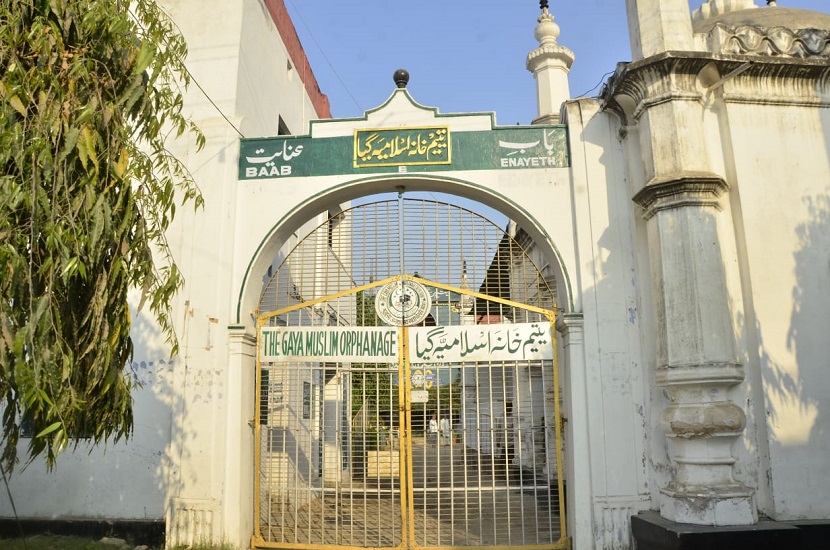
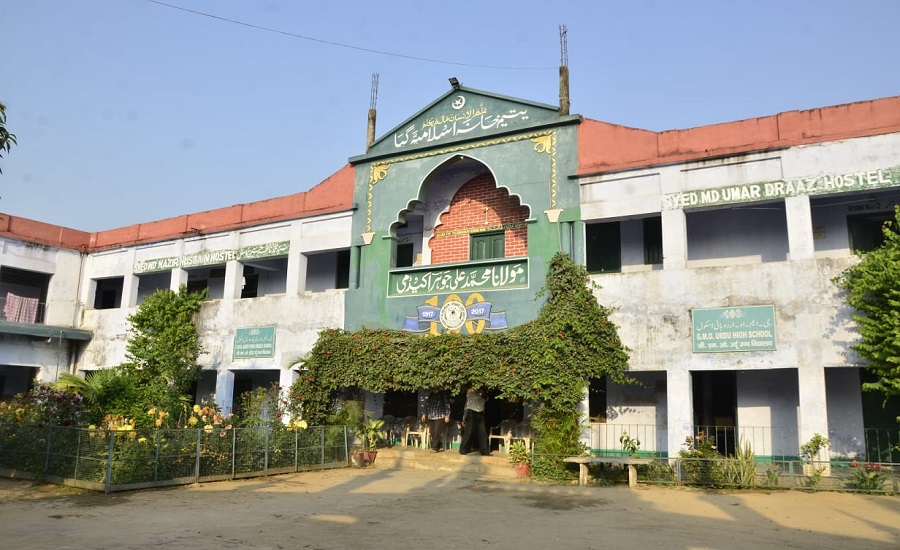
The Gaya Muslim Orphanage was established in October 1917 in a thatched cottage.

SPECIAL REPORT

It runs two schools, an ITI, an orphanage for girls and a distance education centre of AMU

Gaya, Bihar :

Ten kilometres west of Bodhgaya in the Indian state of Bihar, where Gautam Buddha received enlightenment, is a century-old orphanage for Muslim boys at a place called Cherki on Gaya-Sherghati road. It was established in October 1917 in a thatched cottage with one teacher and two orphan boys. The cottage was rented for fifty paise per month. Now, it has its own building complex on two-and-a-half acres of land.

Started as YateemKhana-e-Islamia, today it is also called GMO or Gaya Muslim Orphanage which has blossomed as a care and education centre for the area, particularly for the Muslim community whose literacy and employment rate is comparatively quite low. This institution provides both religious and contemporary education.

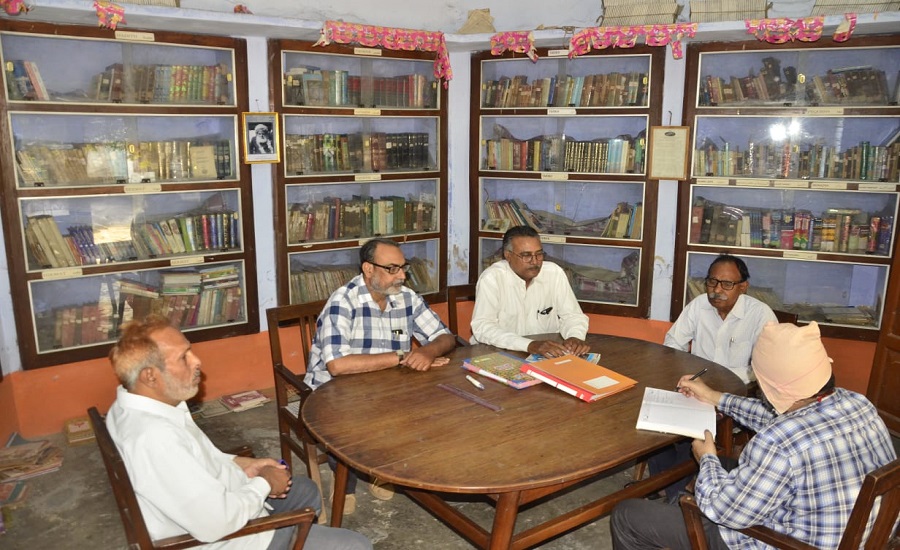
GMO is being run in a complex that hosts two schools, a hostel with mess, a library, a mosque and an industrial training institute (ITI).

Gaya Muslim Orphanage is being run in a complex that hosts two schools, a hostel with mess, a library, a mosque and an industrial training institute (ITI).

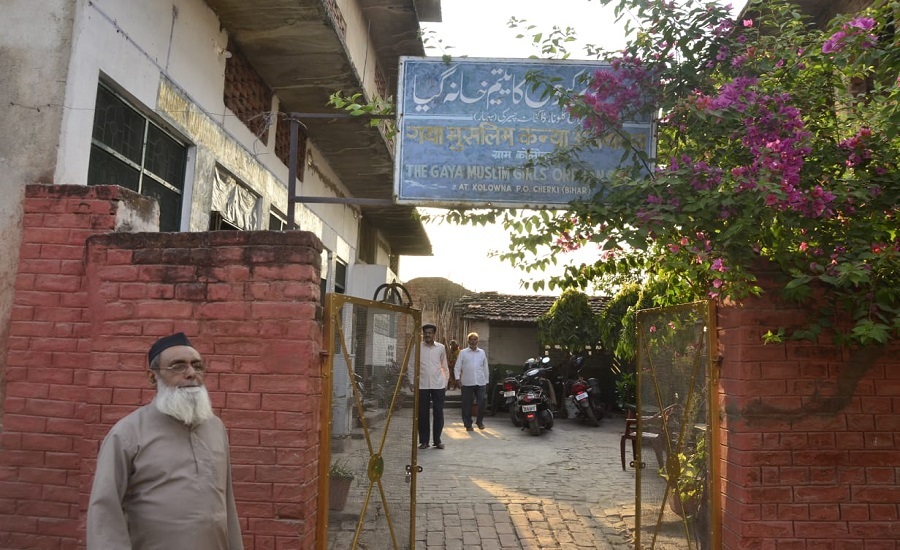
Since 1986, the management of GMO is also running an orphanage for girls at a nearby village called Kalona in Gurua block of Gaya district. Kalona is the village of GMO’s founder Enayeth Khan (1885-1970) who was described as “Bihar’s Sir Syed” by late Ibrahim Suleiman Seth, Member of Parliament and chief of the Indian Muslim League. This orphanage, called Gaya Muslim Girls Orphanage (GMGO), was conceived by Enayeth Khan way back in 1938.

The GMO and GMGO together have around 200 orphans. Enayeth Khan’s family members are actively involved in the management of both the institutions.

A distance education centre of the Aligarh Muslim University (AMU) is also running at the GMO complex.

GMO has a unique feature of hosting some of the most respected personalities such as former President of India Dr. Zakir Hussain; former Chief Justice of India A.M. Ahmadi; former Governor of Bihar A. R. Qidwai; Muslim League chief Ibrahim Suleiman Seth; renowned Islamic scholar Maulana Abul Hasan Ali Nadvi, popularly known as Ali Mian; and Mohammd Farooq Khan, the scholar known for translating Quran into Hindi. Former President APJ Abdul Kalam, on a visit to Bodhgaya, had wished to visit GMO but could not do so because of lack of prior security arrangement.

The introductory folder of GMO says that the orphanage was started with Rs. 30 but now it has a budget of Rs. 30 lakh. This is managed by community funding in India and abroad with FCRA registration.

Mohammed Ali Jauher Academy

Since 1986, the management of GMO is also running an orphanage for girls at a nearby village called Kalona in Gurua block of Gaya district. Kalona is the village of GMO’s founder Enayeth Khan (1885-1970) who was described as “Bihar’s Sir Syed” by late Ibrahim Suleiman Seth, Member of Parliament and chief of the Indian Muslim League. This orphanage, called Gaya Muslim Girls Orphanage (GMGO), was conceived by Enayeth Khan way back in 1938.

The GMO and GMGO together have around 200 orphans. Enayeth Khan’s family members are actively involved in the management of both the institutions.

A distance education centre of the Aligarh Muslim University (AMU) is also running at the GMO complex.

GMO has a unique feature of hosting some of the most respected personalities such as former President of India Dr. Zakir Hussain; former Chief Justice of India A.M. Ahmadi; former Governor of Bihar A. R. Qidwai; Muslim League chief Ibrahim Suleiman Seth; renowned Islamic scholar Maulana Abul Hasan Ali Nadvi, popularly known as Ali Mian; and Mohammd Farooq Khan, the scholar known for translating Quran into Hindi. Former President APJ Abdul Kalam, on a visit to Bodhgaya, had wished to visit GMO but could not do so because of lack of prior security arrangement.

The introductory folder of GMO says that the orphanage was started with Rs. 30 but now it has a budget of Rs. 30 lakh. This is managed by community funding in India and abroad with FCRA registration.

Library.

GMO has its own website www.gmogaya.in where information is available in two languages; Urdu and English. Its Hindi and Arabic pages are also in the offing.

Minhajul Islam is the Principal of GMO Urdu High School affiliated to Bihar School Examination Board. He says that the school has three types of students. There are around 85 orphans with full free arrangements, 50 hostellers who pay for the facilities and 425 day-scholars.

In 2020, 64 students out of 140 got first division in matriculation.

Every year new admission for orphans is announced and no one is refused admission if the boy is found eligible. Though the students are mostly from Gaya district and the adjoining districts of Jharkhand state, some of the students also come from West Bengal. There are 18 teaching staff and 10 non-teaching staff employed here.

Enayeth ITI, run by the GMO, has an annual intake of 80 students where they get half and full free-ship depending on their financial condition. This ITI offers a good opportunity to the students who can’t afford higher technical education.

The distance education centre of AMU has come as a great help, especially to the girl students of the area. Around 400 students, mostly girls, are enrolled at this centre. It gives a great relief to those guardians who are not in a position to send their daughters away for higher education.

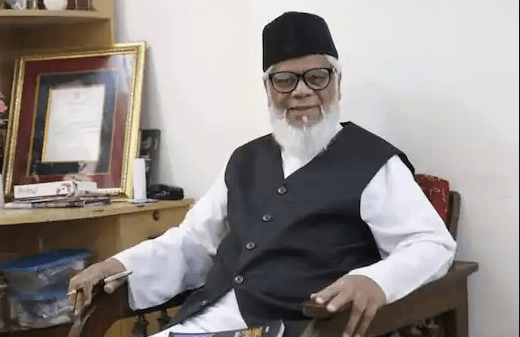
Noted orthopaedic surgeon of Gaya, Dr. Farasat Hussain, is the president of the ten-member management committee that looks after GMO. He says that the sustenance of a charity-based orphanage like GMO for over hundred years is no mean achievement. Talking to Clarion India, he said that GMO management is trying to get the Urdu High School upgraded to Plus-2 level from its current Class-10 level. The management also plans to start an engineering college, he said.

source: http://www.clarionindia.net / Clarion India / Home> India> Indian Muslim> Special Report / by Sami Ahmad / March 31st, 2021

Municipal councillor, injured in Sopore militant attack, dies

Sophore,( KASHMIR ), JAMMU & KASHMIR :

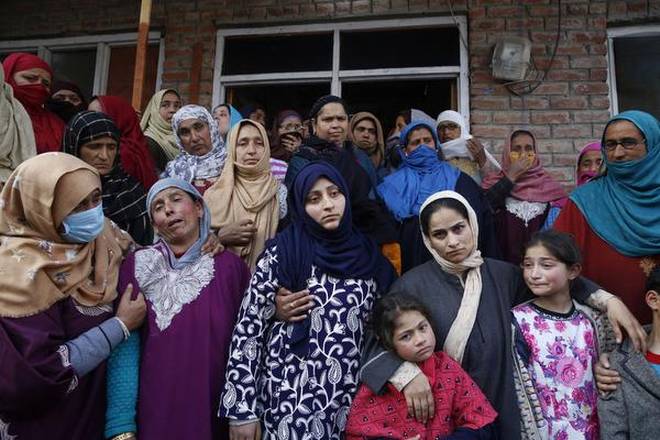
Family members mourn as people carry the body of Riyaz Ahmad a Block development Council ( BDC) member who was killed in a militant attack, during his funeral procession, in Sopore, Jammu and Kashmir on Monday, 29 March 2021. Another municipal councillor, Shams-ud-Din Peer, who was injured in a militant attack on Monday in north Kashmir’s Sopore succumbed to his injuries on Tuesday.   | Photo Credit: NISSAR AHMAD

So far, two councillors and a policeman have died in the incident

A municipal councillor injured in a militant attack on Monday in north Kashmir’s Sophore succumbed to his injuries on Tuesday, taking the toll to three.

Meanwhile, Inspector General of Police (IGP) Vijay Kumar said the policemen guarding the councillors “failed to retaliate to the fire of militants”.

The councillor, Shams-ud-Din Peer, who had suffered multiple bullet wounds, succumbed to his injuries at the Shri Maharaja Hari Singh hospital in Srinagar during the night, officials said.

Apart from Mr. Peer, another councillor and a policeman have been killed in the Sopore attack.

Meanwhile, Mr. Kumar admitted that the four personal security officers (PSOs) guarding the councillors “failed to timely retaliate and foil the attack”.

“There has been a security lapse. Had the four PSOs retaliated, the militants would not have succeeded in their efforts,” he said.

Four suspended

All the four policemen have been suspended after the incident.

He said there was no additional deployment made because the Municipal Committee chairman, Sopore, “had not informed about the meeting”, targeted by the militants later.

The IGP said an overground worker of the militants had been arrested. “The arrested youth has revealed that the attack was planned by a local Lashkar-e-Taiba and a foreign militant,” he said.

Mr. Kumar has asked all vehicles plying in J&K with non-J&K registration plates to register within 15 days with the transport authority of the Union Territory. “Militants were using such vehicles to target the security forces,” he added.

source: http://www.thehindu.com / The Hindu / Home> News> National / by Peerzada Ashiq / Srinagar – March 30th, 2021