Reverentially touching another person’s feet or prostrating before that person is common in Hindu culture, but seldom practised by Muslims.
National Democratic Alliance’s (NDA) Muslim candidate in Mannarkkad Naseema P. had one of the biggest surprises of her life when she bent down to touch Prime Minister Narendra Modi’s feet at the Bharatiya Janata Party’s mega election rally held at Fort Maidan here on Tuesday.
Soon after finishing his 45-minute speech that invigorated the large crowd as well as the NDA candidates on the stage, Mr. Modi was preparing to leave the stage when Ms. Naseema walked up to him and genuflected before him.
In an unexpected quid pro quo, Mr. Modi bent down and touched her feet, shared a few words of encouragement with her, and sent her briefly to a world of awe. “It was beyond words for me. I never expected it from a great man like Modiji. It’s still like a dream for me,” said Ms. Naseema.
She said she wanted to have his blessings by touching his feet. “But Modiji surprised me by honouring me. It shows how respectfully he treats women,” said Ms. Naseema.
Ms. Naseema is the only Muslim woman candidate in the NDA. She is contesting on All India Anna Dravida Munnetra Kazhagam banner against the Indian Union Muslim League’s incumbent N. Shamsuddin and Communist Party of India’s K.P. Suresh Raj in Mannarkkad.
source: http://www.thehindu.com / The Hindu / Home> News> States> Kerala / by Staff Reporter / Palakkad – March 30th, 2021
Twenty-year-old Azharuddin from Meerut in the north Indian state of Uttar Pradesh is good with his hands. He created an electric cart from junk and he is now receiving online orders from abroad. Apart from this, the 21-year-old has also made an electric bicycle that can cover a distance of 100 km on a single charge.
Uttar Pradesh:
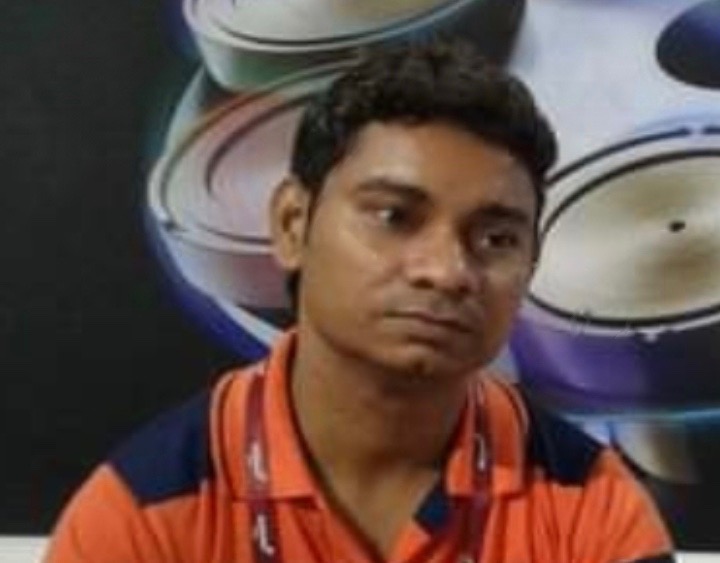
His father laboured all his life and his mother never went to school, yet the twenty-year-old Azharuddin from Muradnagar near Meerut in the north Indian state of Uttar Pradesh battled all odds and went on to become a mechanical engineer. His is a story of fighting poverty with talent and hard work and emerging victorious.
Azharuddin studied at a government school and today he is a second-year B.Tech. student at Subharti University, Meerut. The university management does not take fees from him. Instead, they provide all the facilities.
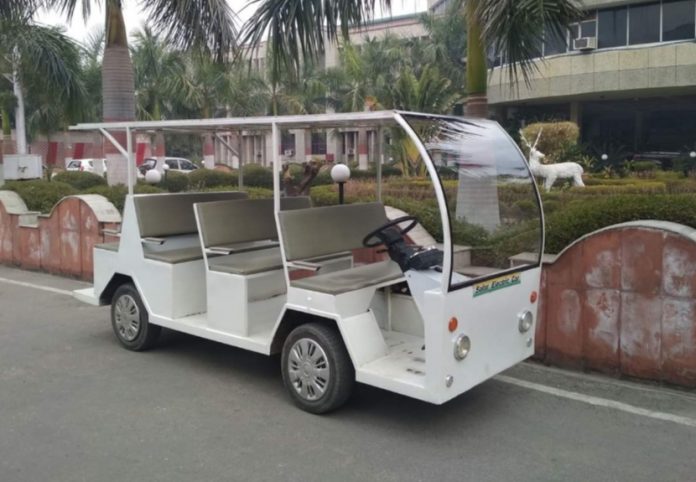
Azharuddin is good with his hands. He has created an electric cart from junk and is now receiving online orders from abroad. The twenty-year-old has also made an electric bicycle that can cover a distance of 100 kilometer on a single charge.
In addition to the electric cart, Azharuddin has also made a solar cart, which does not need to be charged. His feat is remarkable as he has accomplished it all by himself.
Presently, the boy from Muradnagar is working to get his e-cart verified by the government.
Electric cart made by Azharuddin
“The e-cart is basically solar powered, but it can also be charged. It will benefit the environment immensely. It is cheaper and more robust. It can be used as an auto. Currently, its demand is coming from societies of large size, where these non-polluting carts are of great importance. Apart from this, they have great importance in places like Zoos, Taj Mahal etc. Till now such carts were running on battery. We have a cheaper alternative to solar and electricity,” Azharuddin told TwoCircles.net.
Azharuddin’s accomplishments have not been in vain. He has received an offer of 6 solar carts from a society in Hyderabad.
For his first electric cart, it cost him INR 1.5 lakh. He has improved its cost of making and his e-cart now has space for more people to sit. An e-cart made by him has been sent to Dubai.
Azhar says that if the government cooperates with him, they can build something that can contribute to pollution reduction in the country and improve the environment.
Azharuddin says that he has made his electric bicycle in the same manner. It can charge up to 100 kilometres at a time, while the company’s cycle runs 30-40 kilometre. It can run-up to the speed of 25-30 kilometre per hour and is pollution-free. He has started getting orders for his e-cycle.
He says his e-cart was used at the Taj Mahal in Agra for six months. “I had built a one-seater helicopter in 11th grade, which was greatly appreciated at the exhibition in Ghaziabad,” he said.
His e-cart is now being used in Haryana’s Hisar Cantt. and Engineering College. His e-carts are also today used at his college Subharti Meerut.
Azharuddin’s father Amirudin Kassar told TwoCircles.net that “Azhar has brought him only joy and pride.”
“People in the village know me because of my son. I respect him more,” he says.
Talking enthusiastically about his e-cart, Azharuddin explains that in the event of solar energy being interrupted, its work will be done by charging and this cart will keep running. “Two batteries of 12 volts and five batteries of 140-ampere lead-acid have been used in the solar panel. This is the biggest feature of this e-cart that it operates from both solar and electricity as well and is cheap,” he says.
At Subharti University, Azharuddin’s work is discussed with excitement.
A staffer at the University Sanjay Kumar points out that Azhar’s talent is natural. “The natural talent inside him is going to take him to places. He has earned a name for himself through his work. His difficult time has passed. We wish him a bright future,” he said.
The story of Azharuddin exemplifies that passion and hard work pays, no matter how humble your beginnings.
source: http://www.twocircles.net / TwoCircles.net / Home> Lead Story> TCN Positive / by Aas Mohammad Kaif, TwoCirlcles.net / March 30th, 2021
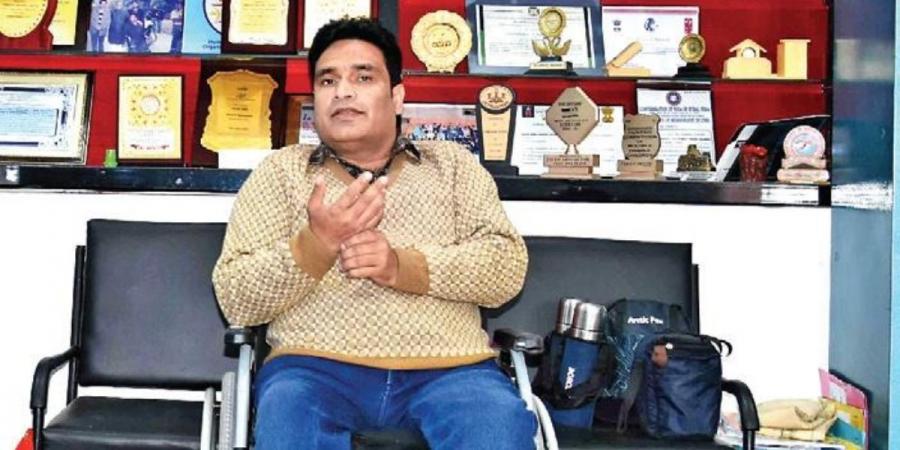
Though Javed Ahmad Tak was confined to the bed for years after getting injured in a militant attack, he is now teaching hundreds of disabled kids to tackle life’s challenges.
Javed Ahmad Tak’s school is currently teaching 120 differently-abled students. (Photo| EPS)
Jammu & Kashmir :
Javed Ahmad Tak’s life took a dramatic turn in 1997. Hit by a bullet during a militant attack, he was confined to the bed for years first and now to a wheelchair. But Tak, now (45), has taken his disability head-on and has created opportunities for others like him. Today, he is a role model for many differently- abled people.
On the night of March 21-22, 1997, 21-year-old Tak was injured in firing at his uncle’s house at Bijbehara in Anantnag. “The gunmen had come to attack my cousin who was the block president of the National Conference. I tried to save his life and suffered a bullet injury,” recalls Tak. The bullet caused severe damage to his spinal cord, kidney, pancre a s and intestines.
Tak, a BSc final year student at that time, remained hospitalised for about an year. After being discharged in February 1998, he remained bedridden for the next three years. “While being confined to bed, I would hear noises of young boys playing outside my home. In June 2000, I told my mother that I don’t want to sit idle and want to teach these young boys for free,” Tak said.
“I taught 80-90 boys for the next four years. After free coaching, I also started a book bank at my home to help boys and girls from poor families,” says Tak. He also started a uniform and school bag bank for those who could not afford them.
Wheelchair-bound, Tak was not content and wanted to do something for the specially- abled children. He asked his friends and relatives to find out disabled children in his locality and adjoining areas. In 2006, Tak started the Zeba Apa Institute for Specially-abled children.
He also continued his studies and completed his Masters in Social Work from the University of Kashmir in 2007. “Some of the children had mental disorders and their plight was miserable. A few of them were blind and some were hearing-disabled,” Tak said. The government had sanctioned Rs 75,000 ex-gratia to him in 1999 even though he had spent lakhs on his treatment.
“I took the money which helped me to start the school in rented accommodation. I hired a few trained teachers to teach disabled children,” Tak said.
The school was meant for primary students but later it extended up to 8th standard. About 120 differently-abled students currently study in the school which has 25 staff members, including 10 trained teachers.
The teachers use a variety of methods to teach different types of disabled students. Tak also has a teacher from Kerala, who is a special educator and speech therapist. “He helps us frame syllabus for different kinds of disabled children. He also trains the teachers,” he said.
The school does not have any fixed fee system and it is for parents to decide how much they can afford. “Some parents pay normal charges, some meagre and some don’t pay at all,” Tak says. With no help from the government, the school runs on donations from the public, NGOs and civil society groups. The school now has its building. “We constructed the building with the financial support of locals and NGOs,” Tak said.
The school has a good academic record. One of the visually impaired girl students, Zakiya Manzoor, is doing her BA from Delhi University. Another visually impaired Saima Hussain is a junior artist at J&K Cultural Academy. The students have also excelled in sports. They are also being trained in extra-curricular activities. Some have participated in national- level sports competitions and won medals.
Tak says if he had a better transport facility, the school would have over 200 students. The school has purchased two buses on loan for ferrying students, but that’s not enough. There are cases where parents of children have hired accommodation near the school.
Tak hopes to expand the school to the higher secondary level so that it can cater to all disabled children of the four districts in south Kashmir. “I also plan to set up a hostel for students so that those living in far-off places can live here and avail of education facilities.”
source: http://www.newindianexpress.com / The New Indian Express / Home> The Sunday Standard / by Fayaz Wani / March 28th, 2021
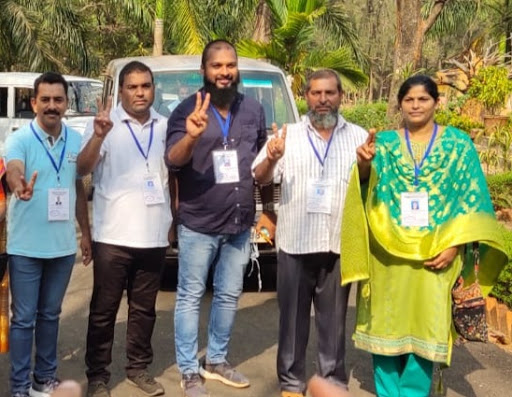
from Left- Idris Shaikh,Sharafat Khan, Sarfaraz Sayed, Vasiyuddin Sayed and Shaizin Shaikh
New Delhi:
As many as five Muslim candidates have emerged as victorious on 5 out of 10 seats in the Valpoi Municipal Council. The winning candidates have been identified as Shaikh Idris ,Sharafat Khan, Sarfaraz Sayyad, Vasiyuddin Sayad and Shaizin Shaikh.
All of them are members of BJP. They were supported by BJP minister Vishwajeet Rane.
As per the media reports, senior BJP councilor Riyaz Beig has also managed to retain his seat in Bicholim municipality .
Elections were held on six municipal councils, the Corporation of City of Panaji (CCP), a Zilla panchayat, and 22 panchayat wards in Goa on 20 March and results were declared on 22 March.
34 years old Sarfaraz Sayed is the youngest among all five Muslim councillors in Valpoi. He has made a history in the town by winning the election with record margin of 489 votes from ward No.6 .and also emerged as a winner with highest margin in the entire state. It is his second consecutive win.
Speaking to Muslim Mirror, Sarfaraz Sayed thanked all the voters for giving great return of his work. He thanked their leader Vishwajeet Rane for supporting them. ”I am committed to work for people. This time also, I will continue the same with full energy and devotion Inshallah, About 130 Hindu voters have also showed their faith in me, I am grateful to them” added Sarfaraz.
Vasiyuddin Sayed ,a social activist ,who has become part of the council for the first time, says helping people who are in need has always been my priority. Now people of my ward have given power to me, now I can continue my work in effective way.
Addressing a press conference, Vishwajit Rane congratulated all the winning candidates of civic polls and said that he is very much thankful for the people of Valpoi for giving a clear mandate to his candidates.
Valpoi is considered a stronghold of BJP minister Vishwajeet Rane who is the son of Sr. Congress leader and Former Chief Minister of Goa Pratap Singh Rane. Vishwajeet won three assembly polls on Indian National Congress ticket but in 2016 he resigned from Congress party and joined BJP as Congress failed to form Government in inspite of getting highest number of seats.
After he joined the BJP, his supporters including Muslims also switched to the party.
source: http://www.muslimmirror.com / Muslim Mirror / Home> Featured / by Muslim Mirror Correspondent / March 24th, 2021
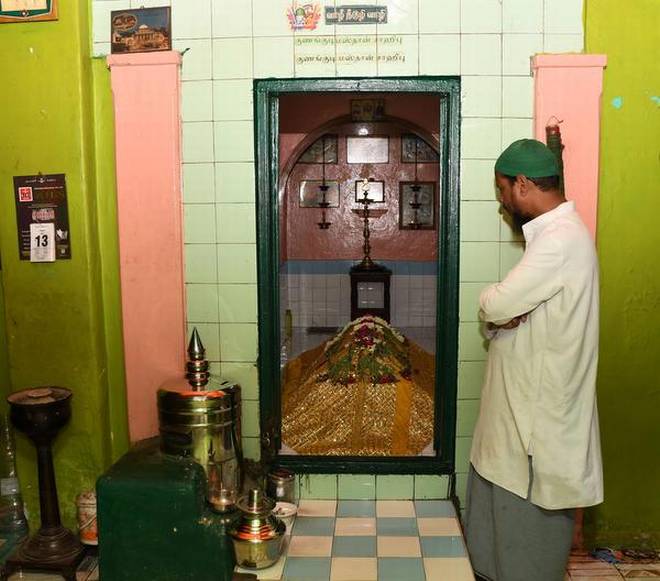
The Hazarath Gunangudi Masthan Sahib Dargah (Kunangudi Mastan Sahib Dargah) at Royapuram in Chennai | Photo Credit: B. Jothi Ramalingam
Written with a knowledge of grammar and aesthetics, their songs are immortal
If you think of the Muslim link to Carnatic classical music, Sheikh Chinna Moula and his descendants and disciples are the first that come to mind. In the 1970s, T.M. Abdul Azeez was a violin accompanist on the Carnatic platform. He is now settled in Kerala, where he teaches music. Abraham Pandithar’s Karunamirtha Sagaram (1917) lists a few Mohammedan names as performing artistes though it is difficult to fathom now if they were performing in the Hindustani or Carnatic styles.
Gulab Mantil is one — he claimed to be a descendant of Mian Tansen of Akbar’s Court and was under the patronage of the Sivaganga rulers. He was adept at various instruments. On Chottu Mian there is no information other than the fact that he was a good singer of Hindustani Music. Nannu Mian and Mirali are listed as brothers, who were noted for their skill on the dholak. Closer home, at Tondiarpet we have the dargah of Kunangudi Mastan Sahib who is propitiated with music of the Sufi variety.
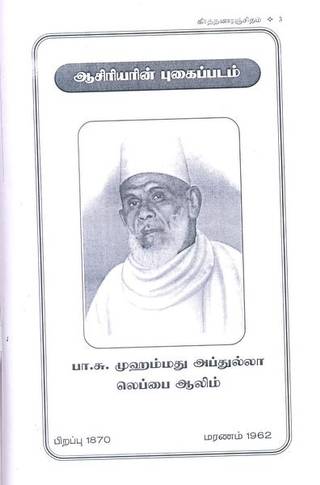
Given this background, it was a revelation when PAK Mohammad Sulaiman walked in with PS Ilyas of Kayalpattinam into the Music Academy a month or so ago. The latter had with him a precious possession — a fragile copy of a book published in 1909. Titled Kirtanaranjitham, it was a compilation of songs composed by his grandfather and Mohammad Sulaiman’s great grandfather, PS Muhammad Abdullah Labbai. It was printed at the Kalarathnakara Press, Madras.
Famous jeweller
A preface to the book gives details of the composer’s antecedents. His grandfather, Sheikh Sadakatullah was a Kazi (judge) at Kayalpattinam and had the privilege of moving about in a palanquin. That made him Pallakku Labbai to the locals. His son, Muhammad Suleiman Labbai got into the precious stone trade and his three sons, of whom the composer was the second, followed him into the business. The first and third sons set up offices in Colombo while Muhammad Abdullah Labbai (1870-1962), the composer, moved to Bombay. He made such a name for himself in the business that jewellers referred to him as Abdullah Jauhari. But his attachment to the dargah where the family prayed, the Shahibu Appa Thaikka at Kayalpattinam, was such that he eventually moved back to take care of it. He is also buried there.
Muhammad Abdullah Labbai has composed around 90 songs as per this book. It is also stated in the preface that the composer presented all of these at the dargah. What is interesting is that some of the songs are still being sung there, though the tunes have changed over time. The book sadly lacks notation (it must be remembered that notation in print was not common practice in the early 1900s). But ragas and talas are provided for every song. The popular ragas are all there, with preponderance for usage of Khamas, Mohanam and Kalyani. There are certain ragas that are not easy to identify. Names such as Desikam, Karnataka Desikam, Mohana Thodi and Nilakambodi are puzzling.
The composer was clearly well aware of the laws of composition and follows the requisites of prosody and alliteration. The language used is Manipravalam — a mix of Sanskrit, Tamil and Urdu/Persian. The bulk of the songs are in the usual kriti structure of pallavi, anupallavi and charanam. The last named are usually three and in some songs, four in number. The mudra of Abdullah appears in all the pieces.
Perusing the songs, you see all the familiar themes of Tamizh Padams — the lovelorn maiden yearning for union with the Supreme, the sending of messages to the divine via swans and companions, berating the Beloved for His heartlessness, and songs of surrender. Besides these, there are songs in the Thevaram format and some structured as Kannis. Certain songs are on specific locations where holy personages are buried, in the manner of kshetra kritis. These include Kayalpattinam, Manjakollai, Kizhakkarai, Saragam/Ervadi in Thirunelveli District, Cannanore in Kerala and Kandy in Sri Lanka.
The book follows the format for music publications of its time. There are benedictory verses in form of kappu, kanni and viruttam. Besides, like the ratha bandams that Tamil scholars of yore indulged in when patterns like chariots could emerge from the way they wrote verses, Muhammad Abdullah Labbai has worked on calligraphy by way of a Chithirakkavi Kattalai Kalithurai. His scholarship came in for praise from several Muslim men of letters, all of whom wrote verses in his praise, which were included in the first edition.
The 1909 publication was reprinted in 1963. This was done with the support of the family business in Colombo. Hussain Bhagavatar of the Panchalingapuram Jam’ath kept the songs in circulation for much of the 20th century. The descendants of the composer are now in the process of bringing out a new edition.
source: http://www.thehindu.com / The Hindu / Home> Society> Faith / by V. Sriram / June 14th, 2018
Appointments to address issue of large number of vacancies in higher judiciary
The Law Ministry on Wednesday notified the elevation of 10 additional judges of the Allahabad High Court as permanent judges while another seven new additional judges were appointed to the country’s biggest High Court.
The Ministry also appointed two additional judges to the Karnataka High Court that has a strength of 62 including the additional judges.
The latest appointments are aimed at addressing the issue of large number of vacancies in higher judiciary that is often cited as one of the primary reasons for the delay in judicial decisions.
As on March 1, of the strength of 1,080 judges across 25 High Courts, there were 419 vacancies.
For example, the strength in the Allahabad High Court is 160 including 40 additional judges but the court was functioning with a strength of 96. Of the 64 vacancies until Wednesday’s appointments, 38 positions were for permanent while 26 posts were that of additional judges.
“The President, in exercise of the power conferred by clause (1) of Article 224 of the Constitution, appointed Justices Ali Zamin, Vipin Chandra Dixit, Shekhar Kumar Yadav, Ravi Nath Tilhari, Deepak Verma, Gautam Chowdhary, Shamim Ahmed, Dinesh Pathak, Manish Kumar and Samit Gopal, to be Judges of the Allahabad High Court,” said the Law Ministry.
It said Mohd. Aslam, Anil Kumar Ojha, Sadhna Rani (Thakur), Naveen Srivastava, Syed Aftab Husain Rizvi, Ajai Tyagi and Ajai Kumar Srivastava were appointed as Additional Judges of the court
Rajendra Badamikar and Khazi Jayabunnisa Mohiuddin were appointed as Additional Judges of the Karnataka High Court for two years with effect from the date they assume charge.
source: http://www.thehindu.com / The Hindu / Home> News> National / by Special Correspondent / New Delhi – March 25th, 2021
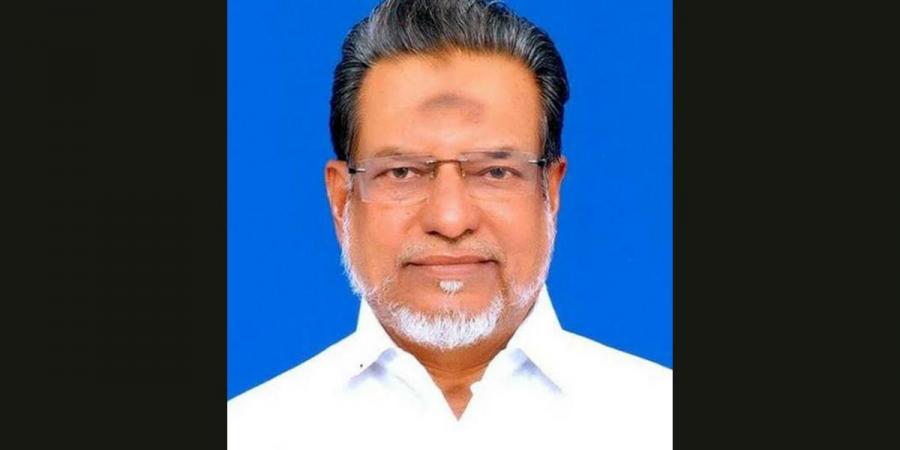
Mohammedjan represented Ranipet constituency in the Tamil Nadu Assembly during 2011-16. He was the Minister for Backward Classes and Minorities Welfare for a brief period.
AIADMK MP A Mohammedjan
Ranipet :
AIADMK MP Mohammedjan died of a ‘sudden severe’ heart attack on Tuesday in Ranipet while taking rest after hectic electioneering, sources said.
The 73-year-old Rajya Sabha member returned home at noon for lunch after completing a round of campaigning. He took rest at home before getting ready to resume electioneering in the evening.
Suddenly he developed chest pain and was rushed to the Govt District Headquarters Hospital in Walajapet in a car. As the pain was getting severe, he was shifted to an ambulance and given first aid before he reached the hospital, sources stated.
On arrival, doctors performed cardio pulmonary resuscitation but in vain.
“He had a sudden severe heart attack leading to immediate collapse. We tried performing cardio pulmonary resuscitation but found that he had died on the way to the hospital,” Singaravelu, Superintendent of the District Headquarters Hospital, told The New Indian Express.
Subsequently, the body was handed over to his relatives before it was taken to his residence.
Mohammedjan represented Ranipet constituency in the Tamil Nadu Assembly during 2011-16. He was the Minister for Backward Classes and Minorities Welfare for a brief period.
In July 2019, he was elected to the Rajya Sabha along with his party colleague N Chandrasekaran and PMK youth wing leader Anbumani Ramadass.
Later, in the year, he voted in favour of the citizens amendment bill as per the decision of his party. Subsequently, the Jamaat in Ranipet had stripped him of all responsibilities with the organisation.
Mohammedjan had also served as a councillor of Ranipet municipality.
source: http://www.newindianexpress.com / The New Indian Express / Home> States> Tamil Nadu / by Express News Service / March 23rd, 2021
According to the INTACH’s listing of heritage structures in the national capital, Jharna was built around 1700 in which additions were made subsequently by later rulers of Delhi.
The tomb of Bijri Khan is located on the Venkateshwara Marg. (Photo| EPS)
New Delhi :
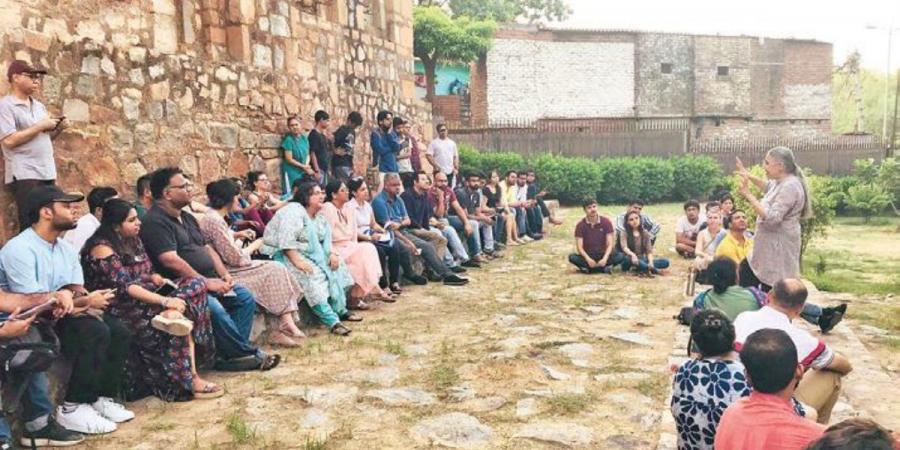
Two inconspicuous heritage sites Jharna, a Mughal era garden in Mehrauli and the Tomb of Bijri Khan in RK Puram are set to get a new lease of life.
The Indian National Trust for Art and Cultural Heritage (INTACH) will develop and promote these historical buildings, victims of urban sprawling, as venues for cultural and literary events under the ‘adopt a heritage scheme’.
The archaeology department of the Delhi government and INTACH have also signed a memorandum of understating (MoU) for regular upkeep and sprucing up of their surroundings. Vikas Maloo, head of office (archaeology), said that the department would soon start working on a plan to develop these site for events.
“We will determine what needs to be done apart from basic amenities such as pathways, installation of dustbins, and toilets. Some requirements are site-specific, which are to be ascertained. Hopefully, both the places will be available for the events soon,” said Maloo.
According to the INTACH’s listing of heritage structures in the national capital, Jharna was built around 1700 in which additions were made subsequently by later rulers of Delhi.
The walled garden earned its name from a waterfall, which was constructed to drain off excess water from Shamshi Talab located in its vicinity. Mughal kings Akbar Shah II and Bahadur Shah Zafar added two pavilions to the place.
The Lodi-period mausoleum of Bijri Khan is located at a raised mound along Venkateshwara Marg. Khan was probably a noble. Apart from this fact, no significant information is available about the tomb and the person buried at the site. The grave inside the sepulchre has no inscription.
As per the MoU, the sites, once ready, will be available for cultural events and activities such as Sufi musical recital, poetry symposiums, book readings, theatrical plays and also for products launches. The officials, in the know of the matter, said that INTACH will tie up with different organisations and corporates for their better maintenance and create awareness about their significance.
“The idea is to promote and bring more footfalls to small monuments. The events, majorly connected with culture, will pave the way for their popularity. They can be utilised for art exhibitions, book launches, musical programmes, and other purposes. Corporates can be roped in to run a cleanliness drive etc. The association will result in their better upkeep and make people more aware of the heritage of Delhi,” said Ajay Kumar, project director, INTACH (Delhi chapter).
The sites will be available for corporate or private events on nominal charges. INTACH will ensure proper illumination and facilities such as a sitting area, benches, kiosks for refreshments, and signage or information panels about the history of the site.
source: http://www.newindianexpress.com / The New Indian Express / Home> Cities> Delhi / by Parvez Sultan, Express News Service / March 21st, 2021
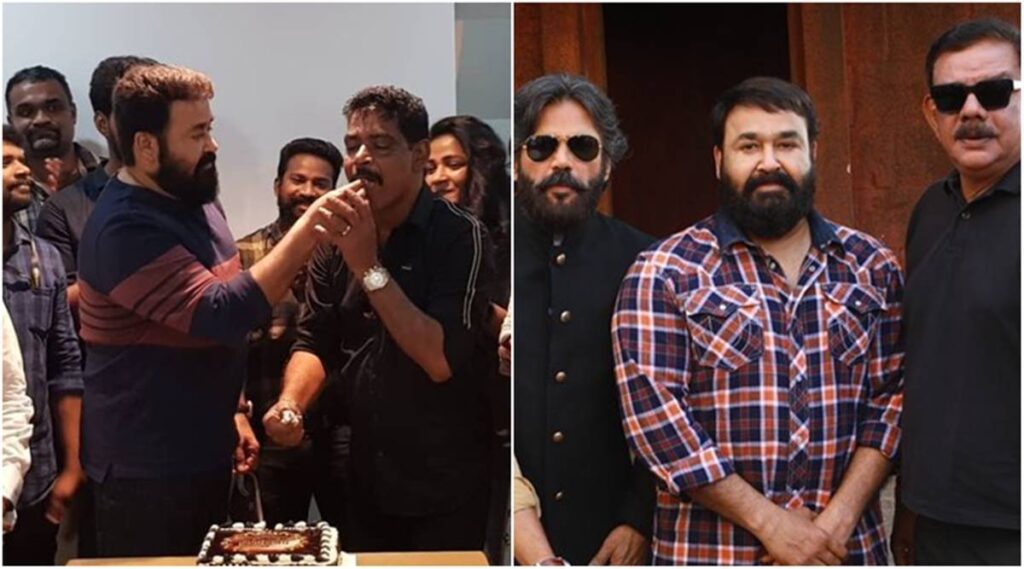
Marakkar Arabikadalinte Simham director Priyadarshan is a proud father as his son Siddharth Priyadarshan bagged a National Award for Best Special Effects in Mohanlal-starrer.
Marakkar Arabikadalinte Simham is directed by Priyadarshan. (Photo: Mohanlal/Instagram)
The team of Marakkar Arabikadalinte Simham is in a celebratory mode as the Mohanlal-starrer won Best Feature Film award, Best Special Effects award and Best Costume award at the 67th National Film Awards ceremony, which took place in Delhi on Monday.
The actor dedicated the National Award “to the glory of the Indian Navy.” The Malayalam superstar celebrated the win with his team and shared the pictures on his Instagram account.
Expressing his emotions, the 60-year-old said, “Hearty congratulations to all the National Award winners. Happy and elated to hear the fantastic news…. Marakkar- Arabikadalinte Simham (Marakkar – Lion of the Arabian Sea) has bagged the National Award for best feature film.
My Congratulations to Team Marakkar and the Captain of the ship priyadarshan for this honour. My sincere thanks also to all who supported us on this labour of love. I join Aashirvad Cinemas in celebrating this award and dedicate it to the glory of the Indian Navy.
Dedicating this overwhelming moment to all such fathers out there in the world aspiring to see their children being succesful and happy. Thanks @Mohanlal, @antonypbvr, Team Marakkar and to all those who supported me . 2/2
For the filmmaker Priyadarshan, the win was also a moment of pride as a father as his son Siddharth Priyadarshan won an award for Best Special Effects. Overwhelmed with the win, Priyadarshan dedicated the awards to all fathers who aspire to see their children achieving success.
“It is an affectionately proud moment for any father to see his children getting recognised for excellence in their chosen field of activity. Dedicating this overwhelming moment to all such fathers out there in the world aspiring to see their children being succesful and happy. Thanks @Mohanlal, @antonypbvr, Team Marakkar and to all those who supported me,” the director tweeted.
Suniel Shetty, who played a pivotal role in the film, said that he is “super proud to be a part of this National award winning film.” Celebrating his very first “National Award-winning film,” Suniel thanked Priyadarshan, Mohanlal and the entire team of Marakkar- Arabikadalinte Simham.
“Big big congratulations to my baby, Chandu, Sidharth Priyadarshan for winning the award for the Best VFX. Once again congratulations Team @MarakkarMovie,” he concluded.
Marakkar Lion Of The Arabian Sea stars Mohanlal as a decorated commander in Zamorin’s naval force. The film also stars Pranav Mohanlal, who plays the younger version of the superstar.
The film, made at an estimated cost of Rs 100 crore, also stars Prabhu, Manju Warrier, Keerthy Suresh and Kalyani Priyadarshan among others.
source: http://www.indianexpress.com / The Indian Express / Home> Entertainment> Malayalam / by A. Kameshwari, New Delhi / March 24th, 2021
Prominent businessman and Democratic Party stalwart Lutfi Hassan formally joins Gandhi Mandela Foundation.
Mr Lutfi Hassan is Founder Chairman of the Apex group of companies and a senior member associated with the Democratic Party of the United States of America.
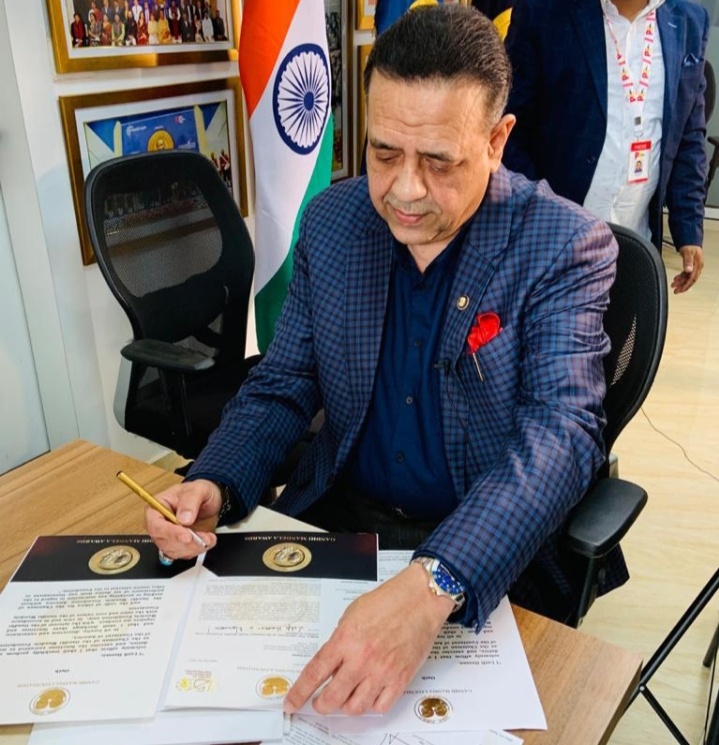
Mr Hassan took oath as the Chairman of the Gandhi Mandela Foundation for the Americas (United States and the Continent), said a press release of Foundation.
Lutfi Hassan
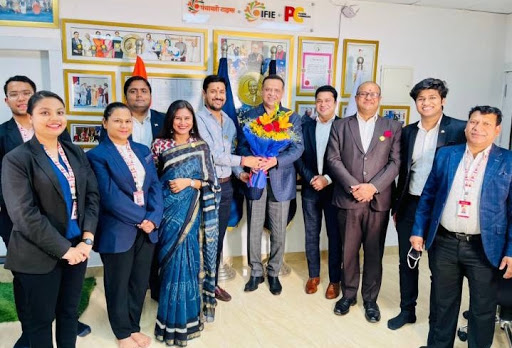
Shri Nandan Jha, Secretary General, Gandhi Mandela Foundation, administered the oath. The ceremony took place at the Gandhi Mandela Foundation headquarters in New Delhi. Syed Yahya Bukhari, President, Jama Masjid United Forum also took part in the oath taking ceremony. Mr. Bukhari presented Mr Hassan with the Gandhi Mandela Medal as souvenir alongwith a bouquet of flowers.
On his new role Mr Hassan said, “My job would also be to involve younger generation, my children, my grandchildren and generations to come, I would like them to know what GMF is all about, and get them engaged. I see a lot of young people here, who are very excited to be part of this fabric, so similarly I would like to expand that in the United States and carry this mission through.”
After the oath ceremony Mr Hassan, Mr Nandan Jha, Shri Adesh Tyagi, Director(GMF), Mr, Faiz Aksari, Jt. Director(International Relations, GMF), Joint secretaries (GMF), Shri Abhinanv Singh, Shri Adarsh Laddha, Ms Sharmishtha Sharma (Media Relations) visited former CJI Justice Shri KG Balakrishnan (Chairman of Jury, Gandhi Mandela Award) at his residence. Justice KG Balakrishnan welcomed Mr Lutfi Hassan as member of Gandhi Mandela Foundation family and presented him the symbolic flag of Gandhi Mandela Foundation.
This meeting was followed by lunch hosted in honour of Mr Lutfi Hassan at the Shangri La Hotel, New Delhi. The team was joined by several other dignitaries. During this lunch meeting the team discussed further plans for the Gandhi Mandela Foundation global expansion.
Mr Lutfi Hassan, is an established civic leader representing the South Asian community in mainstream American politics. Mr Hassan has served as an advisor on Presidential, Gubernatorial, Senatorial, Congressional, Mayoral and Judicial campaigns in the United States. He has served as a national finance co-chair for the Obama for America campaign in both 2008 and 2012. Over the years, Mr. Hassan has also served on the National Advisory Board (NAB) as a member of Democratic National Committee. Most recently, Mr. Hassan served on the board of advisory for South Asians for Biden. He was one of the select few who were invited at the Biden-Harris inauguration ceremony.
The Gandhi Mandela Foundation a Govt. of India registered trust which promotes individual freedom, civil liberties, and human rights across the globe. The headquarter is situated at New Delhi and Global presence include America, Africa, Russia, Great Briton, Switzerland, China, Nepal, Bangladesh.
The Foundation instituted the Gandhi Mandela Awards during the 150th birth anniversary of Gandhiji to celebrate those who have carried forward that the legacies of Mahatma Gandhi and Nelson Mandela. The Chairman of the Foundation is India’s hindu spiritual leader Swami Avdheshanand Giri Ji Maharaj, Patron Swami RamDev. The Jury committee includes former Chief justices of three countries (India, Nepal & Bangladesh).
source: http://www.muslimmirror.com / Muslim Mirror / Home> Indian Muslim / by Muslim Mirror Network / March 11th, 2021