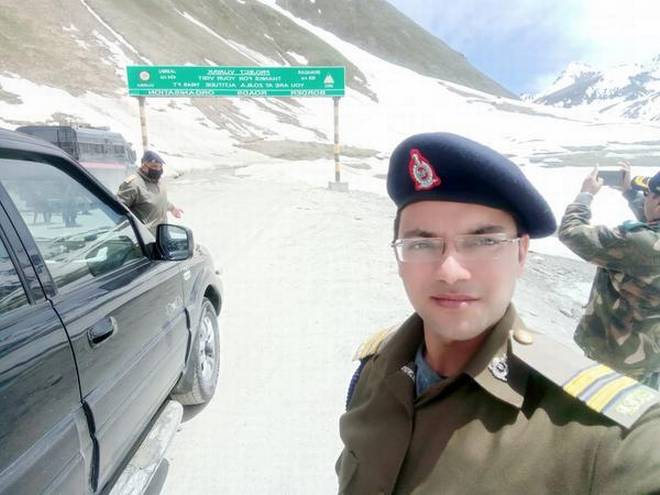
Missing engineer Subhan Ali. | Photo Credit: Special Arrangement
Subhan Ali’s vehicle fell off the road and plunged into the Drass river that flows into Pakistan last June, but the process of matching his DNA with those of his parents is far from over.
The wait for the family of Subhan Ali, a 27-year-old civil engineer posted with the Border Roads Organisation (BRO) who went missing after an accident on the Zozila-Kargil-Leh road last June, just got longer.
Son of a tailor from Balrampur in Uttar Pradesh, the Indian Engineering Service (IES) officer had been posted in Ladakh as part of the General Reserve Engineering Force (GREF) of the BRO when his vehicle fell off the road and plunged into the Drass river that flows into Pakistan.
Though the Pakistani side had recovered an unidentified body on Shingo river close to the Line of Control (LoC) on 27 June, the process of matching the DNA with Mr. Ali’s parents is far from over.
Lok Sabha member and Bahujan Samaj Party (BSP) leader Kunwar Danish Ali had taken up the case with Defence Minister Rajnath Singh in July last year.
Now, eight months later, Mr. Singh informed his Lok Sabha colleague that the DNA matching process would need more time as “the sample is in a queue”.
“It is learnt that DNA matching analysis at FSL [Forensic Science Laboratory], Chandigarh, is in queue and it may take 3-6 months before the report is received. Further action will be taken on receipt of report from FSL, Chandigarh,” Mr. Singh said in his letter dated February 11.
On June 22 last year, Mr. Ali, along with his driver, Palwinder Singh, went missing after their vehicle fell into the Drass and got swept away by the fast flowing river.
While the Gypsy and the driver’s body were recovered from the river, the engineer’s body remained untraceable.
Five days later, Pakistani authorities reported the finding of an unidentified body from Shingo river close to the LoC on 27 June. Following up the lead, the Army Headquarters coordinated with Pakistani authorities to collect the DNA samples of the unidentified body.
The DNA samples of the unidentified body were received by Kargil police at Tangdhar on August 22, 2020. Two months later, the DNA samples of his parents were also collected on October 28, 2020 and was forwarded to the FSL, Chandigarh.
“But since then, it has been a long wait for the family. They have been waiting for a sense of closure to this tragic chapter. Even now, they may have to wait for another six months. I would request the government to speed up the process of DNA sample matching and provide them some relief,” the BSP MP told The Hindu on Sunday.
source: http://www.thehindu.com / The Hindu / Home> News> National /by Sandeep Phukan / New Delhi – February 28th, 2021
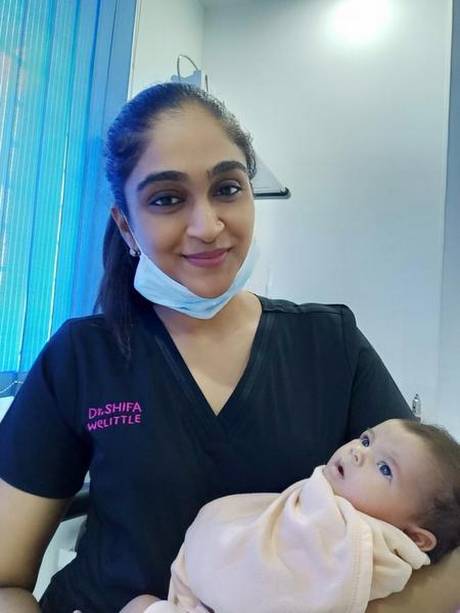
Paediatric dental specialist Dr. Shifa Shamsudeen discusses the work The Tongue Foundation, a non-profit founded by her, will be doing.
Did you know breastfeeding is a bulwark against diseases for both mother and child? Do you wish more people knew this? If you do, then join hands with The Tongue Foundation which looks for support groups to create awareness about mother-child health, in Chennai.
Founder of the non-profit The Tongue Foundation, Dr. Shifa Shamsudeen is establishing her first paediatric dental clinic, We Little, in Chennai soon, and she seeks to replicate the Foundation’s work in Coimbatore, where it has doctors, researchers and parents on board.
“The Foundation informs the general public about how the tongue as a muscle is related closely to many other parts. It starts with breastfeeding, then goes on to teeth development, eating and breathing. It even has a link to cardio-vascular diseases,” says Dr. Shifa, who has earlier worked at various hospitals in Chennai.
“We are trying to find an association between non-functioning tongue, hyperactive deficiency and attention deficiency,” she says, adding that the Foundation is collaborating with researchers and doctors, locally and globally, to initiate more research into the role of the tongue in breastfeeding.
“Bottle feeding can cause narrow jaws and also narrow the wind pipe, eventually leading to disjointed teeth. We are trying to break this chain by creating awareness,” says Dr. Shifa, adding that the group used talks, workshops and seminars towards this end.
“In the past we had associated with Coimbatore Parenting Network to conduct sessions regularly, but we need more people to help us take the Foundation’s activities forward,” she says.
In Chennai, the Foundation wants parents’ groups to spearhead a campaign against bottle feeding, with support from them.
“Or, if you stay in a gated community, invite us over for a talk,” she adds.
For details, visit www.thetonguefoundation.org
source: http://www.thehindu.com / The Hindu / Home> Society> Wellness / by Liffy Thomas / February 27th, 2021
The book “Muslim Endowments Waqf Law and Judicial Response in India” authored by Dr. P.S. Munawar Hussain is making waves as renowned publisher Routledge from London and New York have published its international edition in December 2020. The book has found its place in around 70 libraries of universities and colleges of different countries around the world.
The author is a Joint Registrar of Maulana Azad National Urdu University, Hyderabad who has expertise in waqf affairs. India boasts of more than 6 lakh waqf properties but mostly is under adverse possession or is not used to its optimum potential.
The volume covers several jurisprudential and historical aspects of Waqf, which include Doctrines of Waqf; Essential Requisites of Waqf; Valid Objects of Waqf; Historical Account of Waqf; Emergence of Waqf Law in India; and Constitutional Validity of Waqf in India. The chapters then go on to discuss the Waqf Act 1995 and Waqf Amendment Act 2013. The legal perspectives of each Section of Waqf Act and its amendments are elucidated with references under Reflections. The case-law has been analysed and cited under each Section of Waqf Act, wherever applicable.
As per the information available on Worldcat.org, the book has found its place in around 70 libraries of universities and colleges of different countries around the world including Australia, Canada, U.K., USA, Mexico, Germany, Nigeria, Malta, etc., apart from the Gulf countries in just one month of its release.
The book will be of interest to scholars and researchers of law and legal studies. It will help practitioners of Law, the managers of Waqf Institutions and officials involved in Waqf Administration.
The Foreword is written by Justice L. Narasimha Reddy, Chairman Central Administrative Tribunal and Dr. Ausaf Sayeed, Indian Ambassador to Saudi Arabia. It is priced at 120 British Pounds.
The Publisher has placed the book in Theorising Education Series, because of its innovative work from a wide range of contexts and traditions.
source: http://www.muslimmirror.com / Muslim Mirror / Home> Featured / by Special Correspondent / February 22nd, 2021
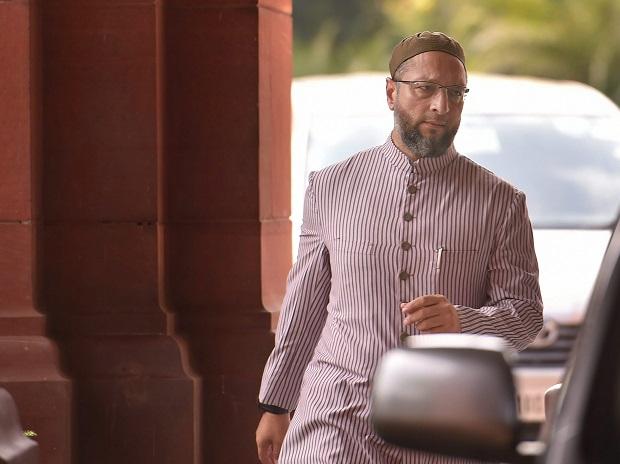
All India Majlis-e-Ittehadul Muslimeen (AIMIM) President Asaduddin Owaisi
Hyderabad MP Asaduddin Owaisi’s All India Majlis-e-Ittehadul Muslimeen (AIMIM) marked its debut in Gujarat polls by winning seven seats in the civic body of Ahmedabad.
Results of polls to six municipal corporations were declared on Tuesday, and AIMIM, which fielded 22 candidates in six wards, ended up with seven wins in two wards.
In Gujarat, each ward of a municipal corporation has four seats.
While a panel of four candidates won in Jamalpur ward, three out of its four contestants won in Maktampura ward in Juhapura area of the city.
Those who won in Jamalpur included former Congress corporators Mohammad Rafiq Shaikh and Mushtaq Khadiwala, while the third victor, Bina Parmar, was a new face.
The AIMIM did not field candidates in Surat, Vadodara, Rajkot, Bhavnagar and Jamnagar, which also witnessed civic polls on February 21 along with Ahmedabad.
Owaisi had addressed a large gathering here as part of AIMIM’s campaign.
(Only the headline and picture of this report may have been reworked by the Business Standard staff; the rest of the content is auto-generated from a syndicated feed.)
source: http://www.business-standard.com / Business Standard / Home> Elections> News / by Press Trust of India, Ahmedabad / February 24th, 2021
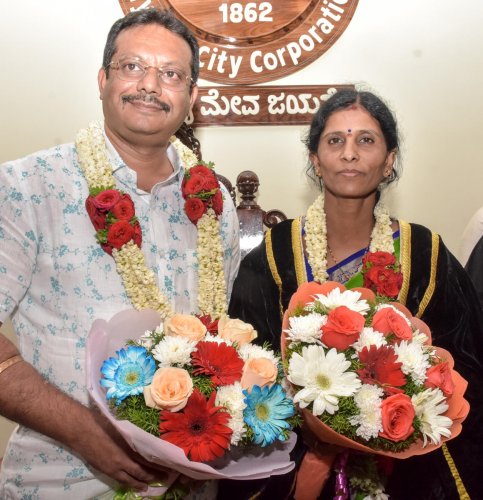
Newly elected Deputy Mayor Anwar Baig and Mayor Rukmini Madegowda in Mysuru on Wednesday. DH PHOTO
JD(S) corporator Rukmini Madegowda was elected as Mayor of Mysuru while Anwar Baig of Congress as Deputy Mayor, on Wednesday.
The election for Mayor and Deputy Mayor posts was held at Mysuru City Corporation (MCC) here. The term of the previous Mayor Tasneem of JD(S) ended on January 19.
The JD(S) and Congress alliance continued in the Mayoral poll, with slight changes. As per the agreement in 2018, the Mayor’s post was supposed to be for the Congress.
While Rukmini managed to secure 43 votes, BJP candidate Sunanda Palanetra obtained 26 votes. Similarly, Congress corporator Anwar Baig was elected as Deputy Mayor, by defeating BJP’s S Satvik.
The mayor’s post was reserved for General Category (woman) and deputy mayor was for general category. Regional Commissioner G C Prakash conducted the elections and announced the results. MCC Commissioner Shilpa Nag was present.
It has to be noted that, as per the agreement between the Congress and the JD(S) in 2018, the mayor’s post was supposed to be for the Congress, in the first and third term of the existing council. But, now the JD(S) retained the Mayor’s post, due to certain issues.
The JD(S) was not ready to continue the alliance with the Congress, due to a rift between Leader of the Opposition Siddaramaiah and JD(S) leaders. However, JD(S) corporators decided to extend support to the Congress, on a demand for the Mayor’s post.
MLA Tanveer Sait said, “We agreed to give the mayor’s post to the JD(S) this time. The mayor’s post will be reserved for the Congress for the next two terms.”
source: http://www.deccanherald.com / Deccan Herald / Home> State> Karnataka Districts / by Ranjith KV, Mysuru / February 24th, 2021
Simone has been a student at the Uptown School in Mirdif for all of her grade school years and has managed to keep straight A’s.
Dubai:
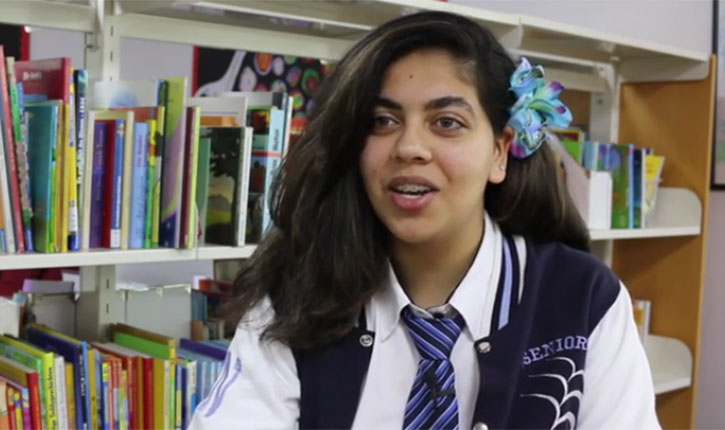
A Dubai-based Indian teen has been offered acceptance letters from seven prominent US-based universities, including Ivy League schools such as Dartmouth College and the University of Pennsylvania, the media reported on Sunday.
Other high-ranking universities, such as University of California in Berkeley, John Hopkins, Emory, George Town and George Washington University, have also offered Simone Noorali, 17, a spot, reports The Khaleej Times.
She has been a student at the Uptown School in Mirdif for all of her grade school years and has managed to keep straight A’.
“I honestly think there is no secret to being accepted into these many universities. The whole process is about discovering yourself. Everyone has something unique to offer,” she told Khaleej Times.
“While applying to universities, it forced me to look back at my life and try to figure out the reason behind everything I did. I had explained all of that eloquently to universities in my college application essays,” said Simone, who is also the head girl at her school.
Besides keeping her grades on top, Simone is also an accomplished pianist, has written a book on human trafficking in India called “The Girl in the Pink Room” that is being used for educational purposes, is part of the school’s Model UN programme.
Simone’s father, Sameer Noorali, said his daughter is a “prime example” of how students can get into prestigious universities without parents having to buy their way in.
When asked which university she would choose, Simone said her decision would be based on which varsity offers the best programme in international relations and economics.
source: http://www.ummid.com / Ummid.com / Home> Education & Career / by IANS / April 28th, 2019
Four more judges have been appointed to the Kerala High Court.
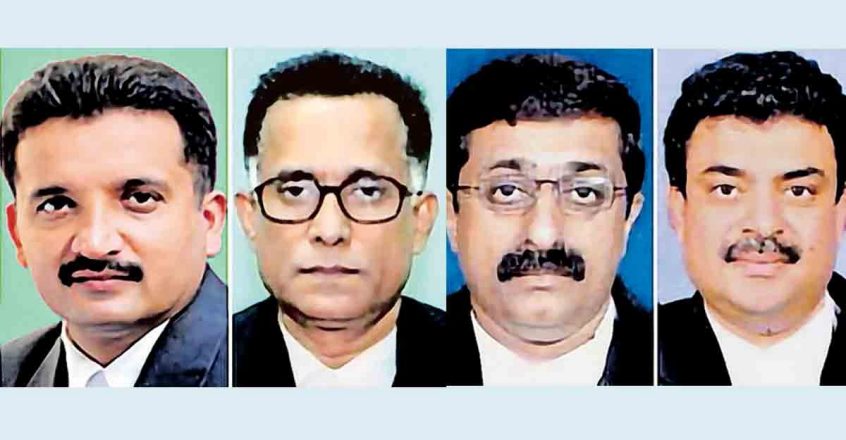
The Union Law Ministry on Monday issued a notification on the appointment of Dr Kauser Edappagath, K Babu, Murali Purushothaman and A A Ziyad Rahman, as per the recommendations of the Supreme Court Collegium.
Dr Kauser Edappagath is the Ernakulam Principal District judge and K Babu is the Thiruvananthapuram Principal District judge. Murali Purushothaman and Ziyad Rahman are High Court lawyers..
Apart from the Kerala High Court judges, the central government also approved the recommendations of the SC Collegium to appoint two judges to the Delhi HC. A total of 16 recommendations were made to the government.
Recent appointments to Kerala High Court: Dr Kauser Edappagath, K Babu, Murali Purushothaman and A A Ziyad Rahman
The new judges in the Kerala HC are:
Dr Kauser Edappagath: A Kannur native, Dr Kauser is the son of PK Mehmood and Roula Edappagath. He began practising law in 1991. After practice at the Kerala High Court, he directly became the District Judge in 2009. Currently, the Ernakulam Principal District Judge.
K Babu: A native of Kottarakkara, Babu is the son of (late) K Karunakaran and K Bhavani. He enrolled as an advocate in 1994. After 15 years of practising law, he served as the Additional District Judge, CBI Court Special Judge, High Court Subordinate Judiciary Registrar, Supreme Court Registrar (Officer on Special Duty) and Sabarimala Special Commissioner. Currently, he is the Thiruvananthapuram Principal District Judge and the Sree Padmanabhaswamy Temple administrative committee chairman.
Murali Purushothaman: An Aluva native, Murali is the son of (late) PM Purushothaman and Saraswathi. He began practising law in 1991. Currently, a High Court lawyer. Also, he is the standing counsel of the Central & State Election Commissions, and the Delimitation Commission.
AA Ziyad Rahman: A native of Thrikkakara in Ernakulam, Ziyad is the son of (late) advocate A A Abdul Rahman and Latheefa. Currently, a High Court lawyer. Expert in electricity, insurance and banking laws.
source: http://www.onmanorama.com / On Manorama / Home> Kerala / by OnManorama Correspondent / February 23rd, 2021
“The working committee of AIMPLB passed a resolution to start a Sharia awareness webseries. It also decided to start a legal journal in the Urdu and English languages,” read a tweet from AIMPLB’s handle.
AIMPLB general secretary Syed Mohammad Wali Rahmani. (File)
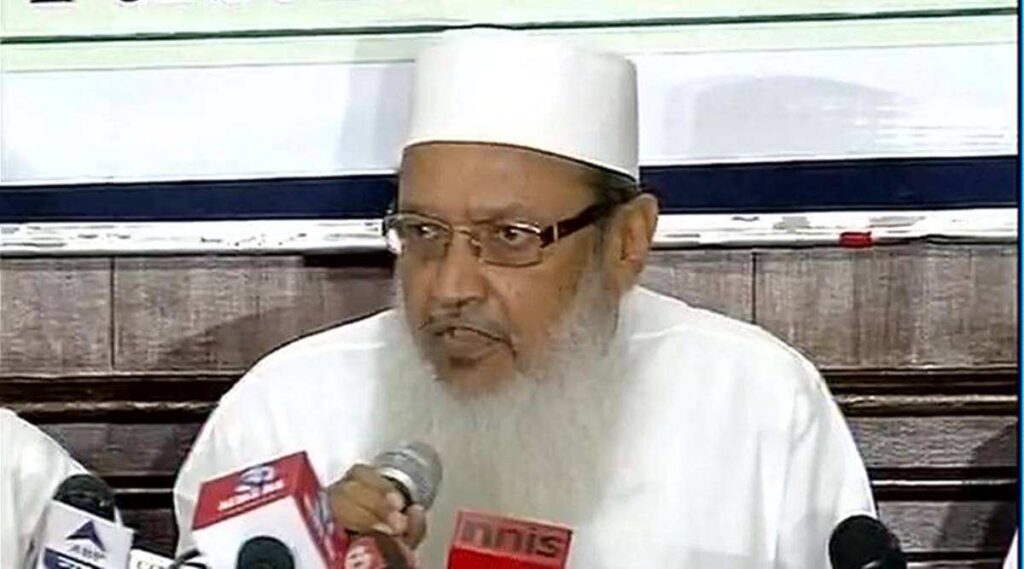
The All India Muslim Personal Law Board (AIMPLB) on Monday announced that it would soon launch a legal journal in Urdu and English, and a webseries to spread awareness about Sharia and Indian laws, and explain court judgments to Muslims.
The decision was taken during a board meeting led by its president Mohd Rabey Hasani Nadvi.
“The working committee of AIMPLB passed a resolution to start a Sharia awareness webseries. It also decided to start a legal journal in the Urdu and English languages,” read a tweet from AIMPLB’s handle.
Speaking to The Indian Express , AIMPLB general secretary Syed Mohammad Wali Rahmani said the idea behind the web series was to spread awareness on legal issues for Muslims. “The series will be done in an interview-discussion format… The series will analyse high court and supreme court judgments so that common people can understand them. Not just Sharia, we will also focus on the country’s laws and judgments,” said Rahmani.
According to a statement issued by the Board, board member Asma Zehra has been tasked with preparing a blueprint for the webseries. Lawyer members like Yusuf Hatim Muchhala, Zafaryab Jilani and M R Shamshad “endorsed this suggestion, and said they will give it their time”.
Advocate M R Shamshad has been asked to prepare a plan for the legal journal in English and Urdu and “present it to the general secretary”.
In the meeting, the issue of safeguarding Waqf properties was also discussed and a campaign in this regard will be launched across the country.
“…The Waqf Act was prepared and approved after a lot of hard work. It has provisions to safeguard Waqf properties from being sold. But efforts are being made from several quarters to make changes to these provisions, which can threaten the safeguarding of Waqf properties. So, it was decided that for the safety of Waqf properties, a campaign should be launched across the country,” read the statement issued in Urdu.
The board said it was fighting cases related to Waqf properties “in its full capacity”.
source: http://www.indianexpress.com / The Indian Express / Home> India / by Express News Service, Lucknow / February 23rd, 2021
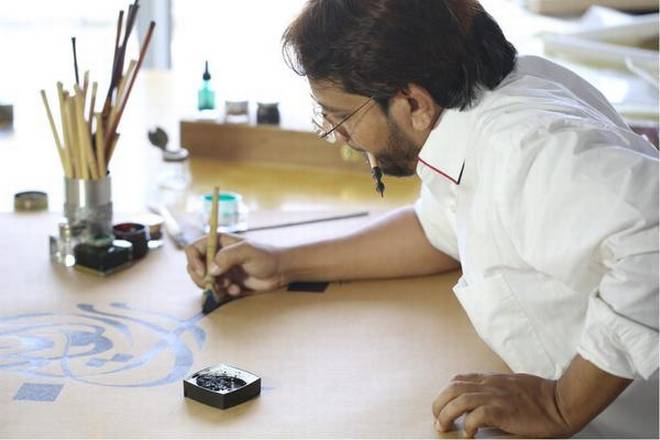
Muqtar Ahmed at work. Photo: Special Arrangement/THE HINDU
A 24-year-old with a global presence and her teacher are among a few keeping the art of Arabic calligraphy alive in India
Bee Bee Laisa, a final year Engineering student in Bengaluru, has a dream. The 24-year-old wants to transcribe a copy of the Koran in Arabic. “I have always been interested in art and drawing, but it was only when I started learning English calligraphy that I was introduced to the art form in Arabic, which would help me transcribe the holy book,” says Laisa.
And so began her journey in 2016, as a student of the Institute of Indo-Islamic Art and Culture (IIAC) at Richmond Street, Bengaluru, to learn Arabic calligraphy. Also known as khat, this centuries-old art form is held in high regard by Muslims because of its association with the dissemination of the Koran before the era of printing presses.
In the past five years, Laisa has mastered the decorative script thuluth considered one of the most difficult fonts, and naskh (used to write the Koran). Her talent has been recognised on several international and local platforms: her calligraphic artworks of Koranic verses and Islamic phrases have been exhibited in Japan, UAE, and Jaipur since 2017.
Calligraphy alphabet sampler by Bee Bee Laisa. Photo: Special Arrangement/THE HINDU
It is a huge leap forward for Laisa, whose father works as a banana delivery vehicle driver in Bengaluru. Laisa says calligraphy has helped improve her concentration and also use her drawing skills in her Civil Engineering classes.
“Calligraphers can’t have any dot or line out of place; this has helped me present spotless drawings for my coursework as well,” she says.
The school uses traditional materials to teach the art, including wooden or reed pens (qalam) and inks from plant-based resins. As per tradition, strands of raw silk are placed inside the inkpot (likka), to help regulate the amount of ink on the qalam tip, and also to prevent spills onto the paper.
“We use a paper called muqahar for the final version. Though it is commercially available, calligraphers also learn how to prepare their own muqahar sheets,” says Muqtar Ahmed, the principal and tutor at of the IIAC.
__________
Built to be timeless
The process of making muqahar was perfected in the 17th Century by Turkish calligraphers, and Arabic calligraphy students still learn it today.
Paper is stained with natural dyes (like tea or floral decoctions) and then coated with a tempering mixture of alum crystals dissolved in egg whites. It is then burnished to get a glossy finish.
“Muqahar paper, if made correctly, can last up to 700 years,” says Ahmed.
__________
Devoted to the art
Ahmed is the man guiding Laisa in her mission. He has the distinction of being the only Indian to have earned his Ijazah (Masters diploma) in Arabic calligraphy from the Turkey-based Research Center for Islamic History, Art and Culture (IRCICA), under the auspices of the Organisation of Islamic Cooperation (OIC). He has trained over 500 students through the school’s weekly courses, and has started online classes during lockdown.
“Calligraphy takes a long time to learn, and one only gets better with continuous practice,” says Ahmed.
His own encounter with the art form is a tribute to his tenacity. As an Intermediate school graduate in a small village in Telengana, he started learning Urdu and Arabic calligraphy and decided to make his career as a scribe for an Urdu publication in Bengaluru, in 1990.
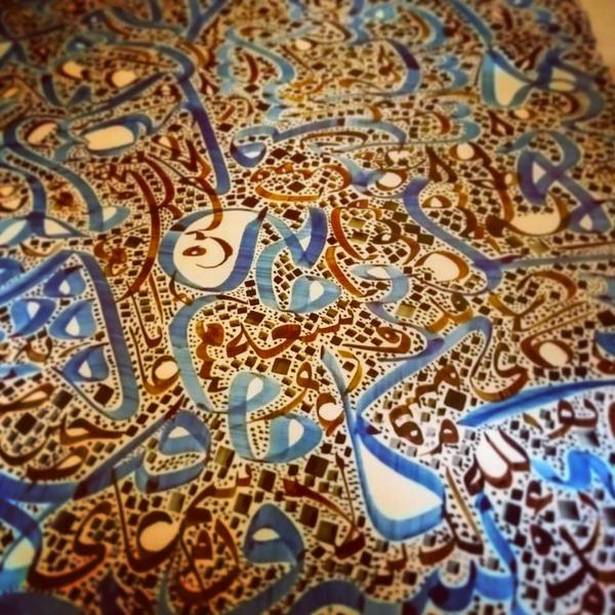
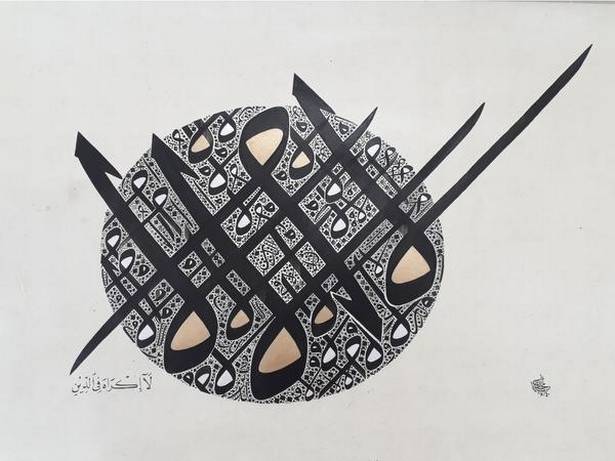
Arabic calligraphy by Muqtar Ahmed. Photo: Special Arrangement/THE HINDU
“I used to write entire pages of articles in the column style, before the computers came in,” he says.
Most of the commercial calligraphy that was done for Urdu and Arabic journals before automated printing lacked the aesthetic values of the original art form, he says.
“I’d like to revive Arabic calligraphy among young people and show them how this can not only be an art but also a way to remember the divine in our life,” Ahmed says.
When he lost his job in 1994, Ahmed decided to research how other calligraphers, especially those outside India, were sustaining their craft. He set up a small commercial press to keep his home fires burning, and kept looking out for masters in calligraphy.
“I realised that it is not a language transforming tool, but an art that has a different respect globally,” he adds.
Among the people who helped him were Washington-based Syrian font designer and calligrapher Maamoun Sakkal, and Mohamed Zakariya, the first Westerner to earn calligraphy diplomas from IRCICA in Turkey.
In what sounds like an incredible process today, Zakariya, who is based in Virginia and does not use electronic communication, tutored Ahmed over postal correspondence for three-and-a-half years.
“I used to send my completed exercises from Bengaluru, and he would reply with his comments and corrections by post. Mr Zakariya didn’t charge me any fees for the tuition, and I feel very fortunate to have been his student,” says Ahmed.
Zakariya also introduced Ahmed to his own master Hasan Chalabi from IRCICA, who invited him to Turkey in 2008. After several visits to Istanbul to learn the art, Ahmed earned his Masters degree in 2013.
Paying it forward
“My professors advised me to start teaching calligraphy in India after I graduated, so that I could rekindle the old majesty of the art. When Mr Syed Mohamed Beary [a local real estate developer] heard of this, he sponsored the establishment of the institute in Bengaluru, and put me in charge of it. I’m glad to see that though it is a very difficult field to excel in, at least 15 of our students are being recognised for their calligraphy,” says Ahmed.
Ameerul Islam and Abdul Sattar, two of his students, have set up a branch of the institute in Hyderabad. IIAC’s curriculum covers the Arabic scripts riqa (for newcomers), naskh and thuluth and nastaliq in Urdu. Learning any two scripts thoroughly is ideal for a calligrapher, says Ahmed.
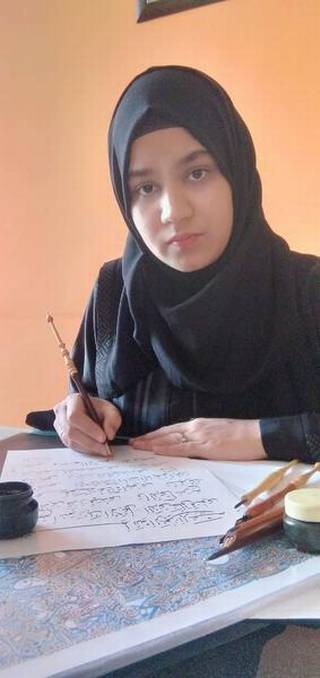
Bee Bee Laisa. Photo: Special Arrangement/THE HINDU
Bee Bee Laisa’s aim of transcribing the Koran is shared by her teacher. “In fact it is the ultimate goal of every Arabic calligrapher,” says Ahmed. “But it is a huge project, because there are at least 600 pages to be transcribed. If we do something with our hands, it is priceless,” he says.
source: http://www.thehindu.com / The Hindu / Home> Society> History & Culture / by Nahla Nainar / February 19th, 2021
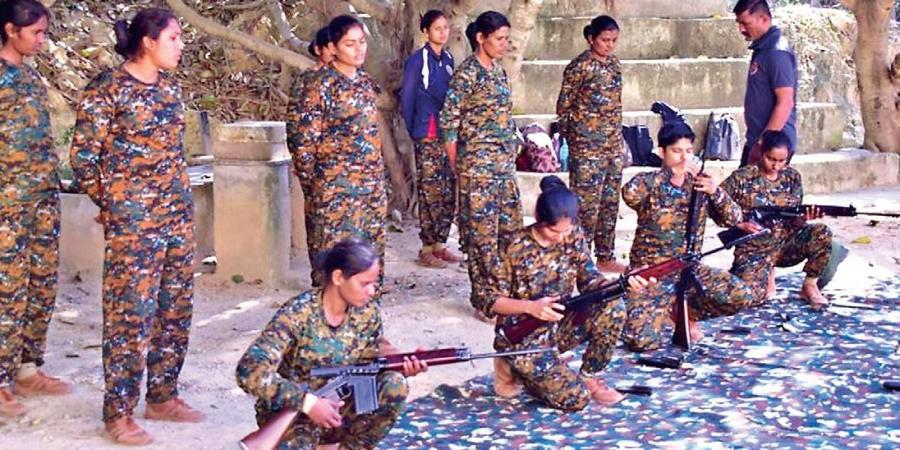
The first batch of women commandos undergoes training for Garuda, Karnataka’s anti-terror force. (Photo | EPS)
What will emerge is a lean, mean team — the first batch of the all-woman Garuda commandos of the Karnataka Police.
Bengaluru :
Seventeen young women, mostly from villages across Karnataka, are training to shoot, handle explosives, rappel, rope walk, handle terror, as they build grit and endurance, for 12 hours a day. What will emerge is a lean, mean team — the first batch of the all-woman Garuda commandos of the Karnataka Police.
The special operational team Garuda, Karnataka’s own anti-terror force, was formed in 2010, and for the first time this year, the department will be training 50 women to join the force. Pre-induction training is on at Bengaluru’s Centre for Counter Terrorism for these 17 women, under the Deputy Director, Lt Col Rohit Nayak and his team led by Superintendent of Police M L Madhura Veena.
“They will form the first all-woman commando team and are undergoing training to handle any kind of terror attack or save victims of such attacks,” said Madhura Veena, the only woman SP in the Centre for Counter Terrorism, of the Internal Security Division (ISD). The Response Counter Terrorism Team will be based in Bengaluru, and can reach any part of the city in 30 minutes. The commandos will be deployed in areas with high concentration of IT-BT companies, besides sensitive areas, including coastal Karnataka.
ADGP of ISD Bhaskar Rao has been appreciative of these youngsters coming from humble backgrounds but with enough grit to be trained into commandos with special counter-terrorism skills such as handling weapons, Improvised Explosive Devices, explosives, rope work and communication, CAD (computer aided design) and navigation, medical first aid and PIN (planning, intelligence and negotiation) etc.
“First batch of Women Garuda Commandos with 17 girls have started.
Few are enthusiastic, few want to go back. But a very strong willed SP, Madhur Veena is spending full time. The girls are amazing quick learners,” Bhaskar Rao tweeted on Saturday. However, when the girls were asked why some of them want to go back, Uma Devi, from a village in Bidar, said, “It is difficult initially. During basic training, after we clear constable post, it’s not so rigorous. Here we are trained in handling weapons, ropes, besides tackling obstacle course,” she told TNIE.
Umashree, 26, a constable with Karnataka State Industrial Security Force, added, “I was among the first two women who began training two months ago with men for the same force. In an emergency, it doesn’t matter if you are a man or woman. You have to have grit, focus and physical strength to bear all this. We motivate women who come for training.”
Rizwana agrees, saying that though her parents work in the fields in a village in Kalaburagi, she had always dreamt of joining the police force and is fascinated by the stars on the uniform. “I will make it big here, I know. I will continue with training,” she says.
After two months of training, they will have to write an examination, after which they will be inducted into the team.R
source: http://www.newindianexpress.com / The New Indian Express / Home> Good News / by Chetana Belagere, Express News Service / February 07th, 2021