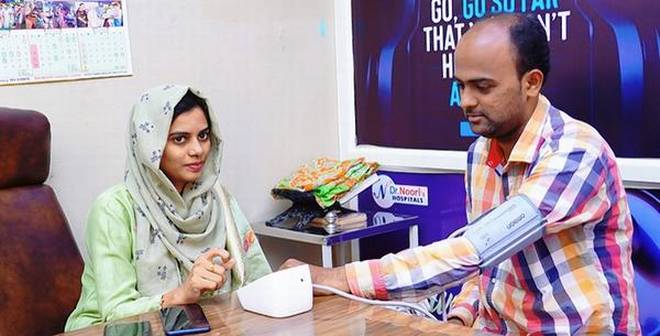
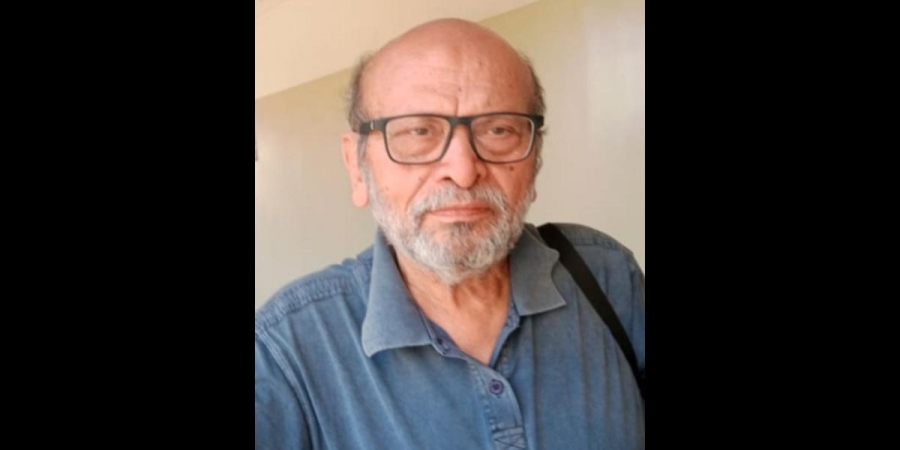
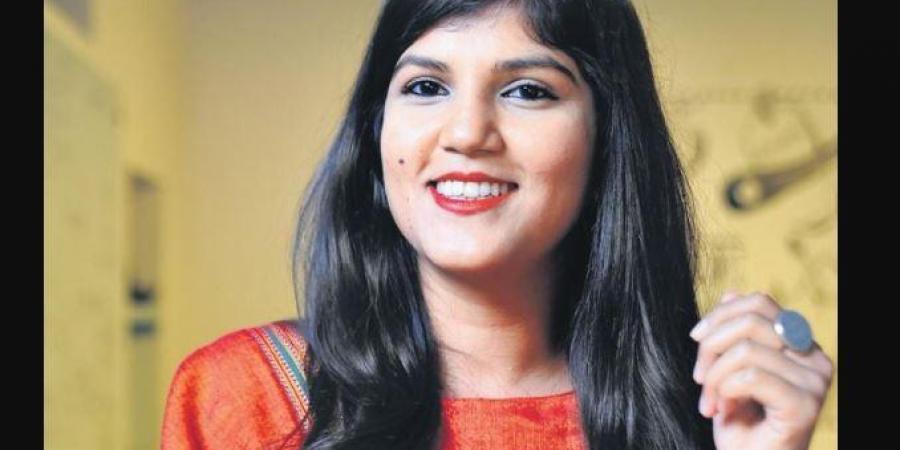
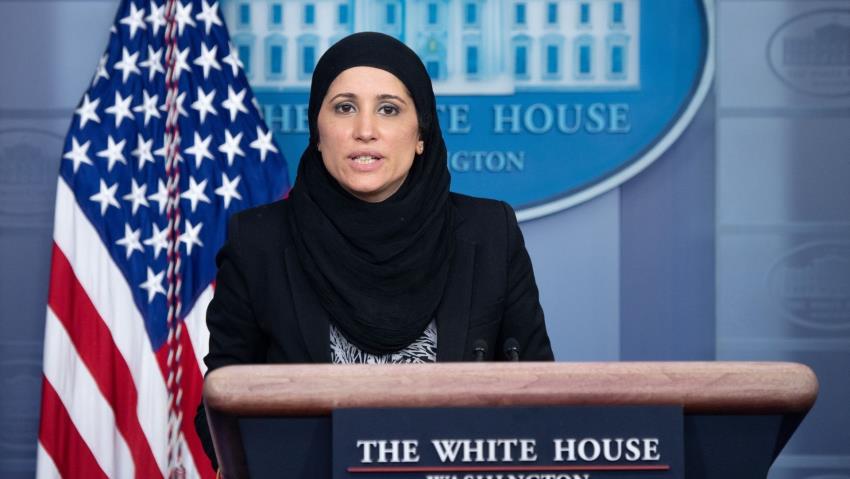
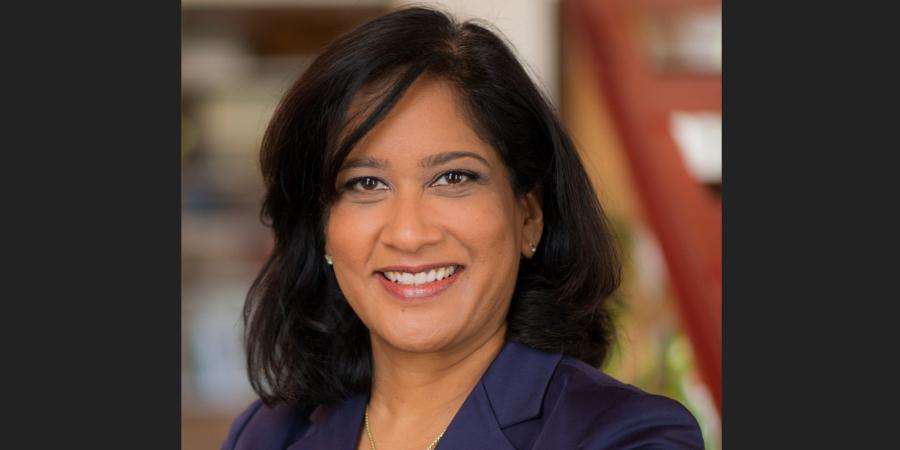
Noori Parveen at her clinic in Kadapa. Photo: Special Arrangement
Noori Parveen wins hearts by making medical care accessible for the poor
A medical practitioner in Kadapa has carved a name for herself by offering medical check-ups to the poor for a consultation fee of ₹10. Dr. Noori Parveen has become a household name for thousands of families by making medical care accessible to people who aren’t able to afford the expensive consultation fees at corporate hospitals.
It all started with children hailing from lower income and socio-economic groups bringing their sick siblings to her clinic in Kadapa city. “They can hardly afford ₹250 or ₹350 as consultation fee, and I thought I should reach out. It was then that I decided to charge a flat consultation fee of ₹10 from every patient,” Dr. Parveen told The Hindu.
In a special interview on the eve of International Women’s Day, she explained that her childhood ambition was not only to become a doctor, but also following in the footsteps of her grandfather Noor Mohammad, a Communist leader in the 1980s, and her father Mohammad Maqbool, a businessman with a charitable bent of mind.
Dr. Parveen studied up to Class IV in Challapalli of Krishna district, and then moved to Vijayawada for pursuing high school in the Urdu medium. Upon getting a medical seat under the minority quota, she joined the MBBS course at the Fatima Institute of Medical Sciences (FIMS), Kadapa.
Her social welfare activities started while at college, when she and her classmates reached out to the local orphanage and old age homes, which continued even after she started her medical practice and launched the Dr. Noori’s Health Care initiative. She soon became known among patients as the “₹10 doctor”.
Dr. Parveen recently launched a women’s health facility where gynaecology services are also offered for ₹10. “Most people with medical complications do not know whom to contact. I refer them to the concerned specialists in neurology, orthopaedics or gynaecology, again, for just ₹10,” Dr. Noori explained.
Though her gesture has brought laurels, she struggles to make ends meet. “Unlike my peers in the medical field, I still ask my father for money to meet my needs, and have no qualms in depending on my spouse after marriage. I am here to serve society, not to make money,” she said.
source: http://www.thehindu.com / The Hindu / Home> News> States> Andhra Pradesh / by A.D. Rangarajan / Kadapa – March 07th, 2021
The Urdu writer was chosen for his work Fakr-E-Watan
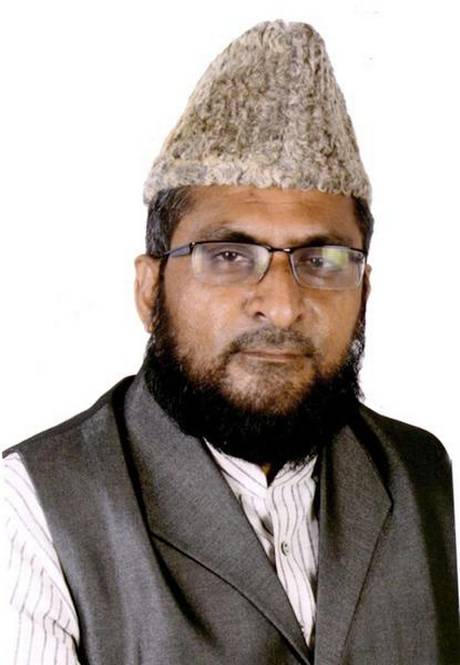
Shikaripur-based Urdu writer Hafiz Karnataki has been chosen for Sahitya Akademi’s Bal Sahitya Puraskar of 2020. He received the award for his book Fakr-E-Watan, a work on freedom fighters of India.
Mr. Karnataki, 57, began his literary career as a poet in the 1980s and later turned towards writing for children. So far, he has brought out 94 books. He has translated many vacahanas of Basavanna and Akkamahadevi and writings of Kuvempu into Urdu.
Born into a family of teachers, he developed an interest in literature at a young age. He became a teacher at a government primary school in 1987 and worked at different places before resigning from the job in 2006.
Now he looks after his educational institution, which provides education to 3,000 girls at Shikaripura. He also worked as chairman of Karnataka Urdu Academy. A couple of students have done PhDs on his literature. Considering his contribution to the field of literature, Gulbarga University honoured him with an honorary doctorate in 2013.
After the Sahitya Akademi announced the award on Friday, he received calls from different parts of the country congratulating him. “I am getting congratulatory messages from many people. First among those called me were the scholars who did study my literature for PhD,” he told The Hindu on the phone.
Mr. Karnataki wants to hit a century by bringing out six more books soon, as he has already published 94 works. “Children of the present generation are more intelligent than me. I wish to write for them on values they have to inculcate at a young age,” he said. The award carries a cash prize of ₹50,000, besides a memento.
source: http://www.thehindu.com / The Hindu / Home> News> States> Karnataka / by Special Correspondent / Hassan – March 14th, 2021
Opportunist, vote-splitter, kingmaker or gamechanger? Profile of Abbas Bhaijaan Siddiqui, the entity making ripples in the battle for Bengal.
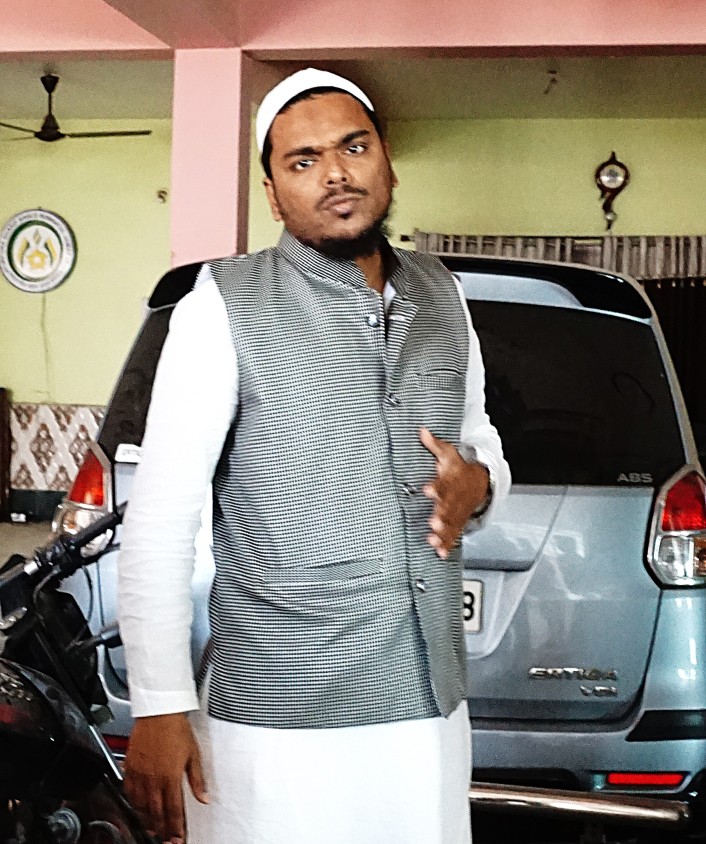
Abbas Siddiqui / Prasun Chaudhuri
I head out for Furfura Sharif in Hooghly district, 44 kilometres northwest of Calcutta, one early March morning. Hooghly is the potato bowl of Bengal. As the car speeds down the Durgapur Expressway, I notice freshly harvested potatoes in pink sacks dotting bare fields. I don’t have to ask for directions to the village centred around a 14th century mosque; it is all too well known.
Furfura Sharif, according to one of several theories, derives its name from the Farsi word farre farrah, meaning glory and happiness.
As my car veers off the expressway, I spot huge flex banners welcoming pilgrims to the upcoming Esaal-e-Sawab, an occasion where people congregate to pray for the deceased. The three-day-long gathering held every spring attracts over a million Muslim men from eastern India and Bangladesh. At the centre of the celebrations is a light green structure with golden domes — the mazar or tomb of Pir Hazrat Abu Baqr Siddique.
The pir, known locally as DadaHuzur, was a 19th century Sufi saint, educationist and social reformer. He had founded charitable organisations, orphanages, madrasas and health centres. To date, large sections of Muslims from Howrah, Hooghly, South 24-Parganas, North 24-Parganas and Dinajpur districts of Bengal visit Furfura Sharif to pay obeisance to him.
The area covers at least 90 Assembly constituencies in a state in which Muslims constitute about 27 per cent of the population. In the past, come election time, politicians would come here to offer prayers and meet the pirzadas, or direct descendants of Pir Hazrat, and seek their blessings and support.
This year, Furfura Sharif is in the news for a different reason. For the first time, a pirzada will be contesting elections.
Abbas Siddiqui, the 35-year-old who has floated the Indian Secular Front (ISF), a formation suddenly embraced by the Left Front — and to an uncertain degree, the Congress — ahead of the Bengal polls, is the great-grandson of the pir.
The place is milling with representatives of political parties, reporters and television crews. At the centre of it all is a freshly painted pink mansion, about 300 metres from the mazar. It is the office-cum-residence of Abbas and his family.
” Furfura Sharif was home to Pir Hazrat Abu Baqr Siddique, a 19th century Sufi saint.Abbas is his great-grandson and the first pirzada to join politics “
As I step into the courtyard, I find Abbas surrounded by TV crews of five different national channels. Before I can introduce myself, he signals as if to say I should get in the queue with the rest of the journalists. As I wait, I watch the man in white kurta-pyjama, waistcoat and skullcap. He is almost six feet tall, clearly in love with the TV camera. His voice is hoarse, possibly from all those recent campaigns.
Some men are at work erecting pandals for Esaal-e-Sawab. Young madrasa students in long robes and skull caps are scurrying around running errands. A couple of passers-by are gawking at the TV crews. A TV reporter, who is also waiting, is live-streaming all of this.
Abbas shot to fame overnight, after Left Front leaders introduced him at the rally at Calcutta’s Brigade Parade Ground on February 28. His freshly minted party was introduced as the third component of the United Front of the Left and the Congress. The unsaid expectation — ISF would help them eat into the Muslim vote bank of their arch enemy, the Trinamul Congress (TMC). Before joining the coalition, Abbas had been in talks with the Hyderabad-based AIMIM, headed by Asaduddin Owaisi.
” In a 2020 speech, Abbas lashes out at Nusrat Jahan, ëJara deho bikkiri kore tara desh bikkiri korbe na ki maane aachhe. He also said he would ensure she is tied to a tree and beaten up–“
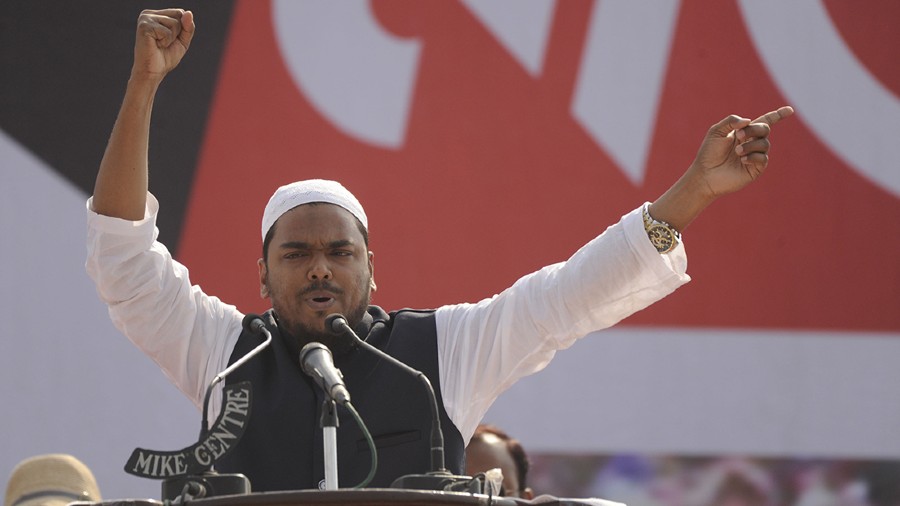
At the Brigade Parade Ground, Abbas delivered a high-decibel speech calling for “the uprooting of Mamata, leader of the BJP’s B-team”. The Left Front-Congress combine has been repeatedly saying the ISF includes people from backward Hindu classes and Adivasis. The president of the ISF, Simal Soren, is also a member of the tribal community. But when I browse videos of Abbas’s past speeches at Islamic jalsas organised across Bengal, there is little doubt that he is conservative and fundamentalist to the core.
Among his most controversial and incendiary speeches is the one in which he lashes out at the TMC MP Nusrat Jahan. In the 2020 speech at a jalsa in Sasan in the South 24-Parganas, he thunders “Jara deho bikkiri kore tara desh bikkiri korbe na ki maane aachhe… those who sell their own body can some day sell their own country”; Abbas also said he would ensure Nusrat is tied to a tree and beaten up. On other occasions, he called Calcutta’s mayor Firhad Hakim “a kafir”, “beimaan” and “namak haram” for organising Durga Puja. He even attacked Bengal chief minister Mamata Banerjee for wearing the hijab and reciting Islamic verses, “to fool Muslims”.
Ever since he expressed his intention to form a party to “expose the TMC’s appeasement politics”, Abbas has not tired of accusing the TMC and the state police of hounding his supporters. Apparently, these Muslim youths between 18 and 35 have been framed for possession of fire arms and narcotics, threatened and beaten up on their way to his jalsas, while he himself has been accused of spreading “terrorist ideology”.
Biswanath Chakraborty, a political commentator and professor at Calcutta’s Rabindra Bharati University, has been following the rise of Abbas. He says, “Abbas wouldn’t have risen had his followers not been harassed and heckled by the TMC.” Chakraborty and his students conducted a survey among Muslim youth — educated and unemployed — which revealed their animosity towards successive governments. Says Chakraborty, “They feel the so-called secular parties have been playing with them. They think it is time to create their own political space.”
Chakraborty says that, though late, the Left Front in Bengal has realised the ground reality of identity politics. He has no doubts about Abbas’s huge support base among the Muslim youth, but is not sure if he will be able to get the votes of Dalit Hindus and Adivasis.
Justifying the Left Front’s move, Shamik Lahiri, a senior leader of the CPI(M), says, “Those belonging to scheduled castes, tribes and minority religions, and Adivasis are sick and tired of the TMC’s treachery and the BJP’s increasing atrocities. These people are now uniting as different organisations. The ISF is one such outfit.”
And what does the Left have to say to the charge of aligning with a communal force? The CPI(M)’s politburo member Mohammed Salim says vehemently, “Defaming the ISF is part of a well-planned conspiracy being played out by the RSS and its associates…”
The RSS-BJP may have been shrill in its criticism of the new front for bringing “Muslim fundamentalist politics” into mainstream politics, but BJP MP Swapan Dasgupta, also a columnist with The Telegraph, offers a more balanced analysis. Says Dasgupta, “A significant chunk of the Muslim vote plus the transferable vote of the CPI(M) would make the third formation more winnable and catapult the ISF to a position where it could claim to be the foremost representative of Muslims in the state… Abbas would become the Bengal counterpart of Assam’s Badruddin Ajmal.”
In the 2019 Lok Sabha elections, the BJP benefitted as the Left and the Congress votes fell into its kitty. The ISF can hope to harvest some of these votes for the United Front. Alternatively, if Hindu voters of the two old parties perceive the ISF as an aggressive communal force, they may turn to the BJP.
The TMC’s top leaders, however, have decided to ignore Abbas. Saugata Ray, senior leader of the TMC, says, “Not only will I not say anything (about Abbas or the ISF), I won’t even utter the name.”
Even within Furfura Sharif, Abbas doesn’t seem to have the support of all sections. Buzurgs, or elders, such as his uncle Pirzada Tawha Siddiqui stand firmly with the TMC.
I spoke to Narul Islam, who works with a charitable outfit there. He says, “Dada Huzur had laid down a guideline for his descendants. Following that no pirzada directly joined politics in these 82 years after his demise. Abbas is an exceptional character and a controversial one too.”
According to Dipankar Bhattacharya, general secretary of the CPI-ML (Liberation), Abbas’s rise is proof that a political vacuum has been created in Bengal due to increasing Hindu supremacist aggression. He says, “Abbas is trying to get into this. But the question is — has he got that leadership quality?” Bhattacharya is apprehensive that by yielding such a wide berth to the ISF, the Left Front-Congress alliance might help the BJP sharpen communal polarisation.
Bhattacharya adds, “Hoping the anti-BJP voters are mature enough to avoid the BJP trap.”
‘The TMC has stamped us communal’
Abbas Siddiqui / Prasun Chaudhuri
Why did you defy family diktat and join politics?
The situation was never so bad. Never before have Muslims, Dalits or minorities faced such atrocities like the NRC or the CAA. Never before were Indian citizens driven into detention camps or threatened with deportation. The situation forced me. Even Babasaheb Ambedkar has said, “We will no longer beg for our rights but grab them.”
Then why not fight the polls alone?
Electorally we are not that strong yet. But we do have supporters in several districts. So, we decided to build an alliance… If we get the rights in this jot we will continue. I’d like to quote Kanshi Ramji, founder of the Bahujan Samaj Party, who said: “Hamein majboot sarkar nahi, majboor sarkar chahiye.” If a party gets over 200 seats, it will browbeat others. However, such dadagiri is not possible in an alliance.
Why did you choose the Left and the Congress and not the AIMIM?
Our talks with the AIMIM didn’t progress. We chose the Left Front and the Congress as they have a proven track record. The Left had done a remarkable job of distributing land to poor Muslims, Dalits and Adivasis. There was little corruption and the unemployment situation was not so bad during their regime. The Congress gave the country so many institutions, dams, power plants, railway networks.
Was there an effort to tie up with the TMC?
No. They’ve stamped us as “communal”.
Some believe you will split the minority votes and help the BJP.
What will happen if Muslim votes get split? Do you think this will help the BJP polarise all Hindu votes? Do you seriously believe all Hindus in Bengal want the BJP to come to power?
Your past comments about Nusrat and Firhad Hakim had raised a storm.
Those comments were put out of context. My point is you have to state your religion clearly and follow its basic tenets. If you are a true Muslim, you can’t worship an idol. Similarly, if you are a Hindu you cannot don a hijab and recite Islamic prayers. You can’t join an iftar if you haven’t done proper ritual fasting during Ramzan. You don’t have the right to insult either Hinduism or Islam.
source: http://www.telegraphindia.com / The Telegraph Online / Home> West Bengal / by Prasun Chaudhuri / March 14th, 2021
… says writer-filmmaker Asghar Wajahat, who was in Bengaluru for the staging of his play, Jissney Lahore Nai Dekhya
Asghar Wajahat
Bengaluru :
That she could become a playwright’s muse was the last thing on her mind when mai (mother) – a lone elderly Punjabi Hindu woman in Lahore – was trying to figure out her survival in Pakistan, when she refused to come to India after Partition. Four decades later, and across the border, a scant piece of information on her led Asghar Wajahat – a well-known Hindi playwright, novelist and documentary maker from Uttar Pradesh (UP) – to pen Jissney Lahore Nai Dekhya (Those who have not seen Lahore) in 1989. The play is not about the pain of Partition.
“It is a paean to insaniyat (humanity),” said Wajahat in an exclusive talk with CE on the sidelines of the show in Bengaluru. The play, directed by Zafer Mohiuddin, was staged at the Alliance Francaise on Sunday. “It highlights the mindset, which divides people on the basis of nationality, ethnicity, religion, caste, race and language, among many other things, and what humanity can do to bring people together,” added Wajahat.
“The characters in the play, from a cleric who, when confronted with the question whether a Hindu could live in Pakistan, says that the earth belongs to God and anyone could live anywhere, to the character of real life poet Naser Kazmi, who says that an artiste’s world has no boundaries, believe in togetherness,” he said. Besides raising the existential questions on life, its driving and dividing forces, the play has portrayed strong women characters. In fact, their roles have highlighted how patriarchy has sidelined their voices.
“A daughter of a family that provides shelter to mai asks her mother that if a Hindu could live at ease with a Muslim family where was the need for Partition? In reply, her mother says, “Tum apney abba sey poochho (ask your father).”“It says a lot about male dominance and the absence of women’s voices in decision making,” said Wajahat.
Contrary to its spirit and the message it aims to send across, performing Jissney Lahore Nai Dekhya has not been an easy task. “When the play was taken to Karachi, the director of the play Khaled Ahmed was refused permission by the Pakistani authorities. They objected on the grounds that a Hindu was the protagonist of the play; that the playwright was Indian and that the killing of a religious cleric in the play sends a wrong message in an Islamic country. Ahmed did stage the play at Goethe Institute in Karachi. In Meerut, in UP, permission to stage the play was denied because its title is Lahore and the authorities felt that it was about Pakistan,” he smirked.
“It is ironical that Jissney Lahore nai Dekhya has raised issues surrounding the myth of ‘us versus them.’ It is about ironing out the creases and celebrating human relationships, above all,” said the veteran playwright.Wajahat is also an avid traveller, who looks forward to visiting people-oriented places. “I love meeting people wherever I go,” he said. From being invited to weddings by newly-made friends to being caught on the wrong side of law are some of the many anecdotes in Wajahat’s travelogue.
source: http://www.newindianexpress.com / The New Indian Express / Home> Cities> Bengaluru / by Bala Chauhan / Express News Service / March 02nd, 2021
Bengaluru’s zero-waste advocate Sahar Mansoor has brought out a guide book that provides personal insights and interactive activities to help the reader transition to a more sustainable lifestyle.
Sahar Mansoor
Bengaluru :
Health and environmental issues have come to the fore in the last one year. With increasing number of people becoming conscious about their choices, the recently-released book, Bare Necessities: How to Live a Zero-Waste Life, by Sahar Mansoor and Tim de Ridder aims to provide personal insights, interactive activities and solutions that can help you transition to a more sustainable lifestyle.
”The book has taken a staged approach where the reader journeys through topics that are intimate such as personal care routines and fashion choices, to more communal areas of life such as the kitchen, home care and festival occasions. It also looks at broad aspects of life, including the community and global impacts of waste. One of the fantastic things that we have achieved is to provide a toolkit of zero-waste information and insights throughout, such as my personal stories about how to make zero-waste products such as toothpaste and food such as holige,” says Mansoor.
Published by Penguin, the guide (Rs 299) includes activity sheets to share ideas with friends and families throughout the text. “We have provided recipes, tips and tricks and other ideas to help people learn, and enjoy the zero-waste journey,” says Mansoor, who has been working in the sustainability sector since 2015, participating in areas like waste reduction and climate change.
Ridder and she began putting pen to paper in September 2019. “Unfortunately he had to work abroad from October to January last year. We had to face challenges such as scheduling meetings across time zones.
When the borders were closed in March 2020, he stayed permanently in Australia,” she says. The situation also provided them a new perspective, and prompted them to add valuable sections in the final version. “We would love the book to be used in schools, where kids can learn about the wealth of resources available in India. There are opportunities to learn how to compost, create a community garden and make sustainable gifts,” says Mansoor.
source: http://www.newindianexpress.com / The New Indian Express / Home> Cities> Bengaluru / by Express News Service / March 09th, 2021
Sameera Fazili is the daughter of Kashmiri immigrants [AFP] / pix: english.alaraby.co.uk
A hijab-wearing US official spoke at a White House press briefing on Wednesday, prompting social media users to hail the moment as symbolic, after year of Islamophobia normalised by the previous adminstration.
Sameera Fazili, Deputy Director of the National Economic Council, addressed reporters on President Joe Biden’s executive order to address electronic chip shortages and other critical supply chain issues.
Fazili, a graduate of Harvard University and Yale Law School, was appointed to the key position in the new administration last month. The National Economic Council deals with the economic policymaking process and provides policy advice to the president.
Social media users welcomed Fazili’s first appearance as an official in the Biden administration, with some interpreting the image of the hijab-wearing Muslim official as symbolising a shift away from Donald Trump’s legacy of bigotry towards Muslims.
“A month after Trump is gone and we have a sister in hijab giving the press briefing at the White House”, wrote Imraan Siddiqi, executive director of the Washington chapter of the Muslim Council of American Islamic Relations (CAIR). “The Islamaphobes are weeping,” he added.
Shahed Amanullah, a Muslim tech entrepreneur who served as a senior advisor to the US State Department between 2011 and 2014, expressed similar sentiments.
He described the appearance of Fazili, the daughter of Kashmiri immigrants, as showing “how far we have come in just a month – from incompetence and exclusion to intelligence and inclusion.”
Aymaan Ismail, a US Muslim journalist focusing on identity and religion, compared Fazili’s appearance to anti-Islam activist Brigette Gabriel , who was invited to the White House by Trump:
“Trump invited Islamophobes like Brigette Gabrial into the WH. Today, sister @sameerafazili delivered a press briefing. My how quickly things have changed”
Shortly after taking office in 2017 Trump instituted a “Muslim travel ban”, which Biden reversed in a flurry of executive orders last month. The ban was one of several xenophobic campaign promises made by Trump, which included the creation of a Muslim registry and the surveillance of mosques.
He commented on alleged ‘threat’ posed by Muslims living in the West throughout his presidency, fuelling rage among white supremacists and the far-right.
source: http://www.english.alaraby.co.uk / The New Arab / by The New Arab Staff / Homepage> News / February 25th, 2021
Social activist Rehana Adeeb, who is fighting for the rights of women in areas such as Muzaffarnagar, Shamli, Baghpat and Saharanpur in western Uttar Pradesh, is a symbol of courage. On the occasion of International Women’s Day, TwoCircles.net tells her story.
Saharanpur:
“I will not be able to live keeping my mouth shut, just tell everyone.” In the area dominated by Khap panchayats, a dozen women sing this folk song. The resonating voice reverberates in the area. Even the noise of the hookah is not able to suppress it.
The creator of this voice Rehana Adeeb is a name for female upliftment. Men of the area call her a ‘rebel woman’, but for her daughters, she is a messiah.
Social activist Rehana Adeeb, who is fighting for the rights of women in areas such as Muzaffarnagar, Shamli, Baghpat and Saharanpur in western Uttar Pradesh, is a symbol of courage.
When 52-year-old Rehana of Chilkana of Saharanpur was two years old, her mother left the world. And when she turned 14, her feet were shackled by marriage.
In a family of five siblings, Rihanna blew up the bugle against the male-dominated society. She started going from village to village to awaken the women. She began to talk about women’s rights and raised her voice against the prevalent silence.
Gradually, Rihanna’s bold voice and her work became the talk of the town and she became sore in the eyes of the male-dominated society. “But I was not afraid, I persevered,” she said.
In a conversation with TwoCircles.net, Rihanna tells the story of her struggle. She says that when she lost her mother at the age of 2, her father re-married. “The new mother could never replace the old mother. I was then married at the age of 14. My husband Mukhtar Ahmed used to work in a factory. I was the only educated one in my in-laws’ house. The confrontation increased there. I could not understand them. They could not understand me. As a result, we split up. My husband came to Chilkana with me,” she says.
This period of life had left a deep impact on Rihanna’s mind and she says she would experience frequent anger. “I used to feel bad about why I was married so early in life. It would not have happened if my mother was alive,” she says.
Rihanna says that she was sent to her in-laws directly from the school. “It was too much. Such excesses were happening against most of the girls. I cannot stitch my mouth. The flame inside me started to blaze and I went door-to-door to motivate women to raise their voice against the atrocities happening with them,” she says.
The effect of her activism started showing. The women in her started becoming aware of their rights and they expressed opposition to their daughter’s early marriage. “They started demanding to send their daughters to school. Things changed. The women refused to keep their tongues tied,” she says.
Rihanna started her activism in the villages of Sandholi block in her town Chilkana, which were backward.
“Opposition to my work also became strong. Men banned me from coming to my own house and their women were banned from talking to me. I was abused,” she says.
At this point, Rihanna says that she felt people had bad feelings towards her and she felt the need for support. “For this, I met the officers and expressed the intention to spread awareness about the rights of women. They understood my feelings and made me a partner in a government scheme, Mahila Samakhya, in which I had to do the same work in ten villages. Now that this work was official, the male society could not stop me from meeting women. I advised women to get organized and gathered them and started meeting. Now a group of men started raising questions about my character. Hearing this gossip about me, my brother would ask me to leave this work,” she said.
Rihanna says that a turning point in her life was her joining a social organization called Disha. “I got a big platform by joining this organization internationally. I was called to Beijing to discuss women’s rights. Gradually, our work started spreading. Now some men came in support of me,” she says.
“2005 was an important year of my life. During this time, I established my social organization ‘Astitva’ and the first battle was fought for Imrana. The Imrana scandal was discussed widely. Her father-in-law misbehaved with her, whereas a fatwa was issued against Imrana. But later Imrana’s father-in-law was sentenced to 10 years for his crime. In the Muzaffarnagar riots in 2013, we kept fighting in favour of women and till now we are fighting,” she says.
Rihanna expresses disappointment when a section of society calls them rebels. “This is a much bigger problem, especially among Muslims. Take the history of Islam and see that this religion has given women the most entitlements and rights. But it is not known who gives ‘fatwas’ against women, but would not issue ‘fatwa’ against the evildoings of men like betting, gambling and other evils,” she says.
Rihanna has four daughters and all have completed B.Ed. “I want my daughters to inspire women to break the silence,” she says.
Thirty-five-year-old Aamna, a resident of Budha Khera village, has only praise for Rihanna.
“Rihanna Baji has opened many avenues here. Even if she has become a sore in the eyes of some people, she has our respect. Recently, her ‘Yuvati Mela’ got a lot of praise. During this mela, the girls unite and do awareness-based programs,” she says.
Rihanna is today known by her nickname ‘Netani’ in Chilkana. “Rihanna Ji has brought a great change in our life. Now there is no such girl here who is not going to school,” Sabia, a 16-year-old girl from the area says.
source: http://www.twocirlces.net / TwoCirlcles.net / Home> India News> India Politics> Indian Muslim> Lead Story> Women / by Aas Mohammad Kaif, TwoCircles.net / March 08th, 2021
Ex-Army personnel Sheikh Abdul Kareem drives autorickshaw in Hyderabad. (Photo: Screengrab from youtube video)
Hyderabad:
An ex-serviceman, who was a star medal awardee during the India-China war, now drives an autorickshaw in Hyderabad for a living and has appealed to the state government for help.
Sheikh Abdul Kareem, an ex-Army personnel is a Star Medal recipient, a special award for his contribution to the India-China war.
Speaking to ANI, Kareem said, “I was recruited into the Indian army after the death of my father who worked for the British Army and then for the Indian army. In 1964, I entered the Indian army.”
“I participated in the India-China war and was posted in Lahaul area. I was awarded Star Medal and was the special award recipient in 1971,” he said.
Kareem said, “During the reign of Indira Gandhi, as there were surplus army personnel, many of them were removed from the postings and I was one of them. While in the army, I applied for government land and was given five acres of land in Gollapalli village in what is now Telangana.”
He said, “After nearly 20 years, the five acres land that was given to me has been distributed among seven village persons and after complaining about the same, I was offered another five acres under the same survey number but was denied the original land. Now it has been nearly about one year and till now the document of the land details are not ready.”
He said that after being removed from the army, he faced a lot of problems. He said that he does not even own a home and currently, at the age of 71, is driving auto-rickshaws to feed his family.
“I offered my services to this nation as an army personnel for nine years but was removed and am now driving an auto-rickshaw at the age of 71. It has been difficult to feed my family. I do not even have my own house so that I can look after my family,” he said.
He also urged the government to provide ex-servicemen who are homeless with the double bedroom flats that are given to the poor.
“Despite winning a good service medal, I have not even received any sort of pension or any financial support from the government. I also request the central government to financially support ex-servicemen who are in need of help,” he said.
source: http://www.siasat.com / The Siasat Daily / Home> News> Hyderabad News / by Sakina Fatima / March 03rd, 2021
Naureen Hassan, Indian-origin veteran of the financial services industry. (Photo | Twitter/@NewYorkFed)
As the first vice president, Hassan will be the New York Fed’s second ranking officer as well as an alternate voting member of the Federal Open Market Committee.
New York :
An Indian-origin veteran of the financial services industry has been appointed as the first vice president and chief operating officer of the Federal Reserve Bank of New York.
Naureen Hassan has been appointed by the board of directors of the Federal Reserve Bank of New York as the first vice president and chief operating officer, effective from March 15.
The appointment was approved by the Board of Governors of the Federal Reserve System, the Federal Reserve Bank of New York said in a statement.
As the first vice president, Hassan will be the New York Fed’s second ranking officer as well as an alternate voting member of the Federal Open Market Committee.
Hassan, whose parents had immigrated from India, is a 25-year veteran of the financial services industry with expertise in strategy, digital transformation, cybersecurity and regulatory/risk management.
She was, most recently, the Chief Digital Officer for Morgan Stanley Wealth Management (MSWM).
President and Chief Executive Officer of the New York Fed John Williams said Hassan’s leadership background, deep commitment to fostering diverse teams, and extensive technology and financial experience will be critical to her role as a Bank leader.
Denise Scott, executive vice president of the Local Initiatives Support Corporation (LISC) and chair of the New York Fed’s board of directors, said Hassan’s leadership experience and operational expertise are “fully aligned” with what the search committee and he envisioned for this role.
Scott said Hassan will be taking on the role that is critical to advancing the Bank’s mission and strategic priorities.
The statement added that Hassan has served in various capacities in the financial services industry, focusing primarily on digital and business process transformation.
Prior to working at Morgan Stanley, she was at Charles Schwab Corporation beginning as a vice president of corporate strategy and ending her tenure as executive vice president of investor services, segments and platforms.
According to her profile provided by the Bank, Hassan was formerly a member of the Board of Directors at OneSpan, a USD 250MM revenue public security software and hardware firm, and Ascensus, the largest independent record keeping services provider, third-party administrator, and government savings facilitator in the United States.
Hassan also serves on the board of the California Academy of Sciences and the Cathedral School for Boys in San Francisco.
She was previously on the board of the Charles Schwab Bank and the Women’s Initiative for Self-Employment.
She holds a BA from Princeton University and a Masters of Business Administration from the Stanford University Graduate School of Business.
source: http://www.newindianexpress.com / The New Indian Express / Home> World / by PTI / March 06th, 2021
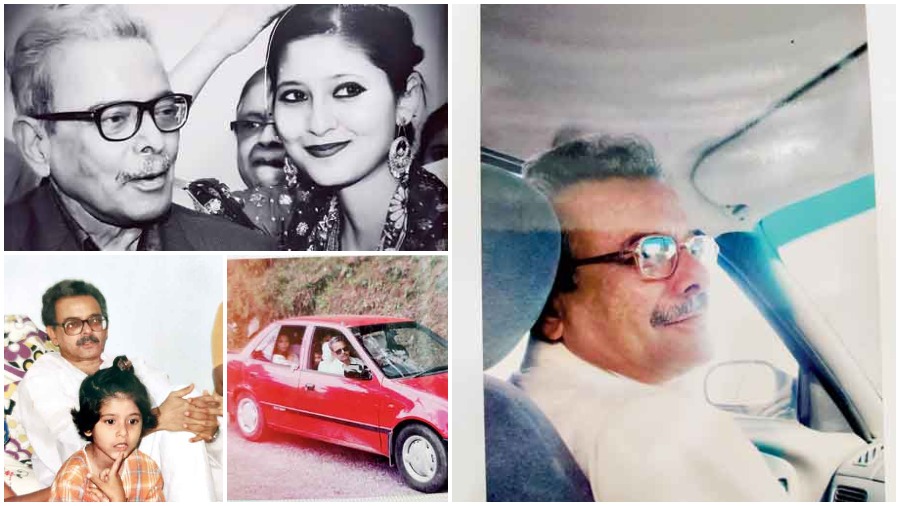
Granddaughter of India’s greatest Urdu poet pens a poignant tribute to her late grandfather
“And He was transfigured before them; and His face shone like the sun, and His garments became as white as light.”— Matthews 17:2-9
My family keeps trying to talk me into mourning the loss of my grandfather, who I lovingly call ‘Bhai’, as did everybody else who knew him. I can’t exactly put this into words and I can’t make people understand that mourning his death is an insult to the madness, the magic, the man, the movement, the miracle, the marvel, the Master. Why don’t you understand that this loss isn’t the kind for me to cry about? This is the kind of loss for me to die about.
When I was a kid, I used to love watching The Lion King. I like to believe that literature and media that you absorb during childhood, shapes your personality as an adult. I always made sure I skipped the scene of Mufasa’s death, with a bewildered and heart-broken Simba trying to wake his father up. It was because I always feared that this day would come, and I would see myself trying to awaken Bhai from eternal, unending sleep. And it did, it happened. And now I am here, and he is there — out there, up there. He is missing from me.
Are they still memories if they’re engraved in my heart, etched on my mind and tattooed on my skin? I like to believe they’re a part of me, my body, an extension to my entity, and as long as I shall live so shall they. So many people argue that he wasn’t my father. They’re right. Because to me, he is God. He is the giver, the provider, creator, the all-encompassing, the all-knowing, the omnipresent.
Provider, because he gave me everything I have and survive on, from my passion and love for animals to my affinity towards literature, music, art. We would stand inside his aviary, enough to accommodate two human beings, where he kept his birds. He would clean and wash their water bowls with his beautiful, wrinkly, holy hands and then he would pick up a bird in the palm of his hands — sometimes a cockatiel, sometimes a budgie, sometimes a quail — and show me, directing my gaze with his finger, the feather patterns, and beak shapes, explaining how a certain type of bird crushes the seed with which exact part of its beak. All-knowing, because he knew everything, quite literally. Anything and everything.
Driving home from a homeopathic clinic, we would have long conversations about The Battle of Karbala, and pretty much every historic event that ever occurred on the face of this planet. We talked about the possibilities of the existence of mermaids — how perhaps, in the course of evolution, a third of the primate population went towards the water and even into it, and developed webbed limbs and tails. We talked about the Fer-De-Lance, we sat and browsed through pictures of wildlife. We discussed dog breeds and how they evolved. He always told me (before the world went ‘vocal for local’) that nothing can beat the hounds of India — the Rajapalayam, The Chippiparai, The Rampur, and the Mudhol. He always had an eye out for the Saluki (a superior type of sighthound that originated in the Fertile Crescent), and would say to me, “Abey Saluki hai kya kahin pe? Saluki mile kahin toh batana, hum le lenge.”
On his birthday in 2019, I had gifted him a deep grey, white-speckled Cockatiel who he named Sooty. He stayed in Bhai’s room, and the two whistled to each other all day. Bhai would talk to him lovingly, and Sooty would chirp back in adoration. When Bhai got sick, Sooty mysteriously died. I had begun to believe that like Bhai’s previous dogs and other pets, Sooty too had died of loyalty in an attempt to take the impending death upon himself. Bhai always believed that wafadaar jaanwar aane wali museebat ko apne sar le lete hain. While it is unlike me — and everyone else in my family — to respond to the death of an animal, that too a beloved pet, with gladness and optimism, Sooty’s sudden passing had given us some hope. We were counting on life to make Bhai get better and to help us get through this untimely qayamat.
Grandfather — this word always gave me the same serotonin release you get from a warm blanket, a cup of hot chocolate, biting through the layers of a Ferrero Rocher, the morning of the day of Id, seeing my birthday cake for the first time.
And now it’s all gone, all taken away away from me. It is so ironic and at the same time baffling how our worst fears manifest right before our eyes. I didn’t allow myself to watch enough of The Lion King growing up because I was afraid if I looked at it then it would somehow happen. And now I see how everything unfolded just like it did in the movie. Covid attacked us like Uncle Scar. And while all of us got Covid, he somehow took it upon himself and while we lived, he left.
My animals in Delhi found me, picked me up, and saved my life, just like Timon and Pumba did with orphaned Simba in The Lion King. I think I have managed to figure out where this affinity comes from and why it has always been this way — the need to be around animals in order to survive. It was just another gift, another tool, another strength my Grandfather was equipping me with and conditioning me for, so that I may be able to carry on someday in his absence, and so that I have a purpose, a reason to live till the time he and I can finally reunite.
Only mourning him isn’t enough, isn’t fair, isn’t needed. His existence was a celebration of life, a creation of art, and his death was transfiguration. He didn’t just lay there still. He sublimated, became one with what he loved most, nature. He united with a power that was of the same immense magnitude that only he alone in this world was made of. If one should live, one should live like this. Not in the lap of luxury but in the embrace of nature. Not in bursts of passion, but in the steadiness of an unwavering purpose. Not for moments of moping, but for the unfazed ambition of the human spirit.
Lead my longing heart
To the high ground, to the clear view
And in awe I’ll be there
Beholding You…
source: http://www.telegraphindia.com / The Telegraph Online / Home> Culture / by Tazmeen Amna Siddiqui / March 04th, 2021