Pandola Village, Sheopur District , MADHYA PRADESH :
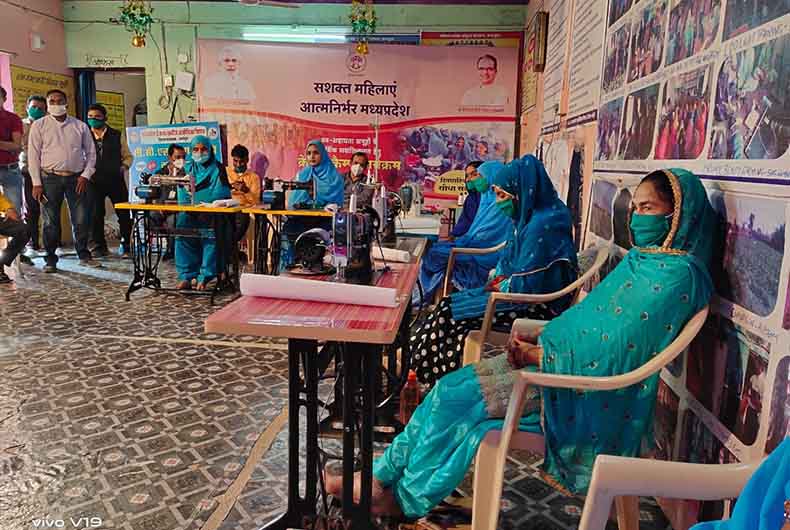
Mobina with her family members had started a campaign to transform the lives of the disadvantaged under the Bismillah self-help group.
A woman who has studied up to the fifth taught IAS officers.
Bhopal:
Mobina, a fifth-grade student hailing from the Pandola village in Sheopur district of Madhya Pradesh has been sharing life lessons with trainees of the Indian Administrative Service (IAS).
This may come as a surprise for many people but it is true that Mobina has been working to light up the lives of women from poor and economically weaker sections in her village.
Most of the members of Mobina’s family earn their livelihood as daily-wage workers but she, along with her family, started a campaign to transform the lives of the disadvantaged under the Bismillah self-help group in 2005. Through this self-help group, 10 women joined this initiative which brought about a dramatic transformation in the lives of their families.
Mobina says that she, along with 10 women, had collected a small amount to begin with and started helping each other. Gradually, they began getting support at the government level and from banks. As a result, today the lives of these women have changed and each of them is engaged in different businesses.
Mobina says that her husband Mohammad Salim used to work as a daily wager. With a meagre income, she could barely grow one crop. As she started earning more, she bought a pump for irrigation and now has started growing two crops. Along with this the income is increasing steadily. Now she has also started giving employment to other people as well.
Jugal Soni of the National Livelihood Mission says that Mobina along with her fellow colleagues, has carried out many new innovations that have earned accolades. They are also becoming economically independent. This is why Mobina and her fellow women were invited to Mussoorie to share their experience with those training for the Indian Administrative Service (IAS).
Mobina says that there were many questions in her mind before going to Mussoorie and she was wondering how she would share her experiences with the people from big cities. She further said that she benefited immensely from this experience.
On reaching there she saw that many girls older than her were still studying and when she returned to her village, they made sure her daughter completed her studies. The women associated with the self-help group are also ensuring an education for their daughters.
Mobina says that she explained to the officials undergoing training in Mussoorie about the genesis of the self-help group, its functioning and the income generated from it in great detail. Her experiences were heard with great enthusiasm by the IAS trainees.
source: http://www.ummid.com / Ummid.com / Home> India / by Sundeep Pouranik, IANS / December 01st, 2020
Dhebar says he got interested in politics at 16 years of age when his elder brother asked him to help a candidate for the municipal election.
Aijaz Dhebar is Mayor of Raipur. (HT Photo)
Thirty-years ago, while everyone would enjoy the conviviality of much awaited recess, a kid from Raipur used to sit alone. He did not have the luxury of bringing food due to his family’s penurious condition. One day, an empathetic lady teacher sensed the loneliness of the child and since then always handed over her tiffin-box to that kid.
That boy, Aijaz Dhebar, now 39, is Raipur Mayor, the first Muslim in Chhattisgarh to hold this post.
His teacher, Iccha Madam, now in her seventies, recalls Dhebar’s days of penury and says that in the last 30 years he has never missed teacher’s day. “He is among the first to ring door bell of my house and wish me teacher’s day,” she said.
“Those were difficult days for us…My father was just a worker in a shop and he had 10 children and therefore, we could not afford lunch in school. Every day, I used to pray to God before recess…..I felt humiliated,” Dhebar recalls, sitting in Mayor’s Chamber in the White House — the municipal corporation building in Raipur.
“Later, my father opened a scarp shop in Muadhapara and then our family’s financial condition started improving,” he says.
Dhebar got interested in politics when he was 16.
“One day, my elder brother instructed me to help a candidate who was fighting for municipal election and it was my first foray in politics. My brother, Haneef Dhebar, was close to Ajit Jogi and later I came close to some of senior leaders of Congress… I was made Baijnathpara ward president of Congress in 1995-96,” Dhebar said.
Dhebar became close to Jogi, who appointed him state president of National Students Union of India in 2001. “In 2006-07, I moved away from Jogi family due to personal reasons,” he says.
“Then I got in touch with Charandas Mahant, who gave me a post in Congress. I worked across the state and organized protests and events against the BJP government,” Dhebar claims.
But, Dhebar earned an image of rowdy in Chhattisgarh politics, which he vehemently denies. “There is was only case against me, in which I have been exonerated,” he says.
But, his rivals in the Congress say he has an image of ‘nuisance’ creator in the party. “I am sure by next assembly election the party will realize its mistake of making Dhebar mayor. He will have a negative impact on all the four assembly seats of the city,” a says a senior Congress leader, preferring anonymity.
But, those close to Dhebar said his image of an “aggressor” is result of his political fight against the Bharatiya Janata Party (BJP) during the saffron party’s rule in the state for 15 years.
“He fought on the streets when BJP was in power and therefore he is often described as an aggressive person. Each and every protest organised by Congress was either led by Vikas Upadhyay (now an MLA) or Dhebar…I have seen him since he was ward president of Congress party in the city…He is always devoted towards for the party and its objective,” said Sandeep Sahu, a coordinator of Other Backward Classes wing of All Indian Congress Committee (AICC).
Dhebar claims that his image was “distorted” by some people for vested interest. “If my image was so bad, I would not have won by the highest margin in municipal election in the state,” he says in his defence.
BJP leaders alleged that Dhebar became Mayor because he was close to those in power in Chhattisgarh.
“During legislative elections, he threatened Congress leader PL Punia and was denied a party ticket after which he ransacked the Congress office. This shows that who has promoted him. He handles all the big mining projects for some important persons in Congress. His image is of a trader not a politician,” Gauri Shankar Srivas, BJP spokesperson, claiming that Dhebar got Mayor’s post because of CM Bhupesh Baghel.
Dhebar had no qualms in agreeing with Srivas on this. “In the era when there is big debate on Citizenship Amendment Act (CAA) and National Register for Citizens (NRC) across the country, Bhupesh ji trusted me,” he said.
In his own words, Dhebar has seen meteoric financial rise. From a family, which was not able to provide him lunch in school, he now owns a lush hotel in Raipur and has invested in at least 10 construction projects in the city. “Ye sab apni mehnat se kiya hai (All this I have got through my hard work)… Not a single paisa is illegally earned,” he says, claiming that he delves in real estate and hospitability business.
Political commentator, Nand Kashyap, said he has earned his position.
“He has been very active since the state was formed and held many dharnas and protests against the previous BJP government. I will not call his appointment as Muslim appeasement. I think, he deserved the post,” Kashyap said.
source: http://www.hindustantimes.com / Hindustan Times / Home> India News / by Ritesh Mishra, Hindustan Times, Raipur / January 31st, 2020
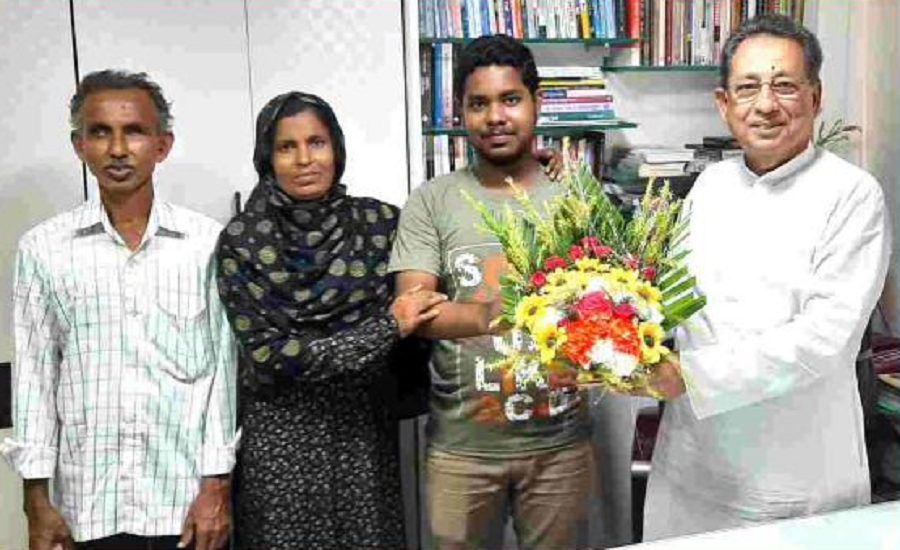
Nurul Islam, general secretary of Al-Ameen Mission (right), with a successful student and his parents.
SPECIAL REPORT
With 63 residential campuses in 20 of the 23 districts of West Bengal, Al-Ameen Mission is mentoring 17,000 students; so far it has produced 3,000 doctors, 2,800 engineers and hosts of civil servants, professors and lawyers.
A SILENT revolution in education is taking place in West Bengal which the rest of India may not be aware of. What is significant about this revolution is that it is happening in the marginalised section of Muslims.
The Al-Ameen Mission, a Howrah-based charitable organisation, has been spearheading a movement for over three decades to educate those who can’t afford quality education. Its success graph is increasing each year. This year, 378 students mentored by Al-Ameen have been selected for medical education (310 for MBBS and 68 for BDS).
This figure is after the first round of counselling held on July 16, 2020, when Clarion India interviewed Nurul Islam, the founder general secretary of the organisation. He is expecting another 100 students to be selected in subsequent rounds of counselling.
A total of 516 students of Al-Ameen have cleared NEET, an all-India written test for admission to medical colleges. Out of that, 378 have already been selected. This is no mean achievement considering the fact that two-thirds of them come from a background where becoming a medical doctor is just unthinkable.
Al-Ameen has been achieving this success year after year. In 2019, its 407 students secured admission in medical colleges for MBBS and BDS education. As many as 370 students were successful in 2018; 115 in 2017; 393 in 2016; 223 in 2015; and 212 in 2014.
Al-Ameen mentors both boys and girls. Thirty per cent of its students come from families who are very poor and categorised by the government as below poverty line. Forty percent are from lower middle income groups. The rest belong to the middle and upper middle income group. That means 70 per cent students enrolled here come from poor families.
Al-Ameen’s journey started in 1986-87 with only seven students. The aim was to give modern education with moral values in a full residential system where students from all strata of society, irrespective of their economic conditions, would stay and learn together. Students coming from the poorest sections of society were given free education. Donations and zakat were collected to meet up with the expenses. Gradually, the name of the mission spread far and wide and people came along and a movement started.
Nurul Islam says that in the 80s when he started his mission, the percentage of Muslim students in medical and engineering colleges of West Bengal was hardly two to three per cent. “But because of Al-Ameen’s efforts that percentage is today between 20 and 30 percent,” he claims.
Admission criteria
The current strength of Al-Ameen is 17,000 students. It admits students from Class V to XII. Those preparing for competitive exams also stay here beyond 12th. Merit is given top priority for admission. A common admission test is conducted for all its branches at 63 residential campuses in 20 of the 23 districts of West Bengal. Those who qualify are called for an objective test followed by interviews of their guardians.
A substantial number of seats are reserved for orphans and meritorious students of very poor families. They are also given special financial aid. In 2019, about 32,000 students appeared for admission tests to classes V to XII. Nurul Islam says his institution is able to accommodate only up to 20 per cent applicants.
Residential facility
Al-Ameen is essentially a residential institution. Those selected are required to stay in one of the 63 campuses that it runs throughout West Bengal. They are taken care of by everything: from education to food to accommodation. A strict discipline is followed by everyone alike from students to teachers to general staff.
Howrah, where it is headquartered, has four campuses in which 3,000 students are living. Al-Ameen also has campuses outside West Bengal: One in Patna, one in Ranchi and one in Tripura. There is one more in Assam which temporarily is not functional.
Scholarship scheme
Fees of the students are determined as per financial capacities of their families. Being a charitable organisation, Al-Ameen gives 100 per cent subsidy in the fees and even takes other responsibilities of education and upbringing of a deserving student if deemed fit. At present, Al-Ameen’s fee structure is divided into three categories:
25 per cent students pay zero to 25 per cent fee. Their subsidy is funded by zakat from across the country;
40 per cent pay fee ranging from 26 percent to 60 per cent. This subsidy is funded through general donations of the public;
35 per cent pay between 61 per cent and 100 per cent.
Focus on school education
Besides preparing students for medical and engineering, Al-Ameen is also focused on basic education of students under its guardianship. This year, 2,223 of its male and female students appeared for Class XII exams of states as well as Central boards. Not only all succeeded, 81 of them even occupied their positions within the rank of 20.
The background of all the successful candidates is noticeable: 605, or 27 per cent, are from poor and BPL families; 775, or 35 percent, from lower middle income groups; and 843, or 38 per cent from middle and upper middle income groups.
Similarly, 1,777 boys and girls took exams for Class 10. Fifteen of them occupied their positions within the rank of 20. Their background: 627, or 35 per cent, come from poor and BPL families; 680, 38 percent, from lower middle income groups; and 470, or 27 per cent, from middle and upper middle income groups.
23,000 Alumni
During the last 34 years of its existence, Al-Ameen has developed a strong base of alumni. They number 23,000, according to Nurul Islam. Out of that, 3,000 are doctors and 2,800 engineers. The rest are in various other fields such as civil services, academia, law and media.
The boys and girls hailing from the most backward areas and lowest strata of society, he says, are now dreaming to become doctors, engineers, civil servants, teachers, professors, researchers, lawyers or journalists.
Nurul Islam calls it a “Silent revolution”.
“Silently, a revolution is taking place. Al-Ameen has become the conduit in this whole churning of transformation which may be defined as a silent revolution,” he says.
A look at the list of Al-Ameen alumni bears testimony to what Nurul Islam is claiming. The list includes successful professionals and academicians in prestigious institutions. What is heartening is their background. Most of them belong to economically poor sections of society. But for this educational movement, they would have remained poor and uneducated. But today, they are respectable members of society and source of inspiration for others.
Some of the notable alumni are listed below:
Md Arif Shaikh, Senior Research Fellow at Harish Chandra Research Institute, Prayagraj, UP.
Dr Safina Begum, MS, Senior Resident at Fort Gloster State General Hospital, Howrah, West Bengal.
Dr Nargis Molla, MS, Specialist Medical Officer (Gynaecology), Dhaniakhali Rural Hospital, West Bengal.
Magfura Parvin, Senior Research Fellow, Vidyasagar University, Midnapur, West Bengal.
Dr Sk Altaf Hossien, MD, DNB Post-Doctoral Fellow, National Institute of Mental Health and Neurosciences (NIMHANS), Bangalore.
Dr Khandekar Fariduddin, MS, Assistant Professor, Malda Medical College and Hospital, Malda, West Bengal.
Dr Hibjul Ali Khan, MS, Assistant Professor, College of Medicine & Sagore Dutta Hospital.
Dr Md Hadiuzzaman, MS, MCH Senior Resident, SSKM Hospital.
Akram Hoque, MBA, Founder Editor, The Policy Times.
Ali Ahmed Alamgir, WBCS, Assistant Labour Commissioner.
Jahangir Mollick, WBCS (Exe), Deputy Magistrate and Deputy Collector, West Bengal.
Shayan Ahmad, WBPS, Deputy Superintendent of Police, West Bengal.
Sk Samsuddin, WBPS, Deputy Superintendent of Police, West Bengal
Ramjan Ali, WBCS, Assistant Commissioner of Revenue, West Bengal.
Dr Kader Ali Sarkar, Assistant Professor, Visva-Bharati University, Santiniketan, West Bengal.
Dr Mukandar Sekh, Assistant Professor, Aliah University, Kolkata.
Md Golam Mortoza, Chartered Accountant, Senior Executive (Finance), Management Development Institute, Murshidabad, West Bengal.
Dr Md Samim Reja, MVSc, Veterinary Officer, Domjur Block, Howrah, West Bengal.
Healthcare unit in Khalatpur
Recently, Al-Ameen has opened a healthcare facility at its main campus of Khalatpur in Howrah district. It is run mainly by its alumni, some of whom are today established medical practitioners. They regularly visit the healthcare unit and give their services to poor and needy people of the locality.
source: http://www.clarionindia.net / Clarion India / Home> Big Story – Special Report / by Shaheen Nazar – Clarion India / November 23rd, 2020
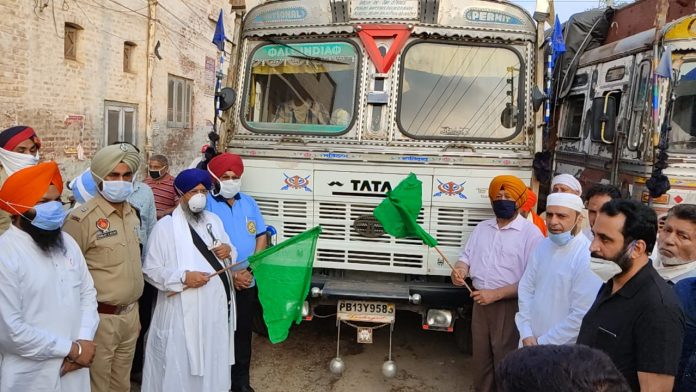
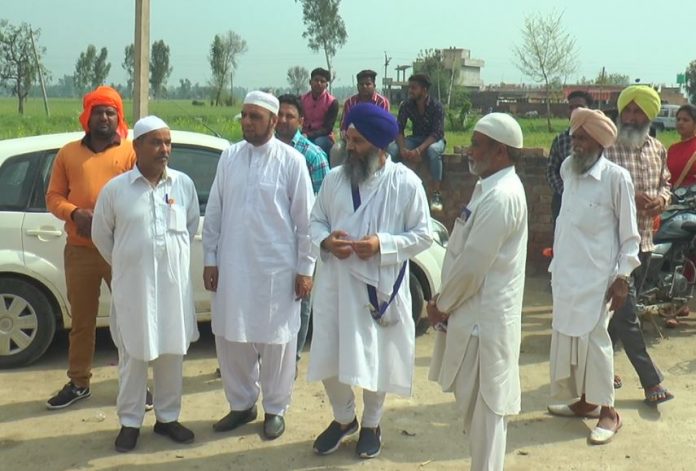
The news about Muslims donating 33 tonns of grain to Golden Temple Langar was widely reported. This initiative of Malerkotla Muslim was highly appreciated by the Sikh Community around the world. The Muslim group reached Golden Temple and did Kar Seva while handing over grains’ trucks to the Golden Temple authorities.
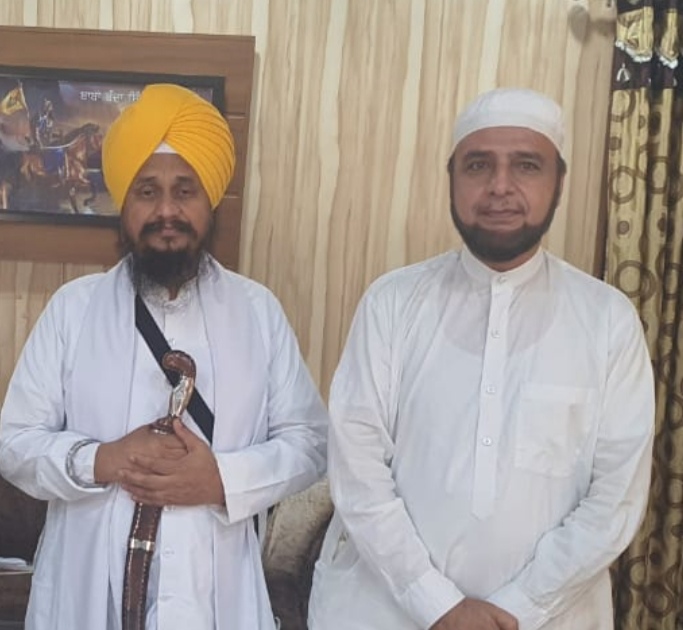
Malerkotla is one of the Muslim majority areas of Punjab. This good Samaritan group was led by Dr Nasir Akhtar who has been working for the Sikh Muslim Unity for the last 15 years.
Dr Nasir Akhtar is running a foundation for Sikh Muslim cooperation in Punjab and is well known for his devotion to Sikh Muslim Unity.
TwoCircles.net’s senior correspondent Aas Mohammad Kaif spoke to Nasir Akhtar of Malerkotla. These are excerpts from the interview.
TCN: How did the idea to collect grains and send them to the Golden Temple come to your mind?
Nasir Akhtar: During the coronavirus lockdown, Golden Temple had issued an appeal for grains. Sikhs were running a campaign to collect food grains for Golden Temple Langar.
Golden Temple runs a huge Langar (Free Kitchen) where food is being served to everyone irrespective of their religion. I felt that we should also contribute to this charitable work. I consulted the people around me. Everyone readily agreed to cooperate in this noble task.
Though we could collect huge donations from a few wealthy people of the area, I thought we must collect 5 kgs of grains from every household in the Muslim majority villages. Such an initiative will give a positive message to further Sikh Muslim fraternity. We worked for 35 days and got a tremendous response.
People cooperated eagerly which became the talk of the town in the surrounding areas. The word spread amongst the Sikh community that Muslims are also collecting grains for the Golden Temple Langar which increased brotherly spirit between these two communities.
TCN: How was your experience meeting the Sikh community?
Nasir Akhtar: It was wonderful. Whenever we reached a village where Sikhs and Muslims live together, Sikh women cried as they couldn’t control their emotions and prayed for us. They offered us cold water and requested us to have meals in their households. The male Sikh elders were honouring us wherever we went. This noble task had an overreach beyond a mere collection of grains.
This initiative has become a symbol of Sikh Muslim amity. Quite often we and our Sikh brother’s team reached a village simultaneously to collect the grains.
They were collecting food grains in their community and we were doing the same in ours. If four or five wealthy people have contributed to arranging grains, this spirit of brotherhood would not have been created. Through this initiative, everyone is participating in this good Samaritan cause.
TCN: What kind of response did you get from Gold Temple authorities when you arrived there?
Nasir Akhtar: Before arriving at Golden Temple, we were felicitated by the eminent Sikhs of Sangrur (District Malerkotla). When they came to know that we have collected 35 tonns of grains, they had requested local Gurudwara authorities to help us in delivering the grains to Golden Temple Langer. The local Sikhs and Muslims were highly impressed with this initiative.
When our group of about 8-10 reached Golden Temple, we were received warmly by Sardar Harpreet Singhji, Incharge of Akal Takht. Such a warm welcome in itself was a great honour for us.
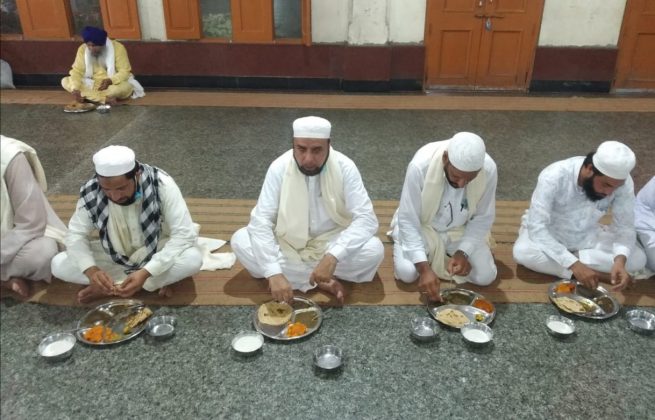
Though Muslims of Punjab do Kar Seva in Langar of Golden Temple, this act of going village to village to collect grains had made a huge impact and created a lot of goodwill. The Langar authorities served us food with great hospitality and we too participated in their Langar service.
TCN: You have been working for the Sikh Muslim unity in Punjab since long. Can you talk about this experience?
Nasir Akhtar: 15 years ago I used to run my clinic. I realized that there are many misconceptions between Sikhs and Muslims. Among them, there are things like enclosing children of Guru Gobind Singh Ji within a narrow chamber. My heart was not accepting it. I first researched myself, left the clinic, did my major in Punjabi, and studied Punjabi books. When I read the books written by Sikhs 300 years ago, I realized that Sikhism is very close to Islam. I understood that they both have the same message. I started speaking about the closeness of both religions in many aspects and for this I referred to Punjabi books. The verses of the Quran were explained in Punjabi and told that the beliefs of the two are quite similar. For this, I wrote books in Punjabi.
TCN: What was the response to your initiative of working for Muslim-Sikh unity?
Nasir Akhtar: There are too many misconceptions. The wounds of 1947 are very deep. After the riots, Sikhs and Muslims came closer. But even today some people keep harping about past mistakes. Malerkotla is a Muslim populated area in Punjab. The local MLA Razia Sultana is a minister in the Punjab cabinet. The Muslims of Malerkotla are quite well off in comparison to other places.
Muslims here work with Sikhs shoulder to shoulder and Sikhs do the same with Muslims where they are in the minority. This is a fine example of brotherhood between two communities. Good work always has good results. People on both sides understand the value of peaceful co-existence. Nowadays, since the news spreads fast, people here expressed appreciation when Muslims gave Mosque land in Saharanpur for Gurudwara. Langar running in Shaheen Bagh by Sikhs was also highly appreciated in Malerkotla.
TCN: What is the goal of your Sikh Muslim affinity Foundation?
Nasir Akhtar: This is an organization under whose banner we are doing this work. I formed this organization 15 years ago. We do all the programs of Sikh Muslim unity under the banner of this institution. The grain collection campaign was also run under the banner of this institution. Promoting brotherhood between Sikhs and Muslims is the only goal of my life and for this reason, I did not marry and left my clinic too. I want to work for this noble cause till my last breath.
TCN: Do you feel in the last few years, there is a growing misunderstanding between Hindus and Muslims in the country. Do you think there is a need to run such a campaign among these two communities?
Nasir Akhtar: I told you that to explain my point of view to Sikhs, I searched and read their 300 years old books, did my Major in Punjabi, and spoke to Sikhs in Punjabi. I refer to their books. I freely quote the inspirational words of their gurus and then talk about my religion in their tongue. It makes a good impact on them.
Hindu and Muslims of India have diminished their understanding of each other. They do not conduct healthy discussions. The idle debates between them have created a lot of misunderstanding between them. Brotherly talk between these two communities should be encouraged. TV can play a big role to promote affinity in these communities. We are first humans, then Hindus, Muslims, Sikhs or others afterwards.
(Translated from Hindi by Mohammed Hussain)
source: http://www.twocircles.net / TwoCircles.net / Home> Lead Story> Sikhs> TCN Positive / by Aas Mohammed Kaif, TwoCircles.net / July 31st, 2020
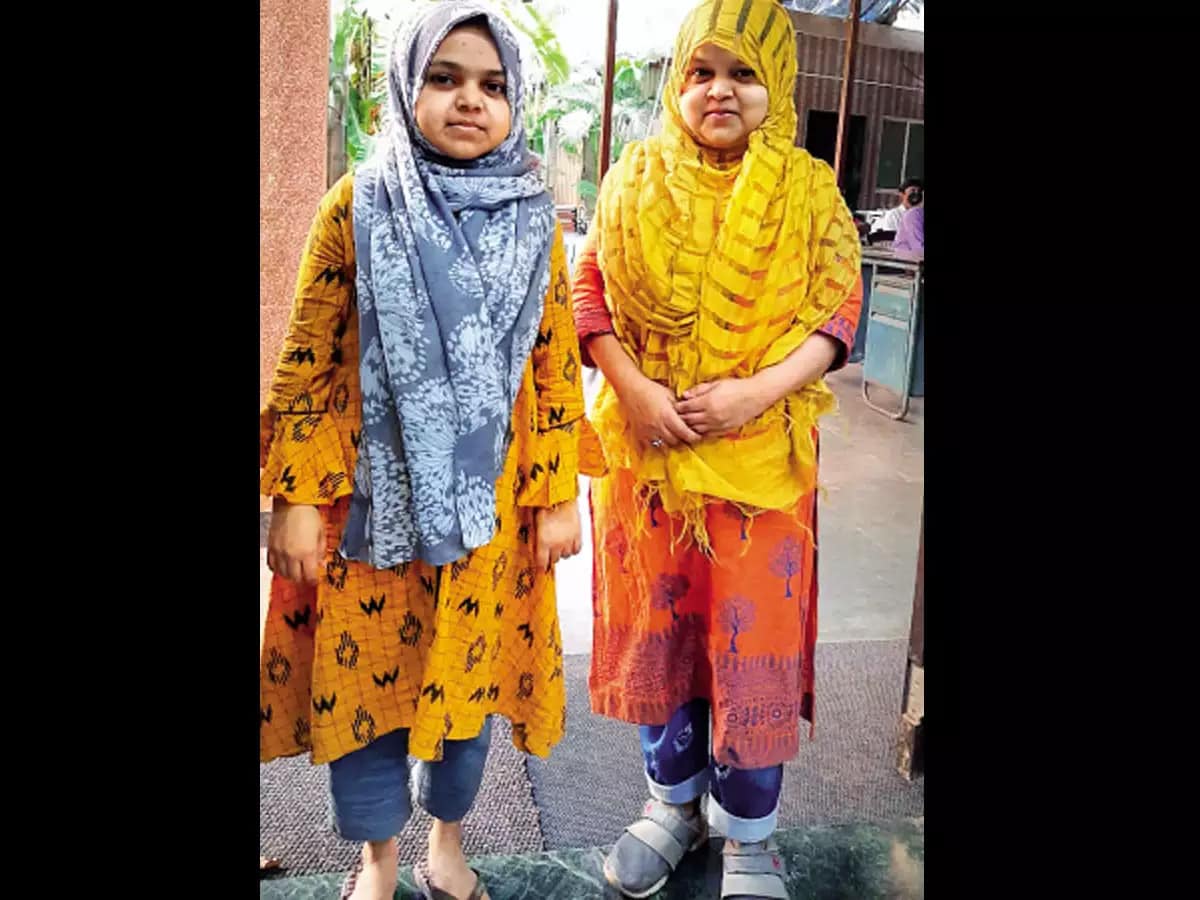
For years their diminutive stature made some wonder if they would do anything meaningful with their lives, but the Idrisi sisters—Zubaida (23) who is 3.5-foot tall and Humaira (22) who is 3.9—have already become mini-celebrities in their Nagpada neighbourhood. They qualified in this year’s medical entrance exam (NEET) and recently secured their MBBS admission; Humaira has got into Topiwala Nair Medical College at Mumbai Central and Zubaida at Government Medical College in Jalgaon.
The Idrisi sisters who live with three other siblings and parents—father Ahsanullah who is a tailor and mother Rukhsar a homemaker—in the crowded Kazipura near Nagpada junction could have not made it to the MBBS course but for a chance meeting with Ashfaque Moosa of Khidmat Charitable Trust last year.
A local NGO runs a dispensary in a corner of P T Mane Garden at Nagpada, which Zubaida and Humaira visited to pick up medicine for their grandmother. Moosa, who is called Ashfaque Bhai, was at the dispensary then and asked the two about their education. On hearing that they had abandoned their dream to be doctors and subsequently graduated in science from the nearby Maharashtra College, Ashfaque Bhai told them not give up on it. “If a six-footer needs 600 marks in NEET to get into MBBS, you need less than half of that,” he joked. On further enquiries, the sisters found their condition was covered in the reserved category of “differently disabled” and they could take a shot at NEET.
“Ashfaque uncle hamari gudiyon ke liye farishta bankar aae (Ashfaque uncle came as an angel for my dolls),” says the sisters’ burqa-clad mother Rukhsar. “He showed them the path and my beloved daughters never looked back since the day they met him.”
Ashfaque Bhai says the girls had full support of their poor parents but were discouraged from even trying to clear NEET. “Someone told them to become lab technicians or join BUMS, a Unani medicine course. But I saw the burning desire in them and that desire only needed a proper direction,” says Ashfaque Bhai who helps arrange scholarships for needy and deserving students.
Next, with a revived MBBS dream in their eyes, the sisters landed up at a coaching institute in Ghatkopar and were almost turned away by a staffer citing their “inadequate” height when the director saw them and asked them to wait. Their photographs were sent to the institute’s headquarters in Kota, which approved their admission with 60% concession in fees. Every day, the sisters would travel by crowded local trains from Byculla to Ghatkopar and back, till the lockdown began. They even took help of lectures on YouTube. “They got so involved in studies that I had to remind them about dinner and lunch,” says their mother. “My dolls have made us proud.”
Rukhsar says she and her husband found out about the insufficient growth hormones in Zubaida and Humaira after they turned five and stopped growing. One doctor said their treatment would cost over Rs 11 lakh. “We had no money to go for costly treatment but I wanted my daughters to get educated and stand on their feet as I didn’t want them to depend on anybody’s mercy or charity,” says Rukhsar.
Career counselor Kazim Malik, who knows the sisters well, says they will need to work hard to complete MBBS, which they have resolved to do to achieve great heights.
Mohammed Wajihuddin, a senior journalist, is associated with The Times of India, Mumbai. This piece has been picked up from his blog.
source: http://www.siasat.com / The Siasat Daily / Home> Featured News / by Mohammed Wajihuddin / November 30th, 2020
‘I always knew that there will be a price that I will have to pay for my outspokenness’ —says the Bollywood actor
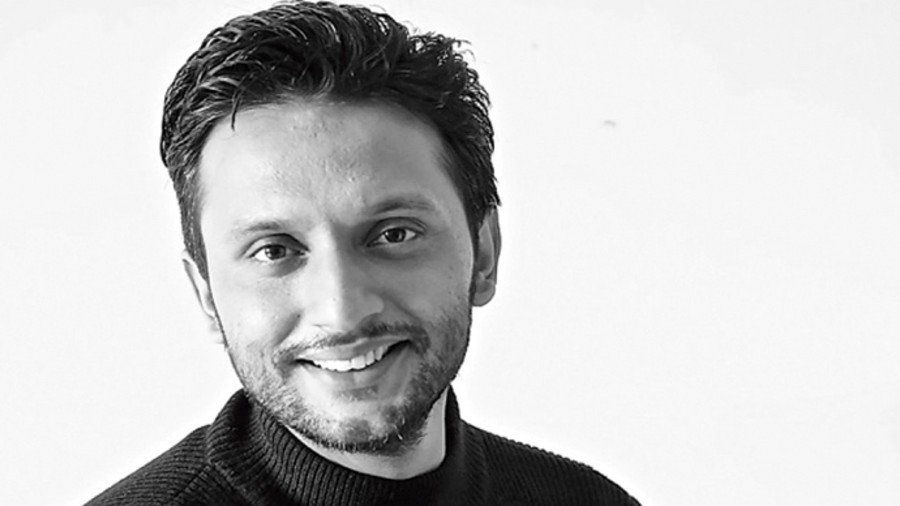
Actor Mohammed Zeeshan Ayyub / sourced by the correspondent
Ever since his debut as the antagonist in No One Killed Jessica almost a decade ago, Mohammed Zeeshan Ayyub has featured in roles that have effectively showcased his mettle as an actor, Shahid to Raanjhanaa, Tanu Weds Manu Returns to Article 15. The 37-year-old actor has also held his own in big Bolly, whether it’s Raees or Tubelight, Zero or Thugs of Hindostan. He’s also been one of the rare voices from the film industry who has repeatedly taken to the streets in protest against the Citizenship Amendement Act and more, and continues to voice his political views with abandon.
After a winning act in Chhalaang earlier this month, Zeeshan — as he’s popularly called — plays the central character in the thriller series A Simple Murder, now streaming on Sony LIV. The Telegraph caught up with the articulate actor on the upswing in his career and the actor vs activist in him.
How would you describe A Simple Murder?
It’s a show that’s a fusion of many genres. Our generation, per se, has grown up on a fusion of genres, whether it’s in movies or in music. A Simple Murder is kind of set in the Coen Brothers zone… the way it’s been shot. It will give you a feel of Fargo, there’s also a certain (Quentin) Tarantino-ish darkness. There is humour, but we can’t exactly call it a dark comedy. I sometimes find it very tough to describe the show. I have been a fan of all these film-makers and after reading the script of A Simple Murder, I was like, ‘Yaar, yeh toh pucca karna hain’.
You shot this show during the lockdown. What was that like?
It was, of course, very different from anything I had shot before. We shot the first schedule for 37-38 days in July in Hyderabad, in Ramoji (Rao Film City). The most surreal bit was that the whole of Ramoji was closed, and we were the only unit there. Solah sau acre ke property mein sirf hum kuch log thhe… it was quite bizarre (laughs). Honestly, after a few days, we kind of got comfortable… we were in quarantine, in a kind of bio bubble, aur baahar ki duniya ke saath hamara koi lena dena nahin tha. The whole thing of sanitising was pretty novel at first, but now that’s become a part of our lives… masks have become a part of our bodies now (laughs). There were some instances where the camera would start rolling and an actor would still have his mask on! We adapted quite quickly.
In August, we went to Amritsar for about three-four days, but it was tough to shoot there. We had a sequence at a bus terminal, but by that time the lockdown had lifted and it got so crowded there, that we had to stop our shoot and come back to Mumbai. In September, we went to Delhi for a week to shoot.
What’s happened in the post-Covid world is that shooting has not only become strenuous, but also lengthy. You have to keep taking breaks, sanitise and re-sanitise, and make sure all the protocols are adhered to.
In a year that’s been on pause for most, you have had A Simple Murder releasing within a week of your film Chhalaang. Even otherwise, the last few years have been busy with roles of impact. Would you count this as the best time in your career?
It definitely is one of the most exciting phases in my career. But there are so many moments and so many turns in an actor’s career. I can never take away from that time when Raanjhanaa and Shahid had released in the same year, or when my first film (No One Killed Jessica) released. Raanjhanaa, Tanu Weds Manu Returns and Raees have been very important films for me. Or for that matter the two massive flops I was part of within a month of each other, that is Zero and Thugs (of Hindostan)… even those were important moments in my career.
As you just mentioned, I have had two releases in two weeks now, and I have another coming up in January… it’s a big series on Amazon Prime Video. But for a year before this, there was no release. It was a conscious break because I wanted to change my career graph. I played the antagonist in Chhalaang and I am getting a great response for that. It’s really overwhelming. In A Simple Murder, I am the protagonist. I always used to crave for author-backed characters and what I got most of the time were weak characters that I had to develop on my own. My part in A Simple Murder is author backed and the world of the show has been built around my character. These are good times now and I hope they get even better (smiles).
Mohammed Zeeshan Ayyub in A Simple Murder, streaming on Sony LIV / sourced by the correspondent
Do you think the audience no longer thinks of the protagonist as the ‘hero’ and everyone else as ‘character actors’ as was the case for decades, or does that still exist?
It is changing but we still have a long way to go. I always say that the Indian audience, for the large part, doesn’t appreciate the actor or his acting… they only look at the character you play. Nawaz bhai (Nawazuddin Siddiqui) was very good in Sarfarosh and Munna Bhai MBBS, but he was only noticed with Kahaani and Gangs of Wasseypur. Jaideep (Ahlawat), who is a good friend, has been doing some great work for years, but he’s only been noticed on a large scale with Paatal Lok. What’s happening with Pratik (Gandhi) with Scam 1992 is similar.
The big change that the web has brought about is that, unlike in films, there can be six or seven primary characters in a show. More actors are getting exposure and you no longer need a star to push a web series. A good performance can now create a new star far more easily because the web ensures that the content reaches people. We have a long way to go to mature, but we are on the right path, I feel. Hopefully in the next two-three years, we will start appreciating actors and acting much more.
Is the audience able to separate the actor and the activist in you?
I think the audience is still willing to accept. People haven’t reached that level of hatred ke bole ki, ‘Achha iss show mein yeh so-called activist hain toh hum nahin dekhenge’. I don’t think anyone, apart from the IT cell of political parties, says that yet (laughs). Viewers may disagree with me politically, but if my work is good, they will watch it. Even with Chhalaang, I have got texts saying, ‘Main aapke politics se bilkul disagree karta hoon, but I must say it was a very good performance’ (laughs). Kahin na kahin, conscience abhi bhi jaagi hain audience mein.
Does your outspokenness and political leaning affect work coming your way?
There are some people who are scared. They don’t want to keep you during promotions because they feel bina baat ki controversy khadi ho jayegi iss aadmi ke chehre ke saath. But it depends on the people you are working with… some also feel that if they have chosen an actor, it’s because of his acting capability and not because of his political views. Jab tak aise log hain kaam chalta rahega.
I always used to speak out, but people now notice more because as your fame as an actor goes up, the fame of your activism also goes up (laughs). But I always knew that there will be a price that I will have to pay for my outspokenness and the fact that I have chosen my conscience over everything else. Kuch kaam definitely chhooth rahein hain, but if there are people who are not giving me work for my activism, it’s best that I don’t do work like that. I don’t want to work with weak people… I want to work with people who can take a stand, or at least support you if you are taking a stand.
source: http://www.telegraphindia.com / The Telegraph Online / Home> Entertainment / by Priyanka Roy / November 23rd, 2020
Prominent Shia preacher and scholar Maulana Kalbe Sadiq died late on Tuesday after prolonged illness. At 83, he was perhaps the tallest and most reputable Shia cleric in Uttar Pradesh and its capital Lucknow.
Sadiq breathed his last at 10 p.m., said his son Kalbe Sibtain Noori. Sadiq was admitted to the ICU of a private hospital on November 17.
“He was very unwell. His condition was deteriorating over the past three days,” said his son.
In a health bulletin issued hours before his death, Era’s Lucknow Medical College said Sadiq was suffering from colorectal cancer with metastasis with severe pneumonia, UTI and septic shock with acute kidney shutdown and paralytic ileus.
An educationist and Islamic scholar in his own right, Sadiq was also the vice-president of the All India Muslim Personal Law Board.
His nephew and Shia cleric Maulana Kalbe Jawad said Sadiq’s death was a big loss not only for the family but also for Shias, Muslims in general and the nation. “It is an unbearable loss,” Maulana Jawad said in a statement issued from Jammu and Kashmir.
Support to protest
Despite his ill health, in perhaps in one of his last public appearances, Sadiq offered his support to the protest against the Citizenship (Amendment) Act earlier this year. In January, he visited the Hussainabad Clocktower protest site in old Lucknow and expressed solidarity with the women who had assembled there.
source: http://www.thehindu.com / The Hindu / Home> Miscellaneous> Others / by Special Correspondent / Lucknow – November 26th, 2020
Ballia District, UTTAR PRADESH / Kalimpong, WEST BENGAL / Birmingham, UNITED KINGDOM :
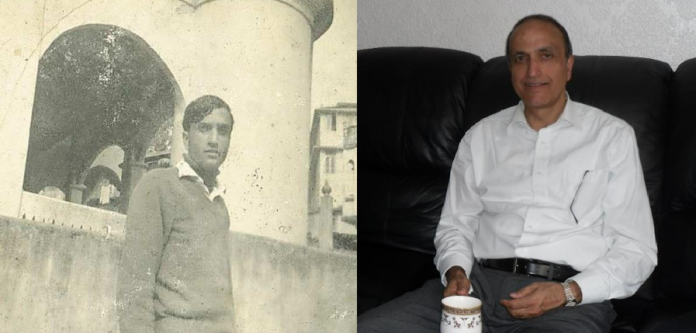
Professor Ataullah Siddiqui passed away on the night of 8 November 2020 aged 66, after battling cancer courageously for six months, at his home in Birmingham, UK. His sad demise has brought about a huge loss to not only the Muslim world but the world at large – to all concerned about a meaningful dialogue amongst communities whose relationships are so much mired in past memories of distrust and conflict. Tributes paying their last respects and condolences to the family members have been pouring in from all over the world. Some have written that with his passing ‘the world of British Muslim Studies [has] lost one of its most thoughtful founding scholars’ and described him ‘as an academic who did not seek distinction or accolades, but who selflessly and reliably supported the work of others’, as ‘someone who embodied the spirit of self –sacrificial and humble service – and whose legacy needs to be kept alive’. Another well-known scholar in his obituary describes him as ‘an efficient educator whose contribution to the Muslim community worldwide has been huge’, as a ‘credible scholarly, patient, insightful, caring, very respectful to women, humble and hardworking man’, as a gentleman in the true sense of the word: kind, compassionate, considerate, who never had a bad word to say about anyone’, ‘an immensely kind, gentle, humble, upright, deep and a wonderful human being’ and a ‘great soul’.
In a memorial meeting conducted over Zoom yesterday, a person who attended his funeral described the testimony of the common note of most of the attendees about him being one of the best role models of a good da’i. In an age where we are flooded with information and yet are deprived of the ‘reality’; where relations only tend to gravitate in one direction and any form of disagreement is intolerable, leading to the disintegration of trust and even society at large, in an almost civil war-like situation, Professor Siddiqui was nothing less than a beacon of hope for the future of communities. I should not thus fail to share some of his own views on the three basic beliefs that constitute the core of the Islamic faith which all would do good to know.
First is the concept of the Oneness of God and devotion to it alone. Nothing should stand in the way of sincere loyalty, honour and pursuit of this goal. God alone becomes the centre of all activity and devotion, and any deviation from this goal towards false values – which may include the love and adoration of wealth, power and prestige – becomes shirk and idolatry.
Corresponding to this is the second belief that God is not a passive God but involved in the world and provides constant guidance to human beings. God has not only provided human beings with intellect to understand nature and discover the world around them but also revealed to them the purpose of human creation and responsibility in the world so that they may wonder, reflect and acknowledge the beauty and worth of being part of Creation. This has been done through individuals gifted with outstanding character and conviction. They are the prophets, the final such individual being the prophet Muhammad (may the peace and blessings of God be upon him). The prophets have not been sent to human beings as fallen and hopeless. In fact, human beings are made the crown of God’s creation, and given the status of vicegerents on earth with intellect, free will and ability to communicate through speech.
Thirdly, the human body, the material part which will perish one day also houses the spirit which continues its journey even after the body perishes. Muslims believe that all good and bad deeds make an impact on the individual’s soul, which then carries its deeds with it and is accountable to its Creator.
These three concepts; of the Oneness of God, the office of prophethood and the accountability of the soul – tawhid, risalah, akhirah form the crux of the Muslim faith.
Professor Siddiqui strived to live his entire life in complete accordance with these beliefs constantly. He always reminded us that ‘good intentions change acts of habit adah into acts of worship ibadah’. Every aspect of his own life – through which he touched the hearts of thousands all over the world – including his livelihood, his love and care for all, and particularly his contribution to the field of his research on building trust and relations where it is fast disappearing between communities and individuals that already know each other – were performed with the pure motive of carrying out God’s commandment. He was a perfect da’i in the sense that he did not wish to impose his views on anyone else but make it, to put it in his own words – ‘dual tracked, multi-focal and multi-layered’. ‘We are in reality, living a “hyphenated” coexistence where multiple communities are at different stages of engagement, with their own pasts and carrying their own memories’.
For those who may have not known him personally, he was not only one of Britain’s, but Europe’s, and even the world’s leading scholars on Islam, particularly in the field of religious pluralism and interfaith dialogue. His father, Maulana Md. Sibghatullah Siddiqui and mother Zafrun Nisa, hailed from the Ballia district of Uttar Pradesh and migrated to Kalimpong quite early in their life. Maulana Sibghatullah Siddiqui himself was an epitome of humility and self–sacrificial service who dedicated his entire life to the welfare of the Muslim community of Kalimpong, guiding them spiritually and keeping them united and free from all forms of sectarian factionalism that plagues communities today. Professor Ataullah Siddiqui began his humble educational career in the hill town of Kalimpong and from a very early age was actively involved in initiating the translation of the writings of key Islamic thinkers of the time into the Nepali language with the help of some of the best scholars of the region.
In 1982 he left for the UK to join the Islamic Foundation as a Research Fellow, an organization that he remained loyally associated with till the end of his life, contributing significantly to its academic life as well that of the British Muslim community. He completed his PhD in Theology in the subject ‘Christian Muslim Dialogue in the Twentieth Century’ from the University of Birmingham. He played a pivotal role in the establishment of its sister institute, the Markfield Institute of Higher Education, from conceptualizing and designing its curriculum for doctoral, postgraduate and undergraduate degree programs, to its administration as its Director from 2001- 2008. He taught in the Institute as Reader, and later Professor, of Religious Pluralism and Inter-Faith Relations. He also held several honorary posts as Visiting Fellow and Visiting Professor at the University of Leicester, York St. John’s University, Gloucestershire University to name only a few.
Among his chief achievements during this phase was becoming the founder President and Vice-Chair of the ‘Christian Muslim Forum’ launched by the then Archbishop of Canterbury Rowan Williams and was also the founder member of the Leicester Council of Faiths. He published several important books on the subject and contributed regularly to some of the most prestigious journals internationally.
In 2007 he was appointed by the British Government to submit a report on the state, and recommendations towards improvement, of the study of Islam as an academic subject in Universities throughout Britain. At a time when the relationship between communities are growing more and more estranged because their memories are vested with perceptions as well as misperceptions, concordances as well as conflicts, he was found the most suitable person to carry on this task of building bridges. The report titled, ‘Islam at Universities in England: Meeting the Needs and Investing in the Future’, also known as the Siddiqui Report, was the fifth of its kind to be tabled in the British Parliament, preceded by the Reay Report (1909), Scarbrough Report (1947), Hayter Report (1961) and the Parker Report (1986); all four are significant to students interested in the field of Orientalist Studies. In the wake of catastrophic events like 9/11 and 7/7, the Siddiqui Report was one with great responsibility and a genuine vision for a pluralist society.
Now that we have lost this great and humble soul and deep mind, it is for all people committed to a vision of a future built on peace and coexistence, tolerance and respect for all communities and most important of all, committed to dialogue, not diatribe, to carry on his spiritual legacy.
Let us make our own humble supplication and petition to the Almighty to keep alive the memory of this gentle soul in our hearts, give solace to his family in the UK and in India, and raise his ranks in Jannah.
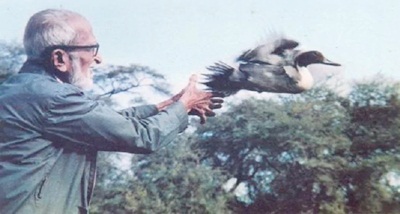
Today is the Birth Anniversary of renowned ornithologist Salim Ali. Born in Mumbai on 12th November in 1896, Sálim Moizuddin Abdul Ali was not only a bird lover but also a naturalist. He is often referred to as the ‘Birdman of India’. He was the first Indian to conduct systematic bird surveys across India and wrote several books that popularized ornithology in India. His research work is considered highly influential in the development of ornithology. He was a well-known environmental crusader who often stood for protecting the wildlife.
Salim Ali played a pivotal role in establishment of Bharatpur Bird Sanctuary (Keoladeo National Park) and prevented the destruction of what is now the Silent Valley National Park. Along with Sidney Dillon Ripley, he wrote the landmark ten-volume Handbook of the Birds of India and Pakistan, a second edition of which was completed after his death.
He was awarded the Padma Bhushan in 1958 and the Padma Vibhushan in 1976, India’s third and second highest civilian honours respectively. Besides the Padma Bhushan and the Padma Vibhushan, Ali received the Gold Medal of the British Ornithologists’ Union in 1967. He was the first non-British citizen to receive the honour.
source: http://www.newsonair.com / All India Radio (AIR), News Services Division / Home> News Highlights / November 12th, 2020
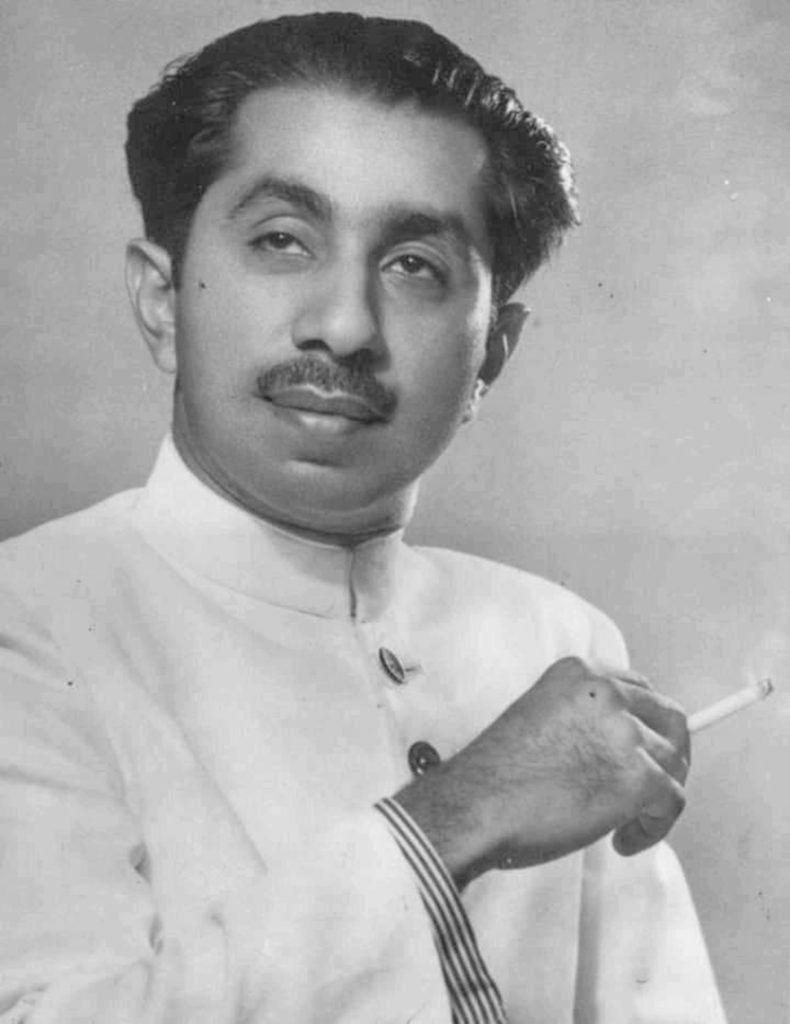
Allah Baksh Sumroo, a premier of Sindh province—equivalent to the current post of a chief minister—was a committed patriot, whom the Muslim League hated to the extreme. Sumroo’s story directly challenges the ongoing communal and divisive rhetoric where Muslims are projected as a comprador class that was wholeheartedly behind the Muslim League’s two-nation theory.
______________________________
The narrative that all Muslims got together to seek India’s partition on the basis of the two-nation theory is now a few decades old. It has acquired salience again, with some hyperventilating neo-nationalists reiterating that all Muslims are traitors as they joined Muhammad Ali Jinnah and his Muslim League to divide India. These people forget that a large number of Muslims, who consciously decided to stay back, had a choice—either to leave and be Pakistanis or stay back in India and choose their homeland. Many opted for the latter. A similar choice was made by many Hindus who decided to stay back in Pakistan. However, staying back in a democratic, secular and plural India was different from opting for a regressive and sectarian Islamist Pakistan. The future of both, who stayed behind, has proved that so tellingly.
Unfortunate political developments and the prevalent communal rhetoric in India has forced me to go back to the history afresh. There is a concerted campaign to malign all Indian Muslims as leftover Pakistanis, who are enemies within the country; the narrative is that these fifth columnists should be shunted out to Pakistan in the so-called national interest. But merely indicting all Muslims for the sake of petty majoritarian politics goes against the facts of history.
We are a nation obsessed with history, more often concerned with correcting the presumed historical wrongs than learning anything from the past. With this compulsive preoccupation, some of us live perpetually in the past. Even so, most people believe that Maulana Azad, an Independence-era leader, fought a lone battle for a united India, while a majority of Indian Muslims vouched for Muhammad Ali Jinnah, the founder of Pakistan, and his Muslim League. This has no factual basis and any extent of living in the past will help unravel actual facts.
To put the record straight, some unsung heroes from our recent history should be talked about. There are many historical characters that were crucial to countering the politics of hate and division of the country around the time of partition. Among them was Allah Baksh Sumroo, who served as a premier of the Sindh province—equivalent to the current post of a chief minister—for two terms between 1938 and 1942. Sumroo was a committed patriot, whom the Muslim League hated to the extreme. He belonged to a feudal Sindhi family but was known for a frugal living and commitment to democratic values. Sumroo wore khadi even as a young man of twenty. We hear about using flags as a power symbol so often these days, but he never used a flag on his official car even in those feudal and colonial times.
What is important to remember today is his commitment to undivided India. Sumroo emerged as a major challenge to the divisive politics of communalists of all hues, particularly the Muslim League. Azad was undoubtedly a national face, espousing composite nationalism, but he actually derived strength from such regional but powerful voices like Sumroo.
To go into the details of his massive anti-Muslim League politics would require a much longer discussion. Let me just refer to one of the most important episodes in the history of our sad partition of the country. The Muslim League passed a resolution recommending the creation of an independent state of Muslims on 23 March 1940 at Lahore. Soon, Sumroo organised a huge conference of patriotic Muslims between 27 and 30 April 1940 in Delhi, called the Azad Muslim Conference. According to some estimates, there were not less than seventy-five thousand people who gathered from all over India to condemn the Muslim League for its divisive politics.
Most of these people came from a large number of political and social organisations, largely representing the backward and artisanal sections of the Muslim society. This representation at the conference was an indicator that the Muslim League spoke for the ashraf, or the privileged sections of the Muslim society while the majority of Muslims—the ajlaf, or the backward sections—remained almost untouched by the League’s rhetoric. The British identified a collaborative section of the Muslim community, helped in forming the Muslim League but this section largely represented the affluent—the zamindars, and business and professional classes. The leadership that emerged in the League had little clue to the highly differentiated Muslim society they claimed to represent. Azad could see this early. Referring to Indian Muslims at the time, he wrote in his weekly Urdu language newspaper, Al Hilal, in 1912:
The most unfortunate part of their life is that they have a section of elite who are in the forefront and leading them. Those are the self-proclaimed leaders of the community. They have put the crown on their own head, with their own hands, instead of the masses doing the same. They indulged in all sorts of exhibitionism of power and the worst is show of their wealth. And by so doing they had converted the millat [class] of downtrodden men in their community as their slaves and camp followers. And now if anyone tries to question their validity as leaders or defy them, they are successfully suppressed and annihilated by those selfish leaders; as they have the power of money.
Sumroo’s presidential address at the Azad Muslim Conference in April 1940 also exposed the misplaced arguments of the League, particularly in the name of religion and culture. All through his speech he spoke extensively on the shared history and heritage, stressed on the compositeness of Indian nation and nationalism and emphasised that the compact between diverse communities cannot be severed. Strongly condemning the two-nation theory exponents, The Sunday Statesman of 28 April 1940 quoted him saying in his speech:
A majority of the 90,000,000 Indian Muslims who are descendants of the earlier inhabitants of India are in no sense other than the sons of the soil with the Dravidian and the Aryan and have as much right to be reckoned among the earliest settlers of this common land. The nationals of different countries cannot divest themselves of their nationality merely by embracing one or another faith. In its universal sweep Islam, the faith, can run in and out of as many nationalities and regional cultures as may be found in world.
He underlined the long history of shared heritage of Hindus and Muslims, as mentioned in a Hindustan Times report on the same day:
It is a vicious fallacy for Hindu, Muslim and other inhabitants of India to arrogate to themselves an exclusively proprietary right over either the whole or any particular part of India. The country as an indivisible whole and as one federated and composite unit belongs to all the inhabitants of the country alike and is as much the inalienable and imprescriptible heritage of the Indian Muslim as of other Indians.
Sumroo made these detailed references to the shared history and intermixing of Hindu and Muslim cultures over the centuries to counter both the League as well as those who were arguing for Hindutva majoritarianism. He was aware, like Azad, of the forces which threatened the future of united composite India. Sumroo needs to be talked about today more seriously to counter all those who threaten fellow Muslim citizens to go to Pakistan.
In his address, Sumroo provided a counter for another argument put forth by neo-nationalists today—that Muslims asked for Pakistan and once it was granted by dividing the country, all of them should have moved there. This would have settled the issue forever. All those who make such insinuations today need to know what popular Muslim leaders like Sumroo said of the creation of Pakistan:
It was based on false understanding that India is inhabited by two nations, Hindu and Muslim. It is much more to the point to say that all Indian Mussalmans are proud to be Indian nationals and they are equally proud that their spiritual level and creedal realm is Islam. As Indian nationals—Muslims and Hindus and others, inhabit the land and share every inch of the motherland and all its material and cultural treasures alike according to the measures of their just and fair rights and requirements as the proud sons of the soil.
Azad, too, sent a message of support to the Azad Muslim conference as he was not able to attend it. He expressed his solidarity with the conference and wished that the deliberations would be fruitful for the great cause of the freedom of the country and the Muslims.
This fight for composite and inclusive Indian nationalism, which looks so alarming and threatening today, is more than few decades old. Azad and Sumroo challenged these regressive and divisive forces in the 1930s and 1940s. They almost took the battle to the enemy’s camp by organising a huge conference in Delhi, which unnerved the Muslim League leadership. Sumroo was assassinated in 1943. It was suspected to be the League’s handiwork.
We can comprehend his stature and the sense of loss on his death by reading some of the reactions in contemporary press and also the pain expressed by several nationalist leaders. The Hindustan Times described him as follows:
… finest of Sindhis, one of the truest of Musalmans, one of the noblest sons of India who loved his peasants for he loved the land; and he used to wear khaddar even in the twenties, for he loved the poor. Both the Hindus and Muslims looked up to him as a leader … He had an all-India mind and in the midst of division and strife, pinned his faith on an independent united India, and dreamt the dream of the united State of Asia in the years to come …
His murder was seen as a national calamity by several papers. The Amrita Bazar Patrika called him “one of the most vigorous personalities, endowed with a high sense of duty and rare courage of conviction, who easily commanded the respect and admiration of all, even of those who differed from him on some or the other public questions.” Commenting on his death, the newspaper added, “A life so full of promise has been cut short. And India is much poorer today by the death of the young man of 42 whose sturdy patriotism and devotion to duty would be cherished long after the present unhappy situation has ended and India has come into her own.”
The right wing in India often says that Subhas Chandra Bose, a leader of the anticolonial struggle, did not find his rightful place in Indian history. I find it politically motivated and not really a sincere observation. It is people like Sumroo, who seem to be lost in our history records, even in the writings of the so-called liberal and Marxist historians, except for a chapter in a book by Shamshul Islam titled Muslims Against Partition of India.
Another prominent Muslim voice from the past, who can rightfully represent our composite nationalist ethos is Saifuddin Kitchlew, a Kashmiri freedom fighter whose family moved to Punjab. It was his arrest along with Dr Satyapal, a political leader, that triggered the protests leading to the Jallianwala Bagh massacre in 1919. Most of us are oblivious to his contributions as well. Kitchlew had also mourned the loss of Sumroo saying:
At this critical period of the freedom movement in the country the death of a man like Mr Allah Baksh is a thundering blow to the forces of nationalism. Mr Allah Baksh was a thorough going nationalist. Mr Allah Baksh is dead but his work will remain.
It is necessary to know about such men and women from our past as their profiles directly challenge the ongoing communal and divisive rhetoric where Muslims are projected as a comprador class that was wholeheartedly behind the League’s two-nation theory. Azad was surely the prime political figure, an Islamic scholar, who stressed on the composite nationalism. However, he was not fighting a lone battle against the Muslim League, as Jinnah wanted the British and the Muslims to believe. He was hated and derided as a show boy of the Congress party, precisely to show that most of the other Muslims and their leaders were with the idea of Pakistan. This falsehood needs to be exposed, particularly in the midst of the ongoing divisive politics.
S IRFAN HABIB is a historian and author. He was earlier the Maulana Azad Chair at the National University of Educational Planning and Administration, New Delhi.
source: http://www.caravanmagazine.in / The Caravan / Home> Commentary – History / by S Irfan Habib / July 28th, 2020