Baghpat District, UTTAR PRADESH / Norela, NEW DELHI :
Shakeel Mohammed Qureshi, whose father is a farmer in Uttar Pradesh’s Baghpat district, has distributed around 300 jackets and sweaters for free among the peasants.
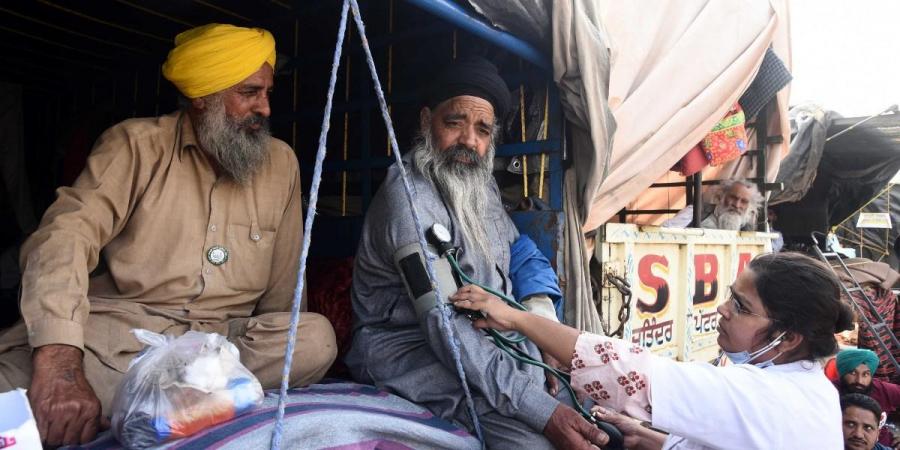
A doctor examines a farmer during their ongoing protests against the new farm laws at Delhi’s Singhu border on Thursday. (Photo | Parveen Negi, EPS)
New Delhi :
Not everything comes with a price tag. Not love, not respect and not the sweaters and jackets that Shakeel Mohammed Qureshi gives away free to protect farmers protesting at the Singhu border from the biting cold.
Around 8 am everyday, Qureshi starts setting up his roadside stall, from where he sells locally-manufactured warm clothes for free to the farmers protesting at the Delhi-Haryana border against the Centre’s three new contentious farm laws.
The 35-year-old man, whose father is a farmer in Uttar Pradesh’s Baghpat district, has distributed around 300 jackets and sweaters for free among the peasants. On average, he used to earn a profit of around Rs 2,500 daily by selling the winter wear.
“My father is a farmer, too, so I know that their life is very tough,” says Qureshi, who lives in Narela in north Delhi with his wife and children. “Farmers don’t ask for much from the government, except a fair price for their produce.”
Unwilling to talk about the price, Qureshi says: “This is my contribution to a good cause. That”s all.”
Help has been pouring in from different quarters for the protesting farmers at the border. While some individuals and NGOs have been organising langars (community kitchens) and distributing items of daily need, others have set up free medical camps. Many have volunteered to clean utensils, collect garbage, charge mobile phones and wash clothes.
The farmers have been protesting at several border points into Delhi for the past two weeks over their demands to repeal the new legislations, which they claim would benefit the corporates and end the traditional wholesale markets and the minimum support price regime. The union leaders had rejected a government proposal on Wednesday to amend the new legislations and announced that they would intensify their agitation.
Most of the farmers have come prepared, but a few need support to keep fighting, according to Qureshi, who hopes to have a merchandise store of his own before he turns 40.
His head held low, Qureshi smiles when a protesting farmer, who just got a free jacket from his stall, said: “The god will give you a fortune in return. You have a small shop, but a large heart.”
As dusk settles, a group of Nihang Sikhs approached the Samaritan, but he has run out of stock.
Assuring the band of armed Sikh warriors, Qureshi said: “I will be back with jackets for you tomorrow morning.”
source: http://www.newindianexpress.com / The New Indian Express / Home> Good News / by PTI / December 10th, 2020
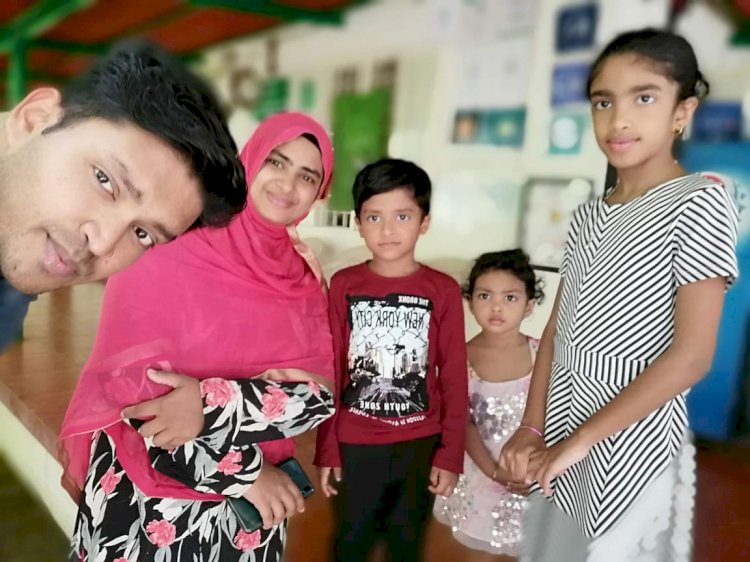
At a time when the world has turned online for education, work, shopping, business and whatnot, here is a couple from Malappuram district in Kerala who has brought out a new online method of learning, integrating computer coding with school subjects for kids. Let’s meet Aisha Sameeha and Shahid Jabbar from Nilambur.
Hailing from the village of Melattur, Aisha Sameeha was just one among the many girls in Malappuram – who studied well, graduated in BTech, got married and settled with her husband in his workplace Dubai.
Soon, they got their first child and Sameeha got busy with her daughter Eshal.
However, sitting idle or being content with the homely chores alone was not her cup of tea. Sameeha tried her hand at different trades such as content writing for technical websites, cooking and baking, stitching and embroidery etc. She also attended and won a few cooking competitions held in Kerala and Dubai.
Into the field of education
Having born and brought up in Kerala and abroad, Sameeha had got familiarized with different methods of education. And that encouraged her interest in learning and teaching. “Teaching has always been my passion, even when doing BTech. And that is also a reason I didn’t take up the job offers that came my way after the completion of my studies,” said Sameeha. She especially mentioned the methods followed in the PeeVeeS Public School, Nilambur, where she studied from class 1 to 6 and the MES Engineering College. The two institutions taught her the importance of encouragement by teachers and the effectiveness of grouping and sharing to learn better.
Once her daughter began to attend school, it opened her to another world in the field of education. The kindergarten that Eshal attended in Dubai followed the Reggio Emilia approach, which gave high importance to interaction between parents, teachers and students. Parents were encouraged to come to the school and be a part of various activities. Each class had a library and several other items that caught children’s attention and interest, where they could gain knowledge. “I had thought that I couldn’t manage small kids, but it was proved wrong when I began to go there,” confessed Sameeha. “I used to observe how they were doing things, dealing with the children, the method of teaching etc. That was a sort of experimental and experiential learning. Eshal liked it a lot there.”
source: http://www.thesite.in / The Site / Home> Empowerment / by Najiya O / December 07th, 2020
The Rehnuma centre in Mumbra, a suburb of Mumbai, offers young Muslim women – many from migrant families – a space to chat, relax with a book, learn English or dream about their village homes
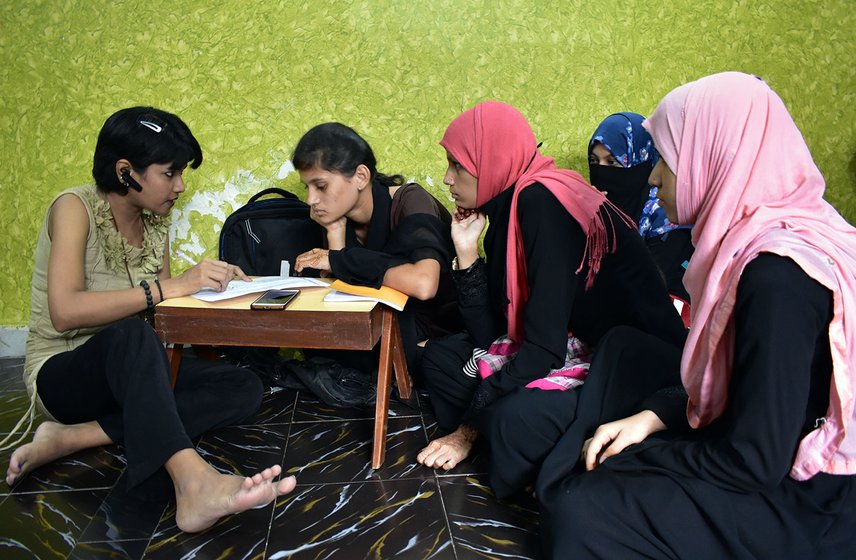
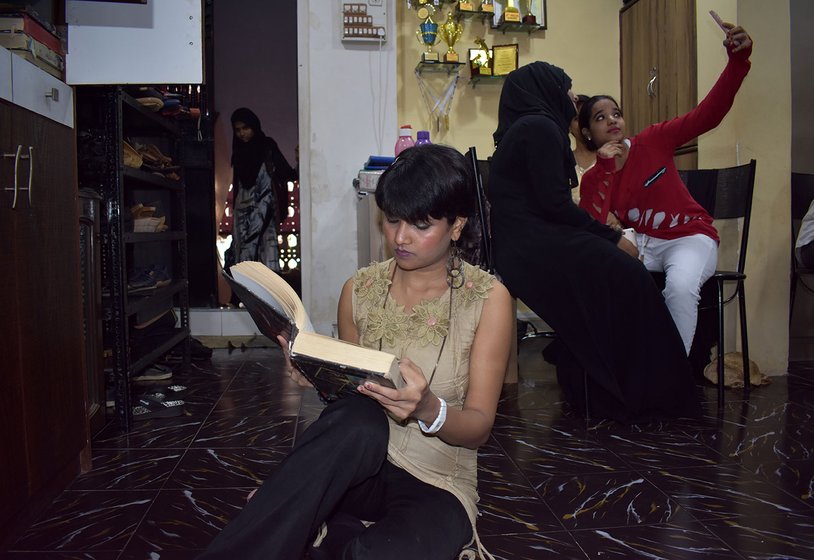
“Shall I compare thee to a summer’s day?” says 19-year-old Faiza Ansari in a low voice, almost a whisper. We are sitting cross-legged on the tiled floor of the only library for women in Mumbra – the Rehnuma Library Centre.
More young women come and go from the two-room apartment turned library on the first floor in a decrepit building near the Darul Falah mosque. They hang their burkhas on idle plastic chairs and sprawl on the cool floor. It’s 36 degrees outside in this northeastern suburb roughly 35 kilometres from central Mumbai.
As Faiza recalls Shakespeare’s Sonnet 18, I insist on hearing more. All eyes turn towards her, including her sister Razia’s. Faiza paraphrases a line from Romeo and Juliet, “A beautiful heart is better than a beautiful face.” Razia looks at her sister coyly. The other girls hoot, nudge each other, and bashfully giggle. The joke is anybody’s guess.
Razia Ansari, 18, is not as shy. She presents to me an intriguing summary of the only Shakespeare story she has read. “Twelfth Night is like a Hindi film. Viola has a double role,” she says of Viola’s disguise as Cesario. Razia is trying to improve her English and has joined the spoken English class at the library. Classes are conducted here five days a week in numerous one-hour batches from 11 a.m. to 6 p.m.
Faiza and Razia Ansari, from Asansol in Jharkhand, are regulars at the libraryLibrarian Faiza Khan also doubles up as an English teacher
Faiza and Razia’s family moved to Mumbra from Asansol village in Dumka district of Jharkhand around 18 months ago. The sisters dislike Mumbra. “There’s garbage everywhere,” Razia says. Faiza agrees: “There are more eateries than bookshops.” The sisters were not expected to wear a burkha in their village. “We had a lot of freedom back home,” Razia says. “But here,” Faiza continues, “our mother says that the mahol [environment] is not good.”
Their father owned a wholesale groceries shop in Asansol and decided to come to Mumbai, where their grandmother and other family members already lived, “to make more money and for better education for the children,” Razia says. He has since set up a groceries shop near their house.
The sisters spend a majority of their day at the nearby A.E. Kalsekar Degree College, where they are studying in the first and second year BA, respectively. But it’s in the Rehnuma library, a short walk from their home, that they are reminded, Razia says, “of the home they left behind [in the village].”
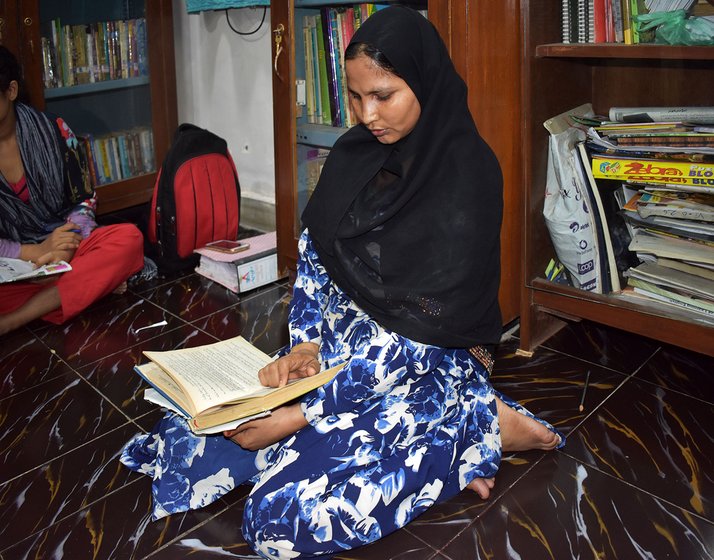
For Bashira Shah, from Babhnan village in Harraiya tehsil of Uttar Pradesh, the library is where she can stop thinking about home. Bashira got married when she was around 14 years old and moved to her husband’s house in Ashokpur village near Gonda city. Her husband was a construction labourer in Saudi Arabia. Now 36, she has been widowed for two years and lives with her mother, her four children, and two younger sisters in Mumbra.
Her parents moved here in the 2000s but in October 2017, her father passed away. He had a dry fruits shop in Masjid Bunder which is now leased out. Two of Bashira’s sons, 16 and 15 years old, have dropped out of school. But Bashira, who received a religious education and studied Urdu till Class 3, has decided to study more. “My dream, she says, “is to be able to talk to Shamshir and Shifa in English.” Shamshir, 12, her youngest son and her daughter Shifa, 9, study at the Mumbra Public School in English.
Since the Rehnuma Library – rehnuma means a ‘guide’ in Urdu and Hindi – was started in 2003, women come here throughout the day to converse, laugh, relax, or curl up with a book. The library was set up with donations and a crowd-funding campaign by Awaaz-e-Niswaan, a non-governmental organisation. The space is also the NGO’s Mumbra centre, where they focus on literacy for women and legal aid – many women come here with issues related to divorce, polygamy and domestic violence, among others.
The locality was chosen because of its predominantly Muslim population and, as Yasmeen Aga, Awaaz-e-Niswaan’s coordinator for Mumbra says, “the lack of spaces for women to take off their burkha, interact with each other and relax.” The library initially acquired members by telling schoolgirls and their mothers about it, but as college girls found out, they too wanted to join.
The library’s 350 patrons – all women, many of them from families that have migrated to Mumbai from various villages – renew their Rs. 100 membership every year to return home with books or magazines and occasionally participate in book club meetings and workshops.
At the library, Bashira Shah, from UP’s Babhnan village, can stop thinking of home. Faiza, the librarian, also helps visitors become members
In the last book club meeting in mid-January, 12 young women discussed the poems of Mirza Ghalib and Faiz Ahmed Faiz. Librarian Faiza Khan says, “The readers were divided into two camps – each wanting the other to concede and admit that the poet they admired was the best.” Faiza, was in the Ghalib camp, but chose to remain sternly neutral.
Faiza, now 28, started coming to Rehnuma when she was 19. She was born and brought up in Mumbra, has a degree in Management Studies, and was offered the librarian’s job in 2014. “The public spaces are dominated by men,” she says. “And women are locked inside their houses”. But at the library, she says, “women can be unabashed and sit and talk like men do.”
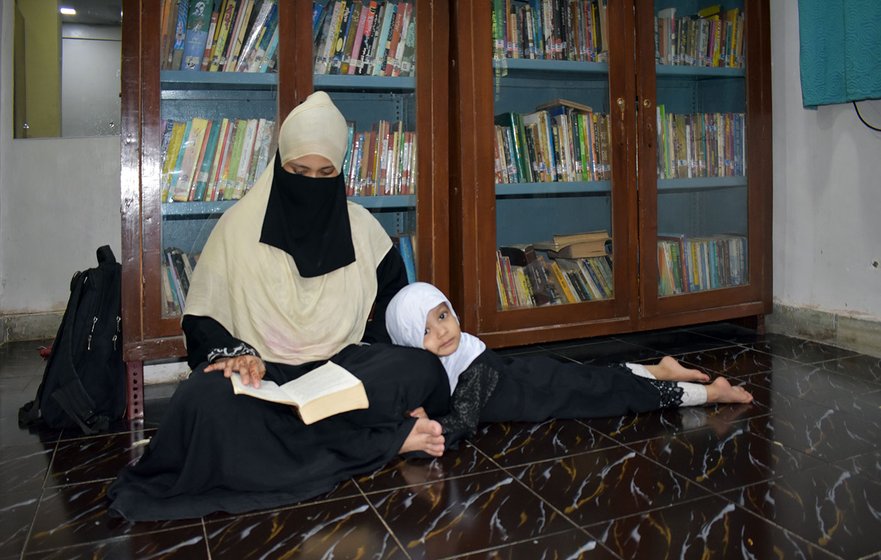
She not only holds the key to the library, but also helps wandering visitors become members, and nurtures their reading tastes. “Urdu books,” she says, “are the most sought after.” These make the majority of the 6,000 books stocked in the library’s five wood cabinets.
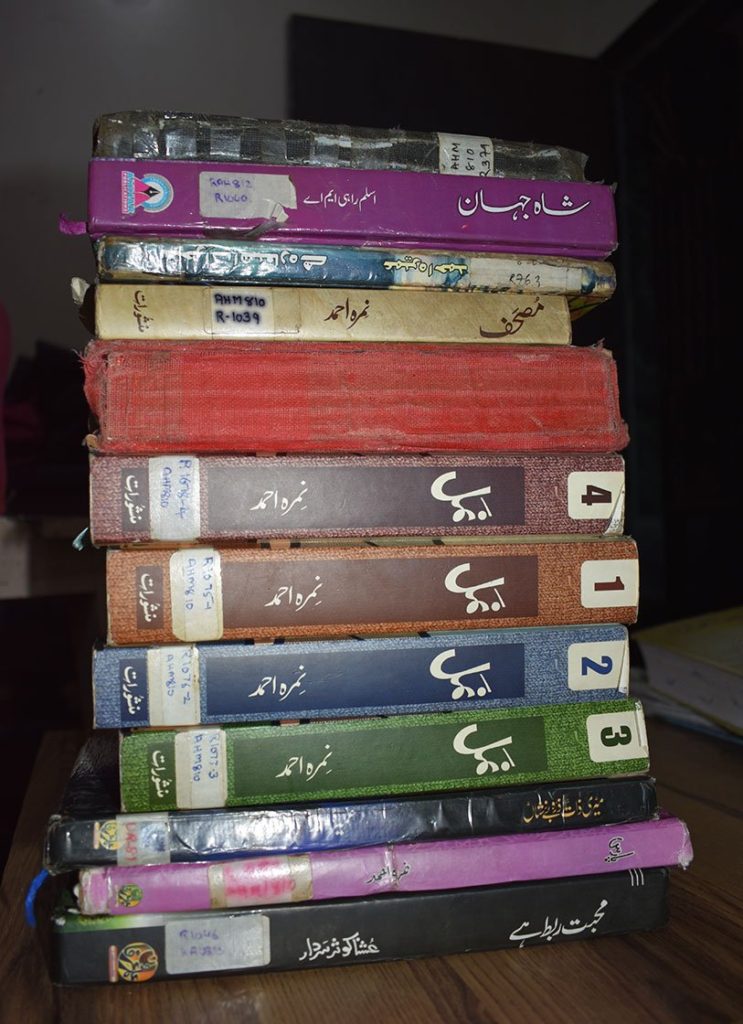
Some of the most popular books are by Pakistani authors that have been on long journeys. The pages of Ibn-e-Safi’s Imran series and Jasoosi Duniya, highly popular spy novels, have turned yellow. The library has a collection of 72 Ibn-e-Safi novels.
The plaque at the entrance of the building that houses the Rehnuma centre
And the pages of the novels of Umera Ahmad (the library’s most-read author), to Faiza’s utter dismay, are dog-eared with plenty of margin notes. There are also books by Razia Butt, Ismat Chughtai, Munshi Premchand, Saadat Hasan Manto, along with the Urdu translations of Shakespeare. And there is Harry Potter, and of course, Chetan Bhagat too.
Zardab Shah, 20, who came to Mumbra from Khizirpur Ali Nagar village in Ghazipur district of Uttar Pradesh, has been reading Ujaale ki Talaash, a thriller in Hindi by Sharad Pagare, but wistfully looks at the World Book Encyclopaedia placed at the top of a cabinet. “We are not allowed to take these home,” she says, regretfully. “I like to look at the maps and imagine going on an adventure to Switzerland.”
The closest Shah has got to a sense of adventure was when she secured admission at Banaras Hindu University for an MA in English last year. But her parents didn’t let her go. Her father is a truck driver, her mother a homemaker. “They didn’t want me to live in a hostel,” she says. Instead, they moved Zardab from her uncle’s home in the village – where she was staying while studying – to be with them in Mumbra. She is now trying to get admission in a Mumbai college. When someone in her building told her about Rehnuma, she immediately joined.
“I was wasting my time in the village… here, at least, I am reading and learning,” she says. It took her some time to get used to Mumbra, but Zardab doesn’t miss her village. “There are no opportunities,” she says. “It’s a place you can love as a child but not as a grown-up.” And now she has forged an attachment so strong with the Rehnuma Library, that, she confides, “this might be all the adventure I need”.
Shafiya Shaikh, one of the library’s most voracious readers, often reads aloud to her daughterThe novels of Nemrah Ahmed are a hot favourite
A large number of Muslim families moved to Mumbra after the 1992 riots in Bombay. Shafiya Shaikh’s family too shifted at that time, distraught but physically unharmed, from Worli in south Mumbai. The first time she came to Rehnuma was when she was seeking help to get a divorce from her husband. He had abandoned a pregnant Shafiya after eight months of marriage. But when she saw the stacked books, she was confused, “I thought that like everything else for women in our society, even books were out of reach.”
Soon, Shafiya and her mother Haseena Bano became members. Shafiya, now 27, also reads some of the books out to her four-year-old daughter Misbaah Fatima. The Shaikhs are now among the most voracious readers the library has seen – they check out 2-3 books and 2-3 magazines per week while others read and return one book in a couple of months.
Shafiya is currently reading Jannat Ke Pattay by Nemrah Ahmed, an acclaimed Pakistani novelist. It’s about sexual violence against a girl, and the story’s male lead doesn’t save her. “It’s not like a hero will come to save everyone,” she says.
Apart from the lure of the books, the library brings women together to enjoy the company of others. Here, Zardab says, “We can sit however we like, laugh, play, or chat. There’s freedom here that we don’t find at home.” A current hot topic is the popular Zee TV show about triple talaq – Ishq Subhan Allah.
Librarian Faiza has also become a role model for the young women – a job she has reluctantly accepted. She now takes it upon herself to gather them and discuss books they may not read themselves. The last book she discussed was Rana Ayyub’s Gujarat Files – on the investigations in the 2002 riots in the state – and unlike the Ghalib-Faiz session, this discussion remained utterly sombre.
source: http://www.ruralindiaonline.com / PARI – People’s Archive of Rural India / Home> Things We Do> The Rural in the Urban> Women / by Apekshita Varshney / July 04th, 2018
“Although food was being distributed through mosques in various localities, it’s an all-religion initiative”
New Delhi :
Cooked food was being delivered to agitating farmers on Thursday through various mosques of Delhi. The information was given by social activist Nadeem Khan through a tweet.
“Arrangement of food has been made in several mosques of Delhi. Farmers, kindly call on the following numbers: 9990431468,” reads the tweet in Hindi.
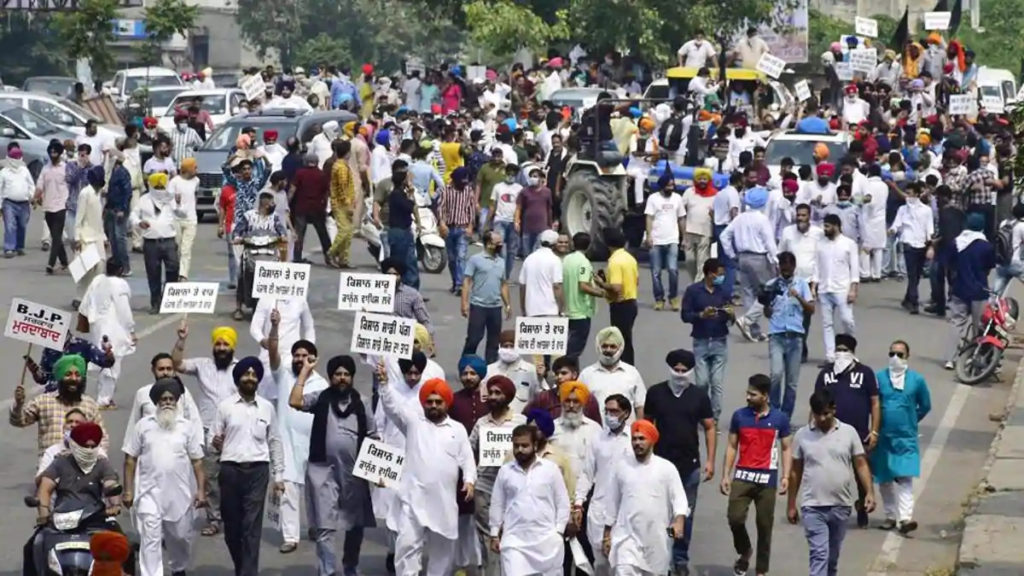
Some two lakh farmers from Uttar Pradesh, Haryana, Uttarakhand, Rajasthan, Kerala and Punjab are reaching Delhi as part of their two-day Delhi chalo protest march on Thursday and Friday.
Clarion India called on the given number. The person who picked up the phone promptly asked for the address where food needed to be delivered. Asked if the food was being prepared at a centralised place, he said kitchens had been set up at several places. “You give the address, food will be sent from the nearest point of distribution.”
He said agitating farmers were stuck at various places in and around the capital. “We are trying to reach them with food as far as possible,” the person on the phone told Clarion India.
The organisers plan to continue this free delivery of food as long as the situation demands, he said.
He also said that although food was being distributed through mosques in various localities, the contribution for this was coming from all sides. “It’s an all-religion initiative,” he added.
source: http://www.clarionindia.net / Clarion India / Home> Editor’s Pick / November 26th, 2020
Deora Village (Dharbanga District) , BIHAR / Mumbai, MAHARASHTRA :
Sadiya Shaikh is an undergraduate student getting her bachelor’s in Sociology-Literature in English from Rizvi College in Bandra.
It was the startling lack of discernment of the privileged and the problem of illiteracy in India, especially in Bihar, that prompted her to come to the aid of the community in any which way she could.
Eighteen-year-old Sadiya Shaikh was born in Darbhanga district of Bihar. Sadiya’s parents had decided to move their family to Mumbai, Maharashtra when she was only a toddler, to ensure that the children got the life and education they deserved.
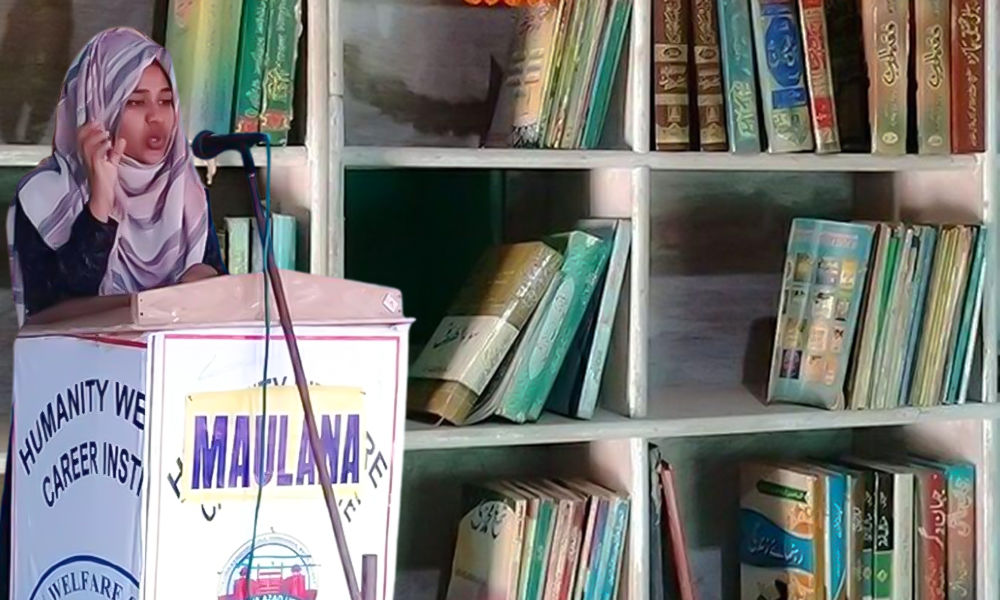
She was visiting her hometown during the lockdown when she managed to establish the accessible, well-stocked, and only library her village has.
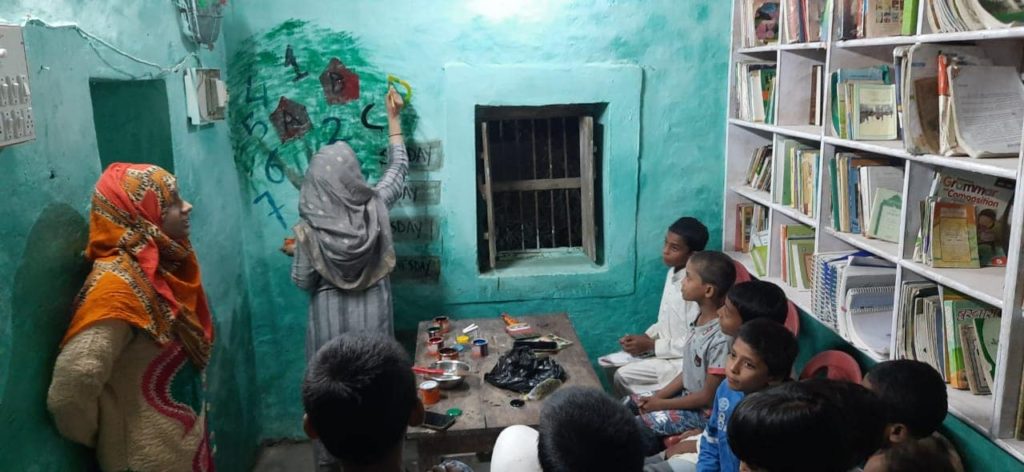
The Maulana Azad Library in Deora village of Darbhanga District is an initiative taken up by young Sadiya with help from her family and friends to sow the seeds for inclusive education for all the students in the community who cannot afford the luxury of getting appropriate and established means of instruction.
Deora stands at a total population of 3,446 persons and 631 houses. While the village literacy rate stands at 40.9%, the female literacy rate is a staggering 18.6%.
The close linked relationship between illiteracy and poverty has challenged the development of the people of Deora for a long time therefore, the library is of service to the students of all grades along with school textbooks, there is accessible material for aspirants of competitive examinations, along with a couple of trained professionals who help to tutor the children, who, even though, are enrolled in schools, cannot afford to go and own the required textbooks and other study materials.
“Few sections of our society have benefitted the most from the library, the youth who used to wander during the evening, now sit in the library and study, along with them, the elderly also use the library as a space to sit and read the daily newspaper,” Nawaz, a resident of Deora and a daily visitor of the library said to Maktoob.
The library has books pertaining to the school boards in the state and NCERT (National Council of Educational Research and Training) books from standard one to 12.
Nawaz said his village doesn’t even have a well-established government school.
“Even though there is a private school just out of the village, most families cannot afford to send their children there, and even when they somehow arrange to pay the high-end fee they still cannot afford to buy the books and other school material, so the public library has ensured the well-being of such children by providing them these books at zero-cost along with the facility of issuing the required textbooks and taking them home to read,” he added.
The library has books pertaining to the school boards in the state and NCERT (National Council of Educational Research and Training) books from standard one to 12.
Akbar Ali, a second year BCom student told Maktoob that with the establishment of Maulana Azad Library, an atmosphere to study has been created in his village.
Sadiya Shaikh is an undergraduate student getting her bachelor’s in Sociology-Literature in English from Rizvi College in Bandra. She aspires to get her Postgraduate Degree from the Jamia Millia Islamia (JMI), Delhi.
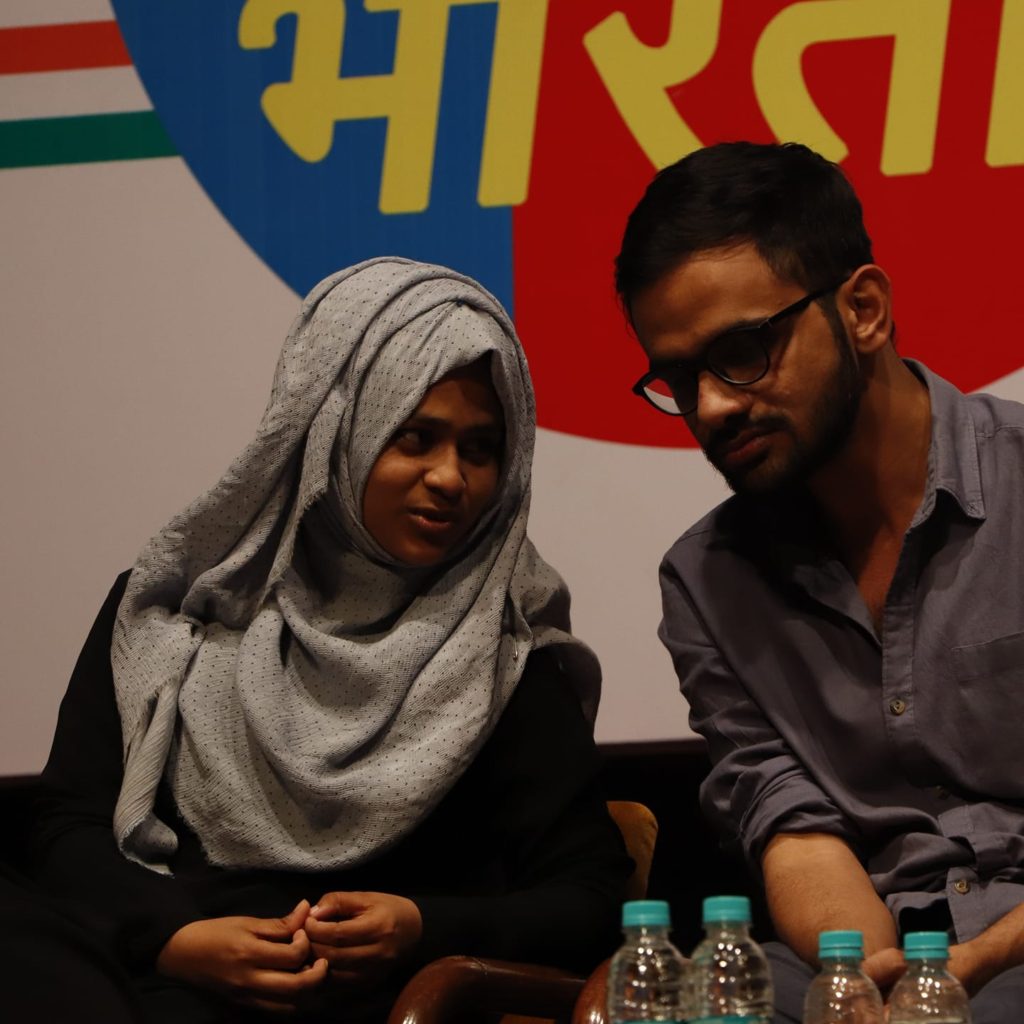
She considers her education to be the informant that made her acquainted with the social and political predicament that threatens the minorities and women in India. Sadiya was an active participant in the anti-CAA-NRC-NPR protests and has been applauded for the various speeches she delivered disputing the law at various public-speaking events, one of which was in company with activists Umar Khalid and Kanhaiya Kumar.
Sadiya was an active participant in the anti-CAA-NRC-NPR protests and has been applauded for the various speeches she delivered disputing the law at various public-speaking events, one of which was in company with activists Umar Khalid and Kanhaiya Kumar.
Moving forward, Sadiya has her sights set on helping the women in her community and creating employment for the ones who are bound to the four walls of their household.
Sadiya believes that for any social change to be brought about, it’s the privileged and the educated members of the community who need to step up and stand in allyship with the marginalised, and only through education, can they stand a fair shot with the favoured class.
“Development of one person in a society consisting of under-privileged is no development at all. It is when the fortunate ones uplift the disadvantaged and curb inequality, does real development take place,” Sadiya told Maktoob.
“During the lockdown, many children didn’t have access to any regular means of instruction so the books from the library proved to be very beneficial, they also provided newspapers for older students and adults at Maulana Azad Library”- Rahela who lives near the library says.
source: http://www.maktoobmedia.com / Maktoob / Home> Features / by Sania Javed / December 04th, 2020
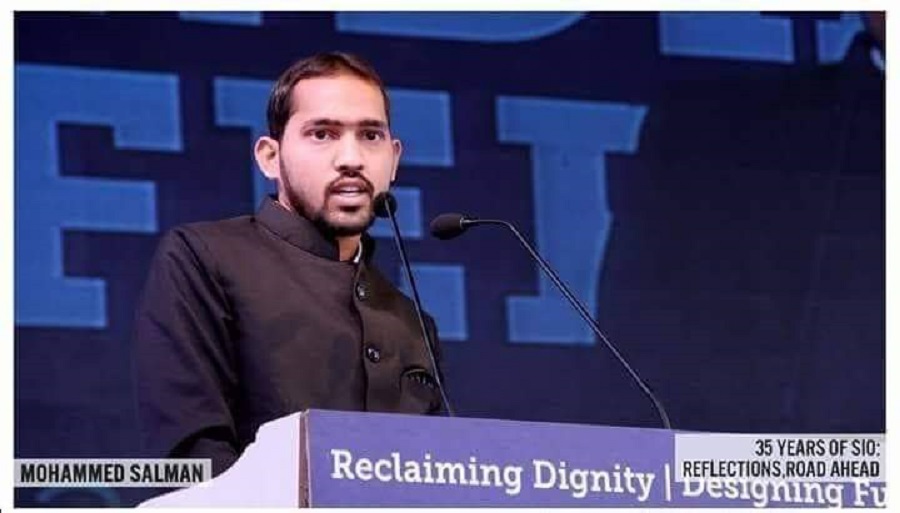
Mohammed Salman Ahmed has been elected as the national president of SIO.
A native of Maharashtra, Mohammed Salman Ahmed holds a masters degree in Engineering.
New Delhi :
The Students Islamic Organisation (SIO) of India has elected Mohammed Salman Ahmed as national president. A native of Maharashtra, he holds a masters degree in Engineering. His election was held recently at a meeting in Vijayawada, Andhra Pradesh in which other office-bearers of SIO were also elected.
Elected delegates from all the state units gather every two years to elect the president, general secretary and members of the Central Council. This year the elections were held with special precautions due to the Covid-19 pandemic, with some parts of the election being conducted online.
SIO is a national students’ organisation – and the largest organisation of Indian Muslim students – spread across the length and breadth of the country, and visible in prominent campuses of India like JNU, HCU, Jamia, AMU and other state universities. SIO is primarily active on students’ welfare and education centric issues and challenges. In recent years it has consistently worked on issues related to access and quality of education, including raising questions regarding discrimination and prejudice in educational institutions.
Syed Ahmed Muzakkir, who was previously Director of SIO’s Centre for Educational Research & Training, was elected general secretary. Muzakkir holds a masters degree in Economics from the University of Malaysia.
The national secretaries who form part of the central leadership are Nihal Kidiyoor, Dr. Naseem Ahmed, Tahoor Anwar, Rameas EK, Musab Qazi, Fawaz Shaheen and Abdul Hafeez.
Members of the Central Advisory Council, the apex decision-making body of the organisation, were also elected. They are: Amjad Ali (Kerala), Dr. Talha Faiyazzuddin (Telangana), Abdullah Azzam (Bihar), Usama Hameed (AMU), Zulqarnain Haider (Delhi), Salman Khan (South Maharashtra), Musaddiq Mubeen (Rajasthan), Dr. Luqman Ahmed (Telangana), Osama Akram (Telangana), Shujauddin Fahad (North Maharshtra), Abdul Quddus Suhaib (Karnataka), Ehtesamul Abrar (Jharkhand) and Muhammad Saeed TK (Kerala).
All the office-bearers, including the president, will hold their posts for two years.
source: http://www.clarionindia.net / Clarion India / Home> India> Indian Muslims / by Clarion India / December 02nd, 2020
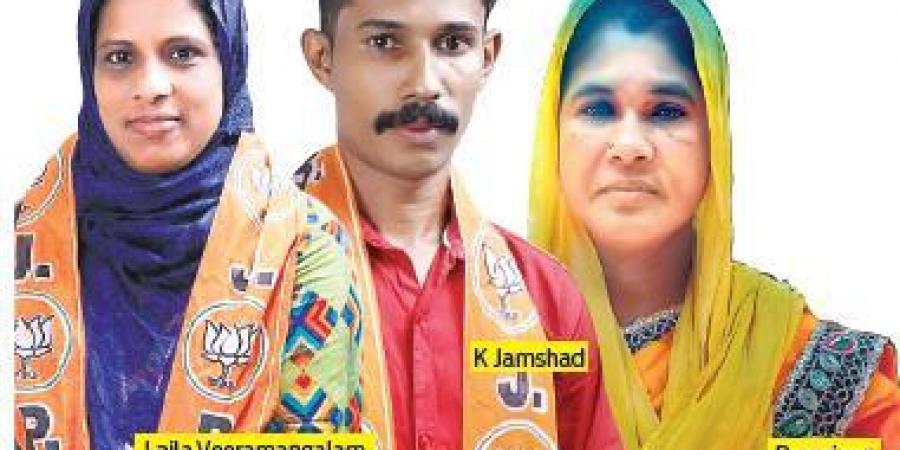
This time, the local body polls will witness a number of candidates from the Muslim community contesting on a BJP ticket, and to them, the decision was born out of their own reasons.
Palakkad :
This time, the local body polls will witness a number of candidates from the Muslim community contesting on a BJP ticket, and to them, the decision was born out of their own reasons. Contesting from ward 13 of Kollengode panchayat, Pyarejaan affiliated herself with BJP after the Centre made triple talaq a criminal offence.
“Ten years ago, my husband abandoned me and our two children. I had no source of income and suffered a lot,” said Pyarejaan, a daily wage-worker. A man should not be allowed to discard his partner and leave her to fend for herself. It is indeed a punishable offence, she said. As for K Jamshad and wife Laila Veeramangalam, who will represent BJP from ward 17 (Kunnathully) and ward 7 (Chungam), respectively, it was the Left front’s threats and lackadaisical approach to an issue they raised that forced them to jump ship.
“I had been with CPI for years and earned my living tapping rubber. Recently, I tested Covid positive and was admitted to the MCH in Mangode. The place was unhygienic. When I asked the staff for a toilet cleaner and a brush, they refused and argued with me. Even the drinking water wasn’t clean. I then took some photos and went on FB Live to highlight the state of affairs in the hospital. However, I was completely taken aback by the comments and threats made against me and my wife by my comrades.
The CPM local unit even filed a case against me. As for joining BJP, I had begun liking PM Narendra Modi after the China standoff. The toilet incident and the case that followed expedited my decision,” he said.While Jamshad’s ward is an IUML stronghold, Laila’s is a CPI citadel. “The sitting councillor of ward 17, Jamsheela (IUML), did nothing for the people and now has switched to the adjacent Karapadam ward. Hence, we hope to win this time to bring real change,” said Jamshad.
source: http://www.newindianexpress.com / The New Indian Express / Home> States> Kerala / by Express News Service / December 01st, 2020
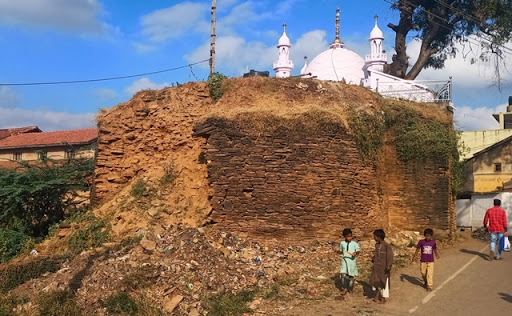
From, the sky-kissing palaces in the city, to the dust-biting burials in the graveyard, there is something in common; that’s brevity. The spacious chambers, the courtyards, the pavilions, gardens, and everything that once added stars to the beauty of the palaces is now in ruins. Their patrons have shifted themselves permanently to the graveyards to become one with the earth. Their relentless pursuit of worldly pleasures yielded them nothing but a fistful of dust for their mouths.
Wandering aimlessly inside the graveyard of Shahnur town, of Haveri District, I threw glances at various burials. At one of the corners, there were a few graves with monolithic sarcophaguses, with intricate floral patterns and calligraphy etched on them. Their presence in the graveyard was unobtrusive, suffused with weed and vines. When enquired, they belonged to the Nawabs of Shahnur. To the other side there were graves built with stones, crumbling to the ground, as though the time has wreaked havoc on them. Those were the graves of their kith and kin. The graveyard is also replete with countless burials of town dwellers, of recent times. There is a single cubicle, four-walled structure, with a large dome and minarets. That was a tomb of wife of one of the Nawabs, who belonged to the lineage of Prophet (PBUH).
Those who would strut about with arrogance are no more, and their descendants are hard to locate; like the beetles on a tree, that run away in all directions, when it is shaken. The time has also played a cruel game, as there are no chronicles to portray their life and time of the past. Only the legends make rounds inside the city, glorifying few of them as equal to saints and others are portrayed in lowlight.
I cringe, and often falter as I walk through those ruins. Their whines and whimpers are unbearable to my heart. Everyone thinks they are soulless; stone, mud and water; however, like everything else in the universe, they have life, embedded in their each element. They want them to be buried next to their masters, rather live a burdensome life. The pitiful wails, however, fall on deaf ears. I become their sole companion in grief, as we both believe we have so much in common to share with.
source: http://www.muslimmirror.com / Muslim Mirror / Home> Indian Muslim / by Anees Maniyar / December 07th, 2020
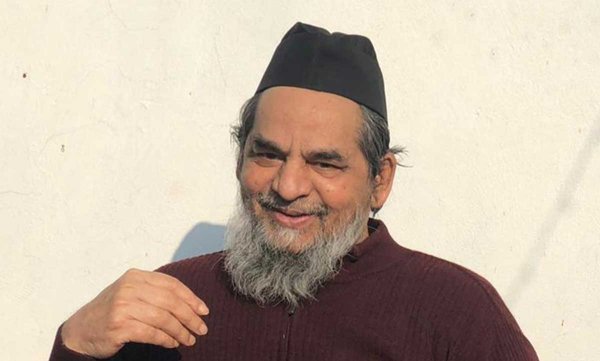
JNU’s former professor of Arabic, Janab Faizanullah Farooqi passed away today. He was not well and tested positive for Corona a week ago and was under treatment at Fortis Escorts Hospital in Sarai Jullena. He breathed his last at 2 am early this morning.
Tadfeen (burial) will insha Allah be at 3 pm at Jadid Qabristan Ahle Islam (Behind Old ITO Delhi Police Headquarters) .
Faizanullah Saheb taught at Centre for Asian and African Studies, Jawaharlal Nehru University till his retirement in 2017. He was a great scholar and critic of Arabic and Islamic Studies and a poet of Arabic, Persian and Urdu.
In his house in Abul Fazal Enclave in south Delhi, he used to run a maktab teaching children to read and memorise the Quran.
Reacting to his demise, Dr Zafarul-Islam Khan tweeted, “I am sad to know about the untimely demise of my old friend Prof. Faizanullah Farooqi. He was a distinguished scholar of Arabic who enriched teaching of Arabic in India and enhanced Indo-Arab relations. He had translated most parts of my Arabic book on methodology of research which is available in Urdu as “Usool-e Tahqiq”. He leaves behind a rich legacy and many sad hearts. May his soul rest in peace.”
He was awarded the President of India Certificate of Honor for his services to Arabic language in 2019. He is survived by his wife Farzana Khatoon, daughter Amna and two sons Irfanullah and Abu Talha.
I am sad to know about the untimely demise of my old friend Prof. Faizanullah Farooqi. He was a distinguished scholar of Arabic who enriched teaching of Arabic in India and enhanced Indo-Arab relations. He had translated most parts of my Arabic book on methodology of 1/nQuote Tweet
Milli Gazette@milligazette · Jul 22
JNU’s former professor of Arabic Faizanullah Farooqi passes away. Tadfeen (burial) will insha Allah be at 3 pm at Jadid Qabristan Ahle Islam (Behind Old ITO Delhi Police Headquarters). @Muslims_India @jnu_in
Joshi Sanghvi Village, Loha Taluka (Nanded District),MAHARASHTRA :
Waseema with her parents
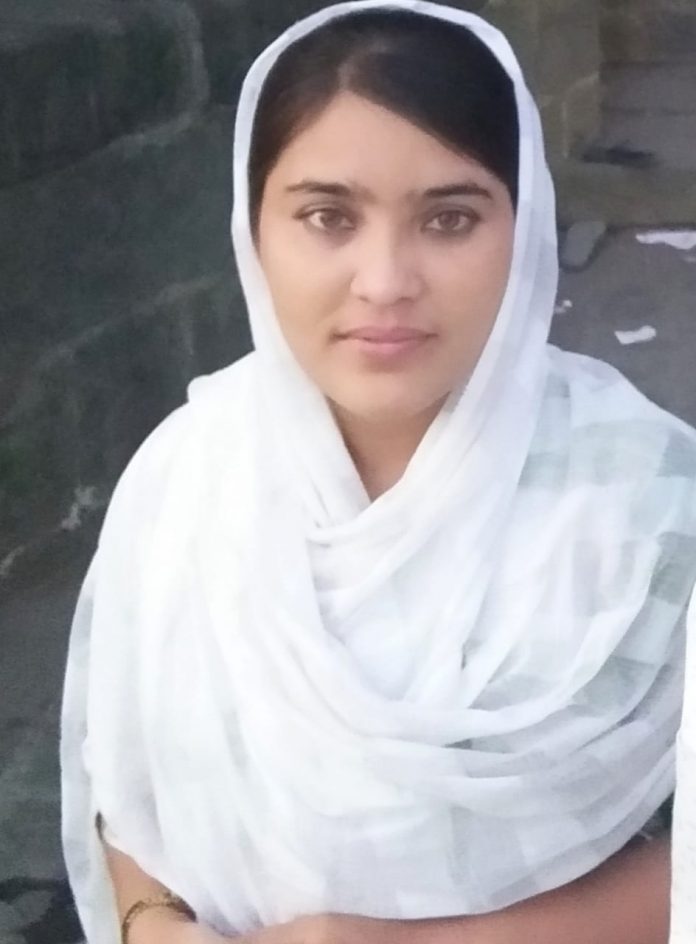
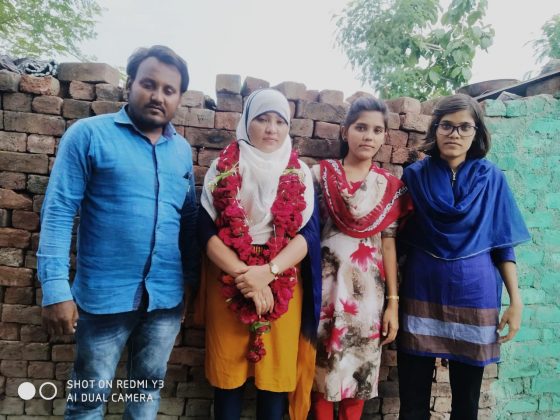
Born and brought up in a small village called Joshi Sanghvi in Loha Taluka of Nanded District of Maharashtra, Waseema Shaikh struggled at every step and braved the odds to be where she is today.
In the recently announced results for the Maharashtra Public Service Commission (MPSC) exam, Waseema secured 3rd rank. She is now undertaking training for the post of Deputy Collector.
Joshi Sanghvi is a small village with a population of about 3000 people and there are no opportunities for girls to study because they are married off as soon as they reach puberty. After class 7, the girls are forced to drop out of school. The maximum a girl can study in Joshi Sanghvi is till class 10. There is no college in the village, just a Zilla Parishad school in Marathi medium.
Waseema, the 4th child of her parents who are poor farm labourers, was passionate about studies. Despite having no electricity in their hut, she topped in the SSC board in her Taluka in 2012. And for college, she had to walk at least 6 kilometres every day as there was no transport available. However, when the exams for XII of junior college approached, she stayed at a relatives’ house and wrote the exams.
But graduation was again an uphill task as she would have to move away from home and stay in a hostel which her family could not afford.
She opted to study from an Open University and thus pursued her graduation from Yashwantrao Chavan Maharashtra Open University again in Marathi medium. Though her mother tongue is Urdu, Waseema is comfortable studying Marathi. She became the first graduate in her family of 6 siblings.
Her parents are both farm labourers and after her father fell sick, affecting his mental capabilities, the burden fell on the shoulders of her mother.
Her mother and elder brothers encouraged her to study despite the situation in the village where relatives kept advising them to get Waseema married off like her elder sister.
Waseema appeared for the MPSC exams for which she prepared through self-study as she could not afford coaching classes. She passed the exams, but her ranking was just good for a Class II post and she was appointed as a sales tax officer for the Maharashtra Sales Tax Office in Nagpur.
However, it was payback time for Waseema. She put her brother back in college to pursue his B.Sc degree and then appeared for the MPSC exams as was his ambition. She is also taking care of her younger 2 sisters’ education, who like her want to appear for the state civil services.
But evidently, a class II job was not enough for her so she appeared again for the MPSC and ranked among the top 5, scaling her position to that of Deputy Collector.
Waseema with her siblings
“The situation in my village where girls are not encouraged to study and forced into marriage, violence against women, poverty and poor infrastructure in the village often set me thinking what I can do to change this situation? Besides, my friend who was very good at studies and wanted to study further was married off when we were in class 9. This upset me a lot,” Waseema told TwoCircles.net.
It was this desire to empower girls and women which motivated her to appear for the MPSC exams.
Sanghvi Joshi village has a sizable Muslim population as it was in the erstwhile Nizam state of Hyderabad and now acceded with the Marathwada region.
Today the village is proud of their daughter who is the first person from their village to reach that level. She has become the idol for many young girls who are in school.
“Many girls used to come up to me to talk about their concerns when their parents wanted them to stop their studies or when their parents were looking for matches. I used to give counselling to the parents and persuade them to let their daughters study,” Waseema said.
She said she was pained that girls’ education is never a priority for parents.
Waseema said that parents of girls should become aggressive about the educational rights of their daughters. “The percentage of women in civil services is very less and I think to increase this we should have reservations, free coaching, scholarships exclusively for women so girls will be encouraged to aspire for civil services,” she said, and added, “Proper guidance, hard work, consistency in study hours, the best utilisation of resources available are equally important.”
“But I am fortunate that my mother and my brother encouraged me and I am so grateful to my brother who sacrificed his education for me when anyone else in his place would think it futile to educate a girl,” Waseema said.
It was her brilliant academic performances year after year that gave confidence to her mother and brother to let her pursue her dreams.
Waseema wishes to be posted in a rural backward place like her village so she can work for their betterment. “I want to develop the villages and help the people come out of their poverty. I have known what it is to be poor and experienced the hardships so I can empathise with the people”, Waseema said.
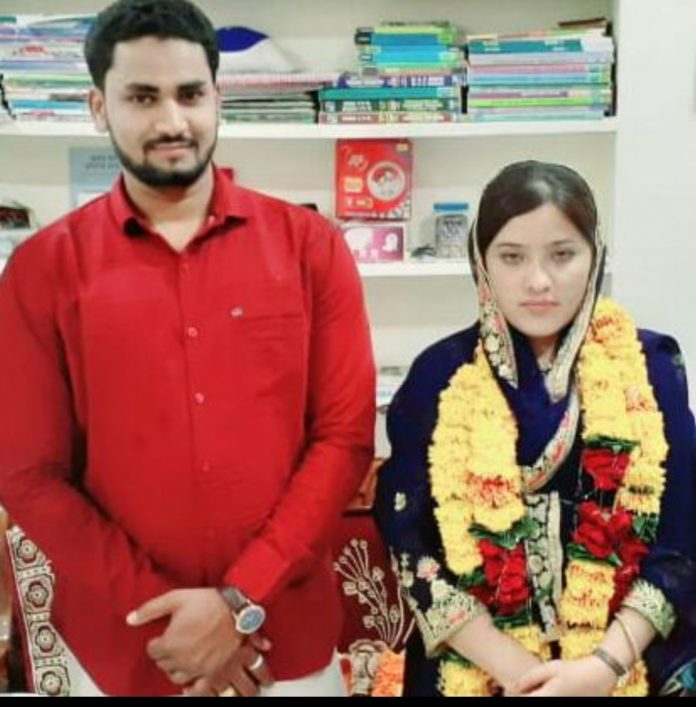
Waseema got married on June 8, a few days before her MPSC result, to Shaikh Haider who is also a Maharashtra Public State Services (MPSC) aspirant. “Yet again Allah has been kind to me, my spouse and my in-laws are supportive of my career and are proud of me,” she said.
waseema and Haidar
source: http://www.twocircles.net / TwoCircles.net / Home> Indian Muslim / by Nikhat Fatima, TwoCircles.net / July 01st, 2020