Category Archives: Community Involvement / Social Issues

India: Historians recall role of Muslims in freedom struggle

Coinciding 74th Independence Day on Aug. 15, scholars recollect help of Turkey to India’s national freedom struggle
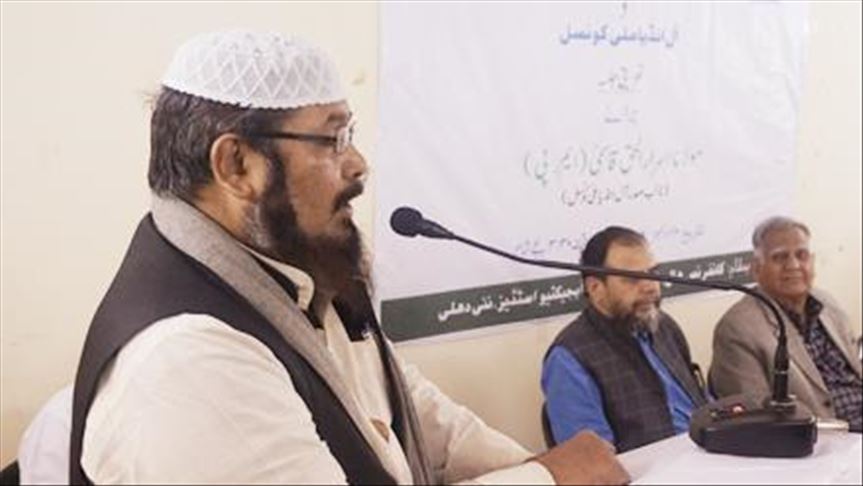
Abdul Hameed Nomani, General secretary of the All India Muslim Majlis Mushawarat

New Delhi:

Celebrating country’s 74th Independence Day on Aug. 15, under the shadow of recent communal riots in capital Delhi and anti-citizenship law stir, many Indian scholars have called for recalling the role of Muslims during India’s freedom struggle.

Author and scholar Waseem Ahmed Saeed said over time, the contribution of Muslim freedom fighters in India has been forgotten.

In his book titled Kala Pani: Gumnam Mujahideen-e-Azadi 1857, Saeed said from the 1757 Battle of Plassey in Bengal, Tipu Sultan’s Seringapatam battle in South India in 1799 to the massive revolt in 1857 against the British was led by Muslims.

Saeed, who has authored a book on the subject in the Urdu language, said while India’s official history celebrates Udham Singh for killing Michael O’Dwyer, the lieutenant governor of Punjab in India, in revenge for the 1919 Jallianwala Bagh massacre in Amritsar, it does not recognize Sher Ali Afridi, who killed Lord Mayo, British viceroy and governor-general of India from 1869-1872.

Speaking to Anadolu Agency, many Muslim scholars and historians said the role of their ancestors in the freedom struggle has been overlooked.

According to Syed Jamaluddin, director of historical research projects at the Institute of Objective Studies, a think tank, there is no adequate coverage of the role of the Indian Muslims in the national movement.
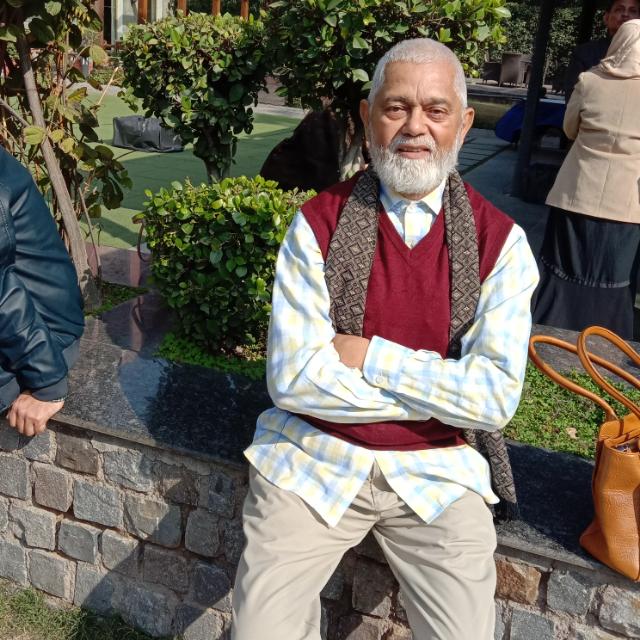
“The contribution of Muslim revolutionaries, poets and writers is not known today. Similarly, little is known about the contribution of people like Ali Musliyar and Bi-Amma, who made significant contributions,” he told Anadolu Agency. He is currently editing a book on the Muslim role in India’s freedom struggle.

Saeed recalled in his book that it was the ruler of Bengal Siraj-ud-Daulah, who first fought and lost to the British in 1757, which became a cornerstone for the imperial power to colonize India.

He said that even after losing this battle, there were many rebellions led by Muslims until 1850.

Muslim revolts against British

Jamaluddin mentions the Fakir-Sannyasi rebellion, a joint revolt against colonial power by Muslim and Hindu ascetics, for preventing them from collecting religious tax from locals. It started in 1764 and continued until the 1850. He said the rebellion even spread its wings to southern India’s Madras (now Chennai) presidency.

But most prominent and popular movements that hit the British hard in the early 20th century in the subcontinent was the Reshmi-Rumaal Tehreek (Silk Cloth Movement) led by Maulana Ubaidullah Sindhi with the help of Turkey, Germany, and Afghanistan.

Speaking to Anadolu Agency, a prominent Muslim scholar Abdul Hameed Nomani said that despite his best efforts, Sindhi’s contribution has not been included in the official Indian history.

Along with an Indian prince Raja Mahender Pratap Singh, Sindhi, and Maulvi Barkatullah had established the exiled government of India in Afghanistan in 1915.

“The movement picked up around the same time when Subhash Chandra Bose [renowned Indian freedom fighter] was allying with Germany and Japan to oust the British from India. While Bose is celebrated nationwide, not much is known about Sindhi and his supporters,” said Nomani, who is also the general secretary of the All India Muslim Majlis Mushawarat, an umbrella group of prominent Muslim organizations.

It was named Silk Cloth Movement because Sindhi and other leaders used to send letters and directions to their cadres written on silk cloth.

Later, Sindhi went to Turkey and joined the country’s national struggle.

“The movement led to the formation of Indo-German-Turkish mission to encourage local tribes on the borders of Afghanistan to attack Britishers and their interests. While the key figures were arrested by the British, the movement remains a key event in the freedom history,” he added.

He said even though in 2011 the government released a postal stamp to commemorate Sindhi’s movement, there has been no vigor to record the sacrifice of Sindhi and his allies Mahmud Hasan and Husayn Ahmad.

“Only passing reference has been made about the role of Muslims in India’s national struggle,” rued Nomani.

source: http://www.aa.com.tr / Anadolu Agency / by Cheena Kapoor / August 14th, 2020
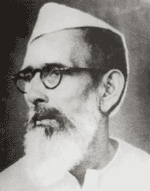
Who is this Freedom fighter from Bihar?

Muzaffarput, BIHAR :

Dr Maghfoor Ahmed Ajazi

He was born in village Dihuli of District Muzaffarpur, in Bihar on 3 March 1900.

His father Moulvi Hafizuddin Husain was a zamindar. He first went to a Madarsa, then to North Brooke Zila School, Darbhanga, from where he was expelled for opposing the Rowlatt Act. He passed the matriculation from Pusa High School and was admitted in B.N. College, Patna, for higher studies.

His mother died in his childhood. His elder brother Maulana Manzoor Ahsan was also a freedom fighter.

He was married to Azizul Fatima. His marriage was all Khadi i.e. Bride and Groom both wore hand woven Khadi clothes. After nikah marriage function was transformed into an a public meeting for freedom struggle.

He left his studies at B.N. College to follow Gandhi and joined the non-cooperation movement in 1921.

There after he actively participated in the freedom movement. He mobilised masses against Britishers by organising volunteer corps, Ramayan Mandali, and also collected fund for freedom struggle through ‘Muthia’ drive. ‘Muthia’ meant to take out a muththi or fist of grain before preparing every meal to fund freedom struggle. Once Ajazi unknowingly reached at house of his cousin sister in a remote village. He asked for a ‘Muthia’. He got answer in negative. His sister recognised him and requested him to take meal. But Ajazi refused to take not only meal but even a glass of water. When his sister promised to take out muthia and donated the dues then he agreed to take meal.

He organised ‘Sewa Dal’ established by Sarojini Naidu and formed ‘Ajazi Troop’ to promote and train youngsters for freedom struggle. He first time attended AICC session held at Ahmedabad in 1921 and supported the motion of Maulana Hasrat Mohani on ‘Complete Independence’.

He represented Central Khilafat Committee at the All Parties Conferences. On the direction of Mohd Ali Jauhar he took the charge of Khilafat Committee Calcutta. There he was arrested in a protest march led by Neta ji Subhash and was arrested and released at a farther most place from Calcutta.

He obtained degree from Calcutta Homoeopathic Medical College. In August 1942 movement his house was searched and he worked under ground, though his promising eldest son Muzaffar Husain Ajazi died at young age on 25 July 1942.

Ajazi opposed Jinnah’s Two-nation theory. Muslim League workers used to come in batches at his residence, virtually spitting and shouted slogan. Ghaddar-e-Qaum.

He was also a poet and writer in the Urdu language as well as an orator. His papers, diaries, letters and files are preserved in national libraries.  

After independence Ajazi devoted his whole life for the welfare of the downtrodden and for protection of rights as well as development of Urdu language. He was also actively associated with trade union movement.


Ajazi died on 26 September 1966 at his residence in Muzaffarpur city.     

source: http://www.milligazette.com / The Milli Gazette / Home> News> Family & Kids / The Milli Gazette / October 14th, 2020

Telangana sub-registrar doubles as farm hand to help the needy

Mulugu & Jayashankar Bhupalpally District, TELANGANA :

Mulugu and Jayashankar Bhupalpally Sub-Registrar Tasleema Mohammad working in an agricultural field. Arrangement  

Distributes her earnings among the poor, aims to educate tribals about welfare schemes

Community outreach during the weekends has earned sub-registrar of Mulugu and Jayashankar Bhupalpally appreciation from tribals in the area.

Tasleema Mohammad, 34, takes up farm work, which is the only form of work available in the area. Whatever money she earns through her labour, she uses to spend on the needy.

Beneficiaries of her weekend and holiday labour include a 15-year-old girl, who lost her parents in a road accident in 2013. Ms Tasleema is now looking after her.

Her service has earned her the moniker ‘Gutti Koyala Peddakka’ (sister of Gutti Koya tribes) in the area.

While pushing files and recording transactions are her routine jobs, the qualitative difference that has come in her life by helping the needy is an unmatched feeling, she told The Hindu.

Even the locals in the area also approach her for solutions to their civic and social problems.

Ms. Tasleema said that she herself was the victim of Naxal violence, as she lost her father when she was just two.

She recalled how her mother single-handedly raised her and her five siblings in the face of adversity.

Narrating her experience working with farm labourers, the Group II officer said that farmers, especially tribals, were not aware of several schemes aimed at improving their lives, like crop insurance and farm subsidy. She feels that there is an urgent need to educate the tribal farmers about government initiatives.

“During weekends and holidays, I work at the farms and interact with them for hours. They pay me ₹300-400 per day, which I give to the needy in the village,” she said. A mother of two, Ms. Tasleema said that she always travels by public transport instead of using her official vehicle.

“My mother has inspired me in every way. She is my role model.”

The officer, who even knows how to drive a tractor, also runs an NGO that provides education and other basic needs to the poor and destitute. She has bagged ‘Best Employee of the year’ award 11 times in 12 years of her service in the department.

source: http://www.thehindu.com / The Hindu / Home> News> States> Telangana / by Abhinay Deshpande / Hyderabad – August 16th, 2020

Women should be allowed to follow their dreams: Nadia Beig who cracked UPSC civil services exam

Kupwara District (Kashmir), JAMMU & KASHMIR :

During her personality test, the panel asked her questions ranging from Kashmir and the history behind its name, export of saffron which is cultivated widely in the Valley and the Shankaracharya temple.

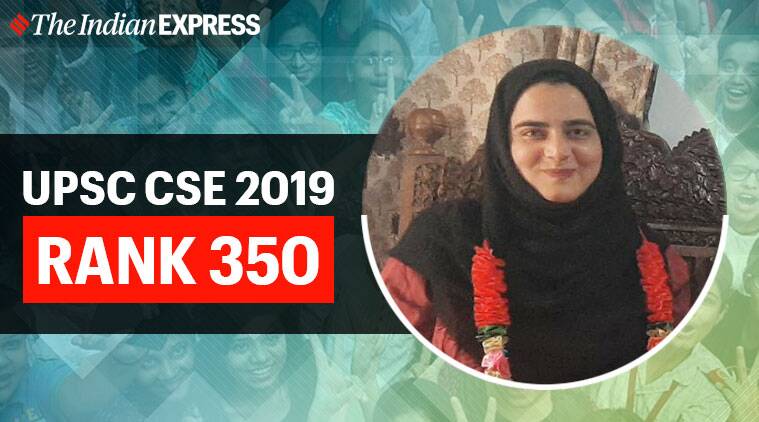
Twenty-three-year-old Nadia Beig, who became one of the youngest to crack the civil service exam (CSE) 2019, says women should be allowed to follow their dreams and decide their future. Hailing from Kashmir’s Kupwara district, Nadia moved to Delhi to pursue a graduate degree in Economics from Jamia Millia Islamia after completing secondary school.

She cracked the exam on her second attempt. “I appeared for the exam in 2018 first. I had full preparation but was unable to crack even the preliminary. It was the first time that I was appearing for a national level entrance exam of such high competency. I was not confident despite devoting day and night to my studies. This year, I had worked on my weaknesses,” said Nadia who has secured 350th rank in the UPSC civil services exam.

Reading newspapers was a habit for Nadia, which she believes had come handy in cracking the exams. During her preparation for the second time, she had also focused on expressing herself better and worked hard to grasp the English language.

“My preparation started on the first day of my college. I gathered information not only from books but also from many free resources available online. I was part of many groups on Telegram as well. Meeting people from different backgrounds at a university campus also helped in learning,” she said.

During her personality test, the panel asked her questions ranging from Kashmir and the history behind its name, export of saffron which is cultivated widely in the Valley and the Shankaracharya temple.

Beig’s parents are teachers and her two younger sisters are pursuing a course in medicine. She was part of the residential coaching classes for UPSC offered by the Ministry of Minority Affairs and run at the JMI campus.

While she wishes to work for public welfare in general, education is one of the causes she would like to focus on. Nadia said women should have the liberty to decide their future. “There is additional pressure on girls. Every human being has potential regardless of gender. Girls should be given the freedom to explore their potential and decide when they want to marry or which dreams they want to follow. No one should be made to feel lesser because of their gender.”

source: http://www.indianexpress.com / The Indian Express / Home> Jobs / by Shyna Kalra / Newd Delhi / August 04th, 2020

Pathbreakers: The 20th-Century Muslim Women of India

Do not miss this exhibition that extols the contribution of 20th-century Indian Muslim women

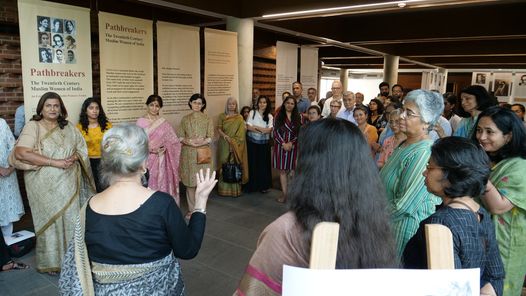
An interesting travelling exhibition is set for a re-run in New Delhi once the pandemic containment rules are eased further. Titled ‘Pathbreakers: The 20th Century Muslim Women of India’, it showcases 21 Indian Muslim women who broke the proverbial glass ceiling and refused to be stereotyped. The exhibition was earlier held in the national capital in 2018.

Speaking to the media in 2018, Syeda Hameed, chairperson of Muslim Women’s Forum (MVF), the organisation which assembled the exhibition, had said that the main idea was to bring to the forefront a galaxy of Indian Muslim women who contributed to nation building in various ways but largely remained unrecognised and unsung.

Past Events – MUSLIM WOMEN'S FORUM, INDIA

The women featured in the earlier exhibition include Anis Kidwai, Atiya Fyzee, Attia Hosain, Aziza Fatima Imam, Fathema Ismail, Hamida Habibullah, Hajrah Begum, Masuma Hosain Ali Khan, Mofida Ahmed, Mumtaz Jahan Haider, Qudsia Zaidi, Qudsia Aizaz Rasul, Razia Sajjad Zaheer, Saeeda Khurshid, Safia Jan Nisar Akhtar, Saliha Abid Hussain, Sharifa Hamid Ali, Siddiqa Kidwai, Surayya Tayabji, Tyeba Khedive Jung, and Zehra Ali Yavar Jung. Most of them left their marks in fields as diverse as politics, literature and social work.

Muslim Women’s Forum / 5 months ago / facebook.com

Tyeba Khedive Jung, the first Indian Muslim woman to receive a university degree in 1894, wrote a feminist novel ‘Anwari Begum’ way back in 1905 that spoke about women’s emancipation, and also chaired an annual conference of Brahmo Samaj, a Hindu reformist organisation. Sharifa Hamid Ali was a member of the Constituent Assembly. Although the jury is still out about who designed the Indian National Flag, according to many it was Surayya Tayabji who was responsible for the inclusion of the Ashok Chakra. Qudsia Zaidi, among other things, is famous as the founder of the Hindustani Theatre in 1955, said to be Delhi’s first post-independence professional theatre troupe. Fathema Ismail was instrumental in opening rehab clinics for children suffering from polio.

The exhibition was visiting Bengaluru just before the COVID-19 related lockdown was implemented.

source: http://www.outlookindia.com / Outlook Traveller / Home> Explore > Story / by Uttara Gangopadhyay /August 14th, 2020
Fearless autorickshaw driver turns hero for COVID-19 patients

Hyderabad, TELANGANA :

Fearless autorickshaw driver turns hero for COVID-19 patients

Hyderabad: 

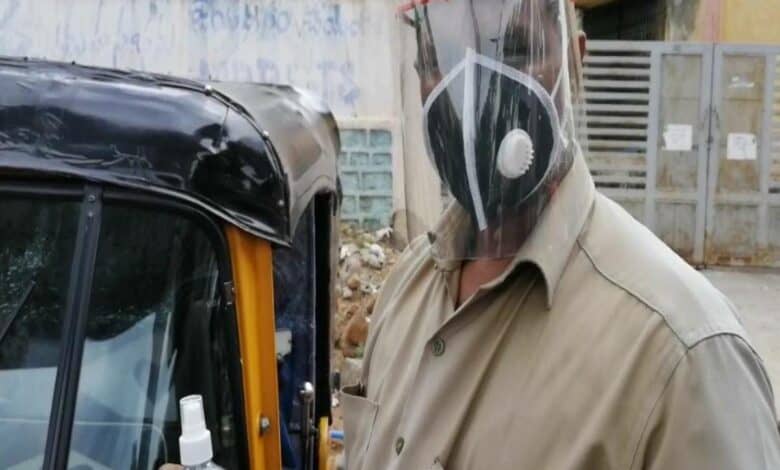
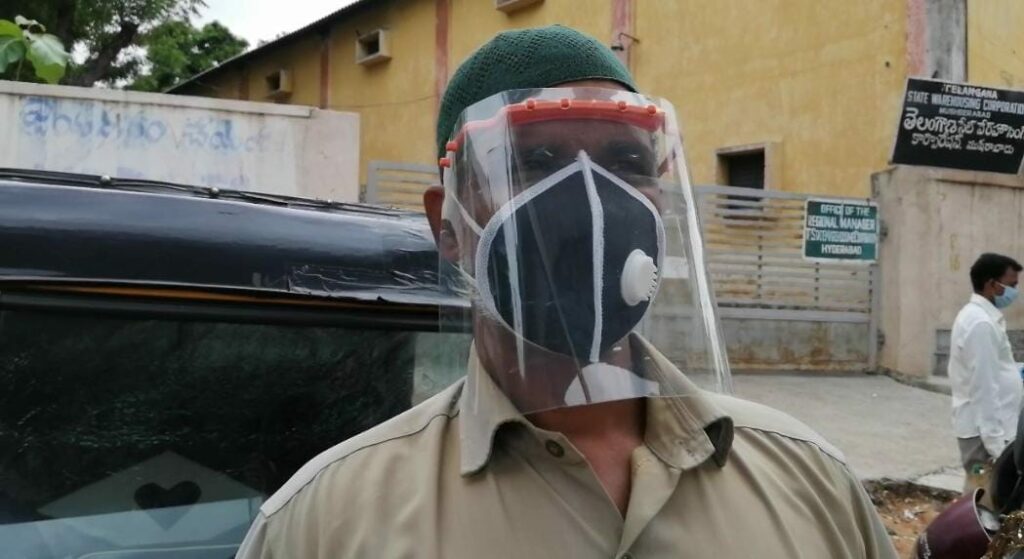
At a time when people are turning on their old parents or sick family members, a 48-year-old auto driver, Mohammed Khalid , has become a hero of sorts for those who are dealing with the ongoing COVID-19 pandemic. Unlike most others who would think twice before ferrying across patients, Khalid has been providing service to COVID-19 patients those who require transportation.

Mohammed, since July 13 has been only providing transportation to people from Gandhi Hospital to private and government hospitals as and when required.  Moreover, he also privodes service to COVID-19 patients to others from any part of Hyderabad as well. “This is the time to help people in need, irrespective of cast and culture I have been regularly ferrying COVID-19 patients from Gandhi Hospital to Osmania, King Koti, and Fever Hospital,” stated Khalid.

Mohammed Khalid ensures safety measures for his passengers.

Even after the Centre relaxed lockdown rules a few months (post May) ago, there has been a dearth in passengers, recalled Khalid. “So on July 13 I went near Gandhi Hospital in Musheerabad, the main treatment centre for COVID-19 patients, and noticed that emergency patients were unable to get ambulance services as there were many cases. Then I decided to start service for them at affordable rates,” said Khalid.

The 48-year-old believes that in these difficult times, we must help each other irrespective of any religion, caste or creed. “Sab jane dare to kaisa jo log bimaar hai unlo ku kaun lekar jainga dawakhano ku (If everyone is scared, then  how will people travel to the hospital)” Khalid rhetorically questioned? He has a point however, as several citizens have been complaining of slow or lack of ambulance services.

Mohammed Khalid provides service to COVID-19 patients at Gandhi Hospital in Musheerabad.

The auto rickshaw driver is also not scared of the pandemic. Furthermore, going and waiting for passengers in front of Gandhi makes him proud of what he is doing. “Carrying a patient itself is a matter of pride for me, and sharing the happiness with those who have recovered is amazing,” Khalid added. He also felt that the Telangana government should provide some monetary relief or schemes for autorickshaw drivers, as they have also been hit hard due to the lockdown.

source: http://www.siasat.com / The Siasat Daily / Home> News> Hyderabad News / by Mohammed Hussain / August 24th, 2020

Tribeni, Mosque & Dargah of Jafar Khan Gazi – Hooghly, West Bengal

Tribeni (Hoogly District), WEST BENGAL :

Triben generally refers to the confluence of the three rivers GangaYamuna and the illusive Saraswati near Allahabad.

But the Hooghly district of West Bengal also houses another Tribeni, where the Bhagarati or Hooghly River disintegrates into three branches. The three branches are HooghlySarswati and Jamuna (Kanchrapara Khal).

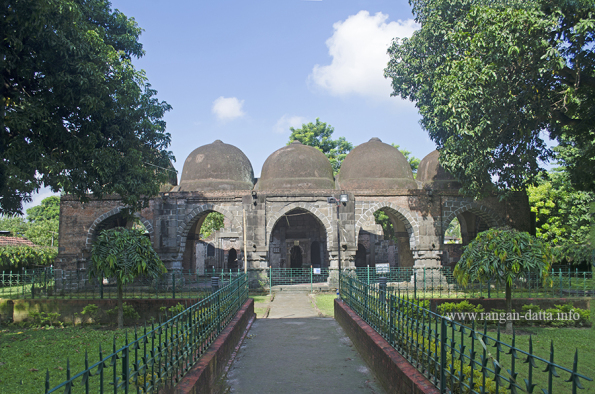
Zafar Khan Gazi Masjid, Tribeni, Hooghly

So like the Prayag near Allabahad, the Tribeni of Hooghly has also attracted pilgrims for centuries and is mentioned in ancient Bengali literature like the Mansamangal and Chandimangal .

Today Tribeni is located about 70 km north of Kolkata on the Bendel – Katwa rail line and is approachable both from Howrah and Sealdah by train.

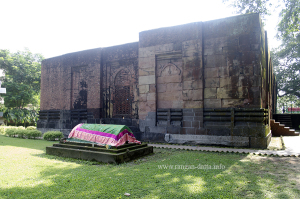
Dargah of Zafar Khan, with a grave outside it, Tribeni

Today the prime attraction of Tribeni is the Dargah of Zafar Khan Gazi. The dargah is located on a small mound over looking the Hooghly river.

It is housed inside a walled complex which also contains a mosque and several other scattered tomb. It remains an active religious site.

The mosque is not only the oldest Mosque in West Bengal but also happens to be the oldest Islamic structure in the whole of undivided Bengal.

Zafar Khan was a general of Delhi Sultan Feroze Shah, who invaded Hooghly in the late 13th century, he defeated the local Hindu king and established the Turkish rule in Bengal.

Zafar Khan settled in Tribeni as he was mesmerized by the beauty of the Hooghly River. The locals started considering him as a learned man and he came to be know as Zafar Khan Gazi. But soon after Zafar Khan was killed in a battle with another Hindu king of the region.

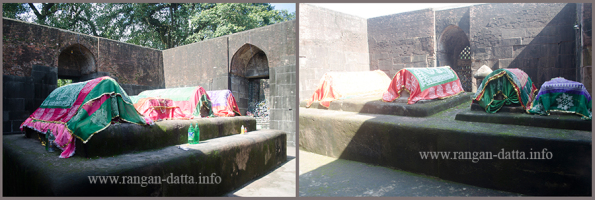
Inside the Zafar Khan Gazi Dargah. L: Eastern Chamber, R: Western Chamber with Zafar Khan’s grave at the extreme right

The Dargah was constructed in 1315 and is located on the eastern end of the walled complex. It has two chambers and the roof has long collapsed. The western chamber contains the grave of Zafar Khan along with the graves of his two sons Ain Khan Ghazi and Ghain Khan Ghazi. The fourth grave in the complex and the wife of Ughwan Khan, another son of Zafar Khan Gazi.

The eastern complex houses the grave of Zafar Khan’s third son Barkhan Ghazi. He is buried along with  and his two sons Rahim Khan Ghazi and Karim Khan Ghazi. The identity of one tomb remains unknown but it shape suggests it belongs to a woman.

The Dargah is located on a high plinth and both the chambers are approached by flight of stairs. Both the chambers are provided with Jali screens allowing sunlight to filter into the chambers.

Both the mosque and the dargah are built with a combination of stone and bricks, some thing quiet unusual in the land famous for terracotta.

Both the most unique feature of the Dargah and the Mosque is the presence of several Hindu motifs and symbols in its walls.

Hindu ornamentation from the outer walls of the Dargah of Zafar Khan Gazi, Tribeni, Hooghly

Both the structure contains stone panels of Hindu deities but most of them have been chiseled off leaving an faint imprint. It is quiet likely these motifs were removed from abandoned or demolished Hindu Temple and were used in the construction of the Mosque and Dargah.

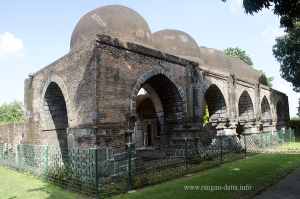
Mosque of Zafar Khan Gazi, Tribeni

The rectangular Mosque measures 76 feet by 36 feet and dates back to 1292. It has five arched entrance in the front and two aisles create 10 squares, each of which is topped by a dome. Sadly only 6 of the 10 domes can be seen to this day.

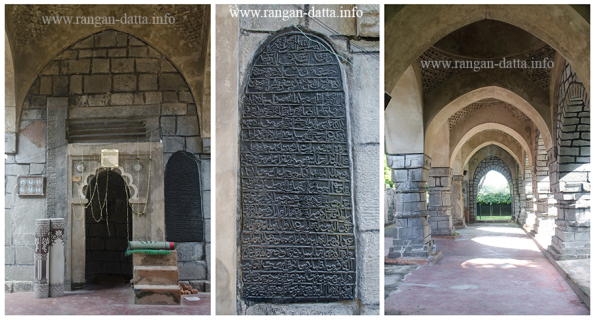
The Zafar Khan Mosque, Tribeni. L: Central Mihrab, C: An Arabic Inscription and R: Arched aisle

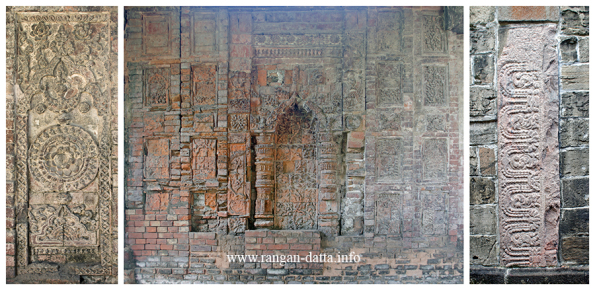
There are five mihrabs on the western wall, out of which three are more or less intact. The central mihrab is ornamental and is made of stone. The two miharab flanking the central mihrab is made of bricks with beautiful terracotta ornamentation. Like the Dargah the Mosque also contains ornamentation from temples.

Ornamentation inside the Zafar Khan Gazi Mosque, Tribeni, Hooghly 

A trip to Tribeni is never complete without the visit to nearby Bansberia Bansberia famous for its Haneswari Temple  and Ananta Basudev Temple.

source: http://www.rangandatta.wordpress.com / Rangan Datta / Home> Bengal Archaeology, Bengal History, General / by Rangan Datta / photographs : www.rangan-datta.info / December 01st, 2016

Indian businessman honoured for his philanthropic work by UAE government

Dubai , UAE :

Indian businessman honoured for his philanthropic work by UAE government

The excellence certificate and citation was handed over to Merchant by Shaikh Saif bin Zayed Al Nahyan, Deputy Prime Minister and Minister of Interior. Image Credit: Supplied

Dubai:

The UAE Ministry of Interior on August 19 honoured Indian businessman Firoz Goulam Merchant for his exemplary community services.

The excellence certificate and citation was handed over to Merchant by Shaikh Saif bin Zayed Al Nahyan, Deputy Prime Minister and Minister of Interior, in the presence of senior police officers and government officials.

Since 2008, Merchant, the proprietor of Pure Gold Jewellers, launched a philanthropic movement called the Forgotten Society. Spearheading this initiative, Merchant worked tirelessly with several correctional institutions in the country to identify debt-ridden prisoners and assisted them in repaying debts to the tune of millions, thereby securing their release and providing free air passage to their respective countries.

A deeply humbled Merchant told Gulf News: “It was a very proud moment for me to be acknowledged by the government of the land. I would like to express my gratitude to the UAE Government for this honourable recognition for my humble efforts to support the community.”

source: http://www.gulfnews.com / Gulf News / Home> UAE / by Staff Report / August 20th, 2020

19 cops from Karnataka honoured with President medal

Bengaluru, KARNATAKA :

A total of 19 police personnel from the state have been conferred with the President’s Police Medal on the occasion of Independence Day.

Bengaluru :

A total of 19 police personnel from the state have been conferred with the President’s Police Medal on the occasion of Independence Day.

V L N Prasanna Kumar, ASI, Criminal Investigation Department, has been honoured with the medal for distinguished service.

The others are:

R Hemanth Kumar, DySP, Special Investigation Team, Lokayukta; Parameshwar Hegde, DySP, CID; R Manjunath, DySP, ACB, Mandya; H M Shailendra, DySP, Kodagu; Arun Nagegowda, DySP, Mandya; H M Satish, ACP; H B Ramesh Kumar, DySP, intelligence, Bengaluru; Umesh, DySP (Armed), Police Training School, Mysuru; C N Diwakar, Circle Police Inspector, Kodagu; G N Rudresh, Special Reserve Police Inspector, KSRP, Bengaluru; B A Lakshminarayan, SI, City Special Branch, Bengaluru; M H Chandekar, special reserve SI, KSRP, Bengaluru; K Jayapra- kash, PSI, Mangaluru; H Nanjundaiah ASI, Chikkaballapur; Atheeq Ur Rahman, ASI, Shivamogga; Ramanjanaiah, ASI, Tumakuru, R N Balikai, ASI, Haveri, and K Honnappa, head constable, Bengaluru Rural.

source: http://www.newindianexpress.com / The New Indian Express / Home> Cities> Bengaluru / by Express News Service / August 15th, 2020

Streetwise Kolkata: How Tollygunge is linked to Tipu Sultan

Kolkata, WEST BENGAL :

Decades before the birth of the city of Calcutta, the area that is now Tollygunge was a dense forest land called Russapugla with an abundance of mangrove trees.

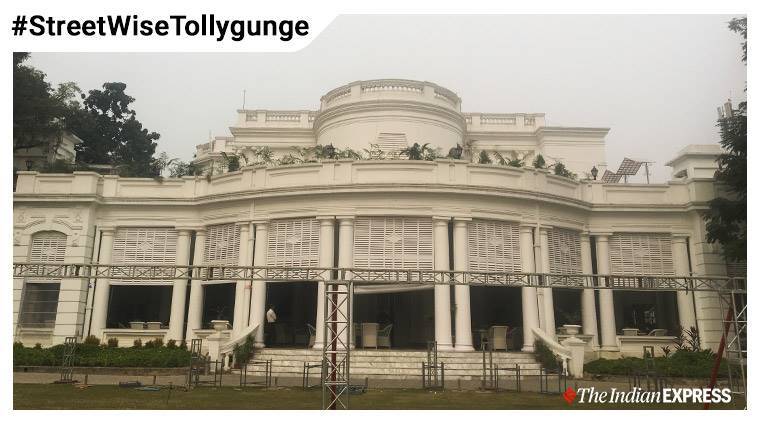
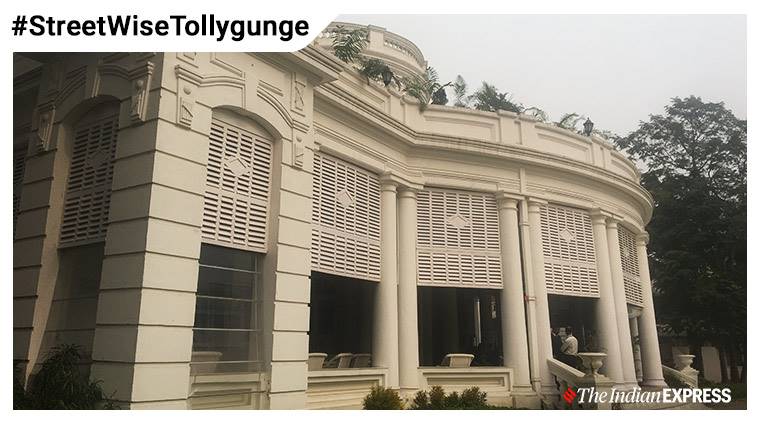
The clubhouse on the grounds of Tollygunge Club in Kolkata. The club is preparing for its New Year’s Eve party with stage equipment on its grounds. (Express photo: Neha Banka)
______________________

Most know Tollygunge as a neighbourhood in south Kolkata rather than the long stretch of road by the same name that cuts through a large swathe of the area.

Decades before the birth of the city of Calcutta, the area that is now Tollygunge was a dense forest land called Russapugla with an abundance of mangrove trees. Over the centuries, the land was cleared for settlement and urban planning but some traces of the forest can still be found in the expansive property belonging to Tollygunge Club and the Royal Calcutta Golf Club in the neighbourhood, some of the oldest social clubs in the city.

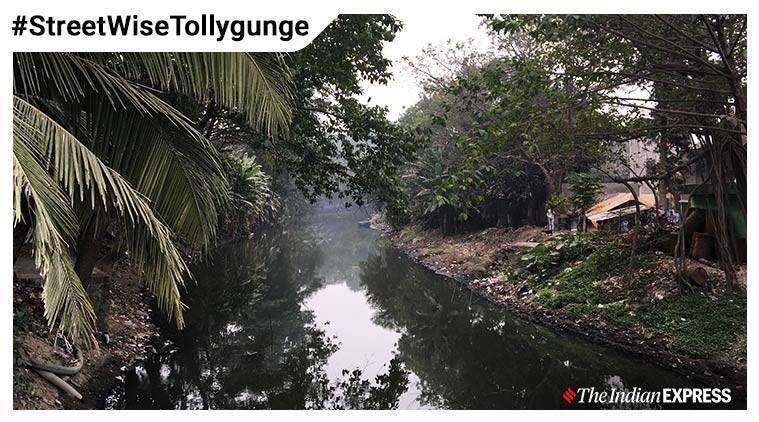
Tollygunge Club, established in 1895, derives its name from the neighbourhood of Tollygunge, that in turn got its name from William Tolly, a colonel in the British Army in 1767. Calcutta was a city of creeks, although many have been entirely or partially filled up. Today, few of those creeks remain, winding slowly across the city, trying to find their way into the Bay of Bengal, but one would have to search beneath cramped, illegal urban settlements and mounds of garbage to find them.

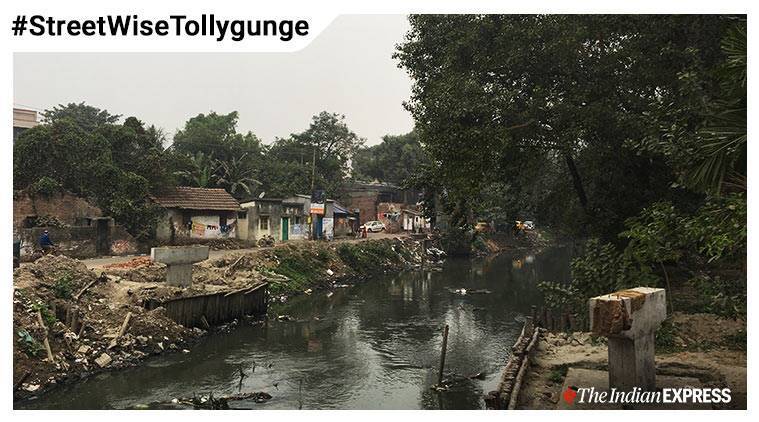
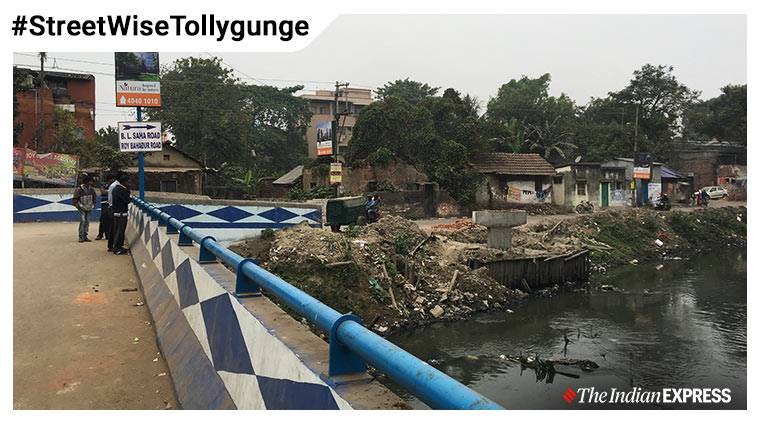
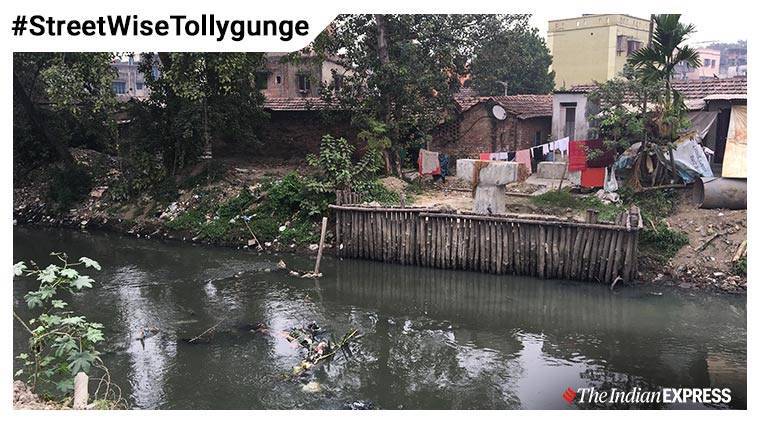
Tolly’s Nullah behind the grounds of Tollygunge Club in Kolkata. (Express photo: Neha Banka)
______________________

In the outer peripheries of the property that belongs to Tollygunge Club, a narrow creeks snakes past, as if conjoined to the boundaries of the club’s walls. On both banks of the creek, slums have developed over the years and garbage floats on the water, emanating a foul stench.

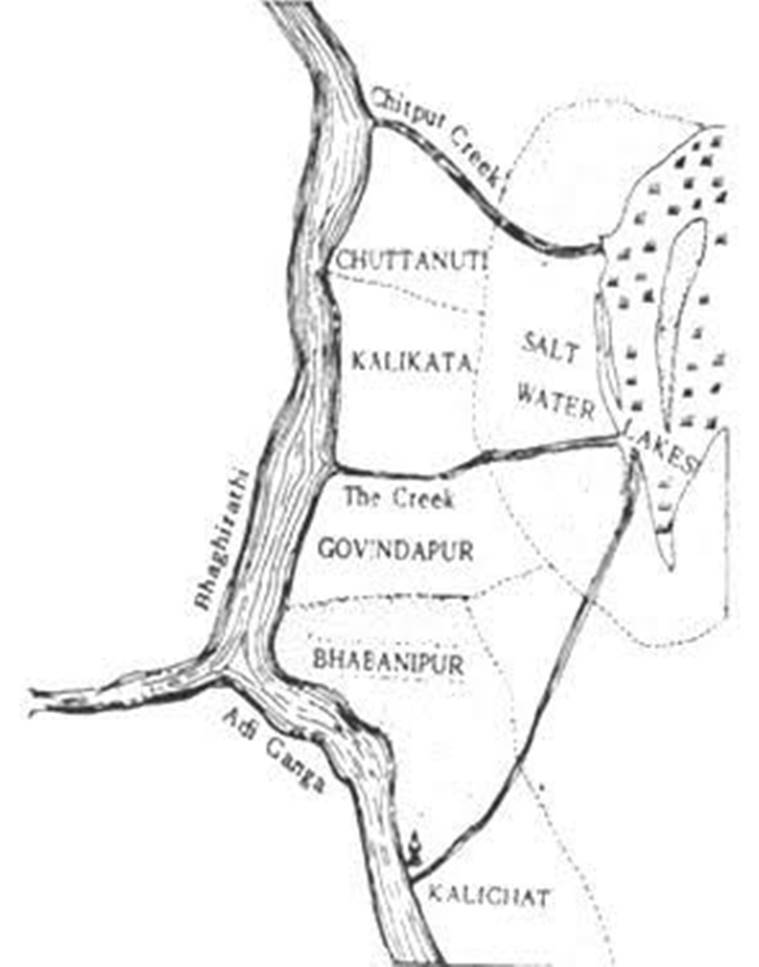
According to historian P Thankappan Nair, who has documented the city’s history extensively, this creek was originally called the Govindpur Creek. There is no historical documentation for why the creek was so named, but perhaps it acquired its name from that of the village of Govindapur, one of the three villages that went on to form the city of Calcutta. According to Nair, another name for this creek in Bengali was Adi Ganga or the original River Ganga that flows past the city.

This map is a conjecture map and shows the path of Adi Ganga. Tolly’s Canal is named ‘The Creek’ in this map and runs past Tollygunge when it was still the village of Govindapur. (Map credit: Chattopadhyay 1990/Jenia Mukherjee)
________________________

In 1775, Colonel Tolly wrote to Warren Hastings, the Governor-General of India, with a proposal of leading an excavation to connect the village of Balliaghat, now called the neighbourhood of Beliaghata, in the wetlands of the eastern fringes of the city, to the neighbourhood of Tollygunge through a waterway.

Slums have come up on both banks of Tolly’s Nullah. (Express photo: Neha Banka)
____________________

According to published letters in the Fort William-India House Correspondence Vol.7 (1773-1776), Tolly wrote to Hastings saying he can do the same on a contract with the East Indian Company or lend his services for Rs 80,000, along with a levy on tolls paid by boats passing through the creek for a period of 12 years. This plan was agreeable to the Company, and Tolly was directed to survey the land. This creek, 27 kilometres long, was then renamed Tolly’s Nullah after the colonel and opened for navigation in 1777.

After the opening of the Nullah, the neighbourhood became more developed and came to be known as Tollygunge. After Tolly’s death, his widow was unable to continue collecting the tolls and the maintenance of the waterways. The Company took over the management of the Nullah and auctioned its leasehold rights in March 1794 to an Englishman in the city, John Hooper Wilkinson. In 1804, the Bengal Government took control over the Nullah and the Collector of 24 Parganas was authorised to maintain it.

Passersby stand on a small bridge that connects the banks of Tolly’s Nullah. (Photo: Neha Banka)
__________________________

There is no document to independently verify this fact, but according to the Tollygunge Club archives, the premises of the club was originally an indigo plantation home of Richard Johnson, a merchant in the East India Company, set up in 1781.

Around 1806, the British dispatched Tipu Sultan’s family to Calcutta and gave them a living allowance. Tipu Sultan’s son Ghulam Mohammed Shah purchased the plantation grounds from Johnson to be used as a residence and the family spent a considerable amount of time in the neighbourhood.

After the family’s fortunes changed, they sold some portions of the plantation and leased out other sections to William Dixon Cruickshank, a Scottish banker, who was looking to build a sports club for the British that would also allow residential facilities and provide space for the British to socialise.

After the fortunes of Tipu Sultan’s family changed, they sold some portions of the plantation and leased out other sections to William Dixon Cruickshank, who was looking to build a sports
club for the British. (Express photo: Neha Banka)
___________________

Over time, Tipu Sultan’s family divested complete control of the estate and the lands came under the direct control of the Tollygunge Club, a name that the institution acquired because of the neighbourhood it was located in and because of the location of the creek that runs just behind its premises.

Over the decades, most of the open spaces in the club were converted into an 18-hole golf course and the forest land was cleared to make space for other structures and facilities inside the club premises.

Today, there are no signboards that indicate the location of the Tolly Nullah in the neighbourhood of Tollygunge. Haphazard modern construction has changed the facade of Tollygunge and to find the nullah, one would have to engage in a self-conducted walking tour using an old map of the city for guidance.

An offshoot of the main road in Tollygunge, a narrow lane, through which only one vehicle can pass at a time, is the only way to access the nullah these days. Slums occupy both banks of the waterway and an overwhelming sense of garbage permeates all around. Tollygunge Club itself has changed over the decades and its history can only be found in pockets.

Haphazard modern construction has changed the facade of Tollygunge and to find the nullah, one would have to engage in a self-conducted walking tour using an old map of the city for guidance. (Express photo: Neha Banka)
______________________

Although most of the dense forest has been cleared away over the years, jackals still roam its greens in the darkness of dusk and late into the night. On any given day, one can spot diverse species of birds on the club grounds, like kingfishers and cattle egret. Few city residents know of how the institution and its neighbourhood got its name and perhaps even fewer know of the existence of the waterway that lies beyond the high walls of the club.

source: http://www.indianexpress.com / The Indian Express / Home> Cities> Kolkata / by Neha Banka / Kolkata , December 27th, 2019