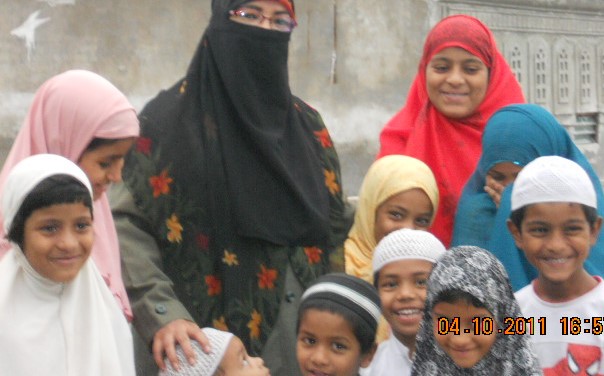
With a doctorate in Islamic studies, Dr Rafat Seema is an ‘Aalima’ and has been active in lending support to social causes from her student days. She is the founder of NISA, a woman’s organization through which she reaches out to the underprivileged.
When scores of Rohingya refugees first came to Hyderabad many organizations came forward to help them with food grains and clothes. Rafat Seema was also part of these drives.
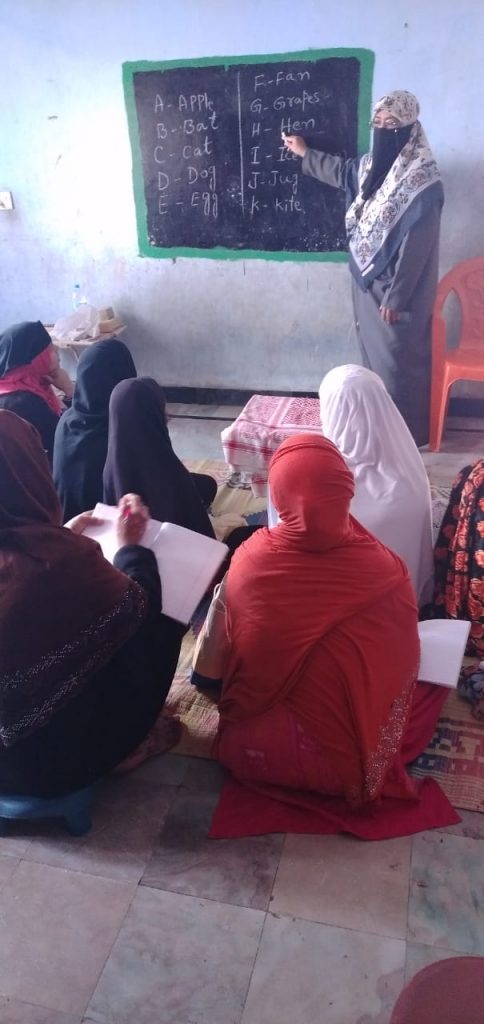
“But being a scholar, my thoughts were different,” she shared with TwoCirlces.net, “I felt these material things will only provide help for some time and the people who are offering help will also stop after some time. After all, how long will people help? One day these refugees will have to fend for themselves. So why not give these people something that will not be exhausted? Something that will be of use to them for always? It was then that I decided that I can teach them to read the Quran, to read and write Urdu and English.”
Even as other organizations that Rafat Seema is part of were conducting health camps for the Rohingyas, many of whom had external injuries and pains due to the tiresome journey and the hardships they went through in their attempts to escape the massacre, Seema was soothing their pains with her kind words and counselling.
Seema asked Shamshuddin, one of the Rohingyas who was in charge of the group, if the womenfolk would be interested to learn the holy Quran. He wholeheartedly agreed and even gave space for the classes in his small house.
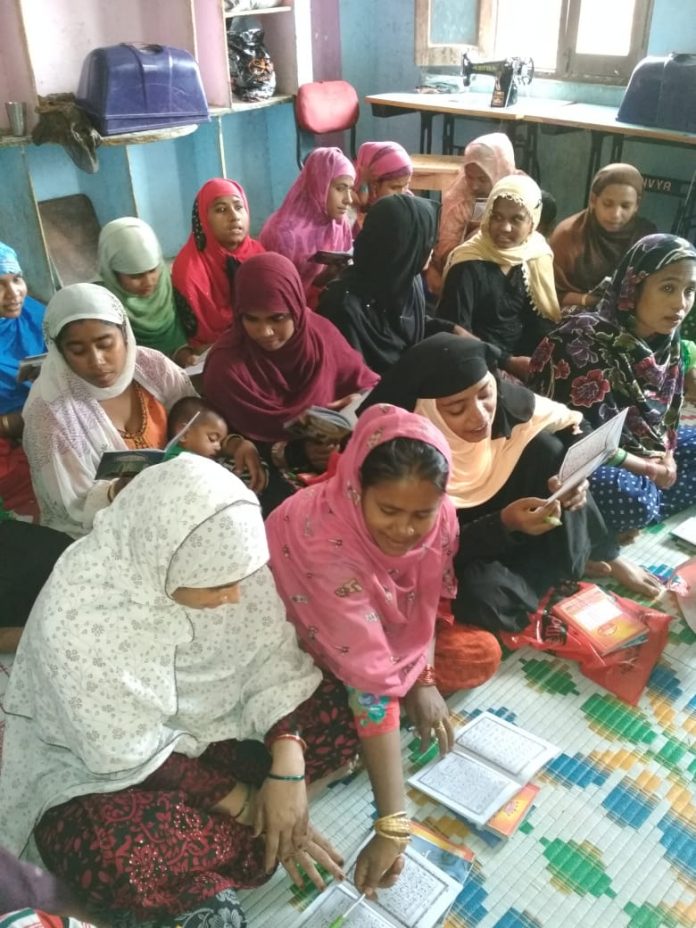
“For the first class itself as many as 70 women of all age groups gathered and their faces were beaming,” recalls Dr Seema.
She began her weekly classes with the help of another volunteer from her organization as she could not manage the large group.
A class in progress at the refuge camp
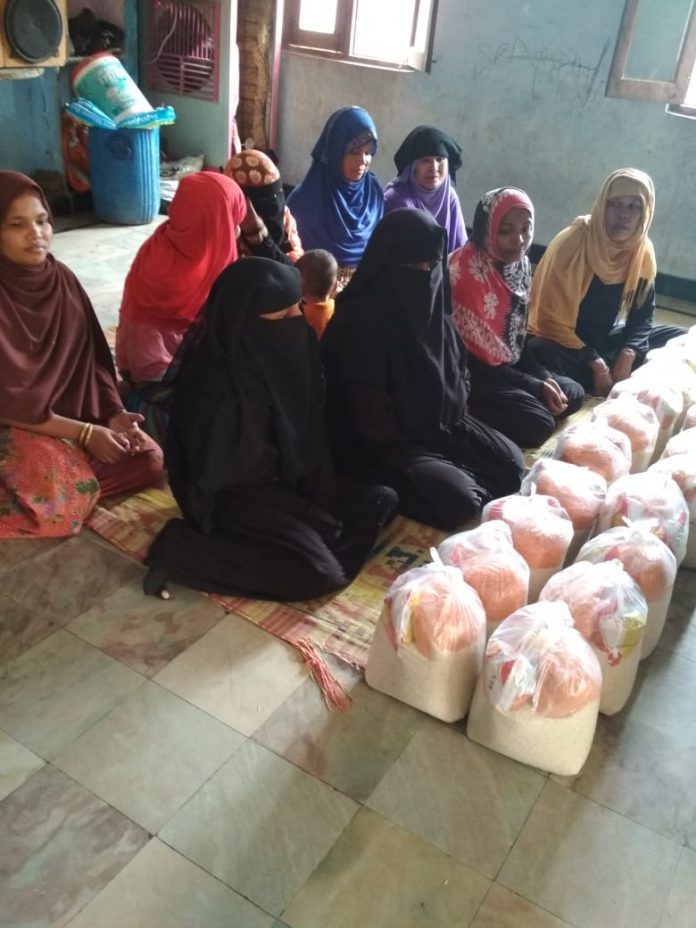
Every week a volunteer accompanied her and several women made donations in the form of food grains, clothes and money. However, the volunteers would not come every day so she would take the class herself.
The trauma of the Rohingya refugees is unimaginable, she says, “Besides the food, clothes and medicines they needed some outlet to overcome. And the classes I took provided them with something to keep their minds occupied. Reading the Holy Quran had a soothing effect to calm their fears”.
After a year Dr Seema shifted her classes to another corner of the huge ghetto after realizing that many women needed the benefits of the class. She started a new batch in the house of Taha, another refuge, who helps the refugees by talking with donors and updating them about the needs of refugees.
After more than 3 years now, all the Rohingya refugees are all well settled in the pockets of the suburb of Hyderabad in Balapur, which is 15 kilometres from the main city.
Dr Seema’s students who are more than 100 are now able to read not just the Holy Quran but also the English alphabets, small words, they can add and subtract and write the numbers till 1000. The reason they picked up fast is she used to give them homework for the entire week.
“The interest of the women and the encouragement of their men is amazing. After the class, we talk about other issues. They tell me about their relatives who are in Bangladesh. Or about the marriages of the youngsters that have been fixed. Then I try to mobilize some fine clothes or a new set of cutlery for the marriage from the women of my organization,” Dr Seema said.
Dr Seema is not just their teacher but also their friend, counsellor, motivator and someone they can turn to in need of help.
For the other 6 days of the week, Dr Seema is busy with her organization Nisa Research and Resource Centre for Women, through which she creates awareness among Muslim women about their rights and helps them deal with their day to day problems.
She says women need to stand up for themselves and face the challenges without always depending on men.
She is also a director of another religious institute called Jamia Makarimul Akhlaq through which she helps children of the Rohingya refugees. The institute sends auto-rickshaws to the city once a week for half a day where the children are engaged in interactive sessions through which they learn to be worldly-wise. The children are provided with breakfast and lunch.
On other days the institute offers distance education to homemakers and dropouts.
Dr Seema ran a magazine by the name ‘Nisa’ to provide a platform for young female scholars but due to increasing costs, the magazine had to stop.
She also takes online classes in Arabic for women from all over the world. Her hands are always full of imparting education if not spending time with her grandchildren.
She is also associated with Civil Liberties Monitoring Committee and has actively participated in protests demanding justice for the innocent youth who were falsely implicated in the Makkah Masjid blast, in the murder case of Ayesha Meera and several other cases.
She also played an active part in helping the youth start afresh their lives after their acquittal in the Makkah Masjid case after their innocence was proved.
“If I can help someone even in a small way I feel happy. If we are privileged it becomes our natural duty to help those who need help. If not our existence has no meaning. A life without a purpose is meaningless. And my purpose is to help women realize their worth,” she said.
source: http://www.twocircles.net / TwoCircles.net / Home> Indian Muslim> Lead Story > TCN Positive / by Nikhat Fatima, TwoCircles.net / July 24th, 2020
“God forbid, if the patient dies, we have also kept arrangements in place to shift the body to the graveyard and also to look into other formalities like shroud, etc,” added Dr. Fakhruddin.
Hyderabad :
Al Hamd and Mesco led by Dr. Md. Fakhruddin Sahab and Abdul Azeem has initiated COVID relief operations. The team will function round the clock in the twin cities of Hyderabad-Secunderabad.
The team will be fully equipped with operational vehicles after a formal inauguration on 3 August, the operations then will begin in full swing. People can access their services through the helpline number 8008834011.
People of Hyderabad are panicked and confused with the way COVID is being managed in the state. Hospitals remain overcrowded with no beds available and the people are at a loss not knowing what to do. In such a scenario, Hyderabad is likely to explode, more so after Bakrid, predict some health care professionals.
Al Hamd and Mesco have jointly come to relief, especially the poor, marginalized sections of society from this mess. While several are unaware of being asymptotic or symptomatic others take it easy thinking they are invincible.
Equipment, arrangements in place
The team of Al Hamd and Mesco will focus more on preventing the spread of the disease. Talking to Clarion India, Dr. Fakhruddin, who is leading the team and is also the general secretary of the Mesco Foundation, said, “We will create awareness and educate the people on how to prevent the spread of the disease. And then among the identified cases, we will educate the attendants how to take care of themselves as they are taking care of the patient during home quarantine.”
“The medicinal sachets to be distributed in the containment zones will contain everything a COVID patient and his/her attendant needs. The sachet contains different packets for different uses such as a packet containing personal protection equipment such as soaps, gloves, masks, sanitisers. Another packet has immunity-boosting drugs such as tablets of vitamin C, Zinc, B complex, paracetamol, thermometer, pulse oxy-meter. The third packet will have virus-specific treatment medicines such as anti-biotic and other medicines as prescribed by the doctor.”
“Everything has been thought of. Even the attendant will be given a kit containing face shield, goggles, cap, shoe covers, masks. These will be available in the Mesco office and also delivered at doorstep as per the necessity,” added Dr. Fakhruddin.
Ambulance services are also available if the patient is critical. “And, God forbid, if the patient dies, we have also kept arrangements in place to shift the body to the graveyard and also to look into other formalities like shroud, etc,” added Dr. Fakhruddin keeping in mind the difficulties people are facing after the death of a COVID-infected person.
Since the team is operating low profile as of now, only people from the containment zones in the old city of Hyderabad are being taken care of as they are reluctant to get tested due to various rumours. The cost of test along with the treatment is crossing the margins of common men.
“The infection is spreading due to lack of knowledge, overconfidence among the people and carelessness. If one person in the family is infected, other family members are vulnerable. We plan to educate them about the initial symptoms which they should not ignore and start treatment soon even if they do not go for tests.”
“In 90% of the cases timely treatment has saved lives. Our main aim is to save patients from hospitalisation as much as possible. Many people are working to fight COVID and our work is also complementing these efforts. We have sought permission from the Drug Control Authority to supply oxygen as the Government of India has authorised the same,” said Dr Fakhruddin.
Call Centre
The volunteers at the call centre will receive the calls and counsel the people guiding them about the preventive methods and also train them to use the kits, especially using the thermometer and the pulse oxy-meter.
“Wrong readings of the oxy-meter have caused panic among the people. So, It is important to train the people on reading the thermometer, oxy-meter and ways to monitor the patient and sanitise as much as possible the articles used by the patient. We have also included tissues and wet wipes in the kit so they can dispose of them.” Dr Fakhruddin explained.
Economic situation analysed
“The medicinal sachets are given for a very nominal amount. Doorstep deliveries will be done to study the economic situation of the family. If the family is very poor, the team will also ensure they receive ration and other essentials. Thus, along with health care, even food supplies are provided,” Clarion India said.
For tests, the team has tied up with some diagnostic centres in the city which will charge the patients referred by the Al Hamd-Mesco team at a subsidised rate.
MPLAD funds
The team is also trying to rope in MLAs to use the MPLAD (Members of Parliament Local Area Development Scheme) funds for this relief operation. Their work is already in the process of duplication in other states where the MLAs have come forward to provide financial assistance.
“A manual has been prepared which we have sent to other philanthropic institutions and doctors so they can also start relief operations at the earliest. We all need to work together irrespective of caste, creed and religion,” Dr Fakhruddin explained saying that the Mesco Foundation had been doing philanthropic activities for the past several decades now.
300 doctors and parademics
The organisation have a team of 300 doctors and trained paramedics as volunteers at the call centre to deliver the kits and to drive the vehicles.
The Al Hamd Charitable Trust which is sponsoring the entire operation cost is located in Secunderabad. The Trust chairperson and founder, Abdul Azeem Mohammed, said, “We are filling in the gap of the lapses in the way COVID is being handled by both the government and the corporate hospitals. While the corporate hospitals are fleecing the patients, the government hospitals are not fully quipped.”
“The relief operation process is very scientific but schematic. When a person calls on the helpline, it gets connected to the IT-based WhatsApp location logger and to the computer for the patient record maintenance. The coordinator who receives the call after taking the details connects to the doctor as per the need.
The required kit is then delivered to the home of the caller by the paramedics who will also check on the patient and see if there is a need for oxygen. The paramedics go along with oxygen concentrators if there is a need so that no time is wasted in making arrangements for an oxygen cylinder. Medicines for symptomatic or asymptomatic patients are prescribed by highly-qualified doctors,” said Abdul Azeem.
“We have no non-medical staff because every single person associated in this relief operation is trained. So we have medical and paramedical staff”, Abdul Azeem told Clarion India.
“We ensure sanitisation at the office. The staff is also in uniform and equipped with all precautionary devices. We want the attendant of the COVID patient also to be healthy so we have designed a kit for them as well.
The most important feature of this relief operation is a mobile ICU which is owned by a handful of hospitals in the city. The mobile ICU has a ventilator, defibrillator, ECG, Oxygen concentrator, etc.
Another important feature that has been designed for the mobile ICU is the dead body carrier which is a freezer and will be inserted perpendicular to the driver’s cabin,” Abdul Azeem added.
The Mesco Foundation runs 5 schools in Hyderabad. The foundation has Pharmacy College in Hyderabad. Apart from educational institutes, they also have healthcare services at nominal costs, and take up relief work during natural disasters.
Al Hamd Foundation is a charitable trust to help the poor, needy people through old-age homes, food distribution, healthcare, blood banks, scholarships for poor students, etc.
Both the foundations collaborate for most of their projects regarding healthcare. While Mesco provides technical support, the financing and manning are done by the Al Hamd Foundation.
source: http://www.siasat.com / The Siasat Daily / Home> News> Hyderabad / by Sana Sikander / July 07th, 2020
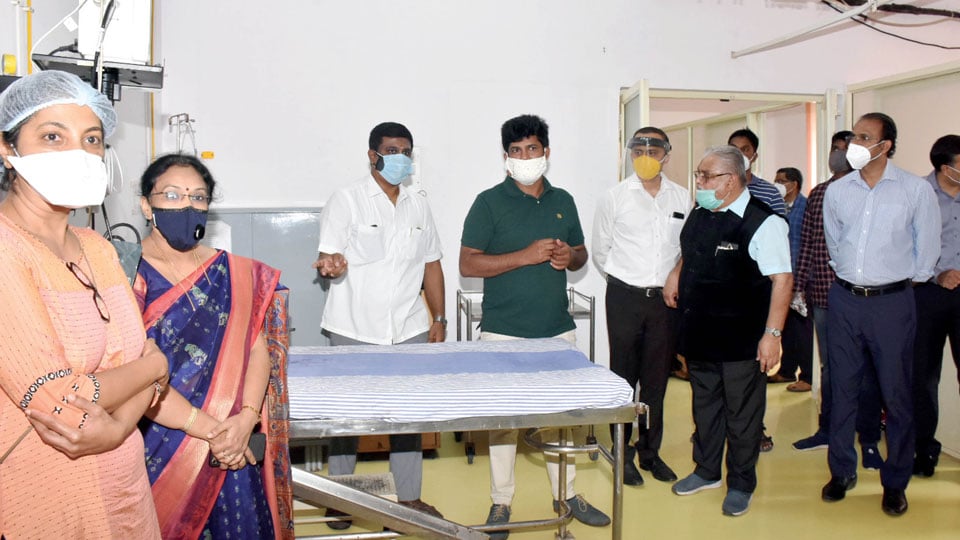
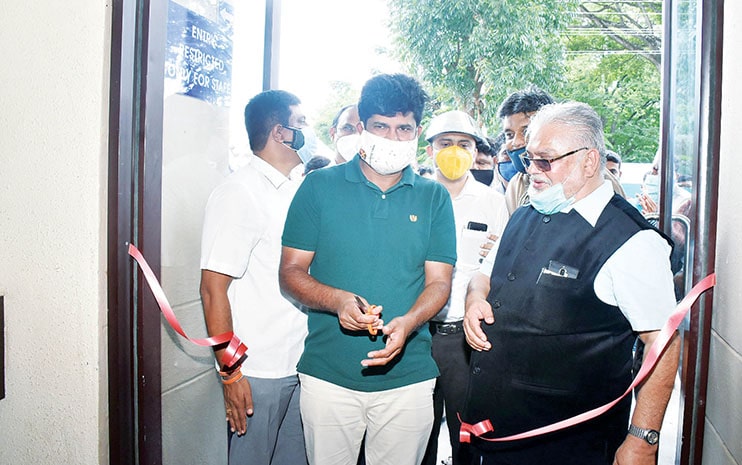
Mysuru-Kodagu MP Pratap Simha, who heads COVID-19 Task Force for Narasimharaja Assembly Constituency, this morning inaugurated the Comprehensive COVID Care facility set up at Bibi Ayesha Milli Hospital (BAMH) on Old Mysuru-Bengaluru Road. The Hospital has been converted into a modern 75-bed hospital and can be extended to 100 beds.
Bibi Ayesha Milli Hospital has tied up with Brindavan Hospital for this initiative and the facility will be entirely managed by Brindavan Hospital. It has facilities including Intensive Care Units, Surgery and Haemodialysis, ventilator support and even can handle child birth cases of COVID-infected pregnant women.
The Brindavan Hospital and the Bibi Ayesha Milli Hospital will be treated as one hospital and as the State Government has mandated all Private Hospitals in the State to hand over their 50 percent of the beds to COVID care, all the beds at Bibi Ayesha Milli Hospital will be reserved for COVID patients and all the non-COVID patients will be treated at Brindavan Hospital.
MP Pratap Simha inaugurating the Comprehensive COVID Care facility at the hospital along with Bibi Ayesha Milli Hospital President Iqbal Ahmed.
A team of specialist doctors, technicians and paramedical staff will run the Hospital with utmost precautions to help the District Administration in its efforts to control the pandemic. Bibi Ayesha Milli Hospital President Iqbal Ahmed, Dr. M.R. Aiyappa, General Physician and Diabetologist and Dr. Ravindranath, Orthopaedician at Brindavan Hospital, Dr. K. Javed Nayeem, Dr. Mohan, Dr. Imran and others were present.
Disinfectant tunnel
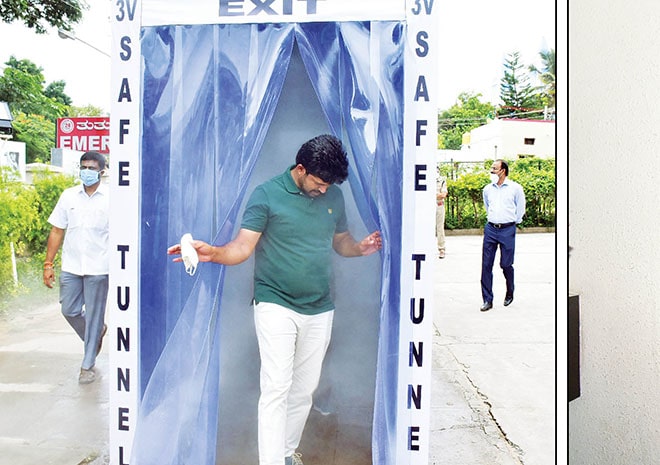
On the occasion, a unique disinfectant tunnel was inaugurated by the MP where liquid is not sprayed on the entrants but are fumigated with thick smoke. The smoke is, however safe to inhale. The tunnel has been installed by S3V Technologies and is called ‘3V Safe Tunnel’. Impressed by the tunnel, MP Pratap Simha asked the company representatives to demonstrate the tunnel to Deputy Commissioner Abhiram G. Sankar so that such facilities can be installed at all the other COVID Care Centres, and hospitals.
MP Pratap Simha seen exiting a unique disinfectant tunnel where people are fumigated at Bibi Ayesha Milli Hospital this morning.
Protest held, withdrawn
A group of five to six people claiming to be members of Waqf Board in Mysuru objected to the conversion of Bibi Ayesha Milli Hospital into a COVID Hospital. Claiming to be the owners of the building and the property where the hospital stands, the members protested. They objected for the commercial use of the Hospital and at the same time said that the hospital is located in a thickly populated area and there is a danger of virus spreading.
Narasimharaja Sub-Division ACP Shivashankar, Inspector Shekhar and Pratap Simha intervened in the protest and asked the Waqf Board members to withdraw the stir. They told the protesters that real estate matters could be sorted out in other platforms later.
The Hospital has been taken over as COVID-19 is a national disaster and people who object to such issued can be booked under National Disaster Management Act, they said. The protest was later withdrawn.
source: http://www.starofmysore.com / Star of Mysore / Home> Covid-19> News / July 24th, 2020
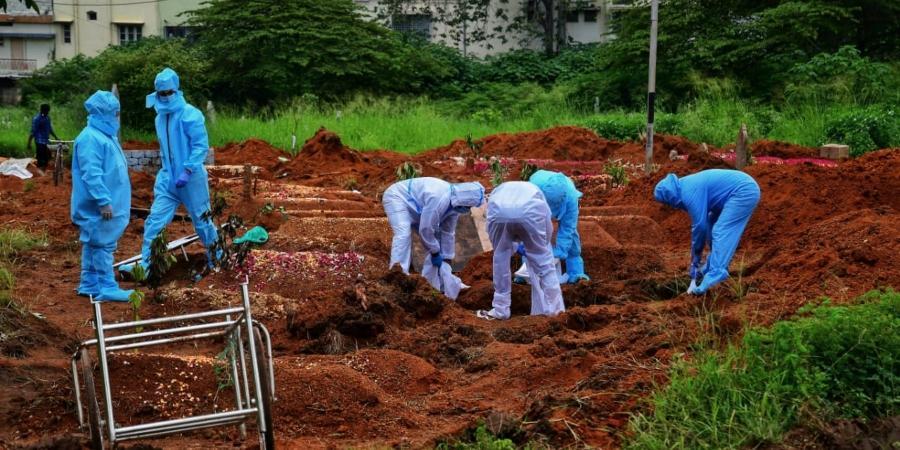
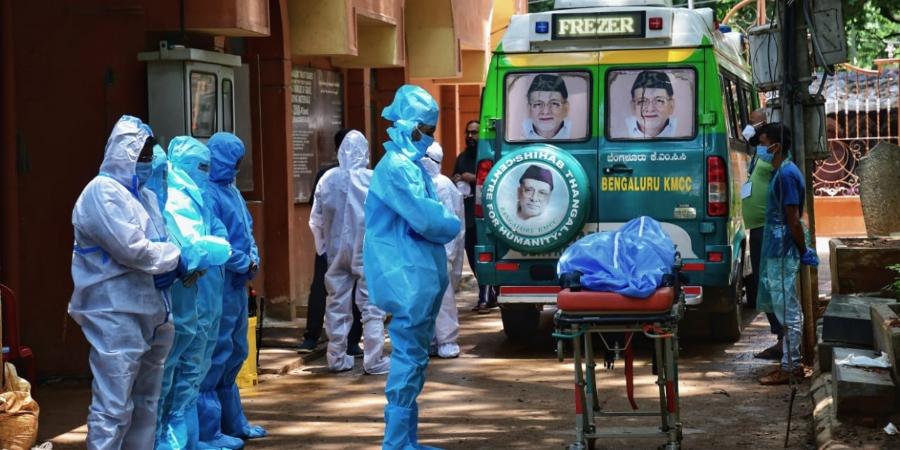
Wasim and 22 other men are part of NGO Helping Hands and they stay at the burial ground till 10 pm, doing what even family members of relatives are scared to do – burying COVID-19 victims’ bodies.
The team has completed over 100 burials of COVID-19 victims till date. (Photo | Shriram BN, EPS)
Wasim Zubair’s day begins with his prayers after which he heads to the burial ground at Quddus Saheb Edgar at 5.30 am to get a list of the deceased who will be brought for their last rites.
Wasim and 22 other men are part of NGO Helping Hands and they stay at the burial ground till 10 pm, doing what even some family members are scared to do – burying COVID-19 victims.
The task is tiring as they have to sweat it out wearing their PPE kits, which they have to constantly change after each burial. There is no incentive for them to do this, not to mention the risk they run of contracting the infection.
Ask them why they do it and Abdul Muheeb, founder of NGO Helping Hands, says, “In April, we locals would see families struggling to carry the dead body of their relatives as very few people were turning up for the last rites fearing coronavirus. Seeing them helpless, and some of them not in the right state of mind while bidding farewell to their near and dear ones made us want to help. The happiness we get when we help them perform the last rites is unparalleled.”
Photo | Shriram BN, EPS
The team has completed over 100 burials of COVID-19 victims till date.
“We see fear of the virus that has gripped people world over, so much so that I witnessed the son of a dead father not wanting to perform the last rites. We tell one or two family members to join us so they know where the grave is. We give them PPE kits as well,” Muheeb said.
Wasim has seen several instances of brothers, sons and grandsons of elderly COVID-19 victims hesitating at the gates of the burial ground.
A cloth of 10 metres by 10 metres is placed on the ground, one horizontally and the other vertically. With the help of the handles of the body bag, they lift the body from the stretcher on to the cloth.
They then lift the cloth and lower the body into the grave. The stretcher is then sanitised and the last Namaz also done as per religious norms.
The JCB digs 30 pits at the burial ground in advance at the beginning of each day.
Thankfully, none of the volunteers have contracted the virus so far.
Wasim says they take the necessary precautions and avoid getting too close to the body or even the primary contacts of the dead person.
“Most of our team members are youngsters. Our tagline is ‘Making it possible by his grace’. We spend our money on PPE kits but sometimes people donate a few kits to us. We don’t charge the family a single rupee,” Wasim said, speaking to The New Indian Express even as three funerals were taking place on Tuesday afternoon.
source: http://www.newindianexpress.com / The New Indian Express / Home> Good News / by Ranjani Madhavan / Express News Service / July 22nd, 2020
Life in Malegaon appears to have returned to normal, even as Maharashtra struggles to contain the pandemic. As of July 15, the state had 107,963 active cases, with 10,695 deaths.
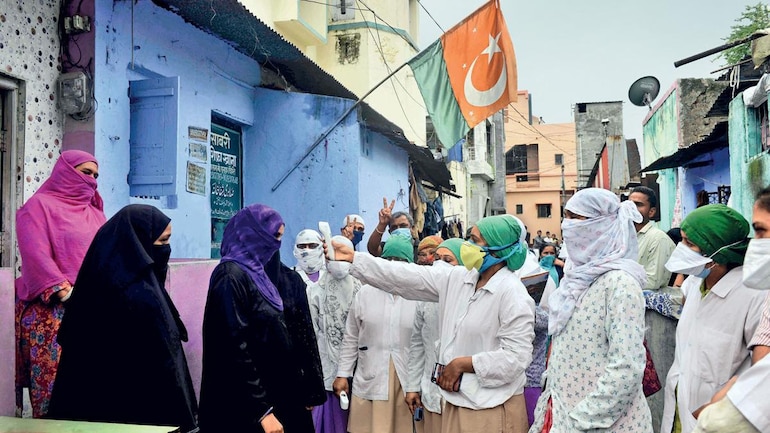
A new normal: Healthcare workers on a door-to-door Covid-19 test drive in Malegaon, July 14. / Photo by Milind Shelte
The covid-19 battle
On July 14, Malegaon’s Mohammad Ali Road, the city’s main commercial street, was full of shoppers, mirroring the sort of normalcy seen in days before the national lockdown in March, and presenting a stark contrast to the fearful retreat from public spaces seen in many areas of Maharashtra. The shops were open, selling everything from cutlery to electronics, and the restaurants and street food vendors were busy serving crowds of customers. Burqa-clad women thronged the ladies’ market. Life in Malegaon appears to have returned to normal, even as Maharashtra struggles to contain the pandemic. As of July 15, the state had 107,963 active cases, with 10,695 deaths.
Malegaon’s return to normalcy is striking and worthy of note because, till recently, the city was one of the state’s five Covid hotspots, alongside Mumbai, Pune, Nagpur and Aurangabad. Until May, the city had seen a daily average of five deaths due to Covid-19, and reported about 200 fresh cases in the early part of that month. Today, there are just 60 active cases in the city, most of them non-residents of Malegaon, with no coronavirus-linked deaths since May 25. The doubling period has improved from 2.2 days in April to 112 days on July 15, the best in Maharashtra. At 82 per cent, the rate of recovery in Malegaon is also much better than the state average (54 per cent). The turnaround was so hard to miss that, in the first week of July, the Indian Council of Medical Research (ICMR) sent a confidential letter to the state government, asking for permission to study the ‘Malegaon model’.
Malegaon is a Muslim-majority city (80 per cent residents are from the minority community), with a population of 750,000. The city administration’s success in controlling the pandemic is especially laudable given that the average population density here is 19,000 per sq. km, the state’s highest. In areas like Kamanipura, this goes up to 72,000 per sq. km, second only to Mumbai’s Dharavi, where 800,000 live in a 2.1 sq. km area. Maintaining physical distance, the standard-format safety protocol to avoid infection, is then practically impossible. The Malegaon Municipal Corporation (MMC) was also working with severe limitations, it still does not have a single ventilator.
Municipal commissioner Deepak Kasar says the MMC was struggling on two fronts. First, it had to tackle a staff shortage, with many workers refusing to report to work for fear of being infected. This even led to the MMC being unable to make use of the ambulances provided by the Bharatiya Jain Sanghatana, an NGO focused on disaster response. Second, Kasar says convincing people to come forward for screening, testing and quarantine was a Herculean task, especially since a communally sensitive environment had been created in the initial days of the pandemic.
The MMC’s task was made much more complicated by rumours on social media, one of which was that the coronavirus screening efforts were a conspiracy against Muslims. This led to people refusing to be tested and even attacks on MMC health workers who were conducting screening tests. In the last week of April and the first week of May, six ASHA (accredited social health activist) workers suffered burns after being attacked with boiling water. Many residents also reportedly refused to give their real names and symptoms to health workers. Superstition played its part, for instance, many believe the dead will not reach heaven if their eyes are open, leading to people touching infected bodies and increasing the risk of transmission. Another tradition requires women from households in which a death has taken place to isolate themselves for four months and eight days, this complicated contact tracing.
To address these problems, Kasar appealed to community leaders for help, especially the influential Mufti and local MLA Mohammad Ismail. Leaders like Ismail made appeals at mosques for people to stay at home and to cooperate with the MMC health workers. As a result, people increasingly came to see that the administration’s efforts were genuine, leading to more and more coming forward for testing. The success of the appeals to stay home was clearly visible on Eid-ul-Fitr (May 25). Malegaon’s Idgah Maidan was deserted, normally around 300,000 people gather here to offer prayers on the holy day.
Another initiative was to enlist community members for outreach, to spread information about the virus. Kasar roped in students of Ayurvedic and Unani medicine, aware that they were trusted within the communities. A Unani concoction called mansura kadha, with claimed immunity-boosting properties, prepared by the local Mohammadia Tibbia College, also played a bit role; the trust that runs the college has received requests for some 250,000 packets. The MMC also made short informational videos and uploaded them on YouTube, aiming to improve awareness about the coronavirus among Malegaon’s younger residents, especially women. Also important were the MMC’s efforts to give vulnerable households the resources they needed for home isolation. “We provided oxygen cylinders, though the police department was against the move,” says Kasar.
Maulana Imtiaz Ahmed Iqbal Ahmed, secretary of the Jamiat Ulema-e-Hind in Malegaon, says the community “scored over the fear factor…the mohalla clinics were the game-changer”. Kasar also points out that the success did not come at a major financial cost. “We did not send any patients to private hospitals, so the treatment bill was zero. We also spent less than Rs 20 lakh in the past two months on arrangements for quarantine and treatment,” he says. This stands in stark contrast to the efforts of other municipal corporations in the state; Pune has budgeted Rs 294 crore to fight Covid-19 for a population of about 4 million. Kasar says Malegaon has not only shown a decrease in Covid-19 cases but also other diseases, including those affecting the heart, lungs and kidneys. The ICMR study, once completed, will be submitted to a committee headed by Prime Minister Narendra Modi.
The MMC’s efforts have not only improved the health of Malegaon’s citizens, it has also rehabilitated the city’s reputation. Home to a local film industry and a textile cluster with around 125,000 power looms, Malegaon attracted some bad press in the noughties for being communally charged, a riot in 2001 and bomb blasts in 2006 and 2008 seemed to lend credence to its reputation for being volatile. But it has moved on since, and now with the success of the ‘Malegaon model’, it has built a case for an image makeover.
source: http://www.indiatoday.in / India Today / Home> News> Magazine> UP Front / by Kiran D Tare / New Delhi, July 18th, 2020
Female positive patients getting treated at the centre on Sunday / Times of India
Vadodara :
For so long, since the time of the pandemic outbreak, this mosque in Godhra, the second biggest in town had been offering prayers for Covid-19 patients. However, it has now taken its services a step ahead and turned the place of worship into a care centre for all positive patients.
What’s more, its healing touch does not discriminate against patients by their religion or social status! Opened last week, this facility is now facilitating treatment to nine positive patients from different communities.
The ground floor of Aadam mosque on Sheikh Majaawar Road, which was designed to accommodate female haj pilgrims, has now been converted into a designated Covid-19 care centre. The decision by the mosque’s managing trust was inspired by the rise in the number of cases in the region.
“Godhra Muslim Samaj, our maulvis and group of Muslim doctors got together and decided to offer the hall on the ground floor as Covid-19 treatment centre. We sought permission from the district collector and chief district health officer for a 50-bed facility, and after they allowed a 32-bed one, we started the facility on July 11,” said Dr Anwar Kachba. “Of these 32 beds, 16 are for patients to be kept in isolation while the other 16 are for positive patients,” Kachba added.
In the past too, the mosque had wanted to set up a similar facility for chikungunya cases, but failed.
“We had bought hospital furniture from a hospital in Ahmedabad which was closing down. This is helping us offer treatment to all,” said Abdul Kadir Hayaat, mosque’s managing trustee.
“Whatever we do not have is being supplied by the Godhra civil hospital,” said Hayaat, adding that the civil hospital is also looking after the medical treatment of the patients here. So far 11 suspected patients who tested negative have been discharged from this facility.
source: http://www.timesofindia.indiatimes.com / The Times of India / Home> News>City News> Vadodara News / by Jay Pachchigar, TNN / July 20th, 2020
(www.indiadailynews.com / India Daily News / July 20th, 2020 – source: TOI )
After all those days of hate, there was redemption for Tablighi Jamaat in the end. Some say it was in keeping with what Quran teaches.
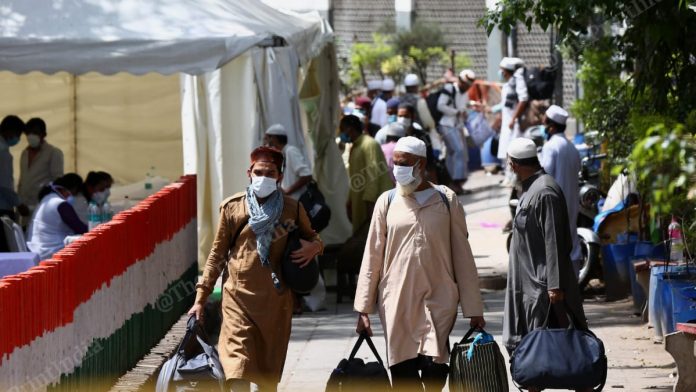
Nearly 4,000, including foreigners, had attended the Tablighi Jamaat event in Delhi (representational image) | Photo : Suraj Singh Bisht | ThePrint
Elisabeth Kubler-Ross’s seminal work, Death and Dying, describes the five distinct stages of grief: denial, anger, bargaining, depression and acceptance. While the Swiss-American psychiatrist was speaking about the series of emotions terminally ill patients go through, the first of the five stages that she postulated possibly holds true for a section of India’s people when the country was trying to come to terms with COVID-19 in the initial days of the pandemic.
The spread of the virus in the early months had then exposed the country’s second-largest religious group to a vulnerability born out of denial. Indiscretion and reckless behaviour by members of the Tablighi Jamaat had purportedly led to a spurt in coronavirus-positive cases, not only in Delhi but also in many other parts of the country.
An international gathering of Tablighis — preachers or a society to spread the faith —had taken place in New Delhi’s Nizamuddin area in March 2020, drawing hundreds of foreign nationals from Thailand, Nepal, Myanmar, Indonesia, Bangladesh, Malaysia, Sri Lanka and Kyrgyzstan. Despite a government order prohibiting large gatherings, more than 4,500 people had assembled at the Tablighi Jamaat Markaz (headquarters).
Media reports had quoted government sources as saying that since 1 January 2020, over 2,000 foreigners from 70 countries had arrived in India to participate in Jamaat activities. As the Covid-19 lockdown came into force on 25 March 2020, over 1,000 were left stranded in Nizamuddin.
Within days, a state of panic had set in as reports of Covid-19 deaths and positive cases started coming in from various parts of the country. By early April, private television news channels had begun insisting that over 30 per cent of the corona-positive cases had the “Tablighi Virus.”
Political factors were at play too. The country was already in ferment over the Citizenship Amendment Act and the National Register of Citizens.
The Tablighis’ state of alleged ignorance was dubbed a “Himalayan” blunder as a heavy dose of media onslaught, Islamophobia and blame game followed. As Najmul Hoda, a Chennai-based IPS officer, lamented on his Facebook wall, Covid-19 looked like a common cold in comparison to the plague of communal hatred.
Tablighi virus, Corona Jihad, stories of discrimination, Quran, divine injunction, Muslim society, deadly virus, Covid-19, Muslim clergy, Indian Muslims, social distancing, community prayers, letter of appreciation.
Political factors were at play too. The country was already in ferment over the Citizenship Amendment Act and the National Register of Citizens. Shaheen Bagh and its women protesters were making international headlines and the February 2020 riots in Delhi had deepened the sectarian divide, exacerbating religious tensions. It was in this situation that the Tablighi Jamaat held its congregation. According to data shared by Equality Labs (a digital human rights group) with TIME magazine, the hashtag ‘Corona Jihad’ appeared nearly 300,000 times.
The online attack became more and more vicious as reports of people leaving for different parts of the country from the Markaz poured in. For days, “Tablighi virus” and “Corona Jihad” trended on Twitter. Our entire focus shifted from fighting and containing COVID-19 to fighting the Tablighis and the Muslims, who the general population started equating as one and the same. Those were the initial days of our COVID-stricken lives, unsure of what awaited us and we were quick to blame the Markaz for all our misery.
The usual practice of portraying Muslims as the other came into play, as did indulging in victimhood.
In the midst of this Islamophobic onslaught, many articles and tweets expressed fears of a Muslim apartheid. The usual practice of portraying Muslims as the other came into play, as did indulging in victimhood.
“Social media, as ever, remained truculent and toxic. Generally speaking, Muslims continue to use social media space to indulge in their victimhood addiction,” observed Najmul Hoda.
While the community needed to address the elephant in the room and could not be absolved of its responsibility for wrongful acts by the Tablighis, the polarised discourse that was unleashed in mainstream media impacted the psyche of the general population. Most Muslims came out against the Jamaat, but the entire community was still clubbed together and labelled the “Superspreader”.
But the way the Tablighi Jamaat’s role and, by extension, of the entire Muslim population’s involvement in the spread of the virus was covered by the mainstream media, it suddenly felt that Covid-19 had a religion.
The Tablighis were guilty for sure for the congregation of thousands of people despite the prohibitory orders, and of not reporting cases, but the wave of hatred failed to see that the Tablighi Jamaat is not the sole representative of India’s 170 million Muslims and its actions should not be linked with the larger community. It is also pertinent to note that the Tablighi Jamaat preaches a narrow interpretation of Islam to some sections of Muslim society.
But the way the Tablighi Jamaat’s role and, by extension, of the entire Muslim population’s involvement in the spread of the virus was covered by the mainstream media, it suddenly felt that COVID-19 had a religion.
Soon, stories of discrimination against the poorer sections among Muslims started coming out. NDTV reported how vendors in Mahoba district of Uttar Pradesh were allegedly targeted and stopped from selling vegetables by people who accused them of being members of the Tablighi Jamaat and of spreading the coronavirus.
Old sociological problems, such as overcrowded ghettos, lack of hygiene and low levels of awareness, became handy tools again to stigmatise the community.
The Bharatiya Janata Party (BJP) MLA from Deoria in Uttar Pradesh, Suresh Tiwari, warned people against buying vegetables from Muslims. The defiant leader was later asked to explain his comment by his party chief.
A video shared widely on Facebook and on Twitter purportedly showed Muslims intentionally sneezing on each other. It was later debunked by the fact-checking website AltNews.
Tablighi virus, Corona Jihad, stories of discrimination, Quran, divine injunction, Muslim society, deadly virus, Covid-19, Muslim clergy, Indian Muslims, social distancing, community prayers, letter of appreciation
Several video clips purportedly showing COVID-positive members of the Tablighi Jamaat misbehaving with hospital staff and other patients found space on prime-time debates. Old sociological problems, such as overcrowded ghettos, lack of hygiene and low levels of awareness, became handy tools again to stigmatise the community.
The reaction from the community was at times defiant, while some took to social media to counter the hate being peddled with tweets that were either equally toxic or full of self-pity.
A closer look at the role the Muslim clergy played reveals a far more constructive engagement than what has been projected by the mainstream media.
It was at this point that the Muslim clergy, intellectuals and other community leaders stepped in. On 2 April, seven signatories — Dr. Zafarul Islam Khan, Chairman, Delhi Minorities Commission; Prof. Akhtarul Wasey, President, Maulana Azad University, Jodhpur; Prof. Mohsin Usmani Nadwi, President, Human Welfare Society; Prof. A.R. Kidwai, Director, K.A. Nizami Center for Quranic studies, AMU; Masoom Moradabadi, Secretary, All India Urdu Editors Conference; Zaheeruddin Ali Khan, Managing Editor, Daily Siasat, Hyderabad, and Prof. Iqtedar Mohd. Khan, Deptt. Islamic Studies, Jamia Millia Islamia, Delhi — issued an appeal to the government to take into consideration the “genuine constraints faced by certain people.” They argued that it was not a time to find fault. “Any attempt to give it a sectarian twist would weaken our battle against the deadly virus,” they said.
A closer look at the role the Muslim clergy played reveals a far more constructive engagement than what has been projected by the mainstream media. As early as 6 March, Maulana Khalid Rasheed Firangimahli, Lucknow-based Imam, Eidgah, had asked mosque-going Muslims to take preventive measures against Covid-19, and told them to avoid congregations and coughing and sneezing in public.
Firangimahli was among many religious heads across the country who issued fatwas saying that the fight against the coronavirus was a religious obligation.
A broad consensus that was worked out decided against special Eid prayers at Eidgahs and at mosques, etc. Islamic seminaries, such as the Darul Uloom, Nadwa and Deoband, issued fatwas asking the faithful to offer Eid prayers at home.
A major challenge came during the month-long period of Ramadan — that began in the last week of April — in terms of enforcing social distancing and avoiding guests at the breaking of fast (iftar) and at community prayers (tarahwih), etc. But enforcing a sense of discipline among 170 million people sharply divided on sectarian and linguistic lines was done with remarkable ease and voluntary compliance.
As Ramadan is closely followed by Eid, suspension of the customary Eid prayer posed another hurdle. However, a broad consensus that was worked out decided against special Eid prayers at Eidgahs (where special Eid prayers are held) and at mosques, etc. Islamic seminaries, such as the Darul Uloom, Nadwa and Deoband, issued fatwas asking the faithful to offer Eid prayers at home.
The results were so good that Uttar Pradesh Chief Minister Yogi Adityanath called up Firangimahli in Lucknow and congratulated him, saying that Eid prayers throughout the state had been observed without any incident of the virus spreading. The state government also issued a letter of appreciation.
Those members of the Tablighi Jamaat who had tested positive for the virus, and have since been cured, came forward in huge numbers to donate their blood plasma — containing anti-viral antibodies — and helped cure many affected people.
Eid ul-Fitr 2020 saw the largest ever participation of women in family prayers. That prompted Najmul Huda, the IPS officer, to say “thanks” to the virus for bringing gender equality to every Muslim home. “May it get institutionalised. Corona, I can’t really say thank you to you, but it’s thanks to you,” he wrote .
There were other positives too. Charity acted as a great succor as appeals were issued to channelise Ramadan and Eid shopping for the needy. Maulana Naeem Ur Rahman Siddiqui, secretary of the Islamic Centre of India, claims that zakat — or charity — saw a rise of over 50 per cent as compared to the previous year.
Not to forget, the redemption and acknowledgement that came after all those days of hate. If the members of the Tablighi Jamaat were guilty of ignorance in the initial phase of the pandemic, they turned adversity they had wrought upon themselves into opportunity in the form of penance. Those who had tested positive for the virus, and have since been cured, came forward in huge numbers to donate their blood plasma — containing anti-viral antibodies — and helped cure many affected people.
Some say it was in keeping with what the Quran teaches — that divine injunction is not for returning evil with good, but with the best. It says: “Good and evil are not equal. Repel (evil) with what is best, and you will see that the one you had mutual enmity with, will become the closest of friends.” (41:34)
Rasheed Kidwai is Visiting Fellow at Observer Research Foundation (ORF). He tracks politics and governance in India. Naghma is Senior Fellow at ORF. She tracks India’s neighbourhood — Pakistan and China — alongside other geopolitical developments in the region. Views are personal.
This article was first published by ORF.
source: http://www.theprint.in / The Print / Home> Opinion / by Rasheed Kidwai and Naghma Sahar / July 12th, 2020
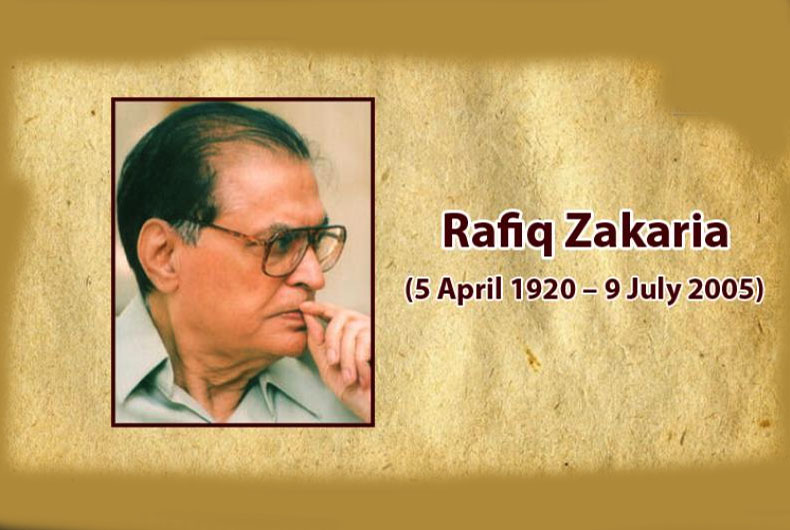
Sadly today there is no one of Dr Zakaria’s caliber, scholarship and forceful articulation to bat for Indian Muslims
One evening in the late 1990s, as a cub reporter working for The Asian Age, founded and then edited by eminent journalist M J Akbar, I landed at the iconic Nehru Centre in Mumbai. It was a lecture by Samuel Huntington, the famous American scholar who had stirred a huge controversy with his Clash of Civilizations hypothesis. After Huntington’s speech, Dr Zakaria spoke and, while acknowledging the renowned scholar’s debt in mentoring the Zakarias’ son the famous author and journalist Fareed Zakaria, Dr Zakaria disagreed with Huntington’s hypothesis and attacked him for spreading fear among the peace-loving section of the world community.
That was the first time I saw Dr Zakaria. Subsequently, I attended a screening of a documentary made by a British channel on the eve of 50 years of India’s Independence in 1997. The documentary, complained Zakaria, had truncated version of his interview and post-screeing Dr Zakaria was understandably disturbed and livid. In my excitement to have got a “hot” story about a leading Islamic scholar like Dr Zakaria trashing a documentary by a British channel I reported it in the paper but wrongly said that it was produced by the BBC. Next day the BBC sent a letter to my editor denying its ownership. It was a huge embarrassment for me, the editor and the paper and, the then resident editor, rapped me for such a lapse and carelessness while reporting. To my pleasant surprise Dr Zakaria didn’t pull me up, forgetting and forgiving with a remark that it was a misreporting.
Dr Zakarai and his wife Madam Fatma Zakaria were very close to M J Akbar, and he could have got me fired for the blunder that I had committed. But Dr Zakaria saw it as a minor mistake on the part of a young, fledgling reporter and didn’t make it into a big issue. I fell in love with the scholar-politician for his magnanimity and sense of justice.
For the next one decade or so I remained immensely close to the Zakarias. Hardly a week passed when I didn’t call doctor sahib or he didn’t inquire about my progress as a journalist. I can’t remember the number of times I quoted him for stories or interviewed him for The Asian Age or The India Express, the paper I left in 2005 to join The Times of India. He was happy that I joined TOI, the newspaper he had contributed to for decades. Sadly, he didn’t live long to see my works in TOI, except the first story which announced my arrival to the Times. It was about Sare Jahan Se Accha completing a century and doctor sahib, as always, was effusive in his praise for me for this front-page story which in a way also announced my arrival to the Times of India.
I cannot forget a note that he wrote on one of his books he gifted me. Seated at his spacious study at the Cuffe Parade House in South Mumbai, in long hand, doctor sahib wrote:
“To Mohammed Wajihuddin for whose bright future I am genuinely concerned.”
It was a big compliment for me. I felt adopted by the Zakarias who showered unreserved love and affection on me. There was no artificiality in doctor sahib’s expression of concern and love for a boy who had arrived in the city from the backwaters of Bihar without a godfather. After his passing away, I missed him a lot and miss him every day, every moment.
Dr Rafiq Zakaria: An Impressive Journey
Dr Zakaria belonged to a generation which had not only witnessed the horrors of partition but had deeply felt pained at the vivisection of India into Islamic Pakisan and Secular India. Son of a maulvi in Nala Sopara, Zakaria scaled the height of scholarship and politics mainly because of his love for reading and a drive to excel.
A brilliant student, he devoured books on history, fiction, law, religion and everything between them. He had befriended Bernard Shaw, heard Harold Laski and met Bapu the Mahtma who always remained a paragon of truth and non-violence to Zakaria. Even as a student, both in Bombay and in London, he wrote for some leading newspapers of the day. An argumentative mind, he would not take things on their face value. He would question the status quo and side with the victims.
A patriot to the core, Zakaria never lost hope in the Hindu-Muslim unity and never forgave Mohammed Ali Jinnah for formulating the Two-Nation Theory which caused immeasurable damage to the sub-continent’s Muslims. In his autobiographical book The Price of Partition, the release function of which I had the fortune to attend, he has detailed the circumstances leading to the partition of India. He would often quote the famous Urdu couplet about the disaster that partition brought: Lamhon ne khata ki thi/sadiyon ne saza payee.
Dr Zakaria’s views about Muhammad Ali Jinnah
In his lucid prose which, as Zakaria confesses in almost all his books that he authored, was fine-tuned by the veteran editor and his better half Madam Fatma, Zakaria has quoted several interesting anecdotes about Jinnah whom his supporters called Quaid-e-Azam (the leader) but who actually misled the sub-continent’s Muslims. The pork-eating Jinnah who loved his whisky had nothing to do with the genuine concerns of the Muslims. He was authoritarian, egotist and desperate to see his dream of carving out Pakistan, the so-called Pure land for Muslims. One of the anecdotes in Zakaria’s immensely readable book goes like this:
“Jinnah had started reorganizing the League after the assembly elections in 1937; he was on an enticing spree. Hasrat Mohani, who was a firebrand, went to see Jinnah on some urgent work at his bungalow. He had not taken an appointment. It was after dusk; Jinnah was enjoying his peg of whisky. He called Mohani to his room and thinking then that he was more a revolutionary than an orthodox Muslim, offered him a drink. Mohani, somewhat baffled, said that he wished he had as little fear of God as Jinnah had. Jinnah retorted: “No, Maulana! You are wrong. I have more faith in His mercy than you have.”
Dr Rafiq Zakaria: A Successful Politician
He was a successful politician who even represented India at the United States to counter the arguments of Zulfiqar Ali Bhutto, then Pakistan’s foreign minister and later the Prime Minister, on the dispute over Kashmir. Besides, Zakaria was a passionate scholar of Islam. His seminal work Muhammad and the Quran, written in response to Salman Rushdie’s The Satanic Verses, is a labour of love for which Muslims will be eternally indebted to him. About the huge positive response this book received from noted scholars from across the world, Dr Zakaria once told me:
“After reading this book, a big Pakistani Maulana said, “Mujhe nahim maloom Dr Zakaria ne kitni neki or aur kitne gunah kiye hain lekin main gawahi deta hoon key eh kitab unki bakhshayesh ka zariya banegi. [Truly, if nothing else, at least this book will inshallah help our late doctor sahib find a place in jannah.]
Dr Rafiq Zakaria’s love for Allama Iqbal
His love for the poet-philosopher Allama Iqbal was immense. He defended Iqbal like few in India did. His book on Allama Iqbal, penned to prove that Iqbal was wrongly credited with fathering the idea of Pakistan, is testimony to Zakaria’s love and respect for Iqabl who was undoubtedly a great poet but a failed politician. Dr Zakaria never failed to quote the famous line from Iqbal’s Naya Shivala –Pather ki moorton mein samjha hai tu khuda hai/khake watan ka mujhko har zarra devta hai–whenever he needed to show Iqbal or other Indian Muslims as nationalists.
One thing that is of great relevance to us today is Dr Zakaria’s unshakeable faith in Kashmir’s accession to India. He had even penned a poem on Kashmir, expressing his love for the valley and why it needed to be with India. He justifiably believed that, if Kashmir secedes from India, it will not only be ruinous for the Kashmiris, but Muslims in the rest of India will have to pay heavily for this crime. As anti-Muslim hysteria grips parts of India in the aftermath of the recent terror attack on the Amarnath Yatri, Dr Zakaria’s fears only seem true. It is in the interest of Indian Muslims that Kashmir remains an integral part of India.
Sadly today there is no one of Dr Zakaria’s caliber, scholarship and forceful articulation to bat for Indian Muslims either in the media or in the corridors of power, the two arenas that are increasingly getting poisoned. As majotarianism marches ahead, threatening to turn the secular India into a Hindu rashtra, the absence of a patriot, politician and scholar like Zakaria is greatly felt.
(The author, a journalist with The Times of India, presented this paper at the one-day seminar on Dr Rafiq Zakaria on July 15, 2017 at Aurangabad. The article is reproduced here with the permission of the writer on the occasion of the 15th death anniversary of Dr Rafiq Zakari on July 9.)
source: http://www.ummid.com / Ummid.com / Home> India> Views & Analysis / by Mohammed Wajihuddin / July 17th, 2020
The law was passed in July 2019 after intense debates in both the lower and upper houses of the Parliament, with opposition parties stating that the law targeted the Muslim community even as the centre asserted that the law would help achieve gender justice for Muslim women.
In August 2017, a five-judge bench of the Supreme Court had declared the practice of talaq-e-biddat (a heretical form of divorce based on a husband pronouncing divorce thrice in quick succession) as unconstitutional.
A Kerala lawyer has moved the Supreme Court against a law that criminalises the practice of granting instant divorce becoming the first Muslim woman to do so since Parliament passed the legislation in 2019.
Noorbeena Rasheed on July 6 challenged the Protection of Rights on Marriage Act, which provides for a three-year punishment for talaq-e-biddat, a practise also referred to as Triple Talaq, which is practised among a small section of Muslims in the country. “The protection of women cannot be achieved by incarceration of husbands,” her petition stated.
Issuing a notice to the Centre, a bench of three justices led by N V Ramana on Monday admitted Rasheed’s petition, which will be heard with nine similar pleas challenging the law’s validity. The other petitioners include organisations like Jamiat Ulama-i-Hind, All India Muslim Personal Law Board, Muslim Advocates Association, and two individuals. The petitions have called the law disproportionate as well as excessive and stringent and sought that the court hold it unconstitutional. A date for hearing these petitions has not been listed as yet.
The law was passed in July 2019 after intense debates in both the lower and upper houses of the Parliament, with opposition parties stating that the law targeted the Muslim community even as the centre asserted that the law would help achieve gender justice for Muslim women.
Rasheed’s petition questions provisions of the law including one which allows relatives of the women to file complaints. The petition stated that this provision could potentially destroy marital relationships in case of false complaint. “This provision is highly detrimental not only to the wife but also to the marital relationship.”
Her petition also sought clarification from the Centre on the assessment that underlies incarcerating Muslim men for divorcing women. “Welfare-oriented legislation would promote amicable resolution of matrimonial disputes rather than criminalise marital discord, particularly criminalisation of only one community…the intent behind the Act is not abolition of triple talaq [instant divorce] but punishment of Muslim husbands,” her petition said.
Rasheed’s lawyer, Zulfikar Ali, said they want to highlight how the law will be detrimental to the interests of Muslim women, which it seeks to protect.” He added Rasheed is also the national general secretary of the Indian Union Women’s League, which he described as the country’s largest Muslim women organisation affiliated to the Kerala-based Indian Union Muslim League (IUML). IUML has three members in Parliament’s lower House, or Lok Sabha.
In August 2017, a five-judge bench of the Supreme Court had declared the practice of talaq-e-biddat (a heretical form of divorce based on a husband pronouncing divorce thrice in quick succession) as unconstitutional. The practice is banned in most Muslim countries including Pakistan.
The verdict came on a petition of five Muslim women, including lead petitioner Shayara Bano, who were abandoned after their husbands pronounced instant divorce.
The Centre initially issued an ordinance after the verdict to criminalise the practice of triple talaq for the want of majority in Parliament’s upper house, or Rajya Sabha, before bringing the law.
The law makes the practice a cognisable offence. An offence of such a nature allows the police to carry out arrests without a warrant. Serious crimes such as theft, rape, and murder are also cognisable offences.
In its petition, Jamiat-Ulama-I-Hind has said there are graver offences like rioting and bribery under the Indian Penal Code for which there is a lesser punishment than instant divorce.
source: http://www.hindustantimes.com / Hindustan Times / Home> India News / by Abraham Thomas, Hindustan Times, New Delhi / July 08th, 2020
A city-level task force of medical experts, philanthropists, social activists and Medical College Alumnus Association has been set up to fight against the coronavirus pandemic.
The task force monitored by Mohammed Asif Hussain Sohail, Chairman of Sakina Foundation and President of Telangana Parents Association For Child Rights and Safety. This force also includes a group of 25 national and international organisations, Doctors Association and doctors from other countries like Dr. Aslam of America whose roots are in Hyderabad. They have come together on a single platform to combat coronavirus.
This programme has been named as ‘Hyderabad COVID Task Force.’
Member of Hyderabad COVID Task Force, Mohd Asif Hussain Sohail said, “The idea of setting up the task force was conceptualised seeing the pain and sufferings of the Hyderabadis for medical treatment, ration and food especially funerals. The Task Force aims to serve the people who are facing difficulties during the pandemic. Hyderabad Covid Task Force is going to conduct awareness on Covid-19 pandemic in colonies particularly in the city’s slums. They will provide aid to COVID-19 patients for the medical treatment, food for patients and their attendants in hospitals. It will also help the family also organise final rides, land for the burial, final ablution and even for the other community people of the deceased persons died to COVID-19,” Asif Hussain told Siasat.com.
As a large number of people in the city are also being suffering from a viral fever which has created panic among them and they are going for COVID-19 tests. In this situation the Hyderabad COVID Task Force team is undertaking the awareness programmes, counselling for corona patients, checking peoples’ medical need and etc. in each locality with volunteers and also providing online consultations with doctors and giving a medication,” said Asif Sohail.
“Each organisation had at least 50 volunteers who are working in various parts of city. Under this, the Sakina foundation is working on a pilot project which identifies the poor and needy people, their health issues and helps them with food, medication, and funerals for their deceased ones,” he added
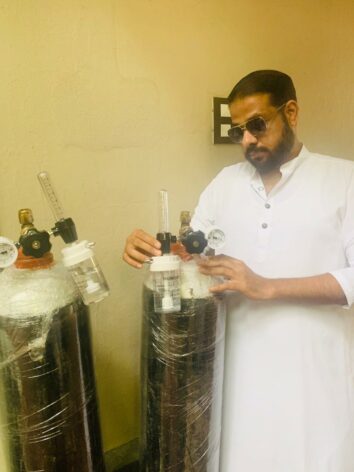
He also said that he is also supplying free Oxygen cylinders with Pulse oximeters for suspected carriers and positive cases under home isolation care by providing PPE (Personal Protection Equipment) among the deceased members during the funeral.
The organisation remains connected through a zoom call with Dr. Aslam from USA, who initiated and coordinated with other doctors, philanthropists and organisations from the USA — including DAAME (Deccan Alumni Association Middle East), DAA (Deccan College of Medical Science Alumni Association) and etc.
Asif Sohail coordinated all the doctors, NGOs, activists, and philanthropists based in Hyderabad.
source: http://www.siasat.com / The Siasat Daily / Home> News> Hyderabad / by Mohammad Hussain / July 10th, 2020