Category Archives: Community Involvement / Social Issues

Take note of this…

Bengaluru, KARNATAKA :

India’s history in currency is the subject of Rezwan Razack’s Museum of Indian Paper Money
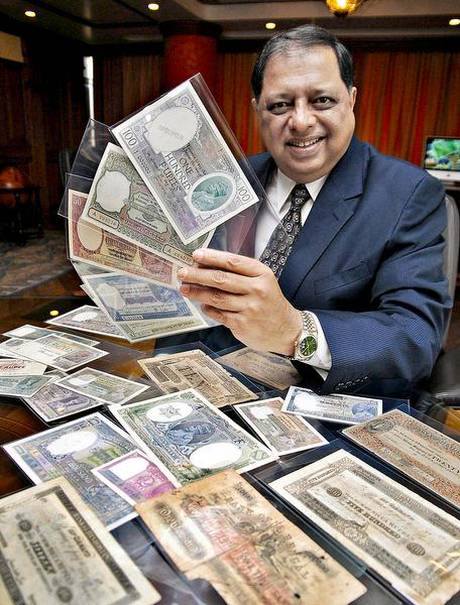
Back in timeThe concept of money has existed since almost the beginning of civilization, says Razack / bhagyaprakash k

India’s history in currency is the subject of Rezwan Razack’s Museum of Indian Paper Money

Hailed as the largest collector of Indian currency, Rezwan Razack has opened South India’s first currency museum in Bengaluru. “I am so happy that the former Governor of the Reserve Bank of India, C. Rangarajan inaugurated the museum,” says Razack.

Razack, co-founder and joint MD of Prestige Group, is the Chairman of the International Bank Note Society, India Banknote Collectors’ Chapter, and is recognised for his contribution to the advancement of numismatic knowledge. Razack, who built his collection over 50 years with exhaustive research, enjoys sharing his knowledge with students and encourages budding collectors to promote numismatics as a hobby.

He has co-authored The Revised Standard Reference Guide to Indian Paper Money in 2012, and in 2017 wrote One Rupee One Hundred Years 1917-2017 to mark the centenary of the issuance of the one rupee note. “Rezwan Razack’s Museum of Indian Paper Money will not only be the first of its kind in India, but also the world,” says Razack.

The museum at Prestige Falcon Towers on Bruntun Road, has trained guides to take visitors through the history of currency in India. “The story of money is woven into our very being, uniting us, dividing us, giving us a sense of identity and mapping people or the nation’s power, crises and triumphs. I consider it a comprehensive restoration and preservation of an important national heritage. It is also something that numismatists worldwide will benefit from.”

The initiative, he says, is to help educate, inform and entertain. “The rupee is one thing that is ever present in our lives but never seen as a source of history, information and national pride. I hope visitors understand, enjoy and value this museum of our collective economic heritage.”

The museum displays a diverse collection of Indian paper money and the related material drawn from the Indian subcontinent. “While the concept of money has existed since almost the beginning of civilization, the invention of paper currency is more recent,” says Razack. From the early barter systems and the use of coins as currency, the museum introduces the visitor to paper currency, its origins and its use.

Apart from its selection of banknotes dating back to the early 1800s, an auxiliary collection has also been put together to explain the inspirations and techniques of making paper currency. While original hand-painted essays, patterns, proofs, trials, specimen notes, autographed notes and a rare Star of India Medal demonstrate fascinating aspects of money, meticulously sourced cheques, stamp papers relating to Indian paper money, booklets and banknotes help decode the world of money.

“This museum has been planned meticulously over three years to conform to international standards of lighting and climate control,” says Razack, adding that people don’t often retain paper money  My visits to cut-note dealers in Chickpet and in Fort Bombay gradually increased my collection,” he says, acknowledging that his persistence paid off.

Razack says his collection includes the oldest surviving note from 1812 of Bank of Bengal right up to the notes of 2017 of all denominations. The rare ones are the early Presidency Banknotes of Bank of Hindostan, Bank of Bengal, Commercial Bank, Calcutta Bank, Bank of Bombay, Bank of Western India, Asiatic Bank and Bank of Madras; British India’s Portrait Notes of Queen Victoria, Portrait Notes of King George V and King George VI; and Indian Notes used in Burma and Pakistan; Notes of Indo-Portuguese and Indo-French Territories and Indian Notes since Independence, also used by Haj Pilgrims and in Persian Gulf States.

There is also a lot of importance behind his book dedicated to the One Rupee note. The first One Rupee Note in India was issued on November 30, 1917. “To celebrate 100 years of the one rupee note in India, my book focusses on the origin and journey of the smallest existing denomination through the century, while examining its genesis. As the general population in India were unacquainted with paper notes until 1917, one of the methods adopted to increase the popularity of the one rupee note was to print a picture of the silver one rupee coin on both sides of the note.”

At Prestige Falcon Towers, 19 Brunton Road, Bengaluru; 10-30 a.m. to 5-30 p.m.; closed on Mondays and public holidays;entry Rs. 100

While the concept of money has existed since almost the beginnings of civilization, the invention of paper currency is more recent

source: http://www.thehindu.com / The Hindu / Home> Features> MetroPlus / by Ranjani Govind / February 17th, 2020
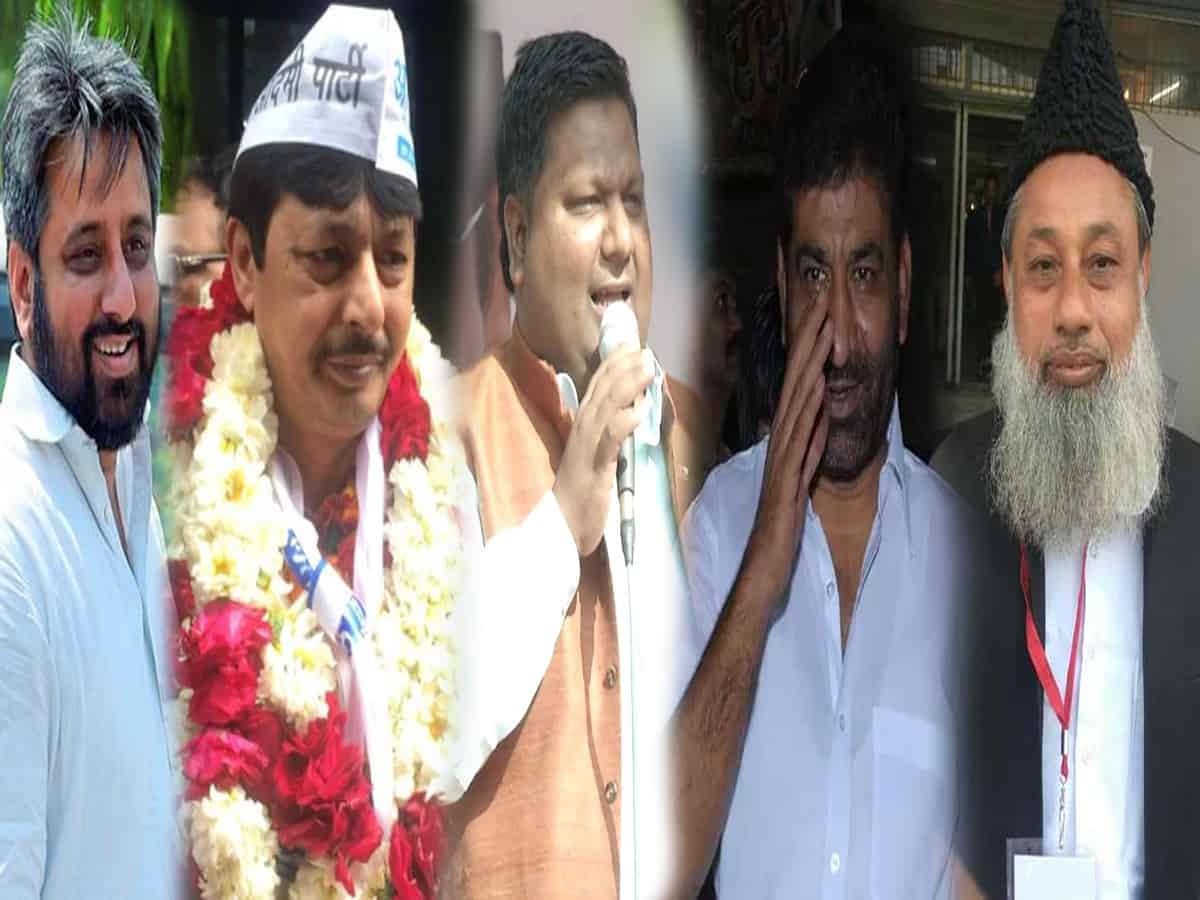
Delhi polls: All five Muslim candidates of AAP won

NEW DELHI :

The victory by AAP clearly indicates that the minority voters from these segments prefer the ruling party.

AAPdelhiMPOs12feb2020

New Delhi :

All five Muslim candidates of Arvind Kejriwal-led- Aam Aadmi Party who contested Delhi Assembly elections have won with significant margin.

The victory of five Muslim candidates put up by the AAP over their BJP and Congress rivals in community-dominated seats in Delhi clearly indicates that the minority voters from these segments prefer the ruling party.

AAP’s Amanatullah Khan again won from the Okhla seat by more than 70,000 votes where Congress candidate Parvez Hashmi failed to save his deposit.

In Seelampur , AAP’s Abdul Rehman defeated the BJP’s Sanjay Jain by the margin of 36,920 votes even as Congress rival Matin Ahmed, who has been a five-time MLA, came a poor third.

In the Ballimaran seat, AAP candidate Imran Hussain won over the BJP’s Lata Sodhi by 36,172 Votes, apart from five-time MLA and ex-minister Haroon Yusuf, who came third.

In Matia Mahal, Shoaib Iqbal won convincingly against Ravinder Gupta of the BJP by the margin of 50,241 votes and Mirza Javed Ali of the Congress .

In Mustafabad, AAP’s Haji Yunus defeated the BJP’s Jagdish Pradhan by a margin of 20,704, even as Congress candidate Ali Mehdi could not cross the five-digit vote figure. Ironically, Mustafabad was one of the three seats won by the BJP in the 2015 Assembly polls.

Reacting to the AAP victory in the Muslim-dominated segments, AAP leader Mehmood Ahmed from Zakir Nagar said: “It’s the work done by Chief Minister Arvind Kejriwal  that gave us this huge victory. We have devoted all our time to public welfare, be it drinking water, sewage, or installing CCTVs.”

source: with IANS inputs

source: http://www.siasat.com / The Siasat Daily / Home> News> Delhi / by Safoora / February 12th, 2020

Saudi NRI promoting education in Hyderabad

Hyderabad, TELANGANA / SAUDI ARABIA :

MMS01MPOs06feb2020

Hyderabad:

 Arshad Pirzada’s successful career in Saudi Arabia has enabled him not only to help his family but also serve the community through education initiatives.

Whether it was learning skills from various General Motors representatives at Al-Jomaih Automotive Company or learning from the Indian expatriates, Pirzada’s hard work has paid off.

“Okay, I had gone to the Kingdom to alleviate the economic woes of my own family. But should one stop there? Shouldn’t he think about the people he has left behind in his city who were in the midst of an economic crisis for a long time?” Pirzada asks looking back at his stay in Saudi Arabia.

The moment one asks Pirzada about the ups and downs in his life, he goes back to the times of grandfather (maternal) who was the Collector of Rychur, formerly a part of Nizam’s Hyderabad State. Those were the days when there was peace and prosperity prevailed. But the 1948 Police Action changed all that.

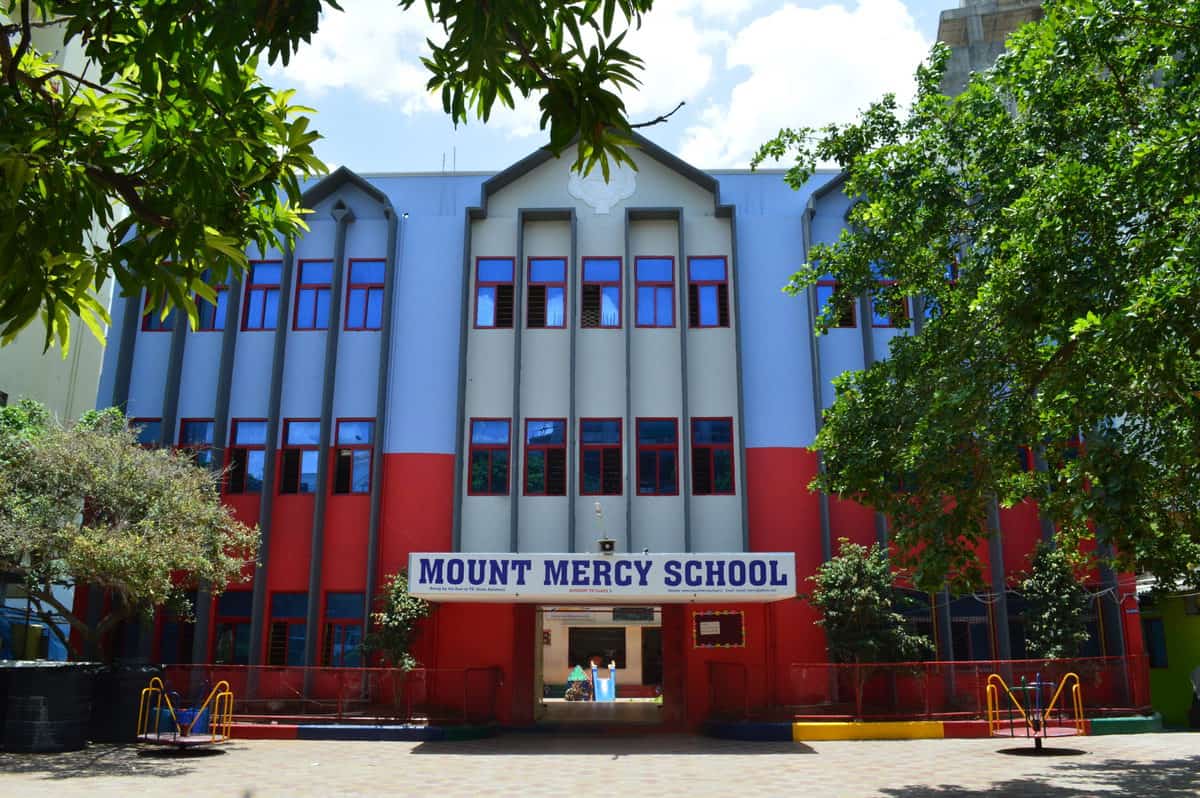
Speaking about how began his journey to educate a miniscule part of the community, he says, “My children are well settled. My wife, on the other hand, is a teacher of Quranic Arabic, author of a book and an entrepreneur in her own right.  She designs and sells mostly Bridal ware. This where my active association with Mount Mercy School comes in,” he informed.

Mount Mercy School
Mount Mercy School

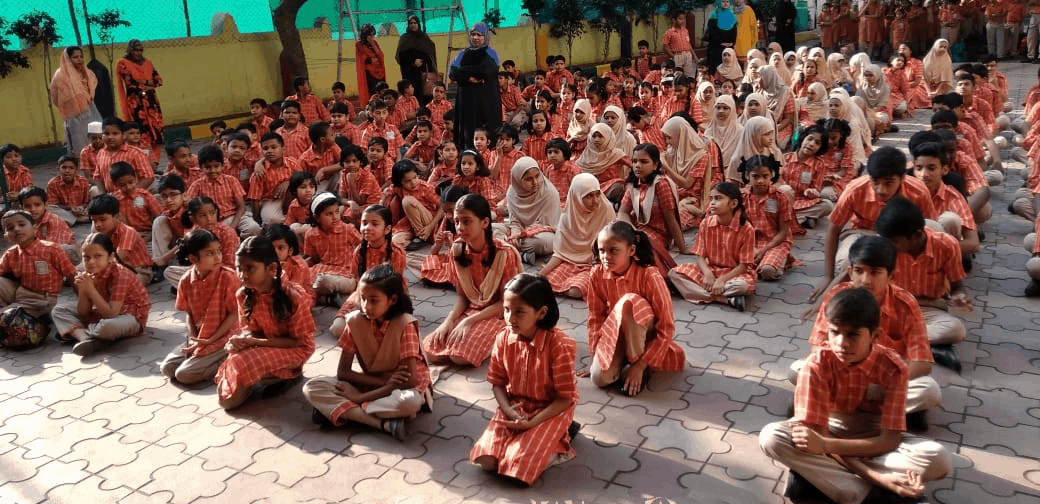
Established in June 1999, the school in its early days has gone through the pangs of growth. There was always a galore of challenges. Initially only 56 students enrolled. Yet, through better infrastructure developed and word of mouth, there are now 850 students.

MMS04MPOs06feb2020

Pirzada mentions, “Not many among us realise how bad the literacy levels are among the Muslims. For example, around 30 to 40 percent of the kids in MMS are first-generation learners who come from families with limited financial resources. Also, whatever money we make is pumped back into the development of facilities at the school.”

He said, “In today’s competitive, globalized market, soft skills are just as important as the hard skills. We also polish the kids and prepare them for interviews for different competitions, contests and tournaments as well.”

Although the journey that lead to him to forming Mount Mercy with others is one that many Hyderabadi gulf migrants will identify with. That too, whether or not they came from the same background as Pirzada.

source: http://www.siasat.com / The Siasat Daily / Home> News> Hyderabad / by Daneesh Majid – Researcher/Writer / posted by Minhaj Adnan / February 04th, 2020

Why I converted to Islam and buried my Hindu identity: Dalit Camera founder

TAMIL NADU  :

Periyar had suggested Ambedkar convert to Islam. After years of research, I too found Islam to be the only religion in India that could annihilate the caste system.

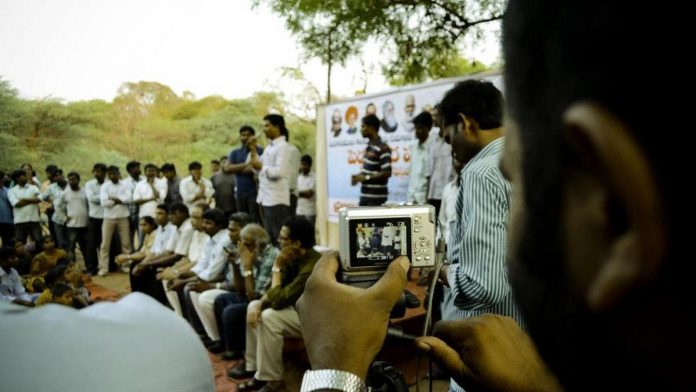
Raees Mohammed at a Dalit Camera event | Photo: Baidurya

I learned one thing in my eight years’ experience with the Dalit movement through Dalit Camera assignments, and my research on caste for the last 14 years. Babasaheb Ambedkar was right when he said that leaving Hinduism is the only way to fight caste.

Dalit Camera is a digital platform that documents voices of Dalits, Adivasis, Bahujans, and minorities through a website and a YouTube channel by the same name.

Following his footsteps, I chose to leave Hinduism and embrace Islam on 30 January 2020 in Kodungallur, a historical town in Kerala’s Thrissur district. Kodungallur is where the first Indian mosque was built. I am now Raees Mohammed.

The date is significant. It is the day when the first Hindutva terrorist Nathuram Godse assassinated Mohandas Karamchand Gandhi. It is also the day when our beloved brother Rohith Vemula, who fought against caste discrimination in Hinduism, was born.

 A religion for emancipation

In my childhood, as a devotee of Lord Ayyappa, I had been to Kodungallur six times. It is also where CPI-ML (undivided) Kerala state secretary Najmal Babu embraced Islam in 2015. Rationalist Thanthai Periyar (father) had said that if one wanted to annihilate caste in 15 minutes and live with self-respect, then Islam is the only solution. Periyar had also suggested to Babasaheb Ambedkar to choose Islam as a religion for emancipation.

In my years of research, I too found Islam to be the only religion in India with the strength to annihilate the caste system.

The anti-caste movement  has been the longest ongoing socio-cultural movement in India. The main demand is to consider ‘untouchables’ as equal citizens in Hindu society, and to be located under the ambit of the Constitution rather than Hindu religion. But I was curious why this easy solution to annihilate caste via Islam has never been even a reference point in Dalit movement and Dalit literature.

Fight for equality

In January, I was invited to Kodungallur to address a gathering on the dangers of fascism, and against the proposed National Register of Citizens, the National Population Register, and the Citizenship (Amendment) Act, 2019.

Muslims are battling for their citizenship rights in Narendra Modi’s India today. But theirs is a battle different from the struggle of Dalits. The former is for justice and citizenship. The latter is for something as basic as self-respect, to be treated as an equal human being. In that sense, Dalits have it much worse.

This is when I embraced Islam and buried my Hindu identity as Ravichandran Bathran. I do not want to refer to my Hindu name because if you dive deep, all Hindu names only indirectly refer to caste, and I don’t want this Raees Mohammed to carry the old baggage. The name is not the real problem. After all, my parents named me with so much love. But the problem comes when the Hindu society attaches that name to a caste and instils a stereotype of the hereditary occupation of scavenging. My father was treated badly because the Hindu society said he did a job that was considered filthy. This is hypocrisy of the highest order. First, you enforce a traditional occupation on some groups, treat their members badly, and then blame the people rather than the caste system.

My parents chose a Sanskrit name, an unusual practice among my relatives, who always chose names that are easily identified with Chakkiliyars or untouchables. But like my parents, I too experienced unequal treatment.

My education and earnings did not change my identity, and never will. But we are fed with this lie by none other than the Dalit movements.

My father worked as a sanitary worker and my mother was a sweeper in a local school. For the last 15 years, I worked to address the discrimination and untouchability faced by my parents and tens of thousands like them because of their work — sanitation workers/sweepers/scavengers.

We belong to Chakkiliyar/Arunthathiyar caste in Tamil Nadu, who are called, especially by fellow untouchables, as migrants or outsiders. The reason being that Arunthathiyars’ first language is close to Telugu. During my research in undivided Andhra Pradesh, Kerala, Tamil Nadu, Assam, Maharashtra, Himachal Pradesh, Kashmir, and Karnataka, I found that in all these states, the sanitation workers were addressed as outsiders. It doesn’t matter whether they had migrated from other states. Interestingly, in all south Indian states, except in undivided Andhra Pradesh, sanitation workers speak Telugu. In Andhra Pradesh, they speak Hindi and a dialect closer to Odiya.

Scavengers and sweepers are not allowed inside the homes of upper-caste Hindus. Even the toilets are constructed outside the homes. Indian sociologists and anthropologists have a problematic understanding of caste and Indian homes, where Dalits have a separate entrance (as is visible from most buildings). Things are changing slowly in rural areas.

On the contrary, mosques have toilets within their premises. A toilet is not considered unholy. This is where I fell in love with mosques. I do not find any good reason why Dalits should continue to carry Hinduism on their shoulders.

Who’s a Dalit?

Many people request me to drop the word ‘Dalit’ form Dalit Camera. Dalit is not a term to refer to the physical body of untouchables, it’s a revolutionary concept that Dalit Panthers conceived of. Now, I don’t have a caste. But being part of Dalit Camera is a sign of solidarity I show to Dalit Panthers, and to my beloved Muslim brothers and sisters.

For us, Babasaheb Ambedkar’s image itself is enough. It conveys his ideology and idea of justice.

So, Dalits and Muslims have a battle to fight. The fight of Muslims is constitutional  in nature, but the fight of Dalits is social, which is more difficult. Many Dalits still do not know that they are being treated unequally because of Hinduism. It’s for this reason Dalits are not aware that they too might find themselves without citizenship one day.

Raees Mohammed, formerly known as Ravichandran Bathran, is the founder of Dalit Camera  @dalitcamera . Views are personal.

source: http://www.theprint.in  / The Print / Home> Opinion / b y Raees Mohammed / February 05th, 2020

An ode to khada dupatta

Hyderabad, TELANGANA :

This ubiquitous garment owes its origin to the 17th century with the techniques changing over the years

KhadaDupataMPOs02feb2020

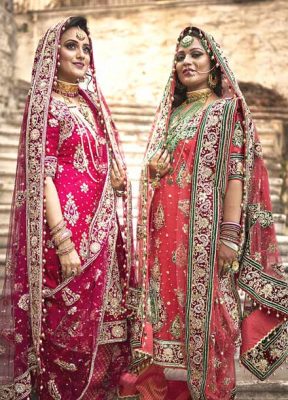
Hyderabad Based photographer Soumyajit Basu is known for his keen eye for intricate creations. This time he took up capturing the ‘Khada Dupatta’ which are the first choice of any true blue Hyderabadi ladies. He captured the beauty of the work with his models Afreen and Mehak and makeup done by Ayesha.

Originating in the 17th century, craftsman from Turkey and Persia were invited to India by Mughal Empress Noor Jehan and passed on the secret art of crafting to the nobles and their descendants. Later, the begums of Nizams of Deccan adapted the original Mughal style, especially in the form of khada dupattas which became the traditional attire of Mughal ladies.

Though this was a culture that was more defined in the later half of Asaf Jahi dynasty in Hyderabad, the montage gallery at Chowmahalla Palace, exhibits the royal dresses of Nizams Begums which include khada dupatta. The gallery also displays a tableau on the life of the begums. Quite a few don the khada dupattas — a four-piece ensemble that includes a trailing dupatta, one such khada dupatta adorned with intricate zari work weighs a whopping 17 kg.

The dress comprises of churidaar, a veil/dupatta which is six-yards in length, a kurta where the dupatta falls straight due to its heavy weight. This is accompanied by heavy jewellery which compliments the dress embroidered with zari and other work to give it a rich look. The dupatta is the largest part of the outfit and is made of tissue material.

Today, however, brides opt for net and even Banarasi dupattas since tissue does not fall gracefully. The colours preferred are usually golden yellow/ red and green. The silk tissue is hand-crushed and reduced to the width of a half metre. The border is adorned with handiwork of dabka, beads, mirrors, kundan and tikkis.

Golden trimmings on both sides of the borders give an antique touch to the royal ensemble. Front and back panels are embellished by handmade borders which are adorned with zardosi embroidery. Due to this, it has now become a traditional dress for all Muslim brides in Hyderabad.

SoumyajitBasuMPOs02feb2020

The culture still exists in Hyderabad today, more largely among Hyderabadi Muslims. The improvisation has been a gradual process. “So as a fashion and portrait photographer, it was necessary to visit the fashion history of the City of Nizams, as even today khada dupatta makes many ladies stand out when paired with right accessories,” says Soumyajit Basu.

source: http://www.telanganatoday.com / Telangana Today / Home> Lifestyle> Fashion / by Madhuri Dasagrandhi / January 27th, 2020

Sayed Qadri — Padma Shri awardee who supports Modi govt on UCC but is against CAA-NRC

Hyderabad, TELANGANA  / Pune, MAHARASTHRA : 

Padma Shri awardee Sayed Mehboob Shah Qadri has been working to ensure a more gender-equal society among Muslims for 50 years now.

Sayed Qadri | by special arrangement

New Delhi :

Sayed Mehboob Shah Qadri, or ‘Sayed bhai’ as he is endearingly called, is humbled and ecstatic in equal measure on winning the Padma Shri. 

The 89-year-old has been working with the Muslim Satyashodak Mandal (MSM), a progressive and reformist Muslim organisation, for 50 years now.

On 25 January, a day before Republic Day, the Narendra Modi government announced the list of Padma Shri awardees for 2020 — Qadri was among the 21 named. 

Just two weeks prior to announcement of the list, Qadri and his team from MSM had met PM Modi in Delhi and submitted a memorandum backing the Uniform Civil Code (UCC).

“The PM received it graciously. I told him the UCC should be brought into force immediately because our women need to be given equal rights,” Qadri tells ThePrint.

The Uniform Civil Code seeks to bring all religious personal laws under one umbrella. The BJP has promised to bring the UCC in its 2019 Lok Sabha manifesto.

Champion of gender equality

Qadri says it was an 1965 incident in his family that completely changed his perception towards equality and gender rights. His 18-year-old younger sister, then married with two children, was given triple talaq by her husband. “I was stunned that he could just abandon my sister and her children. I knew I needed to do something,” Qadri recalls.

Qadri had his sister enrolled in a tailoring programme, and knew that this would be a defining moment of his life. “She passed away two years ago — awaiting justice. I will never forget that,” he says.

In 1970, five years after his sister was given triple talaq, Qadri had a chance encounter with renowned social activist Hamid Dalwai in Pune. Dalwai was a staunch opponent of triple talaq and worked towards a more egalitarian society by establishing the MSM in March 1970. 

Qadri has been working with MSM since then to help empower women abandoned by their husbands, providing them legal assistance and counselling.

The triple talaq was termed unconstitutional by the Supreme Court in 2018, after which Parliament passed the Triple Talaq Bill in 2019. While this was a huge achievement for MSM, Qadri says the organisation continues to work towards gender equality in the Muslim community.

Besides this, Qadri also wishes to normalise the practice of adoption among Muslims. “I told my wife that if we are to have a child, it will be through adoption,” says Qadri, who has an adopted son.

‘Govt should listen to women sitting in Shaheen Bagh’ 

While Qadri supports the Modi government on its stance on triple talaq and UCC, he opposes the Citizenship Amendment Act and the National Register of Citizens (NRC).

“Muslims are a part of this nation, we live for this country and will die for it. There is no reason why Muslims should be targeted like this,” Qadri says.

He says the government should have a dialogue with the women protesters at Shaheen Bagh, and that BJP leaders should not target them.

“These are our mothers and sisters sitting at Shaheen Bagh, and across the country. They shouldn’t be targeted. The government must engage in a discussion with them,” he said.

Qadri believes Indian Muslims shouldn’t be held accountable for Partition, and they “shouldn’t have to pay for the sins of the past”.

source: http://www.theprint.in / The Print / Home> India / by Fatima Khan / January 28th, 2020

Padma Shri awards for disabled social workers Javed Ahmed Tak & S Ramakrishnan puts disability in the spotlight

JAMMU & KASHMIR :

JavedAhmedMPOs31jan2020

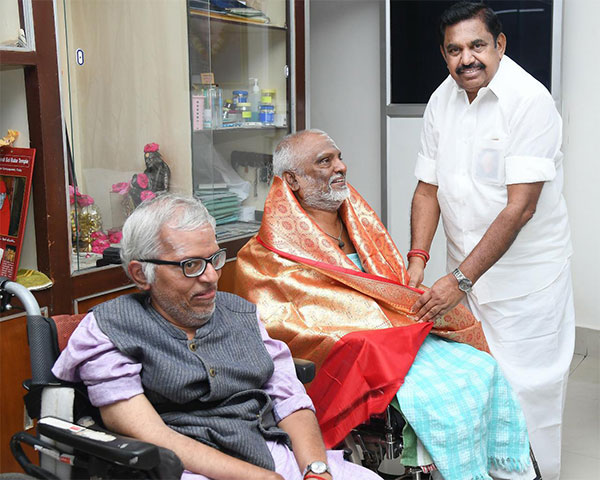
The government’s move to recognise Javed Ahmed Tak, the well-known social worker from Jammu and Kashmir, and S Ramakrishnan, founder of Amar Seva Sangam in Tamil Nadu with Padma Shri awards has been welcomed by the disabled community. These are rare instance when disabled people outside the realm of sports have been acknowledged for their efforts in the space of social work and activism.

It was after he was disabled by a bullet in the spine in 1996 that Javed Ahmed Tak realised the struggles faced by wheelchair users in India. He also discovered how much one can do with a disability and he decided to dedicate his life to the welfare of people with disabilities.

Javed fights for rights of disabled in tough circumstances

Be it fighting for the rights of people with leprosy, helping physically disabled students at Kashmir University form a union or ensuring that ramps were built at entrances of all buildings in the state, Javed has reached out to different groups. It was his PIL that led to the implementation of the Disability Act in Jammu and Kashmir.

Javed works in such a difficult environment and in such hard circumstances. It is admirable how much he has done and the Padma Shri is well deserved. J&K is in the news for all the wrong reasons and when something like disability is recognised, it is quite special. This shows that people with disabilities are leading from the front. – Arman Ali, Executive Director, National Centre for Promotion of Employment for Disabled People


Since 1999 Javed has been running the Humanity Welfare Organisation Helpline and a school for children with disabilities. “I decided to see my life as a challenge. I tried to forget my accident and make the most of my present situation”, said Javed in an earlier interview to the magazine Civil Society Online. “I realised that society, especially my community was accepting me and needed me despite my physical inability”.

Javed is well known across India for its efforts to empower the disabled community. “Though many disabled people get the Padma awards as sportsperson or artists, they are usually not social activists”, says disability rights advocate Dr Satendra Singh. “To bring change we need to acknowledge the work of activists bringing social justice. I applaud his work in behalf of disability sector”

RamakrishnanMPOs31jan2020

Ramakrishnan was paralysed neck down after injury

In social activist S Ramakrishnan‘s case too, it was personal experience coping with a disability that him to start working for disabled people. He was 20 years old and studying engineering when he was disabled. He was asked to leap 15 feet from a tree as part of a series of obstacle tests to join the Indian Navy. The jump fractured his spine.

Ramakrishnan started the Amar Seva Sangam (ASSA) in Tirunelveli, Tamil Nadu with the goal of reaching out to disabled people in rural areas. Ramakrishnan is paralysed from neck down and uses a wheelchair.

“Once I realised there was no denying my condition, I was keen to know what was in store for me. I wanted to continue living life to the fullest,” he told The Hindu in an interview some years ago. ASSA is well known for its social outreach work. This includes conducting polio camps in villages, and integrated schools where disabled and non-disabled kids study together.

Well deserved honour says community

Describing them as a determined change maker, Chennai-based disability rights activist Smitha Sadashivan said Ramakrishnan is a “very quiet yet scintillating personality, spreading love for everyone around”. The honours will bring disability into mainstream discourse, believes Arman. “This shows that disability cuts across everything else and that disabled people can be a part of nation-building. This will open the discourse on political participation of people with disabilities and non-discrimination”.

source: http://www.newzhook.com / Newz Hook / Home> Get Hooked / January 2020

With the End of 2019, A Great Scholar Also Departs for Heavenly Abode

Deoband, UTTAR PRADESH / KENYA / Croydon (South London). UNITED KINGDOM :

With 2019 saying goodbye, Maulana Izhar Ahmad Qasmi, an embodiment great scholarship, piety, humility, patience and perseverance, also said adieu to this mortal world.

Maulana Izhar Ahmad Qasmi, 74, was born in Deoband, India, and breathed his last on 30 December, leaving his family and admirers in tears.

MaulanaIzharMPOs31jan2020

He belonged to a very rare breed of ulema who had dedicated themselves to the service of Islam. His funeral prayer and burial was attended by thousands of his admirers from all over UK.

A widely respected and admired person, Maulana Izhar worked tirelessly to propagate the message of Qur’an without indulging in controversial issues.

In 1970 when Indian Muslims living in Kenya approached the great scholar and rector of Darul Uloom Deoband, late Maulana Qari Tayyab, and requested him to send a scholar to Kenya for their religious guidance, his choice fell on Maulana Izhar, a man Allah SWT had blessed with a spiritual attraction, humility, politeness and deep knowledge of Deen. He convinced Maulana Izhar to accept this responsibility.

From 1970 – 1983, Maulana Izhar served as the Imam in Pangani Mosque of Kenya. Following political unrest in the country, like several other Asians, Maulana Izhar had to migrate to Britain with his family.

In Britain he established the first mosque in Croydon, a town in South London, and served as an Imam for 15 years until he was diagnosed with a brain tumour and had to undergo a delicate surgery in the 90s.

As an Imam Maulana Izhar earned admirable love and respect of the local community. His knowledge of Qur’an and deep love to spread its message earned him wide respect all over Britain.

After his surgery, doctors said that his days were numbered and that he would not be able to survive more than a few days. But Allah SWT’s plans and works in strange and mysterious ways. When He chooses someone for the service of His Deen, He does it in ways that are beyond human comprehension. Not only did Maulana Izhar lived for at least 21 years but also completed his seminal translation and interpretation of Qur’an, titled, Izharul Qur’an in ten volumes, and continued his Qur’anic lectures even after suffering from stroke after his brain surgery and becoming partially paralysed. Gradually he became bedridden and spent the last few years in this condition.  Strangely until it was possible for him to sit in a chair he continued his Qur’anic lectures on Iqra TV without letting the viewers feel that his body was paralysed and that he was bedridden.

A comment on my Facebook from Dr Atif Suhail Siddiqui, University of Yale, says it all about Maulana’s resolve. He writes, ‘You did not mention one of the most important qualities of Maulana: He performed 42 Hajjs. After every Hajj he used to travel to Deoband to see his parents. In Deoband, my house is next door to his. So whenever he came to India, I used to visit him. When his [extended] family members noticed his swollen shoulder, they were shocked. I am a witness to it myself. They immediately called for a doctor who advised them to take him to an orthopaedist. His x-ray showed a fracture in his shoulder. It was then that it was found out that during Hajj he got pushed during tawaf and fell down. Due to the stroke one side of his boy had become so insensitive that he did not feel any pain and did not realise that his shoulder had been fractured. He performed all the arkans of Hajj in this condition and even travelled to Deoband. May Allah SWT shower His mercy on him.’

Despite such severe condition Maulana did not like to take anybody’s help. Another Facebook friend, Chicago based alim, social media activist, blogger  and YouTuber, Mufti Yasir Nadeem al-Wajidi, said that he had seen Maulana performing Tawaf and SaI during Umrah without anybody’s assistance or a wheelchair despite the fact that ‘He was virtually dragging himself.’ He added, ‘On one occasion Maulana said that his ailment and his bedridden condition had become a blessing for him because it allowed him to finish one Qur’an every day. Seeing this [and his contentment] one of his Christian doctors had embraced Islam.’

Among Maulana’s survivors is the renowned Alim of Britain, Mualana Qasim Rasheed, who himself is an institutions-maker. Lest this be confused with merely establishing mosques and madarsas, let me make it clear that he is the founder and chairman of one of the major charity organisations, Al-Khair Foundation , that does not only send food and other temporary aid to the displaced people in war-torn and hit by natural-disaster-hit regions of Africa, Middle East, Bangladesh and Pakistan but has also built schools and health clinics for them. He has also established two secondary schools and two TV channels in Britain. However, most important of all these is a full-fledged hospital in Gaza . I have mentioned it only to reflect on the impact of tarbiyah on one’s children.

May Allah SWT bless Maulana Izhar saheb with huge rewards for his services and bless Imam Qasim Saheb and all the survivors with patience and perseverance to tolerate this loss.

source: http://www.milligazette.com / The Milli Gazette / Home> Online News> Community News / by M Ghazali Khan , The Milli Gazette Online / January 04th, 2020

Man who fought for Bhopal Gas Tragedy victims gets Padma Shri

Bhopal, MADHYA PRADESH :

Abdul Jabbar’s family members are very happy about him getting this honour.

Abdul Jabbar, who died on November 14 last year left behind a wife and 3 children

Abdul Jabbar of Bhopal, who fought a long battle for the victims of the Bhopal gas tragedy in 1984, has been awarded the Padma Shri. Abdul Jabbar is receiving this honour posthumously.

Abdul Jabbar’s family members are very happy about him getting this honour.

When India Today reached Abdul Jabbar’s house in the Chandbad area on the outskirts of Bhopal, we found that the condition of his house is very bad.

Abdul Jabbar, who died on November 14 last year left behind a wife and 3 children.

Abdul Jabbar’s wife Saira Banu said, “I am happy that the government is giving this honor to us but I am sad that my husband Abdul Jabbar is not with me in this moment of pride and happiness.”

Wife Saira Banu says that if Abdul Jabbar were alive, the joy of getting Padma Shri would have been doubled.

Jabbar’s wife said, Abdul Jabbar never thought about his own family. He made the gas victims his family. Abdul Jabbar’s wife expressed anguish that when her husband was ill, no one took care of him initially. At the last moment, the government approached the family but it was too late.

“He always kept thinking about the gas victims, and at the last moment he had told me not to let the gas victims fight end here but to take this fight further”, added Jabbar’s wife Saira Banu.

Speaking to India Today, Abdul Shamim, brother of Abdul Jabbar said, “When Abdul Jabbar was ill, no one from the government and gas-affected organisations took care of him. His treatment was also not taken seriously.”

Jabbar’s brother demanded a government job for Jabbar’s wife. ‘Financial condition of Jabbar’s family is very bad and sometimes children eat only once a day’, said Jabbar’s brother Shamim. According to Abdul Shamim, if his sister-in-law gets a job, she will be able to take care of her kids and her children will get a good education too’.

Abdul Jabbar’s eldest son Sahil said that he had learned to serve the poor from his father. Sahil said that ‘his father used to stay at home very rarely, he used to go out in the morning to help the gas victims and sometimes when there was no money in his pocket, he would borrow and help the gas victims. ‘I learned the same from my father’.

source:  http://www.indiatoday.in / India Today / Home> News> India / by Ravish Pal Singh, Bhopal / January 26th, 2020

Padma Shri for man who cremated over 25,000 unclaimed bodies

Faizabad, UTTAR PRADESH :

Mohammed Sharif from Faizabad lost his son 27 years ago. But he got to know about it only a month later. Ever since then Sharif has taken it on himself to cremate unclaimed bodies.

Mohammed Sharif has been named in the Padma Shri awardee list. (Source: ANI/Twitter)

A man who cremated over 25,000 unclaimed bodies is among those set to receive Padma Shri from President Ram Nath Kovind, according to news agency PTI. Mohammed Sharif from Faizabad lost his son 27 years ago. But he got to know about it only a month later. Ever since then Sharif has taken it on himself to cremate unclaimed bodies.

On Saturday, President Ram Nath Kovind approved the conferment of 141 Padma awards . The list comprises seven Padma Vibhushan, 16 Padma Bhushan and 118 Padma Shri awards. These awards are conferred by the President at ceremonial functions which are held at Rashtrapati Bhawan usually around March/April every year.

Earlier today, Vice President M Venkaiah Naidu had said that honouring unsung heroes with Padma awards is in a way “discovery of India”.

“I appreciate the Government for recognizing the unrecognized irrespective of their visibility. One way, this is a discovery of India,” Naidu wrote on Twitter while congratulating the awardees.

Other relatively unknown names on the list include Jagdish Lal Ahuja, who serves free food to patients and attendants outside PGI hospital in Chandigarh and Javed Ahmad Tak, a specially-abled social worker from Jammu and Kashmir.

(with agency inputs)

source: http://www.indianexpress.com / The Indian Express / Home> India / by Express Web Desk / New Delhi – January 26th, 2020