Category Archives: Community Involvement / Social Issues

Shafiq R Khan is the first Indian to receive “Grinnell prize” for 2019

Patna, BIHAR / NEW DELHI  :
ShafiqueRahmanKhan01MPOs04aug2019

New Delhi: 

Shafiq ur Rahman Khan has been chosen as the winner of the coveted “Grinnell prize” for the year 2019. Notably, he is also the first Indian to receive this award in recognition of his exemplary dedication in working to safeguard the rights of vulnerable women and children.

The Grinnell College Innovator for Social Justice Prize (the Grinnell Prize) honours individuals who have demonstrated innovative leadership in their respective fields and who show creativity, commitment and extraordinary accomplishment in effecting positive social change.

Shafiq R Khan has been honoured with the Grinnell prize for his outstanding contribution in working to eradicate the Indian bride trafficking trade (the selling of women into often multiple forced marriages) and further empowering the agency and leadership of survivors. He has risen above the norm and worked single-mindedly for the cause of rescuing girls who fall victim to “bride trafficking.” His humility and passion for social welfare is worth the commendation from the Global community.

Shafiq R Khan, 35 years, hails from Gaya, Bihar. His foray in activism began at a tender age of 15 when he joined a communist party with the hope of working for the well-being of the poor. He witnessed the sorrowful plight of people entrenched in poverty and bonded labour, and the power equations that worked to ensure the divide between the rich and poor remained wide and after around four years of work, he moved away from the party because he felt called to do more and do it differently.

In 2004, he moved to Delhi to explore different ways of tackling oppression and to understand the various dynamics more keenly. He joined the Bonded labour liberation front which was at the time working against sex-selective abortions where he became part of the back office team for ‘Multipath march against Female foeticide’. Shafiq especially noted the power dynamics with regard to gender and realised how a lot of the entrenched ‘societal values’ were actually ‘enemies of women.’

He began to study the movement of feminism which helped him understand the systemic nature of women’s oppression and thus the importance of land rights for women. He took up Bachelor of Social Work (BSW) for graduation in 2006 and it was during these days, that an event set him off on his unique path that he continues to walk 13 years on, even today.

ShafiqueRahmanKhan02MPOs04aug2019

Shafiq organised a 300 km long March against Female Foeticide in 2006 with a group of friends as part of a social mobilization campaign, where he met a trafficked bride who talked about her helpless plight and asked for his help. Due to the insistence of his co-travellers to focus on the March, he continued onward unable to do much at the time. Her story and plea though remained with Shafiq and he returned a month later only to find that she had been sold off and moved forward to another man. Upon further enquiry, no trace of the woman was found. She had disappeared. It came about as a shock for him to discover how men were uninhibitedly dealing in the sale and purchase of women in broad daylight and disposing of them once their needs were met.

Seeing someone suffer at the hands of others, seeing girl children being killed in the womb, seeing girls getting sold for less than a hundred bucks and living the life of slaves—all of these instances were a good enough reason for him to sharpen his focus on the issue of human trafficking and gender inequality. This incident served as a turning point in Shafiq’s life and he returned to Delhi with a decision to do something about it. He began chalking out a plan for bringing about a much-needed change while he continued advocating for the rights of women and applied for a fellowship to further his work. Notably, he became the first male fellow of Jagori, a prominent feminist organization in Delhi.

Shafiq founded an organisation by the name of ‘EMPOWER PEOPLE’ in 2006 with an initial aim to provide alternatives to women trafficked in the name of marriage. The organisation soon began working also on the factors contributing to Bride trafficking.

While Empower People began with the support of its founding members, it began generating funds from various individuals as well as community-based organizations. This phenomenon served to shape the organisation’s unique multi-pronged approach which involved spreading awareness among people about the menace of bride trafficking and the different ways they could engage with the work thus leading them to eventually become lifelong supporters of the cause.

EMPOWER PEOPLE is based out of New Delhi, India and operates in many regions across North and East India, most notably in Haryana and Assam. Today, the organization works to support law enforcement agencies and families of trafficked brides by locating and rescuing missing girls and women. The organization carries out due follow-up through an intensive rehabilitation and tracking process that aims to ensure that the women and their ostracized children live safer, more equitable lives and do not fall prey to trafficking again.

It may happen at times that the survivors do not wish to be repatriated to their families. Some women prefer to remain where they were brought to, and for such families, EMPOWER PEOPLE develops local communities of support and solidarity among trafficked brides. Led by the trafficked women themselves and supported by EMPOWER PEOPLE, these “communes” provide trafficked brides and their children with the education, resources and the skills they need to gain independence, to access justice, to avoid future trafficking, and to encourage men to accept new ideas about equality and ways of behaving.   

In addition to being CEO of EMPOWER PEOPLE, Shafiq also works to recruit male allies to the causes the organization promotes. Shafiq acknowledges that being a male places him in a privileged position to challenge patriarchy. He works to convince men of the importance of granting women power and agency and in order to change minds, behaviours and systems of oppression, Shafiq regularly organizes informal discussions with groups of village men and religious leaders to talk about issues of justice, gender equality, education, land rights, domestic violence, honour crimes, issues related to dowry, “share of daughters” in inheritance, and rights of women in general. 

Shafiq with his inspiring personality stands by his concept of making people the real instrument of change through awareness and participation. He believes in developing a holistic understanding of issues related to Violence against Women and addressing the problem at its root instead of working in project-wise schemes with a limited focus. He plans to have a mass movement and an ideological campaign within the society against female foeticide and gender-based exploitation.

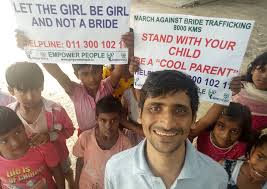
He organizes Marches against Bride Trafficking for awareness generation and sensitization which serve as a platform for people’s participation and as an interface between the Government/NGO/NPO officials and vulnerable communities. In 2012, he carried out a 4400 km long March covering 2 Indian States while in 2018, he carried out a 14000 km long March covering 10 Indian States- an ambitious achievement to connect various dots across the breadth of the country and to gain an understanding of cross-State ground realities. He plans to conduct more Marches across the length of the country as well. His consistent curiosity to know the pulse on the ground and his willingness to modify and strengthen his approach based on new information gathered makes him a true innovator and a change-maker to watch out for and reckon with. 

The Trustees of Grinnell College have recognised Shafiq to be thoroughly deserving of the honour of being a recipient of the Grinnell College Innovator for Social Justice Prize (the Grinnell Prize) for the year for his incredibly worthy work of about 20 years. The honour will include conferring of a prize amount of $50,000 for the organisation and $50,000 for his personal use. The Grinnell Prize ceremony is scheduled to be conducted in the first week of October and will be accompanied by a series of workshops conducted by Shafiq R Khan in collaboration with the University.

source: http://www.beyoundheadlines.in / Beyound Headlines / Home> India / by Beyond Headlines News Desk / July 30th, 2019

Know IPS Noorul Hassan’s Story Of Grit And Determination

Harraypur District (Pilibhit), UTTAR PRADESH :

He completed his B.Tech from Aligarh Muslim University in 2009. “This was the place where I developed myself and prepared my personality for civil service and corporate world,” he said.

Know IPS Noorul Hassan's Story Of Grit And Determination

Civil Service Success Story:  IPS Noorul Hassan (2015 Batch, 625 Rank)

New Delhi :

Reaching the pillars of success traversing the lanes of hardship is the story of IPS Noorul Hassan. ” You may belong to any religion or caste, but if you have the determination to cross any limits by your sheer hard work, you can achieve anything”, he believes. An IPS Officer of Maharashtra cadre, he had earlier worked as a scientist in BARC for a year. Mr Hassan hails from Pilibhit, Uttar Pradesh. Overcoming the perils of privation and cracking one of the most coveted exams Noorul Hassan is definitely an inspiration for all such candidates who dream of acing the top bureaucratic exams of the country.

His preliminary education took place in Pilibhit and later the family shifted to Bareilly after his father got a group D job. Even though his father had a bachelor’s degree, due to lack of a good job, he had to continue working as a fourth grade employee.

Mr Hassan completed his B.Tech from Aligarh Muslim University in 2009. “This was the place where I developed myself and prepared my personality for civil service and corporate world,” he said. After completing his course, through which he witnessed financial constraints, he got his first job in Gurugram based company. Later he joined Bhabha Atomic Research Centre (BARC) as a Grade 1 officer.

“After completing 1 year in BARC I realized I need to start preparation as I want to contribute to the society in a better manner as well as I was not satisfied with my professional advancement. So I started preparation in the year 2012,” he said.

In 2015, he cleared the Civil Services exam conducted by the Union Public Service Commission (UPSC) and secured 625 rank.

In his message to the civil service aspirants he says, “Never get demoralize from failures. Civil service exam is the test for patience and self confidence. So fail but fail better every time. In the end you will get success.”

source: http://www.ndtv.com / NDTV / Home> Sections> Education / by Atharuddin Munne Bharti / edited by Maitree Baral / July 29th, 2019

The Tibetan Muslims of Kashmir

Srinagar, JAMMU & KASHMIR :

A mostly forgotten population has been living as refugees in the Kashmir Valley for 60 years.

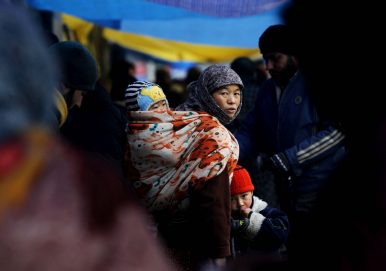
A Tibetan exile woman carries her child wrapped in woolen blankets on a cold day in Srinagar, Kashmir, India, Jan. 10, 2012. Image Credit: AP Photo/Mukhtar Khan
A Tibetan exile woman carries her child wrapped in woolen blankets on a cold day in Srinagar, Kashmir, India, Jan. 10, 2012.
Image Credit: AP Photo/Mukhtar Khan

SRINAGAR, INDIAN-ADMINISTERED KASHMIR — 63-year-old Tibetan Muslim Amanullah Kharmohra has preserved his travel permit like a holy relic. Laminated crisply inside a sheet of transparent polyethylene, the dog-eared permit carries photos of 6-year-old Kharmohra, his parents, and two siblings. It was this document that ensured the safe entry of Kharmohra and his family into India following a failed uprising against Chinese rule by Tibetans in 1959.

In March 1959, an uprising led by the region’s overwhelmingly Buddhist population invited a brutal crackdown from the Chinese government. The crackdown also led to the exile of the most prominent Tibetan Buddhist spiritual leader, the 14th Dalai Lama, to India. Fearing persecution by the Chinese authorities, thousands of Buddhists followed their spiritual leader’s footsteps and settled in India.

“But we chose [to settle in] Kashmir, because that’s where from our forefathers are,” Amanullah Kharmohra told The Diplomat from his government-allotted two-room quarter in Srinagar, the summer capital city of Indian-administered Kashmir.

Kharmohra’s family was among the 129 Tibetan Muslim families allowed by the Chinese government in Tibet to return to India. The permission came following tense deliberations between the Indian consulate in Tibet and the Chinese government.

A note  given by the Ministry of External Affairs in New Delhi, to the Embassy of China in India on September 24, 1959 reads:

…persons whose permanent domicile remained in the State of Jammu & Kashmir and who visited India from time to time and whose parents or one of whose grandparents were born in undivided India, are potential citizens of India. It is this group of persons, who have stated repeatedly to the Chinese authorities that they were Indian citizens. They have apparently submitted applications in writing for registration as Indian citizens and are entitled to claim the benefits of Indian nationality in accordance with the provisions laid down under the Constitution and the Citizenship Act.

Once they were allowed entry to India, the families spent some time in Kalimpong district of West Bengal, following which they made their way to Kashmir Valley.

“We were initially settled under makeshifts tents inside Eidgah ground in Srinagar. However, once the winter set in, we were shifted to a government accommodation by the authorities,” Kharmohra recalled.

Kashmiris in Tibet

Experts argue that Tibetan Muslims, who formed a minority in Tibet, trace their origins to four main regions surrounding Tibet: Kashmir, Ladakh, China, and Nepal.

“Before 1959, there were approximately 3,000 Tibetan Muslims living in Central Tibet. They were the descendants of Muslim merchants who came to Tibet from Kashmir, Ladakh, Nepal and China, mostly between the fourteenth and seventeenth centuries, married Tibetan women, and settled there. They spoke Tibetan and followed most Tibetan customs,” writes Dr. Alexander Berzin, a Buddhist teacher and translator, in an article  on the history of Tibetan Muslims.

According to Kharmohra, Kashmiri-origin Muslims in Tibet were known as Kachee Yul by local Tibetans. In native Tibetan language, Kachee means Kashmiri and Yul means country. Another distinctive character of Tibetan Muslims was their Kashmiri caste names like Lone, Mir, Ganaie, and Butt.

A Slice of Tibet in Kashmir

Today, Kashmir Valley is home to more than 1,500 Tibetan Muslims. Living in government-allotted quarters and houses constructed on leased land, these families are particularly concentrated in Srinagar’s old city.

Even though the Tibetan Muslim community in Kashmir has been asserting their Kashmiri roots, it has not translated into permanent citizenship of the state of Jammu and Kashmir for them. This effectively disqualifies the community from applying for government jobs and owning immovable property. Under the Indian constitution, only the Jammu and Kashmir state legislature has the power to define “permanent residents” of the state and confer on them special rights like government jobs, acquisition of property, and scholarships.

That’s the primary reason, community leaders assert, that the state has prevented the economic uplift of the Tibetan Muslim community. “None of us have a government job nor can we buy property. Most of us work in low-paying private jobs or start our own businesses,” said Hafeez Ahmad, a community member in Srinagar.

In such a situation, the traditional cuisine of Tibetans and cloth work has come handy. Even though their population is not so significant, the impact of Tibetan culture and cuisine is visible across the valley. For example, restaurants selling Tibetan food are a common sight. Similarly, Tibetan embroidery, locally known as Bota Tilla, is an essential part of Kashmiri fashion and a must have for newlywed brides.

“During the first three years, I struggled a lot. There’s no concept of Tibetan food in Kashmir. But slowly, it picked up,” said 42-year-old Hamid Butt, owner of one of the oldest and most popular Tibetan restaurants in Srinagar.

It was in 2005 when Butt decided to give up on embroidery work and try something new. “My parents knew the cooking of Tibetan traditional food, so we gave it a try. Today, three Tibetan families derive their livelihood from this venture,” Butt explained.

Born in Srinagar, Butt has picked up almost every aspect of local Kashmiri culture. He speaks fluent Kashmiri and sits with his customers and asks about their well-being in local style. Like most of the Tibetan families, Butt even prefers local Kashmiri cuisine at home. “I am Tibetan only by my appearance. Otherwise, I am pure Kashmiri… We eat rice like Kashmiris do and also have nun-chai (salt tea),” he said.

Still, this doesn’t mean Butt has no love for Tibet. His restaurant is adorned with the landscape portraits of Lhasa and iconic Potala palace. “We also hold Dalai Lama in huge respect as he’s the King of Tibet. It was Dalai Lama who had given Kashmiri Muslims land in Tibet to settle there centuries ago,” he said.

Cultural Assimilation

Decades of sharing their home in Kashmir has seen Tibetan Muslims drifting closer to the culture of local Kashmiri society. During Kashmiri weddings, a multi-course meal, locally known as Waazwan, is served to guests. Tibetan Muslims have also taken up the meal to celebrate weddings – although with a caveat.

“While around 8-10 dishes are prepared in local Kashmiri weddings, we have strictly established a code of not preparing more than four dishes,” said 73-year-old Abdul Rehman Lone, a community elder.

When it comes to dress, there’s hardly any difference between the locals and Tibetan Muslims. The Tibetan community’s traditional dress, the chuba, an ankle-length robe, is worn only during the weddings.

The Tibetan government in exile in Dharmsala, India, has also shown some interest in the issues concerning the Tibetan Muslim community in Kashmir. For example, the Dalai Lama himself lent financial help to build the infrastructure of the Tibetan public school in Srinagar. A community health center in Srinagar is also aided by the department of health of the Central Tibetan Administration (CTA).

“Around 680 children are enrolled in the school but more than 85 percent of them are local Kashmiris. Even though the Dalai Lama helped us a lot, the school is being run by the Tibetan Muslim Youth Federation, a nongovernment organization run by local Tibetan Muslim youth,” explained Masood Butt, the administrator in charge of the school.

According to sociologist Dr. Adfer Rashid Shah at New Delhi’s Jamia Millia Islamia University, the community has culturally assimilated in the Kashmiri society but not “psychologically.”

“Kashmiris have accepted them and in the last six decades they have lived here, there has been no friction between local Kashmiris and them. They have mixed with the local community but there’s still a gap. They think they are distinct; that’s why they are distinct. Otherwise, total cultural assimilation is possible in such a time,” Shah, who has studied the community closely, told The Diplomat.

One indication of that gap finally being bridged is the increasing trend of cross marriages between local Kashmiris and Tibetan Muslims. According to the community members, more than half a dozen such marriages have taken place in recent years.

No Scope for Growth

With no prospects of getting a government job and the lack of private sector in disputed Jammu and Kashmir, the community is witnessing increased migration by educated youth to mainland Indian cities like Delhi as well as Gulf countries. More often than not, they end up taking grueling call-center jobs to support themselves and take up further studies.

Every year, 26-year-old Moin Ahmad Sheikh spends five months in India’s capital city of New Delhi to sell jackets. During the rest of the year, Sheikh works at his father’s embroidery shop in the Eidgah area of Srinagar. After passing his Class 10 examinations, Sheikh quit his studies to support his family.

“I am the only son of my parents and my father was not able to handle the shop like before. Initially, I took up a job as a salesman but eventually I learned embroidery work. Life wouldn’t have been different even if I studied further because I am not eligible to get a job here,” Sheikh explained.

This realization is not lost on the parents of the Tibetan Muslim youngsters. 40-year-old Salma is anxious about her son’s future. Working as a cook at a local Tibetan restaurant, Salma and her husband eked out enough to sustain themselves and their only child, Ehtisham.

“Now, he’s in his 12th class. We are planning to send him to Delhi to take up some private job and continue his studies,” Salma rued, adding she has “no other option.”

Shah believes the conflict in Indian-administered Kashmir has overshadowed the problems faced by Tibetan Muslims in Kashmir and prevented solutions. “Kashmir is a war-zone where uncertainty about everything looms large. In a scenario where the majority population of the region is treated as second- or third-class citizens, the expectation that someone will speak about the plight of Tibetan Muslims is laughable,” according to Shah.

“The main issue in Kashmir is conflict and all the other issues are automatically sidelined,” he said, adding “their issues will remain unaddressed.”

But while the political uncertainty in the region forms the larger discourse in the valley, Shah argues that there’s also an “academic apathy and scholarly disinterest” about the community within Kashmir.

Broken Families

73-year-old Aisha was just 13 when her family left Tibet for India. Her father, Haji Abdul Qadir Jami, was one of the several Tibetan Muslim leaders who had risen up against the Chinese government to demand their rights. At the time of their migration, the Chinese government kept Jami in detention along with four other Muslim leaders.

“Chinese authorities told us to leave and assured us that my father will join us near the Tibet border. I along with my mother and four sisters waited for a week but our father didn’t turn up. Once we reached Kalimpong in West Bengal, we waited there as well. That wait stretched to seven years. Finally, we moved to Kashmir. My father never came and we didn’t know what happened to him,” Aisha recalled.

Aisha’s not an isolated story. Almost every other family of the community has some relatives still living in Tibet. The members have little avenues to hear about their family members’ condition or even to know if they are still alive. Over the years, strict censorship and tedious travel permit processes have meant little or no connection between the divided families.

“My deceased elder brother’s two sons came to see us in the mid-80s but since then, there has been no contact with them. Even though I know I have my brother’s family and relatives there, [it’s as though] they simply don’t exist,” said 73-year-old Abullah Jami, a community elder in Hawal Srinagar.

Safwat Zargar is a journalist from Srinagar whose work has appeared in Scroll.in, The Indian Express, and ScoopWhoop.

source: http://www.thediplomat.com / The Diplomat / Home> Features /  by Safwat Zargar / July 31st, 2019

On the trail of the Makkah of Europe: Woking’s Islamic heritage

Bhopal, MADHYA PRADESH :

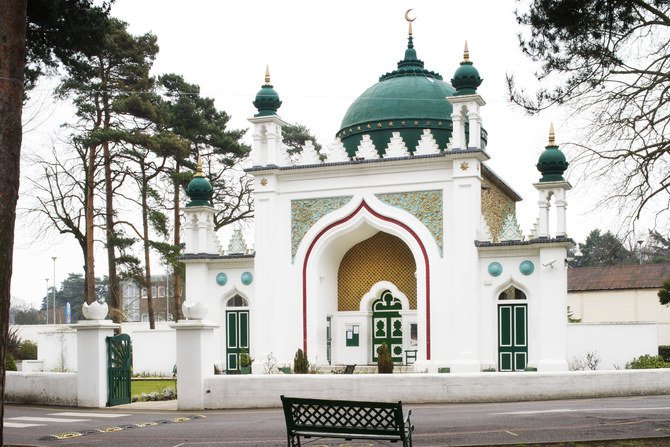
The mosque was built as part of a vision by Dr. Gottlieb Wilhelm Leitner, to include the main religions (Islam, Judaism, Christianity and Hinduism), but he passed away before he could fulfill his commitments. (Everyday Muslim/Tharik Hussain)


  • Everyday Muslim announced the discovery of a forgotten Arab/British princess directly descended from the Prophet Muhammad
  • Buried in a Muslim plot at the Brookwood Cemetery near Britain’s first Muslim Cemetery

London :

The grave of a British Muslim, believed to be a direct descendent of the Prophet Muhammad (peace be upon him), has been discovered in a suburban town about 50 kilometers (30 miles) southwest of London.

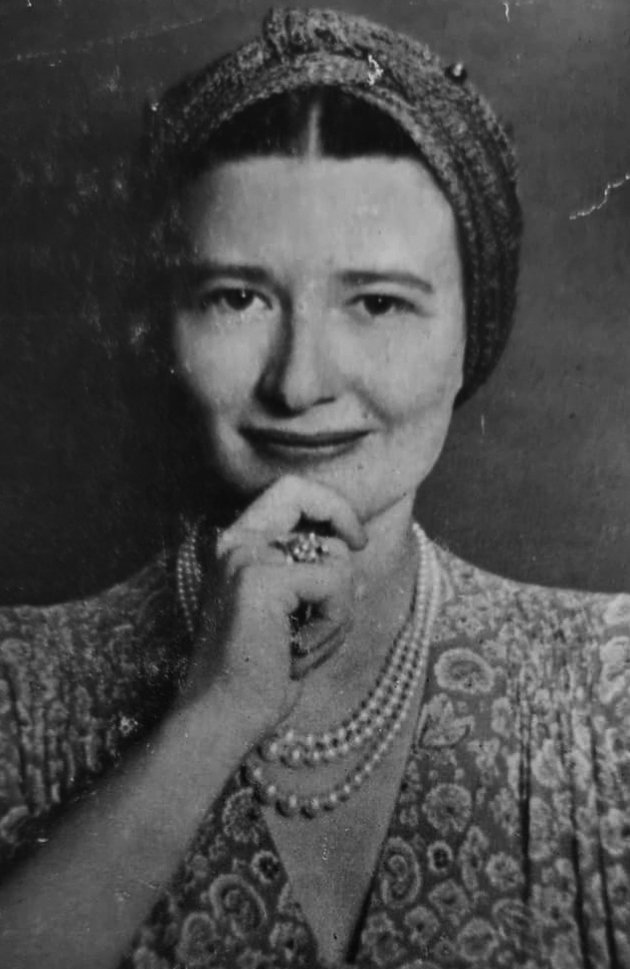
Nestled in the woodlands of Woking, Surrey, Princess Sharifa Musbah Haidar El-Hasimi (also known as Musbah Khanum and Musbah Haidar El-Ghalib) lies in one of Europe’s oldest Muslim cemeteries, surrounded by the graves of other notable Muslim Britons from the late Victorian period and beyond.

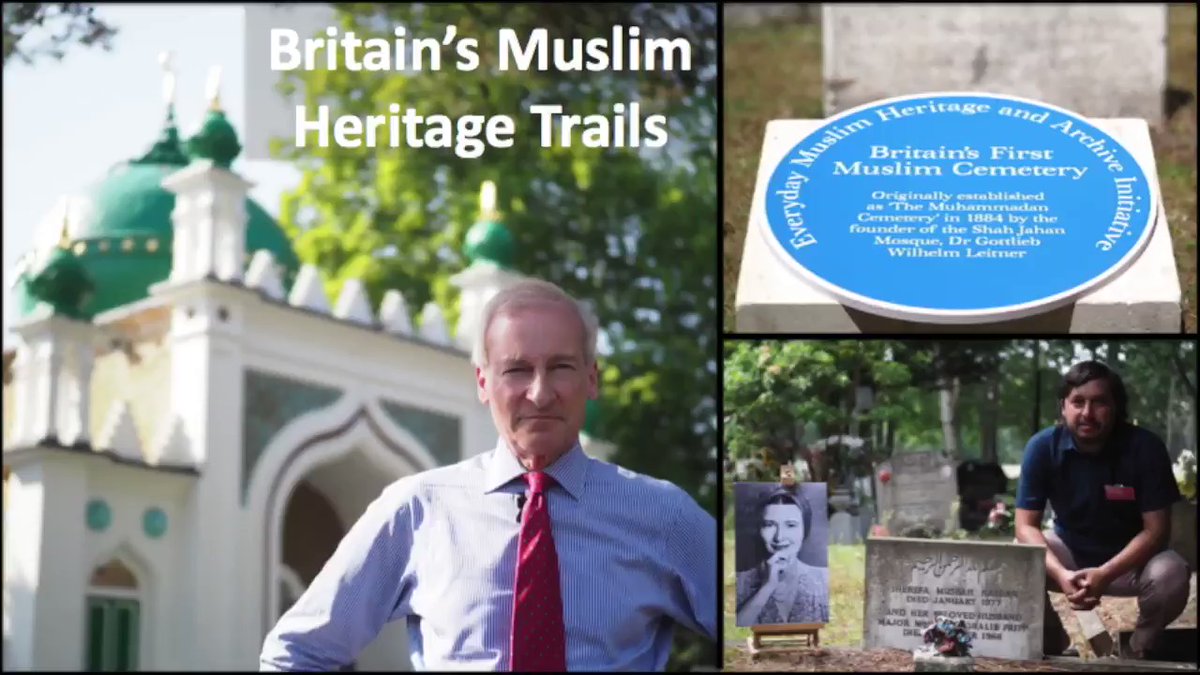
The burial ground, the first Muslim cemetery established in Britain, was unearthed as part of a trail led by Everyday Muslim, a non-profit organization dedicated to documenting Muslim heritage in the UK.

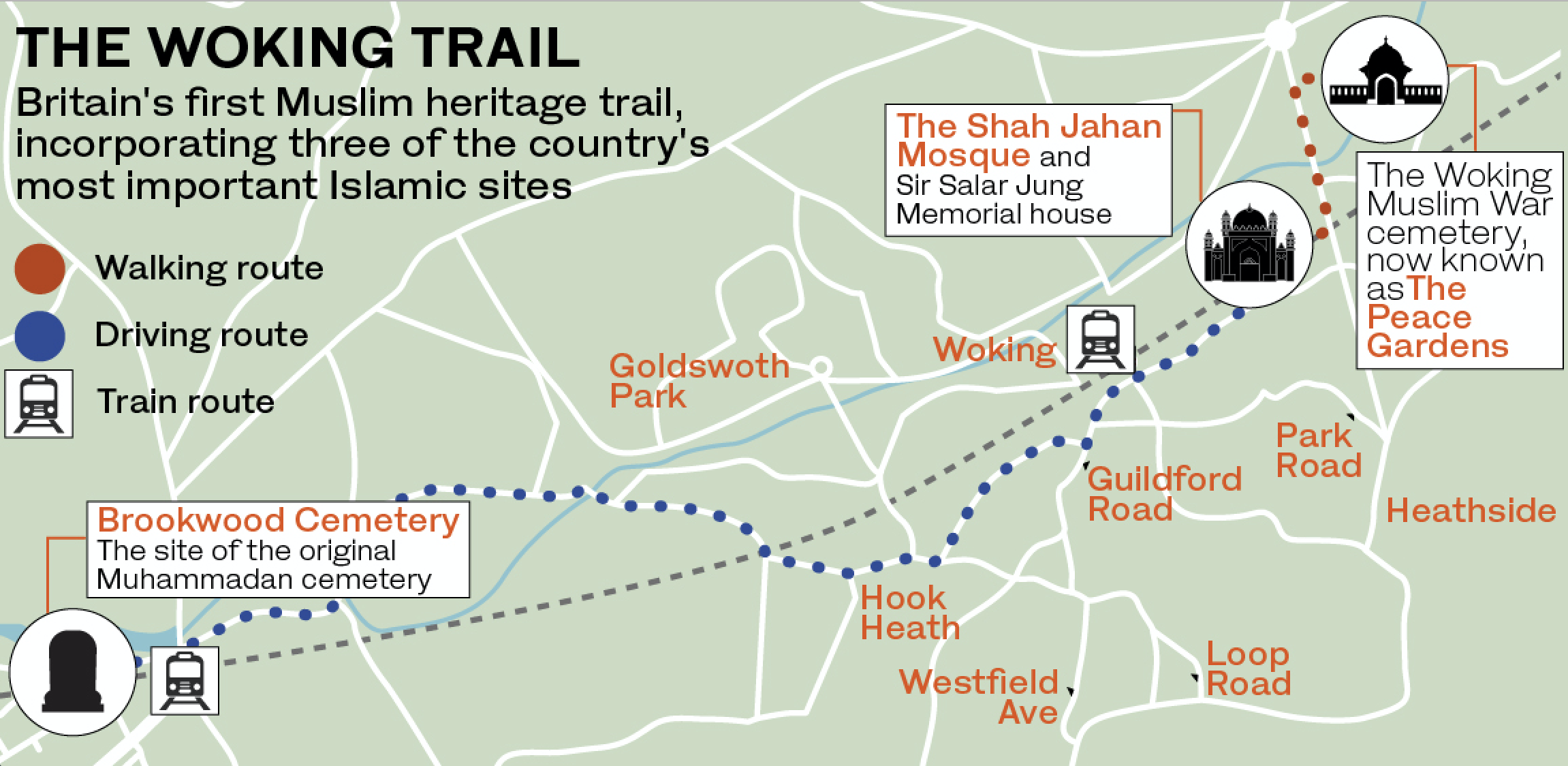
“Fascinating revelations on the history of this particular princess and her final resting place have been unearthed during a self-guided trail that takes visitors to three of Britain’s most important Islamic sites, offering an overview of each one,” said Tharik Hussain, the project’s manager.

It was Hussain who first discovered the story of the Princess when he stumbled across one of her books in a small bookshop in Brighton about six years ago. Captivated by this discovery, he began researching her background.

Princess Musbah Haidar, according to Everyday Muslim, was the second daughter of the Grand Sharif of Makkah, Amir Ali Haidar of the family of Devi Zeids, who claim to be direct descendants of the Prophet Muhammad.

Princess Musbah Haidar was the second daughter of the Grand Sharif of Makkah, Amir Ali Haidar of the family of Devi Zeids, who claim to be direct descendants of the Prophet Muhammad. (Supplied, no known copyright)

Princess Musbah’s mother was an Englishwoman of Irish descent called Isabel Dunn, who converted to Islam and became Amira Fatima, the second wife of Haidar. She was employed as an English teacher for the children from his first marriage.

Everyday Muslim reported that Princess Musbah was born at the family retreat, known as Chamlujah, in Istanbul on Nov. 25 1918, and had an older sister called Sfyne and a brother named Faisal.

She was initially brought up in the city, but following the dissolution of the Ottoman Empire, her family was forced to leave.

Later she moved to England, and married Maj. Francis Stewart Fripp, who later converted to Islam, taking the name Ghalib.

The princess’s ancestry is not well known as, at the time, the Ottomans had installed the other side of her family on the throne in Makkah. In 1916, with the encouragement and support of Britain, the then Sharif of Makkah, Hussein bin Ali, led a revolt against the Ottomans to create a united Arab state.

Everyday Muslim states: “Her great grandfather was the late Emir Abdul Muttalib, who was the grandson of Emir Musaad, who was directly descended from the patriarch of the House of Devi Zeid, Muhsin, whose brother Abdullah was the patriarch of the House of Devi-Aoun, which is the family tree of the current monarchs of Jordan and the historic monarchs of Iraq.

___________________________________________-

Farrukh@implausibleblog 

Britain’s Muslim Heritage Trail launch with @Everyday_Muslim @_TharikHussain and @HistoricEngland which took place at three locations:@ShahJahanMosque at the

HeritageTrailsMPOs30jul2019

“Both houses stem from Emir Hassan, whose lineage is traced directly back eleven generations to Emir Katada of Makkah in 1174 AD. Emir Katada’s lineage traces back a further eight generations to Abdullah, the son of Mohammed Al-Alaoui, who is the grandson of Abdullah, the son of Hassan Al-Mussema.”

Al-Mussema was the son of Hassan, the brother of Hussein, whose father was the fourth caliph of Islam, Ali, the husband of Fatima, the daughter of the Prophet Muhammad.

In her lifetime, the princess authored two books; “Arabesque: an account of Harem Life,” detailing her life as a Makkan princess, and “Dawn Beyond the Tamarisks.” Her death was announced in The Times in January 1977.

According to Hussain, the two other Muslim sites in Woking the organization promotes have also been in the media recently: The Woking Muslim War Cemetery, which was renovated a few years ago and featured in the centenary celebrations of the Great War, and the Shah Jahan Mosque, which became the first in the country to be listed as a grade I historic monument as the first purpose-built mosque in northwest Europe.

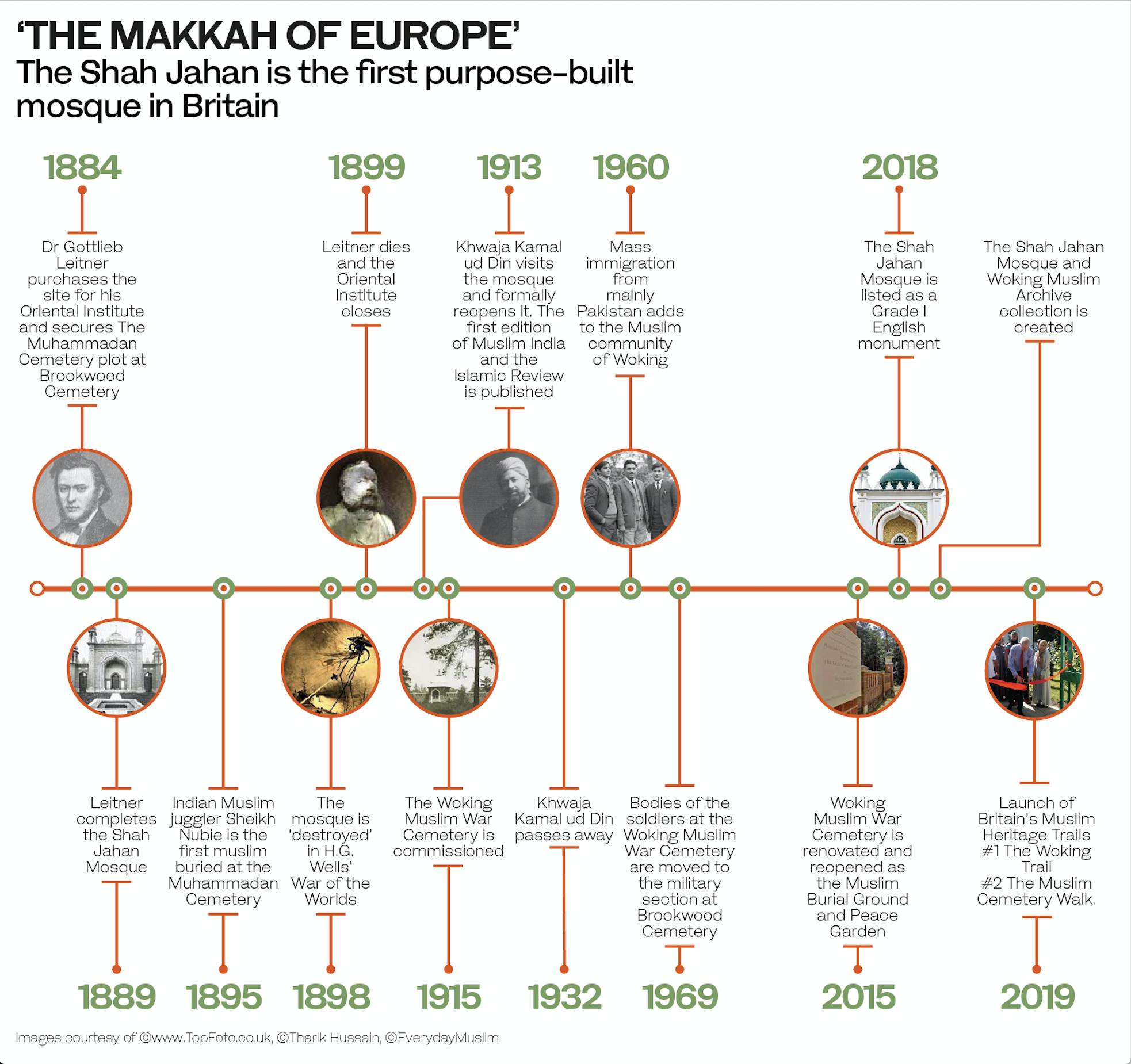
The latter of these, named after Sultan Shah Jahan Begum, ruler of the British Raj tributary state of Bhopal, has a significant history.

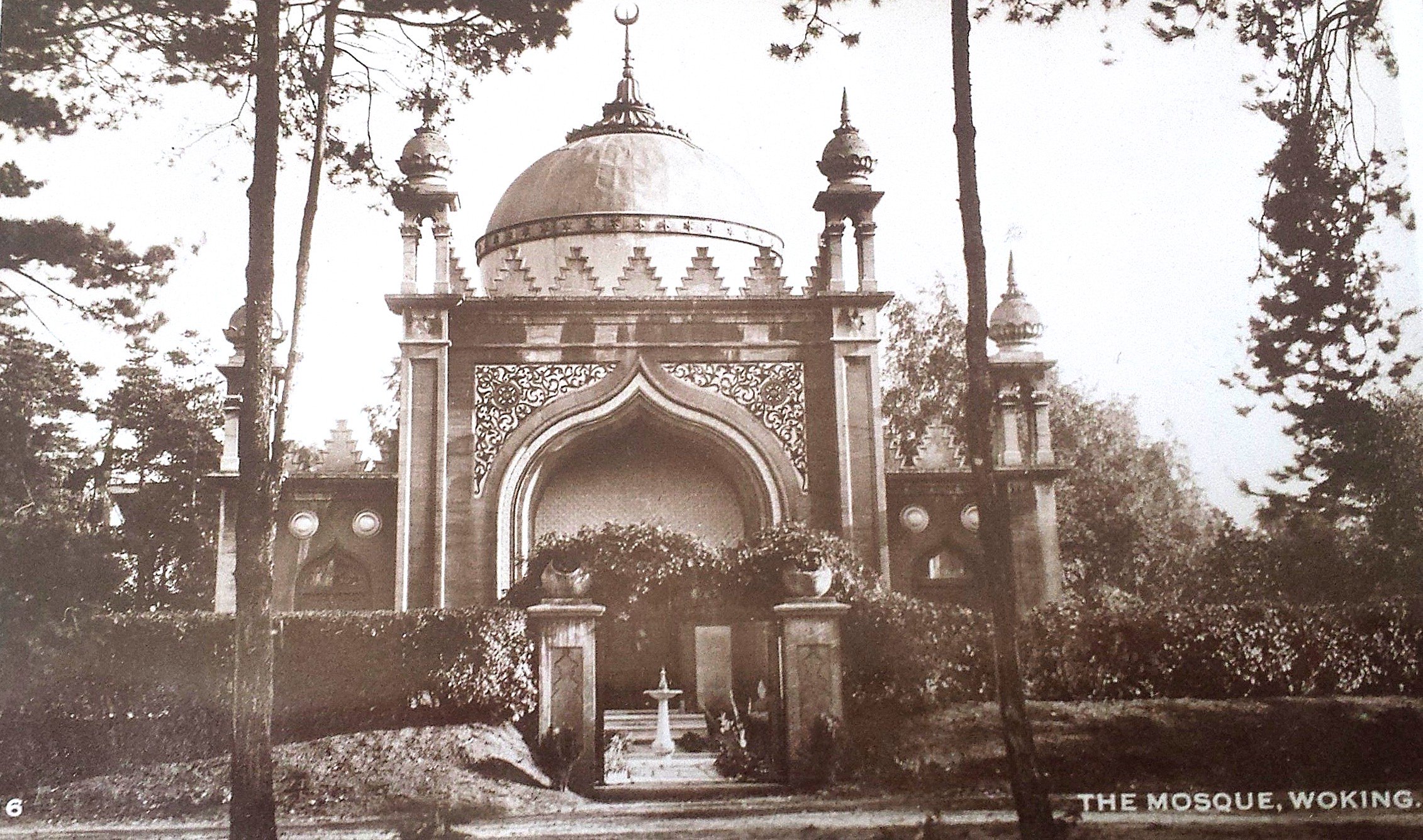
The 130 year-old Shah Jahan mosque, in suburban Surrey, bears the name of its key donor, the Sultan Shah Jahan Begum, ruler of the British-Indian princely state of Bhopal. (Everyday Muslim/Tharik Hussain)

It was the vision of Dr. Gottlieb Wilhelm Leitner, an orientalist born of Jewish parents from Hungary. A remarkable individual, according to the mosque’s website, aged 17 he “took a degree at King’s College, London, by which time it is said he could speak 15 languages.” He later went on to found the forerunner to the School of Oriental and African Studies.

The mosque itself was designed by Anglo-Irish architect William Isaac Chambers in a style that mirrored Indian Mughal architecture from the 16th century.

MakkahofEuropeMPOs30jul2019

FUNFACT

In popular culture, the Shah Jahan Mosque was destroyed in H.G. Wells’ novel “War of the Worlds,” which was set in the author’s hometown of Woking.

Why Woking of all places?
Lietner, a religious scholar who lived and worked for many years in India and abroad, wanted to set up a college that would allow people to study the religions of the East.

“He came up with a site just outside London, in Woking, where this beautiful gothic building, known at the time as the Royal Dramatic College, had fallen on hard times and was up for sale. So it was really about convenience. It came with lots of land and it meant he didn’t have to pay the high prices that he would have paid had he found somewhere in London,” Hussain told Arab News.

Lietner wanted to build free places of worship there as well, including a Hindu temple, an Eastern Christian church, a synagogue and a mosque. Because he anticipated people from all over the world would come, including Muslims, one of the first things he did in 1884 was secure a plot at the nearby cemetery (Brookwood) exclusively for the use of Muslim burials.

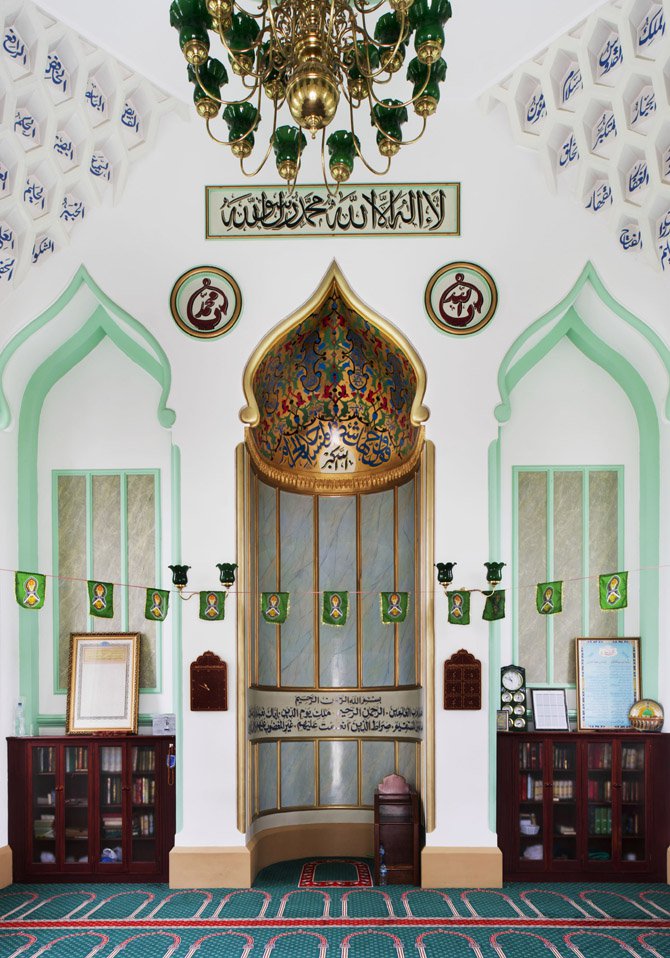
The mosque (interior pictured above with the direction of the qibla) was built initially, along with a Muslim cemetery, as Dr. Gottlieb Wilhelm Leitner understood that burial rites in Islam were a very important rite. (Everyday Muslim/Tharik Hussain)

A stone still stands to this day inscribed with specific instructions on how to bury Muslims, as very few people in Victorian Britain understood the specific procedures.

His institute flourished and after five years he began building the mosque, but passed away before he could fulfill his vision.

The Shah Jahan Mosque was completed in 1889, but according to its website: “Abdullah Quilliam’s Liverpool mosque, opened in 1889, pre-dates Woking by a few months, but the Shah Jahan has the honor of being the first purpose-built mosque in Europe outside of Muslim Spain.”

FASTFACT

The Shah Jahan Mosque in Woking is the oldest purpose-built mosque in northwestern Europe and was known as the “Makkah of Europe” during the early 20th century, when it became the center of Islam in the UK.

Hussain adds: “So this is why Woking, because it had Britain’s first purpose-built mosque and Britain’s first Muslim cemetery, so naturally Muslims were drawn to it.”

Unfortunately, the mosque was neglected after Leitner’s passing for over a decade, but was then restored by an Indian lawyer, Khwaja Kamal-ud-Din, who had befriended influential Victorians curious about Islam, including a Lord who later became a convert.

His name was Lord Headley, also known as Sheikh Rahmatullah Al-Farooq, an Irish peer, and one of the leading members of the Woking Muslim Mission who helped the center flourish, with the aim of bringing it back to life as a platform for promoting islam in Europe, even becoming home to one of the first Muslim publications in Europe, The Islamic Review.

That is why Woking has been dubbed the “Makkah of Europe” by the organizers of the trail.

The Muslim cemetries
The Woking Muslim War Cemetery, now known as the Peace Gardens, played a prominent part in the remembrance of the centenary of the First World War, between 1914-18. It was the final resting place of 27 Muslim soldiers who fought for the British Empire and Free French Forces during the two great wars..
But it is the other cemetery that Everyday Muslim is keen to highlight, which you could say was the Westminster Abbey of Muslim cemeteries.

WokingTrailMPOs30jul2019

“This site is probably the least known and ironically is actually the oldest Muslim space we know of in Britain. It is a plot of land originally known as the ‘Muhammadan Cemetery,’ founded in 1884, within the nearby Brookwood cemetery, by Dr. Leitner,” Hussain told Arab News.

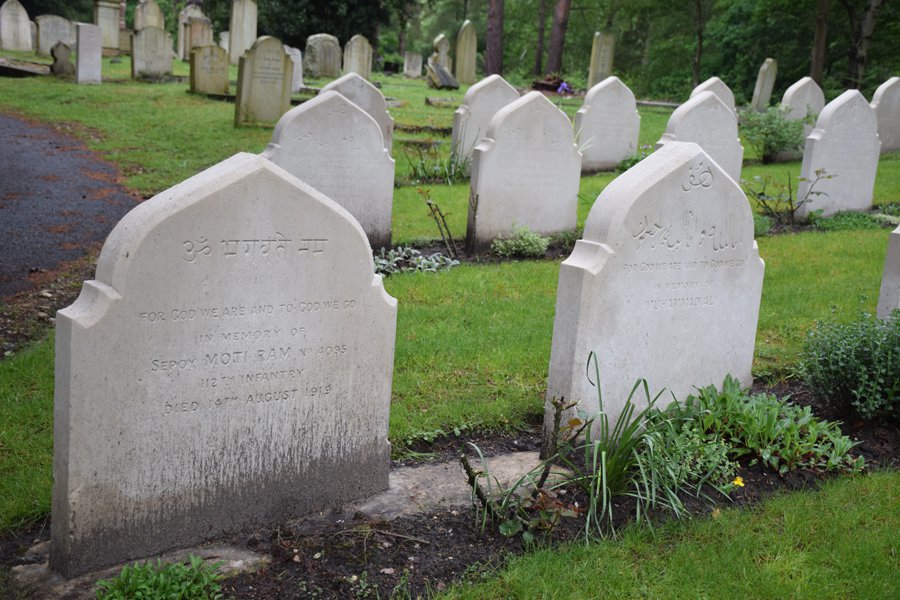
Princess Musbah resides here alongside Abdullah Quilliam (1856‑1932), founder of Britain’s first mosque and Muslim publication, Muhammad Marmaduke William Pickthall (1875‑1936), author of the first ‘native’ English translation of the Holy Qur’an, Naji Al‑Ali (1936‑1987), Palestinian political cartoonist and creator of “Handalah,” Sepoy Ahmad Khan (died 1914), the first British Muslim soldier buried on British soil, and many other famous Muslims, such as Victorians, princes and princesses, sultans and so on.

he cemetery in Woking is home to several important Muslim dignitaries. (Everyday Muslim/Tharik Hussain)

What is the aim?
Everyday Muslim wants to reach a point where sites such as these are not labelled as “British Muslim” heritage, but just “British” heritage.

Hussain, who also develops self-guided trails across the world for Lonely Planet guidebooks, said it should be recognized as a significant part of the island’s history

Sir Laurie Magnus, chairman of Historic England, which is responsible for protecting and championing the country’s heritage, said “Muslim heritage is very much a part of Britain’s heritage and I am delighted to launch this trail,” to celebrate these beautiful sites.

The initiative was aided by the National Lottery Heritage Fund, as part of a bigger project concerning the heritage and history of the mosque and the surrounding area.

Hussain said: “We wanted to put these trails out there so that Muslims and non-Muslims up and down the country could see the potential.”

He said they see this as a start, and hope to receive more funding to highlight Muslim heritage trails across the UK to make Muslim heritage in Britain more visible and a normalized part of the wider narrative.

“I think it’s really cool that in the process of trying to unearth British Muslim heritage, we are not only unearthing all these amazing stories of British people who were doing amazing things as Muslims and converts, but we find someone who has British blood and the Prophet’s blood. I think that’s just pretty fabulous, and something we should celebrate and embrace,” Hussain concluded.

source: http://www.arabnews.com / Arab News / Home> Latest News> Middle-East> Home / by Sarah Glubb / July 29th, 2019

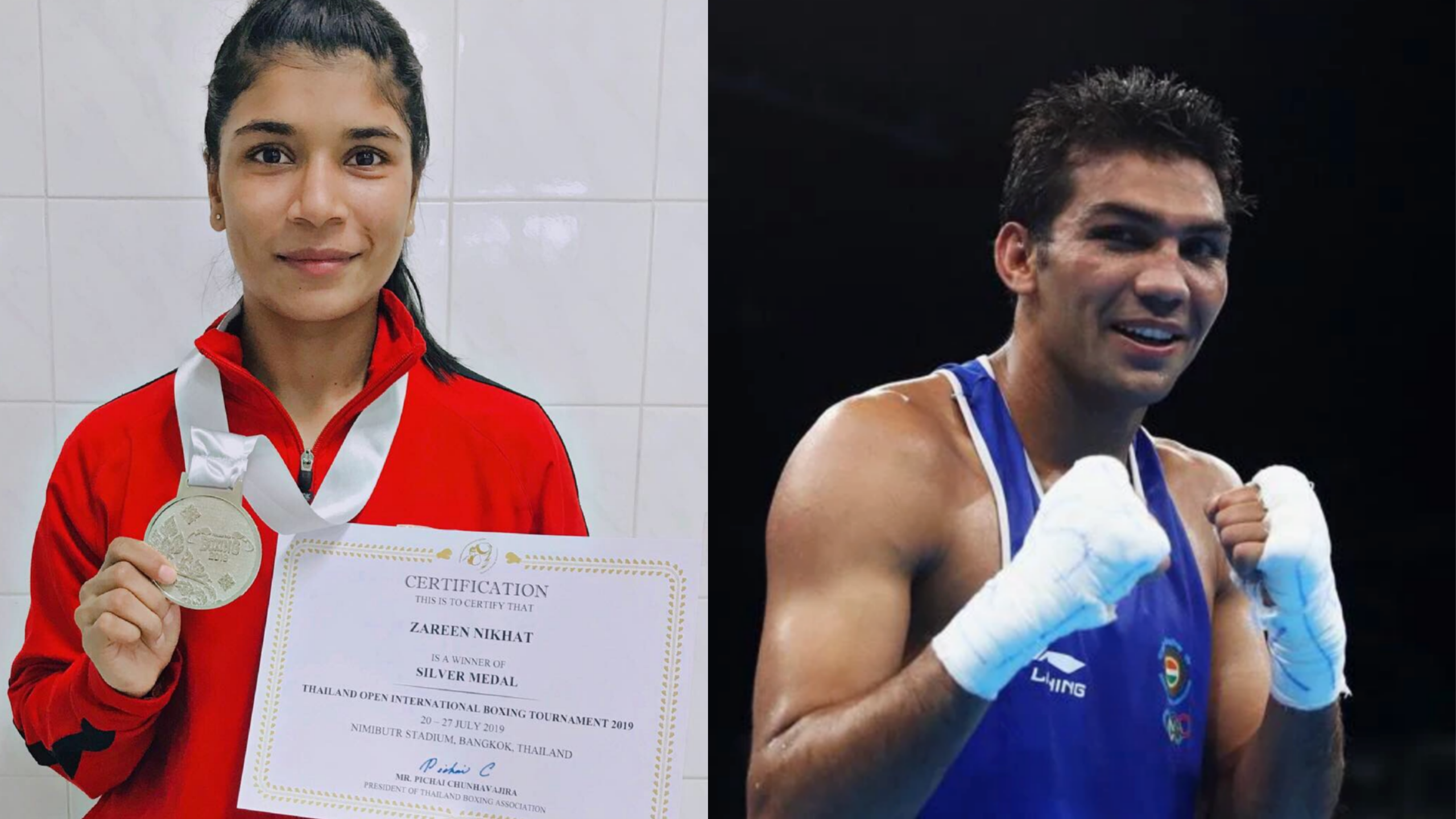
Boxers Nikhat Zareen And Mohammed Hussamuddin Win Silver Medal At Thailand Open

Hyderabad, TELANGANA :

NikhatHussamuddinMPOs29jul2019

Former world junior champion Nikhat Zareen, and GeeBee Boxing silver-medallist Mohammed Hussamuddin, once again made the country proud by winning the silver medal in the 51 kg category and 56 kg category respectively at the summit clash of the Thailand Open International Boxing Tournament on Saturday.

Nikhat, the Strandja Cup gold medallist and also the Asian Championships bronze-medallist, had to settle for silver as she lost to China’s Chang Yuan in the final.

The Chinese proved too tough for 23-year-old Nikhat and was handed a 5-0 blow. Although disappointed, the Hyderabad girl said she has learned many things which will be helpful in the world championship contest.

Nikhat took to Twitter to celebrate her commendable performance and said that she is only getting better. “Will come back fighting even stronger in the upcoming competitions. Thank you all for your continuous support! (sic),” she tweeted. Nikhat Zareen will compete with six-time world champion Mary Kom at the World Championships trials next week.

In 56kg, reigning India Open champion Chatchai Decha Butdee of Thailand continued his fine form to inflict a 5-0 defeat on Hussamuddin.

Overall, Indian boxers finished their campaign with a rich haul of eight medals at the championship.

source:  http://www.thecognate.com / The Cognate / Home> News / by Shaik Zakeer Hussain / July 29th, 2019

Nikhat Zareen Dedicates Thailand Open Semi-final Win to Kargil War Martyrs

Hyderabad, TELANGANA :

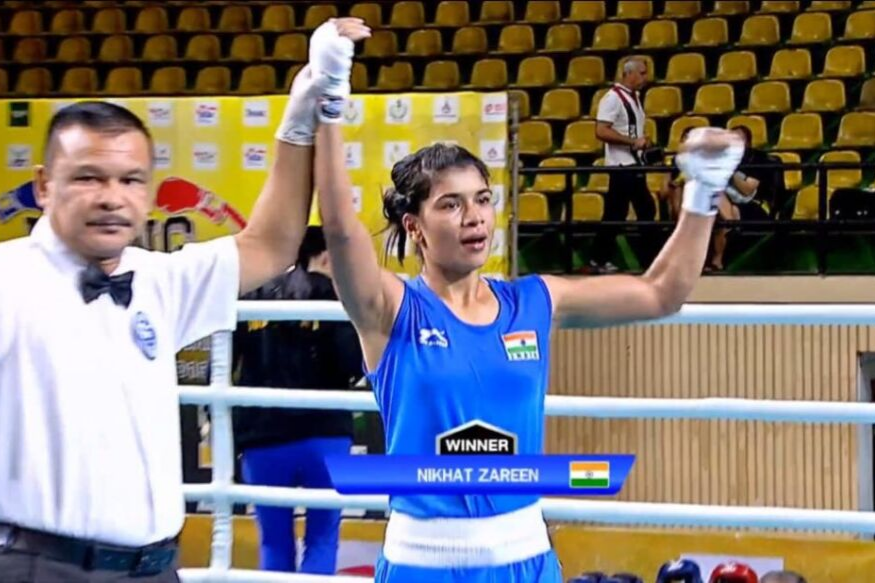
Nikhat Zareen, a former junior world champion, was the only woman boxer to reach the final of Thailand Open.

Nikhat Zareen Thailand's Jutamas Jitpong in the semi-final. (Photo Credit: @BFI_Official)
Nikhat Zareen Thailand’s Jutamas Jitpong in the semi-final. (Photo Credit: @BFI_Official)

Former junior world champion Nikhat Zareen (51kg) reached the final of International Tournament in Bangkok on Friday and was lone Indian woman to do so while Asian silver-medallist Deepak Singh (49kg) led four men into the summit clashes of the tournament.

Ashish Kumar (75kg), Commonwealth Games bronze-medallist Mohammed Husammuddin (56kg) and Brijesh Yadav (81kg) were the other three men to make the gold medal bouts.

Zareen was up against Thailand’s Jutamas Jitpong. The Hyderabadi impressed with the ferocity of her punches as she edged past the local favourite 4-1 and let out a scream to express her elation when her hand was raised by the referee.

Zareen later took to Twitter to dedicate her win to the Kargil War martyrs. 20 years ago, India decisively won the Kargil war and regained the territories that were briefly captured by Pakistan. The nation is celebrating the Army’s victory in the historic war.

__________________________________________

Nikhat Zareen
@nikhat_zareen

I dedicate my today’s Semi-Final victory at the Thailand Open to our brave soldiers of Kargil war who sacrificed their lives for our country🇮🇳

Nikhat Zareen Thailand's Jutamas Jitpong in the semi-final. (Photo Credit: @BFI_Official)
1,654

_________________________________________

Meanwhile, former Asian youth silver-medallist Ashish (69kg) lost his semi-final bout to sign off with a bronze medal. Ashish lost to Thailand’s Wuttichai Masuk in a split decision after an exhausting clash.

Among the women, Manju Rani (48kg) and Bhagyabati Kachari (81kg) ended with third-place finishes. Manju went down to Chuthamat Raksat of Thailand, while Bhagyabati lost to China’s Li Qian.

Earlier, Deepak hardly broke a sweat against Bhutan’s Tashi Wangdi. The Indian’s dominance was such that Wangdi faced two standing eight counts and was left with a gash above his right eye. The judges eventually ruled unanimously in the Indian’s favour.

Also advancing was Husammuddin (56kg). In a messy slugfest with Thailand’s Ammarit Yaodam, the Indian came out as the more aggressive and clean puncher to emerge triumphant in a 3-2 decision.

In the 75kg category, Ashish defeated Uzbekistan’s Fanat Kakhramnov to make the final.

Brijesh was up against local favourite in Saranon Klompian in the last bout of the day and produced a ferocious performance. A left hook just a minute into the second round sent his opponent crashing and the Thai could not regain his composure after that. Klompian faced three eight counts before the referee stopped the bout in Brijesh’s favour.

(With PTI inputs)

source: http://www.news18.com / News18.com / Home> News> Sports / July 26th, 2019

38 Muslims among 610 clearing UP Judicial Services 2018 exam

UTTAR PRADESH :

Akansha Tiwari is the 2018 topper of Uttar Pradesh Provincial Civil Services (Judicial Service Civil Judge – JR. Div.) Exam

Lucknow:

 A total of 38 Muslims, including 18 girls, are among 610 candidates who have passed the Uttar Pradesh Judicial Service Civil Judge (JR. DIV.) Eexam 2018 result of which was declared on July 20.

As many as 07 students from Aligarh Muslim University (AMU) Residential Coaching Academy (RCA) are also among the candidates who have cracked the coveted exam. Among them 03 are non-Muslims.

Uttar Pradesh Judicial Sservice Civil Judge (JR. DIV.) Exam 2018 result was based on Personal Interview conducted from June 21 to July 17, 2019 and UPPSC Civil Judge Main Exam conducted on January 30, 31 and February 01, 2019.

A total of 5,795 students had appeared for the UPPSC Civil Judge Main Exam out of them 1,847 had qualified for Personal Interview. Of them 610 were declared passed.

Among the successful Muslim candidates, Shahnawaz Siddiqui bagged the 11 Rank, Jaseem Khan got 36th Rank whereas Hena Kausar got 93th Rank and Meher Jahan got 97th Rank.

Names of other Muslim judges are Asif Nawaz Khan (96), Umaima Shahnawaz (100), Zishan Medhi (103), Naved Akhter (120), Nazim Akbar (124), Bushra Noor (129) and Bushra Khursheed (160).

Among the successful candidares from Aligarh Muslim University (AMU) are Pratyush Gupta (Rank 78), Asif Nawaz Khan (Rank 96), Meenakshi Bansal (Rank 186), Mehnaz Khan (Rank188),  Shamsul Rahman (Rank 273), Shalini Singh (Rank 375) and Farha Naaz Parveen  (Rank 469).

Akansha Tiwari of Gonda district is the 2018 topper of Uttar Pradesh Provincial Civil Services (Judicial Sservice Civil Judge – JR. DIV.) Eexam. Harihar Gupta of Nainital stood second while Prateek Tripathi of Azamgarh came third.

source: http://www.ummid.com / Ummid.com / Home> India> Education & Career / by Ummid.com News Network / July 23rd, 2019

J&K: Slain rifleman Aurangzeb’s brothers join Army

JAMMU & KASHMIR :

Aurangzeb was abducted from Pulwama by terrorists and later his bullet-ridden body was recovered on June 14 last year.

Aurangzeb’s brothers Mohammad Tariq and Mohammad Shabbir join the Indian Army. (Photo: India Today)

Nearly a year after Rifleman Aurangzeb was abducted and killed by terrorists in Kashmir, his two brothers – Mohammad Tariq and Mohammad Shabbir, have joined the Infantry Battalion of Territorial army.

Aurangzeb was abducted from Pulwama by terrorists and later his bullet-ridden body was recovered on June 14 last year. The deceased Army man was proceeding towards his home for the festival of Eid when he was abducted in broad daylight from a vehicle. After his abduction, the Jammu and Kashmir police had launched a massive manhunt.

His father Mohammad Hanief said, “My two sons have joined TA Battalion. When Aurangzeb was killed, I told Raksha Mantri and top officers of the Indian Army that I will dedicate all my six sons to the forces.” He said, “My two sons will avenge the death of my son.”

Aurangzeb’s mother Raaj Begum said, “Yes, we fear something untoward may happen, but our sons wanted to join the Indian Army.”

Mohammad Tariq said, “After our training, we will fight against terrorism and will take revenge for our martyred brother Aurengzeb. Today we feel proud of joining the Indian army and are proud of our country.”

Aurangzeb’s father was a former sepoy of the Jammu and Kashmir Light Infantry. He joined the BJP before Lok Sabha polls but says his decision to send all his sons to the Indian Army is not based on his political inclination.

His eldest son Mohammed Qasim has already completed 12 years service and is back to serving in the Kashmir Valley.

source: http://www.indiatoday.in / India Today / Home> News> India / by Kamaljit Kaur Sandhu, New Delhi / July 22nd, 2019

Football for women’s empowerment: how Tanaz Mohammed is changing the game for hundreds of young girls

Mumbai, MAHARASHTRA :

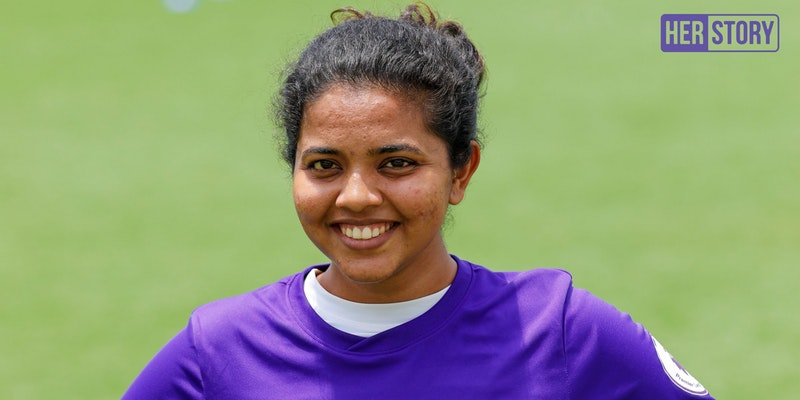
As coach educator, Mumbai-based Tanaz Mohammed is helping hundreds of young girls stay empowered through football.

Perceived as weak and not made for ‘rough sports,’ girls and women are often frowned upon for wanting to get on the playing field. As a child, Tanaz Mohammed’s love for football and wanting to take up the game was met with hesitation. Today, the 26-year-old from Mumbai, is helping other young girls embrace football on the road to empowerment.

Tanaz Mohammed
Tanaz Mohammed

Tanaz, who has been pursuing football for the past three years, serves as the Grassroots Development Officer for the Mumbai City Football Club, and is a level one Coach Educator atPremier Skills, an initiative by British Council that encourages community coaching across the globe. She is also a Development Coach for Reliance Young Champs.

Along with football, Tanaz is also a national-level hockey player.

The game changer

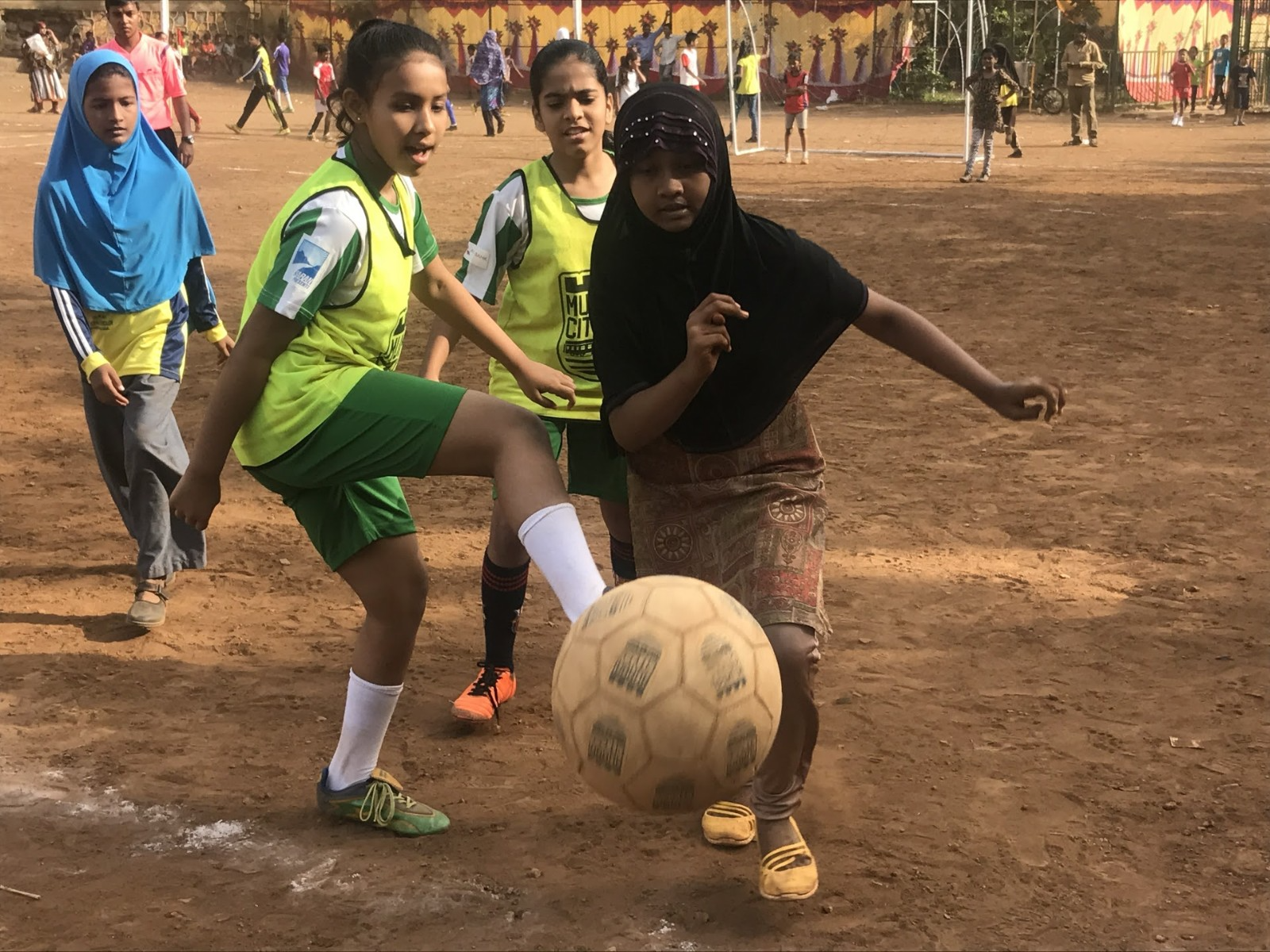
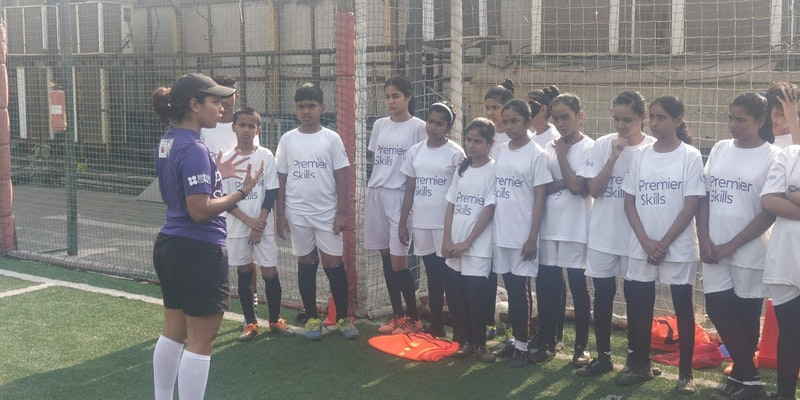
Through Premier Skills, Tanaz has coached hundreds of girls and helped their families understand why football is not just meant for boys. Her biggest project so far has been a 10-day coaching camp in Madanpura, Mumbai, a largely Muslim-dominated community, where girls didn’t have much exposure to sports.

Recalling the experience, Tanaz says,

“In Madanpura, boys’ football is given more importance, and the girls aren’t really out in big numbers. But when I went there, the parents realised that their girls would be safe, training with a female coach, and over 400 girls showed up. By the end of the camp, I was coaching the women who accompanied them as well!”

Tanaz Mohammed's biggest project so far has been a 10-day coaching camp in Madanpura, Mumbai, a largely Muslim-dominated community, where girls didn’t have much exposure to sports.
Tanaz Mohammed’s biggest project so far has been a 10-day coaching camp in Madanpura, Mumbai, a largely Muslim-dominated community, where girls didn’t have much exposure to sports.

Even though the coaching camp lasted for just 10 days, the girls were determined to keep playing the sport, and formed their own football teams at school. Tanaz says that they have been consistently competing in local tournaments. Also, the girls have overcome their initial barriers about clothing, and continue playing with their hijabs and salwars.

Recounting an eye-opening memory from the coaching camp, Tanaz says,

“To begin with, it was only the mothers who accompanied their daughters to the coaching grounds. But on the last day, the father of one of the girls was there. Both the parents told me that they never knew that female football coaches existed, and because of the coaching camp, their daughter has been able to play the sport.”

Tanaz coaching mothers in Madanpura

Getting the ball rolling

Ever since she was a little girl, Tanaz has made her love for sports loud and clear. Although she is a professional footballer today, she first pursued hockey through the girls’ team at school, and quickly made her way to the national level.

However, after she graduated from college with a degree in Sports Management Studies, she was offered an internship at Mumbai City Football Club, through which her interest in football began flourishing. She then took up a basic course in football, and enrolled with Premier Skills to become a qualified coach educator.

“There was some initial hesitation from my parents, but they have been my biggest support system. There are a few people who have passed unpleasant comments, but I chose to ignore them,” says Tanaz.

In 2018, Tanaz was the manager of the Mumbai District Football Team that won the State Level Sub-Junior Girls Football Championship held in Jalgaon. She has also been a hockey team coach to the girls’ team at MMK College Mumbai, who won the Mumbai University Inter-Collegiate Hockey Tournament in 2017.

Tanaz says that three girls from the Sub Junior Football Team went on to play for the Under 15 Indian Team. When it comes to hockey, eight of the players represented Mumbai University in the All India Inter-University Tournament. They also represented Mumbai in the Junior and Senior National tournaments.

Tanaz during a coaching session

All in the game

Now as a coach educator, Tanaz’s mission is to create a lasting impact on girls and society across the country. She says she wants to present young girls everywhere with opportunities that can help expand their horizons and stay empowered.

“I plan to extend my reach across India and help girls realise that there are plenty of sporting opportunities out there that they just need to grab. It is a slow process, but I will continue doing my work,” Tanaz says.

On the support girls and women need from the government and sports associations, Tanaz says that there need to be more grassroots activities, coaching camps, and leagues that can help girls get on the field from a young age.

To all the young girls aspiring to pursue a career in sports, Tanaz says: “Believe the voice in your head telling you to just do it, even if everyone else discourages you. Focus on your own journey, and don’t compare your progress to someone else’s. Get rid of the barriers you make for yourself, and tell yourself you can do whatever you set your mind to.”

(Edited by Rekha Balakrishnan)

source: http://www.yourstory.com / Your Story / Home> Her Story> Women’s Empowerment / by Sasha R / edited by Rekha Balakrishnan / July 03rd, 2019

Indian-Origin Man Conferred With ‘Star of Jerusalem’ Award

Jerusalem, PALESTINE :

Sheikh Mohammad Munir Ansari conferred with the Star of Jerusalem medal.

Jerusalem (PTI) :

Palestinian President Mahmoud Abbas has conferred Indian-origin Sheikh Mohammad Munir Ansari with the Star of Jerusalem medal – one of the highest honours given to foreign nationals by the Palestinian Authority – for strengthening Indo-Palestine ties. At an event organised to honour 91-year-old Ansari Thursday evening, Abbas thanked him for serving Palestine and Jerusalem with distinction.  Ansari, 91, is the Director of Indian Hospice, a unique and historic monument in the heart of Jerusalem, which has become a symbol of India’s heritage and presence in the third holiest city for Muslims going back to over 800 years.

Abbas said the Ansari family’s presence in the old city of Jerusalem reflects the strong traditional ties between Indian and Palestinian people. He called upon for strengthening people-to-people contact between the two sides.

Abbas plans to send Palestinian Prime Minister Mohammad Shtayyeh to India soon to boost tourist inflows from there which can contribute to strong bonding between the two people.

A representative of India, Sunil Kumar, who was present at the event, also appreciated the role played by the Ansari family in strengthening Indo-Palestine ties.

The Indian hospice has been under the direct supervision of a representative from India since 1924. Ansari’s father, Sheikh Nazir Hassan Ansari, was appointed the first Sheikh of the Hospice from whom the mantle passed on to the incumbent who was born in Jerusalem in 1928 and has spent his whole life here.

In 2011, India honoured Ansari with the Pravasi Divas Samman, the highest honour conferred on overseas Indians.

The history of the hospice goes back to about 12th century, when famous Sufi saint from Punjab Baba Fariduddin Ganj-i-Shakar (or Baba Farid, as he is better known) visited Jerusalem on pilgrimage and prayed in seclusion for 40 days at the site.

It later became a pilgrimage site for Indian pilgrims visiting Jerusalem and was dedicated as a charitable Waqf property in trust for a pious purpose.

The place where Baba Farid is said to have prayed has become a major attraction for Indian tourists visiting Jerusalem.

Almost every prominent Indian leader who has visited the region has paid a visit to the site and the hospice continues to host Indians visiting the Holy Land. The hospice also received a grant from the Ministry of External Affairs for its renovation.

source: http://www.caravandaily.com / Caravan / Home> Indian Muslims / by June 15th, 2019