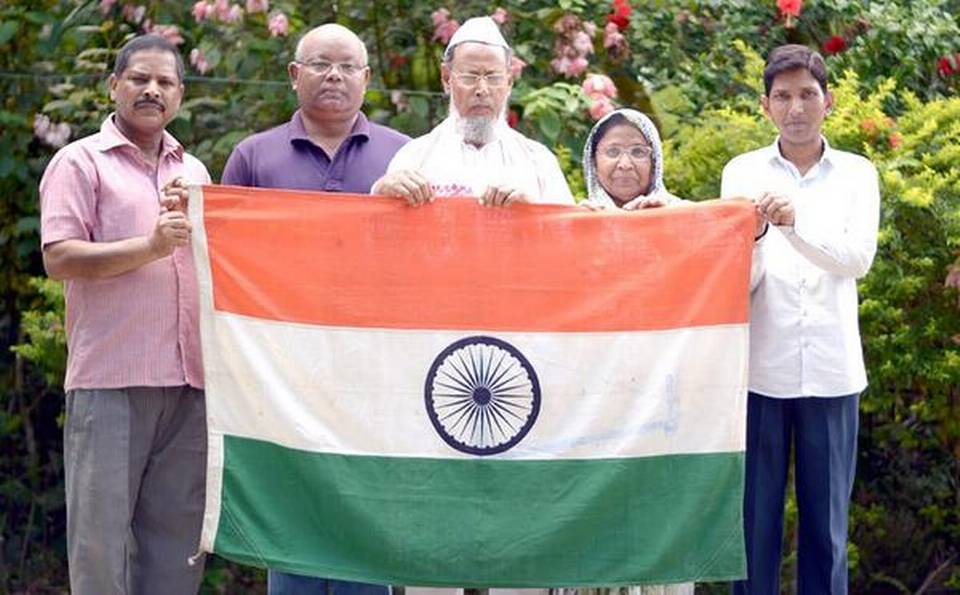
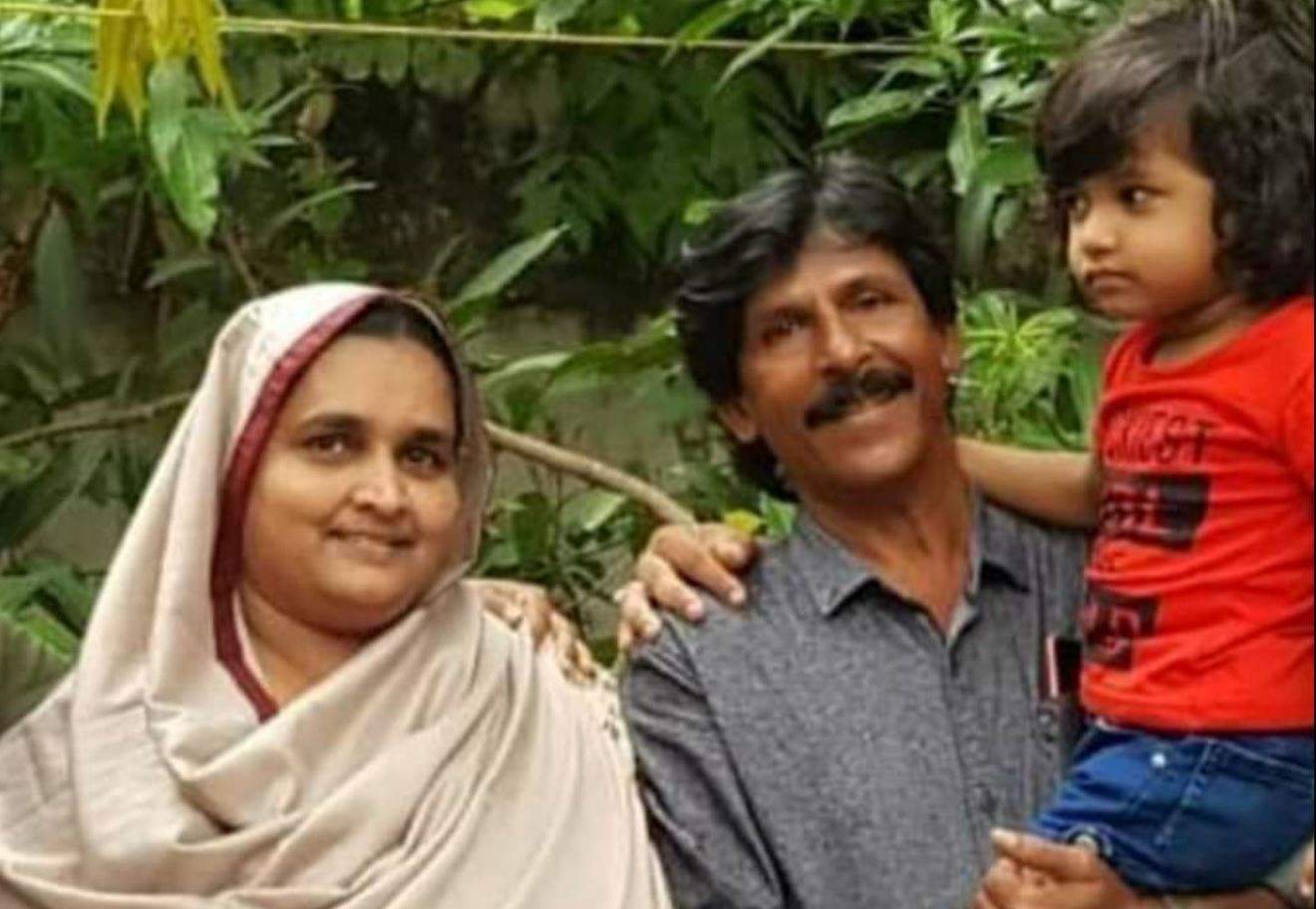
Khadi flag was specially made in 1947 after it was clear that the British were leaving
Nurul Hussain had intended to display his father’s most prized possession — a khadi Tricolour of 1947 vintage — to mark India’s 75th Independence Day.
But friends and neighbours in Sivasagar district’s Demow town, about 380 km east of Guwahati, advised him not to wait that long. He agreed to unfurl the National Flag on Thursday.
“They have a point. I am 78 and the only survivor among Mohammed Hussain’s five sons,” he said.
Mohammed Hussain spent the later part of his life as a cleric. Locals, however, knew him more as Commander Sahib than a maulvi. “He had sown the seeds of revolt against the British in this part. People gradually began to call him Commander Sahib. The British were so angry with his rebellion that they confiscated 47 ‘bighas’ of land he owned,” Mr. Hussain told The Hindu from Demow.
After Commander Sahib died in 1971, his youngest son took over the responsibility of preserving what his father referred to as his treasure box.
More than a flag
“The box contains much more than the spotless khadi flag. There are records pertaining to his joining the freedom movement under Mahatma Gandhi, his joining the Indian National Congress and assorted items associated with many a great leader,” said Mr. Hussain, who was the founder-teacher of the Demow Town High School in 1970.
The flag was specially made in 1947 after it became clear that the British were leaving India. The records, Mr. Hussain said, trace the history of the movement in eastern Assam from 1938 to 1947, including the Quit India movement.
Many among the town’s 30,000 people will turn up at the courtyard of the Hussain house for the unfurling of the flag at 7 a.m.
“Everybody knows Commander Sahib’s house. Many of us will be there for the unfurling to see a 72-year-old National Flag, neatly preserved, being hoisted for the first time since 1947,” said Umesh Chetia, a local resident.
source: http://www.thehindu.com / The Hindu / Home> News> States> Other States / by Rahul Karmakar / Guwahati – August 15th, 2019
Around 50 residents of Kodagu’s Goodugadde village were stranded in their flooded homes on Friday morning.
Around 50 residents of Kodagu’s Goodugadde village were stranded in their flooded homes on Friday morning, hoping that help would come before the river Cauvery would take away their lives.
Luckily for Goodugadde’s residents, help came in the form of eight Good Samaritans, who ferried them to safe places through small iron-made coracles.
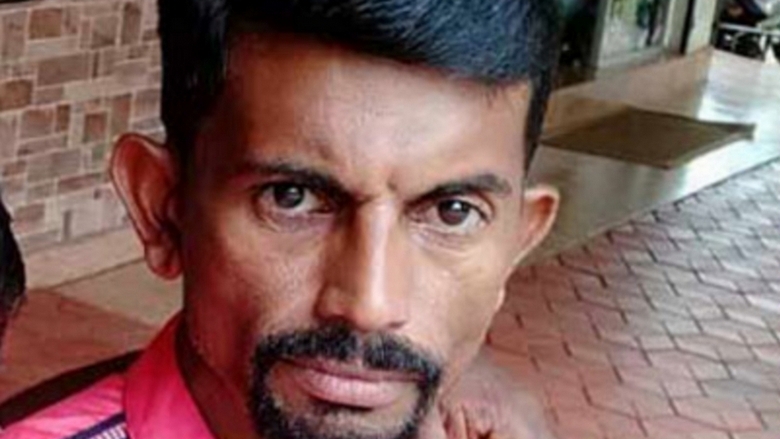
Mustafa, a 32-year-old activist from Kodagu, suspected that people were stranded in Goodugadde and other villages along the banks of the Cauvery river. Mustafa had heard from the local grapevine that many people had not left their homes despite a flood warning.
At around 6 am on Friday, Mustafa and his friends Ranjith Kumar, Afzal, Iliyas, Shafiq and four others from Siddapura, were anxious as the Dubbare Rafting Team was busy with rescue elsewhere.
Mustafa and his friends rushed to the Siddapura Police Station and requested the police to lend them the iron-made coracle lookalikes that the police had kept in the evidence room, which they had seized when they busted an illegal sand mining ring.
“We call it thappe in Kannada. They are circular, iron made vessels sand miners use to transport sand. It’s smaller than a coracle but bigger than the round vessels used to carry sand in construction sites. We wanted those so we could row it and look for stranded people,” Mustafa explains.
When the group reached Goodugadde, they found several senior citizens, children and middle aged people stranded in their flooded homes. Many were sitting on their rooftops, while some of them clung to trees, waiting for help.
“There were about 50 people. We began rescue at 7am and it went on till 11 am. We lost count of the number of trips we made to bring all of them to safety. They were sent to relief camps in Siddapura. By 12 pm, the Dubbare Rafting Team came to help us and we continued rescue operations in Baradi and Kakkattagadu villages,” Ranjith Kumar says.
Mustafa, Ranjith and the team of local rescuers claim that they are experienced swimmers and that they had volunteered during rescue operations in the floods that hit Kodagu in 2018.
“We have lived along the banks of river Cauvery all our lives. We have a very close relationship with the river and swimming is the first thing we learnt as children. We are expert swimmers and if our skill could be put to use to help people in need, then it’s our duty to help them. What is the point of being an expert at something and not helping those who could benefit from it?” Mustafa says.
Mustafa and his motley crew continue their rescue operations even now. “We will help as much as we can. Our people have seen too much damage due to rains and floods. Currently, we are going back and forth Goodugadde and recovering their belongings,” Mustafa adds.
source: http://www.thenewsminute.com / The News Minute / Home> Karnataka Floods / by Theja Ram / August 10th, 2019
He couldn’t come out of the water as there was a strong undercurrent.
Flood in the Indian state of Kerala has claimed life of a Dubai expat. Razak Akkiparambil, a support staff of a school in Dubai, died after rescuing two children, including his son, who were caught in flood water.
The incident happened on Tuesday afternoon, Razak’s brother-in-law Shareef, said over the phone from Malappuram district, which is among the worst-hit regions.
“Razak had come to Kerala for his daughter’s marriage, which was held on August 4. The family had come to my home. The incident happened around 2.30 pm (IST). He saw these kids walk down to the water-filled paddy fields. It’s now filled up to the height of two people and soon these kids were in deep. As soon as Razak saw the kids were in danger, he rushed and jumped into the water to save them. He managed to hand over two kids safely to another person. But he couldn’t come out as there was a strong undercurrent. He is just 42 years but couldn’t cope with the sudden rush of water and collapsed. And as everyone was focusing on kids, no one noticed Razak drowning. He was pulled out of the water only after 15 minutes. We rushed him to a hospital but the doctor said he passed away before reaching there,” said Shareef, who works at Our Own English High School.
“We both work in the same school. Razak is there for some 10 years now. We had travelled together to Kerala for the marriage.”
Razak, a father of three, is survived by his family. They are devastated with the news of his untimely death.
“They were already affected by flood last year. They had somehow managed to renovate their house for the wedding. But again were hit by floods from last week. Luckily the wedding went well. It was his big dream. Now he is no more. The cremation will be tomorrow.”
ashwani@kjhaleejtimes.com
source: http://www.khaleejtimes.com / Khaleej Times / Home> UAE> Dubai / by Ashwani Kumar, Dubai / August 14th, 2019
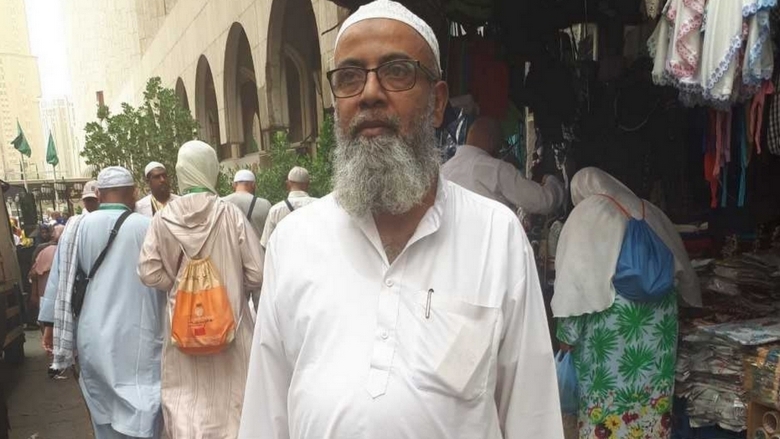
Taqiullah Khan leads at least five Umrah groups to the holy city every year (Photograph: Sahim Salim / Khaleej Times )
62-year-old Taqiullah Khan has also performed Umrah an epic 126 times.
Indian national Taqiullah Khan performed Haj for the first time in 1994. The Bengaluru resident, now 62, has undertaken the journey 25 times in as many years ever since.
Khan is now back in Makkah to perform his 26th Haj.
Khan has also performed the lesser pilgrimage, Umrah, an epic 126 times!
For most Muslims, the holy journey is a once-in-a-lifetime experience due to the costs, difficulties and sacrifices involved. For Khan, it’s an annual affair, thanks to his tours and travels company.
“I have been coming here so many times that I know Makkah and Madina better than Bengaluru,” he quipped.
The first Haj
Interestingly, Khan’s mother had “predicted” that Haj would become an annual journey for him.
A year before he went for his first Haj, he had sent his parents for the journey in 1993.
“I requested that they pray for me to be able to visit the blessed land. When my mother came back, she told she had made this particular dua (supplication) so much that she believed I would perform Haj every year.”
Just like his mother predicted, Khan’s journey began in 1994. “I went as a Haji (pilgrim) like any other Muslim back then. I went back again the next year with my wife.”
He founded Tawakkul Tours and Travels in 1996 and applied for the Haj quota. He has been coming as a Haj guide ever since.
The father of three doesn’t necessarily have to come to the holy city along with the groups that his firm is responsible for. “For me, this is an honour from Allah and I wouldn’t miss it for the world. Most people consider themselves lucky if they are able to undertake the journey once in their lifetime. Allah has blessed me to perform Haj every year.”
Khan also leads at least five Umrah groups to the holy city every year.
He holds something called the Munazzam licence, which is granted to Haj organisers. “So you see, Allah has blessed me so much that this is actually my bread and butter, too.”
The Indian’s wife and two of their three children are Hajis as well.
The ‘missed’ Haj
Khan has just missed the Haj of 1999 since 1994. He had suffered a motorbike accident and his doctor asked him to avoid undertaking the arduous journey.
“But I have still performed Haj 25 times in 25 Gregorian years because I was lucky enough to get two pilgrimages in 1996.”
That year, Dhul Hijjah – the Islamic calendar month in which the journey is undertaken – came twice in 1996: January and December.
Preparations
Khan’s company gets a quota of 100 pilgrims every year. “This time, our quota increased by seven, Alhamdulillah.”
Khan said he starts preparing for the Haj season as soon the fasting month of Ramadan ends. “That’s when the government of India announces the Haj quotas.”
Khan’s biggest strength is his family. “They have been very supportive of my endeavours. Not once have they asked me to depute someone else to lead the groups since they, too, believe that this is an honour.”
Safety guaranteed
Khan is most impressed with the way the annual pilgrimage is organised.
“In the 25 years I have been leading Haj groups, not once have I heard a Haja (female pilgrim) complain about harassment. Not once has anyone complained about robberies or any serious crimes.
“It is amazing how the government manages to organise all this so efficiently year after year despite receiving in excess of two million pilgrims.”
Most memorable Haj
Though Khan maintained that each of his 25 pilgrimages was special, his first Haj in 1994 is the “most memorable”. “Haj season fell in the month of May. It was very hot then. But it remains the most special Haj for me. I remember every single aspect of that maiden trip. I enjoyed it.”
During the Haj of 1997, when a massive fire broke out in the tent city of Mina, Khan and his group of 60 Hajis were just 500 metres away from the tent in which a cylinder exploded. The tragedy had claimed over 200 lives.
“The police evacuated us and we managed to escape. We came back to the holy city. Thanks to the government’s efficiency, we were able to go back to Mina the very next day. That’s another Haj memory that will always remain with me.”
When asked how long he plans to continue the annual journey, pat comes the reply: “As long as my health permits, I don’t plan to give this up.”
1. Photo ban lifted: According to Takiullah Khan, photography was banned in the holy sanctuary till about a decade ago.
2. End of ‘rocket stretchers’: In the 90s, elderly or disabled pilgrims would be taken for circumambulation on a stretcher by four men, who would “speed through the crowds”. “It was a very dangerous practice and people would just move out of the way as they were afraid of getting hurt. Thank God, we have wheelchairs now,” said Khan.
3. Drinking Zamzam from the source: Till about five years ago, pilgrims could descend to the Zamzam well and drink the holy water from its source.
4. Just two ‘mataf’ areas: Masjid Al Haram has four Mataf (areas to circumambulate the Holy Kaabah) floors today. It used to be just two when Khan first went for Haj.
5. Ascending Mount Safa: Pilgrims could previously ascend the Mount Safa and look at the Holy Kaabah while praying. Today, it stands behind a glass enclosure.
source: http://www.khaleejtimes.com / Khaleej Times / Home> Region> Saudi Arabia / by Sahim Salim (reporting from Makkah) / August 08th, 2019
When a reporter pointed at his fast-emptying shelves and asked but hasn’t everything gone, Noushad is seen saying “God will give more.”
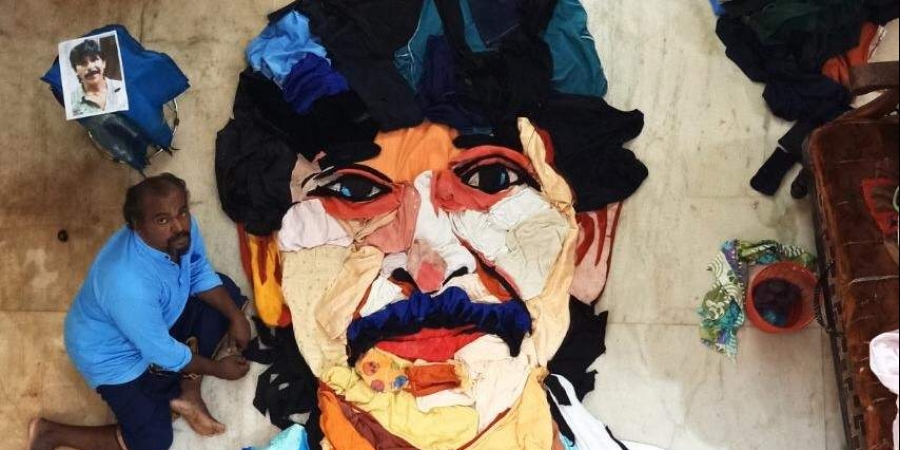
An artist’s tribute to PM Noushad has set an example for many (Photo | Facebook)
“True generosity is an offering; given freely and out of pure love. No strings attached. No expectations. Time and love are the most valuable possession you can share.”
At a time when several flood relief collection units in Kerala are struggling to find enough materials, PM Noushad, an ordinary street vendor in Ernakulam’s famous Broadway market, has set an example by donating his entire stock to those in relief camps in Nilambur and Wayanad.
A resident of Malippuram near Vypeen in Kochi, Noushad had brought new clothes to sell for the festival sale but contributed them to relief volunteers instead. He says there is no better way of celebrating the Eid al-Adha this year than this.
A video of Noushad impulsively filling several sacks with clothes went viral after it was posted on Facebook by actor Rajesh Sharma. Shot at Noushad’s warehouse, Sharma explains that his team was taken there by Noushad after the latter had met them on the road on Saturday evening. Though he had locked the place by then, he reopened the room for Sharma’s men and offered them everything.
“We told him we can’t accept anything that is old. In response he told us we can take all the new clothes from here,” Sharma said in the video.
The video shows Noushad filling more than five sacks with children’s dress and unopened packs of pants and women’s wear.
“We cannot take any of these along when we leave this place. God will repay me for whatever I give today. Monday is Eid al-Adha and this is how I am planning to celebrate it this year. This is a small thing that I can do to those people who are facing nature’s fury,” Noushad said.
When a reporter pointed at his fast-emptying shelves and asked but hasn’t everything gone, Noushad is seen saying “God will give more.”
Noushad with his family
Noushad’s act was appreciated by many people and the video was widely shared on various social media platforms. Many celebrities also shared the video and said Noushad has set an example by himself to the people by his rare act of humanity.
“They say it is the invisible hands of big people that hold the sky from falling. Dear Noushad, I believe your hand is one among those…” Malayalam actor Siddique wrote on social media.
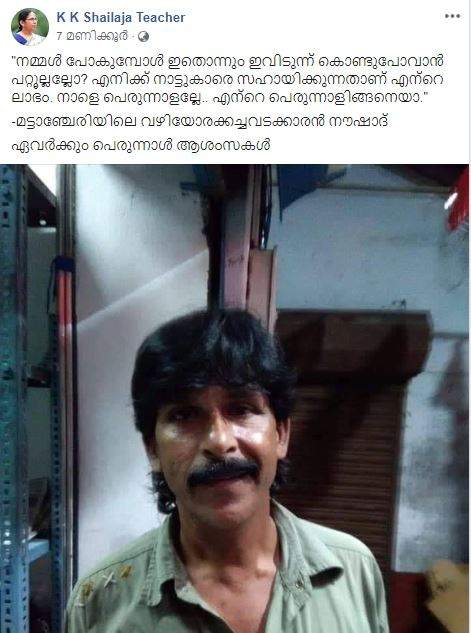
The state Health Minister KK Shailaja posted Noushad’s photo along with his words on the importance of joining the relief activities on her official Facebook page to wish all Keralites a happy Bakrid.
During the deluge of 2018, Vishnu, a youth from Madhya Pradesh who had come to Kerala to sell woollen blankets, had made news by donating his entire stock to a relief camp in Palakkad.
source: http://www.newindianexpress.com / The New Indian Express / Home> States> Kerala / by Online Desk / August 12th, 2019
Former MP Munquad Ali is the party’s state unit chief. Munqad Ali is one of the few party leaders who have remained with the BSP through its thick and thin.
MP Munquad Ali is the party’s state unit chief.
Shyam Singh Yadav, MP Jaunpur BSP (Bahujan Samaj Party), has replaced Danish Ali as the leader of the party in Lok Sabha. While MP Ritesh Pandey, MP from Ambedkar Nagar, has been appointed Deputy leader of the party in Lok Sabha, former MP Munquad Ali is the party’s state unit chief.
Munqad Ali is one of the few party leaders who have remained with the BSP through its thick and thin.
In a statement, BSP chief Mayawati said Ali, a dedicated party worker, began his political career with the party.
The Bahujan Samaj Party (BSP) is putting efforts to prevent erosion of its Muslim base following its support to the scrapping of Article 370.
The outgoing BSP state chief RS Kushwaha has been made general secretary at the national level.
The changes, as per the sources, have been made to implement the ‘Sarv Samaj’ concept of the party. According to a press note, BSP leader Girish Chandra Jatav will remain as Chief Whip of the party in the Lok Sabha.
source: http://www.indiatoday.in / India Today / Home> News> India / by India Today Web Desk, Lucknow / August 07th, 2019
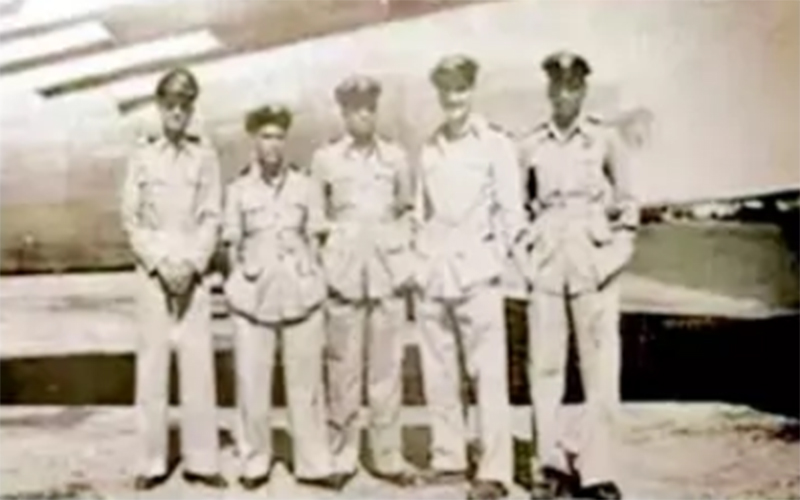
India’s first flight carrying Haj pilgrims took off from Hyderabad On 22nd October 1946. Earlier, pilgrims used to travel by a sea route for performing Haj.
According to the report published in Times of India , the first flight carried 18 Haj pilgrims. Two Deccan Airways Dakota aircrafts took off from the old airport of Hyderabad located at Begumpet in 1946 amid slogans “Allah-u-Akbar”. Khan Bahadur Nawab Ahmed Nawaz Jung was also traveling on that flight.
It may be noted that at that time, there was no flight from other Indian cities to Jeddah.
The name of the pilot who took off the first flight was Captain Cox and his junior was Munshi. The technical support was provided by Nasir, Radio Officer and Lord, Flight Engineer.
It may be mentioned that Deccan Airways was the leading airlines at that time. In 1948, the flights of Deccan Airways were discontinued due to uncertain political situation in erstwhile Hyderabad State. It was again started in 1949 after the Police Action.
source: http://www.siasat.com / The Siasat Daily / Home> News> Hyderabad / posted by Sameer / August 08th, 2019
Karnataka’s BJP govt has cancelled Tipu Jayanti, celebrating a ruler once hailed for his bravery and genius, but seen by the right wing as a bigot. We must reexamine Tipu Sultan.
The BJP government in Karnataka has done away with Tipu Sultan celebrations. But, as it is vital to remember Tipu Sultan, in this first-part series, I lead you into the life of Tipu Sultan, the ruler of Mysore.
The recent efforts of the Hindu right to project him as a Muslim bigot show that their political stakes in him have changed.
Any opinion on the rule of Tipu Sultan in Mysore will in fact be incomplete without mention of the political situation prevailing in and around Mysore towards the end of the 18th century. Mysore, which had emerged from the ruins of the Vijayanagar empire, was moulded into a small but dynamic Hindu state primarily during the rule of Chikka Devaraja Wodeyar in the early decades of the 18th century.
The Wodiyar kings, who had been ruling Mysore for over 300 years, were only nominal rulers by then — the actual power was wielded by their prime ministers or ‘dalavai’.
Tipu’s father, Haider Ali, began his career in Mysore around 1749, as a soldier under one of these powerful ministers.
He used his tact and bravery to stave off Maratha raids into Mysore, fought against the British and expanded Mysore’s territory down south to the coast of wealthy Calicut. He thus eased himself into the title of the ‘sarvadhikari’ or ‘regent of the kingdom’ in 1760.
After Haider’s death in 1782, Tipu took over his father’s position, keeping the Wodeyar king as a proxy but publicly continuing to put on a show of respect. Tipu’s appropriation of this position would not have been possible without the assistance of some of Haider’s closest friends and advisors as well as the acquiescence of the local populace, who had by then come to see a stronger and more prosperous Mysore under Haider and the young Tipu.
From Madras, the British were cautiously observing the rise of Mysore — and resented Haider’s and Tipu’s push into Malabar.
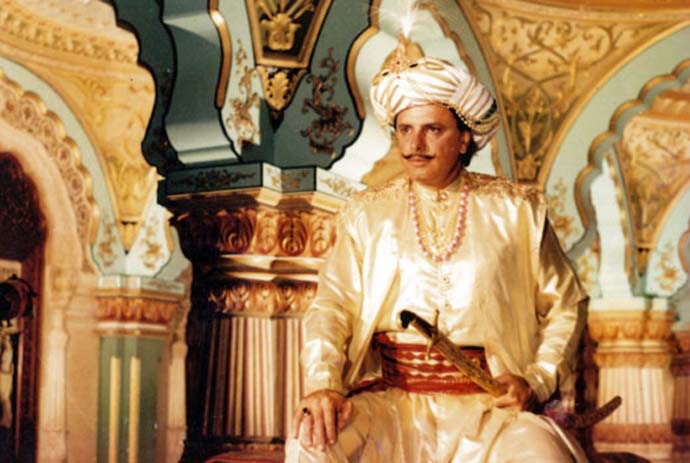
Tipu Sultan took over Mysore in 1782: He remains its most iconic ruler. (Still from The Sword of Tipu Sultan: Via Author)
A 17-year-old Tipu had given the British a fright by galloping with his army into the East India Company’s garden house near the beach in Madras.
He rattled them so much that the governor there fled offshore in a small boat. A series of four Anglo-Mysore Wars started in 1767. These propelled the hitherto unknown Kingdom of Mysore into the powder rooms of Europe and America.
The first war saw Mysore dictating terms to England at the gates of Madras; the second war was Tipu’s brightest moment. At the battle of Pollilur (1780), the sun-and-tiger-stripes banner of Tipu’s Mysore oversaw the worst disaster that ever befell an English army in India — out of 3,000 men in the British army, only about 400 survived.
With these two victories, the mood in England began to change — and a vicious propaganda and diplomatic campaign against Mysore began.
By 1785, one in seven Englishmen in India was imprisoned by Tipu. By this time, the British had won in Plassey and Buxar; the whole of India except the Punjab and the Marathas had capitulated to them. Tipu’s Mysore stood as a bulwark against the British. What rankled the British even more was that here was a native ruler — or ‘despot’, as they branded all of them — who was different from the others.
He did not while away his time in pleasure orgies, nor leave the management of state to some palace coterie; and not once did he ask the British for help against his neighbours. He created an army which, in the words of his nemesis, Arthur Wellesley (later Duke of Wellington), was “the best fighting force in the whole of India”.
He took advantage of the enmities being played out in Europe, recruited the French as willing allies and drilled his army in modern European manoeuvres.
Giving It Back: Unlike several other princely states, Tipu Sultan took the British head-on in ferocious battles. (Picture: India Today)
Mysore was the first state to demonstrate the efficacy of rockets in war by modifying what was until then a mere firecracker into something that could carry a sword or wooden blade with it. Tipu even sent back French weapons with a letter stating they were substandard compared to the ones in his arsenal.
Working almost 18 hours a day, he kept meticulous records of revenue and personnel across his kingdom. He created a set of revenue regulations that rationalised land taxes — and even offered subsidies to farmers if they farmed more land. Landowners and temple trusts with excess landholding were asked to hand it over to landless or tenant farmers. He created a navy that sent ships with his diplomats to meet the Ottoman sultan in Constantinople and the French emperor in Paris. He built a powerful navy, consisting of 20 battleships of 72 cannons and 20 frigates of 62 cannons.
A separate board of admiralty was established in September 1786 and massive dockyards at Jamalabad, Wajidabad and Majidabad were constructed on the west coast to build 40 warships and a number of transport ships to strengthen the naval power. The 200-odd forts under Tipu’s reign were mostly named on Hindu script ions.
An elite group of Brahmin civil servants was nurtured during his early rule to make sure that revenue was properly collected. His forts were among the strongest in south India and his currency so beautifully minted that the Mughal emperor apparently felt slighted at receiving coins more beautiful than his own — he even minted coins with Hindu deities on them.
Deep in the midst of war, he wrote of receiving silkworms to create the silk factories of Mysore.
Sugar and paper factories were established for the first time under him. Sword blades and gunpowder were manufactured locally. He was also liberal with gifts to Hindu religious establishments in Mysore and Malabar after subduing it.
A Visionary Leader: Tipu Sultan was an extraordinary mix of courage, skill and heart. (Still from The Sword of Tipu Sultan: Via Author)
The third Anglo-Mysore war in 1792, with Cornwallis at the helm of the British army, did not go well for Tipu.
He was hard-pressed by the British-Maratha-Nizam allied powers to surrender half his kingdom, submit to a war indemnity of ₹3.3 crore — and deliver two of his sons as hostages to the British. Thanks to his financial prudence, he managed to pay the British their ransom and have his sons released a year earlier than the stipulated three years.
This period between 1792 and the fourth Mysore war in 1799 was one of great tribulation for Mysore — rebellions raged and finances were tight on account of the indemnity paid. However, it is to Tipu’s credit that not once during his rule, in the midst of almost incessant war, did his subjects suffer from famine or pestilence.
At the same time in British Bengal, millions of Indians perished in a famine…
(To be continued).
source: http://www.dailyo.in / DailyO / Home> Open To Opinion> Politics / by Sanjay Khan / August 03rd, 2019
Booklet with profiles of the women also launched on the occasion
The travelling exhibition of path-breaking Muslim women achievers of the 20th Century rolled into the city on Saturday.
Called ‘Pathbreakers’, the invitation for the event had the enigmatic photograph of Tyeba Khedive Jung who was born in 1873 in Hyderabad. Moving away from Hyderabad, she became the first woman from the city who received university education graduating from University of Madras in 1894. Tyeba Khedive Jung wrote Anwari Begum in 1905 and she even presided over the annual conference of Brahmo Samaj.
“I stumbled upon the book Anwari Begum in my mother’s library. Then I realised I have to do something to tell the story about Muslim women who came onto their own at a time when the stereotype was that of a conservative society with many problems,” said Syeda Hameed of Muslim Women’s Forum, the brain behind the exhibition. A small booklet with the profiles of the women was also launched on the occasion.
Defying stereotypes
The exhibition had a captive audience as students from the Telangana Minority Residential School students as well as students from other government schools trooped in to listen to the stories of women who defied stereotypes. “We want the children to be inspired by these women. It will give them confidence that even they can achieve anything they want. We are giving them books with stories of these women to inspire them,” said A.K. Khan advisor on Minorities Welfare, Telangana Government.
One of the inspiring stories is that of Zehra Ali Yavar Jung who studied at Mahbubia Girls School and later started the Society for Clean Cities much before Swacch Bharat Abhiyaan.
“Hyderabad is a city of Hayat Bakshi Begum. It is a city of Mah Laqa Bai Chanda who donated Rs. 1 crore to the Nizam Sikander Jah for educating women. It is great to have this exhibition of these inspiring women in the city,” said Oudesh Rani Bawa, who spoke about other women from the city who worked for women’s emancipation.
The exhibition at Salar Jung Museum will continue till August 7 between 10 a.m. and 4.30 p.m.
source: http://www.thehindu.com / The Hindu / Home> News> Cities> Hyderabad / by Special Correspondent / Hyderabad – August 04th, 2019
The court said the Nawab of Rampur was a ruler only in name and cannot be immune to Muslim personal laws.
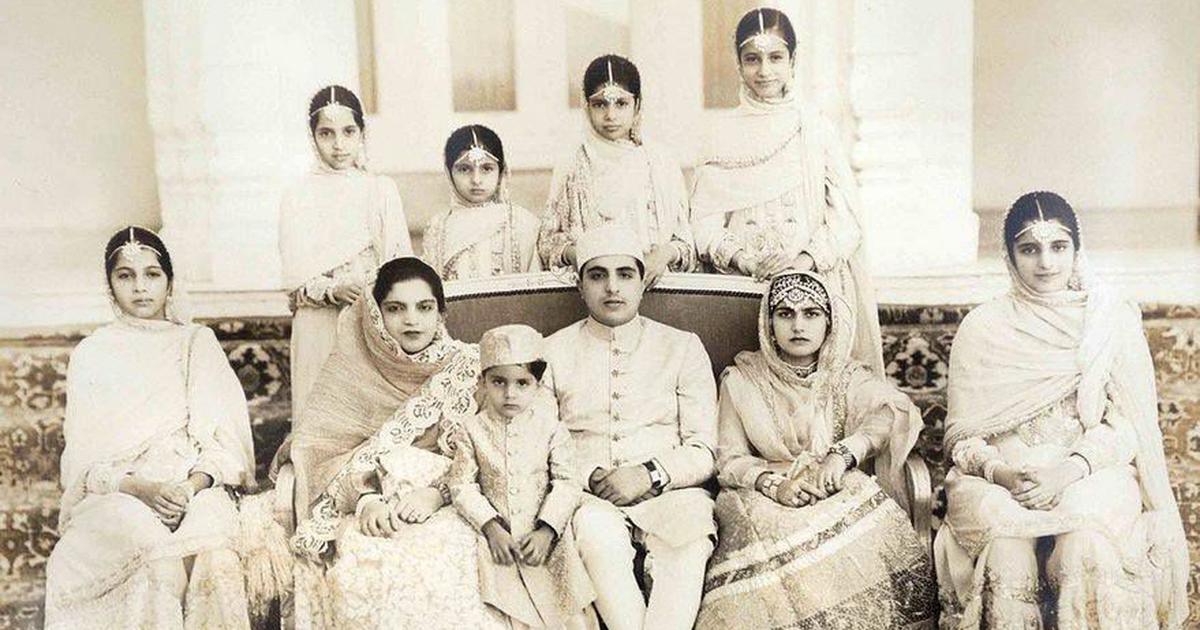
Via Royals of the Rampur Dynasty Facebook page.
Rampur state came into existence on October 7, 1774. Ruled by the Nawabs of Rampur, it stayed under the British protection till Independence and became the first princely state to accede to India in 1949.
The Nawabs were known for many things, including their patronage of music and arts, especially the Hindustani classical music form of khyal. One member of the family, Ahmad Ali Khan, bred the Rampur Greyhound, a mix of the Afghan Tazi and the English Greyhound, characterised by its speed and endurance.
There’s another thing for which the Rampur family is noted: it was involved in one of India’s longest-running civil suits in the country, which the Supreme Court finally brought to a close this week after 47 years.
The case related to the legacy of Raza Ali Khan, the Nawab who decided to accede to the Indian union in 1949. In return, the Indian government, through the instrument of accession, bestowed two key rights to the Nawab. He was entitled to the full ownership, use and enjoyment of all private properties belonging to him on the date of the accession. Second, the government guaranteed succession to the gaddi or rulership of the state based on the customary law, which gave exclusive property rights to the eldest son. Former royal families that had acceded to India also received a payment from the government known as the privy purse.
When Raza Ali Khan died in 1966, he had three wives, three sons and six daughters. His eldest son Murtaza Ali Khan succeeded him as head of the state, as per custom. The government recognised him as the sole inheritor of all his father’s private properties and issued a certificate to this effect.
But his brother challenged this in the civil court. Thus began a royal property dispute in which the courts were asked to decide if inheritance should be based on Muslim personal law or the unique gaddi system the royal family followed before joining the Indian Union.
After 47 years, the Supreme Court on July 31 decided in favour of the Muslim personal law or the Shariat. This means the women of the family are also entitled to a share of the inheritance. One of them is Begum Noor Bano, who was elected to the Lok Sabha member on a Congress ticket in 1999.
The case
After Murtaza Ali Khan took charge as Nawab in April 1966 his brother Zulfiquar Ali Khan challenged the certificate of inheritance issued by the government. He was joined in the litigation by three of his sisters. In December 1969, the Delhi High Court quashed the certificate. Murtaza Ali Khan challenged this decision in the Supreme Court, which refused to intervene.
In the meantime, using the Delhi High Court judgement, Talat Fatima Hasan, the daughter of one of Raza Ali Khan’s daughters, moved a petition in a civil court in Rampur in 1970 asking for the properties to be divided. The court issued an interim order that the assets should neither be transferred nor disposed.
But the family squabble ran into an unexpected event: in December 1971, Prime Minister Indira Gandhi amended the Constitution and abolished privy purses. Murtaza Ali Khan, who was receiving Rs 7 lakh annually as a privy purse from the Indian government as the Nawab of Rampur, lost his income, with his wealth stuck in litigation.
For over 20 years, the suit to partition the properties stayed pending before the civil court. Then in 1995, the Allahabad High Court withdrew the suit from the civil court and placed it before itself. By then, Murtaza Ali Khan had died.
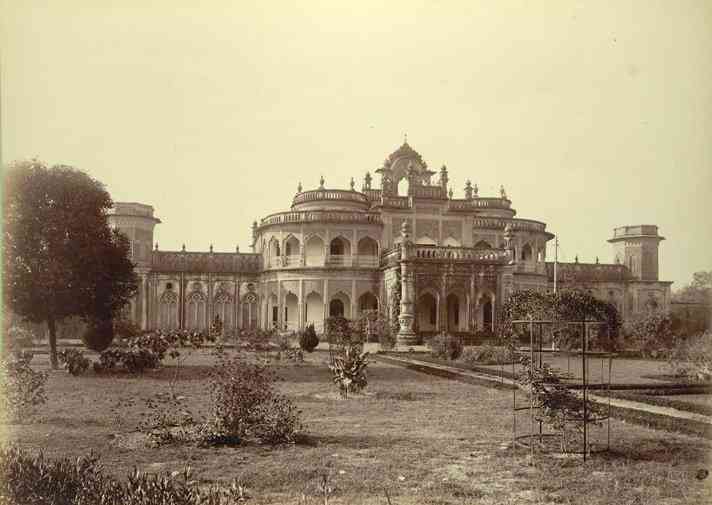
A royal building in Rampur. Credit: Royals of the Rampur Dynasty
In the High Court, his descendants argued that two palaces – Khas Bagh Palace and the Sahbad Castle – had been recognised by the government of India in 1954 as the official residence of the ruler of Rampur. These palaces, along with their furniture, fixtures, equipment, pictures, motor garage, water works plant, dhobi-ghat, land and gardens were adjuncts of the ruler and could not be the subject matter of a suit, the argument went.
The High Court accepted this reasoning and dismissed the suits for partition in 1997. Talat Fatima Hasan then moved the Supreme Court.
Shariat or Gaddi?
The Nawabs are Shia Muslims. The central dispute in the civil suits was whether as Shia Muslims, the Muslim Personal Law (Shariat) Application Act would apply to the inheritance or the gaddi system that the family practiced before Independence. Murtaza Ali Khan wanted the gaddi system whereas the Talat Fatima Hasan pressed for the Muslim personal law.
The instrument of accession made a distinction between the Rampur state’s public properties, which became vested in the government of India, and the Nawab’s private properties, which formed his inheritance.
Lawyers for Murtaza Ali Khan and his legal heirs argued that private properties of the ruler were not entirely private – they were attached to the gaddi or the rulership. And so they stayed with the person declared the Nawab.
But the Supreme Court refused to accept this argument. In the judgement, the bench said following their accession to the Indian union in 1949 and with the Constitution of India being enforced in 1950, the Nawabs were merely titular rulers who enjoyed certain privileges and privy purses. They neither had territory nor subjects. With sovereignty lost, the gaddi system had ceased to exist. The court said:
“When they were actual sovereigns, their entire State was attached to the Gaddi and not any particular property. There are no specific properties which can be attached to the Gaddi. It has to be the entire ‘State’ or nothing.
Since, we have held that they were rulers only as a matter of courtesy, to protect their erstwhile titles, the properties which were declared to be their personal properties had to be treated as their personal properties and could not be treated as properties attached to the Gaddi.”
Therefore, the court ruled that properties of the Nawab have to be divided according to the Shariat, which means that not only will male members of the family be entitled to a share, the women will also inherit a part of the estate.
Among them is Begum Noor Bano, the wife of Zulfiquar Ali Khan, who set the ball rolling in the courts when he challenged his brother, the Nawab’s oldest son, Murtaza Ali Khan, 47 years ago. And also Talat Fatima Hasan, the granddaughter of Raza Ali Khan, who took the battle further.
source: http://www.scroll.in / Scroll.in / Home> Matter of the Law / by Sruthisagar Yamunan / August 02nd, 2019