Category Archives: Community Involvement / Social Issues

Message from the martyrs of Jallianwala Bagh

DELHI / PUNJAB :

JalianwalaBaghMPOs13apr2019

They beckon all of us to give human freedom respect, human beings dignity, and human rights recognition

One hundred years ago, on April 12, a letter dropped into the British Raj’s postal system. The writer of the letter was a world-famous poet. That is not the only reason for the letter having been unusual. It was, by the political sights of the government of the times, seditionist. But luminously so.

The Raj’s censors must have been greatly tempted to see its contents; perhaps they did, spurred by the ruling ‘order’ of the day, the Rowlatt Act. Curbing, in the name of war-time discipline, every conceivable civil liberty, the Act enabled stricter control of the press, arrests without warrant, indefinite detention without trial. It empowered the police to search a place and arrest any person they disapproved of without warrant. Naturally, it outraged India, and both the writer and recipient of the letter.

Written on April 12, 1919, by Rabindranath Tagore to Mohandas K. Gandhi, it was about what its writer called “the great gift of freedom”. He said: “…India’s opportunity for winning it will come to her when she can prove that she is morally superior to the people who rule her by their right of conquest.”

‘Faith or the life in death’

Tagore knew, doubtless, that the phrase “morally superior” would strike a chord in Gandhi. As would the sentence that followed: “She must willingly accept her penance of suffering, the suffering which is the crown of the great. Armed with her utter faith in goodness, she must stand unabashed before the arrogance that scoffs at the power of spirit.” Tagore ended the letter, as a poet would, with a verse: “Give me the faith of the life in death, of the victory in defeat, of the power hidden in the frailness of beauty, of the dignity of pain that accepts hurt but disdains to return it.” Prose is ever the ‘doer’, poetry the ‘artist’. And so this letter and the line just cited cannot hope to compete with Tagore’s much-quoted poem ‘Where the mind is without fear…’. But taken for itself, this sentence has to rank among the greatest expressions in prose of truth’s protest against power. Certain words, poetic word-images, in that line are scorching: death, defeat, dignity, pain, hurt.

India had, only a few days earlier, seen all those five word-images at play in Delhi. As the scholar-lawyer Anil Nauriya has recently reminded us, on March 30, 1919, the Raj’s police fired at a gathering in Delhi protesting the Rowlatt Act on a call by Mahatma Gandhi for a nation-wide hartal. Nauriya lists among them Hindus, Sikhs, Muslims.

A sample: Abdul Ghani, b. 1894. Killed in bayonet charge by a British Army unit near the Town Hall, Delhi. Atam Prakash: Received bullet wound in firing by the police and died the same day. Chandra Bhan, b. 1889. Received bullet wound in firing by an Army unit and died the same day. Chet Ram: Received bullet wound in firing by the police and died the same day. Gopi Nath, b. 1889: Received bullet wound in firing by an Army unit and died the same day. Hashmatullah Khan: b. 1890: Received bullet wound in firing by an Army unit and died the same day. Mam Raj: Received bullet wound in firing by the police and died the same day. Radha Saran, b. 1897: Received bullet wound in firing by an Army unit and died the same day. Radhey Shyam, b. 1891: Received bullet wound in firing by an Army unit and died the same day. Ram Lal, b. 1886: Received bullet wound in firing by an Army unit and died the same day. Ram Saroop: Received bullet wound in firing by the police and died the same day. Ram Singh: b. 1891: Received bullet wound in firing by an Army unit and died the same day. Chander Mal: Received bullet wound in firing by the police and died the same day. Seva Ram: Received bullet wound in firing by the police and died the same day. Swattin, son of Abdul Karim: Received bullet wound in firing by the police and died the same day.

The Delhi firing was, as it were, a macabre rehearsal for what was to follow. And it was doubtless on Tagore’s mind when he wrote the letter to Gandhi. It was still in the post’s pipelines when, the next day, on April 13, 1919, his poetic vision was to find prescient corroboration. Sikhs, Hindus and Muslims gathered in Jallianwala Bagh, Amritsar, Punjab not to oppose Rowlatt but for a festival that marks the Sikh new year, Baisakhi. Its intent was totally un-political. But who is to say how arrogance will work?

On April 13, 1919

What followed is now part of the world’s annals of state-led crime. Troops under the command of Brigadier General (temporary rank) Reginald Dyer entered the garden, blocking the main entrance after them, took up position on a raised bank, and on Dyer’s orders fired on the crowd for some ten minutes, minutes that were an eternity. They stopped only when the ammunition supply was almost exhausted. Official sources themselves gave a figure of 379 identified dead, with approximately 1,100 wounded. In those ten minutes Amritsar became India. It embodied a nation’s death-defying dignity in pain, hurt.

Tagore was, at the time of the mowing down ‘Sir’ Rabindranath. And he had been a Nobel Laureate for Literature for six years. On May 30, 1919, Tagore picked up his pen, this time, not that of a Nobel Laureate but of a Knight of the British Empire, to write a letter to the Viceroy, Lord Chelmsford. “News of the sufferings,” he wrote, had “trickled through the gagged silence, reaching every corner of India”. He then said: “The time has come when badges of honour make our shame glaring in their incongruous context of humiliation… I for my part wish to stand, shorn of all special distinctions, by the side of my countrymen who, for their so-called insignificance, are liable to suffer a degradation not fit for human beings.” And he asked of the Viceroy, “relieve me of the title of knighthood”.

Solidarity with suffering, especially when it is spontaneous, takes many forms. One is sharing by renunciation. Tagore’s self-divestment of the title, then perhaps the most coveted, of ‘Sir’ was an act of spontaneous solidarity with the suffering of Delhi, of Amritsar. And it was a chastisement, in Tagore’s words, of the “arrogance that scoffs at the power of spirit”.

The martyrs of Jallianwala beckon this generation, all of us, including India and Indians, Pakistan and Pakistanis, Bangladesh and Bangladeshis, Myanmar and Myanmarese, not just Britain, to give human freedom respect, human beings dignity, human rights recognition. Looking around them at those slain — Hindu with Dalit among them, Sikh and Muslim — the martyrs of Jallianwala would want correction and atonement from those on the Indian subcontinent and beyond its boundaries, who today foment division, discord, disunity.

Enduring arrogance

They also beckon us to see that “arrogance of power” is not a colonial or imperial patent, nor “the power of spirit” an attribute of liberation struggles alone. Arrogance can occur under post-colonial, post-imperial, ‘independent’ skies and can — must — summon the power of spirit.

‘Rowlatt’ is a temperament that seeks domination, control, hegemony. It has the characteristics of the bully — strength and insecurity. Asia, Africa and Latin America have known that temperament in both the hubris of the external ruler, the hauteur of the one within. And they have seen peoples’ power dismantling both. Bowing to public opinion in India and in the U.K., the Raj repealed the Rowlatt Act, the Press Act, and 22 other laws in March 1922 – a victory of the people. The Rowlatt temperament is not a feature of governments alone. It works in society as well, keeping sections of it in a state of chronic enfeeblement. The Rowlatt temperament is also to be seen in corporate India seeking monopolist domination over its natural resources and public commons.

This centenary of India’s rebuffing of the Rowlatt Act’s scowl through what Tagore called “the power of spirit” is one to be cherished, celebrated and be inspired by.

Gopalkrishna Gandhi is a former administrator, diplomat and governor

source: http://www.thehindu.com / The Hindu / Home> Opinion> Lead / by Gopalkrishna Gandhi / April 13th, 2019
The great women behind the Mughal empire

INDIA :

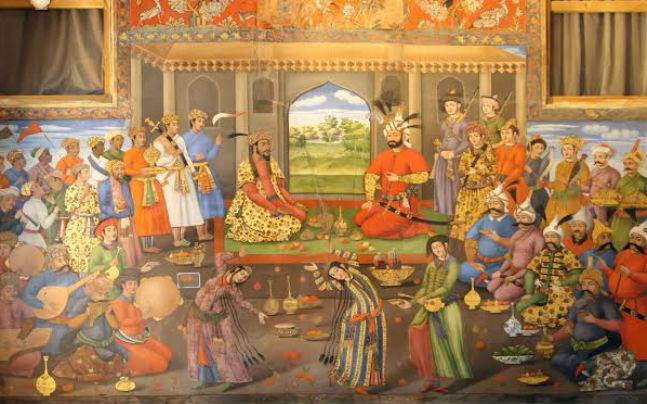
Most people know of this hierarchy but how much do we know of the women behind this great dynasty?

Mughal empire
Mughal empire

The Mughal Empire (1526-1707) was established by Babur defeating Ibrahim Lodi in the First Battle of Panipat. His reign went on for four years (1526-1530). His successor was his son, Humayun. Then arrived Akbar, followed by his son Jahangir, followed by Shah Jahan, and the, the last great Mughal ruler– Aurangzeb.

Most people know of this hierarchy but how much do we know of the women behind this great dynasty?

Here’s a list to educate you about the same!


source: http://www.indiatoday.in / India Today / Home> News> Education Today> GK & Current Affairs> History / by India Today Web / New Delhi – May 06th, 2016

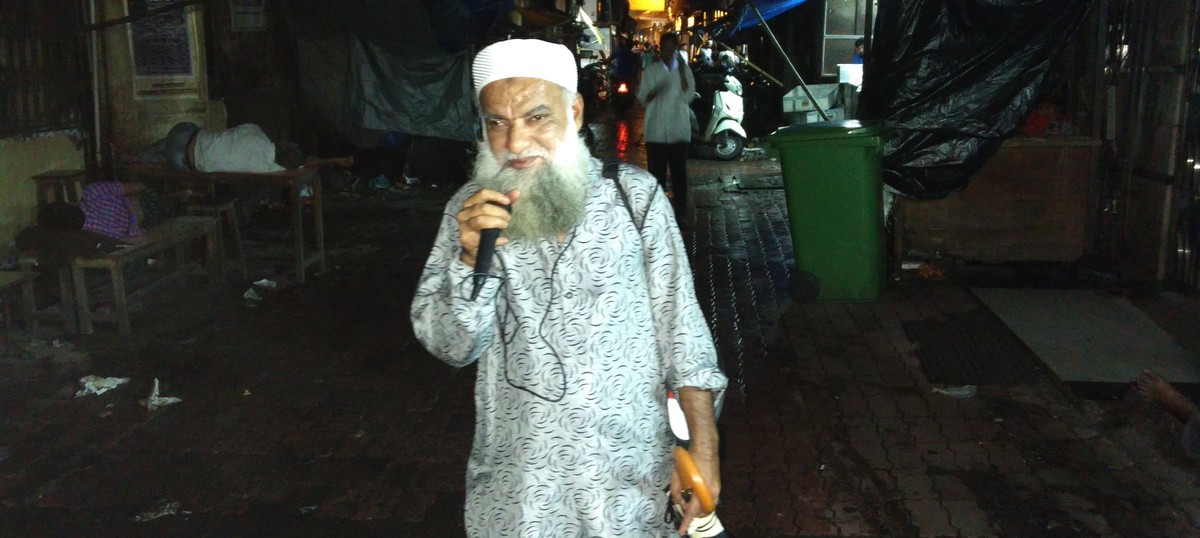
TRADITIONAL TOUCHES : For 18 years, this man has been waking Mumbaikars up at Ramzan dawn

Mumbai, MAHARASHTRA :

The 56-year-old walks seven kilometres, reminding residents to get up for the meal before the roza.

Photo Aakash Karkare

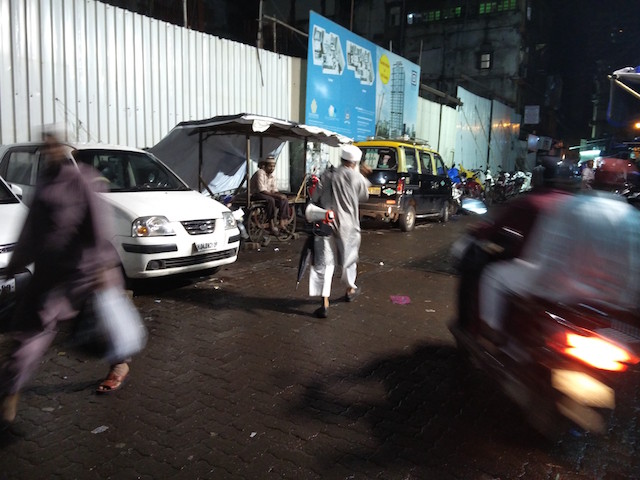
It’s 3 am in Mumbai. Much of the city that claims never to sleep is silent and resting, save for one corner in the south. Under the massive JJ Flyover, in an area called Mohammad Ali Road, the streets are humming and throbbing. All kinds of meats and sweets are being made at roadside stalls. Not a single restaurant is shuttered. Teenagers, sometimes four to a bike, whiz around. Little children play cricket in the traffic-free narrow lanes.

In this chaos resounds the call of Mohammed Farooq Qureshi Sheikh. “Neend se jaago, sehari ka waqt ho gaya. Zindagi ka kya bharosa? Ramzan mile ya na mile.” Wake up, it’s time for sehar. Who knows what life will bring? If we are able to get Ramzan, or not?

Credit: Aakash Karkare

For the last 18 years, during every Ramzan, Sheikh has made the same seven-kilometre trek from Shafai Masjid in Dongri to Dawoodbhoy Fazalbhoy High School in Chinch Bunder. The distance isn’t much, but Sheikh walks through every lane and by-lane, reminding the residents with his call to awaken for sehar (the meal eaten before the fasting for the day begins).

Along the way, passersby who know him, and call him Taj Bhai, stop to greet him. A few of them give him donations for his work. Children holler “Taj Bhai, chalu ho jao.” Taj Bhai, do your thing.

The 56-year-old finishes his walk by quarter past four, about 15 minutes before sunrise, so he can have his meal before the fasting begins. He chooses to avoid the area’s famed Ramzan delicacies, opting for a simple meal of milk and chapati. “At my age I can’t eat things like malpua,” he said.

A dying tradition

Sheikh is a practitioner of a Ramzan tradition that dates back ages, to a time before people had ready access to clocks and needed someone to tell them time. In Egypt, the practice is called Musaharaty and those who sustain it El Musaharaty. In Kashmir, they are given the name Sehar Khans.

Everywhere, alas, the custom is slowly dying out. The Sehar Khan, or the El Musaharaty, is becoming increasingly obsolete as people have begun relying on their mobile phones or alarm clocks to tell them time.

Sheikh calls himself a “sehariwalla” and while he says he hasn’t heard of the Sehar Khans of Kashmir, he does remember an “old man with a walking stick” who would come to his neighborhood when he was growing up. “Even then, the tradition of the sehariwallas was almost non-existent.”

Sheikh began his twilight Ramzan walks when he was in his mid-30s. His wife passed away when he was 22 and their son passed away soon after he was born. “In the beginning, I would walk up to the last floor in each building and call out to people. Now, I am too old to do that so I have this megaphone.”

He stays up all night, and at 3 am, he sets off from the office of the travel agency where he has worked for the past 15 years and where he lives in a corner. Sheikh says he got his first job when he was 16 at a printing press, after which he got by with odd jobs. Many of the employees at the travel agency have grown up seeing Taj Bhai do his nightly rounds.

Even in his old age, Sheikh keeps a brisk pace as he makes way through Mohammad Ali Road, chanting, “Neend se jaago, sehari ka waqt ho gaya…”

Saif Sathi, who has grown up in the area, feels Sheikh is still important. “There are so many people who don’t have anyone to wake them up,” said the 17-year-old. “People who sleep on the streets, for one thing. Even the local mosque has no one to wake them up. My family, too, relies on his call to awaken.”

Sehri03MPOs06apr2016

But giving wake-up calls is not all Sheikh does. Last year, when the monsoon was late in arriving, he began going to the Kasaiwada area in Kurla to ask people to pray for rain. Even this year, because the rains didn’t come on time, he reminded people to pray for them. On occasion, when asked by local municipal councillors, he even announces government schemes. “A few years ago, they were distributing spectacles, so I announced that in the neighbourhood. More recently, I announced the government’s plan to conduct heart operations for free.”

According to Sheikh, there are still sehariwallas in the “poorer areas of the city who go around with daflis (tambourines)”. In Mumbai’s suburbs, in slums in Kurla or Nala Sopara, this tradition might still exist because not everyone there might have a phone, he believes.

But in the main city, he claims he “might be the only one still practising the profession”, although he adds a disclaimer. “I don’t keep up with what others are doing. All I can say for sure is that I am doing it.”

He plans to continue being a sehriwalla as long as he is “hale and hearty”, and is not very optimistic that future generations will continue in his footsteps. “Is there anyone in your generation who will stand and sing for an hour and a half?” he asked and laughed heartily.

source: http://www.scroll.in / Scroll.in / Home> Magazine> Traditional Touches / by Aakash Karkare / July 03rd, 2016

A doctor and his legacy

NEW DELHI :

Taking up the challenging task of achieving unity and tolerance

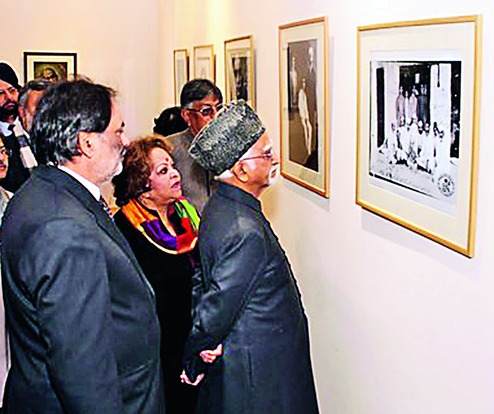
M.H. Ansari viewing an exhibition on Mukhtar Ahmad Ansari at the M.F. Hussain Art Gallery, 2015

Fifty-six is no age to die. Mukhtar Ahmad Ansari, MD, MS, with a tall reputation in London’s Lock Hospital and Charing Cross Hospital, and ‘free Doctor’ to uncountable poor in Delhi, was on a train bringing him back to his hometown, Delhi, from Mussoorie where he had gone to treat the Nawab of Rampur when, on May 10, 1936, a heart attack – his first and fatal – took him away. He was four years short of sixty.

Doctors are human and death’s sudden grasp comes to medical luminaries just as it comes to ordinary mortals. Ansari must have been in some disbelief at his heart’s capitulation. But his death shocked a whole world beyond himself, a world of grateful and trusting patients, former patients, friends, families of patients, countless Congress and Muslim League leaders who were his patients, some of them, and fellow freedom fighters, all. For he had been more, incredibly more, than the ‘good Doctor sahib‘. He had been, for over two decades, a political guide and pathfinder to all those who believed in India’s plural integrity and in India’s destiny as a leader of progressive causes globally.

The Balkan War in 1912 saw 32-year-old Ansari lead a medical team from India to Turkey to help wounded Turkish forces in what was not just a humanitarian act but one that formed lasting bonds, as the medical mission of the doctor, Dwarkanath Kotnis, to China in 1938 during the Sino-Japanese war was to do. The Kotnis Mission has been the subject of a film, Dr. Kotnis Ki Amar Kahani by V. Shantaram, for which K.A. Abbas wrote the script. A film has to come on Dr. Ansari Ki Amar Kahani about that mission’s work. Mrinal Sen could well have made such a film a decade ago but perhaps Javed Akhtar or Shyam Benegal will yet do it, for it cries out, filmographically and civilizationally, to be done.

M.A. Ansari’s life as such needs to be known, not for his sake – he is beyond the reach of recognition or neglect – but ours. Being invited to play a constructive political role in the formulation of the Lucknow Pact between the Congress and the Muslim League in 1916 and to preside over the Muslim League’s sessions in 1918 and 1920, Ansari emerged as a sturdy champion of the Khilafat Movement and Hindu-Muslim unity.

His commitment to that cause soon steered away from League politics, the separate electorates idea and all that was to lead to the demand for Pakistan. This resulted in his becoming inevitably, a general secretary of the Indian National Congress in 1920, 1922, 1926, 1929, 1931 and 1932 and in 1927, its president. A former president of the Muslim League becoming president of the Indian National Congress? Incredible, but incredible things did happen in Gandhi’s and Nehru’s India.

Drawing close to the Mahatma’s eclectic nationalism, Ansari became Gandhi’s ‘Delhi host’ in his old Delhi manor called ‘Darussalam’ and physician to members of Gandhi’s family, including his grandson, Rasik, son of Harilal Gandhi, who contracted typhoid in 1929 while on a visit to Delhi (from eating roadside jalebis, as Rasik himself explained) and in spite of Ansari’s valiant efforts, could not be saved. Gandhi was touring the North West Frontier at the time. Ansari sent him a telegram conveying the news. Gandhi steeled himself. “I loved the boy,” he wrote, “I had placed high hopes on him…” The trauma brought the doctor and the Mahatma closer to one another.

Ansari was instrumental in the founding of the Jamia Millia Islamia, and bringing to it a whole host of nationalists, Muslim and Hindu, to learn and to teach. In return for learning Urdu, Gandhi’s youngest son, Devadas, was recruited to teach the Jamia spinning. Ansari was Jamia’s chancellor when he died.

Liberation from mutual animosity and mistrust among Hindus and Muslims was for him a passion. Ansari was, to use an old-fashioned phrase, a man of God. He was also a man of Science. His being a man of science doubtless had something to do with his harbouring his eminently rational goal of wanting Hindus and Muslims to live in civilized amity, not conflict.

As it happened, on the very day Ansari died, Gandhi was meeting in the Nandi Hills, near Mysore, India’s most famous man of science, Chandrasekhara Venkata Raman. If a man of god can be a man of science, a man of science can be a man of god.

Raman to Gandhi: “The growing discoveries in the science of astronomy and physics seem to me to be further and further revelations of God. (But) Mahatmaji, religions cannot unite. (Only) Science offers the best opportunity for a complete fellowship. All men of science are brothers.”

Gandhi to Raman: “What about the converse? All who are not men of science are not brothers?” ( The Collected Works of Mahatma Gandhi, Volume 62, pages 387-9)

Within a few hours of this conversation, M.A. Ansari, man of science and of god, brother to all who came in contact with him personally, professionally or politically, lay dead in his railway coach.

Gandhi had gone to the Nandi Hills with Sardar Patel, among others, for a ‘health’ sojourn at Ansari’s behest. When the news reached him the next day, he was stunned. Penning a tribute for the Associate Press, he described him as “the poor man’s physician if he was also that of the Princes” and said, “His death will be mourned by thousands for whom he was their sole consolation and guide.” He added: “…He was my infallible guide on Hindu-Muslim questions. He and I were just planning an attack on the growing social evils.”

An attack on social evils. Strong words, scorching words. What was the biggest ‘social evil’ that Gandhi was exercised most about in 1936? Hindu-Muslim mistrust.

He needed a guide from among the Muslim community to tackle this. And, with Ansari, that guide was gone. At a loss to find a successor he turned first to Zakir Husain. “I ask, will you take Dr Ansari’s place?” On Zakir Sahib not agreeing, he turned then to Maulana Azad for that crucial assistance. It is entirely reasonable to suppose that had Ansari lived he would have played a defining role as a symbol, spokesman and strategist for Hindu-Muslim unity in the Constituent Assembly and then, very probably, in 1950, become president or vice-president of India. He would have been only 70, the age at which his grand-nephew, Mohammad Hamid Ansari, first became vice-president of India.

What was the main concern – ‘social evil’ – forcefully, passionately expressed in Vice-President Ansari’s farewell address to Rajya Sabha? The challenge to Hindu-Muslim unity, pluralism, not as mere ‘tolerance’ but in Netaji Subhash Chandra Bose’s words: cultural intimacy.

We know what Vice-President Ansari, descended from that great name in Indian pluralism – Dr M.A. Ansari – who rejected everything that led to Pakistan, has received by way of a ‘reward’.

Seventy five years after the Quit India Movement, 70 years after Independence, we the people of India, brothers and sisters in plural mutuality, must tell the shatterers of India’s unity, Hindu, Muslim and other: Quit, quit terrorizing India.

source: http://www.telegraphindia.com / The Telegraph, online editon / Home> Opinion / by Gopalkrishna Gandhi / August 22nd, 2017

Kashmiri teen awarded ‘Shaurya Chakra’: What we know about Irfan Ramzan Sheikh who took on three armed terrorists

Shopian District, JAMMU & KASHMIR :

President Kovind presents Shaurya Chakra to Irfan Ramzan Sheikh

President Ram Nath Kovind on Tuesday awarded Shaurya Chakra to 16-year-old Irfan Ramzan Sheikh, a young Kashmiri who took on three armed terrorists to fend off an attack on his family.

Sheikh was a 14-year-old boy when he fought terrorists and forced them to flee when they attacked his residence in Shopian district of Jammu and Kashmir two years ago.

“He exhibited courage and maturity and fought off militants, safeguarding the life of his father and other family members in Jammu & Kashmir,” a tweet by the Rashtrapati Bhavan said.

Shaurya Chakra is usually awarded to armed forces and para-military personnel for “gallantry otherwise in the face of the enemy”. Although Shaurya Chakra may be awarded to civilians as well as military personnel, it is very rare that a military honour is presented to someone who is not part of any security agency or armed forces.

It is third in order of precedence of peacetime gallantry awards and comes after the Ashoka Chakra and the Kirti Chakra.

Who is Irfan Ramzan Sheikh

Currently, studying in Class X, Irfan is a resident of Shopian district of Jammu and Kashmir. His father Mohammad Ramzan is an ex-sarpanch with affiliations to the People’s Democratic Party (PDP).

Sheikh aspires to become an Indian Police Service (IPS) officer and serve the country.

Indomitable courage

During the intervening night of October 16-17 of 2017, terrorists cordoned off the house of Sheikh. When Irfan, the eldest son of Mohammad Ramzan, opened the door, he found three terrorists in the verandah of the house armed with rifles and grenades.

_____

“Sensing that the militants could harm his family, he exhibited highest degree of courage and faced the militants for sometime so as to avoid their entry inside the house. In meantime, his father came out and the militants pounced on him, resulting in scuffle,” the citation for the award read.

The 14-year-old boy did not think for a moment for his own safety and pounced upon the terrorists for safeguarding the life of his father and other family members.

The terrorists also resorted to indiscriminate firing, resulting in severe injury to Sheikh’s father. He later succumbed.

However, Sheikh did not lose courage and continued to engage in scuffle with one of the terrorists, who resorted to indiscriminate firing resulting in severe injuries to terrorists as well.

On seeing one of their associates injured, the terrorists tried to flee. However, Sheikh chased them and they left the body of their fellow terrorist behind.

“Irfan Ramzan Sheikh exhibited the extraordinary show of bravery and maturity in such a small age,” the citation read.

(With PTI inputs) 

source: http://www.dnaindia.com / DNA / Home> India / by DNA Web Team / March 21st, 2019

A Muslim princess in a temple

Srirangam, TAMIL NADU :

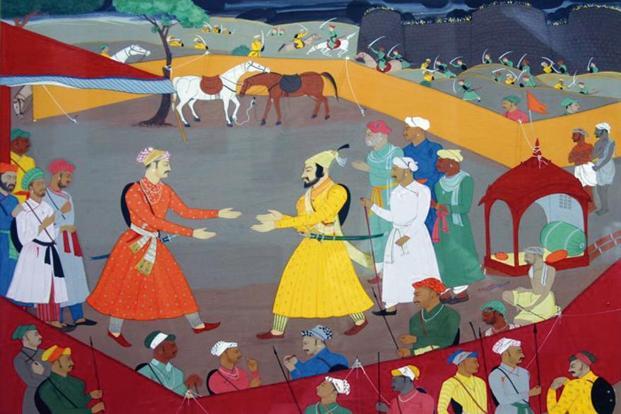
In 1674, Shivaji crowned himself king, with classical ritual in full display. Photo: Wikimedia Commons

By accepting the concept of the Thulukka Nachiyar, within the temple, was a space created to locate the newcomer Muslim within the world of the orthodox Hindu?

India is a mosaic of many curious tales. But very often, seemingly incongruous elements that reside in the realm of fable and myth end up lending an ironic congruence to the concrete world of men. Throughout Indian history, whenever politics has found itself at an awkward crossroads, a generous fabrication of mythology has helped ease the process. One prominent example is Shivaji’s—the Maratha warrior had emerged as a powerful force in the late 17th century, with armies, treasure, and swathes of territory at his command. But rivals painted him merely as an over-strong rebel, so that in addition to power, what he needed was legitimacy too.

The answer to Shivaji’s woes came in 1674, when he decided to crown himself king, with classical ritual in full and extravagant display. A genealogy was invented connecting him to an ancient royal line, and retrospective rituals permitted him to take his place as a “pure” Kshatriya, when so far Brahmins had deemed him inferior in caste. It was a masterstroke: Shivaji now towered over other Maratha clans in status, while simultaneously alerting his Mughal enemies that he was no longer a “mountain rat”—he was an anointed, lawful monarch.

As a society too, India has been capable of negotiating disruptive changes through the invention of tradition. Reading scholar Richard H. Davis’ work recently reminded me of the bizarre, clever and typically Indian ways in which this was achieved. When Muslim might arrived in India in the form of invaders, a new chapter was inaugurated in the story of our subcontinent. The old order fell, and a different structure was fashioned. One way in which the elites on both sides tried to rationalize, in their respective world views, these painful changes is through what historian Aziz Ahmad called epics of conquest and resistance. Thus, for instance, we have Muslim accounts that exaggerated the “destruction of infidels”, when, in reality, even the terrifying Muhammad of Ghor’s coins prominently featured the “infidel” goddess Lakshmi, countered by Hindus with their own stories, the case of Padmavati preferring fire to the embrace of a Muslim being one such. Rhetoric was amplified on both sides, legends and tales competing for narrative dominance to come to grips with changes under way on the ground.

One such fascinating story from the 14th century features a Muslim woman recalled to this day by Hindus as Thulukka Nachiyar (literally, “Tughluq Princess”), who is said to have fallen in love with a Hindu god. The outline of the story is as follows: When Muslim troops from Delhi plundered temples in southern India, on their list was the great Vaishnava shrine at Srirangam in Tamil Nadu. Temple chronicles show that indeed idols were seized, and, in this story, the processional image of the deity is taken to Delhi. The reigning sultan consigns the idol to a storeroom, while a local Tamil woman, who had followed the troops, returns to Srirangam and informs the temple authorities of the precise whereabouts of their deity. Dozens of priests now make their way to court, where, after entertaining the sultan with a series of performances, they request the return of their lost idol. The cheerful Tughluq king is happy to grant them this, commanding his men to go to the storeroom and fetch Srirangam’s deity. Everyone is, at this point, rather pleased with the turn of events, and we have every hope of a happy ending.

This is where the twist occurs. It so happens that the sultan’s daughter had long before gone into the storeroom and collected the idol, taking it to her apartments and there playing with the deity as a doll. The implication, however, is that by dressing “him”, feeding him and garlanding him, as is done to deities in Hindu rituals, the princess was essentially worshipping the image, winning divine affection. When the appeal from the Srirangam party is heard, the deity puts her to sleep and agrees to return south, only for the Tughluq princess to wake up distraught—she hastens to catch up with the Brahmins, who meanwhile have split, one group hiding the idol in Tirupati. Arriving in Srirangam but not finding the deity even there, the princess perishes in the pangs of viraha (separation).

Her sacrifice is not for nothing, though. When eventually the deity comes home, He commands the priests to recognize his Muslim consort, commemorated ever since in a painting within the temple. On his processional tour of the premises, to this day, the deity is offered north Indian food at this spot (including chapatis).

The story is a remarkable one, with an exact parallel in the Melkote Thirunarayanapuram temple in Karnataka, where, in fact, she has been enshrined as a veiled idol. Though it seems unlikely that a Tughluq princess actually came to the south head over heels in love with a deity, could it have been that there was a Muslim woman instrumental in having idols released from Delhi? Or is it, as Davis suggests, a “counter-epic” where the roles are reversed: Instead of a Muslim king chasing after Hindu princesses, we have a Muslim princess besotted with the Hindu divine. By accepting the concept of the Thulukka Nachiyar, within the temple, was a space created to locate the newcomer Muslim within the world of the orthodox Hindu? The truth might lie in a combination of these possibilities, but we can be sure that it is a colourful, revealing narrative with a splendid cast, telling us once again that while there were moments of crisis between India’s faiths, legend and myth allowed them to see eye to eye and move on to fresh ground—a lesson we would be wise to remember in our own contentious times.

Medium Rare is a column on society, politics and history. Manu S. Pillai is the author of The Ivory Throne: Chronicles Of The House Of Travancore.

He tweets @UnamPIllai

source: http://www.livemint.com / LiveMint / Home> Explore / by Manu S. Pillai / March 30th, 2018

A Doctor Pays Back

Kulgam Village, Kanipora ,JAMMU & KASHMIR : / Columbia, Maryland,  U.S.A. :

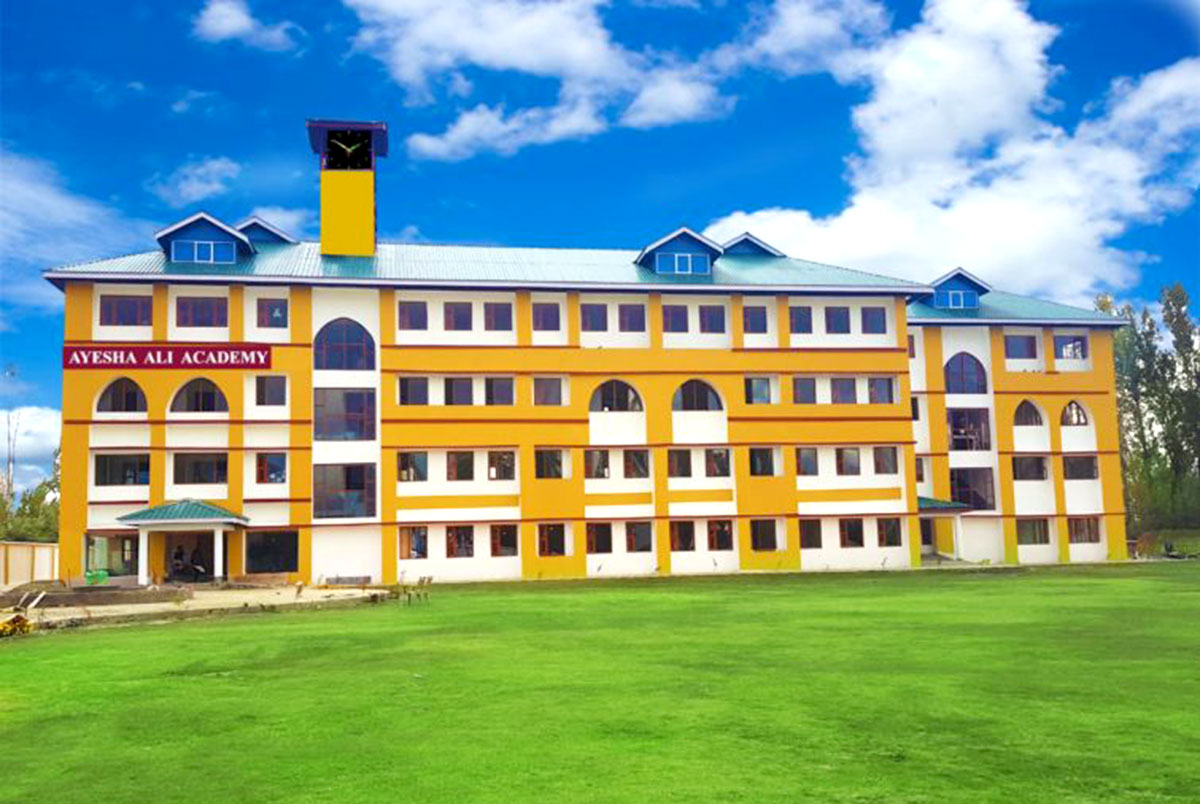
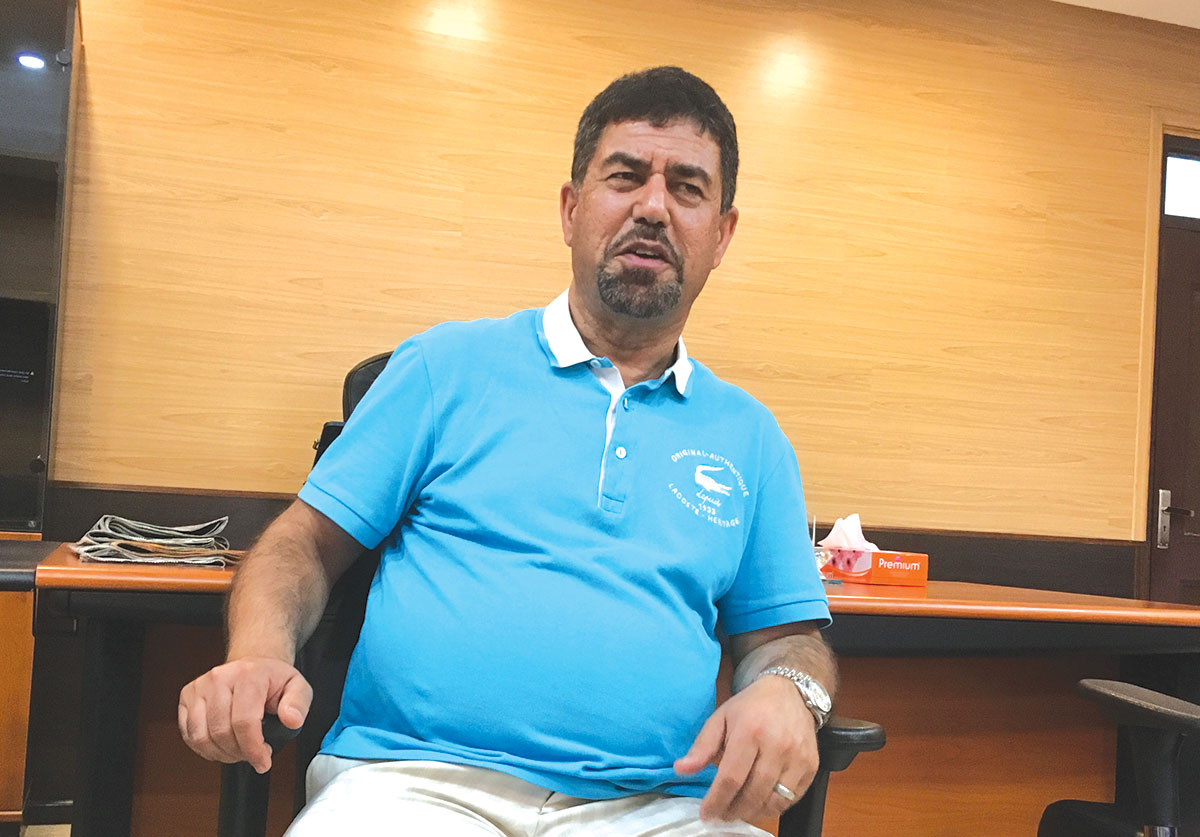
It was a scholarship that helped Feroz A Padder to get the best education and become an interventional cardiologist. Now the proud owner of a hospital in the USA with a yearly turnover of $10 million, he tells Masood Hussain his story and how he has started paying back by creating a world-class school, in the memory of two slain kids, an idea, if successful, he wishes to clone a piece each for every Kashmir district

Ayesha Ali Academy
Ayesha Ali Academy

I was born in a Kulgam village called Kanipora. My father had died when I was three years old. I was raised by my mother.

But I stayed in the village until I was in the fifth primary. In sixth grade, I was selected by Jammu and Kashmir government for a scholarship to attend a premier school in India. It was a fully funded scholarship.

My mother didn’t want me to go. She was crying. A Pandit lady was our neighbour whose son was my friend. Probably, she also did not want me to go. She took my mother to a faith healer to stop me from going but the Soun Saeb told my mother that’s she should allow me to go. Later, my brothers convinced her but it was very hard for my mother.

It was a major scheme of Sheikh Mohammad Abdullah and Afzal Beg. In order to give an opportunity for poor students from government schools, they devised the visionary scheme. Almost 1000 students who would pass their fifth primary in the first class would sit in a written examination and those who passed faced an interview by a panel comprising Director School Education and the principals of various colleges. Finally, three students were selected from each district. I was one among them in the very first batch in 1976.

That is how I studied in Punjab Public School and later in DPS, Punjab. It was the destiny that I became a medical doctor.

But I am not the only doctor in the family. The fifth sibling in my family, I have two older brothers, two older sisters and another brother, three years younger to me. Except for my oldest sister, my older brother was in tenth class when our father died. He took a job in the forest department to run the family. During Sheikh Sahab’s time, the medical college started admitting students after matriculation, so one of my older brothers made it to the medical school in 1976.

Feroz A Padder
Feroz A Padder

As my brother came to Srinagar, one of my older sisters also migrated. She was an art student but soon she changed her subjects, studied well and also joined the medical school. Later, my younger brother also took medical. Now we are four doctors in the family of which three pursued their studies from Srinagar. My younger brother studied psychiatry in South America; my older brother is a cardiologist and my sister is a family practitioner. We all work in the US.

After my brother went to London and later to the US, I followed him. Later, my sister and her husband came after me. Four of our families are in the US and our mother was with us all along till she died and we flew her body for burial in our ancestral graveyard.

My migration was dramatic. I finished my medical school in 1989 and was in the six months of house job when the situation deteriorated and my family wanted me to join them in the US. I did not get the US visa, so I went to the UK where I sat in an examination and started working. In 1992, I qualified for the US examination and went straight to America.

I was lucky again. I got jobs in higher level hospitals. I was in Boston where I did my residency. There I got a fellowship from the National Institute of Health, the biggest institute of health in the US. Later, I did my cardiology fellowship and combined with clinical fellowship. Then I went into more interventional cardiology in which I did further specialization from the University of Alabama, Birmingham. Once I came out after seven years of training, it turned out that I was the best fellow trained as a doctor in the whole country. I had almost nine interviews and eight job offers. But I came back to Maryland and took a job with John Hobbes University in 2000.

Soon, I realised that I didn’t want to work for anybody. I put in my papers and started my own practice, right before 9/11. As I grew gradually, I started hiring more people. Now, I have about seven cardiologists in my group and 19 physicians. I run my own group Padder Health Services with around 60 employees.

I have probably done thousands of invasive procedures. In our area, it is more competitive. We cover two to three geographical locations, and on average, I do around 400 interventions a year.

I am good at business ventures. I own a separate company Padder Reality which owns all the real estate that is under use of Padder Health Services. Right now, we have about the US $ 10 million yearly revenue and we are growing by 5-10 per cent every year. We are in talks with some people and if the process succeeds we will be taking over management of a chain of hospitals in the region, in which we already have strong footprints. That will help us reach the next level.

Dr Farooq Padder, my older brother, a cardiologist is an academic and works in New Jersey. Gulshan Nazir, my sister, is with me. A psychiatrist, my younger brother Tanveer does part-time with me. My wife, Edisa Tokovic, is a paediatrician and is originally from Bosnia but was raised in Michigan, US.

I got scholarships right from the start and whatever I am I owe this to Kashmir and its people. I want to produce thousands of myself. We can give education to the poor students the way I got. I want to pay back and contribute in any way. I run a charitable organisation which is basically our family foundation. We give scholarships to students, in memory of my mother. It has a marriage fund for the orphaned girls also.

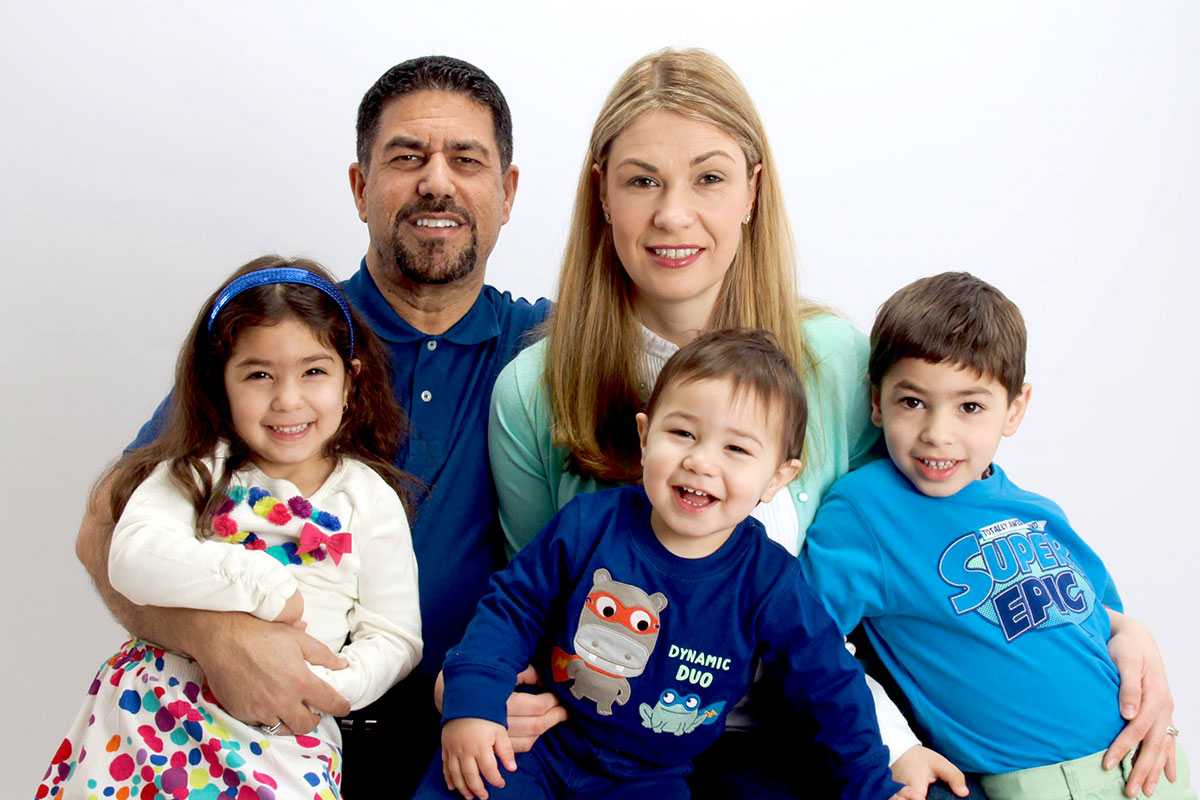
Padder with his second wife and children.

It was a fully funded education that changed me. So I want to use education to replicate the same kind of stories. Finally, I decided to build a school – from nursery to twelfth grade – in Kulgam. It is already into operation.

We will give a scholarship to one-fourth of the enrolled students who are smart but are either orphaned or their parents are less privileged. If this brand and the business model works, I will replicate the same models in the other districts, hopefully in Baramulla and Srinagar, soon after.

The building has around 50,000 sq ft built-up the area and I have probably spent around Rs 8 – 10 crores on it. It’s my personal investment.

Once the school starts, our Foundation will fund it till it becomes self-sufficient. It eventually will be a private entity that will reinvest its excess earnings to fund the education of one-fourth students enrolled in it.

I have tied up with one of America’s oldest school systems to create a curriculum and teaching system which is global and the best. We have people in the USA who are willing to help us in imparting education and training the teachers. I pray the initiative is a success.

Behind the school is a story, a tragedy. It was in 2006 when my (first) wife met a road accident and died along with our two kids. She was from Pakistan; her name was Amira Abbas. She was a cardiologist too. Ayesha, my daughter, was nine years old, and Ali, my son, was five.

Ayesha was born on September 5, 1997, the same time when Lady Diana died. The very next day, Mother Teresa died. I used to tell her that God created you for a reason, not knowing that she would not live long. She was brilliant, religious and a loving daughter. She completed the Quran at age seven and there was a party for her scheduled for November 5. But she died on October 31. She had been selected for a kid leadership three-week course and I got the selection letter a week after her death.

When someone was driving me back from the accident spot, that time, I decided that whatever money I had saved for my children’s future, I will create an institution in their name. So I have named this school Ayesha Ali Academy. That’s why we initially created the Ayesha Ali Foundation.

I met my second wife in Washington DC where she was doing a residency. She is very much younger than me. We married in 2008. We have three kids – two sons and one daughter. Ibrahim, my older son, tells me: “God gave you two children back and one more in bonus.”

I tell my children that the two countries had to go to war for us to get married. It is unfortunate both these conflicts occurred. Had there been no crisis in Kashmir I might not have migrated. Same is true with my wife. She has been to Kashmir a few times. I come here often and I go to Bosnia too. But the only difference is that it is much militarized here unlike Bosnia.

I even thought of constructing a special hospital in Kashmir, but later, I thought I have to be physically here for that because it was such a big project. Since I have little kids, I didn’t want to take that chance. But I still have some ideas and I have been thinking about it. But if the school goes as per the script, we could get into health care too.

Ayesha and Ali, padder's kids from his first wife had died in an accident.
Ayesha and Ali, padder’s kids from his first wife had died in an accident.

We don’t even need a hospital to start with. I had a major polyclinic where we have a big infrastructure and where we have different doctors working under the same roof. But rather than being a government institution, it’s a private institute and most of the doctors have some stakes in it. Hopefully, we may try to develop that here in Kashmir.

In Kashmir, hospitals are understaffed and doctors overworked. There is less awareness among people about the preventive medicines. The absence of medical insurance is a crisis that would prevent quality investment in the health sector.

source: http://www.kashmirlife.net / Kashmir Life / Home> Cover Story> Diaspora / by Masood Hussain / March 27th, 2019

City-based activist Lubna Sarwath seeks cancellation of NOC by Airports Authority of India to Aparna land

Hyderabad, TELANGANA :

As the ownership of survey number 137 in the Masjid Banda lake lies with the revenue department, the government should ensure cancellation of NOC issued by AAI.

Hyderabad :

Hyderabad-based lake protection activist Lubna Sarwath wrote to Ranga Reddy district Collector and chairman of the Lake Protection Committee, highlighting alleged encroachment of lake due to discrepancy in issuing No Objection Certificate (NOC) by the Airports Authority of India(AAI) to real estate developer, Aparna Infra Housing Pvt Ltd, for allowing high-raised constructions.

In her letter on Tuesday, she alleged that one of the land parcels to which the AAI has issued an NOC for the real estate developer – survey number 137 of Kondapur, in Serilingampally mandal, is actually a part of the Masjid Banda lake.

She said that according to the cadastral map of the lake developed by HMDA, survey number 137 falls in the Masjid Banda lake and demanded that the NOC issued by AAI be cancelled.  Sarwath pointed out that according to one of the clauses in the NOC, in case of any discrepancy being pointed out in the land demarcation for which NOC was sought, designated officer should be requested for cancellation of the NOC.

As the ownership of survey number 137 in the Masjid Banda lake lies with the revenue department, the government should ensure cancellation of NOC issued by AAI.

source: http://www.newindianexpress.com / The New Indian Express / Home> Cities> Hyderabad / by Express News Service / March 27th, 2019

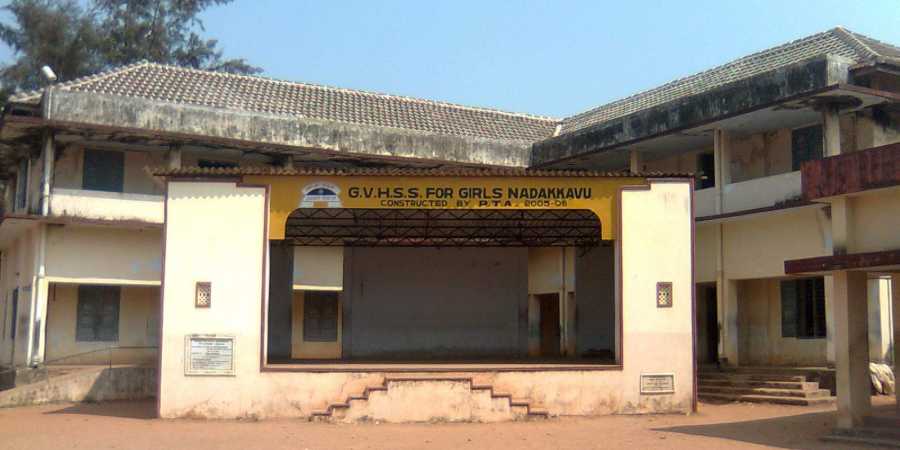
120-year-old Kerala school gets makeover, becomes case study in UK university

KERALA :

The holistic makeover included an infrastructural transformation with new classrooms, toilets, multipurpose hall and astro-turf covered sports field, among other improvements.

Government Vocational Higher Secondary School for Girls, Nadakkavu (Photo| GVHSS website)

Kozhikode  :

Government Vocational Higher Secondary School for Girls (GVHSS), Nadakkavu, that witnessed a massive transformation under the PRISM (Promoting Regional Schools to International Standards through Multiple Interventions) project of the state government and Faizal and Shabana Foundation, will soon gain recognition on global platforms.

The redevelopment of 120-year-old school has now been taken as a case study on ‘Venture Philanthropy in Education’ by Dr Sreevas Sahasranamam, a Chancellor’s Fellow at the Hunter Centre for Entrepreneurship at University of Strathclyde, Glasgow, UK. Venture Philanthropy refers to an adventurous approach to fund unpopular social causes. The case study titled ‘Faizal & Shabana Foundation: A Venture Philanthropic Approach to Education’ will also be taught in some of the classes on corporate entrepreneurship at the university.

The study covers the refurbishment of school through philanthropic investments made by the Faizal and Shabana Foundation and the execution of the project amidst challenges. The Faizal and Shabana Foundation in collaboration with the state government had developed the PRISM project to improve the standards of government schools. GVHSS Nadakkavu was the flagship school renovated as part of this programme.

The holistic makeover included an infrastructural transformation with new classrooms, toilets, multipurpose hall and astro-turf covered sports field, among other improvements.

source: http://www.newindianexpress.com / The New Indian Express / Home> States> Kerala / by Express News Service / March 25th, 2019

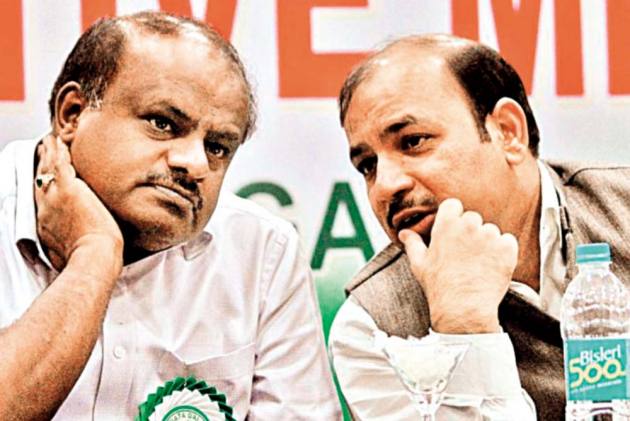
India’s Chankayas | Meet Danish Ali, Gowdas’ Aide For Long

NEW DELHI / UTTAR PRADESH :

Ali has joined the BSP, but the Gowdas still look up to him for counsel on important decisions

DanishAliMPOs23mar2019

Last May, a crowd milled around Janata Dal (Secular) supremo H. D. Deve Gowda’s home in Bangalore where the needle—after a nail-biting end to the state elections—had finally come to rest. Gowda, and his son H.D. Kumaraswamy, were the men of the moment. And, a tumultuous week later, the father-son duo were at the centre of a political panoply that set the tone for what’s now the key word in the 2019 election season—alliance.

Therefore, it was with some surprise that many received news of Gowda’s pointsman in Delhi, Kunwar Danish Ali, joining the BSP. Ali, party insiders say, has been one of Gowda’s aides for long. He’d been visible this past year as the JD(S) opened up a hotline with Rahul Gandhi. “The love and affection he gave to me is incomparable. That will continue,” Ali tells Outlook, explaining that his move would enable him to contest elections in home-state UP, something he couldn’t have done on a JD(S) ticket. “It was also his wish that I should enter the Lok Sabha,” says Ali. “Nobody can break my relationship with Gowda and Kumaraswamy.”

Gowda and Mayawati had a pre-poll seat-sharing pact for the 2018 Karnataka elections—Ali, again, was instrumental in making that happen. Among Gowda’s longstanding lieutenants is Y.S.V. Datta, a former party legislator who was for long its spokesman. But, as a party insider put it, “if Gowda wants grassroots information, he’ll go to his old friends in (hometown) Paduvalahippe. And, just as easily seek out experts if he wants advice”.

The Gowda family, despite its internal power wrangles, is closely-knit, observers say. While Kumaraswamy is the party’s face, his elder brother Revanna manages the family’s pocketborough of Hassan. Besides, there are siblings and their spouses with varied professional backgrounds (former bureaucrat, surgeon etc) who stay away from the limelight.

Kumaraswamy’s inner circle comprised a clutch of five-six former party legislators, including Zameer Ahmed Khan, Chaluvarayaswamy, and H.C. Balkrishna. It was a coterie that had stood by him in 2006 when he had made a dramatic bid to seize power and become Karnataka CM, defying his father. But that circle had fallen out. “The situation was different. Now, it’s him and Gowdaji,” says a party leader. These days, for political decisions, Kumaraswamy relies on two-three cabinet ministers. On occasion, Congress leader D.K. Shivakumar too advises him.

source:  http://www.outlookindia.com / Outlook / Home> Magazine> National / by Ajay Sukumaran / March 21st, 2019