For the fourth year in a row, Shia and Sunni Muslims on Wednesday offered joint namaz on Eid-ul-Azha at Shahnajaf Imambara in Uttar Pradesh’s capital Lucknow
For the fourth year in a row, Shia and Sunni Muslims on Wednesday offered joint namaz on Eid-ul-Azha at Shahnajaf Imambara in Uttar Pradesh’s capital Lucknow.
The namaz was followed by an Eid Milan programme organised and managed by a team of non-Muslim volunteers.
Several known faces, including former DGP Javeed Ahmad, participated in the joint namaz.
The organisers had made special arrangements this year for women to offer prayers. Participants from Saudi Arabia, the UAE and Qatar, who were visiting Lucknow for the festival, participated in the programme organised to promote communal harmony.
The namaz was led by Maulana Mustafa Nadvi.
Like previous years, citizens from other religious communities were present to witness the event and lend support to the cause during the Eid Milan programme organised by Shoulder to Shoulder Foundation, a non-profit organisation.
In view of the devastation caused by floods in Kerala, the volunteers had kept donation boxes at the venue for people to contribute to help rebuild the southern state.
These were particularly useful for those not adept at net banking and other such means.
The amount collected will be transferred to the Kerala Chief Minister’s Relief Fund.
source: http://www.hindustantimes.com / Hindustan Times / Home> Cities> Lucknow / by Press Trust of India / Lucknow – August 22nd, 2018
If there’s one overarching lesson from the past few decades about how to break the cycles of poverty and unemployment, it’s the power of mentoring — and of intervening early, ideally in the high school age, that is the time a child’s career is being formed. A new wave of Muslim social entrepreneurs have embarked on path-breaking initiatives in Nagpur and neighbouring Kamptee township with a potential to redefine the community’s social, developmental and educational agenda. A number of innovative initiatives have been launched and their synergy is expected to help the community address a number of critical issues. Nagpur’s model of synergizing multi sectoral approaches is emerging a game changer for the community and has the potential of becoming a replicable model.
Several Commissions were appointed by the government to study the socio economic conditions of Muslims in India.The Sachar Committee and the Justice Ranganath Mishra Commission (2008) recommended a series of affirmative actions to be taken by the Government in order to restore justice to Muslims and improve their plight to the level of national averages.
In order to create awareness about various socio-economic and educational issues of the community specific to the region, and working out local applicable solutions, a think-tank, the Centre for Social Research and Empowerment (CSRE) was launched under the mentorship of Zafar Mahmood, Chairman of Zakat Foundation of India. CSRE is a non-governmental, non-political and non-profit organization.
One of the key objectives of CSRE is to sensitise people to the new changing economic, educational and social environment and to empower them to successfully navigate it. CSRE identified that quality education and proper choice of careers could underpin all these areas and an increase in the community’s participation in various services would have a multiplier effect for generating a life- changing transformation for the community.
The CSRE has been promoted by senior professionals drawn from a vas diversity of professions. It functions unlike the usual career guidance centres being run by government or community organisations. It is managed by sectoral experts and is designed to assist individuals in making and implementing informed educational and occupational choices. Since these professionals are familiar with the governance processes they can enable the aspirants to take the right step on the right ladder.
Among the key mentors at CSRE are: Syed Wasif H. Naqvi (IFS), Ex. Principal Chief Conservator of Forests, Govt of Maharashtra Abdul Rauf Shaikh, Ex. CEO Maharashtra Waqf Board, Mohd Ishaq Shaikh, Ex Director General of MERY, Water Resources Department, Bashir Ahmed Shaikh, Retd Principal District Judge and Judicial Member, State Consumer Forum, Aftab Alam Khan, former Sr. Manager Bank Of Maharashtra, Majeed Parekh, Islamic scholar, Mujib Khan, Ex. Dy. Commissioner, Zafar Iqbal and Hamid B.K. Quraishi, both senior technocrats with the State Govt, Khwaja Rabbani Ex-Director of Archaeology, Mujeebuddin Siddiqui, Senior Mineral Economist, Abdul Waheed, former AGM, State Bank of India, Zafar Khan, former Principal, Qidwai High School and Jr.College, Faiz Waheed, technocrat and social entrepreneur, Rizwan Mirza, Chartered Accountant. Mushtaque Ahsan Quraishi, prominent social organizer and Qutub Zafar advocate and social activist. Irshad Khan, a young research associate handles the backroom pertains.
A R Shaikh and S W H Naqvi are the key architects of the centre and are steering a series of free Career Guidance Camps and Seminars s in local schools and colleges. Apart from guiding students on career choices experts from concerned fields also providing useful tips on various competitive examinations.
Shaikh feels that if the financial strength of Wakfs is properly tapped it can solve all major problems of the community. Most of the 27 state Waqf boards are headed either by not-too-highly qualified CEOs or by government officials holding the post as additional charge.
The Sachar Committee had said, “Up to 200 Group A officers are needed to service the Waqf affairs across India” and recommended, “The government may, therefore, consider creating a new cadre of officers to be recruited by the UPSC so that they can deal with the specific affairs of the Waqfs efficiently.”
The centre has become an established brand in Nagpur. It offers extension services in the field of student scholarships, career counseling, career selection, and entrance exams for professional and technical courses, recruitment in Govt. and Public Sector, job alerts, financial support and guidance for education, online services at nominal charges, etc. Afroz Jahan Memorial Trust, Amravati is a philanthropic partner, providing financial support to the Centre.
A Public Library cum Study Centre has been set up at Jafar Nagar Line with the support of local citizens and the Jafar Nagar Mosque. The centre is expected to be a one point reference and guidance interface for career and competitive examinations. It will soon be upgraded to a digital library with virtual class room facility.
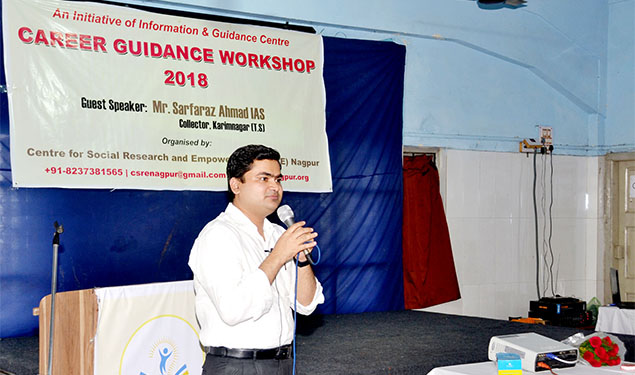
CSRE recently climaxed its third career expo with focus on competitive examinations. Sarfaraz Ahmad IAS Distt Collector of Karimnagar, Telangana and recipient of the 2017 Prime Minister’s Deen Dayal Upadhyay Grameen Kaushal Yojana (DDU-GKY) award for achieving the best performance in employment for unemployed youth, emphasized that aspirants for civil services should shed they myths about civil services.
Ahmed said that the civil series examination is basically aimed at selecting administrators and not subject expert’s. Hence it is focused on assessing the students’ contextual approach to the subject and his analyltical abilities. He also said that most of the successful candidates make the grade not in their first attempt but in later attempts. It was therefore necessary that a candidate should work hard and determinedly with a mission approach to the examination.
A R Shaikh dwelt on various Careers available for students after 12th standard. Mujibuddin Siddiqui explained the importance of timely of goal setting. Afsha Nahid Khan of Andhra Bank outlined the various opportunities in a banking career. Sumit Ramteke who recently cracked the UPSC for Astt Commandants exams focused on the pattern of UPSC examinations and various techniques for qualifying them.
source: http://www.ummid.com / Ummid.com / Home> Education & Career / by Moin Qazi, ummid.com / August 30th, 2018
The Union Public Service Commission (UPSC) on Thursday released the UPSC Civil Services 2017 Reserve List giving the names and roll numbers of 66 more candidates among them 03 are Muslims.
With this the number of Muslims, who cracked the UPSC Civil Services 2017 exams, went to 54. The UPSC had announced the Civil Services 2017 results on April 27, 2018. A total of 990 candidates, including 51 Muslims, were recommended by the UPSC for various top government posts.
The 03 Muslims who found their place in the UPSC Civil Services 2017 Reserve List are SyedFraz Haider Nabi, Saqib Yousuf and Mohammed Ali.
“The results of the Civil Services (Main) Examination, 2017 were declared on 27.04.2018 recommending 990 candidates in order of merit for appointment to IAS, IFS, IPS and Central Services Group ‘A’ and Group ‘B’ against 1058 vacancies”, the UPSC said.
“The Commission, in accordance with the Rule 16 (4) & (5) of the Civil Services Examination Rules, was also maintaining a Consolidated Reserve List in order of merit below the last recommended candidate under the respective categories”, it said.
“As sought by the Department of Personnel & Training, the Commission has now recommended 66 candidates which include 48 General, 16 OBC, 01 SC and 01 ST, to fill up the remaining posts based on the Civil Services Examination, 2017”, it said.
The Civil Services (Preliminary) Examination, 2017 was conducted on 18th June, 2017. 9,57,590 candidates applied for this examination, out of which 4,56,625 candidates actually appeared. 13,366 candidates qualified for appearance in the Written (Main) Examination held in October – November, 2017. Of them, 2568 candidates qualified for the Personality Test conducted in February – April.
source: http://www.ummid.com / Ummid.com / Home> Education & Career / by ummid.com news network / September 01st, 2018
The foundation for the first of the five proposed “world class” educational institutes for minorities is set to be laid early next month, Union Minority Affairs Minister MukhtarAbbas Naqvisaid on Thursday.
Naqvi said that 16-acres land has been acquired in the Mewat district of Haryana at a “scenic locale” and its foundation would be laid in the first week of September.
“Mewat, being the most backward district, needs such an institute more than any other place in the country. We hope the institute would be ready and running by 2021,” Naqvi said.
He said the institute would have a provision of education from primary up to the diploma and degree levels besides centres for skill development.
It will also have a coaching centre for competitive exams besides hostels with modern facilities, he added.
“It will be an education, skill and a knowledge hub,” he said.
The Minister clarified that the institute would be open for all communities.
The Maulana Azad Education Foundation would be the governing body of the institute but it would be run by “reputed private and government organisations”.
“We are in talks with a few Indian and foreign organistations which have shown interest in running this institute on the PPP (public-private-partnership) mode,” Naqvi said.
–IANS
mak/prs
(This story has not been edited by Business Standard staff and is auto-generated from a syndicated feed.)
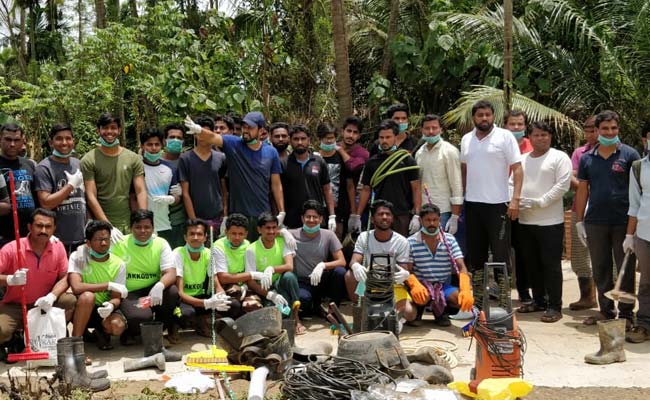
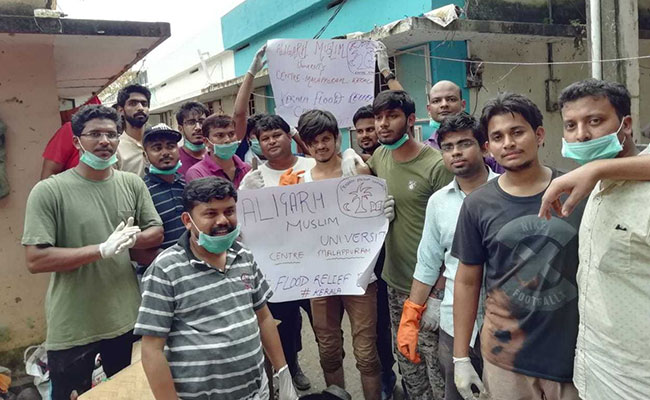
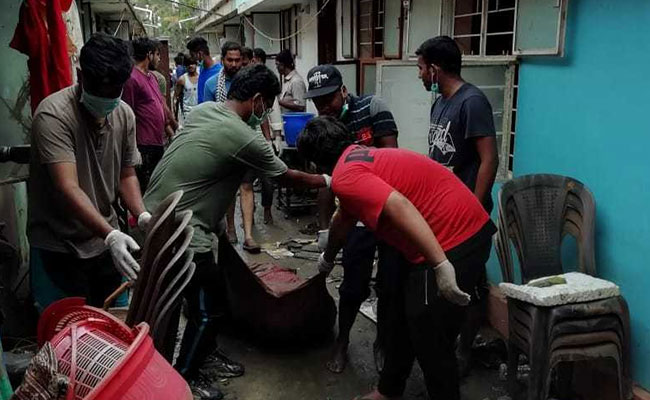
On 26 August 2018, a group of 25 students, teachers and non-teaching staffs of the Centre cleaned 35 houses in Mattekkad colony, Kalamassery, Ernakulam district, where the river Periyar’s fury caused havoc.
AMU Malappuram Centre students and teachers during the cleaning campaign
Cochin / Malappuram, KERALA :
When the Muslim Youth League Perinthalmanna Constituency Committee decided to travel to Ernakulam to help the flood-affected people of Kalamassery, it made a call through social media for volunteers. The response to the call was enormous and the teachers and students from Aligarh Muslim University (AMU) Malappuram centre were among them who came forward to render their service.
“The students of AMU Malappuram Centre has rendered their wholehearted service in the flood effected Ernakulam district of Kerala with Youth activists. They feel proud to be a part of the magnificent flood relief campaign undertaken by the public and government state,” said Mohammed Abu Shahid, assistant professor at the Centre who accompanied the students in the rehabilitation work.
On 26 August 2018, a group of 25 students, teachers and non-teaching staffs of the Centre cleaned 35 houses in Mattekkad colony, Kalamassery, Ernakulam district, where the river Periyar’s fury caused havoc.
“People of the flood affected area are in dilemma to revive back the rhythm of their life. Houses and fields are covered with mud and waste. Realizing the gravity of the situation, the students of the Malappuram Centre came forward to offer a helping hand to the victims in their own way,” Prof Shahid added.
AMU Malappuram Centre students and teachers during the cleaning campaign
The people of the colony and the office bearers of the Kalamassery municipality thanked the service of the team.
“When we reached the area, what we saw there was heartbreaking as people were not having food to eat, clean water to drink and the life was miserable. The houses were buried under water,” says Amir Suhail, a Law final year student at the centre.
“Our team reached the spot in the morning and we did our cleaning programme till the evening. We cleaned around 35 houses as they were full of mud and dirty water. When we completed the cleaning, a large group of locals came to us and thanked us as with teary eyes they saw their houses neat and clean again,” he added.
According to Nahas Parackal, President of Muslim Youth League Perinthalmanna area, more than 20 students and teachers came forward responding to the call made through Whatsapp and Facebook.
Aligarh Muslim University Malappuram Centre students are seen here cleaning houses
“Most of the students who accompanied us to Ernakulam are from north India, including from states like Uttar Pradesh, Bihar and Delhi. After our videos and images of us doing cleaning went viral, now, other students from the Centre are also contacting us for the volunteering work in the various parts of the state,” said Mr Parackal.
“We are planning to go again to the area. Once the cleaning was done in several households, we realized that most houses need proper whitewashing as the flood water has badly affected them. So, we will be taking these volunteers along with us for next stage of rehabilitation works in the area,”Mr Parackal added.
The team was led by Mr Parakkal, and other office bearers of his party.
Members of AMU staff included Mohd Abu Shahid, Dr Azmet Ali and Afsal K.T.
source: http://www.ndtv.com / NDTV / Home> Education / by NDTV Education Team / August 29th, 2018
The disastrous floods of 2014 in Kashmir is as vivid in Bilal’s mind as if it happened yesterday.
Along with his two brothers, he was stuck in his house in Srinagar for almost 12 hours. The three boys, who had already lost their parents, stared helplessly at the waters which seemed to reflect their fear of death. But fortunately for them, their uncle managed to find his way to their house in a boat and rescued them.
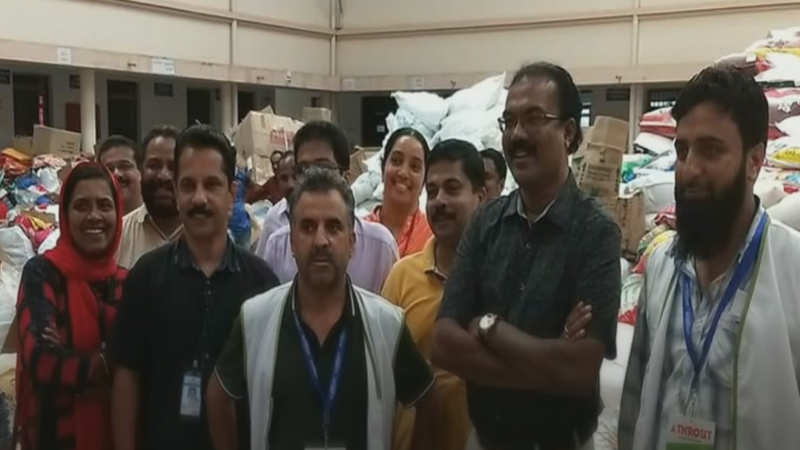
Bilal Ahmed Sofi, a 29-year-old marketing professional from Srinagar, was reminded of those days when he heard about the flood waters rising in the other end of the country, Kerala. The youngster, who has been working as part of a social service group who calls themselves Athrout Kashmir , kept everything else in the backburner and took off to Kerala, along with two other selfless souls from the group — businessmen Abdul Hamid and Waseem Hakim.
“We flew from Kashmir to Bengaluru first, to source some medicines. From there, we took off to Wayanad by road as it was in the news as one of the most affected districts,” says Bilal. The three-men army from Kashmir helped out the volunteers in Wayanad with medicines, supplies and more for almost a week here, and left only after assuring that if ever in need, they wouldn’t hesitate to come back and help again. “Athrout is a Kashmiri word which means a helping hand. We have many college students, youngsters and more as part of the group and we help with many things like conducting weddings of girls from poor families, helping the unemployed youth start a business, providing medicines, disaster relief, and more to those in need, wherever possible for us.” But then, what inspired them to come all the way to Kerala, from the other end of the country? “I believe that for volunteers, there are no boundaries,” says Bilal.
Hamid, who has also helped the victims of Chennai floods
in 2015, says, “I feel that the most difficult aspect during such a disaster is overcoming that mental stress, induced when watching your house getting torn down, nature in all her fury and being tormented by thoughts on what would one do from now on. Though there was a language barrier, we tried our best to talk to people and reassure them on how it’s still possible to rebuild their lives, from our own experiences.” The three also joined the various relief groups and visited villages, interacting with people, inquiring their needs and meeting them.
The three feel that when compared to how the authorities in Kashmir handled the floods, Kerala fared much better. Hamid says, “First of all, there was no religion causing any divide at least compared to the Northern States. People were helping each other out very well. We were given food from the house of one of the local volunteers and they were even ready to provide us accommodation.”
But it’s the local administration they praise the most. “The relief work was so systematic and well thought out. We could see that even the supplies we bought were first sorted and stored carefully, after which we were given a receipt. “This is a crisis, so we have to make sure all needs are taken care of,’ said some of the officials. When it happened back home, the counterparts there were only trying to save themselves and nothing more. Here, they were also tracking down dead bodies soon enough,” Bilal says.
At the same time, the trio feel that it’s time the government did something to form well-trained volunteer groups for such situations, across States. “Having a mind to serve is great, but it’s also important to have the right skills for it. For instance, a flood relief volunteer should know how to swim and what medicines would help the ailing. If there are such groups of interested citizens, the relief efforts can save lives better,” Bilal adds.
Unveiling a tale that is sure to tease your taste buds, we trace the gastronomic journey of Mughal cuisine in India from Babur to Aurangzeb.
One of the most powerful dynasties of the medieval world, the Mughals are entwined inseparably with India’s history and culture. From art and culture to architecture, they bequeathed to this country a substantial legacy that lives on even today.
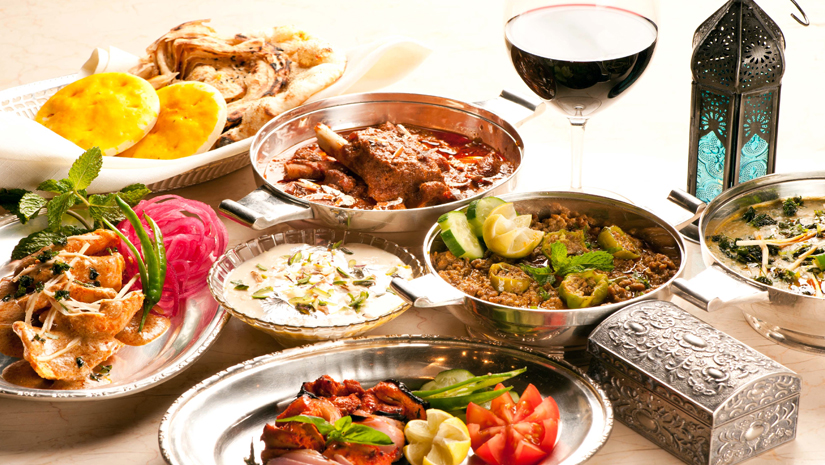
But what often gets forgotten is that they also left us a rich culinary legacy — the deliciously complex blend of flavours, spices, and aromas called Mughlai cuisine.
Tracing the origins of this cuisine in India, we unveil a tale that is sure to tease your taste buds!
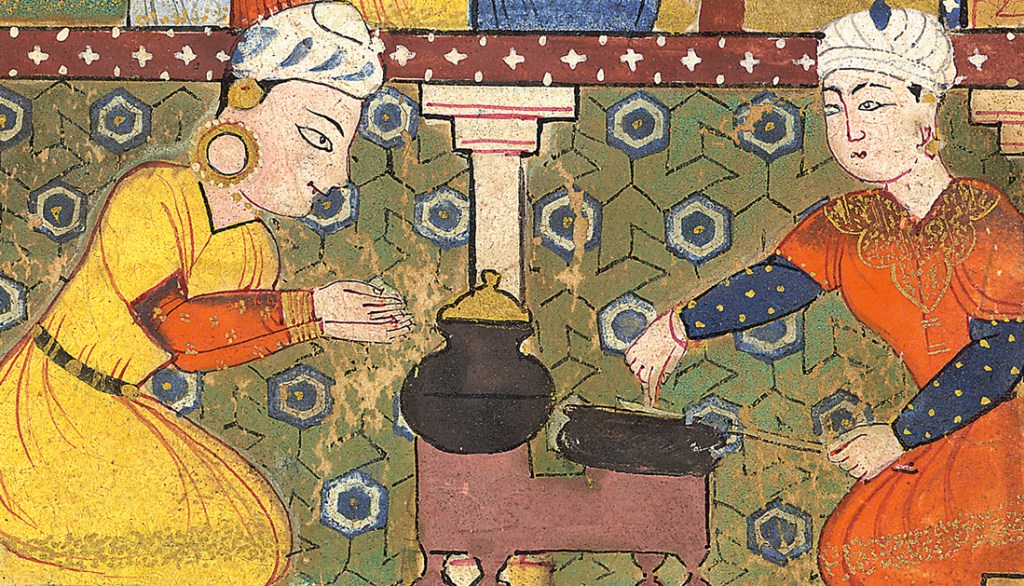
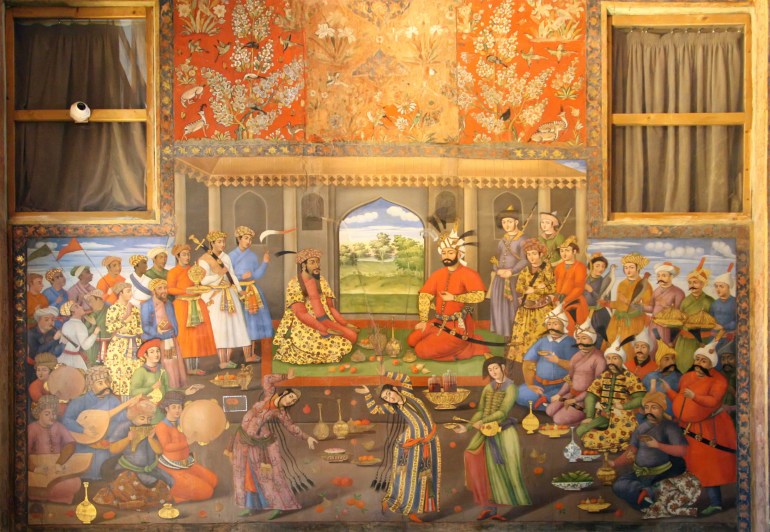
Lavish and extravagant in taste, the Mughals were connoisseurs of rich, complex and sumptuous recipes. Creating such dishes meant that cooking in royal kitchens was a riot of colours, fragrances, and harried experiments.
Curries and gravies were often made richer with milk, cream and yoghurt, with dishes being garnished with edible flowers and foils of precious metals like gold and silver.
It was also not uncommon for the shahikhansama (chief cook) to consult with the shahihakim (chief physician) while planning the royal menu, making sure to include medicinally beneficial ingredients. For instance, each grain of rice for the biryani was coated with silver-flecked oil (this was believed to aid digestion and act as an aphrodisiac).
Flavour-wise, the royal cuisine of the Mughals was an amalgamation of all kinds of culinary traditions: Uzbek, Persian, Afghani, Kashmiri, Punjabi and a touch of the Deccan. Interestingly, Shah Jahan’s recipe book Nuskhah-yi Shah Jahani reveals much about the intermingling of these traditions in the imperial kitchens, including a fascinating account of the then-world’s largest sugar lump!
As for the contributions of the Mughal emperors themselves, each of them added his own chapter.
The foundation, of course, was laid by Babur — the dynastic founder who brought to India not just an army, but immense nostalgia for a childhood spent in the craggy mountains of Uzbekistan.
Not a fan of Indian food, he prefered the cuisine of his native Samarkand, especially the fruits. A legend has it that the the first Mughal emperor would often be moved to tears by the sweet flavour of melons, a painful reminder of the home he’d lost. Interestingly though, he loved fish – which he did not get back in Uzbekistan!
Historical accounts also reveal the prevalence of cooking in earth ovens — earthen pots full of rice, spices and whatever meats were available would be buried in hot pits, before being eventually dug up and served to the warriors. As this suggests, Babur’s cooks were primarily attuned to war campaign diets and employed simple grilling techniques that utilised Indian ingredients.
On the other hand, Humayun — an emperor who spent much of his life in exile — brought Persian influences to the Mughal table. More accurately, it was his Iranian wife Hamida who introduced the lavish use of saffron and dry fruits in the royal kitchens during the first half of the 16th century.
Humayun was also immensely fond of sherbet. So beverages in the royal household began being flavoured with fruits. As such, ice was brought from the mountains to keep the drinks cool and palatable.
However, it was during Akbar’s reign that Mughlai cuisine truly began evolving. Thanks to his many marital alliances, his cooks came from all corners of India and fused their cooking styles with Persian flavours.
The result? Some of the most unique, elaborate and delicious meals in Mughlai food.
Take, for instance, the magnificent Murgh Musallam, a whole, masala-marinated chicken stuffed with a spice-infused mixture of minced meat and boiled eggs before being slow-cooked.
Or Navratan Korma (curry of nine gems), a deceptively delicious dish prepared from nine different vegetables coated in a subtly sweet cashew-and-cream sauce.
Interestingly, Akbar was a vegetarian three times a week and even cultivated his own kitchen garden — the emperor ensured that his plants were carefully nourished with rosewater so that the vegetables would smell fragrant on being cooked!
Akbar’s wife, Jodha Bai, is also believed to have introduced panchmeldal (also called panchratna dal) into the predominantly non-vegetarian Mughal kitchen, along with a handful of other vegetarian dishes. It became such a big hit with Mughal royalty that by the time Shah Jahan took over the throne, the court had its own shahi panchmel dal recipe!
Mughlai cuisine continued to evolve swiftly during Jehangir’s reign. The reins of the empire lay with his twentieth wife, Mehr-un-Nisa (better known as Nur Jahan). An enormously powerful figure at the royal court, the empress would often be gifted unique preparations by visiting traders from European nations such as France, Britain and Netherlands.
A true aesthete by nature, Nur Jahan used these ideas to create her legendary wines, rainbow-coloured yoghurt and dishes decorated with pretty patterns of rice powder glaze and candied fruit peels!
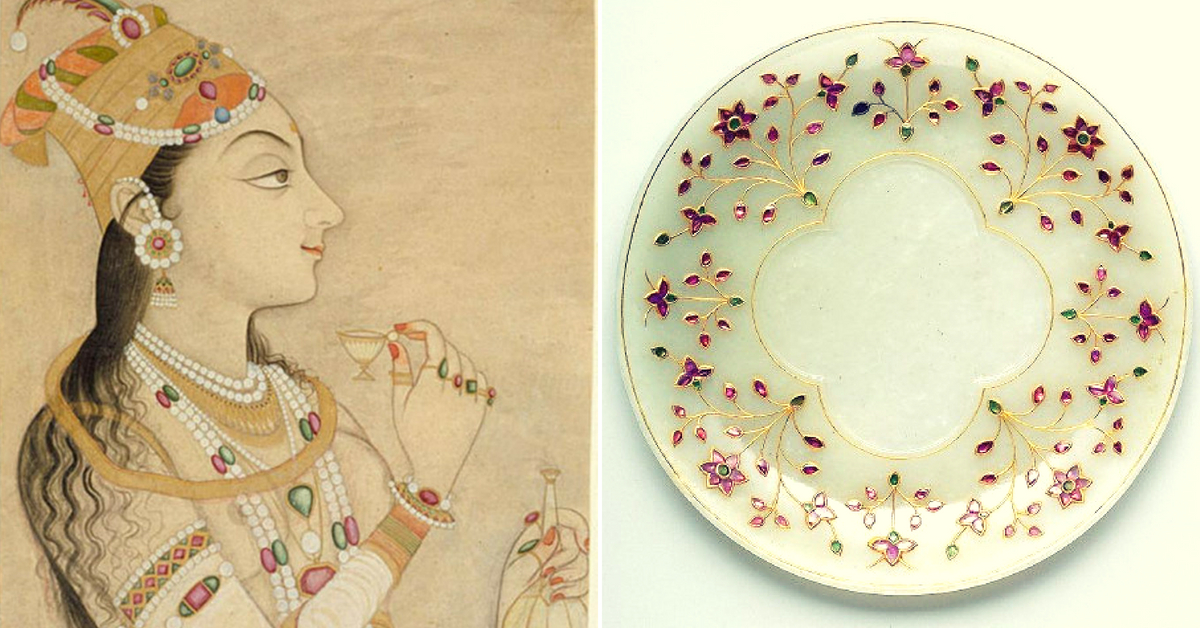
Noor Jahan (left) and her plate — it was decorated with an inlay of rubies, emerald and gold thread.
However, it was during the reign of Jehangir’s son that the Mughal cuisine reached its zenith. The greatest of the Mughals in pomp and show, Shah Jahan’s first step was to enlarge the menu devised by his father and grandfather.
He instructed his cooks to add more of spices like haldi, jeera and dhania to royal recipes for their medicinal properties. Interestingly, a legend has it that his cooks also added red chilli powder to keep evil spirits at bay!
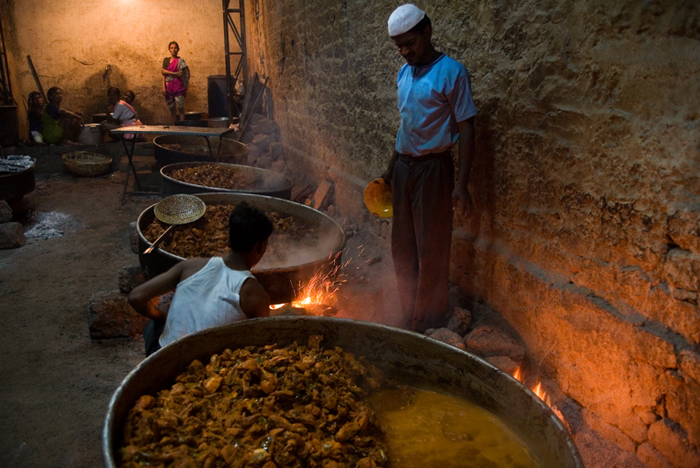
Another legend explains the origins of the nihari, a spicy meat stew that is slow-cooked overnight in large cauldrons called shab deg. This is how the story goes:
In the 17th century, soon after Shah Jahan established his capital in Delhi, a virulent flu swept through the sprawling city. It was then that the shahi khansama and the shahi hakim joined their hands to devise a robust spice-packed stew that would keep the body warm and fortified!
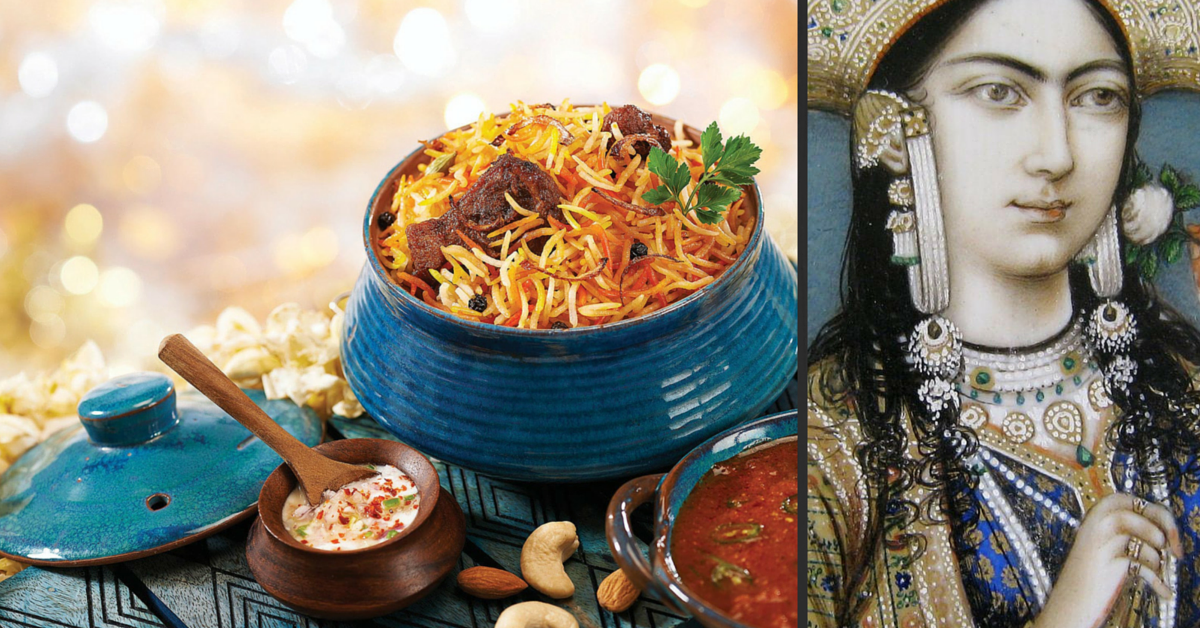
Interesting, another popular story traces the origins of biryani to Mumtaz Mahal, Shah Jahan’s beautiful queen who inspired the Taj Mahal.
It is said that Mumtaz once visited the army barracks and found the Mughal soldiers looking weak and undernourished. She asked the chef to prepare a special dish that combined meat and rice to provide balanced nutrition to the soldiers – and the result was the biryani of course!
The extravagance of Mughlai cuisine during Shah Jahan’s reign was toned down by his son Aurangzeb.
The most religious and frugal of all the Mughal emperors, Aurangzeb fancied vegetarian dishes like the aforementioned panchmel dal more than the roast meat dishes that found favour with his uncles and brothers.
According to Rukat-e-Alamgiri (a book with letters from Aurangzeb to his son), Qubooli — an elaborate biryani made with rice, basil, Bengal gram, dried apricot, almond and curd — also held a place of pride on the dining table of Aurangzeb.
It was also during Aurangzeb’s reign the intermingling of Mughal and Deccan culinary traditions gained momentum (the kitchen moved with the emperor when he went on wars). During this time, Agra and Delhi started to lose their preeminence as hubs of Mughal culture, with the focus shifting to cities like Hyderabad and Lucknow.
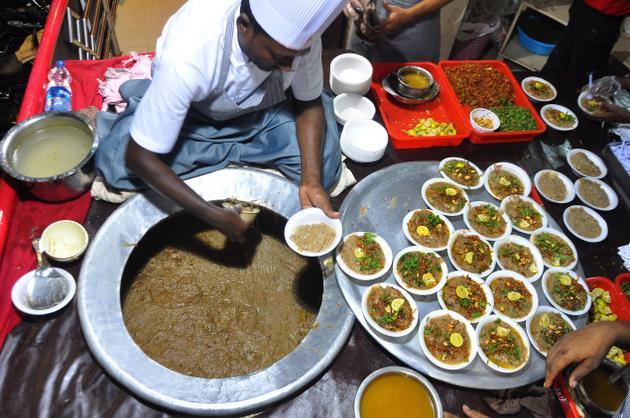
Take, for instance, haleem, present-day Hyderabad’s favourite Ramzan street food which also has a prized Geographical Indication (GI) tag.
A deliciously thick paste of meat, wheat, spices and ghee, haleem‘s first recorded appearance in India was in the 16th century according to the historical text Ain-i-Akbari.
Written by Abul Fazl, the book also mentions that there was a Minister of Kitchen during the reign of Akbar.
While the dish’s exact origins are difficult to pinpoint, haleem is believed to have made its gastronomical journey to the Deccan during the Mughal era.
In the years to come, the secrets of the imperial kitchens gradually made their way across the country — not just to the royal kitchens of princely states but also to the gullies and bazaars of many Indian towns.
And over the centuries, they made their way to fancy restaurants, old-school outlets and home delivery services in bustling cosmopolitan cities.
So the next time you dial for Mughlai paratha and Reshmi Tikka, spend a minute thinking about (and perhaps, thanking) all those food-loving emperors, their fashionable wives and their hardworking khansamas!
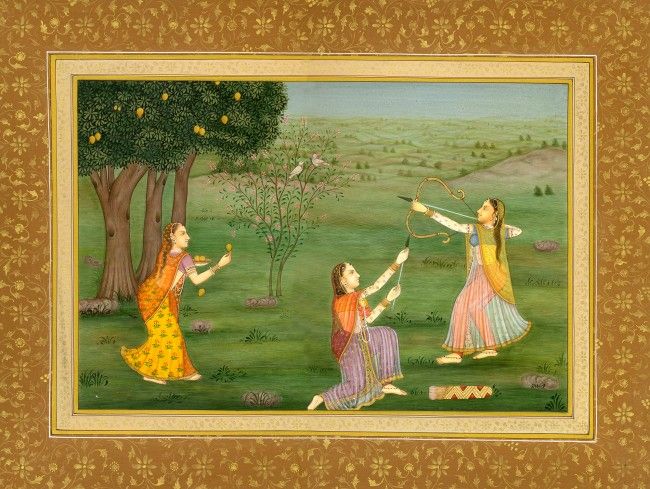
Interestingly, the tale of Mughal culinary culture is incomplete without a mention of the dynasty’s fondness for mangoes!
A sole exception to this rule, Babur had little time for mangoes. However, such was Humayun’s love for the fruit that he took care to ensure a good supply of mangoes (through a well-established courier system) while on the run from India to Kabul.
A painting of royal women shooting down mangoes during the Mughal era.
Akbar built the vast Lakhi Bagh near Darbhanga, growing over a hundred thousand mango trees. This was one of the earliest examples of the grafting of mangoes, including the Totapuri, the Rataul and the expensive Kesar.
Shah Jahan’s fondness for mangoes was so deep that he had his own son, Aurangzeb, punished and placed under house arrest because the latter kept all the mangoes in the palace for himself!
In fact, Jehangir and Shah Jahan even awarded their khansamas for their unique creations like Aam Panna, Aam ka Lauz and Aam Ka Meetha Pulao (a delicate mango dessert sold all through the summer in Shahjahanabad). It was also mangoes that Aurangzeb sent to Shah Abbas of Persia to support him in his fight for the throne!
(Edited By Vinayak Hegde)
source: http://www.thebetterindia.com / The Better India / Home> Food> History> India / by Sanchari Pal / August 31st, 2018
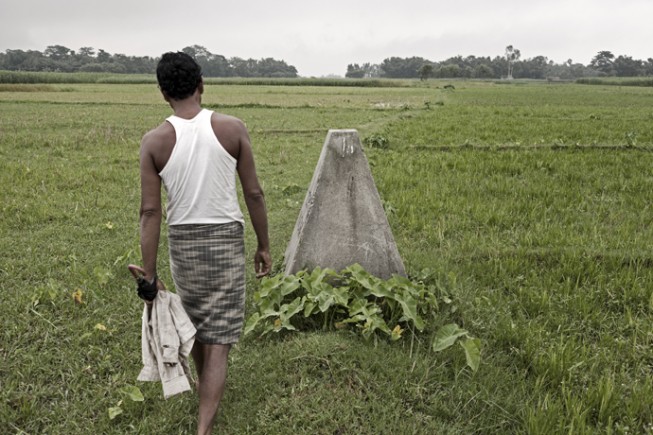
A farmer at a border post in Takimari. The village lies on an island on the unfenced stretch of the border with Bangladesh, where stone pillars mark the border. (2014)
At the western edge of Assam, near a district called Dhubri, the Brahmaputra river exits India and enters Bangladesh. Here, for a stretch of about six kilometers, the border between the two nations is fluid—it lies squarely on the river, making it near impossible to fence. Several hundred sandy islands, known locally as chars, pepper the surface of the Brahmaputra. This archipelago, inhabited by a largely Bengali-speaking Muslim population—seen by many as illegal immigrants—has become a pivotal element in the politics of Assam.
The residents of the chars can trace their presence in the region to policies laid down by the British at the turn of the twentieth century. In the early 1900s, in order to administer populations and grow food in undivided India, the British government encouraged labourers from the Bengal region—much of which, after Partition, would become East Pakistan, and then Bangladesh—to move into the Brahmaputra valley. However, as early as the 1930s, anti-immigrant sentiment had begun to take root in the region. The local population felt threatened by the new settlers, who had begun living in the chars, the sandbanks and the wastelands along the river, and had activated an agrarian economy. After 1947, the political developments in the state only fueled the anti-immigrant sentiment. The bogeyman of the “Bangladeshi immigrant” was ritualistically revived for decades, resulting in outbreaks of violence in the state. During the Nellie massacre of 1983, thousands of Bengali Muslims were killed for opposing a boycott of the state elections. A bout of violence occurred as recently as 2012, in the Bodo Territorial Area District (BTAD). Clashes between the indigenous Bodo tribe and the Bengali Muslim community resulted in the deaths of over 70 people, and hundreds of thousands were displaced from their homes.
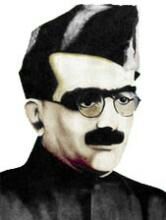
Between 2012 and 2014, I visited the districts in western Assam, including Dhubri, Kokhrajhar, Bongaigaon, and Chirang, on multiple occasions. At the time of Independence, led by an Islamic scholar and community mobiliser named Abdul Hamid Khan Bhashani, the chars in Dhubri were the breeding ground for some of the most radical peasant politics of the time. A pious maulana who came to be regarded as a peer, a spiritual guide, Bhashani fashioned a brand of Islamic socialism that captured the imagination of Bengali Muslims. But for some years now, a large part of the community has been under the sway of a new peer. The perfume baron-turned-politician Badruddin Ajmal, and his party, the All India United Democratic Front, have maintained a stronghold on the Bengali Muslim polity for nearly a decade. Dhubri is Ajmal’s constituency.
But the district is steeped in problems. The 2012 strife had thrust the unfenced riverine border into the spotlight. The islands here formed the final frontier of the Indian state. Following the clashes, leaders of Bodo groups alleged that the Border Security Force (BSF) in the region was lax, and unable to check illegal immigration. This accusation led to the tightening of security at the banks of the river and intense scrutiny for the residents of the chars. Every year, the precarious geography of the chars, with periodic changes in the river’s levels, pushes the residents to migrate inward into the more stable ground. Access to healthcare and education is limited, as are sources of revenue. The Dhubri Foreigners Tribunal Court sees hundreds of visitors from the surrounding districts, many of whom hope to get their names cleared from the “D-voter,” or doubtful voter lists. The community is ruled by paranoia, and fear of Bodo militants, sentiments many accuse Ajmal of having used to his advantage.
During my final visit to western Assam, in November 2014, the mood was tense. Other parties in Assam, such as the Congress and the Asom Gana Parishad had begun to clamour against the AIUDF and religious bodies such as the Jamiat Ulama-i-Hind, or the Organisation of Indian Islamic Scholars (Ajmal heads the Assam wing of the Jamiat), accusing them of fanning communal fires and encouraging insurgency. The AIUDF came out strongly in its own defense. At the centre of its campaign were the questions of home and belonging, in the form of the National Register for Citizens, a government roster of official residents of the state that has been under process for decades, and has assumed a power of mythical proportions amongst the Bengali Muslim community.
As election season peaks once again in Assam, hitherto unexpected players are raising the familiar slogans of threats from outsiders. The BJP, which until recently had a minor presence in the state, has ridden to prominence, partly by forming an alliance with the Asom Gana Parishad (AGP). The alliance has become the incumbent Congress’s biggest threat, which has steadily lost the Bengali Muslim vote to the AIUDF. But regardless of whether Ajmal’s seeming hold over the Bengali Muslim community plays a crucial role in the formation of the next state government, the question of identity will continue to remain central to Assam’s politics.
source: http://www.caravanmagazine.in / The Caravan / Home> Vantage> Communities / by Nikhil Roshan / April 10th, 2016
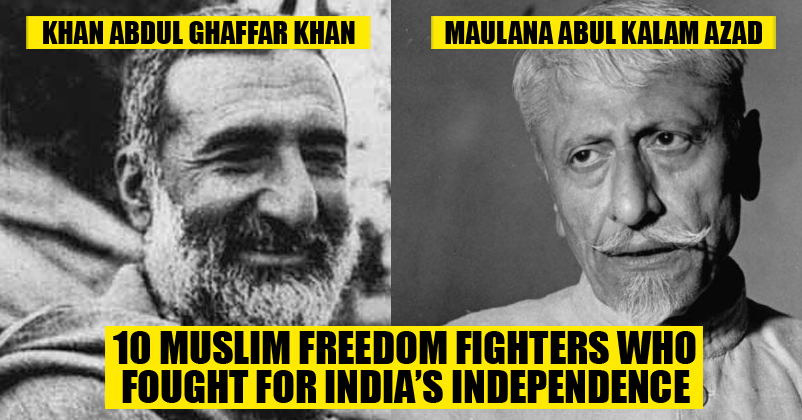
Ironically, in our present day India, even freedom fighters are judged on the basis of their religion. Many people believe Muslims didn’t contribute to India’s Independence from the British rule. To make it worse, there are not many sources available that disclose Muslims’ contribution to India’s Independence.
To break the myth of every person who believes Muslims have given no contribution to India’s history, we have tried to come up with a list of 11 Muslim fighters who fought for India’s Independence and are still present somewhere in India’s history.
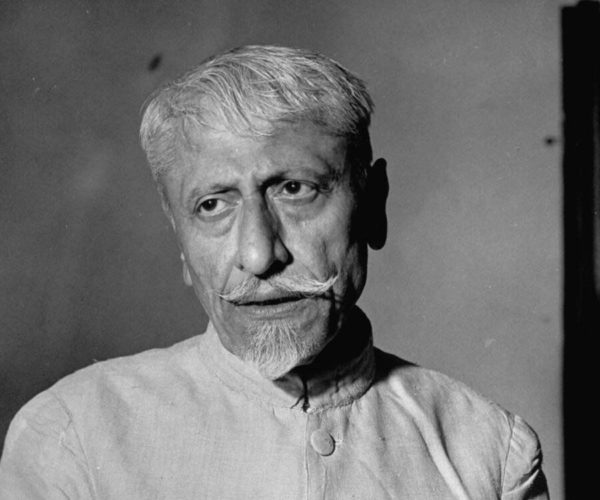
Maulana Abul Kalam Azad
One of the greatest freedom fighters of India, Maulana Abul Kalam Azad, is our first name of Muslim Freedom Fighters. His service to the nation didn’t just stop after India became independent, he continued serving India till his last breath. He first took part in India’s Independence aged just 16. In his second stint as Congress President, He started the Quit India Movement. He was the first education minister of India. He was conferred a Bharat Ratna in the year 1922. Maulana Abul Kalam Azad, after serving the country for over 50 years, breathed his last on 22 February 1958.
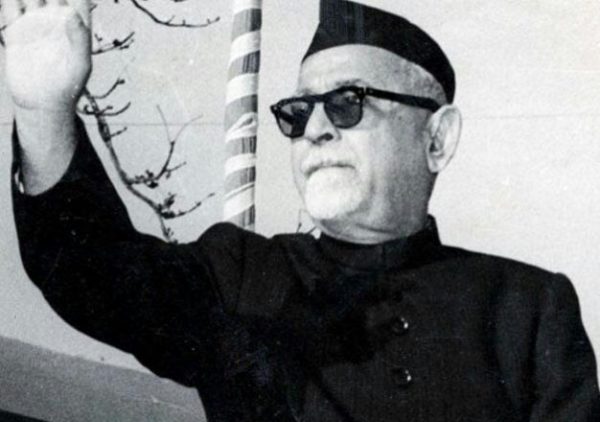
Dr. Zakir Husain
Another Bharat Ratna awardee, Dr. Zakir Husain was the third president of independent India and also the first Muslim president of India. He was a stern follower of Mahatma Gandhi’s non-violence policies. He believed that education was essential to make the Indian youth capable of fighting against the British and thus focused on empowering the education system. He acted as the Vice Chancellor of Jamia Millia Islamia for 22 years (1926-48) and made it one of the finest educational institute of India. He died on 3 May 1969 becoming the first Indian president to die on duty.
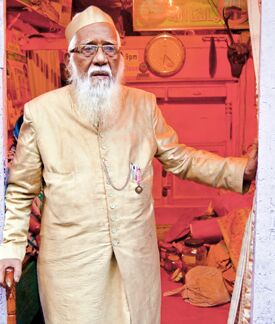
Syed Mohammad Sharfuddin Quadri
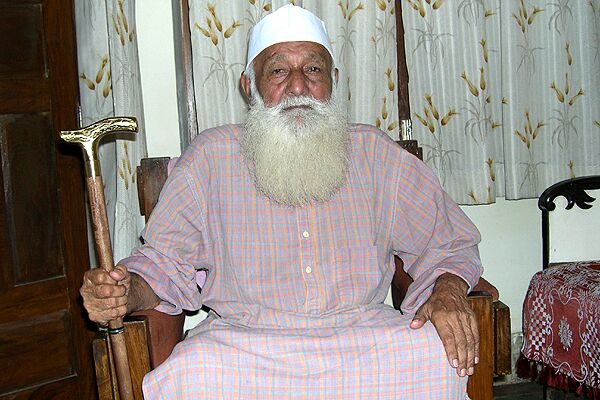
A forgotten hero of India’s freedom struggle, Syed Mohammad Sharfuddin Quadri is included in our list for his supreme acts of nobility. He joined India’s freedom struggle during the Salt Satyagraha movement in 1930. He ably supported Mahatma Gandhi in every struggle and was imprisoned in the same cell as Mahatma Gandhi. Even after independence, he stayed away from politics and still continued to contribute his bit to the nation. He died on 30 December 2015, at the age of 114, 8 years after getting awarded with a Padma Bhushan.
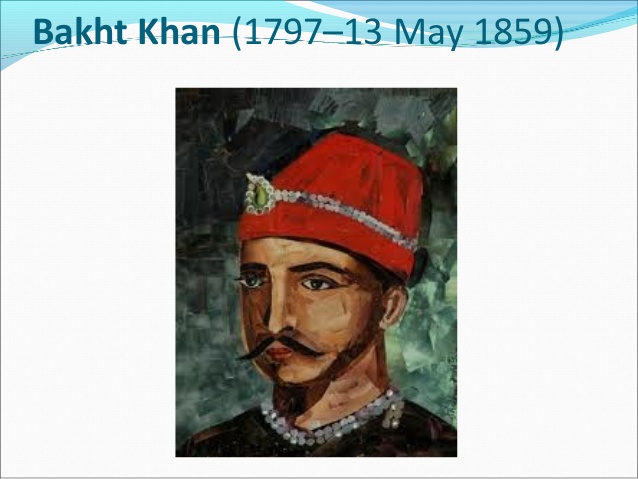
Bakht Khan
Hailing from Bijnor district of Uttar Pradesh, Bakht Khan was a major part of the rebellion of 1857. An experienced army-man, Bakht Khan served as a Subedar in the Army of East India Company. Bakht Khan took command of the rebel forces. He lacked ammunitions, food and other necessities and still managed to improve the standard of rebellion forces drastically. His strong and powerful rebellion activities prompted the British rulers to launch a man hunt. In May of 1859, the British had their prime target, Bakht Khan, shot dead.
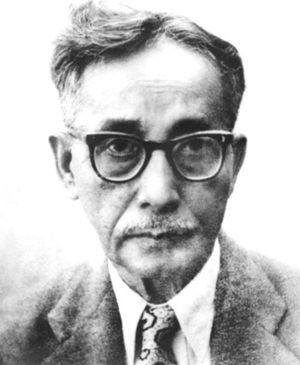
Muzaffar Ahmed
Born in the present day Bangladesh, Muzaffar Ahmed initiated a magazine Navayug to promote the nationalist feeling amongst the Indian youth. He was one of the founders of the communist party of India. He was jailed several times for his involvement in various conspicuous deaths of British officers. The headquarters of Communist Party Of India in Kolkata is named after him. He died in Kolkata in the year 1973.
Mohammad Abdur Rahiman
Born in the Thrissur district of Kerala in the year 1898, Mohammad Abdur Rahiman was known for his heroics in restoring peace in the riot affected areas of 1921. He was jailed for two years for the same. He practised Salt Satyagraha and was again sentenced for rigorous imprisonment for 7 months. He mobilised the Muslim masses against the two nation theory of Muslim league Party. Soon after addressing a public meeting at Kodiyathur on 23 November 1945, he breathed his last.
Khan Abdul Ghaffar Khan
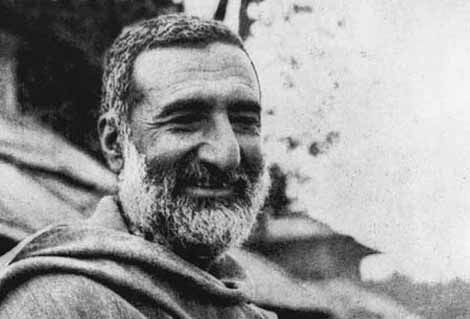
Known as ‘Frontier Gandhi’, Khan Abdul Ghaffar Khan was one of the major reasons behind the Britishers leaving India. He pioneered the famous Khudai Khidmatgar (“Servants of God”) movement in 1929 and it successfully guided it to its Destiny. After independence, he opposed the partition of India but failed. He moved to Pakistan and started a movement for a separate Baloch province. He was jailed many times for the same cause. He died in 1988. During that period, a war was going on between the Afghani rebels and soviet forces. However, both sides halted their proceedings to lend a tribute to this legend.
Abbas Ali
Inspired by Bhagat Singh and Chandrashekhar Azad, Abbas Ali joined the Indian freedom movement in his teenage after completing his education. He joined the Indian National Army (INA) or the ‘Azad Hind Fauj’ and was subsequently court-martialled and sentenced to death. However, before he could serve his punishment, India attained independence and Abbas was eventually set free. He was in jail for over 50 times all throughout his life and stayed in jail for 19 months when Indira Gandhi imposed the emergency. He died on 11 October 2014 due to a heart failure.
Asaf Ali
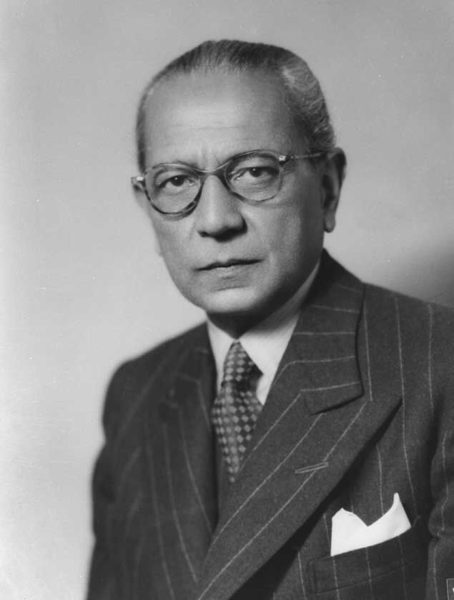
When tons and tons of freedom fighters were getting jailed everyday, Asaf Ali stepped up and fought their legal battles to bail them out. He was even jailed alongside Jawaharlal Nehru. He participated in the ‘Quit India Movement’ and did everything he could for helping India achieve independence. On 1 April 1953, Asaf Ali died in Bern (Switzerland) while serving as India’s representative. A postal stamp was issued in his honour in 1989.
Maulana Mazharul Haque
Born in Patna district of Bihar on 22 December 1886, Maulana Mazharul Haque was known for his his social works during the famine of 1897. He became the Vice Chairman of Bihar Congress Committee and started taking part in the freedom struggle. He played a major role in making the Non-Cooperation and Khilafat Movements and the Champaran Satyagraha a success. He died in January 1930 before which he donated every single bit of his property for encouraging education. In his honour, in April 1988, the Maulana Mazharul Haque Arabic and Persian University was founded at Patna.
Not just these 10, there are many many more of such brave souls who fought for their nation while being active followers of Islam. Maghfoor Ahmad Ajazi, Saifuddin Kitchlew, Moulvi Mohammad Baqir, Vakkom Majeed and many more names can be added to this list.
Yes patriotism is a religion in itself and tagging it with another religion is completely unacceptable. Do let us know if you know about other such Muslim Freedom Fighters in our comments section below.
source: http://www.rvcj.com / RVCJ / Home> Extras / by Kashif Sheikh / February 13th, 2017
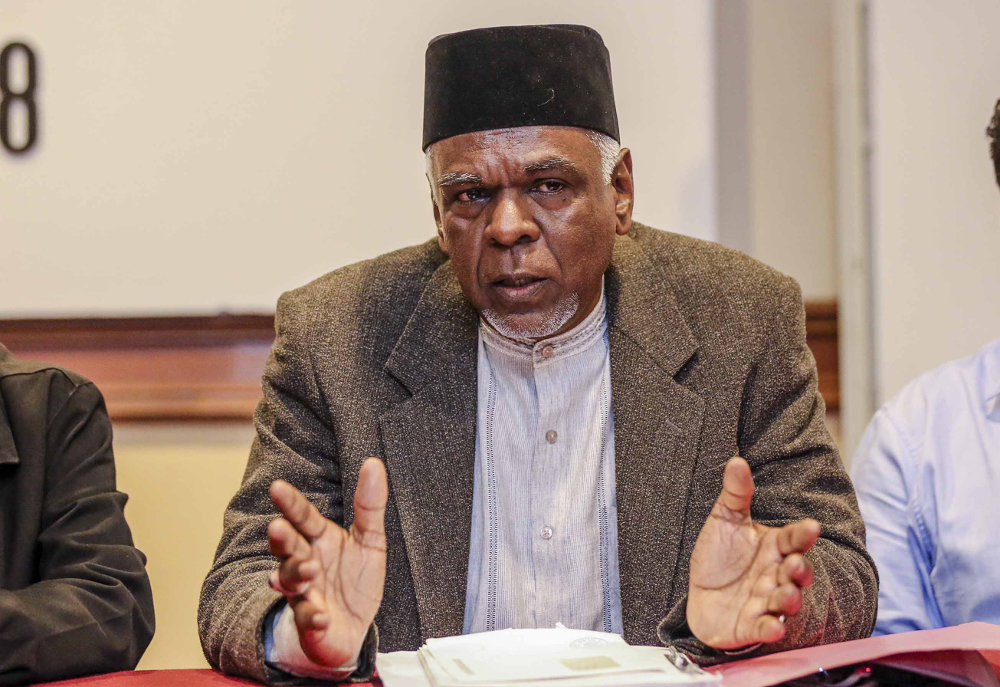
Muslim People’s Coalition president Amir Amsaa Alla Pitchay speaks during a press conference in Kuala Lumpur August 5, 2018. — Picture by Firdaus Latif
Kuala Lumpur :A group comprising mostly Indian Muslims urged the government today to appoint a senator to champion minority rights.The Malaysia Muslim People Coalition (Irimm) headed by Amir Amsaa Alla Pitchay, who used to be president of the pro-Barisan Nasional (BN) Malaysian Indian Muslim Congress (Kimma), also declared their support for the Pakatan Harapan (PH) government.
“We (Irimm) do not have any senatorship to highlight or voice our grievances from the grassroots through to the ministry level,” said Irimm president Amir Amsaa Alla Pitchay.
“This kind of things is where PH has to engage and appoint a person in every state to help the community,” he added.
Irimm, with just over 5,000 members nationwide, was formed in 2012 to champion the cause and help Muslim-minority communities in the country.
Amir Amsaa said he hopes that with the support of the PH government, more large scale events and welfare programmes can be organised and executed by Irimm.
He added the coalition was in the process of reaching out to Prime Minister Tun Dr Mahathir Mohamad and Deputy Prime Minister Datuk Seri Dr Wan Azizah Wan Ismail to arrange a meeting to officiate their support towards PH.
“We hope to have large scale events with the government’s support, as we are also looking to have the support of the ministers to help the causes we are championing,” he said.
source: http://www.malaymail.com / Malay Mail / Home> Malaysia / by Emmanuel Santa Maria Chia / August 05th, 2018