Category Archives: Community Involvement / Social Issues

Kodagu floods: Pouring out a cupful of compassion

Sakleshpur Taluk, Hassan District , KARNATAKA :
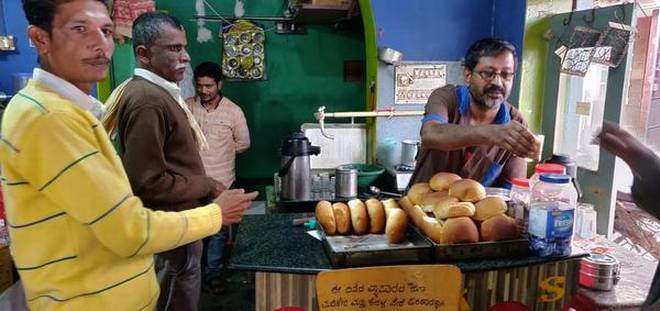
Shaik Ahmed, a roadside tea seller, plans to contribute his earnings on Saturday for rain relief works in Kodagu. | Photo Credit: Special Arrangement

A tea seller at Channarayapatna has contributed his day’s earnings towards the relief works in flood-affected Kodagu. Shaik Ahmed, 60, opened his shop on Bagur Road at 5 a.m. on Saturday with a board stating that whatever he got on the day would go to the flood relief funds.

Till 6 p.m., he had collected a little over ₹7,000. “My aim is to collect at least ₹10,000 for the relief work. I will keep the shop open till 9 p.m. and will hopefully reach the target,” he said.

Mr. Ahmed, a native of Sakleshpur taluk, has been living in Channarayapatna for the past three decades. For years he worked in hotels, but about six months ago he decided to open a tea stall of his own.

Mr. Ahmed, a father of three, was moved by the plight of the victims on news media. “I felt bad for the people affected. My wife and children also supported my decision. We have decided to make Bakrid a simple affair this year,” he said. He added that the business on the day was better than most days. On a normal day, he requires 25 litres of milk, but on Saturday he needed 40 litres.

“I did not give tea or coffee to any customer on credit today.My customers obliged. Many of my friends came to my shop just to give me some business,” he said. He plans to hand over the money to the authorities on Sunday.

Many organisations, including the Hassan unit of Red Cross, have collected donations from people for relief works in Kodagu and Kerala. Members of Prakruti Seva Samudaya, which works for the welfare of transgenders, have also raised funds for flood victims.

source: http://www.thehindu.com / The Hindu / Home> News> States> Karnataka / by Special Correspondent / Hassan – August 18th, 2018
Detailing dargahs of Deccan in ‘Culture of Amity’

Hyderabad, TELANGANA :

Dargah01MPOs11sept2018

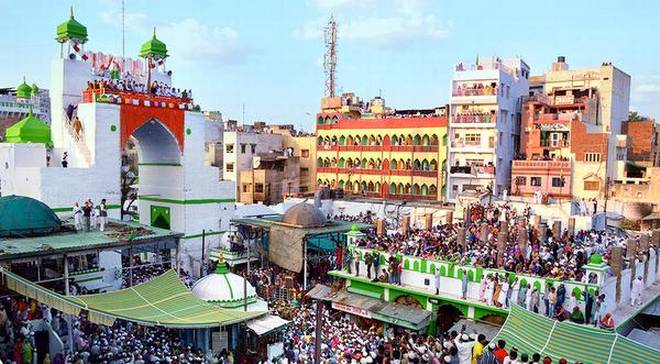
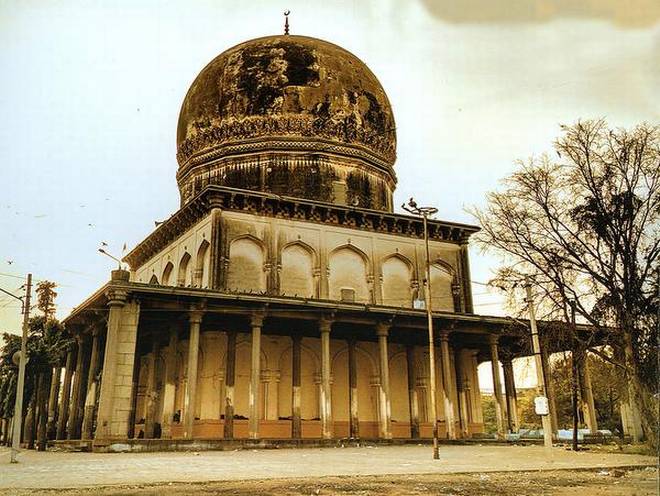
The booklet edited by Department of Culture chronicles the dargahs of Hyderabad and sets right some of the preconceived notions about them

How many Dargahs does Hyderabad  have? It is easy to remember. There is the Yousufain Dargah, Jehangeer Peer Dargah, Shah Khamoush Dargah, Husain Shah Wali Dargah, Shah Raju Qattal Dargah… And there ends the list for an average citizen of Hyderabad. The list, in fact, is quite substantial.

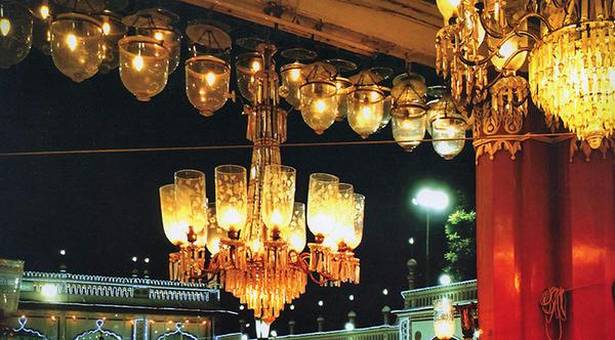
In an age where religious lines are hardening, the dargahs in India remain comparatively open spaces where the faith of the person is not questioned while entering. The people who come to find solace range from men sitting in corners in a forlorn way to women who come with their families and friends and sit outside, and then there are couples who pray for the intercession of the saints buried in the dargahs. Said dargahs also keep the social and spiritual life thrumming as they become epicentres for local festivals dictated by the lunar calendar. Urssamachiragaansandal are few of the events inside dargahs that people living in the area wait for.

Dargah02MPOs11sept2018

“Telangana is a confluence of different cultures, religions and beliefs. From the very rustic and rural Bonalu to the newer faiths like Christianity, people in the region have accepted and adopted all streams of beliefs. This book is a tribute to that,” says Mamidi Harikrishna, head of the Department of Culture who has edited the booklet called Culture of Amity being distributed free. The booklet lists 51 dargahs scattered across the city. “The list is exhaustive and we have discovered more. We will be listing 81 dargahs in the next edition of the book,” says Vasanta Sobha Turaga, an architect, who has edited the book along with Harikrishna.

Dargah03MPOs11sept2018

Between the pages

Without delving into each specific religious space the booklet has information about the dargahs and what goes on in them and how they shape beliefs. “The earliest and the oldest are from the 13th to 14th centuries: the Pahadi Shareef (1266) and Jehangir Peer Baba (1318). And the latest is less than 15 years-old.” The booklet also tracks the progression and change in architectural style. “We have looked at the architectural style of the buildings. But we have also tried to look at the rituals and traditions. There is a lot of intermingling of practices and colourful rituals,” says Turaga who has plans to expand the work into something more substantial.

The booklet also sets right some of the beliefs which people have about the various dargahs. It calls out the belief that the structure atop Moula Ali hillock is a dargah while in reality, it is an ashoorkhana with a few practices of a dargah like the urs that is celebrated in the Islamic month of Rajab.

sources: http://www.thehindu.com / The Hindu / Home> Society> History & Culture / by Serish Nanisetti / September 10th, 2018

Expat wins first prize in Qur’an memorization contest

Hyderabad, TELANGANA /  SAUDI ARABIA :

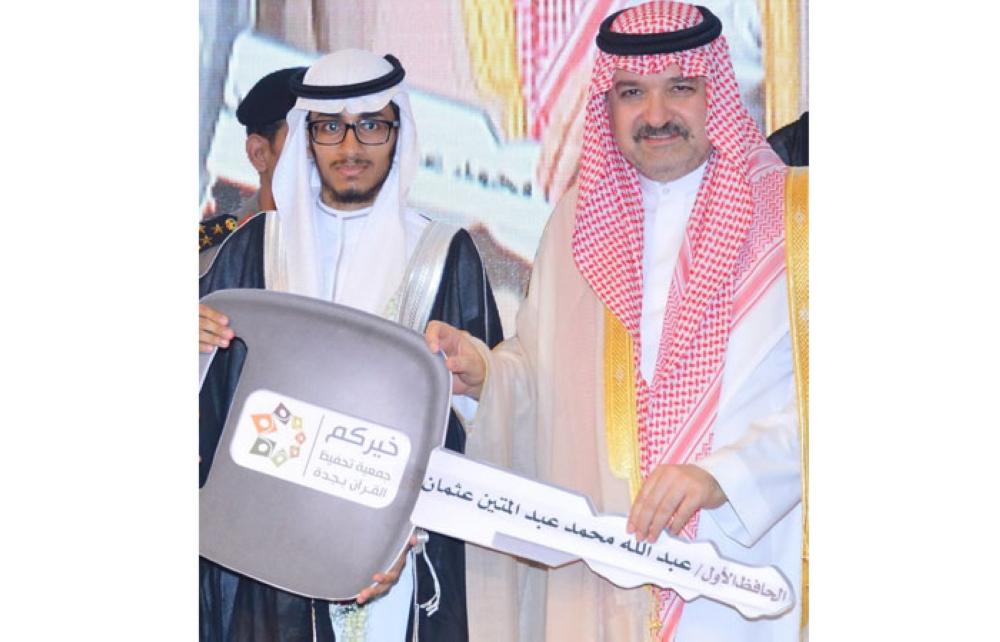
Prince Mishaal Bin Majed, governor of Jeddah, presents Abdullah Abdul Mateen Usmani the key of the car he won as first prize in the Quran memorization project

Jeddah :

Abdullah Abdul Mateen Usmani, an Indian expatriate, has recently been declared winner of the annual Qur’an memorization contest organized by Jamia Tahfiz-ul-Quran Makkah region.

One thousand huffaz (memorizers of the Holy Qur’an) participated in the event with 13 of them scoring marks between 95 and 99. In the second competition that ensued Abdullah Abdul Mateen Usmani was declared the winner.

Prince Mishaal Bin Majed, governor of Jeddah, was the chief guest at the gala event with hundreds of senior officials, philanthropists and parents of the participants in attendance.

Prince Mishaal distributed prizes among the winners with first prize going to Hafiz Abdullah Abdul Mateen who was given a car.

Jamia Tahfiz-ul-Quran is an institution and center established for the students to memorize and recite Holy Qur’an.

The Jamia holds the competition every year to encourage students and other participants.

Hafiz Abdullah Abdul Mateen Usmani belongs to the southern Indian city of Hyderabad.

The award winner’s father, Mateen Usmani, thanked Almighty Allah for the honor bestowed on his son and lauded the efforts of Jamia Tahfiz-ul-Quran in memorization and recitation of the Holy Qur’an.

source: http://www.saudigazette.com.sa / Saudi Gazette / Home  / by Syed Mussarat Khalil / September 08th, 2018

A forgotten freedom fighter

Ganjam(near Srirangapatna) –  Bengaluru, KARNATAKA :

MuslimVelloriMPOs09sept2018

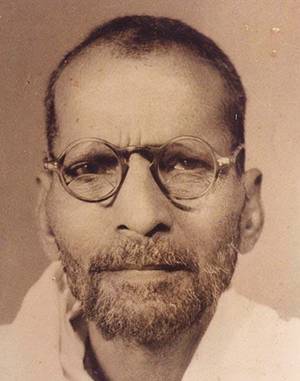
Muslim Vellori, a prominent but not so well-known freedom fighter, did not restrict his public role to the freedom struggle but also played a prominent role in social service

The name of Muslim Vellori does not ring a bell now, but for an older generation of Bangaloreans, particularly Muslims in the city, that name is remembered with a sort of awe as he was a valiant freedom fighter. Born Mohammed Abdul Wahid Khan in 1883 in Ganjam near the historic town of Srirangapatna, Khan grew up to be known as ‘Muslim Vellori’ as he spent most of his childhood studying in a madrasa (Islamic seminary) in Vellore. Even though his father was in the army, Vellori grew up to develop an aggressive anti-British sentiment.

Vellori began working in a shipping company owned by his relatives in Bombay (now Mumbai) after completing his studies in Vellore. His granddaughter Dr. Shakira Khanum, who now teaches in Al-Ameen College, recalled an incident that Vellori had narrated to her. “Once, in Bombay, a Britisher made fun of his beard. My grandfather, who hated the British, was so livid that he almost shot the man,” said Khanum. Working in a shipping company at the time also ensured that he was among the few privileged Indians who could travel as his work took him beyond the shores of India. Vellori travelled to Burma, Sumatra and Java (now part of Indonesia), Mauritius, Ceylon (now Sri Lanka), Madagascar and to several cities in the Middle East. It was during his travels that he met Mahatma Gandhi in Durban. Gandhi and Vellori supposedly became quite close and the former had a formative influence on Vellori’s life.

As Vellori came of age, he came to acquire a reputation of being a fiery orator and through the course of his life took part in many anti-colonial struggles all over the country. He is particularly remembered for his role during the Khilafat movement (1919-1922) where he met many prominent freedom fighters including Mahatma Gandhi, the Ali brothers: Mohammed Ali and Shaukat Ali, Dr. Mukhtar Ahmed Ansari, Hakim Ajmal Khan, Saifuddin Kitchlew. Even the great poet Mohammed Iqbal is supposed to have lauded him for his passionate speeches when he exhorted the audience to support the Khilafat movement in Mumbai. Vellori was jailed several times for his provocative speeches and was even incarcerated in Bangalore Central Jail between 1924 and 1927. Even in prison, he is supposed to have been a recalcitrant internee and often questioned the authority of the jailers.

Vellori did not restrict his public role to the freedom struggle but also played a prominent role in social service. He raised funds to found orphanages in Mysore (now Mysuru) and Cuddapah (now Kadapa). Considering that he was close to several Congress leaders in the state and was recognised as a prominent Muslim leader who staunchly opposed the two-nation theory, he was nominated to the Mysore Legislative Council and was a member in the 1950s during the chief ministership of Kengal Hanumanthaiah. In later years, Jawaharlal Nehru called on him when he visited the state. Towards, the end of his long life Vellori became bitter as he was marginalised by the state leadership of the Indian National Congress and was ignored by the Muslims of the state who no longer felt that he was a suitable leader. An early resident of Jayanagar, Vellori died on Oct. 31, 1977.

(Information for this article has been gleaned from a short booklet published by Vellori’s granddaughter, Dr. Shakira Khanum, who teaches Hindi at Al-Ameen Degree College in Bangalore. Dr. Khanum has also painstakingly collected much of the supporting evidence for her grandfather’s illustrious life including a letter from Tulsidas Jadhav, who was Gandhi’s secretary briefly, attesting to Vellori’s close connections with the father of the freedom movement.)

source: http://www.thehindu.com / The Hindu / Home> Society> History & Culture / by Vikhar Ahgmed Sayeed / August 02nd, 2018

Book on role of Muslims in freedom movement

Trichy, TAMIL NADU :

To commemorate 150th year of `Sepoy Mutiny’

Tiruchi  :

To commemorate the celebrations of 150th year of the `Sepoy Mutiny’ described by historians as the first war of Independence in India, the Institute of Objective Studies, New Delhi, will bring out next year, a book on the `Role of Muslims in Freedom Struggle’ focussing on the participation of freedom fighters belonging to the Muslim community in various struggles and their contribution in making our country free from the clutches of the British rule.

Divided into six chapters, the book will narrate the sacrifice of Muslims all over the country. Each chapter pertains to a cluster of the then Presidencies comprising a few states.

A team of professors and research assistants, led by one author, has been working on the book, identifying the descendants of Muslims who had participated in the freedom struggle.

The sixth chapter comprises three States, Tamil Nadu, Kerala and Karnataka. Details about contribution to the cause of freedom movement by Muslim freedom fighters hailing from these States are now being compiled by J. Raja Mohammed, former Assistant Director of Government Museums.

“I adopt a four-pronged strategy for compiling the data and details about the freedom fighters. Interviewing the family members, collection of details from the Madras Achieves, verification of fortnightly reports sent to the British Collectors between 1857 and 1947, and above all press clippings from newspapers including The Hindu , The Mail and Swadesamitran and a few Muslim journals, to present an authentic chapter in the book,” Dr. Raja Mohamed told The Hindu here on Wednesday

source: http://www.thehindu.com / The Hindu / Home> News> National> Tamil Nadu / by M. Balaganessin / March 23rd, 2006

UPSC exam: Muslim aspirants to get free coaching at Haj Houses from nxt year

NEW DELHI :

Buoyed by 51 Muslim candidates clearing the civil services examination this year, the Haj Committee of India has decided to provide free coaching across states and union territories from next year.

UPSC civil services aspirants are being provided free coaching at the committee’s Mumbai-based headquarters for the last seven years. Two of the students who studied there were selected for the prestigious service this year.

The Haj Committee of India had recently sent a proposal to the Minority Affairs Ministry about providing coaching for the civil services in Haj Houses in all states and union territories. The ministry has accepted the proposal.

Union Minority Affairs Minister Mukhtar Abbas Naqvi told Bhasha, “Two students who took coaching at the Haj Committee of India-run classes, cracked the UPSC exams. Next year onwards the government will start free coaching in Haj Bhavans in states and union territories.”

“We had requested the ministry (of minority affairs) to start free coaching service in Haj Bhavans in different states. We are happy that the minority affairs minister has approved the proposal. We want to start the (coaching) service from next year. We will implement this with the state Haj boards,” Chief Executive Officer of Haj Committee of India, Maqsood Ahmed Khan, said.

For the last seven years, 40 students are provided free coaching at the Haj Committee of India’s headquarters in Mumbai every year, he said.

Of the 980 candidates selected for civil services this year, 51 are Muslims.

Syed Zafar Mahmood, the chief of Zakat Foundation of India, which helps aspirants from economically weak Muslim families to prepare for the exam, said, “In 2017, around five lakh candidates appeared for the civil services preliminary examination and hardly 2 per cent of them were Muslims.”

“If the participation of Muslim students grows in the civil services examination then the number (of selected candidates) can go up from 51 to 100 as well,” he said.

source: http://www.outlookindia.com / Outlook / Home> Magazine / New Delhi – May 06th, 2018

Mohammed Kamaluddin Ahmed, ex-minister & ex-ambassador, passes away

Hyderabad, TELANGANA :

Hyderabad:

Mr Mohammed Kamaluddin Ahmed, Ex-Central Minister and ex-ambassador to the Royal Kingdom of Saudi Arabia, passed away in Hyderabad in the wee hours of Sunday, September 2, 2018.

Mr Kamaluddin was elected as Member of Parliament for four times. 3 times in 1989, 1991 & 1996 from Hanamkonda & 1 time from Warangal. He had been the Member of Parliament from Warangal from 1980 to 1984. Earlier he was also elected as MLA twice. From Cherial assembly constituency in 1962 & from Jangaon assembly constituency in 1967.

He also served as APSRTC Chairman from 1970 to 1973. He served on several posts including APCC President and NABAD Chairman.

Mr Kamaluddin was born in Maddur Mandal of Salakpoor Village. He was the senior Telangana leader, a good politician & a good advocate. He was a good scholar as well.

He was undergoing treatment at Apollo Hospital, Hyderabad.

source: http://www.siasat.com / The Siasat Daily / Home> Hyderabad> News / by Rasia / September 02nd, 2018

‘Sringaramanjari’: Where oceans of culture meet

Hyderabad, TELANGANA :

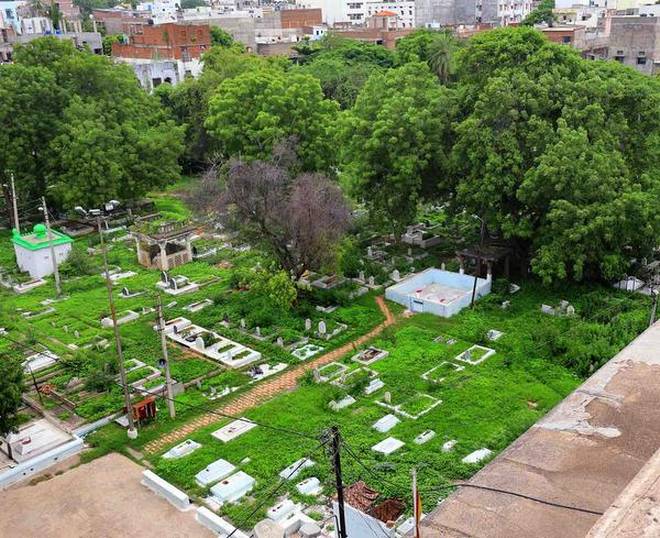
An aerial view of the graveyard

The pages of this Sanskrit trestise eschew a story of timeless love, passion and the strife it accompanies

Misrigunj is one of the old city areas of Hyderabad where it is easy to get lost as the lanes and bylanes double back and are in no particular order. Even a compass will be of little use, forget about online maps. In one of the lanes that lead on from one of the biggest domes in the city is the grave of Syed Kalimullah Hussaini or, as he was known in his lifetime, Akbar Shah. Walking in the lanes and standing near his grave in Misrigunj, it is difficult to imagine that the young man wrote a Sanskrit treatise on love, heroines and their moods called Sringaramanjari. The treatise on the many moods of love begins with a Guru stuti.

Guru Ganapati Durga Vatukam Shivamachutam

Brahmanam Girijam Lakshmim Vanim Vande Vibhoteye

If Akbar Shah wrote the Sringaramanjari, credit has to be given to Sanskrit scholar Venkataraman Raghavan for resurrecting the book based on two manuscripts and giving insights into the life of Akbar Shah or Bada Akbar. Raghavan became curious in 1943 when he saw a Sanskrit manuscript in Government Oriental Library, Mysore. Using other material from Tanjore Library, Raghavan published a book with an exhaustive introduction leading to the adaptation of the work for Bharatanatyam and Carnatic music.

To understand how a book on love written in Sanskrit by a Muslim scholar living in a Sufi khankah came to be written about in the latter half of seventeenth-century Hyderabad would be a challenge. Akbar Shah was the son of Shah Raju Qattal who traced his lineage back to Gesu Daraz credited with bringing Sufism to Deccan. Akbar Shah grew up in his father’s khankah along with another young boy: Abul Hasan, or as Shah Raju called him Tana Shah(young king).

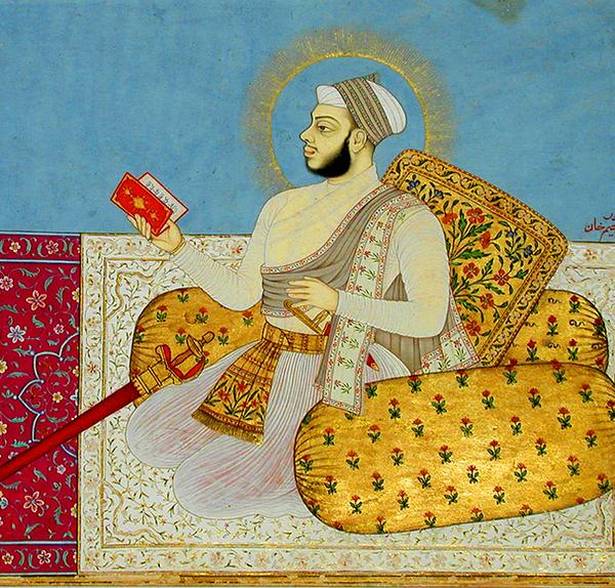
Painting of Akbar Shah

The lines of religion and language in Deccan were like lines drawn in the sand. It was in Deccan that a king moved his capital from Gulbarga down south to Bidar where the linguistic boundaries of Kannada, Telugu and Marathi met. The language and court practices were a blend of the Persian world and those from the native kingdoms. The taj worn by kings became the colourful pugree in course of time.

It is in this flexible world that a Muslim scholar could sit inside a Sufi khankahat the feet of his father and write a work that dwelt at length about the fickleness of love, heroines, beauty and attraction. If the love of your life is angry, Sringaramanjari has a recipe to solve the problem. It suggests a time and a place with a romantic mood like spring and moonlight. It also gives six ways to win over the love: pleading, gift, winning over her friends, indifference, falling at her feet or changing the circumstances.

One of the topics that Akbar Shah ponders is whether a courtesan is capable of real love and after much deliberation concludes that she has love for one person but feigns love with many so that she can carry on her life.

Unfortunately, Akbar Shah died young. Raghavan uses evidence in the book as well as a firman issued by Aurangzeb to prove that he died before 1675. Much before his playmate, Abul Hasan could rise to the pinnacle of giving one final burst of cultural efflorescence.

The mazar (grave) of Akbar Shah is in a much better shape now than it was in 1949.“People still come here and spread flowers,” says the mutawalli of the dargah of Shah Raju Qattal.

source: http://www.thehindu.com / The Hindu / Home> Society> History & Culture / by Serish Nanisetti / September 03rd, 2018

MoU signed to give facelift to Ajmer dargah

Ajmer, RAJASTHAN :

AjmerDargahMPOs04sept2018

To clean and manage the 13th-century shrine, a Swachh Iconic Place, ₹5.68 crore to be spent

The historical dargah of Sufi mystic Khwaja Moinuddin Chishti in Ajmer is all set to get a facelift as a memorandum of understanding has been signed by the Dargah Committee, the Ajmer Municipal Corporation and Hindustan Zinc for spending ₹5.68 crore to clean and manage the shrine.

The 13th-century dargah has been included among the Swachh Iconic Places, a clean-up initiative focused on iconic heritage, spiritual and cultural places through a multi-stakeholder approach model. The campaign was initiated under the Swachh Bharat Abhiyan in 2016.

Select 100 SIPs across the country will be cleaned and developed at a higher level of sanitation and facility management in collaboration with corporates and leading public sector units as part of the initiative.

In Ajmer, the Collector will act as the project’s nodal agency with the Dargah Committee and ‘khadims’ (workers) being the primary stakeholders. An amount of ₹5.68 crore will be invested in the project’s first phase for establishment of two flower compost making machines, cleaning and basic repair of the Jhalra pond, re-flooring in select areas, procurement of machines for cleaning the floors, risk management system plan, conservation of Shahjahani Gate and initial plans for Nizam Gate.

More amenities

The MoU was signed in Ajmer on Saturday in the presence of Union Minister for Minority Affairs Mukhtar Abbas Naqvi. Mr. Naqvi said the project would help in the dargah’s upkeep and provide more facilities to the pilgrims coming during the Urs and in other seasons.

Two flower compost machines have already been installed in Kayad at a cost of ₹27 lakh for churning out about 25 kg of compost from 100 kg of flowers offered at the dargah. A vision document for the shrine has been prepared by a team of architects and building plan and design consultants.

source: http://www.thehindu.com / The Hindu / Home> News> States> Other States / by Special Correspondent / Jaipur – September 04th, 2018

‘God’s own hands’ make twain meet in Kerala

Vechoor, Kottayam, KERALA :

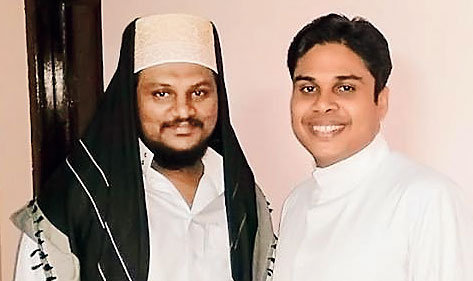
Imam Azhar al Qassimi with Fr Sanu Puthussery

Bangalore:

When Imam Azhar al Qassimi stopped barely 20 minutes into his Friday sermon, many among the faithful were surprised.

Surprise turned to astonishment when they saw a man in a Christian priest’s robes walking into the jummah congregation.

It was Fr Sanu Puthussery, vicar of St Antony’s Church in Vechoor, Kottayam. The priest from the Syro-Malabar Church walked up to the podium, which the imam quickly vacated, and for the next eight minutes, addressed the 250-odd Muslims.

“It was an unbelievably holy experience,” Fr Puthussery told The Telegraph on Sunday about an event being portrayed as a milestone in communal amity and just the inspiration a flood-battered Kerala needs as it inches towards normality.

“I had gone to meet the imam at the Juma Masjid next to our church to thank him and the Muslim community who helped me feed and take care of the 580 flood-hit families who had taken refuge at our church.”

The imam asked him to wait through the Friday prayers, kept his sermon short and left the floor to the Christian priest.

Faced with a food shortage for the 2,000-odd people sheltering at the church, Fr Puthussery had approached the imam on August 17. He “mobilised food, medicines and volunteers” till the families left nine days later.

In a video clip of his thanksgiving address at the mosque, Fr Puthussery is heard saying: “This mosque came as God’s own hands to help those who took refuge at my church.”

He told this newspaper: “I had never even entered a mosque until then…. I spoke about brotherhood…. I could see tears roll down the cheeks of some elderly people.”

The imam said: “Humanity doesn’t have man-made boundaries. If we can continue to live by the same level of love and brotherhood, we can convert this planet into heaven.”

After the floods, Muslims youths have cleaned up temples. A church and a temple were thrown open for Muslims to offer Bakrid prayers as their mosques were under water.

Yassar Arafat, who had led a group of Muslim volunteers in rescue and relief and helped at the church, said the vicar’s address was “a moment everyone at the mosque would cherish through their lives”.

The man who shared the story on Facebook, Niyaz Nasar, said he had just happened to be at the Vechoor mosque although he usually goes to another mosque.

“Perhaps I was destined to be the messenger to reach this story to the world,” an emotional Nasar said.

source: http://www.telegraphindia.com / The Telegraph,Calcutta,India / Home> India / by K.M. Rakesh / September 03rd, 2018