Category Archives: Community Involvement / Social Issues

Mohammed Yunus (1916-2001): The Migrant from Pakistan

PUNJAB / JAMMU & KASHMIR / NEW DELHI :

Independence and partition of India brought massive transfer of populations. Movements of refuges were on predictable, communal lines. There were just a few cases where the communal movements were in the ‘wrong’ direction. To that microscopic group of mavericks belonged Mohammed Yunus who, forsaking wealth and family prestige, left his ‘native Pakistan’ for India and turned out to be of much help to the Indian Muslims.

Yunus is so intimately identified with the erstwhile North West Frontier Province or the NWFP – now Khyber Pakhtun Khwa that it may come as a surprise to many that he was not a Pathan! Born in 1916 in Abbobtabad, his father Haji Ghulam Samdani was an extremely wealthy man owning rights over vast tracts of forest and agricultural lands in Punjab, Kashmir and NWFP. One of the biggest government contractors of his time, he owned most of the legendary ‘Qissakhwani Bazar’, the nerve center of Peshawar.

Samdani was a Mughal whose great-grandfather had migrated and settled down in Baramula, Kashmir in the latter half of the eighteenth century. One of the first from among Muslims of the region to have received western education, Samdani settled in Peshawar as a military contractor in the 1880s and never looked back. He was personally contacted by Sir Syed Ahmad Khan to bail out the MAO College after the institution was in the financial doldrums following a huge defalcation by Shyam Bihari Lal, a confidante of the founder. Apart from emerging as the wealthiest man of the NWFP, Samdani struck roots in the Pashtun area through his philanthropy and marriages including in the famous Charsadda family of the ‘frontier Gandhi’ Khan Abdul Ghaffar Khan. Indeed Yunus was the son of that mother and thus a ‘maternal Pathan’. Some space has been devoted to the family details as this has a bearing on what Yunus made of his future life.
MohammedYunusMPOs03may2018

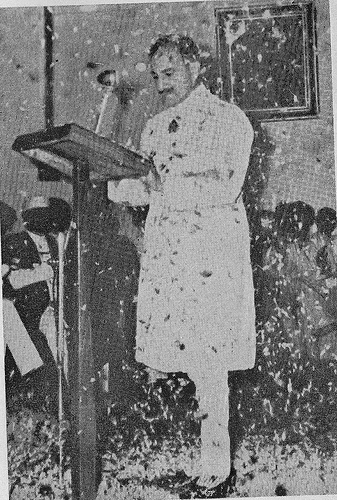
Mohammed Yunus

After an early education in Peshawar in an opulent but deeply religious atmosphere Yunus was dispatched to Aligarh to study in ‘Minto Circle’, more correctly the AMU Boys High School from where he passed the High School examination in 1932. He thereafter joined the Islamia College on a suggestion of its former Principal H. Martin (who was then Pro Vice Chancellor of the Aligarh Muslim University and is remembered as the coauthor of the famous “English Grammar and Composition” by Wren and Martin). Martin had astutely sensed that Yunus with had the right background to play a major role in the public affairs of that province at a future date. Even in his teens in Aligarh he was witty and quick with repartee which lasted a lifetime. Thus when Gandhiji visited the University in 1931, Yunus somehow clambered up the stage of the Students’ Union with an autograph book in hand. The Mahatma with a frown asked him why he was not wearing khadi to which the Peshawar lad replied without batting an eyelid that he was wearing his school uniform and obtained the coveted signature. What the young Peshawari had not disclosed was that there was no objection to the uniform being made of khadi!

Freedom struggle

He passed B.A from Islamia College, Peshawar. During the college days he was associated with the khudai khidmatgar (God’s servants) movement of the ‘frontier Gandhi’ with its emphasis on non violent resistance to the Raj, its emphasis on service of he poor and social reform. Soon after College he emerged as a prominent political activist and main spokesman of the movement who was an informal representative of Ghaffar Khan with whom he had become related (in the ‘oriental fashion’) with the marriage in 1935 of his elder brother Yahya with the only daughter of the great man. Yunus emerged as a major face of NWFP in rest of the country representing the province in Congress forums and espousing the cause of its economic development. He hosted Jawaharlal Nehru, Indira Gandhi and Mohammed Ali Jinnah during their tour of the area and was equally active in Pashto-speaking areas across the Durand line i.e. in South Afghanistan.

He also fought shoulder to shoulder with the National Conference in the Kashmir valley for involvement of people in governance. Yunus was incarcerated in the Quit India movement (1942) and was released only three years later. His reminiscences of prisons were later published in Urdu as Qaidi ke Khat (letters of Prisoners). Following his release he worked zealously against the Muslim League and its demand for Pakistan. In 1946 elections an overwhelmingly Muslim electorate elected a Congress government in the province under ‘Doctor Khan Sahib’ the elder brother of the frontier Gandhi (NWFP was the only province where the dominant community, whether Hindu or Muslim, had voted against the sentiments of the relevant community elsewhere). The government did not survive for long as the aristocrats of the province engineered large scale defections.

Yunus decided to move over to Kashmir to be at the forefront of the agitation against the Maharaja.

Independent India

On the eve of the independence, disgusted with the volte face of the ‘blue blood’ of his community and the communal frenzy he heeded the advice of Nehru and his daughter (with whom he had grown so close as to be almost a member of the family) and decided to make the ‘divided India’ his home. In doing so he was foregoing considerable a fortune – the estate of Haji Ghulam Samdani, which despite its devolution to more than a dozen offspring, was substantial. Nehru offered him appointment in the Indian Foreign Service keeping in view the fact that his proclivity to call a spade a spade would not take him high in politics. Over the years he was envoy in Turkey, Indonesia, Iraq, Spain and Algeria and served twice in the Ministry of External Affairs. In 1971 he was appointed Commerce Secretary – a position he held with great distinction till his retirement in 1974.

After his retirement he was the founder-Chairman of the Trade Fair Authority of India, a position he held till 1977 and again from 1980 till 1985 when he was nominated as Member of the Rajya Sabha for a period of six years. In 1974 when the Muslims of India were restive about the restoration of the ‘minority character’ of the Aligarh Muslim University and the then Education Minister, Prof. Nurul Hasan had made it a ‘progressive’ versus reactionary’ affair Mrs. Indira Gandhi nominated him on the Executive Council of the University where he articulated the aspirations and views of the majority of Aligarh community. It is not intended here to give a ‘low down’ on his professional achievements but mention must be made of the great institution that he built in the form of Pragati Maidan – not only a landmark in the heart of Delhi but clearly among the worlds most prolific and efficient organizers of industry specific fares. The layout, the design of the halls, the infrastructure, carefully planned trees and shrubs all bear a testimony to his loving planning and eye for details. Above all, the initial team of personnel that he handpicked turned out to be a coordinated, well-oiled machine of highly motivated professionals. The traditions and operating procedures laid down by him and his pioneer associates survive to this day and make the ITPO – the rechristened version of the TFI – a vibrant institution. Following a setback in his health Mohammed Yunus lived an increasingly sheltered life with increasingly limited mobility finally succumbing to the inevitable in 2001.

The curious reader could well ask whether what has been stated is all there is to his life or there is something special that earns him the right to be remembered a decade after his death and perpetuate his memory beyond his immediate family. The questions are natural and they deserve an answer – the answers are all in the affirmative.

There are three main reasons why Yunus deserves to be remembered by the country generally while the Indian Muslims need to be particularly aware of his life and time. These ‘reasons’ have to do with his specific achievements and traits and are: An extraordinarily forthright and brutally honest personality, standing by the Muslim community without any political agenda or ulterior motive and a great institution-builder. His ‘baby’ presently called the India Trade Promotion Organization having already been briefly referred, the rest of this piece is devoted to the first two feathers to his cap.

Personality

Yunus had a unique personality which cannot be forgotten by anyone who came in contact with him. He was quite ‘direct’ in his conversations, something which Asians generally lack. This can be illustrated with a few anecdotes. In his autobiography Persons, Passions and Politics (1980, Vikas) he recounts the time he was Joint Secretary in the Ministry of External Affairs and had to deal with the local (British) representative of the Commonwealth Graves Commission and his Boss a pompous ex Brigadier of the British Army who had arrived from London ostensibly to inspect the various war cemeteries run by the Commission but really to express displeasure about Yunus’s refusal to accede to some unreasonable request of the local representative. The Brigadier, a typical ‘Colonel Blimp’ was an arrogant foul-mouthed character still carrying hallucinations of ‘Pax Britannica’ with a disdain for the former ‘subject races’. In any case, the senior officer showed his displeasure to Yunus and asked him not to repeat ‘senseless arguments’ and added to good measure that India was being ‘more mulishly unreasonable’ than Germany and Italy were during the last war. Yunus calmly heard the man and politely asked, “is there anything further you gentlemen wish to add before I give my final response’. The imperious ‘Colonel Blimp’ responded with disdain, “I am not interested in your last responses; I want the bloody thing done by tomorrow morning before I leave for home”. Our man than spoke, “You bunch of grave-diggers, how dare you compare my country to the fascists! Leave this very instant, or I will throw both of you out of this window!” He writes, “they made themselves scarce in no time; I started to laugh, and laughed uncontrollably”.

This author knows of a similar episode on the authority of a very eminent personage (a very venerable civil servant, now in his 80s who in the best tradition of the bureaucracy is loathe to be identified; for the initiated, the narrator was then a Joint Secretary in the Prime Minister’s Secretariat). In early 1975 the Prime Minister called a meeting to discuss the ongoing agitation against amendments made in the AMU Act 1n 1965 and for declaring the University a minority institution. The meeting was briefed by the Education Minister who explained that the agitation was being fomented by ‘reactionary elements’ within the University academics who did not wish the ‘progressive forces’ to lead the institution up the path of ‘growth and academic excellence’. Yunus, one of the invitees, interjected to ask the Minister to explain who the ‘reactionaries’ were. The reply was that they were the ones who ‘raised the bogey of Islam’. Yunus abruptly cut short the Minister and said “and Prime Minister, progressives are those who eat and drink during the month of Ramadan, do not offer Namaz and drink alcohol in the evenings in the privacy of their houses while discussing how best to further the agenda of the Minister!”. There was startled silence in the room with the Prime Minister barely stifling a smile started to furiously doodle on a pad.

Yunus increasingly acted as behind the scene spokesman of Muslims in the corridors of power with no personal ambition or even projecting himself in the public. His role in highlighting indiscriminate demolitions of houses of Muslims in the name of ‘slum clearance’ in old Delhi is not too well known but is acknowledged by, of all the persons, the ‘bulldozer man’ Jagmohan in his Rebuilding Shahjahanbad . This author is personally aware of cases where he took victims of police atrocities to the Prime Minister at a time when doing so (during the emergency) ran the risk of detention without trial. His vigorous espousing the cause of Aligarh academics and students for restructuring the governance charter of the AMU is not fully appreciated. Many who were active those days now concede that with a champion like Yunus they knew they had someone from the ‘establishment’ on their side and this prevented them from developing a negative attitude towards the secular Indian State. What is more, his transparent sympathy – and empathy – made the members of Muslim middle classes look to him as the honest broker faithfully projecting their grievances without any personal vested interest. This resulted in many a simmering discontent to escalate into public agitations.

A handsome man, not very tall but an overpowering presence, he could be assertive and polite at the same time; Yunus had an endearing personality with a propensity to laugh at himself. His fund of jokes and funny anecdotes was virtually inexhaustible. He was a great motivator of men and a good judge of character. He bore personal losses with great courage and fortitude (as was evident when his only offspring Adil Shaharyar died suddenly). The personality of Yunus can be summed up by narrating a personal experience of this author. In a function of the Delhi AMU Old Boys Association both he and Yunus arrived late and occupied the last row as the proceedings were well under way. The Organizers ran to escort Yunus to the front with our man saying that he should not move for three reasons: First seeing him people will get up and disturb the speaker, Prof Moonis Raza (VC Delhi University); Second as a late comer he was in the right place, the last row, and; (turning to me) yeh bechara bhee late aya hai soche ga mujhe saza milee or Yunus ko jaza yanee aage jagah milee!! (The sentence is not very easy to translate, but it should run something like “This poor chap (the author) is a late comer, too, if I shift to the front he will think that while he is punished Yunus is being rewarded for being late – the real pun lies in the rhyming of the words ‘saza’, ‘jaza’, and ‘jagah’ which cannot be translated).

source: http://www.twocircles.net / TwoCirlces.net / Home> Articles> Indian Muslim / by Naveed Masood for TwoCircles.net / June 09th, 2011
UPSC results: ‘Want to tell society madrasas in Kerala can contribute civil servants’

Thiruvallur Village (Kozhikode District) , KERALA  :

The civil services exam, Shahid said, was a way to tell the society that madrasas are not a breeding ground of terrorism. “There may be stray issues or controversies, but madrasas in Kerala can contribute civil servants also,’’ he said.

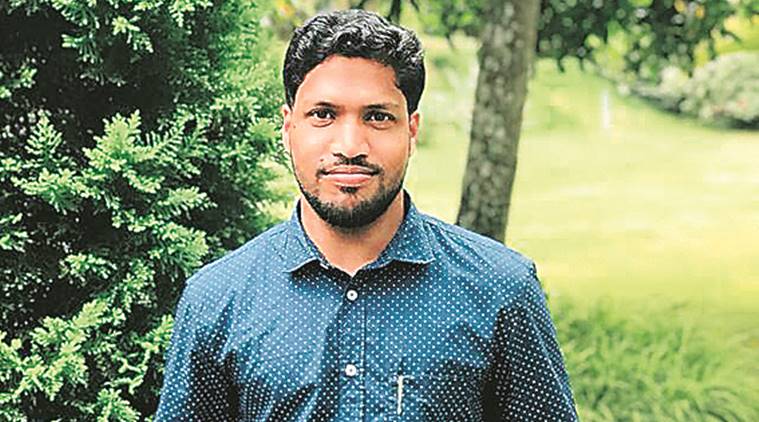
T Shahid, a former madrasa teacher from Kerala, cracked the UPSC examination in his sixth attempt and ranked 693.

Having never had the opportunity to attend a mainstream school, let alone college, after primary school education, T Shahid, a former madrasa teacher from Kerala, has proved that tenacity eventually triumphs. The 28-year-old native of Thiruvallur village, in Kozhikode district, has cracked the UPSC examination in his sixth attempt, ranked 693.

Son of madrasa teacher Abdul Rahman Musaliyar and homemaker Sulekha, Shahid said he was forced to opt for a Muslim religious educational institution, run by an orphanage at Kappad in Kozhikode, at age 10 given financial crisis at home.

After 12 years of religious education and leading a secluded life at the Islamic seminary, Shahid bagged the religious ‘hasni’ degree, a course which equipped him to become a madrasa teacher. While studying for hasni, he completed Class X and Class XII, and finally got a degree in English — all through distance courses.

“From 2010 to 2012, I worked as a madrassa teacher in Kannur for Rs 6,000,” Shahid said.

After the degree in English in 2012, for a brief he worked at the Malayalam daily Chandrika, managed by the Indian Union Muslim League (IUML). And that’s when, Shahid said, his perspective towards life changed — “I started reading about general issues. The 12-year life at the Islamic institute had made my perspective narrow. But working as a journalist made me look at the world outside.”

This was also the time he felt he should try to have a career other than becoming a religious scholar.

Shahid, who had Malayalam literature as optional subject in UPSC, said the coaching classes in Delhi, sponsored by IUML’s students’ wing MSF, helped broaden his mind further. “Those coaching days gave me a lot of exposure, which the madrasa teacher in me never got,’’ he said.

But Shahid has not forgotten his roots. The civil services exam, he said, was a way to tell the society that madrasas are not a breeding ground of terrorism. “There may be stray issues or controversies, but madrasas in Kerala can contribute civil servants also,’’ he said.

source: http://www.indianexpress.com / The Indian Express / Home> Education / by Shaju Philip / Thiruvananthapuram – May 01st, 2018

UPSC exam: Not an easy journey

ALL INDIA  / KARNATAKA / MAHARASHTRA :

For those who made it into the UPSC exam results, the journey has not been easy.

New Delhi :

For those who made it, the journey has not been easy. “When I told my family members and friends that I wanted to take the exam, I was discouraged at first,” said Mohammad Nadeemuddin from Karnataka, who secured 656th rank this year but hopes to get into the Indian Police Service as he is an OBC.

“I was told that at the interview level there would be bias at play but I was elated when I found the interview board to be cordial,” the 25-year-old said.

For Nooh Siddiqui of Maharashtra, who has got 326th rank and hopes to get into the Indian Revenue Service, the target is clear. “I want to be able to serve my community in the best way possible and address the concerns they have,” he told The New Sunday Express.

A total of 990 candidates — 750 men and 240 women — were recommended by the UPSC for appointment to various central government services.

Of these candidates, 476 are from the general category, 275 from OBC, 165 from scheduled caste and 74 from scheduled tribes category.

source: http://www.newindianexpress.com / The New Indian Express / Home> Nation / by Sumi Sukanya Dutta / Express News Service / April 29th, 2018

When the Nawab gifted Gorakhpur an Imambara

Gorakhpur, UTTAR PRADESH :

Miyan Sahab Ka Imambara in Gorakhpur sees lakhs of devotees around Muharram every year.

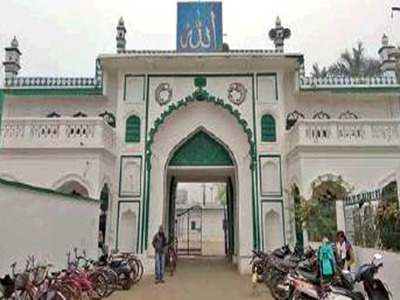
Not many might know that Gorakhpur, the epicentre of the Nath sect, is home to a two-century-old Imambara as well. Built with the help of Nawab Asaf-ud-Daulah, the Imambara has been included in the list of places being promoted by UP Tourism.

Legend goes that once when the Nawab was out hunting in a forest in Gorakhpur, he came across a man meditating by the side of a dhuni (slow burning fire) deep in the woods.

Seeing the mystic wearing almost no clothes, the Nawab offered his expensive shawl to him as it was a bonechilling winter evening.

However, not welcoming of the move, the man, identified as mystic Hazrat Roshan Shah, threw it over the dhuni. But, instead of burning to ashes, the shawl did not catch fire at all, leaving the Nawab bewildered. Seeing his expressions, the mystic replied that the shawl was kept in the safest of places and he could reproduce it on demand. Then, the man took the unscathed shawl out from his ‘dhuni’ and offered it back to the Nawab.

Amazed at his spiritual powers, the Nawab offered him a handsome grant but Shah refused. When the Nawab insisted, Shah asked him to get an Imambara built for Imam Hussain and give some land for the Imambara’s waqf.

As ordered, Asaf-ud-Daulah granted 17 villages in Daud Chak area cash and promised to send gold and silver tazias to the saint. In a book titled Shahernama Gorakhpur, an article by Afganullah Khan notes that the land for the Imambara was handed over to Shah in 1796 and construction began soon after.

The saint died in 1805 and was succeeded by his nephew Ahmed Ali Shah, popularly known as Miyan Sahab. The Imambara came to be known as Miyan Sahab Ka Imambara. It is this name that has been included in the list of places being promoted by the Uttar Pradesh government to bring Gorakhpur on the national tourist map.

It found a mention in the ‘list of places of interest for tourism’ at Gorakhpur Mahotsava too. The government also plans to invite proposals from corporates for investment at tourist sites—including this Imambara.

With its impeccably white exterior, the grandeur of the Imambara can be seen only during the first 10 days of Muharram when azadari rituals are performed. “At least 1 lakh devotees visit the Imambara during Muharram,” says Nahid Shama, principal of a girls’ PG college run by the Imambara Trust.

Blogger Mazhar Naqvi has noted that the traditions of azadari came to the Imambara from Awadh. “Nawab Asaf-ud-Daula sent gold- and silver-plated tazias for the Imambara here from Lucknow. It is believed that the saint had promised to conduct azadari on behalf of the Nawab, and he kept his word,” Naqvi has noted in his article ‘Roshan Ali Shah and the Imambara of Gorakhpur’.

Local writer Prem Paraya stated that the estate grew manifold under the leadership of Roshan’s successors who took keen interest in administrative affairs of the Imambara and related property. “It is said that by then, the estate’s exchequer had lakhs in cash, many gold and silver blocks and a treasure of ‘asharfis’. The waqf was so wealthy that it gave a loan to the East India Company as well,” says Paraya.

source: http://www.timesofindia.indiatimes.com / The Times of India / Home> News> City News> Lucknow News / by Shailvee Sharda / TNN / April 01st, 2018

Syed Saud Hasan met British MP

Bhopal, MADHYA PRADESH :

SyedSaudHasanMPOs27apr2018

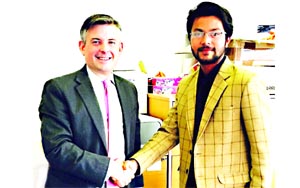
The Vice-President, De. Montfort University Students Union, England and Madhya Pradesh Youth Congress Spokesperson, Syed Saud Hasan met British Member of Parliament, Jonathan Ashworth twice and apprised him the problems facing by Indian Students who are eager to go to England for study.

Syed Saud Hasan, met the British Parliamentarian second time last evening and conveyed him the problems faced by the Indian students, who were either studying in England or eager to go there for study.

Hasan, in his half an hour meeting with Jonathan Ashworth, put with him the visa and stay back problems facing by the Indian students, the parliamentarian heard the above problems seriously and promised to raise the issue in the British Parliament once again.

He said that the MP had already raised the issue in the Parliament earlier as per the first meeting with him few months back. Jon Ashworth promised that he would put pressure on the British government to take a major step in favor of Indian students.

The MP expressed hope that Indian students can get good news soon in the above context. Syed Saud Hasan, Vice President, DMU Student Union said, if this matter is not heard soon, then we will surround the UK government by formulating further strategies. We will fight for the rights of Indian students till it achieved.

source: http://www.centralchronicle.com / Central Chronicle / Home / by Chronicle Reporter – Bhopal / April 25th, 2018

Sunni centre to adopt 100 villages

Kozhikode, KERALA :

Kozhikode  :

Markazu Saqafathi Sunniyya (Sunni Cultural Centre) led by Kanthapuram A P Aboobacker Musaliyar  has decided to adopt 100 villages in the country as part of the 41st anniversary of the institution.

Dr Wael Albattrekhi, deputy head of Palestine embassy in India, inaugurated the programme held at Markaz on Wednesday. He stated that Markaz’s activities have been incredible as the institution carefully engages the marginalised communities in the country.

Kanthapuram handed over a cheque of Rs 1.5 crore to orphans at the function. In his address, the Sunni leader said Markaz had spread its activities to 22 states decades before to improve the living conditions of poor people. Now, Markaz has extended its activities by adopting 100 villages as part of as part of the mission’s focus on educational and humanitarian activities, he said.

Sayyid Zainul Abideen Bafakhi Thangal launched ‘One Million Notebooks’ project and Chennai district judge Zakkir Hussain inaugurated the smart village project during the occasion. C Muhammed Faizy, the general manager of Markaz, delivered the keynote address.

Besides providing food and shelter to the residents, Markaz will impart education and training in the 100 villages with the intention of changing the status of villages. Markaz also will supply one million notebooks and other educational equipment to underprivileged students. As part of Markaz Orphan Care Project, 5000 orphans are being given financial aid.

source: http://www.timesofindia.indiatimes.com / The Times of India / Home> News> City News> Kozhikode News / TNN / April 19th, 2018

‘Everyone was in pain’: Meet the two Indians who won Pulitzers for photographing the Rohingya crisis

NEW DELHI  /  Mumbai, MAHARASHTRA   :

Danish Siddiqui and Adnan Abidi were part of the Reuters team that won the 2018 Pulitzer Prize for Feature Photography announced on Monday.

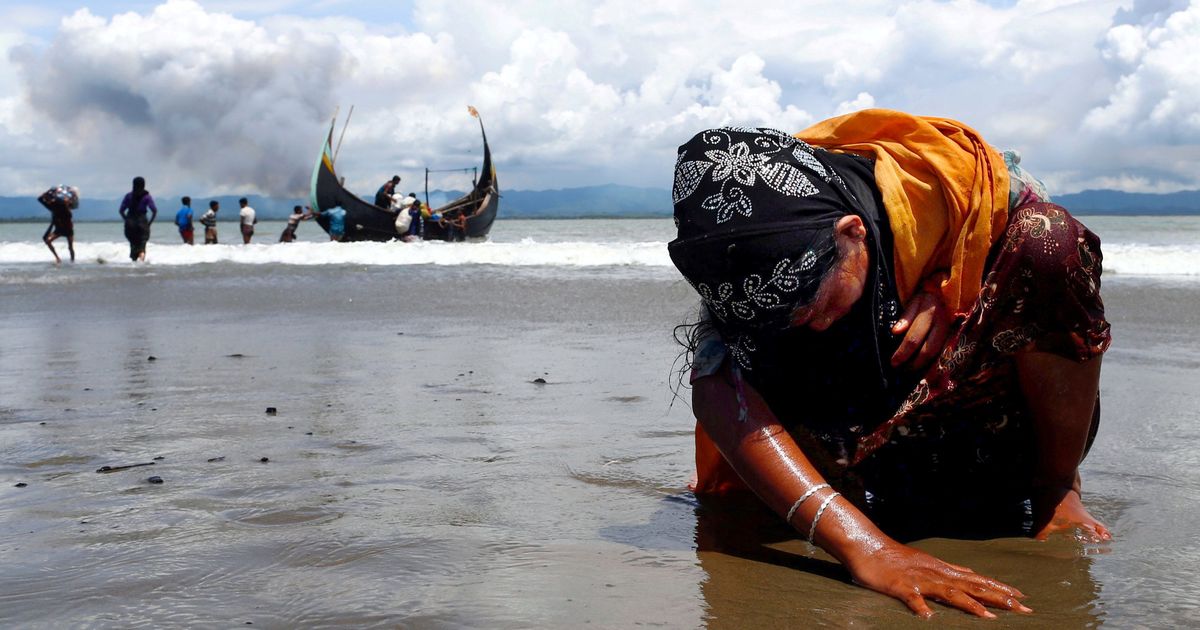
A Rohingya refugee after crossing the Bay of Bengal. | Danish Siddiqui/Reuters

A sun-burnt woman sinks to her knees on the shore, fatigued and forlorn. In the distance, a group of men unload the meagre belongings that they have carried with them in a small boat as they have made their way across the Bay of Bengal from their homes in Myanmar to the safety of Bangladesh.

This striking picture is the work of Danish Siddiqui, one of two Indians in the seven-member Reuters team that won the 2018 Pulitzer Prize for feature photography for their series documenting the violence faced by Myanmar’s minority Rohingya community and their mass exodus to Bangladesh starting from August 2017. The prestigious awards, given out by Columbia University in New York, were announced on Monday.

“A photo should draw people and tell them the whole story without being loud,” Siddiqui told Scroll.in. “You can see the helplessness and the exhaustion of the woman, paired with the action that is happening in the background with the smoke. This was the frame I wanted to show the world.”

Adnan Abidi was the other Indian in the team that won the prize. The other members of the Reuters team were Mohammad Ponir Hossain, Soe Zeya Tun, Hannah McKay, Damir Sagolj and Cathal McNaughton.

The Rohingyas, who are mainly Muslim, have been fleeing their homes in Rakhine state for several years, alleging that they are being discriminated against by the government of Buddhist-majority Myanmar. Myanmar maintains that the Rohingyas are illegal migrants from neighbouring Bangladesh.

The exodus in August was prompted by an intense campaign of violence in Rakhine. Myanmar’s military said that it had launched “clearance operations” against Rohingya militants. It denied that civilians had been targetted.

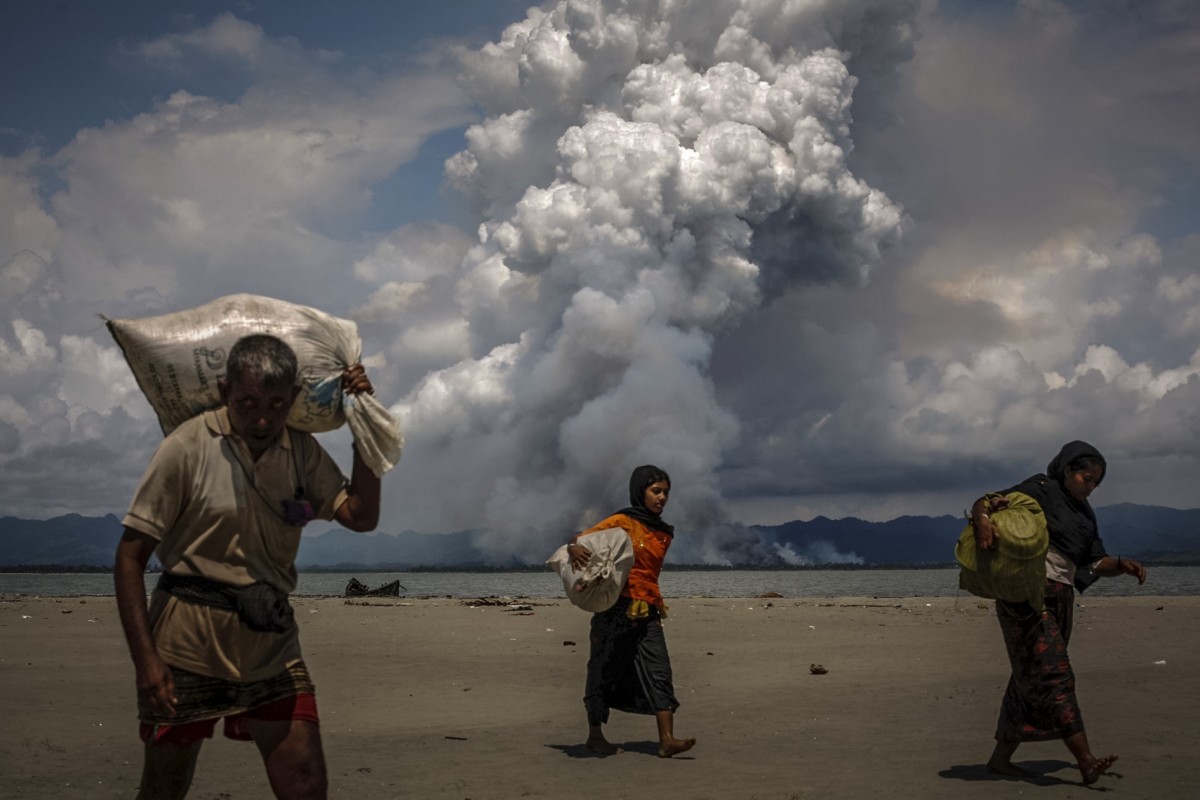
Smoke is seen on the Myanmar border as Rohingya refugees walk on the shore after crossing the Bangladesh-Myanmar border by boat through the Bay of Bengal, in Shah Porir Dwip, Bangladesh, in September 2017. Photo: Danish Siddiqui/Reuters

Complete chaos

Siddiqui was one of the first international photographers to be sent to the field at the outset of the crisis. The photographer had been on vacation in August when he saw the crisis unfold on the news channels. “I told my editors that I wanted to cover the story and within 48 hours I was on the first flight from Mumbai to Dhaka and then to Cox’s Bazar in Bangladesh,” Siddiqui said. “Since I was one of the first wave of journalists to land up there, there weren’t many restrictions, and I was permitted to even click pictures in no man’s land.”

Siddiqui spent around three weeks in the coastal villages of Bangladesh and in refugee camps. “It was completely chaotic,” he recalled. “Fishermen were carrying the refugees illegally from Myanmar to Bangladesh. The boats off coast were not going on the jetty and were landing in the middle of nowhere. Since the waves were really high, the boats were toppling and some people even died. Most of them were so traumatised. What they told me was that nobody should witness these kinds of things in their lives. For them, the first priority was to get food and water for their family.”

Adnan Abidi said that the situation was frantic. “Everybody was in pain,” he said. “We knew it was our job to shoot, but I did not want to randomly go in and click pictures. So I spoke to them and then started shooting. Everybody has lost everything and were living in a 10 by 6 plastic sheet for shelter.”

Abidi spent about 15 days in Bangladesh between late October and early November. “I have worked at Reuters for over 14 years now, but this is the most challenging story I have done till now, including the Nepal earthquake” of 2015, he said.

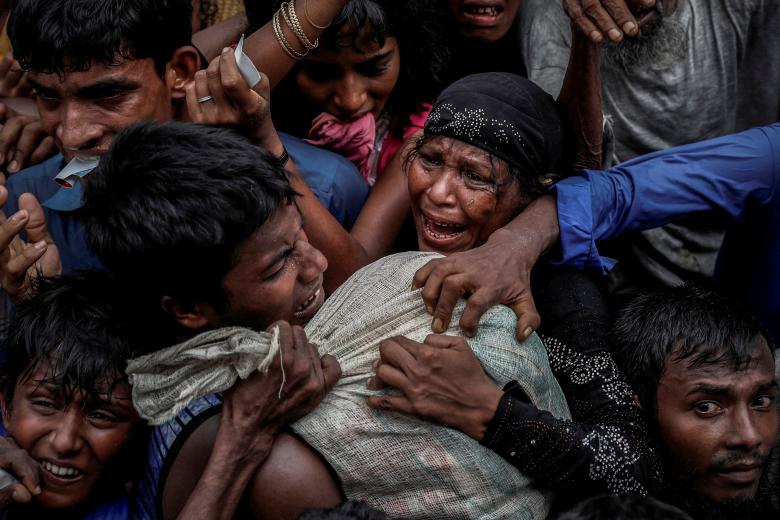
Rohingya refugees scramble for aid at a camp in Cox's Bazar, Bangladesh September 24, 2017. REUTERS/Cathal McNaughton
Rohingya refugees scramble for aid at a camp in Cox’s Bazar, Bangladesh September 24, 2017. REUTERS/Cathal McNaughton

Right place at the right time

Each of the 16 photographs in the series portray a different aspect of the vast human tragedy. A great news photograph, says Siddiqui, the result of both knowledge and chance. “You have to be at the right place at the right time,” he said. “It is also important to know the history and culture behind a place. You need to also know the history of the conflict. And in cases like these you have to do research on the monsoon waves. But again, news photography does not involve too much planning. We must think of what the readers want to see.”

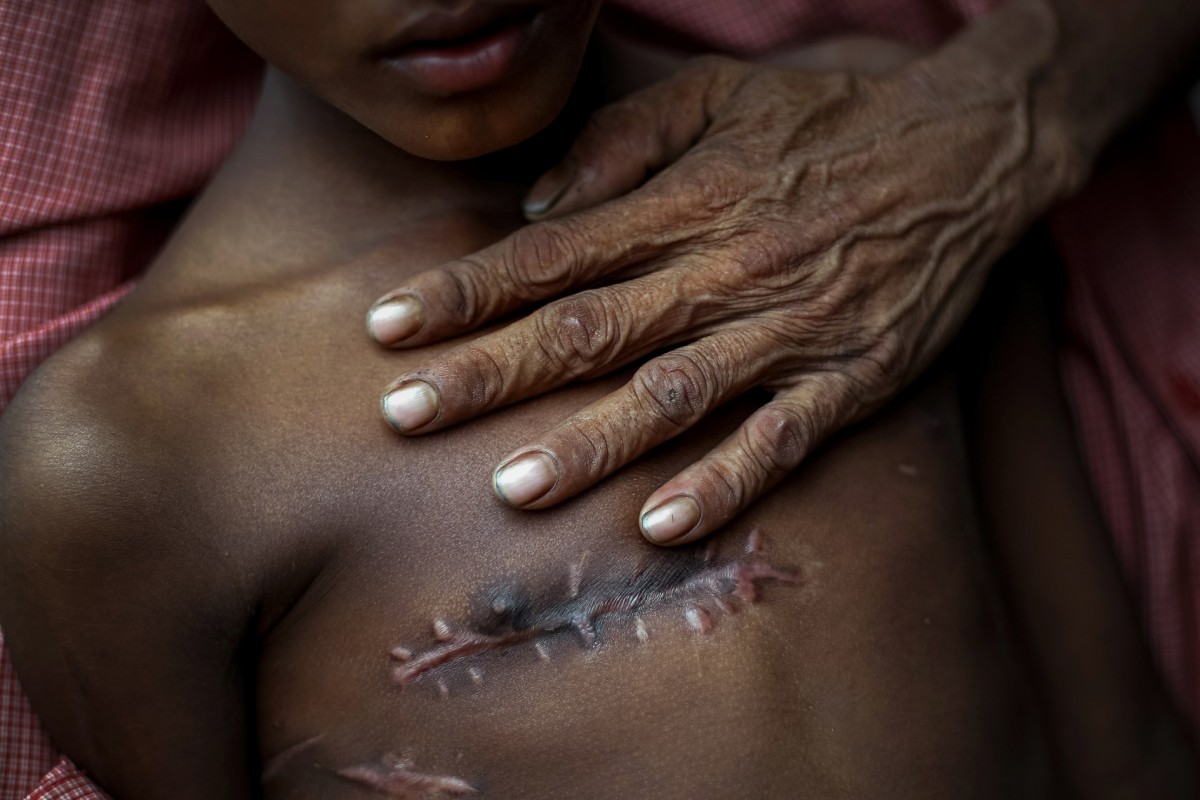
Behind Abidi’s picture of a young boy bearing a scar, there is a Rohingya translator’s presence of mind, the photographer said. “I was very tired that particular day and was having tea at a small dhaba in the camp when my translator Mohammad Farooq noticed that this kid had a scar,” Abidi said. “I quickly went to them and spent some time with them. The father explained that the seven-year-old boy had been shot on his chest.”

The picture speaks volumes. “I decided that I did not want to show the face of the kid and instead show just his chest and the father’s hands because that image says everything,” Abidi said.

Mohammed Shoaib, 7, who was shot in his chest before crossing the border from Myanmar in August, is held by his father outside a medical centre near Cox's Bazar, Bangladesh November 5, 2017. REUTERS/Adnan Abidi.
Mohammed Shoaib, 7, who was shot in his chest before crossing the border from Myanmar in August, is held by his father outside a medical centre near Cox’s Bazar, Bangladesh November 5, 2017. REUTERS/Adnan Abidi.

A story to tell

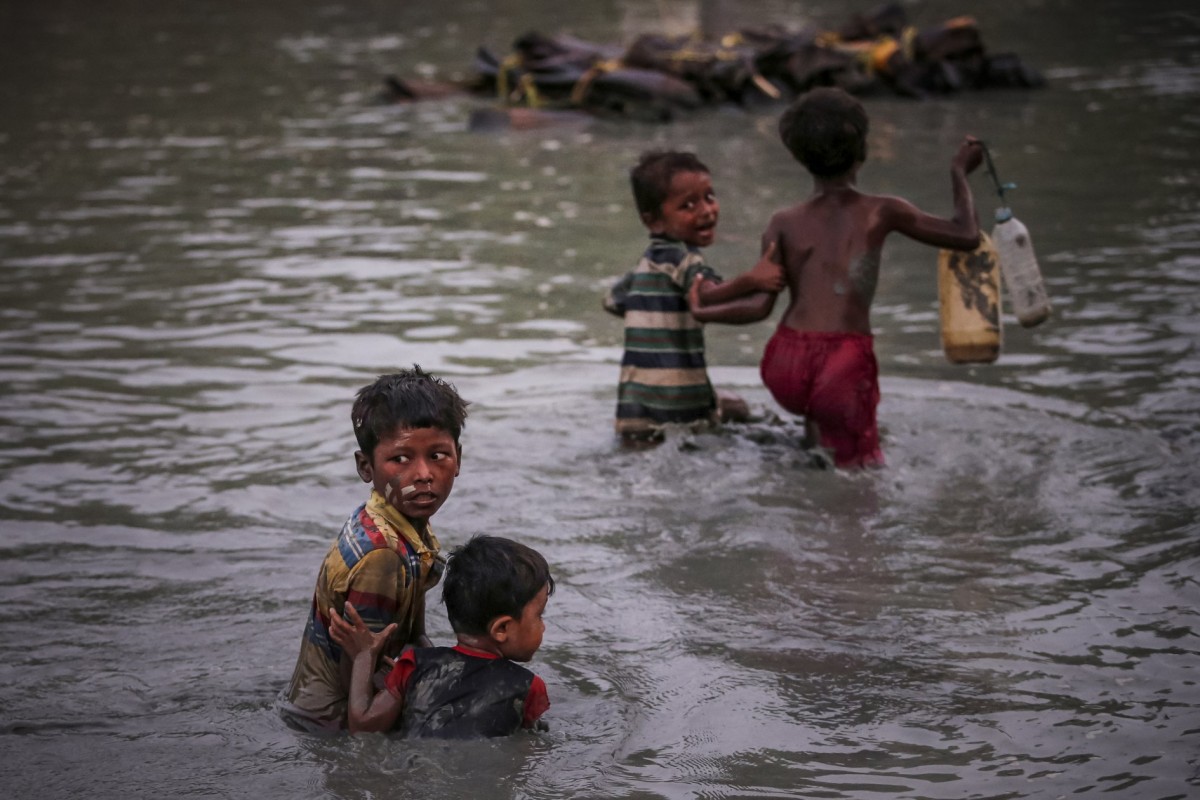
But not everything can ride solely on coincidence, the two photographers noted. When Abidi was in Palong Khali, near Cox’s Bazar, there was an influx of more than 3,000 refugees across the Naf river on November 1. Covering such sudden events needs quick thinking, Abidi said. “We could see a thin line of people crossing the river from around 2 km away from a village,” Abidi said. “So we walked to the river and when we reached there the light was really good. But there was a guard standing at the bank of the river who did not let us go inside to shoot. We pleaded with him to not send us back. He finally let us in and we kept shooting till 11 in the night.”

For Siddiqui, the biggest challenge was physical. “We had to sometimes walk hours to get to a point,” he said. “One day I had to a climb a mountain and walk for six hours barefoot, with leeches on my leg. But you could see that the refugees are also coming from the same side. As a journalist you want to be strong in front of them because I had to tell their story. They should feel that connection with me. If they see me walking by with a bottle of water before them, it will not be nice. You have to be like them.”

Rohingya siblings cross the Naf River along the Bangladesh-Myanmar border in Palong Khali, near Cox's Bazar, Bangladesh, on November 1, 2017. Photo: Adnan Abidi/Reuters
Rohingya siblings cross the Naf River along the Bangladesh-Myanmar border in Palong Khali, near Cox’s Bazar, Bangladesh, on November 1, 2017. Photo: Adnan Abidi/Reuters

The seven members of the Reuters team each spent about two weeks in Bangladesh on rotation. “We had photographers from different language backgrounds from Bangaldesh, India, Northern Ireland, Britain and Bosnia,” Siddiqui said. “We had a complete story. We also had pictures from the other side in Myanmar as well, which many don’t. Also as a [news] agency, we are very fast and work on getting raw emotions in a photo.”

The rotations helped the photographers cope with emotional exhaustion, Abidi said. “I followed around this kid who had lost his father and was living with his mother and eight siblings,” he recalled. “This kid was taking care of his family. There were people from NGOs and religious communities who were distributing food and money at certain camps. This kid used to follow them for many kilometers and knew where to find them just to get supplies for his family. A week of following the boy broke me down and I then decided that I could not shoot after that.”

Rohingya refugees are reflected in rain water along an embankment next to paddy fields after fleeing from Myanmar into Palang Khali, near Cox's Bazar, Bangladesh November 2, 2017. REUTERS/Hannah McKay
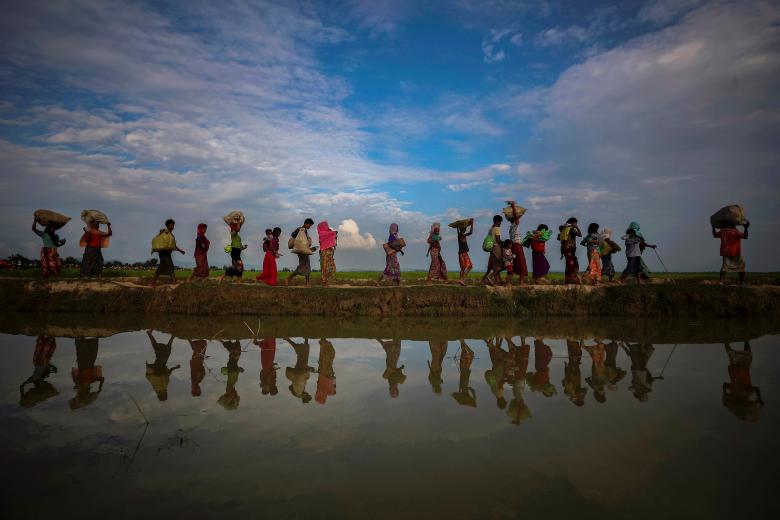
Rohingya refugees are reflected in rain water along an embankment next to paddy fields after fleeing from Myanmar into Palang Khali, near Cox’s Bazar, Bangladesh November 2, 2017. REUTERS/Hannah McKay

Finding new eyes

Siddiqui hopes that the Pulitzer Prize will attract new attention to the tragedy. “I just hope that this award makes a positive difference in the lives of these refugees,” he said. “I hope through these pictures and recognition, more people would get to know about the problem. Because it is not over yet. The crisis is not over yet. These makeshift camps are built on muddy hills which are prone to landslides when the heavy monsoon starts.”

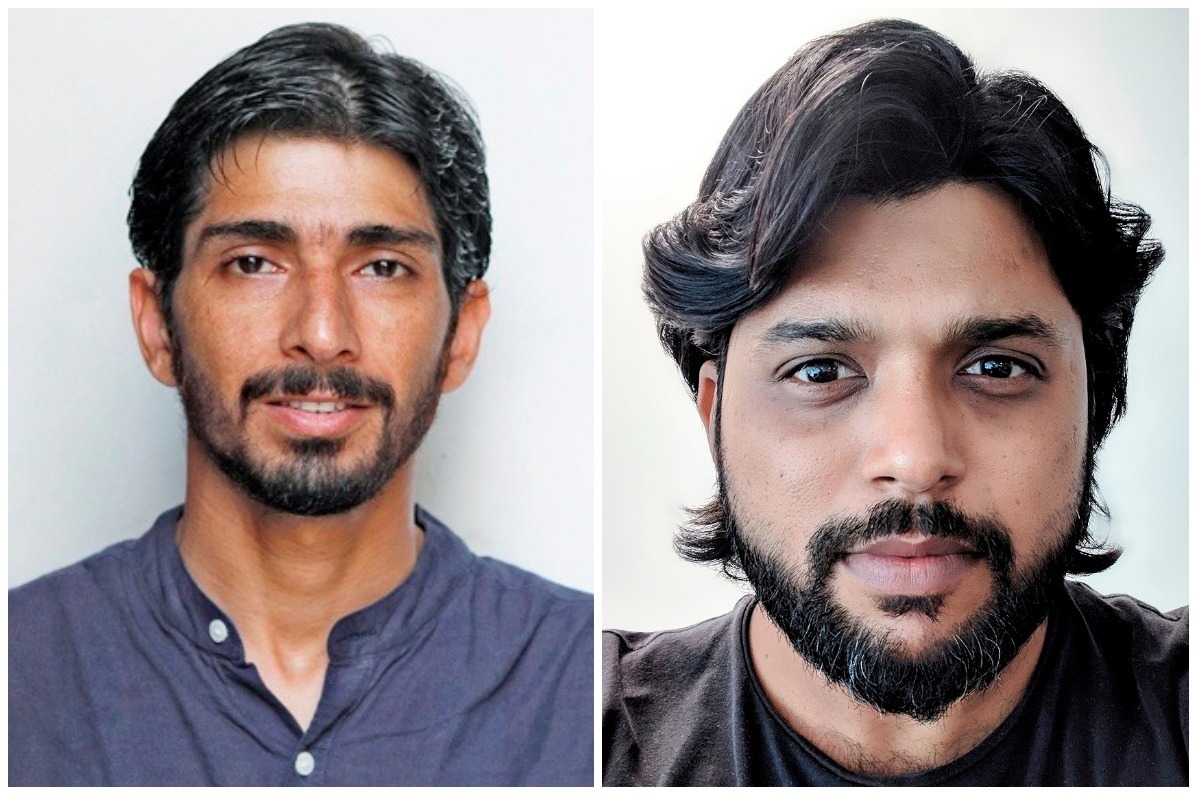
Adnan Abidi (left) and Danish Siddiqui.

Siddiqui added that his field experience had opened up his mind to the various narratives about the Rohingya community and its displacement. In August 2017, the Indian government announced that it was planning to deport all 40,000 Rohingya refugees living in the country, telling the Supreme Court in an affidavit in September that the refugees posed a “serious national security ramifications and threats”. The Supreme Court did not allow any deportations.

“How the narative in India is played out is totally different from what I saw on the ground,” Siddiqui said. “You do not know what is happening unless you are on the ground. Another big takeaway was how too much nationalism can destroy a community of more than one million people. The narrative in Myanmar is totally different. When I went there I could see how helpless people were. They had to fight for a bottle of water. Reading news reports on the crisis was completely different from being on the field and experiencing it first hand.”

source: http://www.scroll.in / Scroll.in / Home> PhotoJournalism / by Sruthi Ganapathy Raman / April 18th, 2018

Posting clothes for the needy

Thiruvananthapuram, KERALA :

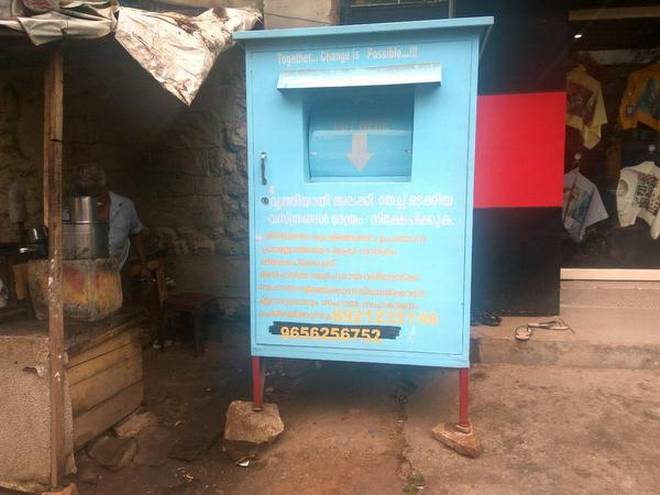
The box named ‘Aashrayam’, kept for people who want to donate clothes, at the Poojappura junction in Thiruvananthapuram.

‘Aashrayam’ is the brainchild of a few youngsters.

One morning in January this year, passersby noticed a sky blue box, almost like a letter box but much bigger than it, by the side of the road near the Poojappura junction.

On the box was written an appeal to the public to deposit clothes for the needy. Before long, the box began filling up with clothes.

Word of mouth spread, so much so that those who put it up had to come frequently to clear the collection.

The box named ‘Aashrayam’ is the brainchild of a few youngsters who thought of contributing something for society, when they completed their studies.

UAE touch

“This idea of a cloth bank was put to us by Fazil Musthafa, an NRI, whom we had met through Facebook. He and his friends had put up a few such boxes in the UAE. He helped us put this box at Poojappura. The response from the public in the first few months has been overwhelming,” says Siddique, one of the five persons behind the initiative, who passed out of the Kerala Institute of Tourism and Travel Studies recently.

Public could drop their old or new clothes, washed and ironed.

All of the five members of the collective live outside the city, around Parassala and Neyyattinkara.

Weekends

They collect the clothes usually on weekends, to distribute it to orphanages and tribal villages.

“The owner of a textile shop and that of a tea shop near the box have the spare keys to the box, in case the box is filled up or if someone leaves the clothes outside the box.

A majority of people have contributed clothes in good condition, although there have been a few instances of people dropping waste clothes. The collected clothes are sorted according to age and size and later distributed at appropriate places.

This month end, we are planning to distribute clothes at a few villages in Attapady,” says Mr. Siddique.

source: http://www.thehindu.com / The Hindu / Home> News> States> Kerala / by S. R. Praveen / Thiruvananthapuram , April 22nd, 2018

Karimnagar collector receives DDU-GKY award by prime minister of India

TELANGANA :

https://www.youtube.com/watch?v=8Oui9g1JkEQ

Collector Sarfaraz Ahmad bagged the prestigious Deen Dayal Upadhyay Grameen Kaushal Yojana (DDU-GKY) award presented by the Union Rural Development Ministry for helping unemployed youth secure employment in private sector during the last two years in the district.

Prime minister gave the award to District Collector Sarfaraz Ahmad

source: http://www.youtube.com / April 24th, 2018

Central award to Collector

TELANGANA :

Collector Sarfaraz Ahmad bagged the prestigious Deen Dayal Upadhyay Grameen Kaushal Yojana (DDU-GKY) award presented by the Union Rural Development Ministry for helping unemployed youth secure employment in private sector during the last two years in the district.

Prime Minister Narendra Modi would give away the award to the Collector at a function in New Delhi on Saturday . The Karimnagar district topped in State in guiding and providing assistance to youth.

source: http://www.thehindu.com / The Hindu / Home> National> Telangana / by Special Correspondent / Karimnagar – April 21st, 2018