Category Archives: Community Involvement / Social Issues

The amazing Hakim Sahib

NEW DELHI :

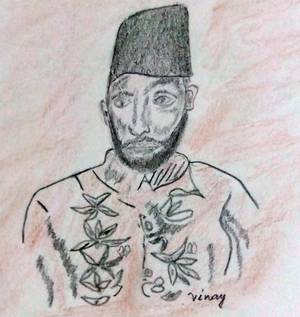
Illustration by Vinay Kumar | Photo Credit: 01dmc rvsmith

Providing a healing touch to the sick and the destitute, there are several stories associated with Hakim Ajmal Khan

An Oriental wearing a Western suit and carrying a small box walked down a street in Paris when he saw a man rolling on the ground. Quickly he took out something from the box and, after a few minutes, the man got up, clutched his stomach for a while and then, with a nod of thanks, walked away. The Oriental was Hakim Ajmal Khan who had put away his sherwani and pyjamas to don a suit during his visit to France in 1925. It was widely believed by generations of Delhiites that Ajmal Khan had a magic chest from which he took out medicines to effect near-miraculous cures, like that of a woman in England with an abnormal issue of monthly blood and an epileptic at an Iraqi shrine. He spent nine years as the guest of the Nawab of Rampur, where he revived a dying begum.

Over the years, since his death in 1927, people seem to have forgotten the great hakim whose lasting legacy is the Unani Tibbia College in Karol Bagh. But last week Jamia Millia Islamia held a symposium on the works of Hakim Sahib, who was one of its founders and also the first Chancellor in 1920. It was decided to set up a Hakim Ajmal Khan Institute for Literary and Historical Research in Unani Medicine at Jamia Millia. The proposed institute would translate the classical works on Unani medicine which are hitherto available only in Urdu and Arabic.

Hakim Ajmal Khan was descended from Hakim Sharif Khan. His father Hakim Mahmud Khan was one of the three sons of Sharif Khan and, interestingly enough, also had three sons of whom Ajmal Khan was the youngest. His elder brother, Hakim Abdul Majid died in 1901 and the second brother three years later. Ajmal Khan founded the Tibbia Conference in 1906 to bring hakims together for joint initiatives. His popularity increased with each passing year and he began to be regarded as a man whose views on medicine, politics and religion were widely respected, not only by Hindus and Muslims but also by Europeans like C. F. Andrews and Sir Malcolm Hailey, Chief Commissioner of Delhi. Mahatma Gandhi, six years younger than Ajmal Khan, was the one who opened Tibbia College in 1920 though he regarded Unani and other medicines as “black magic” and believed in natural cures.

It is interesting to note that Ajmal Khan started off by wearing the Mughal angarkhas, then switched over to the Aligarh sherwani and pyjamas and then suits for foreign visits he made in 1911 and 1925, besides the one in between to Shia religious places in the Middle East. When Ahmed Ali wrote his “Twilight in Delhi”, he couldn’t help mentioning the great hakim in it as the one who had attended to the novel’s hero, Mir Nihal after a paralytic attack. The hakim gave him rare medicines and also prescribed the soup of wild pigeons, caught by the Mir’s Man Friday, Ghafoor, whose own wife had died of abdominal ulcers since she was wedded at a young age to a much older. Even the hakim could not cure her as Ghafoor did not exercise restraint. But Mir Nihal surely benefited from his medication, as also the goat being masqueraded as a sick purdah woman and prescribed green grass.

Barbara D. Metcalf, who wrote a learned paper on Ajmal Khan and his family, recalled the words of the poet Hali on the death in 1900 of Hakim Mahmud Khan: “…Mahmud Khan’s strength was an honour to our race/ But he too, left the World. Alas, the fortune of our race/Ajmal Khan filled up the gap with élan. Not only that, he was also a born poet with the pseudonym of Shahid Dihlawi (possessed lover from Delhi) and left behind a dewan of his poetry, which he sometimes recited at mushairas and during debates on who was greater: Daagh or Zauq. Surprisingly enough Ghalib was left hanging in between.”

Being a man of common sense, despite dabbling in romanticism, he refused to entertain fakirs who claimed to have secrets of alchemy. Ahmed Ali writes about Mir Sangi who had wasted his wealth in trying to make gold and of Molvi Dulhan, dressed as “the bride of God in red sari and with bangles and long hair like a woman”.

According to the Moulvi, there is a prescription written on the Southern Gate of the Jama Masjid which no one has been able to unravel. It says (for alchemy is needed) “half a piece of That”! However the vital word describing ‘That’ is missing though a fakir once claimed that it was ‘actually a small, golden flower with red circles and dots on the petals”. When the problem was referred to Ajmal Khan he wrinkled his forehead and remarked “There are other things worth seeking instead of the art of making gold which remains a fantasy”. The writing on the masjid gate is just a brain teaser.”

The hakim sahib is then said to have walked away with a shrug of his shoulders, still what followed him was the belief that the Sharifi family had a special verbal formula (amal-i-taskhir) which never failed to effect a cure. It is not known whether Ajmal Khan divulged it to his successors but those who came for treatment to the Hindustani Dawakhana in Ballimaran probably thought he had, for after all wasn’t he the “Masiha-e-Hind!”.

source: http://www.thehindu.com / The Hindu / Home> Society / by R.V. Smith / May 31st, 2015
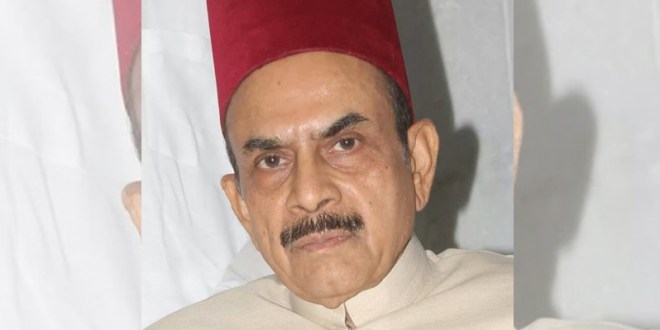
Mahmood Ali surprises the House by speaking in Telugu

Hyderabad, TELANGANA :

MahmoodAliMPOAS28dec2017

Hyderabad:

Deputy Chief Minister Mohammed Mahmood Ali surprised the Telangana Legislative Assembly by speaking in Telugu. On the question raised by Congress MLA T Sudhakar during question hour, regarding issue of pattadar pass book to farmers, Deputy Chief Minister read the answer in Telugu.

Members of the houses patted the table in appreciation of his gesture.

Deputy Chief Minister not only read the written answer in Telugu but also gave the reply to the questions in Telugu. He was donning traditional ‘sherwani’ and ‘topi.

Siasat News

source: http://www.siasat.com / The Siasat Daily / Home> Hyderabad> News / November 18th, 2017

Indians for Collective Action Hosts 49th Anniversary Gala Awards Banquet

UTTAR PRADESH / Saratoga, California, USA :

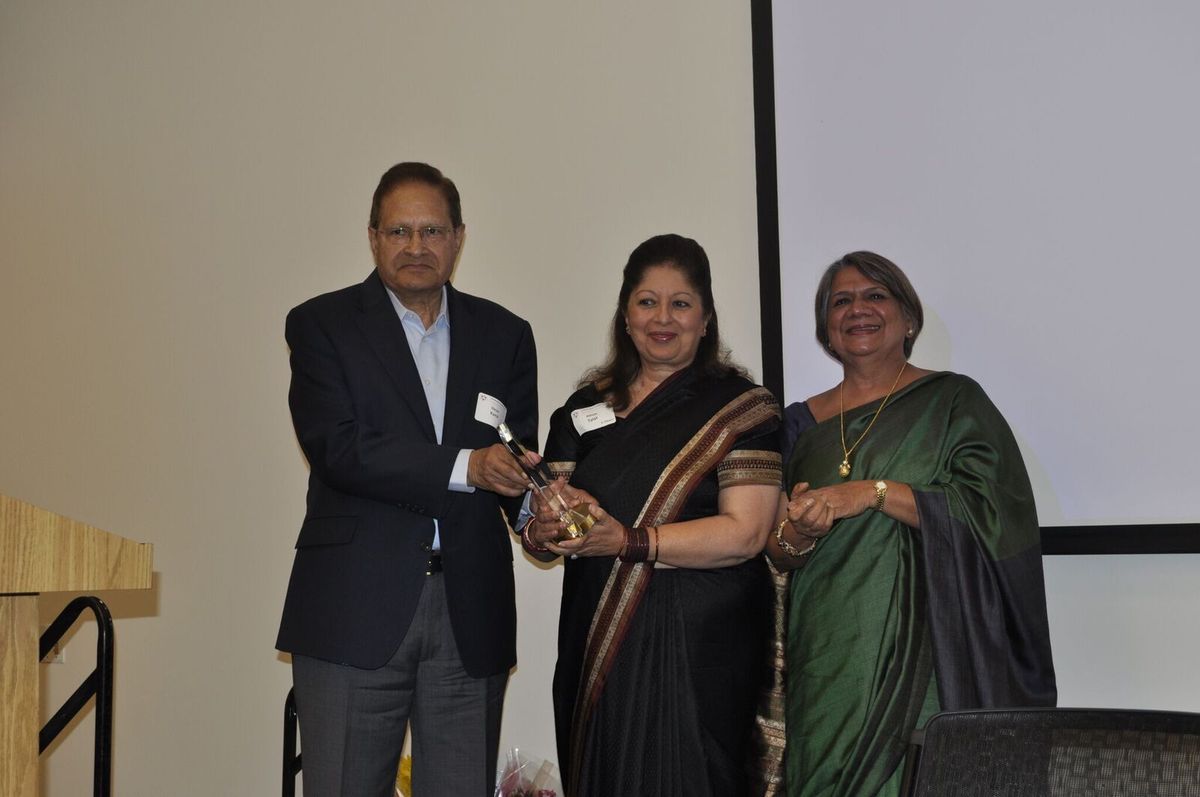
The Indians for Collective Action's Annual Awards Banquet Oct. 28 honored (l-r) Indian Americans Kamil and Talat Hasan, seen here with Dr. Anuradha Luther Maitra (photo provided)
The Indians for Collective Action’s Annual Awards Banquet Oct. 28 honored (l-r) Indian Americans Kamil and Talat Hasan, seen here with Dr. Anuradha Luther Maitra (photo provided)

Menlo Park, Calif. :

Indians for Collective Action, a San Francisco Bay Area-based nonprofit established in 1968 at the UC Berkeley campus with a motto of ‘Development through Innovation’, celebrated its 49th year anniversary with its ‘Annual Awards Banquet’ at the Arrillaga Family Recreation Center here Oct. 28.

The awardees this year were Sonam Wangchuk, founder of the Student Educational and Cultural Movement of Ladakh, and founder of the Himalayan Institute of Alternatives Ladakh; as well as Silicon Valley-based Indian American philanthropists Talat and Kamil Hasan.

The blockbuster Bollywood movie, “3 Idiots,” was in large part based on Wangchuk’s life. He has increased the high school graduation rate in Ladakh’s districts from 5 percent to 70 percent in a decade.

“It is pleasant to see that people from India in this country are connected and caring for the country of their origin. After having worked with schools to bring reforms, to make them future ready, we are now working with higher education universities to create an alternative university that does education as it should be—more engaged and practical rather than just theory, which is what happens in most institutes of higher learning whether in India or the U.S.,” Wangchuk told India-West.

“Just sitting down and listening to lectures is not in harmony with human nature. Youth are not suited for sitting for hours in a classroom. We are a more hands on species and that is how we learn. This is what we are working towards and hoping that it will not only solve the problems of higher education in a place like Ladakh but in other parts of India and the world too,” Sonam added.

“We are working to engage young people to solve real life problems and if it succeeds, the ripple effects will influence universities in rest of India and the world that needs something more engaging than what we currently have,” he continued. “Higher education is too theoretical, up in the air and abstract and not related to life in most places and people feel it. Higher education of today does not prepare you for real life and people are looking forward to something more real than mumbo jumbo of words.”

Working in partnership with dedicated social workers and organizations in India and the U.S., ICA has supported 370 development projects totaling to more than 8.5 million in 25 states in India.

Bhupen Mehta, the organization’s co-president spoke about some of ICA’s projects like SEWA Rural’s IamTeCHO mobile phone technology rolled out by Prime Minister Narendra Modi in cooperation with WHO and UNICEF, as well as the Jaipur Foot Camp Rajkot that has been scaled by Modi in Rajkot.

“I request you all to give your tan, man and dhan (efforts, heart, and wealth) in whichever order that you want to ICA,” Mehta said. “We are getting senior in age and would like to retire. We are looking for youth to take over ICA and run it for the next 50 years.”

The foundation only works with NGOs with guiding principles of secularism, non-partisanship and democracy with a vision of a secure life for every Indian, in a sustainable environment and a just society.

It provides seed funding, ongoing financial resources, moral and technical support to innovative, community-based, scalable development initiatives.

Some of the initiatives of ICA include the youth project helping connect youth in the U.S. with NGOs in India for hands-on social development experience; and its fellowship fund to help activists in India, especially women, in securing opportunities to come to the U.S. for higher training in the areas of environment, women and child development work.

Kamil Hasan expressed his admiration for ICA’s work and went on to say that the main impetus of all the philanthropic activities that he and his wife, Talat Hasan ,have engaged in are to raise the profile of the Indian American community, so that it can make an impact on mainstream American society economically, socially and politically.

He opined that the Jewish community is a good example to emulate and there are four angles — economic success, philanthropy, cultural education and political involvement — that any community keen to raise its profile in U.S., has to work on.

“We have done very well in the area of economic success and fairly well in philanthropy within the community and in India and cultural dissemination via Bollywood movies, actors, yoga, etc.,” Hasan said. “But we have a lot of work to do in expanding our philanthropy to the mainstream community and in political involvement and public service.”

This was followed by a speech on the legacy of philanthropy by Talat Hasan, who amusingly narrated the philosophy passed down by her father, historian and ambassador, Nurul Hasan. She said that her father told her that since she had been privileged by accidental birth, she has an obligation to give back more to society than she had taken.

“I learnt from my parents that working for the community is not a feel-good activity. It is an obligation and should be an integral part of life,” Talat Hasan said. “You should not wait until retirement to do good, and anything that you take on should be sustainable, not just financially but also in such a way that long after you are gone, the work continues.”

source: http://www.indiawest.com / India West / Home> Featured  / by Shalini Kathuria Narang, Special to India West / November 02nd, 2017

How a royal wedding erupted into an epic battle of wits between Ghalib and the court poet

DELHI :

Zauq and Ghalib took digs at each other through a sehra penned for a prince’s wedding and the Red Fort reverberated with this clash of titans.

The sehra, or prothalamion, (song to celebrate a wedding) is now a vanishing genre. I remember while I was growing up that almost all nikahs would have a sehra read by a relative with poetic aspirations, after the ceremony.

Though sehras are supposed to be in praise of the groom and a prayer for his wedded life, these would be witty and laudatory at the same time, usually a humorous dig at all relatives. A copy of this would then be distributed to the wedding guests.

Sehras fall into the category of nazms and have to be in meter.

The most famous sehra, of course, is the one penned by Mirza Ghalib (1797-1869) for a royal wedding, in which he took a dig at the emperor’s Ustad, Sheikh Ibrahim Zauq (1788/9-1854).

Zauq and Ghalib were contemporaries in Delhi, and their rivalry was legendary. Zauq had been given the title of Khaqani e Hind and drew a nominal salary of Rs 4 per month. The respect and position that he gained as a result was immense. It also gave him free access to the Qila e Moalla (Red Fort).

This was a constant thorn in the side of Mirza Ghalib, who felt he was better and deserved a royal position too. Thus, he never let go of any chance to score poetic points over his rival.

One such chance came at the last grand Mughal wedding, on April 2, 1852 – that of Jawan Bakht, Badshah Bahadur Shah Zafar’s son by his favourite and youngest wife Zeenat Mahal, to Nawab Shah Zamani Begum.

Begum Zeenat Mahal asked Ghalib to write a ‘sehra’ for her son’s wedding. The honour should have gone to Sheikh Ibrahim Zauq, but he was reportedly unwell.

William Dalrymple in his book The Last Mughal writes: “The marriage procession of Prince Jawan Bakht left the Lahore Gate of the Red Fort at 2 am on the hot summer night of 2 April, 1852.”

Dalrymple goes on to write that what was remembered longest and discussed most about the wedding was not so much the festivities or the feasting or the fireworks, but “the marriage odes recited by the Poet Laureate Zauq, and his rival Mirza Nausha, now more widely known by his pen-name Ghalib.”

Ghalib wrote a ‘sehra’ whose maqta (the last couplet in an Urdu ghazal which contains the poet’s pen name) was:

  • ‘hum suKhan_fahm haiN, Ghalib ke tarafdaar nahiN
  • dekheN keh de koi is sehre se baRh kar sehra’

We are connoisseurs of poetry, not partial to Ghalib

Let’s see if there’s anyone who can write a better ‘sehra’

The emperor, realising that this was a dig at his mentor Zauq, is said to have been displeased with the maqta. A slight to his mentor was seen as a slight to the emperor himself. Zafar asked Zauq to write a ‘sehra’ too. Not one to let go of an opportunity, Zauq included these line.

  • jin ko daawa ho suKhan ka yeh sunaa do unko
  • dekh is taraH se kehte haiN suKhanwar sehra

Tell those who claim to be eloquent

This is how poets write a sehra

The fort reverberated with this clash of titans and it is recorded that the Crown Prince Mirza Fakhruddin (also a disciple of Mirza Zauq) exclaimed, “Ustaad ne maidan maar liya“.Dalrymple writes: “The squabble at the wedding was over a single verse in Ghalib’s sehra (or wedding oration) where he appeared – characteristically – to suggest that no one in the gathering could write a couplet as well as he…. Zafar [the king] also encouraged Zauq to reply to Ghalib’s unprovoked sally. The fine sehra that the Poet Laureate came up with ended with a couplet tossing the challenge back to Ghalib:

The person who claims poetic skills,Recite this to him and say,”Look-this is how a poet”

This round went to Zauq as the singers in attendance picked up the verse and spread it all over Shahjahanabad. By next day it was in the newspapers.”

Ghalib then wrote his celebrated qat’a-e-ma’azerat’ (letter of apology), in response to the emperor’s reaction. However, the egoistic poet left no ‘verse’ unturned in adding insult to injury, using poetry as a medium to prove his supremacy and take a dig at Zauq’s humble origins and the Emperor’s negligence of him.

The maqta of this ghazal became even more famous.

      • manzoor hai guzaarish-e-ahvaal-e-waaqa’aii
      • apna bayaan-e-Husn-e-tabii’yat nahiN mujhe
      • I accept the request to state the facts, To praise oneself is not a habit of mine
      • sau pusht se, hai pesha-e-aaba sipahgarikuchh shayari,
      • zari’ye-e-izzat nahiN mujhe
      • My forefathers have been warriors for hundred generations
      • By writing poetry, fame I seek not
      • aazaadah rau huN, aur mira maslak hai sul
      • H-e-kulhargiz kabhi kisi se adaawat nahiN mujhe
      • I am a free spirit and my conduct is always peaceful,I bear malice against no one
      • kya kam hai yeh sharaf ke Zafar ka Ghulaam huN
      • maana ke jaah-o-mansab-o-sarwat nahiN mujhe
      • Is the privilege not enough that I serve Zafar,
      • Agreed rank, position and affluence I have not
      • ustaad-e-shah se ho mujhe par Khaash ka Khayaal
      • yeh taab, yeh majaal, yeh taaqat nahiN mujhe
      • The thought of a row with the king’s mentor
      • This arrogance, this audacity, this strength I have not
      • jaam-e-jahaaN_numa hai shahenshaah ka zameer
      • saugand aur gawaah ki Haajat nahiN mujhe
      • The king’s conscience is all encompassing,
      • The need for an oath and witness I have not
      • sehraa likhaa gaya ze_rah-e-imtiSaal-e-amr
      • dekhaa ke chaarah Ghair ita’at nahiN mujhe
      • The sehra was written in obedience of orders,
      • Non compliance with that order I dare not
      • maqt’e meiN aa paRi hai suKhan gustaraana baat
      • maqsood is se qat’a-e-moHabbat nahiN mujhe
      • I wrote something in the maqta’ which became popular,
      • A reason to ending friendship I want not.
      • ruu-e-suKhan kisi taraf ho, tau ruu_siyaah
      • sauda nahiN, junooN nahiN, veHshat nahiN mujhe
      • If I aimed it at someone in particular then may my face beblackened,
      • I am neither mad, nor crazed nor so deprived of sense.
      • qismat buri sahii, pa tabii’yat buri nahi
      • Nhai shukr ki jagah, ke shikaayat nahiN mujhe
      • Although my luck is bad, but my habits aren’t bad,
      • I’m in a place of thankfulness and complain I do not.
      • saadiq huN apne qaul meiN Ghalib Khuda_gawaah
      • kehta huN sach ke jhooT ki a’adat nahiN mujhe
      • Always true to his word is Ghalib, as God is my witness,
      • I tell you the truth as lie I do not.

This is the original sehra written by Ghalib for Mirza Jawan Bakht:

      • Khush ho ai baKht ke hai aaj tere sar sehraabaa
      • Ndh shahazada Javaa.N baKht ke sar par seharaa
      • [baKht = luck; pun on Groom’s name]
      • kyaa hii is chaaNd se mukhaDe pe bhalaa lagataa hai
      • hai tere husn-e-dil_afroz kaa zevar sehraa
      • [husn-e-dil_afroz = beauty that lights up the heart]
      • sar pe chaDhnaa tujhe phabataa hai par ai tarf-e-kulaah
      • mujhko Dar hai ke na chhiine tera lambar sehraa
      • [phabataa = suits]
      • nav bhar kar hii piroye gaye honge motii
      • varnaa kyun laaye hain kishtii mein lagaakar sehraa
      • saat dariyaa ke faraaham kiye honge motii
      • tab banaa hogaa is andaaz kaa gaz bhar sehraa
      • ruKh pe dulhaa ke jo garmii se pasiinaa Tapakaa
      • hai rag-e-abr-e-guharabaar saraasar sehraa
      • ye bhii ik be’adabii thii ke qabaa se baDh jaaye
      • rah gayaa aan ke daaman ke baraabar sehraa
      • jii me.n itaraaye.N na motii ke hamii.n hai.n ik chiiz
      • chaahiye phuulon ko bhii ek mukarrar sehraa
      • jab ke apane mein samaave’n na Khushii mein maare
      • guu.Ndhe phuulon kaa bhalaa phir koii kyuu.Nkar sehraa
      • ruKh-e-raushan kii damak gauhar-e-Galtaa kii chamak
      • kyuN na dikhalaaye faroG-e-maah-o-aKhtar sehraa
      • taar resham kaa nahii.n hai ye rag-e-abr-e-bahaar
      • laayegaa taab-e-giraa.Nbaari-e-gauhar sehraa
      • ham suKhan_faham hain “Ghalib” ke tarafadaar nahii.n
      • dekhe.n is sehare se kah de koii ba.Dhakar sehraa
      • [suKhan_faham = patron of poetry]
      • Zauq’s sehra
      • Ai Javaan Bakht mubarak tujhe sar par sehra
      • Aaj hai Yaman wa Sada’t ka tere sar sehra
      • Aaj woh din hai ke laaye durr e anjum se falak
      • Kashti e zar mah e nau ke lagakar sehra
      • Tabish husn se manind shua e khursheed
      • Rukh e pur noor pe hai tere munawwar sehra
      • Woh kahe Salle Alay eh kahe SubhanAllah
      • Dekhe mukhade pe jot ere mah o akhtar sehra
      • Taa banni aur banne mein rahe ikhlas baham
      • Goondhiye sura e ikhlas padhkar sehra
      • Dhoom hai gulshan e afaaq mein is sehre ki
      • Gaaye’n marghaan e nava sanj na kyunkar sehra
      • Ru e farkh pe jo hain tere baraste anwar
      • Taar e barish se bana ek sarasar sehra
      • Ek ko ek pe tazai’n hai dam e araaish
      • Sir pe dastar hai, dastar ke oopar sehra
      • Ek gauhar bhi nahin sadgaan e gauhar mein choda
      • Tera banwaaya hai le leke jo gauhar sehra
      • Phirti khushboo se hai itraayi huyi baad e bahaar
      • Allah Allah re phoolo’n se moatta’r sehraa
      • Sar pe turra hai muzaiyyan to gale mein baddhi
      • Kangana haath mein zeba hai to munh par sehra
      • Runumayi mein tujhe de mah o khurshid o falak
      • Khol de munh ko jot u munh se uthakar sehra
      • Kasrat e taar e nazar se hai tamaashiyo’n ke
      • Dam e nazara tere ru e niko par sehra
      • Durr e khush aab e mazameen se banakar laaya
      • Waaste tere tera Zauq sanagar sehra
      • Jis ko daawa hai suKhan ka yeh sunaa de usko
      • Dekh is taraH se kehte haiN suKhanwar sehra


(This article first appeared on the author’s blog.)

source: http://www.dailyo.in / Daily O / Home> Arts & Culture / by Rana Safvi  @iamrana / December 27th, 2017

Biographies of Kamil and Talat Hasan

Lucknow , UTTAR PRADESH / Saratoga, California , USA :

Kamil and Talat Hasan have two daughters and live in Saratoga, California. They have recently purchased land in Santa Cruz county and intend to establish a home there as well. They are actively involved in charity and educational activities through the Hasan Family Foundation.

Kamil Hasan

Kamil Hasan is a general partner in the San Jose-based venture company, Hitek Venture Partners. He received his B.S. in engineering from Aligarh Muslim University, India, in 1967, an M.S. degree in engineering from M.I.T, in 1969, and a Ph.D. degree in engineering from UC, Berkeley in 1973. After receiving his Ph.D., he taught at the Indian Institute of Technology, Dehli, as an assistant professor of engineering and later at Stanford University as an associate professor of engineering.

For more than 25 years, Hasan has worked in the software industry. He founded Hitek Venture Partners in 1995, to invest in early-stage companies in the internet, e-commerce, telecommunications, and enterprise software areas. He has a portfolio of 35 companies and serves on the board of five of these companies.

Kamil’s articles have appeared in more than 50 technical and trade journals, and he is a recipient of a John F. Lincoln Foundation award for outstanding achievement in engineering design.

Talat Hasan

Talat Hasan is chairman and CEO of Sensys Instruments, a company she founded in 1996 to market products for the semiconductor manufacturing industry. She holds an M.A. in physics from Oxford University and a B.Sc. in physics from Aligarh Muslim University, India.

Prior to founding Sensys, she was vice president of corporate business development at Tencor Instruments (now KLA/Tencor), and, in 1983, was cofounder of Prometrix Corporation, serving as a board member and senior vice president of strategic planning when the company merged with Tencor.

Previously, she worked as a scientist, conducting research in semiconductor characterization and process control and working for almost five years at Signetics Corporation/Philips Research Labs in Sunnyvale.

She currently serves on the board of directors of Microbar and the board of trustees of Castilleja School (a private school for girls) and of IBPW (Indian Business and Professional Women), and is a charter member of TiE (The Indus Entrepreneurs). She is also active, with her husband, as an Angel Investor for start-up companies and a mentor to several budding entrepreneurs. Also with her husband, she is in the process of establishing the Nurul Hasan Educational Foundation (named after her late father, Professor Nurul Hasan, who was Minister of Education in the cabinet of Indian Prime Minister Indira Gandhi and was a governor of the State of West Bengal, India).

source: http://www.1.ucsc.edu / UC Santa Cruz Current Online / by Barbara McKenna / October 16th, 2000

Meet Noorul Hasan, the youngest IPS Officer

Peeliheeet District, UTTAR PRADESH :

NoorulHasanMPOs27dec2017

Hyderabad:

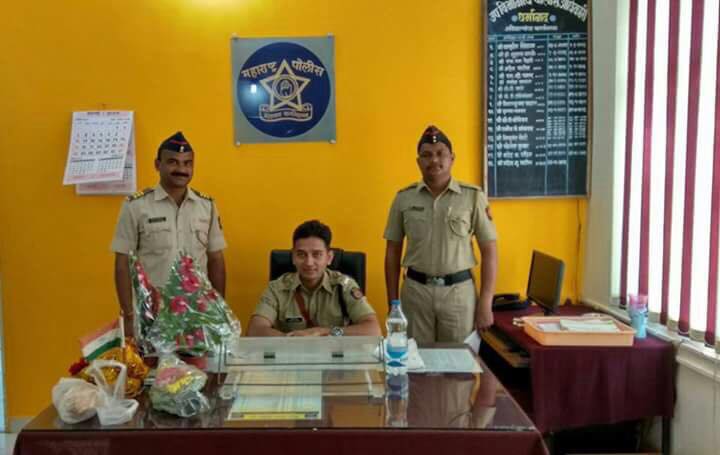
The youngest IPS Officer, Noorul Hasan took charge as the ACP of Dharamabad Division of Nanded District in Maharashtra State.

The 22-year-old Noorul Hasan hails from Peelibheet District of UP. He studied in a Govt. school up to 8th standard. After passing 10th class, he went to Raibareili along with his father and studied Intermediate through Hindi Medium. Later, he joined Aligarh Muslim University in 2009 for B.Tech. He improved his proficiency in English language during his studies at AMU. He established a forum along with his 10 friends who used to exchange views on national and international affairs. They also used to conduct mock interviews.

He served at Siemens Company for 14 months and one year at Atomic Energy Commission.

In 2013, he started preparations for UPSC Civil Service Exam (CSE). He secured 625th rank in UPSC CSE-2014.

Being a student of Hindi medium, he improved his English later and cracked CSE. He is the role model for the youngsters.

His message to Youth and Civil Service Aspirants-

  1. Dream as big as possible but always prepare yourself for Plan B. Even after plan B, Plan C must be there. 
  2. Decide your destination as early as possible and start working towards it.
  3. In my opinion Success=Summation of each day work carried out for years.
  4. Introspect your weakness. Divide your target in the years, months, weeks and days and move ahead a little everyday. Achieve something every day.
  5. You need to have passion to achieve your goal.
  6. There is no discrimination.
  7. Get best possible guidance from your seniors. It is always better to learn from the experience of others.
  8. Never get demoralize from failures.
  9. Civil service exam is the test for patience and self confidence. So fail but fail better every time. In the end you’ll get success.

https://www.youtube.com/watch?v=lVLwZ5-jmaA

https://www.youtube.com/watch?v=x181EXcuRKE

-Siasat News

source: http://www. siasat.com /  The Siasat Daily / Home> India> Top Stories / December 25th, 2017

Glorious arch over Telugu meet regales ballad & king Qutub Shah

Hyderabad, TELANGANA  :

ArchMPOs27dec2017

Hyderabad :

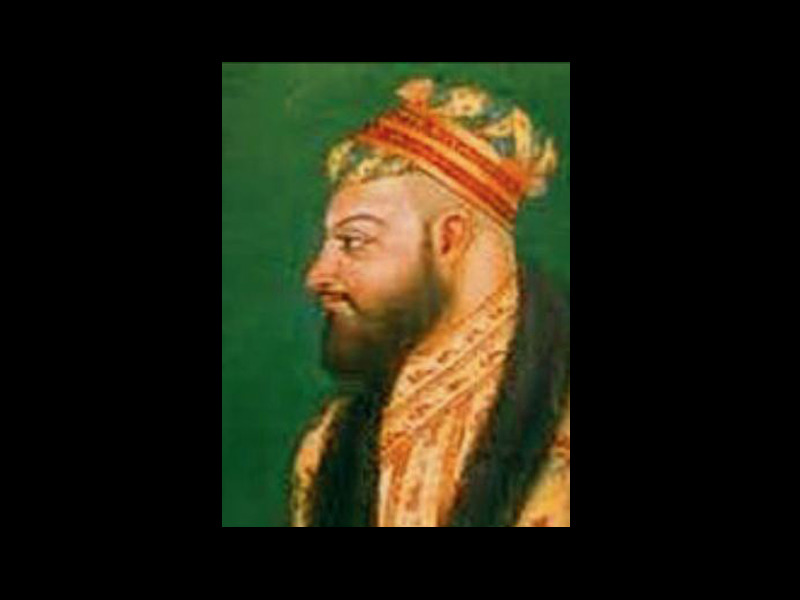
Malkibharamuni. The name may not ring a bell for many Hyderabadis. But much of the rich and varied cultural and linguistic heritage of Telugu owes to this former ruler of Telangana. For the first time, Ibrahim Qutub Shah IV, revered as Malkibharamuni in Telugu ballads and legends, gets recognition in the World Telugu Conference.

Ibrahim Qutub Shah, who patronized Telugu and issued royal decrees in the language, had endeared the people of his times by popularizing the local language through mega literacy drives. He and his successor Mohammad Quli Qutub Shah V, who founded Hyderabad and built Charminar, had a number of Telugu poets in the royal Qutub Shahi court. Ibrahim Qutub Shah was fluent in Telugu and his generosity towards Telugu language and culture was so high that he continues to live as a legendary Malkibharamuni in the world of Telugu literature and folks songs.

Malkibharamuni figures in the list of 83 personalities, who had contributed to the development of Telugu language. One of the arches to be erected in the city to welcome the delegates of the World Telugu Conference will be dedicated to him. Historian Abdul Majeed Siddiqui in his “History of Golcunda” published about eight decades ago extols the Qutub Shahi ruler saying that Ibrahim’s “lasting service in the domain of politics and culture had lent fascination to the name of the remarkable king and had made him alegendary figure in the Telugu literature. He is Malkibharam (Malkibharamuni) of legend and ballads.”

According to Siddiqi, Telugu, received encouragement and Telugu was patronized as liberally as Arabic and Persian languages. “Telugu poets and prose-writers were munificently encouraged and rewarded,” he said. Mohammad Quli is believed to have composed poems in Telugu too.

The Qutub Shah’s poetry “depicts his impressions about the life and culture of the Telugu society. It shows his sympathy with the local life and traditions,” Siddiqi adds.

In fact, the Qutub Shahis were the first non-Telugu kings, who spoke and wrote in Telugu. The language was at its golden peak during the period of Ibrahim and Mohammad Quli.

source: http://www.timesofindia.indiatimes.com / The Times of India / Home> City News> Hyderabad News / by Syed Akbar / TNN / December 11th, 2017

AMU’s Prof Samdani receives ‘Legal Expert Award’

Aligarh, UTTAR PRADESH :

SamdaniMPOs26dec2017

Aligarh :

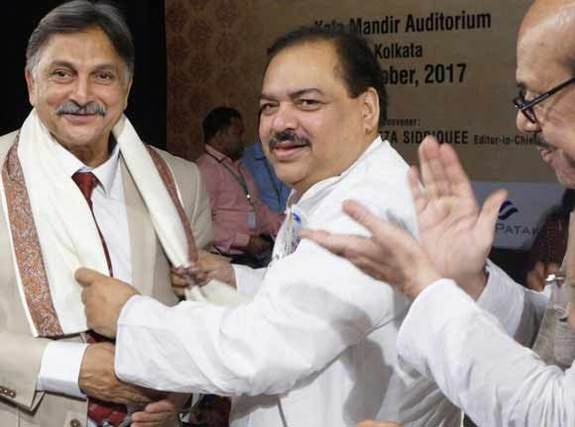
Professor Shakeel Samdani (Department of Law, Aligarh Muslim University—AMU) has been conferred with the ‘Legal Expert Award’ by a leading Urdu daily in a special function held at the Kala Mandir Auditorium in Kolkata, Bengal. He received a Shawl, a memento and a citation during the function.

Prof Samdani was honoured for his work in human rights, academics and conducting awareness programmes on the Indian Constitution.

Mr Ali Ashraf Fatimi (Former state HRD Minister) and Mr Javed Ahmad Khan (Minister, Government of Bengal) presented the award to Prof Samdani.

Prof Samdani has over 27 years of teaching experience. He has authored ‘Uniform Civil Code: Problems And Prospects’ and ‘Maintenance of the Muslim Divorcee’. He teaches Islamic Jurisprudence, Muslim Law Relating to Status, Islamic Legal System, Public International Law, Human Rights Law, Sociology of Law and Law and Poverty.

(PR from AMU)

source: http://www.milligazette.com / The Milli Gazette / Home> Community News / by The Milli Gazette Online / November 22nd, 2017

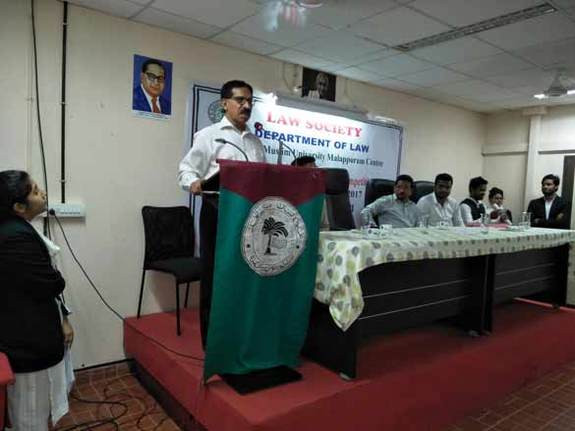
Law Society for 2017-18 Inaugurated at AMU Malappuram, Moot Court Competition Held

Mallapuram, KERALA :

LawSociety01MPOs26dec2017

Malappuram :

The Law Society for 2017-18 Session was inaugurated by Prof. Abur Rasheed K.M, the Director, Aligarh Muslim University Malappuram Centre. He also launched the Intra Departmental Moot Court Competition. Appreciating the performance of the students of the department, he promised to provide all support to department.

Mr.Shahnawaz Ahmed Malik, the teacher in charge of Law Society welcomed the guests and the audience. He threw light on the history and establishment of Law Society at AMU Centre Malappuram. Dr. Faisal.K.P, the Co-ordinator, Dept. of Law while delivering presidential address appreciated the efforts of Law Society in improving the overall standard of Law Dept. at AMUMC.

Mr. Mohd. Shadab  (BA.LL.B (Hons (IX sem)  and Miss Mariyam Khan (Hons (VII sem)  were selected as Vice President and Secretary of  Law Society respectively after interviews.  While Syed Nishat Fatima and Shahbaz Ali were selected as Joint secretaries respectively. Ranna KT and Ali Muzaffar were appointed as Media and Publication  secretaries respectively. Devesh Kumar chauvia was selected as Organizing secretary. Various forums for Moot Court, Debate, Quiz, Judgment writing, Paper/ Article writing and for personality development were also formed under Law Society. Qirat was recited by Mohd. Koya Amjad while Miss Mariyam Khan conducted the programme.

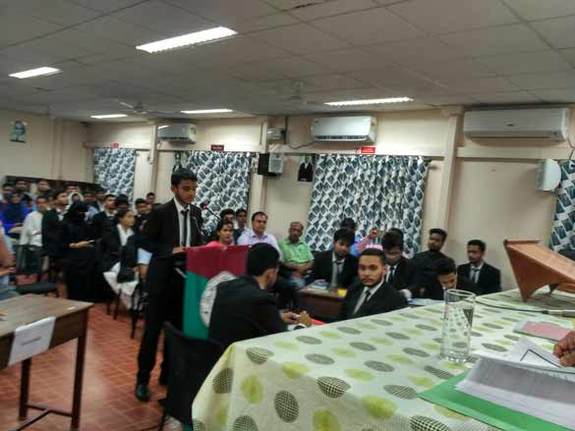
LawSociety02MPOs26dec2017

Dr. Raghul Raghwan and Dr.Mohd Azmat Ali (Assistant Professors) Teachers In-charge of Law Society coordinated Inaugural and Moot Court Competition.

Meantime, the Intra Departmental Moot Court featured 22 teams concluded last week. The final rounds of the competition were judged by Adv.T.P Abu, Former Assistant Public Prosecutor at District Court, Manjeri and Adv.Mohd. Hassan, Perinthalmanna Court. The judges appreciated the performance of the students.

The team consisting of Mr. Abu Baker and Aseer Jamal both from third year B.A.LL.B and Swecha Rana of fourth year won the trophy as well as best memorial award. While Ali Muzaffar of fourth year B.A.LL.B, Khalid Faizan and Shah Momin from second year bagged second position.

Ali Muzaffar won the best Student Advocate award while Shah Momin won the Best Researcher Award. Vote of thanks for valedictory programme was given by Sayed Nishat Fatima.  The Programme was cooperated and attended by faculty members of Dept. of Law Mr. Ghalib Nashter, Mr. Abu Shahid, Dr. Abdul Azeez N.P, Dr. Najmudheen, Mr. Mohd Shakeel Ahmad, Miss Neelam Faizan and by  Shahnawaz Ahmad.  (Press release)

source:  http://www.milligazette.com / The Milli Gazette /  Home> Education and Careers  / The Milli Gazette Online / October 12th, 2017

Armenian X’mas link

Agra, UTTAR PRADESH :

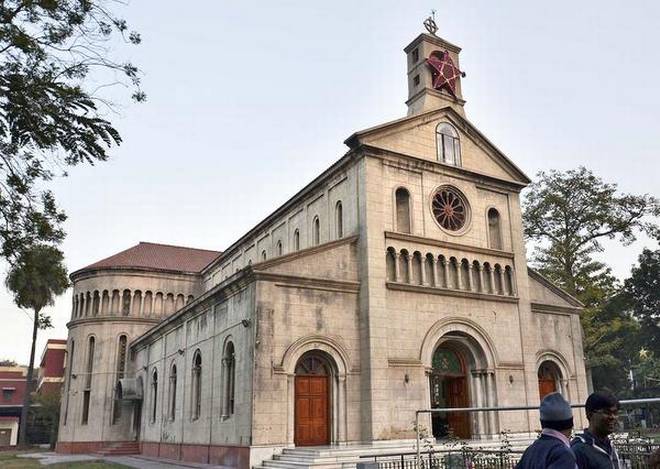
ArmenianChurchMPOs26dec2017

This Christmas, let’s rewind to the times when the cross and the crescent met in the Capital

Christmas is much the same everywhere but the medieval Armenian one was different. Even the Cross (that proclaims Christ’s crucifixion) had its own peculiar shape, hardly seen in Catholic and Protestant churches, except in old cemeteries, like the one in Agra which was once a Mughal orchard gifted to an Armenian lady by Akbar in the 17th Century. In Armenian celebrations, cakes were there, of course, but the emphasis was on animal sacrifices. The cakes and sweet breads were embellished with raisins (kishmish). No wonder non-Christians started calling Christmas “Kishmish”.

The visit of the former Armenian President, Levon Der Petrossian during Indira Gandhi’s time was a reminder of the age-old ties between India and Armenia, two countries where the Aryan influence predominated. The visit of Vice-President Hamid Ansari earlier this year was a follow-up to the one by Mrs Gandhi’s to Yeravan.

Armenia is an ancient country which has been regarded as “the doorway between East and West.” Mount Ararat, where Noah’s Ark rested after the Deluge, was in the present Turkish part of Armenia and it was there that those who were saved from the great flood along with the patriarch settled down to create a new world. It was, therefore, natural for Christianity to take root there in its initial days. It is worth mentioning, however, that the old beliefs of the Armenians were incorporated into the Church for quite a long time. Animals were sacrificed in the church porch before the celebration of the Eucharest, especially at X’mas and Easter. The Armenians had started coming to the Mughal Empire some years before the invasion of their country by Turkey. They found the hospitality that they needed and built churches in Delhi, which, however, do not exist now.

At Agra also they built a chapel and the son of a nobleman, Mirza Zulquarnain, was brought up by Akbar. He was later to become the head of the salt works at Sambar. The Mirza is known as the Father of Christianity in North India because it was during his time that the cross and the crescent met in the Mughal Capital.

Mirza Zulquarnain’s palace occupied the land where the British later built the Agra Central Prison, which in recent times has made way for the ambitious shopping project known as Sanjay Place. It was on this piece of land that a cathedral was erected by the Capuchins 200 years later. The Armenians planted olive trees, one of which still survives near Akbar’s church. The mystical cross was used as an emblem on even residential buildings. It is said that during Akbar’s time after Christmas Mass the sick members of the congregation drank of the water in which earlier a crucifix had been bathed. It was supposed to cure patients, or so the belief went. In the Martyrs’ Cemetry at Agra are the graves of many Armenians which look like Muslim graves with Persian inscriptions. One of the graves, that of the saintly Armenian merchant, Khwaja Mortiniphas is still venerated, along with that of Fr. Santus. Some say he was related to the Bishop of Tabriz and became a hermit in later life after giving all his wealth to the poor.

In Delhi, the most famous Armenian tomb is that of Sarmad Shaheed at the foot of the Jama Masjid. Kishanganj, between old Delhi and Sarai Rohila stations, also has some Armenian graves, besides those of Dutch nationals some connected to the Mughal Court like Bibi Juliana. Incidentally, the Chief Justice in Akbar’s reign was Abdul Hayee, an Armenian Christian.

Destroyed by Nadir Shah

There were two Armenian churches in Delhi, one near the slaughter house, beyond the old Sabzi Mandi, another in Sarai Rohilla; though accounts of their exact location differ. According to Sir Edward Maclagan, there were 120 catholics in Delhi during Shah Jahan’s reign in 1650. Their number went upto 300 by 1686, when Aurangzeb was on the throne. Two priests looked after them. A Catholic cemetery was also in existence from 1656. Father Desideri, who came to the city from Tibet, found the churches in ruins in 1732 (Mohd Shah’s reign). He stayed on for three years and built a new Armenian church dedicated to the Virgin Mary and blessed on All Souls’ Day, Nov 2, 1723. In 1739, this church and another Armenian one were destroyed by the Persian invader, Nadir Shah during the massacre of Delhi. One of the churches was rebuilt in 1746, and blessed on Christmas Eve. Later another Armenian church came up, but both seem to have been razed in the early 19th century.

When the Armenians held X’mas celebrations, boys and girls dressed as angels greeted Akbar and later Jahangir at their church in Agra which still exists. After that the two emperors watched the Christmas play and later sent the ladies of the harem to see the crib depicting Christ’s truth in a manger. Armenian X’mas is now a nostalgic memory but when the church bells peal for midnight Mass at Christmas in the Cathedral near Akbar’s church, the Armenian spirit is revived as the local Padritolians pull the ropes of the five huge bells imported from Belgium by the Italian Capuchin fathers. This tradition dates back to Armenian times, when one of the bells broke and could be lifted with great difficulty by two elephants, who deposited it in the Mughal Kotwali till Jahangir had it repaired and restored to the old church.

Probably the most famous Armenian in Indian history was Shah Nazar Khan who cast the Zamzamah gun for the Third Battle of Panipat (1761) on the orders of Ahmed Shah Abdali and about which Kipling wrote: “Who hold Zam-Zamah, that fire-breathing dragon, hold the Punjab”. The giant on wheels, gun is now parked in front of the Lahore Museum, while Nazar Khan rests in Agra where father discovered the nearly-obliterated Persian inscription on his tomb in December 1935, almost two years before one was born. Merry Christmas!

source:  http://www.thehindu.com / The Hindu / Home> Miscellaenous> Othes / by R.V.  Smith / December 26th, 2017