Category Archives: Community Involvement / Social Issues

Muslim Lifestyle Beyond Maqbara, Masjid and Madrasa

Aligarh,  UTTAR PRADESH :

Housed in the Ibn Sina Academy, Aligarh, the museum is one man’s effort to preserve articles of Muslim lifestyle or tehzeeb that include textiles, crockery, manuscripts, and musical instruments among other things.

While Taj Mahal may be the edifice of the moment, caught in the eye of a political storm and being showered with both barbs and bouquets, not very far from it is a museum of Muslim ‘tehzeeb’ that brims with tales of nobility and sophistication. Housed in the Ibn Sina Academy, Aligarh, the museum is one man’s effort to preserve articles of Muslim lifestyle or tehzeeb that include textiles, crockery, manuscripts, and musical instruments among other things.

The academy is primarily a museum of Medieval Medicine and Sciences, founded by Padma Shri Hakim Syed Zillur Rehman in the year 2000, but soon it diversified into chronicling Muslim lifestyle and tehzeeb of the past. People wonder why a science museum would be generous enough to grow into accommodating the articles of Muslim lifestyle. And he answers all of the queries with a note of hope and love for future, “I have the articles of Muslim houses preserved in the cupboards of my museum, from the royal families of Bhopal, Hyderabad, and Rampur etc.”

He said that he is preserving all this for posterity – “After acquiring education, prosperity and wealth there will be a time when they would want to know their civilizational facts, culture and past and at that time my museum will give the future generation a glimpse into their tehzeeb and lifestyle. It will respond to their search for roots.”
There are almost 4,500 articles of Muslim tehzeeb showcased in his museum – which include crockery that keeps the food warm till the last bite because of the vacuum that takes hot water, there are dupattas three meter long that were tied differently in different Muslim societies of Hyderabad and Bhopal etc., there is a fruit tray from the dining table of Begum Sultan Jahan of Bhopal, her brooch made of precious stones, with her name inscribed in gold, a chogha that belonged to the Qazi Shamsuddin of Rewari, dating back to 1830, a paandaan weighing over 5 kg and a betel stand to name a few.

There are other items that chronicle Muslim culture through objects like: gramophones, harmoniums, costumes for weddings and trays for biryanis designed keeping the sense of style and comfort of those times. There are heavy paandaan (a box for preserving items used to make paan), ugaldaan (spittoon for the pan user), fancy haath ka pankha (a hand fan), and pretty batua (wallet), gem-studded gharara (a dress item), there are also silver-lined razais (quilts). The museum grew out of his fondness for all things with rich history, some of which were also priceless – coins from ancient times, stamps, pens and other artefacts. He makes sure to mention the source of the specimens he gets from Muslim families and pin them in the cupboard with the name of the person donating it or belonging to.

Times for Muslims have also changed in many ways, he said, “Somehow they are not able to think beyond maqbara, masjid and madarsa. They are always ready to contribute in the growth of masjid and madarsa but don’t understand the values of museum of heritage and culture of Muslim families. In this time of collective ignorance about out past I designing this for the future generation that will come in search for roots,” he added. Some of the objects on display were inherited by him. Some were gifted by people who saw that he had the wherewithal to preserve priceless items for posterity.

He takes pride in showing the guests original royal orders of Mughal emperors that have come to Rehman from his father, and a paper weight made of shells that was used by Sir Syed Ahmad Khan. These orders come from Aurangzeb, Babur and calligraphy by Bahadur Shah Zafar. When asked how he continues to enrich the museum of Muslim past in times of attack on Taj Mahal, he said, “The attacks on Taj Mahal or anything associated with our past are just seasonal things, it is more to do with politics than our society and its commitment to celebrate history.”

In his view these attacks don’t mean anything in the larger picture of history, “Taj Mahal and Qutub Minar are part of our pride, we cannot be attacking them because they were made in medieval times. By that logic Connaught Place and Parliament should also be broken down because they were made angrez (British),” he added.

Rahman served as a professor and chairman, department of Ilmul Advia at the Ajmal Khan Tibbiya College, Aligarh Muslim University. After serving as a dean, faculty of Unani medicine, he retired after 40 years. He is the author of 45 books and several papers on different aspects of Unani and boasts of being the possessor of the largest collection of books on Unani medicine. Conferred the Padma Shri in 2006 for his contribution in the field of Unani medicine he is now expanding his museums to start taking items like animal skin, which formed an important part of households of the past.

Also, unsure of who will take it forward after him, Rahman has given this endeavor to a Trust to take charge of it. There is huge collection of Ghalib’s work, which he claims to be one of the largest in South Asia and attracts scholars from other parts of the country to study. In his library lined with thousands of books, manuscripts and dedicated works of Ibn Sina and medieval medicine, sciences, youngsters from all backgrounds especially economically weaker come to study in the quiet atmosphere.

source:  http://www.news18.com / News18.com / Home> News18> India> Sunday Feature  / by Eram Agha, News18.c0m / November 05th, 2017
UP Civic Poll Results: BSP’s Mohammad Furqan beats BJP rival to become Aligarh Mayor

Aligarh, UTTAR PRADESH :

UP Civic Poll Results: BSP's Mohammad Furqan beats BJP rival to become Aligarh Mayor
UP Civic Poll Results: BSP’s Mohammad Furqan beats BJP rival to become Aligarh Mayor

Mohammad Furqan, BSP candidate’s victory is significant as the Mayawati-led party was badly mauled in the state Assembly elections earlier this year.

In a shot in the arm for Bahujan Samaj Party (BSP), its candidate Mohammad Furqan won the mayoral contest in Aligarh even as the BJP otherwise dominated the civic polls in the state.

Furqan defeated BJP candidate Rajiv Agarwal by a margin of 11,990 votes in what was virtually a direct contest to become the first Muslim to occupy the post after independence.

The BSP candidate’s victory is significant as the Mayawati-led party was badly mauled in the state Assembly elections earlier this year.

Traditionally, Aligarh has been a bastion of the Bhartiya Janta Party (BJP) , which has never lost this seat ever since the system of direct voting was introduced for the mayoral post in 1995. The saffron party bagged this post in all the four previous elections.

Aligarh city has since the past quarter of a century mostly witnessed direct contests between the BJP and the Samajwadi Party, with the 3rd and 4th place going either to the Congress or the BSP.

This election also marks a new low for the SP whose candidate Mujahid Kidwai lagged behind even the Congress and ended up in the fourth position securing just about 16,000 votes.

source: http://www.indiatvnews.com / India TV / Home> Election News> Uttar Pradesh Municipal Elections News / PTI, Aligarh / December 01st, 2017

National Education Day celebrated at Farooqia College of Pharmacy

Mysuru, KARNATAKA :

FarooqiaCollegeMPOs01dec2017

Mysuru :

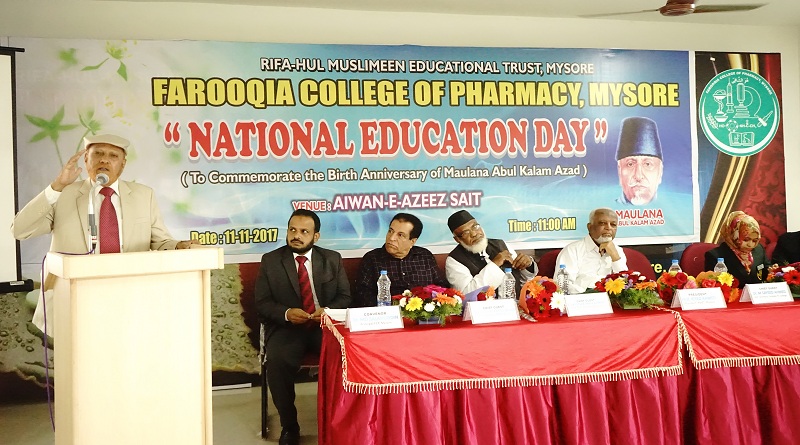
The National Education Day to commemorate the birth anniversary of Bharat Ratna Maulana Abul Kalam Azad was celebrated at Farooqia College of Pharmacy at Tilaknagar here recently.

Speaking on the occasion, Taj Mohammed Khan, secretary of Farooqia Educational Institutions, encouraged the students to follow the footsteps of Maulana who fought for the freedom of India and brought a revolution in education with his reforms as first education minister of post-independent India.

Dr M Sayeed Ahmed, secretary of Farooqia PU College, who was the chief guest, gave a detailed power-point presentation on Maulana’s life.

He said it is Maulana who first opposed the partition and separation of India and Pakistan. Maulana was a firm believer in the co-existence of religions. His dream was that of a unified Independent India where Hindus and Muslims can live peacefully.

Kolar Mustafa said that nowadays the institutions like UGC, AICTE and IITs are still running without modification in their regulations due to the broad based think tank of Maulana Abul Kalam Azad.

President of RMET Prof Riyaz Ahmed in his presidential remarks briefed about the post- independent educational system and highlighted Maulana’s simplicity, who didn’t amass property and wealth for his own family members and relatives even though he was an education minister for 10 long years.

Prizes were given away to Essay Competition winners on “Life of Maulana Abul Kalam Azad after post-independent India.”

Maryam Postdar, a D Pharma student, recited verses from the Quran. Principal Dr MD Salahuddin presented a video documentary on Maulana Abul Kalam Azad’s Life.Sara Ateeq, vice-president, Pharmaceutical Society and others were present.

source: http://www.citytoday.news / City Today / Home> Headlines> Mysore / by CT Bureau / November 30th, 2017

Trial advocacy team represented by Indian American Shahina Khan won over Georgetown University

Hyderabad, TELANGANA / Chicago, USA :

ShahinaMPOs29nov2017

Chicago:

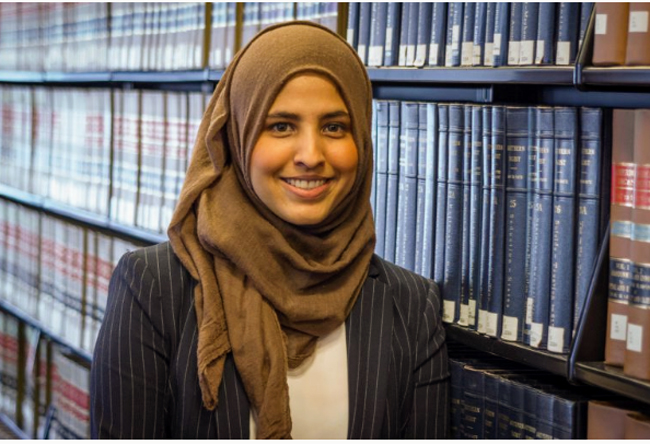
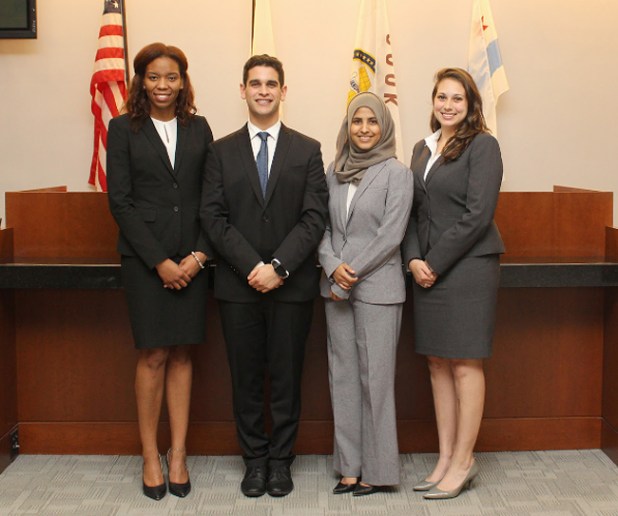
The Chicago-Kent trial advocacy team represented by Shahina Khan, 3rd year JD student with three other students in the National Civil Trial Competition Championship 2017, held at Santa Monica and Los Angeles, Calif. Chicago-Kent won over Georgetown University Law Center, Drexel University Thomas R. Kline School of Law, and American University Washington College of Law twice in the quarter and semi finals rounds.

In the finals, Chicago-Kent got 1st runnerup to the team of Stamford University Cumberland School of Law. She also the recipient of prestigious J.J. Bittenbinder Award in UIC and the Obama Award for her championship in extra and co curricular activities during High School years .

Shahina02MPOs29nov2017

Shahina Khan belongs to the aristocratic and respectable family of old Hyderabad Estate. She is the daughter of Engineer. Ameer Mohammed Ali Khan, Practicing Consultant of IDOT, and grand daughter of President’s Gold Medalist, Late Nawab Wajid Ali Khan, Superintendent of Police, Ex. AP, India.

Shahina Khan’s great grand father, Late Abul Faiz Mirza Mohammed Ali Baig, was an eminent lawyer in pre and post independent India Hyderabad. He was the President of Bar Councils, Civil and Criminal courts, Hyderabad, India. He was one of the few eminent lawyers of India who had an opportunity to write the constitution of India.

Shahina Khan is the President for Criminal Law Society, Muslim Law Student Association and member of Trail advocacy Team ( 2017-2018).

Earlier to this, she also served as the Vice President for these associations. She graduated from University of Illinois at Chicago in 2015 with a bachelors in Criminal law with honors. She is doing her internship in Cook County State’s Attorney’s Office, Chicago. She wants to pursue a career in Criminal Litigation.

source: http://www.siasat.com / The Siasat Daily / Home> News> NRIs Corner / November 02nd, 2017

Dr. Abdul Qadeer of Shaheen Group conferred with “Hazrat Khwaja Abul Faiz R.H Award” for his unmatched educational service.

Bidar, KARNATAKA :

AbdulQadeerMPOs29nov2017

Gulbarga :

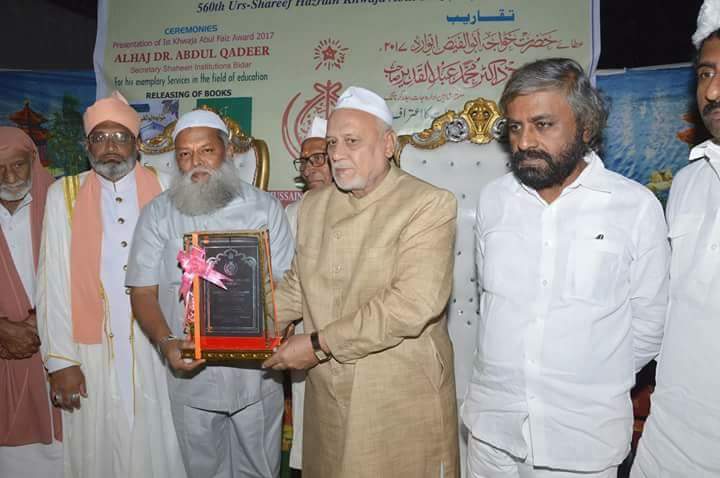
Dr. Abdul Qadeer, Secretary Shaheen Group of Institutions, Awarded with “Hazrat Khwaja Abul Faiz R.H Award” for his excellent educational service.

Dr. Abdul Qadeer has been awarded with “Hazrat Abul Faiz RH Award” Dated on 26 November 2017. This award presented to him on 560th death anniversary of Syed Khaja Abul Faiz RH. Dr. Abdul Qadeer, has been awarded for his excellent educational services and it has been presented by Syed Shah Hussain Shabir Hussaini sajjada Nasheen Dargah Hazrat Ganj bakhsh Rahmatullah Alai, Gulbarga.

During this occasion special guest were Honorable Minister Sri, Eshwar Khandre District In-charge Minister Bidar, Honorable Mohammed Rahim Khan MLA, Deputy Commissioner Dr. HR Mahadev, Senior Editor Mr. Shiv Sharnappa Valli, Honorable Mohammad Faheemuddin Sarika district wakf advisory committee were also present.

Dr. Abdul Qadeer in his impression recall Bidar history and said, Bidar was one of the biggest educational hub, it was the capital of various Kingdom in the past and it also had Asia’s biggest universities famously known as Mahmood Gawan University, wherein students from different countries used to come, to learn various educational courses.

Dr. Abdul Qadeer said Bidar’spast makes us proud for its excellent history and I believe in future we will achieve the same and we are making an effort to achieve it once again. Here in Shaheen Group of Institution, we are focusing on the regions like Bidar, which has very poor educational level, with this effort, we are not only getting the student from Karnataka but also we are getting from various country. Today Bidar has become well known place in education and various people throughout the world are attracting toward it.

source: http://www.deccandigest.com / Deccan Digest / Home> News / November 28th, 2017

Remembering Umrao Begum

Basti Nizamuddin, NEW DELHI  :

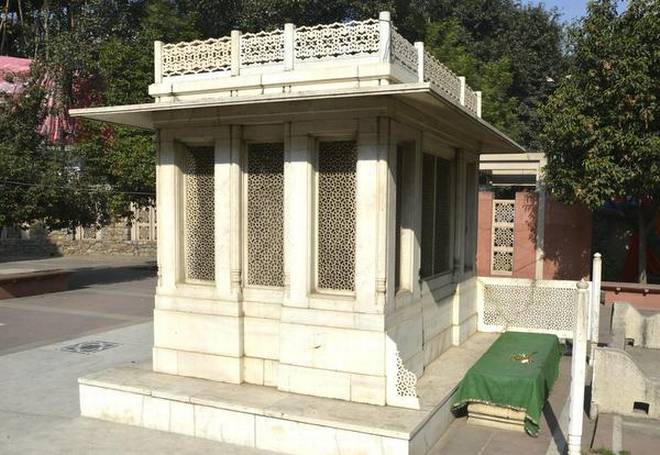
RAVE CONCERN Umrao Begum’s grave, covered in green cloth in Nizamuddin | Photo Credit: V. Sudershan

The unmarked resting place of Miza Ghalib’s wife deserves an epitaph

The grave of Mirza Ghalib’s wife, Umrao Begum, in Basti Nizamuddin, just at the side of her husband’s tomb, lacks an epitaph, probably because nobody tried to inscribe one on it in 1955 (when the poet’s memorial was built) or because she preferred anonymity as per the strictest tenets of Islam. Even so she deserves one for posterity’s sake. Umrao Begum was a pre-teenager when she married Ghalib, who himself was just 13 at that time, and the two shared conjugal bliss for nearly 57 years.

Umrao Begum was a kinswoman of the Nawab of Loharu, an erstwhile State now merged with Rajasthan, and her cousin was Bunyadi Begum, Ghalib’s sister-in-law. The begum, who was the Nawab’s sister, gave her haveli in Gali Mir Qasim Jan to Ghalib when he was in need of accommodation.

Umrao Begum bore seven children, all of whom died in infancy, leaving her and the poet heart-broken all their lives. Even the nephew, Nawab Zainul-abadin Khan Arif, whom they adopted, died young at the age of 18, though he had made his mark in Urdu poetry by then.

Strict lady

Umrao Begum was a strict Muslim lady, whereas Ghalib was not at all orthodox. After the First War of Independence of 1857, the poet was accosted by an English officer who asked him if he was a Muslim (as most members of the community were suspects in the eyes of the British). Ghalib replied “Half”. The officer sought an explanation to which Ghalib said that though he drank, he did not eat pork. The amused officer, marvelling at his wit, left him in peace.

Once Ghalib came home with a man carrying a basket full of wine bottles, bought with his first pay. Umrao Begum asked him why he had spent all the money on liquor, to which his reply was that God had promised to feed everyone but had not made any provision for drink, for which one had to make one’s own arrangements.

At another time he entered the courtyard of the house with his shoes on his head. To the Begum’s query, he replied that as she had made the whole haveli a masjid by her piety he had no other option. Umrao Begum died in 1870, a year after Ghalib, when Mahatma Gandhi was only a few months old and was buried according to her wish next to the poet.

Unfortunately, the Ghalib memorial built 85 years later became a barrier between the two graves, both of which should have come within its ambit. But it’s never too late to make amends for an oversight — if need be with Government help.

Her love for Ghalib was intense or he wouldn’t have been able to lead the carefree life he did. She was the one who took care of the house despite the poet’s love for gambling and dance girls, one of whom took undue advantage of him. Despite mischievous gossip by mohalla women, Umrao Begum was unruffled because she was convinced of her husband’s goodness of heart. Even when there was paucity of funds, she managed to see it to that Ghalib and nephew Arif got three square meals a day.

After the death of her children, she was the one who comforted her Mian Nausha so that the misfortune did not affect his mental equilibrium, without which his wit would not have continued to flow like the sparkling Thames.

Facing the music

Ghalib spent most of his time outside the haveli, except when he was writing poetry, having his meals or resting. So it was Umrao Begum who faced the creditors as she was the one who responded to the knock on the door in the absence of a regular maid. When the fat Kotwal of Delhi tried to bully Ghalib, as he disliked the poet because of their love for the same tawwaif and considered him a potential rival (as he always stole the limelight at the kotha), his wife was the one who confronted the Kotwal’s importunate minions at the haveli’s entrance and sent them away with the proverbial flea in the ear.

When Arif was grooming Alexander Heatherley “Azad” as a shair, despite his Anglo-Indian antecedents, Umrao Begum took it upon herself to see to it that they were not disturbed and had some refreshments too during the long hours of coaching. Ghalib who had earlier imbibed the love for shairi in Arif, also fawned on him and when he died an untimely death, poured out his grief in a heartfelt elegy (quoted from memory) that is among his best poems: “Jatey huey kehtey ho qayamat ko milenge kya khoob, qayamat ka goya din hai koi aur!” (While departing you say will meet on the Last Day of Judgement, what an excuse on the pretext of a reunion on a vague day in Eternity).

Reading the elegy Umrao Begum burst into tears and told Ghalib not to rub salt into her raw wounds, according to Arif’s pupil, Alexander Heatherley’s descendant, George Heatherley who died in Perth a few years ago. Umrao Begum’s grave close to Ghalib’s is testimony enough, if one were needed indeed, of the emotional link between the two. Then why deny her the courtesy of an epitaph to seal the bond for the benefit of future generations? No matter how distant may be Arif’s final place of repose.

source: http://www.thehindu.com / The Hindu / Home> Society> Down Memory Lane – History & Culture / by R.V. Smith / November 27th, 2017

For Habibullah Badsha, public interest trumped officialdom

Chennai, TAMIL NADU :

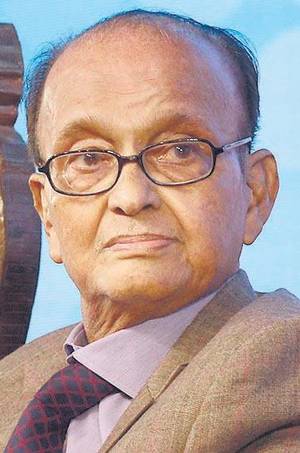
Habibullah Badsha
Habibullah Badsha

He was respected by judges and lawyers alike, and many others

Habibullah Badsha (1933 – 2017) was born in an illustrious family and was apprenticed to an illustrious lawyer. He joined S. Govind Swaminadhan in 1956 and became one of his favourite juniors. Soon he acquired an extensive practice of his own. For several decades, that trio — SGS, A.C. Muthanna and Badsha — were a combination hard to beat.

Badsha was steeped in the mould of his senior. He held every important law office, and in each he ensured that fairness overrode partisanship, and public interest trumped officialdom and politics. As Public Prosecutor, he would readily concede that the State had no case, as Central Govt Counsel he declined to support Emergency orders of detention, as Advocate – General he made it clear that if the government disregarded his advice, they could look for a new A-G.

When he took on a public interest case, he made sure that he gave to it the same amount of prodigious labour and interest as a paying brief. When he took on a public cause, eg. protesting the city being shut down for a mega wedding organised by a former Chief Minister, he was undeterred by threats. Manifold public organisations and charities benefited from his support. Many individuals did too, monetarily and otherwise, but this came to light only when unknowns came to pay respects to the departed soul; he followed the adage — for your generosity let the left hand not know what the right hand giveth.

He was respected by judges and lawyers alike, in his home court and the apex one, and many others in the country. Many juniors looked upon him as a role model and tell of his generosity of time, ensuring that the young lawyer was well paid, and other acts of help and assistance; he always responded when asked and sometimes surprised the recipient unasked. His attitude and manner of mildness, gentleness and soft speech was a constant — at home, in society, and in court. Dispelling the notion that the litigation lawyer must display aggression, Badsha always displayed calm and courtesy; these traits would coax the judge into agreeing with him and then virtually espousing his cause to the chagrin of the other side.

He was mindful of the fact that the Muslim community, of which he was a prominent member, needed his special attention, and he was a prominent name in several prominent organisations. But that did not prevent him from being secular in outlook, thought, speech and practice. In declining judgeship when offered, he did what his senior had done; there are many voices which are critical of the best lawyers staying clear of the Bench, but it must also be kept in mind that his outstanding services in many areas would not have been forthcoming from that gilded cage. Nevertheless, it was a matter of pride for him that three of his juniors became High Court judges and served with distinction — Justices Sudhakar, Kirubakaran and Akbar Ali.

In his closing years he was saddened by falling standards in the legal professions, Bench and Bar and academics. It was much better in our time, he used to say. We agree; and when a prominent member of the old guard leaves us, we feel it all the more.

(The writer is a senior advocate in the Madras High Court. His email id is sriram.panchu@gmail.com)

source: http://www.thehindu.com / The Hindu / Home> News> States> Tamil Nadu / by Sriram Panchu / Chennai – November 25th, 2017

Shrines of sand

Hyderabad, TELANGANA :

Tucked away in the locality of Urdu Shareef is the shrine of a sufi saint

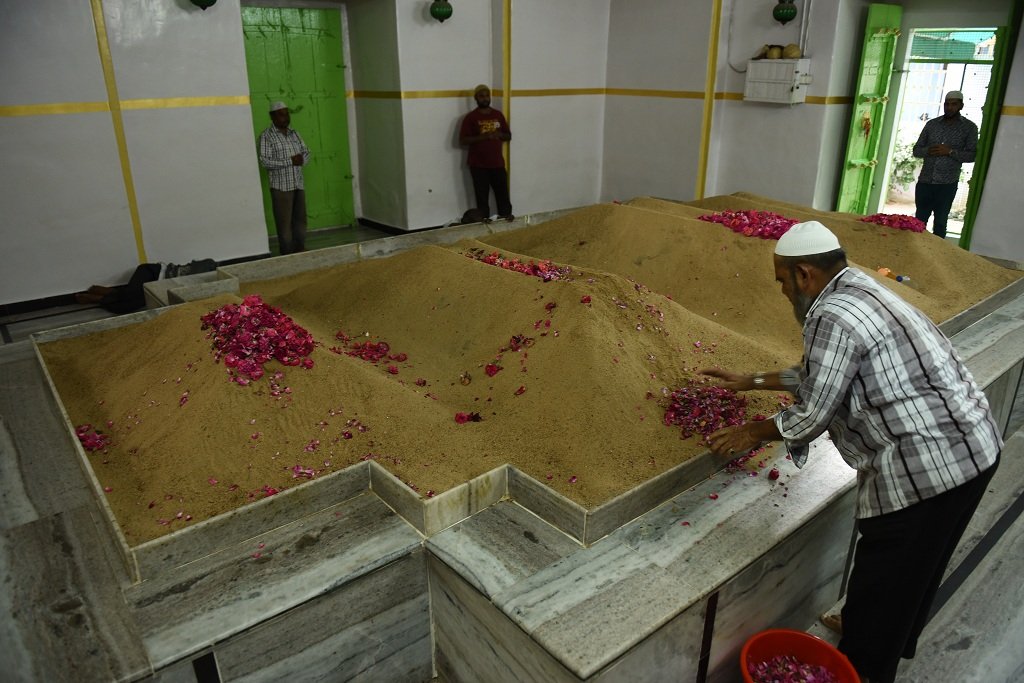
The sand graves of Hazrat Arifullah Syedna Shah Saadullah Saheb Naqshbandi and others in Urdu Shareef. Photo: Hrudayanand

The Deccan region has been blessed by the influence of many sufis, saints, gurus and spiritual leaders. It is said that 1400 paalkis (palanquins) came to Deccan, symbolising the number of sufi-saints. They spread the message of universal brotherhood, love, tolerance, peace, harmony, humanity and amiable relations between the two major communities. Many devotees and followers also embraced Islam. The entire Deccan region and the city of Hyderabad, in particular was visited by many god men, who not only commanded respect and reverence from common man, but also from nobilities and elite class of the society.

The old city of Hyderabad i.e. the southern part has shrines of many famous Sufi-saints, whose annual Urs are still celebrated with great devotion.

A little away from Pathergatti High Court road is the locality called Urdu Shareef, where the army of Mughal Prince Kaambakhsh stayed during that period. The palace of Kaambakhsh was also constructed in the vicinity.

It is in this area that you will see the shrine of Hazrat Arifullah Syedna Shah Saadullah Saheb Naqshbandi. The 175 year old shrine has a large dome with beautiful architecture housing four graves made of fine sand. It is an uncommon and unusual sight, as graves are usually made of cement, mortar, lime and stones; and rarely are covered by marble, the graves appear like sand dunes, and lie adjacent to one another. The biggest grave is that of Hazrat Saadullah Saheb.

The adjacent one on the left side is of his brother, Md Osman Saheb, the next one is of Osman’s wife, while on the far right is the grave of his favourite disciple, Mirza Ashraf Ali. The entire area of these graves is seven feet long and four feet wide. The sand is changed annually and many devotees, both Hindus and Muslims pay their respect and seek his blessings.

Hazrat Saadullah was born in the Frontier Province. He came to Deccan during the reign of Nawab Nasir-ud-daula, the fourth Nizam, and settled here. Many nobles including, Maharaja Chandu Lal, used to come to seek his blessings. A great scholar, he was an Arabic and Persian poet as well. Since he was physically disabled, he would sit on the back of a disciple when roaming around the city.

The impressive dome was constructed by one of his ardent followers, Maulvi Mohd Hussain, who was the tutor of the fifth Nizam, Mir Mahboob Ali Khan.

Just opposite the shrine is a small mosque built by Hazrat which bears similarity with Charminar. The architecture on the parapet, minarets and the ceiling is extraordinarily magnificent.

source: http://www.telanganatoday.com / Telangana Today / Home> SundayScape> Telangana Diaries / by Dr. Anand Raj Varma / October 15th, 2017

Bastar SP Sheikh Aarif Hussain is first IPS officer to be honoured with IACP award

Bastar, CHHATTISGARH :

Pennsylvania :

Arif Sheikh has become the only Indian Police Service (IPS) officer of the country to win this award in community policing twice in a row.

Arif Sheikh has become the only Indian Police Service (IPS) officer of the country to win this award in community policing twice in a row. (Photo: ANI | Twitter)

Bastar:

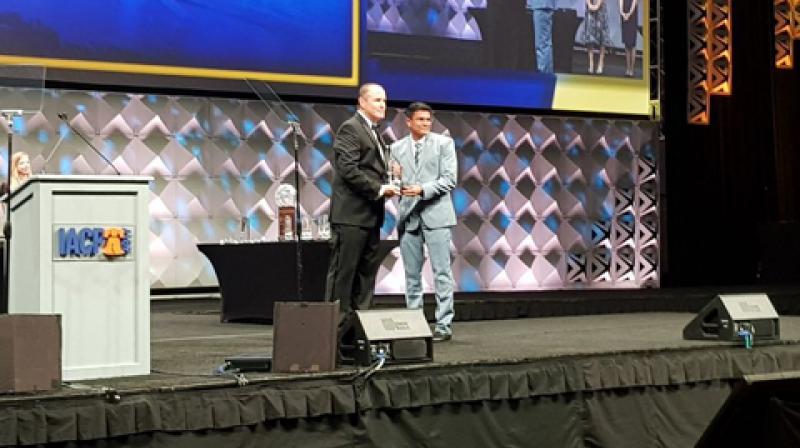
Bastar Superintendent of Police (SP) Sheikh Aarif Hussain has been awarded the prestigious International Association of Chief of Police (IACP) Award 2017 in Pennsylvania in the ‘Homeland Security’ category for his campaign ‘Amcho Bastar, Amcho Police’.

Arif Sheikh has become the only Indian Police Service (IPS) officer of the country to win this award in community policing twice in a row.

Arif Shaikh has dedicated this award to the martyrs, who have sacrificed their life at the altar of their duty in Bastar and to the brave and innocent tribals of the region, who have supported and collaborated with the Bastar Police in this fight against the Naxalism.

Through his campaign, the Bastar Police have come to the aid of few children, who were trapped in the clutches of the Bal Sangham of Maoists, who were used to plant IEDs against the security personnel. They also tried to bring back the surrendered Maoists into the mainstream by giving them alternative earning opportunities.

The ‘Amcho Bastar, Amcho Police’ initiative aimed at bridging the gap between the police and the tribal communities by assimilating with their culture. At the same time, the police has focussed on neutralising the Left wing extremist and also by encouraging the ultras to surrender and join the main stream.

The annual IACP award ceremony and Banquet was held on Wednesday in the Pennsylvania convention centre in a majestic ceremony.

The IACP is a 126-year-old organisation of all the chiefs of police in the U.S. with its headquarters located in Virginia.

The IACP president, Donald W. De Lucca, was the chief guest. The other guests of honour were the executive board directors of the IACP.

Total 15 different awards were given in various categories including forensic sciences, prevention of terrorism, community policing, human rights awards, victim services awards and Reuters awards for excellence in criminal investigations et al.

The IACP/Cisco Leadership award in community policing recognises outstanding community policing initiatives undertaken by law enforcement agencies worldwide.

The other agencies across the world which won the community policing awards were the Oelwein Police department from Iowa, the Monrovia Police department from California, the Roanoke Police department from Virginia, the Fujairah Police department from the UAE and the Arlington Police department from Texas.

source: http://www.asianage.com / The Asian Age / Home> Newsmakers / by ANI / October 25th, 2017

Mewat sisters launch anti-dowry drive, ask qazis to join the fight

Pingwa,Mewat (HARYANA)  / NEW DELHI :

HighLights

  • Six sisters of Delhi’s Malaviya Nagar have launched a campaign against dowry in their native village in Mewat.
  • They are carrying a door-to-door campaign against the social evil in Mewat.
  • They have also urged the qazis, or Sharia magistrate, to not allow such weddings in the district.

________________________________________________________________________

MewatSistersMPOs24nov2017

Gurugram :

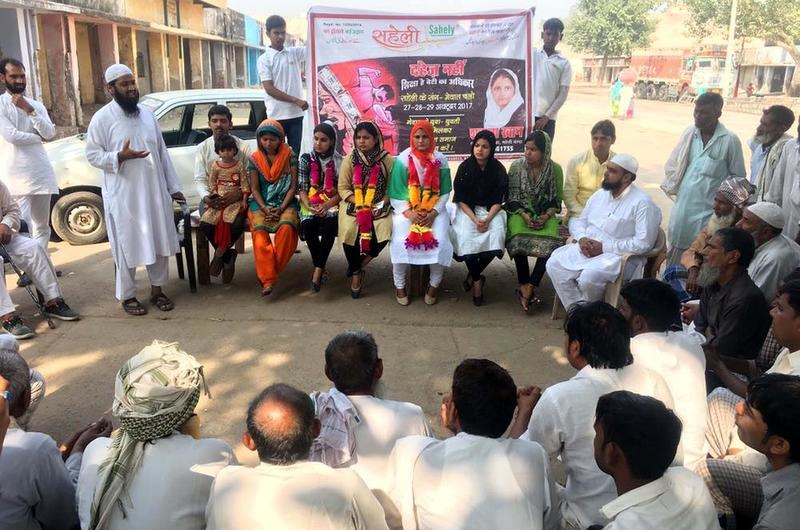
This is what a silent revolution looks like. Six sisters, who live with their parents in Delhi’s Malaviya Nagar, have launched a campaign against dowry in their native village, Pingwa in Mewat. Since Friday last, they have been busy in a door-to-door campaign against the social evil in Mewat.

They have declared they will also urge qazis, or Sharia magistrate, to not allow such weddings in the district.

Shabana Khan, 29, the eldest of six sister, was married to a Sikandrabad, UP, resident 10 years ago. Tormented by her in-laws for dowry, she returned home to her parents after suffering for two years. Since then, she realised most women around her suffered after marriage for “not bringing enough dowry”.

Noticing the plight of their sister, Shabana’s five younger sisters — Nishi (26), Neelu (24), Shahin (23), Abida (21) and Nafisa (15) — have declared they would rather remain unmarried if there is dowry involved in a potential alliance. It also inspired them to launch their campaign against dowry. They founded an organisation in 2014 — Sahely, for victims of dowry, and now have decided to return to their roots to empower girls in Mewat.

“As dowry, my father gifted all kinds of household articles, but he didn’t have enough money for a car and the lakhs of rupees in cash sought. For this, I was harassed by my in-laws and eventually my marriage broke. Dowry is an epidemic. Girls are mentally and physically tortured for it. It has to stop, and it’s time somebody did something about it,” said Shabana.
The sisters will organise public meetings in the villages to raise awareness. They chose Mewat not only because it is their ancestral home, but also because of its high illiteracy.

 “Both Islam and country’s laws prohibit dowry, yet it’s given and taken openly. We’ll approach all qazis and tell them not to consecrate any wedding where dowry is exchanged. In fact, dowry seekers should be boycotted. It’s against Islam, and is a cancer that is eating away at the foundations of the institution of marriage,” said Shahin, another sister.

The sisters will target both youths and elders for their campaign. “We as a society spend more on girl’s dowry than her education. We should provide all resources to a girl for education, and not give any dowry at all. Even if in one generation, family of the bride/groom refuse to give/accept dowry, our job is done. That will transform society and will be the way to save the girl child,” added Neelu.

source: http://www.timesofindia.indiatimes.com / The Times of India / News> City News> Gurgaon News / Chetna Choudhry / TNN / October 30th, 2017