Category Archives: Community Involvement / Social Issues

Azadi in the underground, when freedom came late in Hyderabad: Muhammad Khaja Moinuddin

Hyderabad,(undivided Andhra Pradesh) , TELANGANA :

Freedom fighter Muhammad Khaja Moinuddin | Photo Credit: K.V.S. Giri

Moinuddin knew Nizam’s men had found their hideout; freedom had not yet arrived in Hyderabad

As August 15, 1947 dawned in Hyderabad, fear and anticipation built up in the Nizam’s dominion about the fate of the kingdom. Muhammad Khaja Moinuddin, 19, was underground, hiding in a house in the Asifnagar area of the city, along with the top Communist ideologues Raj Bahadur Gaur, Maqdoom Moinuddin and Jubbar Rizvi. Muhammad Moinuddin says he was the “gunrunner” of the Communist Party.

At the rail station

Elsewhere in the city, Snehalata Bhoopal, scion of a Samasthanam (feudal state), drove her beige-and-white Wolseley to Secunderabad station to see how the day unfolded in the garrison town. At the end of the day, nothing happened at the railway station, and Ms. Bhoopal, seven months pregnant, drove back to her home at Bholakpur.

Mr. Moinuddin, a feudal lord from Mongol (where Chief Minister K. Chandrasekhar Rao now has a farmhouse), took the role of gunrunner with elan. As a Muslim, nobody would suspect him as a courier for Communists, and as a feudal lord, nobody dared to stop him.

While the whole country was gripped with the fervour of Independence and chants of Azadi, Hyderabad’s fate was left to the whim of one person: Mir Osman Ali Khan, the seventh ruler of the Asaf Jahi dynasty. Only a decade earlier, the Time magazine ran a photograph of the ruler on its cover with a caption: “Richest man in the world.” He didn’t want to let go of the power and privilege in the last remnant of the Mughal rule.

“We were stirred into action by Maqdoom’s song: Ye jung hai jung-e-azadi, azadi ke parcham ke tale… (It is a war, a war of Independence under the flag of freedom),” he says. Once the freedom movement gathered pace, we wanted Hyderabad to merge with India. “We were fighting against feudalism and wanted to see the end of it,” says Mr. Moinuddin, who was in the thick of action in the Telangana Rebellion — or as it was called, the Telangana Armed Struggle.

Crass feudalism

“The armed struggle was against the crass feudalism in the region where doras(landlords) had absolute power of life and death over citizens. I used to have a servant whose job was to stand outside the mansion waiting for my orders. I had the bastion outside the house demolished, and I told the man I would call him when I needed his services,” says the wheelchair-bound Mr. Moinuddin in his robust voice.

Armed with a pistol and double-barrel gun, Mr. Moinuddin played the role of a guard of top Communist leaders.

“By the evening of August 15, we learnt that our hideout had been discovered and we had to move. While some of the leaders walked away and others were driven away, I had the job of destroying evidence in the house. It was a huge house where we had to go hungry. I collected all the papers in the house and slowly burnt them in the kitchen. Then I put the ashes in the drain and poured water and escaped from the place,” Mr. Moinuddin says.

Hyderabad had to wait an additional 13 months before being integrated with India, with soldiers marching in on September 18, 1948 and the Nizam’s soldiers surrendering their weapons.

source: http://www.thehindu.com / The Hindu / Home> Independence Day / by Serish Nanisetti / August 14th, 2017
The Tibetan Muslims who have made Kashmir their home

JAMMU & KASHMIR :

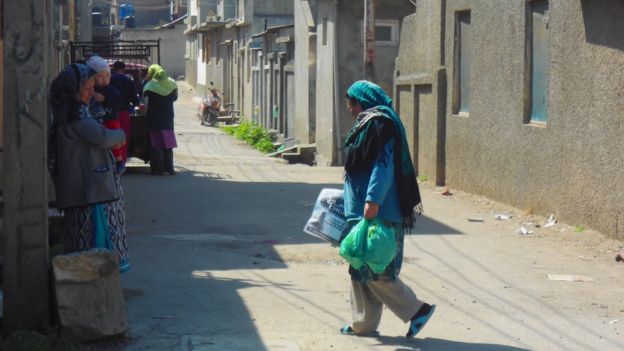
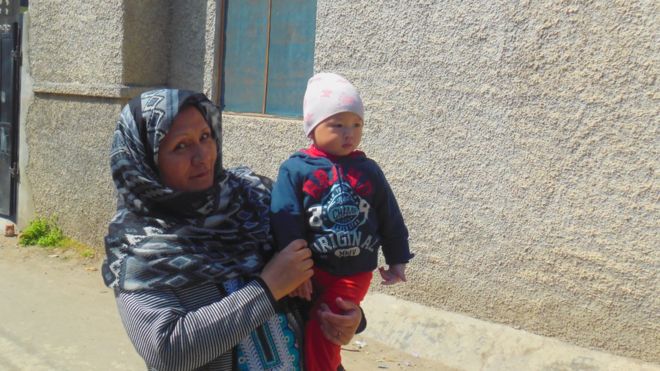
A small community of Tibetan Muslims have returned to Srinagarv/ Photo: Andrew Whitehead

On his latest visit to Srinagar, the capital of Indian-administered Kashmir, Andrew Whitehead came across a little-known community which has returned home after centuries away.

Sometimes when you think you know a place, you come across a fresh aspect of it, which reminds you how little you know.

I’ve been visiting Kashmir fairly regularly for more than twenty years. I have been to Hari Parbat fort, the magnificent Mughal-era monument which dominates the Srinagar skyline. But I had never before come across the small, quiet, community that nestles in its shadow.

Two thousand or more Tibetans have made their home in Srinagar. These are Tibetan Muslims. A few Muslim families remain in the Tibetan capital, Lhasa; some live in border hill towns; but most of them have now settled in Indian Kashmir.

Because they are, or were, Kashmiris.

Yet, their story says so much about the old trading links which once gave Kashmir its wealth – about the way those links have been thrown out of joint by the rise of rival nation states – and about the complex issues of identity which ricochet across the Himalayas.

By chance, I heard mention of what locals call the “Tibet-ian colony”, close to the almond gardens and just within Srinagar’s old city walls. I knew I was on the right track when I found a food stall selling Tibetan-style dumplings. In a back street I came across groups of women gossiping – old men ambling along to the mosque – all distinctively Tibetan in appearance.

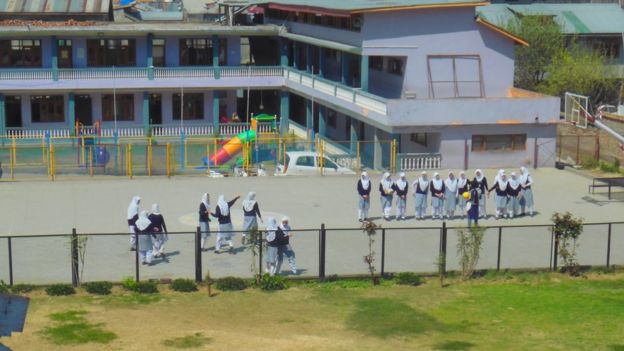
Around the corner stood the centrepiece of the community – the modern, imposing, Tibetan Public School.

In Tibet, they were called "Khache," which means Kashmiris / Photo: Andrew Whitehead
In Tibet, they were called “Khache,” which means Kashmiris / Photo: Andrew Whitehead

Nasir Qazi, a successful young businessman, showed me around. He’s the head of the Tibetan Muslim Youth Federation, which oversees what is clearly a well-run school that reaches well beyond the community it was established to serve. “I feel proud,” Mr Qazi told me, “that this school is something we have offered to our Kashmiri brothers and sisters.”

In the corridors, photos of the Dalai Lama’s visit are on prominent display. Tibetan Muslims don’t regard the Dalai Lama as their religious leader. “But we do honour and respect him,” Mr Qazi said, “and he loves us a lot.”

The community traces its origin to merchants who travelled along the old silk routes. They were Muslim traders from Kashmir and the adjoining area of Ladakh. Four hundred or so years ago, the then Dalai Lama granted them land in the Tibetan capital.

Over time, they married Tibetan women, mastered the Tibetan language and took up Tibetan cuisine. They became a distinct community in Lhasa, with their own mosque: prosperous, well-regarded and noted practitioners of Tibetan music.

‘Khache’

But they were never seen in Tibet as Tibetans. They were called “Khache” – meaning Kashmiris. It is a term that came to be a catch-all for Tibet’s Muslims, wherever they hailed from.

After a failed uprising against Chinese Communist rule, the Dalai Lama and thousands of his Buddhist devotees fled across the Himalayas in 1959. Then, Tibet’s Muslim community also felt restive.

They were seen by some Tibetans as collaborators with the new Chinese rulers. After a lot of diplomatic push-and-pull, in which the Indian government took an interest, Muslims were allowed to leave Tibet. Most exercised that option.

Once on Indian soil, these Muslims were regarded not as stateless refugees, but as returning Indians. For once being a “Khache” gave the community status. They were from Kashmir, they told the Indian authorities, and they were adamant about going back to their homeland.

Today, most of them work in Srinagar, but not as traders – the old routes are now sealed by impermeable modern borders. Instead, they work in much less remunerative jobs, embroidering burqas and adding the finishing touches to T-shirts sold to tourists.

Mr Qazi told me that a few decades back, when tensions between India and China eased briefly, his mother had at last been able to make a return visit to Lhasa. Mr Qazi has cousins there, but he’s never been able to meet them, or even set foot in the place that gives him his identity.

The community traces its roots back to merchants who travelled along the old silk routes / Photo: Andrew Whitehead

“We belong to this soil, Kashmir’s soil,” Mr Qazi insisted. Yet the community’s status is ambiguous. In Indian-administered Kashmir, only those who can demonstrate that their forebears are from the state can own land and have full rights. That’s tricky for the Tibetans – their Kashmiri lineage is too distant for this purpose.

In a region where not belonging, or being seen as outsiders, can be perilous, the community keeps a low profile. They seem content in Kashmir. But they are bound to reflect on a painful paradox.

In Tibet, they are Kashmiris. In Kashmir, they are Tibetans. There’s nowhere where they are simply themselves.

source: http://www.bbcnews.com / BBC News / Home> Asia> India / by Andrew Whitehead / December 02nd, 2017

Sify columnist’s book on Muslim freedom fighters to hit shelf soon

Okhla, NEW DELHI :

Several books have been written on role of Muslims in India’s Independence movement. And from time to Muslim authors and journalists too have penned several books. This time around when there is talk about Muslims’ role in freedom movement, Okhla-based Sify columnist Syed Ubaidur Rahman has written a new book on this subject that continues to be of great interest to students, educationists, historians and journalists.

It is understood that the book is to hit shelf soon with the book already being submitted in the printing house.

“Just published… Name of the Book: Muslim Freedom Fighters: Contribution of Indian Muslims in the Independence Movement. Author: Syed Ubaidur Rahman. ISBN: 81-88869-43-0. Price Rs 225/,” Rahman wrote on his timeline getting a moderate response from users.

The book is being published by Global Media Publications and interested people can place order too by calling on this number which Rahman provided on his timeline: Tel; 9818327757, 9212011865; e-mail: gmpublication@gmail.com.”

When asked what prompted him to write this book, Rahman said it’s time to tell the young generation about the contributions of Muslims in freedom movement, instilling patriotism in them.

Interestingly, Rahman claimed to have introduced several new faces in the book whose contributions to freedom struggle have been immense but they are forgotten heroes.

Besides, writing for Sify and other national dailies from time to time, Rahman is a translator and author of several books.

source: http://www.okhlatimes.com / Okhla Times / Home>Local / by Okhla Times / December 07th, 2017

Mumbai terror attacks: 26/11 hero still awaits promised job

Mumbai, MAHARASHTRA :

Mumbai terror attacks: 26/11 hero still awaits promised job

Tausif Shaikh
Tausif Shaikh

Mumbai:

Nine years have passed since the 26/11 Mumbai terror attacks but the wounds refuse to heal as victims continue to wait for the government to fulfill its promises. One such is Tausif Shaikh (35), a tea vendor who is still struggling to get the railway job he was assured at the time.

Mr Shaikhs’s tea stall is located across the street of state-run St. George hospital. He recalls that fatal night of 26/11 when he was at Chhatrapati Shivaji Terminus’s (CST) east wing and heard the first grenade explosion. Mr Shaikh immediately raised an alarm by shouting and warning people and even helped shift wounded persons to the hospital.

Mr Shaikh told The Asian Age, “I have not received any kind of job in the railway that was assured to me. They just felicitated me and nothing else. Since so many years, I am stationed here in the hope that I will get a job in the railway but in vain.”

Many of those whom Mr Shaikh helped that night returned to thank him. “I found my happiness in that. When you help someone, you do it because the almighty will be happy with your deed,” he told this newspaper.

The good samaritan said that he had spent the whole of last year filling in application forms for jobs in the police and the railway. He said he had foolishly hoped that he would be given the job as promised but felt cheated. “I think these people made a fool out of me but then too, I am still standing in front of this office and serving tea to the same people who gave me false hopes,” he rued.

Mr Shaikh has even trained a television actor who reprised his role in the series, Un Hazaaron Ke Naam, based on the 26/11 terror attacks. Stars including Vinod Khanna, Seema Biswas and Sanjay Wadhwa of Sphere Origins were the producers on the series. Mr Shaikh said that while the actor who played him was paid `2 to `3 lakh, he was paid nothing.

source: http://www.asianage.com / The Asian Age / Home> Metros> Mumbai / Vrushahi Purandare / November 25th, 2017

Independent candidate beats BJP nominee in Adityanath’s backyard, attributes victory to ‘our neighbour’ in Gorakhpur

Gorakhpur, UTTAR PRADESH :

Adityanath was also a member of Parliament from Gorakhpur for five consecutive terms since 1998 till he became the chief minister after the BJP’s stunning victory in the assembly polls earlier this year.

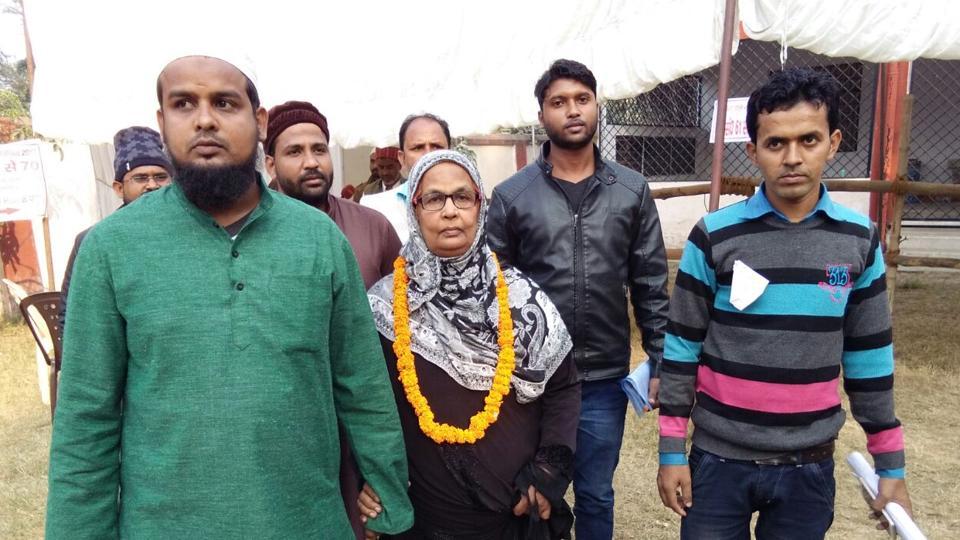
Nadira Khatoon defeated BJP’s Maya Tripathi by 483 votes in the ward where the famous Gorakhnath Temple is located in Purana Gorakhpur.(HT Photo)

An independent candidate who defeated the ruling BJP nominee in Gorakhpur’s ward number 68 has attributed the victory in the urban body elections to her “neighbour”, chief minister Yogi Adityanath.

Nadira Khatoon defeated Maya Tripathi by 483 votes in the ward where the famous Gorakhnath Temple is located in Purana Gorakhpur.

“I have won because of Baba (Yogi Adityanath ). He is our neighbour,” Khatoon said after receiving the victory certificate on Friday. She, however, did not elaborate.

Khatoon said she aimed to achieve 100% literacy in her ward.

Adityanath, the chief priest of the temple, had cast his vote on November 22.

Adityanath was also a member of Parliament from Gorakhpur for five consecutive terms since 1998 till he became the chief minister after the BJP’s stunning victory in the assembly polls earlier this year.

Khatoon’s son, Shamim Ansari, had contested the 2012 urban body polls from the same ward and lost narrowly.

“People rejected the BJP here because it failed to carry out development. Choked drains, heaps of garbage, potholed roads and traffic jams remain unaddressed,” he said after his mother’s victory.

The Muslim-dominated ward with a large population of weavers was represented by non-BJP corporators in 1995 and 2000.

The BJP wrested the seat in 2006 and retained it in 2012. The seat was reserved for woman this time.

The BJP also lost in two other Muslim weaver-dominated wards near the Gorakhnath temple.

In Chaksa Hussain, the BJP’s lone Muslim candidate Shamim Ahmed was defeated by the Samajwadi Party’s Ehtesham. In Rasoolpur , the SP’s Ayesha Khatoon defeated independent candidate Sayera Khatoon. BJP’s Sunita Devi came third.

Barring a few blemishes, the BJP won 27 wards in Gorakhpur while the Samajwadi Party won 18, the Bahujan Samaj Party two, Congress two, and independents 18.

Across the state too, the ruling BJP swept the polls, capturing 14 out of 16 mayoral seats besides most of the seats in the nagar nigams, nagar palika parishads and nagar panchayats.

source: http://www.hindustantimes.com / Hindustan Times / Home> Cities> Lucknow / by Abdul Jadid, HindustanTimes, Lucknow / December 02nd, 2017

UP municipal elections: MIM bags 30 seats

UTTAR  PRADESH  :

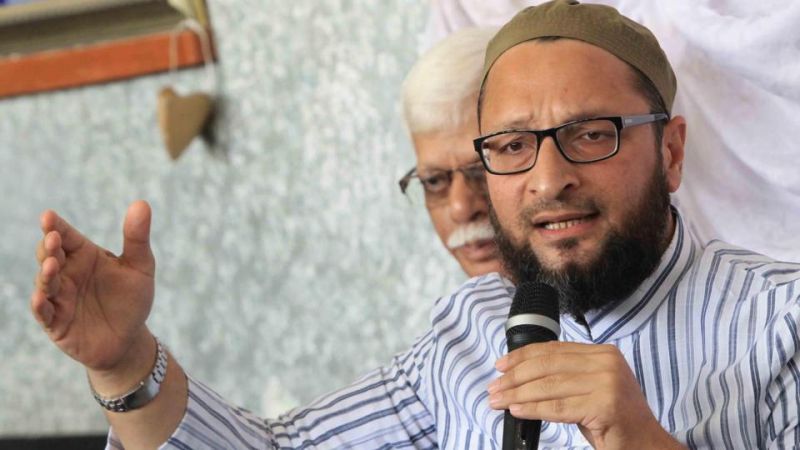
Photo : IANS
Photo : IANS

Hyderabad:

The Majlis-e-Ittehadul Muslimeen (MIM) on Friday won 30 of the 78 seats it contested in the Uttar Pradesh municipal elections.

The Hyderabad-headquartered party’s candidate Hajjan Hansar was also elected as chairperson of Dasna Municipal Council.

The party headed by Asaduddin Owaisi won 10 seats in Firozabad Municipal Corporation, two in Meerut Municipal Corporation and one each in Kanpur and Allahbad municipal corporations.

According to MIM sources, it bagged Afour seats in Baghpat Municipal Council, three seats in Mahul Azamgarh Municipal Council, two each in Sambhal, Amroha and one each in Sitapur and Banda municipal councils.

MIM finished second in the election for Ferozabad Mayor. Its candidate Mashroom Fathima polled 56,536 votes, pushing the Samajwadi Party to the third place. BJP’s Nutan Rathore won the seat with nearly 99,000 votes.

The party claimed that three independents also want to extend support to it.

Earlier, Owaisi said the party could win the seats due to hard work by the party’s state leaders and members. He thanked the voters for supporting the party.

The MIM failed to open an account in the Uttar Pradesh assembly elections in March. It had contested 35 seats.

-IANS

source: http://www.siasat.com / The Siasat Daily / Home> Politics> Top Stories / IANS / December 02nd, 2017

AMU Law Faculty team brings runner up trophy

Aligarh, UTTAR PRADESH :

LawStudentsMPOs04dec2017

Noida  :

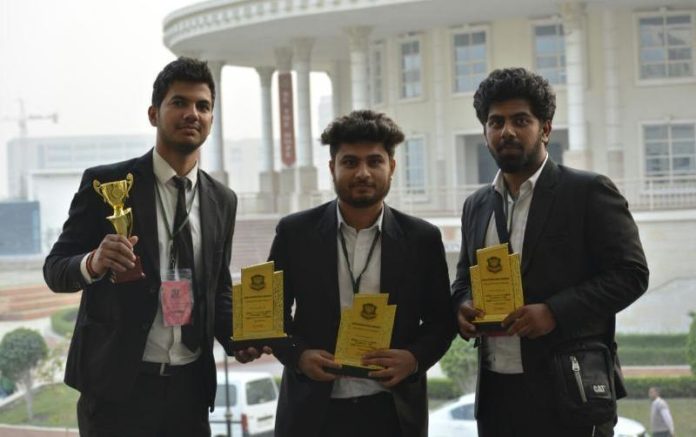
A group of three students from the Faculty of Law, Aligarh Muslim University, comprising Salman Qasmi, Joint Secretary, Law Society, Suhail Khan and Aditya Raj won the runner up position in the National Moot Court Competition 2017 held at the Noida International University.

Symbiosis Law School, Noida won the title of the competition.

Mr Shiv Kerti Singh, Former Judge, Supreme Court of India and Chairman, Telecom Disputes Settlement and Appellate Tribunal (TDSAT) gave away the trophy to the winning teams.

source: http://www.amuobanews.in / AMU OBA News / Home> AMU  / by Amuoba News / December 01st , 2017

Nine AMU students qualify Bihar Judicial Services Exam

BIHAR / Aligarh, UTTAR PRADESH  :

AMUstudentMPOs4dec2017

Aligarh :

Nine students of Aligarh Muslim University (AMU) have qualified the Bihar Judicial Services (Civil Judge) Exam 2016.

They are

Ms Swati Dube (Phd student) – 28 Rank

Mr Rehan Raza (BA LLB 2009 batch) – 36 Rank

Mr Brijnath Singh (Phd student) – 42 Rank

Mr Zeeshan Mehdi (BA LLB 2015 batch) – 45 Rank

Mr Asif Nawaz Khan (BA LLB 2014 batch) – 47 Rank

Ms.Ghazala Tasneem ( XI – 1998 / Bsc 2000 batch ) – 65 Rank

Mr.Pankaj Kumar Pandey ( LLM 2013 batch) -91 Rank

Mr Md Tasneem Kauser (BA LLB 2012 batch) – 265 Rank

Mr Hamza Alam (BA LLB 2009 batch) – 268 Rank

source: http://www.amuobanews.in / AMU OBA News / Home> AMU> Bihar / by Amuoba News / December 04th, 2017

Delhiwale: How many Sultanate kings can you name? Here’s the full list of 32

NEW DELHI :

For 320 years, Delhi was the city of sultans. Here is the list of the 32 rulers and where they rest now.

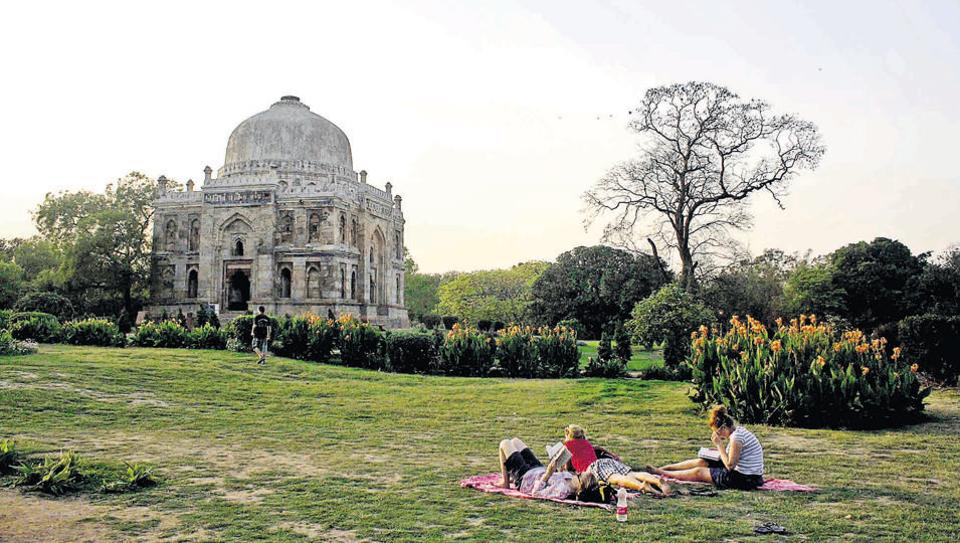
Sheesh Gumbad in Lodhi Gardens.(Mayank Austen Soofi / HT Photo)

The other day, while driving past an obscure monument, a friend demanded to know its name. We had no idea so we bluffed, “Ah, that’s a Lodhi-era tomb!”

The truth is we can’t even list all the Lodhi kings.

In any case, the Lodhi dynasty was part of the more elaborate Delhi Sultanate (not to be confused with ‘Delhi Sultanate’, a so-named member of The Sky Vengers music band). The Delhi Sultanate we are talking about spanned five dynasties, 32 rulers and 320 years. It lasted from 1206 to 1526. Today we give you the names of all the rulers of the Sultanate — one of whom was India’s first woman ruler, while the last was vanquished by Babur, the founder of the Mughal dynasty.

Sultan02MPOs03dec2017

We also used this list to hunt the graves of these Sultanate royals — right here in our city. Of course, it’s not possible to access every king’s tombstone. Quite a few of them were killed in small and big wars, at times far from Delhi. Frustratingly, history books leave no solid evidence of their burial spots.

Some others of these important men turned out to be so insignificant in the long run that their graves have been forgotten, making it impossible to trace them today. Here’s a list of all the rulers, and the graves of those we were able to locate.

SLAVE DYNASTY

Qutbuddin Aibak (1206–1210), buried in Lahore, Pakistan

Aram Shah (1210–1211), killed near Delhi, grave not known

Shams ud din Iltutmish (1211–1236), buried in Qutub Minar Complex, Mehrauli

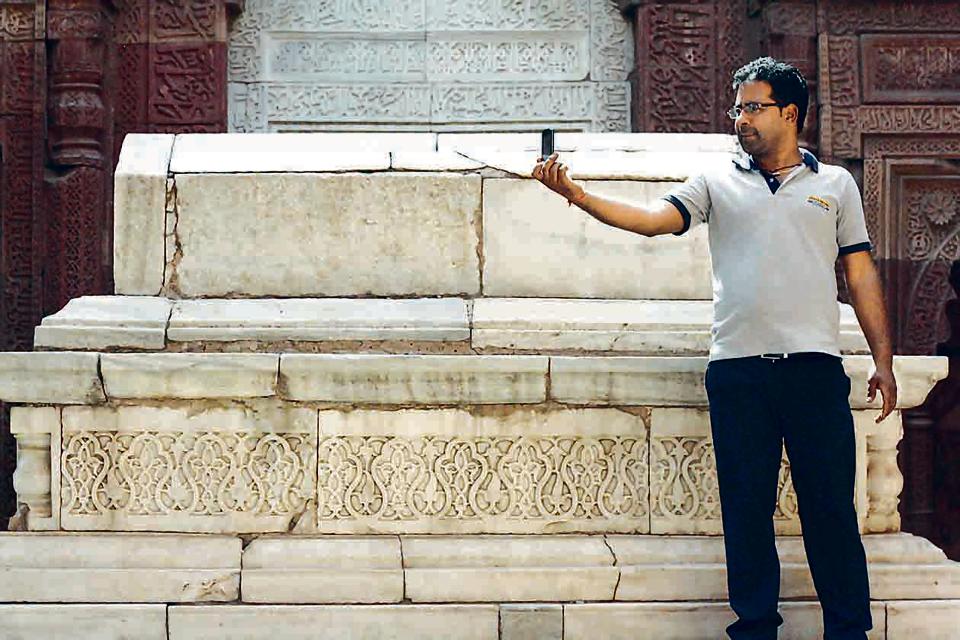
Illtutmish’s tomb in Qutub Minar complex. (Mayank Austen Soofi)

Rukn uddin Firuz (1236), believed to be buried in Sultan Ghari, near Mehrauli

Raziyat ud din Sultana (1236–1240), buried in Bulbuli Khana, Old Delhi

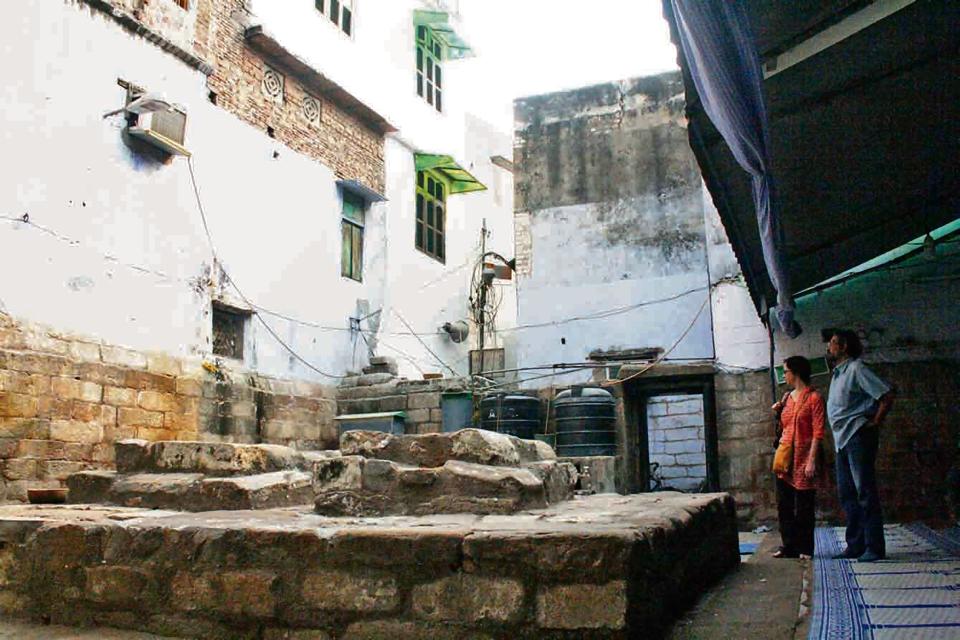
Raziya Sultan’s tomb in Bulbuli Khana, Old Delhi. (Mayank Austen Soofi)

Muiz uddin Bahram (1240–1242), grave not known

Ala uddin Masud (1242–1246), grave not known

Nasir uddin Mahmud (1246–1266), grave not known

Ghiyas uddin Balban (1266–1286), Buried in Mehrauli Archaeological Complex, near Jamali Kamali mosque

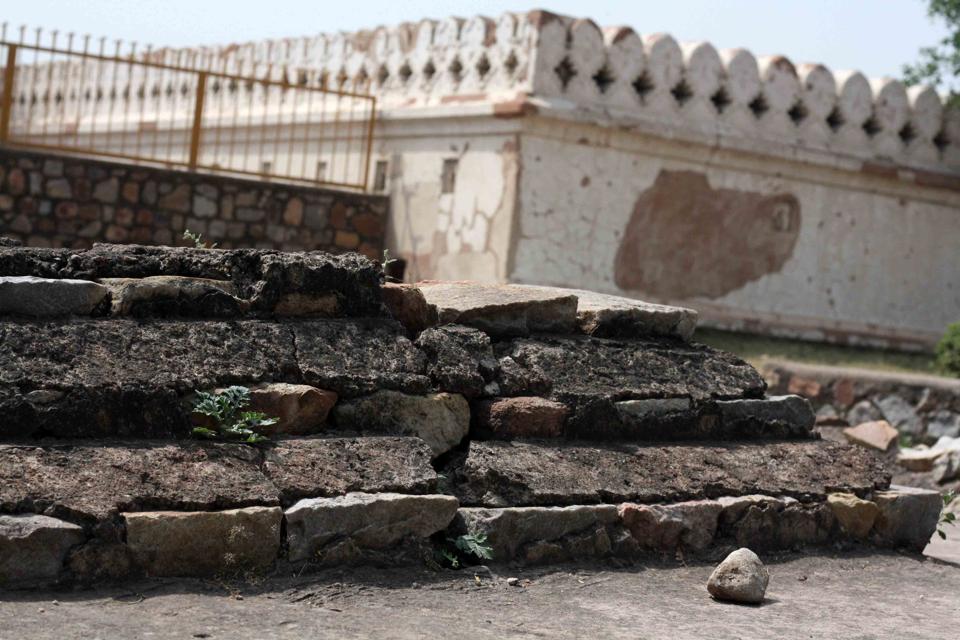
A tomb outside Jamali Kamali complex in Mehrauli. (Mayank Austen Soofi)

Muiz uddin Qaiqabad (1286–1290), grave not known

Kayumars (1290), grave not known

KHILJI DYNASTY

Jalal ud din Firuz Khilji (1290–1296), buried in Delhi but “disappeared “according to HC Fanshaw’e book Delhi, Past and Present

Alauddin Khilji (1296–1316), buried in Qutub Minar Complex, Mehrauli

Qutb uddin Mubarak Shah (1316–1320), grave not known

TUGHLAQ DYNASTY

Ghiyath al-Din Tughluq (1321–1325), buried in Tughlakabad

Muhammad bin Tughluq (1325–1351), buried in Tughlakabad

Mahmud Ibn Muhammad (1351), buried in Tughlakabad

Firuz Shah Tughlaq (1351–1388), buried in Hauz Khas Village

Ghiyas-ud-Din Tughluq II (1388–1389), grave not known

Abu Bakr Shah (1389–1390), grave not known

Nasir uddin Muhammad Shah III (1390–1393), grave not known

Ala-ud-Din Sikandar Shah I (1393), grave not known

Mahmud Nasir uddin (1393–1394), grave not known

Nusrat Shah (1394–1399), grave not known

Nasiruddin Mahmud Shah (1399–1413), not known, Timur invade Delhi in his reign

SAYYID DYNASTY

Khizr Khan (1414–1421), grave not known

Mubarak Shah (1421–1434), buried in Kotla Mubarakpur village

Muhammad Shah (1434–1445), buried in Lodhi Garden

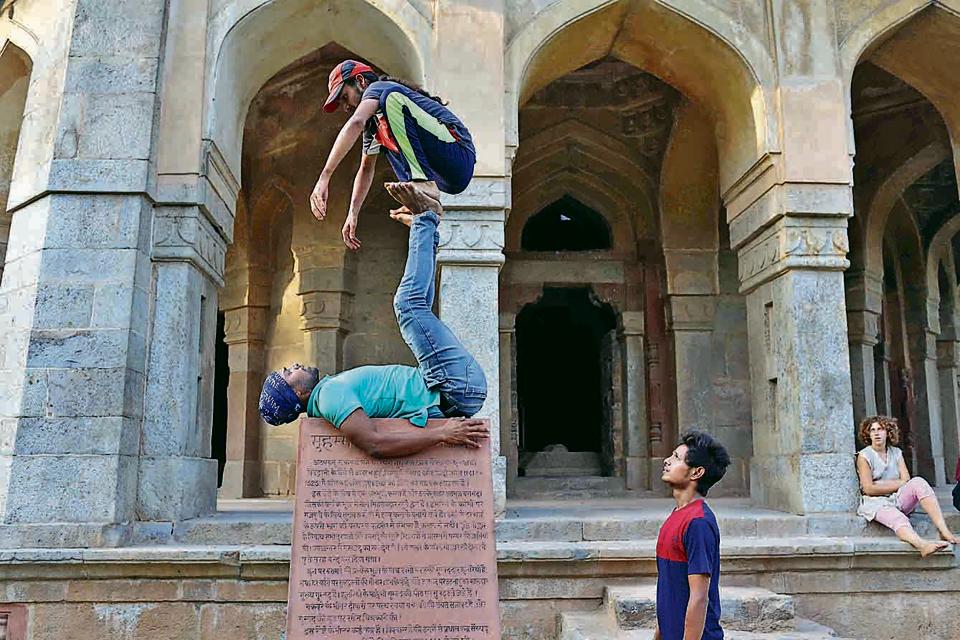
The plaque at Mohammed Shah’s tomb in Lodhi Garden. (Mayank Austen Soofi)

Alam Shah (1445–1451), grave not known, perhaps in Badayun where he died

LODHI DYNASTY

Bahlol Lodhi (1451–1489), Chirag Dilli

Sikander Lodhi (1489–1517), Lodhi Gardens

Ibrahim Lodhi (1517–1526), buried in Panipat, Haryana

source: http://www.hindustantimes.com / Hindustan Times / Home> Cities> Delhi / by Mayank Austen Soofi, Hindustan Times /  December 02nd, 2017