Category Archives: Community Involvement / Social Issues

NCP’s Adil Faras is new standing panel chairman

Kohlapur , MAHARASHTRA :

Kohlapur :

Adil Faras, Nationalist Congress Party (NCP) corporator from Barai Mam ward, was on Friday elected as the new chairman of the civic body’s standing committee. Faras defeated Jan Surajya Shakti Party’s (JSSP) Mrudula Purekar by 11 votes.

Of the 16 members in the committee, 15 cast their votes by raising hands while one member — BJP’s Prabha Tipugade — remained absent citing health reasons. Faras got 13 votes while Purekar bagged just two.

At present, Congress and NCP are the ruling parties in the KMC with the support of JSSP and independent corporators. The elections to the civic body are scheduled in October-November this year. Hence, the NCP did not want to give up the chance to head the committee which has significant financial powers.

The run-up to the election turned interesting after the JSSP openly criticised NCP leader and former minister Hasan Mushrif and fielded its candidate against Faras.

Various speculations such as rift between the Congress and NCP came to the fore after Purekar decided to contest the election. The Congress has a majority in the committee with 7 members and votes of the party were decisive. Besides, it was also anticipated that some of the NCP corporators were hoping for a career in the BJP by supporting the JSSP corporator. The JSSP had helped BJP candidate Amal Mahadik in defeating former minister of state and Congress leader Satej Patil in the state assembly elections.

A Congress corporator said on the condition of anonymity, “Though there were speculations about rift between the Congress and NCP, both Patil and Mushrif had an understanding to continue the alliance till the next elections. Besides, the party leaders in the House issued a whip to the corporators to cross-vote which led to the win of Faras.”

For the last two days, both the Congress and NCP took the committee members to unknown place and brought them back to the city only on Friday morning to avoid any horse-trading. Sources said Pureker received her own vote along with that of Sambhaji Jadhav of Shiv Sena.

The election to the post of chairman of the transport committee was stayed by district collector and election monitoring officer Rajaram Mane after independent candidate Prakash Naiknaware opposed the nomination of Congress nominee Ajit Powar. Naiknaware said that Powar cannot contest the election since the corporator proposing his name is co-opted and claimed that the nomination of Powar is illegal.

Since Naiknaware has already moved the district sessions court over the issue, Mane stayed the election till the court issues further orders. The election has been stayed till January 9. Being close to Satej Patil, Powar had an upper hand over Naiknaware.

source: http://www.timesofindia.indiatimes.com / The Times of India / News Home> City> Kolhapur / TNN / January 03rd, 2015
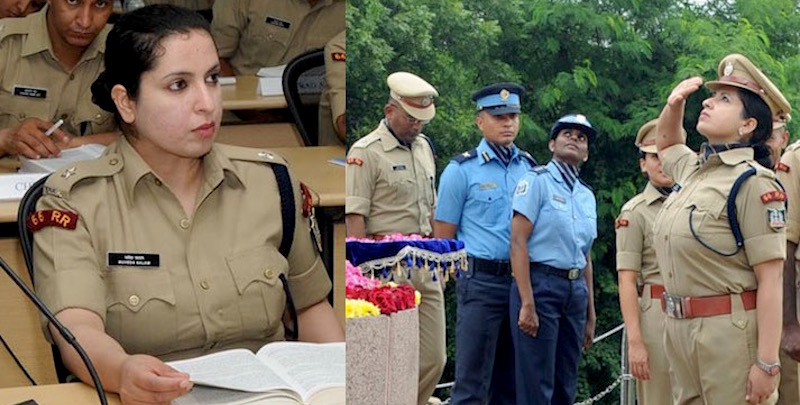
Meet Ruveda Salam – a doctor and Kashmir’s first woman IPS officer

Kupwara, JAMMU & KASHMIR :

Image: Rediff.com
Image: Rediff.com

In 2015, Dr Ruveda Salam became the very first woman IPS officer from Jammu & Kashmir. When Ruveda was growing up, her father often used to say that he wanted his daughter to become an IPS (Indian Administrative Service) officer. That’s when she first thought of becoming one. It inspired her and she decided to aim for it.

“As I have cleared the UPSC (Union Public Services Commission) exam for the second time, I will have to go for training again depending on the cadre. I think I will be posted as a sub-collector. Last year, I was selected to the Indian Police Service cadre. I went for training to Hyderabad. The training was very strenuous. Physically it was very hard. I joined the IPS cadre in Tamil Nadu and was posted as an Assistant Commissioner of Police in Chennai,” Ruveda said in a report in Rediff.com .

Before Ruveda cleared the UPSC (for the first time), she got into medical college, but even while studying medicine she used to read a lot. Ruveda found time to clear the Kashmir State Administrative Service exam. Instead of doing a post graduation in medicine, Ruveda started preparing for the UPSC.

As a young ACP, Ruveda has given motivational speeches to the youth, particularly girls. She encourages them to appear for the IPS exams in Jammu and Kashmir. Ruveda’s role is challenging. It carries a lot of responsibility. “I am in a state where people respect the police. I like it here (Tamil Nadu). When girls see me in uniform they look at me with admiration. I had conducted a workshop for girls in Hyderabad. The girls who attended said they wanted to join the IPS, but were apprehensive about whether their parents will support them,” Ruveda shared.

According to Ruveda, development will lead to peace in Jammu and Kashmir. “Peace and development go together. We should look to the future. Living outside has helped me understand the situation better,” said Ruveda.

source: http://www.yourstory.com / Your Story / Home> Her Story> Think Change India / May 11th, 2016

23-year-old Indian-origin woman wins local election in US

Maryland,  USA  :

Raaheela Ahmed / Images Twitter - Raaheela Ahmed)
Raaheela Ahmed / Images Twitter – Raaheela Ahmed)

Highlights

  • Raaheela Ahmed won the school board race in Prince George’s county of Maryland
  • Her father is from India and mother from Pakistan
  • Her victory gains significance as her district has 80 per cent of African-American population

Washington :

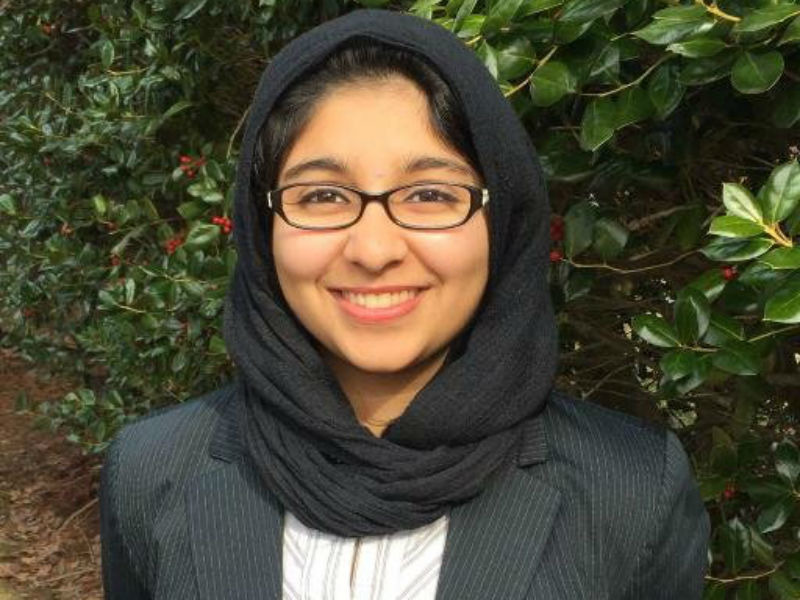
A Muslim-American woman, whose parents are from India and Pakistan, has won a key local election in the US state of Maryland which was dominated by anti-immigrant and anti-Muslim rhetoric.

Raaheela Ahmed, 23, won the school board race in Prince George’s county of Maryland by defeating a long-time system administrator by an impressive 15 per cent vote difference.

She had unsuccessfully run for this position four years ago in 2012. Her father is from India and mother from Pakistan. Her victory gains significance as her district has 80 per cent of African-American population.

She was endorsed by the former Republican National Committee Chairman Michael Steel.

“It’s interesting that on the same day Donald Trump was elected as president of the US, I as a hijabi Muslim young woman was also elected to serve in a public office. I think that speaks volumes about the diversity of American opinion, and that American dream is still well and alive,” Ahmed said.

“I’d like to act as a form of inspiration for other minorities that they can achieve what they will, given prayer, circumstance and hard work. This win would not have been possible without the support and belief that other people had in me,” she said.

“For my young minority women, please know that at the end of the day, you are worthy of your highest inspirations. You have to believe that you are able to achieve them, even if societal structures do not yet allow for that. Because one day, those glass ceilings will break. And who knows?” Ahmed said.

source: http://www.timesofindia.indiatimes.com / The Times of India / News> NRI> US & Canada / PTI / November 22nd, 2016

Former Odisha Minister Syed Mustafiz Ahmed passed away

Cuttack, ODISHA :

Cuttack:

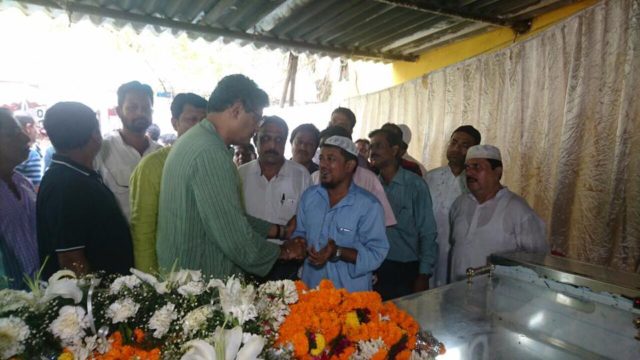
Former Minister and popular Muslim leader of Cuttack city Syed Mustafiz Ahmed passed away while undergoing treatment at a private hospital here on Monday. He was 77 and ailing for past several months. He is survived by his wife and a son.

MustafizaMPOs15sept2017

Beginning his political career as a Councillor of the Cuttack Municipality and later becoming its Vice-Chairman, Ahmed was first elected to the State Assembly from the city constituency as a Janata Dal candidate in 1985.

After retaining his seat in 1990, he was made a Minister in the Biju Patnaik Ministry. Initially in charge of Textiles and Industries, he was elevated to the Cabinet rank and was given the charge of Health and Family Welfare.

Chief Minister Naveen Patnaik, Union Ministers Dharmendra Pradhan and Jual Oram, among many other leaders, expressed their deep condolences to the family of Ahmed, describing him as a gifted organiser, an able administrator and, above all, a sincere social worker, who had donated blood for over a hundred times.

Though a minority community leader, Ahmed was also very popular among other communities in the city for his amiable and sociable behaviour.

source: http://www.orissadiary.com / OrissaDiary.com / Home> City> Cuttack / September 12th, 2017

Gen. Bipin Rawat unveils bust of 1965 war hero Abdul Hamid

Dhamupur (Ghazipur District) , UTTAR PRADESH :

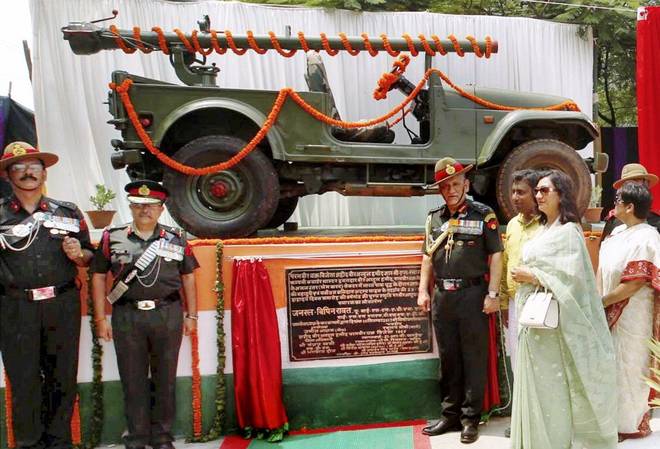
Army Chief Gen. Bipin Rawat unveiled a memorial during the anniversary of Param Veer Chakra Havildar Abdul Hamid, in Bhamupur village of Ghazipur on Sunday. | Photo Credit: PTI

Army Chief Gen. Bipin Rawat on Sunday unveiled a bust of the 1965 Indo-Pak war hero Abdul Hamid here in Ghazipur district and felicitated the widow of the soldier who was awarded Param Vir Chakra, the highest wartime gallantry medal.

On the occasion of the 52nd anniversary of his sacrifice, Gen. Rawat and his wife Madhulika met Rasoolan Bibi, wife of Havildar Hamid, and several other war widows and felicitated them. The Army chief also unveiled a memorial in Hamid’s honour in Dhamupur.

Lauding the contribution made by the people of the district to the armed forces, Gen. Rawat said a recruitment drive will be held soon in Ghazipur to encourage the youth to join the Army and contribute to the country’s security.

Hamid had destroyed several tanks of the Pakistan Army during the 1965 war in the Lahore sector.

Jahan Hindustan ki sena khadi hai, wahan khatra kisi aur se nahi hai [where the Indian Army is present, there is no threat from anyone],” the Army Chief said.

“Hamid is an inspiration for the youth and his extraordinary bravery made the country proud,” he said.

On the Dokalam issue, Gen. Rawat said India and China have held talks and the situation there is under control.

source: http://www.thehindu.com / The Hindu / Home>New> National / PTI / Dhamupur (U.P) / September 10, 2017

Nationalist Congress Party’s Hasina Faras elected Kolhapur mayor

Kolhapur, MAHARASHTRA :

Hasina Faras
Hasina Faras

Kolhapur :

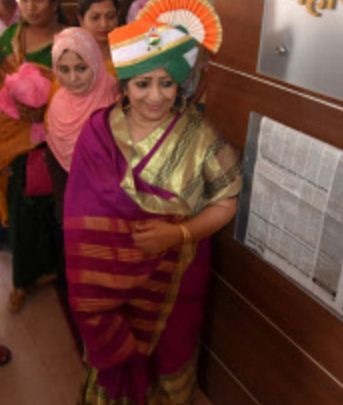
The general body of the Kolhapur Municipal Corporation (KMC) on Thursday elected Nationalist Congress Party’s Hasina Faras as the next mayor and Congress nominee Arjun Mane as the deputy mayor.

Kunal Khemnar, the chief executive officer of the zilla parishad, presided over the meet to elect mayor and deputy mayor.

The posts were vacant for the past few weeks after mayor Ashwini Ramane and deputy mayor Shama Mulla resigned.

Faras and Mane defeated Bharatiya Janata Party-Tararani Aghadi alliance candidates Smita Mane and Vijay Khade. Despite having less numbers in the house, the opposition alliance had decided to contest the election. Four Shiv Sena corporators abstained from voting, giving as easy win to the ruling alliance.

In the 81-member house, Faras and Mane secured 44 votes each, while the opposition candidates got 33. The opposition was banking on the support of four Sena corporators and was also aiming to get a few more corporators from either Congress or NCP. However, the ruling alliance had issued a whip to their members to vote for the official nominees. To avoid any unfavourable results, all 44 corporators of the ruling alliance were taken to an undisclosed location for two days and were brought directly to the meeting. The voting by raising hands made it easy for the floor leaders to keep a watch on the corporators and to avoid any defection.

Faras is wife of former mayor Babu Faras and mother of former standing committee chairman Adil Faras. She is the first Muslim woman to hold the mayor’s post in the KMC. Faras is close to NCP leader Hasan Mushrif but she may get just a six-month term before stepping down to pave way for other corporators from NCP to become mayor.

Faras said, “I will push the Mahalakshmi temple development plan and also ensure that the Wi-Fi project for the city is initiated. The second phase work of renovation of Keshavrao Bhosale Natyagruha is pending; I will try to get funds from the state government for it.”

The project of Wi-Fi hot spots at various places in the city was proposed by her son Adil when he was chairman of the standing committee. After the new body came into place last year, the project has been on the back burner.

source: http://www.timesofindia.indiatimes.com / The Times of India / News> City News> Kolhapur News / TNN / December 09th, 2016

Muslim to head India’s domestic spy agency in historic first

Kanpur, UTTAR PRADESH / Bhopal, MADHYA PRADESH / NEW DELHI :

AsifIbrahimMPOs07sept2017

For the first time in the history of India, a Muslim officer has been selected to head the country’s domestic intelligence agency.

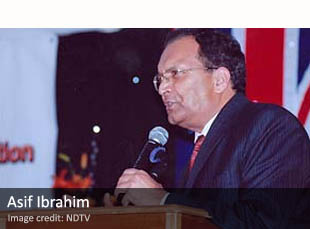
The Intelligence Bureau (IB), one of India’s most powerful intelligence organizations, will be led by Syed Asif Ibrahim, one of relatively few Muslim senior officers serving in the country’s predominantly Hindu security and intelligence apparatus.

It will be the first time that the IB, which was formed in 1877 under British colonial rule, and today operates under the Ministry of Home Affairs, will be led by a Muslim.

Formerly a senior officer in the Indian Police Service, Ibrahim, 59, has served for years in the IB’s Directorate of Operations, and recently served as the Bureau’s Chief of Station at the Indian High Commission in London, United Kingdom.

His supervisory experience includes roles in the IB’s counter-cyberespionage and counterterrorism units. IntelNews hears that Ibrahim is widely seen by Indian intelligence officers as someone with a “crystal-clear understanding” of Islamic-inspired militancy inside the country.

Ibrahim’s appointment was announced late last week by the Appointments Committee of the Cabinet, a senior government body lead by the Indian Prime Minister Manmohan Singh. Following the announcement, observers noted that at least four IB officials, who had been tipped for the job of director and were above Ibrahim in terms of seniority, were assigned to positions outside the Bureau, ostensibly to clear the way for Ibrahim’s appointment.

Mumbai-based news portal Rediff spoke to an unnamed Indian intelligence official, who said that, although Ibrahim is widely seen as a “professional and an outstanding officer with the widest range of experience […], there could be a debate on the issue of seniority”. Specifically, some in the IB believe that the criteria for seniority were used “selectively” in Ibrahim’s appointment.

But India’s Muslim community appears to have welcomed the news. Rediff quoted Dr. Zafarul-Islam Khan, president of the All-India Muslim Majlis-e Mushawarat (the umbrella body of Indian Muslim groups), who sees Ibrahim’s appointment as “a new beginning” and hopes “it will help alter the image f the IB, which is normally seen as a bastion of upper-caste Hindus”.

Ibrahim’s appointment is expected to be officially announced today, Monday. Ibrahim will formally succeed the IB’s outgoing Director, Nehchal Sandhu, on December 31. He is expected to remain on the post for at least two years following his appointment.

source: http://www.intelnews.org / IntelNews.org / by Joseph Fitsanakis / November 26th, 2012

Air Marshal Jaffar Zaheer: Principled Indian Air Force officer

Lucknow, UTTAR PRADESH / NEW DELHI :

News, Obituaries 

Jaffar Zaheer’s impish irreverence hid a steeliness that emerged in the unusually principled stand he took against India’s omnipotent political establishment during the premiership of Indira Gandhi. As the first Indian Air Force (IAF) officer to head the country’s chaotic Directorate General of Civil Aviation, Zaheer refused, despite relentless political pressure, to withdraw the case against Gandhi’s unruly son, Sanjay, for flying a commercial airliner with passengers without a valid licence.

He also declined to apologise to Sanjay, an unforgiving thug who drew authority from being his mother’s political heir, for the “inconvenience” of charging him with the offence. The unrelenting Zaheer then further banned Sanjay Gandhi from flying a stunt plane and from executing dangerous aerobatics over the capital, Delhi, in violation of all safety norms. Sanjay ignored the veto and continued; Zaheer quietly resigned in June 1980.

On 23 June, Sanjay, unable to exit from a complex loop in his single-engine two-seater plane, crashed and died, changing the course of Indian politics. Zaheer was asked to withdraw his resignation, offered palliatives like ambassadorships and state governorships. But he declined, preferring instead the anonymity of running the small, private Khambatta airlines in the western port city of Bombay for the next five years.

But Zaheer’s impetuosity as a newly commissioned officer in the then Royal Indian Air Force (RIAF) in the early 1940s had almost ended his budding career after he poured a bottle of wine on his instructor whilst raising a toast during his “dining in” at an RAF mess in England. As the stunned senior officer glowered under the onslaught, Zaheer declared with aplomb to a speechless, but secretly pleased, audience of English fighter pilots that the drenched gentleman had needed a spring cleaning.

The only Indian cadet at the RAF base undergoing an aircraft conversion course, Zaheer had found the chief instructor’s behaviour racist, an assessment the commanding officer possibly shared, as he merely demanded to know whether the offending wine had been white or red. And, instead of the court martial that was under serious consideration, Zaheer’s eventual punishment was merely to reimburse the officer for the cost of dry-cleaning his uniform.

Zaheer was born in 1923 into an aristocratic Muslim family in Lucknow in northern India, the son of a renowned politician who after independence became a government minister and later a diplomat. Schooled locally, he joined the prestigious Allahabad University but left before graduating to join the RIAF in 1942. Soon after, along with other Indian cadets, he was dispatched to Canada to undergo flying training and was commissioned into service in September 1943 in the rank of Flying Officer.

The Second World War ended during Zaheer’s journey home by boat, but he did see some action strafing restive Pashtun tribesmen in the North West Frontier Province – now in Pakistan – in the region bordering Afghanistan that remains in ferment even today, having changed little in over a century.

Zaheer was one of a handful of IAF fighter pilots to graduate from the Institute of Armament Technology, a discipline that helped him formulate the Weapons Planning Directive of 1963 that remains the template for all such activity at Air Headquarters even today.

From 1964 until he retired 15 years later as IAF’s deputy chief in the rank of Air Marshal, Zaheer held various staff and operational appointments in which he oversaw the air force’s modernisation and streamlined its Byzantine financial procedures. During the 1971 war with Pakistan that led to the formation of Bangladesh, Zaheer commanded the critical Agra air force station near Delhi and was decorated for his services.

After retiring in 1979 he was appointed to head the Civil Aviation Directorate and almost immediately earned the ire of corrupt politicians by refusing to acquiesce to their demands to acquire a particular aircraft for which they were doubtlessly receiving backhanders. Zaheer’s scrapes with Sanjay Gandhi eventually led to his resigning in 1980, two years before his term expired.

His droll sense of humour and self-deprecation never left him. When Zaheer was suffering from the early ravages of Alzheimer’s, a youngster once asked after his health. “Never felt better,” Zaheer quipped. “Don’t remember a thing.”

Kuldip Singh

Jafar Zaheer, air force officer: born Lucknow, India 14 June 1923; Director, Air Staff Requirements, Indian Air Force 1973-74; Director-General of Civil Aviation 1979-80; married (three sons); died New Delhi 23 January 2008.

source: http://www.independent.co.uk / Independent / Home> News > Obituaries / by Kuldip Singh / Tuesday – April 08th, 2017

Ibrahim Sulaiman Sait laid to rest with State honours

KERALA / Bengaluru, KARNATAKA :

Bangalore :

The last rites of the Indian National League President former MP, Ibrahim Sulaiman Sait, who died on Wednesday, were performed at the Khuddus Sab Idgah maidan here on Thursday, with State honours. The Minister of State for Labour and Wakf, Tanvir Sait, laid a wreath on the body on behalf of the Chief Minister, N. Dharam Singh.

The Governor, T.N. Chaturvedi has expressed shock over the passing away of Mr. Sait. In a message, Mr. Chaturvedi said, “In the death of Mr. Sait, the country has lost a distinguished parliamentarian, a champion of minority rights and an eminent national leader. A man of strong principles and simple living, Mr. Sait dedicated his life to the good of society.”

Mr. Sait was one those political leaders from Karnataka who were elected to Parliament from another State.

He was born in 1922 in Mysore and graduated from St. Joseph’s College here. His father, Mohammed Sulaiman Sait, had participated in the Khilafat movement. His uncle Abdul Sattar Sait left for Pakistan at the time of partition and was that country’s first ambassador to Saudi Arabia. Ibrahim Sulaiman Sait’s mother and wife were from Kerala.

He began his political career as the General Secretary of the Muslim League in 1948 after giving up a career as a lecturer in English. He had to shift his political activities to Kerala as the Muslim League failed to build a base in the erstwhile Mysore State.

Though the League had a Minister in the K.C. Reddy cabinet after Independence, some of the League leaders joined the Congress or other parties.

source: http://www.thehindu.com / The Hindu / Home> Karnataka / by Staff Reporter / Friday – April 29th, 2005

Empowering The Underprivileged Through Crocheting: Zehra Picturewalla’s Story

GUJARAT / Mumbai, MAHARASHTRA :

They say it only takes a vision and the will to act on that vision to make a difference in this world. And this is precisely what Zehra Picturewala, a young determined girl from a conservative Muslim family of Mumbai, aims to do.

Zehra, who originally hails from Gujarat, graduated from Nirmala Niketan with a degree in Textiles and Fashion Technology. Although Zehra had always dreamed of being a doctor, she knew that she had the heart of a designer. For her family, the next step for a 22 year old graduate girl was to get married and start a family. However, Zehra put her foot down and informed them of her passion and desire to do something more. It took a lot for young Zehra to convince her father that launching a business with a social undertone is what she truly wanted. Her efforts worked, he’s been her support ever since.

CrochetMPOs26aug2017

Zehra Picturewala runs a company called ‘ZnSkills’, which teaches underprivileged women and children the skill of crocheting and creating products. The company then sells these products and collects the revenue, which they then pay to the women and children who made them. So in a sense, her company is promoting indigenous handicrafts in a modern market and thus empowering the women and children from the underprivileged classes thereby bettering their position in society.

The idea for ‘ZnSkills’ came to her on a summer break during her graduation. Two of Zehra’s classmates started classes which offered livelihood skills, and these classes soon became a rampant success. The students who came down to attend these classes picked up these skills effortlessly and soon more started pooling in. The success of these classes led Zehra to believe that a professional initiative should be drawn around this theme which would help these students build their capabilities.

As soon as she completed her finals, she tried her hands at setting up several skills, out of which crocheting worked the best. Her cousin ordered a set of crocheted products for her, and Zehra began experimenting with the set. Her amateur hands soon turned professional, and people started clamouring to buy her work. She was thus compelled to search for artisans to herald in production on a large scale. An acquaintance gave her the idea of teaching these skills to the differently-disabled, and told her about an institute for the visual and hearing impaired children.

Zehra thus decided to teach these children, most of whom were girls, the necessary skills which they picked up even faster because of their enthusiasm. These students have now carried forth to produce the best pieces.

After this initial success, Zehra then turned her attention to the women living in unfavourable conditions in the remote areas of the city and brought them into her employ. Zehra attributes the success of ‘ZnSkills’ to these women.

Zehra confesses that her journey to becoming a successful entrepreneur wasn’t an easy one. Like many startup founders before her, she had a challenging time searching for investors, and she had the added challenge of doing this alone. “Training people, sourcing out products, designing as per demand, maintaining accounts, meeting potential investors, maintaining relations and struggling for buyers is hard, but it’s all worth my dream,” recalls Zehra.

To place focus on the company’s social angle, Zehra soon decided to tie up with some NGOs around the state – a good decision as it turned out, because in this way, she was able to meet people who were in need and who would be willing to work for a living. These people are provided with free training using free material, and once they worked for her company, the sales flew up and paved the way for the advent of a very successful business.

“The main problem that the women in the rural areas of our country face is the fact that they aren’t allowed to leave home to receive a proper education or employment.  So, I decided to make the production happen from individual houses.” On how this plan works, she says, “we collect ID proofs of the people we train and then decide a venue where every week, everyone accumulates to collect the material and make the products.”

Currently, over seventy artisans are working and contributing to the company. Zehra’s focus is on the growth of the company, mostly targeting new mothers.

On being asked what the idea behind her company is, she says, “When we patronize handmade products, we empower the weakest section of our society, a journey to let people know that women can move mountains if they wish.”

When asked her opinion on entrepreneurship in India she says, “Today’s entrepreneurs may be more into marketing and less in manufacturing, but I would advise them to import less and export more.”

source: http://www.yourstory.com / YourStory.com / Home> StartUp / by Sanjana Ray / September 11th, 2016