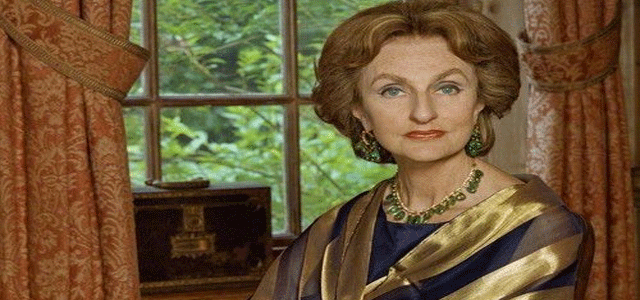
Rich tributes were paid to princess Durru Shehvar, the daughter-in-law of the seventh Nizam, Mir Osman Ali Khan, on Firday as part of her 11th death anniversary. The princess was the daughter of last islamic ruler of Turkey Khaleefa Abdul Majeed.
As part of the tribute, Quran recitation was held at Masjid-e-Asifia, Purani Haveli in which Prince Mufakham Jah and Prince Rafat Jah attended along with the board members of Princess Durru Shehvar Children’s Medical Aid Society that included Anis Hussain, Dr Habib Ghatala, Syed Sultan Mohiuddin and Rasheed. Princess Durru Shehvar Hospital senior staff M Najumuddin, Dr Abdul Wajid and Shaik Yousuf Ali were also present.
Mufti Muzaffar Uddin Imam o khateeb Masjid Mashk Shah offered the prayers and Syed Shah Moinuddin Alvi and Dr Masihuddin made the arrangements.
“The Princess was fond of providing medicare to the poor and needy. She set up the Durru Shehvar Children’s Hospital at Purani Haveli and took personal interest in the hospital and visited it whenever she came to Hyderabad.
She was a highly respected and well-educated woman, the princess was fluent in French, Turkish, English and Urdu. She also established a junior college for girls in her name, Baghe-jahan-ara in Yakutpura,” remembered a member. Mufakham Jah met the participants who attended the congregation and thanked for their joining in the programme.
source: http://www.thehansindia.com / The Hans India / Home> Telangana / September 29th, 2017
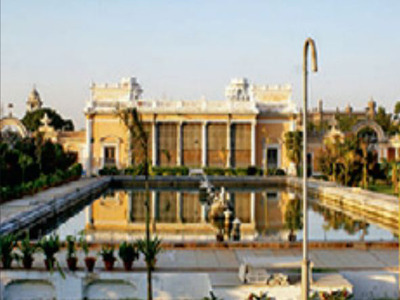
The city’s magnificent Chowmahalla Palace has added another feather to its cap, bagging the National Tourism Award for being the best maintained monument. The award was among other honours presented by the Government of India, on the occasion of World Tourism Day observed on September 27.Speaking about the recognition, G Kishan Rao, director of the palace said: “It is a matter of great pride. Earlier in 2012, Chowmahalla received the award of merit from UNESCO.”
Pointing out how the palace is among the most sought-after tourist destinations in the city, Rao said the heritage structure is equipped with all the necessary facilities for visitors, including those who are differently-abled.
On an average 800 to 1,000 tourists visit the 250-year-old Chowmahalla Palace in Khilwat every day . Its construction, ordered during the reign of the third Nizam, was completed during the time of his successor. Since, it was used primarily to hold official functions. Over time, the ex panse of the heritage property, once spread over 45 acres complete with 16 palaces, shrunk to a meagre 12 acres. Yet, the impressive collection of artefacts, including crockery, garments, cars and rare photographs from the Nizam’s era – housed within, are in impeccable condition.
“After the death of seventh Nizam of Hyderabad, the palace was in a deplorable state. It was in 2001 when Princess Esra (first wife of Mukarram Jah) took it upon herself to restore it that things changed for the better. In 2006, we opened the place up for public. Today , the palace is also a central place for mega cultural events in the city,” said Rao, sharing how the paraphernalia on display also comprise items brought in from the King Kothi Palace, where they were in the cellar.
source: http://www.timesofindia.indiatimes.com / The Times of India / News> City News> Hyderabad News / TNN / September 29th, 2017
The Maharashtra government has declared a day’s mourning today.
Image credit : Twitter
Mumbai:
Manipur Governor Syed Ahmed was laid to rest here today with full state honours. 73-year-old Ahmed was suffering from cancer and admitted to Lilavati hospital in suburban Bandra last week where he breathed his last yesterday. The funeral took place at Rehmatabad, Shahi Kabrastan in Anjeerwadi, Mazgaon this afternoon. The last rites were conducted by his son Syed Zeeshan.
Maharashtra Governor Ch Vidyasagar Rao, Chief Minister Devendra Fadnavis, Union Transport Minister Nitin Gadkari, Leader of Opposition in the Rajya Sabha Ghulam Nabi Azad, Senior Congress leader Mukul Wasnik were present on the funeral. Ghulam Nabi Azad laid a wreath on behalf of Congress President Sonia Gandhi.
Manipur Labour minister Hemo Chandra Singh, former Union Minister Subodh Kant Sahay, who hails from Jharkhand, Maharashtra Congress chief Ashok Chavan, Mumbai Congress president Sanjay Nirupam and Mumbai Congress Minority department chairman Nizamuddin Rayeen also attended the funeral.
The Maharashtra government has declared a day’s mourning today. Ahmed was sworn in as the Governor of Manipur on May 16, 2015. Ahmed, a former Congress leader from Maharashtra, was shifted to the north-eastern State from Jharkhand, where he was appointed Governor on August 26, 2011 when the UPA Government was in power at the Centre.
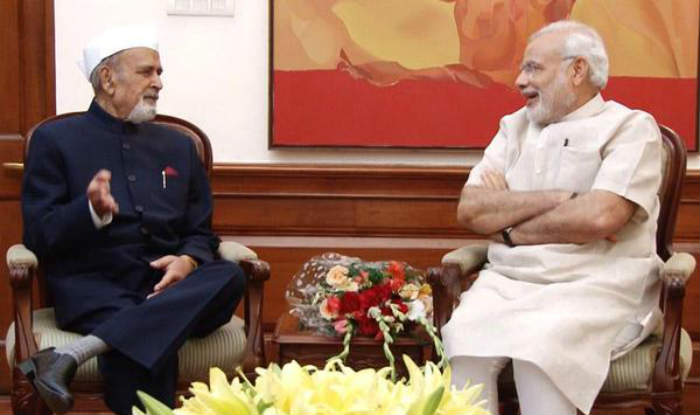
He joined the Congress party in 1977. He was elected to the Maharashtra Assembly five times from the Nagpada constituency in Mumbai. He also served as a Minister in Maharashtra, where he held portfolios like Housing. Besides dabbling in politics, where he started his career in Congress, Ahmed also had a flair for writing, especially in Urdu. President Pranab Mukherjee and Vice President Hamid Ansari, Prime Minister Narendra Modi were among others who had condoled Ahmed’s demise.
source: http://www.india.com / India.com / Home> News> India / by Press Trust of India / September 28th, 2015
It was a day of 18 year old Bilal Dar alias Billa of Laharwarpora of Bandipora district on Sunday when Prime Minister Narendra Modi mentioned his name in Mann Ki Baat on radio address.
Bilal Dar was 14 year old when he started earning his living by picking up waste from the Wular Lake in Bandipora district of north Kashmir in 2013.
Bilal’s father Mohammad Ramzan Dar, who also a Ragpicker, died in 2003 due to cancer and he took to collecting plastic trash and other waste material from the Wular lake which would fetch him Rs 150-200 per day, which helped him financially support his mother Mughali Appa and two sisters.
According to Srinagar Municipal commissioner Dr. Shafkat Khan , Bilal used to collect over 12,000 kg trash annually till this day from the Lake which besides offered him livelihood, helped Lake to get rid of pollution caused due to garbage thrown in the lake by the residents living near the Wular Lake, he added.
“I used to take somebody’s boat in the wee hours of every morning and collect the rags from the Lake and which would fetch me some money after selling the same to trash dealers in the market,” Bilal Dar told TOI.
It was basically documentary produced by one Kashmiri film maker Jalal-u-Din Baba which depicted the life of Bilal Dar . The documentary won several awards in Mumbai and in the US at film festivals, according to producer Baba.
“Now we have appointed Dar as brand ambassador of the Srinagar Municipal Corporation. He will be given a special uniform and a vehicle to go and meet people in srinagar’s commercial and residential areas, to tell people the story of his work in Wular. This will help sensitise urban residents to understand value of environmental issues, cleanliness and garbage disposal,” Dr Shafkat Khan said.
Bilal Dar said, “I am very happy today that my work even acknowledged by the no less than the prime minister of India Modi.”
While Tassaduq Mufti, brother CM mehbooba Mufti gave me a boat for collection of garbage from the lake, state government gave Rs.50,000 for construction of house. Though this is meagre amount to build a house yet I am satisfied with whatever, help the government provided me, Bilal Dar said.
The world famous wular lake is on the verge of dying due to dumping of toxic debris, plastic, carcasses and much more.The Lake has reduced from 273 km to just 72 km of water expanse.
Ironically, the present state BJP minister for Forest and environment ministry Lal Singh has stopped the funds allocated by the GOI for its conservation, the forest officials disclosed.
Soon after his father’s death in 2003 Bilal had worked as a mechanic at an auto-repair shop and then as a helping hand at a tea shop but continued unrest in Kashmir valley forced him to take to the job of Rag picking inside the Wullar, Bilal recalled.
Bilal features in a documentary ‘Saving The Savior – Story Of A Kid And Wular Lake’ produced and directed by Jalal-u-Din Baba.
Bilal Dar thanked Prime Minister , who mentioned his name in his Mann ki Baat on Radio.
Dar however, a appealed to PM Modi to provide him a job as his family did not have any regular source of income.
PM Modi on Sunday addressed the nation on the third anniversary of his Mann ki Baat radio programme, saying an ideological movement is needed to make cleanliness a norm across the country. This was the 36th episode of Mann Ki Baat.
During the address, PM also lauded Kashmiri youth Dar’s effort for cleaning up Wular lake in Bandipora district of north Kashmir.
source: http://www.timesofindia.indiatimes.com / The Times of India / News> India / by M. Saleem Pandit / TNN / September 24th, 2017
Hasan Mushrif and Abdus Sattar, both ministers in the last Cong-NCP alliance government, have won the assembly elections from their respective constituencies, officials announced Sunday after counting of the votes.
Hasan Mushrif, a Nationalist Congress Party (NCP) candidate, has won the election from Kagal assembly seat.
While Hasan Mushrif, a Nationalist Congress Party (NCP) candidate, has won the election from Kagal assembly seat, Abdus Sattar of the Congress Party has won from Sillod.
Both the Muslim leaders have won from these seats second time in a row.
Elsewhere in Maharashtra, Abu Asim Azmi defeated his nearest rival of BJP by over 10,000 votes. This is the second time Azmi has won this seat. In the 2009 state elections Azmi had won from two seats – Mankhurd and the other Bhiwandi.
His son Farhan Azmi who contested the elction from Bhiwandi lost the seat to Shiv Sena’s Rupesh Matre.
Farhan Azmi had contested this seat in the 2010 by-election ater his father Abu Asim Azmi resigned from this seat. He had however lost the election then also.
Arif Naseem Khan, former Minister of Minority Development Department, Awkaf and Textiles, won the Chandiwali assembly seat for the fourth time in a row.
Amin Patel, Chairman of Maulana Azad Corporation, won from Mumbadevi assembly seat for second time in a row.
The Mumbadevi assembly constituency saw a swing of Muslim votes in favour of the MIM, and it was feared that Amin Patel would lose the election becuase of the division of secualr votes. However, a sensible voting by the Muslim community helped him to win the election.
Imtiyaz Jaleel and Dr Gaffar Qadri of the All India Majlis-e-Ittehadul Muslimeen (AIMIM) who contested the 2014 Maharashtra elections from Aurangabad (Central) and Aurangabad (East) assembly seats respectively have won the elections, it is officially announced here after the vote count.
In Aurangabad (Central) AMIM’s Imtiyaz Jaleel, a NDTV reporter, has won the election by over 18,000 votes whereas in Aurangabad (East) constituency Dr Gaffar Qadri won by a huge margin.
It is a historic win for the Hyderabad based party which had fielded a total of 24 candidates in this elections.
Waris Pathan has defetaed his nearest rival Madhu Chavan of BJP by over 1,200 votes. Congress candidate Madhu Chavan came a distant third.
Byculla and Madanpura aeas in this constituency had earleir seen a mssive swing of Muslim votes in favour of the AIMIM.
Maharashtra president Syed Moeen is leading by a comfortable margin, officials announced after 11 rounds of voting in this important city in the Marathwada region.
Syed Moeen had led the AIMIM to victory in 2013 when the Hyderabad party won 13 seats in the civic elections.
In Malegaon (Central) assembly seat where 11 rounds of counting have been completed, MIM’s Abdul Malik has secured 11,965 votes. Asif Shaikh of Congress is leading here with 56,868 votes. Sitting MLA Mufti Ismael of NCP is trailing on the second position with 40,839 votes.
Sabir Seth of the Congress party is trailing in Dhule (Central) assembly seat. He is on the fourth position in the seat where the BJP candidate is leading. Raju Kadam Bande of the NCP is trailing on the second position.
In Dhule (Outer) assembly seat, Anil Gote of the BJP is leading by over 10,000 votes.
Rasheed Tahir Momin of the Nationalist Congress Party (NCP) and Farhan Azmi of the Samajwadi Party (SP) are trailing behind their rivals in their respective constituencies in Bhiwandi.
While Rashid Tahir Momin is trailing behind the BJP candidate by about 07,000 votes, Farhan Azmi, son of SP Chief Abu Asim Azmi is trailing behind the Shiv Sena candidate by about 04,500 votes.
Asif Shaikh Rasheed, President of Malegaon Congress party, is leading in Malegaon – Central assembly seat.
After the fourth round of vote count, Asif has bagged 25,783 votes whereas his nearest rival and sitting MLA Mufti Ismael of NCP could get just 10,123 votes.
The MIM and Janata Dal candidates were on the third and fourth position with 3,744 and 1,468 votes respectively.
Former Maharashtra Chief Minister Prithviraj Chavan and former Home Minister RR Patil are trailing in their respective constituencies, trends available at 09:00 a.m. in the orning showed.
As the vote count begins in Maharashtra today morning, the leads show that the BJP is set to emrge as the single largest party whereas the Congress is set to face its worst defeat in Maharashtra.
Chavan contested from Karad in Western Maharashtra – a seat held by him and his father in the past.
The Prince of Arcot, Nawab Mohammed Abdul Ali, has been elected unopposed as president of Muslim Educational Association of Southern India (MEASI), the parent body of New College (autonomous), Royapettah.
The Prince, who was elected during the 115th annual general body meeting of MEASI, will serve as president for three years.
Abdul Ali succeeded U M Khalilullah, a senior chartered accountant who served MEASI as its honorary secretary and president for two terms.
Apart from New College, MEASI also administers MEASI Academy of Architecture, Institute of Management, Institute of Information Technology and College of Education and Chartered Accountant Academy among others. MEASI, a pioneer educational Institution in Tamil Nadu, has a strength of 6,000 members on its roll.
T Rafeeq Ahmed, an educationist and a businessman, and Elias Sait, a chartered accountant, were elected honorary secretary and treasurer respectively, along with other office-bearers and executive committee members. tnn
source: http://www.timesofindia.indiatimes.com / The Times of India / News / TNN / September 20th, 2017
Sir Syed Muhammad Saadulla was one of the foremost political leaders of modern Assam and the first Premier (also referred to as Prime Minister or Chief Minister) of the Assam province, one of the major eight provinces of British India.
The family of Saadulla hails from Sibsagar and claims to be the descendant of the famous Muslim preacher Azan Pir, who came to Assam in the early 17th century to spread the message of Islam. Syed Md. Tayebbullah, the father of Saadulla, moved to Gauhati where he served as a teacher of Arabic and Persian in Cotton Collegiate High School at Gauhati town. Saadulla was born in Gauhati on May 21, 1885. He got his early school education at Sonaram High School at Gauhati. He then joined the Cotton College, Gauhati, and took his Post-Graduation degree in Chemistry from the Presidency College, Calcutta, in 1906. Subsequently he took the Bachelor’s Degree in Law from the Earle Law College at Gauhati in 1907. Besides Assamese and Bengali he was also fluent in Arabic, Persian and Urdu.
Before Saadulla started his legal profession at Gauhati Bar, he served for a short stint as Assistant Lecturer in Chemistry at the Cotton College in 1908. He practiced at the Calcutta High Court. Within a short time, he became an eminent lawyer.
Then he joined politics and became the member of the first Legislative Council in 1913. He was re-elected in 1923. Under the system of Diarchy, he served as Minister of Education and Agriculture from 1924-29. In recognition of his public services, the British government knighted Saadulla in 1928. He, as a member of the Executive Council of the Governor of Assam, also became Minister for Law and Order and PWD from 1929-30, and again served as Minister for Finance and Law and Order from 1930-1934. He was also the Chairman of the Public Accounts Committee from 1933 to 1934.
The Government of India Act, 1935 was adopted by the British Parliament on 2nd August, 1935 and was implemented in 1937. The Government of India Act 1935 made provisions for a Legislative Assembly in each province. In 1937 Assam Legislative Assembly election was held. In the same year Saadulla formally joined the Muslim League in response to MA Jinnah’s appeal.
Saadaulla was elected to the Assam Legislative Assembly from Kamrup South and served as Premier of a coalition government from April 1, 1937 to Sept. 19, 1938. A Congress government led by Gopinath Bordoloi succeeded from Sept. 19, 1938 to Nov. 17, 1939. Saadulla was again re-elected as Premier from Nov. 17, 1939 to Dec. 24, 1941. He, for the third time, became the Premier from Aug. 25, 1942 to Feb. 11, 1946. From 1937-1946 there were 34 Muslim members in the Assam Legislative Assembly, out of the total 108 members (For the list of names see Appendix I).
Saadulla, 6th from left (standing) and his daughter Betty (extreme left, sitting) attending a wedding at Shillong in the 1930s.[Photo courtesy: www.motijan-hazarika-rahman.com]In 1946, he was re-elected to the Legislative Assembly from Kamrup South constituency and became leader of the Muslim League in the house (See Appendix-II for the list of Muslim members of Assam Legislative Assembly). He became a member of the Constituent Drafting Committee. As a member of the committee he helped in giving special financial assistance for Assam. He also took keen interest in protecting the rights of the minority communities. After the dissolution of the Constituent Assembly or the Provincial Parliament, he retired from public life and settled down in Gauhati. Later, the family of Saadulla moved to Kacharihat and established the Syedbari tea estate that is still run by his descendants.
Saadulla died on Jan. 8, 1955 at the age of 70.
In his later political life, Saadulla was closely associated with the All India Muslim League. He attended the 10th session of the League at Calcutta in Dec. 1917, and served as a member of the Committee which negotiated the Lucknow Accord between the Muslim League and the Congress. In 1946, he attended demand for Pakistan and favoured Assam’s inclusion in Pakistan. He renounced the knighthood in response to the call of the All-India Muslim League in connection with the “Direct Action” call to achieve Pakistan. However, on partition, when Assam opted out of Pakistan, he stayed in Assam and did not migrate to Pakistan.
In spite of his impressive political accomplishments Saadulla today remains the least remembered political figure of the state as he was associated with Jinnah’s All India Muslim League and supported two-nation theory. He was and still today often charged with deliberate settlement of Bengali Muslims in Assam through the scheme, introduced by him, known as the Line System. Thereby, the contributions that he had made in building a modern Assam in his capacity as Premier of Assam is today not acknowledged by the Assamese.
An article in Muslim India (Jan. 1987) sums up the contributions of Saadulla thus: “He was an able parliamentarian, an eloquent speaker, an experienced administrator, moderate and liberal in his approach. Saadulla is regarded as one of the makers of modern Assam. As head of the Assam Government, he took particular interest in planning and development, in rural uplift, in eradication of unemployment, in land reform and in promotion of cottage industries. For the development of the low-lying regions of the Brahmaputra and Barak valleys, he favoured and encouraged immigration of peasants from Bengal and should be given credit for the agricultural development of Assam, particularly the introduction of jute in the Assam valley. His critics charge him with deliberate settlement of Bengali Muslims in Assam.”
In another write-up in The Milli Gazette (16-30 Sept. 2002) Saadulla was described thus: “Saadulla was well-known for his generosity, honesty and ability. He was a matured, widely respected and accepted political leader of his time. He was a friend and guide of the tribal people of North-east India. In his first cabinet itself, he included a tribal leader, J.J.M. Nichols Roy as one of his ministers. He was regarded as an outstanding personality both on account of his experience, ability and honesty… he was in a class different from any other politician in Assam.”
Appendix-I
Muslim members of Assam Legislative Assembly – 1937-46
No.
Name of Member
Constituency
1.
Sir Syed Muhammad Saadulla
Kamrup (South)
2.
Shams-ul-Ulama Maulana Abu Nasr Muhammad Waheed
Sylhet Sadr (Central)
3
Abdul Aziz
South Syhlet (Central)
4.
Abdul Bari Chaudhury
Sunamganj(Smlth) Muhammadan
5
Abdul Hamid Khan
Dhubri (South)
6
Khan Bahadur Hazi Abdul Majid Chaudhury
Karimganj (Central)Muhammadan.
7
Abdul Matin Choudhury
Sylhet Sadar (East)
8
Abdur Rahman
Habiganj (South-East)
9
Sayed Abdul Rouf
Barpeta, Muhammadan
10
Md. Abdus Salam
Sylhet Sadar (North)
11
Dewan Muhammad Ahbab Choudhury
Sunamganj (East)
12
Dawan Ali Raja
Habiganj (North-West)
13.
Mohammad Amjad Ali
Goalpara (East)
14
Mohammad Amiruddin
Nowgong Mohhemedan (East)
15.
Ashrafuddin Md. Choudhury
Habiganj (South East)
16
Badaruddin Ahmed
Darrang Muhammedan
17.
Khan Bahadur Dewan Eclimur Roza Choudhury
Sylhet Sadar (West)
18
Fakaruddin Ali Ahmed
Kamrup North
19
Ghyasuddin Ahmed
Dhubri (West)
20
Jhanuddin Ahmed
Dhubri (North Muhammadan)
21
Khan Bahadur Keramet Ali
Sibsagar, Muhammadan
22
Matior Rahman Mia
Goalpara (West)
23.
Muhammad Maqbul Hussain Choudhury
Sunamganj (West)
24.
Khan Bahadur Maulavi Mahamud Ali
Sibsagar Muhammadan
25
Mabarak Ali
Karimganj (West) Muhammadan
26
Mudabbir Hussain Choudhury.
Habiganj (North East)
27
Khan Bahadur Maulavi Mafizur Rahman
Sylhet Sadar (South)
28
Munawwar Ali
Sunamganj (Central) Muhammadan
29
Muzarrof Ali Laskar
Hailakandi Muhammadan
30
Aanwar Ali Barbhuiya
Silchar Muhammadan
31
Naziruddin Ahmed
South Sylhet (West)
32
Sheik Osman Ali Sadagar
Sadagor Muhammadan Constituency. Nowgong.
33
Khan Sahib Maulavi Sayidur Rahman
Lakhipur Muhammadan.
34
Muhammad Ali Haidar Khan
South-Sylhet (east)
Source: assamassembly.gov.in/mla-1937-46.html
Appendix-II
Muslim Members of Assam Legislative Assembly – 1946-1952
No.
Name of Member
Constituency
1
Muhammad Abdullah
Habiganj(South-East)
2
Khan Bahadur Abdul Majid Ziaosh Shams
Dhubri (West)
3
Muhammad Abdul Kasham
Dhubri (South)
4
Abdul Bari Choudhury
Sunamganj (South)
5
Dewan Abdul Basith
South Sylhet (Central)
6
Abdul Hai
Kamrup (North)
7
Abdul Hamid
Sylhet Sadar (Central)
8
Abdul Khaleque Ahmed
Sunamganj (West)
9
Abdul Kuddus Khan
Goalpara (East)
10
Md. Abdul Latif
Karimganj (Central)
11
Abdul Matin Chaudhuri
Darrang
12
Abdul Matlib Mazumdar
Halakandi
13
Abdur Rasheed
Sylhet Sadar (East)
14
Dewan Abdur Rob Choudhury
Sylhet Sadar (South)
15
Syed Abdur Rouf
Barpeta
16
Afazuddin Ahmed
Nowgong (East)
17
Md. Ali Haidar Khan
South Sylhet (East)
18
Emran Hussain Chaudhury
Sibsagar
19
Maulana Ibrahim Ali
Sylhet, Sadar (North)
20
M. Idris Ali
Karimganj (West)
21
Md. Mafiz Choudhury
Sunamganj (West)
22
Makabbir Ali Mazumdar
Silchar
23
Mayeenud Din Ahamed Choudhury
South Sylhet (East)
24
Md. Mased Ali
Dhubri (North)
25
Khan Sahib Maulavi Mudabbir Hussain Choudhuri
Habiganj, (South- West)
26
Mumtazul Muhaddisin Moulana Md. Mufazzal Hussain
Karimganj (South)
27
Munawwar Ali
Sunamganj (Central)
28
Nasir-ud-Din Ahmed
Habiganj (South-West)
29
Md. Nazmal Haque
Goalpara (West)
30
Khan Sahib Nurul Hussain Khan
Habiganj (South-West)
31
Khan Bahadur Muhammad Roufique.
Nowgong (West).
32
Sir Syed Muhammad Saadulla
Kamrup (South)
33
Khan Bahadur Sayidur Rahman
Lakhimpur
34
Dewan Taimur Raza Choudhury
Sylhet Sadar (West)
Source: assamassembly.gov.in/mla-1946-52.html
source: http://www.twocircles.net / TwoCircles.net / Home> Articles> Indian Muslim / by Dr. Syed Ahmed for TwoCircles.net / October 10th, 2011
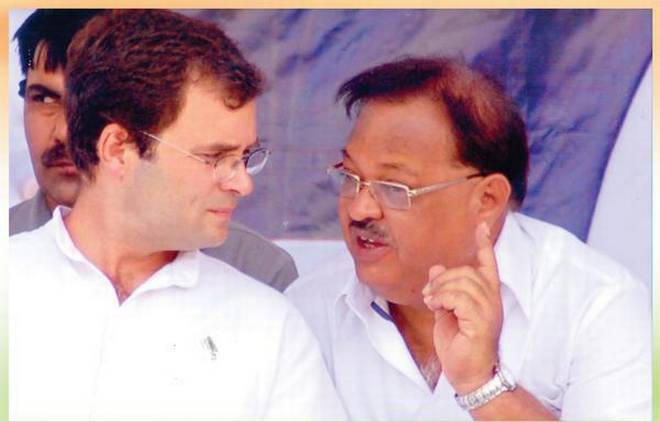
A file photo of Quamar Ul Islam with Congress vice-president Rahul Gandhi. | Photo Credit: Special Arrangement
Quamar Ul Islam, senior Muslim Congress leader from Hyderabad-Karnataka, passed away in Bengaluru on Monday
Quamar Ul Islam, a young engineer, started his political career in the 1970s as a leader of the Indian Union Muslim League (IUML) in Kalaburagi. He won the assembly polls, defeating veteran Congress leader Mohammad Ali in 1978. He continued in IUML and won again in 1989. Later, he joined the Congress and won in 1994.
In 1996, he resigned and join the Janata Dal for a short time to enter the Lok Sabha on a Janata Dal ticket. He quit his Parliament membership to contest the assembly polls again and became a minister for housing in S.M. Krishna’s cabinet.
Considered the senior-most Muslim leader from Hyderabad-Karnataka, he represented Kalaburgi six times in the State assembly. He is the only Muslim leader after Aziz Sait from Karnataka to be continuously elected.
He held the municipal administration and Waqf portfolio for three years in the Siddharamaiah cabinet, and was the first chairman of the Hyderabad-Karnataka Regional Development Board, and has served as chairman of Karnataka Housing Board, Karnataka Minority Commission and Karnataka Slum Board in the past.
He had long lasting relationships with senior leaders such as Ghulam Nabi Azad, N. Dharam Singh and Mallikarjun Kharge.
He founded the Al-Quamar Educational and Charitable Trust, that runs the KCT engineering college, pharmacy and diploma colleges in Kalaburg.
source: http://www.thehindu.com / The Hindu / Home> News> State> Karnataka / by Special Correspondent / Belagavi – September 18th, 2017
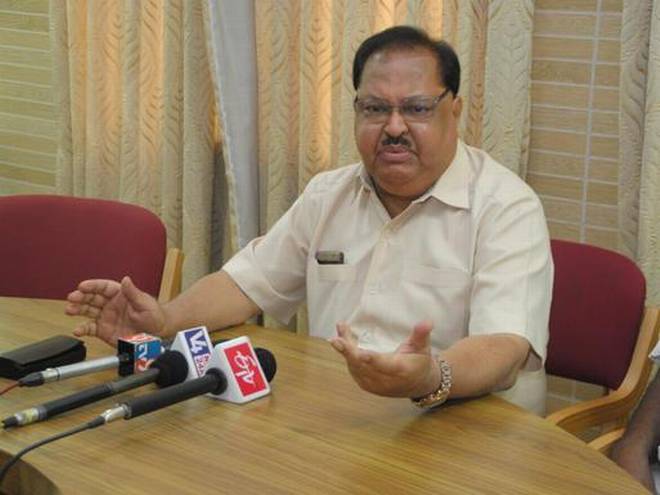
Qamarul Islam was a former Congress minister and prominent Muslim leader from the Hyderabad-Karnataka region. | Photo Credit: File Photo
Qamarul Islam, former Congress minister and prominent Muslim leader from the Hyderabad-Karnataka region, passed away following a brief illness in the city on Monday. He was 69.
Qamarul Islam was admitted to hospital 11 days ago for cellulitis of the leg and poor cardiac function. Dr. Shivaprasad, Senior Consultant and In-charge of Medical ICU, Department of Critical Care at Narayana Health told The Hindu that he had hypertension, diabetes and was also under treatment for Myasthenia Gravis, a neuromuscular disorder. He died of cardiogenic shock and multi organ failure in the hospital at noon on Monday, the doctor said.
Qamarul Islam had a long political career. He represented Kalaburagi (North) constituency and was Walf Minister in Siddaramaih cabinet. But, he was dropped from the cabinet in last year’s reshuffle.
As a mark of respect to the departed leader, the Karnataka Pradesh Congress Committee (KPCC) has cancelled all its scheduled programmes on Monday. A half-day holiday has been declared for all government offices, schools and colleges in Kalaburagi district.
Chief Minister Siddaramaiah, Home Minister Ramalinga Reddy, KPCC president G. Parameshwara, working president Dinesh Gundu Rao, Water Resource Minister M.B. Patil, BJP State president B.S. Yeddyurappa and several other top politicians have condoled the death.
source: http://www.thehindu.com / The Hindu / Home> News> States> Karnataka / by Special Correspondent / Bengaluru – September 18th, 2017
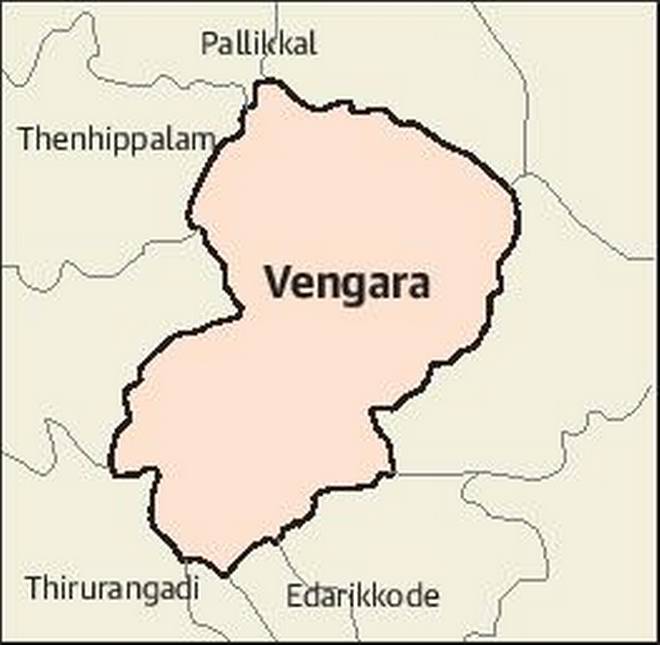
The Communist Party of India (Marxist) has decided to field P.P. Basheer as the Left Democratic Front (LDF) candidate for the Vengara Assembly byelections. However, the selection process in the Indian Union Muslim League (IUML), which is to contest for the United Democratic Front (UDF), was not as calm as in the CPI(M), with its State general secretary K.P.A. Majeed deciding to keep off the electoral fray.
The CPI(M)’s decision was announced by party State secretary Kodiyeri Balakrishnan here. The CPI(M) leadership chose to stick to a party man contrary to expectations that it might experiment with an independent candidate as it had done in Tanur in the 2016 election.
Mr. Basheer had lost to IUML strongman P.K. Kunhalikutty by over 35,000 votes in Vengara in the 2016 polls. The decision to field Mr. Basheer once again was taken after the Malappuram district committee and Secretariat approved his candidature. Mr. Basheer expressed confidence in securing the seat for the LDF.
Mr. Majeed announced his decision to keep off the electoral fray in an interview to a private television channel. He said he had informed IUML president Panakkad Hyderali Shihab Thangal about his decision not to contest.
The decision appears to have been prompted by strong opposition from the younger elements in the party and the Youth League. But Mr. Majeed maintained that he had take the decision since the party was in the midst of its organisational election process.
With Mr. Majeed deciding to pull out of the fray, the IUML leadership will announce its candidate on Monday itself, instead of the earlier deadline of September 20. It is obvious that had Mr. Majeed decided otherwise, the party leadership would have had a tough time in deciding to exclude an old warhorse.
source: http://www.thehindu.com / The Hindu / Home> News> States> Kerala / by Special Correspondent / Thiruvananthapuram – September 17th, 2017

![Saadulla, 6th from left (standing) and his daughter Betty (extreme left, sitting) attending a wedding at Shillong in the 1930s.[Photo courtesy: www.motijan-hazarika-rahman.com]](http://www.mpositive.in/wp-content/uploads/2017/09/SirSaadulla02MPOsSept2017.jpg)