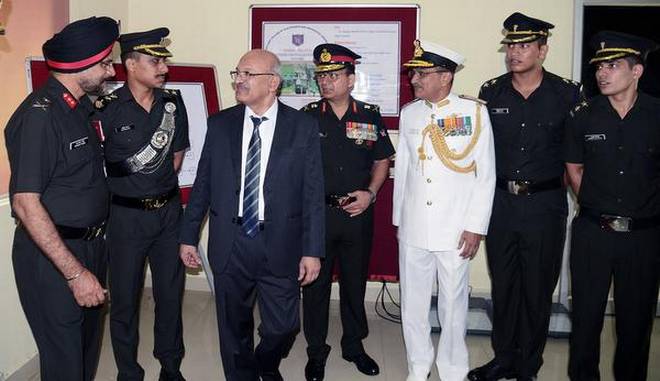
Appreciating efforts: JNTU Hyderabad Vice Chancellor Venugopal Reddy interacting with students who designed the street lights control system and exhibited at Military College of Electronics and Mechanical Engineering during convocation ceremony in Hyderabad on Thursday. | Photo Credit: K.V.S. GIRI
If it were left to young engineers of Military College of Electronics and Mechanical Engineering, Country’s street lights would be auto-operated. The 91st graduating batch of the college produced a GSM connected, cell phone-operated lighting system which can be turned on and off based on requirement.
The power-saving circuit built by Noushad M.E., Ashish Kaushik, Sumit Dhanda and Akhil A.R. cost ₹ 57,200. It could be used for both civilian and defence purposes, the innovators said. The model also allows operators to operate just one or two light bulbs in a whole series. “If the operator thinks that just a few light bulbs are enough for lighting any area, they could turn off the rest by texting the details into the circuit,” said Mr. Akhil A.R. The model displayed in MCEME contained a circuit connected to six bulbs.
“The model also detects faulty operations if there are any. If a light bulb goes off, it will alert the operator,” M.E. Noushad told The Hindu. Mr. Sumit Dhanda said the project will be useful in huge military campuses which use power. “If the model is adopted by city development corporations it could cut power costs by one third,” said Mr. Dhanda. The MCEME awarded its annual best project prize to the four officers at its Convocation Ceremony on Thursday.
The MCEME passing out batch had also come up with a simple solution – a microcontroller-based automatic ventilation system – for car interiors which get heated when parked in the open. The ventilator contains a small control unit and a solar-powered exhaust fan which runs on external battery.
The microcontroller which is programmed to check the status of temperature and humidity inside the car every two seconds, triggers the exhaust fan when needed, to clear out the heat,” said an officer Vipin Jaiswal and the team leader. Other members of the project were Mukesh Thakur, M. Hariharan and M.S. Shakhavat.
Military boost
The college displayed a solar rechargeable backpack for troopers among its exhibits. The backpack with solar panels can be used as a tracking devise when soldiers go for long treks in the field, graduates said. “In any dire circumstance if the user presses a button on the backpack it sends a Save Our Souls message to control base. It will help officers to track those who are in danger during combat situation,” said Pankaj Saini who was the syndicate leader of the team which came up with the model. The other members in the team were Harmeet Singh, Sachin Yadav and Sagar.
Speaking at the convocation, A. Venugopal Reddy, Vice Chancellor of Jawaharlal Nehru Technological University asked the graduates to pay attention to new developments in cyber security and be abreast of technological innovations. “Your convocation is not like others’ passing out functions. You leave this institution to serve the motherland,” Mr. Reddy said.
source: http://www.thehindu.com / The Hindu / Home> News> Cities> Hyderabad / by Nikhila Henry / Hyderabad – June 16th, 2017
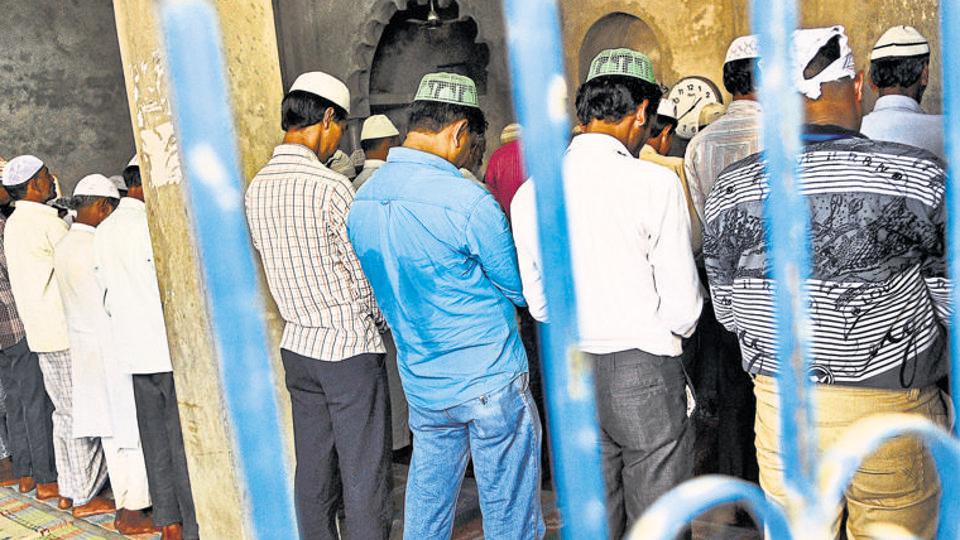
According to an agreement ironed out by some Kerala mosque committees, the use of loudspeakers for all other religious purposes will be stopped. (Burhaan Kinu/HT File Photo)
The Valiya Juma Masjid will deliver only one azaan in place of five and 17 mosques in Vazhakkad will repeat without speakers.
A prominent mosque in the Muslim-majority Malappuram district in Kerala has set an example by curbing noise pollution during the holy month of Ramzan.
Valiya Juma Masjid, the biggest in Vazhakkad area, has decided that only a single ‘azaan’, the Islamic call to prayer, will be delivered from the mosque and 17 other small mosques dotting the area will only repeat it without any noise.
Taking a cue from the grand mosque, other mosque or mahal committees are also planning to follow it. There are seven mosques run by various denominations in Vazhakkad and 10 others in the village areas.
According to an agreement ironed out by these mosque committees, the use of loudspeakers for all other religious purposes will also be stopped.
“Initially many opposed the idea but later came around. Nearby schools and hospitals often complained about the indiscriminate use of loudspeakers,” TP Abdul Aziz, president of the mahal council, said.
The council has also constituted a five-member panel to unify the timings of the azaan. It will also consult the chief qazi of Kozhikode, who wields enough influence among community members.
Many NGOs, social bodies and residents of the area have lauded the latest initiative.
“Valiya Juma Masjid has set an example. It will go a long way in curbing the mindless use of ear-splitting speakers. Now, political parties will have to follow suit,” Mohamed Koya, a trader in the area, said.
In 2015, the supremo of the Muslim League Sayed Hyderali Thangal requested all mosque committees to restrict the use of loudspeakers to check noise pollution and respect the sentiments of other communities.
The district was in the news earlier this month after the Shree Narasimhamoorthy Temple in Punnathala threw a sumptuous vegetarian Iftar for Muslims in the area, who helped renovate the centuries-old shrine.
source: http://www.hindustantimes.com / Hindustan Times / Home> India / by Ramesh Babu K C, Hindustan Times, New Delhi / June 14th, 2017
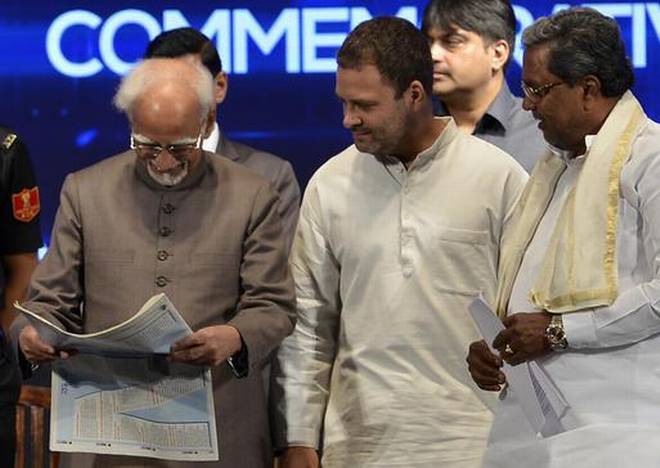
Vice President Hamid Ansari, AICC vice president Rahul Gandhi, and Chief Minister Siddaramaiah during the release of National Herald’s commemorative publication, “70 years of India’s Independence” on Monday. Photo: Bhagya Prakash K.
Bengaluru :
Vice President Mohammand Hamid Ansari, on Monday, said a free media is not only beneficial but also a necessity in a free society and any attack on press freedom will result in jeopardising citizens’ rights.
Mr. Ansari, who launched National Herald’s commemorative publication – “70 years of India’s Independence” – in the presence of All India Congress Committee Vice President Rahul Gandhi at a function here, said the State should not impede the free flow of information.
When faced with unjust restrictions and the threat of attack, self-censorship in the media could have the opposite effect, aiding the covering up of abuses and fostering frustration among marginalised communities.
Mr. Ansari also said the Constitutional framework provided for required intervention by the State to ensure smooth working of the press and society; but the laws state that it should only be in the interest of the public at large. “The media, if it is to remain true to its calling, has to do likewise. In an open society like ours, we need a responsible press to hold power to account. This is why freedom of press under Article 19 (1)(A) of the Constitution is subject only to reasonable restrictions in the interest of the sovereignty and integrity of India, the security of the state, public order, decency, contempt of court, defamation and incitement to an offence.”
The Supreme Court has held that ‘freedom of speech and of the press is the Ark of the Covenant of Democracy’ because public criticism is essential to the working of its institutions. In this age of ‘post-truths’ and ‘alternative facts’ where ‘advertorials’ and ‘response features’ edge-out editorials, “we would do well to recall Jawaharlal Nehru’s vision of the press playing its role of a watchdog in democracy and look at the ethos and principles that powered his journalism.”
Noting that Nehru, who started National Herald newspaper, believed that media was a pillar of democracy, Mr. Ansari said he envisioned a free, unfettered and honest press. “Nehru watched over the interests of media persons in independent India.”
The Working Journalists Act, which tried to give a degree of protection to journalists, to ensure freedom of press, was largely Nehru’s doing.” However, the Act, I believe, is now in disuse, and short term contracts, that make journalists beholden to the ‘preferred lines’ of the publications, are in vogue.”
Chief Minister Siddaramaiah said it was heartening to note that the Associated Journals Ltd. is reviving National Herald by launching its English website and resuming phased publication as a multi-media outlet, focusing primarily on a news presence in digital form.
source: http://www.thehindu.com / The Hindu / Home> News> States> Karnataka / by Special Correspondent / Bengaluru – June 12th, 2017
Bengalureans Santosh Chandrasekhar, 26, Aiman S, 24 and Sumit Dasgupta , 24 started working on their dream project Rangzen – a 39-minute-long documentary film on Tibetans, hardly did they know it will fetch this trio the award for best documentary in Bangalore Short Film Festival 2017.
Not just that, this documentary film featuring lives of Tibetans who had escaped Chinese invasion and took refuge in India has made three Bengalureans proud by bagging a special jury award at International Film Festival of Prayag, Delhi and the audience award at Feel the Reel International Film Festival in the UK, this year.
Santosh Chandrasekhar, assistant professor at a city college, “The movie is all about their struggle to hold on to their Tibetan identity in a foreign land and how they dream to go back to a nation that doesn’t exist anymore. The film has got answers to seeking their identities and their perpetual fight for freedom and a struggle to find their self.”
“We, through this documentary, were trying to initiate discourses related to the Tibetan struggle for freedom and generate awareness about our ‘guests’ among our fellow Indians. Although in exile for over 56 years, we fail to recognise Tibetans. We ignorantly see them as either northeasterners or Chinese. The Tibetan freedom struggle being one of the longest after the exodus of the Jews can put this documentary film into major political articulation,” added Aiman S, a copy writer and another maker of this documentary. The documentary has also made an entry to official selection category at International Documentary and Short Film Festival, Kerala and Calcutta International Cult Film Festival, 2017.
source: http://www.timesofindia.indiatimes.com / The Times of India / News> City News> Bangalore News / by Sreemoyee Chatterjee / TNN / June 13th, 2017
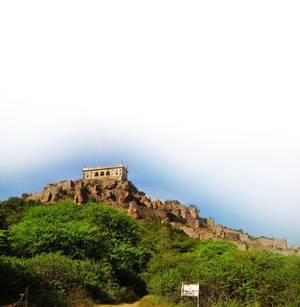
A view of Golconda Fort in Hyderabad Photo: G Ramakrishna
The Wahabi Conspiracy of prince Mubarez-ud-Daulah is a forgotten chapter in Hyderabad history
While the attack of Turrebaz Khan on the British Residency in Hyderabad during the 1857 Revolt is well documented in the pages of Hyderabad’s history, a similar bold revolt planned to overthrow the British by Prince Mubarez-ud-Daulah, the younger brother of the Nizam, though foiled in the last moment, is hardly remembered.
The Wahabi conspiracy in Hyderabad was a serious secret movement aimed against the English around 1838. Prince Mubarez-ud-Daulah had the support of Rasool Khan, the Nawab of Kurnool, who like Mubarez also hated the presence of the British. But as ill-luck would have it, before they could strike, the British were able to unearth the conspiracy through their intelligence agencies and the entire plans, went awry. Mubarez was imprisoned till death and Rasool Khan was captured, exiled and his territory, confiscated. However, the well-planned attempt they made served as an inspiration at a time when the very idea to oppose the British authority was in a nascent stage in these parts of the country.
Wahabi Movement was a 17th century reform movement that began in Persia with a view to see the basic tenets of Islam were followed strictly and with sincerity. The movement was started by one Wahab in the 18th century and therefore it was named after him. Wahabi movement was popularised in India by the Islamic religious leader, Shahwaliullah. Wahabis opposed the British presence in India and their slogan was: “Jan ko denge- vathan ko bachayenge” (Let us sacrifice our lives; but safeguard our motherland”).
Role of Mubarez-ud-Doulah
Mubarez–ud–Doulah, the Hyderabadi prince was one of the first in south India to come under the influence of the Wahabi movement. Mubarez, born in 1800, was the second son of Sikander Jah, the Nizam of Hyderabad (1803-1829). As Mubarez had greater access to wealth and also had a private army of more than a lakh, he could devote all his time and resources for the Wahabi movement in Deccan.
From his childhood, Mubarez disliked the presence of the British in Hyderabad. As a result he was imprisoned for nearly five years from 1815 by his father, Sikander Jah at the behest of the British. Mubarez was incarcerated once again, this time during the period of his brother, Nasir-ud-Doulah (1829-57). In 1830, Mubarez collected a large army of Arabs and Afghans and started an insurrection against the British. Then a contingent of British troops under Col. Stewart marched against Mubarez and arrested him. The prince was sent to the fort of Golconda and imprisoned for several months in 1830.
The hatred of Mubarez-ud-Daulah towards the British, even as an young boy was such that once his father Sikandar Jah wanted a British sentry to be posted as a guard at his palace. But the young Prince replied that he would prefer to die rather than to see a British guard at his palace gate.
Alliance with Nawab of Kurnool
Rasool Khan the Nawab of Kurnool too was attracted towards the Wahabi movement. When Mubarez came to know of Rasool Khan’s opposition to the British, he sent his men to strike a secret alliance with the Nawab of Kurnool. Rasool Khan agreed to establish a secret arsenal to manufacture arms and ammunition that was needed for any concerted insurrection which they contemplated. Mubarez, on his part assured monetary help for the manufacture of such arms. Rasool Khan, being of the same age as Mubariz was drawn close to the Hyderabad Prince as both hated the presence of the British power.
The activities of the Wahabis greatly increased by 1838 when it was widely believed that the Russian troops were advancing from Central Asia towards India. It was the plan of the Wahabis that Mubarez will take command of the combined armies at Kurnool and overthrow the British through insurrection. Wahabis also believed that the Shah of Persia would appoint Mubarez-ud-Doulah as the Subedar of the Deccan after driving away the British and deposing the Nizam, Nasir-ud-Doulah.
Gen. Fraser, the then British Resident at Hyderabad, as soon as he came to know of the suspected involvement of Mubarez–ud-Doulah, ordered a strict watch on him. Mubarez started sending his emissaries to several places like Lahore, Sindh, Gwalior, Bombay, Kurnool, Madras, Sholapur etc. Fraser spoke to the Nizam, Nasir-ud-Doulah and convinced him of the conspiracy being attempted by his brother against both the British as well as the government of the Nizam. Mubarez-ud-Doulah was taken into custody and put under guard in the fort of Golconda. All his close associates who were involved in the spread of Wahabi movement, numbering 46 were captured and imprisoned.
Judicial Enquiry Commission
The Resident, instituted a Commission of Enquiry consisting of 6 members; three were nominated by the Resident and the other three were the nominees of the Nizam’s administration. The Commission finally found that Mubarez was engaged in a conspiracy with the Nawab of Kurnool and several others with a view to overthrow the Nizam and declare himself as the ruler and also to bring an insurrection against the British.
Network of spies
The Enquiry Commission became central in unearthing the contemplated insurrection of the Nawab of Kurnool. There was a letter written by Mubarez to the Nawab of Kurnool that was intercepted by the British agents. Mubarez in that letter had spelled out his plans for the final assault on the British requesting the Nawab to dispatch the needed arms for such an attack. If only that letter has reached the Nawab, and had he acted, the Enquiry Commission felt, “the results would have been very disastrous”. The letter was concealed in an amulet and was to be delivered to the Nawab of Kurnool. But on the way to Kurnool, fearing the capture by the British, Muhammad Khan the spy, tied the amulet to the hand of an old beggar woman living in a sarai, where he himself took shelter in the guise of a traveller. The amulet was recovered by the guards while combing the area and thus the entire conspiracy came to light. The letter thus brought to light the role of the Nawab of Kurnool, in the conspiracy against the English.
The British at Madras, immediately sent a large military contingent to deal with Kurnool. The Nawab’s armies were defeated in October, 1839 and the Nawab was deported to Tiruchirapalle (formerly Trichinopoly in English), where he was imprisoned and Kurnool was taken over by the Company administration. Rasool Khan was murdered by one of his own servants in the prison.
The Enquiry Commission also felt that Mubarez, apart from being a hand in glove with the Nawab of Kurnool, also tried to spread sedition among the Muslim sepoys stationed in Secunderabad. As a result, Mubarez had to spend the rest of his life as a prisoner in the Golconda fort till he died on June 25, 1854.
source: http://www.thehindu.com / The Hindu / Home> Society>History & Culture> Living Hyderabad / by K S S Seshan / June 10th, 2017
Smt Parveen Sheikh elected unanimously today as chairperson of Valpoi municipality. 1st time in the history Valpoi municipal council is headed by BJP says minister Vishwajit Rane.
source: http://www.digitalgoa.com / Digital Goa / Home> News / by Team Digital Goa / June 09th, 2017
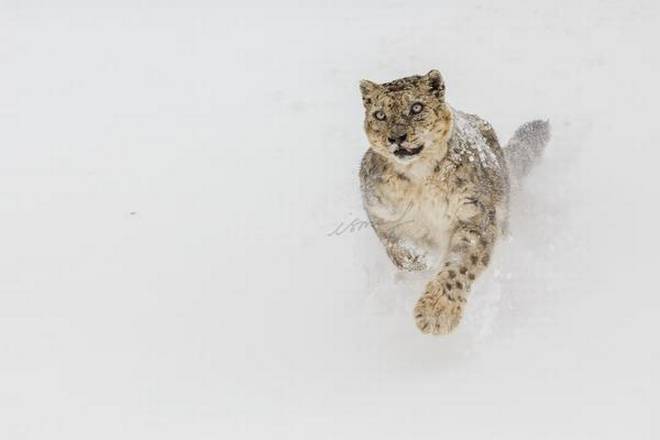
A female snow leopard photographed by Ismail Shariff
Hyderabad-based wildlife photographer Ismail Shariff on how the lens-totting tribe can exercise restraint in wilderness
The photograph of a snow leopard occupies a pride of place in Ismail Shariff’s edgily-designed studio. The Hyderabad-based wildlife photographer says he was blessed, not plain lucky, to have been able to capture the leopard from barely 15 feet distance in Spiti, Himachal Pradesh, this year.
Shariff has been a part of three snow leopard expeditions. Earlier, he had to be content with images where the leopard was a speck in the frame. “Animals in regions like Spiti or Leh are shy. They sense human presence a mile away,” he says.
A cartload of patience helps photographers get the right shot. They wait for minutes or hours, anticipating the animal’s next move. Shariff’s experience was no different, “From where we were staying, we could spot the leopard sleeping and ran out with our cameras. The villagers were also keen to have a glimpse. We felt that when the leopard wakes up, it will walk away from the noise and make its way to a clearing. We positioned ourselves such that we can get images but not be in its line of sight.”
He’s elated to have captured these images, but he mulls over and says, “If the snow leopards could come this close to humans, either they were short of food or they’ve gotten used to human presence.”
Shariff has been an avid wildlife photographer since 2008 and has observed the rise in numbers in his tribe. “There were fewer people exploring wildlife photography back then since not everyone could afford the flamboyant lenses,” he says.
In July, Shariff plans to visit Ladakh to photograph the Pallas’ cat (named after German naturalist Pyotr Simon Pallas). Besides these niche expeditions, he’s also frequented Tadoba National Park (92 times), Kabini and Jim Corbett National Park that are popular among tourists.
The observations while on these trips make him wonder if aspiring photographers compromise on the ethics of wildlife photography for instant gratification on social media.
It isn’t a case of sour grapes or a cry for exclusivity, Shariff clarifies, “There isn’t much money to be made out of photography in India. A few established photographers work with forest departments and voluntary organisations. Their work helps in documentation and conservation activities. For most others, it’s a hobby. There’s nothing wrong with more people exploring this line. The trouble begins when ego kicks in and you want to bend rules.”
There have been instances of photographers getting too close for the comfort of animals and birds — from attempting to veer off course during safaris to getting closer to bird nests. This isn’t limited to India, says Shariff, sharing instances where he spotted photographers getting off a safari vehicle in Yellowstone National Park in the US or crowding to take shots of a Broadbill’s nest in Malaysia.
Dos and don’ts
* The enthusiasm for a great shot needs to be tempered with restraint and respect for wildlife habitats. While on safaris in places like Tadoba, Kabini or Corbett, drive slowly, don’t talk loudly and never get off the vehicle. By irritating or threatening the animal, you also put yourself at danger. “I’ve seen people trying to bribe guides and drivers to take a different route or allow them to get off the vehicle, setting a wrong precedence to others,” Shariff points out.
* Don’t underestimate nature. Respect weather conditions. Shariff recalls being blown five feet high when a gust of wind changed director in Chopta, Uttarakhand.
* Steer clear of mothers with cubs. “Mothers, be it a tigress, lioness, deer, peafowl or a bear, will do anything to safeguard its offspring.”
* Don’t try to film animals in nocturnal situations unless permitted by forest department. Animal movement is pronounced and unpredictable at night. There have been cases of road-kills where vehicles have knocked down animals.
* If one is truly interested in turning their passion for wildlife photography into something meaningful, collaborate with forest departments or organisations that document wildlife and living conditions of people living close to these zones. A niche category that’s emerging, called conservation photography, helps initiate a dialogue.
Factoid: Collaborate for conservation
Dharmendra Khandal is a conservation biologist, researcher, botanist and photographer associated with Tiger Watch in Ranthambore. His efforts have led to capture of several poachers in Rajasthan. Khandal also helped identify several species of spiders.
source: http://www.thehindu.com / The Hindu / Home> LifeStyle> World Environment Day / by Sangeetha Devi Dundoo / June 03rd, 2017
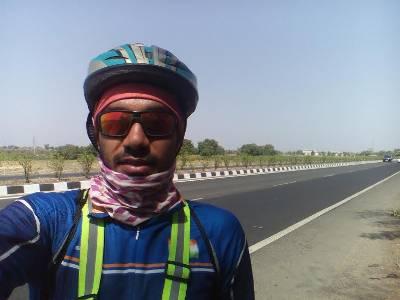
There was no heart break the second time round for intrepid cyclist S S S Shameem, assistant professor of MIT, Manipal University. Having fallen agonisingly short of attempted solo cycling journey from Kanyakumari to Kashmir, a 3,500-kms ride in 23-days in 2016; Shameem successfully completed Okha (Gujarat) to Dibrugarh (Assam) solo cycling expedition covering 3,400-kms, a journey that started on May 15 and ended on May 29.
This solo cycling expedition which he decided to complete in just 20 days was not for any record, but to spread message of unity and humanity in a greener and healthier way. Shameem’s endurance and past experience in such long distance cycling events saw him cover the distance in just 15-days. Shameem said, “I just managed those extra miles each day, helping me shave off a good five-days from my earlier journey schedule of 20-days.”
If the Okha to Dibrugarh journey saw Shameem cover 3,400-kms, for his journey from Manipal to Okha he travelled a hectic 2000+ km which saw him undertake a roller-coaster journey of 50 hours. Starting with Gujarat, and followed by Madhya Pradesh, Uttar Pradesh, Bihar, West Bengal , and Assam; each state had its own surprising flavour. During this journey, he passed through six states and UTs, 35 districts, and many cities, NHs, check-posts.
Risk factor of cycling in particular sensitive parts of UP and Bihar was a matter of worry for him, though it turned out all safe and sound without any issues. “Constant support of parents, wishes of friends paid off, and I could finish the feat without any major challenges,” he said. Factoring the summer heat and aiming to cover sufficient distance, he spent most of the day resting while covering major part of the route during early morning, late afternoon, evening, and night hours.
The distance covered daily was around 200km to 300 km. With heat, causing irritation; modified schedules; and focus on extra mileages, Shameem could not enjoy beauty of the nature around; nor could he stop at places to interact with people as he wanted. Throughout the journey; he was getting offers for help and support from many. Since such offers would consume time, forcing him to travel additional distance to reach to them; Shameem avoided it all.
source: http://www.timesofindia.indiatimes.com / The Times of India / News> City News> Mangalore News / by Jaideep Shenoy, TNN / May 31st, 2017
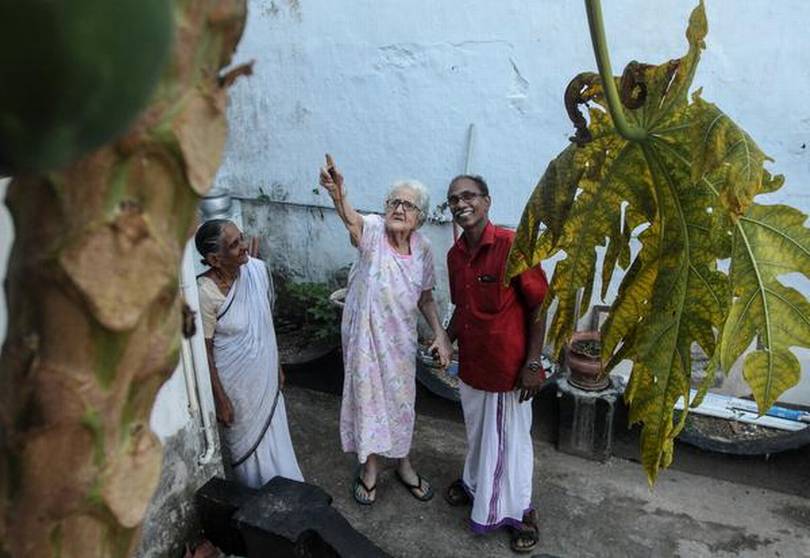
House of lore: Sara Cohen with Thaha Ibrahim in her backyard. PHOTO: THULASI KAKKAT
A nonagenarian Jewish woman in Mattancherry in west Kochi finds a pillar of support in a Muslim couple and a Christian maid.
Thaha Ibrahim is as keen on maintaining the sanctity of shabbat as he is of his Friday namaz. The devout Muslim spends almost all day taking care of a nonagenarian Jewish woman, Sarah Cohen, whom he calls aunt.
A strong bond of love binds them together in the sunset years of the Jewish community in Mattancherry in west Kochi, where Jews lived in the thousands in the past, contributing substantially to the city’s growth. The strength of the community waned over the years, with a large number of them migrating to Israel. A few like the Cohens stayed put, determined to live in the land of their birth that gave them the identity of Cochin Jews.
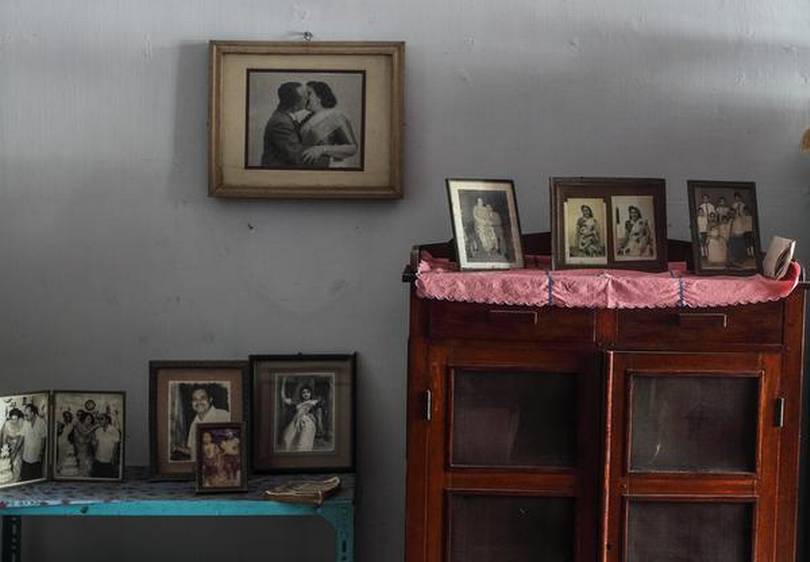
Sepia-tinted memories: A corner of the home dedicated to the past. PHOTO: THULASI KAKKAT
Mr. Ibrahim found a place in the hearts of the Cohens and the Jewish community as a whole. The middle-school dropout used to earn a few rupees selling souvenir postcards to tourists arriving by ship at the nearby port a quarter century ago. One day, a ship docked and Mr. Ibrahim discovered he had no cards to sell as the place where he had stacked them had been locked by its owner. An inconsolable Mr. Ibrahim found a mentor in Ms. Cohen’s husband, Jacob, who allowed him to store the cards at his place. It soon developed into a familial tie, which got Mr. Ibrahim to take care of Ms. Cohen after Jacob’s death some 15 years ago.
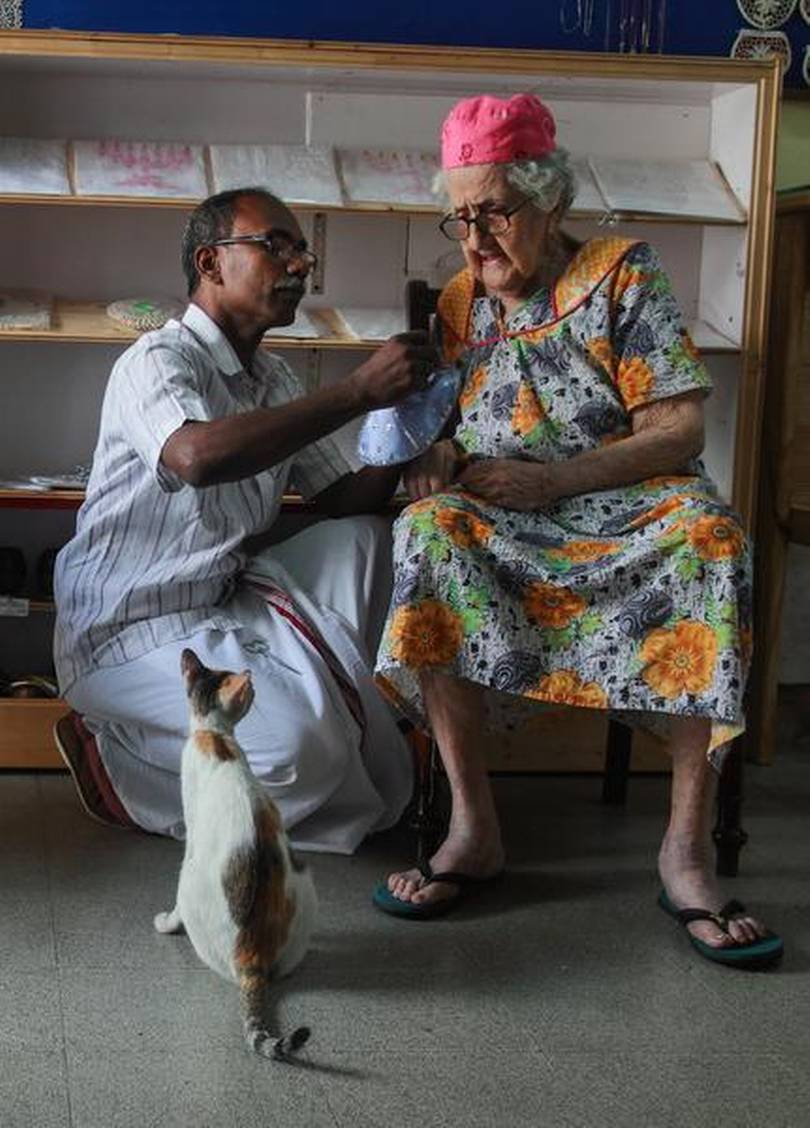
A job shared: Thaha helps Sarah embroider a Kippa, the Jewish skullcap. PHOTO: THULASI KAKKAT
Mr. Ibrahim and his wife have been a pillar of support for Ms. Cohen, who runs an embroidery shop at the mouth of the narrow alley leading up to Pardesi Synagogue. They take care of the household and run errands for her.
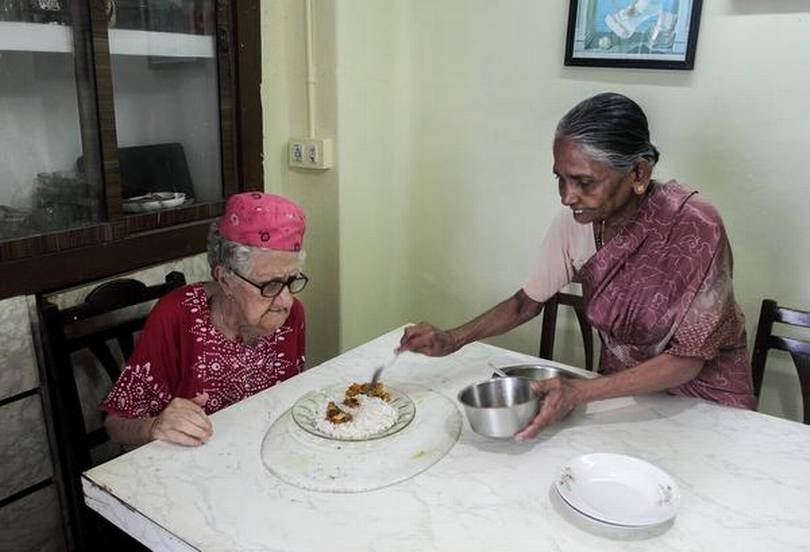
Simple repast: Seli serving lunch to Sarah. PHOTO: THULASI KAKKAT
They are like children to the childless matriarch, who is as much a Jew as she is part of the multicultural mosaic of west Kochi. Seli, Ms. Cohen’s Christian maid, who has been by her side for over a decade, adds to the mix.
Text and images by Thulasi Kakkat
source: http://www.thehindu.com / The Hindu / Home> News> States> Kerala / by Thulasi Kakkat / May 28th, 2017
50 muslim candidates made the cut in the UPSC civil services exam 2016 and 10 figured in the top 100 rank
Lucknow:
The Union Public Service Commission (UPSC) results on Wednesday brought cheers to 1,099 successful candidates. Among those who made the cut were 50 Muslims – the highest number ever to have cleared the exam.
Ten Muslims figured in the top 100 rank and six Muslim women also came out with flying colours in the exams. Jammu and Kashmir led from the front with Bilal Mohiud Din Bhat bagging the 10th rank and 13 others cracking the exam.
“It’s heartening. The credit goes to several non-profit and social organisations which have been relentlessly working for literacy, creating awareness and highlighting the importance of education in the community,” says Salam Siddiqui, former principal of Mumtaz Inter College. Sure enough, among the 50 successful Muslims, 16 candidates were mentored by the Zakat Foundation of India (ZFI) – a charity organisation providing free coaching for civil services exams.
The wake-up call for the community came in the form of the Sachar Committee Report, which was released in November 2006, say educationists. Painting a dismal picture of Muslims in India, concern was expressed in the report over the poor representation of Muslims in government sector jobs.
In 2016, 36 Muslims had cleared the exams, while the number stood at 38 in 2015, 34 in 2014 and 30 in 2013. Although Muslims comprise 13.4% of the total population, they have very little representation in the top government services, often due to lack of education and unavailability of resources. Consequently, the percentage of Muslims clearing the examinations remained roughly around 3% in the last few years.
In 2013, a total of 1,122 candidates had made it to the prestigious civil services, of which 34 or 3.03% were Muslims. In the 2012 UPSC result, only 31 Muslims could make it to the final list out of 998 successful candidates, which translates to 3.10%. In the civil services, Muslims comprise about 3% in Indian Administrative Service, 1.8% in Indian Foreign Service and around 4% in the Indian Police Service, according to data culled by organisations working in the field of literacy and employment.
“But when you compare these figures with the fact that Muslims comprise about 14% of the population, 3% is not a very encouraging figure,” says Agha Pervez Masih, administrator of Lucknow Guidance Centre, a free coaching centre at Halwasiya Market in Hazratganj run by the Aaaghaz Foundation.
The community, he feels, still has a long way to go and a respectable proportionate representation according to population share would be reached when 170-180 Muslims make the mark in the civil services exams.
source: http://www.hindustantimes.com / Hindustan Times / Home> Education / by M. Tariq Khan / June 02nd, 2017