Category Archives: Community Involvement / Social Issues

State Filmmakers make a mark

JAMMU & KASHMIR :

images: www. pinterest.com

Tariq A. Rather

Goa:
The 44th edition of International Film Festival of India (IFFI) at Goa has proved a wonderful platform for the Kashmiri filmmakers as the festival provided them opportunity to showcase their creative work not only to the domestic but also to the international audiences.
Three non-feature films by Kashmiri filmmakers were screened during the 11 day festival beginning on November 20. Another Kashmiri filmmaker having worked as an Associate Director for 90-Minute Afghan-Indo Film “A Man’s Desire For A Fifth Wife”—in Dari language, featured under ‘Cinema of the World’ section in the festival.
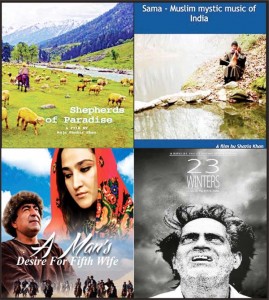
‘Shepherds of Paradise’ by Raja Shabir Khan, ‘23 Winters’ by Rajesh S Jala and ‘Sama: Muslim Mystic Music of India’ by Shazia Khan, are the three films which found place in the prestigious Indian Panorama-Non Feature (IP-NF) Section of IFFI-2013.
‘Shepherds of Paradise’
‘Shepherds of Paradise’, , in Gojri & Urdu is a 50 minute film which narrates the story of 75-year-old Gafoor, a shepherd (Gujjar–Bakerwal community), who travels on foot with his family and herd from the plains of Jammu to the mountains of Kashmir in summer, and reverses the trip in winter. The steep terrain, unpredictable weather and the onset of turbulent situation in Kashmir, makes it a hazardous journey. The film was screened twice during the festival.
The film has bagged the National Film Award Swarna Kamal (Golden Lotus Award), a certificate and a cash prize of Rs 1.50 Lakh at the 60th National Film Awards ceremony held on May 3, 2013. The film has shared the Best Cinematography award with another Marathi film ‘Kaatal’.
Director Raja Shabir says that it was a very challenging task to film because of the tough terrain, rough weather, long journey and the limited resources. The film was shot by without any crew and I followed the shepherds on foot all along their traditional hilly tracks of about 300 km., he added.
After completing his studies in political science and history from Kashmir University, Raja Shabir Khan joined the Satyajit Ray Film and Television Institute (SRFTII) in Kolkata in 2003 and later he relocated to Mumbai for a year. His first documentary film, ‘Angels of Troubled Paradise’, has won the special jury mention award at the 3rd Siliguri International Short and Documentary Film Festival.
‘23 Winters’:
‘23 Winters’, a 25 minute Kashmiri & Hindi film, screened twice at IFFI, is a fictional story of a schizophrenic Kashmiri Pandit’s journey to the Valley after living in Delhi for several years. A film set in reality, played by a real protagonist, Bota, who lives a surreal life. This film looks at his traumatic past which haunts his exiled present. Nonetheless, his hopes are unvanquished, the film explains.
Rajesh Jala says that he has been making films, primarily, documentaries, for 11 years and has been an enlightening journey through human emotions, social concerns and inner conflicts. He has directed and produced a number of documentary films and television series for leading international and Indian TV channels. His films have been selected at a number of international film festivals including Montreal, Puson, Amsterdam, IFFI, Warsaw, Leipzig, Munich, Rome, MIDD, Thessaloniki, MOMA, etc, he added.
‘Sama: Muslim Mystic Music of India’:
It is a 52 minute Hindi & English film screened once at IFFI explores the Muslim music tradition in India and portrays how the two have borrowed and taken inspiration from each other. The film attempts to discover that connection which allows the performer to become one with the Creator and experience the peace, calm, serenity and joy with the artist as he creates Sama. The film has cinematography by Salim Khan, Shazia Khan & Mohammad Yunus Zargar.
Neelofar Shama, from Baramulla, North Kashmir, has worked as an Associate Director for “A Man’s Desire For A Fifth Wife”, directed and written by its lead actor Mohammad Sediq Abedi who is having 19 years of professional experience in Afghanistan based Jihoon Film & Altin Film companies.
The story of the film reflects the thousand year old custom which occurs in a village at the North of Afghanistan and tells the story of violence against women. A man with old traditions wants to get married for the fifth time; despite of having 4 wives already and the story shows women weak and sufferer existing in a society. The story portrays all factors of the age old culture and traditional game Buzkashi or Oghlak with thousand horses.
During media interaction along with Tahmina Rajabova, Tajik actress playing role of 3rd wife in the film, at the IFFI, Neelofar Shama said that she has started her career as a freelance producer-director with Doordarshan and has directed more than 70 documentaries, 85 TV serials, 5 advertisement films, 5 telefilms and 5 short films & several talk shows. She says working on Afghan film was a mix of fear, enthusiasm & adventure.

source: http://www.dailyexcelsior.com / Daily Excelsior / Home / by Tariq A Rather / Decemeber 08th, 2013
Over a cup of evening Tea : Martyred and Quartered

Mysuru, KARNATAKA  :


Martyred and Quartered

It has been said that people remember their Gods and soldiers only in times of great danger. I have written about this before in my article: “Fading Memories and Forgotten Heroes” last year and I am writing about this again today as public memory is woefully short and this is an issue that merits mulling over again both by citizens in general and those in power in particular. Every country today maintains its own fighting forces and every country in the world invariably remembers its war veterans and martyrs and also ensures a permanent place of honour for them by naming important landmarks in its towns and cities after them.

Considering our unique and rather shameful attitude of forgetting our martyrs and war veterans it is indeed heartening that tomorrow on the occasion of our Republic Day we at Mysore are honouring three war heroes hailing from our city who have been recipients of the Veer Chakra for the bravery and valour they displayed during the 1965 and 1971 Indo – Pak wars. This gesture makes this year’s Republic Day celebration unique for all Mysoreans and it is indeed a proud moment for us. This is thankfully due to the initiative taken by a former soldier M. N. Subramani who has successfully prevailed upon the district administration to include this ceremony in tomorrow’s programme.

Subramani was my class fellow and close friend during our PUC days at St. Philomena’s College in the early seventies. Being a keen marksman he was the only close contender with me for the first place in Rifle shooting during our stint in the NCC. After this brief interlude with the uniform and the rifle he decided to continue his love affair by enlisting in the army while I decided to study on and become a doctor donning the white coat.

Although just a humble sergeant he has ever since his discharge from the army been actively striving to ensure proper post-retirement benefits to ex-servicemen by starting the Vekare Ex – Servicemen Trust in the city which among its other welfare activities has been campaigning for the establishment of a separate war memorial in the city to perpetuate the memory of all our soldiers who have laid down their lives in the call of duty. Thanks to his efforts, for the first time we saw a helicopter showering rose petals on the marching contingents at one of our Independence day parades and also at one of the Dasara air shows.

When we come to think of it, although we already have a freedom fighters’ park and are in the process of soon getting a proper memorial for our police martyrs, we do not have in our city any landmark designated as a memorial to our soldiers who have died and who are sadly continuing to die on different disturbed fronts. This lacuna becomes more poignant and painful when we consider the fact that nearly a dozen young soldiers from our own city and district have laid down their lives in wars and cross-border strife after independence.

It is said that only the brave die young. Except for the Squadron Leader Devaiah Bhavan which was also established rather belatedly again only due to the efforts of our friend Subramani, we have nothing named after these nameless heroes in the city of their birth to record their noble sacrifice and perpetuate their memory. While we are quick in naming and renaming our roads, circles, parks and other landmarks after our innumerable politicians many of whom have actually not done much good for our society, we have somehow forgotten our martyrs.

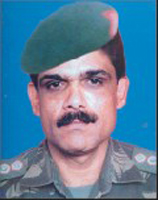
Although it may seem like a very easy and simple job to get the government to name a road or landmark after a martyr, in reality it is not so, with all the red – tape one has to untangle in the process. I am saying this from my personal futile experience over the past six years in getting our corporation and district administration to name a road or circle as a tribute to my brother-in-law Maj. S. M. Khan Ghori, a former student of the Maharaja’s  College, who laid down his life at the age of 40 on 1st July 2001 while fighting insurgency in Kashmir. I have walked through all the corridors of power, meeting all the people, both high and low, who have all been reassuring me that it will be soon be done while they play the inevitable game of ‘musical chairs’ with their posts.

SubramaniMPOs16jan2017

Maj Ghori, an Artillery officer of the 172 field regiment with nineteen years of service including four years in the Indian Air Force, had served in all the disturbed areas including the North-East and had received a special commendation from the President of India. When he died while on deputation to the Rashtria Rifles he received one of the best Military funerals I have ever seen. With his father serving as the warden of the Muslim Hostel in Saraswathipuram, he used to live in the warden’s quarters next to the fire station and as a student everyday he used to walk to the Maharaja’s College along the road that passes in front of the Hostel and the Ursu Boarding School and he also used to play cricket in the Maharaja’s college grounds.

In a gesture that would be sentimentally appropriate to the memory of his sacrifice, I had suggested to the City Corporation to name this as yet nameless stretch of road from the Fire Station to the Ramaswamy Circle, which passes in front of his favourite haunts after him. The file pertaining to this matter though fattened by all the relevant documents that I was asked to furnish from time to time, now lies under layers of dust with the note of approval written on it by the former corporation commissioner A. B. Ibrahim. The former Deputy Commissioner Selva Kumar who had also appreciated the move and who had promised appropriate action in this matter has since been transferred. While the monetary compensation and allotment of residential sites or quarters to war widows may fulfill their worldly needs these compensatory measures do nothing to perpetuate the memory of soldiers slain on the battlefield.

It is time we thought of drawing up a list of all the martyrs from our district and honouring them by suitably naming our land-marks without any further delay.

Dr. K. Javeed Nayeem
kjnmysore@rediffmail.com
Courtesy: Star of Mysore

source: http://www.exservicemen.in / ExServicemen India / Home> News> Views> Articles / by M N Subramaniam / September 10th, 2010

Dr. Javed K Nayeem / Star of Mysore

Book Review: Being the Other—The Muslim in India

Lucknow, UTTAR PRADESH / NEW DELHI :

BookBeingTheOtherMPOs16jan2017


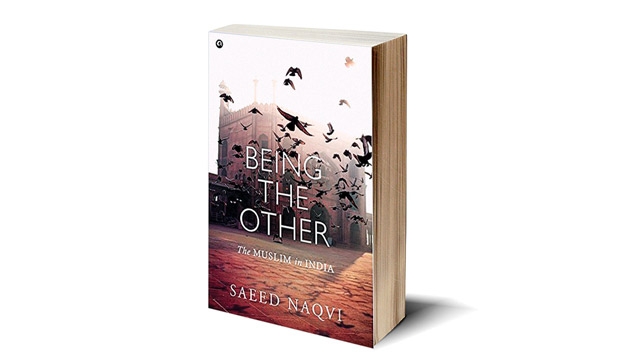
Saeed Naqvi’s book is vital in understanding forces that have shaped the Hindu-Muslim divide, says Iftikhar Gilani

Book: Being the Other—The Muslim in India

Author: Saeed Naqvi

Publisher: Aleph

239 pages

Rs 599

A decade ago, a Hindu friend booked a vacation in Kashmir. Before leaving, he hesitantly asked if his 14-year-old son could spend time with a Muslim family. “He isn’t familiar with a Muslim family,” he confided. I arranged their stay with a government official in Srinagar who had children of the same age. The interaction, my friend told me later, had helped clear cobwebs not only from his son’s mind, but from his as well.

In Being the other…, Saaed Naqvi recounts a similar experience. In Allahabad University, he asked the audience whether the Hindus among them had visited a Muslim home. No one had, even as a few murmured about their fathers knowing Urdu or Persian or that their mothers cooked chicken or mutton. The book is a memoir and exploration of various deliberate and inadvertent acts that have contributed to this ‘othering’ of the Muslims in India.

The author, a senior journalist, blames both the Congress and the BJP for this yawning gulf between the Hindu-Muslim communities. “Partition, in a way, was the gift the Congress gave to the Hindu right, which in the fullness of time, is today’s Hindutva,” Naqvi says. From then on, it has been a slow and steady decline for India’s 180 million Muslims.

Why has this happened?

Islam’s experience of Hindu civilisation dates back 14 centuries. But to understand Muslims and Islam, Indian scholars rely on Americans whose exposure doesn’t go beyond half a century.

And security agencies make it worse when they pick up innocent Muslims on dubious charges, forcing the community to retreat into a shell. “With every such arrest, more members of the community turn against the State and may even be persuaded to join militant groups or take to arms. If injustice becomes the law, resistance becomes duty,” the author says.

But in some places, Naqvi falls in with the ill-informed discourse of some scholars. He mentions, for instance, that Sir Syed Ahmed Khan set up the Mohammedan Anglo Oriental College (now Aligarh Muslim University), for ashraf (upper caste) Muslims alone, but fails to explain how a Hindu, Ishwari Prasad, was the first graduate of this college. He also joins the chorus to heap scorn on Wahhabism, but doesn’t mention that India’s first education minister, Maulana Abul Kalam Azad, whom he praises, belonged to this school of thought.

Though there is room for improvement, this book is an essential read for those interested in understanding the forces that have shaped the Hindu-Muslim divide and its consequences.

source:  http://www.dnaindia.com / DNA / Home> News> Lifestyle News / by Iftikhar Gilani / DNA, Mumbai – Sunday October 16th, 2016

Renowned freedom fighter and veteran journalist M Rasheed passes away

KERALA :

Kozhikode :

Renowned freedom fighter, writer and veteran journalist M Rasheed passed away in Salem on Friday. He had his last breath following a cardiac arrest at his daughter’s residence in Salem on Friday morning. An active participant in the Quit India Movement in 1942, he was also jailed during the freedom struggle.

Son of eminent freedom fighter E Moidu Moulavi, Rasheed was taken to the custody while he was high school student. He was one of the founding members of the Revolutionary Socialist Party and the editor of the party’s mouthpiece Sakhav.

The veteran journalist was a regular column writer in Malayalam dailies and was author of some books.

He will be laid to rest at Ponnani on Saturday morning.

source: http://www.newindianexpress.com / The New Indian Express / Home> Nation / by Express News Service / January 06th, 2017

Istafa Husain Ansari brought handloom industry to forefront

Gorakhpur, UTTAR PRADESH :

There is no denying to the fact that 1970-1980 was the best decade for a Bunkar (weaver) of Uttar Pradesh. This period can be identified as the golden era for the handloom industry and the person responsible for this was no other than late Istafa Husain Ansari of Gorakhpur. I am fortunate to be one of his grandsons.

Istafa Husain Ansari (1914-1987) was the third child of Sheikh Murtaza Husain- a Zamindar and a successful businessman, along with a prominent political leader of Gorakhpur. From the very beginning he had nationalist leaning. His initial education was in Gorakhpur and for the higher education he attended Lucknow University, from where he completed his M.Sc. and LLB. During those days the political environment in Lucknow was stirring, and there he worked along with stalwarts Dr. Shankar Dayal Sharma and K Raghurammaiyya, who were prominent student leaders of that time. At an early age he got married to Amina Khatoon, daughter of a prominent businessman of Gorakhpur, Mian Rahmatullah. One of his brothers-in-law, Niamatullah Ansari participated in the freedom struggle, and was later elected as a MLA from Gorakhpur.

IstafaHusainMPOsJan052017

After completing his education in Lucknow, he went back to Gorakhpur to practice law in Gorakhpur Civil Court. He was interested in the issues related to small farmers, peasants and the marginalized sections of the society. His contact with Professor Shibban Lal Saxena, who was an influential Congress leader of that time, brought him closer to Maharajganj and Pharenda, from where he started his formal political career by getting elected as the Gram Pradhan of Bhelumpur, which was also known as Karmaura. In 1952, for the first assembly election after independence, he won the Gorakhpur seat on a Congress ticket. He won by a big majority and then again by a bigger majority in 1957.

He was elevated to the position of Parliamentary Secretary for Education, Home and Information, when Sampoorna Nand became the Chief Minister of Uttar Pradesh. Then in 1966 and in 1972, he was elected as a Member of the Legislative Council in Uttar Pradesh Vidhan Parishad. In November 1973, when Chief Minister Hemvati Nandan Bahuguna, formed his eleven member’s cabinet, he was assigned as a Cabinet Minister in-charge of the small scale industries. He saw the deterioration in the politics climate and declined to be a part of that. His refusal to subscribe to the kind of politics brought in by Sanjay Gandhi curtailed his political career, because he could not do the Jee-Hazoori (sycophancy) that became the norm for success those days.

The success story of his life can be gauged by his contribution to the handloom as well as other cottage industries. He battled tirelessly for uplifting the weaker sections of the society. He fought relentlessly for the cause of the weavers and led an agitation against the ruling congress party, of which he was an active member, without fearing for the consequences and his own political future. As a result of the struggle, all his demands were met, and for the first time the woes of the handloom industry caught the attention of the policy makers. As a result, in 1970s when Prime Minister Indira Gandhi formulated her twenty point development program, challenges facing the handloom industry were also included in it. Then came the golden period of the handloom industry where infra-structure was developed to provide the raw material as well as avenues were opened to find markets for the finished product.

Apart from political appointments, he was also a member of the Aligarh Muslim University and Agra University courts. Locally in Gorakhpur, he was in the Executive Committee of Gorakhpur University, and was the founder member of Madan Mohan Malviya Engineering College. For life, he was the President of the school named after his father, Sheikh Murtaza Husain Memorial Higher Secondary School. During the time of his death in 1987, he was the member of Uttar Pradesh Minorities Commission.

It is not out of place to mention that in spite of being in public life for about five decades he maintained an unblemished record. His eldest son, Ashfaq Husain ventured into politics, and was elected to the Lok Sabha from Maharajganj. It is not out of place to mention that he was a great advocate for education and encouraged his descendants for quality education. As a result, today all twenty-two of his grandchildren are either engineers or have achieved post graduate degrees.

(The author is a Nuclear Engineer and was in the United States for long, but presently is in India. Can be contacted at www.tanvirsalim.com.)

source: http://www.twocircles.net / TwoCircles.net / Home / by Tanvir Salim / October 26th, 2013

Kiosk on wheels helps persons with disabilities turn entrepreneurs

Bengaluru, KARNATAKA :

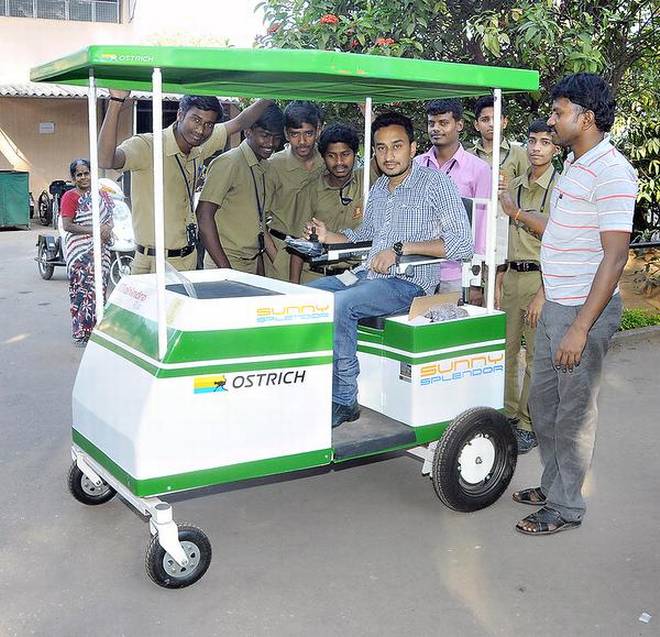
The battery-operated kiosk, Sunny Splendor, is a boon to persons with disabilities. —Photo: Sampath Kumar G.P. | Photo Credit: G_P_Sampath Kumar

Three years ago, Umesh, a lorry driver, lost his legs in a road accident. To make ends meet, he decided to sell tea on a two-wheeler, but the new venture threw up many challenges.

Dejected but not defeated, he approached an automobile firm for help. The firm, along with a wheelchair manufacturer, came up with a design for a disabled-friendly mobile kiosk to help people with disabilities earn a livelihood as part of a CSR initiative. The company approached the Association of People with Disabilities (APD), which funded the project. By 2015-end, Umesh had a prototype of the mobile kiosk.

APD rolled out three such mobile kiosks in the city in December last year to enable people with locomotive impairment and cerebral palsy start a business. The kiosk or electric vehicle named Sunny Splendor can also be charged on solar power.

Calling it ‘office on wheels’, C.N. Gopinath, executive board member of APD, said: “It plays a pivotal role in creating a perfect livelihood option for the physically challenged, who at times are constrained by financial circumstances and lack of qualification.”

Mansoor Ahmed, one of the fund raisers of the project, said the kiosk is environment and disabled-friendly. “We replaced the steering wheel with a joystick and the tires have increased brake efficiency”.

“I want to start a cosmetics and beverages business and my target audience comprises those working in tech parks. With this vehicle, I can commute to different tech parks,” said Basheer Ahmed, who is affected by polio. For Mahesh, who has been repairing mobile phones from home, the vehicle will help him broaden his customer base. “I want to run the business outside a government office. I am also planning to buy a typewriter, so I can help officials in their work”.

Four kiosks in Bengaluru

There are four such kiosks in Bengaluru. Beneficiaries can approach APD if they wish to become entrepreneurs, and have to go through a selection process before they can get their own mobile kiosk.

APD charges 10 per cent of the ₹1 lakh that costs to make a unit. “We believe they have the right to stake a claim in our ventures. This would not be possible if we operated on a charity model, which is is why we accept 10 per cent monetary contribution from them, though we do not insist this from those who cannot afford,” Mr. Mansoor Ahmed added.

source: http://www.thehindu.com / The Hindu / Home> News> States> Karnataka / by Shilpa Ramaswamy / Bengaluru – January 03rd, 2016

Dawoodi Bohras initiate community welfare project

Mumbai, MAHARASHTRA :

dawoodibohrampos02jan2017

Thousands of Dawoodi Bohras are carrying out welfare programmes in more than 200 towns and cities spread across four states as part of a project to improve living condition of the poor members of the community.

The volunteers, drawn from various sections of the religious group and some of them from abroad, have fanned out in Gujarat, Maharashtra, Rajasthan and Madhya Pradesh, where they are helping the underprivileged community members in healthcare, housing and other areas.

They are building, repairing or cleaning homes, running vaccination and medical programmes as part of a five- day long project in the four States. The volunteers are working towards providing sustainable opportunities to families that are in need of help, according to a release issued by the community.

An infrastructure and administrative system to manage the organisation and funding of this fostership project was running for some weeks in preparation of the welfare activities that began on December 29 and will end on Monday.

The drive follows two-year-long travels of the community head, Syedna Mufaddal Saifuddin, who visited areas where members of the religious sect reside, it said.

“Some years back, his predecessor had initiated a programme to end food poverty which has now flourished into a common kitchen concept that provides a freshly cooked hot meal every day to every household of Dawoodi Bohras, rich or poor, wherever in the world they happen to live,” a community spokesperson said.

The community has now resolved to improve living conditions of the poor, he said.

“A team of about 4,140 members, including students, intellectuals, administrators, professionals and businessmen, have joined hands to look into every need of the community – from housing and clothing to childrens education and vaccinations, to help to achieve a minimum standard of living,” he said.

source: http://www.afternoonvoice.com / AfternoonVoice / Home> City News> Mumbai / Afternoon Voice – January 02nd, 2017

‘Resistance is a form of justice’

NEW DELHI :

Drawn into the struggle and trauma of families in conflict-torn Sri Lanka and Kashmir, filmmaker Iffat Fatima says she became a part of it through a process of osmosis

Iffat Fatima an independent filmmaker from Delhi, went to Sri Lanka in 2000 to research a fellowship project on Education and Identity. In the years that followed, she worked at a television channel, Young Asian Television. In 2005, Iffat made a documentary film on conflict in Sri Lanka and what it had done to the lives of people – The Other Side of War and Peace. When she met Parveena Ahanger, the chairperson of the Association of the Parents of Disappeared Persons (APDP) in 2006, the urge to make a film on Kashmir’s disappeared was strong. After nine years of travel and research, Iffat made Khoon Diy Bharav, which has moved viewers in all its screenings.

hindulitforlifempos031dec2016


A guest at The Hindu’s festival of literature, Lit for Life, in Chennai in January 2017, Iffat answers a few questions:

Can you please tell us about the Association of Parents of Disappeared Persons (APDP)?

In 1994, with the support of legal professionals and human rights activists, the families of the victims of Enforced Involuntary Disappearances (EID) in Jammu and Kashmir organised themselves into a collective: The Association of Parents of Disappeared Persons (APDP). Over the years APDP has become a movement – an important space for a continuous engagement on issues of justice and accountability. Drawing attention to the trauma of the families engaged in a gruelling struggle against the Indian security establishment, APDP has succeeded not only in breaking the silence over the issue of enforced disappearances in Kashmir, but has also sustained and kept alive a public discourse on resistance and what it means to resist against all odds. APDP, in the very act of its being, poses a challenge to the official discourse of erasure that is being systematically imposed in the public domain in Kashmir.

Your film Khoon Diy Bharav was made over a period of nine years? Can you speak about the work that went into the film? It must have been extremely traumatic for you — living the horrific stories all over again. How did you manage to sail through it? Can you narrate some of these incidents?

I was, in a sense, introduced to the trauma and the grief of the families of the disappeared through the making of my film, Lanka – the other Side of War and Peace. In 2006, almost a year after I finished the film I began working on the issue of enforced disappearances in Kashmir. I had been in touch with Parveena Ahangar whose son became a victim of enforced disappearance in 1990. Parveena had been largely instrumental in bringing the families together under the banner of APDP. She became my constant companion and I travelled all over the valley with her, meeting the families. I was drawn into the struggle, the continuous trauma, the continuous torture the families were going through. Through a process of osmosis, I internalised their struggle and became part of it. I cried and laughed with them, carrying a camera and recording their struggle became an organic process. I was not thinking of the end product.

Through these many years, 2006 to 2010, the movement for azaadi in Kashmir was also going through a tumultuous period. People were coming out into the streets in thousands, young boys were being killed. Resistance was acquiring a new form and people were expressing their agency, reclaiming the movement, so to say ‘snatching it away from the gun’. The affected families kept using the term “Khoon Diy Baarav” which eventually became the title of the film. What they were implying is that blood has flown, it has congealed and sedimented into memory and transformed into resistance. So resistance is a form of justice, while there is no hope of justice from the Indian state. After 2010, I felt I had to come to grips with my material and give it a tangible form. I had more than a 100 hours of material. The editing process was long and agonizing, I made several cuts. Friends were very supportive and their suggestions and feedback was very valuable in shaping the final film.

Army, in Kashmir, is above law so to say. How did they react to your film? I have read of the demonstrations held in certain campuses during the screening of your film.

“If there is a rule of law, why are the armed forces exempt from it?” is a question that Parveena poses in the film several times. This is a challenge that many people find difficult to confront, especially in the current atmosphere of hyper-nationalism in India. They would rather not see it. But I must say that I have extensively screened the film in India and most audiences have been moved by the film and have responded in a very humane way. I get a sense that it reaches out to people rather than raising their hackles.

You have been arrested several times. Can you speak about it?

I haven’t been seriously arrested but have been apprehended several times. Majority of people in Kashmir have experienced that and most certainly anybody roaming around the streets with a camera has to be prepared for it. It is very disconcerting and rather scary, I must admit. But maybe part of being a filmmaker or a journalist is to learn to negotiate and work around these difficult situations. As a director there is also the added responsibility of the crew and the expensive equipment. I think being a woman might have some advantages as you are seen to be less of a threat. It is important to be cautious and to create a certain safety network.

Over 8000 men have disappeared in Kashmir. How are the women coping? Have they reshaped their lives?

The disappeared are all men and the women are left behind to cope. They don’t have a choice, many of them have children, they have to survive and carry on with their lives and are doing that very courageously. They have brought up their children, done their best for them. The women and the families are supportive of each other and APDP is there for them. However, it has taken a big toll, most of them have health problems — physical as well as psychological. There are some women who have remarried and moved on with their lives, but those with children largely have chosen to stay single. Keeping alive the memory of the disappeared is very important, in fact it keeps them going.

Your film about Sri Lanka also explores memory and violence. Do these two experiences – Sri Lanka and Kashmir — have any similarity?

In both cases- Sri Lanka and Kashmir- the conflict has been protracted and the state has used brute military power to repress people’s aspirations and political demands leading to a cycle of violence.

It is inevitable; brute military power can only lead to a shattered social fabric with deep wounds and scars. The state seems to be impervious to that. It doesn’t care.

source:  http://www.thehindu.com / The Hindu / Home> Entertainment> Movies / by Deepa Ganesh / December 29th, 2016

Mumbai lawyer Afroz Shah to receive top UN environment award for Versova Beach clean-up

Mumbai, MAHARASHTRA :

_________________________________________________________________

Highlights :

  1. Shah and his 84-year-old neighbour Harbansh Mathur had started manually cleaning Versova Beach in 2015.
  2. The clean-up grew into a massive volunteer movement that saw 4,000 tons of garbage being picked up.
  3. UNEP has hailed the movement as an example of the key role of citizen action in protecting the environment
  4. ______________________________________________________________


AfrozShahMPOs31dec2016

New Delhi :

The largest beach clean-up in the world would be a reward in itself. But for spearheading it, Mumbai-based lawyer Afroz Shah has been named as one of winners of the top environmental honour of the United Nations. Shah will be among those bestowed with the Champions of the Earth award for leading the clean-up of Mumbai’s  Versova Beach.

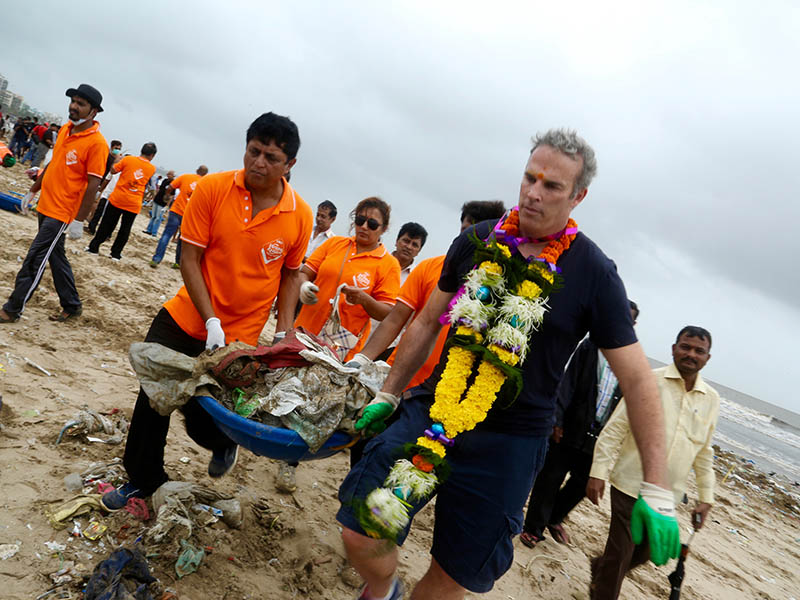
Shah will receive the award under the ‘Action and Inspiration’ category for kick-starting a volunteer campaign to pick up, by hand, all the plastic bags, cement sacks, glass bottles, pieces of clothing, and shoes, that covered the entire 2.5-km stretch of the Versova Beach, even rising many feet high in some places.

The movement grew and grew over the past year and picked up a whopping 4,000 tons of garbage.

“Shah’s efforts, and the hundreds of volunteers he’s inspired, is a wonderful example of citizen action and reminds the rest of the world that even the most ambitious, global agreements are only as good as the individual action and determination that brings them to life. His outstanding leadership is drawing global attention to the devastating impacts of marine litter,” said United Nations Environment Project (UNEP) chief Erik Solheim, who had joined Shah in the clean-up for a day in October.

AfrozShah02MPOs31dec2016

Lewis Pugh, the United Nations Patron of the Oceans, too, congratulated Shah in a twitter. “So delighted that Afroz Shah has won the UN’s highest award for his incredible efforts to clean Mumbai’s beaches!!” he tweeted.

Pugh has for long hailed the Versova clean-up as the ‘largest beach clean-up in history’. He had made it a point to visit Mumbai and take part in the clean-up in July.

AfrozShah04MPOs31dec2016

“This award is in honour of the hundreds of volunteers who have joined me over the past year to clean up our beach and ocean. I am an ocean lover and feel that we owe a duty to our ocean to make it free of plastic,” said Shah as part of the announcement on the UNEP website.

“I just hope this is the beginning for coastal communities across India and the world – we have to win the fight against marine dumping and that involves getting our hands dirty. We humans need to reignite our bond with the ocean and we don’t have to wait for anybody else to help us do that,” he added.

Shah and his 84-year-old neighbour,  Harbansh Mathur, had started picking up garbage off the beach in July 2015. This grew into a movement, with a rising number of volunteers, outliving Mathur.

source: http://www.timesofindia.indiatimes.com / The Times of India / News> India News / TNN / December 03rd, 2016

Majlis to remember city’s noted nawabs

Lucknow , UTTAR PRADESH :

Friday's majlis in progress
Friday’s majlis in progress


Lucknow :

In a unique step, from now on Lucknow will pay obeisance to its nawabs who played an important role in starting and continuing with the Muharram rituals that took the city’s name to the world.

Paying tribute to their souls, every Friday after Jumah prayers, a majlis (religious sermon remembering the martyrdom of Imam Hussain  and the tragedy of Karbala) will be organised at the Bara Imambara.

 Earlier,majlis for a few nawabs were organised by their descendants or caretakers of the respective Imambaras set up by them. This is the first time that tribute will be paid in a systematic manner. A list with 25 names has already been drawn which will further be expanded to include descendants who, even in poverty, continued Muharram rituals, and clerics on whose advice the nawabs ruled Avadh.

On Friday, Maulana Kalbe Jawad presided over the majlis in memory of Nawab Ghasiud-din Haider while also talking about the latter’s and his role in Lucknow’s Muharram.

source: http://www.timesofindia.indiatimes.com / The Times of India / News> City News> Lucknow News / TNN / December 24th, 2016