Built in 1750s, it was used to confine freedom fighters from Krishna and Guntur districts till another jail was built in Vijayawada in 1920s
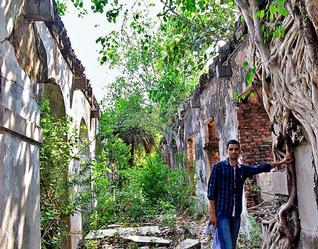
The remains of the British Prison at Bandarkota village near Machilipatnam in Krishna district.
A British construction here stands as a witness to the bravery and sacrifices of the freedom fighters of Masulipatnam and Krishna district.
The giant building, known as ‘British Prison’, reminds one of the history of freedom struggle in Andhra Pradesh.
“It was built after the Anglo-French war in 1750s. The British required a prison in Machilipatnam to incarcerate the local freedom fighters within the area of Krishna and Guntur districts and Nalgonda in Telangana State during the freedom struggle,” local historian Mohammed Silar toldThe Hindu .
According to available literature on Machilipatnam, it was the only prison to confine the freedom fighters until another prison was built in Vijayawada in early 1920s.
Jaggery unit
‘Masula History’ penned by Chitta Bala Krishna Sastry in 1922 predicts that Machilipatnam would witness rapid industrial activity, by citing the jaggery production unit set up in the British prison by then.
“After the British left the prison by early 1920s, local entrepreneur Jaldu Rama Rao obtained permission from the British to use the prison premises for production of jaggery and sugar,” said Mr. Silar. However, sugar cane production had to be stopped by mid 1940s, owing to various business reasons.
Currently, the British prison is owned by the family of Jaldu Rama Rao.
Now, an old woman resides at the entrance of the site, which is yet to get the heritage status.
Only if it gets the heritage status, any conservatory initiatives by the Archaeological Survey of India could be expected to take place.
Another heritage structure
Ironically, the British prison is located opposite another heritage site which was a hospital during the Nizam’s period.
The efforts made by the Indian National Trust for Art and Cultural Heritage (INTACH) for the conservation of the British prison as well as the other sites at Bandarkota have not yielded any results so far.
source: http://www.thehindu.com / The Hindu / Home> Andhra Pradesh / Bankarkota(Krishna) / August 15th, 2016
On the eve of the country’s 69th Independence Day, the Abbie Rich Inter College, one of the oldest schools in Uttar Pradesh, is struggling to preserve its heritage. The school building, a hundred years old, is in dire need of repairs. The school is the alma mater of Ram Prasad Bismil and Ashfaqullah, who, long before their participation in the Kakori train robbery of 1927, were classmates and friends here. The school even has their attendance records up to 1919.
Abbey Rich is owned by the Methodist Church of India (MCI) and run on funds raised by Christian minority institutions. The nearly 700 students are mostly from poor families, with no fees charged from them till class VIII. At present, the school is looking for funds to renovate its buildings. However, fund constraints and absence of financial help from the government has brought the school to dire straits.
Abbey Rich has a past that is intimately connected with Uttar Pradesh and the rest of the country. Bismil and Ashfaqullah forged their well-known friendship while students here. Moreover, its alumni fought in both the First and Second World Wars. In the latter, three teachers and five students are known to have joined the armed forces. Their names have been commemorated in a wall plaque.
In 1991, some students put up statues of the two martyrs on the school grounds. Abbey Rich authorities have since wanted to replace them with better statues in marble and have written several times to the state government. However, no reply has been received. Meanwhile, the statues are placed facing the wall, making it difficult for anyone to see the faces either from inside or outside the school.
“Abbie Leonard Rich was an American social worker who came to Shahjahanpur in the 1850s and began teaching children under a tree. In 1857, he was forced to flee the place because people did not know he was not connected to the East India Company,” said principal Mihir Phillips.
Rich returned a few years later and the government gave him some land on rent to set up a school. In 1867, it moved to another building and got affiliation till class X, one of the first in the province. Finally it moved into the current building in 1916, build on land donated by a local nawab.
“We still have the attendance records of Ashfaqullah and Ram Prasad Bismil. They were here till class VIII, in section B actually. The students and staff feel proud to share this heritage,” said Phillips.
There is an important incident from the freedom struggle connected to both martyrs. In 1919, police raided the school to arrest both the boys. “But then principal Rufus Charan stopped the police at the gate. This gave time to the two boys to escape,” the principal said.
Professor Bikram Mani, who retired from the school told TOI, “This used to be the best school of the city but everything changed with time. We provide free education and this is probably not what people need these days. Otherwise, it would have been declared a heritage institution.”
source: http://www.timesofindia.indiatimes.com / The Times of India / News Home> City> Bareilly / Kanwardeep Singh / TNN / August 23rd, 2016
Prince of Arcot, Nawab Mohammad Abdul Ali, has hailed Chief Minister J Jayalalithaa for sanctioning a sum of Rs14.5 crore for the restoration of the Chepauk Palace (Kalas Mahal).
In a release, the Nawab said that the people of Tamil Nadu, particularly those who have love for history and interest in preserving historical monuments, were overwhelmed by the Chief Minister’s gesture to restore the majestic Kalas Mahal, which is perhaps the first Indo-Saracenic monument in the country.
The Nawab thanked the Chief Minister for her decision not to demolish the historic Kalas Mahal, which was ravaged by a fire in January 2012. That the CM evinced keen interest to restore it, shows her concern and love for history.
The Prince hoped the restoration would be carried out as per detailed drawings provided by a firm belonging to a conservation architect and that the originality of the structure would be maintained.
Kalas Mahal is classified as a grade-I heritage building in the Justice E. Padmanabhan committee report
The direct descendant of the eighth Nawab of Carnatic, Muhammad Ali Wallajah (1749 to 1795), built the Kalas Mahal.
source: http://www.newindianexpress.com / The New Indian Express / Home> Cities> Chennai / by Express News Service – Chennai / July 20th, 2013
Noted playback singer Javed Ali will perform at “Jaya Hey” event at Nehru Centre here tomorrow to raise funds for the aid of war widows.
“The loss of a soldier fighting enemy is heart-breaking for any nation, but the biggest brunt of it is borne by the soldier’s family, more so (by) widow he leaves behind.
“The nation owes its freedom and security to these brave heroes. None of us can exist in isolation,” Amit Malhotra, Co-Founder and CEO of Ten Dimensions International, which has conceived and executing the fundraiser said in a statement issued here today.
“To be aware of these connections, to feel appreciation for them and to strive to give something back to the society in a spirit of gratitude is the proper way for human beings to live,” he added.
Ali, known for his hit number “Jashn-e-Bahaaran” from Jodhaa Akbar (2008) besides other songs, said, “We have all heard about the soldiers sacrificing their life for the safety of our nation. But not many know the struggle of the war widows who are left behind. I am proud and extremely grateful to be associated with ‘Jaya Hey'”.
The proceeds from the event will go to ‘Vasantharatna Foundation for Art’, an initiative by Subhashini Vasanth , a recipient of the Neerja Bhanot Award 2016.
In 2007, Subhashini’s husband Col Vasanth Venugopal was awarded Ashok Chakra (Posthumous) for exemplary bravery in Jammu and Kashmir.
MM NSK SMJ
source: http://www.timesofindia.indiatimes.com / The Times of India / News Home> City> Mumbai / PTI / August 12th, 2016
A child with Thalassemia has been receiving AB positive blood for the last seven years, thanks to Abbas.
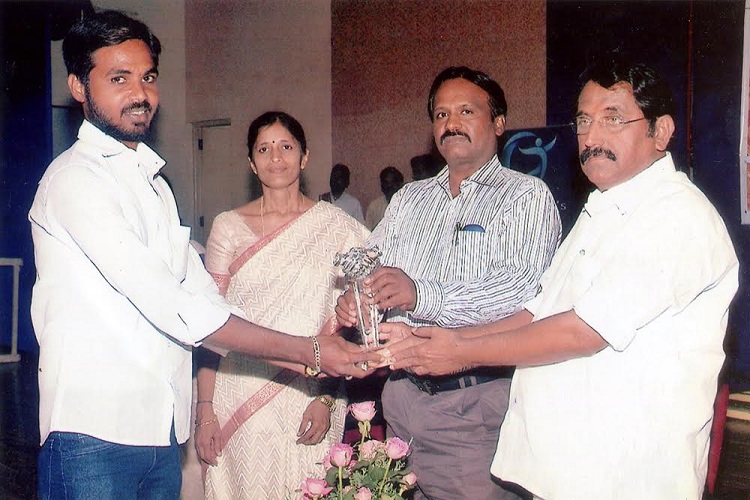
Image: Abbas(Left) getting award for providing blood to Coimbatore government hospital
Have you struggled to get blood in the past? Meet Abbas, popularly known as ‘blood Abbas’ from Coimbatore who has supplied about 1.5 lakh units of blood in different districts in Tamil Nadu in the last 16 years.
Abbas, a flower seller, begins his day selling flowers at the Coimbatore flower market till he gets a call from a patient or an attender of a hospital who tells him about the need for blood.
For Abbas, it has been a struggle to find blood with compatible blood groups but he never gives up. “It is very difficult to find people with negative blood groups but I get it somehow,” he says.
How does he provide blood? “I know people in different districts, I have saved their numbers with their blood groups, so I ask them to go and give their blood to those patients,” he replies.
Earlier Abbas used to visit the patients also but later he stopped. “It upsets me to see that the person I tried to get blood for has died. So now, I prefer to know if they are doing well or not. If I could save their life, I feel very happy,” he says.
Narrating past instances, he recalls, “Once a one-year-old baby required A negative blood, I got the blood but she died. Such things make me sad.”
But life is not always so depressing. Abbas has been providing blood to different hospitals in Coimbatore, Mettupalayam, Madurai and Chennai. His patients include people with cancer, Thalassemia and many more diseases. A child with Thalassemia has been receiving AB positive blood for the last seven years, thanks to Abbas. He says that the families bless him for helping them with their requirement.
Abbas began providing blood in 2000. He had gone to meet his uncle in the hospital when he saw a seven-year-old-child, bleeding from an injury on his stomach. “The boy’s family pleaded to me to give my blood and I did. That day I realized there are so many people who are in need of blood, so why not help them out?” he says.
Asked about the expenses involved in pursuing this noble cause, Abbas says that the only cost is the amount spent in making calls to people. He has been awarded many times for his work. In 2014, he was given the Governor’s Award.
Abbas donates his blood every three months and has done it 25 times now. He’s had to stop recently because of his sinus problem.
How difficult is it to make people donate blood? “It is difficult to get the same people to donate repeatedly, some people become unwell…people who have jaundice cannot donate blood for one year. But I find someone every time there is a need for blood and that’s what makes me happy,” he smiles.
source: http://www.thenewsminute.com / The NEWS Minute / Home> Social Service / by Pheba Mathew / Thursday – August 04th, 2016
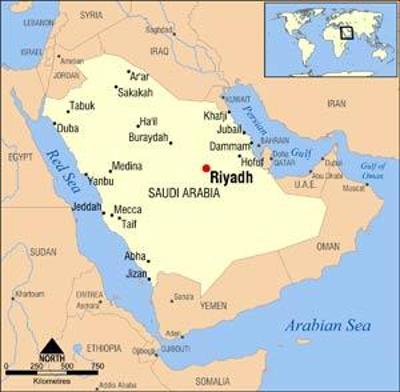
The Union government is leaving no stone unturned to ensure the safe return of Indian expatriates in Saudi Arabia, said Mohammed Irfan Ahmed, member of Central Haj Committee of India..
Irfan said as many 8,000 labourers are stranded in Saudi Arabia. Majority of them are from Kerala and Karnataka. “We are working on their return as well demanding that they are paid their dues,” he said.
source: http://www.timesofindia.indiatimes.com / The Times of India / News Home> City> Mangalore / TNN / August 09th, 2016
Mufti Mohammad Akhtar Raza Khan Qadiri aka Azhari Miyan, chief cleric of the influential Dargah Aala Hazart here, has occupied 25th place in the annual list of 500 ‘most powerful and influential Muslims’ across the world.
The list was prepared by the Jordanian thinktank Royal Islamic Strategic Study Centre (RISSC), affiliated with the Royal Aal al-Bayt Institute for Islamic Thought in Amman.
Azhari, 72, who has around five crore disciples in 55 countries all over the globe, has regularly featured in this list. He was ranked 22nd in 2013, 2014 and 2015. Considered as the ‘grand’ mufti in India, Azhari has written more than 5,000 fatwas, the most famous being one that was passed in 1975 against sterilisation.
“The then Prime Minister Indira Gandhi had made sterilization compulsory in the country. Even Darool Uloom Deoband had passed a fatwa, claiming the process is valid in Islam. But Azhari Miyan stood by his decision, saying the medical process was against sharia,” said Maulana Shahbudeen Razvi, Azhari’s secretary.
Azhari is the great grandson and successor of one of the most distinguished sub-continental Islamic scholars in history, Ahmad Raza Khan. Khan had founded the Barelvi movement in South Asia.
“Azhari Miyan shot into prominence after he refused to offer namaz at the Imam-e-Haram at Mecca in 1986 since a Wahabbi cleric was leading the prayers. Following this, he was arrested by the Saudi Arabian government. But largescale protests throughout the world forced the Saudi Arabian government to release him,” added Razvi.
Azhari has also authored more than 50 books on Islamic theology and thought in Urdu and Arabic. After receiving his basic education at the Manzar-e-Islam madrassa of the Dargah Aala Hazrat and Islamia Inter College, Bareilly, he pursued higher studies at the Al-Azhar University, Egypt. He was honoured with the prestigious ‘Fakhre Azhar’ (pride of Azhar) award by the Al-Azhar University. “It is considered as one the biggest awards in the Islamic world,” said Razvi.
Azhari’s son Maulana Asjad Raza Khan, who is also the Bareilly city Qazi, said, “My father has always given messages of love, peace and prosperity. He says that terrorism has no link with Islam and people should not keep any connection with it.”
Apart from Azhari, another Indian to feature among the top 50 in the list is Maulana Mahmood Madani, leader and executive member of Jamiat Ulema-e-Hind. Madani was ranked 43rd in the list. The RISSC publication highlights people who have influenced and benefitted others within the Muslim community through their practice of Islam.
The top ten personalities in the list this year included names of King Abdullah II ibn Al-Hussein, king of Jordan, professor Sheikh Ahmad Muhammad Al-Tayyeb, the grand sheikh of Al-Azhar University, King Salman bin Abdul-Aziz Al-Saud, king of Saudi Arabia, Grand Ayatollah Sayyid Ali Khamenei, supreme leader of Iran, Amir al-Mu’minin King Mohammed VI, king of Morocco, Sultan Qaboos bin Sa’id Al-Sa’id, sultan of Oman, General Sheikh Mohammed bin Zayed Al-Nahyan, crown prince of Abu Dhabi, President Recep Tayyip Erdogan, president of Turkey, Grand Ayatollah Sayyid Ali Hussein Sistani, marja of the hawza, Iraq and Hajji Muhammad Abdul-Wahhab, Amir of Tablighi Jamaat, Pakistan.
source: http://www.timesofindia.indiatimes.com / The Times of India / News Home> City> Bareilly / by Priyangi Agarwal / TNN / August 08th, 2016
Hashim Ansari, the oldest litigant in the Babri Masjid case, passed away on July 20. / Photo: Special Arrangement
Justice may have eluded him but the amiable and persistent Hashim Ansari was the sanest voice in a deeply divisive debate
In February this year, reports of Hashim Ansari’s demise spread like wildfire on social media and WhatsApp. This was not the first time such a rumour had circulated but there was a particular sense of pessimism this time. At 95, Ansari, the oldest litigant in the Babri Masjid case, was on a pacemaker and had been brought to Lucknow after complaining of chest pain.
I decided to visit him at Lari Cardiology Centre at King George Medical University in Lucknow. At the entrance, an armed policeman was meticulously recording all visits in a book. The intensive care unit in Lucknow’s best-known hospital was overrun by cockroaches. And on the hospital bed lay Ansari, frail and quiet. “Sab theek hai?” he asked in a low yet stable voice when he noticed I was clicking pictures of the room.
“Ji, sab theek (all is well),” I replied, only to realise a few seconds later that I had misunderstood his query. He was not asking about my well-being but his own, anxious about the long line of visitors. The conversation ended on a positive note and everyone in the ward said Ansari would live to be a 100 — something I strongly felt myself. That was the last time I would see him — yet this final meeting did not truly represent the personality that Ansari was. Although he embodied the despair, the long wait and the futility of the Babri Masjid case, he will be best remembered for his tenacity and resolve in trying to secure justice through constitutional means. That is why his voice emerged as the sanest amid all the divisive politics and provocative posturing. One of the last persons to have personal knowledge of the Babri Masjid episode, his inclusive rhetoric and insistence on a peaceful resolution made him the middle ground. With his death, an era ends and a void is created.
Ansari was born to a tailor in Ayodhya. After studying till Class 2, he joined his father in tailoring till the Emergency, when he spent eight months in Bareilly jail. Apart from the usual clothes, Ansari also stitched garments for the gods in nearby temples, a service he offered in return for prasad. After his release from jail, he repaired cycles for a few years.
In 1949, Ansari was among those arrested when idols of Lord Ram were planted inside the 400-year-old mosque. Later, he was sentenced to two years in jail for giving azaan at Babri Masjid. In 1961, when the Sunni Waqf filed a case, he and six others became the main plaintiffs in the ‘Ayodhya title suit’. But why was Ansari picked? For his amiable and persistent nature. In her book, Portraits from Ayodhya, Scharada Dubey writes: “He was perceived as honest, because he didn’t hanker after big money or a high public profile. Instead, he needed only kind words, a small treat in the form of samosas and tea or similar offerings, to keep going faithfully to the courts for every hearing.”
His simplicity and integrity got him wide affection, including that of his opponents. His cordiality with Mahant Paramhans Ramchandra Das, head of Ram Janmabhoomi Nyas in Ayodhya, was hailed as an example of Ayodhya’s composite culture. “They were legal opponents over what is essentially a property dispute… But they were friends too and often travelled by the same car to court where they took on each other,” Dubey writes.
In contrast to the divisive political campaign, those actually involved in the legal battle — Hindus and Muslims — displayed a bonhomie that reflected Awadh’s famed ‘Ganga-Jamuni tehzeeb’. It was only befitting that prominent Hindu seers, including Acharya Satyendra Das, head priest at Ram Janmabhoomi Temple, were the first to visit Ansari’s house after his death.
Ansari lived in a humble dwelling just off the main road near the Tedhi Bazaar Chauraha, not too far from the disputed site. The words “Suraksha guard se poochkar andar jaye – Hashim Ansari” etched in red Devanagari font on his unassuming door were the only marker of his importance. And the four armed policemen camping outside. The district administration gave him protection in 1992, when he was attacked by a mob of Hindutva activists who tore down the mosque. Ansari was saved by his Hindu neighbours – scores of Muslim residents of Ayodhya lived to tell similar tales.
“Don’t you mistake that I am under threat from the common Hindu or any other person. I am under threat from the administration, the political parties,” he had told me in December 2012, on the 20th anniversary of the Babri demolition. Though he was highly spiteful of the VHP and RSS — despising them for playing “politics over Ram”– he harboured bitterness for the Congress, and this feeling aggravated after the demolition of the Babri Masjid. He held former Prime Minister P.V. Narsimha Rao personally responsible for the demolition and the violence in the aftermath. Yet, in his discussions and criticism, he was a voice of peace, least bit provocative or polarizing. He always propagated a peaceful solution to the long-standing dispute and once wondered, “What fighting over a few acres of land given us.” ‘Even if the case is won, the construction of the mosque will not start till the Hindus gave their support willingly,’ was his common refrain.
His quick humour and politically clever remarks made him a favourite with journalists, who played a role in making him the most recognisable face of the controversy. He used to offer his beedis to visiting journalists. On days of his bad temper, he could scold away a reporter for asking an unintelligent question or putting words in his mouth. Each time the Ram Mandir issue surfaced, or when December 6 approached each year, he was by far the most sought-after man in Ayodhya. Long chats with him gave you a hint of his sharp political wisdom and essential nuggets from the Babri episode.
Last December, while explaining to me the RSS-BJP projection of Dalits and OBCs as frontal faces to target Muslims, he made a jibe at a senior OBC BJP leader known for his role in the Hindutva movement. “Vinay Katiyar kehta hai Ram Mandir banaenge, lekin usse poocho kya woh pujari ban payega kya?” he said with scorn.
Ansari’s integrity and selfless nature came at a cost. He died a pauper, leaving behind a daughter and a son, who runs a tyre repair shop. Those close to him say his family members often criticised him for not making the most of his fame, just like some others associated with the case had. The governments too, did not give him his due. In 2014, when he was seriously ill and referred to Lucknow, his operation could not take place on time as his family did not have enough money.
For most of his life, Ansari hoped for a legal end to the dispute. In his later days, however, he gave in to disenchantment and the word insaaf or justice would get an irritated response from him. He vowed to dedicate his remaining time for maintaining communal harmony, and economic uplift of his community through a demand for reservations. “Justice, if any, should have come a long time ago. By the time the Supreme Court decides anything, I may not live to see it. Hum nahi ladenge yeh ladai, babri masjid ki ladai. Yeh film chalti rahegi.” (The film will go on.)
source: http://www.thehindu.com / The Hindu / Home> Features> Magazine / by Omar Rashid / July 30th, 2016
At a time when the tribe of Telugu litterateurs, especially from Telangana, with command over Urdu was becoming endangered, arrived a man from a village in West Godavari, who spent about two decades learning Urdu.
P V Suryanarayana Murthy a journalist by profession, has over the years, not only written Urdu shayeri (poetry) but with Mahak Hyderabadi as his takhallus (penname), also penned poems and ghazals. That’s not all.
He translated afsane (short stories) by Jeelani Banu and got them published in Telugu newspapers and magazines. When he counted them last it stood at 21; enough for a publisher to come forward with an anthology. The name of the collection, since released, is titled Guppita Jaare Isukaor Sookhi Raith (Dry Sand).
“I came from Coastal Andhra and settled down in Hyderabad for mainly two reasons-the city was warm towards people from all parts of the country and two, the Urdu language. The language struck me as a goldmine. Any researcher who has access to this language would get to know a rare portrait of India. The language has given me a better understanding of my country… I chose Jeelani Banu for translation because I could relate to most of her stories… They carry a message without being preachy or propagandist. They have the local flavour along with the halo of universality,” says Murthy.
Jeelani Banu is arguably the most recognised writers in the Urdu World. At 82 she is frail and facing age related issues, but still likes to oblige admirers by sitting down with them or attending meetings at their requests. Amazingly, she does not carry an iota of that intimidating celebrity aura.
Born in UP’s Badaun, in 1934, Jeelani Banu arrived in Hyderabad with her illustrious father Hairat Badauni at a time when the city was bubbling with a whole lot of activities-literary, social, religious and political. Perhaps the feudal life with all its glamour and flaws was at its peak. She got engrossed in observing that life and by 1954 she had her first afsana, Mom ki Mariyam (Mariyam of wax), published. The story created a stir as it dealt with the pathetic living conditions of people in a village near Hyderabad.
The episode associated with the publication of that afsana goes like this. One day, revolutionary poet Maqdoom Mohiuddin knocked on the door of his friend Hairat Badauni and said he would like to see her daughter. That was also the time when Jeelani Banu observed pardah. Hairat Badauni called her out. She apprehended that Maqdoom would chide her for writing that afsana because it was not soft on Leftists. Instead, Maqdoom gave her his blessings and said she should write what her heart dictates. Jeelani Banu, since then, never bogged down in the war between Progressive and Modernist writings.
“I had kept my eyes fixed on people. The happiness and trauma that followed the historic events of 1947 and 1948 became my area of interest. I am witness to the collapse of the feudal system and the rise of democracy. Those times and the changes reflect in my writings,” she has said.
Amena Tahseen, Director Centre for Women Studies at Maulana Azad National Urdu University, describes Jeelani Banu as a chronicler of time who has to her credit 22 books that include collections of her short stories and two novels. Shyam Benegal’s 2009 national award winning film ‘Well Done Abba’ was based on her afsana, Narsaiah ki Baudi (Narsaiah’s well).
Noted writer and Shagufta Editor Mustafa Kamal believes that Jeelani Banu is essentially a Progressive Writer who flowed into Modernism without losing out on the essential elements of story-telling. Her stories carry the flavour of Telangana. The way she presented women issues make her a feminist. But she does not flaunt her ‘feminism.’
Jeelani Banu’s afsane and novels have been translated in all major Indian languages and English. She was even conferred with the Padma Shri in 2001.
Tahseen compares Jeelani Banu with Mahasweta Devi, the Bengali writer who passed away on last week. “While Devi focused on the plight of tribals, Banu spoke about the under-privileged. In her works, woman comes across alive and ready to face the challenges. Like Devi, Banu too is an activist. There are several organisations with which she is either associated or extends support to,” she says.
Not surprisingly, Murthy feels privileged to have translated her afsane into Telugu. “In spite of so many awards, I think her works have not been properly appreciated by people among whom she lives. Hyderabad should be proud to have a writer like her,” he says.
source: http://www.timesofindia.indiatimes.com / The Times of India / News Home> City> Hyderabad / TNN / July 31st, 2016
The way the anniversary of A.P.J. Abdul Kalam’s death was observed in the country was revealing. It was naam-ke-wastay at establishmentarian levels. Media coverage was mostly of the beaten-path style; no editorials. No public meetings either. The Government satisfied itself with tokenisms — a formal statement by the Prime Minister that Kalam was irreplaceable, and the unveiling of a long-delayed statue at Rameswaram where the burial ground had remained neglected to the chagrin of the family and the locals. A big government advertisement announcing the foundation-laying ceremony of the Kalam National Memorial had the Prime Minister’s picture towering above all else.
The lukewarm attitude at official levels was in sharp contrast to the spontaneous enthusiasm at the level of ordinary people. It was a touching reiteration of Kalam’s title as the ‘People’s President’. That students were in the forefront of these expressions of love and admiration would have pleased the eternal teacher in Kalam. In a Chennai School, children created a large floral picture of their hero, then stood around his head forming a halo of tribute. In a school in Malabar children spent time reading Kalam’s words, then went out to tend plants and trees which he had told them, were precious. Students in Coimbatore planted a lakh of saplings. Another group announced a competition for school students to display their inventions. A sand artist livened up a beach in Puri with spectacular portraits of the Bharat Ratna. At the Indian Institute of Management in Shillong, where Kalam died in the middle of a speech, students planted trees in his memory and announced a series of lectures on how to make the world a better place.
Kalam inspired the youth of India in ways no other leader did. He never had the glamour of a Jawaharlal Nehru or the oratorical gifts of a Vajpayee. His English was heavily accented. But those very weaknesses turned out to be his strengths. His genuineness shone through every word and gesture of his. His faith in young people energised the young and the old alike. The directness of his simple words hit home. Who would not be stirred to high endeavour when Kalam, his eyes sparking, tells his listeners: “You have to dream before your dreams come true”. A 2011 movie about a poor Rajasthani boy who struggled to study was titled, I am Kalam.
With one or two exceptions, the Presidents of India were great souls who brought honour to the country. Some like S. Radhakrishnan and Zakir Hussain, were Internationally respected scholars. Two were remarkable for their ordinariness, yet they were the ones who conquered the hearts of the people — K.R. Narayanan and Abdul Kalam. Interestingly, those were also the Presidents the political system got rid of as fast as it could.
Narayanan was so punctilious that he said and did things that went against the positions held by the Government in power. This and his view that there was government-level conspiracy behind the Gujarat riots of 2002 turned the BJP-led NDA Government against him. Narayanan retired after his first term. Kalam’s adherence to the rule book made the Sonia Gandhi establishment turn against him. So he, too, became a one-term President. But both men carved for themselves positions in public imagination and in the history books that others have not matched. Narayanan, for example, was the first President who insisted on exercising his vote as a citizen. Kalam wrote more than a dozen inspirational books, 22 poems and four songs. In his 70s, he was nominated twice for the MTV youth icon.
In the Indian context, perhaps Kalam’s most significant achievement was that he exposed the meaninglessness of religious identifications. He bore a 24-carat Muslim name and did his namaz. But he was also a vegetarian, read the Bhagvad Gita, played the rudra veena and listened to Karnatak devotional songs every day. He was an Indian in the true sense of that term. And, with all his traditionalism, a very modernistic rock star Indian; how else could we explain that lovingly tended pop-culture hairstyle?
It was no less an achievement that in the political jungle of Delhi, sitting in the citadel of Rashtrapathi Bhavan, he remained defiantly a-political. In fact, he was dreaded by the politicians for they could not contain him within their political lines. He lived true to the message he conveyed to his young listeners: “Look at the sky. We are not alone. The whole universe is friendly to us.”
This was a man who belonged to the stars.
tjsoffice@epmltd.com / www.tjsgeorge.info
source: http://www.starofmysore.com / Star of Mysore / Home> Feature Articles / by T.J.S. George / August 02nd, 2016