Category Archives: Community Involvement / Social Issues

Kashmiri woman entrepreneur wins laurels

JAMMU &  KASHMIR :

Srinagar :

A progressive woman entrepreneur of the valley has won laurels for the state by being selected for two different honors both at national and global level. Doctor turned entrepreneur, Gazalla Amin has been selected for Vital Voices Lead Fellowship programme and has been declared winner for the ‘India Today Woman Entrepreneur of the year 2013’ award.

Vital Voices Lead Fellowship is a global initiative that aims to identify, invest and bring visibility to extraordinary women around the world by unleashing their leadership potential to transform lives and accelerate peace and prosperity in their communities. The fellowship is a three year programme wherein only 100 women from across the world are selected after every 3 years.

“The VV (Vital Voices) lead fellowship is a wonderful thing and I am grateful on being selected as a part of this wonderful experience. It’s a huge honour and means a lot to me,” Gazalla Amin told this reporter.

Gazalla Amin chairperson, Fasiam Agro Farms is the first woman entrepreneur to be selected for the prestigious Vital Voices Lead Fellowship programme from Kashmir. “It means a lot to me as interacting with women from across the globe will help me expand my business understanding. It can help me channelizing my dreams, and understanding how to make it better. And most importantly it will help me receive education about realizing goals and I may contribute to women’s issues in my own region,” said Amin.

In addition to this, Gazalla Amin has also won the ‘India Today Woman Entrepreneur of the Year’ award, the grand ceremony of which was held on April 19, in New Delhi. The India Today Women Entrepreneur of the Year Award is a prestigious award which is given for outstanding achievement as an entrepreneur. The award is given on a nationwide level by the India Today Group. Gazalla Amin who was informed through email and a phone call about her feat was declared winner among the three shortlisted candidates.

“It gives me immense pleasure to inform you that a select Jury has nominated you as the winner of the award in “India Today Woman Entrepreneur of the year” category. Three names were short-listed in this category from which you were selected unanimously,” reads the email sent to Amin by India Today group.

Gazalla Amin was invited for the award ceremony ‘India Today Woman Summit and Awards 2013’ which was held on April 19 in the Indian capital. The summit aims to provide women executives in India with the vision, strategies and skills needed to succeed in today’s world, both in their homes and as professionals in the workplace.

“We all work hard to achieve something and it’s absolutely wonderful when you get a chance to learn more. And the recognition one gets for their efforts encourages others also to try and do better,” added Amin.

It was in 2004 when Gazalla Amin swapped from medicine to entrepreneurship and decided to grow Lavender flowers and make a business out of it. Since then there has been no looking back as she has emerged as one of the prominent faces of women empowerment.

source: http://www.worldpulse.com / WorldPulse.com / Home> Public Story / by Khurram Rasool / June 08th, 2013

Sher Ali Khan: A Forgotten Revolutionary


Andaman & Nicobar Islands  :

Andaman Islands:

Sher Ali Khan, a revolutionary deported from the Northern Frontier Province to Andamans by the British, assassinated Lord Mayo, the Viceroy of India on 8th February, 1872. It has been a long wait for this patriot to find a place in history.

February 8, 2006 was just another day for the Islanders. Our sense of history seems to be dead. The apparent silence of the administration as well as media seems more innocent negligence than any shrewd game plan. It was on the night of 8th February, 1872, that Sher Ali Khan, a revolutionary took the life of Richard Bourke, 6th Earl of Mayo, the Viceroy of India.

During the British Rule, occasionally, the media would highlight the sufferings of the prisoners of these Islands and report about the torture methods of the British. As a result of which the government would be pressurised to be lenient to them.

In 1869, Lord Mayo, the Viceroy of India devoted special attention to the issue of the plight of the prisoners. In this regard, he gave some benefits to the prisoners in 1871 which increased his popularity by two-folds. It was his wish that he personally go to the Andaman Islands to see the condition of the prisoners with his own eyes. Hence according to the programme, he visited Andamans in the early morning of the 8th of February, 1872. He was also accompanied by Lady Mayo and other high ranking officials. Since this was the first ever visit of a Viceroy to the Islands, special security measures had been taken.

The Viceroy’s arrival was welcomed with 21 cannon fires and the officers lined up to meet him. He spent his entire day touring the workshops, barracks, and factories of the prisoners where they dwelled and worked. At night fall, he insisted visiting Mount Harriet. The place was quite high and had been renovated as a tourist resort for the special guests. There, he marvelled at the beauty of the Island and witnessed sunset from atop Mount Harriett. So much was he immersed in the surroundings, that he was not aware that darkness had set in. It was then that he decided to go back. On the way, he had to pass through the small bridge called ‘Hope Town Bridge’ in order to board a Launch that was ready to transport him back to the Royal Navy Ship where he would be spending his night. Two men with torches were walking ahead of him to light up the path and his private secretaries and bodyguards were on his either side. An armed police guard was following them as well. But these were traditional methods and the Viceroy and his secretaries were walking with their own pace enjoying their trip.

As soon as they boarded the small ship, there was some noise. When the private secretary looked back, he saw that a man was stabbing the Viceroy in his back. The security personnel reacted immediately and snatched the knife from the attacker. The private secretary succeeded in saving the life of the attacker who was a prisoner; otherwise the security personnel were ready to kill him. In all this mayhem, the torch lights also died out creating an atmosphere of fear. When the torches were lit, they saw that the Viceroy had fallen down the tier after being stabbed. For two to three minutes, the Viceroy tried to keep his balance, but then his feet started to shake and he fell. He tried to get back up on his feet again and managed to tell somebody, “Hold my Head”. These were his last words after which he died.

This assassination attempt was made by a prisoner, ‘Sher Ali Khan’. He belonged to Tirah Valley in Khyber Agency. By nature, Sher Ali was a kind man, but a family feud had brought him to this situation. Sher Ali was a man who gave great respect to everybody. The English officers were served well by him. His overall nature was well cultured even after receiving the death penalty. His death penalty was switched to deportation to Kalapani, when he made an appeal. In 1869, he reached the Andaman Islands to serve his sentence. By this time, he had already made up his mind to kill a high ranking English Officer for revenge.

The little amount of money that he would earn while serving here would always be given away to other poor prisoners as charity. Moreover, every second or third month, he would provide some food for the orphaned prisoners as well. The officers did not strictly monitor his activities because of his charitable nature. It was not long that he was appointed as a barber for the labourers in the Islands. Lord Mayo’s murder sent shockwaves throughout the British Empire. Sher Ali Khan told the courts that he had waited for almost all day near the small ship which the Viceroy would board. After killing the Viceroy, he was asked by the courts about who had hired him to do this job. He would simply reply that, “I killed him by the Order of Allah!”

Sher Ali was again tried for murder and was given the death penalty once again. On the 11th of March 1873, when he was brought to the gallows, there was a look of satisfaction in his eyes. He kissed the rope from which he would be hanged and exclaimed, “When I made this intention (of killing the viceroy), I had already envisioned myself over here”. He addressed the gathering who had come to watch the penalty being enforced, “Brothers, I killed your enemy. You be witness that I am a Muslim.” With this, he recited the Kalma Shahadah. Twice he was able to complete it. The third time, he was not able to do so because of suffocation.

(The writer is based in the Andamans and can be reached at zubairpbl@gmail.com)

source: http://www.islamicvoice.com / Islamic Voice / by Zubair Ahmed / March 2006

Carry Me Home: A look at the Muslim palanquin-bearers at the shrine of Vaishno Devi in Katra valley

JAMMU & KASHMIR :

The ongoing curfew in Kashmir has seen a sharp drop in tourists.

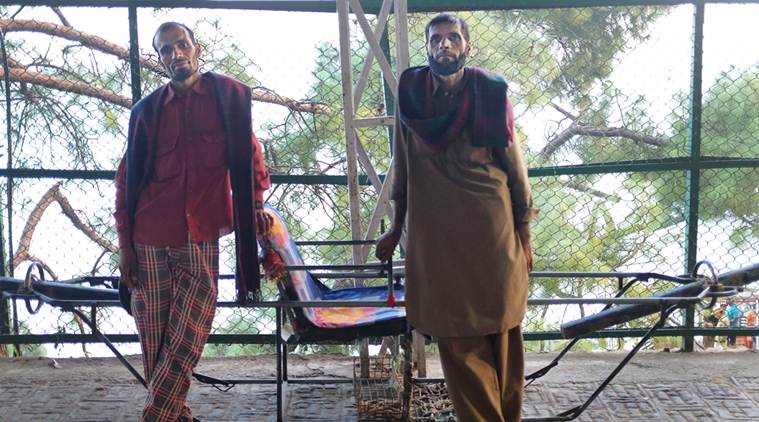
Mohammad Qasim (right), 55, and Khushi Mohammad, 35, have been working as palanquin bearers at Vaishno Devi for decades. They confirm that they have never faced any religious biasness here.

Located at a staggering altitude of 5,200 ft above sea level in the Katra valley in Jammu and Kashmir , is the lofty abode of goddess Vaishno Devi. The 13.5 km stretch to the main bhawan (temple housing the holy shrine) is accessible via various modes of transportation, including ponies, electric vehicles, helicopters and, most popularly, its paalkhis (palanquins), operated by two or four bearers a time.

There are over 5,000 palanquin bearers in the area, out of which around 3,500 are Muslims, often seen chanting “jai mata di” on top of their voices during their steep trek to-and-fro the shrine. “I’ve worked all my life here and have never faced any problem,” says 55-year-old Mohammad Qasim, who has been a palanquin-bearer for the last 32 years. “So what if I’m a Muslim, the goddess protects everybody. I get my food from here, so, this place is my home,” he adds.

The famous Katra market wears a grim, desolate look these days, given the conflict in Kashmir that has brought to halt all forms of functionality. The ongoing curfew in Kashmir has seen a sharp drop in tourists. The shopkeepers and locals depend on the pilgrimage, which sees outsiders in throngs, for their daily livelihood. The last two months have been severe, say some of the locals, pointing at the empty roads. But the palanquin-bearers appear strikingly unperturbed.

Khushi Mohammad, 35, smiles as he recalls the last 20 years of his service at the shrine, facing neither any troubles from his own community for visiting a Hindu pilgrimage, nor from the devotees for being a Muslim at the shrine. “We trek even during our Ramadan fast. People are so nice to us, they wait while we read the namaz during our working hours,” he says.

source: http://www.indianexpress.com / The Indian Express / Home> Lifestyle> Life-Style / by Cheena Kapoor / September 18th, 2016

President appoints Dr Nasim Zaidi as chief election commissioner

UTTAR PRADESH / NEW DELHI :

Zaidi will assume the charge of office of the chief election commissioner with effect from April 19

New Delhi :

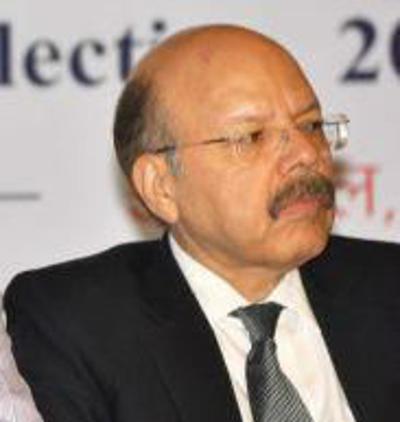
President Pranab Mukherjee has appointed the senior-most Election Commissioner, Dr Nasim Zaidi, as the next Chief Election Commissioner (CEC).

Zaidi will assume the charge of office of the chief election commissioner with effect from April 19, after the incumbent Harishankar Brahma will retire on April 18.

The law ministry had initiated the file to appoint the next CEC as present incumbent HS Brahma retires on April 19.

After Zaidi’s appointment, the government will set in motion the process to appoint two election commissioners to fill vacancies in the three-member body. “But as of now, we are appointing a new CEC. A decision on ECs will come later,” a senior government functionary said.

(With inputs from PTI)

source:  http://www.timesofindia.indiatimes.com / The Times of India / News Home> India / TNN / April 09th, 2015

Bantwal: Author Bolwar Mohammed Kunhi Bags Vishukumar Award

Bantwal (Mangalore), KARNATAKA :

Bantwal:

Noted author and story-writer Bolwar Mohammed Kunhi has been selected to receive the annual Vishukumar award instituted by Yuva Vahini Kendra Samiti.

Kunhi holds the credit of introducing the lesser-known facets of Muslim way of life to the field of Kannada prose. He has written over 250 short stories in Kannada. Atta itta sutta mutta, DevarugaLa rajyadalli, Anka, Akashakke neeli paradey, Ondu tunDu goDe, Ruqia and RoTTi Patumma are some of his best-remembered works.

Author Upadhya will confer the award on him at a function to be held in the Birwa auditorium at Melkar next week. The award comprises Rs 10,000 in cash, a memento and a citation.

source: http://www.mangalorean.com / Mangalorean / Home> Agency News> Regional / by Jyothi, Team Mangalore / August 03rd, 2015

Teen Muslim girl gets bravery award for saving Hindu classmate from kidnappers

Agra, UTTAR PRADESH :

naziampos27sept2016

Nazia  said her actions were spontaneous and she didn’t hesitate even for a second to think about her won safety.

Agra :

Amidst the communally surcharged atmosphere in Agra  following, the killing of VHP leader Arun Mahor, this is a story that both communities need to take lessons from and then celebrate it.

15-year-old Nazia was on Tuesday awarded the Rani Laxmibai bravery award by chief minister, Akhilesh Yadav, for saving a 6-year-old Hindu girl from kidnappers in August last.

It was the afternoon on August 7, when Nazia, a student of Saghir Fatima Mohammadia Girls Inter College, was returning home when she heard cries for help from a young girl, who was being forcibly pulled on a motorcycle by two youths.

Unmindful of her own safety, Nazia rushed to the girl’s help and held her hand and managed to pull her away from the kidnappers, who then fled the spot.

It was only after she had rescued the girl, Dimpy, Nazia learnt that she was her junior from school. Today, when tension prevails between the two communities, Dimpy’s parents treat Nazia as their own daughter and are indebted to her for saving their child from the clutches of the kidnappers.

Talking to TOI on phone after receiving her award, Nazia said her actions were spontaneous and she didn’t hesitate even for a second to think about her won safety. “It was about 12.30 PM when I heard Dimpy’s cries for help. I just rushed to her and caught hold of her hand”, she said.

Recalling the moment, Nazia said, “It was like a tug of war for 2 minutes. While they tried pulling her on the motorcycle, I kept pulling her back”, she said adding that the suspects finally gave up and fled.

Nazia said since the incident had happened near Sadarbhatti area, which is just 100 meters away from their school, she immediately rushed there with Dimpy and informed the Principal. “Dimpy was crying. After the school authorities informed the police, I took her home to her parents”, she said adding that she is now treated as a daughter in Dimpy’s home.

When contacted, Dimpy said she was very happy that “didi” had been awarded for her bravery. “Agar didi uss din na hoti to woh log mujhe le jaate (they would have taken me away that day if ‘didi’ hadn’t been there)”, she said.

Describing the award ceremony as a moment of “pride” of her, Nazia said she would do the same if something like this ever happens again. The award also carries a cheque of Rs one lakh.

Haji Jamiluddin Qureshi, Manager of Saghir Fatima Mohammadia Girls Inter College, said, “there is no religious discrimination in our school. Even the students do not discriminate between themselves because of their religious beliefs”.

He said, “in our school we have Muslim girls learning Sanskrit and Hindus girls taking lessons in Urdu”.

http://timesofindia.indiatimes.com/city/agra/Teen-Muslim-girl-gets-bravery-award-for-saving-Hindu-classmate-from-kidnappers/articleshow/51314889.cms

source: http://www.kractivist.org / Kractivism / Home / by Anuja Jaiswal , TNN / posted by Kamyani / March 10th, 2016

Gulf NRIs join hands to revive Kerala’s football glory

KERALA :

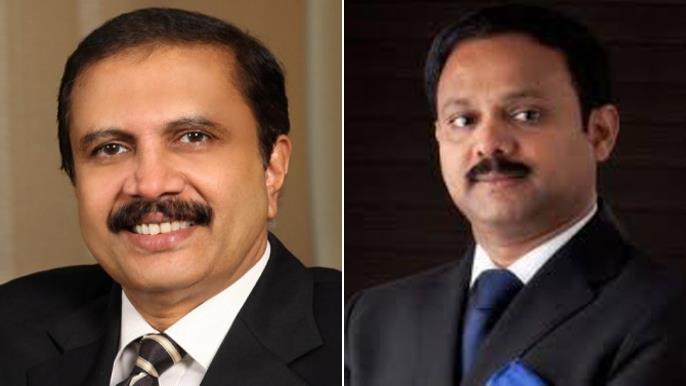
Dr Azad Moopen ( left) and Dr. Siddeek Ahmed (right)

Two prominent non-resident Indian (NRI) businessmen from the Gulf, one from the UAE and the other from Saudi Arabia, have joined hands to revive the legendary Sait Nagjee Football Tournament in Kozhikode in Kerala after over two decades with the aim to “restore the old glory” of the sport in the state.

Two prominent non-resident Indian (NRI) businessmen from the Gulf, one from the UAE and the other from Saudi Arabia, have joined hands to revive the legendary Sait Nagjee Football Tournament in Kozhikode in Kerala after over two decades with the aim to “restore the old glory” of the sport in the state.

Dr Azad Moopen of the Aster DM Healthcare group in Dubai and Dr. Siddeek Ahmed, who heads the Eram Group in Saudi Arabia, have also roped in Brazilian football star Ronaldinho as its goodwill ambassador and are getting top European and Latin American teams to play in India.  The announcement was made recently in Dubai in the presence of Ronaldinho who arrived in Kozhikode Sunday to a rousing welcome from fans, including hundreds of escort bikers from Kochi airport to Kozhikode.

The Aster MIMS Nagjee International Club Football promoted by Mondial Sports LLP will start on February 5 at the Kozhikode Corporation Stadium.

For the first time in India, seven international club football teams from South America and Europe will play in the tournament whose final is on February 21.The UK-based charitable trust, Football for Peace Global (FfP), is the charity partner, undertaking a legacy programme for school children in Kozhikode, supported by the United Nations and the Duke of Cambridge.

The participating teams include Argentina (U-23), Watford F C (U-23), England, Levante UD (U-23) Spain, Club Atletico Paranaense (U-23) Brazil, TSV 1860 München (U-23) Germany, Rapid Bucharest, Romania, Shamrock Rovers F C, Ireland and I-League (U-23), India.

“Football has the power to unite people. It has given me an opportunity and taught me universal values of friendship and unity,” Ronaldinho said in a statement.

“I am supporting the work carried by Football for Peace Global and proud today to be the guest of honour of Nagjee International Club Football Tournament 2016 and becoming a Footballer for Peace.”

Acclaimed footballer Kashif Siddiqi, a co-founder of FfP, will also support the event actively.

“It is a great privilege for me to partner with my football friend Ronaldinho to achieve our visions for peace and undertake an FfP legacy programme in Kerala,” Siddiqui said.

The organisers say their primary goal is to “restore the old glory, revive the sport in its pure form (unlike the franchise model) and last, but not the least, continue its legacy of promoting peace” in a new form “which will be seen for the first time ever in the nation.”

Dr Moopen is the chairman and managing director of Aster DM Healthcare, a healthcare conglomerate in the Middle East and India. Headquartered in Dubai, the Aster DM network now encompasses more than 13,000 employees, 1500+ doctors with clinics and diagnostic centres.  In 2010 and 2011, Dr Moopen was awarded the Pravasi Bharatiya Samman and Padma Shri by the Indian government respectively.

Dr. Siddeek Ahmed is the chairman and managing director of Eram Group, one of the region’s most diverse conglomerates, with over 40 plus entities spread across 12 countries, which is a powerh0use in industrial contracting, project management solutions, automotive, healthcare, travel, IT, manufacturing, power electronics, trading, floor covering and other commercial ventures.

The news naturally got prominent attention in the Gulf media with newspapers like the Gulf Times carrying a big report on it.  An estimated seven million Indians live in the Gulf region and send back over $ 35bn in annual remittances.

The Indian Diaspora ( feedback: info@theindiandiaspora.com)

source: http://www.theindiandiaspora.com / The Indian Diaspora / Home> In the News> Primary News / January 25th, 2016

My memorabilia of muslims in Chitradurga

Chitradurga, KARNATAKA :
DrNarasimhanMPOs19aug2016

by Dr. C.G. Narasimhan, Senior Consultant Surgeon

The Eid Milan get-together held recently in Mysuru and the talk given by the Imam-e-Haram of Makkah, Saleh bin Mohammad bi Ibrahim Aal Talib, during his visit to Mysuru some time back has prompted me to write about my association with Muslims during my younger days I spent in Chitradurga.

In the year 1890, Sir K. Seshadri Iyer, the then Dewan of Mysore, started Insurance Scheme under the name Mysore Government Insurance Department (MGID). It is now called KGID and has its building in Bengaluru. It took some time for the people of Mysore State to accept the new concept of insuring their lives then. Agents were appointed all over the State and necessary propaganda was carried out. My grandfather Singa Iyengar was one of the pioneers in spreading the message of taking life insurance policies.

After his retirement as a bench clerk in the Law Courts some time in 1915, he took up the agency of MGID in Chitaldrug (as it was called then). In an effort to popularise the new scheme he got his black umbrella embroidered with slogans ‘Insure Your Life today’ to impress people and go around whirling it. I am told that people started calling him ‘Gileet Singa Iyengar’ for his knack of convincing them to take policies. It was at this time he came in contact with the general public of the town, particularly the Muslims.

Several of his friends of this community used to visit his house on Dharmashala road in Chitradurga. One such person was Rahman Sab whom I as a boy of 6 or 7 years remember with the traditional beard and pajamas visiting our house for a cup of coffee every morning even after my grandfather’s death.

My father Garudachar stepped into his father’s shoes in every sense of the term. He also made a number of Muslim friends, went a step further in talking to them in their dialect Urdu. I remember him calling the seniors as ‘Hazarat’ and others as Chacha. There was one Jaleel sab who was working as an attender in the Central Library of the town. He was calling my father as ‘Bhateeja.’ One Abdul Gani, a very popular Drill and Scout teacher in the Boys High School, was another good friend of my father.

Muslims in Chitradurga those days in 1940s and 50s were mainly concentrated in three localities, Assar Mohalla, Khazi Mohalla and Baaharpet (Horapete in Kannada). The ever active senior Congress leader Jaffer Sharif from the Assar Mohalla area started his political career by winning his election to the Town Municipal Council of Chitradurga as a 24-year-old youth in the early 50s against a senior Gandhian H.C. Narayana Iyengar. Another Muslim luminary C.A.K. Junaidi, who was an Advocate and a popular person became the President of the Municipal Council.

There was one boys Urdu Middle School in the town of Chitradurga which had a total population of 24,000 or so then. The Head Master was Abdul Rahman, a tall gentleman. All his children were all Ur Rahmans like Afzal, Mohamed and Fazl, the first and second were good Basket Ball players. All the Muslim students joining High School after LS exam were necessarily admitted to the English Medium Class along with some of us. So most of my classmates were Muslim boys. To name a few they are Abdul Samad, who retired as the Superintending Engineer of KEB, Wazeer Ahmed, who became a Geologist and joined GSI, Majid Hussain, who later became Special Assistant to Divisional Commissioner, Mysore, Rahmath Ulla, Abdul Khuddus, Md Umar, Ata ulla, Md Shafi and Mubeen. Some of them used to wear the classical red tubular cap with black thread tassels, known commonly as Turkey cap or Fez, Tarboosh.

After we entered the Intermediate College where we had co-education I do remember the names of some contemporary girls, Shakirunnisa, Sakinabi, Zainabi, Mehrunnisa and Nazbunnisa who was the sister of Junaidi mentioned above. It may be of interest to note that all of them were coming in sarees like the other girls.

My association with the Muslim boys was so much that I used to talk to them only in Urdu and my friend Samad taught me how to read and write Urdu which I have not forgotten even today. I can easily write my name in Urdu. This has gone a long way in winning the confidence of my Muslim patients in Mysuru.

There were two Mosques for a population of about one thousand Muslims in Chitradurga. One in Assar Mohalla and the other in Horapete area. The former was called Jamia Masjid known for its beautiful architecture supposed to have been built by Tipu Sultan. The backdrop of the hill added to its beauty. There were Muslim dwellings only on the left side of the mosque; other sides were occupied by Hindus. Right in front of the Mosque there was Uttaradi Matadakeri occupied by Brahmins. One Bodarayachar used to arrange Harikatha discourses during Rama Navami annually across the road in front of the Mosque which indicates the absolute harmony that existed between the communities. Allowing general public to draw water from a well in the compound of the Mosque during water scarcity was another act of peaceful co-existence.

As a youngster I used to go into the premises of the Mosque and emerge out through the hind wicket gate which opened to Chickpete. My house being within a stone’s throw from the Mosque, we used to hear the morning prayer Azaan which was rendered without mike. It was like a soothing alarm to wake up particularly during my college days. The mellifluence of such morning prayers nowadays are marred by the high volume speakers and the din in the atmosphere. ‘Huli Vesha,’ the dancing ritual during Moharrum was the other attraction to us those days. A person getting painted with yellow and black stripes and jumping on the road in the garb of a tiger was a regular event in the town. One Gafoor Sab was a master in this art which is vanishing these days. Our house was a destination for him to entertain for a while and drink a glass full of hot milk and go.

Finally, I cannot forget our maamool Jutka saab Ameer shouting ‘Bajoo, Bajoo’ to clear the traffic while coming from Railway Station which was on the outskirts on Davangere road.

[e-mail: cgnshanthi@gmail.com]

Note: I want to comment (after all, ‘comment is free’ is SOM’s motto) on three points made by the writer Dr. C.G. Narasimhan (CGN). First about the Intermediate college with co-education where Muslim girls used to come “in sarees like the other girls.” The same is my experience when I studied in Intermediate college and First Grade College with co-education at Madikeri, Kodagu. Muslim girls used to come in sarees. Sadly, because of religious extremism seen these days of vote-bank politics in democracies we have a different, divisive dress-choice in our schools and colleges where some students show off their religions by dressing differently and thereby distancing themselves from the mainstream. In America, the term ‘neutral dress’ means the clothes students wear normally without any distinct religious identification.

Second point is about Dr. CGN learning Urdu and how it helped him in his profession in later days. Like smile, speech as a common language too brings people together and makes them intimate, builds confidence. Let us remember that Mohammed Ali Jinnah’s Muslim Pakistan was split asunder because the West Pakistan insisted the Bengali-speaking East Pakistan to speak Urdu and accept it as official language. A case where a common religion could not hold the country together and got itself divided on the basis of different languages — Bangladesh was born. If India was divided on the basis of religion, Pakistan was divided on the basis of language. These priests and politicians thus fragmented a loving, innocent humanity.

Third point is about Azaan, call to prayer. Those days there was no technology to use high volume speakers in my village town in Kodagu. But these days loud speakers blare, in some cases wantonly and for too long than what is considered normal. —KBG

source: http://www.starofmysore.com / Star of Mysore / Home> General News / August 19th, 2016
It’s not a dog’s world, finds activist

Mangaluru, KARNATAKA :

Animal lover Tauseef authors a book which chronicles the story of stray dogs

About six years ago, when 29-year-old Tauseef Ahmed started volunteering for the Animal Care Trust, he was advised against it. Reason: He is a Muslim. Tauseef, an MBA graduate, currently runs a real estate agency based in Mangaluru. He hails from Kudremukh in Chikkamgaluru district and grew up in a family that loves animals.

Speaking to Bangalore Mirror, he said, “At any given time, you can find at least 6-7 dogs sleeping near the garage of our home. My parents sensitised us to show compassion towards animals. Once in Mangaluru, people started questioning me in the name of religion. I felt religion is being misinterpreted. I consulted religious heads, who told me that the scientific reason could be to prevent the spread of infection. Whenever I share a post on social media about a rescue, while a majority of people appreciate my work, there are a few who tell me that I am not doing the right thing. For me, there is nothing more important than saving a life. When people ask why I rescue animals, I tell them, I always wanted to be a super hero and this is the only way I can feel being one. I am living my dream by being involved in rescues,” he said.

Tauseef is working towards bringing about a change in society. For the past six years, he has been a volunteer and rescue in-charge at Animal Care Trust (ACT). Through ACT’s Human Education Programme, they visit schools. “One day, a Muslim girl told me that in case she touched a dog, she would have to take a bath seven times. I tell children that if it is God who has created the universe, he would not create animals if they were not meant to be touched. I have noticed that this attitude is more in Mangaluru. I will try and convince children that there is nothing wrong in touching dogs.”

The number of volunteers in Mangaluru is very low. According to Tauseef, for a population of about six lakh, we have just 50-60 volunteers. “There are many people who express love towards animals, but we are not able to get sufficient volunteers. Our dream is to launch the neighbourhood dog community and we are working towards it,” he said.

“The other campaign that ACT has launched is’Go Desi”. Like cars, when it comes to dogs, people prefer imported ones such as Siberian Huskies. We have observed that the there is a drop in demand in Labradors and German Shepherds. People often forget that these breeds come from puppy mills. Some people take care of them until they start feeling that the dog is a burden. ACT has been extensively promoting “Go Desi” in an effort to promote adoption of local breeds. At the end of the day, having a desi dog means fewer visits to the vet.”

Straying around you

Tauseef has authored a book ‘Straying Around You’ which is a life story of a stray dog. This is an attempt to explain the hardships faced by these beautiful souls. The 100-page book and out of 500 copies released last month, about 350 copies have already been sold. A dog narrates the story and most of the narration is based on real-life experiences, he said.

source: http://www.bangaloremirror.com / Bangalore Mirror / Home> News> State / by Deepthi Sanjiv, Bangalore Mirror Bureau / August 18th, 2016

Encyclopaedia of Bandar

Machilipatnam(Bandar), Krishna District,  ANDHRA PRADESH :

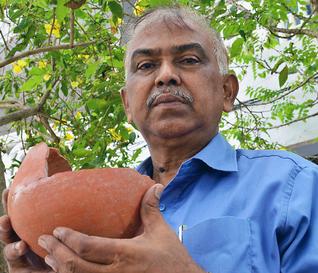
Historian Mohammed Silar with a pot collected from a Buddhist site at Gudivada in Krishna district.

‘Machilipatnam Sarvasvam’, (Encyclopaedia of Bandar), written by Bandar-based modern historian and numismatist Mohammed Silar, is all set to be released by the end of June. The book focuses on the flourishing of Buddhism and Jainism in Krishna district as well as individuals and institutions which brought laurels to the port town.

In 2010, he wrote his first book ‘Tara Tarala Bandar Charitra’, which became a reference guide for history research scholars. It was reprinted in 2013. “My second book has a detailed narration about the rule of several dynasties in Masula – from Mughal, Dutch to British and French. The history of India’s third municipality, Machilipatnam Municipality, is also one of the key chapters of the encyclopaedia,” Mr. Silar said.

Based on Battiprolu inscription in Pulinda script, Mr. Silar is trying to establish the birth of Telugu language in Machilipatnam. As Machilipatnam played an important role in the evolution of education and literature in Andhra Pradesh, the book chronicles the lives of many luminaries including Madras University’s first elected Vice-Chancellor Raghupathi Venkataratnam Naidu of Machilipatnam.

Mr. Silar, a retired Special Grade Tahsildar and a Food Inspector during the cyclonic storm in 1977, has been engaged in documenting the glorious past of the town. “Bandar population was 64,000 in 1865 as against 9,000 of Vijayawada. The demography shows the glorious past and development of the tiny town in those days”, he says.

source: http://www.thehindu.com / The Hindu / Home> Andhra Pradesh / by T. Appala Naidu / Machilipatnam – June 05th, 2014