Latur (Marathwada region) , MAHARASHTRA :
Published on Apr 28, 2016
www.saamtv.com
Humanity Is Alive: Matin Bhai From Latur Is Providing Water In Drought Times
source: http://www.youtube.com
Latur (Marathwada region) , MAHARASHTRA :
Published on Apr 28, 2016
www.saamtv.com
Humanity Is Alive: Matin Bhai From Latur Is Providing Water In Drought Times
source: http://www.youtube.com
Latur (Marathwada region) , MAHARASHTRA :
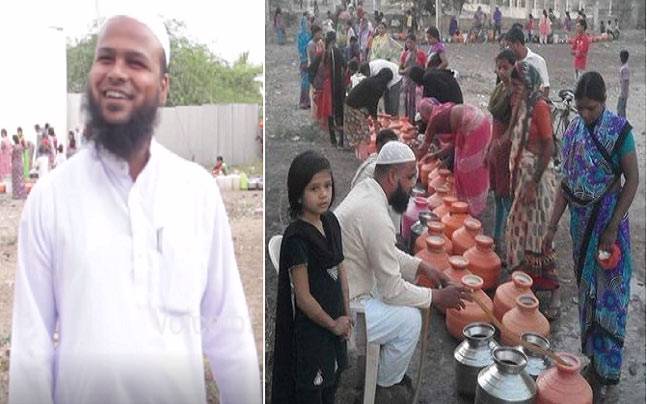
What would you do if your house was the only one with running water, while your neighbours’ taps went dry?
As you ponder over that, let us tell you the story of Latur’s Mateen Bhai.
The severe water shortage raging through Latur and elsewhere in Maharashtra has been all over the news. In this crisis, instead of locking up his borewell, Sheikh Mateen Musa has been distributing over 10,000 litres of water among his neighbours everyday.
And he has been doing that for free for the past three months.
His story was brought to light by Facebook page Voice Of Ram. In a video uploaded in this page, those witness to Mateen Bhai’s benevolent actions have no end to his praises.
“Mateen sir is not the name of a man, he is the name of action,” says one of his neighbours. ” If anyone can teach how to serve humankind, it is Mateen Bhai.”
“We ask them to take money in exchange of the water, but he sternly refuses,” says another woman about Mateen Bhai. “He tells us to take as much water as we need for free.”
A mathematics teacher in a local school, Mateen Bhai seems quite oblivious to the fame he has been garnering for his good works. In fact, he believes he has been doing nothing outstanding but just giving away what belongs to others in the first place.
“The water in my borewell may be the water others are destined to have, so they are only taking away what belongs to them,” says Mateen Bhai. “It is nothing mine to give.”
When asked what he would do if his borewell ran out of water, Mateen Bhai laughingly says, “When that happens, even I will pick up a pot and go around looking for water like others.”
https://www.facebook.com/VoiceOfRamDotOrg/videos/1274945099201465/
It is people like Mateen Bhai who remind the rest of the world that charity begins at home, and that humanity is bound by no race and religion.
source: http://www.indiatoday.intoday.in / IndiaToday.in / Home> News> FYI / by Shreya Biswas / New Delhi – April 27th, 2016
Mangaluru, KARNATAKA :

Mangaluru:
The State which is going through a rough time with extreme drought,witnessed a group of Muslims offering special prayers for rain and progress.
South Karnataka Salafi movement organised special prayers at Nehru Maidan. Even women were a part of Namaz-e-Istesqa.
The Khatheeb of Nandavar Salafi mosque, Ahmed Ali Khasimi led the prayers and explained about the importance of water in daily life.
Many devotees were seen expressing their grief for the sins committed and also praying for rain.
Namaz-e-Istesqa is a way to humble oneself before god almighty and look for forgiveness so that rains descend on the city.
source: http://www.newskarnataka.com / NewsKarnataka.com / Home> Cities / May 01st, 2016
Virudhunagar, TAMIL NADU :
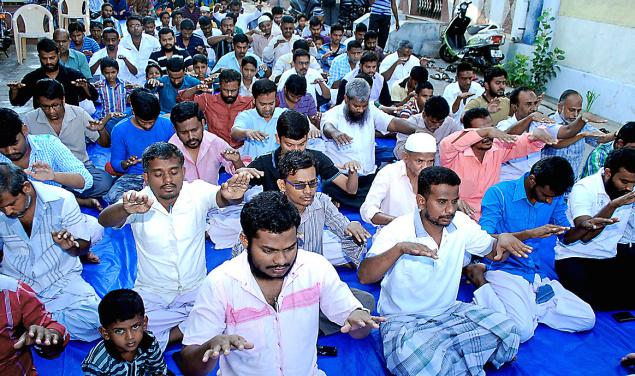
Muslims of Virudhunagar participated in a special prayer for rain in Monni Street on Saturday.
The prayer, which lasted for about half an hour from 7.15 a.m., was held on the street as the usual venue for such prayers, a school playground, happened to be part of a polling booth.
According to the organisers, it was a different prayer as participants held their palms facing the ground, instead of skywards. All the participants had their shirts inside out.
The prayer was led by Riyaz Ahmed, district president of Tamil Nadu Thowheed Jamath.
source: http://www.thehindu.com / The Hindu / Home> National> Tamil Nadu / by Special Correspondent / Virudhunagar – May 01st, 2016
Chandigarh, PUNJAB :
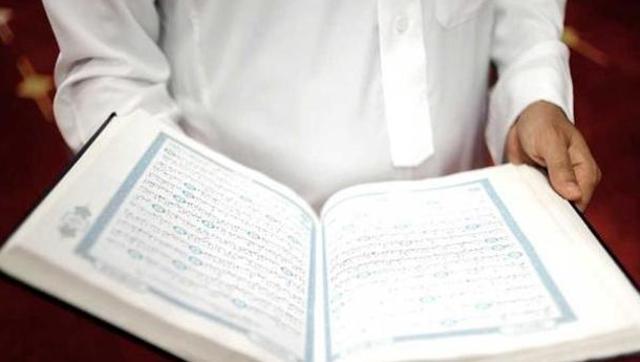
The Punjab and Haryana high court has ruled that imams, appointed in mosques to impart religious education, in Punjab cannot serve indefinitely and can be allowed to work till the age of retirement.
The high court held that regulations provided that the age for compulsory retirement of an employee of the Punjab Wakf Board would be 60, and might be retained in exceptional circumstances till 65 through repeated extensions.
But the extension could not be given beyond 65 in contravention of the Punjab Wakf Regulations1966, the HC said.
The high court decision came on a bunch of petitions filed by an imam of Masjid Tila Baba Zafar Shah, Ajit Gate, Patiala, and four others challenging retirement orders issued to them in 2012, stating that they could serve throughout their life.
They had contended that religious affairs committee had the jurisdiction to recommend candidates for appointment as imams, teachers, etc., to the Punjab Wakf Board, but neither the committee nor the board had the jurisdiction to fix the imams’ age of retirement, “which was conspicuously absent in the regulations itself”.
If the board wanted to fix an imam’s age of retirement, the regulations had to be amended that could only be done by the legislature because it dealt with the service conditions of the board’s employees and the retirement age was also a part of the service condition, they added.
The high court took note of the government’s argument that determination of the service conditions of its employees was the sole prerogative of its employer and the retirement age of imams serving the board being fixed at 65 was a policy decision taken by the competent authority in accordance with the law.
The high court bench dismissed all petitions while observing that regulations provided that all employees of the board had to retire at 60, but could serve till 65 by way of extension.
source: http://www.hindustantimes.com / Hindustan Times / Home / Surender Sharma, Hindustan Times, Chandigarh / April 26th, 2016
Hyderabad, TELANGANA :
The real discovery of Hyderabad heritage begins only when you discard your vehicle and trade it for a cycle or a pair of sneakers. Walking on the road between the Charminar and Purana Pul you might discover the Syed Hazrath Musa Qadri’s Dargah. It is a blink and miss structure on the left side between Koka ki Tatti and Purana Pul on the Hussainialam Road.
A huge green door leads you inside and on the left is the kanqah. In a portion of the kankah lives the family of the 28th descendent of Musa Qadri, who was a descendent of Abdul Lateef Laubali, whose dargah draws a number of pilgrims to Kurnool. Laubali was among the seven migrating Shia saints who came from Baghdad.
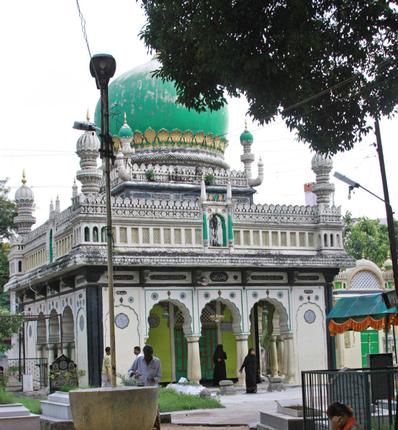
Set amidst age-old tamarind trees, is the double-storey green domed dargah of Musa Qadri. According to the inscription, the construction of the dargah was completed in 15 years. “After Syed Hazrath Musa Qadri passed away in 1800 at the age of 63, his son Ghulam Ali Qadri had a dream and saw the shape of the dargah and he set about building it which he finished within 15 years. It was not very difficult as Musa Qadri had 45,000 followers including people like Ghansi Mian after whom the bazaar is named,” says Syed Shah Fazlullah Qadri, the 28th descendent.
Unlike the bulbous domes of Qutb Shahi nobles, this is a flatter much more graceful structure on a rectangular base but with luxurious decoration on the outside as well as inside. Geometrical patterns, vegetal and floral patterns and skilled Persian calligraphy dominate every nook and cranny of the structure. No space is left uncovered. The deep patterns in stucco, which have been created even in the undulating parts of the minarets, mark them out from the earlier tradition of simple geometric shapes.
The upper storey is reached by climbing an arcane claustrophobic staircase where 10 square stones are jammed in a small space. “Nobody comes here. Very few people can climb this,” says Fazlullah’s son as he shows the chronogrammatic calligraphy about Musa Qadri and the intricately wrought spandrels and minarets.
The calligraphy in stone narrates the names of God or tells us a bit about the structure and its creators.
Unlike others, Ghulam Ali Qadri had a sense of history and he wrote the Mashkwatun Nubuwat, a seven-volume history chronicling the miracles of Musa Qadri as well as tracing the lineage back to Huma (Syria) and Baghdad (Iraq). According to the book, it was Syed Shah Piranshah Mohiuddin Thani Qadri who came to pray at the Quli Qutb Shah mosque which was in an open ground and he settled down there.
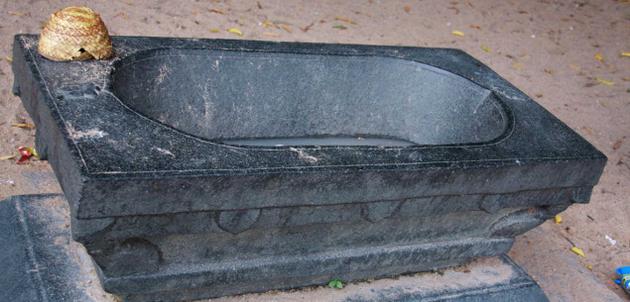
Outside the Dargah is a black boat shaped structure carved out of hard granite called qashti hazatmand(ship of wish-fulfilment). “People come here to pray and when their desires are fulfilled the fill this with sherbet and all the people come and finish it off,” says Fazalullah Qadri.
source: http://www.thehindu.com / The Hindu / Home> Friday Review / by Serish Nanisetti / November 19th, 2010
Kochi, KERALA :

Kochi :
The Kerala high court on Tuesday granted permission to Muslim girls to wear hijab, a customary religious dress, for the All India Pre-Medical Test-2016 but on condition that they should be present at the hall an hour before the exam for frisking if necessary.
The order was issued by Justice Muhammed Mushtaq while hearing a writ petition by one Amnah Bint Basheer challenging the dress code prescribed for the candidates by CBSE in the bulletin relating to conduct of AIPMET-2016.
The judge allowed the plea on condition that the girls shall be present at the hall half an hour before the exam and, if required, the invigilator can search the body.
The petitioner contended that the instructions contained in the AIPMET-2016 bulletin regarding dress code, as per her religious beliefs and practises, would amount to violative of exercise of religious freedom.
Hyderabad, TELANGANA :
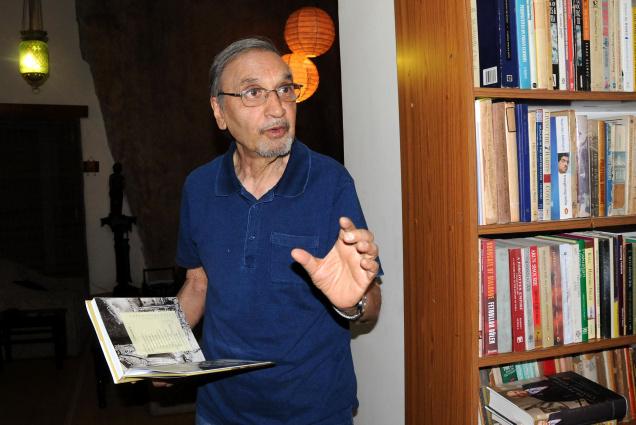
‘Don’t google the meaning of ‘legendotes’ for there is no such word,’ historian Narendra Luther says in the introduction to his new book ‘Legendotes of Hyderabad’ (Niyogi Books; Rs. 995). A combination of legend and anecdotes, ‘legendotes’ is also an encapsulation of nuggets of history, backed by research, presented in the style of a coffee table book illustrated with photographs of people and buildings that provide a window to the past. “To my surprise, the publishers were eager to have more photographs,” he says with a smile, speaking to us ahead of the launch of his book on Thursday in the presence of historian Aloka Parasher Sen.
“During the course of my research on Hyderabad over the years, I came across both legends and anecdotes. Legends are generally considered gossips of history, but some of those are also stuff that makes up history. Former historians, I believe, walked on the highway of history whereas I feel many pieces of history lie scattered in the lanes and by lanes of the city. I collected a few of these and applied tests of historicity and veracity before documenting them,” explains Luther. Narendra Luther focuses both on stories that are now popular knowledge and lesser-known facts that give readers fresh insights into the history of Hyderabad and Secunderabad. “These are not mere ‘he said, she said’ facts put together,” he emphasises.
Luther also prefers to gather information from people than just documents from the archives: “I believe in interviewing people to know about history than merely going through archives; they have given me a wealth of information,” he says, referring to how he got the late Zahid Ali Kamil to share the story of Kazim Razvi, who led the Razakars movement. The author draws our attention to rocks of Hyderabad that are 2500 million years old and as he points out, ‘older than the Himalayas’ and traces the origin of Hyderabad, including the much-debated tale of romance that gave birth to Bhagnagar. “The historicity of Bhagmati has been established beyond doubt,” says Luther, and states his earlier research while penning a biography of Mohd. Quli Qutb Shah that led him to a document mentioning an old seal of ‘qazi of Bhagnagar’. “And in the court of Jehangir, there was a reference to the city of Bhagnagar in the South, established by Quli Qutb Shah in memory of his beloved,” he adds.
The book contains quirky stories of a dog made to sit on a throne by Sultan Tana Shah in recognition of it raising an alarm spotting an intruder, Aurangzeb’s visit to Bhagnagar and Stalin’s orders on the red revolt. There’s also a perceivable effort to make history relevant to the times we live in, in the chapters that detail how the King Kothi got its name, the story of Lal Bazaar in the then Lashkar that later came to be called Secunderabad. “I’ve given historical citations even for amusing stories,” smiles Luther, citing the story of seven kulchas and how the kulcha was represented on the Nizam’s flag. “This was contradicted by the man himself, the first Nizam, who said the ‘circle’ was a moon that denoted his name Kamaruddin (‘Kamar’ in Persian means moon). But later when the sixth Nizam was approving the design of the flag in 1899, issued a written mentioning the big white circle as a kulcha.” Like his previous works, this book too is an ode to Hyderabad.
Hyderabad connection to ‘Jai Hind!’
Did you know that it was a Hyderabadi who coined the slogan Jai Hind? Zain-ul Abideen Hasan was pursuing engineering in Germany at the time when Netaji Subhash Chandra Bose visited Germany and urged Indian students to join his movement to liberate India. Abid Hasan gave up his studies and became Netaji’s secretary and interpreter. ‘Legendotes of Hyderabad’ discloses why Abid came to be called ‘Safrani’ in later years and how he coined the term ‘Jai Hind’ as the greeting for his army and for independent India.
source: http://www.thehindu.com / The Hindu / Home> Features> MetroPlus / by Sangeetha Devi Dundoo / Hyderabad – January 30th, 2014
Allahabad , UTTAR PRADESH – Kashipur, UTTARAKHAND :
The photograph of the bride in her wedding finery, her kohl-rimmed hazel eyes peering into the camera, bears little resemblance to Shayara Banu of today. The wedding album titled ‘Romantic Moments’ also features photographs of a two-wheeler, household furniture, utensils and jewellery that were given away at the time of the wedding.
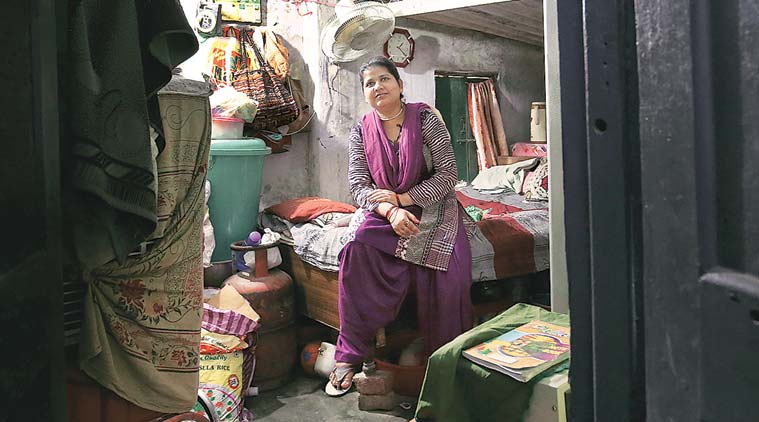
Next to the album is a polythene bag with medicines for the “infections” Banu claims to have caught from multiple abortions and a heavy dose of anti-depressants. For the last 15 years of her marriage, she says, her greatest dread has been the word talaq being uttered thrice by her husband Rizwan Ahmed. Last year in October, while she was at her parents’ home in Uttarakhand’s Kashipur district, her fears came true: Rizwan sent her the talaq-nama from Allahabad.
On the advice of her family, the 35-year-old is using her case as a plank to challenge the triad of instantaneous triple talaq (talaq-e-bidat), polygamy and halala (a practice where divorced women, in case they want to go back to their husbands, have to consummate a second marriage). Her petition in the Supreme Court makes no mention of the contentious Uniform Civil Code, neither does it ask for codification of the Muslim personal law. She has sought equality before law and protection against discrimination on the basis of her gender and religion.
“Soon after the wedding, they started demanding a four-wheeler and more money. But that wasn’t the only problem. From the very beginning, my husband would threaten to give me talaq each time he found some fault with me. For the first two years of marriage, when I didn’t bear a child, my mother-in-law would egg him on to divorce me,” says Shayara, who is today mother to a 14-year-old boy and a 12-year-old girl, both of whom are away from her, in her husband’s custody.
Shayara says that a year after her marriage to Rizwan, a property dealer based in Allahabad, UP, she wasn’t allowed to attend her sister’s wedding in the same city. In the last 14 years, she says, she wasn’t allowed to visit her sister, who lives within a half-hour distance from her house in Allahabad.
She lost count of the number of abortions she was forced to undergo by Rizwan. “Six or seven times maybe. I would often plead with him to allow me to undergo tubectomy, but he wouldn’t relent,” she says.
Her mother Feroza Begum says the emotional and physical battering turned Shayara into a bundle of nerves. Until last year, she says, her daughter never uttered a word about her agony, not even about how he allegedly tried to throttle her once. “Dimaag kharab ho gaya tha Shayara ka tension le le kar. Yahan aakar hamne ilaaj karaya (Shayara had lost her mind with all that stress. We got her treated after she came here),” says Feroza.
Last year in April, when her condition deteriorated, Shayara says Rizwan asked her to pack a small bag and asked her father to meet them half-way in Moradabad, from where he could take her home. She was told that she could return once she recovered entirely. “As I regained my health slowly, I would call him and ask him to come take me back but he didn’t want me to come and wouldn’t let me speak with my children either,” she says. She waited restlessly for six months, and it was then that the talaq-nama came.
Rizwan denies having ever beaten Shayara, though he admits to keeping her away from her relatives as he “didn’t want anything to do with them”. He also admits to the multiple abortions. Vasectomy and tubectomy, he says, are considered to be “bahut haram”. “I have given her talaq the way Shariat and Hadith allow me to. I cannot take her back now, it will be against the Shariat. It is not good to go against what the religion has prescribed,” says Rizwan over the phone from Allahabad.
*******
For over three decades now, the tiny Army quarter at the cantonment of RTSD-Hempur (Remount Training School and Depot) in Kashipur tehsil has been home to Iqbal, an accountant in the Army, and his family: wife, three daughters, son, daughter-in-law and two grandchildren. Today, in this cantonment, his daughter Shayara is insulated from censure that would otherwise have come her way for taking on the practices in her community. “I grew up in Allahabad where I have seen women around me being subjected to this, but they were all too poor to go to court. When my daughter fell in the same trap, I decided it was time to do something,” he says.
The family first met Supreme Court advocate Balaji Srinivasan for inter-state transfer of a case filed by Rizwan at the Allahabad family court. “In the meantime, her husband sent her the talaq-nama by post, which then became the basis of her writ petition,” says Srinivasan.
Hyderabad, TELANGANA :
She’s helped revive traditional weaves and, like the Mahatma, dreams of a loom in every home
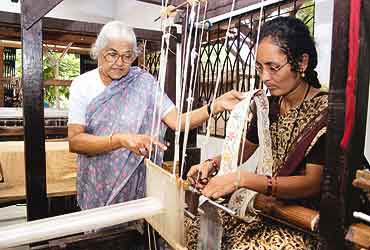
At 75, Suraiya Hasan Bose has energy levels that can put a teenager to shame. But when she chats, she exhibits the languid grace of a long-forgotten nawabi culture. As women work magic on the looms at her weavers’ workshop at Dargah Hussain Shah Wali (a village on the outskirts of Hyderabad), in the adjacent Safrani Memorial School run by her, children race around with unbridled enthusiasm.
Suraiya employs a large number of poor women, many of them widows, from the village. These women are trained to work on himroo, jamawar and paithani—fabrics that were brought into India by the Mughals. “I want to see these women stand on their own feet. I wish to see looms in all their homes and hope they can train future generations too,” she says. Suraiya’s unassuming demeanour envelops the large room as the women go about their work.
On the other side of the fence, the children’s learning curve, under Suraiya’s tutelage, spreads an air of hope. Like the women, students of the school too come from poor households—children of farmers, labourers or vegetable vendors. Suraiya charges them a nominal fee.
Suraiya attributes her passion to her father Badrul Hasan. Mahatma Gandhi too has been her idol. When Gandhi first visited Hyderabad, it was in front of Suraiya’s house that the first bonfire of English mill-made cloth was lit. Suraiya’s father died when she was only five but she had others to look up to. Her uncle Abid Hasan Safrani was the personal secretary to Subhash Chandra Bose and she was married to Bose’s nephew Aurobindo Bose. “My late husband was based in Calcutta, and used to be in and out of jail. Both our families understood the importance of Gandhi’s ideals of preserving traditional handlooms.” It is after her uncle that the weaving society and school are named since he was the one to encourage Suraiya to follow her passion for handspun textiles.
While Suraiya is credited with the single-handed revival of the Nizami-Persian fabrics of himroo, paithani and mashroo in Andhra Pradesh, she has also worked extensively in the village of Kanchanpalli, close to Warangal. In the early ’70s, due to lack of patronage, weavers in Kanchanpalli had almost given up their profession. They merely made decorative calendars woven with portraits. Suraiya encouraged them to make durrees. Today, over 500 weaver families in Kanchanpalli make a living through durrees and other weaves.
In Warangal too, when Suraiya began her efforts to revive weavers and fast-vanishing forms of royal designs, there were just two such families. Following Suraiya’s constant efforts, there are now a thousand families involved in weaving, research and development of textiles. Several of them also come to Suraiya’s workshop to learn the intricate art of himroo. Now, Suraiya plans to train women from the nearby villages of Hafizpet and Miyapur.
Funds are slow to come by but Suraiya believes if the passion is there, money will soon follow. As the school bell rings and children rush out, Suraiya says, “Half my heart is with them. Since they come from the poorer quarters, we also teach them to use cutlery, to speak softly and even pick up any garbage they find on roads and put them into dustbins. We basically want them to be honest and respectful citizens.”
Despite Suraiya’s busy schedule, she is at the school every day at 8 am. “What’s heartening is, marriage is not a priority for the girls passing out from my school. College is. That’s our greatest achievement,” she says, her eyes shining through her bifocals.
Her future plans? Adding weaving classes to the school curriculum. For like Gandhi, Suraiya’s dream is to see a loom in every home.
Contact Suraiya at: Safrani School premises, 1-86, Dargah Hussain Shah Wali, PO: Golconda, Hyderabad: 500008 Tel: (040) 23563792, 23560992.
source: http://www.outlookindia.com / Outlook / Home> Making A Difference / by Madhavi Tata / October 31st, 2005