Category Archives: Community Involvement / Social Issues

Fusion feast for Kubers of the world

BallalMPOs15oct2015

by N.K.A. Ballal, Retd. Sr. Vice-President, ITDC

Our Prime Minister Modi has done the impossible. Recently, he managed to get the ceos of 47 Fortune Companies to come together for a meal with him at the Waldorf Astoria, New York. Just to name a few who were invited, Goldman Sachs, Boeing, ibm, Lockheed Martin, Citigroup, PepsiCo, PayPal, Cargill, Starwood, etc. The total worth of the companies under one roof that day was 4 trillion dollars. Wow, the agenda of course was to highlight the “Make in India” campaign and convince these companies to invest more in India.

The biggest headache for Modi’s managers was to zero in on the cuisine and the man to do it. When such global heavy- weights are together, the menu also has to be top class. Modi also insisted that it should be an exhibition of India’s rich gastronomical culture showcasing the different regions of this vast nation. The officials at last chose the celebrity chef Vikas Khanna, a household name in India. This gentleman, born in Amritsar, owns a Michelin Star restaurant “Junoon” in New York. He is considered as one of the best in Indian fusion food business. He has travelled all over India to the nooks and corner including our own Udupi and has integrated the local cuisine with his own fusion style.

Vikas looks like a film star, is a bachelor to boot and has a huge female following all over the world. Vikas and his team laboured for months to try out various combinations and give something unique to these guests who are used to the best of the world and make the evening memorable.

What is fusion cuisine? Personally, I have sat down having some fusion cuisine and not liked them. They are superb to look at but somewhere down the line the original taste vanishes and that is the reason I am not for it. Many a times I have had to come and have dinner at home after a sit down fusion meal. But anyway I am in minority and the whole world craves for these kind of dishes. Let us now have a look at the menu that was served to these esteemed guests:

Paneer-Ravioli, Mizoram black rice khichdi, Coconut rice creme brulee, Thandai chicken, Pomegranate sangria with tandoori pineapple, Coconut chutney mousse, Corn dhokla molten cake with berry compote, Seviyan cakes, Fusion modak and more. It is said that the modak recipe has been given to him by the legendary singer Lata Mangeshkar. I have not gone into details regarding the different pickles and papads served on the table. To ensure authenticity of the recipes, the ingredients were flown in from India. Several of the names are familiar like chutney but chutney mousse? Thandai is a milk drink made of badam and pepper and served specially during the festival of Holi in several parts of eastern UP. But a chicken dish made from this? Real fusion.

I really wish that these Moghuls loosen their purse strings after eating these exotic fusion meal. These recipes form a part of a book called “Utsav – A Culinary Epic of Indian Festivals” penned by Vikas Khanna. This book, weighing 16 kg, is a 1000-page Coffee-Table book. It contains 1000 recipes from 70 Indian festivals. This book has been published by Bloomsbury Publishing and is written with pure gold ink. A Collector’s Item, this book was presented to the US President Obama by Vikas Khanna after the above event. The cost of the book, anybody’s guess?

Coming back to India and our own Namma Mysuru, I was pleasantly surprised to receive an invitation from my friend Dr. Javeed Nayeem on behalf of an organisation called Anjuman -e-Hadiqatul Adab to attend an Eid Milan dinner on Sunday, 4th of October. Since I knew that there will be lots of speeches in Urdu, I wanted to give this event a miss. But on second thoughts, I attended the programme. For the first 45 minutes, I did think that I had made a mistake to come as I could not understand anything being discussed on the stage. But then Dr.Javeed sprang a surprise. He called a Urdu teacher, Lal Hussain Ilkal from Bijapur (now Vijayapura) to come and speak. Looks are deceptive and Mr. Hussain is a perfect example of that. I have attended a few discourses and it is for the first time I have come across a speaker who could fine balance between religions. What a speaker, having a complete command on Kannada language, proficient in Arabic, Gita and even Basavanna’s poems. It was such a joy to hear someone talk in pure Kannada with hardly an English word thrown in during his 45-minute discourse on the subject of religion without casting aspersions on any religion or language. The icing on the cake was the lovely vegetarian meal arranged by the hosts. The divide between the two prominent communities are too huge but your “alilu seve” to bridge the divide, Dr. Javeed, is very commendable. Thank you Dr. Javeed and your team.

Dwelling on the subject of vegetarian food, are my readers aware that the oldest and very popular vegetarian restaurant in the world, certified by the Guinness Book of Records, is in Switzerland and not in India. Surprised? The restaurant called “Haus Hiltl” was founded in 1898 by some German immigrants to popularise vegetarianism as a way of healthy living. This restaurant is located in Zurich’s Sihlstrasse district and has been visited by our own Morarji Desai among other celebrities. Imagine getting Indian thali, sambar-vada, palak-paneer, chutney and curries in Switzerland. Well, next time you venture to Switzerland, do not miss this landmark joint.

[e-mail:ananthballal@yahoo.com]

source: http://www.starofmysore.com / Star of Mysore / Home> Feature Articles / October 15th, 2015
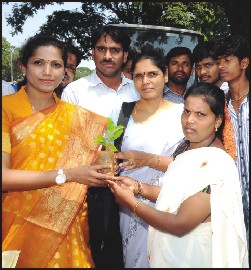
Sapling distribution marks Dr.Kalam’s birth anniversary

ZP President Dr. Pushpa Amarnath is seen distributing sapling during the programme organised to marked the 84th birth anniversary celebration of former President late Dr. A.P.J. Abdul Kalam, under the aegis of Arivu Samsthe in city this morning.

Mysuru :

Distribution of saplings amongst the public and awareness campaign on the importance of using eco-friendly bags, marked the 84th birth anniversary celebration of former President late Dr. A.P.J. Abdul Kalam, organised under the aegis of Arivu Samsthe in city this morning.

Mayor R. Lingappa, who spoke after launching the programme by offering floral tributes to the portrait of Dr. Kalam in city bust stand premises, stressed on the need for using eco-friendly bags (paper bags, cloth bags, etc.).

He also complimented the Samsthe for organising the programme with the theme ‘Shun plastics, use eco-friendly bags.’

The Mayor distributed tree saplings to the public on the occasion.

ZP President Dr. Pushpa Amarnath, Social Worker K. Raghuram, Corporator B.V. Manjunath, ex-Corporator M.K. Ashok, BJP leader Jogi Manju, Arivu Samsthe President Kashyap, Vikram and others were present.

source: http://www.starofmysore.com / Star of Mysore / Home> General News / October 15th, 2015

Second opinion saves woman

ShahinaBegumMPOs15oct2015

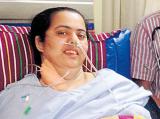
Had it not been for the second opinion at the last minute, a 29-year-old woman would have been “buried alive” as her family made all preparations for last rites after doctors at a leading private hospital opined that she had only half an hour left.

Shahina Begum, a resident of Goripalya near Mysuru Road, was unconscious for hours and was rushed to a well-known private hospital last week. Doctors who examined her declared that her condition was critical and opined that she had a very short time left to live. Her disheartened family began preparations for the funeral. Shahina was taken back home from the hospital to spend her last few minutes with the family.

Family members called the workers at the burial ground and it was decided that she would be buried after namaaz at 5 pm, said Shaik Ateeq, her brother. “We asked the family members to have food. We had also put a shamiyana in front of our house. We had to perform a ritual of dressing her up with different clothes and that was also done,” Ateeq told Deccan Herald.

It was at this stage that Dr Tanvir, the family doctor, arrived on the scene and turned it around. Shahina ’s father Mohammed Baig, a shopkeeper, said: “We had given up all hopes. That was when Dr Tanvir came. What followed was a miracle for us. He told us she could survive and that was all we wanted to hear.”

Shahina was then shifted to Shekar Hospitals for treatment. Now, she is conscious and on a semi-solid diet, on the road to recovery. She is likely to be discharged this week, her father said.

Speaking about her condition, Dr Tanvir, Intensivist, Shekar Hospitals, said she has almost recovered. “She was unconscious for a really long period. This happened because her sugar levels were extremely high. Shahina had a condition called Diabetic Ketoacidosis,” he explained.

source: http://www.deccanherald.com / Deccan Herald / Home> City / Bengaluru – DHNS, October 15th, 2015

Development schemes give edge to LDF: Jameela

Incumbent president of the Kozhikode district panchayat Kannathil Jameela may not be contesting the polls this time, but she is confident that the development initiatives during her five-year tenure will see the CPI (M)-led Left Democratic Front (LDF) romp home in the local body elections.

“The district panchayat focused its attention on all sectors. Top priority was given to education, health, agriculture and industry. Almost all the schemes that we launched were running successfully,” Ms. Jameela said.

Model schools

Model schools were set up at Atholi, Balussery, Chorode and Punoor, which now have necessary facilities such as science and computer labs and a gym. Utmost care was taken to improve the infrastructure in all government schools, she said.

“The Vijayotsavam programme, aimed at improving SSLC results by offering special coaching to students, had achieved its desired effect. For the past three years, Kozhikode district had registered the highest number of A Plus students in the State. Today, students from the lower and middle income groups and those from the fishing and farming communities vie with their counterparts in the city,” she said.

Ms. Jameela consecutively contested the polls on the CPI (M) ticket since 1995 when she was elected president of the Thalakulathur grama panchayat.

She was standing committee chairperson of the panchayat in 2000; president of the Chelannur block panchayat; and later elevated as district panchayat president in 2010 when the post was reserved for women.

Likewise, she said the district panchayat had been able to focus on government-run hospitals by providing them with essential equipment. It had also tied-up with the Kozhikode Medical College Hospital for early detection of cancer and treatment.

“Besides, it had successfully implemented the Snehasparsham project for kidney patients at the Kuttiyadi Government Hospital and the Kozhikode Medical College Hospital,” she said.

On the agriculture front, she said farming initiatives in Koothali, Perambra, Puthuppadi and Thikkodi had yielded positive results. The district was almost self-reliant in milk production. The modern poultry farm at Chathamangalam can now hatch 5,000 chicks at a time. “Organic vegetable farming executed through Kudumbasree units had registered an all-time record,” Ms. Jameela added.

The development of the industrial estates at Cheruvannur- Nallalam with 45 exclusive plots for was a model for the State, she said.

source: http://www.thehindu.com / The Hindu / Home> News> Cities> Kozhikode / by Biju Govind / Kozhikode – October 13th, 2015

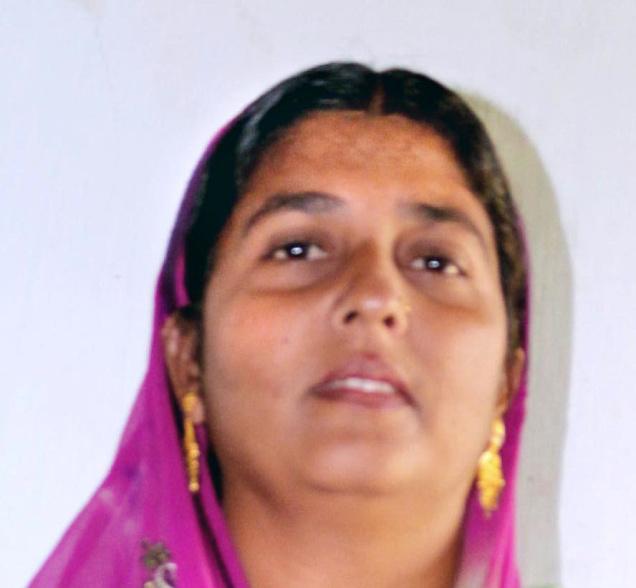
It’s a ghar wapsi, says BJP’s Muslim poster girl

Shabana Anwar
Shabana Anwar

Describing herself as a strict vegetarian who adheres to Muslim religious customs and practices, Shabana Anwar is, so far, the BJP’s lone Muslim woman face to emerge this poll.

A mother of two and a Hindi graduate, Shabana talks in a quaint mix of Hindi and Malayalam. She is a political novice who claims her candidature is, however, ‘‘a political ghar wapsi .’’ She will contest as the BJP candidate in the 16th ward of Palakkad municipality.

‘‘The community must distinguish between real and imagined enemies. False notions of secularism will take us nowhere,’’ says the 34-year-old, originally from Ratlam district of Madhya Pradesh. According to her, those who still point to the Gujarat carnage of 2002 forget that Narendra Modi’s rule there had improved the life of Muslims by much.

‘‘I hail from a BJP family. My father, brothers, and close relatives are all active BJP members in Ratlam. My extended family there had always identified itself as a nationalist Muslim household. I am now returning to the roots of my family’s political orientation,’’ she says.

Her husband, Mr Anwar, is from Rajasthan. He runs a marble retailing business in Palakkad, and was the local BJP candidate in the last local bodies poll. He had lost, but is bullish about his wife’s prospects: ‘‘Because more Muslims in the neighbourhood now know about Modi’s development agenda,’’ Anwar said.

source: http://www.thehindu.com / The Hindu / Home> National> Kerala / by K.A. Shaji / Palakkad – October 13th, 2015

Imam of Mumbai Jama Masjid Syed Shaukat Ali passes away, laid to rest in Raigad

Mumbai:

Hundreds of people on Sunday gathered in Mhasla, a census town in Raigad district of Maharashtra’s Konkan region, for the funeral of Syed Shaukat Ali Nazir, Imam of Mumbai Jama Masjid.

Syed Shaukat Ali Nazir, the Imam of Mumbai’s Grand Mosque located at Crawford Market passed away at his ancestor’s town Mendri in Taluka Mhasla on Saturday late in the afternoon. He is survived by his wife and son.

The news of his death sent shock waves across India. When the worshippers at the Mumbai Jama Masjid were told about his death soon after the Asr prayers Saturday, many were left in tears.

Besides people from the neighboring towns and cities in Konkan, a large number of people from Mumbai, Gujarat and other parts of Maharashtra travelled to Mhasla for the funeral prayers of Syed Shaukat Ali.

The 84-year-old cleric, among one of the most respected living clerics in India, was Imam of Mumbai’s Jama Masjid for 51 long years since 1964.

He was ailing since last few years and had shifted to Mendri. The last time he visited the Mumbai Jama Masjid was during the month of Ramadan when he came to Mumbai for two days.

Very pious and soft spoken, Syed Shaukat was famous for his Friday sermons. His sermon delivered immediately after the tragic demolition of Babri Masjid in 1992 is still in people’s minds. Advising calm and restraint, Syed Shaukat Ali had called upon the worshippers for introspection and prayers.

Syed Shaukat Ali Nazir was a graduate from Darul Uloom Deoband and was among the talented students of the senior teachers of that time like Qari Mohammad Tayyab, Aizaz Ali Amrohavi and Ibrahim Balyavi.

President of Jamia Hussainia in Shreewardhan, Syed Shaukat Ali had also presided over the inaugural session of the All India Muslim Personal Law Board (AIMPLB). He also worked as the Arabic language teacher at Mohammadia High School.

source: http://www.ummid.com / Ummid.com / Home> India / by ummid.com Staff Reporter / Sunday – October 11th, 2015

Chishti Awards go to Shastri & Bilqees

India Harmony Foundation, headed by Zafar Saifullah, former Union Cabinet Secretary, held a two-day cultural event at the Indian Islamic Cultural Centre on 18-19 July. The star attraction was the presentation of the Chishti Harmony Award for 2011 to two personalities which have spent a life time for communal harmony and community service. The first is Pandit Yugal Kishor Shastri of Ayodhya who has stood as a rock against communalists in Ayodhya and beyond and the second is Begum Bilkees Latif, wife of former Air Chief Marshal, Idris Latif, who has dedicated her life to serve the downtrodden in Mumbai. The awards were presented by Vice President Hamid Ansari in a function attended by Union minister of law and justice Veerappa Moily, Chief Election Commissioner Dr. S. Y. Quraishi and others. Hamid Ansari said in his brief speech that the Sufi Chishtia Order is the best example of the how human beings can do two things simultaneously: establish relationship with the Creator and serve humanity. The receipients of this award by their example have demonstrated the essence of Chishti teachings. It is the same old message which should be reiterated time and again so that human beings can live harmoniously with one another.

Here are brief life-sketches of the award receipients:
Pandit Yugal Kishor Saran Shastri of Ayodhya is a person of quiet but extraordinary achievements. Born into a poor Yadav family of Madhubani district of Bihar, Pandit Yugal Kishor, struggling against heavy odds, completed his MA in Sanskrit from the Varanasi University. Whereafter he took over the care of the Sarayu Kunj Ram Mandir, located opposite the Babri Masjid at Ayodhya. Following the demolition of the Masjid in December, 1992, this remarkable man devoted his entire life to defending the lives, the properties and the livelihood of the Muslim community in the region at great risk to his own life. Without money, privilege or power, he upheld the values of secularism and respect for all religions. He ensured that Ayodhya has not been afflicted by the communal virus. Targeted, both physically and psychologically, by forces inimical to his work to abandon it, he has defied all odds to continue what he has taken as his life’s mission, namely, to preserve the centuries-old tradition of total communal harmony within the families of Ayodhya – a name which itself means “a land without conflict”. He has now enlarged his vision and the ambit of his work, to extend the same message of harmony on a wider scale throughout the country. A commendable initiative which he has embarked on in conjunction with several like-minded social workers and organizations are two padyatras. The first one from Ayodhya to Sewagram (Wardha) in Gujarat and the other from Ayodhya to Ajmer in Rajasthan to motivate people along the route to work for national harmony.

Begum Bilkees Latif was born into a privileged Muslim family and is married to former Air Chief Marshal, Idris Latif. She chose to make her most distinctive contribution in social service, in Dharavi, India’s largest slum cluster in Mumbai. It was notorious as home to some of Mumbai’s most dreaded mafia dons, where children were employed in illicit distillation; and the area recorded Mumbai’s highest crime rate. Following her very first visit to Dharavi in 1982, she decided to work for the transformation of the lives of the families living here. She established SHED (Society for Human and Environment Development) along with a few prominent and public spirited citizens of Mumbai. So dramatic has been the impact of her work that Dharavi today has the lowest crime rate in Mumbai. SHED has set up 45 youth groups in Dharavi. Through them, Vocational Training Projects, eradication of Leprosy and Tuberculosis, family planning, immunization of children and national integration programmes have been systematically taken up with active help in most cases of many of the Mafia dons and their families, who have even assured them total security. So much so that when communal unrest raged in other parts of the city, not a single instance of any communal disturbance was recorded in Dharavi. In fact, the whole area joins in celebrating festivals of each others’ communities with their own funds. SHED has taken up this work in other slums in Mumbai and the neighbouring district of Thane. Their work has covered the most extensive range of social services leading to requests from the World Bank and several other multi-lateral international aid agencies to take up their programmes.

As Chairperson of the National Bal Bhavans for two terms and of the Rajiv Gandhi Childrens’ Museum, she launched in November, 2005, a movement for children “to build the India of their dreams and secular values in nation-building”. Bilkees Latif is truly a role model for young Indian Muslim girls to follow.

source: http://www.milligazette.com / The Milli Gazette /  Home> Special Reports / Online August 13th, 2011 – Print Issue 16-31 August 2011

Reviving an 800-yr-old art

Kolkata  : 

Among the stories of torture, loot and oppression that the British left behind for us, one of the most common is that of how the thumbs of muslin weavers from Bengal were chopped off to wipe out the ancient art form from the face of the country. Muslin has since then been an item only to be seen in museums across the world.

A fine cotton textile making art that originated in India in the ancient times, with the maximum concentration in Bengal, and proliferated under Mughal patronage since the 17th century, muslin died an unnatural death when the British decided to smother it so that they can bring in their own mill-made textiles from Manchester to India.

Recently, the West Bengal chapter of Crafts Council of India has taken up a project to revive the art of muslin making. It started in 2010 and now weavers who were being re-skilled for producing muslin, have finally been able to reach an enviable thread count of 500.

After the Mamata Banerjee government came into power, the state micro, small and medium enterprises department also started thinking on how the fine textile making art can be revived in Bengal. The MSME department scouted for experts in villages across five districts of the state where muslin used to be produced traditionally. In this manner, some 793 weavers’ families were chosen from Birbhum, Murshidabad, Nadia, Bankura, West Misnapur and Burdwan, who had all been connected with muslin making some generations ago. The state government encouraged them to take to the art once again.

When the thread count reached 300 last year, muslin made by weavers under MSME made its way to the government’s Biswa Bangla Haat. MSME department is trying its best to increase the count further because the higher the count, the better is the quality of muslin.

During the time of the Mughals, muslin weavers from Dhaka were able to reach a count of 1500. Samples of these are available in museums across the world. A 500 count means that the two threads crisscross each other to create a mesh 500 times in the span of a square inch. “It all started quite by an accident. An American advertising honcho, Anne Johnson, had visited us with inquiries about muslin and whether any efforts were being made to revive it. She was fascinated with muslin and was even prepared to fund it if we took up a revival project, which we eventually did at a cost of Rs 70 lakh,” said Ruby Pal Chowdhury, who heads the Crafts Council of India here.

The Crafts Council project took place in Kalna, where master weavers, who are otherwise associated with the production of khadi yards under the aegis of the Khadi and Village Industries Commission (KVIC) of the central government and West Bengal Khadi Board (WBKB), kept experimenting with spinning of the yarn with the right thickness out of cotton sourced from Gujarat.

“Once the yarn is spun, it has to be soaked in starch made of kolma or dohor nagra varieties of rice. The water used is essentially rain water to keep the solution soft. There is no formula for this, these are part of family knowledge that are being gradually recalled through re-skilling,” said Pal Chowdhury.

The weavers of the council have not only been able to weave muslin yards but also entwine antique jamdani motifs in it. These have been christened as muslin jamdani and a pure saree woven thus costs nothing less than Rs 20,000. These creations are now available for viewing at Artisana, the council’s outfit at Chowringhee Terrace, while a mega debut is also being planned.

Considering the huge expense that such revival incurs, the council is also trying to tie up with Biswa Bangla to take the revival issue a step forward.

“We would welcome this because the final aim is to bring back muslin to its original glory. That will be possible only if we are able to keep giving incentives to weavers to sacrifice other commercial interests and concentrate on spinning finer yarns and then weaving finer counts,” said Sinha.

source: http://www.timesofindia.indiatimes.com / The Times of India / News Home> City> Kolkata / by Jhimli Mukherjee Pandey , TNN / October 11th, 2015

The essence of all religions is peaceful co-existence and communal harmony : Thinker Lal Hussain

Anjuman hosts annual ‘Eid Milan’ get-together

Star of Mysore Editor-in-Chief K.B. Ganapathy and Anjuman Vice-President Moinuddin Pasha are seen felicitating Arif Mehkri, Chairman of the Wakf Advisory Committee for Mysuru District as President of the Anjuman Syed Shafi Ahmed (extreme left) and Past President of the Anjuman Dr. K. Javeed Nayeem look on.

Mysuru :

Be it Hinduism, Islam, Sikh, Christianity, Jainism or Buddhism, the essence of all religions is peaceful co-existence, communal harmony and mutual understanding, opined thinker Lal Hussain Ilkal.

He was addressing the gathering at the ‘Eid Milan’ get-together organised by Anjuman-e-Hadeeqatul Adab at St. Philomena’s College auditorium here on Sunday to spread the message of unity.

Stating that festivals are celebrated to create a sense of unity among people of all religions and to drive away communal feelings, he regretted that of late, the very concept of festivals has gone awry with people attaching more importance to religious feelings.

He also regretted that India, known for Unity in Diversity, which taught the world about secularism was itself facing the menace of communal disharmony which should be shunned immediately.

Despite decades of being liberated from the British, who divided India on the basis of castes, our country continues to reel under communal feelings with repeated incidents of communal violence, he rued.

Referring to rape cases and corruption, he said of late incidents of rape and corruption were on the rise owing to emergence of anti-social elements, which has led to unrest among the people of the country.

“All the more disturbing is the fact that we do not have a Minister for supply of drinking water in our administrative system where a Minister is appointed to look after the Excise Department in each State,” Lal Hussain rued.

Earlier, the programme began with recitation of verses from the Holy Quran by Qaari Mohammed Mateen Chishti followed by their translation into English by Anjuman member, Muazam Ali Khan Tanveer.

Syed Shafi Ahmed, President of the Anjuman, in a report richly embellished with Urdu poetry, outlined its activities much to the delight of the audience.

On the occasion, the main speaker Lal Hussain was felicitated by Altaf Ahmed, a senior functionary of Jamat-e-Islam-e- Hind while Arif Mehkri, who has been nominated as the Chairman of the Wakf Advisory Committee for Mysuru District, was felicitated by Star of Mysore Editor-in-Chief K.B. Ganapathy.

In his reply to the felicitation, Mehkri stated that it was the responsibility of the Wakf Board to safeguard the interests of the community and therefore he would do his best to protect Wakf properties and prevent their misuse.

He also assured the Anjuman that during his tenure it would get its own building for which he received a thunderous applause.

Star of Mysore Managing Editor Vikram Muthanna, in his message to the Muslim community, said that since he was not a very religious person he believed more in the goodness of human beings. So in the background of an intolerant society he was very happy that organisations like the Anjuman were promoting love and brotherhood through programmes like Eid Milan.

In keeping with the tradition of the annual Eid Milan, Dr. Irfan Ahmed Riazi recited couplets in Urdu which he had composed to promote communal harmony.

Expressing his love for the Muslim community, Dr. (Lt. Col.) Y. N. I. Anand announced that he would render free consultation service for one day every month at the Bibi Ayesha Milli Hospital which was being reopened after renovation.

Alfie and his troupe enthralled the audience with their ghazals and vintage numbers from the yesteryears. Abdul Khadir, a Nigerian student of St. Philomena’s college, showcased his talent by singing Kannada and Hindi songs in his unique style.

The programme was compered by Dr. K. Javeed Nayeem, Past President of the Anjuman.

source: http://www.starofmysore.com / Star of Mysore / Home> General News / October 08th, 2015

A hospital run by Muslim trust sets an example of communal amity in Manipur

https://www.youtube.com/watch?v=765kcpPP_nY

by ANI News
Published on Oct 6, 2015

Manipur, Oct 07 (ANI):

Located at Hatta in Imphal East District, the Public Hospital and Research Institute Trust provides health care facilities to the poor socio-economic people of the state.

It was established in 2001 by the minority Muslim Community. The majority of the staff members belong to the Muslim community; however there is no discrimination on religious lines. The hospital is well equipped with a laboratory and an operation theatre.

Since its inception, it has treated around 15,000 patients from all over the state.

At present a team of 40 doctors is working in the hospital, of which 20 Doctors are specialized in different fields.

The Hospital not only helps the poor and needy but also is a perfect example of love and unity among different communities.

Category:  News & Politics / License : Standard You Tube Licencse

source : http://www.youtube.com