Category Archives: Community Involvement / Social Issues

Ibrahim bats for permanent planning board with independence like judiciary


C.M. Ibrahim, Deputy Chairperson of the Karnataka State Planning Board. File Photo: K. Bhagya Prakash./ The Hindu

C.M. Ibrahim, Deputy Chairperson of the Karnataka State Planning Board, has recommended to the State Government the setting up a permanent planning board with independence akin to the judiciary to review and hold the executive to account.

Speaking after inaugurating a seminar on the state budget by the Centre for the Study of Social Exclusion and Inclusive Policy of the National Law School of India University here on Tuesday, he said that the board should have the responsibility to review works in all 36 government departments. He said that the body should have eight members with responsibility of departments divided among them.

The board should meet once every three months to review allocation of money in departments and how it is spent, said Mr. Ibrahim, adding that members should have powers to pull up officials who fail to effectively execute plans. The board should also visit districts and hold consultations, he said.

Mr. Ibrahim said that the Planning Board is meeting in mid-April to review budget allocation and work out a mechanism for implementation.

Focus on spending

Making a presentation at the seminar on gender and budget, K. Gayithri from the Institute of Social and Economic Change (ISEC), said that a thorough analysis of the budget will have to focus not on allocation of money but on how much of it is released and how it is spent.

Bunching together of expenditure in the last quarter was a particular area of concern, she added. More than half the expenditure in many departments happen after December, said Prof. Gayithri.

Manohar Yadav, also from ISEC, in his paper on budget proposals for Scheduled Castes, said that though allocation for the welfare of Dalits has seen a consistent rise in various budgets, allocations in some sectors, such as tourism, have had no direct or palpable benefits to the intended target group.

“It is difficult, for example, to understand how SCs would benefit from such allocation particularly when we find that they are not involved in tourism development,” he said.

source: http: //www.thehindu.com / The Hindu / Home> News> National> Karnataka / by Bageshree S. / Bengaluru – March 03rd, 2015

21 doors & a fiery spirit

By:Aliyeh Rizvi

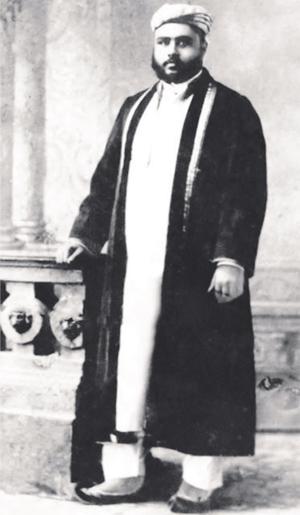
I was standing outside the swank automobile showrooms in India Garage the other day, watching excited owners roll out onto St Marks Road in their ribbon wrapped cars. Ironically, the petrol bunk area inside this graceful building was where around 1920, Hajee Osman Sait, an eminent Cutchi Memon businessman, struck a match and deliberately set fire to all the imported goods sold in the Cash Bazaar as it was called back then.

HajeeOsmaanSaitMPOs03mar2015

This brazen act of arson must have seemed incomprehensible to gentile customers in the Cantonment. The Cash Bazaar opposite Bowring Institute (1868) was where they bought everything from pins and provisions to ‘English vegetables’, fruits and flowers. Setting fire to goods was something a flourishing trader just did not do. The popular shopping arcade was also a family legacy. It had been built by his grandfather Yousuf Pir Mohammed who had moved to Bangalore from Kutch. Each of his seven sons received ‘three doors’ from where they managed their business. The building, therefore, had 21 doors that opened onto a wide verandah with cast iron grills.

 
But while the Cantonment speculated, the Non-cooperation Movement (1920) led by Gandhiji escalated into public meetings and protests across the country. Amongst other things, it also advocated a boycott of British goods. This civil disobedience ran in parallel with the pan-Islamic Khilafat movement (1919-1924) whose leaders, including the brothers Maulana Mohammad and Shaukat Ali, were allied with the Indian National Congress at that time.

 
Hajee Osman Sait, President, Madras and Bangalore Khilafat Committee, was deeply inspired by India’s freedom struggle. He played host to Gandhiji, Pandit Nehru and the Ali brothers at his home on St Mark’s Road (around present day Hotel Nandhini). He sold his property, donated money and apparently even publicly auctioned off his eldest son to raise funds. Ebrahim was returned respectfully and the money, donated. He opened an Indian National School (1921) on his property, Stafford House (now Bishop Cottons Girls School) and sent his own children to local schools. The Cash Bazaar bonfire was yet another contribution to the movement.

 
Masood Ali, Yousuf Sait’s son, says his grandfather was an unbelievably wealthy businessman who owned over 20 acres in the area, including several large bungalows of which four were named after his sons — Yakhoob, Ebrahim, Khader and Yousuf Villas. Four white horses drew his famous buggy. They were housed on Residency Road before the Imperial Talkies was built and then moved to stables at the Cash Bazaar which also sold hackney carriages.
The stables were later occupied by Sir Mark Cubbon’s horses and used by the Bangalore Riders Club (1934). Later on, Addison & Co. sold bicycles, cars (Peugeots and Buicks among them) and motorcycles next door. India Garage’s history of hot wheels began here long before shiny automobiles arrived in India.

 
Haji Osman Sait’s dedication to the freedom movement cost him dearly. He passed away in 1928, in a rented home around the age of fifty-six. Masood Ali says his funeral procession was over 5 kms long and extended from the Jumma Masjid off Commercial Street to the Jayamahal Palace burial ground.

 
India Garage was subsequently sold in an auction in the 1930s and then became the first showroom of the pioneering VST Group founded by V S Thiruvengadaswamy Mudaliar in1911.The building retains the original structure and some trees he planted. But its doors now open out to a free, liberalised India.

The writer is a cultural documentarian and blogs at aturquoisecloud.wordpress.com

source: http://www.bangaloremirror.com / Bangalore Mirror / Home> Bangalore> Others / by Aliyeh Rizvi, Bangalore Mirror Bureau / May 12th, 2014

Mumtaz’s Body Was Transported to Taj Six Months After Her First Burial, Claims Book

TajMahalMPOs03mar2015

Agra :

Was Mumtaz Mahal’s body mummified before her temporary burial in Burhanpur and later finally laid to rest at the Taj Mahal in Agra?

This is the subject of a book “Taj Mahal ya Mummy Mahal?” written by Afsar Ahmad, released on Sunday by the registrar of Central Hindi Institute Dr Chandra Kant Tripathi, here.

Historical records say that Mughal emperor Shah Jahan, the builder of the world heritage monument Taj Mahal, had her body transported to Agra from Burhanpur, six months after her first burial.

Her body remained buried in a ‘kachcha’ grave in the Taj Mahal complex for around 12 years and was then transferred to the main mausoleum.

How was Mumtaz Mahal’s body preserved for so long? Afsar Ahmad tries to answer this question in his book “Taj Mahal ya Mummy Mahal?”

He claims that her body was mummified.

Shah Jahan built the 17th century Taj Mahal here in memory of his beloved wife Mumtaz who died while giving birth to their 14th child in Burhanpur, a town in Madhya Pradesh.

“The real truth about Taj Mahal was suppressed. If the truth had been revealed when Taj Mahal was being built, it would have become almost impossible to construct the monument,” Ahmad said.

The journalist-turned-writer has also disclosed in the book what he claims are several unknown facts related to Mumtaz’s death.

The book has details about Mumtaz’s death and her last few days and details of the mummification of her body.

The book has been published by Evoco Networks.

A large number of scholars and heritage conservationists were present at the release of the book at a hotel here.

source: http://www.newindianexpress.com / The New Indian Express / Home> Nation / PTI / March 01st, 2015

Shadan Group of Modern Schools to provide free education to Huffaz

Hyderabad :

Mr. Mohammed Shah Aalam Rasool Khan, Chairman Shadan Educational Society announced to provide free education to students of Hifz-e-Quran, orphans, labour and children of families living below poverty line and said that he has done this for the Sawab-e-Jariya of his late father Dr. Mohammed Vizarat Rasool Khan. Mr. Shah Aalam Rasool Khan announced this while addressing the 25th annual function (Silver Jubilee) of Shadan Group of Modern Schools, Khairiatabad branch.

Mr. Shah Aalam Rasool Khan also said that morals and character building are must right from the primary education for reformation of society. He also stressed the need to pay attention on communication skills besides character building.

Siasat news

source: http://www.siasat.com / The Siasat Daily / Home> Hyderabad / Siasat News / Sunday – March 01st, 2015

ZAK pays tributes to Chiropractic doctors of Palmer University

Hyderabad :

Paying rich tributes to the medical services rendered by Chiropractic doctors of Palmer University America during the past 18 years in Hyderabad, Mr. Zahed Ali Khan editor Siasat hoped that such camps will be held in future also.

On the occasion he thanked the team, Palmer University and the government for their cooperation and support in successful conduct of the camp.

He also thanked Prof. Moin Ansari Chairman Board of Nutrition Palmer University and Mrs. Shaheda Ansari under whose supervision the camps are being conducting for the past 18 years.

Mr. Zahed Ali Khan was addressing as chief guest on the occasion of valedictory function of 5-day free Chiropractic Medical Camp held by Siasat and Azam Vocational Junior College and Azam Hospital at Abid Ali Khan Eye Hospital, Darushifa.

In the beginning, camp coordinator Dr. Syed Ghousuddin informed that the 16-member team of Chiropractic doctors of Palmer University America conducted checkups of over 800 students of Mesco Grades Malakpet and carried out checkups of 700 patients at Abid Ali Khan Eye Hospital during the past 3 days.

Siasat news

source: http://www.siasat.com / The Siasat Daily / Home> Hyderabad / Siasat News / Sunday – March 01st, 2015

Rickshaw puller Jamal Baig prefers to work hard instead of begging

JamalBaigmpOS01MAR2015
Hyderabad : 

70-year-old Jamal Baig is one among those who persistently combat with poverty and destituteness since their childhood. He hails from Udgir district of Karnataka state. He had arrived Hyderabad 30-year-ago and has been residing in Jhirra Karwan since then.

Jamal Baig has been pulling Rickshaw for 20 years. He is becoming weaker day by day but is compelled to work otherwise it would be difficult to make both ends meet. He has 4 daughters and a son.

Sadly two of his daughters have become widow and he has to shoulder their responsibility too.

Unfortunately his only son is mentally ill hence his wife Amena Begum is busy all day taking care of the boy. Jamal Baig’s worries didn’t with that, he also has an 8-year-old, grandson who is diabetic. His widow daughters also work as domestic servants to support the family.

Siasat News

source : http://www.siasat.com / The Siasat Daily / Home> Hyderabad / Siasat News / Thursday – February 26th, 2015

Qutub Shahi Masjid restored after 65 years at Ghatkesar

qutubmasjidMPOs01mar205
Hyderabad :

A Qutub Shahi Masjid was uninhabited at Amarkunta village of Ghatkesar. The 450 year old Qutub Shahi masjid was uninhabited since police action. According to locals 2 years ago miscreants had tried to demolish the masjid but local Muslims foiled their nefarious plan. Only some part of the walls is remaining while the roof is almost gone. A builder named Pop Reddy was eying on the Waqf land he was doing plotting around the masjid.

According to a local elder Mohammed Yaqoob Ali Quadri it is likely that the Waqf land under the Masjid is 24 acre but plotting has been done on almost all the land and just a few sqyds are remaining. Keeping in the view the situation, local Muslims with the help of TRS leaders and police offered Friday prayers in the masjid. They pledged to reconstruct the masjid and offer 5 day prayers in it.

Siasat news

source: http://www.siasat.com / The Siasat Daily / Home> Hyderabad / Siasat News / Saturday – February 21st, 2015

Those Mughal tales, those engaging books

MughalEraMPOs28feb2015

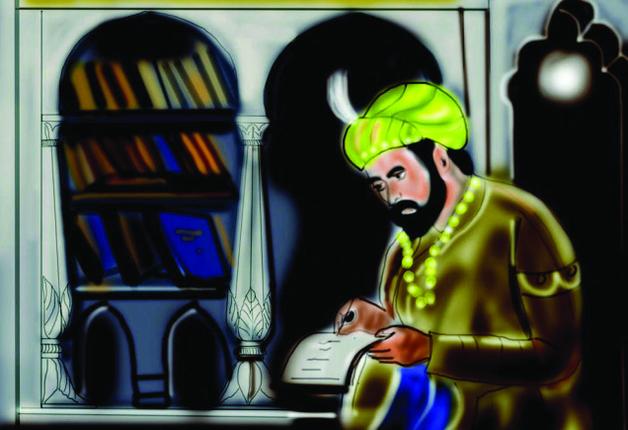
The Mughal era books need to be preserved for posterity

The library of Dara Shikoh, near Chakkipat on the Yamuna’s right bank in Agra, is now a municipal office and its vicinity boasts an akhara. The books housed in the library or most of them, were brought to Delhi when Shah Jahan moved his capital to it and wanted the heir apparent Dara to stay by his side lest any harm befell him if he was appointed governor of some province (subha), like his brothers Aurangzab, Shuja and Murad. The library existed in the Kashmere Gate area, later becoming a polytechnic institute, another library behind the Jama Masjid, became a girls’ school. But the question is what happened to most of the books? Quite a few of them were destroyed in 1857 by the British, bent on revenge. Some others fell into private hands and were sold as “raddi” during the upheaval of 1947 by those going away as refugees to Pakistan. It’s worth noting that the books in the library of Prof Ahmed Ali, author of “Twilight in Delhi”, in Kutcha Pandit were sold one by one by a servant who had stayed behind and was reduced to penury after the professor opted to migrate to Karachi.

Some books of the Mughal era may be found in the National Library, in the British Museum Library in London and in the U.S. Congress Library. Besides some others were taken away to Pakistan by migrants. A few of those books are with the old residents of Delhi, Lucknow, Hyderabad and Agra, like the now disintegrated library of Nawab Faiyaz Khan, but 75 per cent of them are lost forever. It was something like the loss of Greek, Arabian and Persian masterpieces when the libraries in Athens and Alexandria were burnt during wars and by Mongol and Han hordes and vandalism by fiercely bigoted Arab and Turkish soldiers fired by the zeal to destroy all vestiges of the “idolatrous ages” of the Middle East. Such destruction also took place during the medieval Crusades and earlier by Attila and Hannibal. The Emathian Conqueror (Alexander) may have spread the house of Pindars but little else.

In a study on medieval libraries, written in 1970, father had this to say:

“The Sultans of Delhi and their nobles, who preceded the Mughals, had rich literary tastes and established a large number of public and private libraries. Jalaluddin Khilji founded the Imperial Library in Delhi and appointed Amir Khusrau its librarian. But it was Babar who really did augment the Delhi library.

“Humayun, inherited the legacy and added to the library seven halls, each named after a planet. He was so fond of books that he carried them to the battlefields. On one such occasion in fact he lost several rare ones. At Agra, he raised a set of magnificent buildings called Khanna-i-Tilism (house of magic), the first floor of which housed the library. Towards the end of his adventurous life he converted the pleasure house of Sher Shah in Delhi’s Purana Quila into a library.

“Akbar, although illiterate, turned out to be the greatest patron of art and translation of books, for each of which he maintained a separate cell. The biggest of his several libraries was the Imperial Library in Agra Fort. According to Abul Fazl, the library was divided into several parts. Some of the books were even kept inside the harem.

“Experienced people bring them daily and read them before His Majesty who hears (sic) every book from beginning to end,” he wrote.

Akbar had books brought from distant places and also encouraged scholars to write treatises, calligraphists to copy them and painters to illustrate them. He bought a richly illustrated version of the manuscript of Razm-Nama (the Mahabharata translated into Persian) for £40,000. “There were more than 24,000 books in the Imperial Library alone and they kept increasing. Fazl’s collection of 4,300 manuscripts was added to the library and the library of Itimad Khan was acquired after the conquest of Gujarat.”

Jahangir was a great lover of art, with an avid interest in old tomes. Shah Jahan had a godly collection of books. His son Dara, however, was more studious and collected books on poetry, Sufism and mythology, including Hindu scriptures. Aurangzeb’s books were mostly religious ones. The latter Mughals did not evince much interest in books. Bahadur Shah Zafar was however a lover of learning, being a poet himself. The disintegration of Mughal libraries took place during the First War of Independence and the upheavals of Gardi-ka-Waqt but after that English scholars made good use of them, like William Fraser.

It would be worthwhile if the Union Human Resource Ministry and Archaeology Survey of India acquire Mughal era literature from all known sources and establish a Central Mughal Library in the near-deserted Purana Quila, bigger than the partially revived one of Dara Shikoh.

source: http://www.thehindu.com / The Hindu / Home> Features> MetroPlus / February 23rd, 2015

Anwar chose to fight death

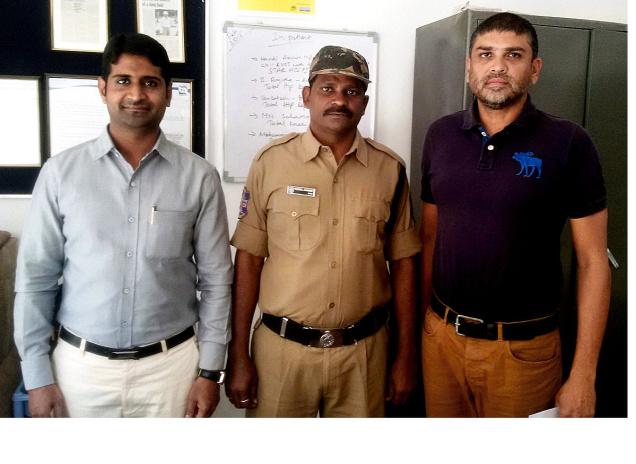
Mohammed Anwar, who is now a Home Guard with the Jeedimetla police, is flanked by Mujtaba Hasan Askari and Mohd. Imran of Helping Hand Foundation.– PHOTO: By Arrangement

When everyone gave up hope, including doctors, he clung on to dear life. Today, Mohammed Anwar is not only hale and healthy, but has landed a government job too. Diagnosed with Acute promyelocytic leukaemia, a rare type of blood cancer of the white blood cells, Anwar had a slim chance of living. He grew anaemic and feeble by the day and was bedridden for a year.

A car driver by profession, he couldn’t afford the huge expenses at a corporate hospital where he was admitted two years ago. He was then referred to the Nizam’s Institute of Medical Sciences (NIMS).

It was here that somebody told him about the Helping Hand Foundation (HHF) which helped patients in distress. Once convinced about his pathetic condition and poor financial position, the HHF took over his case. Under its Cancer Support Programme for the bread winners, the HHF supported the induction chemotherapy.

Anwar was determined to live for his family. He responded to the treatment and survived blood cancer to which many succumb. His one worry was the education of his three daughters. With a healthy diet like whole grains, pulses, legumes and millets his condition improved. “We also gave Vitamin D3 supplements, which are a major source of fighting cancer,” says Mujtaba Hasan Askari, who heads the HHF.

A weak and emaciated Anwar slowly gained weight as his ailment went into remission stage. Even as he was on the road to recovery, Anwar applied for the position of a home guard in the Cyberabad Police. He was selected as a driver attached to the Jeedimetla Police Station. “I couldn’t believe my ears when I heard of my selection. God has been very kind to me,” says an overwhelmed Anwar who joined duty a fortnight ago.

source: http://www.thehindu.com / The Hindu / Home> News> Cities> Hyderabad / by J.S. Ifthekhar / Hyderabad – February 28th, 2015

Officials undergo RTI training

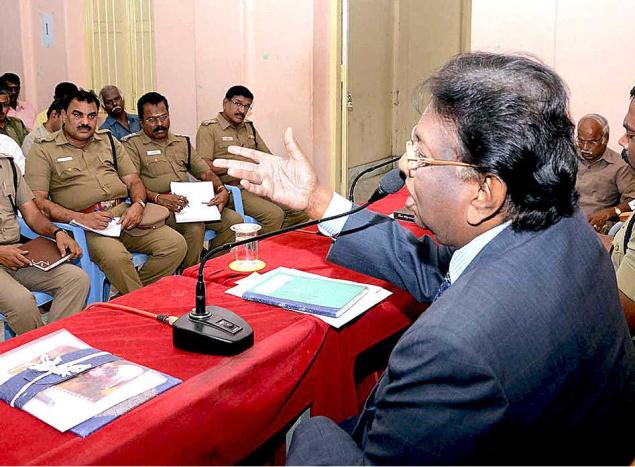
S.F. Akbar, State Information Commissioner, speaking at the training programme for government officials on Right to Information Act in Thanjavur on Friday.— Photo: R.M. Rajarathinam

State Information Commissioner S.F. Akbar inaugurated a training programme for government officials on the Right to Information Act here on Friday.

Superintendent of Police G. Dharmaraj, Dy. SPs, police officers, and officials from various government departments, including Revenue, participated in the training programme that sought to enlighten them on dealing with RTI related issues.

Later, the participants were exposed on the need to reply properly and in time to RTI related queries, dealing with issues arising out of RTI applications and the like.

source: http://www.thehindu.com / The Hindu / Home> News> National> Tamil Nadu / by Special Correspondent / Thanjavur – February 28th, 2015