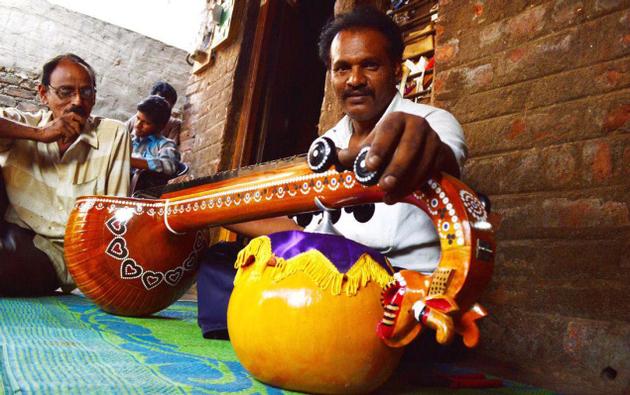
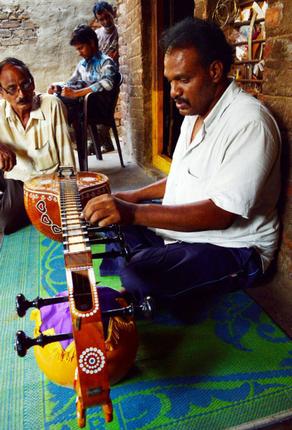
Nuzvid Veena maker Sheik Mabu Saheb training youths at his residence in Nuzvid in Krishna district. Photo: T. Appala Naidu / The Hindu
Sheik Mabu Saheb, a renowned Nuzvid veena maker of Krishna district, has received the Best Artisan Award-2013 from the Andhra Pradesh Handicrafts Development Corporation Limited for his work – Veena with peacock design.
He bagged the award in the category of Veena Making in which artisans from Bobbili were also in the competition. Mr. Saheb had stolen the hearts of the jury members with his small size veena that produces vibrations and sound like any other professional-size veena. “The award is recognition to the art rather than an individual artiste. Despite having a great demand for veena from the world of Indian classical music, shortage of veena makers is still creating problems for the industry’s growth,” Mr. Saheb told The Hindu.
Nuzvid Veena maker Sheik Mabu Saheb training youths at his residence in Nuzvid in Krishna district. Photo: T. Appala Naidu / The Hindu
Handicrafts Department Assistant Director K.N. Murali Krishna said plans were afoot to use the services of Mr. Saheb in training youth in veena making and designing. In a guru-shishya parampara, Mr. Saheb learnt that art from his father Sheik Meera Saheb, one of the first generation veena makers alive. According to Mr. Mabu Saheb, there were only nine veena makers engaged in the profession, spreading the art.
source: http://www.thehindu.com / The Hindu / Home> News> Cities> Vijayawada / by T. Appala Naidu / Nuzvid – July 10th, 2014
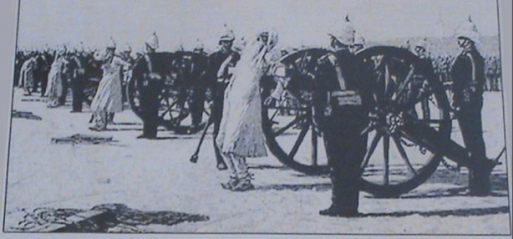
[A sketch of Maulvi Baqir’s execution. He and other scholars were tied to canons and were publicly blown away]
Maulvi Muhammad Baqir was a great advocate of Hindu Muslim unity. When in order to weaken the freedom struggle the British started to sow the seeds of discord among the public Delhi Urdu Akhbar challenged them. On 4 June 1857 Maulvi Muhammad Baqir warned the masses of the conspiracies of the British and appealed to them to remain united. ‘Remember whoever misses this opportunity, falls prey to the tricks and is thumped by the inducements, tricks, and promises or is overwhelmed by the pomposity of the British, he is destined to face embarrassment in this world and the hereafter. No remorse will be of any help then and everyone will have to repent.’
.
By Laiq Rizvi
History of the Freedom Struggle is a live and self-narrating tale of dedication and selfless sacrifices. No one knows how many mothers lost their sons, how many women got widowed and how many spent their lives in prison cells and died there in the struggle to get their motherland freed from the clutches of slavery. Urdu writers too played active and leading role in this struggle. Pens became the swords and words banners of expression. The first name among those journalists who did not hesitate in sacrificing their lives for their country’s liberation by all means is that of Maulvi Muhammad Baqir, editor of Delhi Urdu Akhbar.
An sketch of Maulvi Baqir. He was tied to a canon and was publicly blown away.
A sketch of Maulvi Baqir’s execution. He and other scholars were tied to canons and were publicly blown away.
Maulvi Muhammad Baqir came from a respectable and educated family of Delhi. His father Maulana Muhammad Akbar Ali was a known Shi’a scholar and a known Mujtahid of his time of Delhi.
After finishing his religious education Maulvi Muhammad Baqir went to Delhi College for further education. After completion of his education he took up several jobs such as teaching at Delhi College and as a Tehseeldar in the Revenue Department but that was not his final goal.
In 1836 when the Government, after amendment in the Press Act, allowed publication of newspapers, he entered the field of journalism that became his art and identity.
In January 1837 Maulvi Muhammad Baqir launched weekly Delhi Akhbar. After Jam Jahan Numa of Calcutta this was the second Urdu language newspaper in the Indian sub-continent and first in north India. This newspaper survived for about 21 years during which its name was changed twice. On 3 May 1840 it was renamed as Delhi Urdu Akhbar while on 12 July 1857 Delhi Urdu Akhbar was renamed after the Mughal Emperor Bahadur Shah as Akhbar-al-Zafar. And then its ten last issues came out with this name.
Delhi Urdu Akhbar is the pioneer and founder of National Urdu journalism. Maulvi Muhammad Baqir used and introduced modern technology in the newspaper and shaped it to meet and fulfil contemporary demands. He focussed on news creating interest and newsworthiness in headline and newswriting and classified the news items. The section for Court (government) news was headed as ‘Huzoor-e-Wala’ while [East India] Company’s news was carried under ‘Sahib-e-Kalan Bahadur’.
In order to get latest news he had developed a network of authentic and reliable waqa-e-nigar [narrators or correspondents] who had access to higher authorities.
Delhi Urdu Akhbar was the proclaimer of the feelings of the nation. That was the period when there was no political party in the country. In such an atmosphere the newspaper played vital and leading role in creating political awakening in the masses and uniting them against the foreign rulers. It ignited the love of freedom and gave the courage and confidence to rally against the British Raj. An official report of 1853 described it as a wide-mouthed and outrageous newspaper.
Soon after the start of freedom struggle it became a freedom fighter itself. The fire of Freedom that got ignited in Meerut on 10 May 1857 helped Mujahideen [freedom fighters] reach Delhi by 11 May. Following this started a series of events of the magnitude that shook the ground underneath the feet of the Britishers. Maulvi Muhammad Baqir responding to this call to freedom was busy doing jihad with his pen. In its report of 17 May 1857 Delhi Urdu Akhbar carried a detailed report of the advance of Mujahideen. Following is an excerpt from the report.
’11 May 57 AD, due to the summer weather court proceedings were being held in early morning. Saheb Magistrate was busy presiding in the court room… At about 7 am Bridge In charge came and informed, “Some Turk soldiers have gone on a violent spree and started beating us. They wanted to plunder the collected revenue. Under some pretexts I engaged them in chatting and ulocked the barrage so that they could not advance further. They have burnt down the Revenue office and Saheb’s Bungalow at Sleempur Road.” As Saheb became thoughtful for a while and then stood up and went to Col Magistrate who was holding a session in the adjoining room. After some ghitpit [chatting in English] he went to the Treasury Room and in consultation with the Treasury Officer secured the treasury and ordered the treasury guards to get ready. As per order they loaded their guns and stood in a stand by position. Security was also deployed at the Jungi Darvazah at Kachehri. It spread panic in the court room and its staff. Then with that information Magistrate Saheb went to the Commissioner. In the meanwhile rumours said that the Turk riders had gathered under the Jharonka of the Fort… A little later reports were heard that Qiladar, Bade Saheb, Dr Saheb and maim log [English ladies] had been killed at the gate and the riders had managed to enter the fort. His Lordship, wearing the ritual turban and an English sword also came to the court.
‘Initially these were few riders who came to the city and slaughtering the Britishers in Daryaganj, setting fire to the bungalow sent Dr Chaman Lal to the real Darul Shifa [killed him]. They were later joined by more riders and voices were heard and [rumours] that such and such British had been killed here and another such and such is lying killed there.’
In addition to eyewitness report about Delhi this issue also carries the news of freedom struggle from various parts of the country including Meerut, Saharanpur, Lucknow and Ambala. Reporting the causes of the revolt it reads, ‘There was already discontentment among Turk Riders and the fact that cartridges are greased with pig fat and tallow… For refusing to carry orders 85 soldiers have been imprisoned and on Monday inspired by religious spirit [Islam] and the zeal to defend religion flared up. All of a sudden all those in the platoon and the riders, in whatever state they were, took up their arms and freed their brethren from the jail and attacked the platoon and the whites.’
In order to encourage freedom fighters Maulvi Baqar commended them strongly and persuaded the masses to cooperate with them and participate in their struggle. Such stimulating writings may be seen in several issues of Delhi Urdu Akhbar. ‘This gallantry of yours and the courage and zeal with which you have shattered the perversity of such a strong and arrogant empire and have humbled its Pharaoh like ego and Shaddad like pride will be remembered in channels of history…and you have relieved the masses of India from the unseen curse that had fallen upon them.
‘O my countrymen, Rule has changed; time has changed. System and management of government has changed. Now you too should change your habits, get rid of easy life style and your love for comforts that you have been accustomed since your childhood. Reform yourselves. Discard your habit of carelessness and fearfulness and embrace courage.’
Delhi Urdu Akhbar did not carry Maulvi Muhammad Baqir’s byline but researchers are of the opinion that most of the writings came from his forceful pen. At times Maulana Muhammad Hussain Azad also gave a helping hand to his father. The issue of 24 May 1857 includes his poem Tareekh-e-Inqalab Ibrat Afza [History of change is a lesson] that enthused in masses a new spirit and zeal. Some of the verses are:
Hai kal ka abhi zikr keh jo qaume nasara thi
Saheb-e-Iqbal o jahan bakhsh jahandar,
Allah hi Allah hai jis waqat keh nikle
Aafaq men taigh-e-ghazab Hazrat Qahar,
Sab jaohare aqal unke rahe sab taq pe rakhkhe
Sab nakhun tadbeer-o-khirad ho gai bekar,
Kaam aaee na ilm-o-hunar hikmat-o-fitrat
Poorab ke tilangoN ne liya sab ko yahan maar.
This forceful and armed resistance shook the British badly. In order to intimidate the masses notices from officials were displayed at various points. Maulvi Muhammad Baqir reproduced the text alongwith a strong and well-argued rebuttal. To defeat the British he uses their own phoney claims:
‘They [the British] call themselves the protectors and custodians of their subjects. Therefore it is incumbent upon them to return the trust, i.e. India back to the Indians unchanged and unaltered.’
Delhi Urdu Akhbar linked journalism to social issues as well. [Political] Situation coupled with the conspiracies of opportunists would lead to the shortage of food items and commodities of daily use. [Hence] Dishonest shopkeepers started charging prices as they pleased. It also created a situation of loot [illegal profiteering] and hoarding. Delhi Urdu Akhbar showed the mirror to those who were involved in such activities like this:
‘Shopkeepers of the city have gone on a rampage of high handedness and are behaving in a very cruel manner. With regard to cereals and other essential items people are suffering as most of the commodities are not available and if available then they are very expensive. In every market only small number of shops remains open and what remain open they present the [proverbial] scene of customers as ek anar sau beemar [one pomegranate for one hundred patients]. Similarly cereals [sold] are rotten and other commodities are of inferior quality. But hunger is powerful and lacks mercy and desperation worsens the situation. Helpless customers have no choice and buy whatever is available thinking it a blessing.
‘Because of this profiteering and black market masses are worried and confused. Be they the city dwellers or the outsiders most of them have resorted to plundering and the power and writ of police stations has become nil… The city is being looted. Many disguised as soldiers indulge in extortion and loot.’
Maulvi Muhammad Baqir was a great advocate of Hindu Muslim unity. When in order to weaken the freedom struggle the British started to sow the seeds of discord among the public Delhi Urdu Akhbar challenged them. On 4 June 1857 Maulvi Muhammad Baqir warned the masses of the conspiracies of the British and appealed to them to remain united. ‘Remember whoever misses this opportunity, falls prey to the tricks and is thumped by the inducements, tricks, and promises or is overwhelmed by the pomposity of the Christians [the British], he is destined to face embarrassment in this world and the hereafter. No remorse will be of any help then and everyone will have to repent.’
By the beginning of September 1857 when Mujahideen became weak and started facing defeats, somewhere along the lines Maulvi Muhammad Baqir also started losing heart. The issue of 13 September 1857 reflects this and this proved to be the last issue [of Delhi Urdu Akhbar]. Maulvi Muhammad Baqir was arrested for revolt and without being tried, on 16 September 1957 was tied to a canon and was publicly blown away in front of the Khooni Darwaza. But this martyrdom strengthened the ongoing freedom struggle and sharpened the resolve of Mujahidana zeal of Urdu journalism. Contemporary publications and later newspapers and magazines followed the same national spirit and the mission to fight for liberation that had been set by Maulvi Muhammad Baqir.
Maulvi Muhammad Baqir’s newspaper had played a key role in igniting the spirit and courage in his fellow countrymen to fight for freedom. Any description of the freedom struggle will always remain incomplete without mentioning this brave and selfless Urdu journalist. Garabchand Chandan writes, ‘The short comments in Delhi Urdu Akhbar criticised the nepotism of the British, inefficiency of its police and bad practices of government departments. Therefore this newspaper did a tremendous service in creating an environment for and in providing complete information about the great rebellion of 1857.’ (Urdu Sahafat, Urdu Academy, Delhi, Page 88)
Delhi Urdu Akhbar was part of a mission. It was not launched for financial gains or fame and recognition. After paying for the expenses whatever return remained Maulvi Muhammad Baqir used to distribute it to help the poor. Its issues from January 1840 to September 1841 are available in the National Archive. In 1843 Maulana had also launched a religious magazine Mazhar-e-Haq that lasted until 1848.
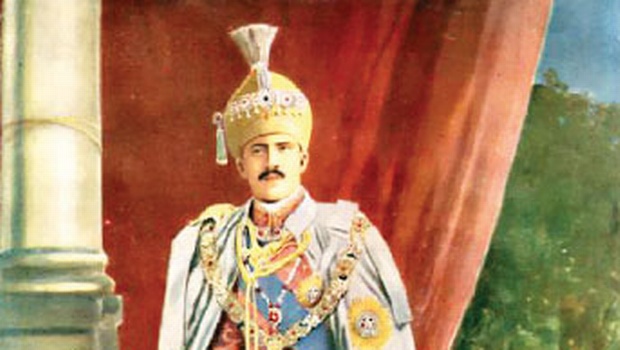
His name was Mir Osman Ali Khan Siddiqi. He used a 185-carat diamond worth $200 million for a paperweight, had enough pearls to pave Piccadilly Circus and a stable of horses that would’ve put Godolphin to shame.
His ancestor Mir Qamaruddin Khan started a dynasty on behalf of the Mughals on July 31, 1720, which ended in a sheep farm.
Qamaruddin Khan was Hyderabad’s first Nizam—Urdu for Administrator of the Realm— and Osman Ali Khan was the 7th and last Nizam who has been declared the world’s richest Indian ever—after adjusting his wealth to current inflation figures. In the 1940s, his fortune was estimated to be $2 billion, which was about 2 per cent of the US economy while Independent India’s annual revenue then was only $1 billion.
The British gave him the title of His Exalted Highness because of the taxes he paid to the Empire—his main palace had 6,000 staffers. The only job 38 of them were entrusted with was dusting chandeliers.
The world’s richest Indian was also an enigma: the Nizam was so stingy that he wore the same fez cap for 35 years, wore crumpled pajamas, ate off a tin plate and smoked cigarette butts, refusing to buy even one fresh pack all his life.
His treasury would have put to shame the wealth of the richest oil sheikh: hundreds of millions of pounds worth of gold and silver overflowing in his coffers as well as jewels worth £400 million. He had a prodigious appetite for sex, and had one of the largest private pornographic collections in the world—using hidden cameras inside his zenana and private guest quarters.
Before he died, he sired children from 86 mistresses in his harem and had more than 100 illegitimate children. He also left behind a legacy of legal disputes with hundreds of descendants fighting over money and real estate.
By the 1990s, claimants to his wealth had gone up to 400 legal heirs. Of the Nizam’s 34 children, two sons and three daughters are still alive while there are a total of 104 grandchildren.
The most helpless of all of them is Prince Mukarram Jah who was nominated by his grandfather, the 7th Nizam, to succeed him: he didn’t think his sons deserved to be ruler after his death.
Unfortunately, His Exalted and Imperial Highness Rustam-i-Dauran, Arustu-i-Zaman, Wal Mamaluk, Asaf Jah VIII, Muzaffar ul-Mamaluk, Nizam ul-Mulk, Nizam ud-Daula, Nawab Mir Barkat Ali Khan Bahadur, Sipah Salar, Fatah Jang, Nizam of Hyderabad and Berar, Imperial Prince of the Ottoman Empire and Honourable Lieutenant-General, or simply, Mukarram Jah lives as a frail old diabetic in Istanbul, amidst memories of untold wealth, expensive ex-wives and 14,718 courtiers who bled his inheritance dry.
Of his life in Australia as a sheep farmer decades ago, an aide told an Australian newspaper that “Jah loves to be surrounded by court jesters, just like the maharajahs of the past”.
The remains of his inheritance lie in NatWest Bank, London—£1m deposited by his grandfather in 1948. Now the money is worth almost Rs 3 billion.
When the 7th Nizam deposited the money, the future of Hyderabad was at stake. India wanted Hyderabad to be part of the Union, but the Nizam was inclined to make Hyderabad part of Pakistan—like an Indian West Berlin in the 1940s.
As Mir Barkat Ali Khan remained in a state of indecision, his finance minister Moin Nawaz Jung, who was in charge of the money—£10,07,940 and nine shillings— signed it over to H I Rahimatoola , Pakistan’s new high commissioner in London.
The Indian government came down on the Nizam with all its newly acquired might and forced him to cable Westminster Bank to freeze the account. In September 1948, the Indian Army formally annexed Hyderabad.
The British government converted the money into war bonds and subsequently turned it into a fixed income deposit as it remains to the day.
National Westminster Bank, now incorporated into the Royal Bank of Scotland, refuses to release the sum unless all three parties—India, Pakistan and the Nizam’s heirs—come to an agreement.
The Nizam’s heirs have wanted the foreign ministers of both India and Pakistan to sort it out when they met in Islamabad in September, but they were disappointed.
Nawab Najaf Ali Khan, the other grandson of the seventh Nizam, had even written to President Zardari seeking help. India has offered an out-of-court settlement, but Zardari has not been forthcoming. There is even a Nizam Family Welfare Association.
In 2008, they met Prime Minister Manmohan Singh and then foreign minister Pranab Mukherjee to help them. They are also pressuring the Pakistan government to initiate a dialogue with the Indian government. If the dispute ever gets resolved, the money would be shared between all three as India was owed crores of rupees in back taxes.
Meanwhile, Mukarram lives in penury in a small Istanbul apartment.
He and his brother Muffakam Jah share a London lawyer—Allen & Overy— in a case against NatWest; at one time, he was so poor he couldn’t afford legal fees. Mukarram wasn’t as prolific as his grandfather, but he had married five times only, including a former Miss Turkey who was his third wife.
Turkey has a karmic link with the Nizam—his mother and his first wife Princess Esra were Turkish. So was his last wife, Princess Orchedi.
In the 1980s, when he was moving to raise sheep in Perth, he met and married Helen Simmons, who died of AIDS later.
The third wife was Turkish. The match was arranged by his Turkish aide, Demir Bukey, who was sent to Istanbul with $100,000 to find him a bride. Bukey introduced Manolya Onur, whom the Nizam married in 1990 because on their first meeting in Istanbul, she seemed to him as a woman who “might open a station gate”.
The marriages and subsequent divorces cost him a lot of money in alimony—Esra got alimony of £12 million.
It’s thanks to Esra who returned to India a decade ago with her two children, that the Nizam’s royal residences—Chowmahalla and Falaknuma—were renovated and a semblance of order was brought to the accounts.
Legal wrangles have cost the once flamboyant Mukarram dear: when the Indian government forced the Nizam’s trustees to sell the famous jewels in lieu of tax, the price the court fixed for it was only £43m, lower than the £230m the Nizam’s family had estimated. Mukarram’s share was £13m, but he did not get the money thanks to litigation by his grandfather’s illegitimate dependants.
Mukarram faces 800 writs from relatives—legitimate and illegitimate—who are challenging his entitlement for the privileged share in Nizams’ private estate. In the end, he got Rs 218 crore for the jewellery.
Mukarram’s inheritance originally included one of the world’s most expensive jewellery collection, starting from the 18th century to fin de siècle 20th century. The collection comprised 173 jewels that include over 25,000 diamonds, Colombian emeralds, diamonds from the Golconda mines, Burmese rubies and spinels, pearls from Basra and the Gulf of Mannar. The diamonds alone weigh over 12,000 carats; 2,000 emeralds weigh over 10,000 carats; and pearls exceed 40,000 buddums—the Satlada, the seven-stringed Basrah pearl necklace which has 465 pearls embedded in it is a legendary piece of jewellery.
Mukarram would already have known that his grandfather was the world’s richest Indian ever. In the small Istanbul flat he shares with his fifth wife Princess Orchedi, does he remember his own words to a journalist, “I’m not supposed to have financial problems… I’m supposed to have good advisers.” It seems a fitting epitaph to one of the most legendary royal treasures of all time.
source: http://www.newindianexpress.com / The New Indian Express / Home> Magazine / by Anika Mohla / October 21st, 2014
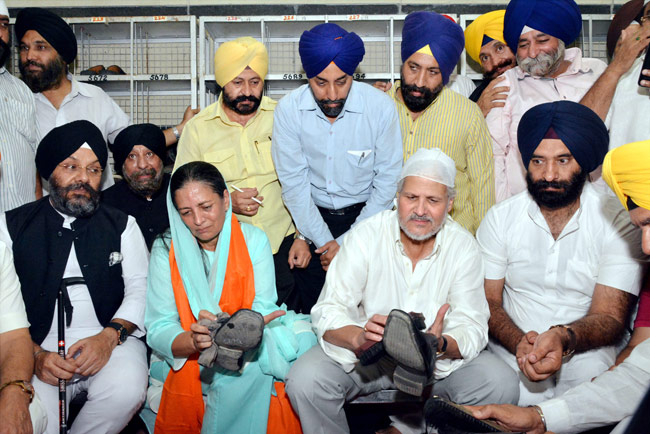
Delhi Lt Governor Najeeb Jung at the Bangla Sahib Gurudwara (Photo: PTI)
Taking Prime Minister Narendra Modi’s Swachh Bharat mission forward, Delhi Lt Governor Najeeb Jung on Thursday morning visited the Bangla Sahib Gurudwara and performed kar sewa.
The Lt Governor, who was accompanied by his wife Ameena, polished shoes of devotees as part of the kar sewa at the gurudwara in the heart of the capital.
Kar sewa, which translates as a form of selfless service, is a Sikh ritual.
“A clean India was the vision of Mahatma Gandhi and government has done a symbolic gesture by starting the drive today to make it come true. The cleanliness drive in Delhi is a five-year mission and will go on till 2019,” Jung said.
“I request the government, municipal bodies, hospitals, and the people to make combined efforts to keep Delhi clean. Let cleanliness become a habit,” the Lt governor said.
Describing polishing shoes as a “humbling experience”, Jung said he wanted to visit the gurudwara since a long time and this is the reason he chose it to launch the campaign.
Jung was also given a tour of the temple’s heritage museum where he interacted with the staff.
“My message to public is that India is a secular country and that I feel very happy coming to this place of worship,” he said.
source: http://www.indiatoday.intoday.in / IndiaToday.in / Home> India / New Delhi – October 02nd, 2014
With their help government agencies and NGOs have been able to establish their reach in a community overwhelmingly orthodox and conservatives
Jaipur:
Every day after namaz is over, Abdul Aziz, imam of Masjid Alam Shah in Tonk doesn’t forget to deliberately engage himself in talks with a different group of people. After some informal chat about family and work, he comes down to the business; He talks to them about importance of institutional deliveries and family planning.
Unbelievable as it may sound, a group of 26 clergymen has become voice of change in their community. Breaking stereotype image of Muslim clerics, the one holding rigid orthodox views particularly on health and family planning, they have been spearheading a campaign to save mothers and newborns.
With their help government agencies and NGOs have been able to establish their reach in a community overwhelmingly orthodox and conservatives.
High rate of illiteracy and extreme poverty had only complicated things further for government health workers and volunteers. Not surprisingly, Tonk was one of the worst performers in IMR and MMR in Rajasthan as people resisted to formal health care, family planning and immunisation for the fear of breaking religious laws.
“We have seen women beaten by their men even if they went to aanganwari centre where pregnant mothers and young children are provided nutritional food,” said Ejaz Hussain, who is also a cleric.
“We needed a credible voice to convince people to adopt standard health practices. Someone who could assure people that deliveries, immunisation or family planning was not against their religion, which only clerics could have done,” said Hemant Acharya, campaign coordinator for Save the Children in Rajasthan which came up with the idea of engaging religious leaders with the campaign to reduce IMR and MMR in Tonk.
Mohammed Iqbal, a Muazzin couldn’t agree more.
“Since I am a religious leader, people listen and act on what I say. There is a large family of eight brothers and about same number of sisters but none of them had received vaccines because they feared that it would make them ill. I was approached by a volunteer to convince the family for immunisation. The family agreed to get vaccines after I told them,” he said.
source: http://www.deccanchronicle.com / Deccan Chronicle / Home> Nation> Current Affairs / DC / Sanjay Bohra / October 04th, 2014
by Dr. Sathyanarayana Bhat , Principal, Government Ayurveda Medical College, Mysore
It is Dasara season. How can we remember Mango now? Don’t get surprised. I have seen at Cairns, Australia, a tree full of ripen mangoes during Dasara. Incidentally, Southern hemisphere mango trees yield fruits now. Further more, do you know a mango variety called dusseri!
Let us know more about cardio-protective effects of this divine fruit. Mangifera indica, the indigenous fruit of India, was found wild at Himalayas. Now, it is cultivated world over. In the list of heart tonic medicinal plants, mango occupies first place.
The ripen fruits are not only attractive to look but also good to eat. Amrapali, is a Buddhist site, where mango cultivation was prominent. Kalidasa describes mango flowering and fruiting in his many works. Moghul King Akbar planted over one lakh mango saplings at Lakhibagh, Dhrabanga, North Bihar. Mavalli at Bangalore was mango grove of Hyder Ali times. Even Mysore Wadiyar Dynasty has planted mango trees during Nalvadi Krishnaraja, in pre Independence era.
Every part of this tree is medicinal. Flowers, young leaf, tender, unripe and ripen fruit is used in different forms both for culinary and medicinal uses. Kernel is best in bleeding disorders and diarrhoea. Many diabetics are hesitant in using mango. Ayurveda texts encourage use of mango tree bark and seed kernel to reduce sugar levels in Diabetes. Mangiferin, an active ingredient in mango leaf is a very effective antiviral drug. Particularly it is very effective against herpes, both locally and orally. Regular use of the ripe mango can keep away chronic constipation, both in diabetic as well as cardiac patients.
Anti oxidant properties of mango is evident. Therefore regular use of the fruit can keep you and your heart young.
[Dr. Sathyanarayana Bhat can be contacted on Ph:0821-2444701 or Mob:91-09448081005 or email:sathyanarayana.bhat@gmail.com]
NOTE: Moolika Dasara Expo is being held at Chandravana, a garden of medicinal plants maintained by Government Ayurveda Medical College and Hospital, Mysore, near Kukkarahalli Lake on Bogadi Road. It will be open to public till Sept. 30 between 9 am and 6.30 pm.
source: http://www.starofmysore.com / Star of Mysore / Home> Feature Articles / Saturday , September 27th, 2014
While we speak of how our city’s infrastructure suffers due to the nexus of contractors and leaders, it affects even our children. Recently, I had been to a Government School adopted by Star of Mysore. A few blocks away was another Government School and I dropped in to see how they were doing. It was shocking.
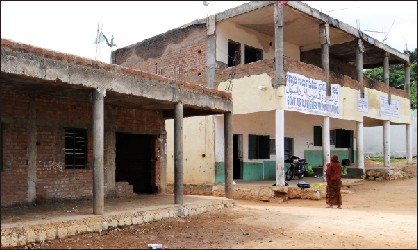
The Haleem Nagar Urdu and Kannada School was started in 2010 by the Government on a generous piece of land donated by the Haleem Nagar Mosque.
After giving land, the mosque allowed the government to use an existing structure with 6 very tiny rooms as classrooms till the government built proper classrooms in the vacant land. Soon a contractor was given the contract to build and construction began. Two new classrooms were built. The money from the government was fully utilised but…
Here is the shocker. Only two of the 7 classrooms built are useable. The two classrooms built on the first floor are not only incomplete but the school better have Jack and his bean stalk as one of its students for there are no stairs to reach them! Yes, the contractor built classrooms on the first floor but no stairs ! To add, the other three unfinished classrooms have no windows, doors and one has a wall missing! And this school has 118 students from class 1 to 7! So how do they manage?
Now that’s another shocker. I saw the first standard and second standard students cramped in one classroom. One teacher teaches both the classes two different subjects and in the same period! How does she do it ? The first half hour she gives some written assignment to the second standard students while she teaches the first standard students.
When done, she gives them a written assignment and turns her attention to the second standard students who can now stop writing and start listening. This is the case even with third and fourth standard students. Only the 5th, 6th and 7th standard students don’t have a problem because they are fewer in number and can manage in the tiny classrooms! And all the 118 students from class 1 to 7 are taught all subjects by 5 teachers.
Now, the construction was in the hands of the Head Mistress, committee member and the contractor. But only the Head Mistress has been suspended; the committee member roams free and the contractor reportedly claims he could not finish his work as the government did not pay him! Who suffers? The children.
Government School construction is always a money-making scheme. That is why the government now tries to tie-up with concerned citizens and social clubs to complete school buildings by providing matching grants.
In another case of bad construction and political callousness, last year the previous MP had released Rs. 3 lakh for building a classroom at a school in Sathagalli. The MP’s office themselves chose the contractor. A few months later the structure was up, they informed. What was the structure? The contractor had built four pillars and a roof but there were no walls! At best it was not even a car shed. Yet the contractor had the gal, or should we say shamelessness, to paint “Donated by Honourable ……. MP.” It was an insult to the MP and a great disservice to the children who were eager to have a classroom.
Finally, the walls were put up after threat of media frenzy and after the school itself supplied windows and doors. Now, MLA Tanveer Sait has promised the school a classroom next to this one.
Now, this MP was considered to be “intellectually” inclined. If such a leader can be so callous and insensitive to a children’s cause, what can we expect from contractors who are walking a tight rope between giving a cut and constructing as per plan.
As far as this particular Haleem Nagar School is concerned, the biggest photograph in the front office, which doubles as HM’s chamber, is that of late Azeez Sait, the father of that area’s MLA Tanveer Sait. In fact it is bigger than Mahatma Gandhi’s and Nehru’s and former President Fakhruddin Ali Ahmed’s put together. May be, MLA Tanveer Sait is unaware about the state of this school for, if he did, he surely would have taken action, for the school is an insult to the memory of his popular father. Also since he is the one who is helping the Sathagalli School, we are sure he will do the same for this school which also is in his constituency.
Also, the other aspect of the school is that it is an Urdu school. I spoke to a few children and noticed that they knew some Kannada and no English at all. Now, Urdu is a fabulous and a poetic language, but how will it help these kids fare in this rapidly globalising India? They will be left in the lurch unable to participate in the new economy. May be the MLA can provide for a full time English teacher or at least request organisations like Pratham for assistance.
We are sure there are many such schools that are in dilapidated condition that need help. May be one of the many social organisations in city can help Haleem Nagar School to get a staircase, a wall and a few windows so the poor students can study in a good school and in a congenial atmosphere.
Our government may be deaf, but it doesn’t mean we have to be too; our government may be blind, but we need not be; our government is heartless, but we cannot be, we still have a conscience. So we must pitch in.
Who knows, there may be a gem among these 118 students in Haleem Nagar school or any other such schools, who one day may change our Nation’s fortune. We can make sure it’s for our good, or we can ignore it and wait for something bad to happen and then the society will be as much to blame as the incompetent leaders, conscience-less teachers and greedy contractors.
e-mail:vikram@starofmysore.com
source: http://www.starofmysore.com / Star of Mysore / Home> Feature Articles / Saturday , September 27th, 2014
MLA Tanveer Sait along with kids is seen lighting the lamp during the inauguration of Gemini Circus in city last evening as Mayor N.M. Rajeshwari Somu, Corporators Suhail Baig and Mahadevamma, former Mayor Ayub Khan and Circus Manager Premnath look on. Picture right shows a section of audience who witnessed the show last evening.
Mysore :
The Gemini Circus has pitched its tent in city to entertain the citizens and tourists visiting Mysore during Dasara.
The show was formally inaugurated by District Minister V. Sreenivasa Prasad last evening at the Horse Park near Karanji Lake in Nazarbad. Later, MLA Tanveer Sait along with children inaugurated the programme by lighting the lamp.
The Circus troupe, consisting of 180 artistes and various animals, will perform various daring acts to entertain the visitors.
This year’s attraction includes artistes from America, who are performing for the first time in Mysore.
Daily there will be three shows at 1 pm, 4 pm and 7 pm.
For the welfare of artistes, a Circus Fans and Welfare Association has been formed with its main branch in Bangalore.Those interested in helping for their cause, may kindly do so by giving voluntary donations.
For details and advance booking of tickets contact Mob: 94480-54151.
ource: http://www.starofmysore.com / Star of Mysore / Home> General News / Saturday , September 27th, 2014
The city just might have the pride of an underground museum corridor from Darshanbilas to Farhat Baksh via Lal Baradari connecting it to river Gomti.
Teachers at faculty of architecture (affiliated to UPTU) have come up with a proposal to revitalise the Chhatar Manzil complex, a relic of the Nawabi era. The proposed connection of Farhat Bakhsh (earlier part of Chhatar Manzil) can be restored with an underground museum corridor from Lal Baradari and the pavilion bridge can be reconstructed as pedestrian connection across the river. The objective is to revive glory of Chhatar Manzil’s historic manifestation and its connection with the river.
“Chhatar Manzil and Farhat Baksh are isolated monuments on the banks of Gomti. Chhatar Manzil comprises the Lucknow skyline but the royal building does not enjoy the glory it deserves,” said Vandana Sehgal and Ritu Gulati, experts who’ve made the proposal.
As per the proposed design, Farhat Baksh and Bada Chhatarmanzil can be live museums of handicraft and live performance of traditional Lucknowi dance and drama (dastaangoi). The landscaped court of the Bada Chhatarmanzil and the Chhota Chhatarmanzil footprint can be an open sculpture court and area for live fine art demonstration.
The riverside can be developed as a promenade with kiosks for food, drinks and curios, which will also direct movement towards the Gomti, where it will connect the complex to the erstwhile Bridge of Pavilions that needs to be reconstructed to go across the river to the esplanade on the other side, said Vandana. This perspective weaves all the fragmented parts of the complex physically and metaphorically with the river and the city.
During Ghazi-ud-din Haider’s time, the Chhatarmanzil Kalan badaa (next to Farhat Baksh) and the Chhatarmanzil Khurd chhota were connected through a court. The latter was flanked by Darshanbilas and Chaulakhikothi. These two monuments can be connected through a court as a foreground for performances in the backdrop, said Ritu.
source: http://www.timesofindia.indiatimes.com / The Times of India / Home> City> Lucknow / TNN / October 01st, 2014