Category Archives: Community Involvement / Social Issues

Smartphone helps teacher transform class

Chennai :

Four years ago Zareena Banu, primary teacher in Chennai Corporation’s Urdu Middle School in Old Washermanpet, found her class unruly and disinterested in studies. That was before she had a smartphone.

Technology has helped the teacher transform classes for her 74 Class 5 children. Banu, 34, was given charge of performing an experiment in mobile-aided learning, screening video clips of English grammar and science activities among the 10 and 11-year-olds. The success of the experiment has helped Banu win the Global Bridge IT India Award.

The experiment was conducted by education service providers EzVidya and Pearson Foundation, in association with Nokia. “It captured their attention.

Reticent children started speaking up. Even children with mental retardation answered questions and we were able to promote them to the next class,” Banu said.

Her biggest success, she said, is the transformation of Riyaz, a 10-year-old ‘bully’ and ‘trouble-maker’. “He would not sit still. He would beat the other children and not listen to me at all,” Banu said. His previous class-teachers had all give up on him. “But when I introduced the videos to the class he slowly started showing interest. Now he is not naughtyhas given up his naughtiness , answers questions brightly and interacts well with other children. It’s a big achievement for us,” said Banu. A baseline study at the beginning of the year showed that Riyaz could not spell properly. Now his grades have improved radically.

This is an unexpected area that technology has aided the teachers. The introduction of the continuous and comprehensive evaluation system left teachers in a dilemma over whether to spend time writing notes of lessons or preparing educational aids. Now, the video lessons delivered through phone projected on a television set has taken care of educational aids, leaving much more time for interaction and appropriate assessment. “They say technology will make teachers redundant. But, I find more time and ways to interact with the children now. I am much closer to them,” said Banu.

Chitra Ravi, founder of EzVidya, said that it sparks the interest and curiosity of children when they see something cool in the hands of their teacher. “It is very motivating for the children, and motivation is very important for learning,” said Ravi. She is quick to add, “But, it’s not just about doing something cool and innovative. It’s about meaningful use of technology.”

Technology has also added meaning to Banu’s life. It has empowerd her, she said. “I used to feel helpless when I used my old mobile phone. Now, I WhatsApp the EzVidya co-ordinators and get answers to my queries instantaneously. I don’t use the helpline. It’s too slow,” she said, with a laugh.

source: http://www.timesofindia.indiatimes.com / The Times of India / Home> City> Chennai / by M Ramya, TNN / July 08th, 2014

Remembering Sir Mirza Ismail

Mysore city is blessed in more ways than many other cities of South India. Its location is ideal. An imposing hill with a temple of Goddess Chamundeshwari. River Cauvery flows just 12 kms away. River Kabini is just 35 kms away. A green cover all around with a salubrious climate. Even summer is forgotten as fast as one started complaining of the heat with the monsoon setting in by May end.

If these are nature’s bounty bestowed on our city, providence too has been kind with the Wadiyar dynasty ruling the Kingdom of Mysore with this city as its capital. And blessed are the people because the Kings who ruled after 1800 AD have all been good kings with most of them being patrons of art, literature and music. And during the long reign of Krishnaraja Wadiyar IV the Kingdom became a Rama Rajya as Gandhiji called it and the King himself was a Rajarishi. Philosopher-king. It was this king who ruled the kingdom with the help of renowned Dewans [Prime Ministers]. One among them was Sir Mirza Ismail.

SirMirzaIsmailMPOs07jul2014

For some years I was a member of ‘Freemasons,’ sort of secret club known as The Grand Lodge of India, Lodge Mysore. Recently I was going through its publication known as ‘The Square and Compasses’ and was intrigued to find the name of Sir Mirza Ismail being mentioned in it in glowing terms just as his work in Mysore was much appreciated.

His name was mentioned in connection with the problems the ruler and administrators faced in the Kingdom of Jaipur, Rajasthan, from vested groups. The situation was similar to what happened during the building of the Great Temple in Jerusalem after Jews were freed from their Babylonian captivity after 70 years of exile.

It appears during the year of exile of Jews, there was no government of any kind in the country and many outlaws, murderers, debtors and others with dubious characters from neighbouring countries came and settled in the Jewish country, specially in the city of Jerusalem. These people resented the arrival of Jews, from their Babylonian exile, trying to restore law and order. There was daily strife between the two warring sides which compelled the labourers at the temple area literally to work with the ‘trowel in hand and sword by the side.’ This, of course, has become part of the traditional ritual in the Freemason ceremony.

Recalling this historic ancient incident, the report in the magazine connects it to an incident in modern times. It says, “In our own times, we have heard of Sir Mirza Ismail — Special Officer entrusted with the task of beautification of the city of Jaipur in Rajasthan. With undaunted courage and determination, he went on with pulling down dozens of houses as per his masterplan without fear or favour, even those of big and influential citizens who naturally tried to oppose his doings.”

No wonder the grateful citizens of Jaipur named a major road after Sir Mirza Ismail. Now compare this with ourselves. Is there a road named after this great Dewan of Mysore Sir Mirza Ismail? I don’t know. Is there a road named after Sir M. Visveswaraya? I do not know. Yes, someone told me there indeed is a Mirza Road but it does not run even a km length in Nazarbad. In Jaipur, I have seen Sir Mirza Ismail Road, a double road, running to a few km length in keeping with his stature. Yes, there is also one inconspicuous Circle named after Sir MV ! Could they not have a statue of Sir MV there just like the other two statues of Maharajas?

Incidentally, the message from the Grand Master Most Worshipful Brother Vasudev J. Masurekar, OSM, has the opening paragraph that takes you to 2nd century BC and then brings you to 2014 AD. It speaks of Delphic Oracle in Greece where I had been about five years back, hence my interest. The Grand Master says:

The temple of Apollo at Delphi, built in the 2nd century BC, has three phrases carved into the stone. First is, “Know thyself,” second “Nothing in excess” and the third is “Make a pledge and mischief is nigh.”

These three statements have made the Oracle of Delphi famous universally.

All the three statements are profound and impacts on every individual’s life. Because we do not try to know ourselves, we delude ourselves as someone that we are not. Buddha has taught us to follow the golden path, the middle path. Nothing in excess. Neither more nor less. The third statement is rather complex. No wonder over the centuries there have been many interpretations of these words and debates by philosophers and scholars.

However, let me venture to interpret the third statement in the light, nay in the dim light, of my own wisdom. It says, “Make a Pledge and Mischief is Nigh.” These are the days where politicians in our democratic country keep making pledges, from swearing on our Constitution, to protect and preserve it, to provide a good administration and infrastructure. But, our experience has been that they seldom keep their pledge. That is why I interpret this statement to mean, ‘when you make a pledge, you are near a mischief.’ You are upto some mischief! Read politician in the place of you. Howzzat?

e-mail: kbg@starofmysore.com

source: http://www.starofmysore.com / Star of Mysore / Home> Abracadabra….Abracadabra / by K.B. Ganapathy  / July 02nd, 2014

Khan Academy to say ‘vanakkam Tamil Nadu’

Chennai :

Massive Open Online Courses (MOOCs) are all about accessibility, and this group of youngsters is taking it closer to learners. Cloud Vidyashram, an initiative by data analytics firm Report Bee and the non-profit AMM Foundation, has taken to translating the popular Khan Academy videos to Tamil.

“The idea is to help poor children study the same stuff that Bill Gates’ children study,” said Anant Mani, co-founder of Report Bee. Language was an initial barrier that had to be overcome. When Cloud Vidyashram wrote to Khan Academy about it they were more than happy to let them do the translation. “We experimented with radio artistes and translation professionals for the videos, but finally teachers were the ones who could pull it off,’ said Anant. The videos are 95% in Tamil and include English mathematical terms. Over three months, Cloud Vidyashram has translated 42 Khan Academy videos into conversational Tamil, the kind one hears in classroom across the state. The videos will explain basic concepts of the real number system, data handling and algebra. The project is being piloted in a Chennai Corporation school in Maduvankarai and a government aided school, Sir Ramaswamy Mudaliar Secondary School, in Ambattur.

“Khan Academy is a hit among children worldwide, and has helped children who found maths terrifying to start liking it. A lot of schools across the globe have started using them in classrooms. So we thought it was ideal for our classrooms as well,” said Bharath. Indian classrooms face the ignominy of a high pupil-teacher ratio, and teacher training is nothing to write home about.

Sharanya said Class 11 students were chosen for the pilot as they were a little more relaxed after completing a board exam, and needed a refresher in the basic concepts that they will need to brush up for higher maths. A baseline study of how many Class 11 students could read a bar diagram, pie chart and other basic applications of the three concepts, taught from Class 6 onwards, showed that only around half the students had passable knowledge of it. At the end of three months an endline study will be conducted to see if there has been any impact, and if the effect has percolated to other subjects.

source: http://www.timesofindia.indiatimes.com / The Times of India / Home> City> Chennai / by M Ramya, TNN / July 05th, 2014

Thank you Sania Mirza

Guess why people didn’t want Mirza to play tennis growing up?  Ans: Tan

Sania Mirza. Photo: Chris Hyde/Getty Images

Babyjaan’s dear friend got into the car and they began their typical chatter.

I’m wearing pink tights, even I’m wearing pink tights; my T-shirt is nice it has Dora. My T-shirt is also nice it has a picture of a rainbow. You like my shoes? Do you like my shoes? They’re shiny. You washed your shoes? Even I washed my shoes.

And then, bam, without warning, her beautiful friend, always a calming, extremely sensible influence on my rowdy livewire of a daughter, held up her arm to Babyjaan’s and said: My skin is lighter than yours.

I always knew I would have to give Babyjaan the Dark is Beautiful pep talk. Our obsession with skin colour is so pervasive and so predictable it almost makes me yawn. Babyjaan’s faced it on the playground forever, except she doesn’t know it yet. Example: Your daughter’s so pretty (compliment to fair girl). Your daughter has beautiful hair (compliment to Babyjaan).

I’m not worried. I’ll just add it to the list of monsters she needs to know she will encounter in The Indian Girl’s Battle to Grow Up Sane. Note to self: Figure out a way to link it to Maleficent, her current favourite bad girl.

Thankfully, Babyjaan gets comebacks. At 3 I had coached her to respond to idiotic children who say “Your mama’s got funny hair”, referring to my uncoloured, more salt less pepper, more frizz less curls, with traces of gold. My well-trained bot simply replies: “Her hair is interesting. It’s cool, not boring (like your mama’s).” Ok, strike the brackets.

In fact, I had already planned a couple of rejoinders for this dark skin thing. She could say: “That’s because I have more melanin than you, go look it up.” And “Colourism is racism, surely you know that? Or hasn’t your vocabulary gone past four-letter words like dark and fair?”

But I must confess that every Girl Boss who talks about this issue gives me some measure of relief, and revives the belief that we are all in this battle together and that we will eventually wrest back our Right to Colour from the uppity fair and lovelies.

This week’s hero was Sania Mirza for me and Babyjaan (though she doesn’t yet know it). Mirza told reporters that one of the earliest obstacles she faced on her journey to become an international tennis champ was colour prejudice. So many people advised Mirza’s parents not to enrol her in tennis classes because she would __ (that three-letter word most feared and dreaded among parents of girls in India. Ans: Tan). This in turn would affect Mirza’s marriage prospects, never mind that she was then only a couple of years older than Babyjaan.

The international media obliged by retelling stories about India’s disgusting skin colour hang-ups; the national media buried the news on the sports page (even sports fans don’t read the sports pages these days, they are too busy watching Wimbledon and the World Cup). A woman talking about prejudice is hardly newsworthy here, right?

But don’t mind that you didn’t make it to page 1 Sania Mirza. Keep sharing and thank you so much. I think it’s time to introduce Babyjaan and her friend to your growing-up battles.

source: http://www.livemint.com / Live Mint & The Wall Street Journal / Home> Leisure> First Cut / by Priya Ramani / Saturday – July 05th, 2014

Every home should have a library: Kalam

Bangalore :

Former President APJ Abdul Kalam on Sunday asked parents to have a small library at home to encourage their children to read books.

“Every home should have a small library with a minimum of 10 books to inculcate the reading habit in children,” Kalam said at a function to mark the sesquicentennial (150 years) of Bishop Cotton Boys’ School here.

Citing the importance of education, he said parents should take sincere steps to increase the collection of books every now and then. “And they should make their wards refer to the books at least an hour a day,” he added.

Paying a tribute to his science teacher Siva Subramaniam Iyer, Kalam said he was inspired by him to become a rocket scientist. “When we were in Class 5, he took us to Rameswaram beach to show students the birds’ flying pattern. He also had a model aircraft to show us the similarity. This eventually inspired me to become a rocket scientist,” he added

Hailing the significance of the Bishop Cotton Schools, the former president said: “One hundred and fifty years is a long time for a school. In astronomy, it’s equal to the number of time taken by the Earth to orbit around the Sun. But most importantly in its every orbit, a star is born.”

Earlier in the day, Bishop Cottons Girls’ School, founded in 1865, celebrated a Holy Communion service on St Peter’s Day at its Bishop George Edward Lynch Cotton auditorium. Archbishop of Dublin Dr Michael Geoffrey Jackson, Bishop Cotton Boys’ School principal John K Zachariah and Bishop Cotton Girls’ School principal Princess Franklyn presided over the service. The day was named after the school’s patron saint and inspiring role model.

source: http://www.timesofindia.indiatimes.com / The Times of India / Home> /City> Bangalore> Namma Metro / TNN / June 30th, 2014

Shah Jahan’s summer palace found near Taj

The Taj Mahal, built between 1632 and 1653, is regarded by many as the finest example of Mughal architecture.

Agra :

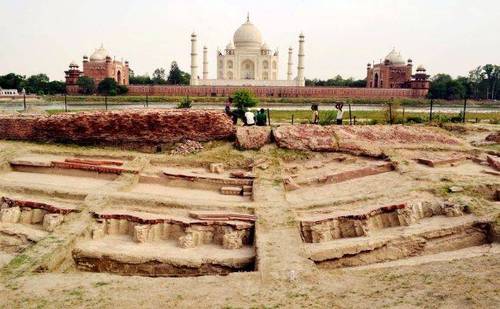
In an interesting discovery following excavations carried out by the Archaeological Survey of India recently, remains of a summer palace, presumably a baradari, a pavilion designed to allow free flow of air – have been reportedly found at the centuries-old Mughal-era garden Mehtab Bagh located opposite the Taj Mahal.

The garden was reputedly Shah Jahan’s favourite spot which he used to visit to get a view of the Taj at night, hence it’s name (Mehtab means moonlight in Urdu).

“The remains of the baradari-like structure have been found just opposite the Taj Mahal which strengthens our belief that the Mughal emperor must have built this place to enjoy the view of the Taj sitting near the bank of river.

The place seems to have sunk beneath the surface either due to floods or because of the presence of hollow space under the structure,” said a senior ASI official.

The excavated remains of the walls at the garden complex, situated on the opposite bank of the Taj Mahal in Agra. (PTI photo)

Incidentally, Mehtab Bagh has been associated with the myth of the black Taj which is believed to have been spun by guides to fascinate foreign tourists. According to the story, Shah Jahan wanted to build another Taj in black marble across the Yamuna and connect the two by a bridge. Mehtab Bagh is pointed out by some as the possible site where the black Taj would have come up.

“There has never been any historical evidence to prove the existence of a black Taj,” said the official.

During excavation work carried out between 1997 and 1999 at Mehtab Bagh, the ASI had found remains of a huge octagonal tank furnished with 25 fountains, a small central tank and a baradari in the east of the garden. “The present work is going in the south direction of the garden in the straight alignment of the Taj Mahal which makes the discovery an interesting one,” added the official.

source: http://www.timesofindia.indiatimes.com / The Times of India / Home> India / by Adithya Dev, TNN / July 02nd, 2014

Over a cup of evening tea : A sentimental journey and a narrow escape

by Dr. K. Javeed Nayeem, MD

Last Sunday my wife and I went on a journey that we had wanted to undertake for the last thirteen years ever since she lost her brother who was serving in the army as an officer. Major S. M. K. Ghori, a former student of the Maharaja’s College here, laid down his life in the cause of the motherland while fighting insurgency in the forests of Baramulla District in the State of Jammu and Kashmir on 1st July 2001. Two of his most trusted men too went down fighting alongside him on that fateful evening. Four days later while we were waiting with all our grieving family members at the Bangalore Airport for his body to arrive, I told my wife that we should try and visit his unit not only to see where exactly he was serving when his end came but also as an act of homage to his sacrifice.

A trip to Kashmir somehow never materialised over the next thirteen years and finally when a chance came up last week in the form of a group tour with about a dozen doctors’ families, my wife and I felt that it was the right time for us to go there. Having finished our sight-seeing in and around Srinagar with the others members of our group we extended our stay by a further two days to accomplish what we had been looking forward to. Upon contacting the army top brass through my brother-in-law’s wife we were told that his unit was still stationed near Baramulla and arrangements would be made to allow us a visit.

Very soon a Colonel who was the chief of the unit called us up and said that he would be happy to show us around the place and also insisted that we stay back for lunch. We very politely declined this part of the invitation as we did not want to intrude on the time of officers and men who were expected to be in a state of operational readiness round-the-clock. However, we agreed to have a cup of tea with them without wasting much of their time. A friend in Srinagar who used to meet us every evening arranged for a trusted cab driver to drive us to our destination and back since he did not consider it safe for us to go there with an unknown person. As he was from the nearby town of Sopore where he had his ancestral house, he said that we should be his guests for lunch which would expose us to the traditional Kashmiri hospitality. This was a suggestion to which we readily agreed and left early in the morning. The drive from Srinagar towards the western border of the country was full of security bottlenecks with all vehicles being stopped and photographed by heavily armed men in combat readiness. The road lined on either side by tall poplar trees passed through some very fertile countryside, full of verdant apple orchards nourished by a maze of mountain streams with snow-clad hills in the not too distant background. The apparent tranquillity of the hills belied the turmoil that they have been witness to from time to time.

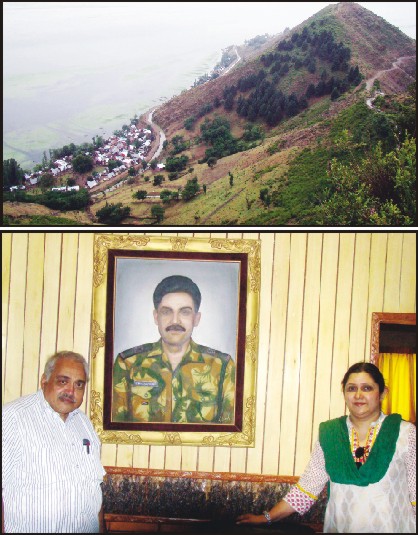
After a drive of about thirty kilometers from the town of Baramulla through some of the most remote and lonely stretches, we reached the army unit where we were welcomed with a warmth that we had never expected from men in uniform. The Colonel himself was standing with his deputy to receive us with fighting men’s iron handshakes and they escorted us to the drawing room of their barracks. It had a large life-sized portrait of my late brother-in-law on one of its walls since he was the only officer of the unit who had died in action since its inception while it had lost twenty-nine Jawans whose sacrifice was in no way less significant. Their photos too adorned another wall in a close cluster which perhaps was a reflection of the close ties they shared while they were alive.

The Colonel briefly told us about their life as soldiers and the uncertainty that comes with it. Later he himself drove us in his personal vehicle to the place from where we could see the hill across a lush valley at the base of which my brother-in-law and his men went down fighting. We stood in silence trying to visualise the final moments of their brave stand. Returning to the base we were a little surprised and even embarrassed to discover that the tea was almost a meal prepared and served by men in uniform in a manner that would have put the most talented hostess to shame.
KashmirMPOs02jul2014

We were then invited to stand alongside the painting of my brother-in-law and have a picture clicked as a keepsake of our visit which we did [see pic]. It was a very sentimental moment against which I had warned my wife well in advance and thankfully she put up a brave face.

After I signed the visitors’ book it was time once again for iron handshakes but this time to say goodbye. It was a very short drive to Sopore, a Spartan town with horse-drawn carriages and tin-roofed houses that seemed to have been frozen in a time warp like the rest of the Kashmiri countryside. The atmosphere seemed a little eerie as we found that every entry point was guarded by heavily armed soldiers alongside their armoured personnel carriers. We located our friend’s home which was tucked in a maze of narrow alleyways and were soon lost in another session of tea accompanied by some traditional Kashmiri snacks and dry fruits. The tea itself was a very distant cousin of what we drink here as it is salted instead of sugared. My host then suggested that he would take us for a traditional lunch to a resort overlooking the Wular Lake, the largest freshwater lake in Asia which was just a stone’s throw from his village. The breathtaking view from the place was something to be treasured forever in the mind’s e

ye. It is because of sights like this that Kashmir has come to be called a ‘Paradise on Earth’. After a hearty meal we parted company as it was time for us to get back to Srinagar. On the way back too we noticed unusually hectic military activity along the main road and on the outskirts of the town we even saw an ambulance and a large convoy of army vehicles parked around a house. We did not make much of it and reached Srinagar safely for a good night’s rest.

Early the next morning one of my friends who had been in our group and who had returned with the others a day earlier called me up from Mysore to tell me that Sopore had been the scene of a fierce gun-battle between security forces and insurgents the previous night. Since a civilian youth too was killed in the crossfire it appears there were widespread protests and an indefinite curfew had been imposed on the whole town with all roads completely blocked. Occurrences like these are a very common feature of life in Kashmir and the ensuing inconvenience is accepted as a normal part of living there. The whole of Monday and Tuesday, till we left Srinagar, life remained completely paralysed in the entire valley. My wife and I thanked God that we had been able to get away in the nick of time from what could have become a tricky situation blocking our exit. Our ‘Mission Kashmir’ had been accomplished at last !

e-mail: kjnmysore@rediffmail.com

source: http://www.starofmysore.com / Star of Mysore / Home> Feature Articles / Friday – June 27th, 2014

______________________________________________________________

 AN ODE TO A SOLDIER

Sir,

This refers to the letter of Brig. R.S. Rajan, vsm, (SOM dated June 30) on the need to remember the martyrdom of Maj. Ghori with mixed feelings of sadness that we forgot the sacrifice of young Indian Army Officer for his nation and a desire to undo the indifference.

I knew his Commanding Officer. He was always full of praise of Maj. Ghori, who he said was an epitome of an Officer and a gentleman. Being in army and that too a serving officer, I am not supposed to interact with media or give my opinion. We in armed forces respect the rule and follow it. However, I could not control myself on reading Brig. Rajan’s letter and hence this letter.

Ncc Group Mysore will take concrete steps to ensure that the memory of Maj. Ghori remains alive in Mysore and India. May I very humbly appeal the citizens of Mysore to respect our martyrs as they have sacrificed their today for your tomorrow, their own families lie forgotten and unattended, perhaps as our neighbours.

We as soldiers always follow the credo that ‘The country comes first always and every time … Our own honour, safety and welfare comes last, always and every time’. Maj. Ghori followed the Chetwode credo to his last breath. The need of the hour is that all Indians make a beginning towards it.

May I end my first letter to media with an epic poem on the saga of HORATIUS by Thomas Macaulay:

To every man on this earth

death comes soon or late,

How can a man die better

Than facing fearful odds

For the ashes of his Fathers

And temples of his Gods,

Maj. Ghori was a HORATIUS

for all the Indians who

breathe today and tomorrow.

—Col. Rajeshwar Singh, Shaurya Chakra, Sena Medal, Group Commander, NCC

Mysore, 1.7.2014

source: Voice of the Reader Section / source: http://www.starofmysore.com / Star of Mysore / Home> Voice of the Reader  / July 07th, 2014

This is in response to the story above.
Mohammed Hanish appointed Nodal Officer for 2017 FIFA

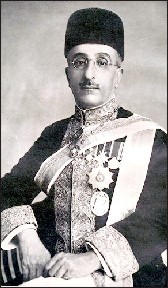
Kerala Government has appointed senior IAS officer A P M Mohammed Hanish as Nodal Officer for the matches likely to beld in Kochi during the 2017 FIFA under-17 world cup football.

The appointment is as per FIFA’s direction, a Kerala Football Association press release said.

The official has also been entrusted with overseeing the infrastructure and development of soccer in the run up to hosting the event.

Hanish is the Kerala Roads and Bridges Managing Director.

source: http://www.business-standard.com / Business Standard / Home> PTI Stories> National> News / Press Trust of India / Kochi – July 01st, 2014

Nawab distributes educational aid

NawabCF19jun2014

Chennai :

Scholarships  distributed the Carnatic Family Association (CFA) founded by the Nawabs of  the Carnatic, distributed the annual educational scholarships to deserving students of the Carnatic Family, at its general body meeting held at Amir Mahal.

The Association distributed scholarships to 92 school students and college students, ranging up to `10,000, for different courses.

The Prince Of Arcot, Nawab Mohammed Abdul Ali, is the head of the Carnatic Family and patron-in-chief of CFA. A large number of members from the Carnatic Family attended the function.

The Association also organises socio-cultural activities to promote communal harmony and national integration and also celebrates major religious festivals. It also conducts games and sports for its members periodically.

source: http://www.newindianexpress.com / The New Indian Express / Home> Cities> Chennai / by Express News Service / June 16th, 2014

Dy CM to keep Braille Quran in Makkah Masjid as gift of Ramadan to blinds

Hyderabad :

Telangana Deputy Chief Minister Mr. Mohammed Mahmood Ali has decided to keep Braille Quran in Makkah Masjid for blind Muslims as a gift of Ramadan. Mohammed Mukarram and Imtyaz of Hyderabad brought Braille Quran from Kuwait and presented it to deputy chief minister so that it is kept in any centrally located masjid of the city.

Mr. Mahmood Ali has decided to keep it in the historical Makkah Masjid to provide the opportunity to the blinds to recite it. TRS Malakpet in charge Mohammed Azam Ali Khurram, who is the son of deputy chief minister, will hand over the Quran to Imam of Makkah Masjid after Zohr prayers on Monday.

source: http://www.siasat.com / The Siasat News / Home> Hyderabad / Monday – June 30th, 2014