Category Archives: Community Involvement / Social Issues

World’s largest diamond, Mughal necklace in Geneva auction

A staff member poses with 'The Blue' diamond during an auction preview for Christie's in Geneva. (Reuters photo)
A staff member poses with ‘The Blue’ diamond during an auction preview for Christie’s in Geneva. (Reuters photo)

New Delhi :

A rare necklace, engraved with names of Mughal emperors Akbar and Jahangir goes under the hammer in Geneva tomorrow by Christie’s, which is also auctioning the world’s largest flawless blue diamond, in a sale expected to total $80 million.

Dating 17th century, the seven Mughal engraved spinel bead necklace is estimated to fetch between $1,500,00 to $2,000,000 at ‘Magnificent Jewels’ sale, auctioneers said.

Mughal emperors were known for their love of precious stones. The tradition of engraving titles and names on stones began with the Timurids, who were the ancestors of Mughals. They did their engraving on diamonds, emeralds and other outstanding quality stones with large spinel beads considered to be their favourites.

As much as these gems were a symbol of the opulence and dignity of the empire, they were also treasured as protective talismans.

The Museum of Islamic Art in Qatar exhibits an important necklace with eleven Mughal spinel beads with a total weight of 877.23 carats. Three of them engraved with names of Emperor Jahangir and one with that of Emperor Shah Jahan.

Leading the ‘Magnificent Jewels’ sale is world’s largest flawless vivid blue diamond ‘The Blue’ estimated to fetch between $21,000,000- $25,000,000.

The diamond leads the 250 lot strong sale, estimated to mop up a total in the region of $80 million, Christie’s said.

Six months earlier, Christie’s Geneva sold ‘The Orange’ the largest fancy vivid orange diamond in the world for $35.5 million, a global record for an orange diamond and a world auction record price per carat for any diamond at $2.4 million.

The sale will also feature many important coloured and colourless diamonds such as the 5.50 carat ‘The Ocean Dream’, the largest fancy vivid blue-green diamond in the world to come to auction, with an estimate of $7,500,00- $9,500,000.

‘The Rajah Diamond’ a 26.14 carat old-mine brilliant-cut diamond of is among 14 jewels that are being auctioned under ‘A Passion for Jewels: Collection of an European Gentleman’. The diamond is estimated to go for $3,000,00-5,000,000.

Another section of the sale ‘Noble Jewels’ features a natural pearl and diamond necklace estimated at $550,000-700,000 and was orginally in the personal jewellery casket of Queen Elizabeth of Prussia.

source: http://www.timesofindia.indiatimes.com / The Times of India / Home> India / PTI / May 13th, 2014

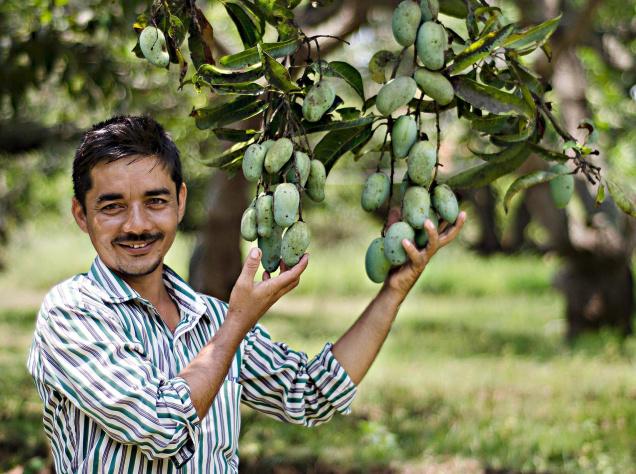
These mango trees date back to Tipu’s era

LUSCIOUS: Syed Ghani Khan in his orchard at Kirugavalu village in Malavalli taluk of Mandya district. / The Hindu

Kirugavalu farmer has 116 mango trees which are 200-year-old

This farmer from Kirugavalu village in Malavalli taluk of Mandya district has preserved 116 mango trees dating back to the times of the then Mysore ruler Tipu Sultan.

Carbon dating and other scientific assessment by the Genetics and Plant Breeding Department of the University of Agricultural Sciences, Bangalore, have shown that these trees are more than 200 years old.

This 20-acre orchard, popularly known as ‘Bada Bagh’, is said to have been raised by those in the palace of Tipu, who was a great lover of fruits, especially mangoes. The orchard was later gifted to a farmer by Tipu. Syed Ghani Khan (39), who has inherited this from his forefathers, is preserving it with care.

According to Mr. Khan, the trees yield exotic varieties of fruits. “While some trees yield fruits that taste like sweet lime, others produce fruits with cumin flavour. There are some trees that yield fruits resembling the shape of fish,” he said.

In great demand

Till recently, his family used to sell the fruits locally. But from the last two years, he has been selling the fruits at organic outlets in Mysore apart from exporting them to Dubai and Abu Dhabi, where they are in great demand and also fetch a premium price.

In fact, Mr. Khan, who was passionate about becoming a curator at an archaeological museum, he did his graduation in archaeology and museology. But he had to return to his native village from Mysore to take care of his farm and support his family after his father became bedridden due to an ailment. “I then decided to turn my exotic farm itself into a live museum and started working on it,” he said.

Paddy varieties too
Mr. Khan also pursues another avocation passionately. He collects native varieties of paddy and grows them mainly to preserve those rare varieties. “Presently, I have a collection of about 600 native varieties of paddy, including ‘rakta dham’, ‘naadikeli’ and ‘jugal’,” he said.

His efforts paid off as his farm caught the attention of Delhi-based Protection of Plant Varieties and Farmers’ Rights Authority, which has started registration of the exotic varieties of mangoes in the garden. He will get legal right over the plant species after the registration.

Mr. Khan was also honoured with the ‘Plant Genome Saviour Farmer Recognition’ award by the authority in 2012.

Mr. Khan now wants other farmers to grow these rare varieties of mangoes. He, however, is unable to take up propagation of these rare varieties systematically by constructing a poly-house as it requires big investment. As none of the government agencies offered him any help, Mr. Khan himself started an organisation to train farmers and students about local varieties of crops.

He is looking forward to getting government assistance to take his mission forward and ensure that these exotic varieties of mangoes are grown in the orchards of many more farmers.

source: http://www.thehindu.com / The Hindu / Home> News> National> Karnataka / by B. S. Satish Kumar / Bangalore – May 12th, 2014

The last of Delhi’s calligraphy brigade?

With the arrival of technology, calligraphic fonts are on computer keyboards now, pushing more and more the likes of Yakub to scurry harder for work. / Photo: Sangeeta Barooah Pisharoty / The Hindu

With calligraphic writing now computerised, the katibs of Old Delhi’s Urdu Bazaar, once a vibrant community, have shrunk to a mere three

More he waits for work, more he fears it shall stop coming to him. Altogether.

When 62-year-old Mohammad Yakub, a katib or traditional calligrapher in Old Delhi’s Urdu Bazaar, breaks into a near monologue on a hot May day after some prodding, the fear of losing a job that he knows best — that too at an age when he “just can’t think of doing anything else” — is pretty blatant. “I have been without work for the last two days. Who knows, you might bring me good luck,” he says with a half-smile. Two teacups with the hot brew arrive from a nearby teashop, indication enough that he is in a mood to talk now.

Yakub’s story turns out to be one of standing against the tide and not calling it quits. Not yet. Every day, at 9 in the morning, he steps out of his house in Okhla to board Bus No. 403 to bring him to Jama Masjid. A short walk from near the Mughal era masjid to Urdu Bazaar brings him to his designated seat in a shop that sells Urdu books. A shop he has been employed with for the last 28 years, a shop with blue paint peeling off at places, its lone copying machine standing at a cobwebbed corner, unused, discoloured with age. The books kept in glass showcases make you wonder which of them is older, their yellowing pages or the showcases with stains on the glasses.

“The last time I sold a book here was a month ago,” he plaits it in to the conversation to help you understand that his state of near joblessness is linked to a drastic drop in the sale of books published in Urdu these days, which in turn, is increasingly leading shopkeepers at the Bazaar to replace their bookshops with those of readymade garments and eateries.

It is also linked to where the art of calligraphy is heading. With the arrival of technology, calligraphic fonts are on computer keyboards now, pushing more and more the likes of Yakub to scurry harder for work. No wonder then, besides Yakub, Urdu Bazaar — once a vibrant hub of katibs — is now left with just three of this ilk.

Katibs Mohammad Yaqub at work in Urdu Bazaar /  Photo: Sangeeta Barooah  / Pisharoty / The Hindu
Katibs Mohammad Yaqub at work in Urdu Bazaar / Photo: Sangeeta Barooah / Pisharoty / The Hindu

Yakub can do calligraphy in Urdu, Arabic and Persian. “But what I usually end up doing now is to write in Urdu the names of various offices and departments required to make stamps since Urdu is also an official language of the Delhi Government,” states Yakub. Out of the Rs.100 that he gets per stamp, Rs. 40 goes to the shop owner. “Most times, it doesn’t pay for my day’s trip from home and back,” he points out before startling you by suddenly breaking into a Mughal-e-Azam song. Even as you recover from the shock, he asks you, “Do you think I can end up as a singer at this age?” In his ensuing laughter, the fear of the foreseeable doesn’t quite get lost. No wonder his daughter, a trained calligrapher, is joining as a teacher in a school

Taking leave of Yakub, you walk along the Bazaar. A few shops away from him sits Mohammad Ghalib, one of the last of the brigade. In his early 50s, Ghalib seems the only one among the three to be getting regular work. “I can’t say that what I am earning is sufficient but I have been able to run my kitchen with it so far. I think it is God’s grace,” he says raising his head from writing a graduation ceremony poster in Urdu for a madrasa in the Okhla area. The colourful poster will thereafter go for printing a dozen copies of it. “Look at these fonts, the unevenness of them, the colour play I do here. No computer can do this because everything in it is of certain size and shape. You can’t play with those fonts, like you can do with a handwritten calligraphic work,” he stops his work to explain the finer point to you.

Like Yakub, Ghalib too picked his skills from Darul Uloom in Deoband years ago. “They still teach it but I ask, what for? Things can change only when the Government does something concrete to keep going the skill of people like us,” he minces no words here.

You enquire about the third katib of Urdu Bazar. Ghalib says he sits just opposite the road. “He has not been coming to work for some days now. He is unwell. Also, there is a wedding in the family,” he says. What Ghalib doesn’t say is said by a bookseller who gives the katib space to operate from, “He doesn’t get much work anyway.”

Riding on a rickshaw to the Chawri Bazasr Metro Station to return home, you only hope that you have turned lucky for Yakub. Because he just can’t sing!

source: http://www.thehindu.com / The Hindu / Home> Features> MetroPlus> Society / by Sangeetha Barooah Pisharoty / New Delhi – May 11th, 2014

Tindipotha gastronomic delight from a food truck

TindiPothaBF10may2014

by Phalgunn Maharishi

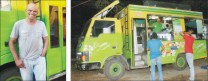
The residents of Mysore, especially in the neighbourhoods of Bannimantap and Rajeev Nagar are now familiar with a big truck parked on the roadside near JSS Dental College with shining lights and people surrounding it eating costly food. But wait a minute! Costly food in a big truck? Well, it seems to be costly as the big truck sells fresh American-Mexican food but that’s not really costly. “A Mysorean can now fill his stomach with some classy food for just Rs. 80 on an average,” said Syed Manju while speaking about his big boy “Tindipotha.”

Syed Manju previously held the position of an Area Manager handling Public Relations and Marketing for 28 years in Costco, USA, the Number 3 retailer in the world which directly competes with Walmart, before heading towards Mysore to come up with his dream boy. “I had a passion towards cooking due to which I quit the job and came to Mysore with an interest in doing something unique, something which never existed here. That’s when Tindipotha was born,” commented Syed Manju while speaking about how it all started. The ecstatic and energetic Syed Manju keeps travelling back and forth between Mysore and Bellingham (90 miles north of Seattle in the United States) where his wife (Diane Houston), little girl Zara (16) and a little boy Iyan (14) lives.

Originally born in Channapatna and brought up in Mandya, Syed Manju is a self made man. He studied B.Sc and Diploma in Film Acting. He soon landed into Kannada Film Industry during his late 20s by directing films like Neenakkaga and Kanoonige Sawaal after which he travelled to USA for a trip to stay with his brothers and sisters for a while. Manju said, “Don’t ask me how, but I got my green card over there” with a wink and also added, “I never wanted to be there forever. Infact I had plans of directing more films in Kannada, but my fate made me stay there,” with a sweet smile. The last film produced by Manju was Appaji starring late Dr. Vishnuvardhan in the lead role released in 1996.

Coming back to Tindipotha, it all started roughly an year ago when Syed Manju and his brother Rafi Manju bought an old truck and got it rebuilt in Mandya to bring the new fancy boy to the streets of Mysore. “I was scared in the beginning. It was something new, something which the Mysoreans never experienced before. A new food to a new market. We had to prepare American-Mexican style foods with the ingredients available in Mysore and it didn’t seem easy for us in the beginning. But we did it and still doing it. It’s been an year and we are doing good,” said Syed Manju while speaking about Tindipotha.

Tindipotha has recently transformed itself from being just a food truck into a youth junction where we can find college going kids spending their cool evenings eating the sizzling new dishes like Nachos, Chicken Melt, Roti Lapat, Gilli Chicken, Turpi Chicken, Rollito, Apple Dream, Lava Pie, and many more summing up to over twenty different types of food.

“My brother Rafi Manju manages the front end and cash while my nephew Syed Umair Manju is our grill master. He even looks after the crew. Farhan, the cousin of Umair, assists the crew inside out and Tausif does all the deep fry and plating. Siddique and Atiq have been newly added to the crew and are learning ropes. Tausif, Siddique and Atiq are all family friends. We are all family and its a family business. The whole crew, except me and my brother, are college going kids,” said Syed Manju while introducing the team of Tindipotha.

People love the food. We had an interactive session with some regular customers of Tindipotha who expressed their hearts out. Bashar and Abdur Razzak, who stay in Bannimantap said, “This is really nice. It’s different than what we find elsewhere. We don’t find such tasty food at any other place, especially the Nachos! We come here for Nachos,” when asked to express how they feel about Tindipotha. Areb and his friends Mohammed Fahad and Rakshad, who come all the way from Bangalore just to eat at Tindipotha, said that they still haven’t yet got over the taste of Chicken Melt. The trio commented, “Its been a year and we still come here to eat the same thing,” with a laugh. Dental students Alley and Ahmad, who are from Iran visit Tindipotha atleast twice a week and mentioned that they love the tasty food and also the hospitality given to them by Syed Manju and his crew.

While speaking about the unpredictability of such food business in a city like Mysore, Syed Manju said, “Usually weekends are the busiest days for us, yet we can never predict. Sometimes customers ask me, which is the best dish prepared here! Well, I tell them to close their eyes and put their finger on the menu and we will serve it. If they don’t like the food, let them not pay us but if they like it, they need to pay us double.” He also added, “We are different from other eating places in the city saying that we smile at our customers which we can never find in any other hotels in Mysore. We also appreciate each and every customer, thank them and enquire in person whether they liked the dish. The food is also custom made for every single customer according to his likes and dislikes and we keep changing the taste one plate at a time.”

Tindipotha is for sure a place to be cherished and one of its kind in Mysore. It’s both vegetarian and non-vegetarian food truck with some tasty healthy and classy American-Mexican food at low prices. Do you want to try some different custom made food? Just head towards Tindipotha in Bannimantap near JSS Dental College between 7 pm and 11 pm any day! For more details, type in TINDIPOTHA in facebook and you will get the fan page.

source: http://www.starofmysore.com / Star of Mysore / Home> Feature Articles / May 04th, 2014

Tipu Sultan remembered

Srirangapatna :

The 216th death anniversary of Tipu Sultan organised by Hazrath Tipu Wakf Estate Development Committee was held at Gumbaz in Srirangapatna this morning.

Hazrath Tipu Wakf Estate Development Committee Chairman and MLA Tanveer Sait offered floral tributes to the tomb of Tipu Sultan located inside the Gumbaz.

Hazrath Moulana Hafiz -o-Qari-Inayath Ur Rahman, Khateeb-o-Imam, Masjid-e-Aqsa, Gumbad-e-Shahi recited versus of Holy Quran and prayed for Hazrath Tipu.

Hazrath Moulana Mahmood Ul Hassan, Moulana Ayub Ansari, Moulana Akbar Shariff, Iqbal Pasha, Allah Bakash Bakshi, Jameel Ahmed Ashrafi, Mohammed Abdul Salam, Khaleel Ur Rahman, Abdul Khader, Ibrahim Shariff, Haseena Shariff, Syed Akram Pasha, Mohammed Rafiq, Pansari Mujeeb Ahmed, Estate Officer Mohamed Ayub and others were present.

In another programme organised by Mysore City (District) Congress Committee at its office on Sayyaji Rao Road, MLA Vasu regretted that Tipu Sultan’s history had been distorted and said that even today the idol given by him to the Nanjangud Temple was being offered puja which showed his affection towards all religions.

Vasu urged the Tipu’s critics to study about Tipu in detail before passing any comments.

MLA M.K. Somashekar, former MLA Mukhtarunnisa Begum, Mysore City Congress Committee President C. Dasegowda, former Mayors Arif Hussain and Ayub Khan and others were present. Members present offered floral tributes to the portrait of Tipu Sultan.

It was on this day Tipu Sultan died fighting against the British Army in the year 1799. His body was found among the dead near the Ranganatha Swamy Temple.

source: http://www.starofmysore.com / Star of Mysore / Home> General News / May 04th, 2014

Bangalore boys come first in aero competition

Bangalore :

Bangalore, the aviation capital of India, has often had its young opting for careers in aerospace, many displaying their skills at various forums. Two teams from Bangalore only reaffirmed this fact by bagging the first two places at the recently concluded (April 12) Boeing India-IIT national-level aeromodelling competition.

The four Bangalore boys — three from ASC College of Engineering, and one from BMS — competed against 560 participants to clench the contest.

At one point, Tabrez Nadvi Anser, Pavan MJ, and Vignesh Arul of ASC College, who bagged the first place, stared at a missed opportunity. “Selection for the finals was to happen at four zones, IIT Madras (South), IIT Kharagpur (East), IIT Bombay (West), and IIT Kanpur (North). Unfortunately, we couldn’t enter the zonal-level competition at IIT Chennai, as it coincided with our semester exams. We finally got permission to participate from the East zone, and our college helped us with the funding,” Tabrez told TOI.

In the zonal round, Pavan said, the team focused on design and building of the remote control (RC) aircraft, keeping in mind the ability to glide. “We did not buy a ready-made aircraft,” Tabrez added.

Having qualified for the finals with 12 other teams from various zones, the four shifted their focus to flying and acrobatic flying, as per the problem statement given by the organizers. They built a depron-made 3D RC aircraft which performed all manoeuvres as planned. “Eventually, we won because of our strategy which was duly acknowledged by the jury,” Tabrez said.

While team ASC was busy clearing hurdles at the zonal levels, Mohammed Shadman Alam was steering a solo show. “While other teams had at least two participants, with the upper limit set at four per team, Alam did everything alone,” said one of the organizers.

At the end, the battle was between the two Bangalore teams, and Alam came second. “Going alone has its perks. I could conceive and design what I wanted, and also perform manoeuvres I liked. Also, if something were to go wrong, the blame would be all mine, and so was it with the credit,” he said.

source: http://www.timesofindia.indiatimes.com / The Times of India / Home> City> Bangalore / by Chethan Kumar, TNN / April 30th, 2014

MELANGE : Royal treat for bibliophiles

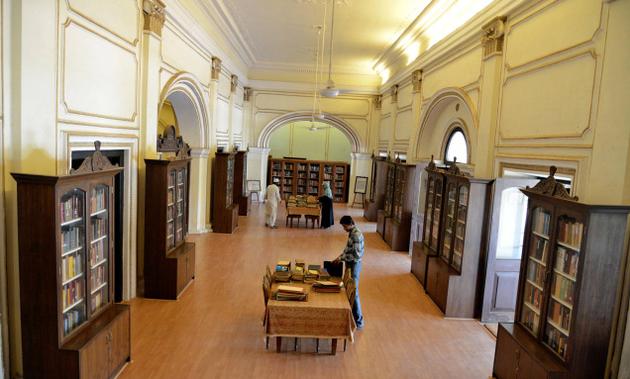
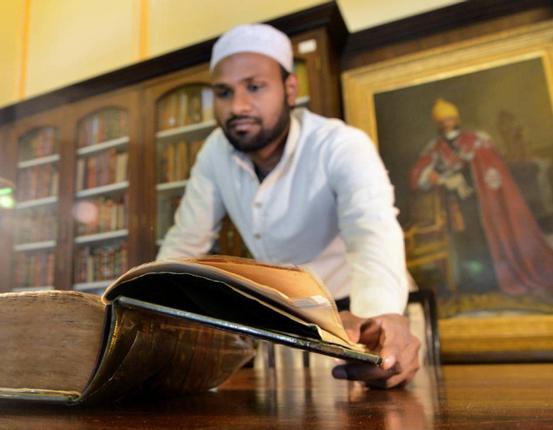
Books restored from different Asaf Jahi dynasties are in the Chowmahallah Palace library./ Photos: Nagara Gopal / The Hindu

The Mehtab Mahal library at Chowmahalla Palace throws open a treasure trove from the Nizam’s era

The Nizams, it turns out, had an eye for everything exquisite. From the jewellery they wore to the silks that adorned their wardrobe, the cars they rode in, and the cuisine they partook, everything simply spelt royalty. While these indicate their lavish lifestyle, their interest in books and literature is less known.

Throwing light on their urge to discover and relate to the world around is the Royal Library in Chowmahalla Palace; its collection of books includes The Life of Samuel JohnsonHistory of Don QuixoteJohn F Kennedy – Portrait of a PresidentGlimpses of India,The Princes of India and an array of Encyclopaedias and much more .

Situated in the Mehtab Mahal of the Chowmahalla, the Royal Library houses more than 10,000 books and “is a haven for researchers and book lovers.”

The library that was thrown open to book lovers last year has been digitized recently, not only to help book lovers but also ensure safety of the royal treasure.

The idea of the library is to protect and preserve the valuable collection of the Asaf Jahi kings. The collection mostly belonged to the Mir Mahboob Ali Khan (VI Nizam), Mir Osman Ali Khan (VII Nizam) and Nizam Mukarram Jah. The books have been sourced from different Asaf Jahi palaces like the Nazri Bagh, Chiran Palace and Chowmahalla to be housed in the Royal Library here.

The books thus collected were sorted and segregated into various categories.

Books restored from different Asaf Jahi dynasties are in the Chowmahallah Palace library./ The Hindu

“A lot of work went into making them ready to be put in the cases for readers to read them in the library. Various professionals worked to clean, bind and make the books fit for reading. We have applied all preservation techniques, including fumigation, to protect the books,” informs G. Kishan Rao. He adds, “The collection of books range from history, literature, poetry, philosophy, geography, culture and religion. This library also houses the exclusive collection of Qurans by the Nizams which was inaugurated recently.” A few books also hint at the Nizam’s passion to learn languages. The number of English books is close to 3000, followed by Urdu, Persian and Arabic.

“There is also a good number of Persian manuscripts containing the firmans issued by the Asaf Jahis as well as several volumes of Mir Osman Ali Khan’s poetry,” informs the librarian. Qurans of different sizes are in the process of being restored and will find place in the library after that.

source: http://www.thehindu.com / The Hindu / Home> Features> MetroPlus / by Prabalika M. Borah / Hyderabad – April 25th, 2014

Mosque with a Spanish touch

While the neighbouring region is resplendent with the remnants of the glorious Vijayanagar empire in Hampi, adjacent to it are the vestiges of the Bahmani Sultanate.
BahmaniMosqueGulbargaMPOs28apr2014
 
The Jama Masjid, the great mosque inside the Gulbarga Fort is a testimony to this.
One of its kind
From an architectural viewpoint, the Mosque is considered unique in South Asia for its form and structure.  The material used is lime and brick. 

The arches of Jama Masjid are similar to the interiors of Spanish Mosque of Hyderabad.

These are the only two mosques in India which have the similarity in interiors of the Great Cathedral–Mosque of Cordoba in Spain.
The Jama Masjid was built by Muhammad Shah I (1358-75) to commemorate Gulbarga as the capital of the Bahmani Sultanate.
The Bahmani dynasty was founded by Ala al-Din Hasan Bahman Shah, a Bahmin’s servant at the court of Muhammad bin Tughluq.  The Bahmanis established themselves in Gulbarga once the Delhi Sultanate began losing its hold.
The Jama Masjid does not have minarets. But the mosque built inside the Fort is unique because of a huge dome and many smaller ones which adds to its grandeur.
It was built in 1367 AD, by a Spanish  architect, with arched doorways on the same lines as that of the Great Cathedral–Mosque of Cordoba in Spain. It has a large dome on the west side and middle-size domes at the four corners of the mosque, making it a beautiful sight to behold. Instead of having a courtyard, it has 63 small domes in line in the central area.
The main entrance is at the north side and has a higher arch-shaped gate than the other sides.
The mosque has a natural lighting  system. Instead of solid outer walls, there are open arcades to allow light that would generally be filtered in from a courtyard.
In the west prayer room, pillars are painted in white with no decoration.
In addition, wide spans of these pillars’ supporting large arches create a majestic atmosphere.
The floor measures 216 feet by 177 feet (66 by 54 m) with widely arched enclosures defining the perimeter.  The west bay is spacious and covered in the centre with a high dome, which is surrounded by twelve smaller domes.  This high central dome is given even greater prominence by being slightly larger and because it is placed on an arcade, forming a square cloister that rises above the smaller domes. It has a capacity to accommodate 2,000 persons.
The interior of the mosque has a span of arches, which turned out rather appealing and were used in many other Deccan buildings. The arches here are supported on short imposts. These unconventional ‘stretched’ arches later became a characteristic of Deccan architecture.
source: http://www.deccanherald.com / Deccan Herald / Home> Supplements> Spectrum /  Sumitra Malipatil, DHNS / April 22nd, 2014

Region’s earliest interface with Islam was here

Madurai :

The wide Kazimar Street, which branches off from the busy TPK Road near Periyar Bus stand, is one of the oldest settlements of Muslims in Madurai. Historical legends state that Hazrat Kazi Syed Tajuddin came to Madurai from Oman in the 13th century and established the Kazimar Big Mosque on a land given to him by a Pandya monarch.

Till date, the descendants of Syed Tajuddin, who is believed to be a descendant of Prophet Mohammed, live on the Kazimar Street. They are hereditarily elected as the town kazis.

Syed Ahja Mueenudeen, the current town kazi, said that the Kazimar Big Mosque, which was constructed by Tajuddin as a thatched structure initially, was the first place of worship for Muslims in Madurai. The street has had Muslims settlement for over 700 years, he said. Thus, Islam arrived in Madurai even before Malik Kafur’s invasion of Madurai in the 14th century.

History professor R Venkataraman opines King Maravarman Sundarapandian might have been the contemporary of Tajuddin. Even before the advent of Islam, Arabs maintained trade links with South India, especially for the pearls Madurai Pandya Kingdom was famous for. “Sufis, Muslim saints, started coming to Tamil Nadu by 900 AD. The entry of Islam to the region was peaceful as Sufis conceived God as love,” he said.

The short-lived Madurai Sultanate and Islamic influence did have their impact on the city, especially on warfare and town planning. “Muslim rulers introduced arch construction they learnt from the Romans. It changed the style of architecture here in a significant way,” Venkataraman remarked.

The Big Mosque, which is an architectural attraction, accommodates Madurai Maqbara which is the dargah of sufi saints Hazrat Meer Ahamad Ibrahim, Hazrat Meer Amjad Ibrahim and Hazrat Syed Abdus Salaam Ibrahim Rahmatullahi Alaihim.

Syed Ali Hussaini, the renowned Chennai-based stunt artist, is originally from Kazimar Street. Recalling the legend of Tajuddin, he said: “It is believed that Tajuddin came from Arabia to Kerala and reached Madurai where he established a mosque. He became popular for divine healing powers. The Pandya king was irked with his fame, but Tajuddin cured the king himself when he suffered from a stomach ailment. The king gave away a land for mosque in gratitude,” he said. “Even today Tajuddin’s descendents, numbering more than 2,000, are annually given a customary nominal share of the income from the waqf lands originally donated by the king,” he added.

Till the 1980s, the residents of the street were engaged in rearing horses, rams, cocks and pigeons. “People were crazy about horses and many raised them. Rekla or bull cart race and pigeon racing were popular when I grew up in the area in the 1960s,” Hussaini recalled.

However, the face of the area has changed since then with many moving out for education and jobs, he said.

source: http://www.timesofindia.indiatimes.com / The Times of India / Home> City> Madurai / by J. Arockiaraj, TNN / April 27th, 2014

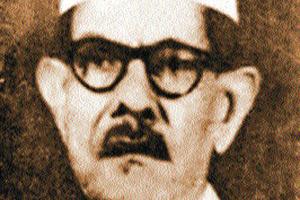
Remembering a titan of Hyderabad’s heritage

Remembering a titan of Hyderabad’s heritage

He played cricket and football for St Stephen’s Delhi with distinction. He did his masters in English as well as Arabic and he topped Punjab University in Persian. And if you are to name a saviour of the cave art of Ajanta and Ellora it is him:   Ghulam Yazdani,   a Padma Bhushan awardee as well as a recipient of OBE (Order of British Empire). 

As the Archaeology Department of Andhra Pradesh marks its 100 years the coming Friday, it is time to remember the man who created the department out of nothing.

If Hyderabad has a vestige of its heritage left, it is thanks to him. Deputed to Hyderabad as a Superintendent in 1914, he brought with him his expertise, energy and accountability. Not for him the claptrap of archaeology department doing the job of cataloguing and executing conservation work, Yazdani was a hands on man who got a road laid between Hyderabad and Bidar to protect the Bahamani heritage of Bidar and also between Toli Masjid and Golconda.

A man of sharp wit, he dismisses the decorative motifs of Toli Masjid as: “The impression made by such buildings overloaded with decorations is like the impression left by the ostentatious and lavish display of personal adornment, generally favoured by lowly persons suddenly become rich.”

For the restoration of the Ellora cave art, he tried to get Luigi Cavenaghi, the man linked to restoration of Leonardo’s Last Supper, to work on the paintings. Unfortunately, he could get only Lorenzo Cecconi, who applied shellac on the paintings, ruining them further. Ghulam Yazdani published a series of photographs and reproductions of the cave art with his explanations.

And by the way, Ghulam Yazdani’s salary was ` 560 per month. And just recently, the Archeology Department found it fit to name its museum after YS Rajasekhara Reddy!

source: http://www.timesofindia.indiatimes.com / The Times of India / Home> Life & Style> People / by Serish Nanisetti, TNN / April 21st, 2014