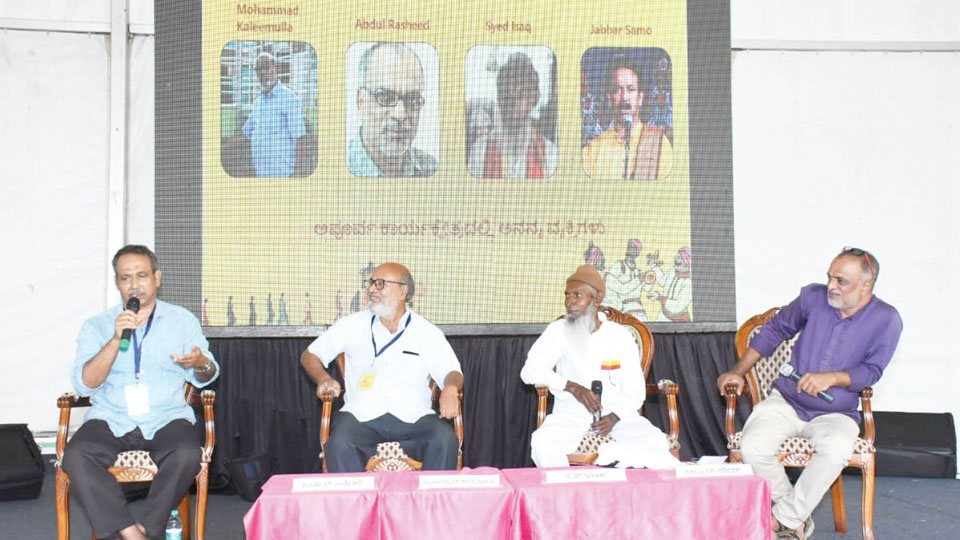
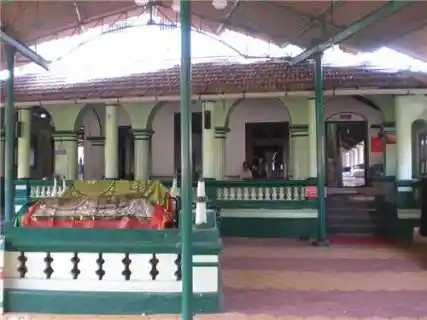
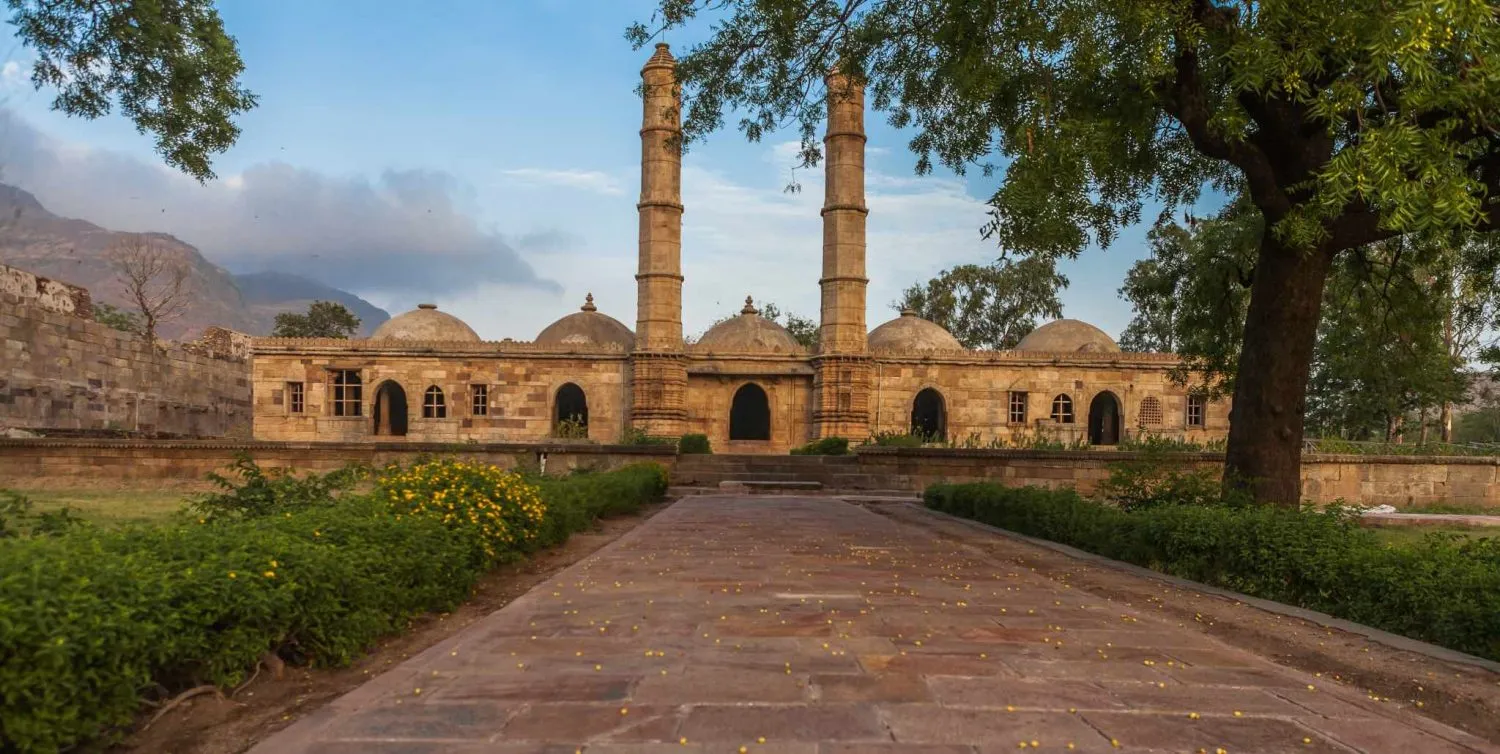
In a unique session, extraordinary individuals from different domains came together for a rare confluence at the Mysuru Literature Festival last evening. They introduced the audience to new perspectives and showcased their talent beautifully.
Abdul Rasheed, Programme Executive, Akashvani, Mysuru, delivered an engaging speech and introduced the audience to the world of new ideas. He explained his journey through various phases of life and how he embraced several individuals from different social strata as his mentors. He expressed his excitement about presenting his distinctive insights, which will provide a more representative portrayal of himself.
Jabbar Samo, a talented Yakshagana artiste from Uttara Kannada district, shared his experiences and motivations. He shed light on the significance of his performances in different aspects of life, both at the societal and personal levels. He also acknowledged the numerous individuals he considers his gurus and how they have influenced him.
He expressed how art flourishes without a specific reason and shared the dedication of Yakshagana artistes, who work without any external motivation. Despite facing difficulties as a member of the Muslim community, Jabbar Samo fearlessly pursued his passion. “Due to the prevailing circumstances, pursuing formal education was not possible, but I found solace in Kannada poems sung at the school, which fuelled my interest in the language,” he recalled.
Mohammed Kaleemulla, a retired teacher from Nagamangala taluk, dedicated his life to the preservation of historical temples, monoliths and hero stones in Mandya district. He explained the architectural aspects of these stones, their current conditions and the ongoing efforts to safeguard them with the support of Shri Kshetra Dharmasthala. “Many hero stones are being used for mundane purposes like drying clothes. I took it upon myself to inform the villagers and engage in the preservation work,” he said.
Syed Isaq narrated how he had built the library with zinc sheet roof at the corner of a playground in Rajivnagar and has been running it for the benefit of the public for 12 years. He also told the audience how the library was burnt down and his efforts to rebuild it.
“I have never been to school but my love for books gave wings to my dream of setting up a library. I built the library with 85 percent of books in Kannada and newspapers of various languages. My Kannada library is located in an area where there is a majority of the Urdu-speaking population and Kannada language must be propagated in areas like these,” he added.
source: http://www.starofmysore.com / Star of Mysore / Home> News / July 03rd, 2024
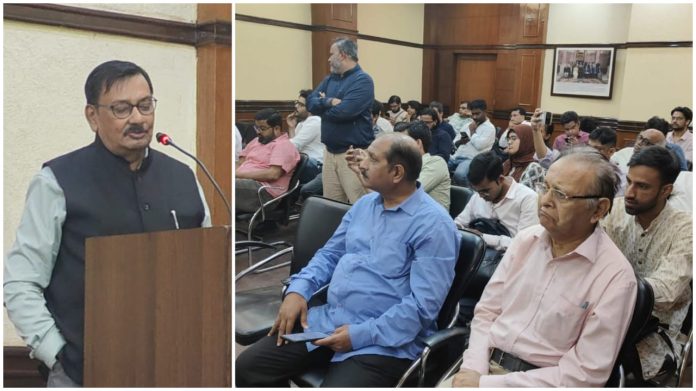
PCI President Gautam Lahiri addressing the gathering
In a significant move, the Press Council of India (PCI) has announced the institution of the Molvi Baqar Award to recognize and honour three outstanding journalists from the Urdu, Hindi, and English media every year.
PCI President Gautam Lahiri revealed this during an event commemorating the life and contributions of Molvi Muhammad Baqar, a pioneering figure in Indian journalism and the first journalist to be martyred during the 1857 Indian Rebellion.
“The criteria for this award will be to encourage journalists to follow in the footsteps of Molvi Baqar, who made the ultimate sacrifice while covering the events related to the 1857 ‘Mutiny’ through his newspaper, Delhi Urdu Akhbar,” said Lahiri in his presidential address. He added that PCI would soon finalize the modalities and constitute a jury to select the awardees.
The event, which focused on “The Life and Times of Moulvi Muhammad Baqir ,” highlighted his role as a patriotic journalist who played a key part in preparing the ground for India’s freedom. Historian and author Dr. Swapna Liddle, the Chief Guest at the event, praised Baqar’s commitment to the nation’s cause, despite the controversies surrounding his role.
“Some confusion exists due to the views of his son, Mohammad Hussain Azad, a renowned Urdu literary figure, who appeared to have taken a contrary position to his father. However, this must be understood in the context of the reign of terror during that time,” said Dr. Liddle, clarifying that Azad’s actions were likely influenced by the pressures of British rule.
Shoib Raza Fatmi, Editor of Hamara Samaj, reinforced this perspective by noting that Azad’s name frequently appeared in Delhi Urdu Akhbar as Editor, Printer, and Publisher, indicating his involvement in his father’s journalistic mission despite the difficult circumstances.
The program also featured a panel discussion moderated by Mahtab Alam, where young Urdu journalists discussed the relevance of Molvi Baqar’s journalism in today’s media landscape. Munazah Shah of News 18 pointed out the striking similarities between the challenges faced by Baqar in his time and those confronting the Urdu media today, particularly financial pressures and the need to foster communal harmony.
“The challenges faced by Molvi Baqar and today’s Urdu media are not very different. We should look to him as a role model for overcoming these obstacles,” said Sohail Akhtar Qasmi of Al Jazeera Arabic.
Tasleem Raja, a journalist with Siyasi Taqdeer and Qaumi Awaaz, echoed this sentiment, emphasizing how much contemporary media could learn from Baqar’s work in covering sensitive and complex issues.
A.U. Asif, a senior PCI member who was instrumental in connecting the Urdu media with PCI initiatives, lauded Molvi Baqar’s pioneering work in investigative journalism. “Molvi Baqar was one of the first to practice on-the-spot reporting and investigative journalism between 1837 and 1857 through his newspaper Delhi Urdu Akhbar, a practice that is now common in today’s media,” said Asif. He congratulated the PCI for unveiling Molvi Baqar’s portrait in its central conference hall, a tribute to his lasting legacy.
The event, organized to mark the martyrdom of Molvi Baqar on September 16, was held a day earlier this year due to the coinciding celebration of the Prophet’s birth anniversary. A large number of journalists attended, and the program concluded with a question-and-answer session.
The institution of the Molvi Baqar Award is seen as a step toward encouraging journalists to adhere to principles of courage and integrity in their work, much like the pioneering figure it honors.
source: http://www.muslimmirror.com / Muslim Mirror / Home> Indian Muslim> Media> Positive Story / by Muslim Mirror Desk / September 16th, 2024
Fifteen years of dedication, resilience, and hope led to a school that uplifts underprivileged children and their families in Karnataka.
New Delhi:
In the heart of Bijapur in Karnataka, one woman’s belief in the transformative power of education has changed the lives of countless children and their families. Saira Bano Khan, who started the New National High School 15 years ago, remains unwavering in her mission to offer children from slum areas a brighter future through learning.
Bijapur city is well known for its historical monuments of architectural importance built during the rule of the Adil Shahi dynasty.
“It all started when I saw the children around my neighbourhood,” Saira Bano said. “Most of them were school dropouts, working odd jobs like selling flowers or working in garages. It pained me to see them wasting their potential,” Sanmarg Hindi newspaper cited her as saying.
With the support of her husband, Saira Bano began a small school in a room of her own house, with only four students and one teacher. Today, New National High School serves 200 students and offers education up to the 12th grade. The school has become a beacon of hope for children from the local slums, particularly those from marginalised communities.
New Path
When Saira Bano started the school, many of the students had no basic manners or discipline. “The children used foul language and had difficulty sitting still,” she recalls. “It took months of patience and guidance to help them change. But now, they are polite, well-mannered, and eager to learn. It’s our greatest success.”
Parents have also become part of the process. Saira Bano organises regular meetings to educate them on their role in shaping their children’s behaviour. “We tell them that building a good life starts with teaching good values at home,” the report quoted her as saying.
Despite these successes, the school faces numerous challenges, especially when it comes to finances. “We struggle with funding,” Saira Bano said. “I dream of building a proper school with a laboratory, library, and playground, but for now, we make do with what we have.”
Commitment to Community
Beyond the classroom, Saira Bano has committed her resources to support the school. She and her husband donated their old family home, consisting of seven rooms, to be used as classrooms. She has also invested her savings in buying land for future school expansion. “I didn’t save much for my children. Instead, I saved to build a wall around the land, hoping one day to construct a proper school,” she said.
Her involvement doesn’t stop at education. During the Muslim fasting month of Ramadan, she and her husband distribute groceries and clothes to the students’ families. “Around 40% of the children in our school are orphans or come from extremely disadvantaged backgrounds. My dream is to open a hostel for them.”
Hope Amid Hardship
The COVID-19 pandemic added extra difficulties, with several boys dropping out of school to support their families. “We found some of them working odd jobs during school hours,” Saira Bano recalled. “Our headmistress spoke to their parents and told them they didn’t have to pay any fees, just send their children back to school.” The boys returned, excelled in their studies, and some even achieved distinctions in their exams.
Saira Bano’s work has touched many lives, including a student named Misbah, who was diagnosed with a serious health condition. With no money for surgery, Saira Bano and her headmistress paid for the procedure. “Now, she’s doing well and studying in college,” Saira Bano said with pride.
Instilling Values
Saira Bano’s vision for her students extends beyond academics. She emphasises respect for all religions and cultures. “I teach them about the Gita, Quran, Bible, and other holy books,” she said. “We encourage them to participate in each other’s festivals and to spread love and tolerance. This is how we build a harmonious society.”
The school also focuses on life skills. “We teach boys to respect women, and girls to maintain their dignity,” Saira Bano noted. Her influence on the students’ moral development is reflected in the way older students now correct younger ones when they use inappropriate language. “When I see that, I feel like my work is bearing fruit,” she said.
Looking to the Future
Despite all the challenges, Saira Bano remains hopeful for the future of her school and her students. “I want at least four students from this school to become IAS officers,” she said with a smile. “In sha Allah (God willing), my daughter might also become an IAS officer soon, as she has cleared her CSE exams.”
For Saira Bano Khan, the journey has been one of sacrifice, perseverance, and a deep belief in the power of education. “Our work is rewarding. I love my students, and they love me. Watching them grow into disciplined, responsible individuals is the greatest joy of my life.”
As she continues to nurture the school and its students, Saira Bano’s dream remains clear: to see the children she’s helped grow into adults who will change not only their destinies but that of their entire community.
source: http://www.clarionindia.net / Clarion India / Home> Editor’s Pick> Indian Muslims / by Mohammad Alamullah, Clarion India / September 19th, 2024
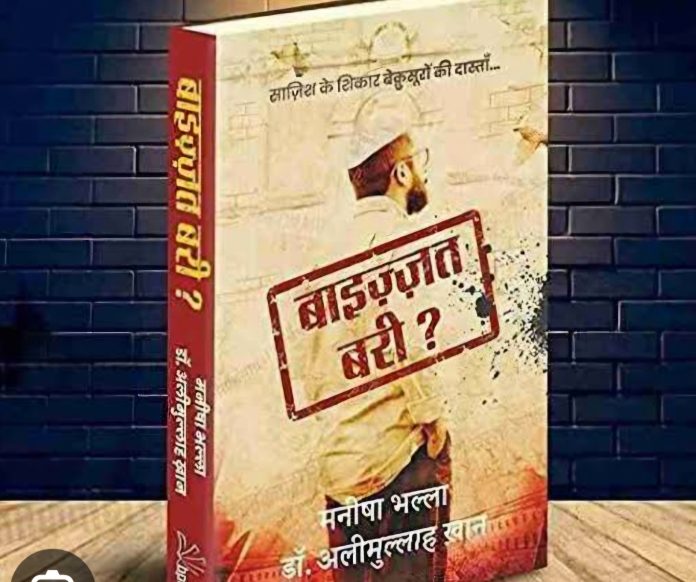
Book: Baa Izzat Bari / Written by Manisha Bhalla and Dr. Aleemullah Khan. Published by: Bharat Pustak Bhandar
“Baa Izzat Bari” by Manisha Bhalla and Dr. Aleemullah Khan is a compelling non-fiction account that explores real-life stories of individuals falsely accused in terror related cases in India, only to be acquitted after long legal battles. The title, which translates to “Honorably Acquitted,” captures the essence of the work—justice being served after a grueling fight, though often at the cost of the individuals’ dignity, time, and peace of mind.
This book sheds light on the flaws within the Indian legal system, particularly highlighting cases of wrongful accusations and the traumatic experiences of the innocent individuals who are caught up in these legal nightmares. Through detailed case studies, the authors offer an insightful look into the personal struggles of those who have been falsely implicated and their journey toward proving their innocence.
Judicial Delays and Systemic Flaws:
The delves into the chronic delays that plague the Indian judiciary. The individuals portrayed in the book endure years, sometimes decades, of legal proceedings before their names are cleared. This is a strong commentary on the systemic inefficiencies that prolong suffering for those falsely accused.
Emotional and Social Impact:
One of the most powerful aspects of “Ba Izzat Bari” is how it focuses on the emotional toll these accusations take. The accused face not only the trauma of legal battles but also the stigma of being labeled criminals in the eyes of society. The book captures how families are torn apart, careers destroyed, and reputations permanently damaged, even after an acquittal.
Resilience and Perseverance:
Amidst the grim reality of these stories, it highlights the resilience of those who continue to fight for justice. Their perseverance, often in the face of hopelessness, serves as a testament to human strength and the will to restore one’s dignity.
Questioning Legal and Ethical Norms:
Through these cases, it raises critical questions about the functioning of the police, judiciary, and society at large. How can the system be reformed to prevent such wrongful accusations? What mechanisms should be put in place to compensate those who are falsely accused? Bhalla leaves these questions open for debate, encouraging readers to think critically about justice in a democratic society.
The is journalistic yet empathetic, balancing factual accuracy with emotional depth. Writers provide meticulous details about each case, using interviews and official records to paint a full picture of the victims’ plight. The narrative style is engaging, keeping readers invested in the personal stories while also provoking thought on larger legal and societal issues.
While the book does an excellent job of bringing attention to the individuals who have suffered, it sometimes lacks a more in-depth exploration of potential legal reforms. The authors could have dedicated more space to discussing solutions or outlining actionable steps that could help prevent future cases of wrongful accusations.
However “Ba Izzat Bari” is a poignant and necessary examination of the human cost of wrongful accusations in India’s justice system. It is both a critique of the systemic flaws and a tribute to the individuals who have suffered under its weight. For readers interested in law, social justice, or human rights, this book offers an eye-opening look at the harsh realities faced by those who are wrongfully accused and ultimately “honorably acquitted.”
source: http://www.muslimmirror.com / Muslim Mirror / Home> Books> Human Rights> Indian Muslims / September 18th,2024
When Muslims first arrived on the Indian coast 1400 years ago, the land embraced them with the same grace bestowed on the Aryans, Africans, Zoroastrians, Tibetians, and others. These arrivals have uniquely imprinted their gems on our nation’s social, cultural, and architectural heritage. One such gem is the Zeenath Baksh Masjid built in wood.
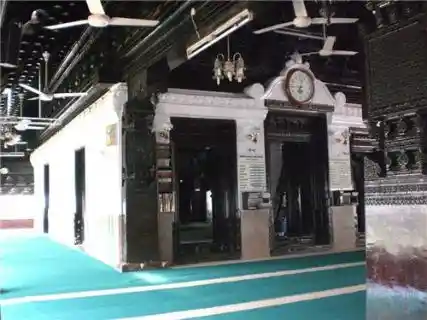
The exquisite and ornate wooden sanctum of Zeenath Baksh Masjid | Source: Wikimedia
History has proven time and again that old is gold, both figuratively for its preciousness and literally for the permanence of the shelf life of gold counted over centuries. But if something that is the oldest, counted over centuries, is in wood, wouldn’t it be more precious and rare? When wood that decays and crumbles away naturally survives the burn of time and political upheavals, then it becomes the golden grace of heritage. The Zeenath Baksh Masjid in Mangalore, Karnataka, is one such gem of Indian historical treasures. It has survived for centuries and is not just the only Masjid made of wood but also the oldest in Karnataka and the third oldest in India.
In the seventh century, Hazarath Mohammed Malik Bin Deenar and his small group arrived at the Malabar coast of Kodungallur, with a letter written by the former Cheruman Perumal, who passed away while returning from Mecca. The letter instructed his son, the contemporary raja (king), to provide every kind of hospitality and permission to preach the faith of Islam in the kingdom. After observing the pious and honest nature of the guests, the king granted lands and other amenities within his kingdom. Malik Deenar, the first-generation disciple of Prophet Mohammed, with his group, established ten masjids after the first in Kodungallur. Zeenath Baksh is the second out of the ten and was constructed in 643 AD, currently located in the Bunder area of Mangalore city. It was earlier referred to as Beliye Palli or Malik Dinar Valya Juma-ath Masjidand was built by the kith and kin of Malik Deenar, who continued preaching the tenets after the sahaba (companion) departed from our coast.
The carved wooden pillars attest that old can be golden in wood | Source: Wikimedia
The nayaab nature of the original structure is that, all those centuries ago, it was entirely made of wood. The pristine glory of the wooden sanctum is still maintained by the local people and sponsors. Owing to the historical nature of the religious site, the caretakers of the masjid hope to get the site its due recognition and funding for maintenance from the administration. As the Secretary of the Central Muslim Committee, Mr Hanif Ali, informs,
“We have written to the tourism department and the Wakf Board to develop the mosque into a tourist spot. They have shown interest, but nothing concrete is being done.”
Though the original structure, which now acts like the inner sanctum, is enclosed within stone walls after renovation, the ceiling of this part is also made of wood and protected with a brass sheet.
As Mr Ali states, “Even if the stone walls were removed, the structure would still stand.”
The water tank is ubiquitous to all religious sites in the region | Source: Wikimedia
The present structure holds the legacy of the Tiger of Mysore, Tipu Sultan, who renovated the medieval Masjid during the second half of the 18th century. Though he enhanced the serenity and aesthetics of the heritage, the original model was kept intact. He then renamed the structure after his daughter Zeenath Baksh, and for the past 400 years, it has retained the name. In the 19th century, it was given a new look by adding four minarets while earlier with its tiled roof it used to resemble the Malabar-styled mansion of a local chieftain.
The new look of the Masjid with the outer walls enclosing the original | Source: Deccan Herald
The sanctum is designed with typical Indian architectural blends with the tank within its grounds, keeping in sync with the traditional style of the nearby temples. The carvings on the sixteen pillars that form the perimeter of the prayer hall depict flowers, bells, and Arabic texts narrating anecdotes from the life of the Prophet. The art etched into the wood encapsulates the cultural blends of the region, and each pillar is made of a single block of wood. Despite the rain and humid conditions typical of the belt, the intricacy of the wooden designs has not faded into blurred lines, as usually expected. Even the floor, walls, and doors are adorned with teak wood and rosewood. As the manager of the Masjid shares,
“Every couple of years, we spend more than Rs. 1 lakh to rub in oil to preserve it. Apart from fixing small scratches, we have not modified or replaced any part of the structure.”
Where wooden art is revered in prayers | Source: Mangalore online
Records prove that this house for prayers was established in the Islamic month on the twenty-second day of Jumada al-awwal and approximately on 18 April 643 AD, with Moosa Bin Malik, the son of Malik Bin Abdullah, as the first Qazi (magistrate of the shari’a court). The site is not known just for its worthy heritage, but also for its community activities, which keep the people around bonded in gratitude and harmony. Attesting to the shared communal brotherhood is the Sharavu Ganapathi Temple. Contrary to propagated accusations, the well-known historian, A M Prabhu (who wrote a well-researched history of Tipu Sultan), recorded that the temple was developed by the Sultan, as a tribute to the local Tuluvas, who for centuries, protected the mediaeval Arabs and the Muslims.
The Shrine overlooking the Malabar-style verandah | Source: Mangalore Online
The Masjid is a hub of charitable activities with its sponsored yateemkhana (orphanage), funding the destitute during marriage ceremonies and even conducting funerals free of cost for the ones who cannot afford it. The wide verandah for the past eighty-seven years has also cradled the sacred shrine of the revered Qazi Hazrath Sheikuna Muhammed Moula Jalal Masthan Al Bhukhari.
All in all, the Zeenath Baksh Masjid is one of the gems that adorn our heritage of cultural blends and is a cocoon of brotherhood, serene piety, and harmony in diversity. A site that is the zenith of the glorious South Indian history.
source: http://www.thisday.app / Home / by Waheeda Bi Khan (headline edited)
There once lived a woman who epitomised the saying, ‘courage lies in compassion.’ Though born into the creamy tier of society, Bilkees Latif exemplified ‘living life large’ with regal grace, compassion, humility, and service to the downtrodden.
Bilkees Latif – The Enigma of Versatility | Source: You & I
Born to Nawab Ali Yawar Jung of Hyderabad and Alys Iffring from France, Bilkees grew up with a silver spoon that never got to her head or turned her into another conceited, snobbish socialite of the affluent society. Instead, she carved the path for her own legacy, decking it with added laurels for an already illustrious family that graced the halls of fame in professional careers and philanthropy alike.
The happily married couple whom even death could not keep apart for more than a few months | Source: You & I
Bilkees was married off in her early teens, as per norms of those times, to the son of another Nawabi family, the former Air Chief Marshall Idris Hasan Latif. Fortunately, she embarked on a happy marriage where the couple reached new heights of their family legacy, giving back to society with sophistication and empathy. He was one of the rare commissioned Air Force officers under the British Raj when she married him. Down the lane, Bilkees captured his illustrious life in her words, in a book titled The Ladder of His Life, an apt title, because he was the perfect stairwell through which she reached amazing feats*.*
They say greatness is not in lending help; it is in giving the downtrodden the best chance to lift themselves out of their howls. Tapping into the networking skills inherited from her family and her role in the Raj Bhavan as the wife of an Air Chief Marshall and the Governor of Maharashtra, she initiated her most lauded mission of improvising the largest slum of Asia, the Dharavi region in Bombay (now Mumbai). Among the many charitable and rehabilitator organisations she founded, The Society of Human Environmental Development (SHED), was the first. Embedded amongst the Godrej, Wadias, along with personalities like Sarojini Naidu, and Mahalaqa Bai Chanda of the society, she channelled their resources to the best purpose of giving hope of self-reliance to the helpless and discriminated.
A smile that never wavered along the slum dwellers or through the dignitaries | Source: You & I
Her life was a slide ranging from a diplomatic hostess for the likes of President Mitter as the wife of the Indian Ambassador in Paris or when Queen Elizabeth visited Hyderabad, with dexterous flair and culinary delights, to squatting with the slum children during her drive for hygiene or to understand the core issues of almost nil literacy rate, unemployment, drug addiction, etc. She has journaled her experience, which not only involved persistence to gain the dwellers’ trust but also a consistent tussle with the mafia and other powerlords, in her book O Dharavi.
Receiving Padma Shri from the President | Source: You & I
Today, the tourists who throng Dharavi do not go to witness the squalor of the slums. They visit to admire the very source of the largest economy of Maharashtra, generated from the 99 per cent of the hygienic houses that own some kind of home industry, may it be food, crafts, or hundreds of other options in the legitimate market. Her selfless strife to accomplish her solutions to the innate problems of the slums and not just hear them and forget once out of sight won her the much-deserving Padma Shri in 2008.
Cover pages of two of her books | Source: Penguin, Amazon
Mere words fail to encompass the versatility of Bilkees, as a seamstress of her enigmatic chiffon sarees with Banarasi borders. She was an exceptional artist, attested through one of her works, which was an 8-foot mural exhibited in Osaka, at the Japan Aero Exposition. Her elegance mirrored in her words as an author to her culinary skills and deep insight into the Deccan culture capsuled into “Essential of Andhra cookbook” apart from her other books like The Fragrance of Forgotten Years. She was the Founder member, Board member, President, and Trustee of many organisations like INTACT, the Indian Council for Child Welfare, Anjuman-e-Khawateen, the Board of Air India, and many others. She was the lamp of the literacy drive for children and had helped open 107 Bal Bhavans affiliated with the National Bal Bhavan as the Chairperson and Children’s Museum that organised creative activities for children all over India.
Just like her active life, she faced cancer in her painful last years with equal courage, poise, and humility, before she passed away in October 2017. Some people achieve so much and touch so many hearts that it becomes impossible to encapsulate their lives in just a few lines. Bilkees was one of them, her lifespan must have ended at eighty-six, but her legacy will be carried on, in each breath of Dharavi who are reaping the valorous efforts of her compassion, and in the memories of each of those whose lives she touched, one way or the other. She left behind two sons and a daughter.
Her lovely family of ‘hum do hamare teen’ | Source: You & I
Bilkees Latif was a woman who amalgamated an unaffected natural charm, grit, down-to-earth versatility, and kindness, into such a perfect blend, that it is seldom found in aristocracy. The words from her own pen in her book seem to resonate with the prayers of all those hearts she had touched with her kindness – “Keep her happy wherever she is, please.”
source: http://www.thisday.app / Home / by Waheeda Bi Khan
The road unfolded before us like a ribbon, guiding our car through the lush greenery and coconut groves of Kerala. It was the sacred month of Ramadan, and we had embarked on a journey to the enchanting city of Kannur in search of a pious man. The road ahead promised a culturally rich, soul-stirring experience that would leave an indelible mark on our hearts.
We entered the city after a two-hour long drive; the streets bustled with pedestrians, the sound of traffic filled the air, buyers and sellers haggled in the marketplace. Amidst this vibrant chaos, an air of sanctity was palpable; it carried the essence of a bygone era, where the mingling of diverse traditions shaped the city’s identity. Our guide informed us of Kannur’s deep-rooted connections with the Islamic world, which dated back centuries.
Nestled along the coast of the Arabian Sea, Kannur holds a special place in the tapestry of Islamic culture. The arrival of Arab merchants, who had ventured to the Malabar Coast for trade, had a lasting impact on the locals. Legend has it that Islam took root in Kannur even before the arrival of Malik ibn Dinar, who is famously known as the first companion of the Prophet Muhammad ﷺ to arrive in India (though this cannot be verified historically). The tales passed down through generations speak of King Cheraman Perumal, ruler of the Chera kingdom, who was drawn to Islam after witnessing the miracle of the split moon. He embraced Islam, took the name Tajuddin, and ventured to Mecca, where he shed his worldly concerns. His story, engraved in verse on a wooden tablet at the Arakkal Palace, is a testament to the city’s historical connection with Islam.
Over the centuries, Kannur flourished as a centre for Islamic scholarship and culture, particularly Sufism. It became a hub of spiritual seekers, earning the moniker ‘Baghdad of India’. One notable figure in Kannur’s Sufi tradition is Ghawth al-A’zam (the Greatest Helper), Shaykh Abdul Qadir Al-Thani, whose presence lingers in the serene village of Puratheel, just a short distance from Kannur city, and whose grave we were destined to visit that day.
After parking our car near Varam Kadavu Bridge, we were drawn to a nearby river, its cool, sparkling waters beckoning us under the scorching summer sun. Seeking respite from the heat, I cupped my hands and splashed the cool water on my face, feeling rejuvenated in both body and soul. My colleague, who had visited Puratheel before, remarked that this river served as a natural border for the village, fortifying the sacred site with its life-giving waters. It was this very river that earned Puratheel the epithet dweep, or ‘island’. The flowing waters represented a boundary that was not only physical, but also spiritual, separating this land from the rest of the outside world.
Puratheel. Image credit: Salz Graphy
Standing on the river’s edge, engrossed in its serene beauty, I felt a profound sense of peace wash over me. At that moment, I understood why Puratheel was revered as a place of spiritual import. It provided a sanctuary, a space where seekers could disconnect from the outside world and embark on a meaningful journey of self-discovery. Even as we reluctantly left the riverbank, the serenity of that moment remained with us, and we cherished this reminder of the intense connection between nature, spirituality, and the pursuit of inner peace.
As we wandered through the village, faint sounds of devotional music played from afar. Our guide, prayer beads in hand, began to narrate the story of Shaykh Abdul Qadir Al-Thani.
There once lived an extraordinary man in Afghanistan by the name of Shaykh Uthman Hamdani. A Persian ruler and descendent of the esteemed first Caliph, Abu Bakr Al-Siddiq, this Sultan of Hamadan left all his riches behind to go on a quest for truth. He wandered tirelessly across distant lands, his footsteps guided only by his faith and a thirst for spiritual knowledge.
Shaykh Uthman eventually arrived in Valapattanam, a tranquil village in the northern province of Kerala. One night, during his stay in the village, he experienced a vision. This vision promised him that, should he marry on that very night, he would sire a miraculous child. A year later, in the nearby kingdom of Chirakkal, royal astrologers uncovered a celestial secret. They revealed to their king that a child had been born in the Valapattanam province — a child destined to become the greatest of all miraculous beings. They further prophesied that if the King provided protection and support to this child, his kingdom would prosper.
Intrigued by this prophecy, the King of Chirakkal set out to meet the newborn child, who had been named Abdul Qadir. Recognising the infant’s extraordinary potential, the King assumed responsibility for his upbringing, ensuring that he grew into a virtuous and revered figure. As such, the child was brought to the King’s palace at the tender age of five or six, where he continued his spiritual journey surrounded by the kingdom’s grandeur. His princely childhood abruptly ended at the age of sixteen, when his fortuitous encounter with four strangers changed the course of his life forever.
The strangers had arrived at his family home in a famished state while Abdul Qadir was away at the palace. With his mother’s permission, they slaughtered cattle she had originally set aside for her son, and chopped down a jackfruit tree in front of the house. They cooked their meal, ate, and saved some of the food to be given to Abdul Qadir when he returned. As the strangers departed, the family were astonished to find that both the cattle and jackfruit tree had been miraculously restored to their original state. When Abdul Qadir eventually came home, his mother informed him of their unusual visitors. Realising that these were no ordinary beings, he set off to find them, eventually encountering four people from Bhatkal, Karnataka. Amongst them was the distinguished Sufi shaykh, Mahmoud Al Khabooshani, who bestowed Abdul Qadir with an ijaza in the Suhrawardi tariqa. This was a licence that would formally permit him to instruct his own disciples in the teachings and practices of the Suhrawardi Sufi order.
Mosque built by the Shaykh himself
Inspired, Shaykh Abdul Qadir abandoned all material pursuits and devoted himself to worship. When the King grew concerned at the Shaykh’s sudden withdrawal from the palace and other worldly affairs, the Shaykh expressed his desire to continue this path, furthermore requesting that the King grant him a portion of the land to be reserved for regular worship and seclusion. The King assented, and named this land ‘Puratheel’. There, the Shaykh built a mosque and established a settlement, fostering a culture of spiritual seclusion and growth. He eventually became known as Abdul Qadir Al-Thani (‘the Second’), as people reverentially associated him with Ghawth al-A’zam Abdul-Qadir Al-Jilani, esteemed scholar and saint of Baghdad.
Despite my efforts, I found little information about Abdul Qadir Al-Thani in my research. Even in Malayalam, the native language of Kerala, references were scarce. Only in Arabic did I find a single work, entitled The Holy Maulid, by Shaykh Valappil Abdul Azeez Musliyar. Shaykh Abdul Qadir’s obscurity in the digital realm was, to say the least, disappointing. However, as I stepped into the sacred sanctuary of Puratheel, I was astounded to see its pathways abound with visitors, their footfall echoing with purpose and a yearning for the blessings of a shaykh unknown to Allama Google. This was a realm beyond the age of digital information, where human souls longed for a connection unencumbered by the pretensions of media and search engine rankings. I felt an enigmatic current that drew people to a shaykh who, while evading fame and renown in written histories, had claimed his place in living hearts and memories.
Tombs of Shaykh Abd al-Qadir al-Thani’s descendants
With the setting sun, a melodious call to prayer echoed through the misty valleys, summoning the faithful to gather in the sanctum of the mosque. Inside, the golden glow of flickering lanterns danced across the walls, and the congregation united in prayer between them. The rhythmic recitation of sacred Qur’anic verses rose and fell, followed by murmured supplications emanating from each devotee’s lips.
After the Maghrib (sunset) prayer, a serene calm enveloped the community. We had just shared an Iftar meal to end the day’s fast, replenishing both body and soul with food and prayer. However, the night was far from over. At 12.30am, as moonlight filtered through the mosque’s stained glass windows, bathing the prayer hall in its soft glow, the call to prayer would recommence. As the rest of the world slept on, these worshippers would perform the Taraweeh prayer until 2am, a night prayer reserved for the blessed month of Ramadan, followed by more supererogatory prayers and whispered invocations hoping to forge a bond between this earthly realm and the Divine.
Though Muslims the world over perform these rites every Ramadan, Puratheel has its own unique customs. The Qunut, a special supplication, is recited with every prayer except Maghrib. On Mondays, Thursdays, and Fridays after Maghrib, devotees gather for a dhikr halaqa, or gathering of remembrance, chanting the Divine’s sacred names in melodious union. After the Jumu’ah (Friday) prayers, which are led by a descendent of Abdul Qadir Al-Thani, a ritual of repentance takes place; the Shaykh recites words of istighfar, invocations that seek Divine mercy and forgiveness. Believers repeat the Shaykh’s istighfar, and disclose their struggles and shortcomings to a spiritual mentor as a means of guidance, purification, and self-reflection.
As Ramadan nears its end, the anticipation of seeking Allah’s blessing in the final ten nights of the Sacred Month swells, culminating in the sought after ‘Night of Power’, or Lailat ul Qadr. This is the twenty-seventh night of Ramadan, where in Puratheel, the adhan (call to prayer) resounds seven times to herald the Night of Power’s arrival. The mosque transforms into a radiant beacon, drawing the servants of Allah from near and far.
Puratheel Juma Masjid
When the final sun sets on Ramadan, and Eid ushers in the Sacred Month’s end, the Isha (evening)prayer is delayed until 2am to encourage the faithful to immerse themselves in worship until dawn. Although these customs may seem arduous to some, they are embraced with an unwavering devotion in Puratheel, keeping the legacy of the Shaykh alive. In our age of information and instant gratification, Puratheel reminds us that there are still enigmas to unravel, hidden domains waiting to be explored, and extraordinary souls whose influence transcend the virtual realm. True enchantment lies not in its digital presence but in the transformative encounters that await those who embark on this journey with an open heart and a yearning for the Divine.
Before our trip came to its end, our guide led us inside the mausoleum that housed Shaykh Abdul Qadir Al-Thani’s tomb, where he rested adorned in royal green clothing. Mausoleums of his children, grandchildren, other family members, and companions abound, both in Puratheel and all throughout India.
As we left Puratheel, a sense of tranquillity washed over me, dispelling, for the moment at least, all of life’s uncertainties. I felt that an inner peace had permeated my being, reminding me that we are never truly alone. For a moment, the world stood still and breathless, before exhaling a gentle breeze that brushed against me. I felt tears spring to my eyes, and wondered if nature possessed its own soul.
I left marvelling at the interconnectedness of the human spirit and the natural world. With the wind divulging its secrets and the land preserving ancestral tales, our souls are inextricably tied to that of nature’s. Through timeless bonds, we find solace, guidance, and an earnest understanding of our place in the cosmos. I journeyed forward, guided by whispers of the unseen, embracing the beauty and mystery bestowed upon us by nature.
Edited by Asma
source: http://www.sacredfootsteps.com / SacredFootsteps.com / Home>Asia> India / by Swalih Kuzhinholam / edited by Asma
____________________________________
Swalih Kuzhinholam
Swalih is a writer, Islamic tutor, and cultural explorer based in Kerala, India. He is a graduate of Darul Huda Islamic University in Chemmad, and a former Associate Editor at Thelitcham monthly magazine. His interests lie in culture, society, Sufism, aesthetics, literature and the arts.
Islam in India is often portrayed as a byproduct of the 16th century Persian Mughal Empire; but if you look past the Taj Mahal and Jama Masjid of Agra and Delhi, you find that Islam’s roots actually run far deeper in other parts of the country.
The claim that the Mughal Empire is responsible for the spread of Islam in the subcontinent, is often made by far-right (Hindu or Indian) nationalists, and has contributed to the common misconceptions that Islam is a recent phenomenon in South Asia, and that it spread from the north of the country to the south. However, evidence suggests that the religion first reached the shores of the Gujarati-Konkan and Malabar coasts (in the south) almost a thousand years earlier, in the 7th century, through trade in the Indian Ocean with East African and Arab merchants.
One of the oldest mosques in the world, Cherman Juma Mosque, is thought to have been built in Kerala, in the south of the country, in 629 AD, and a few years later the Palaiya Jumma PalliMasjid was built in Tamil Nadu.1 Ibn Battuta, who travelled throughout the Islamicate, even worked as Qadi (judge) in the Delhi sultanate in the 14th century, before his disastrous shipwreck.2
In this article, I want to concentrate on a part of India that is often overlooked in discussions of Islam: Gujarat.
A brief history
Sitting on the Arabian Sea, Gujarat is the most western state of India. Centuries of migration have seen it become a cosmopolitan melting pot. The state’s diverse religious and ethno-linguistic communities are reflected in both Gujarati architecture and the Gujarati language, which is interlaced with Persian, Arabic, Swahili and Sanskrit. Gujaratis, well-known for their influence in trade and business, were prime merchants in the Indian ocean in the centuries prior to the emergence of the East India company. It has also been argued that the lack of written Gujarati sources was due to Gujarati merchants not wanting outsiders to access this exclusive language of trade.3
Handmade ships being built at the timber shipyard, Mandvi, Gujarat. Copyright Sasha Patel. All rights reserved.
Yemeni shipbuilders, Zoroastrian Parsi’s (who fled Iran due to religious persecution in the 8th century), and Ismaili Shias, are just some of the many groups that have settled in Gujarat, and influenced its culture for centuries. In the 10th century, Ibn Hawqal, Muslim Arab geographer and chronicler, even observed mosques in four cities of Gujarat that had Hindu kings, namely, Cambay, Kutch, Saymur and Patan.4
Tensions
In the decades since partition, and in recent years, communal tensions and violence have flared up periodically in Gujarat. Since 1950, over 10,000 people have been killed in Muslim-Hindu communal violence5 with horrific events such as the Bombay riots (1992) and Gujarat riots (2002)6 still heavily imprinted in recent memory. The cause of the unrest is often attributed to the multitude of diverse communities living in close proximity; however, this is a gross simplification that ignores the role of colonialism in instigating communal violence7by emphasising religious difference.8 Though no one is suggesting that religious tensions didn’t exist in pre-colonial times, scholars have argued that the lines of religious practise were often blurred (as we shall see).
This colonial legacy, alongside increased ‘saffronisation’ of the Indian government9 and increased Hindutva mobilisation, has led to Muslim minority groups being attacked as “outsiders” or “invaders” to support the idea of a ‘Hindu Rashtra(nation)’.10 This ideology tries to omit the centuries long existence and contribution of Muslims within Gujarat and the Indian subcontinent.
Though there are no doubt numerous means by which this contribution can be demonstrated (i.e. social, lingual, economic, culinary (for example did you know that biryani is not actually Indian in roots but was introduced by immigrants from Iran?), here I will concentrate primarily on architectural, since in recent years, right-wing hardliners have sought to politicise monuments by calling into question their ‘true’ antecedents.11 As I will show, there are a number of Islamic monuments within Gujarat that reflect the presence of Islam and contribution of Muslims in India before, during and after the reign of the Mughals.
Chamapaner-Pavagadh Archaeological Park
Forty-seven kilometres outside the city of Baroda in Gujarat, is the Champaner-Pavagadh Archaeological Park, a UNESCO world-heritage site, the oldest parts of which were built in the 8th century. Champaner is the 16th century historical city at the centre of the site built by sultan Mahmud Begada of Gujarat. The forts on the hills of Pavagadh surround Champaner. Once the capital of the Gujarat sultanate, before it was moved to Ahmedabad, the site features intricately designed palaces, masjids, mandirs, stepwells and much more. Champaner-Pavagadh is the “only complete and unchanged Islamic pre-Mughal city” in India, highlighting its historical significance.
Mosque at Champaner. Image CC: Olivier & Pascale Noaillon Jaquet via Flickr.
A fusion of both perceived Islamic and Hindu architecture, in its domes and arches, this site encapsulates the historical context of India prior to imperial rule: cultures defined by regions which incorporated significant aspects of all religions.12
Champaner-Pavagadh today is a pilgrimage destination for Hindus, Muslims and members of other religions, demonstrating how blurred the lines of religion once were in India’s pre-colonial past.
Hazira Maqbara
Away from the dusty hustle and bustle of the purana shehr, or old town, lies the Hazira Maqbara.It serves as a good example of how Islamic monuments in Gujarat are given little recognition and often overlooked completely.
Hazira Maqbara
Built in 1586, the monument contains the tomb ofQutubuddin Muhammad Khan, who was the tutor of Jahangir, the son and successor of Akbar. The significance of the mausoleum, as belonging to the teacher of one of the most famous Mughal emperors of all, is barely acknowledged in Gujarati history, let alone recognised in travel guides. For me, the tomb and its surrounding gardens offered a serene experience, that could be described as an ode to the education provided by Qutubuddin Muhammad Khan to the emperor in his lifetime.
Inside Hazira Maqbara
The mausoleum now seems to be looked after by members of the Ismaili Shia community of Baroda. While visiting, the two men who were acting as ‘guards’ were eager to show us around, perhaps a reflection of the lack of visitors received by this hidden charm of the city. It’s almost ironic that the Hazira Maqbara, a Mughal monument, is even forgotten by the groups who over-emphasise the role of the Mughals in bringing Islam to India.
Laxmi Villas Palace
Laxmi Villas is the former palace of the Gaekwads of Baroda. The Hindu Gaekwad dynasty ruled the princely state of Baroda from the early 18th century until 1945. Under the rule of Sayajirao Gaekwad III (1875-1939), Baroda was seen as one of the most socially progressive states in India.
PIX07
Built in 1890, Laxmi Villas embodies the elegant and ostentatious Indo-Saracenic style- a style that was ‘developed’ by colonial architects to combine elements of both Indo-Islamic and ‘traditional’ Indian architecture. The elaborate decoration of the palace leaves no detail untouched; the intricate floral designs on all the arched window frames, mosaics sparkling in gold, and the magnificent Darbar and Hathi(elephant) halls are just some of the delights this palace holds. It also includes gardens designed by William Goldring, a specialist for Kew Gardens, and a miniature train which encircles a mango orchard. Laxmi Villas Palace is an important representation of India’s elite within the context of it’s colonial past, and its inclusion of Islamic elements is significant, in that it acknowledges the presence and contribution of Islam in Gujarat.
Three different sites, eras and locales; each in its own way represents the long-standing presence of Islam within Gujarat. The lazy attribution of Islam to the Mughals, and the limiting of its contribution in India to the Taj Mahal (though, bizarrely, even this is being challenged), is not difficult to refute- and when invented histories and political narratives (which often politicise monuments) are being used to challenge the rights and existence of minority communities, it must be refuted. In Gujarat, monuments such as Champaner-Pavagadh demonstrate the existence of Islam in India prior to Mughal rule, and the architecture of Laxmi Viilas Palace represents its influence and contribution more than a thousand years since it arrived on the shores of the Indian Ocean.
10 Sumit Sarkar, ‘Indian Nationalism and the Politics of Hindutva’. in Ludden, David (ed.), Contesting the Nation: Religion, Community and the Politics of Democracy in India
11 Bhattacharya, Neeladri, ‘Myth, History and the Politics of Ramjanmabhumi’, in S. Gopal (ed.), Anatomy of a Confrontation: The Babri Masjid-Ram Janmabhumi Issue. (further reading)
12 Metcalf, T. R., 1994. Ideologies of the Raj. Cambridge: Cambridge University Press.
source: source: http://www.sacredfootsteps.com / Sacred Footsteps.com / Home> Asia / by Sasja Sasha Patel
Currently studying History & South Asian Studies (Hindi) at SOAS. Passionate about using the power of history to challenge current political narratives in regards to race & gender. Classical musician who loves reading postcolonial literature & visiting exhibitions. Best travel moment? Journeying through rural Gujarat to the White Salt Desert/ Rann of Kutch, India.
Senior citizen Abdullah Bin Ahmad sports Yemeni headgear and a colourful sarong
In a little known corner of an Indian metropolis lies a thriving Yemeni oasis, complete with harees, gahwah, and mandi.
It’s Sunday morning, and the Bin Habtoor family is hard at work on Barkas’ bustling Market Road. They serve a steady stream of customers making a beeline for harees, the sticky, porridge-like breakfast that has long since become a local favourite. But what is harees, an Arabian dish, doing in a south Indian neighbourhood?
The answer lies in the origins of Barkas, a suburban enclave founded on the outskirts of Hyderabad city over a century ago.
A corruption of the English word barracks, Barkas is a distinct and vibrant neighbourhood that, despite its still being firmly rooted in the Yemeni ethos, has acquired a local flavour through assimilation with native traditions.
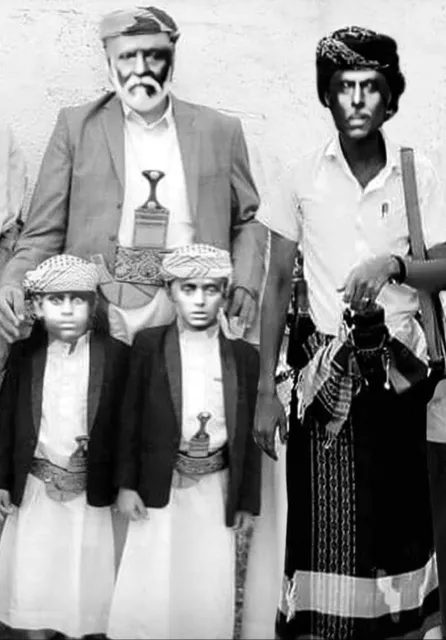
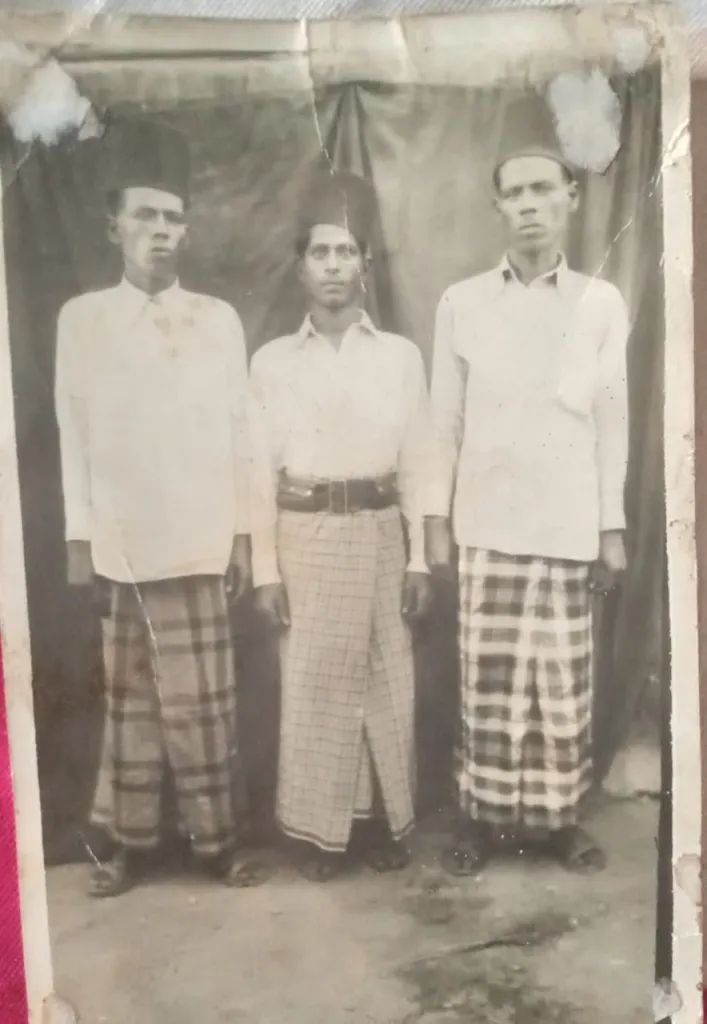
Senior Barkas resident, Awad Bin Badar Barrawaz, with his children (1920s)
In the late 19th and early 20th centuries, the Hyderabad state was the largest and most prosperous kingdom within British-controlled India. Its army, which was comprised of soldiers from far and wide, included a great number of Arabs, many of whom hailed from Yemen.
According to popular local history, Barkas was founded in 1903 by Awadh Saleh Abillail al-Salami, a commander in the Nizam’s army. As a general, al-Salami helped the Nizam set up the Arab Regiment, filling it with young Yemeni mercenaries. The soldiers eventually married Hyderabadi women, starting families and permanently settling in the city.
Barkas residents Jaffer Barrawaz and his twin brother posing in traditional attire (1946)
Following India’s independence from British colonial rule, Hyderabad was annexed and added to Indian territory. The Nizam’s army was disbanded however, it’s soldiers and their families remained in Barkas. It was their strong sense of identity that saw them not only endure, but thrive in the region. Today, they number more than 200,000, representing a unique synthesis of Indian culture and Arabian customs.
This merging of identities to form something new reminds us of more syncretic, symbiotic times, when communities would often blend together without surrendering their collective self-hood. And so, while they saw themselves as Indians, these once-Yemeni soldiers and their progeny held on to many of their Arabian traits. Some of their customs remain to this day.
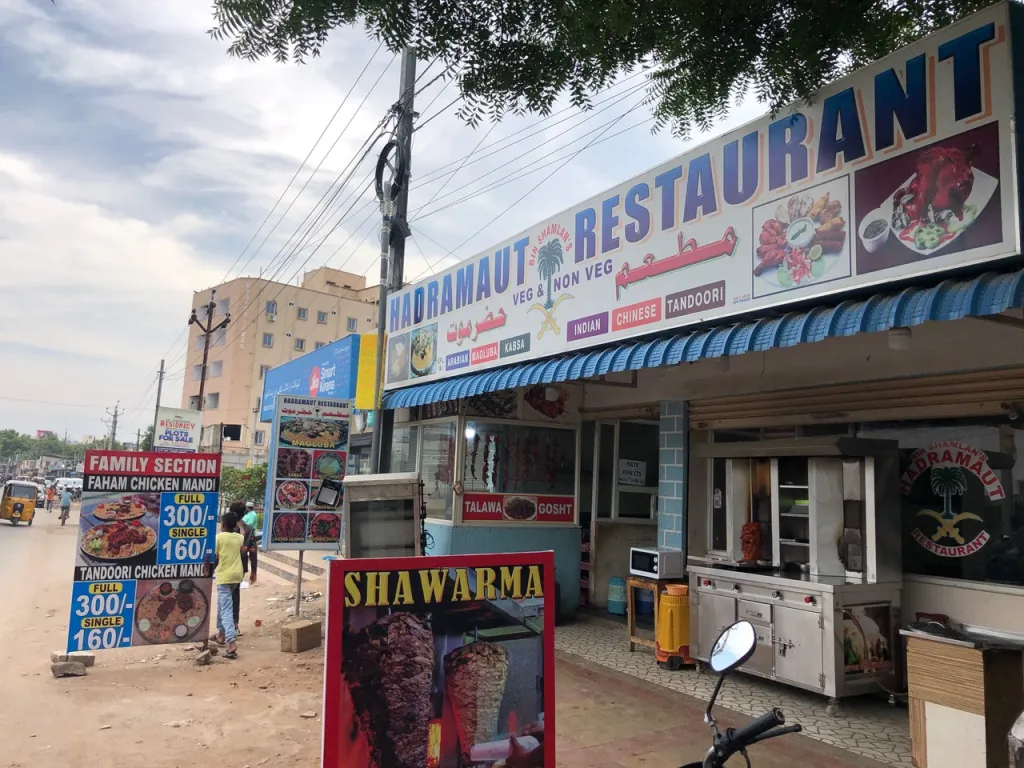
The moment you enter Barkas, you are met with Arabic signboards and welcomed by an array of Arab eateries. As you wind through the old city streets, as well as the neighbouring area of Salalah (named after the Omani region bordering Yemen), you will no doubt spot Yemeni headgear and colourful sarongs that transport you from southern India to southern Arabia.
Restaurants serving mandi, shawarma, and other Arab foods have become particularly popular in Barkas.
Food for Thought
If you were to close your eyes and breathe in the Barkas air, you would take in the aroma of Arabian spices, coffee, and perfume. You would be forgiven for wondering, standing outside the Harees Al Hadrami eatery on Market Road, whether you were in Yemen’s Hadramaut, or if this was just another shade of India’s diverse tapestry.
Only upon hearing the locals welcoming you in the typical Hyderabadi Deccani dialect of Urdu would you be sure it was the latter. The adoption of Urdu is just one of many aspects of the local culture the migrants have embraced over the last century.
The locals gather at the Gahwah stall every evening, sharing joys and sorrows over their steaming cups.
Not only did they adapt their tongues, but their palates, too, as Arabian tastes gave way to local culinary preferences.
“Traditionally, the Arabian harees is made with meat, wheat grains, and generous dollops of ghee (clarified butter), but without any use of spices or sugar. It tastes quite bland if you grew up on the spicy local food. Over the years, as our forefathers adapted to their new life in Barkas and their tastes began changing, they catered to the local preferences which gave birth to two varieties of harees: the sweet, and the savoury, and both are equally popular now,” remarked Qaiser Bin Abdullah Bin Habtoor, one of the four brothers running the only surviving harees eatery in the area.
The business was started by their grandfather almost six decades ago. It was among a handful of harees businesses in town, until the changing realities of modern life forced the others to shut up shop.
“We are the oldest surviving Harees outlet in Hyderabad now. There were a few others on this street that have closed down. This is a tough business; the making of Harees is a lengthy process and needs a lot of patience and skill. The knowledge has been passed down to us by our forefathers and we are glad to have been able to maintain this tradition,” said Sabir Bin Abdullah, who spends nearly ten hours per night preparing the dish, continually stirring the mixture as it simmers over a low, coal-powered flame.
Craze for Coffee
Another family business and Yemeni tradition that has survived the test of time, albeit with a local twist, is gahwa, or Arabic coffee.
While Yemenis and most other Arabs prefer their gahwah black -a blend of water, herbs, spices, and powdered coffee – Barkas’ own popular variant is a mixture of coffee powder, sugar, cloves, cinnamon, cashews, almonds, saffron, and, most importantly, milk.
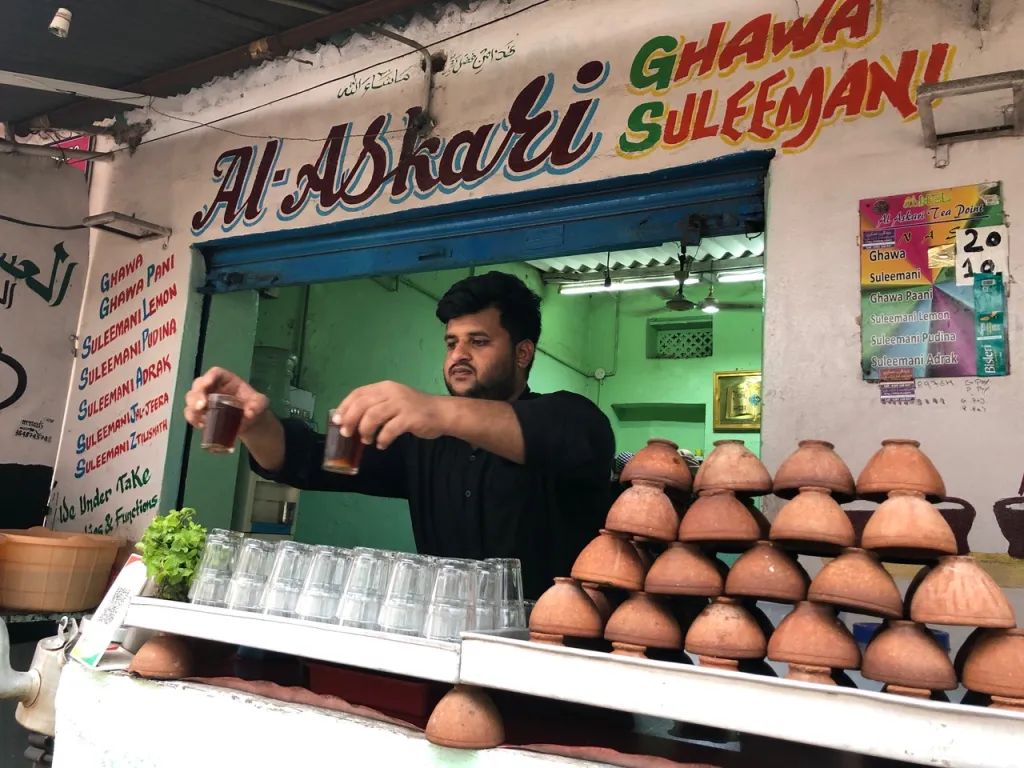
“Our ancestors brought with them many of their Yemeni traditions. Though we have adopted most local Indian customs over the years, there are certain traits that are too strongly ingrained in us, and one of them is a love for coffee,” noted 25 year old Omar Bin Nasir Al Askeri, the fourth-generation inheritor of the only traditional gahwah stall in Barkas.
The locals gather at the Gahwah stall every evening, sharing joys and sorrows over their steaming cups.
Though the nourishing, milk-based gahwah is particularly popular, many still prefer the more authentic, water-based original. The Al-Askeri cafe has been serving traditional gahwah and Suleimani tea for several decades, keeping the pot of traditions simmering on.
“Coffee runs deep in Yemeni veins. It’s in our blood. Yemenis start their morning with gahwah, and we are no different. Even now, most of us start our morning with gahwah. We are proud to have been able to facilitate this tradition of our ancestors through our small stall,” added Omar.
Backyard Bounties
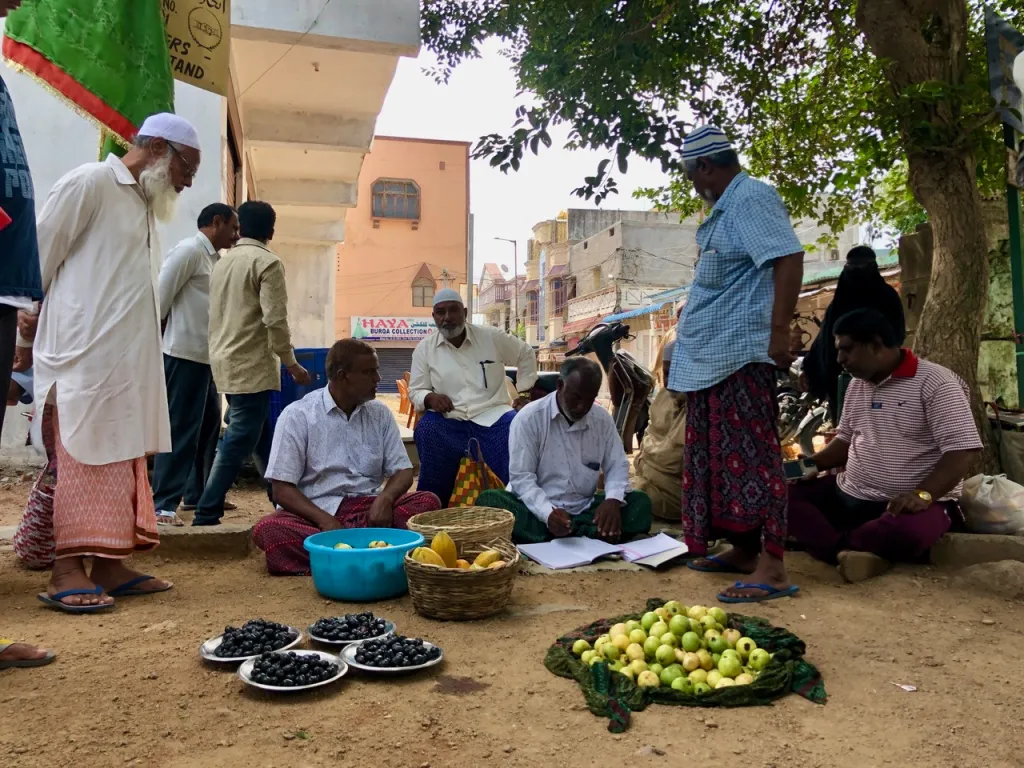
A popular social hub, the gahwah stall is where the locals gather every evening, sharing joys and sorrows over their steaming cups. It is also located next to the traditional market, where locally grown fruits and vegetables are traded every morning. This tradition dates back to the early days of Barkas, though later generations have added plenty of new flavours to it.
The traditional market, where locally grown fruits and vegetables are traded every morning. This tradition dates back to the early days of Barkas.
One new food staple is mandi. Although this dish has been a mainstay of Yemeni culinary tradition for centuries, it only recently found its way to Barkas. This is largely due to a rival meat-and-rice dish, Hyderabadi biryani, which has long dominated the region.
However, as the number of men from Barkas working in the Arabian Gulf steadily increases, Arabian cultural influence has led to a rise in the number of restaurants serving mandi in the area.
“This is a recent phenomenon. There was no mandi culture in Barkas a decade back. Biryani was always more popular, because the people of Barkas married local women, and the local food habits were mostly dominant. There might have been a few families who cooked mandi at home, but it was certainly not part of the popular culture,” observed local historian and cultural activist, Badar Bin Jaffer Barrawaz.
While the economic migration of young Barkas residents to the Gulf has helped revive more of their Arabian heritage, the locals remain firmly rooted in Indian soil. One of Barkas’ most senior residents, Ali Abdul Rahman, affirms exactly that: “This is home, this is where we belong. We might have Arab blood and Yemeni traits, but we are Indians in every other way.”
Independent journalist, poet and filmmaker based in Bengaluru. Shafaat Shahbandari is the founder of Thousand Shades of India, an alternative media platform that celebrates the diversity of India through visual and literary interventions. Best travel moment? Watching the blue sky reach out to the blue ocean, from the balcony of an 18th century palace in Zanzibar, even as the sun still snuggled under a warm blanket.
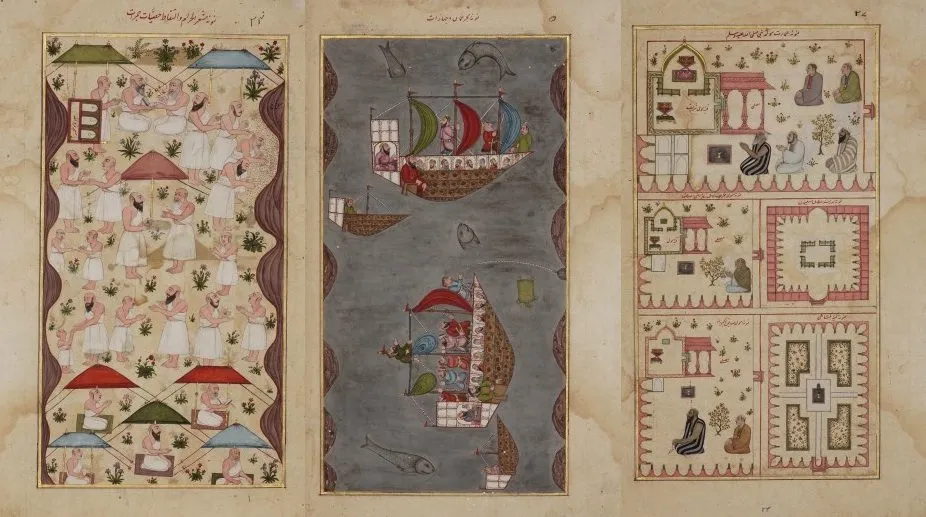
The Salamat Ras departed Surat in India on the 20th September 1676, carrying hundreds of pilgrims from Gujarat. On board was Safi ibn Vali; unlike the other pilgrims, his journey was sponsored by Zib al-Nisa, daughter of the Mughal emperor Aurangzeb (1658-1707). Along with completing his Hajj, Safi ibn Vali was given the task of creating a Hajj guidebook for future pilgrims. Presumably aimed at Indian pilgrims like himself, the ‘Anis al-Hujjaj’ (The Pilgrim’s Companion) contains advice regarding all aspects of the pilgrimage, including the journey to Jidda by sea.
His book is but one of many surviving pilgrimage guidebooks, from various parts of the Islamic world, forming a long-established tradition. They are typically accompanied by diagrammatic views of the holy sites, and Anis al-Hujjaj is no different in this respect. What sets it apart, however, is its use of colourful illustrations depicting various scenes of the pilgrimage, as well as the remarkable accuracy of its maps.
Safi ibn Vali’s Anis al-Hujjaj (‘Pilgrims’ Companion’), possibly Gujarat, India, circa 1677–80. Ink, gold and opaque watercolour on paper; modern leather binding. 3 separate folios show here side by side. Nasser D. Khalili Collection of Islamic Art. Copyright Nour Foundation. Courtesy of the Khalili Family Trust.
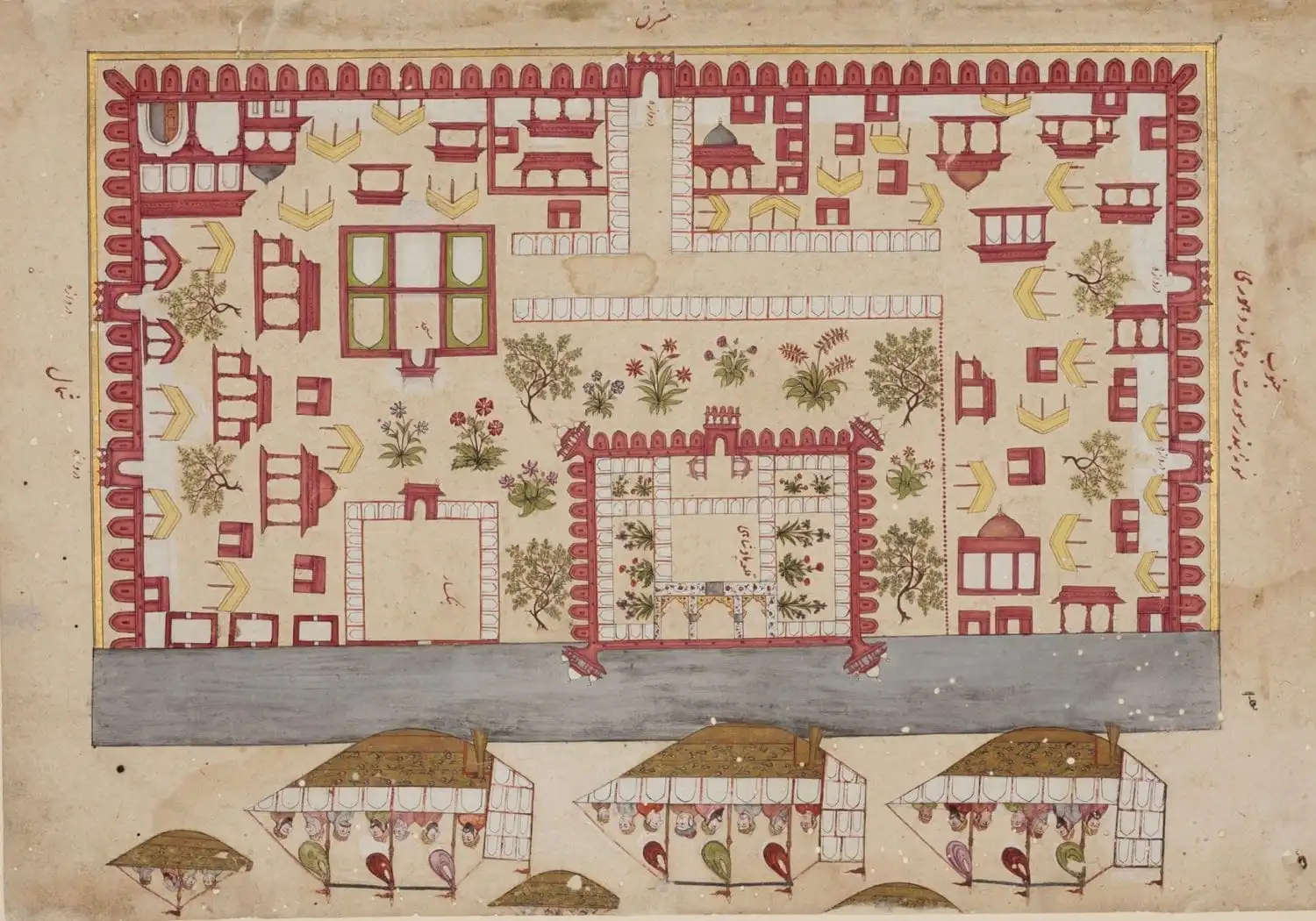
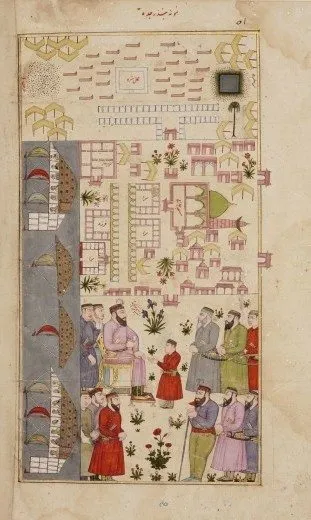
The illustration below is a map of Jidda. Jidda was a major port for pilgrims arriving for Hajj, and is thought to have been founded by Caliph Uthman in 647 AD. Safi ibn Vali, arriving at the port himself, maps major parts of the city. Archaeologist Dr Geoffrey King examined the map and found that the vast majority of places and landmarks depicted lie in the same position today.
Nasser D. Khalili Collection of Islamic Art. Copyright Nour Foundation. Courtesy of the Khalili Family Trust.
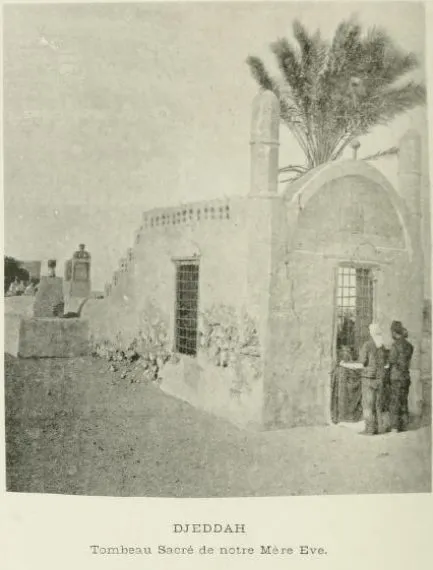
The upper section of the map depicts Hawa cemetery, thought to be the burial place of Eve, the mother of humanity. While the pink markers represent other graves, the black square indicates the head side of the resting place of Eve (peace be upon her), the white square her naval, and the gravelly area her feet. In Safi ibn Vali’s time, her grave, which is more than 100 feet in length, would have been marked by some sort of edifice. It is possible that the structure that can be seen in the image below, an illustration from 1894, or one similar to it, was what he saw two centuries earlier. The structure is no longer standing; it was destroyed in 1975 and covered with concrete by Saudi religious authorities.
Illustration of the Tomb of Eve in 1894, Jidda.
The middle section of Safi ibn Vali’s map shows the old city of Jidda. When examining the area, Dr King found that everything was accurately placed; a parade of shops and houses in the old city, as well as the surrounding roads, are all found in the same position today. There is however, one surprising discrepancy; an obvious landmark was mapped by Ibn Vali on the wrong side of the road. The green-domed Shafi’i mosque is shown in the Anis al-Hujjaj on the east side of the main street, whilst today it can be found on the west side; “This confuses me- was this main street in Jidda on a different alignment when the Anis al-Hujjaj was composed, or is it a simple error?” Given the remarkable accuracy of the map in every other way, King says this discrepancy is especially puzzling. The Shafi’i mosque is the oldest mosque site in Jidda; its floor is well below street-level, a fact that, according to Dr King, indicates that it predates the Shafi’i period. The oldest standing part of the mosque today is its Ayyubid minaret, dating back to the 13th century.
Nasser D. Khalili Collection of Islamic Art. Copyright Nour Foundation. Courtesy of the Khalili Family Trust.
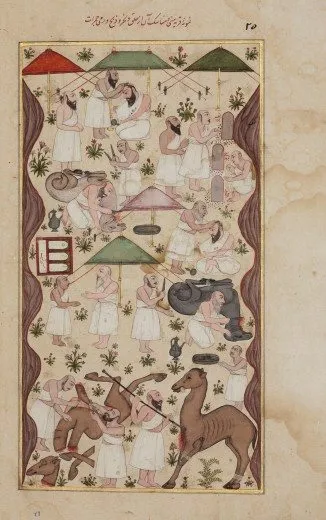
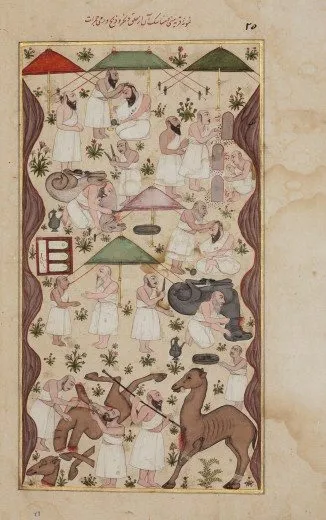
Since there is no question over the identity of the mosque depicted by Safi ibn Vali, further research needs to be conducted to reach a clear conclusion over the discrepancy. In the foreground of the Jidda map, the governor of the city is shown welcoming pilgrims. There are numerous such illustrations in Safi ibn Vali’s book, depicting various scenes of the Hajj. On the folio below, pilgrims are shown on the day of Eid al-Adha. In the top right hand corner, pilgrims in ihram throw stones at the three pillars representing shaytan, while others have their heads shaved after completing the rites of the Hajj. In the foreground, animals are being slaughtered for the Eid sacrifice.
Safi ibn Vali also made mention of various holy places to visit that are not part of the Hajj itself. The illustration below is a typical diagrammatic view found in the tradition of Hajj guidebooks. According to the captions, the building in the upper section marks the birthplace of the Prophet Muhammad (peace and blessings be upon him). In Ibn Vali’s time, the blessed area was marked by a small mosque with a courtyard and dome. Today a simple library building built in the 1950’s stands over the area. Depicted beneath the upper section are the birthplaces of Lady Fatima and Abu Bakr al-Siddiq (may God be pleased with them both) as well as the Madrassa of Sultan Sulayman and a Sufi lodge of the Bektashi order. The clothes worn by the visitors indicate their various nationalities.
Nasser D. Khalili Collection of Islamic Art. Copyright Nour Foundation. Courtesy of the Khalili Family Trust.
While Safi ibn Vali’s Anis al-Hujjaj is not unique in its function, the accuracy of its map of Jidda, and possibly others, such as Surat in India and Mocha in Yemen, which are also represented, is remarkable, setting it apart from other guidebooks of the same genre. Its colourful illustrations give the viewer a sense of the energy of the pilgrimage, as well as the diversity of the pilgrims represented. Given that many of the sites Ibn Vali illustrates no longer exist in the same form, his work takes on added historical importance, preserving a past all but lost to modernity.
Bibliography
L. York Leach, Paintings from India, The Nasser D. Khalili Collection of Islamic Art, volume VIII, London 1998, cat.34, pp.124–9.
J.M. Rogers, The Arts of Islam. Masterpieces from the Khalili Collection, London 2010, cat.332–41, pp.284–7.
source: http://www.sacredfootsteps.com / SacredFootsteps.com / Home>Asia> Arabia> History / by Zara Choudhary